
Miso Market By Substrate {Single Base (Rice, Barley, Soybean, Others), Blended (Rice Dominant, Barley Dominant, and Others)}, By Form (Paste, Powder, Liquid), By Color (White, Yellow, Red, Dark), By Pasteurization (Pasteurized, Unpasteurized), By Sodium Level (Standard, Reduced, Low Sodium), By Application (Soup Base, Sauce & Dressing, and Others), and By End User (Household, Foodservice, Food Processing, Others) – Global Analysis & Forecast, 2025–2035
Industry: Retail and Consumer | Publishing Date: June 1, 2026 | Last Updated: September 30, 2026 | No of Pages: N/A | No. of Tables: N/A | No. of Figures: N/A | Format: PDF | Report Code: RC4596
Industry Outlook
The global Miso Market size was valued at USD 20.44 billion in 2025 and is expected to be valued at USD 21.51 billion by the end of 2026. The industry is projected to grow, hitting USD 33.97 billion by 2035, with a CAGR of 5.21% between 2026 and 2035.
Miso Market Size & Forecast
|
Parameters |
Details |
|
Market Size in 2026 |
USD 21.51 Billion |
|
Revenue Forecast in 2035 |
USD 33.97 Billion |
|
Growth Rate |
CAGR of 5.21% from 2026 to 2035 |
|
Analysis Period |
2025–2035 |
|
Base Year Considered |
2025 |
|
Forecast Period |
2026–2035 |
|
Market Size Estimation |
Billion (USD) |
|
Companies Profiled |
20 |
|
Countries Covered |
33 |
|
Market Share |
Available for 10 companies |
Based on NMSC’s primary research, we observed that the global miso market is witnessing steady growth, driven by increasing consumer preference for fermented foods, rising awareness of gut health, and the global expansion of Japanese cuisine. In this context, traditional producers and fermentation specialists, along with raw material suppliers such as soybean growers and koji culture providers, ensure product authenticity, quality consistency, and flavour differentiation. As a result, miso is increasingly positioned as a natural, plant-based ingredient within both traditional and modern diets. Furthermore, food service providers, including restaurants and hospitality chains, alongside retailers and modern trade channels, are expanding product visibility and accessibility across global markets. At the same time, convenient formats such as paste, instant soup bases, and ready-to-use seasonings are gaining traction. While traditional fermentation remains central, manufacturers are adopting controlled processes and improved packaging to enhance scalability and shelf stability.
Consequently, conventional miso paste dominates market share, whereas value-added formats continue to gain momentum, particularly outside Asia-Pacific, which remains the leading production and consumption hub. Moreover, through regional analysis, we identified that demand is shaped by health-conscious consumers and nutrition experts promoting functional foods. While North America and Europe show strong growth driven by clean-label and plant-based trends, emerging markets such as India and Southeast Asia demonstrate gradual adoption supported by expanding retail access. In parallel, food manufacturers and distributors are strengthening market penetration through diversified applications and wider availability. Overall, the market continues to evolve through a combination of traditional expertise and modern innovation, supporting sustained global demand and long-term growth.
What Are the Key Trends in the Miso Industry?
How Is AI-Assisted Fermentation Control Enhancing Production Consistency and Scalability in the Miso Market?
Our assessment highlights that advanced fermentation monitoring and data-driven control systems are improving production consistency across the miso market, particularly where maintaining uniform taste and texture at scale is critical. During our interactions with fermentation specialists and production teams, we observed that traditional batch-based processes result in variability across output. In contrast, digitally monitored fermentation environments enable better control over key parameters such as temperature, humidity, and microbial activity. At the same time, manufacturers are using these systems to standardize production across facilities while preserving flavour depth and product authenticity. This is particularly important for companies expanding into global markets, where consistency is a key quality requirement. However, adoption remains gradual among smaller and traditional producers due to cost and process complexity. Consequently, data-driven fermentation control is enhancing production efficiency and scalability while supporting consistent product quality, reinforcing its role in modernizing miso manufacturing without compromising traditional fermentation principles.
How Is the Diversification of Non-Soy Substrates Expanding Product Innovation in the Market?
Diversification into non-soy substrates is expanding innovation across the miso market. In discussions with product developers and ingredient specialists, we identified increasing demand for alternatives that address soy allergies and evolving dietary preferences. At the same time, manufacturers are experimenting with chickpeas, adzuki beans, and grains to create differentiated offerings while retaining core umami characteristics. Notably, these formulations align with broader plant-based and clean-label trends, enhancing market relevance. Additionally, our analysis of product launches indicates that such innovations are gaining traction beyond niche segments. As consumer expectations diversify, companies are leveraging alternative substrates to broaden appeal and accessibility. Ultimately, this shift is enabling the market to expand into new consumption segments with greater flexibility.
How Are Live-Culture Packaging Technologies Enhancing Product Value and Consumer Appeal in the Market?
From our analysis, we observed that live-culture packaging technologies are enhancing both product integrity and market positioning for unpasteurized miso. The importance of preserving active fermentation and probiotic content throughout shelf life is increasingly recognised by manufacturers. In response, manufacturers are adopting vented lids and controlled-release packaging systems that allow products to maintain microbial activity without compromising safety. Meanwhile, these solutions improve product differentiation by emphasising freshness and functional benefits. In addition, retail performance insights suggest that consumers increasingly value products positioned with live cultures. As packaging evolves, brands are able to extend shelf presence while maintaining quality. Therefore, live-culture packaging is strengthening premium positioning and reinforcing consumer engagement within the miso market.
Ecosystem Analysis of the Miso Industry
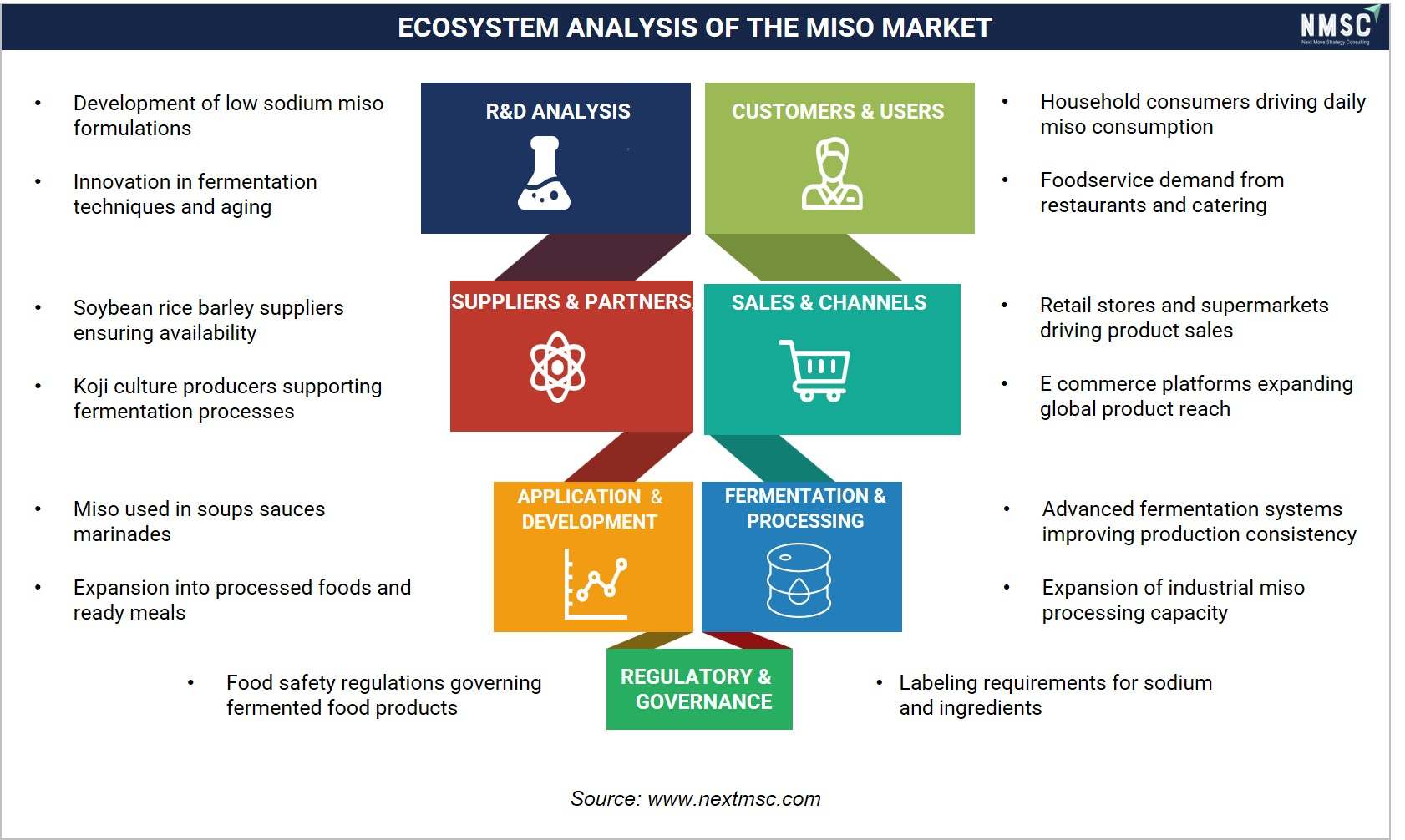
NMSC’s analysis indicates that the miso ecosystem is shaped by continuous innovation in fermentation techniques, clean-label formulations, and ingredient sourcing. Moreover, soybean, rice, and koji suppliers play a critical role in ensuring consistent quality and supply. At the same time, household consumers and foodservice operators drive steady demand, supported by expanding retail and e-commerce channels. Furthermore, increasing investments in premium and organic miso, along with evolving food safety and labelling regulations, collectively strengthen market structure and long-term growth potential.
What Are the Key Market Drivers, Breakthroughs, and Investment Opportunities That Will Shape the Miso Industry in the Next Decade?
Growth Catalyst & Risk Assessment Matrix
|
DRIVERS / TRENDS / RESTRAINTS |
(+/–) % IMPACT ON CAGR FORECAST |
GEOGRAPHIC RELEVANCE |
IMPACT TIMELINE |
|
Rising consumer focus on gut health and fermented foods driving miso demand |
+1.4% |
North America, Europe, Japan, South Korea |
Medium to long term (3–7 years) |
|
Increasing demand for clean-label and natural umami alternatives in food processing |
+1.2% |
Global (strong in North America, Europe, Asia-Pacific) |
Medium term (2–5 years) |
|
Growing adoption of miso as a flavour enhancer in plant-based protein applications |
+1.1% |
North America, Europe, Asia-Pacific |
Medium to long term (3–6 years) |
|
Expansion of Asian cuisine and fusion foodservice is increasing global miso exposure |
+0.9% |
North America, Europe, Southeast Asia |
Medium term (2–5 years) |
|
Innovation in fermentation technologies and premium product positioning |
+0.8% |
Japan, South Korea, Europe, North America |
Long term (4–8 years) |
|
Elevated sodium content and stringent labelling regulations limiting consumption |
-1.2% |
Global (strong in North America, Europe) |
Medium term (2–5 years) |
Based on our evaluation of global food and fermentation industry trends, we observed that the miso market is experiencing steady growth, driven primarily by rising consumer focus on gut health, increasing demand for clean-label ingredients, and expanding adoption of plant-based diets. Our interactions with food manufacturers, ingredient suppliers, and foodservice operators indicated that miso is increasingly being used as a functional and natural flavour enhancer to replace synthetic additives. Advancements in fermentation technologies and process optimization are improving product consistency and enabling scalable production across global markets. However, our assessment also indicated that elevated sodium content and stringent labelling regulations are constraining broader adoption, particularly among health-conscious consumer segments. At the same time, innovation in low-sodium formulations and expansion into plant-based applications is creating new growth opportunities, supporting product diversification and long-term market expansion.
Growth Drivers:
How Is Increasing Consumer Focus on Gut Health Driving Demand in the Market?
Based on our analysis, we observed that rising consumer focus on gut health is significantly influencing demand patterns across the miso market. During our evaluation of consumption behaviour and dietary trends, we found that consumers are increasingly associating fermented foods with digestive wellness and overall health benefits According to a 2026 study published in Frontiers in Microbiology (archived in PubMed Central), 77.14% of surveyed consumers identified an improved gut microbiome and 76.39% identified digestive benefits as the primary health motivations for consuming fermented food. As awareness around microbiome health continues to expand, miso is gaining recognition as a functional food ingredient rather than just a traditional seasoning. In addition, health-conscious consumers are actively seeking products that support preventive nutrition. This shift is particularly evident among urban populations and younger demographics. As a result, manufacturers are positioning miso as a natural, probiotic-rich solution. Consequently, the growing emphasis on gut health is strengthening demand and supporting sustained market expansion.
How Are the Rising Demand for Clean-Label and Natural Umami Alternatives Driving Growth in the Market?
From our analysis, we found that the increasing demand for clean-label and natural ingredients is driving significant growth in the market. As consumers become more ingredient-aware, there is a clear shift away from synthetic additives and artificial flavor enhancers. At the same time, food manufacturers are actively seeking natural umami solutions to replace monosodium glutamate in processed foods According to the 2025 International Food Information Council Food & Health Survey, 53% of consumers actively review ingredient lists on food packaging, reflecting increasing consumer preference for transparent, recognizable, and clean-label food ingredients. Miso, with its fermentation-derived flavor profile, is emerging as a viable and scalable alternative. Furthermore, regulatory emphasis on ingredient transparency is strengthening this transition. Alongside this, brands are leveraging miso to enhance flavor while maintaining natural positioning. Therefore, the convergence of consumer preference and industry reformulation is accelerating the adoption of miso across global food applications.
Growth Inhibitor:
How Are Elevated Sodium Content and Stringent Labelling Requirements Limiting Growth in the Market?
Based on our assessment, we identified that elevated sodium content is a key factor limiting broader adoption of miso products. During our evaluation of regulatory frameworks and consumer behavior, we noticed that increasing awareness around excessive salt intake is influencing purchasing decisions. According to the World Health Organization 2026, the global average sodium intake is approximately 4278 mg per day, which is more than double the recommended limit of 2000 mg per day, highlighting widespread overconsumption of salt and increasing health concerns around high-sodium foods.At the same time, governments and health organizations are strengthening labeling requirements, making sodium content more visible at the point of purchase. This is prompting consumers to exercise greater caution, particularly in health-conscious segments. In addition, food manufacturers face challenges in reformulating miso without compromising taste and fermentation integrity. As regulatory scrutiny intensifies, product perception is also impacted. Consequently, sodium-related concerns are significantly restricting market expansion, limiting consumer adoption, and creating sustained pressure on product positioning across global markets.
Growth Opportunity:
How Is the Use of Miso as a Flavor Enhancer in Plant-Based Protein Applications Unlocking Growth Opportunities?
From our evaluation, we found that the rapid expansion of plant-based food products is creating new opportunities for miso as a natural flavor enhancer. While plant-based proteins continue to gain popularity, manufacturers are facing challenges in replicating authentic taste and depth of flavor According to a 2025 sensory evaluation study published in PubMed, consumer acceptance of plant-based meat alternatives is strongly influenced by sensory attributes such as umami taste, meaty flavor, and overall flavor complexity, while undesirable soybean-related off-notes negatively affect product appeal, reinforcing the need for natural flavor enhancement solutions. In response, miso is increasingly being incorporated to enhance umami and improve overall sensory appeal. At the same time, fermentation-derived ingredients are gaining preference due to their clean-label positioning. Additionally, product developers are leveraging miso to mask undesirable off-notes commonly found in plant-based formulations. As consumer expectations shift toward taste-driven adoption, flavor optimization is becoming a critical success factor. Therefore, the integration of miso into plant-based applications is unlocking new growth pathways and expanding its role in modern food innovation.
Supply Chain Structure of the Miso Industry
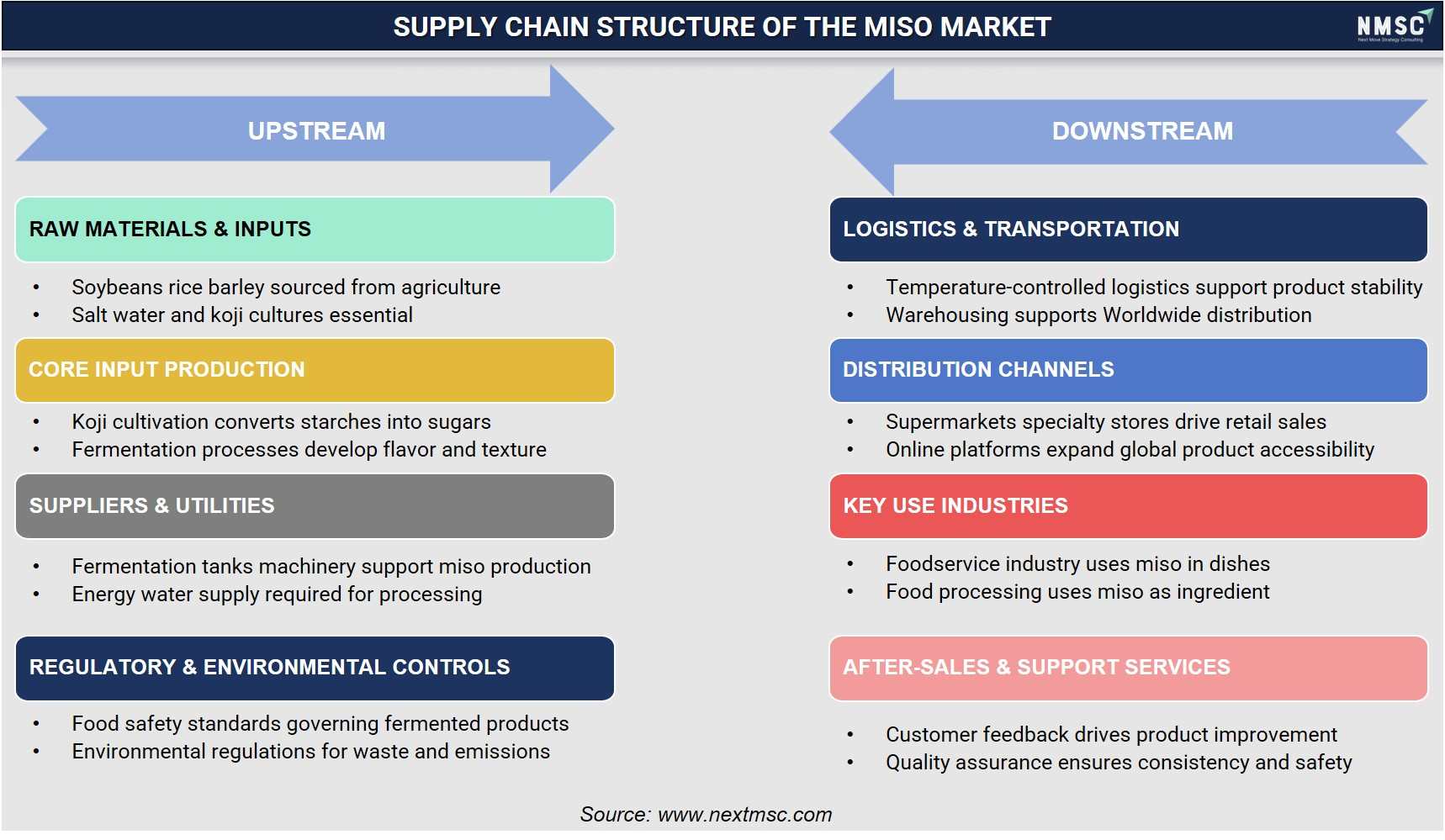
Based on NMSC’s primary research, we noticed that the miso supply chain is well-integrated, beginning with agricultural sourcing of soybeans, rice, and barley, followed by controlled fermentation processes. Additionally, specialized equipment and utilities ensure production efficiency and product consistency. As products move downstream, cold chain logistics and warehousing support quality preservation and global distribution. Moreover, supermarkets, specialty stores, and online platforms enable market access, while foodservice and food processing industries drive bulk demand. Consequently, regulatory compliance and quality assurance remain critical across all supply chain stages.
How Is the Miso Market Segmented in This Report, and What Are the Key Insights from the Segmentation Analysis?
Market Highlights & Strategic Insights – Miso Market:
|
Segments |
Key Takeaways |
|
Substrate |
Single-base miso, particularly rice and soybean variants, dominates due to traditional consumption patterns and widespread use in staple dishes. Blended miso is gaining traction as consumers seek more complex flavor profiles, with rice-dominant and equal blends expanding in premium and specialty offerings. |
|
Form |
Paste remains the dominant form due to its traditional usage and versatility in cooking. Powder and liquid formats are gaining traction, driven by convenience, longer shelf life, and increasing use in packaged and ready-to-use food products. |
|
Color |
White and yellow miso are widely preferred for their mild flavor and broader culinary applications. Red and dark miso cater to niche demand for stronger, more intense flavors, particularly in traditional and regional cuisines. |
|
Pasteurization |
Pasteurized miso dominates due to longer shelf life and suitability for mass distribution. Unpasteurized variants are gaining traction among health-conscious consumers seeking probiotic benefits and artisanal products. |
|
Sodium Level |
Standard sodium miso remains the most widely consumed, supported by traditional taste preferences. Reduced and low sodium variants are expanding with rising health awareness and demand for better-for-you food options. |
|
Application |
Soup base remains the primary application, driven by its staple role in traditional cuisine. Sauce, dressing, and marinade applications are expanding as miso is increasingly used in fusion and modern cooking. Processed food applications are also growing with rising incorporation in packaged foods. |
|
End User |
Household consumption dominates due to strong cultural and daily usage patterns. Foodservice is expanding with growing popularity of Japanese cuisine globally, while food processing is increasing as manufacturers incorporate miso into packaged and ready-to-eat products. |
By Substrate Insights
Which Substrate Types Drive the Miso Market Demand?
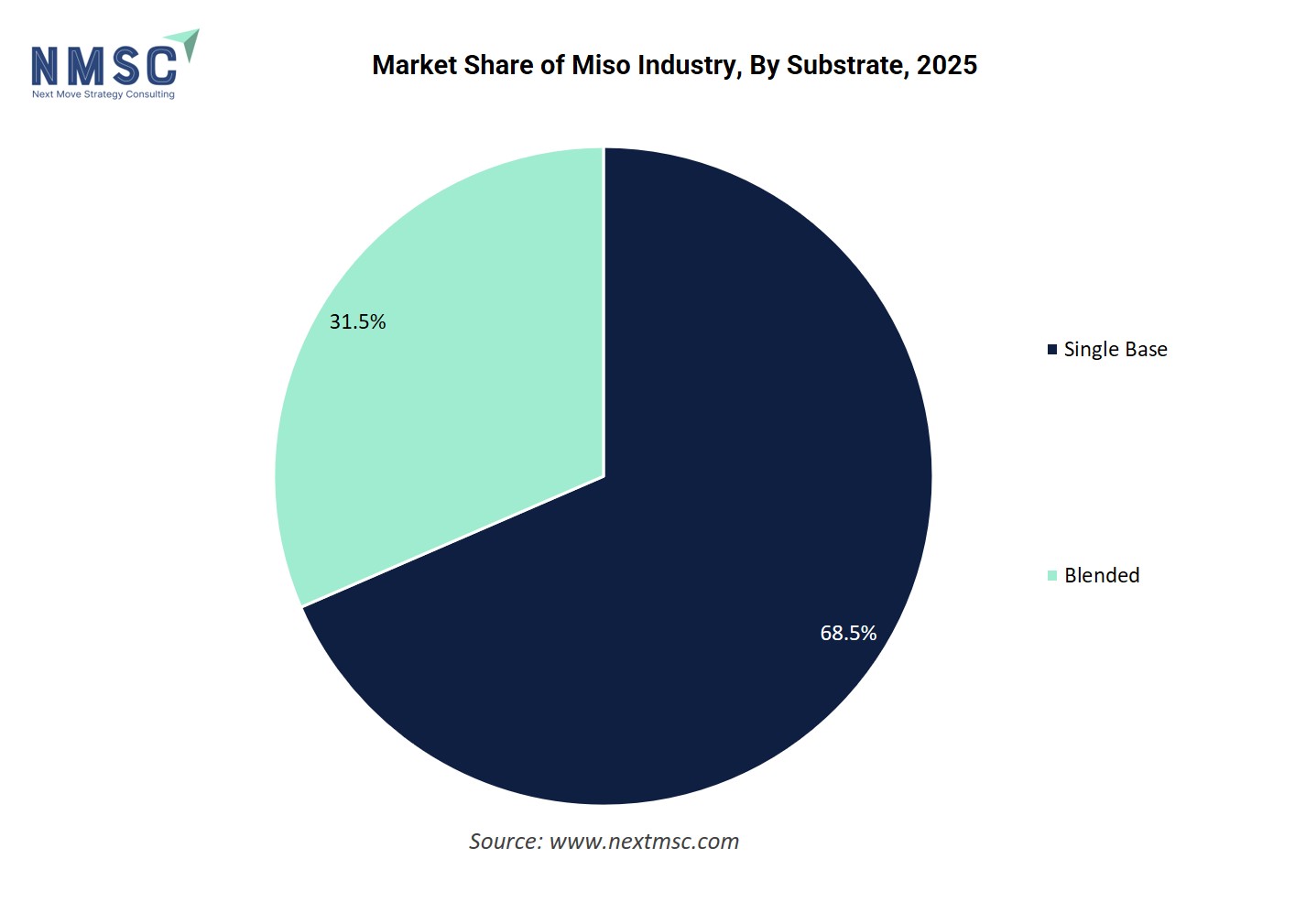
Based on our analysis of product composition, we found that the market is segmented into single base and blended miso, where single base includes rice, barley, soybean, and other base, and blended includes rice dominant, barley dominant, soybean dominant, equal blend, and other blend.
From our evaluation of consumption patterns, we found that single-base miso, particularly rice and soybean variants, drives the majority of demand due to strong alignment with traditional taste preferences and widespread use in staple dishes. At the same time, blended miso is gaining traction as consumers increasingly seek more complex and balanced flavour profiles. In addition, rice-dominant and equal blend variants are expanding in premium and fusion food applications where flavour customisation is important. Furthermore, speciality blends are being introduced to cater to evolving consumer preferences across global markets. Overall, the market is gradually shifting from traditional single-base dominance toward diversified, flavour-driven product innovation.
By Form Insights
Which Form Are Driving Adoption of Miso Solutions?
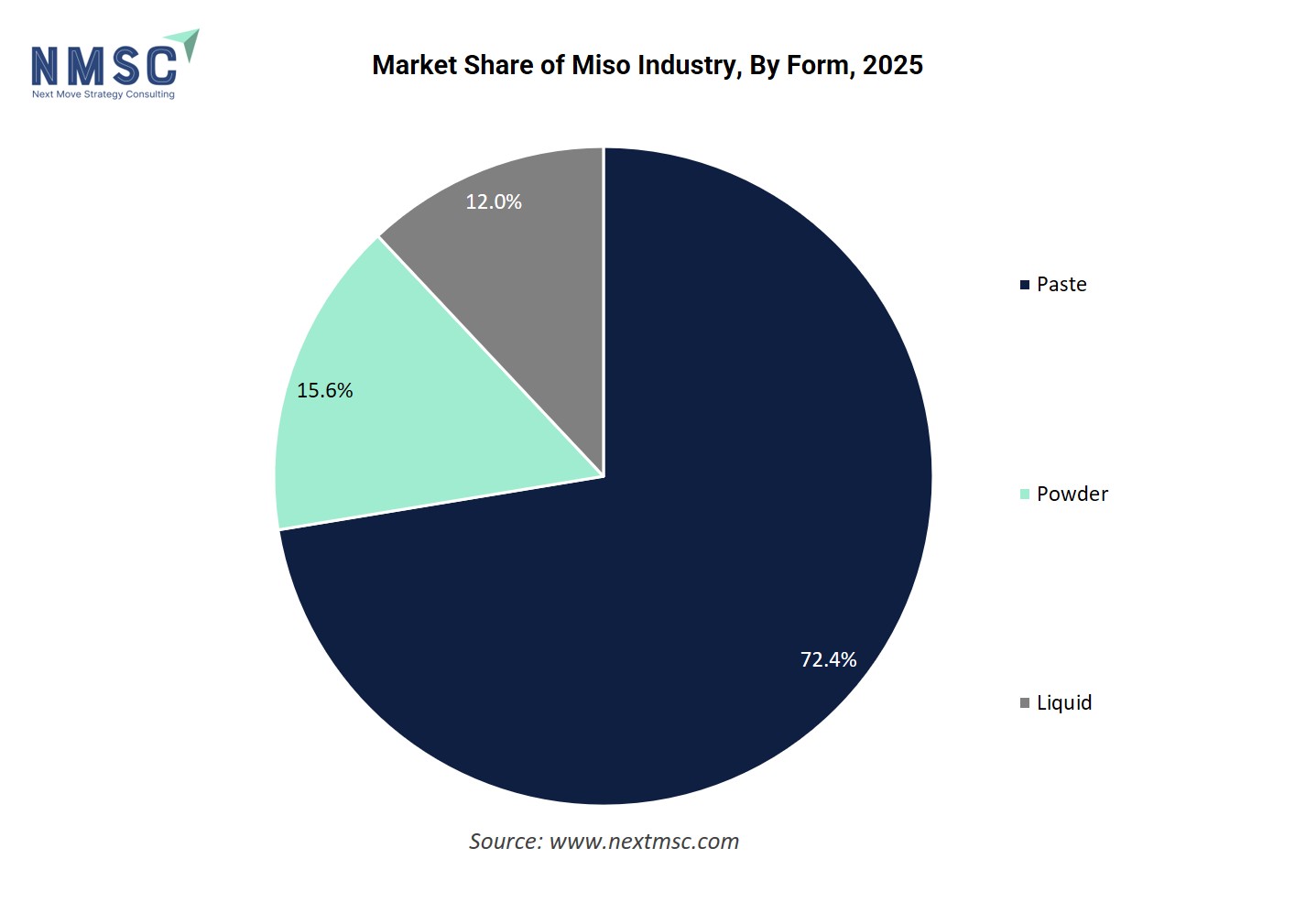
Based on our assessment of product formats, we noticed that the market is segmented into paste, powder, and liquid.
From our analysis of usage patterns, we found that paste remains the most widely used format, supported by its traditional role and versatility in cooking applications. Meanwhile, powder formats are gaining traction due to their longer shelf life, ease of storage, and suitability for packaged food applications. In addition, liquid miso is expanding in convenience-driven segments, particularly in ready-to-use and quick-preparation products. Furthermore, manufacturers are increasingly innovating across formats to cater to changing consumer lifestyles and global demand. Consequently, form diversification is being driven by the need for convenience, portability, and integration into modern food processing.
By Application Insights
Which Applications Are Driving the Miso Market Growth?
Based on our analysis of application segments, we found that the market is segmented into soup base, sauce and dressing, marinade and seasoning, processed food ingredient, and other application.
From our evaluation of demand trends, we found that soup base remains the primary application, driven by its foundational role in traditional cuisine. At the same time, sauce and dressing applications are expanding as miso is increasingly incorporated into fusion and Western dishes. In addition, marinade and seasoning usage is gaining traction due to its ability to enhance flavor profiles across diverse cuisines. Furthermore, processed food ingredient and other application segments are growing as manufacturers integrate miso into packaged and ready-to-eat products. Therefore, application expansion is being driven by the transition of miso from a traditional ingredient to a versatile component in global culinary innovation.
Regional Outlook:
Geographic Performance Snapshot:
|
Region |
Key Takeaways |
|
North America |
North America shows a high-potential and awareness-driven miso market, supported by rising demand for fermented foods, plant-based diets, and functional nutrition. The region benefits from strong retail penetration, expanding e-commerce channels, and increasing integration in food service applications. Consumers prioritize clean-label, organic, and convenient miso formats, driving consistent adoption across both household and commercial usage. |
|
Europe |
Europe reflects a quality-driven market shaped by strong regulatory focus on food safety, clean-label standards, and sustainability. Adoption is supported by growing interest in fermented foods and plant-based diets, particularly across premium and organic segments. Emphasis on certified, high-quality, and sustainably sourced products continues to strengthen demand across specialty retail and health-conscious consumer groups. |
|
Asia-Pacific |
Asia-Pacific represents the most established and consumption-intensive market, driven by deep-rooted culinary integration and large-scale production ecosystems. Countries such as Japan, China, South Korea, and India lead demand across household and food service segments. The region benefits from strong supply chains, cultural familiarity, and expanding export-oriented production, supporting both domestic consumption and global reach. |
|
Latin America |
Latin America demonstrates a gradually developing market, supported by increasing exposure to international cuisines and urban consumption growth. Adoption is concentrated in metropolitan areas, where retailers and food service providers are introducing miso products through accessible and convenient formats. While awareness is improving, affordability and limited familiarity continue to influence adoption pace. |
|
Middle East & Africa |
The Middle East & Africa reflects an emerging and uneven market, supported by growing exposure to global cuisines and premium dining trends. Demand is stronger in Middle Eastern urban centers, while adoption across Africa remains gradual. Market development is influenced by improving retail infrastructure, increasing awareness, and expanding availability of imported miso products.c |
The miso market is geographically studied across North America, Europe, Asia Pacific, Latin America and Middle East & Africa and each region is further studied across countries.
Miso Market in North America
The North America miso market reflects a health-driven and adoption-expanding landscape, supported by rising interest in fermented nutrition, plant-based diets, and global culinary exposure. Our regional assessment shows steadily increasing consumption across the United States and Canada, driven by expanding retail penetration and growing food service integration. In this context, food manufacturers, supported by distributors and importers, continue to enhance accessibility through packaged and ready-to-use formats. Additionally, probiotic positioning and clean-label alignment influence purchasing decisions. However, compared to Asia-Pacific, traditional consumption remains relatively limited. Despite this, increasing incorporation into dressings, broths, and fusion recipes is strengthening market relevance. Consequently, North America is transitioning into a high-potential consumption market, where accessibility and functional positioning underpin long-term expansion.
Miso Market in the United States
From our engagement with food service operators and retail channel participants, we found that the United States miso market is strongly aligned with functional food adoption and evolving dietary behavior. Restaurants and culinary innovators, alongside nutrition experts and health-focused communities, are extending miso applications beyond traditional use into sauces, marinades, and packaged meals. At the same time, robust distribution networks and expanding supermarket shelf presence are improving product visibility. Based on our analysis, we identified that convenience-led formats such as instant miso and ready-to-use pastes are gaining traction among urban consumers. Furthermore, increasing preference for clean-label and plant-based ingredients continues to reinforce adoption. As a result, the market is shifting toward broader application diversity, strengthening its position within everyday consumption patterns.
Miso Market in Canada
Canada represents a quality-focused and steadily evolving miso market, supported by rising health awareness and openness to global cuisines. From our observations, we noticed that specialty retailers and food service providers are gradually increasing product presence across key urban centers. In parallel, consumers, particularly those following wellness-oriented and plant-based diets are integrating miso into regular cooking habits. Meanwhile, distributors and importers are ensuring consistent availability of both traditional and organic variants. Compared with the United States, adoption remains moderate; however, demand is more premium-oriented and stability-driven. Therefore, the Canadian market advances through controlled expansion, where product quality and health positioning underpin sustained growth.
Miso Market in Europe
The Europe miso market reflects a regulation-influenced and health-conscious growth landscape, where rising demand for fermented foods and clean-label products supports adoption. From our regional analysis, we observed that consumption is expanding across key countries, driven by increasing awareness of gut health and global culinary exposure. In this context, food manufacturers, along with retailers and specialty food chains, are strengthening product availability through organic and premium offerings. Moreover, regulatory emphasis on labeling transparency and ingredient quality continues to shape product positioning. While traditional consumption remains limited, integration into soups, sauces, and plant-based meals is steadily increasing. Consequently, Europe is evolving as a quality-driven market, where health positioning, regulatory alignment, and product innovation collectively support sustained demand expansion.
Miso Market in the United Kingdom
NMSC’s research indicates that the United Kingdom miso market is developing through strong alignment with health-conscious consumption and premium food trends. Our engagement with retail channel participants and food service operators indicates that demand is supported by increasing interest in plant-based diets and fermented ingredients. Supermarkets and specialty retailers, along with restaurants and casual dining chains, are expanding product visibility across urban centers. Furthermore, convenience-oriented formats such as instant miso and ready-to-use pastes are gaining traction among time-constrained consumers. Our findings further indicate that clean-label preferences and global cuisine exposure continue to influence purchasing behavior. As a result, the market demonstrates steady expansion, supported by premium positioning and evolving dietary habits.
Miso Market in Germany
Germany exhibits a structured and quality-focused miso market, supported by strong consumer preference for organic and natural food products. Our interactions with distributors and food manufacturers suggest that demand is driven by clean-label expectations and increasing adoption of plant-based diets. Retailers and organic food stores, alongside specialty importers, are expanding access to both traditional and organic variants. Moreover, regulatory emphasis on food safety and ingredient transparency reinforces consumer trust. While adoption remains gradual, integration into health-focused meal preparation continues to strengthen. Therefore, the German market progresses through disciplined expansion, where product quality and compliance remain central to sustained demand.
Miso Market in France
France demonstrates a steadily evolving miso market, shaped by growing interest in functional foods and culinary experimentation. Our regional observations reveal that specialty retailers and gourmet food stores, alongside food service providers, are introducing miso across diverse applications. Consumers, particularly those focused on wellness and natural diets, are gradually incorporating miso into cooking practices. Additionally, distributors ensure availability of premium and organic variants across key urban markets. However, traditional adoption remains limited compared to other European markets. Consequently, the French market advances through gradual adoption, where culinary innovation and health awareness drive long-term demand.
Miso Market in Italy
The Italy miso market reflects an emerging yet culturally adaptive landscape, where growing exposure to international cuisine supports gradual adoption. Our analysis indicates that food service providers, along with specialty retailers, are introducing miso into urban culinary settings. In parallel, consumers are experimenting with Asian flavors within home cooking and modern gastronomy. Furthermore, distributors facilitate access to packaged and premium variants, improving availability. While adoption remains at an early stage, integration into fusion cuisine is steadily increasing. As a result, the market evolves through incremental acceptance, where culinary curiosity and accessibility support future growth potential.
Miso Market in Spain
From our engagement with retailers and food service operators, we observed that the Spain miso market is gaining momentum, driven by increasing interest in global cuisines and functional food ingredients. Restaurants and hospitality providers, supported by distributors and importers, are expanding the use of miso across urban dining and retail channels. Moreover, consumers are gradually adopting miso in home cooking, particularly within health-conscious diets. In addition, convenient formats such as ready-to-use pastes are improving accessibility. Our findings identified that affordability and ease of use remain critical adoption factors. Consequently, the Spanish market progresses through steady expansion, supported by accessibility and evolving dietary preferences.
Miso Market in the Nordics
The Nordics region, comprising Sweden, Norway, Denmark, and Finland, demonstrates a premium-oriented and sustainability-conscious miso market, where strong consumer trust in natural foods supports selective adoption of miso. Our regional observations indicate that organic retailers and specialty stores, alongside food service providers, are expanding availability across these markets. In this context, consumers associate fermented foods with digestive wellness and clean-label consumption. Moreover, distributors prioritize organic-certified and high-quality imports to align with regional preferences. While consumption volumes remain moderate, integration into plant-based diets continues to strengthen. Consequently, the region evolves as a niche but high-value market, where sustainability alignment and premium preference define purchasing behavior.
Miso Market in Asia-Pacific
Our engagement with manufacturers and food service operators confirm that the Asia-Pacific miso market represents the most mature and volume-intensive regional landscape, driven by deep-rooted culinary integration and large-scale production ecosystems. Traditional producers, alongside raw material suppliers, ensure consistent supply and product authenticity. In addition, widespread household consumption and strong food service penetration maintain stable baseline demand. At the same time, export-oriented production and packaged formats are expanding global reach. Our analysis identified that cultural familiarity and production scale reinforce regional dominance. As a result, Asia-Pacific continues to anchor the global market, combining domestic consumption strength with expanding international influence.
Miso Market in China
The China miso market reflects an adaptation-driven and urbanizing consumption landscape, supported by growing exposure to Japanese cuisine and evolving dietary preferences. From our analysis, we observed that food manufacturers and distributors, in coordination with modern retail channels, are expanding product availability across major cities. At the same time, consumers are beginning to position miso as a premium and health-oriented alternative to traditional condiments. Furthermore, demand for convenient formats is increasing alongside fast-paced urban lifestyles. While adoption is still developing, rising culinary experimentation and improved accessibility are accelerating acceptance. Consequently, China is progressing toward broader market integration, where urban demand and product positioning shape future scale.
Miso Market in Japan
Japan represents a mature and origin-centric miso market, where consumption remains deeply embedded in daily dietary practices. From our interactions with producers and culinary institutions, we found that manufacturers, supported by food service operators, continue to prioritize fermentation authenticity, regional diversity, and consistent product quality. Consumers demonstrate strong familiarity with miso across staple dishes, particularly soups and broths, reinforcing habitual consumption patterns. Additionally, innovation in low-sodium, organic, and premium variants reflects evolving health preferences and demographic shifts. Although overall growth remains stable, demand is sustained through strong cultural continuity and established product trust. Therefore, the Japanese market maintains long-term resilience, where tradition-led consumption and controlled innovation continue to preserve its foundational role within the global miso landscape.
Miso Market in India
India represents an awareness-driven and early-stage miso market, where exposure to international cuisine and urban dietary diversification support gradual adoption. From our market interactions, we observed that retailers and e-commerce platforms, alongside food service providers, are introducing miso primarily across metropolitan areas. In parallel, younger and health-conscious consumers are experimenting with miso within home cooking and fusion recipes. Additionally, distributors and importers are improving accessibility through packaged and ready-to-use formats. While overall penetration remains limited, increasing interest in fermented and functional foods continues to drive trial. However, awareness gaps and price sensitivity influence purchasing decisions. Consequently, India evolves as a developing opportunity market, where urban demand clusters and gradual consumer education shape long-term growth potential.
Miso Market in South Korea
South Korea demonstrates a culturally aligned and functionally relevant miso market, supported by strong familiarity with fermented foods and traditional condiments. From our engagements with food manufacturers and food service operators, we found that demand benefits from similarities between miso and local products such as doenjang. Retailers and modern trade channels are expanding access to both domestic and imported variants, improving product availability. Moreover, consumers are incorporating miso into fusion applications and contemporary recipes, reflecting evolving culinary preferences. Based on our analysis, we identified that existing dietary habits significantly support product acceptance. While market growth remains steady, it is structurally supported by cultural compatibility and consistent consumption patterns. As a result, the market maintains stability, where familiarity and versatility continue to sustain long-term demand.
Miso Market in Taiwan
Taiwan reflects an innovation-oriented and culinary-explorative miso market, where openness to global flavors supports adoption. From our regional assessment, we observed that food service providers and specialty retailers are incorporating miso into diverse applications, including soups, broths, and modern fusion dishes. Meanwhile, distributors ensure consistent availability of both traditional and premium variants across urban markets. Consumers increasingly view fermented foods as part of balanced and functional diets, supporting gradual demand growth. Although market size remains moderate, continuous experimentation in both retail and food service channels strengthens product visibility. In addition, premium and health-oriented positioning supports higher-value consumption. Therefore, Taiwan continues to evolve as a niche yet dynamic market, where innovation and dietary awareness collectively drive steady expansion.
Miso Market in Indonesia
Indonesia represents a price-sensitive and early-stage market, influenced by urbanization and increasing exposure to international cuisines. From our observations, we noticed that distributors and importers, alongside retailers and food service providers, are introducing miso products primarily within metropolitan areas. Younger consumers are showing growing interest in global flavors and convenient cooking solutions, supporting initial demand. Additionally, packaged and ready-to-use formats are improving accessibility and ease of use. However, affordability constraints and limited awareness continue to influence adoption levels. While demand is still developing, exposure through restaurants and retail channels is gradually increasing familiarity. Consequently, the market progresses through incremental adoption, where pricing dynamics and awareness expansion determine long-term growth trajectory.
Miso Market in Australia
From our engagement with food service operators and retail channel participants, we observed that the Australia miso market is shaped by strong alignment with premium consumption trends and health-focused dietary choices. Restaurants and specialty cafés, supported by supermarkets and organic retailers, are expanding availability across urban centers. Consumers increasingly incorporate miso into plant-based and functional meal preparations, reinforcing demand growth. Based on our analysis, we identified that clean-label and organic variants are gaining stronger traction among health-conscious segments. Additionally, convenient formats such as ready-to-use pastes enhance accessibility and everyday usage. While the market remains niche, it demonstrates consistent expansion driven by premium positioning. As a result, Australia evolves as a stable, value-driven market where quality and health alignment sustain long-term demand.
Miso Market in Latin America
Latin America represents an emerging and gradually developing market, supported by increasing exposure to international cuisines and expanding urban consumption. From our regional assessment, we observed that distributors and importers, alongside retailers and food service providers, are introducing miso products across key metropolitan areas. Growing interest in Asian cuisine is encouraging trial, particularly among younger consumer segments. In addition, packaged and easy-to-use formats are improving product accessibility. However, price sensitivity and limited awareness continue to influence adoption patterns. While demand remains at an early stage, increasing presence in restaurant menus and retail shelves supports gradual familiarity. Consequently, the region advances through steady but measured expansion, where affordability and awareness shape long-term market development.
Miso Market in the Middle East & Africa
From our engagement with distributors and food service operators, we observed that the Middle East & Africa miso market is evolving at an early yet differentiated stage. In the Middle East, particularly within urban hubs, strong demand from hospitality and premium dining segments supports adoption across diverse culinary applications. Meanwhile, retailers and importers are gradually expanding product availability in select markets. In contrast, across Africa, penetration remains limited but is improving with expanding retail infrastructure and urbanization. Based on our findings, we identified that awareness, distribution reach, and affordability remain key influencing factors. Therefore, the MEA market develops through a dual-speed dynamic, where premium demand in the Middle East and gradual exposure in Africa define long-term growth potential.
Consumer Behavior Analysis of the Miso Industry
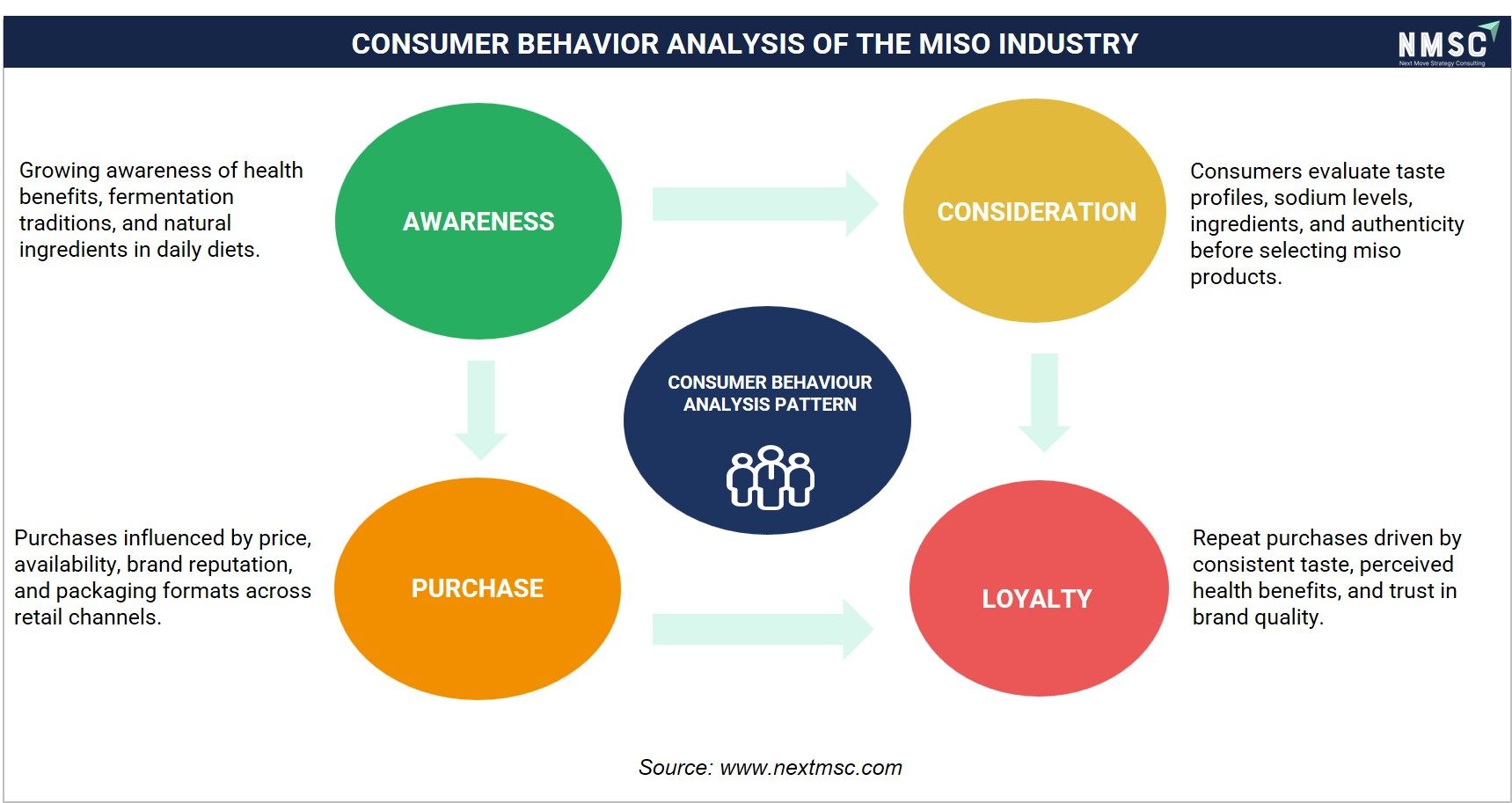
Based on NMSC’s primary research, we identified that consumer behavior in the miso market is increasingly influenced by health awareness and interest in fermented foods. Initially, consumers become aware through nutritional benefits and traditional appeal, after which they evaluate taste, sodium content, and authenticity. Subsequently, purchase decisions are driven by price, availability, and brand reputation across retail channels. Furthermore, consistent taste, perceived health benefits, and trusted branding encourage repeat purchases, thereby strengthening long-term customer loyalty and supporting sustained demand growth in both domestic and international markets.
Competitive Landscape
Competitive Dynamics & M&A Landscape:
|
Key Takeaways |
|
The global miso market is shaped by a mix of large-scale traditional manufacturers and regionally specialized fermentation producers, with a strong concentration in Japan alongside a growing presence in North America. Major players such as Marukome, Hikari Miso, Hanamaruki Foods, Marusan-Ai, Kikkoman Corporation, and Amano Foods leverage established production capabilities, strong brand heritage, and expanding international distribution networks to maintain market leadership. At the same time, traditional producers including Miyasaka Jozo, Maruya Hatcho Miso, Ishii Miso, Masuzawa Miso, and Takeya Miso strengthen market depth through artisanal fermentation expertise and premium product positioning. |
|
From our assessment of competitive strategies, we found manufacturers are increasingly focusing on clean-label formulations, low-sodium innovation, and diversification into plant-based and functional food applications. Additionally, expansion into global retail and foodservice channels, along with product premiumization and flavor innovation, continues to shape market competitiveness and consumer engagement. |
|
Recent market developments also reflect growing emphasis on export expansion and product localization strategies. Strategic investments in fermentation technologies, packaging innovation, and international partnerships are enabling companies to enhance production efficiency, expand geographic reach, and strengthen their competitive positioning across both retail and food processing segments. |
Which Companies Dominate the Miso Industry and How Do They Compete?
Based on our analysis, we noticed that the market is dominated by established Japanese manufacturers alongside a growing set of regional and export-focused producers. Leading companies such as Marukome, Hikari Miso, Hanamaruki Foods, Marusan-Ai, Kikkoman Corporation, and Amano Foods consistently maintain strong market positions where production scale, fermentation expertise, and product consistency are critical decision factors. From our evaluation of manufacturing operations and distribution strategies, we noticed that these companies are widely preferred for both domestic consumption and global exports due to their ability to deliver standardized quality at scale. Competition at this level is primarily driven by brand heritage, production efficiency, and extensive distribution networks across retail and foodservice channels.
Market Dominated by Miso Giants and Specialists
From our observation, we found that the competitive landscape is further strengthened by traditional and regionally specialized producers such as Miyasaka Jozo, Maruya Hatcho Miso, Ishii Miso, Masuzawa Miso, Takeya Miso, and Yamato Soysauce & Miso. During our evaluation of product positioning and consumer preferences, these players demonstrated strong differentiation through artisanal fermentation techniques, long aging processes, and premium product offerings. In parallel, international manufacturers such as South River Miso Company and Miyako Oriental Foods are gaining traction by catering to local demand in North America while maintaining authenticity in production methods. In practice, large-scale manufacturers ensure volume and accessibility, while traditional and regional producers enhance product diversity and premiumization, collectively driving broader market expansion.
Innovation and Adaptability Drive Market Success
Innovation remains a key determinant of competitiveness in the miso market, as noticed through our assessment of product development and manufacturing advancements. Leading players are increasingly focusing on fermentation optimization, low-sodium formulations, and diversification into alternative substrates to meet evolving consumer preferences. From our analysis of competitive strategies, we found that companies investing in clean-label positioning, functional benefits, and flavor innovation are better positioned to expand across global markets. Additionally, advancements in packaging and shelf-life extension are improving product accessibility in international retail channels. These developments reflect a shift toward combining traditional fermentation expertise with modern food innovation, enabling companies to strengthen long-term market relevance.
Market Players to Opt for Merger & Acquisition Strategies to Expand Their Presence
Based on our research, we found that expansion strategies in the miso market are increasingly focused on export growth, product localization, and strategic collaborations. Leading manufacturers are expanding their presence in international markets through partnerships with distributors, foodservice operators, and retail chains. At the same time, companies are investing in localized production and product adaptation to meet regional taste preferences and regulatory requirements. Our analysis indicates that these strategies are enhancing supply chain efficiency and improving market penetration across North America and Europe. As global demand for fermented and functional foods continues to rise, these expansion initiatives are enabling companies to strengthen their competitive positioning and capture new growth opportunities.
List of Key Miso Companies
-
Marukome Co., Ltd.
-
Hikari Miso Co., Ltd.
-
Hanamaruki Foods Incorporated
-
Marusan-Ai Co., Ltd.
-
Miyasaka Jozo Co., Ltd.
-
Saikyo Miso Co., Ltd.
-
Ichibiki Co., Ltd.
-
Yamato Soysauce & Miso Co., Ltd.
-
Kikkoman Corporation
-
Amano Foods Co., Ltd.
-
Maruya Hatcho Miso Co., Ltd.
-
Miyako Oriental Foods, Inc.
-
Maruman Miso Co., Ltd.
-
Takeya Miso Co., Ltd.
-
Masuzawa Miso Co., Ltd.
-
Ishii Miso Co., Ltd.
-
Kanematsu Miso Co., Ltd.
-
South River Miso Company
-
Great Eastern Sun Trading Company, Inc.
-
Yamajirushi Co., Ltd.
What Are the Latest Key Industry Developments?
-
October 2025 – Hikari Miso Co., Ltd. announced it achieved 114% growth in its export business for the fiscal year ending September 2025. The company currently exports to 59 countries and is prioritizing organic, Kosher, and Halal-certified products to diversify its international market presence.
-
January 2025 – Hikari Miso Co., Ltd. launched two new additions to its "THE ORGANIC" miso series: "THE ORGANIC MISO GENMAI" (brown rice miso) and "THE ORGANIC MISO MUGIKOJI" (barley miso). These products feature sustainable 400g packaging using biomass ink to target single-person households and reduce food waste.
What Are the Key Factors Influencing Investment Analysis & Opportunities in the Miso Market?
Investment analysis in the miso market is increasingly shaped by a shift toward premiumization, clean-label positioning, and value-added product formats rather than traditional bulk production. Based on our evaluation of recent product launches, brand expansions, and strategic partnerships, we identified that investors favour companies offering organic, low-sodium, and functional miso variants aligned with health-conscious consumption trends. Manufacturers demonstrating strong brand identity, consistent quality, and scalable production capabilities, along with effective retail and e-commerce integration, continue to attract higher strategic interest.
Moreover, investment activity is concentrating around product innovation, packaging advancements, and expansion into new application areas such as ready-to-eat meals, sauces, and functional food products. In particular, companies focusing on sustainable sourcing, fermentation expertise, and premium positioning are gaining a competitive advantage. Strategic investments are increasingly led by global food companies and speciality brands aiming to expand their presence in fermented and plant-based food categories. For investors, the most attractive opportunities lie in businesses that combine product differentiation with strong distribution networks, evolving consumer alignment, and the ability to scale across both domestic and international markets.
Key Benefits for Stakeholders:
Next Move Strategy Consulting (NMSC) presents a comprehensive analysis of the miso market, covering historical developments from 2020 to 2025 and providing forward-looking forecasts through 2035. Our study evaluates the miso market at global, regional, and country levels, delivering quantitative outlooks alongside qualitative insights into key growth drivers, consumption patterns, product innovation trends, and investment dynamics across major application segments.
From our observation, we found that the miso industry delivers measurable value across a diverse value chain. Investors benefit from premiumization opportunities, expanding global demand for fermented foods, and the rise of value-added and functional product variants. Food manufacturers and producers gain from product diversification, brand positioning, and scalable production aligned with evolving dietary preferences. Distributors and retailers benefit from increasing product penetration, higher shelf visibility, and growing consumer interest in clean-label and plant-based offerings. By aligning traditional fermentation expertise with modern consumption trends and global distribution expansion, the market creates sustained value across the supply chain while supporting long-term growth and category development.
|
Parameters |
Details |
|
Customization Scope |
Free customization (equivalent to up to 80 analyst-working hours) after purchase. Addition or alteration to country, regional & segment scope. |
|
Pricing and Purchase Options |
Avail customized purchase options to meet your exact research needs. |
|
Approach |
In-depth primary and secondary research; proprietary databases; rigorous quality control and validation measures. |
|
Analytical Tools |
Porter's Five Forces, SWOT, value chain, and Harvey ball analysis to assess competitive intensity, stakeholder roles, and relative impact of key factors. |
Miso Market Key Segments
By Substrate
-
Single Base
-
Rice
-
Barley
-
Soybean
-
Other Base
-
-
Blended
-
Rice Dominant
-
Barley Dominant
-
Soybean Dominant
-
Equal Blend
-
Other Blend
-
By Form
-
Paste
-
Powder
-
Liquid
By Color
-
White
-
Yellow
-
Red
-
Dark
By Pasteurization
-
Pasteurized
-
Unpasteurized
By Sodium Level
-
Standard
-
Reduced Sodium
-
Low Sodium
By Application
-
Soup Base
-
Sauce and Dressing
-
Marinade and Seasoning
-
Processed Food Ingredient
-
Other Application
By End User
-
Household
-
Foodservice
-
Food Processing
-
Other End User
Geographical Breakdown
-
North America: U.S., Canada, and Mexico.
-
Europe: UK, Germany, France, Italy, Spain, Sweden, Denmark, Finland, the Netherlands, and the Rest of Europe.
-
Asia Pacific: China, India, Japan, South Korea, Taiwan, Indonesia, Vietnam, Australia, Philippines, Malaysia and the rest of APAC.
-
Middle East & Africa (MEA): Saudi Arabia, UAE, Egypt, Israel, Turkey, Nigeria, South Africa, and the rest of MEA.
-
Latin America: Brazil, Argentina, Chile, Colombia, and the rest of LATAM.
Conclusion & Recommendations
This report provides stakeholders, service providers, investors, and consultants with actionable insights to capitalise on the structural transformation underway in the market. By combining rigorous data-driven analysis with proven strategic frameworks, NMSC’s Miso Market Report serves as a critical decision-support resource for navigating an evolving global fermented food landscape. The market is positioned for sustained expansion, supported by rising demand for plant-based nutrition, increasing consumer awareness of gut health, and growing global adoption of fermented foods. Key strategic insights identified the increasing importance of premiumization, clean-label positioning, and product diversification, as these factors strengthen brand differentiation and long-term market relevance. Companies that prioritise fermentation expertise, sustainable sourcing, and innovative product formats consistently achieve stronger consumer trust and market positioning.
For executives and investors, capturing value requires focusing on high-growth applications such as ready-to-use formats, functional food integration, and expansion into global cuisines, while continuing investments in product innovation, packaging advancements, and distribution networks. Expanding presence in high-growth regions, particularly North America and emerging markets, unlocks new consumption opportunities. Brand credibility, product consistency, and alignment with evolving dietary trends further enhance market competitiveness, creating durable value across the global miso ecosystem.


About the Author
 Saista Faiyaz
— Saista Faiyaz is Research Associate at Next Move Strategy Consulting, where she has covered consumer markets and healthcare technologies for 3 years. Her work includes primary interview review, secondary-source validation, market sizing, and structured analysis of company and industry data. She supports research by comparing evidence across sources, organizing findings into market narratives, and documenting assumptions used in analysis. Her scope includes cross-market benchmarking, and reports.
Saista Faiyaz
— Saista Faiyaz is Research Associate at Next Move Strategy Consulting, where she has covered consumer markets and healthcare technologies for 3 years. Her work includes primary interview review, secondary-source validation, market sizing, and structured analysis of company and industry data. She supports research by comparing evidence across sources, organizing findings into market narratives, and documenting assumptions used in analysis. Her scope includes cross-market benchmarking, and reports.
About the Reviewer
 Supradip Baul
— Supradip Baul is an accomplished business consultant and strategist with over a decade of rich experience in market intelligence, strategy, technology, and business transformation. His work has included rigorous qualitative and quantitative analysis across multiple industries, helping clients shape investment decisions and long-term roadmaps. Earlier in his career, he was associated with Gartner, where he contributed to industry-leading reports and market share analyses. He has worked with leading global companies and holds an MBA with a dual specialization in Marketing and Finance.
Supradip Baul
— Supradip Baul is an accomplished business consultant and strategist with over a decade of rich experience in market intelligence, strategy, technology, and business transformation. His work has included rigorous qualitative and quantitative analysis across multiple industries, helping clients shape investment decisions and long-term roadmaps. Earlier in his career, he was associated with Gartner, where he contributed to industry-leading reports and market share analyses. He has worked with leading global companies and holds an MBA with a dual specialization in Marketing and Finance.
At Next Move Strategy Consulting, we understand that insightful market research is the cornerstone of successful business decisions. That's why we employ a robust and multifaceted approach, combining various methodologies to deliver the most accurate and actionable data for our clients.

Research Landscape
We navigate the world of research with two primary approaches:
Qualitative Approach
Our qualitative research methodologies involve immersive techniques such as in-depth interviews, focus groups, and observational studies. By engaging directly with individuals and stakeholders, we uncover valuable insights that quantitative data alone may overlook.

Quantitative Research
In tandem with qualitative methodologies, NMSC leverages the power of Quantitative Research to provide a robust foundation of numerical insights. Through systematic data collection and analysis, we quantify patterns, preferences, and market trends, offering a comprehensive view of the business landscape.
Our quantitative research approach employs diverse tools, including surveys, experiments, and statistical modelling. These methodologies enable us to gather data from a large and representative sample, ensuring the statistical significance of our findings. By employing structured questionnaires and standardized data collection methods, we guarantee the reliability and validity of the information we present to our clients.
Quantitative research is particularly effective in measuring the prevalence of trends, assessing market size, and gauging the impact of various factors on consumer behavior. The numerical precision attained through this approach equips our clients with actionable insights, facilitating data-driven decision-making and strategy formulation.


Our Specialized Toolbox for Industry-Specific Market Research
We deploy a specialized arsenal of techniques tailored to meet your unique requirements. Here's a glimpse into our comprehensive toolbox:

Information Procurement
The stage entails acquiring market data or relevant information through various sources and methodologies.


Market Research Approach
We utilize both top-down and bottom-up approaches in market research analysis to achieve a comprehensive understanding of the market dynamics, leveraging the broad perspective of industry trends and macroeconomic factors alongside detailed insights from specific segments and individual companies.

Porters Five Forces Analysis
We conduct Porter's Five Forces analysis to evaluate the competitive landscape of an industry, providing us with insights into factors that affect profitability and strategic positioning.

SWOT Analysis

Forecasting
We utilize a forecasting model to predict future consumption by considering parameters like population, economics, regulations, market competition, drivers, constraints, technology, and pricing. We also employ statistical techniques such as multilinear regression, exponential smoothing, moving average, ARIMA, and Monte Carlo simulations for accurate predictions. In econometric forecasting, we analyzed short-term and long-term event impacts, attributing values based on regulatory frameworks, economic factors, and market events.





 Speak to Our Analyst