Nasal Pillow Mask Market By Product Type (Standard Nasal Pillow Mask, Adjustable Nasal Pillow Mask, Gel Cushion Nasal Pillow Mask, Fabric Cushion Nasal Pillow Mask), By Price Tier (Economy Segment, Mid-Range Segment, Premium Segment), By Distribution Channel (Online Channel, Offline Channel), By Application (Homecare Use, Hospital and Clinic Use, Others), By End User (Adult Users, Pediatric Users) – Global Analysis & Forecast, 2025–2030
Industry: Healthcare | Publishing Date: June 9, 2026 | Last Updated: October 16, 2026 | No of Pages: N/A | No. of Tables: N/A | No. of Figures: N/A | Format: PDF | Report Code: HC3842
Industry Outlook
The global Nasal Pillow Mask Market size was valued at USD 686.7 million in 2024, and is expected to be valued at USD 730.0 million by the end of 2025. The industry is projected to grow, hitting USD 990.8 million by 2030, with a CAGR of 6.3% between 2025 and 2030.
The market is undergoing notable transformation, driven by rising health consciousness, increasing prevalence of sleep disorders such as sleep apnea, and growing awareness about effective respiratory support solutions. Changing consumer lifestyles, coupled with advancements in healthcare infrastructure and rising disposable incomes, are accelerating global demand. CPAP nasal pillows are gaining popularity for their compact design, comfort, and ease of use, making them a preferred choice among patients seeking lightweight and non-intrusive CPAP therapy options. Expanding online medical supply channels, improved product ergonomics, and sustainable material innovations are further boosting market adoption. Additionally, continuous advancements in mask design, enhanced airflow technology, and customized fit options are reshaping user experience, extending product life cycles, and strengthening brand competitiveness across regions.
What Are the Key Trends in Market?
What are the Major Technological Trends Shaping the Market?
Technological advancements are transforming the market. Innovations in materials and design, such as silicone-gel cushions, adaptive headgear, and minimal-contact frames, are improving comfort and usability. AI-driven fit optimization and automated pressure adjustment technologies are increasing therapy accuracy and patient adherence. Furthermore, digital health integration through Bluetooth-enabled CPAP devices and mobile apps allows real-time monitoring of sleep data and mask performance. Developments in antimicrobial coatings, hypoallergenic materials, and 3D printing for customized masks are also enhancing hygiene, safety, and product longevity.
How is Demographic Change Influencing the Market?
Demographic and lifestyle shifts are significantly impacting market growth. The rising elderly population and increasing cases of obstructive sleep apnea among adults are fueling demand for effective and comfortable nasal interface mask. Meanwhile, younger consumers and tech-savvy professionals are showing greater acceptance of compact, user-friendly CPAP solutions that fit their active lifestyles. Urbanization, longer working hours, and higher stress levels have led to growing sleep-related disorders, further driving adoption. Regional trends in Asia-Pacific and Europe highlight increasing healthcare expenditure and awareness campaigns supporting sleep health management.
What Role Does Government Support Play in Driving Industry Growth?
Government support plays a crucial role in the expansion of the market. Health authorities across North America, Europe, and Asia-Pacific are implementing programs to raise awareness about sleep apnea and promote early diagnosis. Reimbursement policies for CPAP therapy and related equipment are improving affordability and accessibility. Investments in healthcare infrastructure, patient education, and telemedicine are boosting adoption rates. Additionally, regulatory approvals and quality standards from organizations such as the FDA and CE ensure product safety, encouraging innovation and trust among consumers.
How is Consumer Preference Changing in the Market?
Consumer preferences are shifting toward comfort, customization, and connected care. Users increasingly seek lightweight, quiet, and easily adjustable lightweight CPAP masks that provide a natural breathing experience. Demand for portable and travel-compatible devices is on the rise, especially among frequent travellers and younger users. Consumers also favor products made from hypoallergenic, skin-friendly, and sustainable materials. Moreover, the growing interest in smart CPAP systems with mobile app integration reflects a broader move toward data-driven, self-managed healthcare solutions.
What Are the Key Market Drivers, Breakthroughs, and Investment Opportunities that will Shape the Nasal Pillow Mask Industry in Next Decade?
The market is witnessing robust growth driven by increasing awareness of sleep health, rising cases of sleep apnea, and the growing adoption of home-based respiratory therapies. Technological innovations, such as lightweight designs, improved airflow systems, and smart connectivity, are enhancing user comfort and compliance. The rapid expansion of e-commerce and telehealth platforms is improving product accessibility and boosting global sales. However, challenges such as discomfort and fit issues among users continue to restrain adoption rates. Despite this, the integration of smart and connected technologies offers significant growth opportunities, positioning nasal pillow masks as essential tools in the expanding sleep therapy and digital healthcare landscape.
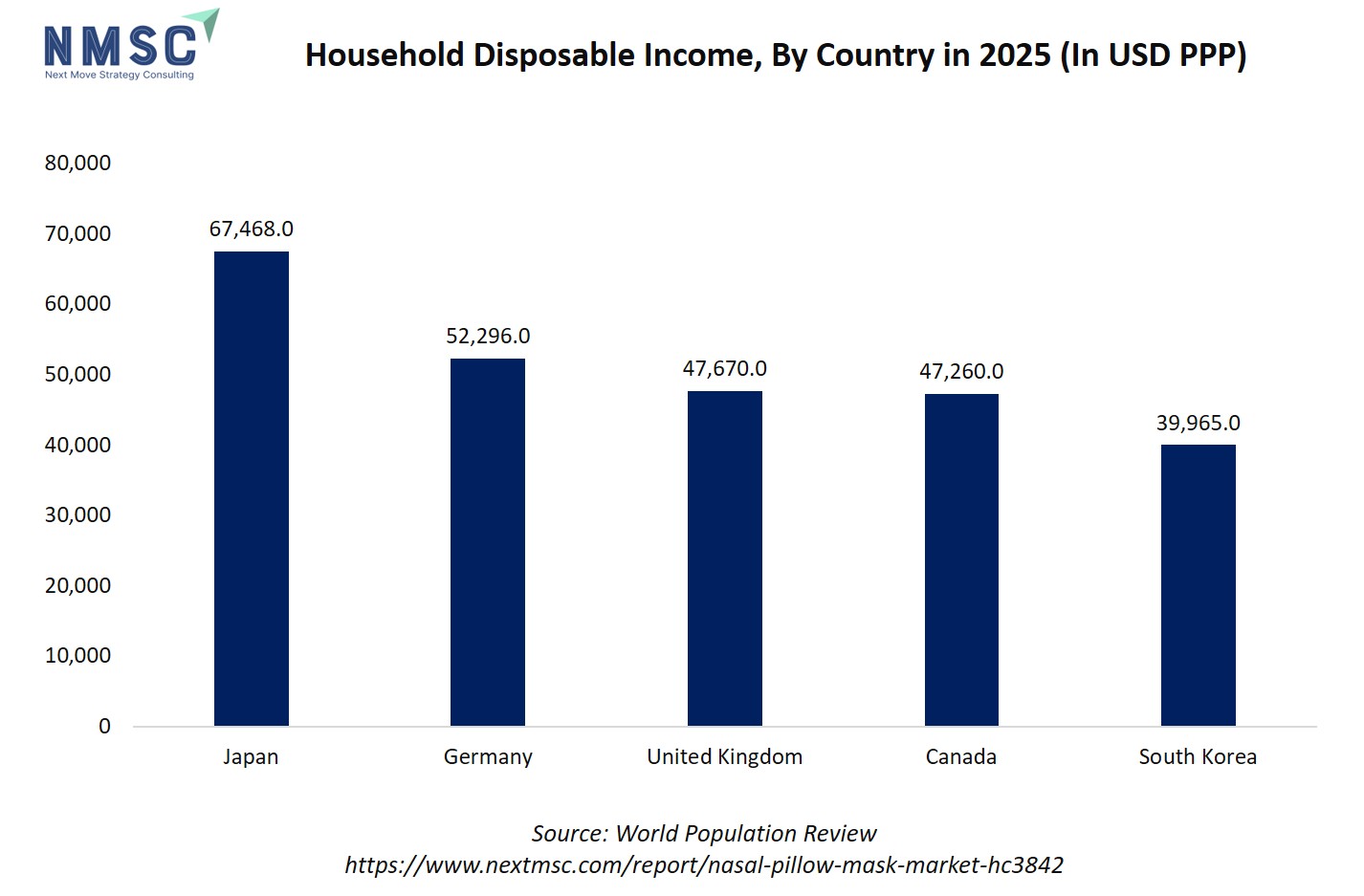
Rising household disposable incomes, measured in USD PPP, are a significant driver for the nasal pillow mask market growth, as higher purchasing power enables consumers to invest in advanced, comfortable, and premium respiratory care devices. In 2024–2025, countries such as Japan (USD 67,468 PPP), Germany (USD 52,296 PPP), the UK (USD 47,670 PPP), Canada (USD 47,260 PPP), and South Korea (USD 39,965 PPP) exhibit strong spending capacity, which translates into greater demand for high-quality sleep therapy solutions.
Consumers in these high-income regions are more willing to purchase premium nasal pillow masks featuring innovations such as gel cushions, adaptive fit systems, and lightweight materials that enhance comfort and usability. Additionally, increasing disposable income allows households to seek professional diagnosis and long-term management of sleep disorders like sleep apnea, further expanding the market base. Manufacturers benefit from this trend by introducing customized, ergonomic, and durable mask designs to cater to the growing demand for personalized and effective sleep therapy devices. In essence, rising disposable income directly boosts the adoption of nasal pillow masks, as consumers prioritize health, comfort, and convenience, driving steady growth across both developed and emerging economies.
Growth Drivers:
How is Growing Awareness of Sleep Health Driving the Market Demand?
Increasing awareness about the importance of quality sleep and its impact on overall health is a major driver of the market. Public health organizations, sleep clinics, and healthcare providers are actively educating people about sleep disorders such as obstructive sleep apnea (OSA) and their long-term consequences, including cardiovascular diseases, diabetes, and cognitive decline. As a result, more individuals are seeking early diagnosis and effective treatment options.
The emphasis on preventive healthcare and lifestyle management has further accelerated the adoption of CPAP therapy and associated devices like nasal pillow masks. These masks, known for their comfort, minimal contact, and user-friendly design, are becoming a preferred choice among patients and healthcare professionals. Moreover, growing social media influence and digital health campaigns highlighting the benefits of proper sleep hygiene are increasing consumer engagement and awareness, ultimately boosting demand for nasal pillow masks globally.
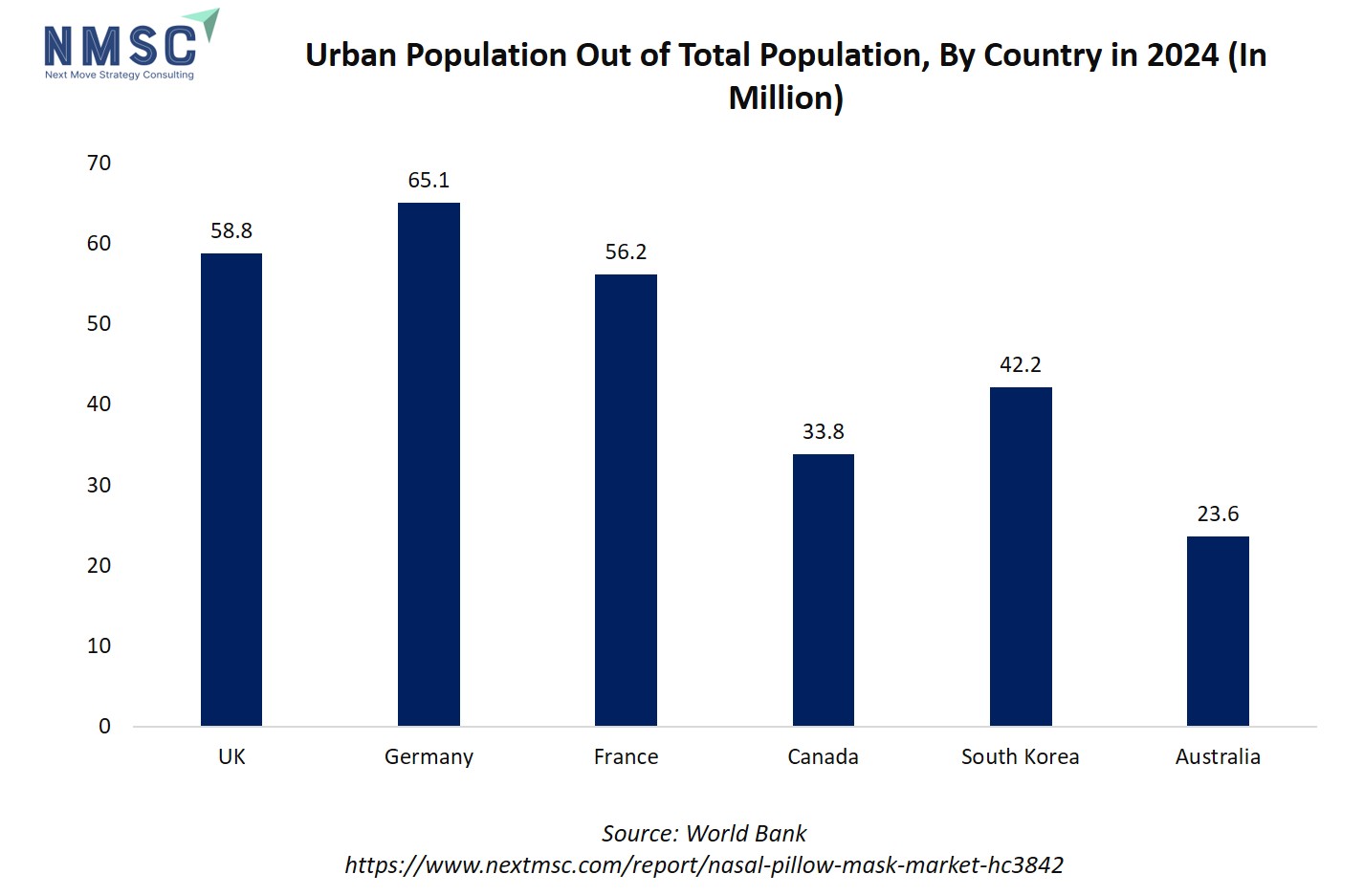
The level of urbanization across countries plays a crucial role in shaping the nasal pillow mask market demand, as urban populations tend to have greater awareness of sleep health, higher access to medical facilities, and stronger purchasing power for premium respiratory devices. In 2024, Germany leads with an urban population of 65.05 million, followed by the UK (58.76 million) and France (56.21 million), reflecting a large base of urban consumers increasingly seeking effective and comfortable solutions for sleep apnea and other respiratory conditions. Similarly, South Korea (42.17 million) and Canada (33.84 million) demonstrate growing adoption potential, driven by advanced healthcare infrastructure and widespread awareness of sleep therapy technologies.
In contrast, Australia, with an urban population of 23.60 million, represents a smaller but high-value niche market, where consumers are more inclined toward premium, ergonomic, and high-comfort nasal pillow masks. Overall, higher levels of urbanization are directly linked to increased diagnosis rates of sleep disorders, greater healthcare accessibility, and stronger consumer inclination toward modern medical devices. This trend supports the steady expansion of the market, as manufacturers focus on urban-centric distribution strategies, telehealth integration, and online retail growth to meet the rising urban demand for convenient, effective, and technology-driven respiratory care solutions.
Is Growth of E-Commerce and Online Medical Supply Channels Accelerating the Market Growth?
The rapid expansion of e-commerce and online medical supply platforms is a key driver of the market. With the increasing preference for convenient, contactless, and time-efficient purchasing methods, patients and healthcare providers are turning to digital channels to access a wide range of CPAP masks and accessories. Online platforms offer advantages such as competitive pricing, product comparisons, detailed specifications, and customer reviews, enabling consumers to make informed purchasing decisions.
Furthermore, the integration of telehealth and digital prescription services has streamlined the process of ordering nasal pillow masks directly from verified suppliers. Global e-commerce giants and specialized medical retailers are expanding their product offerings and distribution networks, making nasal pillow masks more accessible, especially in remote or underserved regions. Subscription models, doorstep delivery, and easy replacement options also enhance customer retention. This digital shift not only broadens market reach but also strengthens brand visibility and accelerates the overall growth of the nasal pillow mask industry.
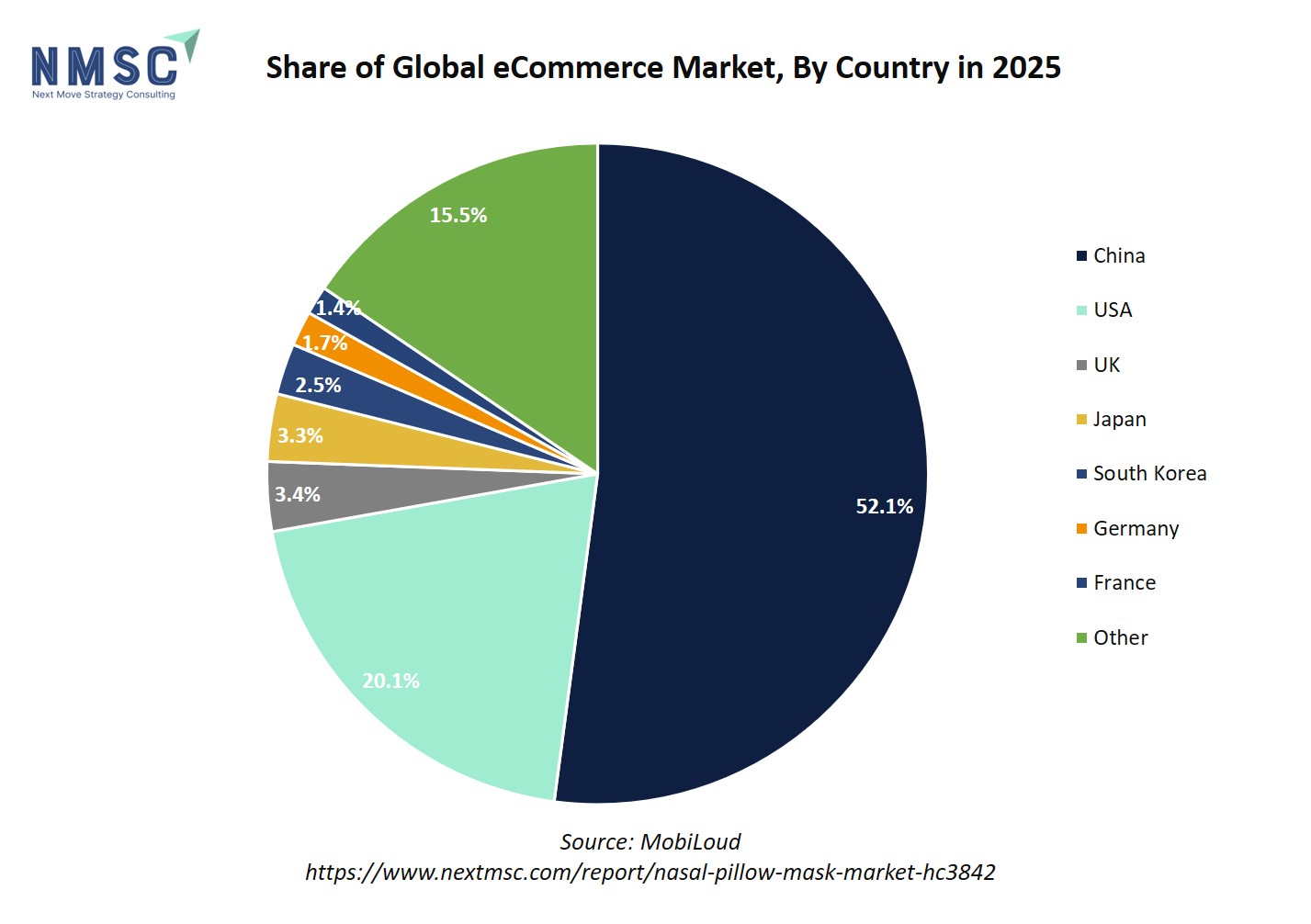
The global e-commerce market distribution shown in the pie chart directly influences the growth of the nasal pillow mask market trends, as online retail has become a critical sales and distribution channel for sleep therapy and respiratory care devices. With China holding a dominant 52.1% share of global e-commerce in 2025, the country offers substantial opportunities for manufacturers and distributors to reach a vast consumer base through digital health platforms and medical device marketplaces. The USA (20.1%) also plays a pivotal role, supported by strong adoption of telehealth services and online medical equipment suppliers that make nasal pillow masks more accessible to homecare users.
Markets such as the UK (3.4%), Japan (3.3%), and South Korea (2.5%) demonstrate mature e-commerce infrastructures and tech-savvy consumers who prefer online purchasing of CPAP and sleep therapy products for convenience and price transparency. Meanwhile, countries like Germany (1.7%) and France (1.4%) are witnessing rising online medical sales driven by healthcare digitalization and increasing awareness of sleep health. The “Other” category (15.5%), including emerging economies, represents growing potential for online penetration of affordable and mid-range nasal pillow masks. Overall, the strong global expansion of e-commerce platforms is transforming product accessibility, brand visibility, and consumer engagement in the nasal pillow mask market growth, enabling faster adoption and broader reach across both developed and emerging regions.
Growth Inhibitors:
How Does Discomfort and Fit Issues Among Users Restraints the Growth of the Market?
One of the major restraints in the market is the discomfort and fit challenges experienced by some users. Despite advancements in mask design, many patients report issues such as nasal irritation, air leakage, or difficulty adjusting to the mask during sleep. Improper fit reduces therapy effectiveness, leading to non-compliance with CPAP treatment. Additionally, individual facial structures and sleeping habits vary widely, making it difficult for a single mask design to suit all users. These comfort-related concerns discourage long-term use, limiting market growth potential.
How Is Integration of Smart and Connected Technologies Creating Opportunity for the Market?
The growing adoption of digital health solutions presents a significant opportunity for the nasal pillow mask market growth. The integration of smart sensors, Bluetooth connectivity, and mobile app compatibility in CPAP systems allows users and healthcare providers to monitor sleep patterns, therapy effectiveness, and mask performance in real time. This connected technology not only improves treatment adherence but also enhances patient engagement and personalized care. Manufacturers investing in data-driven, IoT-enabled nasal pillow masks gain a strong competitive edge, tapping into the expanding smart healthcare ecosystem.
How Nasal Pillow Mask Market Is Segmented in This Report, and What are the Key Insights from the Segmentation Analysis?
By Product Type Insights
Which Product Type is Expected to Drive the Nasal Pillow Mask Market In 2025?
On the basis of product type, the market is segmented into Standard Nasal Pillow Mask, Adjustable Nasal Pillow Mask, Gel Cushion Nasal Pillow Mask, and Fabric Cushion Nasal Pillow Mask.
In 2025, the Adjustable Nasal Pillow Mask segment is expected to drive the market, owing to its superior comfort, customizable fit, and enhanced sealing performance. These masks allow users to fine-tune the fit according to individual facial structures, improving therapy compliance and overall user satisfaction. Their lightweight design and adaptability make them particularly popular among patients seeking comfort and convenience in long-term sleep therapy. Meanwhile, Gel Cushion Nasal Pillow Masks are gaining strong traction due to their soft texture, pressure relief, and improved comfort for sensitive skin users. Standard Nasal Pillow Masks continue to hold a significant share due to affordability and easy availability, appealing to first-time users and healthcare facilities. Fabric Cushion Nasal Pillow Masks are emerging as a niche yet promising category, driven by growing demand for breathable, skin-friendly, and eco-conscious materials in medical device design.
By Price Tier Insights
Which Price Tier is Expected to Capture the Largest Market Share In 2025?
On the basis of price tier, the market is segmented into Economy Segment, Mid-Range Segment, and Premium Segment. The Mid-Range Segment is anticipated to capture the largest share of the nasal pillow mask market in 2025. This segment offers a balance of affordability, comfort, and quality, making it appealing to a wide range of consumers. Mid-range masks commonly feature adjustable straps, lightweight designs, and durable materials, enhancing user satisfaction and compliance. Growth in online retail channels and increased product awareness are further supporting the dominance of this segment.
By Distribution Channel Insights
How is the Online Channel Transforming the Nasal Pillow Mask Market?
On the basis of distribution channel, the market is segmented into Online Channel and Offline Channel. The Online Channel is transforming the market by offering convenience, accessibility, and a wider product selection. E-commerce platforms and digital medical supply stores allow consumers to compare prices, read reviews, and access a variety of brands from the comfort of their homes. The integration of telehealth services and digital prescriptions has made purchasing easier and faster, while subscription-based models and doorstep delivery enhance customer retention. This channel’s strong growth is supported by rising internet penetration, digital literacy, and preference for contactless shopping.
By Application Insights
How is Homecare Use Driving the Growth of the Nasal Pillow Mask Market?
On the basis of application, the market is segmented into Homecare Use, Hospital and Clinic Use, and Others. The Homecare Use segment is driving significant growth in the nasal pillow mask industry due to the increasing preference for comfortable, cost-effective, and self-managed sleep therapy. Patients are increasingly adopting home-based CPAP therapy for the treatment of sleep apnea, driven by rising health awareness and improved device accessibility. Compact design, ease of use, and online availability of nasal pillow masks further enhance their suitability for homecare settings. Additionally, advancements in user-friendly features and digital monitoring solutions are boosting adoption among individuals seeking convenience and independence in managing sleep disorders.
By End User Insights
How are Adult Users Influencing the Growth of the Nasal Pillow Mask Market?
On the basis of end user, the market is segmented into Adult Users and Pediatric Users. The Adult Users segment dominates of the nasal pillow mask market share, driven by the rising prevalence of sleep apnea and other sleep-related breathing disorders among adults. Increasing awareness of the health risks associated with poor sleep, such as cardiovascular diseases and obesity, is fueling demand for effective CPAP therapy solutions. Adult users prefer nasal pillow masks due to their lightweight design, minimal facial contact, and improved comfort compared to traditional full-face masks. Additionally, the growing adoption of home-based sleep therapy and telehealth consultations further supports the segment’s expansion globally.
Regional Outlook
The market is geographically studied across North America, Europe, Asia Pacific, and the Middle East & Africa, and each region is further studied across countries.
Nasal Pillow Mask Market in North America
The North American nasal pillow mask market expansion is growing steadily, driven by rising health awareness, a high prevalence of sleep apnea, and increasing adoption of home-based respiratory therapies. Expanding e-commerce platforms, retail medical stores, and online healthcare channels are improving product accessibility. Consumers are increasingly seeking lightweight, comfortable, and travel-friendly nasal pillow masks designed for effective CPAP therapy. Technological advancements, including quiet airflow systems and smart connectivity, are enhancing user experience, while growing awareness of sleep health continues to fuel regional demand.
Nasal Pillow Mask Market in the United States
In the United States, market growth is primarily fueled by the high incidence of sleep apnea and growing public awareness of sleep-related disorders. Consumers are demanding advanced, comfortable, and easy-to-use nasal pillow masks that provide effective CPAP therapy. The presence of leading manufacturers, robust healthcare infrastructure, and favorable reimbursement policies further strengthen market expansion. In addition, the rise of online medical supply platforms and telehealth integration allows patients to conveniently access and customize their sleep therapy equipment, boosting adoption across diverse demographics.
Nasal Pillow Mask Market in Canada
The Market in Canada is supported by increasing awareness of sleep health, rising healthcare expenditure, and greater adoption of home respiratory therapy solutions. Consumers are prioritizing comfort, portability, and ease of maintenance in CPAP masks. E-commerce platforms and hospital supply chains are expanding product accessibility, while sustainability and ergonomic innovations are influencing purchasing decisions. Government initiatives promoting sleep disorder diagnosis and treatment, along with growing demand for compact and user-friendly devices, are supporting market growth.
Nasal Pillow Mask Market in Europe
The European market is witnessing robust growth due to the rising prevalence of sleep apnea, increasing healthcare investments, and growing preference for non-invasive respiratory therapies. Consumers are adopting nasal pillow masks for their minimal contact design, lightweight structure, and enhanced comfort. Expanding digital health infrastructure, home-based care adoption, and regulatory support for CPAP therapy are further driving market expansion. Moreover, sustainability and innovation in mask materials are aligning with Europe’s strong eco-conscious consumer base, boosting market penetration across major countries.
Nasal Pillow Mask Market in the United Kingdom
In the U.K., rising awareness of sleep-related health issues and growing demand for home-based CPAP therapy are propelling market growth. Consumers prefer nasal pillow masks that offer comfort, quiet operation, and a secure fit. Expansion of online retail and hospital distribution networks is improving access to advanced CPAP products. Additionally, healthcare modernization and patient education programs about sleep apnea are increasing adoption rates, while interest in sustainable and hypoallergenic materials supports the premiumization trend in the market.
Nasal Pillow Mask Market in Germany
Germany’s market is driven by strong healthcare infrastructure, growing prevalence of sleep apnea, and increasing preference for technologically advanced and comfortable respiratory devices. Consumers are increasingly choosing nasal pillow masks for their ergonomic designs and customizable fit. The expansion of telemedicine services and homecare programs is enhancing accessibility and awareness. Furthermore, the country’s focus on sustainable manufacturing and patient-centric innovations supports continuous market development and brand differentiation.
Nasal Pillow Mask Market in France
In France, the market is expanding due to increasing health awareness and growing adoption of CPAP therapy for sleep apnea management. Consumers prefer nasal pillow masks that combine comfort, portability, and quiet performance. Modern healthcare distribution networks, including online platforms and pharmacies, are enhancing product availability. Government initiatives promoting respiratory health and preventive care, along with technological innovation in mask design and materials, are further supporting steady market growth across the country.
Nasal Pillow Mask Market in Spain
Spain’s market is experiencing growth driven by increasing diagnosis of sleep apnea and rising public awareness of sleep health. Urban populations are showing strong demand for lightweight, comfortable, and travel-friendly nasal pillow masks suited for daily use. Expansion of online medical supplies and healthcare retail outlets is improving accessibility. Additionally, government support for home-based treatment solutions and the growing emphasis on sustainable and patient-friendly devices are strengthening market adoption.
Nasal Pillow Mask Market in Italy
The nasal pillow mask market overview in Italy is fueled by rising awareness of sleep disorders, increasing healthcare spending, and growing adoption of CPAP therapy for obstructive sleep apnea. Consumers are opting for ergonomic, user-friendly nasal pillow masks that ensure comfort and effective airflow. Expanding telehealth platforms and online medical stores are enhancing product reach, while growing demand for sustainable and hypoallergenic materials is encouraging innovation among manufacturers, promoting continuous market expansion.
Nasal Pillow Mask Market in the Nordics
In the Nordic region, high health consciousness, strong healthcare infrastructure, and early adoption of advanced medical technologies are driving the nasal pillow mask market. Consumers prioritize high-quality, eco-friendly, and ergonomic CPAP solutions for improved sleep therapy comfort. The widespread use of online medical supply channels and government-backed health initiatives promoting sleep disorder management further enhance adoption. Sustainability and digital connectivity remain key focus areas, supporting long-term growth in this region’s premium healthcare equipment segment.
Nasal Pillow Mask Market in Asia Pacific
The Asia Pacific’s market is expanding rapidly, driven by urbanization, rising disposable incomes, and growing awareness of sleep health. Countries such as China, India, Japan, South Korea, and Australia are witnessing increased adoption of CPAP therapy and nasal pillow masks due to the rising prevalence of sleep apnea and lifestyle-related disorders. The expansion of healthcare infrastructure, telemedicine, and e-commerce channels is enhancing product accessibility. Moreover, technological innovations, ergonomic designs, and sustainable manufacturing practices are creating new growth opportunities across the region.
Nasal Pillow Mask Market in China
In China, market growth is driven by increasing awareness of sleep disorders, rising healthcare spending, and expanding middle-class populations seeking advanced respiratory solutions. The availability of nasal pillow masks through online healthcare platforms and medical retail stores is improving accessibility. Manufacturers are focusing on smart and comfortable mask designs tailored for local preferences. Additionally, government initiatives to improve sleep health awareness and rapid digitalization in healthcare are fostering innovation and market expansion.
Nasal Pillow Mask Market in Japan
Japan’s market is shaped by an aging population, high awareness of sleep-related health conditions, and strong demand for premium, high-quality medical devices. Consumers prefer lightweight, quiet, and comfortable nasal pillow masks suitable for long-term CPAP therapy. The country’s advanced healthcare system and focus on technology integration, including smart monitoring and IoT-enabled solutions, are fueling product innovation. Increasing online sales and sustainable product development are further strengthening the market’s growth trajectory.
Nasal Pillow Mask Market in India
The Indian nasal pillow mask market is witnessing significant growth due to rapid urbanization, rising disposable incomes, and growing diagnosis rates of sleep apnea. With an expanding middle class and increasing healthcare awareness, demand for affordable yet comfortable CPAP masks is accelerating. The growth of online medical supply platforms and hospital-based distribution channels enhances product availability. Additionally, telehealth adoption and local manufacturing initiatives are supporting market expansion, while innovation in ergonomic and cost-effective mask designs attracts a broad consumer base.
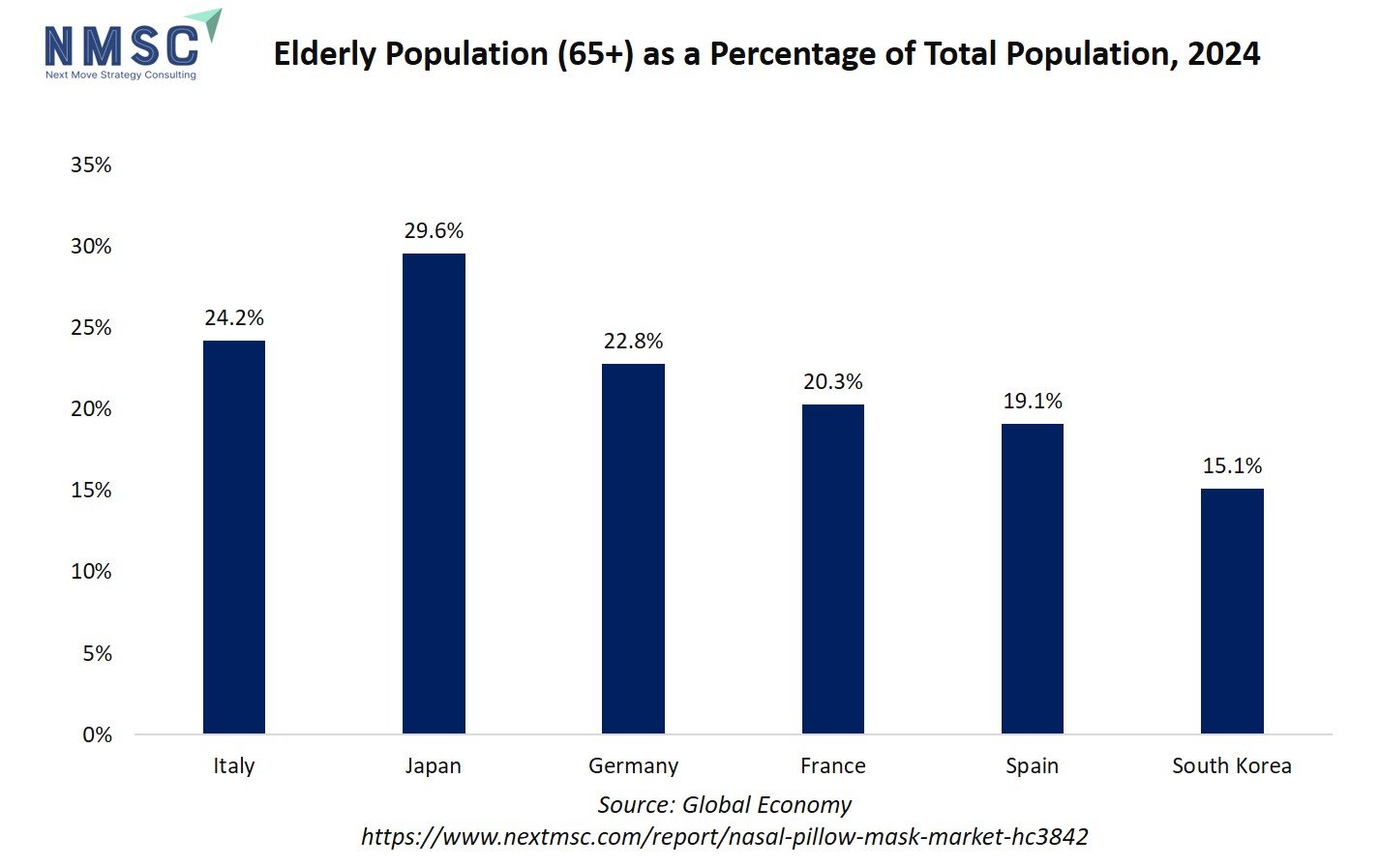
The bar chart illustrates the elderly population (aged 65 and above) as a percentage of the total population in 2024 across six major countries , Italy, Japan, Germany, France, Spain, and South Korea. Among these, Japan has the highest elderly population share at 29.6%, followed by Italy (24.2%) and Germany (22.8%), indicating a significant aging demographic. France and Spain have moderately high elderly populations at 20.3% and 19.1%, respectively, while South Korea, though lower at 15.1%, is witnessing rapid growth in its senior population.
In relation to the nasal pillow mask market, these figures highlight a crucial demand driver. A larger elderly population correlates with a higher prevalence of sleep disorders, such as obstructive sleep apnea (OSA), which significantly increases the need for nasal pillow masks and other CPAP devices. Countries like Japan, Italy, and Germany are likely to remain key markets due to their aging populations, advanced healthcare systems, and growing adoption of homecare respiratory solutions. Furthermore, as aging populations expand in South Korea and France, market opportunities are expected to rise for lightweight, comfortable, and adjustable nasal pillow masks that cater to elderly users seeking ease of use and better sleep quality.
Nasal Pillow Mask Market in South Korea
In South Korea, increasing awareness of sleep health, high digital adoption, and a tech-savvy population are driving market growth. Consumers favor compact, comfortable, and technologically advanced nasal pillow masks for home-based CPAP therapy. The strong presence of e-commerce and telemedicine platforms is improving accessibility and product variety. Moreover, innovation in noise reduction, fit customization, and sustainable materials aligns with consumer expectations for quality and eco-friendly healthcare products, sustaining steady growth in the market.
Nasal Pillow Mask Market in Taiwan
Taiwan’s market is expanding due to growing public awareness of sleep apnea and the increasing use of home-based healthcare solutions. Consumers are seeking lightweight, comfortable, and easy-to-maintain nasal pillow masks. A well-developed healthcare system and expanding digital retail landscape are enhancing market accessibility. The rising focus on sustainability, premium materials, and advanced design technologies presents strong opportunities for manufacturers to develop innovative and patient-centric products.
Nasal Pillow Mask Market in Indonesia
The Indonesian market is growing steadily due to rising urbanization, a growing middle-class population, and increasing awareness of sleep-related disorders. Consumers are showing a preference for affordable, portable, and user-friendly nasal pillow masks. The expansion of healthcare infrastructure and digital health platforms is improving diagnosis rates and product access. Manufacturers are investing in education campaigns and local partnerships to strengthen brand visibility and encourage early adoption of CPAP therapy solutions.
Nasal Pillow Mask Market in Australia
Australia’s market is supported by high awareness of sleep apnea, strong healthcare infrastructure, and growing adoption of home-based CPAP therapies. Consumers prefer comfortable, travel-friendly, and easy-to-fit nasal pillow masks that enhance sleep quality. The widespread availability of products through online platforms, pharmacies, and hospitals is improving access. Additionally, sustainability trends and technological innovations—such as quiet operation and smart monitoring, are encouraging product diversification and driving consistent market growth.
Nasal Pillow Mask Market in Latin America
The Latin American nasal pillow mask market is growing rapidly due to increasing awareness of sleep disorders, urbanization, and rising disposable incomes in countries such as Brazil, Mexico, and Argentina. Expanding healthcare facilities and online medical supply channels are improving access to CPAP devices and accessories. Consumers are becoming more receptive to home-based respiratory care, while government initiatives promoting healthcare modernization further support market growth. Opportunities lie in cost-effective, comfortable, and locally manufactured mask solutions tailored to diverse patient needs.
Nasal Pillow Mask Market in the Middle East & Africa
The nasal pillow mask market in the Middle East and Africa is gaining momentum due to rising awareness of sleep health, growing healthcare investments, and expanding access to diagnostic and treatment facilities. Urban consumers increasingly prefer lightweight and easy-to-use nasal pillow masks suitable for home therapy. Expansion of modern retail outlets, pharmacies, and online platforms is improving accessibility across both developed and emerging markets. Furthermore, government health programs and sustainable product innovations are enhancing awareness and driving long-term market adoption.
Competitive Landscape
Which Companies Dominate the Market and How do they Compete?
The global nasal pillow mask industry is dominated by major medical device manufacturers such as ResMed, Philips Respironics Inc., Fisher & Paykel Healthcare, BMC Medical, and Apex Medical, along with specialized players like CPAPPRO, LifeSource, Sleep Doctor, and Care Pro Health Services. These companies compete through diverse product portfolios that emphasize comfort, lightweight design, quiet performance, and advanced airflow systems for effective sleep apnea management. Market leaders such as ResMed and Fisher & Paykel focus heavily on technological innovation—introducing ultra-soft cushions, adjustable headgear, and compact mask systems designed to improve patient compliance and therapeutic outcomes. Their strong global distribution networks, brand recognition, and focus on regulatory standards give them a significant competitive edge.
Regional and niche players like CPAPPRO, LifeSource, and Care Pro Health Services compete by offering affordable and region-specific solutions tailored for homecare and clinical use. These firms leverage online medical supply platforms and hospital partnerships to expand accessibility. Across the industry, competition is driven by innovation in materials, integration with smart CPAP systems, and emphasis on sustainability. Companies that align their strategies toward patient comfort, affordability, and digital connectivity are strengthening their presence and capturing growing demand within the global nasal pillow mask industry.
Market Dominated by Nasal Pillow Mask Market Giants and Specialists
The nasal pillow mask industry is characterized by a blend of large multinational manufacturers and regional or niche specialists. Major players leverage their brand reputation, global distribution networks, and broad product portfolios, offering a diverse range of nasal pillow masks catering to various user needs, from standard CPAP accessories to advanced, comfort-enhancing solutions. In contrast, smaller or specialized companies focus on custom-fit, lightweight, or technologically advanced designs, appealing to health-conscious consumers and those seeking personalized sleep therapy solutions. This balance between global leaders and innovative niche brands ensures that consumers choose between trusted, established options and tailored, high-performance products designed for specific comfort or therapeutic needs.
Innovation and Adaptability Drive Market Success
Innovation remains a key success factor in the nasal pillow mask market. Leading companies are investing in ergonomic designs, noise reduction systems, smart connectivity, and sustainable materials to improve comfort, performance, and user experience. Emerging trends such as smart sleep monitoring integration, hypoallergenic materials, and eco-friendly packaging are reshaping consumer expectations. Brands that emphasize personalization, comfort, and technological sophistication are gaining greater market traction. Continuous innovation in design, fit, and material quality is critical for maintaining a competitive edge in a rapidly evolving market focused on wellness and sleep optimization.
Market Players to Opt for Merger & Acquisition Strategies to Expand their Presence
Mergers and acquisitions are becoming a strategic tool for growth in the market. Leading manufacturers are acquiring regional brands and technology innovators to expand their product portfolios, enter new markets, and enhance their R&D capabilities. These strategic moves allow companies to scale production efficiently, cater to diverse consumer preferences, and capitalize on the growing demand for advanced and comfortable sleep therapy solutions. Through such partnerships and acquisitions, market players are enhancing their global footprint, improving product diversity, and reinforcing their competitive positioning across both mainstream and specialized medical device segments.
List of Key Nasal Pillow Mask Companies
-
Apex Medical
-
ResMed
-
CPAPPRO
-
Fisher & Paykel
-
LifeSource
-
Philips Respironics Inc
-
Philips Respironics Inc
-
Sleep Doctor
-
Care pro Health Services
-
BMC Medical
What Are the Latest Key Industry Developments?
-
August 2025 - ResMed launched its new mask model “AirTouch N30i” (fabric-cushion nasal mask) and won Red Dot design awards.
-
November 2024 - Fisher & Paykel launched its “F&P Nova Micro” nasal pillows mask (the smallest/lightest yet) in multiple markets.
-
August 2024 - Philips announced it would focus on PAP accessories including masks and announced large recall/ regulatory issues for CPAP devices.
-
February 2024 - Philips CPAP & BiPAP machines were linked with fatalities (561 reported) in relation to foam breakdown; regulator activity ongoing.
What Are the Key Factors Influencing Investment Analysis & Opportunities in the Nasal Pillow Mask Market?
The market is drawing significant investor attention due to the rising global prevalence of sleep apnea, respiratory disorders, and the growing awareness of sleep health and wellness. Companies that emphasize innovative mask designs, enhanced comfort, fit, and breathability, and integration of smart technologies (such as connected CPAP systems and sleep monitoring) are particularly attractive to investors. Operational efficiency through cost-effective manufacturing, advanced materials, and scalable production boosts profitability and global reach. Moreover, a diversified product portfolio that includes premium, customizable, and patient-specific solutions strengthens long-term market stability. Strategic mergers, acquisitions, and collaborations with healthcare providers and digital health platforms further enhance market access and technological expertise. Investors are expected to favor companies that combine innovation, patient comfort, and sustainability, while adapting quickly to telehealth adoption, e-commerce growth, and regulatory advancements, all of which are driving substantial opportunities in the expanding nasal pillow mask industry worldwide.
Key Benefits for Stakeholders:
Next Move Strategy Consulting (NMSC) delivers an in-depth evaluation of the nasal pillow mask market report, analysing historical performance from 2020 to 2024 and providing reliable forecasts through 2030. The report covers regional and country-level assessments, offering quantitative insights into market size, device adoption rates, product shipments, patient demographics, technological advancements, and emerging opportunities across all major nasal pillow mask types and applications. This comprehensive study highlights critical growth drivers, regulatory trends, supply-chain developments, and investment patterns shaping the sector.
The nasal pillow mask industry provides strong value to a wide range of stakeholders by supporting essential sectors such as healthcare, home-based sleep therapy, respiratory care, and medical device manufacturing. Investors benefit from expanding long-term demand, attractive returns linked to rising sleep apnea diagnosis rates, and growing opportunities in innovative, patient-centric, and AI-enabled mask technologies. Customers, including sleep clinics, hospitals, durable medical equipment (DME) providers, and end-users, gain access to reliable, comfortable, and effective respiratory interfaces vital for therapy adherence, sleep quality, and overall health outcomes. Manufacturers and suppliers benefit from consistent demand, opportunities to innovate in design and materials, improve production efficiency, and expand distribution networks, ensuring competitive advantage in a rapidly evolving global market.
Report Scope
|
Parameters |
Details |
|
Market Size in 2025 |
USD 730.0 Million |
|
Revenue Forecast in 2030 |
USD 990.8 Million |
|
Growth Rate |
CAGR of 6.3% from 2025 to 2030 |
|
Analysis Period |
2024–2030 |
|
Base Year Considered |
2024 |
|
Forecast Period |
2025–2030 |
|
Market Size Estimation |
Million (USD) |
|
Growth Factors |
|
|
Companies Profiled |
10 |
|
Countries Covered |
28 |
|
Market Share |
Available for 10 companies |
|
Customization Scope |
Free customization (equivalent to up to 80 analyst-working hours) after purchase. Addition or alteration to country, regional & segment scope. |
|
Pricing and Purchase Options |
Avail customized purchase options to meet your exact research needs. |
|
Approach |
In-depth primary and secondary research; proprietary databases; rigorous quality control and validation measures. |
|
Analytical Tools |
Porter's Five Forces, SWOT, value chain, and Harvey ball analysis to assess competitive intensity, stakeholder roles, and relative impact of key factors. |
Key Market Segments
By Product Type
-
Standard Nasal Pillow Mask
-
Adjustable Nasal Pillow Mask
-
Gel Cushion Nasal Pillow Mask
-
Fabric Cushion Nasal Pillow Mask
By Price Tier
-
Economy Segment
-
Mid-Range Segment
-
Premium Segment
By Distribution Channel
-
Online Channel
-
Brand-Owned Online Stores
-
E-commerce Marketplaces
-
-
Offline Channel
-
Medical Equipment Retailers
-
Hospital Supply Distributors
-
By Application
-
Homecare Use
-
Hospital and Clinic Use
-
Others
By End User
-
Adult Users
-
Pediatric Users
Geographical Breakdown
-
North America: U.S., Canada, and Mexico.
-
Europe: U.K., Germany, France, Italy, Spain, Sweden, Denmark, Finland, Netherlands, and rest of Europe.
-
Asia Pacific: China, India, Japan, South Korea, Taiwan, Indonesia, Vietnam, Australia, Philippines, Malaysia, and rest of APAC.
-
Middle East & Africa (MENA): Saudi Arabia, UAE, Egypt, Israel, Turkey, Nigeria, South Africa, and rest of MENA.
-
Latin America: Brazil, Argentina, Chile, Colombia, and rest of LATAM
Conclusion & Recommendations
The nasal pillow mask market is positioned for steady expansion, supported by rising global prevalence of sleep apnea, increasing awareness of respiratory health, growing adoption of home-based sleep therapy, and continuous improvements in mask comfort and design. NMSC’s analytical framework equips stakeholders, industry leaders, investors, and consultants with actionable insights to navigate this evolving landscape with confidence. The sector’s long-term growth outlook remains positive, driven by advancements in lightweight materials, patient-centric interfaces, enhanced airflow technologies, and supportive reimbursement policies across major healthcare markets. Strategic takeaways emphasize the importance of product comfort, fit optimization, regulatory compliance, and supply-chain reliability. Companies that enhance mask ergonomics, integrate quieter airflow systems, utilize skin-friendly materials, and expand distribution partnerships with sleep clinics and durable medical equipment (DME) providers will gain competitive advantage. The market also presents considerable potential in emerging areas such as custom-fit nasal pillow masks, digital compliance monitoring, hybrid mask formats, and telehealth-enabled respiratory care, offering new revenue streams and strengthening global competitiveness.
For executives and investors, capitalizing on these trends requires identifying high-growth patient segments, prioritizing investments in advanced CPAP interface technologies, and forming strategic collaborations with healthcare providers, sleep labs, and medical device distributors. Expanding presence in regions with rising sleep apnea diagnosis rates, strong healthcare infrastructure, and supportive insurance coverage will optimize long-term returns. Additionally, focusing on patient comfort, safety, transparency, and clinical performance validation enhances stakeholder confidence and helps companies meet increasing expectations from regulators, clinicians, and end users. Together, these strategies position market participants to maximize value creation and capture strong opportunities in the global nasal pillow mask market report.


About the Author
 Mayurima Roy
— Mayurima Roy is Research Analyst at Next Move Strategy Consulting, where she has spent 4 years working across the firm's full industry coverage rather than a single fixed vertical. Her work centers on structured research, ongoing trend tracking, competitive assessment, and insight-led content development, translating complex market data into clear, decision-ready narratives that support informed client decision-making across diverse global industries, market sectors, and world regions every day.
Mayurima Roy
— Mayurima Roy is Research Analyst at Next Move Strategy Consulting, where she has spent 4 years working across the firm's full industry coverage rather than a single fixed vertical. Her work centers on structured research, ongoing trend tracking, competitive assessment, and insight-led content development, translating complex market data into clear, decision-ready narratives that support informed client decision-making across diverse global industries, market sectors, and world regions every day.
About the Reviewer
 Supradip Baul
— Supradip Baul is an accomplished business consultant and strategist with over a decade of rich experience in market intelligence, strategy, technology, and business transformation. His work has included rigorous qualitative and quantitative analysis across multiple industries, helping clients shape investment decisions and long-term roadmaps. Earlier in his career, he was associated with Gartner, where he contributed to industry-leading reports and market share analyses. He has worked with leading global companies and holds an MBA with a dual specialization in Marketing and Finance.
Supradip Baul
— Supradip Baul is an accomplished business consultant and strategist with over a decade of rich experience in market intelligence, strategy, technology, and business transformation. His work has included rigorous qualitative and quantitative analysis across multiple industries, helping clients shape investment decisions and long-term roadmaps. Earlier in his career, he was associated with Gartner, where he contributed to industry-leading reports and market share analyses. He has worked with leading global companies and holds an MBA with a dual specialization in Marketing and Finance.
At Next Move Strategy Consulting, we understand that insightful market research is the cornerstone of successful business decisions. That's why we employ a robust and multifaceted approach, combining various methodologies to deliver the most accurate and actionable data for our clients.

Research Landscape
We navigate the world of research with two primary approaches:
Qualitative Approach
Our qualitative research methodologies involve immersive techniques such as in-depth interviews, focus groups, and observational studies. By engaging directly with individuals and stakeholders, we uncover valuable insights that quantitative data alone may overlook.

Quantitative Research
In tandem with qualitative methodologies, NMSC leverages the power of Quantitative Research to provide a robust foundation of numerical insights. Through systematic data collection and analysis, we quantify patterns, preferences, and market trends, offering a comprehensive view of the business landscape.
Our quantitative research approach employs diverse tools, including surveys, experiments, and statistical modelling. These methodologies enable us to gather data from a large and representative sample, ensuring the statistical significance of our findings. By employing structured questionnaires and standardized data collection methods, we guarantee the reliability and validity of the information we present to our clients.
Quantitative research is particularly effective in measuring the prevalence of trends, assessing market size, and gauging the impact of various factors on consumer behavior. The numerical precision attained through this approach equips our clients with actionable insights, facilitating data-driven decision-making and strategy formulation.


Our Specialized Toolbox for Industry-Specific Market Research
We deploy a specialized arsenal of techniques tailored to meet your unique requirements. Here's a glimpse into our comprehensive toolbox:

Information Procurement
The stage entails acquiring market data or relevant information through various sources and methodologies.


Market Research Approach
We utilize both top-down and bottom-up approaches in market research analysis to achieve a comprehensive understanding of the market dynamics, leveraging the broad perspective of industry trends and macroeconomic factors alongside detailed insights from specific segments and individual companies.

Porters Five Forces Analysis
We conduct Porter's Five Forces analysis to evaluate the competitive landscape of an industry, providing us with insights into factors that affect profitability and strategic positioning.

SWOT Analysis

Forecasting
We utilize a forecasting model to predict future consumption by considering parameters like population, economics, regulations, market competition, drivers, constraints, technology, and pricing. We also employ statistical techniques such as multilinear regression, exponential smoothing, moving average, ARIMA, and Monte Carlo simulations for accurate predictions. In econometric forecasting, we analyzed short-term and long-term event impacts, attributing values based on regulatory frameworks, economic factors, and market events.





 Speak to Our Analyst