Pharmaceutical Packaging Market By Packaging Level (Primary, Secondary, and Tertiary), By Material (Plastic, Glass, Metal, Paper and Paperboard, & Elastomer), By Sterility (Sterile, and Non-Sterile Packaging), By Application (Oral Solid Dosage, Oral Liquid Dosage, Injectables, Topical, Ophthalmic, and Others), By End-User (Pharmaceutical Companies, Biopharmaceutical Companies, Contract Development & Manufacturing Organizations, and Research Institutions) – Global Analysis & Forecast, 2025-2035
Industry: Healthcare | Publishing Date: May 9, 2026 | Last Updated: May 9, 2026 | No of Pages: N/A | No. of Tables: N/A | No. of Figures: N/A | Format: PDF | Report Code: HC4557
Industry Outlook
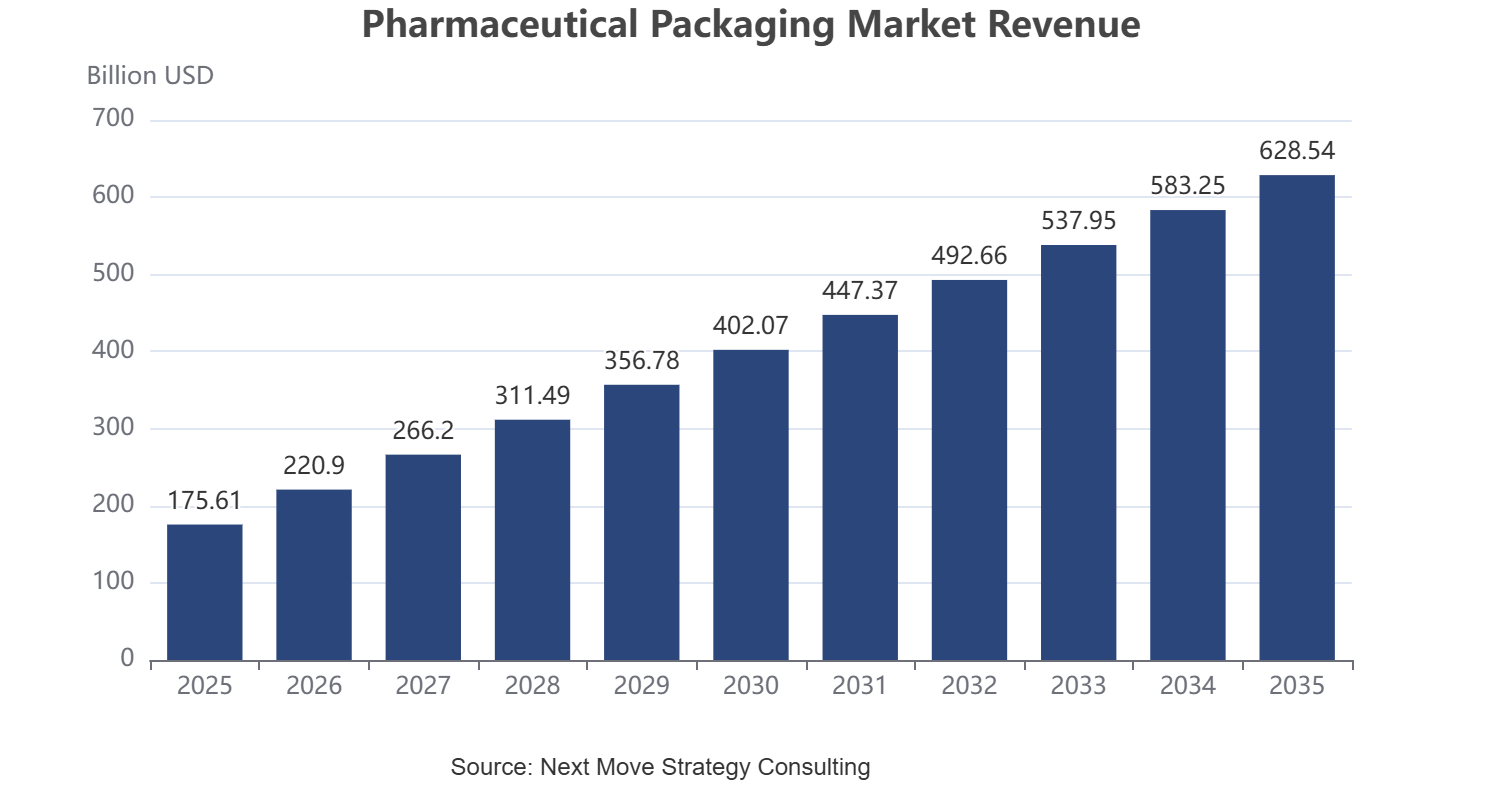
The global Pharmaceutical Packaging Market size was valued at USD 175.61 billion in 2025 and is expected to be valued at USD 199.49 billion by the end of 2026. The industry is projected to grow, hitting USD 628.54 billion by 2035, with a CAGR of 13.6% between 2026 and 2035.
Pharmaceutical Packaging Industry Size & Forecast
|
Parameters |
Details |
|
Market Size in 2026 |
USD 199.49 billion |
|
Revenue Forecast in 2035 |
USD 628.54 billion |
|
Growth Rate |
CAGR of 13.6% from 2026 to 2035 |
|
Analysis Period |
2025–2035 |
|
Base Year Considered |
2025 |
|
Forecast Period |
2026–2035 |
|
Market Size Estimation |
Billion (USD) |
|
Companies Profiled |
20 |
|
Countries Covered |
33 |
|
Market Share |
Available for 10 companies |
Based on NMSC’s analysis, we found that the pharmaceutical packaging market is positioned as a critical enabler within the global healthcare and life sciences ecosystem, evolving far beyond a basic containment function. Packaging has become integral to drug safety, regulatory compliance, and patient adherence, particularly across biologics, vaccines, chronic disease therapies, and specialty drugs. Pharmaceutical product managers and supply chain stakeholders are increasingly prioritizing patient-centric, serialisation-enabled, and cold chain-compatible packaging formats. Market research suggests that rising global pharmaceutical consumption, driven by ageing populations, increasing chronic disease prevalence, and expanding manufacturing capacity supported by policy initiatives, is forming the core demand backbone of the industry.
Looking ahead, the pharmaceutical packaging market is expected to experience sustained structural growth driven by biologics expansion, vaccine scale-up, and increasing regulatory digitisation through serialisation and traceability requirements. Innovation is concentrating around smart packaging systems, advanced barrier materials, and sustainable alternatives, although environmental compliance pressures continue to introduce short-term operational complexity. Overall, future growth is being shaped by the convergence of patient-centric design, supply chain digitisation, and material innovation, positioning drug packaging systems as a strategically indispensable component of global healthcare infrastructure.
What Are the Key Trends in the Pharmaceutical Packaging Industry?
How is the Shift Toward Patient-Centric and Compliance Packaging Transforming the Pharmaceutical Packaging Market?
We found that pharmaceutical packaging is increasingly evolving from a protective containment function into a patient-centric delivery enabler, driven by rising emphasis on adherence, safety, and therapeutic outcomes. Healthcare providers and pharmaceutical product managers are actively prioritising packaging formats that reduce medication errors and improve usability, particularly for ageing populations and long-term treatment regimens. This is accelerating the adoption of unit-dose systems, calendar blister packs, and senior-friendly closures designed to simplify dosing schedules and enhance compliance. We also observed that packaging is increasingly being assessed as part of treatment efficacy rather than a secondary supply chain element, especially in chronic disease management. This shift is fundamentally elevating the strategic importance of packaging design within pharmaceutical development and commercialisation processes, making usability and patient behaviour key design parameters alongside stability and regulatory compliance.
How Is Serialisation and Anti-Counterfeiting Technology Reshaping Packaging Systems?
Our analysis indicate that regulatory enforcement of serialisation and track-and-trace frameworks is significantly transforming pharmaceutical packaging architecture across global markets. Pharmaceutical companies are increasingly embedding digital identifiers, barcodes, QR codes, and authentication systems directly into packaging layers to ensure end-to-end traceability. This is being driven by rising concerns around counterfeit drugs, parallel trade, and supply chain leakage, particularly in high-value therapeutic categories. Industry evidence further suggests that packaging is now functioning as a digital compliance interface, linking physical products with real-time data systems across manufacturing, distribution, and retail channels. However, this transformation is also increasing operational complexity, requiring higher investment in printing technologies, data infrastructure, and regulatory validation systems, thereby raising the technical barrier for packaging manufacturers globally.
How Is Cold Chain Dependency Influencing Packaging Innovation?
Industry analysis indicates that the rapid expansion of temperature-sensitive biologics, vaccines, and specialty therapeutics is accelerating innovation in cold chain-compatible primary & secondary packaging. Manufacturers are increasingly focusing on thermal stability, insulation efficiency, and multi-layer protective structures to maintain product integrity across complex global distribution networks. Real-time monitoring capabilities such as temperature indicators and data loggers are also becoming more integrated into packaging systems to ensure end-to-end visibility and compliance. This trend is particularly critical in emerging markets, where infrastructure variability increases risk exposure during transportation. Cold chain dependency is no longer a logistical consideration alone but a core packaging design requirement, directly influencing material selection, structural engineering, and regulatory approval processes across high-value pharmaceutical segments.
How Is Material Innovation and Sustainability Pressure Reshaping Packaging Design?
Based on our evaluation, we found that pharmaceutical packaging is undergoing a gradual but structurally significant material transition driven by global sustainability mandates and environmental compliance pressures. Regulatory bodies are increasingly enforcing recyclability targets, plastic reduction goals, and extended producer responsibility frameworks, compelling manufacturers to rethink traditional material systems. However, pharmaceutical-grade packaging must still meet strict requirements for sterility, chemical compatibility, and barrier protection, which limits the immediate substitution of conventional plastics and glass alternatives. This creates a dual-pressure environment where companies must balance environmental objectives with uncompromising safety standards. As a result, innovation is focusing on hybrid materials, recyclable polymers, and lightweight structures, although adoption remains uneven due to cost implications and validation complexities across regulated pharmaceutical environments.
Ecosystem Analysis of the Pharmaceutical Packaging Industry
The unit dose packaging ecosystem is a tightly linked value chain where innovation, compliance, and material performance ensure drug safety, regulatory adherence, and global supply efficiency.

The global pharmaceutical packaging market operates as a highly integrated ecosystem where innovation, supply chain dynamics, manufacturing precision, and regulatory compliance collectively shape market evolution. Based on our analysis, we observed that the growing adoption of biologics, vaccines, and high-value therapeutics is strengthening coordination across stakeholders, from raw material suppliers to pharmaceutical manufacturers and healthcare providers. Furthermore, packaging companies and OEMs are increasingly aligning with stringent regulatory requirements and cold-chain logistics needs while adapting to sustainability and safety standards. Overall, the ecosystem reflects a shift toward advanced, technology-enabled, and compliance-driven packaging solutions that enhance product integrity, operational efficiency, and long-term market competitiveness.
What Are the Key Market Drivers, Breakthroughs, and Investment Opportunities that will Shape the Pharmaceutical Packaging Industry in the Next Decade?
Growth Catalyst & Risk Assessment Matrix
|
DRIVERS/TRENDS/ RESTRAINTS |
(+/-) % IMPACT ON CAGR FORECAST |
GEOGRAPHIC RELEVANCE |
IMPACT TIMELINE |
|
Rising global pharmaceutical consumption driven by ageing populations and chronic disease burden increasing long-term medication demand |
+3.12% |
North America, Europe, Japan, China, India (ageing & chronic care hubs) |
Long term (4–8 years) |
|
Expansion of pharmaceutical manufacturing capacity driven by policy support and supply chain localization boosting packaging demand |
+2.78% |
Asia-Pacific (India, China), Europe (Germany, France), North America (U.S.) |
Medium to Long term (3–7 years) |
|
Rapid expansion of biologics and vaccine production driving demand for sterile, temperature-controlled packaging formats |
+2.45% |
Global (strong in North America, Europe, India, China, Africa vaccine corridors) |
Medium term (3–6 years) |
|
Stringent environmental regulations and sustainability compliance increasing costs and slowing material transition |
-2.34% |
Europe (PPWR-driven), North America, Japan, selected APAC regulated markets |
Medium term (3–6 years) |
The pharmaceutical packaging Industry is being structurally shaped by rising global pharmaceutical consumption, expanding manufacturing capacity, tightening sustainability regulations, and the rapid shift toward biologics and vaccines. Our analysis indicates that ageing populations and increasing chronic disease prevalence are driving continuous medication dependency, thereby strengthening demand for secure, patient-centric packaging formats such as blister packs and unit-dose systems. At the same time, policy-driven expansion of pharmaceutical manufacturing and supply chain localisation is increasing production volumes, directly amplifying demand for scalable, high-throughput packaging solutions integrated into global pharmaceutical value chains. Additionally, the rapid growth of biologics and vaccine production is elevating the importance of sterile, temperature-controlled, and high-performance packaging systems, significantly increasing the value intensity of the segment. However, stringent environmental regulations and recyclability mandates are increasing compliance costs and material transition challenges, slowing the adoption of sustainable alternatives due to strict pharmaceutical safety requirements. Overall, these forces are positioning pharmaceutical packaging as a high-growth but structurally complex market, driven by healthcare expansion and innovation, while constrained by regulatory and sustainability pressures.
Growth Drivers:
How Is Rising Global Pharmaceutical Consumption Driven by Ageing Populations and Chronic Disease Burden Accelerating the Pharmaceutical Packaging Market?
Based on NMSC’s analysis, we found that rising global pharmaceutical consumption is structurally reshaping packaging demand through sustained growth in long-term therapeutic usage. Ageing populations and increasing chronic disease prevalence are driving continuous medication dependency, thereby elevating demand for secure, patient-centric, and compliance-focused packaging formats. Based on our interactions with pharmaceutical product managers, we observed a clear shift toward blister packs, unit-dose systems, and senior-friendly designs that improve adherence and reduce medication errors. According to World Health Organization, the population aged 60+ will rise from 1 billion in 2020 to 1.4 billion by 2030, while NCDs account for 75% of global deaths. These structural trends are significantly intensifying packaging requirements. Furthermore, global projections show that individuals aged 65+ will reach 2.2 billion by the late 2070s, while those aged 80+ will reach 265 million by the mid-2030s, exceeding infant population levels. Taken together, ageing demographics and chronic disease prevalence are structurally positioning pharmaceutical packaging as a critical enabler of continuous therapeutic delivery and global healthcare scalability.
How Is Expansion of Pharmaceutical Manufacturing Capacity Driven by Policy Support and Supply Chain Localization Accelerating Pharmaceutical Packaging Demand?
Our evaluation indicates that the expansion of pharmaceutical manufacturing capacity is fundamentally transforming packaging demand through large-scale production scaling and supply chain localization strategies. Governments across key markets are actively promoting domestic pharmaceutical production through industrial incentives, regulatory easing, and production-linked support schemes, resulting in significant expansion of API and finished dosage manufacturing infrastructure. Furthermore, packaging demand is increasingly embedded within integrated manufacturing ecosystems designed for high-volume, compliance-driven production environments. This is accelerating consumption of standardized packaging formats that ensure scalability, efficiency, and global regulatory compliance.
Supporting industrial and trade data further validates this structural expansion, as according to Eurostat, the EU pharmaceutical manufacturing sector recorded approximately USD 309 billion in production value in 2024, reflecting sustained industrial output growth. U.S. trade data indicates pharmaceutical imports increased by USD 1.0 billion in February, highlighting persistent global demand and downstream packaging requirements. Additionally, India’s Production Linked Incentive (PLI) scheme for pharmaceuticals, valued at INR 15,000 crore, has exceeded investment expectations as of 2025, significantly strengthening domestic manufacturing capacity. Collectively, these indicators demonstrate that rising manufacturing output and localisation policies are directly and proportionally driving sustained demand for primary and secondary pharmaceutical packaging systems.
Growth Inhibitor:
How Are Stringent Environmental Regulations and Sustainability Compliance Increasing Costs Limiting the Pharmaceutical Packaging Market Demand?
We observed that tightening environmental regulations are emerging as a structural restraint on the pharmaceutical packaging market by increasing compliance costs and slowing the transition toward sustainable materials. Regulatory frameworks targeting plastic usage, waste management, and carbon emissions are compelling packaging manufacturers to redesign existing systems under strict timelines. However, pharmaceutical packaging operates under non-negotiable requirements for sterility, barrier protection, and drug stability, creating a structural conflict between sustainability goals and functional performance. We also observed that companies face rising complexity in validating recyclable or biodegradable alternatives without compromising drug safety. This is significantly increasing development timelines and operational burdens across global packaging supply chains.
We analysed that according to the European Commission, the PPWR mandates full recyclability of all packaging by 2030, while the EU generates approximately 186.5 kg of packaging waste per person, intensifying redesign requirements and lifecycle compliance costs. Additionally, OECD analysis indicates that global plastic waste in the Americas is projected at 126.5 Mt, highlighting rising environmental pressure across major consumption regions. Taken together, these regulatory mandates and material constraints are increasing cost intensity, slowing innovation cycles, and limiting the pace of sustainable adoption in pharmaceutical packaging systems.
Growth Opportunity:
How Is Rapid Expansion of Biologics and Vaccine Production Driving Demand for Specialised Sterile Pharmaceutical Packaging Formats?
The rapid expansion of biologics, vaccines, and advanced therapeutics is structurally creating a high-value growth opportunity for the pharmaceutical packaging market expansion. Unlike conventional drugs, biologics require highly controlled environments and specialised sterile packaging systems such as glass vials, prefilled syringes, and advanced barrier technologies. This shift is significantly increasing the value contribution of packaging within the pharmaceutical value chain. Based on our further interactions with vaccine manufacturers, we observed a strong transition toward high-performance packaging systems that ensure sterility, temperature stability, and regulatory compliance across complex global distribution networks. The growing complexity of biologic formulations is further reinforcing packaging as a critical enabler of drug efficacy and global market accessibility.
According to the OECD in 2025, non-retail pharmaceuticals accounted for 25% of total pharmaceutical expenditure in 2023, up from 21% in 2013, driven by rising hospital-based drug use and the increasing adoption of high-cost therapies. Additionally, Global Health Press (2025) reports that global vaccine production is approximately 14.5 billion doses annually, reflecting sustained large-scale immunisation activity and continuous demand for sterile, temperature-sensitive packaging systems. Taken together, we analysed that the rapid expansion of biologics adoption and vaccine manufacturing capacity is structurally increasing demand for advanced pharmaceutical packaging solutions, positioning specialised packaging providers for sustained long-term growth and margin expansion.
How Is the Pharmaceutical Packaging Industry Segmented in this Report, and What Are the Key Insights from the Segmentation Analysis?
Market Highlights & Strategic Insights - Pharmaceutical Packaging Industry:
|
Segments |
Key Takeaways |
|
Packaging Level |
Packaging level segmentation reflects a clear functional hierarchy in the pharmaceutical packaging market. Primary packaging dominates due to its direct contact with drugs and strict regulatory requirements, especially for sterile and high-barrier formats. Secondary packaging supports labelling, compliance, and product information, while tertiary packaging focuses on logistics efficiency and bulk transportation protection. |
|
Material |
Material selection is critical for drug stability and regulatory compliance. Plastics lead due to versatility and cost efficiency across multiple formats. Glass remains essential for injectables due to its inert properties, while paper and paperboard are widely used in secondary packaging for sustainability. Elastomers and metals support closures and sealing applications. |
|
Sterility |
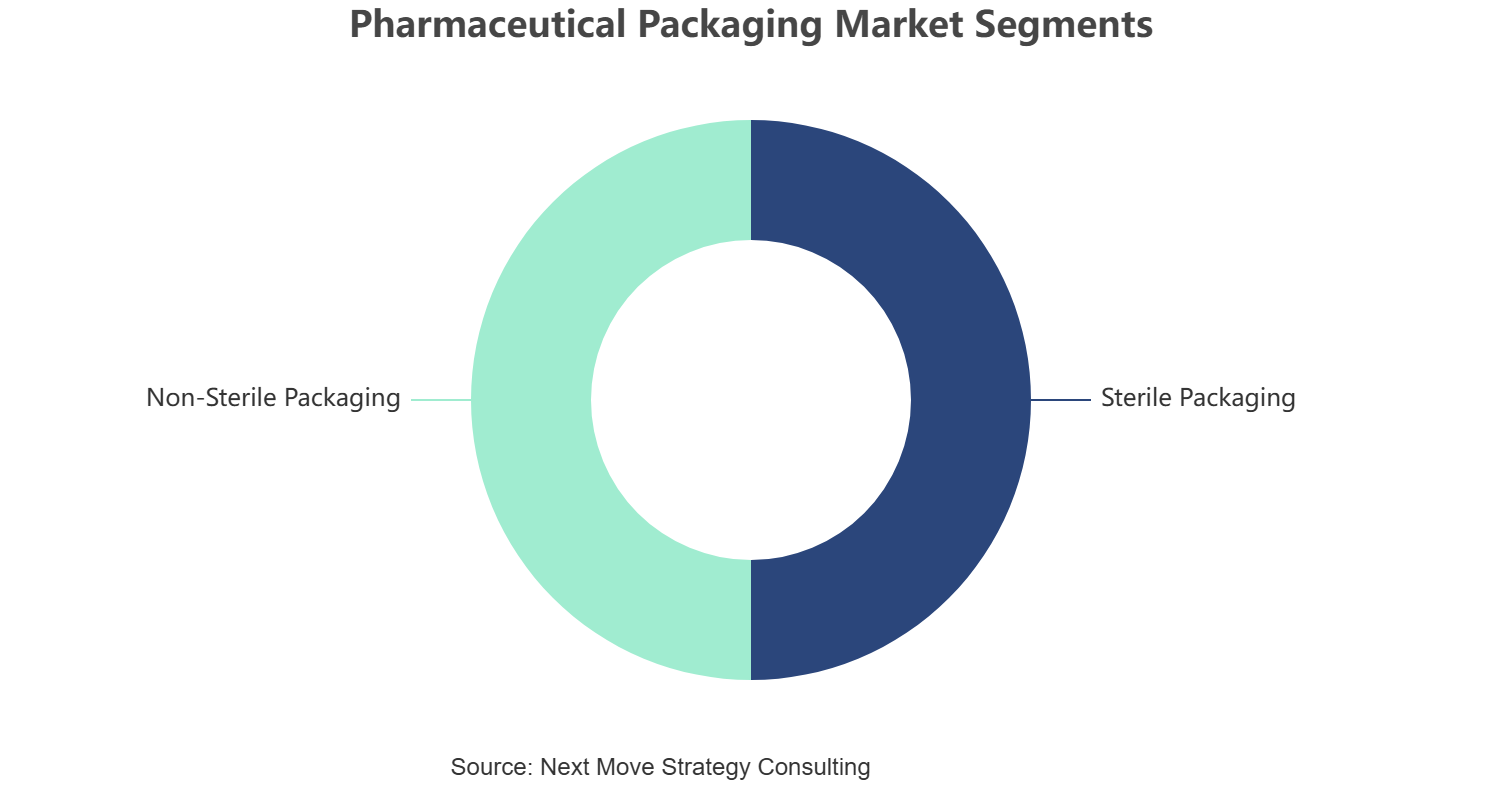
Sterility is a key differentiator, particularly for injectables and biologics. Sterile packaging dominates high-value applications and requires advanced manufacturing and compliance standards. Non-sterile packaging remains relevant for oral and topical drugs. Demand for ready-to-use sterile formats is increasing across the value chain. |
|
Application |
Application trends show strong volume demand from oral solid dosage forms, while injectables and biologics are driving higher-value growth. These segments require specialized, sterile, and high-performance packaging. Other applications, such as topical and inhalation, contribute niche demand with customised packaging needs. |
|
End-User |
Pharmaceutical companies lead demand through large-scale production needs. Biopharmaceutical companies are driving growth in advanced packaging for biologics and vaccines. CDMOs are gaining importance due to outsourcing trends, while research institutions contribute specialized demand for clinical and early-stage applications. |
By Packaging Level Insights
Is Primary Packaging Dominance Shaping the Pharmaceutical Packaging Industry in 2025?
On the basis of packaging level, the pharmaceutical packaging market is segmented into primary packaging, secondary packaging, and tertiary packaging.
Based on our assessment, we found that primary packaging clearly dominates the pharmaceutical packaging market, driven by its direct role in drug protection, regulatory compliance, and product performance. We found that its importance is amplified by the rapid growth of biologics and injectables, which require highly specialised and sterile packaging systems. While secondary packaging is gaining strategic relevance due to serialisation and regulatory labelling requirements, and tertiary packaging supports supply chain efficiency, both remain functionally supportive layers. Overall, value creation is concentrated in primary packaging, where innovation, material science, and compliance capabilities directly influence pharmaceutical product safety and market access.

By Material Insights
Is Material Innovation Reshaping the Pharmaceutical Packaging Market in 2025?
Based on material, the market is segmented into plastic, glass, metal, paper & paperboard, and elastomer.
We found that plastic dominates the pharmaceutical packaging market by material, driven by its scalability, cost efficiency, and adaptability across both primary and secondary packaging formats. However, glass remains indispensable in high-value segments, particularly injectables and biologics, where material performance is critical. Paper and paperboard, on the other hand, are gaining importance due to sustainability regulations, while elastomers and metals serve specialised but essential roles. Overall, material selection is increasingly driven by a balance between regulatory compliance, product compatibility, and environmental considerations, shaping long-term innovation and investment strategies across the pharmaceutical packaging ecosystem.

By End-User Insights
Are Biopharma and Outsourcing Trends Reshaping End-User Demand in the Pharmaceutical Packaging Market in 2025?
Based on end-user, the pharmaceutical packaging market is segmented into pharmaceutical companies, biopharmaceutical companies, contract development & manufacturing organizations, and research institutions.
Based on our analysis, we analysed that pharmaceutical companies dominate the end-user landscape, driven by large-scale production and consistent demand for standardized packaging. However, biopharmaceutical companies and CDMOs are the fastest-evolving segments, supported by the growth of biologics and increasing outsourcing trends. While research institutions contribute to niche demand, their role is critical in early-stage innovation. Overall, the market is gradually shifting toward high-value, specialised packaging requirements, where flexibility, compliance, and technological capability are becoming key differentiators across end-user segments.
Regional Outlook
Geographic Performance Snapshot:
|
Geography |
Key Takeaways |
|
North America |
North America is a mature pharmaceutical packaging market driven by strong pharmaceutical manufacturing, advanced healthcare infrastructure, and strict FDA regulations. Demand is supported by high adoption of serialised, smart, and high-barrier packaging, especially for biologics and injectables. We also observe increasing focus on automation, traceability, and sustainable packaging materials, which is shaping innovation and procurement strategies across the region. |
|
Europe |
Europe is a highly regulated and sustainability-focused market, driven by EU compliance frameworks on serialisation and environmental standards. Demand is strong in major economies such as Germany, France, and the UK. We also noticed growing adoption of recyclable materials, tamper-evident packaging, and advanced labelling systems. The region is strongly influenced by circular economy policies and high-quality packaging expectations across pharmaceutical applications. |
|
Asia‑Pacific |
Asia-Pacific is the fastest-growing pharmaceutical packaging market, driven by expanding pharmaceutical production, rising healthcare demand, and export-oriented manufacturing, where China, India, Japan, and South Korea are key contributors. Improving regulatory standards and cost-efficient production are accelerating the adoption of compliant packaging formats. Growth in generics, vaccines, and biologics is further boosting demand across primary and secondary packaging segments. |
|
Latin America |
Latin America is an emerging market supported by rising healthcare access, growing generics consumption, and gradual pharmaceutical manufacturing expansion. We noticed a strong preference for cost-effective packaging formats, with improving regulatory frameworks enhancing compliance and quality standards. Investments in healthcare infrastructure are expected to gradually support more advanced packaging adoption over time. |
|
Middle East & Africa |
The Middle East & Africa region is in a developing phase, driven by improving healthcare infrastructure and increasing pharmaceutical imports and local production. Gulf countries show higher adoption of advanced packaging due to better healthcare systems, while Africa remains cost-sensitive. We observe gradual regulatory strengthening and growing investment in pharmaceutical manufacturing, which is expected to enhance demand for compliant and secure packaging solutions. |
The pharmaceutical packaging market is geographically studied across North America, Europe, Asia Pacific, the Middle East & Africa, and Latin America, and each region is further studied across countries.
Pharmaceutical Packaging Market in North America
North America represents a highly mature and innovation-driven pharmaceutical packaging market, supported by stringent regulatory oversight from the U.S. Food and Drug Administration and Health Canada. Based on our analysis, we observed that demand is strongly anchored in high pharmaceutical consumption, with the U.S. alone accounting for over half the share of global pharmaceutical spending as reported by the Centers for Medicare & Medicaid Services. The region demonstrates advanced adoption of serialisation, anti-counterfeiting technologies, and smart packaging systems due to strict track-and-trace mandates. Industry data indicates that biologics and specialty drugs are reshaping packaging requirements, increasing reliance on high-barrier materials, prefilled syringes, and cold-chain solutions. Sustainability is also emerging as a structural driver, with regulatory and corporate commitments pushing recyclable and low-carbon packaging formats. Overall, market maturity is reflected in strong integration between pharma manufacturers and packaging suppliers, creating stable but innovation-intensive growth conditions.
Pharmaceutical Packaging Market in the United States
The United States is the most advanced and technologically integrated pharmaceutical packaging market globally. Based on our evaluation, we found that healthcare expenditure creates a strong downstream effect on pharmaceutical manufacturing and packaging demand. The Drug Supply Chain Security Act has institutionalised end-to-end serialisation, making compliance-driven packaging systems a baseline requirement. The rapid expansion of biologics and personalised medicine pipelines is reshaping packaging needs toward prefilled syringes, vials, and cold-chain solutions. Automation and digitalisation are also deeply embedded, with packaging lines increasingly integrated into smart manufacturing ecosystems. At the same time, sustainability considerations, particularly recyclable plastics and material reduction, are becoming procurement priorities, reinforcing innovation-led competition among packaging providers.
Pharmaceutical Packaging Market in Canada
Our evaluation shows that Canada’s pharmaceutical packaging market reflects moderate maturity, supported by a strong public healthcare system and stable pharmaceutical demand. This spending base sustains consistent demand for pharmaceutical production and packaging solutions across both domestic consumption and institutional procurement. Regulatory oversight further reinforces the market structure by ensuring high compliance standards, particularly in labelling, safety, and material usage. Compared to the U.S., innovation adoption remains relatively slower; however, quality benchmarks continue to be stringent and well-enforced. Additionally, the increasing penetration of sustainable packaging formats, driven by federal environmental targets and circular economy initiatives, is gradually reshaping material preferences and supplier strategies. Canada’s limited domestic manufacturing scale also results in a degree of reliance on imports, which creates opportunities for global packaging suppliers offering compliant and environmentally aligned solutions. Overall, the market remains stable, with growth primarily driven by regulatory compliance, sustainability transition, and consistent healthcare demand.
Pharmaceutical Packaging Market in Europe
Europe’s pharmaceutical packaging market is defined by regulatory harmonisation and sustainability leadership. The pharmaceutical manufacturing sector remains one of the EU’s highest-value industrial segments, thereby supporting consistent demand for advanced packaging solutions. NMSC analysis indicates that directives such as the Falsified Medicines Directive (FMD) have institutionalised serialisation and tamper-evident packaging requirements across member states, strengthening supply chain security and traceability. In parallel, sustainability regulations under the EU Green Deal are structurally reshaping packaging material choices, accelerating the transition toward recyclable and low-carbon formats. Western Europe leads in automation and advanced packaging technologies, while Eastern Europe provides cost-efficient manufacturing capabilities, creating a balanced regional ecosystem. The market remains highly compliance-driven, with strong alignment between regulatory frameworks and innovation, fostering a structured yet competitive environment for packaging solution providers. Overall, growth is underpinned by regulatory enforcement, sustainability mandates, and continuous technological advancement.
Pharmaceutical Packaging Market in the United Kingdom
Our market assessment suggests that the UK pharmaceutical packaging market remains mature, supported by strong regulatory governance from the Medicines and Healthcare products Regulatory Agency. Demand is increasingly shaped by the rising share of biologics and specialty medicines, which require advanced and high-integrity packaging formats. Post-Brexit regulatory divergence has added complexity, requiring manufacturers to maintain dual compliance with both UK and EU standards, thereby increasing operational and documentation requirements. At the same time, the growing adoption of sustainable packaging is aligned with national net-zero commitments, influencing material selection and design strategies. In parallel, automation and digital integration in packaging operations are gaining traction, improving efficiency, traceability, and compliance monitoring. The UK market is therefore characterised by high-value innovation rather than volume-driven expansion, with growth primarily anchored in regulatory adaptation, specialty drug demand, and technological advancement.
Pharmaceutical Packaging Market in Germany
Our market analysis reveals that Germany represents the largest pharmaceutical packaging market in Europe, supported by its strong industrial and pharmaceutical manufacturing base. Its export-oriented production model drives consistent demand for high-quality and compliant packaging solutions across global markets. The country also demonstrates strong adoption of advanced glass and polymer packaging formats, particularly for biologics and high-value therapeutics requiring enhanced protection and stability. Sustainability remains a structural priority, with regulatory frameworks encouraging the use of recyclable materials and reduced emissions across the packaging value chain. In parallel, Germany’s engineering expertise supports the widespread adoption of automated and precision-driven packaging systems, improving operational efficiency and quality control. Overall, the market demonstrates stable, high-quality growth, with expansion primarily driven by export demand, regulatory compliance, and continuous technological advancement.
Pharmaceutical Packaging Market in France
Our regional assessment indicates that France maintains a well-established pharmaceutical packaging market, supported by strong domestic drug manufacturing and EU-aligned regulation. Demand for packaging is closely linked to the country’s focus on high-quality and regulated drug production, particularly in prescription medicines and vaccines. Compliance with EU directives, including serialisation and safety labelling, continues to shape packaging formats and material choices across the value chain. We also observe a growing shift toward eco-designed packaging, driven by national sustainability policies and circular economy targets, which is gradually influencing supplier strategies and material innovation. While France does not lead Europe in packaging automation, it maintains a consistent demand for compliant and increasingly sustainable solutions. Overall, the market remains stable and regulation-driven, with moderate innovation intensity anchored in sustainability transition and compliance requirements.
Pharmaceutical Packaging Market in Italy
Italy represents a key pharmaceutical manufacturing base in Europe, which directly supports packaging demand across both domestic and export markets. According to the Italian National Institute of Statistics, pharmaceutical production continues to show resilience, particularly in export-oriented segments, reinforcing the need for high-quality and compliant packaging solutions. Packaging demand is largely influenced by contract manufacturing and international supply requirements, necessitating strict adherence to EU standards. There is also increasing demand for primary packaging formats such as vials and blister packs, driven by the growth of generics and injectable drugs. Sustainability considerations are gradually influencing material selection; however, cost efficiency remains a critical factor for manufacturers, particularly in high-volume production. Overall, Italy’s market is characterised by strong export linkage and steady industrial output, resulting in consistent demand for reliable, compliant, and cost-effective pharmaceutical packaging solutions.
Pharmaceutical Packaging Market in Spain
Spain’s pharmaceutical packaging market reflects moderate maturity, supported by the steady expansion of domestic pharmaceutical manufacturing. From our observation, demand is largely driven by generics production and increasing export activity, both of which require standardized and compliant packaging formats. EU regulatory alignment continues to shape packaging requirements, particularly in labelling, serialisation, and traceability across the supply chain. We also observed a gradual shift toward sustainable packaging materials, although adoption remains slower compared to Northern and Western Europe due to cost sensitivities and operational constraints. Spain offers stable growth conditions, with packaging demand closely tied to manufacturing output rather than high-end innovation. Overall, the market remains volume-supported and compliance-driven, with incremental progress in sustainability shaping its medium-term evolution.
Pharmaceutical Packaging Market in the Nordics
In the Nordics, comprising Sweden, Norway, Denmark, and Finland, our assessment indicates that the region represents a small but highly regulated pharmaceutical packaging market with a strong sustainability focus. Pharmaceutical production volumes remain relatively limited, however, demand for packaging is concentrated in high-value and specialised drug segments, supporting the need for advanced and compliant solutions. The region demonstrates strong adoption of recyclable and low-impact materials, often exceeding EU baseline requirements and setting higher benchmarks for environmental performance. Packaging innovation in the Nordics is therefore primarily sustainability-led rather than scale-driven, with emphasis on material optimisation and lifecycle impact reduction. While the overall market size remains constrained, the region offers niche opportunities for advanced and environmentally optimised packaging solutions. Overall, growth is driven by stringent ESG standards and sustainability-led innovation rather than volume expansion.
Pharmaceutical Packaging Market in the Asia-Pacific
Our regional assessment indicates that Asia-Pacific continues to be the fastest-growing pharmaceutical packaging market, driven by expanding pharmaceutical manufacturing capacity and rising healthcare demand. The region accounts for a significant share of global medicine production and consumption, reinforcing its importance in the global supply chain. Further, strong growth in generics, vaccines, and biosimilars is increasing demand for both primary and secondary packaging formats across diverse therapeutic segments. Regulatory systems across the region are evolving and gradually aligning with global standards, particularly in export-focused economies, thereby improving compliance and quality benchmarks. Overall, Asia-Pacific offers a combination of high-volume growth and improving regulatory maturity, positioning it as a critical global hub for pharmaceutical packaging demand.
Pharmaceutical Packaging Market in China
Our analysis indicates that China represents one of the largest and fastest-evolving pharmaceutical packaging markets, supported by its extensive domestic drug manufacturing base. The pharmaceutical manufacturing sector continues to record steady industrial growth, reflecting strong underlying demand across both domestic and export markets. Packaging requirements are primarily driven by high-volume generics production; however, the increasing focus on biologics and innovative drugs is gradually shifting demand toward higher-quality and specialised packaging formats. Regulatory reforms are further strengthening compliance requirements, particularly for export-oriented manufacturers, thereby improving quality and traceability standards. While cost efficiency remains a dominant factor in procurement decisions, the market is witnessing a gradual transition toward higher-value packaging solutions. Overall, China offers a combination of scale-driven demand and progressive regulatory tightening, positioning it as both a high-volume and increasingly value-oriented market.
Pharmaceutical Packaging Market in Japan
Japan’s pharmaceutical packaging market is mature, with a strong emphasis on quality, precision, and regulatory compliance. Healthcare expenditure remains consistently high, supporting stable pharmaceutical demand across therapeutic segments. In our view, packaging requirements are increasingly shaped by the country’s ageing population and the rising demand for specialised medicines, which is driving the need for user-friendly, high-precision, and tamper-evident packaging formats. While overall market growth remains moderate, Japan continues to demonstrate strong demand for technologically advanced and high-quality packaging solutions. Overall, the market is characterised by value-driven innovation, with growth anchored in precision engineering, regulatory adherence, and evolving patient-centric packaging requirements rather than volume expansion.
Pharmaceutical Packaging Market in India
Based on our analysis, we observed that India represents a high-growth pharmaceutical packaging market, supported by its position as a leading global supplier of generic medicines and vaccines. According to the Ministry of Chemicals and Fertilizers, India is among the largest providers of generics worldwide, with exports supplying over 200 countries, which significantly shapes packaging demand. This export orientation drives the need for packaging formats that meet stringent regulatory requirements. The market continues to rely strongly on cost-effective packaging formats such as blister packs and bottles; however, demand for high-barrier and sterile packaging is increasing with the growth of injectables and biologics. Regulatory strengthening is further gradually improving quality and traceability standards across the supply chain. Overall, while cost sensitivity remains a defining factor, the market is steadily transitioning toward higher compliance and advanced packaging solutions, driven by export competitiveness and ongoing regulatory alignment.
Pharmaceutical Packaging Market in South Korea
South Korea’s pharmaceutical packaging market is characterised by a strong innovation base, supported by its expanding biopharmaceutical sector. Pharmaceutical manufacturing output has shown steady growth, reinforcing consistent demand for advanced packaging solutions. Based on our assessment, we noticed that packaging demand is closely linked to biologics and biosimilar production, which require specialised, high-integrity, and compliant formats. The market is also witnessing increasing adoption of advanced materials and automation in packaging processes, improving efficiency, precision, and scalability. Regulatory standards are well-aligned with international benchmarks, further supporting export competitiveness and global integration. Overall, South Korea offers a relatively high-value market with a strong focus on technological advancement and export-oriented packaging solutions, with growth driven by innovation, biologics expansion, and regulatory alignment.
Pharmaceutical Packaging Market in Taiwan
Based on our assessment of Taiwan’s market, we analysed that Taiwan’s pharmaceutical packaging market is moderately developed, supported by stable pharmaceutical production and export activity. Packaging demand is primarily driven by small- to mid-scale manufacturing and export requirements, which emphasise compliance, consistency, and quality across supply chains. While the market does not exhibit large-scale growth, it maintains steady demand for standardised packaging formats aligned with international regulatory expectations. In addition, Taiwan offers niche opportunities in specialised and export-compliant packaging solutions, particularly for regional and contract manufacturing supply chains. Overall, the market remains stable and quality-focused, with growth anchored in export alignment, regulatory compliance, and specialised manufacturing capabilities rather than volume expansion.
Pharmaceutical Packaging Market in Indonesia
Indonesia represents an emerging pharmaceutical packaging market, supported by expanding healthcare access and the steady growth of domestic manufacturing capabilities. Based on our evaluation, we found that packaging demand is primarily driven by increasing local drug production and the rising consumption of generic medicines, which require cost-efficient and standardised packaging formats. Regulatory systems are still evolving, which currently limits the widespread adoption of advanced packaging technologies; however, compliance requirements are gradually strengthening in line with market development. As a result, cost-effective packaging formats continue to dominate, particularly in high-volume segments. Overall, Indonesia offers strong long-term growth potential, with expansion expected to be driven by improving regulatory frameworks, rising healthcare demand, and the gradual advancement of domestic pharmaceutical manufacturing.
Pharmaceutical Packaging Market in Australia
Our regional assessment indicates that Australia’s pharmaceutical packaging market is mature but relatively small in scale, supported by strong regulatory oversight and stable healthcare expenditure. Packaging demand is driven by high-quality standards and strict compliance requirements, particularly for prescription medicines and regulated drug categories. In addition, the increasing adoption of sustainable packaging formats is aligned with national environmental goals, gradually influencing material selection and supplier strategies. While domestic pharmaceutical manufacturing remains limited compared to larger global markets, Australia maintains consistent demand for premium and compliant packaging solutions. Overall, the market is stable yet niche, with growth primarily driven by regulatory adherence, sustainability initiatives, and demand for high-quality packaging formats rather than volume expansion.
Pharmaceutical Packaging Market in Latin America
Our regional analysis indicates that Latin America represents a developing pharmaceutical packaging market, supported by improving healthcare access and evolving regulatory systems. Demand is largely driven by generics production and the expansion of pharmaceutical distribution networks across the region. Regulatory frameworks are strengthening, particularly in larger economies such as Brazil and Argentina, which are improving packaging compliance standards and quality benchmarks. We also observed moderate adoption of advanced packaging technologies; however, cost considerations remain central to procurement and operational decisions. Overall, the region offers steady growth potential, supported by increasing healthcare investment, gradual regulatory alignment, and the expansion of local pharmaceutical manufacturing capabilities.
Pharmaceutical Packaging Market in the Middle East & Africa
Our evaluation indicates that the Middle East & Africa pharmaceutical packaging market is in a developing phase, supported by ongoing healthcare infrastructure expansion. Packaging demand is primarily driven by increasing local pharmaceutical production and government initiatives aimed at reducing import dependency, thereby strengthening domestic supply chains. Regulatory systems are evolving, leading to gradual improvements in packaging standards and compliance across key markets. We observe that demand remains largely focused on cost-effective packaging solutions, particularly in price-sensitive regions; however, high-value segments are emerging in the Gulf region, supported by advanced healthcare investments. Overall, the market presents strong long-term opportunities, with growth expected to be driven by healthcare system expansion, regulatory maturation, and increasing localisation of pharmaceutical manufacturing.
Regulatory Framework Impacting the Pharmaceutical Packaging Market
The pharmaceutical packaging market operates within a highly regulated environment, where compliance ensures product safety, efficacy, and global distribution integrity.

The above infographic highlights the comprehensive regulatory ecosystem shaping the market, drawing on established frameworks such as GMP standards, serialisation mandates, and evolving sustainability directives. Regulatory authorities enforce stringent quality, safety, and traceability requirements to prevent contamination, counterfeiting, and product degradation. Additionally, government incentives are accelerating innovation in eco-friendly and smart packaging solutions. Trade regulations and tariff structures further influence material sourcing and cost dynamics globally. As regulations continue to evolve toward sustainability and digital traceability, companies must adapt through compliance-driven innovation, making regulatory alignment a critical factor influencing pharmaceutical packaging market growth, operational efficiency, and competitive positioning.
Competitive Landscape
Competitive Dynamics & M&A Landscape:
|
Key Takeaways |
|
The competitive landscape is shaped by global packaging leaders such as Amcor plc, Gerresheimer AG, and AptarGroup, Inc., alongside specialized players like Stevanato Group S.p.A. and SCHOTT AG. These companies collectively drive market evolution through scale advantages, material innovation, and strong presence in high-value segments such as biologics, injectables, and drug delivery systems. Competition is increasingly defined by regulatory compliance capability and integration across the pharmaceutical value chain rather than standalone packaging supply. |
|
Global companies are focusing on integrated drug delivery ecosystems, serialisation-enabled packaging, and high-barrier sterile solutions, while regional and mid-sized players compete through cost efficiency and localized manufacturing strength. We found that firms in emerging markets such as China and India are strengthening their positions through scalable production of glass, plastic, and secondary packaging formats. At the same time, specialists are differentiating through niche capabilities in vials, prefilled syringes, and containment systems, particularly for biologics and vaccines, where precision and compliance are critical competitive factors. |
|
Innovation remains a central competitive driver, particularly in smart packaging, sustainable materials, and ready-to-use drug delivery systems. Companies such as AptarGroup and Stevanato Group are advancing user-centric drug delivery technologies, while SCHOTT continues to focus on high-performance glass solutions for injectable applications. Across the industry, investment is increasingly directed toward automation, digital traceability, and eco-designed packaging formats. This innovation-led shift is reinforcing competitive differentiation, where success is defined by regulatory readiness, technological capability, and adaptability to biologics-driven demand rather than traditional manufacturing scale alone. |
Which Companies Dominate the Pharmaceutical Packaging Industry and How Do They Compete?
The pharmaceutical packaging market share is led by global diversified players such as Amcor plc, Gerresheimer AG, AptarGroup, Inc., and SCHOTT AG, which compete through scale, regulatory compliance capability, and material innovation. We observed that Amcor and AptarGroup focus strongly on drug delivery systems and sustainable packaging formats, while Gerresheimer and SCHOTT dominate high-barrier glass and injectable solutions. Their competitive positioning is increasingly defined by biologics compatibility and serialisation readiness. Overall, competition is centred on high-value sterile packaging and integrated delivery systems rather than volume alone.
Market Dominated by Pharmaceutical Packaging Giants and Specialists
We found that the market operates on a dual structure where global giants and regional specialists compete across different value tiers. Companies such as Stevanato Group S.p.A. and Nipro Corporation focus on high-precision injectables and drug containment systems, while regional players like Borosil Scientific Limited and Shandong Pharmaceutical Glass Co., Ltd. compete on cost-efficient glass solutions. Based on our assessment, we noticed that differentiation is increasingly regional, advanced economies prioritise automation and compliance, while emerging markets focus on affordability and scale. This layered structure creates a fragmented yet strategically specialised competitive environment.
Innovation and Adaptability Drive Market Success
Industry analysis indicates that innovation is a core competitive lever in pharmaceutical packaging, particularly in smart drug delivery, sustainability, and sterile system design. Companies such as AptarGroup, Inc. and SiO2 Medical Products, Inc. are advancing integrated dispensing systems and next-generation containment technologies for biologics. Furthermore, increasing focus on digital traceability, tamper-evident solutions, and recyclable material innovation across global portfolios. From our observation, competitive advantage is increasingly defined by adaptability to biologics, regulatory evolution, and sustainability-driven procurement rather than traditional manufacturing scale alone.
Market Players to Opt for Merger & Acquisition Strategies to Expand Their Presence
Mergers and acquisitions remain a structural growth lever in the pharmaceutical packaging market, primarily driven by the need for scale, geographic diversification, and access to high-growth technologies such as biologics packaging, smart drug delivery, and sterile containment systems. We observed that global leaders are actively consolidating specialty packaging firms to strengthen capabilities in high-barrier materials, regulatory compliance, and advanced manufacturing. Strategic acquisitions are increasingly focused on niche technology providers rather than large horizontal mergers, reflecting a shift toward capability-driven expansion. At the same time, regional players are being integrated into global platforms to enhance supply chain resilience and reduce dependency risks. Overall, M&A activity is reinforcing market concentration at the top while simultaneously accelerating innovation transfer across sterile and injectable packaging ecosystems.
List of Key Pharmaceutical Packaging Companies
-
Gerresheimer AG
-
AptarGroup, Inc.
-
SCHOTT AG
-
Nipro Corporation
-
Smurfit Westrock plc
-
Sealed Air Corporation
-
Tekni-Plex, Inc.
-
Multivac Sepp Haggenmüller SE & Co. KG
-
West Pharmaceutical Services, Inc.
-
SiO2 Medical Products, Inc.
-
Shandong Pharmaceutical Glass Co., Ltd.
-
Arab Pharmaceutical Glass S.A.E.
-
APL Solutions Private Limited
-
Kapoor Glass (India) Private Limited
-
Borosil Scientific Limited
-
ChongQing Zhengchuan Pharmaceutical Packaging Co., Ltd.
-
Jiangsu Rongtai Glass Products Co., Ltd
-
Comar, LLC
What Are the Latest Key Industry Developments?
-
January 2026- Gerresheimer AG launched Gx InMonit at Pharmapack Paris, a smart add-on for autoinjectors. This device uses sensors and cloud connectivity to track patient adherence in real-time, addressing the industry’s massive shift toward digital health and data-driven home treatment for chronic diseases.
-
April 2025 - Amcor’s USD 35 million advanced coating facility in Malaysia marked a strategic shift in the pharmaceutical packaging market toward localized, high-precision sterile packaging production.
-
April 2025- Amcor’s commercial launch of its AmSky blister system signaled a structural shift in pharmaceutical packaging toward recyclable, mono-material formats.
Expert Insights
 “Track and trace regulations by most countries by serialisation at different packaging levels is one of the biggest projects that the pharma industry has implemented in recent years, involving a lot of investment and changes in packaging materials.”
-R Chandi Prasad, Head - Packaging Development at Aurobindo Pharma
Statement made in the context of increasing regulatory emphasis on serialization, traceability, and compliance within the global pharmaceutical packaging industry.
Market Interpretation
The statement highlights the scale and complexity of serialisation as a transformative regulatory requirement within pharmaceutical packaging. Based on our analysis of the source, track-and-trace mandates across regions such as the U.S., EU, and emerging markets have required companies to overhaul packaging lines, upgrade labelling systems, and implement integrated IT and data infrastructure to support serialisation and aggregation. This shift is not limited to compliance but has triggered material-level and process-level changes, including the redesign of packaging formats and the integration of digital tracking technologies. The implementation has been a multi-stakeholder effort involving significant capital investment and operational restructuring, reinforcing serialisation as one of the most impactful industry-wide packaging transformations in recent years.
Supply Chain Structure of the Pharmaceutical Packaging Market
The pharmaceutical packaging supply chain is a highly integrated ecosystem, ensuring the safe, compliant, and efficient delivery of pharmaceutical products worldwide.

Our evaluation indicates that the end-to-end supply chain structure of the pharmaceutical packaging market spans raw material sourcing to final product delivery and post-sales services. Upstream activities focus on high-quality material procurement, advanced manufacturing processes, and strict regulatory compliance to ensure packaging integrity and safety, while downstream, efficient logistics, cold chain management, and global distribution networks play a critical role in maintaining drug efficacy and timely delivery. The involvement of diverse stakeholders, including packaging suppliers, pharmaceutical companies, and healthcare providers, underscores the complexity of the ecosystem. As demand for temperature-sensitive biologics and sustainable packaging rises, supply chain optimisation becomes essential for maintaining competitiveness and regulatory adherence.
What Are the Key Factors Influencing Investment Analysis & Opportunities in the Pharmaceutical Packaging Market?
Our analysis indicates that investment in the pharmaceutical packaging market is increasingly aligned with biologics-led drug pipelines, regulatory compliance, and sustainability transformation. Capital flows are shifting toward advanced primary packaging, such as sterile vials, prefilled systems, and cold-chain solutions, driven by the growing complexity and sensitivity of modern therapies. Investors are prioritizing companies with strong capabilities in high-barrier materials and drug delivery integration, as packaging is evolving from a passive component into a critical enabler of product stability and patient safety. Additionally, regulatory mandates around serialisation and traceability are reinforcing long-term investment confidence in compliant, technology-enabled packaging platforms.
From our observation, we found that valuations are increasingly tied to innovation intensity and exposure to high-growth therapeutic segments, particularly injectables and biologics. Strategic funding is concentrating in regions with strong pharmaceutical manufacturing ecosystems, notably Asia-Pacific, where cost advantages and export-driven production create scalable opportunities. At the same time, sustainability-linked investments, such as recyclable materials and low-carbon packaging formats, are attracting institutional interest as ESG considerations become embedded in procurement and regulation. Emerging opportunities are centred around smart packaging, digital traceability, and ready-to-use systems, which enhance supply chain visibility and reduce operational complexity, positioning the sector as a critical interface between drug development and delivery.
Key Benefits for Stakeholders:
Next Move Strategy Consulting (NMSC) provides a comprehensive and evidence-based analysis of the pharmaceutical packaging market, covering historical developments from 2020 to 2025 and offering forward-looking forecasts through 2035. Our study assesses the market at global, regional, and country levels, combining quantitative outlooks with qualitative insights into key growth drivers, adoption constraints, technology evolution, and investment dynamics across major pharmaceutical packaging segments.
Our evaluation indicates that the pharmaceutical packaging market creates differentiated value across investors and customers by aligning regulatory compliance with innovation-led growth. We observed that investors benefit from exposure to structurally resilient demand, where packaging is integral to drug safety, biologics delivery, and global supply chain integrity, supported by evolving regulatory mandates around serialisation, sustainability, and quality assurance. From our analysis, primarily pharmaceutical manufacturers, packaging providers enable operational efficiency, regulatory adherence, and product differentiation through advanced materials, ready-to-use formats, and integrated drug delivery systems. We find that these capabilities reduce risk, accelerate time-to-market, and support compliance across diverse geographies. At the same time, sustainability-driven policies and procurement standards are creating incentives for both stakeholders to adopt recyclable and low-impact solutions, reinforcing long-term value creation and positioning packaging as a strategic interface between pharmaceutical innovation and end-user delivery.
|
Parameters |
Details |
|
Customization Scope |
Free customization (equivalent to up to 80 analyst-working hours) after purchase. Addition or alteration to country, regional & segment scope. |
|
Pricing and Purchase Options |
Avail customized purchase options to meet your exact research needs. |
|
Approach |
In-depth primary and secondary research; proprietary databases; rigorous quality control and validation measures. |
|
Analytical Tools |
Porter's Five Forces, SWOT, value chain, and Harvey ball analysis to assess competitive intensity, stakeholder roles, and relative impact of key factors. |
Pharmaceutical Packaging Market Key Segments
By Packaging Level
-
Primary Packaging
-
Containers
-
Bottles
-
Vials
-
Ampoules
-
Prefilled Syringes
-
Cartridges
-
IV Containers
-
-
Flexible Primary Formats
-
Blister Packs
-
Strip Packs
-
Pouches
-
Sachets
-
Stick Packs
-
Bags
-
-
Closures
-
Stoppers
-
Caps
-
Seals
-
-
Others
-
-
Secondary Packaging
-
Folding Cartons
-
Labels
-
Leaflets
-
Shrink Sleeves
-
-
Tertiary Packaging
-
Corrugated Cases
-
Trays
-
Pallets
-
Stretch Films
-
Strapping
-
By Material
-
Plastic
-
Polyethylene
-
Polypropylene
-
PVC
-
PET
-
Engineering Plastics
-
-
Glass
-
Type I
-
Type II
-
Type III
-
-
Metal
-
Aluminum
-
Steel
-
-
Paper and Paperboard
-
Elastomer
-
Rubber
-
Silicone
-
By Sterility
-
Sterile Packaging
-
Non-Sterile Packaging
By Application
-
Oral Solid Dosage
-
Oral Liquid Dosage
-
Injectables
-
Topical
-
Ophthalmic
-
Inhalation
-
Transdermal
-
Biologics & Vaccines
By End User
-
Pharmaceutical Companies
-
Biopharmaceutical Companies
-
Contract Development & Manufacturing Organizations
-
Research Institutions
Geographical Breakdown
-
North America: U.S., Canada, and Mexico.
-
Europe: UK, Germany, France, Italy, Spain, Sweden, Denmark, Finland, the Netherlands, and the rest of Europe.
-
Asia Pacific: China, India, Japan, South Korea, Taiwan, Indonesia, Vietnam, Australia, Philippines, Malaysia and the rest of APAC.
-
Middle East & Africa (MEA): Saudi Arabia, UAE, Egypt, Israel, Turkey, Nigeria, South Africa, and the rest of MEA.
-
Latin America: Brazil, Argentina, Chile, Colombia, and the rest of LATAM.
Conclusion & Recommendations
Based on our research, we found that India represents a high-growth pharmaceutical packaging market trends, supported by its position as a leading global supplier of generic medicines and vaccines. According to the Ministry of Chemicals and Fertilizers, India is among the largest providers of generics worldwide, with exports supplying over 200 countries, which significantly shapes packaging demand. This export orientation drives the need for packaging formats that meet stringent regulatory requirements in key markets such as the U.S. and Europe. The market continues to rely strongly on cost-effective packaging formats such as blister packs and bottles; however, demand for high-barrier and sterile packaging is increasing with the growth of injectables and biologics. Further, regulatory strengthening by CDSCO is gradually improving quality and traceability standards across the supply chain. Overall, the market is steadily transitioning toward higher compliance and advanced packaging solutions, driven by export competitiveness and ongoing regulatory alignment.
About the Author
 Mayurima Roy
— Mayurima Roy is Research Analyst at Next Move Strategy Consulting, where she has spent 4 years working across the firm's full industry coverage rather than a single fixed vertical. Her work centers on structured research, ongoing trend tracking, competitive assessment, and insight-led content development, translating complex market data into clear, decision-ready narratives that support informed client decision-making across diverse global industries, market sectors, and world regions every day.
Mayurima Roy
— Mayurima Roy is Research Analyst at Next Move Strategy Consulting, where she has spent 4 years working across the firm's full industry coverage rather than a single fixed vertical. Her work centers on structured research, ongoing trend tracking, competitive assessment, and insight-led content development, translating complex market data into clear, decision-ready narratives that support informed client decision-making across diverse global industries, market sectors, and world regions every day.
About the Reviewer
 Supradip Baul
— Supradip Baul is an accomplished business consultant and strategist with over a decade of rich experience in market intelligence, strategy, technology, and business transformation. His work has included rigorous qualitative and quantitative analysis across multiple industries, helping clients shape investment decisions and long-term roadmaps. Earlier in his career, he was associated with Gartner, where he contributed to industry-leading reports and market share analyses. He has worked with leading global companies and holds an MBA with a dual specialization in Marketing and Finance.
Supradip Baul
— Supradip Baul is an accomplished business consultant and strategist with over a decade of rich experience in market intelligence, strategy, technology, and business transformation. His work has included rigorous qualitative and quantitative analysis across multiple industries, helping clients shape investment decisions and long-term roadmaps. Earlier in his career, he was associated with Gartner, where he contributed to industry-leading reports and market share analyses. He has worked with leading global companies and holds an MBA with a dual specialization in Marketing and Finance.
At Next Move Strategy Consulting, we understand that insightful market research is the cornerstone of successful business decisions. That's why we employ a robust and multifaceted approach, combining various methodologies to deliver the most accurate and actionable data for our clients.

Research Landscape
We navigate the world of research with two primary approaches:
Qualitative Approach
Our qualitative research methodologies involve immersive techniques such as in-depth interviews, focus groups, and observational studies. By engaging directly with individuals and stakeholders, we uncover valuable insights that quantitative data alone may overlook.

Quantitative Research
In tandem with qualitative methodologies, NMSC leverages the power of Quantitative Research to provide a robust foundation of numerical insights. Through systematic data collection and analysis, we quantify patterns, preferences, and market trends, offering a comprehensive view of the business landscape.
Our quantitative research approach employs diverse tools, including surveys, experiments, and statistical modelling. These methodologies enable us to gather data from a large and representative sample, ensuring the statistical significance of our findings. By employing structured questionnaires and standardized data collection methods, we guarantee the reliability and validity of the information we present to our clients.
Quantitative research is particularly effective in measuring the prevalence of trends, assessing market size, and gauging the impact of various factors on consumer behavior. The numerical precision attained through this approach equips our clients with actionable insights, facilitating data-driven decision-making and strategy formulation.


Our Specialized Toolbox for Industry-Specific Market Research
We deploy a specialized arsenal of techniques tailored to meet your unique requirements. Here's a glimpse into our comprehensive toolbox:

Information Procurement
The stage entails acquiring market data or relevant information through various sources and methodologies.


Market Research Approach
We utilize both top-down and bottom-up approaches in market research analysis to achieve a comprehensive understanding of the market dynamics, leveraging the broad perspective of industry trends and macroeconomic factors alongside detailed insights from specific segments and individual companies.

Porters Five Forces Analysis
We conduct Porter's Five Forces analysis to evaluate the competitive landscape of an industry, providing us with insights into factors that affect profitability and strategic positioning.

SWOT Analysis

Forecasting
We utilize a forecasting model to predict future consumption by considering parameters like population, economics, regulations, market competition, drivers, constraints, technology, and pricing. We also employ statistical techniques such as multilinear regression, exponential smoothing, moving average, ARIMA, and Monte Carlo simulations for accurate predictions. In econometric forecasting, we analyzed short-term and long-term event impacts, attributing values based on regulatory frameworks, economic factors, and market events.





 Speak to Our Analyst