Robot-as-a-Service Market By Robot Type (Mobile, Inspection and Service, Delivery, and Field and Specialty Robots), By Deployment Model (On-Premise Managed Service, Cloud Managed Fleet, and Others), By Pricing Model (Software and Platform Subscription, Usage Based Pricing, and Others), By Distribution Channel (Online Retail, Supermarkets and hypermarkets, and Others), By End-User (Large Enterprises, SMEs, and Others) – Global Analysis & Forecast, 2025–2030
Industry: Semiconductor & Electronics | Publishing Date: December 8, 2025 | Last Updated: December 23, 2025 | No of Pages: N/A | No. of Tables: N/A | No. of Figures: N/A | Format: PDF | Report Code: SE3836
Industry Outlook
The global Robot-as-a-Service Market size was valued at USD 28.52 billion in 2024 and is expected to reach USD 33.62 billion by 2025. Looking ahead, the industry is projected to expand significantly, reaching USD 76.59 billion by 2030, registering a CAGR of 17.9% from 2025 to 2030.
The robot-as-a-service market today sits at a stage of rapid commercialisation and broader enterprise adoption. Providers are shifting from proof-of-concept pilots to scalable, subscription-style deployments that bundle hardware, software, maintenance and analytics. This service model is increasingly attractive because it lowers upfront capital barriers and lets organisations trial robotics for specific workflows without buying hardware outright. Leading deployments are concentrated in logistics, warehousing and commercial cleaning, where autonomous mobile robots and floor-care units have proven predictable ROI and operational uptime under managed service contracts.
Cloud robotics solutions use cases now span order fulfilment and last-mile delivery, facility disinfection and janitorial services, and hospital logistics such as medication and sample transport, operating alongside humans in hybrid workflows. Advancements in AI, sensing, and connectivity (IoT/edge) are making robots more adaptable to unstructured environments, expanding feasible deployments from controlled industrial settings into retail, hospitality and healthcare. Looking ahead, the market is likely to deepen around outcome-based contracts, fleet orchestration platforms, and tighter AI integration, enabling more autonomous, multi-robot services and new offerings such as on-demand delivery or humanoid assistants in specialized niches.
Also, the growing urban population significantly impacts the robot-as-a-service market growth. Rapid urbanization drives higher demand for automation across logistics, retail, healthcare, and infrastructure management. As cities expand, labor shortages in essential urban services, such as delivery, waste management, and facility maintenance, are prompting organizations to adopt RaaS models for efficiency and scalability. Smart city initiatives and the rise of e-commerce hubs in densely populated regions also accelerate the need for mobile and service robots. This urban shift creates a fertile ground for RaaS providers, who can offer adaptable, subscription-based robotic solutions that address urban labor constraints, improve operational throughput, and support the automation of everyday city functions.

What Are the Key Robot-as-a-Service (RaaS) Industry Trends?
How Is the Robot-As-A-Service Market Being Accelerated by Edge AI and Physical AI?
Robots in RaaS fleets are getting dramatically smarter at the edge, a concrete shift. NVIDIA’s new Jetson/Thor family/Isaac stack is explicitly designed to run large-scale perception and generative models on-board, enabling real-time decision-making that previously needed the cloud. That capability translates into fewer stoppages in dynamic, human-occupied spaces, faster adaptation to new layouts, and higher task autonomy, all of which reduce the need for human teleoperation and lower per-task service costs. Practically, this means RaaS providers expand from controlled warehouse aisles into busy retail floors, hospitals and multi-use buildings while keeping SLA commitments. Companies therefore prioritize porting perception and lightweight planning models to edge hardware, benchmark real-world uptime under production loads, and design update pipelines for continuous model improvements, this operational discipline converts edge compute performance into measurable, sellable uptime and outcome guarantees for customers.
How Is the Robot-As-A-Service Market Expanding Through 5G And Low-Latency Connectivity?
The spread of commercial 5G and private network deployments is unlocking remote operation, high-fidelity telemetry, and real-time fleet orchestration for RaaS, GSMA’s 5G assessments and industry webcasts show accelerating enterprise 5G rollouts and rising enterprise use cases for low-latency robotics. With reliable sub-millisecond links and higher device densities, teleoperation fallbacks, cloud-assisted mapping merges, and coordinated multi-robot behaviours become practical at scale, reducing the risk profile for customers operating robots outside tightly controlled sites. For RaaS operators this implies a twofold action, integrating multi-connectivity stacks (5G + Wi-Fi + failover) into service SLAs and working with carriers to pilot priority slices for critical telemetry. Doing so converts network reliability into a competitive service attribute; customers pay premium for contracted latency/reliability and predictable remote support that keeps robots working during unexpected events.

The above chart illustrates the accelerating growth of global market contributions driven by 5G across multiple industries, with sectors like services, manufacturing, and ICT experiencing the most pronounced increases through 2030. Such robust and widespread expansion highlights how 5G’s deployment is not only enhancing enterprise productivity but also unlocking new revenue streams and business models, particularly in automation, remote operations, and robotics. As investments and economic activity surge in tandem with technological advances, the chart helps validate 5G's central role as a catalyst for broader market growth, indicating that industries adopting advanced connectivity solutions will capture outsized opportunities and competitive advantages in the years ahead.
How Is the Robot-As-A-Service Market Being Verticalized Toward Healthcare and Facilities Services?
RaaS is moving from horizontal deployments toward verticalized, domain-specific services. Hospitals, senior care, retail, and facilities cleaning are now receiving bespoke robot designs and SLAs. Diligent Robotics’ Moxi milestones and Avidbots’ fleet/command-center product messaging show vendors building domain expertise and outcome metrics rather than selling generic hardware. This trend lets providers price for outcomes, embed compliance workflows, and shorten buyer evaluations because solutions arrive pre-tuned for the vertical. Actionably, robotics firms pick 1–2 verticals early, codify outcome KPIs, and bundle regulatory/compliance templates and training into the subscription, that reduces integration friction for customers and accelerates replicate-at-scale rollouts across facilities and health systems.
How Is the Robot-As-A-Service Market Aligning with Circular Economy and Sustainability Practices?
Shared fleets, extended-service agreements, modular upgrades and end-of-life disassembly all reduce lifecycle emissions and e-waste compared with one-off sales, academic and policy work on robotics + circular economy emphasises reuse, remanufacturing and robotic disassembly as practical levers to cut material and energy impact. For RaaS vendors, offering certified refurbishment programs, spare-part pooling, and transparent lifecycle reporting become a marketable feature to ESG-conscious customers and public procurers. Concretely, embed refurbishment SLAs and measurable KPIs into commercial offers, and partner with regional maintenance hubs to lower transport-for-service emissions, doing so both lowers operating cost over time and opens procurement channels that increasingly mandate circularity and sustainability disclosures
What Are the Key Market Drivers, Breakthroughs, And Investment Opportunities That Will Shape the Robot-As-A-Service (Raas) Industry in the Next Decade?
The robot-as-a-service market has moved beyond early pilots into practical, recurring-revenue deployments where robotics vendors bundle hardware, software, maintenance and analytics under subscription or pay-per-use contracts. This shift reduces upfront capital barriers for customers and shortens time-to-value, making robotics accessible to mid-sized firms as well as large enterprises.
Today RaaS is strongest in logistics, warehousing, commercial cleaning and certain healthcare logistics use cases, with fleet orchestration, remote monitoring and outcome-based SLAs emerging as differentiators. Advances in AI, sensing, and edge/IoT connectivity are expanding safe human-robot collaboration into retail, hospitality and facility services, setting the stage for multi-robot services and outcome-oriented business models.
Growth Drivers:
How Does Shifting Capex to OpEx (Subscription/Pay-Per-Use) Drive Raas Adoption?
The subscription or usage billing model is a core growth driver because it removes high upfront hardware costs and the buying/maintenance burden from customers, letting firms trial robotics on an operating-expense basis and scale as needs change. This financial model shortens procurement cycles, eases CFO approval and improves ROI timing; vendors also retain responsibility for updates and lifecycle management, which reduces integration friction for adopters. Operational benefits are reinforced by cloud connectivity and remote fleet management that enable continuous improvement and performance guarantees. Industry practitioners explicitly pitch RaaS for its OpEx advantages and faster payback, making the model particularly attractive for warehouses, retail fulfilment and facility services where seasonal peaks or uncertain demand make capital ownership risky.
How Does Labour Shortage Pressure and Productivity Need Drive Raas Market Demand?
Persistent labour shortages and rising labour costs push firms to automate routine, repetitive and logistics tasks, a structural demand driver for RaaS. Major consultancies and studies show a large share of routine activities can be automated, so organisations in warehousing, cleaning, healthcare logistics and retail see robotics as a reliable way to plug workforce gaps while improving consistency and throughput. RaaS is attractive here because it lets operators deploy automation incrementally and adjust fleet size to labour availability or demand spikes. Additionally, remote monitoring and analytics from RaaS providers enable continuous optimisation of human-robot workflows, further improving productivity and reducing total cost per task.
Growth Inhibitors:
What Legal, Integration and Trust Challenges Could Inhibit Raas Growth?
Legal/regulatory uncertainty, integration complexity with legacy systems, and trust/safety concerns create important adoption inhibitors. Contracts clearly allocate liability, data ownership and privacy responsibilities for robots operating in public or human-adjacent spaces; providers and customers are still standardizing SLAs, indemnities and compliance practices. Integration with warehouse management systems, ERP, or building management requires skilled systems integration and change management, raising initial project complexity even under a RaaS model. Finally, customers need evidence of safety, reliability and predictable ROI; until vendors consistently demonstrate long-term uptime, remote support, and remediation practices, risk-averse buyers delay adoption.
What Is an Emerging Investment Opportunity Within Raas Beyond the Common Trends?
An attractive, under-served investment opportunity is fleet orchestration platforms and outcome-based service layers that unify heterogeneous robot fleets and provide verticalized SLAs, for example, on-time deliveries, area-cleaned per hour. While hardware vendors supply robots, the software layer that optimises multi-vendor fleets, schedules tasks dynamically, ensures safety compliance and monetizes outcomes is becoming mission-critical. Investing in middleware/OS-like orchestration systems or sector-specific orchestration capture ongoing recurring revenue from both robot OEMs and enterprise customers.
How Robot-As-A-Service Market Segmented in This Report, And What Are the Key Insights from The Segmentation Analysis?
By Robot Type Insights
Are Mobile Robots Dominating the Robot-As-A-Service Market Share In 2025?
Based on robot type, the robot-as-a-service market is segmented into mobile robots, inspection and service robots, delivery robots, and field and specialty robots.
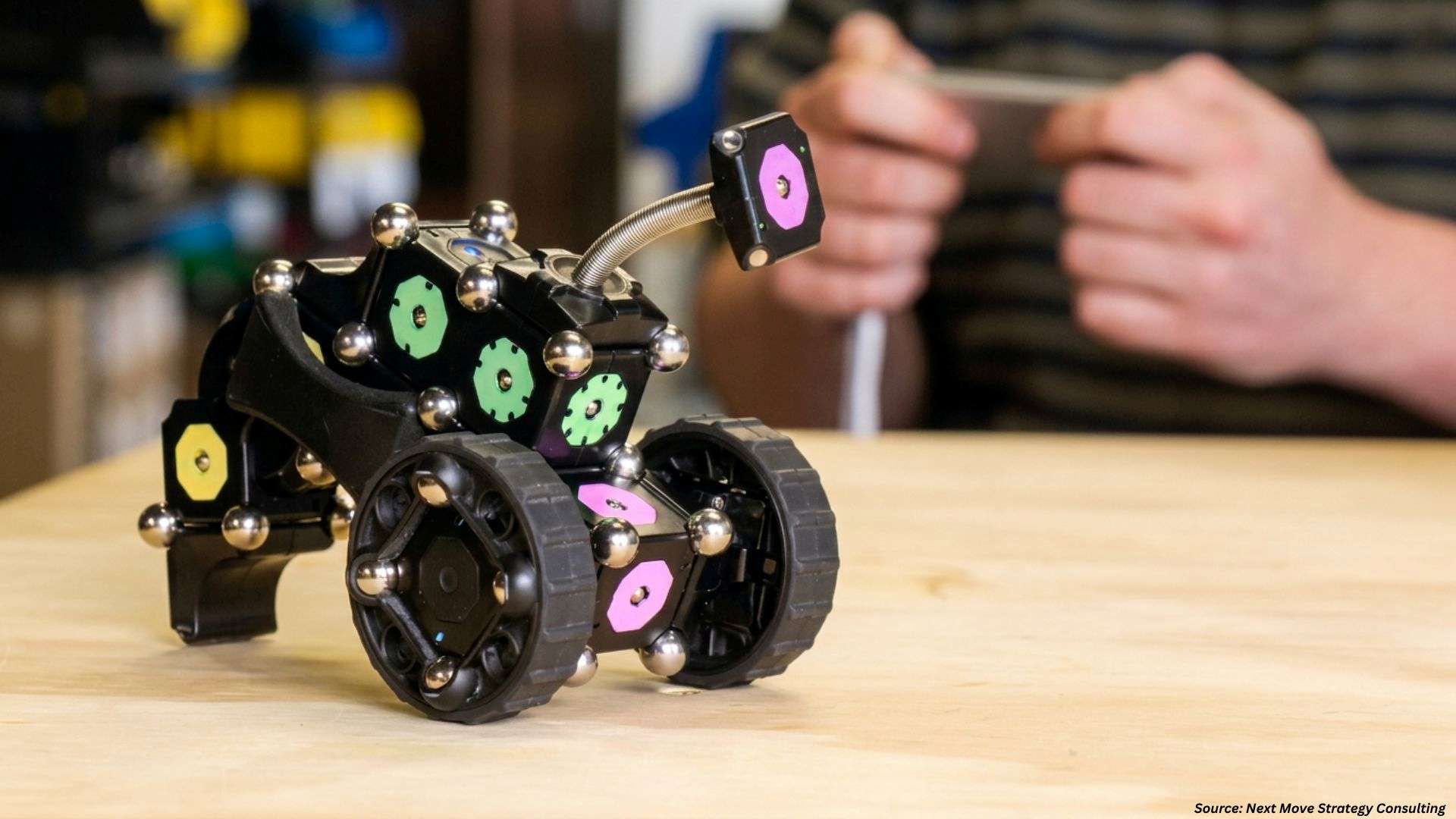
Mobile robots remain the leading RaaS subsegment because a large share of professional service-robot sales in recent years was for transport and intralogistics, driven by e-commerce and warehouse automation needs. Transport/logistics accounted for the largest slice of professional service robots in 2024, reflecting broad fleet rollouts of AMRs. Practically, AMRs scale well under subscription economics, so providers prioritise fleet orchestration, modular payloads, and integration with WMS to convert pilots into recurring contracts.
Inspection and service robots are gaining RaaS traction where downtime is costly and skilled labour is scarce. Embedding advanced sensing and predictive-maintenance analytics raises the value of inspection robots as a managed service, since customers pay for reduced outage risk rather than for hardware alone. Delivery robots are a visible RaaS use case for campuses, hotels and urban last-mile pilots where per-task billing aligns with customer economics. Transportation/logistics growth, which includes many delivery applications, making delivery robots an emerging RaaS play as regulations and public acceptance improve. To win, operators focus on predictable SLAs, route-optimisation software, and partnerships with local logistics networks to move from pilots into municipal or enterprise scale service contracts.
By Deployment Model Insights
Is Cloud-Managed Fleet Emerging as the Preferred Deployment Model in the Robot-as-a-Service Market?
On the basis of deployment model, the robot-as-a-service market is segmented into on-premise managed service, cloud-managed fleet, hybrid deployment, temporary or rental deployment, and fully managed turnkey operations.
On-premise managed RaaS deployments remain relevant in highly regulated industries such as defense, pharmaceuticals, and automotive manufacturing, where data security, latency control, and integration with proprietary systems are top priorities. Many enterprises prefer localized server control for robotic process data and operational autonomy. This model ensures strict compliance and custom configurations, making it a strong fit for organizations with existing IT infrastructure and stringent privacy standards.
Cloud-based RaaS is rapidly gaining ground as businesses embrace Industry 4.0 connectivity. Cloud connectivity and AI integration are becoming key enablers of scalable fleet management in logistics and manufacturing operations. Cloud-based models allow real-time updates, remote performance monitoring, and predictive maintenance across distributed robot fleets. This approach reduces IT overhead and accelerates deployment cycles, making it the preferred model for multi-location enterprises seeking agility and lower total cost of ownership.
Hybrid RaaS models are increasingly being adopted by companies that want the flexibility of cloud scalability with the security of local data storage. This approach supports edge computing, processing sensitive data locally while leveraging cloud intelligence for optimization. It’s particularly beneficial in energy, healthcare, and industrial IoT environments where real-time decision-making and low-latency operations are critical. As a result, hybrid deployments are expected to rise as companies balance cost, control, and connectivity in their automation ecosystems.
By Pricing Model Insights
Is Outcome-Based Pricing Shaping the Future of the Robot-as-a-Service Market?
On the basis of pricing model, the robot-as-a-service market is segmented into software and platform subscription, usage-based pricing, outcome-based pricing, and hybrid pricing.
The subscription-based pricing model forms the backbone of the robot-as-a-service market, aligning perfectly with customers’ demand for predictable costs and flexible access to automation. Under this model, clients pay recurring fees for software licenses, AI updates, and system maintenance. This approach is popular among SMEs in logistics, manufacturing, and healthcare, as it eliminates heavy capital investments.
Usage-based or pay-per-use pricing has gained traction as businesses seek efficiency and cost transparency. Clients are billed based on actual robotic operation hours, tasks completed, or material moved, creating a direct link between expenditure and productivity. This model aligns with modern as-a-service economics, making it highly suitable for dynamic operations such as warehousing and e-commerce fulfillment.
By Industry Vertical Insights
Which Industry Verticals Are Driving the Robot-as-a-Service Market Expansion?
On the basis of industry vertical, the robot-as-a-service market is segmented into logistics and warehousing, automotive and manufacturing, electronics and discrete industries, retail and commerce, healthcare and life sciences, and others.
Logistics and warehousing represent the largest adopters of the robot-as-a-service (RaaS) model, fueled by the surge in e-commerce, omnichannel fulfillment, and same-day delivery demands. Robots in this sector handle picking, sorting, and inventory management, reducing labor dependency and enhancing throughput. Logistics account for the highest deployment of professional service robots in 2024. Companies are scaling rapidly through subscription-based models, offering customers flexible automation solutions that adjust to seasonal demand peaks and warehouse expansions.
The automotive and manufacturing sectors are leveraging RaaS to improve efficiency, precision, and uptime across assembly lines. As manufacturers transition to smart factories, RaaS helps integrate robotics without high upfront costs. Robots perform welding, painting, and material handling tasks with adaptive AI support. Automation adoption in manufacturing is accelerating under as-a-service structures to enhance flexibility and reduce CapEx exposure. RaaS providers targeting this segment should focus on predictive maintenance, real-time monitoring, and scalable robot leasing programs to meet evolving production needs.
In healthcare, RaaS supports surgical assistance, patient transport, sanitation, and drug dispensing. Hospitals and labs prefer RaaS for its pay-as-you-go flexibility, allowing access to advanced robotics without capital burden. The WHO emphasizes that automation is increasingly vital for healthcare resilience, particularly in logistics and sterilization functions. RaaS also enables remote operation and data analytics in medical robotics, expanding access to precision technologies. Providers focusing on compliance, safety, and interoperability with hospital IT systems find strong growth potential in this segment.
Regional Outlook
The robot-as-a-service market is geographically studied across North America, Europe, Asia Pacific, Middle East & Africa, and Latin America and each region is further studied across countries.
The growing operational stock of industrial robots directly supports the expansion of the robot-as-a-service market demand in different regions and countries by creating a strong foundation for scalable, service-based automation models. As the installed base of robots increases, demand rises for maintenance, software upgrades, remote monitoring, and fleet optimization, core components of RaaS offerings. The growing base enables providers to convert existing robot users into recurring clients, fostering continuous revenue generation through cloud connectivity, AI-based analytics, and predictive maintenance solutions.

Robot-as-a-Service Market in North America
North America’s robot-as-a-service market momentum is driven by large-scale logistics demand, e-commerce fulfilment and a steady push to convert CapEx into OpEx across mid-sized and enterprise customers. The United States leads adoption in installations and service pilots, while Canada’s growth is closely tied to automotive nearshoring and regional manufacturing investment cycles; both markets favour subscription models because they lower procurement friction for retailers and 3PLs. Providers benefit from mature cloud/edge ecosystems and strong systems integrator networks that simplify integration with WMS/ERP stacks, but facing cautious buyers who demand robust uptime SLAs and data governance. The International Federation of Robotics shows the Americas account for a large share of recent industrial robot installations, with the U.S. responsible for most regional uptake, a dynamic that supports RaaS pilots scaling into fleets rather than one-off buys.
Robot-as-a-Service Market in the United States
The United States remains the most active commercial market for RaaS pilots and fleet rollouts because of concentrated e-commerce volumes, logistics automation budgets, and a large base of system integrators that convert robot pilots into multi-site services. However, industrial robot installations in the U.S. showed cyclical movements in recent IFR reporting, reflecting the capital planning environment for manufacturing customers and seasonal fulfilment needs; this means RaaS providers that offer flexible scaling and outcome-based pricing find faster procurement acceptance. Strong private 5G and edge compute rollouts further enable remote monitoring and teleoperation services, practical enablers for RaaS contracts with high-availability SLAs.
Robot-as-a-Service Market in Canada
Canada’s RaaS adoption is strongly correlated with the automotive sector and nearshoring activity. When OEM and tier-1 investments rise, robot installations climb and RaaS pilots scale into larger factory-floor fleets; conversely, when the auto cycle softens, demand softens. Canada’s advantage lies in integrated North American supply chains and regional logistics hubs; its opportunity for RaaS players is to package bilingual service/support, local spare-part logistics and integration with North American WMS/ERP standards to capture multi-plant contracts.
Robot-as-a-Service Market in Europe
Europe’s RaaS picture is uneven but purposeful, where northern and western markets lead on automation density and sophisticated service contracts, while southern and eastern markets are catching up via nearshoring and EU industrial policy incentives. Automotive and advanced manufacturing demand (Germany, Italy, Spain) still dominate industrial robot deployments, but there’s a visible shift to service robots in cleaning, healthcare logistics and retail store automation. Regulatory emphasis on data privacy, worker safety and circularity in many EU countries means RaaS vendors must embed compliance, lifecycle reporting and refurbishment SLAs into offers to win public-sector and healthcare contracts. IFR reporting shows Europe remains a major installation region, with country-level cyclicity tied to industrial investment.
Robot-as-a-Service Market in the United Kingdom
The United Kingdom saw a surge in installations around specific incentives and EV projects, but installation counts have shown volatility once temporary tax incentives end. RaaS suppliers in the U.K. must therefore design offerings that withstand fiscal policy cycles, for example, short-term subscriptions with telecom-backed SLAs and demonstrable productivity KPIs for retail and public-sector cleaning. The U.K. also has strong robotics R&D clusters, which help specialist RaaS vendors build vertical-specific services.
Robot-as-a-Service Market in Germany
Germany’s heavy manufacturing base and automotive sector make it a central market for industrial and logistics automation. German customers expect engineered reliability and deep systems integration; that creates a natural niche for high-quality RaaS players that combine robust mechanical platforms, deterministic SLAs and local integration teams. While Germany still leads many industrial metrics, China’s rising robot density has changed competitive dynamics for component sourcing and cost. RaaS vendors who offer EU-compliant data handling and long-term maintenance contracts win trust among German industrial adopters.
Robot-as-a-Service Market in France
France is fertile for RaaS in healthcare logistics and facility services where public procurement values compliance and bundled training. Vendors that offer pre-tuned vertical solutions and regulatory support shorten procurement cycles in hospitals and public institutions. IFR and regional industry notes point to steady automation growth with public-sector opportunities for RaaS.
Robot-as-a-Service Market in Italy
Italy’s manufacturing clusters, automotive, appliances and discrete manufacturing, sustain steady demand for robotics and RaaS, though investment is cyclical. Providers succeed by localizing service teams and packaging language-tailored onboarding. The pattern in IFR data shows Italy as an important European market where fleet-as-a-service economics must align with pro-cyclical capital planning.
Robot-as-a-Service Market in Spain
Spain’s RaaS traction is rising in automotive hubs and logistics as firms automate to stay competitive. Public tenders for facility services and retail pilots are increasing; vendors that demonstrate KPIs for throughput and uptime find quicker adoption. IFR country notes indicate growing but uneven installation trends across sectors.
Robot-as-a-Service Market in the Nordics
Across the Nordic region, the robot-as-a-service market is expanding rapidly, supported by world-leading automation readiness, advanced manufacturing ecosystems, and government-backed digital transformation strategies. High labour costs and aging populations are pushing enterprises in manufacturing, healthcare, and logistics to adopt RaaS for improved efficiency and flexibility. Collaborative robots (cobots) and autonomous mobile robots (AMRs) are gaining ground in SMEs thanks to subscription-based access and low deployment barriers. The region’s strong connectivity infrastructure and active 5G rollouts enable real-time cloud-robotics operations, while sustainability-driven business models align well with RaaS’s circular economy benefits.
Robot-as-a-Service Market in the Asia-Pacific
Asia-Pacific is where scale meets policy, like China’s rapid robot installations and rising domestic suppliers are reshaping component sourcing and price points, while Japan, South Korea and Taiwan keep very high robot densities in automotive and electronics. Southeast Asian countries are accelerating automation as manufacturing shifts from coastal China, favouring RaaS for variable-cost deployment and labour substitution. Australia combines strong logistics demand with cautious capital cycles, favouring flexible service models in warehousing and mining support. The region’s pattern is clear: policy incentives, national industrial strategy and export-driven manufacturing explain where RaaS expands fastest, and providers that offer local service footprints and telecom-backed connectivity succeed. IFR and major press report China as the single largest installer, underscoring Asia’s weight in global robot deployments.
Robot-as-a-Service Market in China
China now leads global robot installations and is rapidly increasing domestic robot production, which drives down price points and accelerates automation across both heavy and light manufacturing. State support for smart manufacturing and local supplier ecosystems means RaaS providers in China access lower-cost hardware and large trial customers quickly, but they face intense local competition and the need to localize software/data handling. China’s doubling of robot density in recent years and the huge installation volumes that are reshaping global supply dynamics, a critical point for any RaaS vendor planning Asia-scale deployments.
Robot-as-a-Service Market in Japan
Japan retains one of the world’s highest robot densities and a strong OEM ecosystem, which supports high-reliability, precision RaaS offerings in automotive and electronics manufacturing. Japanese customers demand certified local partners, long maintenance windows and proven uptime metrics, so RaaS vendors succeed via deep local partnerships and performance guarantees.
Robot-as-a-Service Market in India
India’s robot-as-a-service market is evolving quickly, driven by the country’s expanding industrial automation landscape, rapid digitalization, and government-backed programs that promote robotics and AI adoption. The rise of Industry 4.0, combined with Make in India and Digital India initiatives, is creating fertile ground for RaaS providers offering cost-effective, subscription-based automation. Indian startups and tech firms are increasingly deploying RaaS models in sectors such as logistics, warehousing, manufacturing, and healthcare, where capital-light robotics helps businesses overcome high labor intensity and variable workforce costs.
Robot-as-a-Service Market in South Korea
South Korea remains among the top robot-density countries, driven by electronics, batteries and automotive automation. High domestic robot adoption and advanced telecom infrastructure make South Korea fertile ground for sophisticated RaaS use cases, but local competition from strong OEMs favors joint ventures and reseller models.
Robot-as-a-Service Market in Taiwan
Taiwan’s semiconductor and contract-manufacturing clusters create pockets of premium automation demand where downtime costs are high. RaaS propositions that guarantee uptime, clean-room compatibility and fast local service are most attractive; vendors target replacement-time reductions and integration with fab logistics.
Robot-as-a-Service Market in Indonesia
Indonesia's robot-as-a-service market is experiencing growth, driven by the country's rich biodiversity and increasing consumer awareness of the health benefits of Robot-as-a-Service (RaaS) ingredients. The market is characterized by rising demand for herbal supplements, functional foods, and natural cosmetics. This growth is supported by favorable regulatory frameworks and a well-established distribution network, facilitating the widespread availability of Robot-as-a-Service (RaaS) products. Additionally, Indonesia's position as a key supplier of various Robot-as-a-Service (RaaS)s contributes to its significance in the global Robot-as-a-Service (RaaS)s market.
Robot-as-a-Service Market in Australia
Australia’s retail, warehousing and mining sectors are pragmatic RaaS adopters, where logistical stretches and high labour costs make on-demand robot fleets attractive for seasonal spikes and remote site support. Providers who combine robust remote monitoring, spare-part logistics and proven safety cases, especially for mining or heavy logistics, win faster procurement approvals. Australia’s market is smaller but strategically attractive for niche service robotics platform verticals.
Robot-as-a-Service Market in Latin America
Latin America remains differentiated, Brazil and Mexico lead regional automation, primarily driven by automotive and nearshoring to serve North American markets; however, overall robot density is lower and capital constraints are more binding. RaaS value propositions that convert CapEx to OpEx and include local maintenance support sell better in markets where CFOs are sensitive to upfront investments and supply chain fragmentation. Mexico’s proximity to the U.S. supply chain makes it an attractive expansion target for North American RaaS providers. IFR regional notes show Mexico and Brazil as the primary installation hubs in the region.
Robot-as-a-Service Market in the Middle East & Africa
Adoption in the Middle East is concentrated in wealthy GCC states, like UAE, Saudi Arabia where sovereign investment, smart-city programmes and logistics hubs create pockets of RaaS demand for airports, malls, and last-mile trials. Africa’s automation story is nascent and fragmented; where multinational manufacturing hubs exist, RaaS pilots are emerging, but scaling is constrained by connectivity, financing and local training capacity. RaaS entrants focused on government and large-enterprise tenders, with local financing partners and clear lifecycle support, have the best chance to convert pilots into recurring fleets.
Competitive Landscape
Which Companies Dominate the Robot-as-a-Service (RaaS) Industry and How Do They Compete?
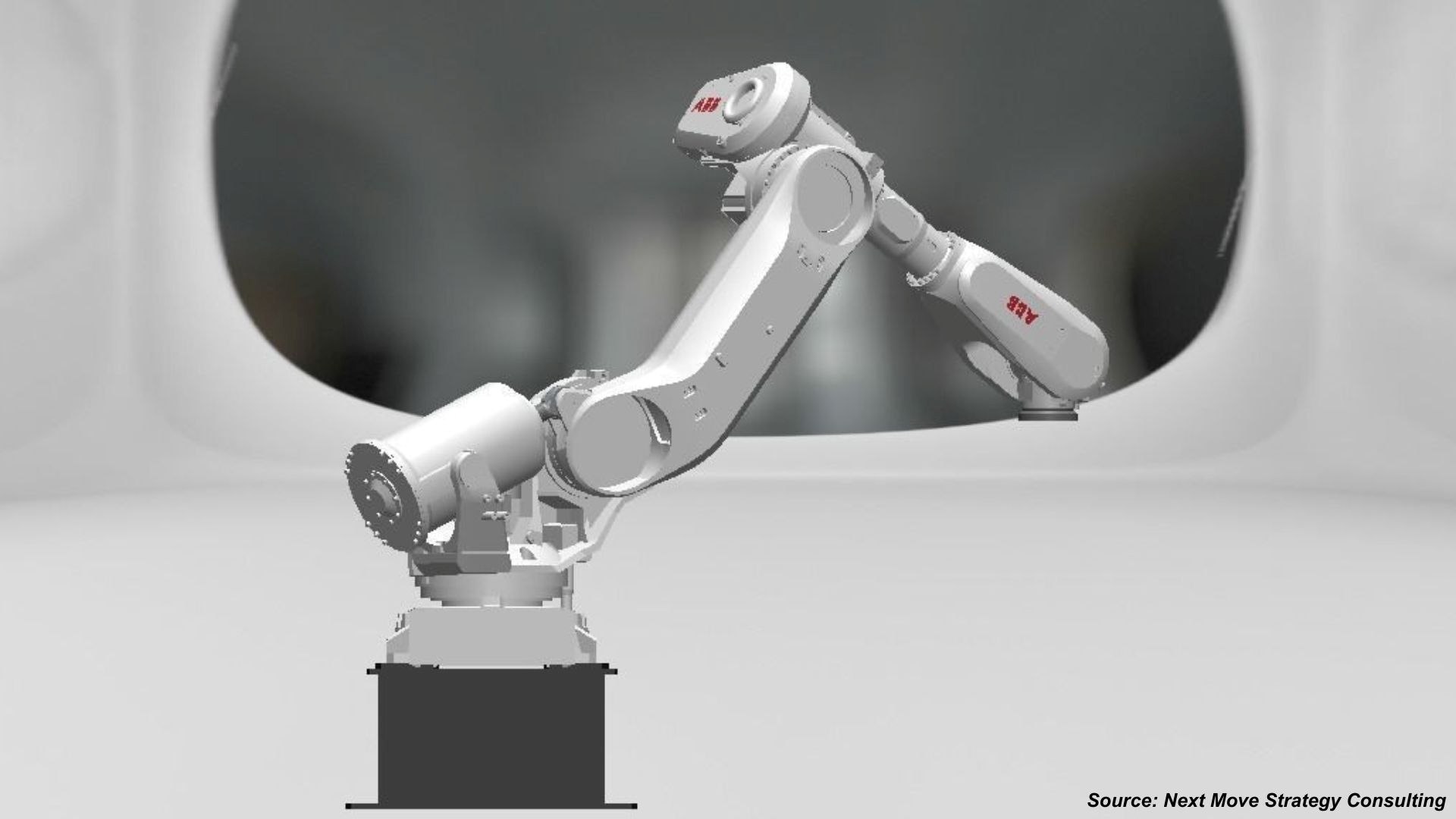
The RaaS field today mixes legacy robotics giants, such as KUKA, ABB with fast-growing specialists like Locus Robotics, Exotec, inVia and niche players like, Knightscope for security, Hirebotics for welding, Kraken/RedZone for marine and infrastructure inspection. Giants leverage scale, installed base and system-integration muscle to offer end-to-end automation, while specialists compete on rapid deployment, vertical focus and SaaS-like software stacks that drive repeatable monthly revenue. Startups win by packaging turnkey RaaS offers, hardware, teleoperation, analytics and SLAs, so customers scale without CapEx. The competitive edge now depends less on a single robot and more on fleet orchestration, uptime guarantees and the ability to prove ROI quickly in live operations.
Market Dominated by Robot-as-a-Service (RaaS) Giants and Specialists
Market structure is bifurcating, where conglomerates such as, ABB, KUKA command industrial and green-field factory deals through deep integration services, whereas specialists like, Locus, Exotec, inVia, Hirebotics dominate fast-moving logistics, e-commerce fulfilment and niche facility services by offering plug-and-play RaaS that reduces buyer friction. Regional winners vary, where Europe and Japan favor engineered reliability from incumbents, while North America and APAC reward rapid deployment and subscription flexibility. Niche players capture markets where task repeatability and software optimization matter most, and they pressure incumbents to match subscription economics or partner with agile vendors.
Innovation and Adaptability Drive Market Success
Leaders push three tactics, where embed edge AI for autonomous behaviour, invest in fleet orchestration platforms, and create outcome-based SLAs that turn uptime into a sellable metric. Locus and Exotec emphasize software that continuously improves performance post-deployment, while ABB and KUKA focus on modular hardware and stronger integrator networks to retain enterprise clients. Some firms expand by adding telecom/5G partnerships to improve teleoperation and by offering refurbishment/parts pools to lower lifecycle cost. These moves show the market prizes operational resilience and predictable economics, innovations that directly shorten sales cycles and increase renewal rates.
Market Players to Opt for Merger & Acquisition Strategies to Expand Their Presence
Mergers and takeovers are active levers for scale and capability. Berkshire Grey agreed to a go-private transaction with SoftBank to regroup and accelerate product development under a strategic investor, illustrating how capital and corporate backing turbocharge a RaaS roadmap. At the large-end, ABB’s robotics business moves and strategic restructurings signal incumbents reshaping themselves to compete with agile, software-focused rivals. These transactions show two playbooks, startup buyouts to add software or vertical reach, and incumbent reorganizations to sharpen focus, each used to win recurring-revenue RaaS contracts.
List of Key Robot-as-a-Service (RaaS) Companies
-
Kuka AG
-
Berkshire Grey, Inc.
-
Locus Robotics
-
Exotec
-
Knightscope
-
Cyberdyne
-
CAJA
-
Hirebotics
-
Relay Robotics
-
inVia Robotics
-
Ademco Global
-
ABB Group
-
RedZone Robotics
-
Formic Technologies Inc.
-
Kraken Robotics Inc
What Are the Latest Key Industry Developments?
-
February 2025- Exotec launched the next-generation Skypod system, improving single-station throughput by ~50% and storage density by ~30% compared to prior generation, thereby strengthening its service model offering and enabling tighter subscriptions for warehouses.
-
October 2025- Locus Robotics exceeded 4 billion units picked across its deployments, showing rapid fleet scaling and validating its RaaS model in high-volume logistics.
-
September 2024- Berkshire Grey formed a global partnership with Kardex AS, powered by AutoStore and BG’s robotic picking tech, enabling integrated end-to-end RaaS fulfilment solutions and expanding their market footprint.
-
March 2024- Exotec announced it had sold over USD 1 billion in systems globally, signaling rapid adoption of its modular warehouse automation. This milestone supports RaaS-style economics by demonstrating scale and vendor confidence.
-
January 2024- Berkshire Grey, Inc. launched its 4th-generation BG Robotic Sortation solution that doubles units picked per sq ft in retail/e-commerce fulfilment. The upgrade underscores their push to shift companies from traditional automation to service-oriented, hardware-plus-software models.
What Are the Key Factors Influencing Investment Analysis & Opportunities in the Robot-As-A-Service Market?
Investment momentum in the robot-as-a-service market is accelerating as investors increasingly view automation as a long-term infrastructure play rather than a niche technology. Venture capital and corporate investors are channeling funds into startups offering scalable RaaS platforms for logistics, healthcare, and manufacturing, drawn by predictable recurring revenues and strong customer retention potential. Strategic investors, including industrial conglomerates and private equity firms, are acquiring or partnering with RaaS companies to diversify portfolios toward automation-as-a-service models that promise continuous cash flows.
Geographically, investment hotspots are emerging across North America, Western Europe, and parts of Asia-Pacific, where digital infrastructure, supply chain modernization, and labor shortages fuel adoption. Valuations are being influenced more by software sophistication and fleet management capabilities than pure hardware innovation, signaling a shift toward platform-driven business models. This investor confidence reflects RaaS’s ability to blend technological innovation with service-based profitability, appealing to both financial and strategic backers.
Key Benefits for Stakeholders:
Next Move Strategy Consulting (NMSC) presents a comprehensive analysis of the robot-as-a-service market trends, covering historical trends from 2020 through 2024 and offering detailed forecasts through 2030. Our study examines the market at regional and country levels, providing quantitative projections and insights into key growth drivers, challenges, and investment opportunities across all major Robot-as-a-Service (RaaS) segments.
The Robot-as-a-Service (RaaS) industry creates a mutually beneficial ecosystem for investors, customers, and service providers alike. Investors gain exposure to a recurring revenue model with scalable growth potential, making RaaS a more stable long-term play than traditional hardware sales. Customers, particularly small and mid-sized enterprises, benefit from lower upfront costs, flexible subscription options, and access to advanced robotics without the need for large capital expenditure or specialized maintenance teams. Meanwhile, RaaS providers enhance profitability through continuous service contracts, data-driven optimization, and cross-sector expansion opportunities. This alignment of financial stability, operational efficiency, and technological accessibility makes the RaaS industry appealing across stakeholder groups, fostering steady market expansion and sustainable innovation in automation.
Report Scope:
|
Parameters |
Details |
|
Market Size in 2025 |
USD 33.62 Billion |
|
Revenue Forecast in 2030 |
USD 76.59 Billion |
|
Growth Rate |
CAGR of 17.9% from 2025 to 2030 |
|
Analysis Period |
2024–2030 |
|
Base Year Considered |
2024 |
|
Forecast Period |
2025–2030 |
|
Market Size Estimation |
Billion (USD) |
|
Growth Factors |
|
|
Companies Profiled |
15 |
|
Countries Covered |
33 |
|
Market Share |
Available for 10 companies |
|
Customization Scope |
Free customization (equivalent to up to 80 analyst-working hours) after purchase. Addition or alteration to country, regional & segment scope. |
|
Pricing and Purchase Options |
Avail customized purchase options to meet your exact research needs. |
|
Approach |
In-depth primary and secondary research; proprietary databases; rigorous quality control and validation measures. |
|
Analytical Tools |
Porter's Five Forces, SWOT, value chain, and Harvey ball analysis to assess competitive intensity, stakeholder roles, and relative impact of key factors. |
Key Market Segments
By Robot Type
-
Mobile robots
-
Autonomous mobile robots
-
Automated guided vehicles
-
Robotic sorters and conveyors
-
-
Inspection and service robots
-
Inspection robots
-
Surveillance and security robots
-
Cleaning and sanitation robots
-
-
Delivery robots
-
Indoor delivery robots
-
Outdoor delivery robots
-
-
Field and specialty robots
-
Agricultural robots
-
Construction robots
-
Medical robots
-
By Deployment Model
-
On premise managed service
-
Cloud managed fleet
-
Hybrid deployment
-
Temporary or rental deployment
-
Fully managed turnkey operations
By Pricing Model
-
Software and platform subscription
-
Usage based pricing
-
Outcome based pricing
-
Hybrid pricing
By Industry Vertical
-
Logistics and warehousing
-
Automotive and manufacturing
-
Electronics and discrete industries
-
Retail and commerce
-
Healthcare and life sciences
-
Agriculture
-
Others
By End-User
-
Large enterprises
-
Small Enterprises
-
Large Enterprises
Geographical Breakdown
-
North America: U.S., Canada, and Mexico.
-
Europe: U.K., Germany, France, Italy, Spain, Sweden, Denmark, Finland, Netherlands, and rest of Europe.
-
Asia Pacific: China, India, Japan, South Korea, Taiwan, Indonesia, Vietnam, Australia, Philippines, Malaysia and rest of APAC.
-
Middle East & Africa (MEA): Saudi Arabia, UAE, Egypt, Israel, Turkey, Nigeria, South Africa, and rest of MEA.
-
Latin America: Brazil, Argentina, Chile, Colombia, and rest of LATAM
Conclusion & Recommendations
Our report equips stakeholders, industry participants, investors, and consultants with actionable intelligence to capitalize on Robot-as-a-Service (RaaS)’s transformative potential. By combining robust data-driven analysis with strategic frameworks, NMSC’s Robot-as-a-Service Market Report serves as an indispensable resource for navigating the evolving landscape.
The robot-as-a-service market is transitioning from early adoption to mainstream integration, redefining how businesses approach automation through flexible, scalable, and cost-efficient service models. As robotics merges with AI, edge computing, and 5G connectivity, RaaS is poised to revolutionize industries such as logistics, healthcare, manufacturing, and facilities management. The strategic takeaway is clear, the market’s growth will hinge on innovation in software platforms, interoperability, and outcome-based service delivery rather than just hardware performance. Companies that embrace adaptability, cross-sector partnerships, and sustainability-driven design emerge as long-term leaders in this evolving landscape.
For executives and investors, the path forward lies in proactive positioning. Executives integrate RaaS into digital transformation strategies to boost operational resilience and agility, while investors focus on scalable providers offering high-margin, subscription-based models with proven retention. By aligning capital, innovation, and strategy toward as-a-service automation, stakeholders capture both near-term efficiency gains and enduring competitive advantage in the robotics economy.


About the Author
 Mayurima Roy
— Mayurima Roy is Research Analyst at Next Move Strategy Consulting, where she has spent 4 years working across the firm's full industry coverage rather than a single fixed vertical. Her work centers on structured research, ongoing trend tracking, competitive assessment, and insight-led content development, translating complex market data into clear, decision-ready narratives that support informed client decision-making across diverse global industries, market sectors, and world regions every day.
Mayurima Roy
— Mayurima Roy is Research Analyst at Next Move Strategy Consulting, where she has spent 4 years working across the firm's full industry coverage rather than a single fixed vertical. Her work centers on structured research, ongoing trend tracking, competitive assessment, and insight-led content development, translating complex market data into clear, decision-ready narratives that support informed client decision-making across diverse global industries, market sectors, and world regions every day.
About the Reviewer
 Supradip Baul
— Supradip Baul is an accomplished business consultant and strategist with over a decade of rich experience in market intelligence, strategy, technology, and business transformation. His work has included rigorous qualitative and quantitative analysis across multiple industries, helping clients shape investment decisions and long-term roadmaps. Earlier in his career, he was associated with Gartner, where he contributed to industry-leading reports and market share analyses. He has worked with leading global companies and holds an MBA with a dual specialization in Marketing and Finance.
Supradip Baul
— Supradip Baul is an accomplished business consultant and strategist with over a decade of rich experience in market intelligence, strategy, technology, and business transformation. His work has included rigorous qualitative and quantitative analysis across multiple industries, helping clients shape investment decisions and long-term roadmaps. Earlier in his career, he was associated with Gartner, where he contributed to industry-leading reports and market share analyses. He has worked with leading global companies and holds an MBA with a dual specialization in Marketing and Finance.
At Next Move Strategy Consulting, we understand that insightful market research is the cornerstone of successful business decisions. That's why we employ a robust and multifaceted approach, combining various methodologies to deliver the most accurate and actionable data for our clients.

Research Landscape
We navigate the world of research with two primary approaches:
Qualitative Approach
Our qualitative research methodologies involve immersive techniques such as in-depth interviews, focus groups, and observational studies. By engaging directly with individuals and stakeholders, we uncover valuable insights that quantitative data alone may overlook.

Quantitative Research
In tandem with qualitative methodologies, NMSC leverages the power of Quantitative Research to provide a robust foundation of numerical insights. Through systematic data collection and analysis, we quantify patterns, preferences, and market trends, offering a comprehensive view of the business landscape.
Our quantitative research approach employs diverse tools, including surveys, experiments, and statistical modelling. These methodologies enable us to gather data from a large and representative sample, ensuring the statistical significance of our findings. By employing structured questionnaires and standardized data collection methods, we guarantee the reliability and validity of the information we present to our clients.
Quantitative research is particularly effective in measuring the prevalence of trends, assessing market size, and gauging the impact of various factors on consumer behavior. The numerical precision attained through this approach equips our clients with actionable insights, facilitating data-driven decision-making and strategy formulation.


Our Specialized Toolbox for Industry-Specific Market Research
We deploy a specialized arsenal of techniques tailored to meet your unique requirements. Here's a glimpse into our comprehensive toolbox:

Information Procurement
The stage entails acquiring market data or relevant information through various sources and methodologies.


Market Research Approach
We utilize both top-down and bottom-up approaches in market research analysis to achieve a comprehensive understanding of the market dynamics, leveraging the broad perspective of industry trends and macroeconomic factors alongside detailed insights from specific segments and individual companies.

Porters Five Forces Analysis
We conduct Porter's Five Forces analysis to evaluate the competitive landscape of an industry, providing us with insights into factors that affect profitability and strategic positioning.

SWOT Analysis

Forecasting
We utilize a forecasting model to predict future consumption by considering parameters like population, economics, regulations, market competition, drivers, constraints, technology, and pricing. We also employ statistical techniques such as multilinear regression, exponential smoothing, moving average, ARIMA, and Monte Carlo simulations for accurate predictions. In econometric forecasting, we analyzed short-term and long-term event impacts, attributing values based on regulatory frameworks, economic factors, and market events.





 Speak to Our Analyst