How AI Is Redefining the Data Center Colocation Market’s Value Chain
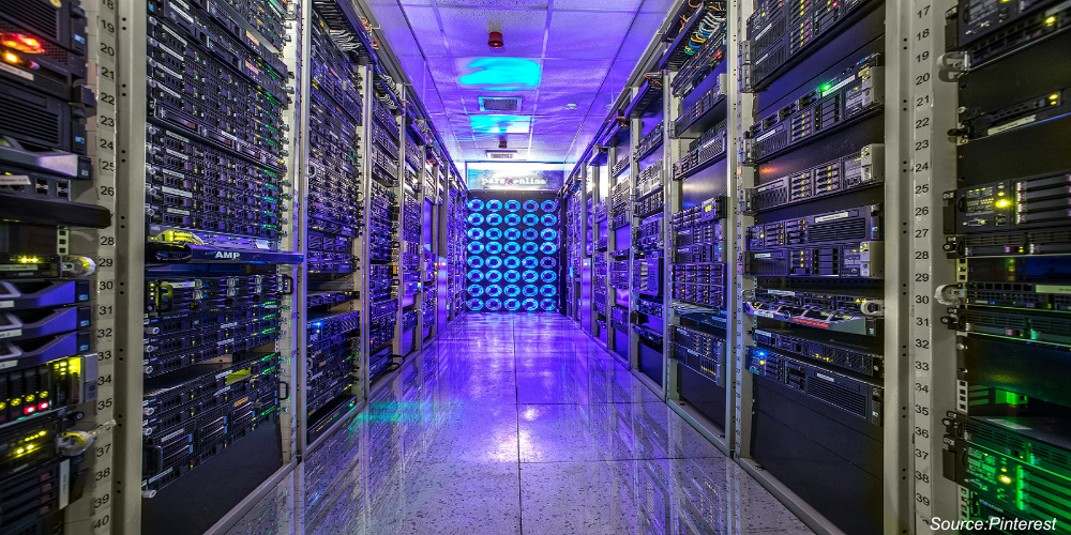
Colocation facilities serve as neutral, network-dense platforms where enterprise IT, public cloud services, and hyperscale compute infrastructure converge. As artificial intelligence workloads and hybrid multi-cloud architectures proliferate, the role of colocation operators is undergoing a structural transformation. Providers are no longer positioned solely as landlords offering space and power; instead, they are evolving into strategic infrastructure partners delivering AI-ready environments. These environments integrate high-density power configurations, advanced thermal management solutions such as direct liquid and immersion cooling, and robust interconnection ecosystems that enable low-latency data exchange. This evolution reflects the growing complexity and performance sensitivity of AI workloads. This blog explores how AI and automation are reshaping the colocation market by driving demand for specialized infrastructure, accelerating capital investment, and redefining competitive dynamics across global colocation ecosystems.
According to Next Move Strategy Consulting, the Data Center Colocation Market size was valued at USD 76.87 billion in 2025 and is expected to reach USD 93.90 billion by 2026. Looking ahead, the industry is projected to expand significantly, reaching USD 256.49 billion by 2035, registering a CAGR of 11.81% from 2026 to 2035.
Want Insights on the Data Center Colocation Market? Access a FREE Sample Instantly

AI and High-Density Workloads Accelerate Colocation Demand
High-Density Compute and Specialized Power Infrastructure Requirements
The rapid expansion of AI training and large-scale inference workloads is fundamentally reshaping power and infrastructure requirements within colocation data centers. Unlike traditional enterprise applications, AI workloads demand significantly higher power density per rack, often exceeding 30–60 kW, driven by GPU- and accelerator-intensive architectures.
As a result, colocation customers increasingly seek facilities that can support advanced power delivery systems, redundant high-capacity electrical infrastructure, and next-generation cooling solutions. Legacy air-cooled environments are frequently insufficient, prompting adoption of direct liquid cooling and immersion cooling technologies. Operators capable of offering certified high-density suites with scalable power envelopes gain a competitive advantage, benefiting from faster lease absorption, premium pricing, and longer-term customer commitments. This shift positions power engineering expertise as a core differentiator in the evolving colocation landscape.
Interconnection Density and Ultra-Low-Latency Network Ecosystems
AI-driven applications, particularly distributed model training and cross-site inference, are highly sensitive to network latency and bandwidth availability. As a result, colocation markets with dense interconnection ecosystems are becoming strategic nodes within the global digital infrastructure. Neutral colocation facilities that host carrier hotels, internet exchanges, cloud on-ramps, and cross-connect-rich environments enable seamless, low-latency data movement between enterprises, hyperscalers, and AI platforms. These attributes are especially critical for workloads requiring real-time synchronization across multiple compute clusters. Markets that successfully combine network density with access to reliable, low-cost power are increasingly favored by both hyperscalers and large enterprises. Consequently, interconnection capability is no longer a secondary feature but a primary driver of site selection and long-term capacity planning.

Sovereign AI, Data Residency, and Regulatory Compliance Demand
Rising regulatory scrutiny and national digital sovereignty initiatives are accelerating demand for localized colocation capacity capable of hosting sensitive AI workloads. Governments and regulated industries increasingly mandate data residency, sovereign cloud architectures, and certified secure environments, particularly for defense, healthcare, financial services, and public-sector AI programs.
This regulatory fragmentation shifts demand toward regionally compliant colocation providers that can meet jurisdiction-specific standards related to security, auditability, and operational control. While such requirements limit workload portability, they also create premium, high-retention revenue streams for certified operators. Providers that invest early in compliance frameworks, sovereign partnerships, and localized infrastructure benefit from stronger customer stickiness and reduced competitive churn, reinforcing the strategic value of regulatory alignment in the AI-driven colocation market.
Edge Expansion Complementing Core Colocation Campuses
The proliferation of latency-sensitive AI use cases, including IoT analytics, real-time decision engines, autonomous systems, and telecom edge applications, is driving a bifurcated colocation architecture. Large hyperscale and core colocation campuses continue to serve as hubs for compute-intensive AI training and centralized inference. In parallel, distributed edge and micro-colocation facilities are emerging closer to end users to support real-time inference and data preprocessing.
This two-tier model enables enterprises to balance compute efficiency with performance requirements. Colocation operators capable of integrating core campuses with a scalable edge footprint are better positioned to capture a larger share of customer workloads and spending. This integrated approach enhances service differentiation and supports evolving AI deployment models across industries.

Capital Inflows, Development Pipelines, and Execution Risk
Strong capital inflows from institutional investors, private equity firms, and hyperscaler pre-commitments are accelerating the development of new colocation capacity globally. While this liquidity supports rapid market expansion, it also intensifies competition for prime sites, grid connectivity, skilled construction labor, and long-term power contracts. As development pipelines expand, execution capability becomes a critical differentiator. Delays in permitting, power delivery, or construction timelines can materially impact returns and customer confidence. Operators with proven project management expertise, strong utility relationships, and access to long-duration power purchase agreements are better equipped to scale efficiently. In this environment, disciplined capital deployment and operational excellence increasingly determine which providers can translate demand momentum into sustainable growth.
Conclusion: Strategic Realignment in the AI-Era Colocation Market
The colocation market is undergoing a fundamental transition from a commoditized space-and-power model to a highly differentiated, technology-driven services ecosystem. Artificial intelligence and automation are the primary forces reshaping this landscape. AI workloads are driving sustained demand for high-density power, advanced cooling architectures, and specialized infrastructure capable of supporting GPU-intensive compute environments. In parallel, automation and intelligent energy orchestration are enhancing operational reliability, improving energy efficiency, and strengthening operating margins while supporting sustainability objectives. For colocation operators, enterprise customers, and investors alike, success increasingly depends on the tight alignment of product strategy, power strategy, and interconnection strategy. Providers that integrate these elements early and at scale will be best positioned to secure premium, long-duration contracts and establish competitive leadership in the emerging AI-centric colocation market.
About the Author
 Ridip Gogoi
— Ridip Gogoi is a Research Associate at Next Move Strategy Consulting, where he supports cross-vertical market research and analysis across multiple industry sectors, with four years of experience. His work includes market analysis, data validation, secondary research, and insight development, helping structure evidence into clear findings for business and strategy decisions. He contributes to research quality checks and reporting, with a focus on consistency, source review, and clarity accuracy.
Ridip Gogoi
— Ridip Gogoi is a Research Associate at Next Move Strategy Consulting, where he supports cross-vertical market research and analysis across multiple industry sectors, with four years of experience. His work includes market analysis, data validation, secondary research, and insight development, helping structure evidence into clear findings for business and strategy decisions. He contributes to research quality checks and reporting, with a focus on consistency, source review, and clarity accuracy.
About the Reviewer
 Sikha Haritwal
— Sikha Haritwal is an assistant manager with strong expertise in market research, data analysis, and cross-functional coordination. She plays a key role in leading complex research initiatives, strengthening analytical rigor, and enabling data-driven decision-making across teams. Known for her leadership mindset and structured problem-solving approach, she supports process improvement, enhances operational efficiency, and contributes to building scalable frameworks that drive long-term strategic outcomes and organizational effectiveness.
Sikha Haritwal
— Sikha Haritwal is an assistant manager with strong expertise in market research, data analysis, and cross-functional coordination. She plays a key role in leading complex research initiatives, strengthening analytical rigor, and enabling data-driven decision-making across teams. Known for her leadership mindset and structured problem-solving approach, she supports process improvement, enhances operational efficiency, and contributes to building scalable frameworks that drive long-term strategic outcomes and organizational effectiveness.

















Add Comment