How Are Sodium-Ion Batteries Transforming Electric Mobility?
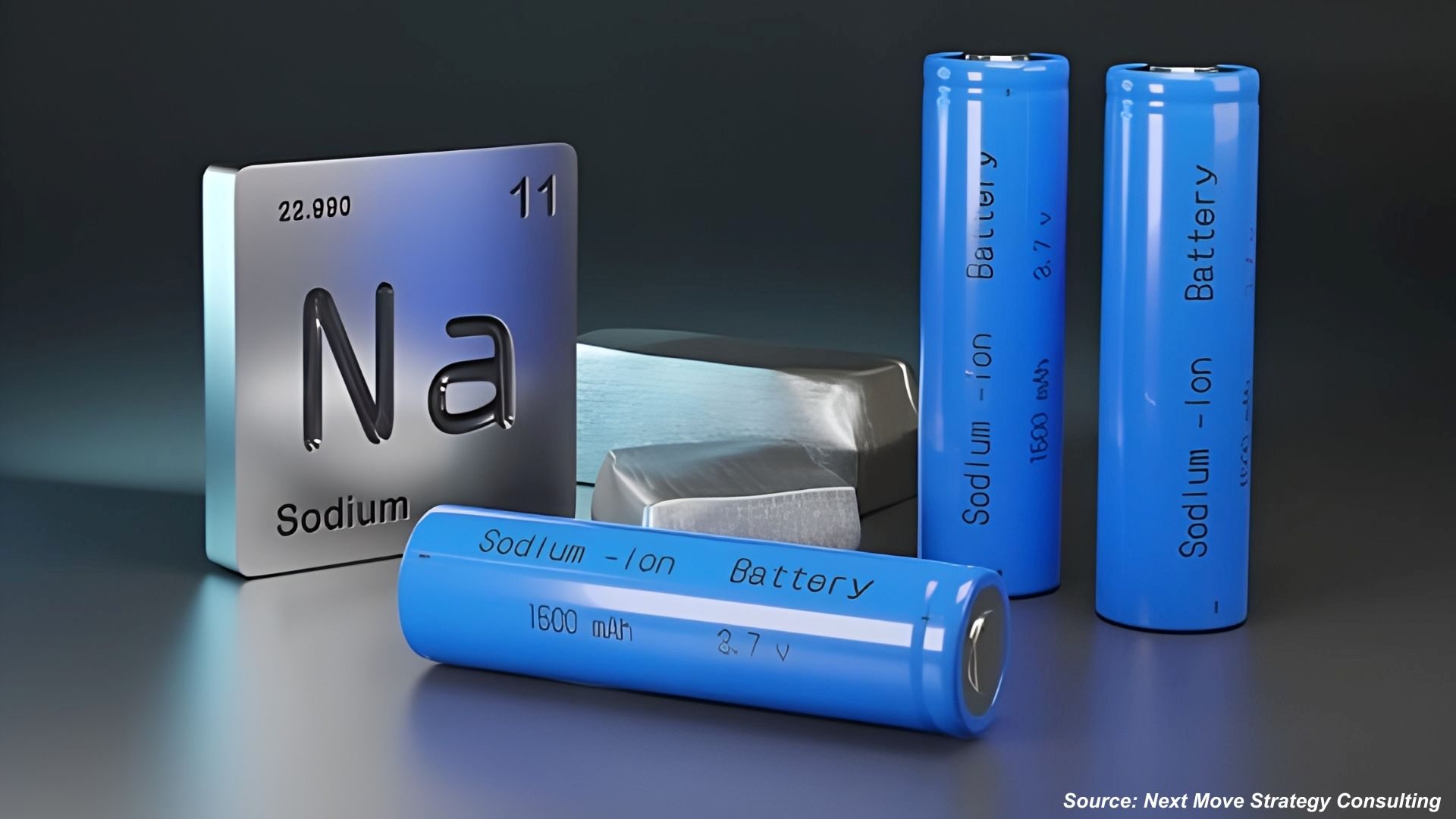
The Sodium-ion Battery Market is entering a new technological phase as sodium-ion batteries move closer to large-scale commercialization. For years, lithium-based chemistries dominated discussions around electric vehicles and energy storage. However, rising concerns regarding raw material availability, cold-weather efficiency, and supply chain resilience are encouraging manufacturers to explore alternative battery technologies.
A major turning point arrived in February 2026, when CATL and CHANGAN Automobile introduced the world’s first mass-production passenger vehicle powered by sodium-ion batteries. According to CATL, the vehicle is expected to enter the market by mid-2026, marking one of the strongest indicators yet that sodium-ion technology is transitioning from research laboratories to mainstream transportation.

Why Is Sodium-Ion Technology Receiving Industry Attention?
Battery manufacturers are increasingly focusing on sodium-ion chemistry because sodium is more abundant and widely available than several materials used in conventional lithium-based systems. This could help diversify battery supply chains while reducing pressure on critical raw material sourcing.
According to CATL, its Naxtra sodium-ion battery achieves an energy density of up to 175 Wh/kg while supporting a pure-electric driving range exceeding 400 km. The company also stated that future improvements in the sodium-ion supply chain may allow driving ranges of 500–600 km for pure-electric models.
Another major advantage is operational reliability in extreme temperatures. CATL reported that the battery maintains more than 90% capacity retention at –40 °C and can continue stable power delivery at temperatures as low as –50 °C. The company also noted that the battery delivers nearly three times the discharge power of equivalent lithium iron phosphate (LFP) batteries at –30 °C.
These performance indicators are significant because battery efficiency losses in winter conditions remain one of the most common concerns among electric vehicle users. Improving low-temperature performance could therefore support broader EV adoption in colder regions.
In addition to thermal performance, CATL emphasized safety testing. The company stated that its sodium-ion battery remained smoke-free and fire-free during crushing, drilling, and sawing tests while continuing to supply power.

How Does Sodium-Ion Compare With LFP Battery Technology?
Although sodium-ion batteries are gaining momentum, LFP technology continues to dominate global energy storage deployments. According to the 2025 industry discussion published by SelectScience, LFP batteries accounted for more than 60% of mainstream energy storage deployments globally in 2025.
The comparison between these two battery chemistries is increasingly focused on application suitability rather than outright replacement.
LFP batteries currently maintain an advantage in energy density and long-term cycle life. SelectScience reported that LFP systems typically achieve 160–200 Wh/kg, while sodium-ion batteries generally range between 100–160 Wh/kg. LFP batteries also support approximately 4,000–8,000 charge cycles, compared with 1,000–3,000 cycles for sodium-ion systems.
However, sodium-ion technology performs particularly well in cold environments. The report highlighted that sodium-ion batteries maintain strong output at –20 °C, making them attractive for harsh-weather applications.
The discussion also addressed sustainability and supply chain considerations. Sodium-ion batteries benefit from the availability of sodium resources, while LFP batteries continue to rely on mature manufacturing ecosystems and stable production networks.
Rather than replacing LFP batteries completely, sodium-ion technology is increasingly viewed as a complementary option for applications where cold-weather operation, raw material diversification, or cost sensitivity are priorities.

How Is CATL Expanding Sodium-Ion Commercialization?
CATL stated that it began sodium-ion battery research in 2016 and invested nearly 10 billion RMB into technology development. The company also reported developing almost 300,000 test cells with support from more than 300 research personnel, including 20 PhDs.
Beyond battery manufacturing, CATL is also expanding supporting infrastructure. The company announced plans to establish more than 3,000 Choco-Swap battery-swapping stations across 140 Chinese cities by 2026. More than 600 of these stations are expected to be located in colder northern regions.

This infrastructure expansion is important because charging convenience remains a critical factor influencing electric vehicle adoption. Battery-swapping systems may help reduce charging downtime while improving accessibility for drivers in densely populated urban regions and colder climates.
The company also stated that its sodium-ion batteries are designed for integration across multiple vehicle brands, including AVATR, Deepal, Qiyuan, and UNI.
Leading Companies Advancing Sodium-Ion Battery Development
The global sodium-ion battery industry is supported by major manufacturers such as CATL and BYD Company, along with emerging technology-focused players including HiNa Battery Technology, Faradion, TIAMAT, Zoolnasm Energy Technology, BENAN Energy Technology, Li-FUN Technology Corporation, Veken Technology, and Transimage Energy Technology.
Established manufacturers are utilizing large-scale production capabilities and extensive supply chain networks to accelerate commercialization, while emerging innovators are concentrating on sodium-ion material advancements, battery efficiency improvements, and early-stage market adoption.

Major Trends Shaping the Present
Several trends are currently influencing the evolution of sodium-ion battery technology and broader electric mobility adoption.
Automakers are increasingly adopting multi-chemistry battery strategies to improve operational flexibility and reduce supply chain dependence. At the same time, low-temperature battery optimization is becoming a major competitive differentiator, particularly for manufacturers targeting northern markets.
Infrastructure expansion is also playing a larger role in battery adoption strategies. Companies are no longer focusing only on battery manufacturing but are also investing in charging and swapping ecosystems that support long-term scalability.
The growing focus on safety testing and environmental sustainability is another important development. Manufacturers are under increasing pressure to deliver batteries that meet stricter operational and recycling expectations while maintaining performance consistency.
These trends suggest that sodium-ion batteries could become an important component within the future electric mobility ecosystem, particularly in applications where environmental adaptability and supply chain resilience matter most.
Next Steps
Organizations evaluating future battery technologies should monitor how sodium-ion commercialization evolves through 2026 and beyond. Companies operating in colder climates may particularly benefit from assessing the technology’s operational advantages.
Manufacturers and infrastructure providers should also evaluate how dual-chemistry systems can support broader electrification goals without relying exclusively on a single battery type.
Finally, continued observation of energy density improvements, lifecycle performance, and large-scale deployment outcomes will be essential before sodium-ion batteries achieve wider mainstream adoption.
-
Evaluate sodium-ion batteries for cold-climate electric vehicle applications where low-temperature performance is critical
-
Monitor large-scale commercialization projects from CATL and CHANGAN Automobile through 2026
-
Compare lifecycle performance, energy density, and operational costs between sodium-ion and LFP battery systems
-
Assess battery-swapping infrastructure opportunities for faster and more efficient EV energy access
-
Track future advancements in sodium-ion safety, range optimization, and supply chain scalability
Final Thoughts
Sodium-ion batteries are rapidly emerging as a practical addition to the electric mobility landscape. The technology is gaining attention because it addresses several industry concerns simultaneously, including cold-weather performance, safety, and raw material diversification.
While LFP batteries continue to lead mainstream energy storage deployment, sodium-ion systems are establishing a valuable role in applications where environmental adaptability and supply chain flexibility are critical.
The collaboration between CATL and CHANGAN demonstrates that sodium-ion batteries are no longer limited to experimental development. Instead, they are beginning to shape the next phase of commercial electric mobility.
About the Author
 Tania Dey
— Tania Dey is a content writer specializing in transformation-led, insight-driven storytelling. She develops research-backed, high-impact content aligned with evolving business priorities, digital behavior, and audience expectations. Her work helps organizations sharpen value propositions, strengthen visibility, and communicate strategic intent with clarity and precision. Grounded in data-informed storytelling, she brings a strong focus on relevance, consistency, and measurable digital impact across platforms.
Tania Dey
— Tania Dey is a content writer specializing in transformation-led, insight-driven storytelling. She develops research-backed, high-impact content aligned with evolving business priorities, digital behavior, and audience expectations. Her work helps organizations sharpen value propositions, strengthen visibility, and communicate strategic intent with clarity and precision. Grounded in data-informed storytelling, she brings a strong focus on relevance, consistency, and measurable digital impact across platforms.
About the Reviewer
 Sanyukta Deb
— Sanyukta Deb is Digital Marketing Team Lead at Next Move Strategy Consulting, where she has led content strategy and technical SEO for the firm's B2B market research publications for over 2 years. Her editorial process translates NextMSC's primary and secondary research — spanning technology, industrial, and consumer sectors — into commercial narratives, backed by search-intent, keyword, and competitive analysis. She brings 5 years of overall experience in digital marketing and content strategy.
Sanyukta Deb
— Sanyukta Deb is Digital Marketing Team Lead at Next Move Strategy Consulting, where she has led content strategy and technical SEO for the firm's B2B market research publications for over 2 years. Her editorial process translates NextMSC's primary and secondary research — spanning technology, industrial, and consumer sectors — into commercial narratives, backed by search-intent, keyword, and competitive analysis. She brings 5 years of overall experience in digital marketing and content strategy.















Add Comment