How Is Composite AI Transforming Enterprise Automation and Aerospace Innovation in 2026?

Artificial intelligence is entering a new phase of enterprise adoption. Organizations are no longer seeking isolated AI models that perform a single task. Instead, they are investing in integrated systems capable of combining multiple AI capabilities, business workflows, real-world data, and autonomous decision-making.
This shift is accelerating the growth of the Composite AI Market, as organizations increasingly adopt integrated artificial intelligence frameworks capable of addressing complex business and operational challenges. From procurement automation to self-healing aircraft materials, developments in 2025 demonstrate that Composite AI is progressing beyond experimental applications and becoming a practical solution for real-world enterprise and industrial use cases.

Fujitsu's introduction of Fujitsu Kozuchi Physical AI 1.0 and the University of Alabama's advancements in self-healing aerospace materials highlight a broader industry trend toward combining multiple AI systems, sensors, digital twins, and automation technologies within unified ecosystems. As a result, the Composite AI Market is being shaped by growing demand for intelligent systems that enhance efficiency, strengthen safety, and support more informed decision-making across both digital and physical environments.
For investors, executives, supply chain leaders, and enterprise strategists, understanding this evolution is becoming increasingly important.
Composite AI is emerging as a strategic approach that combines multiple AI technologies to address complex operational challenges across industries.
-
Enterprises are moving beyond standalone AI models.
-
Composite AI supports more sophisticated automation.
-
Procurement and aerospace are demonstrating practical use cases.
-
2025 developments highlight increasing commercial relevance.
What Is Composite AI and Why Is It Gaining Attention?
Composite AI refers to the integration of multiple artificial intelligence techniques, models, and technologies into a unified system capable of solving complex problems.
Rather than relying on a single large language model or algorithm, Composite AI combines components such as:
-
Large language models
-
Specialized AI agents
-
Sensor-driven systems
-
Digital twins
-
Workflow automation frameworks
-
Decision-support technologies
A notable example emerged in December 2025 when Fujitsu introduced Fujitsu Kozuchi Physical AI 1.0. The platform combines NVIDIA software technologies, Fujitsu's proprietary AI capabilities, specialized AI agents, and secure workflow orchestration to automate highly confidential business operations.
The company's multi-AI agent framework automatically combines different AI technologies while maintaining workflow security and operational maintainability. This demonstrates how Composite AI is evolving into an enterprise-grade architecture rather than a standalone technology.

How Is Composite AI Shaping Enterprise Procurement?
One of the most practical applications highlighted by Fujitsu is procurement automation.
The company developed three specialized AI agents designed to support purchasing departments:
A proof-of-concept within Fujitsu's purchasing department showed approximately 50% reduction in order confirmation workload. Fujitsu also expects NVIDIA NIM compatibility to improve inference speed by approximately 50%, accelerating compliance checks across daily procurement operations.

How Is Composite AI Influencing Aerospace Innovation?
While enterprise automation represents one side of Composite AI adoption, aerospace innovation represents another.
Researchers at the University of Alabama are developing self-healing aircraft materials that combine advanced composite structures, embedded sensors, artificial intelligence, and digital twin technology.
The concept extends beyond traditional structural monitoring.
The aircraft materials continuously monitor stress and strain through embedded sensors. When damage occurs, the system detects the issue, evaluates severity, activates a repair mechanism, and restores structural integrity.

Why Does This Matter for Investors and Strategic Leaders?
Organizations are operating in an environment defined by increasing complexity, stricter regulatory requirements, and continuous pressure to improve efficiency. In this context, Composite AI is emerging as more than just an advanced technology framework; it is becoming a strategic business capability. By integrating multiple AI models, specialized agents, digital intelligence systems, and automation tools into a coordinated ecosystem, Composite AI enables organizations to manage complex workflows more effectively than isolated AI solutions. The developments highlighted by Fujitsu and the University of Alabama demonstrate how interconnected AI systems can improve operational performance, support compliance-driven processes, and enhance decision-making across both digital and physical environments. For investors and strategic leaders, this evolution has important implications for future capital allocation and technology adoption, particularly in enterprise software, industrial automation, aerospace engineering, physical AI applications, and autonomous operational systems. As organizations seek scalable ways to improve productivity and resilience, Composite AI is increasingly positioned as a key driver of long-term operational transformation and competitive advantage.

Leading Companies Driving Innovation in Composite AI
The Composite AI landscape is characterized by the presence of several prominent technology providers, including Black Swan Technologies, Microsoft Corporation, SAS Institute Inc., Fujitsu Limited, OpenText Corporation, Dynatrace LLC., LeewayHertz, XenonStack, Cascadeo, BMC Software, Inc., Oracle Corporation, Siemens AG, Google LLC, Amazon Web Services, Inc., and Infosys Limited. These organizations continue to strengthen their positions through ongoing technological innovation, strategic partnerships, product development initiatives, and collaborative ecosystem-building efforts aimed at expanding Composite AI capabilities across enterprise and industrial applications.

Future Outlook
The next stage of Composite AI appears to involve greater interaction between digital intelligence and physical environments.
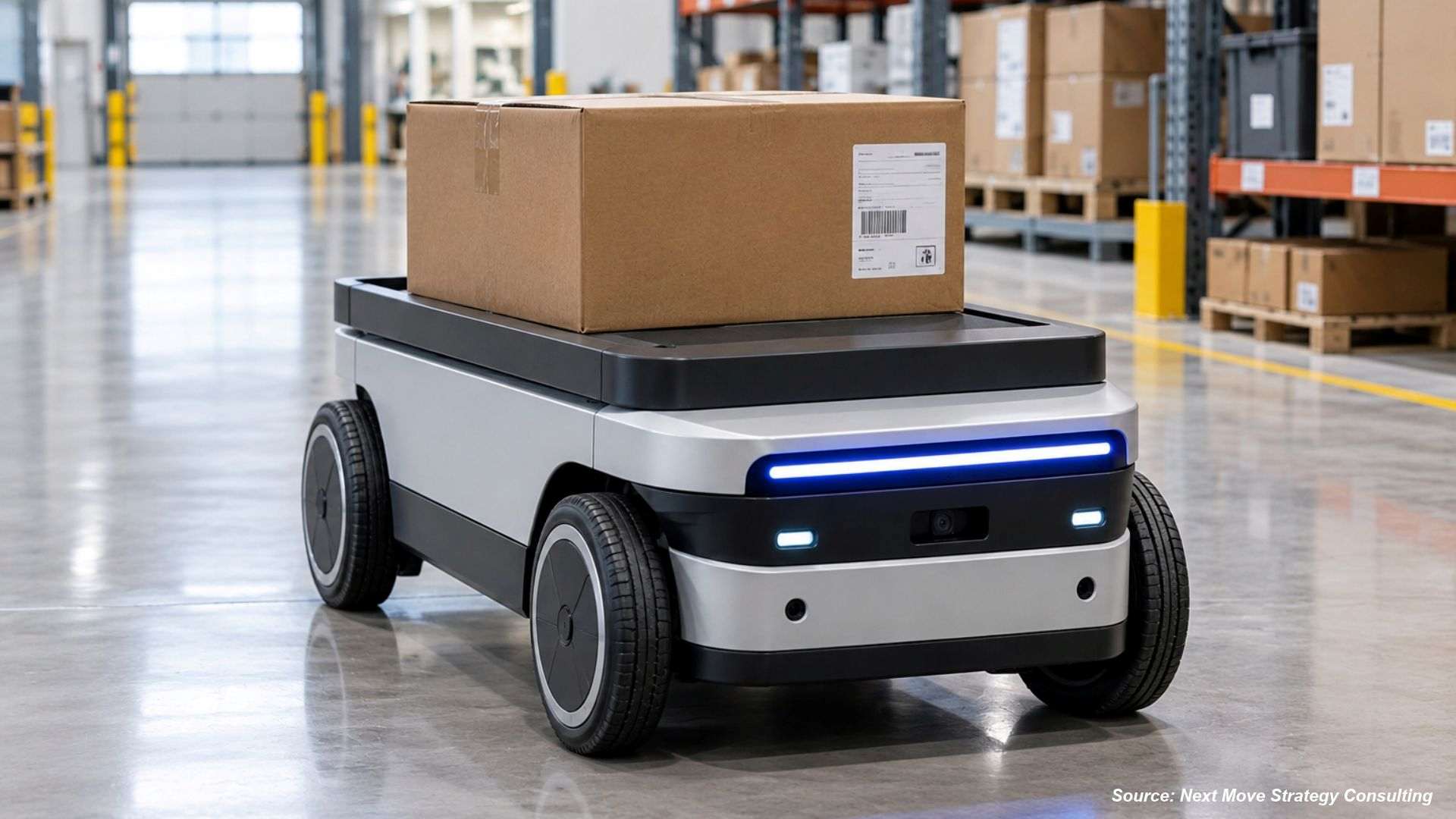
Fujitsu has stated its intention to evolve its technology into an agentic AI foundation capable of autonomous learning within customer environments. The company also plans to expand capabilities into physical AI applications where AI agents collaborate directly with robots.
In aerospace, continued development of self-healing materials could support more adaptive maintenance models, especially in environments where immediate human intervention is difficult.
Although both technologies remain in different stages of maturity, they point toward a future where intelligent systems are increasingly capable of sensing, reasoning, and acting independently.
Next Steps
Organizations evaluating Composite AI initiatives should focus on:
-
Identifying high-value workflow automation opportunities.
-
Assessing data security and governance requirements.
-
Evaluating multi-agent AI architectures.
-
Exploring digital twin integration where operational visibility is critical.
-
Developing long-term strategies for physical AI adoption.
Decision-makers should prioritize use cases where multiple AI technologies can deliver measurable operational improvements rather than pursuing isolated AI deployments.
Conclusion
Composite AI is rapidly evolving from a conceptual framework into a practical business strategy. The developments showcased by Fujitsu and the University of Alabama illustrate how combining AI agents, digital twins, sensors, and automation technologies can create systems capable of solving complex operational challenges.
Whether improving procurement efficiency or enabling self-healing aerospace structures, Composite AI demonstrates the growing value of integrated intelligence. For enterprise leaders, investors, and operational decision-makers, understanding how these interconnected systems evolve may become a critical component of future competitiveness.
About the Author
 Tania Dey
— Tania Dey is a content writer specializing in transformation-led, insight-driven storytelling. She develops research-backed, high-impact content aligned with evolving business priorities, digital behavior, and audience expectations. Her work helps organizations sharpen value propositions, strengthen visibility, and communicate strategic intent with clarity and precision. Grounded in data-informed storytelling, she brings a strong focus on relevance, consistency, and measurable digital impact across platforms.
Tania Dey
— Tania Dey is a content writer specializing in transformation-led, insight-driven storytelling. She develops research-backed, high-impact content aligned with evolving business priorities, digital behavior, and audience expectations. Her work helps organizations sharpen value propositions, strengthen visibility, and communicate strategic intent with clarity and precision. Grounded in data-informed storytelling, she brings a strong focus on relevance, consistency, and measurable digital impact across platforms.
About the Reviewer
 Sanyukta Deb
— Sanyukta Deb is Digital Marketing Team Lead at Next Move Strategy Consulting, where she has led content strategy and technical SEO for the firm's B2B market research publications for over 2 years. Her editorial process translates NextMSC's primary and secondary research — spanning technology, industrial, and consumer sectors — into commercial narratives, backed by search-intent, keyword, and competitive analysis. She brings 5 years of overall experience in digital marketing and content strategy.
Sanyukta Deb
— Sanyukta Deb is Digital Marketing Team Lead at Next Move Strategy Consulting, where she has led content strategy and technical SEO for the firm's B2B market research publications for over 2 years. Her editorial process translates NextMSC's primary and secondary research — spanning technology, industrial, and consumer sectors — into commercial narratives, backed by search-intent, keyword, and competitive analysis. She brings 5 years of overall experience in digital marketing and content strategy.

















Add Comment