What Is Driving the Rise of Human-AI Collaboration in 2026?

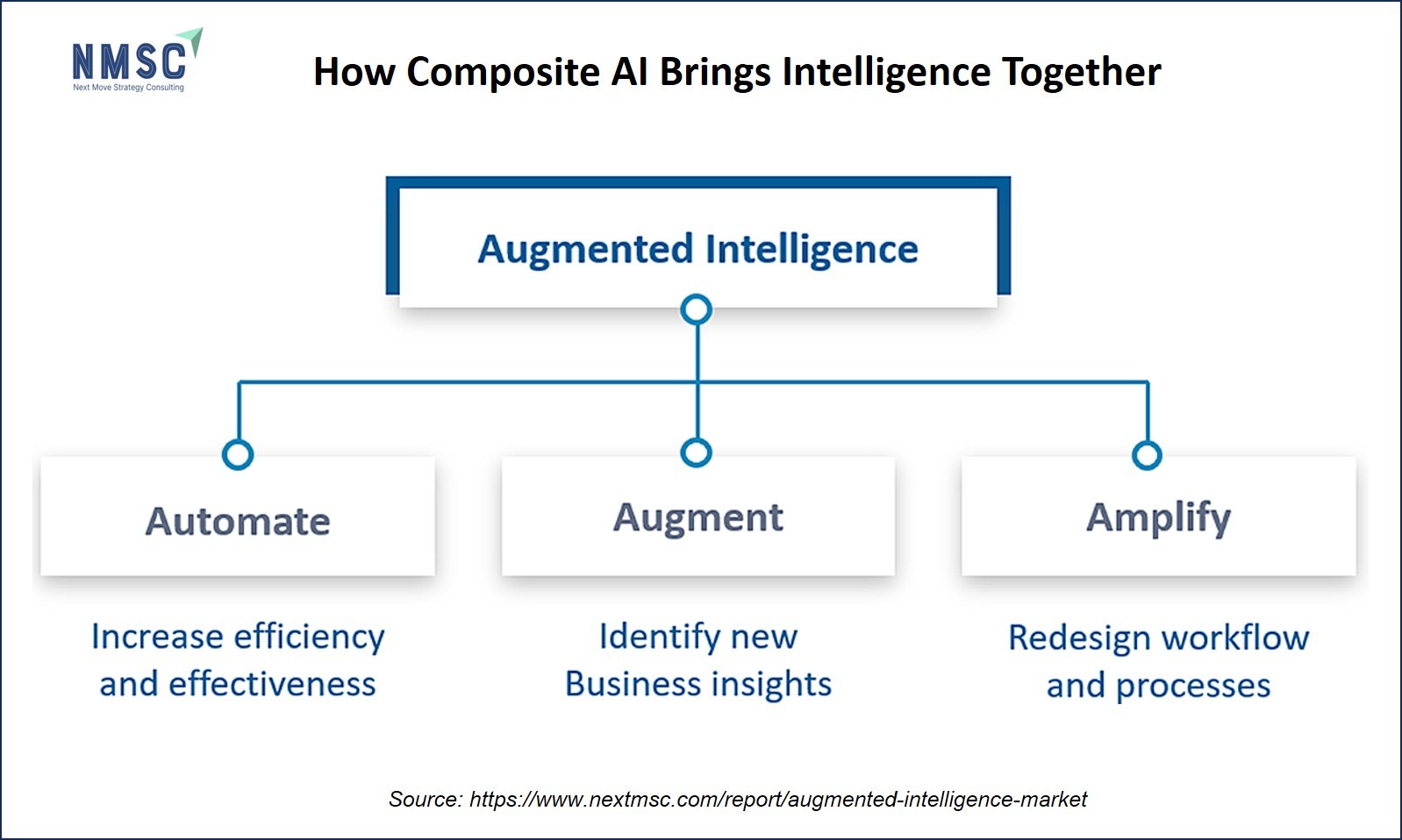
Artificial intelligence is entering a new phase of maturity. Organizations are no longer focused solely on automation or replacing human decision-making. Instead, the conversation is shifting toward collaboration between human expertise and machine intelligence.
The Augmented Intelligence Market is increasingly being shaped by a collaborative approach that combines human expertise, domain knowledge, and artificial intelligence to enhance decision-making and operational outcomes rather than replace human involvement. Recent developments from Arizona State University (ASU) and CATL highlight how this approach is influencing both AI governance and industrial innovation.
In the digital governance space, researchers are advancing frameworks and technical standards designed to improve transparency, accountability, and trust in AI-generated content. At the same time, industrial organizations are leveraging AI-powered design platforms to accelerate research and development processes while ensuring that engineers and subject matter experts remain central to critical decisions.
For investors, business leaders, and operational stakeholders, these developments signal a significant shift in the evolution of artificial intelligence. The long-term value of AI is increasingly tied not to fully autonomous systems, but to the ability of organizations to effectively integrate machine intelligence with human judgment, creating more reliable, transparent, and scalable solutions across industries.
How Is Augmented Intelligence Reshaping Digital Trust?
As generative AI tools become increasingly sophisticated, distinguishing real content from synthetic content is becoming significantly more difficult. Organizations can use AI detection tools such as GPTZero to assess whether written content is likely to have been generated by AI, adding another layer to content-authenticity checks.
According to research cited by Arizona State University, people identified AI-generated content correctly only about 51% of the time, roughly equivalent to random guessing. The challenge is no longer limited to misinformation; it extends to fraud prevention, digital identity verification, intellectual property protection, and corporate reputation management.
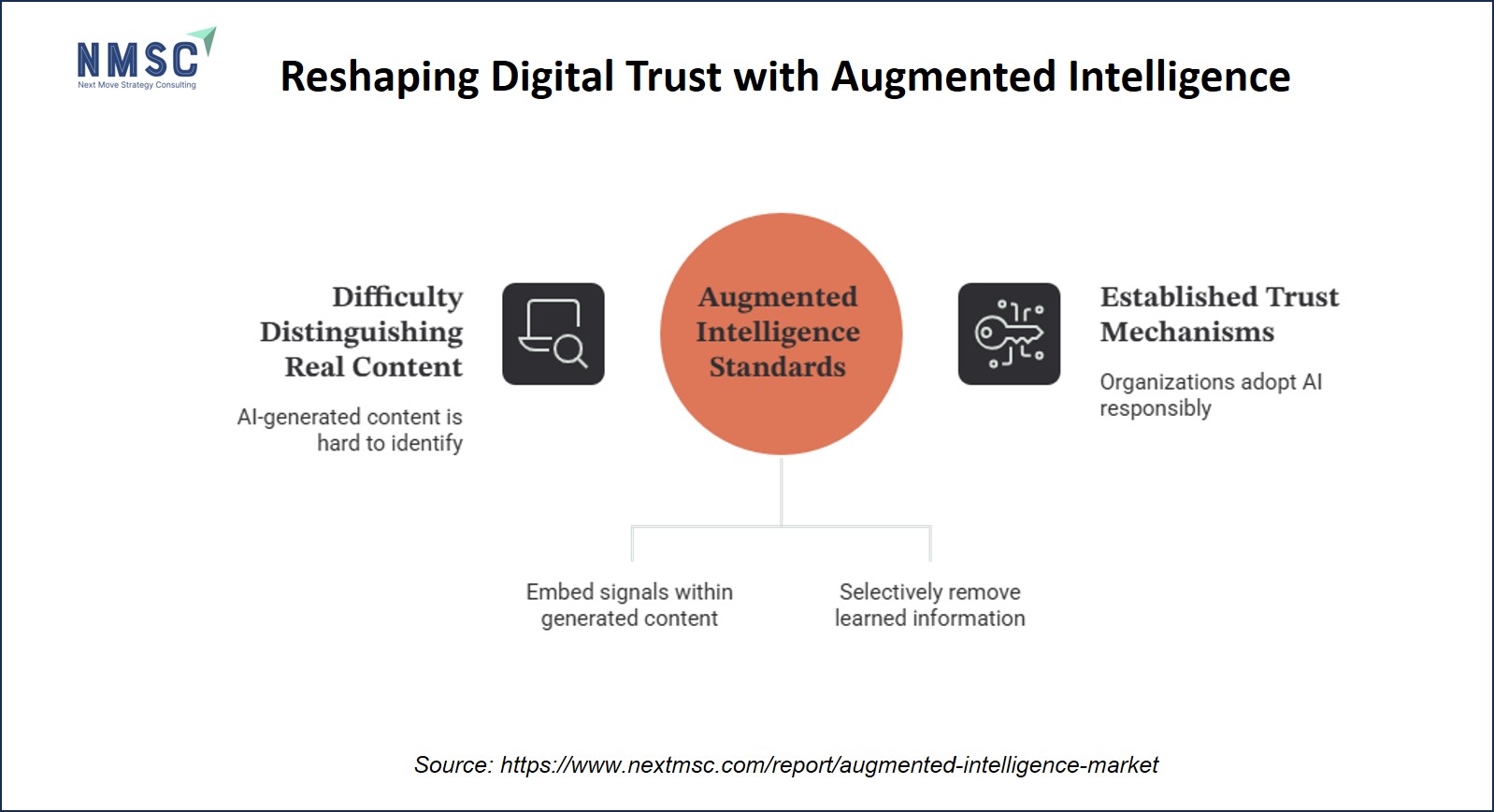
ASU researcher Yezhou "YZ" Yang is helping develop standards that could enable AI systems to embed detectable digital signals within generated content. These signals function similarly to digital fingerprints, allowing verification systems to identify AI-generated media.
Beyond detection, Yang's research focuses on machine unlearning, a capability that allows AI systems to selectively remove learned information without retraining entire models.
Potential business applications include:
-
Removing copyrighted content when licenses expire
-
Eliminating sensitive personal information
-
Addressing harmful biases discovered after deployment
-
Supporting compliance with emerging data privacy regulations
The broader objective is establishing trust mechanisms that allow organizations to adopt AI responsibly while reducing legal and reputational risks.
How Is Augmented Intelligence Transforming Industrial Innovation?
While governance is one side of the Augmented Intelligence story, industrial innovation represents the other.
CATL's recognition through the World Economic Forum's 2026 MINDS Award highlights how human-AI collaboration can reshape complex engineering environments.
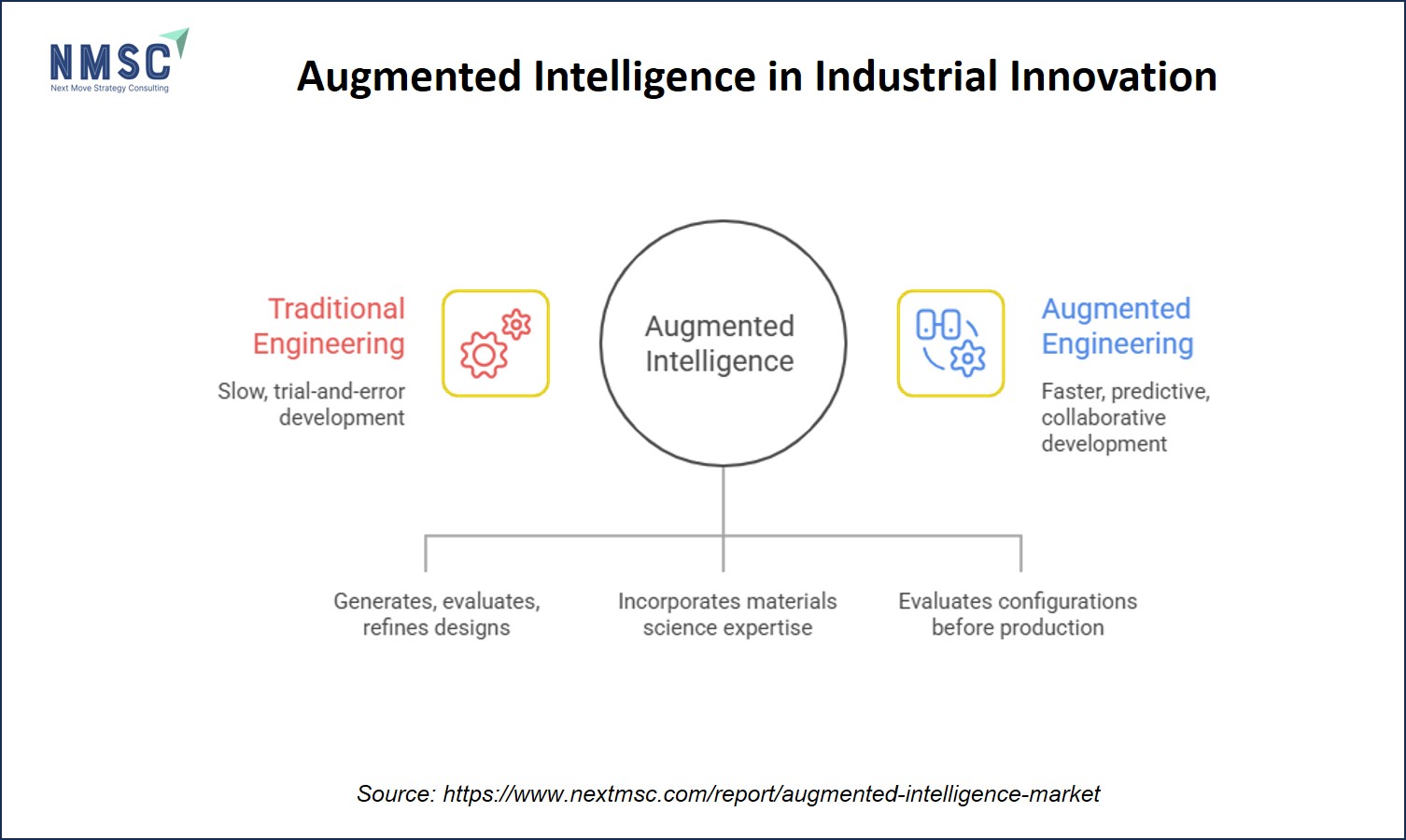
Rather than replacing engineers, the system functions as a "digital engineer" that generates, evaluates, and refines battery designs while incorporating human knowledge of materials science and manufacturing processes.
CATL specifically emphasizes that industrial success comes from Augmented Intelligence, not artificial intelligence operating independently.
The platform enables a transition from traditional trial-and-error development toward predictive design, helping engineers evaluate potential battery configurations before physical production begins.
What Major Trends Are Shaping the Present?
Trend 1: AI Transparency Is Becoming a Strategic Requirement
Organizations increasingly require mechanisms to verify content authenticity and maintain stakeholder trust.
Trend 2: Machine Unlearning Is Emerging as a Governance Tool
The ability to remove unwanted information from AI systems is becoming an important capability for privacy, compliance, and risk management.
Trend 3: Human-AI Co-Design Is Replacing Pure Automation
Industrial leaders are increasingly positioning AI as a collaborative partner rather than a standalone decision-maker.
Trend 4: Data-Driven Engineering Is Accelerating Innovation
Advanced design platforms are enabling faster experimentation, evaluation, and optimization across product development processes.
Leading Companies Driving Innovation in Augmented Intelligence
The augmented intelligence landscape is supported by a diverse group of technology leaders and solution providers, including Amazon Web Services, International Business Machines Corporation, Micron Technology Inc., Microsoft Corporation, QlikTech International AB, Salesforce.com Inc., Samsung, SAP SE, Sisense Inc., TIBCO Software Inc., NVIDIA Corporation, Oracle Corporation, Google, and Nextech3D.ai, among others. To strengthen their market position and expand their technological capabilities, these organizations continue to pursue strategic initiatives such as new product launches, platform enhancements, and innovation-driven investments, contributing to the ongoing evolution of the augmented intelligence ecosystem.

Future Outlook
The next phase of Augmented Intelligence is likely to focus on two interconnected priorities:
First, organizations will continue pursuing stronger transparency frameworks to improve trust in AI-generated content.
Second, industrial enterprises will increasingly deploy collaborative AI systems that amplify expert capabilities rather than replace them.
The combination of explainability, governance, machine unlearning, and human-AI co-design suggests that future AI strategies may be measured by how effectively they enhance human expertise.
Next Steps
Organizations evaluating Augmented Intelligence initiatives should consider:
1. Assessing current AI governance capabilities.
2. Establishing transparency and accountability frameworks.
3. Exploring human-AI collaboration opportunities.
4. Evaluating machine unlearning requirements for compliance.
5. Prioritizing explainable and trustworthy AI deployments.
Conclusion
Augmented Intelligence is emerging as a practical framework for the next generation of AI adoption. The work being conducted at Arizona State University demonstrates the growing importance of transparency, content authenticity, and machine unlearning. Meanwhile, CATL's award-winning battery design platform illustrates how human expertise and advanced AI systems can work together to accelerate innovation.
For business leaders and investors, the key lesson is clear: the future of AI is increasingly defined not by autonomous machines alone, but by systems that combine human judgment, governance, and technological capability to create sustainable value.
About the Author
 Sanyukta Deb
— Sanyukta Deb is Digital Marketing Team Lead at Next Move Strategy Consulting, where she has led content strategy and technical SEO for the firm's B2B market research publications for over 2 years. Her editorial process translates NextMSC's primary and secondary research — spanning technology, industrial, and consumer sectors — into commercial narratives, backed by search-intent, keyword, and competitive analysis. She brings 5 years of overall experience in digital marketing and content strategy.
Sanyukta Deb
— Sanyukta Deb is Digital Marketing Team Lead at Next Move Strategy Consulting, where she has led content strategy and technical SEO for the firm's B2B market research publications for over 2 years. Her editorial process translates NextMSC's primary and secondary research — spanning technology, industrial, and consumer sectors — into commercial narratives, backed by search-intent, keyword, and competitive analysis. She brings 5 years of overall experience in digital marketing and content strategy.
About the Reviewer
 Debashree Dey
— Debashree Dey is Assistant Manager at Next Move Strategy Consulting, where she supports cross-vertical market content and communications across diverse industries for 6 years. Her professional background includes senior content writing, communications, and published manuscript authorship, with experience developing audience-focused business narratives and maintaining clear, consistent messaging. Her role supports research-led content development and editorial quality across NextMSC publications.
Debashree Dey
— Debashree Dey is Assistant Manager at Next Move Strategy Consulting, where she supports cross-vertical market content and communications across diverse industries for 6 years. Her professional background includes senior content writing, communications, and published manuscript authorship, with experience developing audience-focused business narratives and maintaining clear, consistent messaging. Her role supports research-led content development and editorial quality across NextMSC publications.

















Add Comment