Is the Memory Foam Mattress Market Undergoing a Deep-Discount Transformation in 2025?
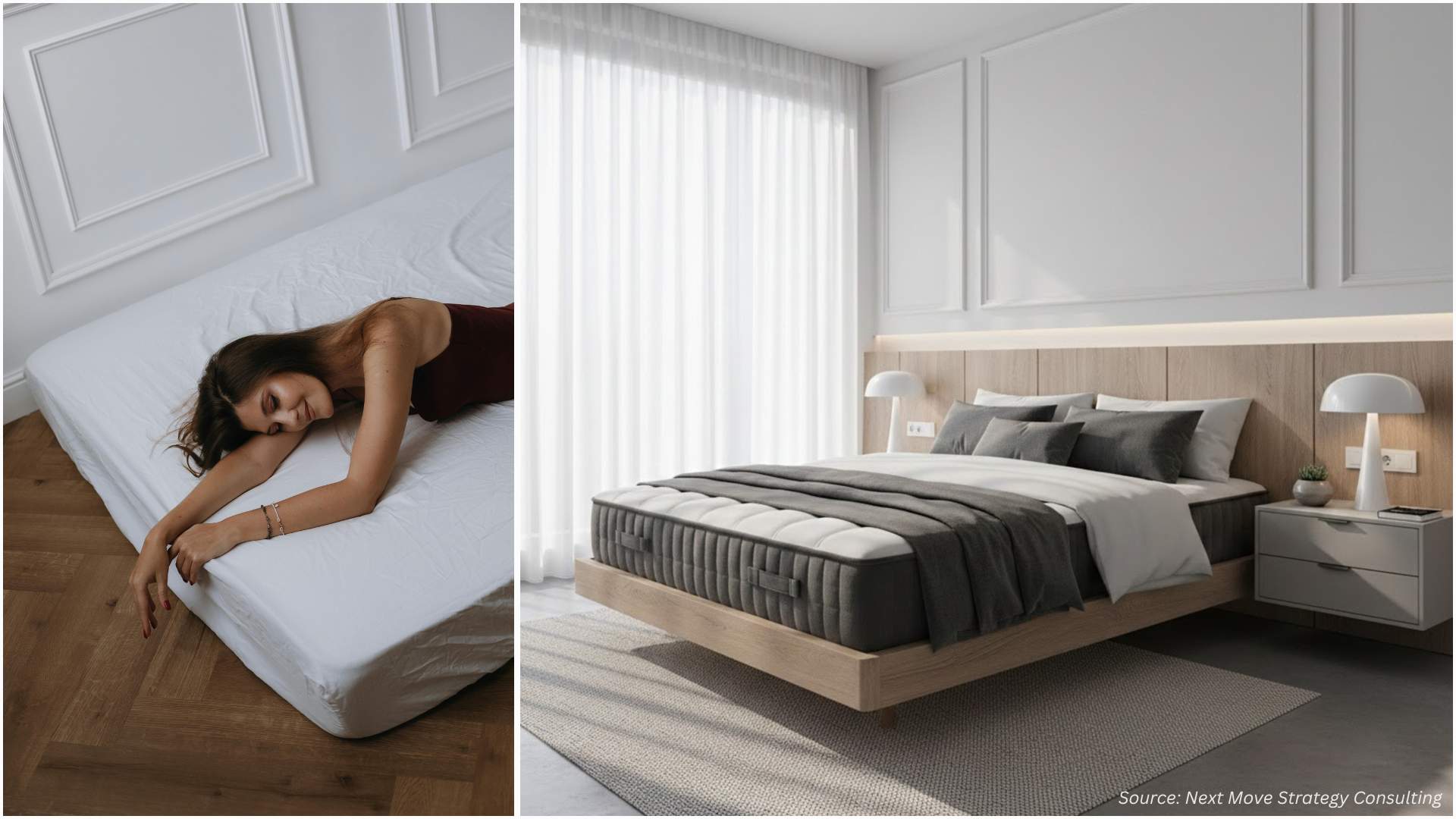
The memory foam mattress segment is experiencing a period of intense flux, driven by contrasting market forces: unprecedented price compression and heightened consumer demand for material transparency. In 2025, the market is challenging established price points while simultaneously raising the bar for safety and construction standards. For both consumers and industry stakeholders, understanding these dual pressures is essential to navigating the modern mattress landscape.
According to the research by Next Move Strategy Consulting, the global Memory Foam Mattress Market size was valued at USD 5.74 billion in 2024, and is expected to be valued at USD 6.17 billion by the end of 2025. The industry is projected to grow, hitting USD 8.86 billion by 2030, with a CAGR of 7.50% between 2025 and 2030.
Are Premium Memory Foam Mattresses Now Mass-Market Accessible?
The value proposition for high-quality memory foam mattresses is shifting dramatically, characterized by retailers offering luxury-tier brands at steep, never-before-seen discounts. This trend indicates a strong push by brands and retailers to aggressively capture market share and optimize inventory turnover.
For example, a Sealy 12" Queen memory foam mattress, originally priced at $1,200, was recently available for $419 through a major retailer. This specific promotion offered consumers a substantial saving of $780 on a mattress incorporating modern cooling technology, such as open cell, gel memory foam designed to enhance airflow for hot sleepers. Furthermore, this model is recognized as CertiPUR-US certified.
Next Move Strategy Consulting Analysis: Impact of Price Compression on the Memory FOAM Mattress Market
From a market research perspective, this significant discounting—approaching a 65% reduction from the original listed price—suggests that the price elasticity of demand is extremely high within the memory foam segment. It is therefore apparent that while premium features remain relevant, price is the dominant driver for conversion. This high level of promotional activity places considerable pressure on Average Selling Prices (ASPs) across the entire market, compelling all brands, including direct-to-consumer models, to review their cost structures. Companies must focus on supply chain optimization and lean operations to remain competitive against this deep-discount strategy, which threatens to reset consumer expectations regarding standard retail pricing for mid-to-high-end memory foam mattresses.
Why Are Consumers Demanding Fiberglass-Free Memory Foam Mattresses in 2025?
Simultaneously with the price volatility, the market is experiencing a significant shift in consumer demands related to material safety and transparency. Fiberglass, commonly used as an affordable fire retardant in mattresses, has recently become a focal point of consumer concern.
The material can cause health issues, as confirmed by medical experts. Contact with fiberglass can lead to skin, eye, and lung irritation, potentially resulting in symptoms such as itching, coughing, allergic reactions, and breathing problems (Source 2). Dr. Raj Dasgupta, MD, FACP, FCCP, FAASM, advised that consumers should look for mattresses that explicitly state they are fiberglass-free or select options made from natural latex or organic cotton.
This heightened awareness has spurred strong consumer demand for high-quality, fiberglass-free alternatives. Manufacturers are substituting fiberglass with materials like wool, organic cotton, or natural latex to meet fire safety standards while addressing consumer safety concerns.
Crucially, experts note that more budget-friendly all-foam beds are generally the most likely product type to utilize fiberglass. Consumers concerned about this material are seeking certifications such as GOTS and OEKO-TEX, in addition to CertiPUR-US, as indicators of non-toxic, natural construction. Examples of high-demand, fiberglass-free foam products include the Leesa Original Mattress.
Which Companies Dominate the Memory Foam Mattress Market and How do they Compete?
The global memory foam mattress industry is dominated by multinational manufacturers and prominent regional players such as Tempur Sealy International, Inc., Serta Simmons Bedding, LLC (Serta), Sleep Number Corporation, Casper Sleep Inc., Leesa Sleep, Nectar, Emma, IKEA, Saatva, LLC, Brooklyn Bedding, Nolah Mattress, Sikoala, Indifoam Private Limited, Siddharth Poly Foam Private Limited, and Refresh Mattress. These companies compete through a combination of innovation, material quality, and consumer-centric design to capture diverse consumer segments across premium, mid-range, and budget categories.
Global leaders like Tempur Sealy, Serta Simmons, and Sleep Number leverage brand heritage, advanced sleep technology, and large-scale retail networks to maintain dominance. They focus on proprietary foam formulations, smart mattress integration, and ergonomic support systems to offer superior comfort and durability.

Next Move Strategy Consulting Analysis: Impact of Safety Demand on the Memory Foam Mattress Market
This consumer-driven movement toward fiberglass-free products is indicative of the market’s maturation toward prioritizing safety and brand transparency. For the memory foam mattress market, this shift will increase the operational costs for manufacturers, as the non-fiberglass fire-retardant alternatives, such as wool or hydrated silica barriers, are typically more expensive.
It is necessary for market research firms to track the compliance rate of budget foam manufacturers, as those who do not transparently adopt safer materials risk severe reputational damage and potential class-action litigation. This dynamic creates a premium sub-segment for certified, fiberglass-free foam, allowing brands like Leesa to differentiate themselves based on material integrity rather than just price.
Next Steps: Actionable Takeaways for Industry & Consumers
The current memory foam mattress market is defined by a dichotomy of price wars and safety vigilance. Stakeholders should consider the following actions to successfully navigate this changing environment:
-
For Consumers: Prioritize Certifications Over Price Alone: It is essential to use the price compression trend to find value, but consumers must verify material safety. Look for foam products that are explicitly listed as fiberglass-free and carry certifications like CertiPUR-US and OEKO-TEX.
-
For Retailers: Leverage Data-Driven Pricing: Do not assume that consumers only respond to deep discounts. It is vital to use promotions, such as the $780 saving seen on the Sealy queen mattress, to generate volume while clearly communicating the value of premium features.
-
For Manufacturers: Invest in Material Integrity: It is non-negotiable to move away from low-cost materials like fiberglass. One must invest in natural, transparent flame barriers to future-proof products and maintain consumer trust in the all-foam segment, using the Leesa Original as a model for material differentiation.
-
For Market Analysts: Track ASPs in Relation to Material Cost: It is necessary to analyze how the rising cost of natural fire-retardant materials impacts the new, deeply discounted ASPs. The margin compression will determine the long-term viability of key market players.
About the Author
About the Reviewer
 Debashree Dey
— Debashree Dey is Assistant Manager at Next Move Strategy Consulting, where she supports cross-vertical market content and communications across diverse industries for 6 years. Her professional background includes senior content writing, communications, and published manuscript authorship, with experience developing audience-focused business narratives and maintaining clear, consistent messaging. Her role supports research-led content development and editorial quality across NextMSC publications.
Debashree Dey
— Debashree Dey is Assistant Manager at Next Move Strategy Consulting, where she supports cross-vertical market content and communications across diverse industries for 6 years. Her professional background includes senior content writing, communications, and published manuscript authorship, with experience developing audience-focused business narratives and maintaining clear, consistent messaging. Her role supports research-led content development and editorial quality across NextMSC publications.

















Add Comment