Key Companies Accelerating Innovation in Poland's Prefabricated New Construction Sector
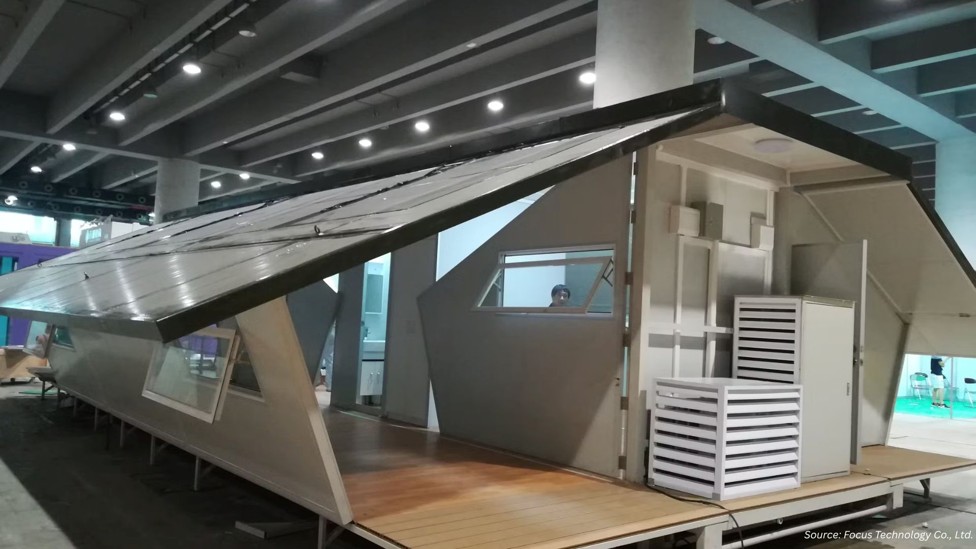
According to Next Move Strategy Consulting, the Poland Prefabricated New Construction Market was valued at USD 5.28 billion in 2025 and is estimated to reach USD 5.84 billion in 2026, with the market projected to expand to USD 8.88 billion by 2035 at a CAGR of 5.34% between 2026 and 2035.
We observed that this growth reflects a structural shift away from traditional site-built construction toward factory-based, automated, and increasingly digital manufacturing models across concrete, steel, and timber systems. Our analysis indicates that acute construction-labor shortages, rebounding building-permit activity, and tightening EU energy-performance requirements are together pushing developers toward volumetric and panelized systems produced under controlled factory conditions rather than assembled on-site from raw materials. Based on our evaluation, end-user preferences are also evolving, with developers, public authorities, and institutional buyers increasingly prioritizing delivery speed, thermal performance, and lower embodied-carbon materials over legacy masonry and site-poured concrete methods. This transformation is reinforced by regulatory pressure, particularly Poland's transposition of the recast EU Energy Performance of Buildings Directive, which is accelerating investment in higher-insulation panel systems, automated production lines, and digital design-to-fabrication workflows among the market's leading manufacturers. The five companies profiled below illustrate how concrete, insulation, timber, and steel specialists are each adapting their technology and manufacturing strategies to this decentralized, factory-first construction model.
For an In-depth Analysis of the Poland Prefabricated New Construction Market, Try a FREE Sample.
Poland Prefabricated New Construction Market Overview
The Poland Prefabricated New Construction Market is undergoing a significant transformation as the construction industry increasingly shifts toward factory-based, automated, and digitally enabled building approaches. Based on our assessment, rising demand for faster project delivery, improved energy performance, and sustainable construction solutions is accelerating the adoption of prefabricated systems across residential, commercial, industrial, and institutional applications. We found that persistent construction labor shortages, increasing infrastructure development, and evolving European energy-efficiency regulations are encouraging developers, contractors, and public-sector organizations to move away from conventional site-based construction toward volumetric modular systems, panelized construction, precast concrete solutions, and factory-built building models. Moreover, growing emphasis on lower embodied carbon, enhanced thermal performance, and improved construction quality is driving manufacturers to invest in advanced insulation technologies, sustainable materials, automated production facilities, and digital design-to-manufacturing workflows.
Furthermore, technological innovation is reshaping the competitive dynamics of the Poland Prefabricated New Construction Market, where automation, smart manufacturing, engineered materials, and integrated building systems are becoming essential components of modern construction strategies. Through our analysis of market developments, we observed that manufacturers are increasingly adopting robotics, automated production lines, digital planning tools, and advanced quality-control systems to improve manufacturing accuracy, reduce production waste, and optimize project delivery. The market is also witnessing increased adoption of energy-efficient timber-frame systems, high-performance insulated panels, low-carbon steel solutions, and advanced precast components designed to meet evolving sustainability and performance requirements. Companies are moving beyond traditional prefabrication models by integrating smart-home technologies, renewable energy solutions, and enhanced building-envelope systems into factory-produced structures, supporting the transition toward more efficient and sustainable construction practices.
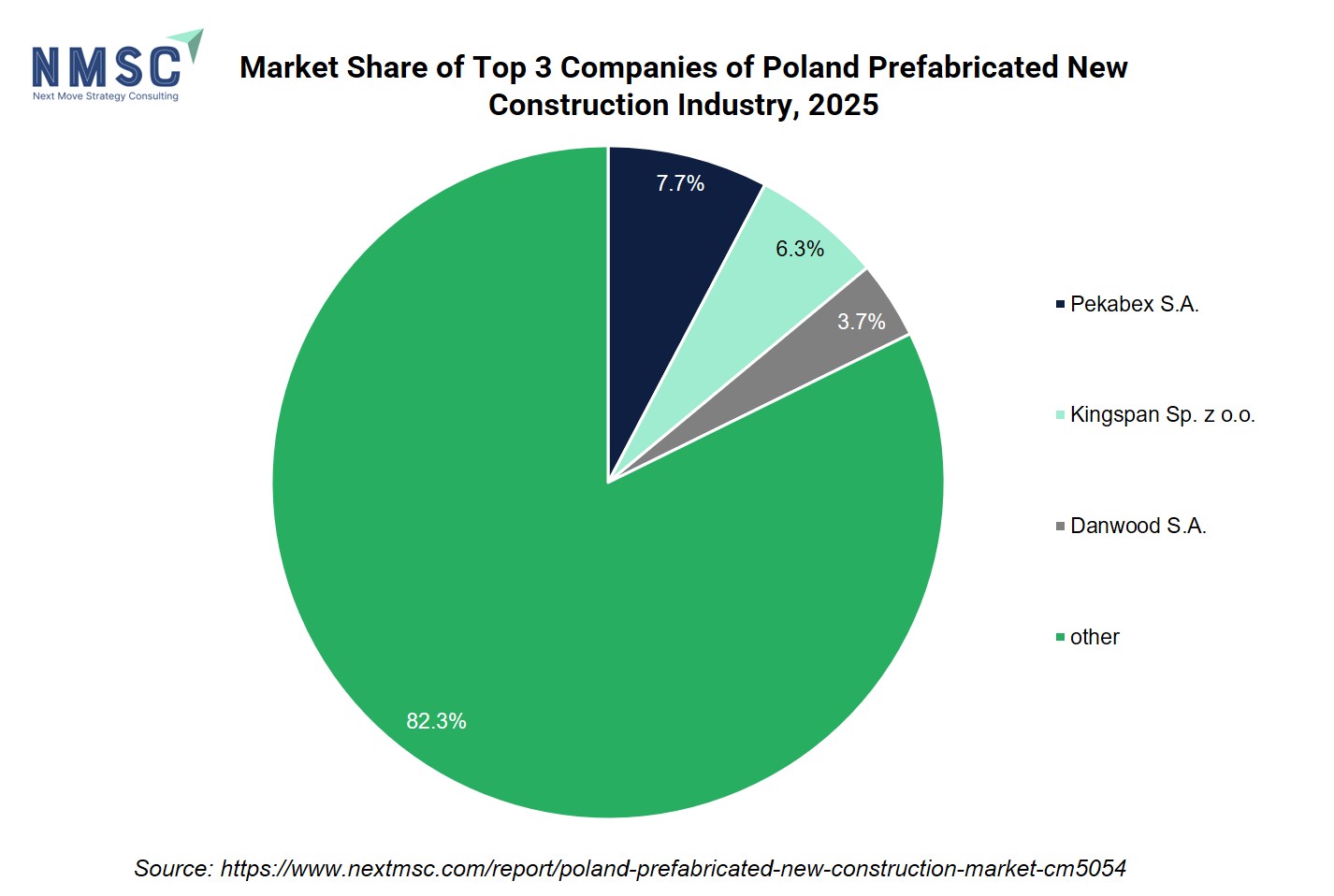
Leading companies such as Pekabex S.A., Kingspan Group, Danwood S.A., Ruukki Construction, and ArcelorMittal Building Solutions are driving innovation within Poland's prefabricated construction ecosystem through investments in manufacturing capabilities, automation, sustainable materials, and advanced building technologies. Our analysis indicates that these companies are increasingly focusing on expanding production efficiency, improving energy performance, and developing integrated construction solutions across residential, industrial, logistics, and commercial segments. Pekabex is advancing large-scale precast capabilities through automated manufacturing processes, while Kingspan is strengthening high-performance building envelope solutions. Danwood continues to enhance factory-built housing through energy-efficient technologies, whereas Ruukki and ArcelorMittal are developing advanced steel-based prefabricated systems supported by improved material performance and sustainability initiatives. These developments are collectively strengthening Poland's transition toward faster, smarter, and more sustainable prefabricated construction methods.
Want Insights on the Poland Prefabricated New Construction Market? Access a FREE Sample Instantly.
Pekabex S.A.
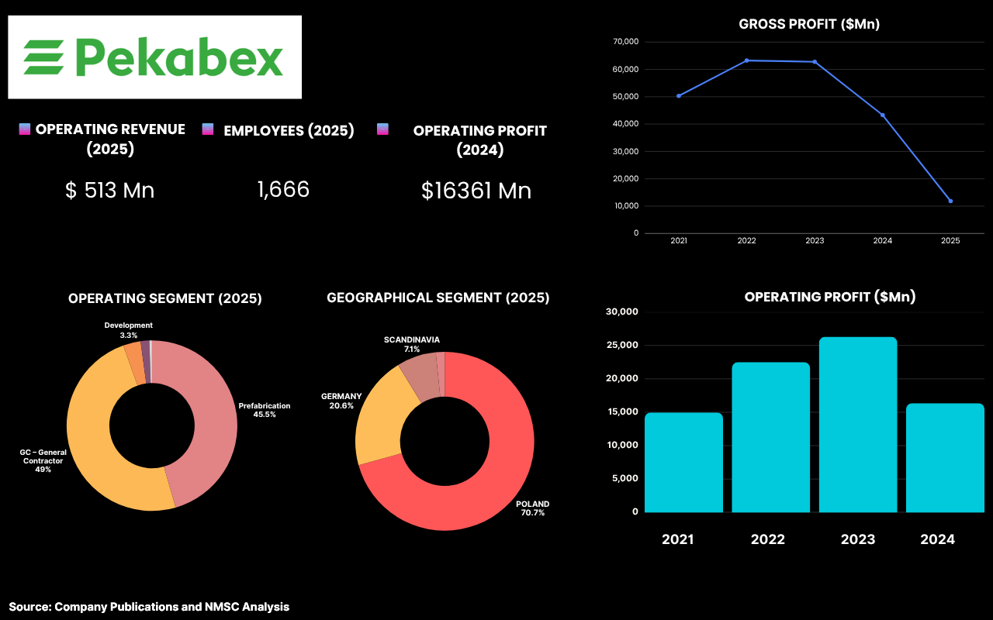
Pekabex S.A. is a Polish construction group headquartered in Poznań, specializing in the design, production, and assembly of prefabricated reinforced concrete elements, including structural beams, columns, hollow-core slabs, and facade panels for industrial, logistics, and multi-family residential projects. The company describes itself as the largest producer of structural precast concrete in Poland, with operations extending into Scandinavia and Germany. Within the Poland Prefabricated New Construction Market, Pekabex's precast concrete systems directly serve the industrial and infrastructure segments, where developers increasingly favor factory-based structural components to offset persistent construction-labor shortages and compress project timelines across Poland's largest metropolitan markets.
In June 2026, Pekabex advanced the Eko Hala project in Bronisze for Warszawski Rolno-Spożywczy Rynek Hurtowy S.A., where prefabricated concrete elements played a central role in delivering the new wholesale market facility. In March 2026, the company also commenced one of its largest residential developments in Bagartorp, Solna, using precast concrete components manufactured at its production plants in Poland. Pekabex further confirmed that automation, digital design tools, and improved planning systems remain key drivers for increasing productivity and mitigating labor and material cost pressures across its precast plants. Near Gdańsk, the company strengthened production capacity through one of Poland's most modern precast element facilities, equipped with a fully automated reinforcement area featuring lattice girder welding, mesh welding, and magnetic lifting systems supplied by EBAWE Anlagentechnik and Progress Maschinen & Automation. These developments reinforce Pekabex's position in the Poland Prefabricated New Construction Market by expanding its capability to supply large-format precast elements for residential, commercial, and industrial projects at scale.
Pekabex's scale, automation investment, and cross-border presence in Scandinavia and Germany position the company as a structural anchor within Poland's prefabricated concrete segment. Its continued emphasis on factory automation and digital planning tools suggests Pekabex is well placed to sustain its leadership as demand for large-format precast structures expands alongside Poland's broader shift toward factory-based construction.
Kingspan Sp. z o.o.
Kingspan Sp. z o.o. operates in Poland as part of Kingspan Group plc, a building-envelope and insulation specialist headquartered in Kingscourt, Ireland, with insulated-panel operations spanning North America, Western Europe, and Central and Eastern Europe. The company's core business centers on high-performance insulation, insulated metal panels, and building-envelope solutions built around its proprietary QuadCore technology. Within the Poland Prefabricated New Construction Market, Kingspan's insulated panel systems support developers seeking higher-insulation envelope components that meet tightening EU energy-performance requirements while maintaining the rapid assembly speed associated with factory-built construction methods.
In its 2025 Annual Report, Kingspan Group confirmed the March 2025 launch of PowerPanel® 2.0, an integrated roofing solution combining its QuadCore® insulated panel with solar technology. The company also expanded its lower embodied carbon (LEC) portfolio to 35 proprietary products. In October 2025, Kingspan acquired Mercor's ventilation and daylighting business in Poland, broadening its portfolio of daylighting and smoke management solutions while strengthening its presence in Central Europe. Together, these developments reinforce Kingspan's position in the Poland prefabricated new construction market by expanding its capabilities in high-performance building envelope systems and sustainable construction solutions.
Kingspan's combination of proprietary insulation technology, solar-integrated panel systems, and expanded Polish manufacturing capacity through the Mercor acquisition strengthens its competitive standing among envelope-system suppliers. The company's continued investment in lower-carbon product development suggests Kingspan is positioning itself to capture growing developer and regulatory demand for compliant, high-performance building envelopes across Poland.
Danwood S.A.
Danwood S.A. is headquartered in Bielsk Podlaski, Poland, and has operated as part of GS Engineering & Construction Corporation, a South Korean construction group, since 2020. The company specializes in manufacturing energy-efficient, timber-frame turnkey houses, producing more than 2,000 homes annually across two custom-built factories. Within the Poland Prefabricated New Construction Market, Danwood's timber-frame systems primarily serve the residential buyer segment, where households and private developers increasingly favor factory-built homes that shorten construction timelines and reduce dependence on scarce on-site skilled labor.
Danwood's NEXT product line integrates a Fibaro-based smart-home system, an air-to-water heat pump, mechanical ventilation with heat recovery, and rooftop photovoltaics with battery storage, while meeting the Effizienzhaus 40 energy-efficiency standard, according to the company's product materials. These integrated systems are incorporated into Danwood's factory-built homes, which are manufactured in Poland and delivered to customers across Germany, Poland, and other European markets. By combining off-site manufacturing with embedded smart-home and renewable-energy technologies, Danwood strengthens its position in the Poland Prefabricated New Construction Market and reflects the growing demand for energy-efficient, turnkey prefabricated housing.
Danwood's factory-integrated smart-home and energy technology, combined with its established production scale in Bielsk Podlaski, positions the company as a differentiated player within Poland's residential prefabricated housing segment. Continued investment in embedded energy-efficiency features suggests Danwood is well positioned to retain its competitive edge as buyers increasingly prioritize operational efficiency alongside construction speed.
Ruukki Polska Sp. z o.o.
Ruukki Polska Sp. z o.o. forms part of Ruukki Construction, a steel-based building products business owned by the Nordic steel group SSAB and headquartered in Helsinki, Finland, with one of its 14 specialized European manufacturing sites located in Poland. The company supplies steel-based roof, wall, and building-envelope systems for residential and non-residential construction across Northern and Eastern Europe. Within the Poland Prefabricated New Construction Market, Ruukki's steel envelope systems serve developers and contractors seeking durable, factory-produced structural components as an alternative to concrete and timber-based prefabrication methods.
Ruukki's LowCarbon product range is manufactured using SSAB Zero recycled steel, reflecting the company's focus on reducing the carbon footprint of steel-based building solutions. The company has also modernized its European manufacturing facilities to enhance production efficiency and support faster delivery of premium roof and wall systems. These investments strengthen Ruukki's competitive position in the Poland Prefabricated New Construction Market by improving the availability of lower-carbon steel products for prefabricated building envelope applications.
Ruukki's access to SSAB's low-carbon steel supply chain, combined with sustained factory modernization investment, positions the company as a differentiated, sustainability-oriented supplier within Poland's steel-based prefabricated construction segment. Its continued capacity expansion suggests Ruukki is positioned to strengthen its market share as developers increasingly weigh embodied-carbon performance alongside construction speed.
ArcelorMittal Construction Polska
ArcelorMittal Construction Polska, now operating under the ArcelorMittal Building Solutions brand, is headquartered in Świętochłowice, Poland, and forms part of ArcelorMittal, a global steel group headquartered in Luxembourg. The company develops steel-based building-envelope systems, including facade cladding, insulated panels, and roofing profiles, supported by proprietary design software for architects and contractors. Within the Poland Prefabricated New Construction Market, ArcelorMittal's steel envelope solutions support industrial, commercial, and infrastructure developers seeking durable, factory-produced cladding and roofing systems compatible with rapid, factory-based construction methods.
ArcelorMittal Poland has modernized its Kraków galvanizing line to produce sheet steel coated with its proprietary Optigal zinc-magnesium-aluminum alloy, enhancing corrosion resistance and plasticity for trapezoidal sheets and sandwich panels used in construction. The company also rebranded its Polish construction division as ArcelorMittal Building Solutions, reinforcing its focus on advanced building envelope solutions. These developments strengthen ArcelorMittal's position in the Poland Prefabricated New Construction Market by improving the durability and long-term performance of its steel-based prefabricated products.
ArcelorMittal's continued investment in coating technology and its rebranded, expanded building-solutions platform position the company as a durable, long-cycle supplier within Poland's steel-based prefabricated construction segment. This sustained materials investment suggests ArcelorMittal is positioned to maintain its competitive standing among developers prioritizing long-term envelope performance over initial construction cost alone.
Summary of Poland Prefabricated New Construction Market
The Poland Prefabricated New Construction Market is undergoing a significant transformation, driven by increasing demand for faster construction methods, improved building performance, sustainable materials, and greater reliance on factory-based production systems. Growing construction labor shortages, rising focus on energy-efficient buildings, and evolving European sustainability regulations are accelerating the adoption of prefabricated solutions across residential, commercial, industrial, and institutional applications. Advanced manufacturing approaches, including automated precast production, volumetric modular systems, panelized construction, digital design workflows, and engineered building solutions, are reshaping how structures are designed, manufactured, and assembled across Poland.
Companies such as Pekabex S.A., Kingspan Group, Danwood S.A., Ruukki Construction, and ArcelorMittal Building Solutions are advancing different but strategically connected areas of this transformation, ranging from large-scale precast concrete systems and energy-efficient timber-frame housing to high-performance insulation panels and advanced steel-based building-envelope solutions. Strategic investments in automation, sustainable material development, production capacity expansion, and digital construction technologies are strengthening the competitiveness of the prefabricated construction ecosystem while supporting the industry's transition toward more efficient and lower-carbon building practices. As technological advancements, sustainability requirements, and evolving construction needs continue to reshape the market landscape, companies that effectively integrate manufacturing innovation with performance-driven building solutions are positioned to play a leading role in the future development of Poland's prefabricated new construction industry.
About the Author
 Mihul Sharma
— Mihul Sharma is Research Associate at Next Move Strategy Consulting, where he has covered technology, industrial, and healthcare markets for 3 years. His work applies structured business research, market analysis, and secondary-source review to assess market trends, competitive developments, and growth opportunities. He supports report development by fully synthesizing industry data, company information, and market signals into concise findings for strategy and investment-focused research teams.
Mihul Sharma
— Mihul Sharma is Research Associate at Next Move Strategy Consulting, where he has covered technology, industrial, and healthcare markets for 3 years. His work applies structured business research, market analysis, and secondary-source review to assess market trends, competitive developments, and growth opportunities. He supports report development by fully synthesizing industry data, company information, and market signals into concise findings for strategy and investment-focused research teams.
About the Reviewer
 Supradip Baul
— Supradip Baul is an accomplished business consultant and strategist with over a decade of rich experience in market intelligence, strategy, technology, and business transformation. His work has included rigorous qualitative and quantitative analysis across multiple industries, helping clients shape investment decisions and long-term roadmaps. Earlier in his career, he was associated with Gartner, where he contributed to industry-leading reports and market share analyses. He has worked with leading global companies and holds an MBA with a dual specialization in Marketing and Finance.
Supradip Baul
— Supradip Baul is an accomplished business consultant and strategist with over a decade of rich experience in market intelligence, strategy, technology, and business transformation. His work has included rigorous qualitative and quantitative analysis across multiple industries, helping clients shape investment decisions and long-term roadmaps. Earlier in his career, he was associated with Gartner, where he contributed to industry-leading reports and market share analyses. He has worked with leading global companies and holds an MBA with a dual specialization in Marketing and Finance.

















Add Comment