Technological Advancements in Poland's Prefabricated New Construction Market
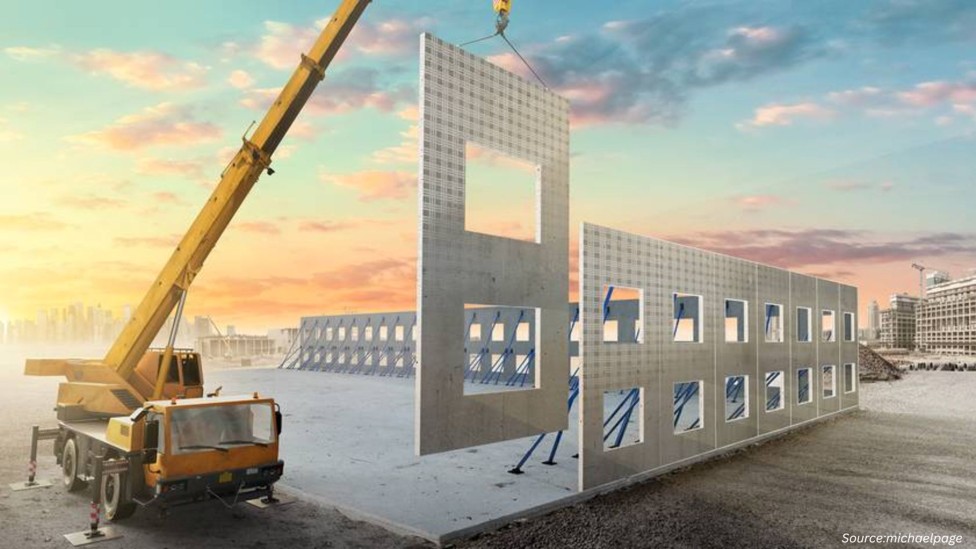
According to Next Move Strategy Consulting, the Poland Prefabricated New Construction Market was valued at USD 5.28 billion in 2025 and is estimated to reach USD 5.84 billion in 2026, with the figure projected to climb to USD 8.88 billion by 2035 at a CAGR of 5.34%. That growth is not happening on the back of cheaper labor or more construction sites it is happening because factories building walls, floors, and entire rooms are getting smarter. Robotics-assisted precast lines, computer-aided timber cutting, digital design-to-fabrication workflows, and smart-home integration are converting Poland's prefabrication sector from a labor-saving shortcut into a genuine engineering discipline. From our research, we found that acute construction-labor shortages, rebounding building-permit activity, and tightening EU energy-performance requirements are the backdrop against which this technology race is unfolding.
Based on our assessment, the companies profiled here spanning concrete, steel, and timber systems illustrate just how differently "prefabrication" can look depending on the material and the market segment a manufacturer serves. Some are racing to automate precast concrete lines; others are betting on volumetric timber modules that arrive on-site nearly finished. Industry evidence indicates that this diversity of approach is itself a competitive advantage for Poland, which now exports modular technology to Scandinavia, Germany, and beyond.
For an In-depth Analysis of the Poland Prefabricated New Construction Market, Try a FREE Sample.
AI-Powered Design and Digital Engineering Are Reshaping Poland's Prefabricated Construction Industry
Artificial intelligence is becoming an increasingly important technology across Poland's prefabricated construction industry as manufacturers seek to improve design accuracy, reduce material waste, and shorten production cycles. AI-enabled engineering platforms integrated with Building Information Modeling (BIM) allow manufacturers to automatically optimize structural layouts, panel dimensions, and component sequencing before production begins. By identifying design conflicts at the virtual planning stage, companies can minimize costly factory modifications and improve production efficiency.
Several leading Polish prefabrication companies are combining AI-assisted design with digital production planning to improve factory utilization and project scheduling. Automated optimization enables manufacturers to maximize raw material usage, reduce offcuts, and streamline logistics between production facilities and construction sites. As Poland's construction sector continues to face labor shortages and increasing sustainability requirements, AI-driven engineering is expected to become a core competitive advantage for large-scale prefabricated building manufacturers.
Can Cross-Laminated Timber (CLT) Redefine Sustainable Prefabricated Construction in Poland?
Cross-laminated timber (CLT) is becoming an increasingly important material in Poland's prefabricated construction industry as developers seek solutions that balance structural performance, sustainability, and construction efficiency. Its growing use reflects rising demand for low-carbon building materials and greater adoption of factory-manufactured structural components across various building applications.
-
Expanding Project Applications: CLT is being used in residential, commercial, educational, and public-sector developments due to its combination of strength, durability, and design flexibility.
-
Engineered Structural Material: Manufactured by bonding multiple layers of timber at alternating angles, CLT provides good load-bearing performance and dimensional stability for a wide range of building projects.
-
Supporting Sustainability Objectives: Compared with conventional concrete and steel construction, CLT offers a lower embodied carbon footprint, helping developers meet evolving environmental and energy-efficiency requirements.
-
Factory-Controlled Manufacturing: CLT panels are produced under controlled factory conditions, improving quality consistency, dimensional accuracy, and material utilization before delivery to project sites.
-
Efficient Installation: The use of prefabricated CLT components reduces on-site construction activities and supports faster assembly compared with traditional construction methods.
-
Alignment with Modern Construction Practices : When combined with modular and prefabricated construction techniques, CLT contributes to more efficient project delivery while supporting resource-efficient building practices.
Robotics and Automated Production Lines Are Powering the Next Generation of Prefabrication
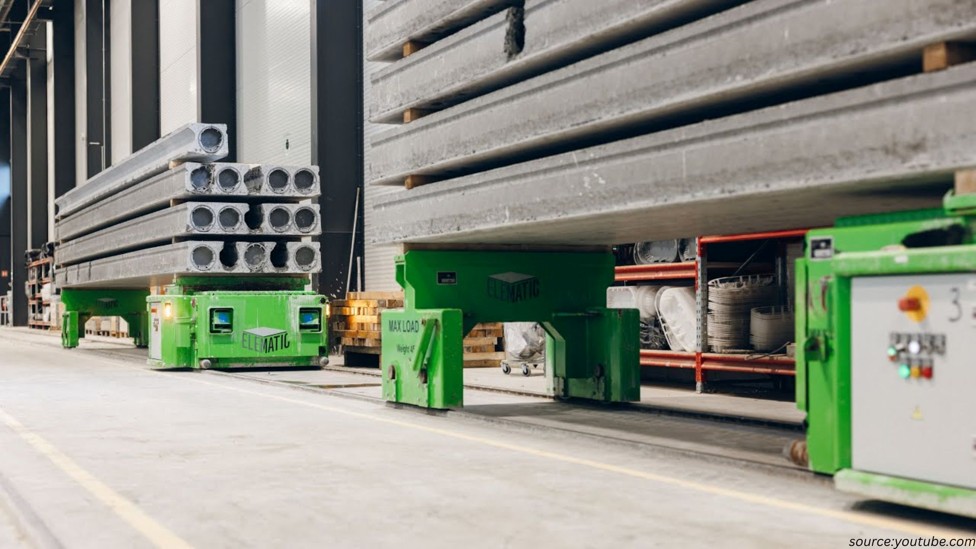
Automation technologies are rapidly modernizing Poland's prefabricated construction factories as manufacturers invest in robotic production systems to increase output, improve quality, and reduce dependence on skilled manual labor. Robotic welding, automated reinforcement assembly, CNC machining, and intelligent material-handling systems enable factories to produce structural components with greater precision while maintaining consistent manufacturing standards across large production volumes.
Advanced production lines also improve traceability by digitally monitoring every manufacturing stage, allowing defects to be identified before components leave the factory. Automation minimizes production bottlenecks, shortens manufacturing cycles, and enables manufacturers to respond more efficiently to growing demand from residential, commercial, and industrial construction projects. As labor shortages continue across Poland's construction industry, robotic manufacturing is becoming an essential technology for expanding production capacity.
Smart Factories and IoT-Based Manufacturing Are Driving Precision in Prefabricated Construction
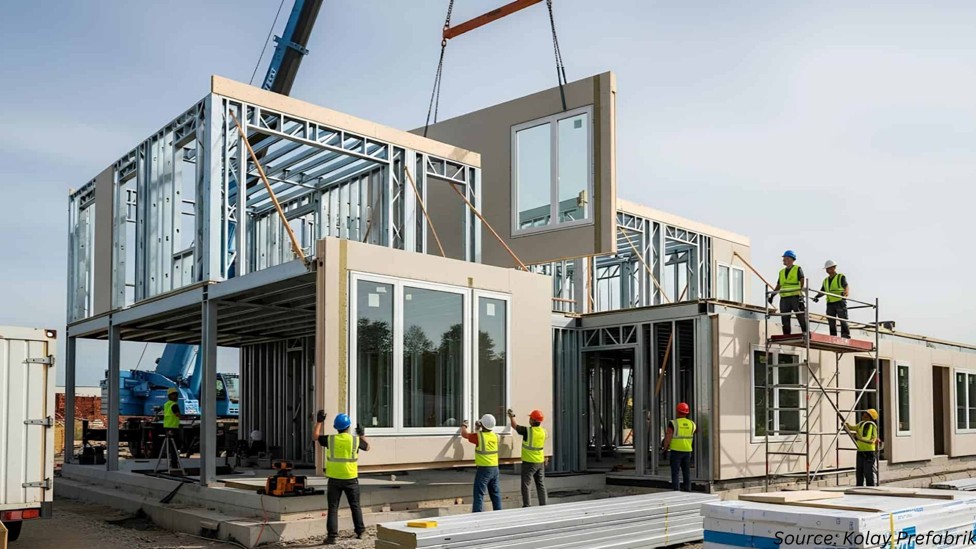
Smart factory technologies are reshaping prefabricated construction manufacturing in Poland by integrating digital production systems that improve operational efficiency, product quality, and manufacturing precision. The adoption of Industry 4.0 technologies enables manufacturers to optimize production workflows, reduce operational costs, and deliver consistent, high-quality prefabricated components while supporting faster project execution and greater sustainability.
-
Industrial Internet of Things (IIoT) Integration: Smart factory technologies are transforming prefabricated construction manufacturing in Poland by integrating IIoT platforms that connect machines, production lines, and factory systems for seamless operational control.
-
Real-Time Production Monitoring: Connected sensors continuously monitor machine performance, production quality, energy consumption, and equipment utilization, enabling manufacturers to optimize operations and minimize unexpected downtime.
-
Predictive Maintenance: Data-driven predictive maintenance systems identify potential equipment failures before they occur, reducing maintenance costs, preventing production disruptions, and improving factory productivity.
-
Advanced Digital Quality Control: Many prefabrication plants are adopting 3D laser scanning, automated quality inspection systems, and digital measurement technologies to verify the dimensional accuracy of prefabricated components before transportation to construction sites.
-
Reduced Material Waste and Rework: Real-time monitoring enables manufacturers to detect production deviations immediately, improving production consistency while minimizing rework, material waste, and manufacturing defects.
-
Industry 4.0 Driving Competitive Manufacturing: As Industry 4.0 adoption expands across Poland's manufacturing sector, smart factory technologies are expected to significantly enhance the efficiency, quality, productivity, and global competitiveness of prefabricated construction manufacturing.
How are Integrated Solar Roofing and Advanced Insulated Panels Redefining Sustainable Prefabricated Buildings?
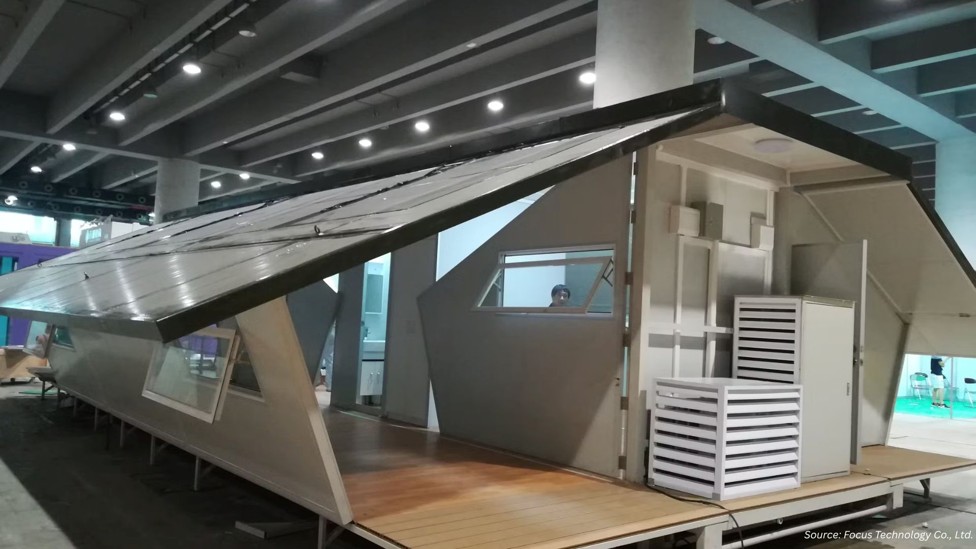
Manufacturers are increasingly integrating renewable energy technologies directly into prefabricated building envelopes, enabling developers to improve energy performance while simplifying installation. Rather than treating insulation and solar generation as separate construction stages, integrated building systems reduce installation time and support compliance with increasingly stringent energy-efficiency regulations.
This trend is reflected in Kingspan's launch of PowerPanel 2.0, an integrated roofing solution combining QuadCore insulated panels with embedded solar technology. During the same period, the company expanded its portfolio to 35 proprietary lower embodied carbon (LEC) products, reinforcing the industry's shift toward low-carbon, high-performance prefabricated building envelope systems for new construction. As sustainability regulations continue to tighten across Europe, integrated roofing and façade technologies are expected to become a major area of innovation within Poland's prefabricated construction market.
The Future of Poland's Prefabricated New Construction Industry: Toward Smarter and More Industrialized Construction Ecosystems
Our assessment indicates that the future of the Poland Prefabricated New Construction Industry extends well beyond conventional factory-based building production. The next decade is expected to be shaped by highly integrated construction ecosystems that combine automation, digital design, Building Information Modeling (BIM), robotics, artificial intelligence, Industrialized Building Systems (IBS), and Modern Methods of Construction (MMC) to deliver faster, more sustainable, and higher-quality buildings. Continued advancements in panelized systems, volumetric modular construction, engineered timber, low-carbon concrete, and digitally connected manufacturing facilities are expected to expand applications across residential, commercial, industrial, institutional, and infrastructure projects. Leading companies such as Pekabex S.A., UNIHOUSE S.A., Danwood S.A., ArcelorMittal Construction Polska, and Ruukki Polska Sp. z o.o. are increasingly demonstrating how advanced manufacturing capabilities and integrated construction technologies can improve productivity, reduce project timelines, and support Poland's decarbonization objectives. As the construction sector continues to prioritize sustainability, labor efficiency, and faster project delivery, prefabricated new construction is expected to become a cornerstone of Poland's transition toward a smarter, more resilient, and industrialized built environment.
About the Author
 Mihul Sharma
— Mihul Sharma is Research Associate at Next Move Strategy Consulting, where he has covered technology, industrial, and healthcare markets for 3 years. His work applies structured business research, market analysis, and secondary-source review to assess market trends, competitive developments, and growth opportunities. He supports report development by fully synthesizing industry data, company information, and market signals into concise findings for strategy and investment-focused research teams.
Mihul Sharma
— Mihul Sharma is Research Associate at Next Move Strategy Consulting, where he has covered technology, industrial, and healthcare markets for 3 years. His work applies structured business research, market analysis, and secondary-source review to assess market trends, competitive developments, and growth opportunities. He supports report development by fully synthesizing industry data, company information, and market signals into concise findings for strategy and investment-focused research teams.
About the Reviewer
 Supradip Baul
— Supradip Baul is an accomplished business consultant and strategist with over a decade of rich experience in market intelligence, strategy, technology, and business transformation. His work has included rigorous qualitative and quantitative analysis across multiple industries, helping clients shape investment decisions and long-term roadmaps. Earlier in his career, he was associated with Gartner, where he contributed to industry-leading reports and market share analyses. He has worked with leading global companies and holds an MBA with a dual specialization in Marketing and Finance.
Supradip Baul
— Supradip Baul is an accomplished business consultant and strategist with over a decade of rich experience in market intelligence, strategy, technology, and business transformation. His work has included rigorous qualitative and quantitative analysis across multiple industries, helping clients shape investment decisions and long-term roadmaps. Earlier in his career, he was associated with Gartner, where he contributed to industry-leading reports and market share analyses. He has worked with leading global companies and holds an MBA with a dual specialization in Marketing and Finance.

















Add Comment