SpaceX Adds 24 Starlink Satellites to Expanding LEO Network
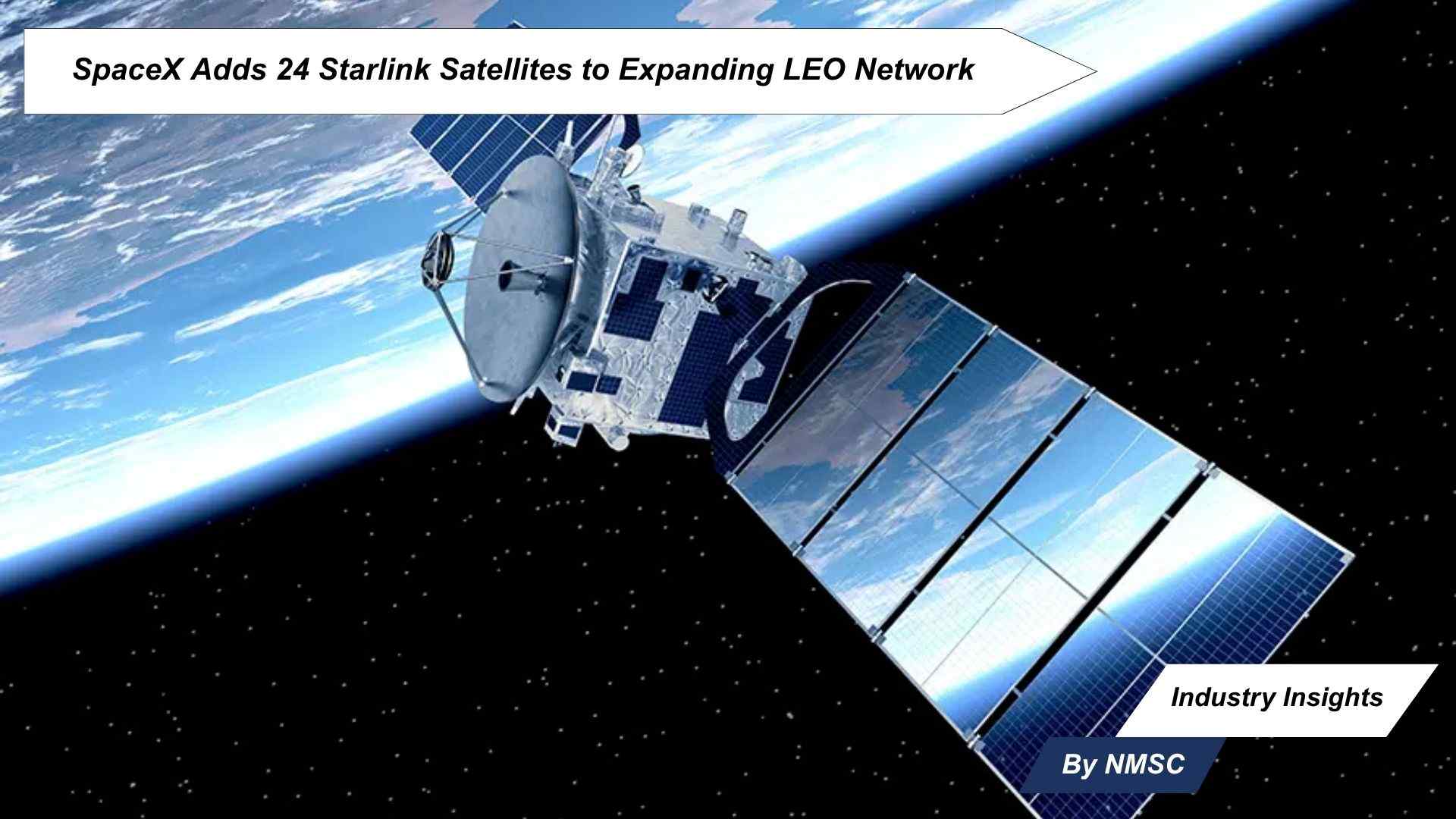
SpaceX Launches 24 Starlink Satellites Into Low Earth Orbit From California in Latest Falcon 9 Mission
VANDENBERG SPACE FORCE BASE, United States — June 29, 2026 — SpaceX launched 24 of its Starlink satellites into low Earth orbit aboard a Falcon 9 rocket from Vandenberg Space Force Base in California on Sunday, June 28, 2026, advancing the continued expansion of its broadband megaconstellation and reinforcing the company's leading position in the global Low Earth Orbit (LEO) Satellites sector.
Main Development
The latest deployment adds to a Starlink network that has grown rapidly through repeated Falcon 9 missions launched from facilities in California and Florida. The mission underscores SpaceX's sustained launch cadence as commercial operators race to scale satellite-based broadband services worldwide.
LEO satellites, which operate at altitudes between 500 and 2,000 kilometers, offer lower latency and more frequent revisits than spacecraft in higher orbits, making them central to real-time applications such as global broadband, Earth observation, and navigation.
The continued buildout occurs amid intensifying competition in the LEO segment, with Amazon Leo and Eutelsat OneWeb among the operators advancing their own constellations through parallel launch campaigns.
Key Highlights:
-
SpaceX launched 24 Starlink satellites into low Earth orbit from Vandenberg Space Force Base on June 28, 2026.
-
The mission was carried out using a Falcon 9 rocket, continuing the company's high launch cadence.
-
LEO satellites operate at altitudes of 500 to 2,000 kilometers, enabling lower latency and frequent ground coverage.
-
The deployment reflects accelerating competition across global LEO broadband constellations.
Analyst Insight:
According to analysts at Next Move Strategy Consulting, the Low Earth Orbit Satellites Market is projected to reach USD 25.5 billion by 2030, growing at a compound annual growth rate of 16.3% from 2024 to 2030. NMSC analysts note that rising demand for high-speed internet, expanding use across multiple industries, and increasing government investment in space programs are key drivers of this growth.
Industry Outlook:
As operators including SpaceX, Amazon Leo, and Eutelsat OneWeb continue to expand their constellations, the LEO satellite sector is positioned for sustained growth driven by broadband connectivity demand and falling launch costs from reusable rockets. North America is expected to retain its leading regional share, supported by significant government investment in space exploration and the presence of major operators.
Source: Space.com
Prepared By: Sanyukta Deb
For More Information – Download FREE Sample on 5G Technology Market Report
About the Author
 Sanyukta Deb
— Sanyukta Deb is Digital Marketing Team Lead at Next Move Strategy Consulting, where she has led content strategy and technical SEO for the firm's B2B market research publications for over 2 years. Her editorial process translates NextMSC's primary and secondary research — spanning technology, industrial, and consumer sectors — into commercial narratives, backed by search-intent, keyword, and competitive analysis. She brings 5 years of overall experience in digital marketing and content strategy.
Sanyukta Deb
— Sanyukta Deb is Digital Marketing Team Lead at Next Move Strategy Consulting, where she has led content strategy and technical SEO for the firm's B2B market research publications for over 2 years. Her editorial process translates NextMSC's primary and secondary research — spanning technology, industrial, and consumer sectors — into commercial narratives, backed by search-intent, keyword, and competitive analysis. She brings 5 years of overall experience in digital marketing and content strategy.
About the Reviewer
 Debashree Dey
— Debashree Dey is Assistant Manager at Next Move Strategy Consulting, where she supports cross-vertical market content and communications across diverse industries for 6 years. Her professional background includes senior content writing, communications, and published manuscript authorship, with experience developing audience-focused business narratives and maintaining clear, consistent messaging. Her role supports research-led content development and editorial quality across NextMSC publications.
Debashree Dey
— Debashree Dey is Assistant Manager at Next Move Strategy Consulting, where she supports cross-vertical market content and communications across diverse industries for 6 years. Her professional background includes senior content writing, communications, and published manuscript authorship, with experience developing audience-focused business narratives and maintaining clear, consistent messaging. Her role supports research-led content development and editorial quality across NextMSC publications.

















Add Comment