Can China’s Sea-Based Rocket Launch Mark a Turning Point for Commercial Space in 2026?
Lede
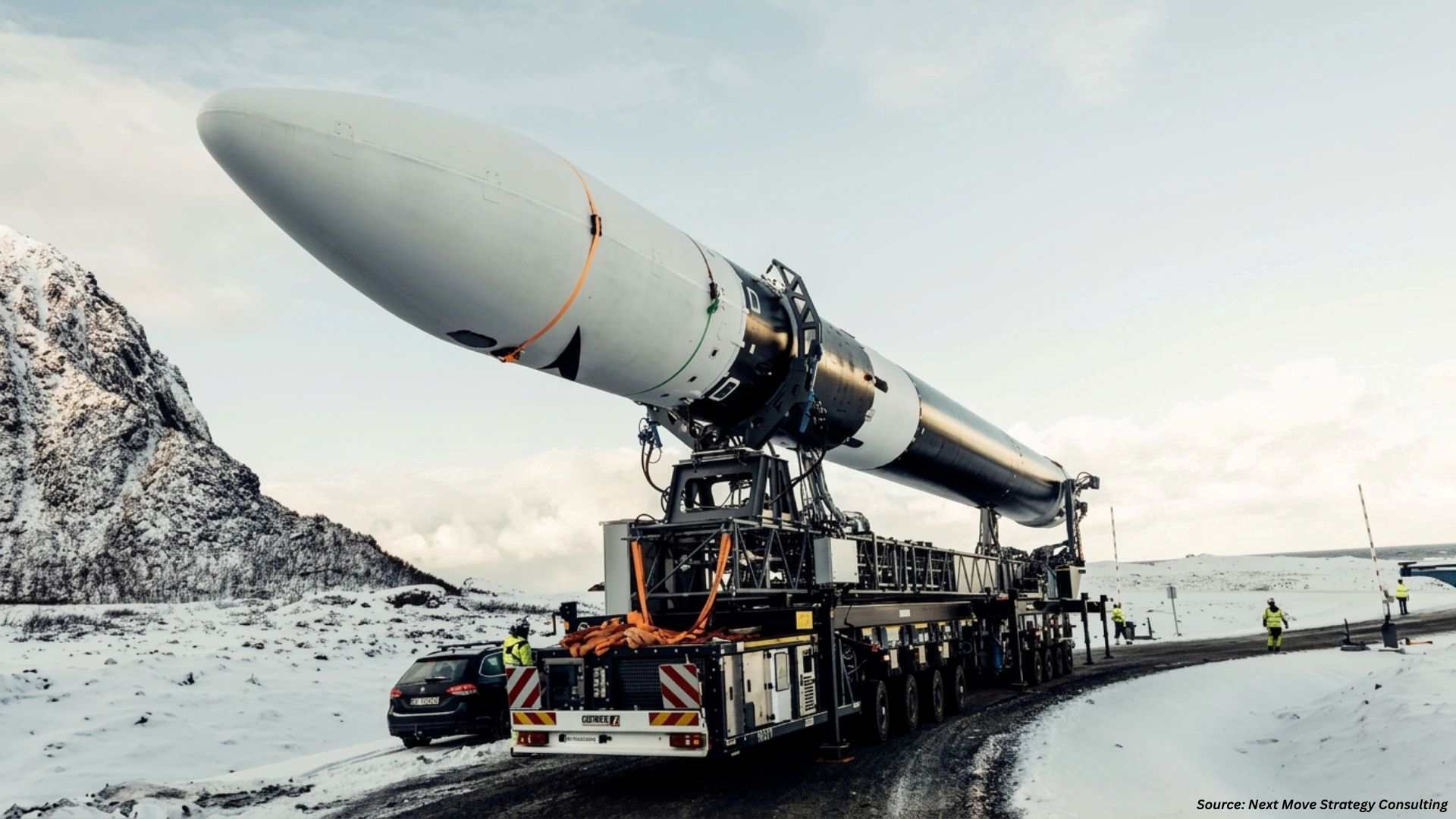
Galactic Energy’s offshore launch success and rapid advances in reusable rockets, engines, and 3D printing signal a defining validation phase for China’s commercial space sector. China’s commercial space sector is entering a decisive phase in 2026, driven by technological breakthroughs, infrastructure investments, and increasing demand for satellite deployment. The successful sea-based rocket launch by Galactic Energy highlights how private aerospace firms are accelerating innovation while aligning with national ambitions for low-cost, scalable space access.
This development matters because global competition in commercial space is shifting toward cost efficiency, reusable systems, and rapid launch capabilities areas where China is now making measurable progress.
Sea-Based Rocket Launch Signals Operational Maturity
Chinese private firm Galactic Energy successfully launched its CERES-1 rocket from the Yellow Sea on January 16, 2026, deploying four satellites into orbit as part of the Tianqi IoT constellation. This marked the 23rd successful flight of the CERES-1 and maintained a 100% success rate across six sea-based missions since 2023.
The Tianqi constellation now includes 41 satellites, supporting applications such as agriculture, emergency response, and smart city management. Sea-based launches offer flexibility, cost efficiency, and enhanced safety compared to land-based alternatives.
At Next Move Strategy Consulting, we observe that offshore launch capability is becoming a strategic differentiator. Our analysis indicates that companies investing in flexible launch platforms can reduce congestion at traditional spaceports while enabling rapid deployment of satellite constellations.
Additionally, SEPOCH has begun constructing China’s first offshore reusable rocket recovery base in Hangzhou, with a planned capacity of 25 rockets annually and a target first recovery mission by the end of 2026. We notice that this signals a clear transition toward integrating launch and recovery ecosystems.
Sea-Based Launch and Cost Innovation Driving Space Efficiency
I observe that the commercial space ecosystem is shifting toward more flexible and cost-efficient models, with sea-based launches, reusable rockets, and 3D printing playing a central role. The infographic highlights how offshore platforms enhance safety and launch flexibility, while advanced manufacturing significantly reduces production time and costs. It also reflects the rising demand for large-scale satellite constellations, emphasizing the need for higher payload capacity and rapid deployment. At Next Move Strategy Consulting, we notice that the integration of these innovations is enabling a more scalable and economically sustainable space industry, where efficiency and cost control are becoming the primary drivers of competitiveness.

Sea-Based Launch and Cost Innovation Driving Space Efficiency
I observe that the commercial space ecosystem is rapidly evolving toward cost-efficient and flexible launch models, with sea-based platforms and advanced manufacturing at the center of this transformation. The infographic highlights how offshore launches improve safety and operational flexibility, while reusable rockets and 3D printing significantly reduce production time and costs. It also illustrates the growing scale of satellite constellations, emphasizing the need for higher payload capacity and faster deployment cycles. At Next Move Strategy Consulting, we notice that the integration of these elements is creating a more scalable and economically viable space industry, where speed, cost control, and technological efficiency define long-term competitiveness.

Key Highlights of China’s Sea-Based Launch Development
|
Metric |
Value |
Strategic Insight |
|
CERES-1 total launches |
23 |
Demonstrates operational reliability |
|
Sea-based success rate |
100% (6 missions) |
Validates offshore model viability |
|
Tianqi satellites in orbit |
41 |
Growing IoT infrastructure backbone |
|
SEPOCH annual capacity |
25 rockets |
Indicates scaling of reusable systems |
Engines and 3D Printing Define the Next Competitive Edge
Recent industry analysis indicates that China’s commercial rocket sector is entering a “critical validation window” between 2026 and 2027, where launch capacity and cost control will determine market leadership.
A key profitability threshold has emerged: rockets must deliver at least 2.8 tons to an 800-kilometer orbit to achieve commercial viability. For higher orbits of around 1,100 kilometers, payload requirements rise to 5.9 tons while maintaining costs below 160 million yuan.
At Next Move Strategy Consulting, we notice that this threshold is effectively redefining industry benchmarks. Our analysis indicates that only companies mastering high-thrust engines and reusable systems will achieve sustainable margins.
Engine innovation, particularly full-flow staged combustion, can improve payload capacity by 10–20%, while additive manufacturing reduces production cycles by 80% and component weight by over 50%.
Technology Drivers in Commercial Rocket Competitiveness
|
Technology |
Impact |
Industry Significance |
|
Full-flow staged combustion engines |
+10–20% payload efficiency |
Enhances launch economics |
|
3D printing (additive manufacturing) |
80% faster production |
Enables rapid scaling |
|
Lightweight materials |
>50% weight reduction |
Improves fuel efficiency |
|
Reusable rocket systems |
Lower cost per launch |
Critical for profitability |
Cost Structure of Commercial Rocket Manufacturing Explained
The pie chart highlights how the majority of costs in Commercial Rockets Market manufacturing are concentrated in structural components and engine systems, which together account for more than half of the total expenditure. Structural components alone represent 30%, reflecting the high cost of materials such as fuel tanks and rocket bodies, while engine systems at 25% emphasize the complexity and technological intensity required to generate thrust and ensure performance reliability.
At Next Move Strategy Consulting, we notice that emerging areas like 3D printing and advanced manufacturing already contribute 20% of the cost structure, signaling their growing importance in improving efficiency and reducing production timelines. Meanwhile, control systems, propulsion materials, and other integrations make up smaller shares, but remain critical for operational precision and mission success. This distribution indicates that while traditional components still dominate costs, innovation-driven segments are rapidly reshaping how rockets are designed and manufactured.

Market Analysis: Commercial Space Enters a High-Stakes Phase
Key developments between 2024 and 2026 include the expansion of satellite constellations for IoT and broadband services, the transition from solid-fuel rockets to liquid-fuel reusable systems, the growing role of private aerospace firms, and the rapid adoption of additive manufacturing technologies. At Next Move Strategy Consulting, we observe that the convergence of these trends is accelerating commercialization timelines and intensifying global competition.
The applications of commercial rocket technology are expanding across multiple sectors. Telecommunications is benefiting from satellite internet and IoT networks, while agriculture is leveraging remote monitoring and precision farming capabilities. Defense and security sectors are utilizing space-based surveillance and reconnaissance, and energy and marine industries are increasingly adopting satellite-based resource tracking and environmental monitoring systems.
From a regional perspective, China is advancing through strong infrastructure development and policy support, while the United States continues to lead in reusable rocket innovation. Europe is focusing on sustainability and collaborative space programs.
Key players are adopting differentiated strategies. Galactic Energy is focusing on reliable small launch systems, LandSpace is advancing methane-powered engines, Deep Blue Aerospace is leveraging 3D printing extensively, and SEPOCH is building offshore recovery infrastructure to support reusable missions.
Sea-Based Launch and Cost Innovation Driving Space Efficiency
I observe that the commercial space ecosystem is rapidly evolving toward cost-efficient and flexible launch models, with sea-based platforms emerging as a key innovation. The infographic highlights how offshore launches enhance safety, enable flexible positioning, and reduce congestion at traditional launch sites. It also captures the growing scale of satellite constellations, which is driving demand for faster and more frequent launch cycles across industries such as telecommunications, agriculture, and smart infrastructure.
At Next Move Strategy Consulting, we notice that advanced technologies such as reusable rockets and 3D printing are fundamentally transforming production and operational economics. The infographic illustrates how these innovations reduce manufacturing time, lower component weight, and improve overall efficiency. As a result, companies that successfully integrate these capabilities are better positioned to achieve cost leadership and scalability, shaping the next phase of global space commercialization.

Commercial Rocket Market Evolution
|
Phase |
Focus |
Outcome |
|
Pre-2024 |
Small rockets |
Limited payload capacity |
|
2024–2025 |
Constellation demand |
Increased launch frequency |
|
2026–2027 |
Reusable systems validation |
Cost optimization |
|
Post-2027 |
Large-scale deployment |
Market consolidation |
Long-Term Market Impact & NMSC Perspective
I believe the developments in 2026 will have lasting implications across the global space economy. At Next Move Strategy Consulting, we observe that the cost curve of space access is undergoing a structural shift. Reusable rockets and 3D printing technologies are expected to significantly reduce launch costs, making space more accessible to a broader range of industries.
We also notice that the supply chain is evolving rapidly, with high-value segments such as engine manufacturing, advanced materials, and additive manufacturing emerging as key investment areas. Companies operating in these segments are likely to capture a disproportionate share of value creation.
Our analysis further indicates that achieving payload thresholds will define pricing power in the satellite deployment market. Firms that can combine high payload capacity with cost efficiency will gain a competitive edge and influence industry pricing structures.
What to Do Next
I recommend that aerospace companies prioritize investment in reusable rocket technologies, integrate 3D printing into their manufacturing processes, and accelerate engine innovation to remain competitive. Investors should focus on upstream technologies such as propulsion systems, advanced materials, and additive manufacturing, while closely monitoring companies approaching key profitability thresholds.
Governments and policymakers should support the development of offshore launch infrastructure and create favorable conditions for private sector participation. New entrants should consider focusing on niche areas such as satellite services or specialized components rather than entering capital-intensive rocket manufacturing directly.
Conclusion
I conclude that China’s successful sea-based launch in January 2026 represents more than a technical achievement. It reflects a broader transformation in the commercial space industry, where cost efficiency, scalability, and technological innovation are becoming the primary drivers of competition. At Next Move Strategy Consulting, we believe that the real inflection point lies in the convergence of reusable rocket technology, advanced engine systems, and 3D printing. These innovations are not only reducing costs but also redefining competitive benchmarks such as payload capacity and launch frequency. As the industry enters the 2026–2027 validation window, companies that successfully integrate these technologies and meet profitability thresholds will emerge as long-term leaders, shaping the future trajectory of global space commercialization.
About Next Move Strategy Consulting:
Next Move Strategy Consulting is a premier market research and management consulting firm that has been committed to provide strategically analysed well documented latest research reports to its clients. The research industry is flooded with many firms to choose from, what makes Next Move different from the rest is its top-quality research and the obsession of turning data into knowledge by dissecting every bit of it and providing fact-based research recommendation that is supported by information collected from over 500 million websites, paid databases, industry journals and one on one consultations with industry experts across a diverse range of industry sectors. The high-quality customized research reports with actionable insights and excellent end-to-end customer service help our clients to take critical business decisions that enables them to move beyond time and have competitive edge in the industry.
We have been servicing over 1000 customers globally that includes 90% of the Fortune 500 companies over a decade. Our analysts are constantly tracking various high growth markets and identifying hidden opportunities in each sector or the industry. We provide one of the industry’s best quality syndicate as well as custom research reports across 10 different industry verticals. We are committed to deliver high quality research solutions in accordance to your business needs. Our industry standard delivery solutions that ranges from the pre consultation to after-sales services, provide an excellent client experience and ensure right strategic decision making for businesses.
For more information, please contact:
Next Move Strategy Consulting
5th Floor 867
Boylston St, STE 500,
Boston, MA 02116, U.S.
E-Mail: [email protected]
Direct: +1-217-650-7991
Website: www.nextmsc.com
About the Author
 Sanyukta Deb
— Sanyukta Deb is Digital Marketing Team Lead at Next Move Strategy Consulting, where she has led content strategy and technical SEO for the firm's B2B market research publications for over 2 years. Her editorial process translates NextMSC's primary and secondary research — spanning technology, industrial, and consumer sectors — into commercial narratives, backed by search-intent, keyword, and competitive analysis. She brings 5 years of overall experience in digital marketing and content strategy.
Sanyukta Deb
— Sanyukta Deb is Digital Marketing Team Lead at Next Move Strategy Consulting, where she has led content strategy and technical SEO for the firm's B2B market research publications for over 2 years. Her editorial process translates NextMSC's primary and secondary research — spanning technology, industrial, and consumer sectors — into commercial narratives, backed by search-intent, keyword, and competitive analysis. She brings 5 years of overall experience in digital marketing and content strategy.
About the Reviewer
 Debashree Dey
— Debashree Dey is Assistant Manager at Next Move Strategy Consulting, where she supports cross-vertical market content and communications across diverse industries for 6 years. Her professional background includes senior content writing, communications, and published manuscript authorship, with experience developing audience-focused business narratives and maintaining clear, consistent messaging. Her role supports research-led content development and editorial quality across NextMSC publications.
Debashree Dey
— Debashree Dey is Assistant Manager at Next Move Strategy Consulting, where she supports cross-vertical market content and communications across diverse industries for 6 years. Her professional background includes senior content writing, communications, and published manuscript authorship, with experience developing audience-focused business narratives and maintaining clear, consistent messaging. Her role supports research-led content development and editorial quality across NextMSC publications.

















Add Comment