AI Crop Yield Prediction Market Size, Share, Growth & Forecast by Offering (Software and Analytics Platforms: Cloud-Based, On-Premise & Hybrid; Hardware and IoT Devices: In-Field Sensors, Aerial & Ground Imaging, Integrated Weather Stations; Services), By Application (Yield Prediction, Crop Health Monitoring, and Others), By End-User Industry, By Revenue Stream (Recurring Subscription, Perpetual License, and Others), and By Region — Global Analysis 2025–2035
Industry: Agriculture | Publishing Date: July 7, 2026 | Last Updated: September 30, 2026 | No of Pages: N/A | No. of Tables: N/A | No. of Figures: N/A | Format: PDF | Report Code: AG4988
What Is the AI Crop Yield Prediction Market Size?
The global AI Crop Yield Prediction Market was valued at USD 2.4 billion in 2025 and is expected to reach USD 2.9 billion in 2026. Driven by the rapid integration of artificial intelligence, satellite imagery, and IoT-based sensing into modern agricultural operations, the market is projected to advance to USD 16.8 billion by 2035, growing at a CAGR of 21.5% from 2026 to 2035. Key growth catalysts include escalating global food security imperatives, accelerating smart farming adoption, expanding AgTech investment activity, and rising demand for precision yield forecasting across row crop and specialty agriculture segments worldwide.
|
Parameters |
Details |
|
Market Size in 2025 |
USD 2.4 Billion |
|
Market Size in 2026 |
USD 2.9 Billion |
|
Revenue Forecast in 2035 |
USD 16.8 Billion |
|
Growth Rate |
CAGR of 21.5% from 2026 to 2035 |
|
Analysis Period |
2025–2035 |
|
Base Year Considered |
2025 |
|
Forecast Period |
2026–2035 |
|
Market Size Estimation |
Billion USD |
|
Companies Profiled |
20 |
|
Countries Covered |
33 |
|
Market Share |
Top 10 |
AI Crop Yield Prediction Market Overview
What Is the AI Crop Yield Prediction Market?
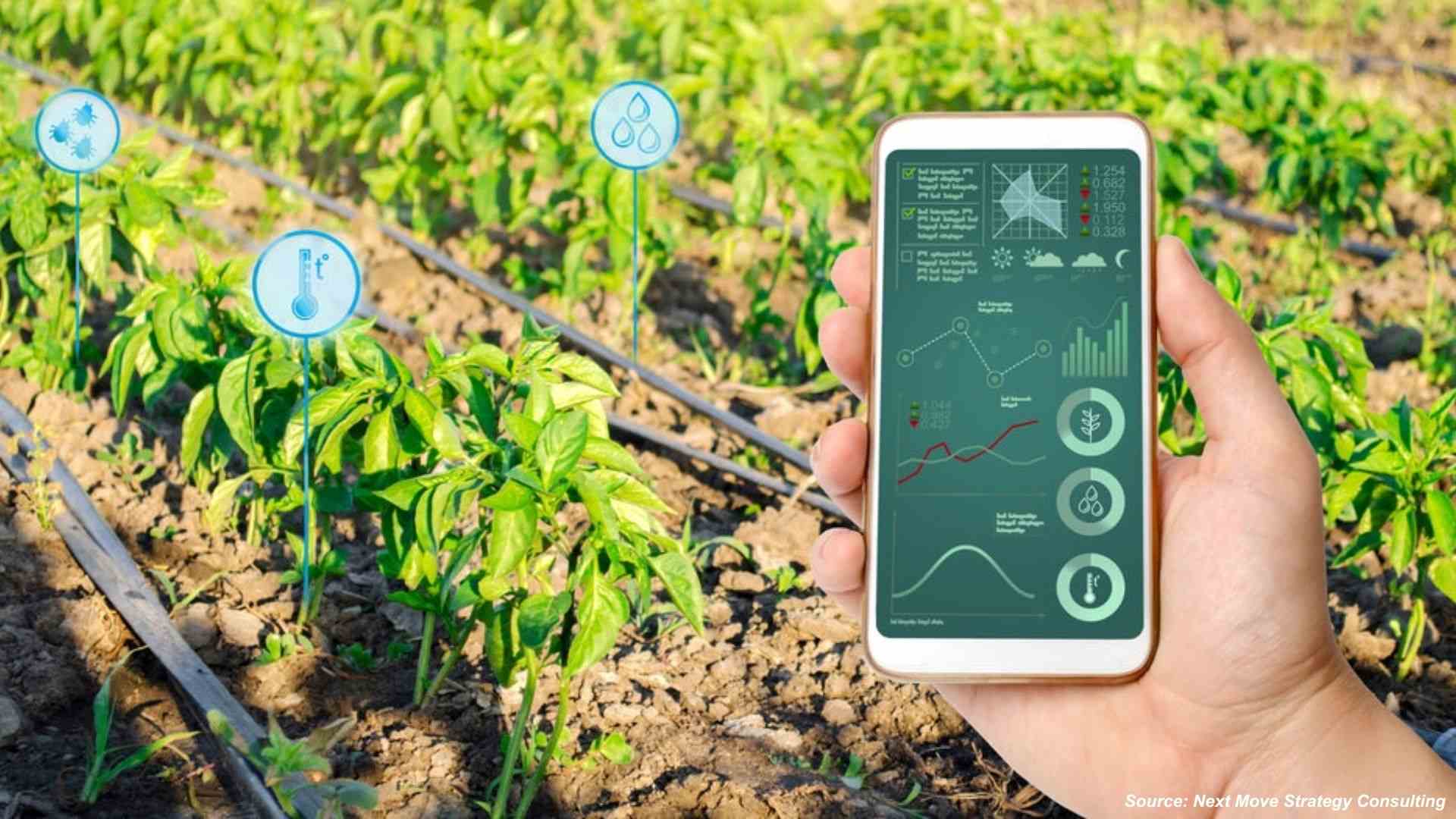
The AI Crop Yield Prediction Market encompasses the commercial deployment of machine learning algorithms, deep neural networks, computer vision systems, and data analytics platforms specifically engineered to forecast agricultural yield outcomes before and during growing seasons. These solutions integrate multispectral satellite imagery, drone-based sensing, in-field IoT sensors, historical crop data, and real-time weather feeds to generate field-level predictions that enable growers, agribusinesses, and financial institutions to make data-driven production, procurement, and risk management decisions. The AI Crop Yield Prediction Market serves the full agricultural value chain across geographies.
How Has the AI Crop Yield Prediction Market Evolved?
The AI Crop Yield Prediction Market has progressed through three distinct technology generations. The initial phase relied on statistical regression and deterministic crop simulation models with limited spatial resolution and manual data inputs. The second generation introduced remote sensing integration, enabling satellite-derived vegetative indices to enhance prediction accuracy at scale. NMSC's analysis indicates that the current and most consequential phase is defined by deep learning architectures that fuse heterogeneous data streams, including genomic data, microbiome sensors, and hyperlocal weather nowcasting, into real-time adaptive yield models capable of sub-field precision across diverse cropping systems.
How Do Regulations Influence the AI Crop Yield Prediction Market?
Regulatory influence on the AI Crop Yield Prediction Market operates through multiple channels. The U.S. Department of Agriculture's (USDA) Risk Management Agency mandates crop acreage and production reporting that increasingly relies on AI-verified yield data for insurance settlement. The European Union's Farm to Fork Strategy under the European Green Deal establishes precision agriculture adoption targets that are accelerating AI Crop Yield Prediction investment across EU member states. India's Digital Agriculture Mission, coordinated by the Ministry of Agriculture and Farmers Welfare, is institutionalizing AI-based crop assessment at the national scale, creating substantial structured demand.
How Is Technology Adoption Expanding Across the AI Crop Yield Prediction Market?
Technology adoption within the AI Crop Yield Prediction Market is accelerating across all deployment tiers. Cloud-based SaaS platforms are the most rapidly adopted solution type as they eliminate upfront infrastructure costs and enable continuous model retraining on live field data. Our assessment indicates that the proliferation of commercially available satellite constellations, including Planet Labs PBC's daily revisit imagery and ESA's Sentinel program, has fundamentally lowered the cost of high-resolution Earth observation data, enabling smaller agribusiness operators to access AI Crop Yield Prediction capabilities previously reserved for large commodity traders and government agencies.
|
Key Takeaways |
|
By offering, Software and Analytics Platforms dominated the AI Crop Yield Prediction Market, generating USD 1.2 billion in 2025, underpinned by enterprise-scale SaaS adoption and cloud-native precision agriculture deployments across North America and Europe. |
|
Services represent the fastest-growing offering segment in the AI Crop Yield Prediction Market at a CAGR of 23.8% from 2026 to 2035, as growers and agribusinesses increasingly outsource model integration, advisory functions, and managed analytics support. |
|
By application, Yield Prediction and Forecasting led with USD 0.7 billion in 2025, driven by its direct commercial value in commodity pricing, insurance underwriting, and crop procurement planning across global agricultural markets. |
|
Harvest Timing and Logistics is the fastest-growing application segment in the AI Crop Yield Prediction Market at a CAGR of 23.1% from 2026 to 2035, as logistics optimization and post-harvest loss reduction become critical supply chain priorities for agribusinesses globally. |
|
By end-user industry, Row Crop Farming generated the largest revenue share at USD 0.6 billion in 2025, reflecting the high commercial value of predictive yield intelligence for maize, soybean, wheat, and rice producers across major global cropping systems. |
|
Agribusiness and Input Companies represent one of the fastest-growing end-user segments at a CAGR of 21.6%, as input suppliers and trading firms embed AI yield forecasting into pricing, inventory management, and commercial farming advisory platforms. |
|
By revenue stream, Recurring Subscription was the dominant model at USD 0.8 billion in 2025, reflecting the industry's migration to cloud-based SaaS delivery with annual and multi-year subscription contracts underpinning revenue predictability. |
|
Usage-Based revenue models are the fastest-growing stream in the AI Crop Yield Prediction Market at a CAGR of 28.3% from 2026 to 2035, as API-based access to yield prediction models lowers adoption barriers and aligns costs directly with seasonal field operations. |
|
North America held the largest regional share at USD 0.9 billion in 2025, projected to reach USD 6.2 billion by 2035 at a CAGR of 21.2%, supported by high precision agriculture adoption, strong AgTech venture investment, and USDA-supported digital farming programs. |
|
Asia-Pacific is the fastest-growing region in the AI Crop Yield Prediction Market at a CAGR of 21.7% from 2026 to 2035, propelled by India's Digital Agriculture Mission, China's smart farming policies, and expanding smallholder precision agriculture adoption across Southeast Asia. |
|
The United States is the largest country market in the AI Crop Yield Prediction Market, driven by commodity-scale farming operations, insurance industry integration, and the headquarters concentration of leading AgTech platform providers. |
|
India is the fastest-growing country market within Asia-Pacific in the AI Crop Yield Prediction Market, advancing at a CAGR exceeding 24.0%, driven by government-backed AI agriculture initiatives, a large agrarian population, and rapidly expanding mobile connectivity in rural regions. |
Key Emerging Trends in the AI Crop Yield Prediction Market
How Is Foundation Model Integration Transforming Predictive Accuracy in the AI Crop Yield Prediction Market?
Large-scale foundation models pre-trained on global crop and climate datasets are reshaping the technical landscape of the AI Crop Yield Prediction Market. IBM's watsonx platform and Microsoft's Azure AI services have enabled agriculture-specific model fine-tuning at commercial scale, allowing vendors to adapt global foundation models to local crop varieties, soil types, and microclimatic conditions with substantially reduced training data requirements. NMSC's analysis indicates that this transition from single-crop, single-region models to universal agricultural foundation models is compressing prediction error rates and accelerating deployment timelines, directly benefiting precision farmingfarming operators in North America and Europe.
What Role Is Digital Twin Technology Playing in the Evolution of the AI Crop Yield Prediction Market?
Digital twin frameworks that create virtual replicas of individual fields, including soil profiles, water retention maps, and historical varietal performance data, are gaining significant traction within the AI Crop Yield Prediction Market. Corteva's Granular platform and CropX Technologies have introduced field-level digital twin capabilities that synchronize with live sensor data to generate continuous yield trajectory updates throughout the growing season. From our market assessment, we observed that digital twin adoption is highest among large row crop operators in the U.S. Corn Belt and Brazilian Cerrado, where the economic return on prediction accuracy is most directly quantifiable at the field level.
How Are Hyperspectral and SAR Satellite Data Elevating the AI Crop Yield Prediction Market?
Synthetic Aperture Radar (SAR) imagery and hyperspectral satellite data are fundamentally expanding the sensing capabilities available to AI Crop Yield Prediction platforms. Unlike optical satellites, SAR sensors penetrate cloud cover and operate in all-weather conditions, enabling continuous crop monitoring across tropical agricultural regions in Southeast Asia and Sub-Saharan Africa where cloud coverage historically limited satellite-based prediction accuracy. Planet Labs PBC's SkySat constellation and Airbus's SPOT program have extended hyperspectral coverage, enabling AI models to detect early stress signals, nutrient deficiencies, and pest infestation patterns at sub-metre resolution well before visible crop damage manifests.
How Is Explainable AI Adoption Influencing Trust and Commercial Scale in the AI Crop Yield Prediction Market?
Explainable AI (XAI) frameworks that generate human-interpretable rationales for yield predictions are becoming a commercial differentiator within the AI Crop Yield Prediction Market. Agricultural insurers, including Crop Risk Services and affiliated underwriters operating under USDA Risk Management Agency programs, increasingly require transparent model outputs before accepting AI-derived yield estimates for policy settlement. Through NMSC's assessment, we found that vendors incorporating SHAP (SHapley Additive exPlanations) values and confidence interval reporting into their platform outputs are experiencing higher enterprise conversion rates among insurance and financial services end-users, particularly in North America and Europe where regulatory expectations around AI explainability are tightening.
Ecosystem Analysis of the AI Crop Yield Prediction Market
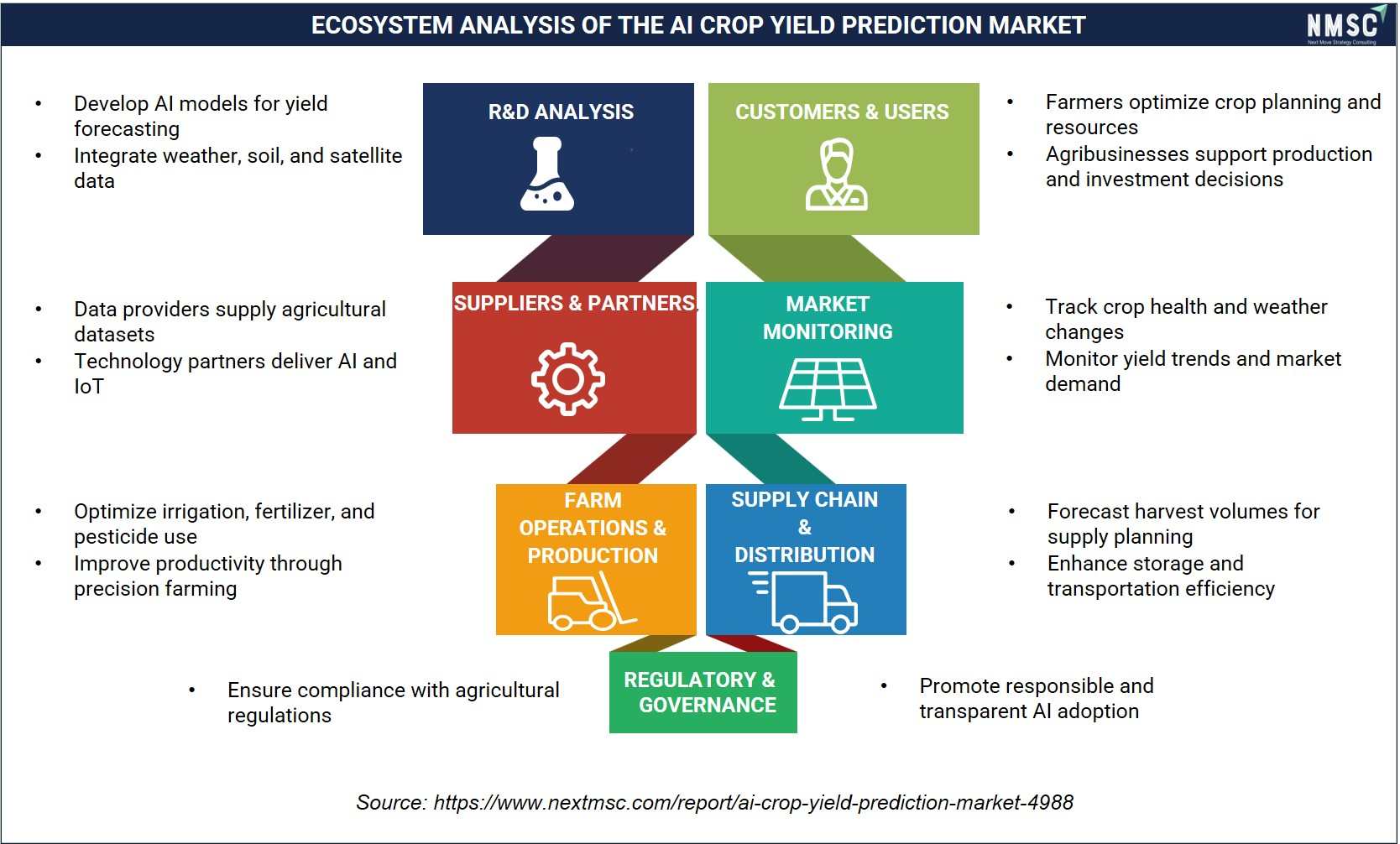
Based on our comprehensive assessment, we found that the AI Crop Yield Prediction Market is supported by a diverse ecosystem comprising technology developers, agricultural research institutions, satellite data providers, IoT vendors, agribusiness firms, and farmers. Continuous investments in artificial intelligence, remote sensing, and predictive analytics enhance forecasting accuracy. Furthermore, regulatory support for digital agriculture and sustainability initiatives continues to strengthen market adoption.
What Are the Key Market Drivers, Breakthroughs, and Investment Opportunities that will Shape the AI Crop Yield Prediction Market in the Next Decade?
|
Drivers / Trends / Restraints |
(+/-) % Impact on CAGR Forecast |
Geographic Relevance |
Impact Timeline |
|
Global Food Security Demand Surge |
+2.6% |
Global (all regions) |
2025–2035 |
|
Precision Agriculture Technology Proliferation |
+2.2% |
North America, Europe, APAC |
2025–2030 |
|
Expansion of Commercial Satellite Constellations |
+1.8% |
Global |
2025–2032 |
|
Government Digital Agriculture Investment Programs |
+1.6% |
India, EU, U.S., China |
2025–2030 |
|
Agricultural Insurance AI Integration |
+1.4% |
North America, Europe, Australia |
2026–2035 |
|
AgTech VC and PE Investment Acceleration |
+1.2% |
North America, APAC |
2025–2030 |
|
Data Privacy and Farm Data Sovereignty Concerns |
-1.1% |
Europe, North America, Australia |
Ongoing |
|
Smallholder Digital Infrastructure Gaps |
-0.9% |
Sub-Saharan Africa, South Asia |
2025–2030 |
|
High Platform Integration Costs for SMB Operators |
-0.7% |
Global (SMB segment) |
2025–2028 |
|
Climate Change-Driven Prediction Model Drift |
-0.5% |
Global |
Ongoing |
|
Carbon Credit and ESG Data Integration Opportunity |
+1.3% |
Europe, North America, Australia |
2026–2035 |
|
AI-Enabled Crop Insurance Parametric Products |
+1.1% |
Global |
2027–2035 |
What Are the Growth Drivers of the AI Crop Yield Prediction Market?
How Is Escalating Global Food Security Pressure Driving Investment in the AI Crop Yield Prediction Market?
Intensifying global food security imperatives are among the most powerful structural drivers of the AI Crop Yield Prediction Market. The United Nations Food and Agriculture Organization (FAO) estimates that global food production must increase by approximately 50% by 2050 to meet the demands of a projected 9.7 billion population, a requirement that cannot be met through land expansion alone. Precision yield optimization enabled by AI Crop Yield Prediction platforms offers the most commercially scalable pathway to closing this productivity gap without proportional increases in land use, water consumption, or chemical inputs, making it a strategic investment priority for governments and agribusinesses worldwide.
How Does the Commercial Proliferation of Satellite Constellations Accelerate AI Crop Yield Prediction Market Growth?
The rapid expansion of commercial Earth observation satellite constellations has dramatically lowered the data acquisition costs that historically constrained AI Crop Yield Prediction platform economics. Planet Labs PBC operates a constellation of over 200 satellites providing daily global coverage at sub-three-metre resolution, enabling continuous vegetative health monitoring across growing seasons. The European Space Agency's Copernicus Sentinel-2 program provides open-access multispectral imagery with a five-day revisit cycle globally, which forms the foundational dataset for numerous AI Crop Yield Prediction platforms serving smallholder and emerging market agricultural operators where commercial data costs would otherwise remain prohibitive.
How Are Government Digital Agriculture Initiatives Creating Structural Demand in the AI Crop Yield Prediction Market?
National digital agriculture programs across major farming economies are creating institutional demand and data infrastructure that directly stimulates AI Crop Yield Prediction Market growth. India's Ministry of Agriculture and Farmers Welfare, through the Digital Agriculture Mission, is deploying a federated digital twin of the agricultural ecosystem at district level, incorporating satellite data, soil health cards, and weather stations, generating a foundational dataset for AI yield modeling at national scale. The U.S. USDA's Climate Hubs and the EU's Digital Agriculture Knowledge and Information System (DAKIS) initiative similarly provide structured data environments that accelerate commercial AI yield prediction platform adoption.
What Are the Growth Inhibitors of the AI Crop Yield Prediction Market?
How Do Farm Data Sovereignty Concerns Constrain Commercial Adoption in the AI Crop Yield Prediction Market?
Farm data ownership and sovereignty concerns represent a significant structural constraint on AI Crop Yield Prediction Market penetration, particularly in regions with strong farmer advocacy organizations. Growers are increasingly reluctant to share granular field-level production data with commercial platform providers without clear contractual data ownership guarantees. The American Farm Bureau Federation's Privacy and Security Principles for Farm Data establish industry conduct guidelines but lack legal enforcement mechanisms, creating persistent trust deficits. In the European Union, the Data Act and GDPR impose strict data processing consent obligations that extend to agricultural IoT data, adding compliance complexity for AI Crop Yield Prediction vendors serving EU farming operations.
How Does the Digital Infrastructure Gap Among Smallholder Farmers Limit AI Crop Yield Prediction Market Penetration?
The structural digital infrastructure deficit among smallholder farming communities, particularly across Sub-Saharan Africa, South Asia, and Southeast Asia, limits AI Crop Yield Prediction Market addressability in the near term. The International Telecommunication Union (ITU) estimates that rural internet penetration in least-developed countries remains below 25%, constraining cloud-based AI Crop Yield Prediction platform deployment in regions where smallholder agriculture generates the highest proportion of food production. Power supply reliability, smartphone penetration, and the availability of local-language interfaces further constrain adoption timelines, restricting near-term market growth to higher-infrastructure agricultural economies while longer-term opportunities in developing markets build incrementally.
What Are the Growth Opportunities in the AI Crop Yield Prediction Market?
How Does AI-Integrated Parametric Crop Insurance Create a Structural Commercial Opportunity in the AI Crop Yield Prediction Market?
Parametric crop insurance products that use AI Crop Yield Prediction outputs as automatic indemnity triggers represent one of the most commercially significant near-term growth opportunities in the market. Unlike traditional indemnity insurance requiring physical crop loss assessment, parametric policies pay out when AI-predicted yield indices fall below contractual thresholds, dramatically reducing claims processing costs and settlement timelines. The World Bank Group's Agriculture Risk Management and Insurance programs have piloted parametric index insurance schemes in Kenya, Ethiopia, and India that utilize satellite-derived crop health data, creating a validated model that commercial insurers are now scaling across major agricultural markets globally.
How Does the Integration of Carbon Credit Markets with AI Crop Yield Prediction Platforms Generate New Revenue Streams?
The intersection of agricultural carbon markets and AI Crop Yield Prediction is generating a novel commercial opportunity for platform vendors and farming operators. AI-based soil carbon modeling and yield efficiency measurement are prerequisites for verifying emission reduction claims under voluntary carbon market standards, including Verra's Verified Carbon Standard and Gold Standard. The U.S. Department of Agriculture's Partnerships for Climate-Smart Commodities initiative, which has committed over USD 3 billion to climate-smart agricultural commodity programs, explicitly requires digital measurement, reporting, and verification frameworks that align directly with AI Crop Yield Prediction platform capabilities.
What Opportunity Does the Global Expansion of Agribusiness Digital Procurement Platforms Present for the AI Crop Yield Prediction Market?
Leading commodity trading and agribusiness companies including Cargill, Bunge, and ADM are developing digital procurement ecosystems that embed AI yield prediction data directly into sourcing and forward contracting workflows. These platforms generate substantial commercial pull for AI Crop Yield Prediction vendors that can provide API-integrated yield intelligence at the farm level, enabling commodity buyers to make purchasing commitments based on scientifically validated pre-harvest estimates rather than historical averages. Our analysis shows that supply chain transparency mandates under the EU Deforestation Regulation (EUDR), effective from 2025, further intensify demand for traceable, AI-verified crop production data across agribusiness procurement operations.
How Is the AI Crop Yield Prediction Market Segmented in This Report, and What Are the Key Insights from the Segmentation Analysis?
How Does the Offering Segmentation Reveal the Technology Composition of the AI Crop Yield Prediction Market?
|
Offering Segment |
2025 (USD Bn) |
2035 (USD Bn) |
CAGR (%) |
|
Software and Analytics Platforms |
1.20 |
8.40 |
21.4% |
|
Hardware and IoT Devices |
0.70 |
4.20 |
19.6% |
|
Services |
0.50 |
4.20 |
23.8% |
From our research, we found that the AI Crop Yield Prediction Market is structured across three primary offering categories: Software and Analytics Platforms, Hardware and IoT Devices, and Services. Software and Analytics Platforms remain the dominant segment, generating USD 1.2 billion in 2025, led by Cloud-Based deployments that offer scalable model inference, continuous satellite data ingestion, and subscription-based SaaS economics. On-Premise deployments serve large commodity enterprises with data residency requirements, while Hybrid configurations are gaining share among mid-sized agribusiness operators. Hardware and IoT Devices, encompassing In-Field Sensors, Aerial and Ground Imaging Devices, and Integrated Weather and Sensor Stations, contribute a stable foundational layer. Services, the fastest-growing offering, includes Consulting and Advisory, Integration and Deployment, and Managed Services and Support, driven by rising demand for end-to-end implementation support.
Which Application Categories Are Generating the Strongest Commercial Traction in the AI Crop Yield Prediction Market?
|
Application Segment |
2025 (USD Bn) |
2035 (USD Bn) |
CAGR (%) |
|
Yield Prediction and Forecasting |
0.70 |
4.80 |
21.3% |
|
Crop Health and Stress Monitoring |
0.40 |
2.80 |
21.5% |
|
Irrigation Management |
0.30 |
2.10 |
21.6% |
|
Nutrient and Fertiliser Optimisation |
0.30 |
2.00 |
21.1% |
|
Pest and Disease Detection |
0.30 |
2.20 |
22.2% |
|
Weather and Climate Risk Analytics |
0.20 |
1.40 |
21.5% |
|
Harvest Timing and Logistics |
0.10 |
0.80 |
23.1% |
|
Other Applications |
0.10 |
0.70 |
21.5% |
Based on our market evaluation, we noticed that Yield Prediction and Forecasting dominates the AI Crop Yield Prediction Market at the application level, generating USD 0.7 billion in 2025, reflecting its direct commercial linkage to pre-harvest commodity contracting, crop insurance underwriting, and food supply chain planning. Crop Health and Stress Monitoring captures the second-largest share by enabling early detection of drought stress, nutrient deficiency, and disease onset through AI analysis of multispectral imagery. Irrigation Management and Nutrient and Fertiliser Optimisation are rapidly expanding as precision input recommendations reduce operational costs for large-scale farming operators. Pest and Disease Detection is advancing at 22.2% CAGR as AI models trained on annotated disease imagery achieve commercially viable field-scale detection accuracy. Harvest Timing and Logistics is the fastest-growing application at 23.1% CAGR, driven by post-harvest loss reduction imperatives globally.
How Do End-User Industry Dynamics Differentiate Revenue Opportunity Across the AI Crop Yield Prediction Market?
|
End-User Industry Segment |
2025 (USD Bn) |
2035 (USD Bn) |
CAGR (%) |
|
Row Crop Farming |
0.60 |
4.20 |
21.5% |
|
Specialty Crops |
0.40 |
2.80 |
21.5% |
|
Viticulture |
0.20 |
1.40 |
21.5% |
|
Plantation Crops |
0.30 |
2.10 |
21.6% |
|
Agribusiness and Input Companies |
0.30 |
2.10 |
21.6% |
|
Insurance and Financial Services |
0.20 |
1.40 |
21.5% |
|
Government and Research Institutions |
0.20 |
1.40 |
21.5% |
|
Other End-Users |
0.20 |
1.40 |
21.5% |
Our analysis shows that Row Crop Farming constitutes the largest end-user segment in the AI Crop Yield Prediction Market, generating USD 0.6 billion in 2025, underpinned by the scale of global maize, soybean, wheat, and rice production and the direct commercial value of accurate pre-harvest yield estimates for commodity pricing and logistics. Specialty Crops represent the second-largest segment, with AI prediction tools optimized for field vegetables, tree fruits, and soft commodities where yield variability carries disproportionate revenue impact. Viticulture is emerging as a high-value niche, with vineyard management platforms from Ceres Imaging and Aerobotics providing vine-level yield and stress analytics. Plantation Crops, including oil palm and rubber, are adopting AI prediction tools supported by government initiatives in Malaysia and Indonesia. Agribusiness and Input Companies and Insurance and Financial Services are among the fastest-growing end-user categories as commercial data monetization opportunities expand throughout the AI Crop Yield Prediction ecosystem.
How Do Revenue Stream Dynamics Reflect Commercial Model Evolution in the AI Crop Yield Prediction Market?
|
Revenue Stream Segment |
2025 (USD Bn) |
2035 (USD Bn) |
CAGR (%) |
|
Recurring Subscription |
0.80 |
6.30 |
23.0% |
|
Perpetual License |
0.50 |
2.80 |
18.7% |
|
Hardware Sale |
0.50 |
3.00 |
19.6% |
|
Project-Based Services |
0.40 |
2.80 |
21.5% |
|
Usage-Based |
0.20 |
1.90 |
28.3% |
Through our market assessment, we observed that Recurring Subscription is the dominant revenue stream in the AI Crop Yield Prediction Market at USD 0.8 billion in 2025, driven by the SaaS transition of cloud-native prediction platforms that offer annual and multi-year contracts with continuous model improvement and data update cycles. Perpetual License and Hardware Sale represent established revenue streams among on-premise deployments and IoT sensor installations, particularly for large commodity operators and government agencies with capital expenditure preferences. Project-Based Services revenue is expanding steadily as integration and deployment complexity creates sustained consulting demand. Usage-Based pricing is the fastest-growing revenue model at a CAGR of 28.3%, as API-first yield prediction platforms enable growers and agribusinesses to pay per query or per field-season, reducing adoption friction and enabling granular cost management aligned with agricultural seasonality.
Regional Outlook
Geographic Performance Snapshot
|
Region |
2025 (USD Bn) |
2035 (USD Bn) |
CAGR (%) |
Key Driver |
|
North America |
0.90 |
6.20 |
21.2% |
Precision agriculture adoption, USDA digital programs |
|
Europe |
0.50 |
3.40 |
21.1% |
CAP digital mandates, farm data regulation |
|
Asia-Pacific |
0.70 |
5.00 |
21.7% |
India Digital Agriculture Mission, China smart farming |
|
Middle East and Africa |
0.15 |
1.10 |
22.0% |
Food security strategy, AgTech FDI |
|
Latin America |
0.15 |
1.10 |
22.0% |
Cerrado expansion, commodity export growth |
North America AI Crop Yield Prediction Market
North America dominates the global AI Crop Yield Prediction Market, contributing USD 0.9 billion in 2025 and forecast to advance to USD 6.2 billion by 2035 at a CAGR of 21.2%. The region benefits from the world's highest commercial precision agriculture adoption, large-scale row crop operations across the U.S. Corn Belt and Canadian Prairies, and a mature AgTech venture capital ecosystem. USDA-supported initiatives including Farm Production and Conservation programs, NRCS precision agriculture pilots, and the Agricultural Research Service data infrastructure programs provide continuous market stimulus. North America also houses the global headquarters of leading AI Crop Yield Prediction companies including Climate LLC, Farmers Edge, and Descartes Labs.
U.S. AI Crop Yield Prediction Market
Based on our engagements with leading North American AgTech operators, the United States represents over 72% of North American AI Crop Yield Prediction revenue and is the largest single national market globally. The U.S. market benefits from the USDA's extensive crop reporting infrastructure, the Federal Crop Insurance program administered by the Risk Management Agency, and the highest commercial drone and satellite precision agriculture adoption rate in the world. The U.S. Farm Bureau and American Soybean Association have both endorsed AI-enabled farm management as a strategic productivity tool, reinforcing commercial adoption across major commodity crop segments. The concentration of ClimateAI, Descartes Labs, and Gro Intelligence in the U.S. further anchors technology leadership.
Canada AI Crop Yield Prediction Market
Through our analysis, Canada is a growing participant in the AI Crop Yield Prediction Market, driven by the vast canola, wheat, and pulse growing regions of Saskatchewan, Alberta, and Manitoba. Agriculture and Agri-Food Canada (AAFC) actively supports precision agriculture research through the Canadian Agricultural Partnership (CAP) program, which funds AI-enabled crop monitoring and yield forecasting pilots. Farmers Edge, headquartered in Winnipeg, represents Canada's most prominent globally operating AI Crop Yield Prediction platform. Canadian environmental conditions, including highly variable growing seasons and severe frost risk, create strong commercial demand for AI-based seasonal yield risk assessment tools tailored to northern latitude agriculture.
Mexico AI Crop Yield Prediction Market
From our assessment, Mexico represents the most nascent but rapidly evolving AI Crop Yield Prediction market within North America. The country's diversified agricultural base, encompassing avocado, tomato, berry, and sugar cane production, creates heterogeneous demand for specialty crop yield prediction platforms. Mexico's Secretary of Agriculture and Rural Development (SADER) has promoted digital agriculture initiatives targeting smallholder modernization in Sinaloa, Sonora, and Jalisco. Infrastructure limitations and smallholder dominance constrain adoption pace, but growing agricultural export revenues and cross-border supply chain transparency requirements from major U.S. food retailers are accelerating investment in AI Crop Yield Prediction capabilities among larger commercial growers.
Europe AI Crop Yield Prediction Market
Europe is the second-largest region in the AI Crop Yield Prediction Market, generating USD 0.5 billion in 2025 and projected to reach USD 3.4 billion by 2035 at a CAGR of 21.1%. The European Union's Farm to Fork Strategy and Common Agricultural Policy (CAP) 2023–2027 framework mandate digital farm management tools as a condition for agri-environment scheme payments, creating a regulatory pull effect on AI adoption. The Copernicus Satellite Earth Observation program, operated by the European Space Agency in cooperation with the European Commission, provides free, open-access imagery that underpins numerous EU-based AI Crop Yield Prediction platforms. GDPR and the EU Data Act impose farm data governance obligations that are shaping commercial platform architectures across European deployments.
UK AI Crop Yield Prediction Market
Based on our engagements, the United Kingdom is a leading adopter of AI Crop Yield Prediction platforms within Northern Europe, supported by the Agriculture and Horticulture Development Board (AHDB) and Innovate UK grant programs that fund precision farming technology pilots. Post-Brexit agricultural policy, specifically the Environmental Land Management (ELM) scheme administered by Defra, incentivizes data-driven farming practices. The UK hosts several precision agriculture technology developers and benefits from strong connectivity infrastructure in rural areas. Cereal and oilseed rape farming in East Anglia and the Midlands represent the primary adoption centers for AI yield prediction platforms within the British agricultural market.
Germany AI Crop Yield Prediction Market
Through our analysis, Germany is the largest individual market for AI Crop Yield Prediction within continental Europe, driven by highly mechanized, large-scale arable farming in Brandenburg, Bavaria, and Lower Saxony. The German Federal Ministry of Food and Agriculture (BMEL) has funded multiple precision agriculture and AI in farming research programs under its digital agriculture strategy. Germany's strong industrial technology ecosystem, including agricultural machinery leaders AGCO (Fendt) and Claas, is driving hardware-software integration in AI Crop Yield Prediction platforms. Strict nitrate and pesticide application regulations under the German Fertilizer Ordinance (Duengeverordnung) are also creating compliance-driven demand for nutrient and yield optimization AI tools.
France AI Crop Yield Prediction Market
From our assessment, France ranks among the top European markets for AI Crop Yield Prediction, with its large cereal, viticulture, and sugar beet agricultural base driving platform demand. The French Ministry of Agriculture's EcoPhyto plan to reduce pesticide use by 50% by 2030 is directly stimulating demand for AI-based pest and disease detection and precision input optimization platforms. The National Institute for Agricultural and Environmental Research (INRAE) plays an active role in developing AI crop modeling tools, and public-private partnerships with agribusiness cooperatives including InVivo and Tereos are advancing commercial AI Crop Yield Prediction deployment across the French agricultural market.
Italy AI Crop Yield Prediction Market
According to evaluation, Italy's diversified Mediterranean agricultural system, encompassing durum wheat, tomatoes, wine grapes, olives, and citrus, creates heterogeneous but commercially valuable demand for AI Crop Yield Prediction platforms. The Italian Ministry of Agricultural, Food and Forestry Policies (MiPAAF) supports digital agriculture through the Piano Strategico Nazionale of the CAP. Italian agribusiness cooperatives, which manage a significant proportion of national crop production, are emerging as key institutional buyers of AI prediction tools. Viticulture represents the highest-growth application niche within Italy, with companies including Aerobotics and Ceres Imaging expanding vine-level yield assessment capabilities for the Italian wine production sector.
Spain AI Crop Yield Prediction Market
Based on our engagements, Spain is a strategically important AIAI Crop Yield Prediction market owing to its status as Europe's largest agricultural exporter by volume. Olive, citrus, grape, and vegetable production across Andalusia, Catalonia, and Castile-La Mancha generate strong specialty crop yield prediction demand. The Spanish Ministry of Agriculture, Fisheries and Food (MAPA) has embedded digital agriculture as a priority under the national food chain transparency law. Extreme weather events, including prolonged droughts, are compelling Spanish farmers to adopt AI-based irrigation management and climate risk analytics tools to sustain yields under deteriorating water availability conditions in southern Spain.
Sweden AI Crop Yield Prediction Market
Through our analysis, Sweden represents a technically advanced but volume-limited AI Crop Yield Prediction market, characterized by high technology adoption intensity among commercial grain and oilseed producers in Skane and Vastergotland regions. The Swedish Board of Agriculture (Jordbruksverket) actively promotes precision agriculture under the CAP national strategic plan. Sweden's advanced broadband and 5G rural infrastructure facilitates cloud-based AI platform deployment with high data transmission reliability. Nordic agricultural cooperatives including Lantmannen have initiated AI-driven crop monitoring programs that leverage satellite imagery and machine learning to optimize yield forecasts for Swedish cereal and canola production.
Denmark AI Crop Yield Prediction Market
From our assessment, Denmark is a precision-agriculture-mature AI Crop Yield Prediction market, driven by intensive cereal and livestock production systems and Denmark's designation as a global food technology hub. The Danish Ministry of Food, Agriculture and Fisheries (MFVM) supports digital agriculture through the Danish Agricultural Agency's advisory frameworks. Denmark's high farm management technology intensity, including near-universal variable rate application systems on large arable holdings, creates a natural complementary demand for AI Crop Yield Prediction platforms. SEGES, Denmark's agricultural knowledge center, has conducted advanced field trials integrating AI prediction models with precision field management workflows across Danish commercial farms.
Finland AI Crop Yield Prediction Market
According to evaluation, Finland's AI Crop Yield Prediction market is characterized by specialized demand driven by northern latitude growing conditions and short agricultural seasons. Finnish agriculture, dominated by cereals, potatoes, and dairy feed crops, faces high yield variability risk from frost and precipitation, creating strong demand for AI-based growing season analytics. The Natural Resources Institute Finland (Luke) conducts AI-enhanced crop yield assessment research that informs commercial platform development. Finland's advanced digital infrastructure and strong government commitment to precision agriculture through the Ministry of Agriculture and Forestry support near-term commercial platform deployment across the Finnish agricultural market.
Netherlands AI Crop Yield Prediction Market
Based on our engagements, the Netherlands is disproportionately influential in the AI Crop Yield Prediction Market relative to its geographic size, owing to its position as Europe's second-largest agricultural exporter and a global center of horticultural and greenhouse innovation. Wageningen University and Research (WUR) is a world-leading institution in AI crop modeling research, with multiple commercial spin-offs developing AI Crop Yield Prediction capabilities. The Dutch precision horticulture sector, representing the highest-value crop production per hectare globally, generates premium demand for real-time yield prediction tools integrated with climate-controlled greenhouse management systems. The Dutch Ministry of Agriculture, Nature and Food Quality actively funds AI agriculture innovation through the Topsector Agri and Food program.
Asia-Pacific AI Crop Yield Prediction Market
Asia-Pacific is the fastest-growing region in the AI Crop Yield Prediction Market, contributing USD 0.7 billion in 2025 and projected to reach USD 5.0 billion by 2035 at a CAGR of 21.7%. The region's agricultural scale, encompassing over 60% of the global farming population and the world's largest rice, wheat, and palm oil production systems, creates an exceptional long-term addressable market. Government-led digital agriculture transformation programs in India, China, and Indonesia are creating foundational data infrastructure that directly enables AI Crop Yield Prediction platform deployment. Satellite data accessibility through ESA Sentinel and commercial Asian satellite operators is steadily lowering platform data acquisition costs across the Asia-Pacific agricultural landscape.
China AI Crop Yield Prediction Market
Based on our engagements, China is the second-largest national market for AI Crop Yield Prediction within Asia-Pacific and is investing heavily in domestically developed agricultural AI platforms. The Ministry of Agriculture and Rural Affairs (MARA) has mandated digital agriculture as a priority under China's 14th Five-Year Plan, with specific investment in AI-based crop monitoring, yield forecasting, and smart irrigation systems. State-owned agricultural enterprises including COFCO and CITIC Agri Fund are deploying AI Crop Yield Prediction tools across large-scale Heilongjiang and Inner Mongolia grain production zones. China's BeiDou satellite navigation system also provides precision positioning data that complements AI yield prediction platforms in precision row crop applications across Chinese commercial farming operations.
India AI Crop Yield Prediction Market
Through our analysis, India is the fastest-growing national AI Crop Yield Prediction market within Asia-Pacific, advancing at a CAGR exceeding 24.0%. India's Ministry of Agriculture and Farmers Welfare has launched the Digital Agriculture Mission with a structured implementation framework encompassing digital twin creation, agri-stack data layers, and AI-based crop advisory services at district and block level. SatSure Analytics and Cropin Technology, both headquartered in Bengaluru, represent India's indigenous AI Crop Yield Prediction industry leaders operating at national and international scale. The Indian Space Research Organisation (ISRO) provides satellite data for crop acreage and yield estimation programs that complement commercial AI platform deployments across Indian smallholder and commercial farming operations.
Japan AI Crop Yield Prediction Market
From our assessment, Japan's AI Crop Yield Prediction market is characterized by high technology intensity applied to a structurally small agricultural land base. The Ministry of Agriculture, Forestry and Fisheries (MAFF) actively promotes AI farming under the Smart Agriculture Promotion Act, and Japan has invested in drone-based precision monitoring, IoT soil sensing, and AI rice yield prediction platforms at commercial scale. The Society for the Study of Smart Agriculture Japan conducts AI crop prediction research that informs commercial platform standards. Rice, vegetables, and specialty crops including Japanese tea command high per-unit value, making precise yield prediction commercially attractive despite Japan's comparatively small agricultural land area.
South Korea AI Crop Yield Prediction Market
According to evaluation, South Korea is a rapidly modernizing AI Crop Yield Prediction market, supported by the Ministry of Agriculture, Food and Rural Affairs (MAFRA) Smart Farm Innovation Valley program, which is deploying AI-integrated greenhouse and field crop management systems at four national demonstration sites. Korea's advanced 5G connectivity infrastructure and strong semiconductor and electronics industry provide a competitive foundation for AI agricultural sensor and platform development. Rice, orchards, and controlled-environment vegetable production represent the primary crop categories adopting AI Crop Yield Prediction tools, with government subsidies reducing initial adoption costs for commercial farm operators across South Korean agricultural regions.
Taiwan AI Crop Yield Prediction Market
Based on our engagements, Taiwan's AI Crop Yield Prediction market is driven by high-value horticulture, rice, and specialty agricultural production in combination with Taiwan's globally recognized semiconductor and sensing technology ecosystem. The Council of Agriculture has supported AI precision farming pilots integrating NDVI monitoring, weather AI, and drone imaging into yield prediction workflows across Taiwanese commercial farms. Taiwan's technology industry, which produces advanced agricultural sensors and imaging devices, supports domestic platform development and integration capability within the AI Crop Yield Prediction value chain, providing a differentiated hardware supply advantage relative to other Asia-Pacific markets.
Indonesia AI Crop Yield Prediction Market
Through our analysis, Indonesia represents one of the most strategically significant long-term AI Crop Yield Prediction markets within Southeast Asia. Indonesia's position as the world's largest palm oil producer and a major rice, rubber, and cocoa producer creates a high-value commercial rationale for AI yield prediction deployment. The Ministry of Agriculture (Kementerian Pertanian) has piloted AI-based crop monitoring under the Food Estate program targeting large-scale food production zones in Kalimantan and Central Java. Connectivity limitations in remote agricultural regions constrain near-term cloud-based AI platform penetration, but satellite-first architectures from providers including EOS Data Analytics are enabling yield assessment in low-bandwidth environments.
Vietnam AI Crop Yield Prediction Market
From our assessment, Vietnam's AI Crop Yield Prediction market is in an accelerating growth phase, driven by rice and coffee production modernization programs. The Ministry of Agriculture and Rural Development (MARD) has identified smart agriculture as a national priority under Vietnam's Master Plan for Agricultural Restructuring, funding AI pilot programs in the Mekong Delta for rice yield forecasting and in the Central Highlands for coffee and pepper monitoring. Vietnam's growing smartphone penetration in rural areas and expanding 4G infrastructure are improving the commercial feasibility of mobile-first AI Crop Yield Prediction platforms targeting Vietnamese smallholder farming communities.
Australia AI Crop Yield Prediction Market
According to evaluation, Australia is among the most technically mature AI Crop Yield Prediction markets in Asia-Pacific, characterized by large-scale broadacre grain farming operations across Western Australia, New South Wales, and South Australia. Grains Research and Development Corporation (GRDC) has funded multiple AI crop yield prediction research programs integrating satellite imagery, in-field sensor networks, and machine learning models optimized for Australian dryland farming conditions. The Australian government's Agricultural Vision 2030 strategy emphasizes digital agriculture adoption as a productivity growth pillar. Extreme climate variability, including El Nino and La Nina cycles, creates compelling demand for AI-based seasonal yield risk analytics among Australian commodity farmers and agribusiness operators.
Philippines AI Crop Yield Prediction Market
Based on our engagements, the Philippines AI Crop Yield Prediction market is developing around rice and coconut production modernization priorities established by the Department of Agriculture's Philippine Rice Industry Roadmap and the High Value Crops Development Program. The Philippine Space Agency (PhilSA) provides satellite imagery access that is being integrated into AI crop monitoring programs at provincial level. Climate vulnerability, including typhoon impact assessment and flood-related yield loss estimation, represents the most acute commercial demand driver for AI Crop Yield Prediction tools across the Philippine agricultural sector, with insurance and government loss assessment organizations representing key institutional buyers.
Malaysia AI Crop Yield Prediction Market
Through our analysis, Malaysia's AI Crop Yield Prediction market is centered on palm oil production, which accounts for approximately 5.9% of national GDP and represents the highest-value commercial agriculture sector requiring advanced yield prediction capability. The Malaysian Palm Oil Board (MPOB) has invested in precision agriculture pilot programs integrating drone sensing, satellite NDVI monitoring, and machine learning yield models for Malaysian oil palm plantations. The Ministry of Agriculture and Food Industries (MAFI) supports digital agriculture transformation under the 12th Malaysia Plan. International AI Crop Yield Prediction providers, including EOS Data Analytics and OneSoil, are expanding their plantation crop analytics offerings to serve Malaysian palm oil estate operators.
Middle East and Africa AI Crop Yield Prediction Market
The Middle East and Africa region is an emerging but strategically important participant in the AI Crop Yield Prediction Market, generating USD 0.15 billion in 2025 and projected to reach USD 1.1 billion by 2035 at a CAGR of 22.0%. Food security imperatives across water-scarce Middle Eastern economies and agricultural transformation programs in Sub-Saharan Africa are the primary demand drivers. Gulf Cooperation Council (GCC) sovereign wealth funds are directing investment toward precision agriculture technology adoption as part of diversification strategies. African Development Bank food security programs and World Bank agriculture digitization loans are creating structured demand for AI Crop Yield Prediction tools across Sub-Saharan agricultural economies.
Saudi Arabia AI Crop Yield Prediction Market
Based on our engagements, Saudi Arabia represents the largest AI Crop Yield Prediction market within the GCC, driven by the Kingdom's Vision 2030 agricultural self-sufficiency targets and the Saudi Ministry of Environment, Water and Agriculture's (MEWA) national precision farming program. Saudi Arabia's commitment to expanding domestic food production under Vision 2030's food security pillar, combined with severe water scarcity, creates compelling demand for AI-based irrigation management, crop health monitoring, and yield prediction platforms. The Saudi Agricultural Development Fund (SADF) finances digital agriculture technology adoption for Saudi commercial farms, directly supporting AI Crop Yield Prediction platform deployment in the Kingdom's date palm, wheat, and greenhouse vegetable production sectors.
UAE AI Crop Yield Prediction Market
Through our analysis, the UAE is a highly sophisticated but concentrated AI Crop Yield Prediction market focused predominantly on food security innovation and controlled-environment agriculture. The Abu Dhabi Department of Food and Agriculture (ADFA) operates a national precision agriculture program integrating satellite monitoring, AI yield forecasting, and drone field assessment across UAE date palm plantations and greenhouse complexes. The UAE National Food Security Strategy 2051 explicitly references AI and precision agriculture as foundational to achieving domestic production targets. Dubai's positioning as a global AgTech investment and innovation hub is attracting international AI Crop Yield Prediction vendors seeking a regional commercial presence across the broader Middle East market.
Egypt AI Crop Yield Prediction Market
From our assessment, Egypt is the largest agricultural economy in the Middle East and North Africa (MENA) region, producing wheat, cotton, rice, and sugarcane at national scale. Egypt's Ministry of Agriculture and Land Reclamation (MALR) has initiated digital agriculture programs targeting yield improvement in the Nile Delta and New Valley agricultural zones. The Egyptian Space Agency (EgSA) provides satellite Earth observation data that is being integrated into AI crop monitoring programs. Water scarcity driven by reduced Nile River flows from the Grand Ethiopian Renaissance Dam has intensified commercial demand for AI-based irrigation efficiency and yield optimization tools across Egyptian commercial farming operations.
Israel AI Crop Yield Prediction Market
According to evaluation, Israel occupies a uniquely disproportionate position in the AI Crop Yield Prediction Market relative to its physical size, combining world-class agricultural technology innovation with severe land and water constraints. The Israel Innovation Authority funds AgTech startups developing AI crop prediction and precision irrigation tools that are exported globally. Taranis Visual, headquartered in Israel, represents one of the most advanced AI aerial crop monitoring and disease detection platforms globally, serving commercial growers across North America, South America, and Europe. Israel's drip irrigation expertise and crop science research base at the Volcani Institute provide deep technical foundations for AI prediction model development.
Turkey AI Crop Yield Prediction Market
Based on our engagements, Turkey is a significant emerging AI Crop Yield Prediction market driven by its position as one of the world's largest producers of hazelnut, cherry, apricot, fig, grape, and wheat. The Turkish Ministry of Agriculture and Forestry (TARSIM) operates a national agricultural insurance system that is beginning to integrate AI yield assessment data into policy settlement workflows. Turkey's agricultural export-driven economy and growing precision agriculture technology adoption among larger commercial operators in the Aegean, Marmara, and Central Anatolia regions are creating commercial demand for AI Crop Yield Prediction platforms aligned with Turkish crop production systems.
Nigeria AI Crop Yield Prediction Market
Through our analysis, Nigeria is the largest AI Crop Yield Prediction addressable market in Sub-Saharan Africa, driven by its status as Africa's most populous country and largest agricultural economy. The Federal Ministry of Agriculture and Food Security (FMAFS) has initiated the Agriculture Mechanization and Precision Farming Program as part of Nigeria's national food security strategy. International AI Crop Yield Prediction providers including EOS Data Analytics are extending smallholder-oriented platform offerings into Nigerian maize, cassava, and cocoa production regions. The Central Bank of Nigeria's Anchor Borrowers Program provides credit to smallholder farmers contingent on technology adoption, creating a structured financial incentive for AI-enabled farm management tool uptake.
South Africa AI Crop Yield Prediction Market
From our assessment, South Africa is the most commercially developed AI Crop Yield Prediction market on the African continent, driven by its large-scale commercial maize, soybean, wheat, and fruit export agriculture sector. The Department of Agriculture, Land Reform and Rural Development (DALRRD) supports precision agriculture adoption through the Agricultural Research Council's technology transfer programs. Aerobotics, headquartered in Cape Town, is a globally recognized developer of drone-based AI crop health monitoring and yield prediction platforms with strong commercial presence in South African deciduous fruit, citrus, and wine grape sectors. South Africa's advanced agricultural financial services market, including crop insurance and commodity trading, drives institutional demand for AI-verified yield data.
Latin America AI Crop Yield Prediction Market
Latin America is an important and growing participant in the AI Crop Yield Prediction Market, generating USD 0.15 billion in 2025 and forecast to reach USD 1.1 billion by 2035 at a CAGR of 22.0%. The region's agricultural export importance, encompassing Brazilian soybean, Argentine maize, Colombian coffee, and Chilean fruit, creates high-value commercial rationale for AI yield forecasting investment. International commodity traders including Cargill, Bunge, and ADM are driving enterprise-level AI Crop Yield Prediction adoption across Brazilian and Argentine large-scale farming operations as part of supply chain transparency and procurement optimization programs. CIAT (International Center for Tropical Agriculture) research programs also support AI crop modeling development across Latin American smallholder agricultural systems.
Brazil AI Crop Yield Prediction Market
Based on our engagements, Brazil is the dominant AI Crop Yield Prediction market within Latin America, driven by the world's largest soybean export sector, rapidly expanding corn and cotton production in the Cerrado, and a sophisticated AgTech ecosystem centered in Sao Paulo and Mato Grosso. Brazil's EMBRAPA (Brazilian Agricultural Research Corporation) conducts advanced AI crop yield modeling research that feeds directly into commercial platform development. The Ministry of Agriculture, Livestock and Food Supply (MAPA) supports precision agriculture adoption through the Brazilian Low Carbon Agriculture Plan (ABC Plan), which funds digital agriculture practices. Large-scale soybean and corn operators in Mato Grosso, Para, and Bahia represent the primary commercial buyers of AI Crop Yield Prediction platforms in the Brazilian market.
Argentina AI Crop Yield Prediction Market
Through our analysis, Argentina's AI Crop Yield Prediction market is expanding around its dominant soy, maize, and sunflower production in the Pampas agricultural zone. The National Institute of Agricultural Technology (INTA) operates precision agriculture demonstration programs integrating AI crop monitoring and yield forecasting tools. Argentina's advanced agricultural export infrastructure and high commercial farm management intensity among Pampas producers create natural commercial demand for AI yield prediction platforms. ClimateAi and Descartes Labs have developed Latin America-specific weather and yield risk forecasting models for Argentine commodity operations, reflecting the commercial maturity of the market.
Chile AI Crop Yield Prediction Market
From our assessment, Chile represents a commercially focused AI Crop Yield Prediction market concentrated in high-value fruit, wine grape, and vegetable export production sectors. The Foundation for Agrarian Innovation (FIA) under Chile's Ministry of Agriculture funds precision agriculture technology pilots including AI-based crop health monitoring and yield assessment in the Central Valley wine and fruit growing regions. Chile's strong agricultural export orientation, targeting premium European and Asian markets, is creating compliance-driven demand for AI-verified yield documentation and crop traceability data that premium importers increasingly require. Aerobotics and Ceres Imaging have established Chile-specific precision viticulture and fruit orchard AI monitoring programs.
Colombia AI Crop Yield Prediction Market
According to evaluation, Colombia's AI Crop Yield Prediction market is centered on coffee, cut flower, and cocoa production, with emerging adoption in rice, corn, and sugarcane sectors. The Colombian Agricultural Institute (ICA) and the National Federation of Coffee Growers (FNC) have promoted digital agriculture and precision monitoring among Colombian coffee producers, creating an institutional foundation for AI yield prediction adoption. Colombia's participation in the World Bank-supported Digital Agriculture Competitiveness Project has directed resources toward digital farm management infrastructure that supports AI Crop Yield Prediction platform deployment. Specialty coffee production, which commands global premium pricing, provides a compelling economic justification for per-farm AI prediction investment across Colombian coffee-growing regions.
Strategic Framework of the AI Crop Yield Prediction Market
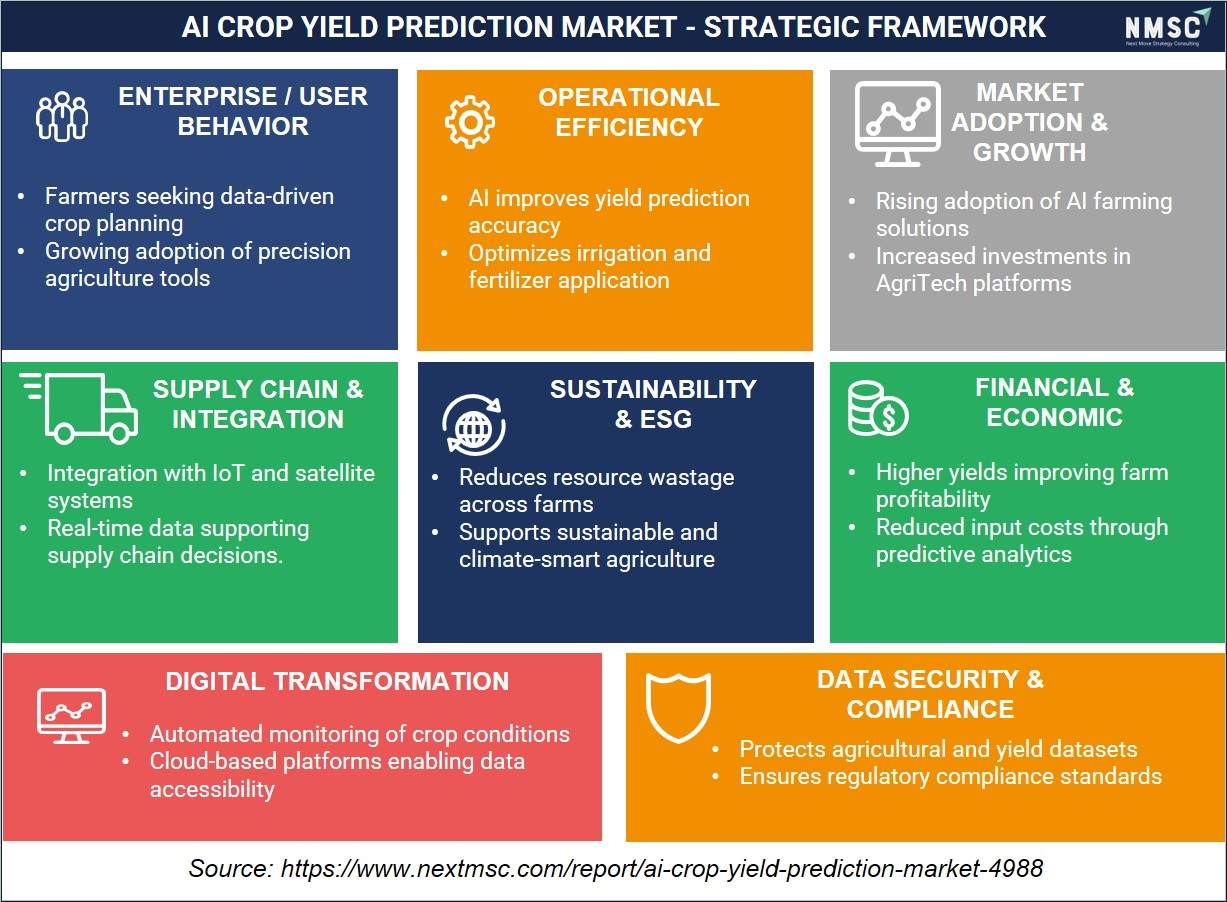
Based on our comprehensive assessment, we found that the AI Crop Yield Prediction Market is driven by growing demand for data-driven farming and precision agriculture solutions. Artificial intelligence improves yield forecasting, resource allocation, and operational efficiency while supporting sustainable farming practices. Integration with IoT, satellite imagery, and cloud platforms enhances decision-making. Additionally, increasing investments and digital transformation initiatives continue accelerating market expansion.
Competitive Landscape
Competitive Dynamics and M&A Landscape
|
Key Takeaways |
Details |
|
Market Structure |
Fragmented with strong regional leaders; approximately 200+ vendors globally with 20 primary companies accounting for the majority of enterprise-grade AI Crop Yield Prediction revenue. Competition intensifies across cloud-native platform tiers. |
|
Innovation Focus |
Deep learning model accuracy for multi-crop, multi-region environments; SAR and hyperspectral satellite data fusion; explainable AI for insurance integration; edge AI for low-connectivity rural deployments; carbon credit data integration. |
|
M&A Activity |
Active consolidation as large AgTech and data platform companies acquire specialized AI Crop Yield Prediction startups to expand geographic coverage and crop-specific model libraries. Bayer's acquisition of Climate LLC and BASF's stake in Agrarinformationsdienste signal large agrochemical company strategic intent in the AI data platform space. |
How Do Companies Compete in the AI Crop Yield Prediction Market?
Competition in the AI Crop Yield Prediction Market is multidimensional, encompassing predictive model accuracy benchmarked against historical yield outcomes, breadth of crop type coverage, geographic scalability, and depth of integration with existing farm management and agribusiness workflow systems. From our market assessment, we observed that market structure is fragmented at the mid-market tier but increasingly concentrated at the enterprise level, where platform vendors with proprietary satellite data access, extensive historical yield training datasets, and established agribusiness distribution partnerships hold significant competitive advantages. Pricing strategies span per-acre subscription models, per-field season fees, and enterprise API licensing, with competitive intensity highest in the North American row crop segment.
Which Kind of Companies Dominate the AI Crop Yield Prediction Market?
The AI Crop Yield Prediction Market is currently dominated by three categories of company: specialized AgTech AI-native platforms, large enterprise technology and data companies that have built agricultural prediction capabilities, and integrated agricultural input companies embedding AI yield intelligence into advisory product suites. AI-native companies including Climate LLC, Farmers Edge, Taranis Visual, CropX Technologies, and SatSure Analytics lead through proprietary machine learning model architecture, satellite data processing pipelines, and field-level prediction granularity. Enterprise technology companies such as IBM Corporation and Microsoft Corporation provide scalable cloud infrastructure and general-purpose AI tooling that agribusiness clients configure for crop prediction applications.
AI-Native Differentiation and Open Standards Drive Market Success in the AI Crop Yield Prediction Market
NMSC's analysis indicates that AI-native platforms with differentiated proprietary training datasets are establishing durable competitive moats in the AI Crop Yield Prediction Market. Vendors that have accumulated multi-year, multi-field yield validation datasets across diverse crop varieties and geographic environments are able to train prediction models with substantially lower error rates than competitors relying on publicly available crop data alone. Open standards-based integration approaches, including support for FMIS APIs and AgriJSON data exchange protocols, are enabling AI Crop Yield Prediction platforms to embed within existing farm management workflows without displacing established equipment and management software ecosystems, lowering adoption resistance among technology-conservative commercial farming operators.
Market Players to Opt for Merger and Acquisition Strategies to Expand Their Presence in the AI Crop Yield Prediction Market
Our findings suggest that merger and acquisition activity will intensify within the AI Crop Yield Prediction Market through the forecast period as strategic buyers seek to rapidly expand geographic coverage, crop model library depth, and data asset portfolios. Large data and analytics companies with strong enterprise sales infrastructure are the most active strategic acquirers, targeting AI Crop Yield Prediction startups that have built validated crop-specific models in high-growth geographies. Regional consolidation is anticipated in Asia-Pacific as global platforms acquire local partners with smallholder-optimized features and regulatory relationships with national agriculture ministries. Carbon credit and ESG data integration capability is also emerging as an acquisition driver as AI Crop Yield Prediction vendors seek to expand addressable revenue per farm.
Who Are the Key Market Players in the AI Crop Yield Prediction Market?
-
Climate LLC
-
Planet Labs PBC
-
Corteva, Inc.
-
Farmers Edge Inc.
-
Taranis Visual Ltd.
-
International Business Machines Corporation
-
Microsoft Corporation
-
CropX Technologies Ltd.
-
Ceres Imaging, Inc.
-
Descartes Labs, Inc.
-
Gro Intelligence, Inc.
-
SemiosBio Technologies Inc.
-
Arable Labs, Inc.
-
EOS Data Analytics, Inc.
-
SatSure Analytics India Private Limited
-
ClimateAi, Inc.
-
Cropin Technology Solutions Private Limited
-
Aerobotics (Pty) Ltd
-
OneSoil AG
-
IUNU, Inc.
What Are the Latest Developments in the AI Crop Yield Prediction Market?
|
Date |
Event |
|
January 2026 |
Taranis launched a joint 2026 Field Validation Program with SiFly Aviation, Inc., deploying long-endurance autonomous VTOL drones equipped with AI-driven agronomic sensors to improve data consistency and operational efficiency across large-scale U.S. agricultural operations |
|
May 2025 |
The Government of India launched the Bharat Forecasting System (BharatFS), an AI-driven, high-resolution (6km) weather prediction model capable of forecasting rainfall up to 10 days in advance, providing village-level decision support for farmers to optimize planting and harvesting schedules |
Expert Insights
 "AI and digital tools are revolutionizing farming and sustainable practices. Advanced monitoring systems integrate satellite imagery, drones, and soil maps to enable precise crop management. Predictive analytics, powered by AI and machine learning, provide farmers with actionable insights, transforming reactive practices into proactive strategies.”
— Jeff Rowe, CEO, Syngenta Group
Statement made in Syngenta Group's discussion on the transformative impact of artificial intelligence and digital technologies in agriculture.
Market Interpretation
The comment highlights the accelerating adoption of AI-driven technologies in modern agriculture to improve productivity, sustainability, and decision-making. Advanced digital farming solutions, including satellite monitoring, drone-based crop surveillance, soil mapping, and predictive analytics, are enabling farmers to optimize resource utilization and enhance crop yields. As agricultural stakeholders increasingly prioritize precision farming and sustainable practices, demand for AI-powered farm management platforms, smart monitoring systems, and data-driven agronomic solutions is expected to grow significantly. This trend is encouraging agricultural technology providers to invest in innovative digital tools that support proactive farm management and long-term food security.
What Are the Investment Opportunities in the AI Crop Yield Prediction Market?
Capital Inflows and Venture Investment Activity
The AI Crop Yield Prediction Market is attracting substantial and accelerating capital inflows from venture capital, private equity, and corporate strategic investors globally. AgTech investment activity has grown consistently as AI prediction platform commercial viability has been validated across North American and European agricultural markets. The FAO estimates that closing global agricultural productivity gaps will require cumulative investment exceeding USD 80 billion annually in developing country agricultural sectors through 2030, creating a long-duration investment mandate that encompasses AI Crop Yield Prediction platform development and deployment. Venture-backed AI Crop Yield Prediction companies have raised substantial capital rounds in 2024 and 2025, reflecting sustained investor confidence in the market's long-term commercial trajectory.
Infrastructure Investment Opportunities
The AI Crop Yield Prediction Market presents compelling infrastructure investment opportunities spanning satellite data processing platforms, edge computing networks for rural agricultural environments, and cloud-based agricultural AI model training infrastructure. The World Bank's Digital Agriculture Facility and Inter-American Development Bank (IDB) agritech programs are directing multilateral development capital toward agricultural data infrastructure in emerging markets, creating co-investment frameworks for private capital participation. Investment in broadband and 5G rural connectivity infrastructure, identified as a prerequisite for AI Crop Yield Prediction cloud platform deployment across developing agricultural regions, represents an upstream opportunity with direct commercial linkage to AI agricultural analytics market growth.
ESG Considerations and Sustainable Agriculture Investment
AI Crop Yield Prediction platforms align strongly with institutional ESG investment mandates through their measurable contributions to agricultural productivity enhancement, input use efficiency, and climate adaptation. The USDA's Partnerships for Climate-Smart Commodities program, committing over USD 3 billion to agricultural emission reduction and carbon measurement programs, directly creates co-investment opportunities in AI verification and yield monitoring platforms. European institutional investors increasingly require ESG performance metrics from agricultural value chain investments, creating demand for AI-verified sustainable agriculture data that AI Crop Yield Prediction platforms are uniquely positioned to supply. The alignment of AI agricultural technology with UN Sustainable Development Goals 2 (Zero Hunger) and 13 (Climate Action) strengthens the ESG investment narrative for the AI Crop Yield Prediction Market.
Digital Transformation Investment
Agribusiness digital transformation investment represents one of the largest untapped commercial opportunities within the AI Crop Yield Prediction Market, as global commodity trading, food processing, and agricultural input companies accelerate platform investments to improve operational efficiency and supply chain transparency. From our research, we found that global agribusiness companies collectively manage hundreds of millions of agricultural contract acres annually, representing an immense commercial demand pool for AI Crop Yield Prediction data services integrated into digital procurement and origination platforms. The EU Deforestation Regulation's mandatory crop origin and production verification requirements for agricultural commodity importers are creating a compliance-driven digital transformation investment cycle directly benefiting AI Crop Yield Prediction platform vendors.
PE and VC Activity
Private equity interest in the AI Crop Yield Prediction Market is evolving from early-stage venture participation toward growth and buyout investment in commercially validated platforms with recurring subscription revenue. PE firms with agriculture and technology sector expertise are identifying mature AI Crop Yield Prediction companies as attractive acquisition targets, given their SaaS business model characteristics, high gross margins, and defensive market positioning anchored in proprietary data assets. Secondary market transactions in AgTech-focused venture portfolios are increasing, reflecting growing liquidity event confidence as the AI Crop Yield Prediction Market's revenue trajectory becomes more predictable and comparable with established enterprise software investment benchmarks.
Key Benefits for Stakeholders
For Agricultural Producers and Farm Managers
Agricultural producers and farm managers gain access to scientifically validated, field-level yield forecasts that enable proactive crop management decisions throughout the growing season within the AI Crop Yield Prediction Market trends framework. AI-driven predictions support optimized input scheduling, targeted irrigation management, and precision harvest planning, directly reducing operational costs and minimizing post-harvest losses. Multi-season historical yield data analysis available through AI Crop Yield Prediction platforms enables evidence-based field management strategy development, supporting improved long-term farm profitability and climate resilience.
For Agribusiness and Commodity Trading Companies
Agribusiness and commodity trading companies leverage AI Crop Yield Prediction data to sharpen pre-harvest procurement strategies, optimize logistics scheduling, and manage commodity price exposure. Access to field-level yield intelligence across diverse geographies enables commercial buyers to anticipate regional supply variations and adjust procurement volumes ahead of market price movements. The AI Crop Yield Prediction Market report provides commercially actionable market sizing, competitor activity assessments, and end-user demand analysis that supports strategic sourcing and supply chain investment decisions across global commodity markets.
For Agricultural Insurance and Financial Services Providers
Insurance and financial services organizations access validated AI Crop Yield Prediction market analysis enabling evidence-based underwriting model development, parametric insurance product design, and agricultural credit risk assessment frameworks. Market segmentation insights identifying the fastest-growing insurance-relevant end-user categories and geographic markets support portfolio diversification strategies. The competitive landscape analysis highlights emerging AI Crop Yield Prediction vendors whose platforms are gaining insurance industry validation, providing early-mover partnership identification opportunities within a commercially high-potential market application segment.
For Investors and Financial Analysts
Investors and financial analysts access structured market sizing, CAGR projections by segment and geography, competitive intelligence, and M&A landscape analysis covering the AI Crop Yield Prediction Market through 2035. Revenue stream analysis by subscription, usage-based, and hardware models enables precise comparable company analysis and valuation modeling for AgTech investment portfolios. The 20-company competitive profile combined with latest development tracking provides an early-signal intelligence framework for identifying high-potential acquisition targets, growth stage investment candidates, and incumbent platform vendors facing competitive disruption risk within the evolving AI Crop Yield Prediction ecosystem.
For AI Crop Yield Prediction Vendors and Technology Providers
AI Crop Yield Prediction platform vendors and technology providers gain actionable intelligence on white-space geographic markets, underserved end-user segments, and fastest-growing application categories. Detailed segmentation analysis across offering types, revenue models, and end-user industries enables vendors to refine product roadmap priorities and go-to-market strategies. The regional outlook, covering 33 countries across five major regions, identifies geographic expansion priorities with regulatory environment context and technology adoption maturity profiles. Competitive landscape analysis enables vendors to benchmark their innovation positioning against peers and identify partnership or acquisition targets aligned with their commercial expansion strategies.
For Government Agencies and Policy Bodies
Government agriculture ministries and regulatory bodies gain evidence-based perspectives on how AI Crop Yield Prediction technology adoption is progressing across national agricultural sectors, enabling data-driven policy design for digital agriculture support programs. Country-level market analysis provides policymakers with comparative technology adoption benchmarks, regulatory influence assessments, and strategic investment prioritization frameworks. The report's competitive landscape and innovation focus analysis offers direct relevance to national agricultural AI research funding allocation decisions and public-private partnership strategy development within government digital agriculture transformation programs.
Key Market Segments
By Offering
-
Software and Analytics Platforms
-
Cloud-Based
-
On-Premise
-
Hybrid
-
-
Hardware and IoT Devices
-
In-Field Sensors
-
Aerial and Ground Imaging Devices
-
Integrated Weather and Sensor Stations
-
-
Services
-
Consulting and Advisory
-
Integration and Deployment
-
Managed Services and Support
-
By Application
-
Yield Prediction and Forecasting
-
Crop Health and Stress Monitoring
-
Irrigation Management
-
Nutrient and Fertiliser Optimisation
-
Pest and Disease Detection
-
Weather and Climate Risk Analytics
-
Harvest Timing and Logistics
-
Other Applications
By End-User Industry
-
Row Crop Farming
-
Specialty Crops
-
Viticulture
-
Plantation Crops
-
Agribusiness and Input Companies
-
Insurance and Financial Services
-
Government and Research Institutions
-
Other End-Users
By Revenue Stream
-
Recurring Subscription
-
Perpetual License
-
Hardware Sale
-
Project-Based Services
-
Usage-Based
By Region
-
North America: U.S., Canada, and Mexico.
-
Europe: UK, Germany, France, Italy, Spain, Sweden, Denmark, Finland, the Netherlands, and the rest of Europe.
-
Asia-Pacific: China, India, Japan, South Korea, Taiwan, Indonesia, Vietnam, Australia, Philippines, Malaysia and the rest of APAC.
-
Middle East and Africa (MEA): Saudi Arabia, UAE, Egypt, Israel, Turkey, Nigeria, South Africa, and the rest of MEA.
-
Latin America: Brazil, Argentina, Chile, Colombia, and the rest of LATAM.
Conclusion and Recommendations
Long-Term Outlook
The AI Crop Yield Prediction Market is entering a transformative growth decade underpinned by converging structural forces: global food security imperatives, climate-driven yield volatility, exponential growth in Earth observation data availability, and accelerating artificial intelligence model capabilities. The market is forecast to grow from USD 2.9 billion in 2026 to USD 16.8 billion by 2035 at a CAGR of 21.5%, reflecting both the expanding geographic penetration of AI prediction platforms and the deepening commercial value derived per farm from increasingly sophisticated multi-data AI yield models. NMSC's analysis indicates that this growth is structurally durable, underpinned by institutional investment from governments, insurers, and agribusiness enterprises that are embedding AI Crop Yield Prediction as a permanent operational infrastructure component.
Strategic Positioning Recommendations
Platform vendors operating in the AI Crop Yield Prediction Market should prioritize multi-crop, multi-region model generalization as the primary technical differentiator, as crop-specific single-region models face scalability limitations in commercially competitive bid environments. Vendors should invest in explainable AI output frameworks to satisfy agricultural insurance underwriting requirements, which represent the highest-value enterprise customer category within the market. Regional expansion strategies targeting India, Brazil, and Sub-Saharan Africa should incorporate offline-capable edge AI architectures to address connectivity constraints that limit cloud-only platform penetration in high-priority developing market agricultural regions.
Investment Attractiveness
The AI Crop Yield Prediction Market represents a highly attractive investment environment given its recurring subscription revenue characteristics, ESG mandate alignment, and position at the intersection of food security, climate technology, and enterprise AI platform infrastructure. Our assessment indicates that the highest-conviction investment themes include Usage-Based API platform models (28.3% CAGR), Services segment growth (23.8% CAGR), Harvest Timing and Logistics application expansion (23.1% CAGR), and Asia-Pacific regional penetration (21.7% CAGR). Investors should monitor consolidation opportunities among specialized AI Crop Yield Prediction startups as large agribusiness, data, and cloud companies accelerate platform acquisition strategies through the 2026 to 2030 investment horizon.
Market Shifts and Key Risks
The most significant market shift underway in the AI Crop Yield Prediction Market is the transition from discrete, single-crop prediction tools toward integrated farm intelligence platforms that combine yield prediction, input optimization, carbon accounting, and insurance data within unified agronomy operating systems. This platform consolidation trend benefits full-stack vendors with broad crop model coverage at the expense of specialized point-solution providers. Key risks include farm data sovereignty regulation that constrains commercial data sharing, climate change accelerating prediction model drift as historical training data loses statistical validity, and financial barriers limiting smallholder AI Crop Yield Prediction adoption in high-growth developing market agricultural economies.
Growth Pathways
Organizations seeking to maximize commercial value from the AI Crop Yield Prediction Market should pursue a three-horizon engagement strategy. In the near term (2025 to 2027), focus on enterprise-grade accuracy validation and insurance partner certification to establish product credibility in high-margin institutional market segments. In the mid-term (2027 to 2031), invest in emerging market geographic expansion leveraging satellite-first architectures that overcome rural connectivity limitations, while simultaneously developing carbon credit data integration capabilities to capture new compliance-driven revenue streams. In the long term (2031 to 2035), position platform infrastructure for integration with national-scale digital agriculture ecosystems in India, Brazil, and China as government agricultural AI infrastructure programs reach commercial readiness.
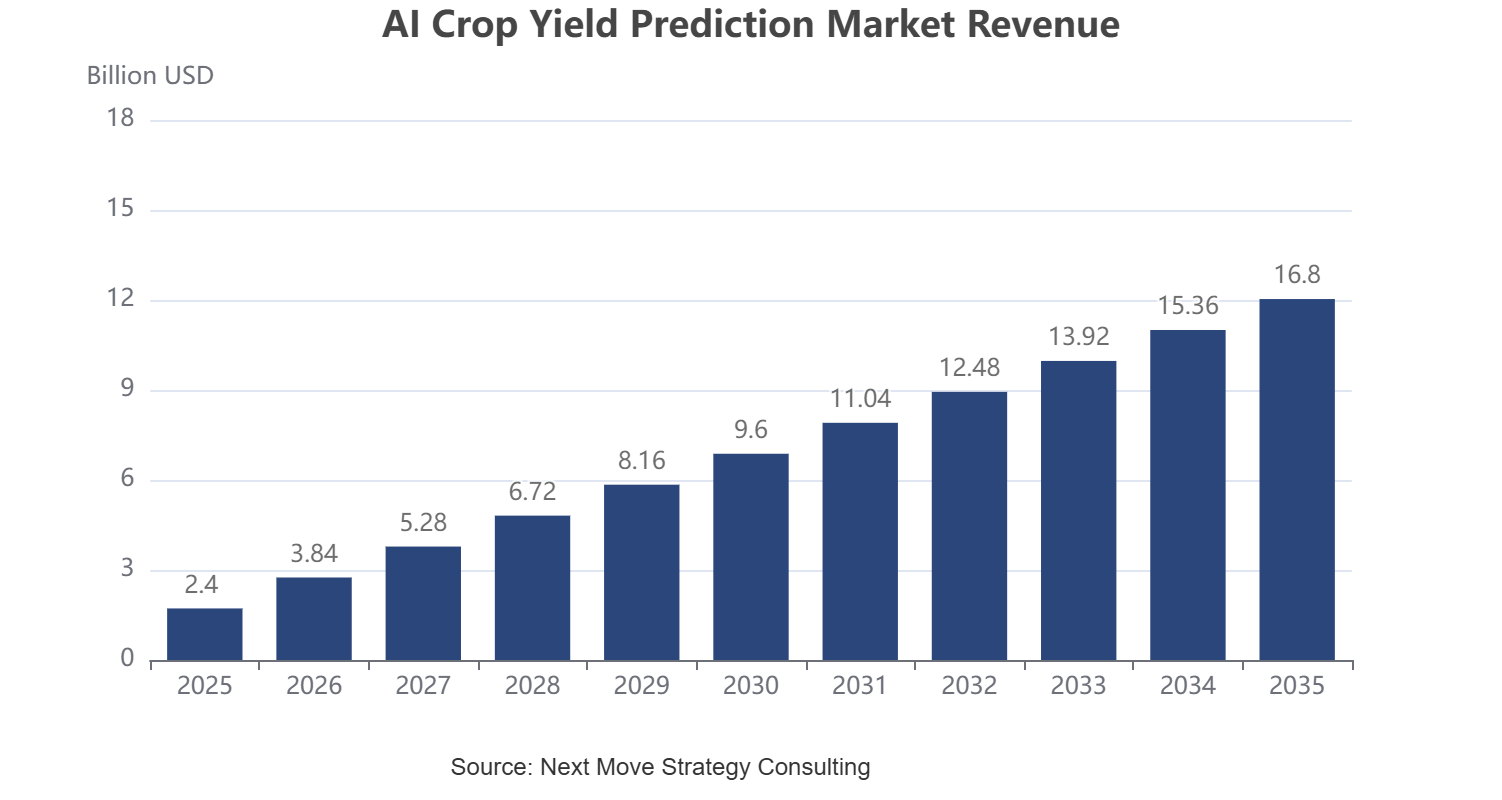
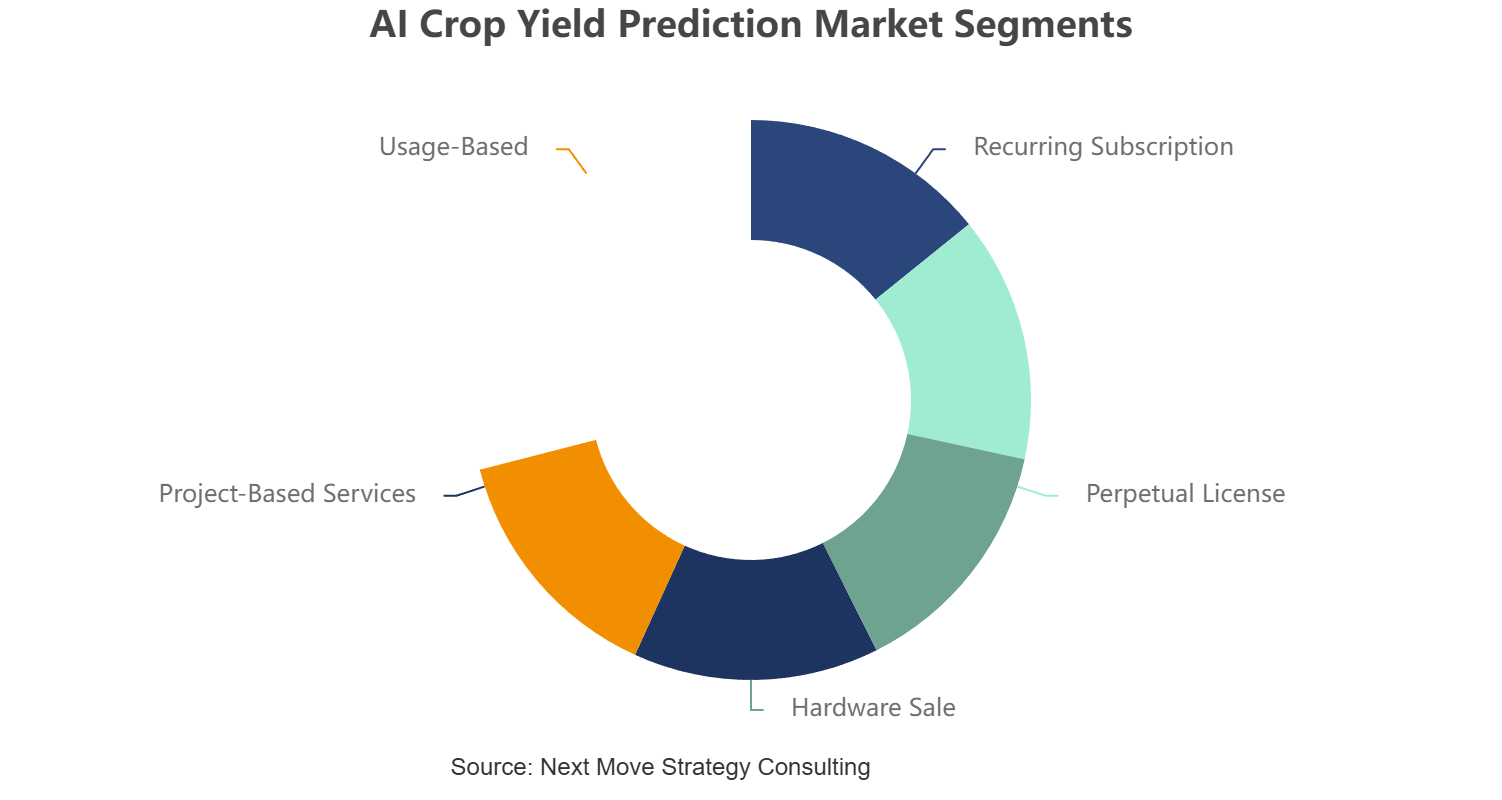
About the Author
 Saista Faiyaz
— Saista Faiyaz is Research Associate at Next Move Strategy Consulting, where she has covered consumer markets and healthcare technologies for 3 years. Her work includes primary interview review, secondary-source validation, market sizing, and structured analysis of company and industry data. She supports research by comparing evidence across sources, organizing findings into market narratives, and documenting assumptions used in analysis. Her scope includes cross-market benchmarking, and reports.
Saista Faiyaz
— Saista Faiyaz is Research Associate at Next Move Strategy Consulting, where she has covered consumer markets and healthcare technologies for 3 years. Her work includes primary interview review, secondary-source validation, market sizing, and structured analysis of company and industry data. She supports research by comparing evidence across sources, organizing findings into market narratives, and documenting assumptions used in analysis. Her scope includes cross-market benchmarking, and reports.
About the Reviewer
 Supradip Baul
— Supradip Baul is an accomplished business consultant and strategist with over a decade of rich experience in market intelligence, strategy, technology, and business transformation. His work has included rigorous qualitative and quantitative analysis across multiple industries, helping clients shape investment decisions and long-term roadmaps. Earlier in his career, he was associated with Gartner, where he contributed to industry-leading reports and market share analyses. He has worked with leading global companies and holds an MBA with a dual specialization in Marketing and Finance.
Supradip Baul
— Supradip Baul is an accomplished business consultant and strategist with over a decade of rich experience in market intelligence, strategy, technology, and business transformation. His work has included rigorous qualitative and quantitative analysis across multiple industries, helping clients shape investment decisions and long-term roadmaps. Earlier in his career, he was associated with Gartner, where he contributed to industry-leading reports and market share analyses. He has worked with leading global companies and holds an MBA with a dual specialization in Marketing and Finance.
At Next Move Strategy Consulting, we understand that insightful market research is the cornerstone of successful business decisions. That's why we employ a robust and multifaceted approach, combining various methodologies to deliver the most accurate and actionable data for our clients.

Research Landscape
We navigate the world of research with two primary approaches:
Qualitative Approach
Our qualitative research methodologies involve immersive techniques such as in-depth interviews, focus groups, and observational studies. By engaging directly with individuals and stakeholders, we uncover valuable insights that quantitative data alone may overlook.

Quantitative Research
In tandem with qualitative methodologies, NMSC leverages the power of Quantitative Research to provide a robust foundation of numerical insights. Through systematic data collection and analysis, we quantify patterns, preferences, and market trends, offering a comprehensive view of the business landscape.
Our quantitative research approach employs diverse tools, including surveys, experiments, and statistical modelling. These methodologies enable us to gather data from a large and representative sample, ensuring the statistical significance of our findings. By employing structured questionnaires and standardized data collection methods, we guarantee the reliability and validity of the information we present to our clients.
Quantitative research is particularly effective in measuring the prevalence of trends, assessing market size, and gauging the impact of various factors on consumer behavior. The numerical precision attained through this approach equips our clients with actionable insights, facilitating data-driven decision-making and strategy formulation.


Our Specialized Toolbox for Industry-Specific Market Research
We deploy a specialized arsenal of techniques tailored to meet your unique requirements. Here's a glimpse into our comprehensive toolbox:

Information Procurement
The stage entails acquiring market data or relevant information through various sources and methodologies.


Market Research Approach
We utilize both top-down and bottom-up approaches in market research analysis to achieve a comprehensive understanding of the market dynamics, leveraging the broad perspective of industry trends and macroeconomic factors alongside detailed insights from specific segments and individual companies.

Porters Five Forces Analysis
We conduct Porter's Five Forces analysis to evaluate the competitive landscape of an industry, providing us with insights into factors that affect profitability and strategic positioning.

SWOT Analysis

Forecasting
We utilize a forecasting model to predict future consumption by considering parameters like population, economics, regulations, market competition, drivers, constraints, technology, and pricing. We also employ statistical techniques such as multilinear regression, exponential smoothing, moving average, ARIMA, and Monte Carlo simulations for accurate predictions. In econometric forecasting, we analyzed short-term and long-term event impacts, attributing values based on regulatory frameworks, economic factors, and market events.





 Speak to Our Analyst