Autoimmune Disease Therapeutics Market Analysis and Forecast

Valued at USD 109.50 Billion in 2025 and heading to USD 190.00 Billion by 2035 at a 5.5% CAGR from 2026 to 2035, growth is powered by interleukin and oral targeted launches, FcRn expansion in neuromuscular disease, and North American leadership.

Download Free Sample PDF
Base Year (2025)
$109.50 Billion
Forecast (2035)
$190.00 Billion
CAGR (2026-2035)
5.5%
Top Region
North America

What Is the Autoimmune Disease Therapeutics Market Size?

The global autoimmune disease therapeutics market was valued at USD 109.50 Billion in 2025 and is estimated at USD 117.10 Billion in 2026. It is forecast to reach USD 190.00 Billion by 2035, growing at a 5.5% CAGR from 2026 to 2035. North America leads with approximately 64% share, while interleukin inhibitors dominate drug classes with approximately 41% share.

Based on research conducted by NMSC, we found that the leading segments and regions stand out as follows.

Autoimmune Disease Therapeutics Market Analysis and Forecast Revenue Forecast

Values in USD Billion

2025 $109.50 Billion
2025
2026 $117.10 Billion
2026
2027 $123.54 Billion
2027
2028 $130.34 Billion
2028
2029 $137.50 Billion
2029
2030 $145.07 Billion
2030
2031 $153.05 Billion
2031
2032 $161.46 Billion
2032
2033 $170.34 Billion
2033
2034 $179.71 Billion
2034
2035 $190.00 Billion
2035

Key Takeaways

By Drug Class: Interleukin inhibitors held the largest share, expanding from USD 43.00 Billion in 2025 to USD 77.00 Billion by 2035; B-cell, FcRn and complement targeted therapies is the fastest growing at 8.5% CAGR from 2026–2035.

By Indication: Inflammatory bowel disease held the largest share, expanding from USD 27.00 Billion in 2025 to USD 52.00 Billion by 2035; Myasthenia gravis and other neuromuscular autoimmune diseases is the fastest growing at 12.0% CAGR from 2026–2035.

By Route of Administration: Subcutaneous injection held the largest share, expanding from USD 58.00 Billion in 2025 to USD 98.00 Billion by 2035; Oral is the fastest growing at 8.0% CAGR from 2026–2035.

Dominant Region: North America, growing from USD 71.00 Billion in 2025 to USD 105.00 Billion by 2035.

Fastest-Growing Region: Asia-Pacific at 11.4% CAGR from 2026–2035, rising from USD 12.50 Billion in 2025 to USD 36.50 Billion by 2035.

Dominant Country: U.S., growing from USD 66.40 Billion in 2025 to USD 98.50 Billion by 2035.

Fastest-Growing Country: India at 18.1% CAGR from 2026–2035, rising from USD 0.55 Billion in 2025 to USD 2.90 Billion by 2035.

Our findings suggest an absolute opportunity of USD 72.90 Billion between 2026 and 2035, an attractive investment case for targeted franchises.

According to NMSC analysis, oral therapies rise from 23% of revenue in 2026 to 28% by 2035 as convenience reshapes first line choices.

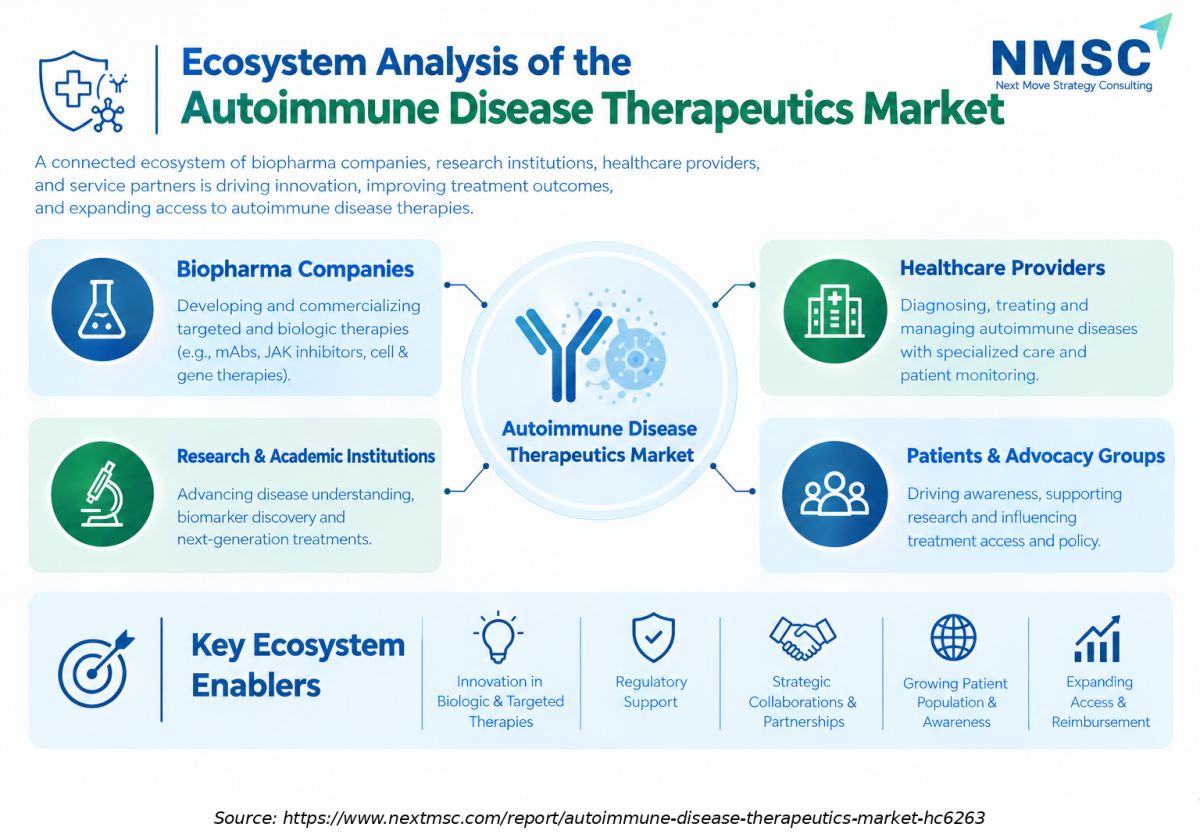
Ecosystem Analysis of the Autoimmune Disease Therapeutics Market

The infographic outlines the Ecosystem Analysis of the Autoimmune Disease Therapeutics Market, highlighting key stakeholders such as biopharmaceutical companies, research institutions, healthcare providers, and patient advocacy groups. It emphasizes how research innovation, regulatory support, strategic partnerships, and patient awareness contribute to therapeutic development, improved treatment outcomes, and broader market access

What Does the Autoimmune Disease Therapeutics Market Encompass?

The autoimmune disease therapeutics market covers prescription medicines that modulate abnormal immune activity in rheumatoid arthritis, spondyloarthritis, psoriasis, inflammatory bowel disease, multiple sclerosis, systemic lupus erythematosus and autoimmune neuromuscular disease. This report estimates net manufacturer revenue from originator biologics, biosimilars, oral targeted therapies, and conventional immunosuppressants used for the autoimmune indications included in the defined market scope. Diagnostics, medical devices, atopic dermatitis, and asthma are excluded.
We observed that the structure of this industry is shifting from broad TNF blockade toward mechanism specific interleukin, FcRn and oral targeted options. U.S. Medicare Part D maximum fair prices for Enbrel and Stelara took effect on January 1, 2026, increasing pricing pressure for eligible prescriptions. Biosimilar competition is also intensifying across established biologic franchises. Technology adoption follows, with prefilled syringes, autoinjectors and oral peptides moving administration from the clinic toward the home.

Market Drivers & Dynamics

Interactive Dataset
Rising diagnosed prevalence and earlier biologic initiation driver +1.1% North America, Europe 2026–2035
Launch of oral IL-23 receptor and TYK2 targeted therapies driver +1.6% Global 2026–2032
FcRn and cell therapy expansion in neuromuscular disease and lupus driver +1.0% North America, Europe, Japan 2027–2035
Reimbursement expansion and local biosimilars in emerging markets driver +0.8% Asia-Pacific, Latin America 2027–2035
Biosimilar erosion of TNF and ustekinumab franchises restraint −1.5% North America, Europe 2026–2030
U.S. Medicare price negotiation and Part D redesign restraint −0.9% United States 2026–2035
Payer step therapy and access barriers restraint −0.5% Global 2026–2035
Source: Next Move Strategy Consulting

Growth Drivers

What Is the Primary Growth Driver in the Autoimmune Disease Therapeutics Market?

Expanding diagnosed prevalence is the primary structural driver. The National Institutes of Health reports that an estimated 23.5 million to 50 million Americans live with autoimmune diseases. These conditions are more common in women, although prevalence varies by disease. Any specific percentage of patients who are women should be supported by a source that explicitly reports that statistic. Better access to autoimmune disease diagnostics and earlier biologic initiation convert this large patient pool into treated volume, which supports a 5.5% CAGR for the autoimmune disease therapeutics market from 2026 to 2035.

How Is Pipeline Innovation Driving the Market Growth?

New mechanisms are lifting treated share. Skyrizi and Rinvoq together generated USD 25.87 Billion for AbbVie in 2025, an increase of more than USD 8 billion, and AbbVie reports that Skyrizi leads frontline treatment in inflammatory bowel disease. Lilly reported positive Phase 3 data for Taltz combined with Zepbound in psoriatic arthritis, and the ICOTYDE approval adds an oral option. These launches expand the autoimmune disease therapeutics market through higher persistence and earlier biologic use.

Growth Inhibitors

What Is Restraining the Autoimmune Disease Therapeutics Market?

Price erosion is the main restraint. The Centers for Medicare & Medicaid Services negotiated prices that took effect on 1 January 2026 and cut the 2023 list price of Enbrel from USD 7,106 to USD 2,355 for a 30-day supply, a 67% reduction, and the Stelara price from USD 13,836 to USD 4,695, a 66% reduction. Amgen tied a 48% fall in fourth quarter Enbrel sales to a 35% lower net selling price. In our model such pressure trims growth in the autoimmune disease therapeutics market by about 2.9 percentage points.

What Are the Growth Opportunities?

Can Oral Targeted Therapies Win First Line Systemic Treatment in Psoriasis and Bowel Disease?

Oral IL-23 receptor and TYK2 agents can reach patients who delay injectables, and they benefit psoriasis and inflammatory bowel disease franchises most. Phase 3 studies comparing icotrokinra with deucravacitinib, and a planned head-to-head study against ustekinumab, give prescribers evidence to move earlier. Developers that secure first line positioning capture a durable share of the autoimmune disease therapeutics market.

Is Precision Targeting with Biomarkers an Untapped Route to Better Response?

Selecting a mechanism with biomarkers can raise response rates and reduce cycling between expensive agents, which benefits developers of interleukin, JAK and FcRn classes as well as payers. Rheumatology, bowel disease and lupus programs are adopting serologic and tissue signatures to stratify patients. Sponsors that pair a therapy with a validated signature gain label differentiation and stronger reimbursement arguments.

Can Emerging Markets and Remote Care Widen Access to Advanced Therapy?

Asia-Pacific and Latin America hold the largest untreated populations, and Asia-Pacific is projected to grow at 11.4% CAGR. Biosimilars and reimbursement expansion lower entry prices, while telemedicine extends specialist reach beyond major cities. Regional biosimilar producers and developers with tiered pricing and local manufacturing are the principal beneficiaries of this opening.

Segmentation Analysis

2025 (USD Billion)
2035 (USD Billion)
TNF inhibitors 2025: $17.00 Billion | 2035: $12.50 Billion
TNF inhibito
Interleukin inhibitors 2025: $43.00 Billion | 2035: $77.00 Billion
Interleukin
JAK, TYK2 and other oral targeted therapies 2025: $14.20 Billion | 2035: $33.60 Billion
JAK, TYK2 an
B-cell, FcRn and complement targeted therapies 2025: $21.30 Billion | 2035: $49.50 Billion
B-cell, FcRn
Integrin inhibitors and other biologics 2025: $8.00 Billion | 2035: $12.90 Billion
Integrin inh
Conventional immunosuppressants and immunomodulators 2025: $6.00 Billion | 2035: $4.50 Billion
Conventional
TNF inhibitors $17.00 Billion $12.50 Billion -1.7%
Interleukin inhibitors $43.00 Billion $77.00 Billion 5.3%
JAK, TYK2 and other oral targeted therapies $14.20 Billion $33.60 Billion 8.3%
B-cell, FcRn and complement targeted therapies $21.30 Billion $49.50 Billion 8.5%
Integrin inhibitors and other biologics $8.00 Billion $12.90 Billion 4.6%
Conventional immunosuppressants and immunomodulators $6.00 Billion $4.50 Billion -1.6%

Segment Sizing: By Drug Class

2025 (USD Billion)
2035 (USD Billion)
Psoriasis an
Rheumatoid a
Inflammatory
Multiple scl
Systemic lup
Segment Item 2025 (USD Billion) 2035 (USD Billion) CAGR
Psoriasis and psoriatic arthritis $10.0 USD Billion $40.0 USD Billion 25.0%
Rheumatoid arthritis and spondyloarthritis $17.1 USD Billion $51.1 USD Billion 11.0%
Inflammatory bowel disease $24.2 USD Billion $62.2 USD Billion 25.0%
Multiple sclerosis $31.3 USD Billion $73.3 USD Billion 11.0%
Systemic lupus erythematosus $38.4 USD Billion $84.4 USD Billion 16.0%

Segment-wise data is locked

Unlock complete segment-wise numbers for By Indication.

Unlock Full Data
2025 (USD Billion)
2035 (USD Billion)
Subcutaneous
Intravenous
Oral
Segment Item 2025 (USD Billion) 2035 (USD Billion) CAGR
Subcutaneous injection $10.0 USD Billion $40.0 USD Billion 27.0%
Intravenous infusion $17.1 USD Billion $51.1 USD Billion 9.0%
Oral $24.2 USD Billion $62.2 USD Billion 19.0%

Segment-wise data is locked

Unlock complete segment-wise numbers for By Route of Administration.

Unlock Full Data

Growth Opportunities

Our analysis shows that three structural whitespace opportunities are positioned to generate disproportionate value through 2035.

Can Oral Targeted Therapies Win First Line Systemic Treatment in Psoriasis and Bowel Disease?

Oral IL-23 receptor and TYK2 agents can reach patients who delay injectables, and they benefit psoriasis and inflammatory bowel disease franchises most. Phase 3 studies comparing icotrokinra with deucravacitinib, and a planned head-to-head study against ustekinumab, give prescribers evidence to move earlier. Developers that secure first line positioning capture a durable share of the autoimmune disease therapeutics market.

Is Precision Targeting with Biomarkers an Untapped Route to Better Response?

Selecting a mechanism with biomarkers can raise response rates and reduce cycling between expensive agents, which benefits developers of interleukin, JAK and FcRn classes as well as payers. Rheumatology, bowel disease and lupus programs are adopting serologic and tissue signatures to stratify patients. Sponsors that pair a therapy with a validated signature gain label differentiation and stronger reimbursement arguments.

Can Emerging Markets and Remote Care Widen Access to Advanced Therapy?

Asia-Pacific and Latin America hold the largest untreated populations, and Asia-Pacific is projected to grow at 11.4% CAGR. Biosimilars and reimbursement expansion lower entry prices, while telemedicine extends specialist reach beyond major cities. Regional biosimilar producers and developers with tiered pricing and local manufacturing are the principal beneficiaries of this opening.

Regional Outlook

2025 (USD Billion)
2035 (USD Billion)
North Americ
Europe
Asia-Pacific
Middle East
Latin Americ
Region 2025 (USD Billion) 2035 (USD Billion) CAGR (%)
North America $10.0 USD Billion $40.0 USD Billion 9.0%
Europe $17.1 USD Billion $51.1 USD Billion 27.0%
Asia-Pacific $24.2 USD Billion $62.2 USD Billion 25.0%
Middle East & Africa $31.3 USD Billion $73.3 USD Billion 23.0%
Latin America $38.4 USD Billion $84.4 USD Billion 12.0%

Regional data is locked

Unlock complete regional numbers for this market.

Unlock Full Data

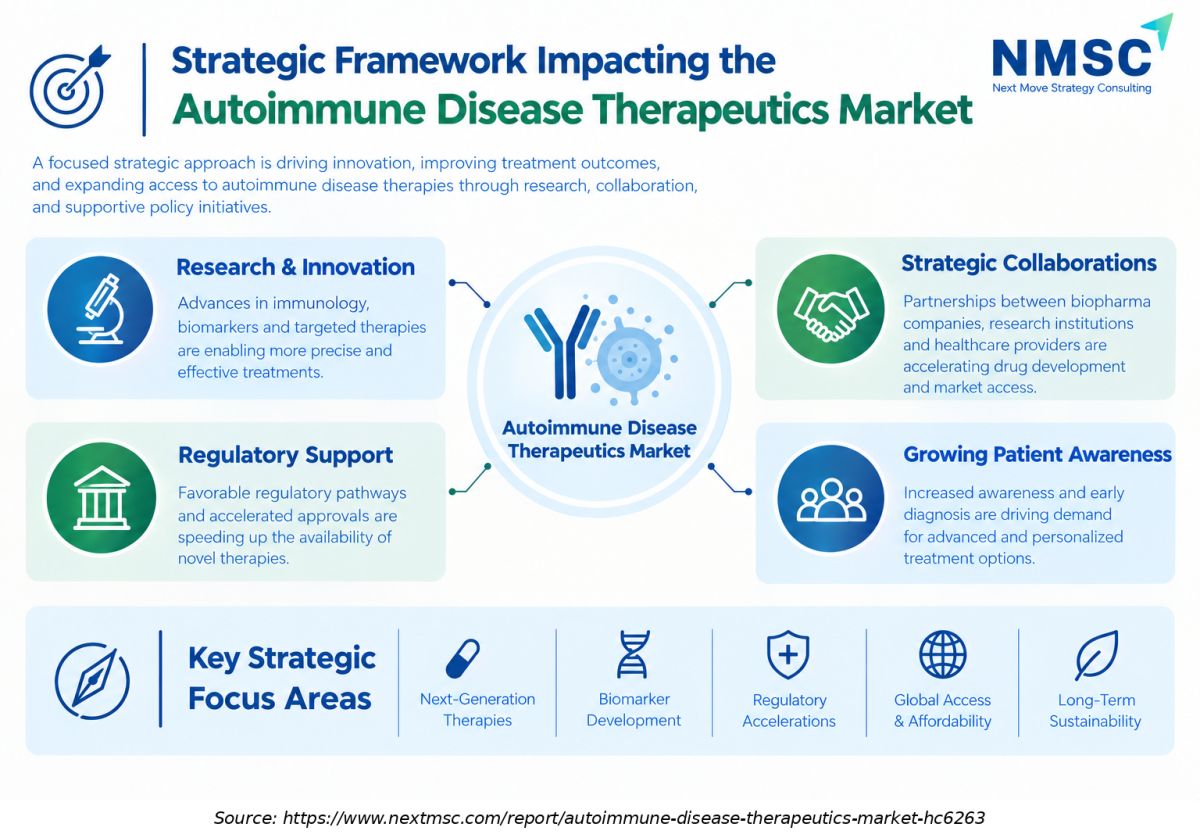
Strategic Framework Impacting the Autoimmune Disease Therapeutics Market

Strategic Framework Impacting the Autoimmune Disease Therapeutics Market
The infographic highlights the Strategic Framework Impacting the Autoimmune Disease Therapeutics Market, focusing on research and innovation, strategic collaborations, regulatory support, and growing patient awareness. It illustrates how next-generation therapies, biomarker development, streamlined approvals, and improved treatment accessibility and affordability support market advancement and long-term growth

Competitive Landscape

Our findings suggest that competition is concentrated among a few large developers while specialists win in neuromuscular and rare indications.

How Do Companies Compete in the Autoimmune Disease Therapeutics Market?

Competition rests on efficacy, convenience and access. Developers run head-to-head studies, secure formulary positions through rebates, and defend franchises with patient support programs. We observed that price now matters more, because Medicare negotiation and biosimilars compress net prices, so leaders’ pair broad portfolios with lifecycle indications to protect revenue while they roll out newer mechanisms across the autoimmune disease therapeutics market.

Which Competitor Archetypes Dominate the Landscape?

Three archetypes stand out. Diversified immunology leaders such as AbbVie, Johnson & Johnson and Novartis defend scale across several mechanisms. Franchise defenders such as Amgen manage mature products like Enbrel and Otezla while building biosimilar positions. Specialist innovators such as argenx and UCB win through differentiated science in neuromuscular disease, hidradenitis suppurativa and psoriasis, with biosimilar entrants as a fourth force.

How Do Developers Differentiate Through Innovation?

Differentiation centers on selectivity, dosing convenience and combination strategies. AbbVie plans a Crohn's combination platform pairing Skyrizi with other mechanisms, Lilly is testing Taltz with Zepbound in psoriatic arthritis, and Johnson & Johnson brings an oral peptide to psoriasis. Sponsors that demonstrate clinically meaningful superiority against an active comparator may strengthen their value proposition during reimbursement and formulary negotiations. However, access and pricing outcomes also depend on payer assessments, comparative costs, and local regulations.

How Active Is M&A and Licensing Across the Industry?

Deal making targets assets that extend franchises into oral dosing, new mechanisms and cell therapy. ICOTYDE emerged from a license and collaboration agreement between Protagonist and Johnson & Johnson, which illustrates the partnership model. Geographic expansion also continues, as UCB announced a new U.S. biologics manufacturing facility in Georgia in March 2026, involving approximately USD 2 billion in direct investment and an expected USD 5 billion in total economic impact. Separately, argenx established a presence in Brazil in 2025 to support its regional expansion.

Key Market Players

Our findings suggest that the nine companies below, verified through official filings and press releases, lead identifiable autoimmune therapeutic revenue, and ranking beyond fourth place is qualitative.

AbbVie Inc. Johnson & Johnson Novartis AG Takeda Pharmaceutical Company Limited Eli Lilly and Company Bristol-Myers Squibb Company UCB S.A. Amgen Inc. argenx SE

Latest Developments

During our market evaluation, we noticed that 2026 has already delivered approvals, pricing changes and launch milestones that reshape competitive positions.

Date Event
March 2026 The FDA approved ICOTYDE (icotrokinra), the first oral targeted peptide IL-23 receptor antagonist, for moderate to severe plaque psoriasis in adults and adolescents.

Investment Opportunities

Where Is Capital Flowing in Autoimmune Therapeutics?

Investment opportunities may be strongest in differentiated mechanisms, oral dosing, and neuromuscular indications, subject to clinical evidence, regulatory outcomes, and commercial uptake. argenx reached its first year of operating profitability in 2025, showing that a focused specialist can scale quickly, while established leaders reinvest cash from Skyrizi and Rinvoq into combination platforms. Investors should favor assets with head-to-head evidence and long exclusivity, because net price pressure rewards clear clinical differentiation in the autoimmune disease therapeutics market.

Which Infrastructure Investments Matter Most?

Biologic manufacturing capacity and device assembly are the critical infrastructure layers. UCB announced a new biologics manufacturing facility in Georgia in March 2026, with approximately USD 2 billion in direct investment and an expected USD 5 billion in total economic impact. The facility supports UCB's broader biologics manufacturing capabilities rather than being described as exclusively dedicated to BIMZELX. Partnerships in biologics contract development help smaller sponsors reach commercial scale, and cold chain and autoinjector capacity decide launch speed across the autoimmune disease therapeutics market.

How Do ESG Considerations Shape Investment Decisions?

Access and affordability dominate the social dimension, since biosimilars and negotiated prices widen treatment while compressing margins. The burden also falls mostly on women, who represent nearly 80% of patients according to NIH, which raises expectations for inclusive trial design. On the environmental side, cold chain logistics and single use devices raise supply chain emissions that sponsors must now report and reduce.

Key Benefits for Stakeholders

How Does This Report Help Enterprise and Industry Leaders?

This report gives pharmaceutical executives a segment-level view of where USD 72.90 Billion of incremental revenue will arise between 2026 and 2035. Leaders can benchmark portfolio mix across six drug classes and six indications, test lifecycle plans against biosimilar erosion, and prioritize launches in the fastest growing neuromuscular and oral segments of the autoimmune disease therapeutics market.

What Value Does It Offer Investors and Financial Analysts?

Investors receive reconciled forecasts that tie every segment and region to the global total, together with a transparent restraint model that quantifies price pressure. The matrix of drivers and restraints supports scenario analysis, while the regional table highlights where growth outpaces the 5.5% global CAGR. These tools help investors compare franchises and judge exposure to negotiation, biosimilar and access risks.

How Can Technology Vendors and Product Teams Use the Findings?

Device makers, diagnostics firms and software vendors can align products with the shift toward home administration and precision treatment. Digital therapeutics and adherence tools complement autoinjectors and oral regimens, while biomarker assays support mechanism selection. Product teams can use the route of administration and indication analysis to size addressable demand in the autoimmune disease therapeutics market.

Key Market Segments Evaluated

By Drug Class

  • TNF inhibitors
  • Interleukin inhibitors
  • JAK, TYK2 and other oral targeted therapies
  • B-cell, FcRn and complement targeted therapies
  • Integrin inhibitors and other biologics
  • Conventional immunosuppressants and immunomodulators

By Indication

  • Psoriasis and psoriatic arthritis
  • Rheumatoid arthritis and spondyloarthritis
  • Inflammatory bowel disease
  • Multiple sclerosis
  • Systemic lupus erythematosus
  • Myasthenia gravis and other neuromuscular autoimmune diseases

By Route of Administration

  • Subcutaneous injection
  • Intravenous infusion
  • Oral

By Region

  • North America
  • U.S.
  • Canada
  • Mexico
  • Europe
  • UK
  • Germany
  • France
  • Italy
  • Spain
  • Sweden
  • Denmark
  • Finland
  • Netherlands
  • Rest of Europe
  • Asia-Pacific
  • China
  • India
  • Japan
  • South Korea
  • Taiwan
  • Indonesia
  • Vietnam
  • Australia
  • Philippines
  • Malaysia
  • Rest of APAC
  • Middle East & Africa
  • Saudi Arabia
  • UAE
  • Egypt
  • Israel
  • Turkey
  • Nigeria
  • South Africa
  • Rest of MEA
  • Latin America
  • Brazil
  • Argentina
  • Chile
  • Colombia
  • Rest of LATAM

Conclusion & Recommendations

Our findings suggest that the sector expands from USD 117.10 Billion in 2026 to USD 190.00 Billion by 2035, a steady 5.5% path rather than a spike. Growth rests on new mechanisms and neuromuscular expansion, tempered by biosimilar and negotiation pressure. We found that the autoimmune disease therapeutics market stays resilient because treated prevalence keeps rising while mix shifts toward higher value classes.

What Are the Strategic Positioning Recommendations?

NMSC's analysis indicates that developers should defend mature franchises through lifecycle indications and pricing discipline, while directing investment toward oral targeted agents, FcRn mechanisms and combination regimens. Companies with biosimilar capability should target emerging markets where reimbursement is widening. Partnerships with local manufacturers and specialist networks will matter more than headline list prices over the next decade.

How Strong Is the Investment Attractiveness?

Investment attractiveness is moderate to high. Absolute growth of USD 72.90 Billion rewards exposure to the fastest segments, yet price erosion rewards selectivity. Assets with clear differentiation, long exclusivity and head-to-head data offer the best risk adjusted returns, whereas mature TNF and ustekinumab exposure carries structural decline and should be weighted cautiously in portfolios.

What Are the Market Shifts and Key Risks?

We observed three shifts: injectables to orals, broad suppression to targeted mechanisms, and clinic to home administration. Key risks include deeper Medicare negotiation, faster biosimilar uptake, safety signals in new classes and macroeconomic volatility in emerging markets. Sponsors should model downside cases for each risk before committing capital to launches in the autoimmune disease therapeutics market.

What Are the Primary Growth Pathways?

Our assessment indicates that growth pathways run through oral first line therapy in psoriasis and bowel disease, FcRn expansion in neuromuscular disease, and cell therapy for refractory lupus after 2030. Asia-Pacific access expansion adds volume, while biomarker-guided selection raises response and persistence. Combining these pathways lets leaders outgrow the 5.5% global rate even as older franchises erode.

FAQs

Sources & References

1.

AbbVie Inc., Full-Year and Fourth-Quarter 2025 Financial Results

news.abbvie.com
2.

AbbVie Inc., Form 10-K for fiscal year 2025 (U.S. SEC)

sec.gov
3.

Johnson & Johnson, Annual Report to Shareholders for 2025 (U.S. SEC)

sec.gov
4.

Johnson & Johnson, FDA approval of ICOTYDE (icotrokinra), 18 March 2026

jnj.com
5.

Novartis AG, Form 20-F for fiscal year 2025 (U.S. SEC)

sec.gov
6.

Novartis AG, Q4 2025 Interim Financial Report

novartis.com
7.

Amgen Inc., Fourth Quarter and Full Year 2025 Financial Results

amgen.com
8.

UCB S.A., Half-Year Report 2025

ucb.com
9.

Eli Lilly and Company, Fourth-Quarter 2025 Financial Results

investor.lilly.com/node/53786/pdf
10.

Takeda Pharmaceutical Company Limited, FY2025 Results

takeda.com
11.

argenx SE, Full Year 2025 Financial Results (Form 6-K, U.S. SEC)

sec.gov
12.

Centers for Medicare & Medicaid Services, Medicare Drug Price Negotiation Program: Negotiated Prices for 2026

cms.gov
13.

National Institutes of Health, Office of Research on Women’s Health, Updates on Autoimmune Disease Research (December 2025)

orwh.od.nih.gov
14.

National Institutes of Health, Office of Research on Women’s Health, Autoimmune Disease Overview

orwh.od.nih.gov

About the Author

Mayurima Roy

Mayurima Roy

Mayurima Roy is Research Analyst at Next Move Strategy Consulting, where she has spent 4 years working across the firm's full industry coverage rather than a single fixed vertical. Her work centers on structured research, ongoing trend tracking, competitive assessment, and insight-led content development, translating complex market data into clear, decision-ready narratives that support informed client decision-making across diverse global industries, market sectors, and world regions every day.

About the Reviewer

Supradip Baul

Supradip Baul

Supradip Baul is an accomplished business consultant and strategist with over a decade of rich experience in market intelligence, strategy, technology, and business transformation. His work has included rigorous qualitative and quantitative analysis across multiple industries, helping clients shape investment decisions and long-term roadmaps. Earlier in his career, he was associated with Gartner, where he contributed to industry-leading reports and market share analyses. He has worked with leading global companies and holds an MBA with a dual specialization in Marketing and Finance.

Download Free Sample

Kevin Coker

KEVIN COKER

Founder, CEO and Board Diector

Proxima Clinical Research

I have been using Next MSC reports for product positioning in a new geography for a long time. They have by far the best reports I have found and the price is reasonable too!

Amos Chang

AMOS CHANG

Strategy Consultant

Kardex Group

I have bought the intralogistics market reports from NMSC two times so far. Joseph and his team are always very helpful and flexible in responding to any customization requirements on the report. Their expertise in market reports really helps us steer the day-to-day business. I will definitely recommend and come back myself whenever there is a need.

Henri Knyphausen

HENRI KNYPHAUSEN

Partner at Singulier [Ex-BCG]

Singulier

I recently engaged NEXTMSC.com for a commercial due diligence project within the intralogistics sector, and I am pleased to provide a reference based on my experience. In utilizing NEXTMSC.com's services, I found their report to offer valuable insights into market dynamics and key industry players. The initial report provided a solid foundation for our analysis. However, as we were investigating a smaller target in the market, and I had specific customization requests requiring additional research. These requests included detailed information on product portfolios of various players and sub-market sizes, both inclusive and exclusive of certain product categories. NEXTMSC.com demonstrated commendable responsiveness and agility in accommodating these customization requests. Within a timeframe of 1-2 weeks, they delivered a revised report that met our specific needs. Furthermore, they were receptive to my follow-up inquiries, ensuring clarity and understanding of the data provided. The final deliverable significantly contributed to our due diligence efforts. One of NEXTMSC.com's notable strengths lies in their qualitative research capabilities. However, for future engagements, I would recommend the inclusion of a quantified market model in Excel format. Such a model would offer the ability to conduct in-depth analyses and explore various market segments, including country-specific data and subcomponent breakdowns. Based on my positive experience, I would not hesitate to work with NEXTMSC.com again. Their responsiveness, willingness to accommodate customization requests, and commitment to delivering actionable insights make them a reliable partner for commercial research projects.

Gaurav Jaiswal

GAURAV JAISWAL

Founder & CEO

Yano Charge Private Limited

The EV Charging market research report provided by the NextMSC was exceptionally detailed and insightful. It offered a comprehensive analysis that proved to be a game-changer for our strategic planning. Truly a testament to the NextMSC’s expertise and thoroughness in EV market landscape & analysis.

Mohit Agarwal

MOHIT AGARWAL

Chief Manager

DryChem India Pvt. Ltd.

Next Move Strategy Consulting is an amazing team of consultants. We required a market study report for our investors on top priority and the team went above and beyond our expectations to deliver the same with ample supporting data within a short time span enabling us to secure the investments and keep our project timeline maintained. Their professionalism, attention to detail, and timely delivery of actionable recommendations have left a lasting impression on our organization.

Custom Market Research Services

We will customize the research for you if the listed report does not fully match your requirements.

Get 30% Free Customization

Select License

This website uses cookies to ensure you get the best experience on our website. Learn more

✖