Autonomous Maritime Defense Systems Market By Offering (Platforms, Hardware, Software, Services), By Autonomy (Remote, Semi, Fully), By Mission (MCM, ISR, ASW, Security, Strike, EW, Survey, Logistics), By Environment (Harbor, Littoral, Coastal, Open Ocean, Arctic, Deep Sea), By Sales Channel (Direct Govt, Prime, OEM, FMS, Commercial, Lease), By End User (Navy, Coast Guard, Marines, SOF, Joint Command, Research) – Global Analysis & Forecast, 2025-2035
Industry: Aerospace & Defense | Publishing Date: June 11, 2026 | Last Updated: September 30, 2026 | No of Pages: N/A | No. of Tables: N/A | No. of Figures: N/A | Format: PDF | Report Code: AD4638
Industry Outlook
The global Autonomous Maritime Defense Systems Market size was valued at USD 9.50 billion in 2025 and is expected to be valued at USD 10.54 billion by the end of 2026. The industry is projected to grow, hitting USD 26.73 billion by 2035, with a CAGR of 10.90% between 2026 and 2035.
Autonomous Maritime Defense Systems Market Size & Forecast
|
Parameters |
Details |
|
Market Size in 2026 |
USD 10.54 billion |
|
Revenue Forecast in 2035 |
USD 26.73 billion |
|
Growth Rate |
CAGR of 10.90% from 2026 to 2035 |
|
Analysis Period |
2025–2035 |
|
Base Year Considered |
2025 |
|
Forecast Period |
2026–2035 |
|
Market Size Estimation |
Billion (USD) |
|
Companies Profiled |
20 |
|
Countries Covered |
33 |
|
Market Share |
Available for 10 companies |
NMSC’s assessment indicates that the autonomous maritime defense systems market is currently positioned at a critical growth stage, driven by accelerating naval modernization programs, rising maritime security threats, and increasing adoption of AI-enabled defense technologies across global naval operations. Demand is expanding across naval forces, coast guard agencies, maritime security organizations, and defense contractors, where autonomous maritime systems are increasingly utilized to strengthen maritime domain awareness, improve operational efficiency, and support persistent surveillance missions. Based on our interactions with defense stakeholders and maritime technology participants, we observed growing integration of autonomous underwater vehicles, unmanned surface vessels, and AI-supported maritime ISR capabilities within next-generation naval modernization strategies. Additionally, increasing regional defense cooperation initiatives and maritime interoperability programs are further supporting technology deployment and accelerating global market adoption.
The future outlook for the autonomous maritime defense systems market remains highly positive, supported by increasing investment in autonomous naval operations, expanding underwater surveillance requirements, and rising focus on distributed maritime warfare capabilities. AI-enabled operational analytics, secure autonomous navigation systems, and cyber-resilient maritime communication technologies are improving mission coordination while strengthening naval operational readiness. On the supply side, strategic defense partnerships, collaborative technology development programs, and increasing investment in autonomous naval R&D are emerging as key enablers of long-term market expansion and operational scalability. As geopolitical tensions, maritime border security priorities, and protection of critical offshore infrastructure continue intensifying globally, autonomous maritime defense systems are expected to transition from specialized defense assets to strategically important components of future naval warfare and maritime security operations.
What Are the Key Trends in the Autonomous Maritime Defense Systems Market?
How Are Autonomous Underwater Vehicles Strengthening Modern Naval Surveillance and Subsea Security Operations?
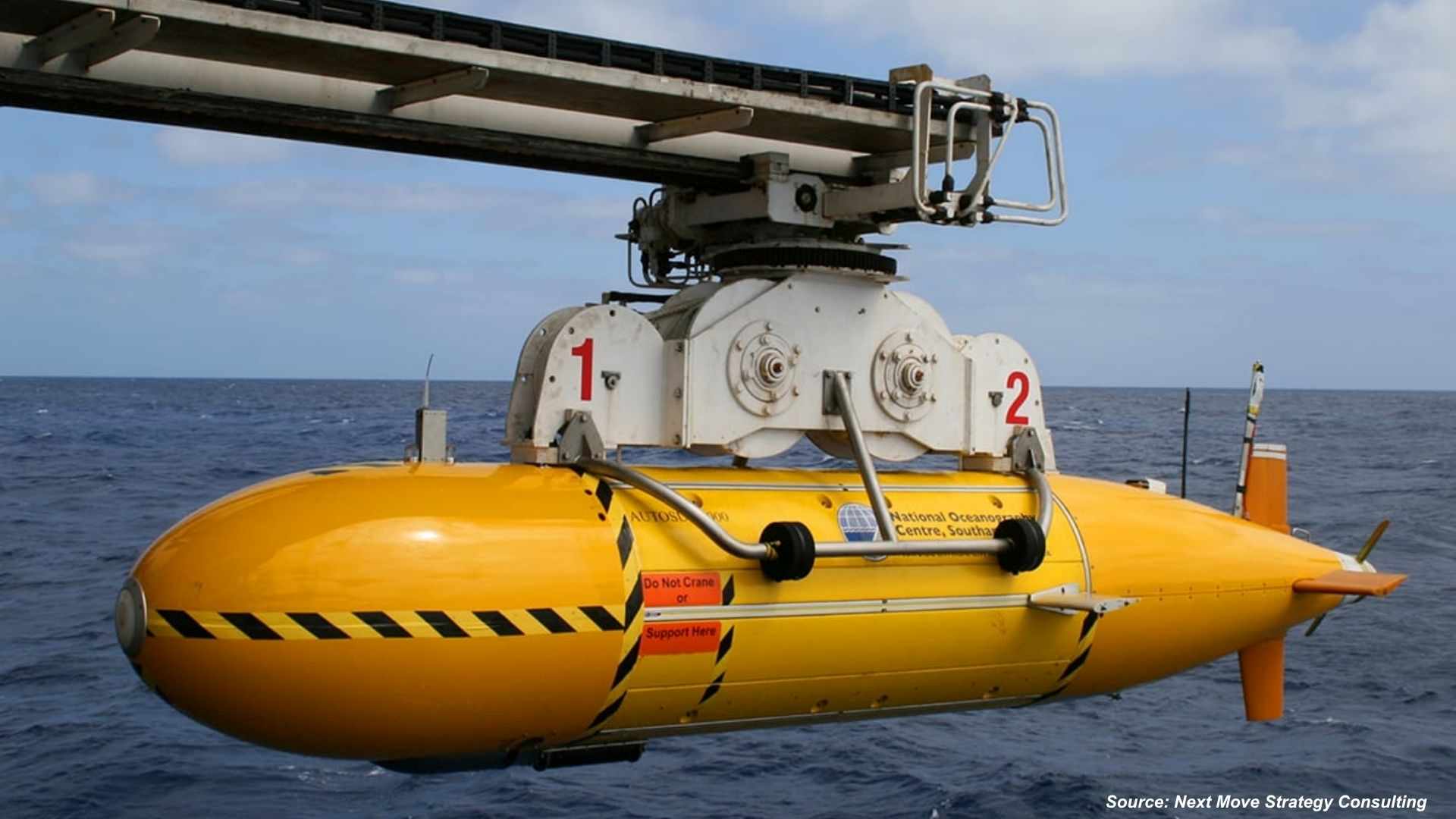
Our market evaluation indicates that autonomous underwater vehicles (AUVs) are becoming increasingly central to modern naval surveillance and subsea defense operations globally. We analysed that naval agencies are expanding deployment of AUVs for underwater intelligence gathering, mine countermeasure missions, anti-submarine warfare, and offshore infrastructure monitoring applications. Growing geopolitical tensions and increasing concern surrounding subsea cable protection and underwater asset security are further accelerating investment in long-endurance autonomous underwater systems. Additionally, technological advancements in sonar systems, underwater navigation, AI-enabled sensing, and autonomous operational coordination are improving mission reliability and operational coverage. Naval operators increasingly value AUVs for their ability to conduct persistent underwater surveillance while reducing operational risk and manpower dependency. This trend is expected to continue strengthening as governments prioritize underwater domain awareness and advanced subsea defense capabilities within future naval modernization strategies.
How Are AI-Enabled Maritime ISR Systems Transforming Naval Operational Decision-Making Capabilities?
NMSC’s assessment indicates that AI-enabled maritime intelligence, surveillance, and reconnaissance (ISR) systems are significantly transforming autonomous naval operational strategies across global defense environments. We observed increasing integration of artificial intelligence, predictive analytics, machine learning algorithms, and real-time maritime monitoring technologies within naval ISR infrastructure to improve threat detection accuracy and operational responsiveness. Defense agencies are increasingly utilizing AI-supported maritime analytics platforms to process large-scale surveillance data, monitor maritime traffic patterns, and strengthen maritime domain awareness across strategic sea lanes and contested waters. Additionally, AI-enabled ISR technologies are improving operational coordination between autonomous surface vessels, underwater systems, and crewed naval platforms. This transformation is enabling faster tactical decision-making, enhanced predictive threat assessment, and improved mission efficiency across complex maritime operational environments. Overall, AI-driven ISR integration is expected to remain a major technological trend shaping future autonomous naval warfare capabilities globally.
How Is Multi-Domain Autonomous Fleet Coordination Reshaping Future Maritime Warfare Strategies?
Industry analysis suggests that multi-domain autonomous fleet coordination is emerging as a defining operational trend within next-generation maritime defense strategies. We found increasing naval focus on integrating unmanned surface vessels, autonomous underwater systems, aerial drones, and crewed naval platforms into coordinated maritime operational ecosystems. Governments are investing in interoperable communication networks, AI-enabled fleet management systems, and secure autonomous command infrastructures capable of supporting synchronized multi-platform naval missions. This trend is improving operational flexibility, distributed maritime warfare capability, and real-time situational awareness across naval operations. Additionally, coordinated autonomous fleet structures are enabling defense operators to optimize surveillance coverage, improve mission scalability, and strengthen rapid-response capability in contested maritime regions. As naval warfare strategies increasingly shift toward distributed and technology-enabled operations, multi-domain autonomous coordination is expected to become a key pillar of future maritime defense modernization programs.
How Are Cyber-Resilient Autonomous Navigation Systems Improving Operational Reliability Across Naval Missions?
NMSC’s research indicates that cyber-resilient autonomous navigation and secure maritime communication systems are becoming increasingly important across autonomous maritime defense operations. Naval agencies are strengthening investment in encrypted communication infrastructure, cyber-secure navigation software, Artificial Intelligence-supported threat detection systems, and resilient command-and-control architectures to mitigate rising maritime cyber warfare risks. Additionally, growing operational dependence on autonomous naval platforms is increasing the importance of secure data transmission, operational continuity, and real-time cybersecurity monitoring across maritime missions. Defense contractors are also prioritizing development of cyber-hardened autonomous systems capable of operating reliably within contested electronic warfare environments. This trend is improving operational trust, reducing vulnerability to cyberattacks, and strengthening mission reliability for autonomous naval operations. Overall, cybersecurity-focused autonomous system development is expected to become an increasingly critical competitive and operational differentiator within the autonomous maritime defense systems market.
Ecosystem Analysis of the Autonomous Maritime Defense Systems Market
The ecosystem analysis of the autonomous maritime defense systems market reflects a structured framework from autonomy software providers to naval end users, driven by rising demand for open architecture UUVs and USVs, AI driven perception algorithms, and increasing need for seabed infrastructure protection and manned unmanned teaming.

NMSC's analysis indicates that the ecosystem analysis of the autonomous maritime defense systems market follows a structured framework spanning seven key categories, shaped by naval demand for persistent surveillance, interoperability, and validation certainty. Autonomy & AI software providers focus on modular open architecture stacks and AI driven perception. Platform & payload manufacturers prioritize combat management integration and GPS denied navigation. Integration & systems engineering partners enable digital engineering for faster prototyping and torpedo tube launch and recovery systems. Naval forces & end users demand seabed infrastructure protection and manned unmanned teaming. Testing & certification bodies face limited at sea validation infrastructure with gradual certification strengthening. Funding & procurement mechanisms use OTA contracts and DIU pathways with expanding NATO budgets. Regulatory & strategic frameworks focus on seabed warfare rules and fragmented interoperability standards.
What are the Key Market Drivers, Breakthroughs, and Investment Opportunities that will Shape the Autonomous Maritime Defense Systems Industry in the Next Decade?
Growth Catalyst & Risk Assessment Matrix
|
DRIVERS/TRENDS/ RESTRAINTS |
(+/-) % IMPACT ON CAGR FORECAST |
GEOGRAPHIC RELEVANCE |
IMPACT TIMELINE |
|
Rising naval modernization spending and increasing investment in autonomous maritime defense procurement are accelerating market expansion |
+3.14% |
North America, Europe, Indo-Pacific (U.S., UK, Japan, India, Australia, South Korea) |
Medium to Long term (3–7 years) |
|
Increasing maritime surveillance requirements and growing maritime domain awareness programs are strengthening demand for autonomous monitoring technologies |
+2.76% |
Indo-Pacific, Europe, Middle East, North America, Arctic maritime regions |
Medium term (2–5 years) |
|
Growing deployment of autonomous underwater vehicles for naval surveillance and subsea monitoring is transforming maritime defense operations |
+1.94% |
North America, Europe, Indo-Pacific strategic waters, NATO naval regions |
Medium to Long term (3–6 years) |
|
High development, integration, cybersecurity compliance, and operational testing costs are limiting broader autonomous naval system adoption |
-2.41% |
Emerging defense economies, Southeast Asia, Latin America, Africa, smaller NATO members |
Medium term (2–5 years) |
The autonomous maritime defense systems market is being strongly shaped by rising naval modernization spending, increasing maritime surveillance requirements, and expanding investment in AI-enabled autonomous naval operations across global defense environments. Our research indicates that naval forces, coast guard agencies, maritime security organizations, and defense procurement authorities are increasingly prioritizing autonomous maritime technologies to strengthen maritime domain awareness, improve operational efficiency, and support persistent surveillance across strategic maritime regions. Defense program managers and naval modernization agencies are increasingly focusing on interoperable autonomous underwater vehicles, unmanned surface vessels, and integrated maritime ISR systems, supported by growing regional maritime security cooperation and expanding multi-domain naval operational strategies. Industry trends indicate that increasing deployment of autonomous underwater surveillance platforms and AI-enabled maritime monitoring technologies is further accelerating operational adoption across both advanced and emerging naval defense programs. However, the market continues to face constraints from high development and integration costs, cybersecurity compliance requirements, complex operational testing procedures, and infrastructure modernization challenges, which collectively continue limiting broader large-scale deployment across several defense economies.
Growth Drivers:
How Is Rising Naval Modernization Spending Accelerating the Autonomous Maritime Defense Systems Market?
NMSC’s assessment indicates that the autonomous maritime defense systems market is witnessing strong growth momentum driven by increasing naval modernization spending and expanding investment in next-generation maritime defense capabilities. We observed that governments are prioritizing procurement of autonomous underwater vehicles, unmanned surface vessels, AI-enabled maritime ISR platforms, and integrated naval command systems to strengthen operational readiness and maritime deterrence capabilities. Rising geopolitical tensions, territorial disputes, and increasing protection requirements for strategic maritime trade routes are accelerating adoption of autonomous naval technologies across both advanced and emerging defense economies. According to the NATO Defence Expenditure Overview, NATO confirmed that 23 Allies were expected to meet or exceed the alliance benchmark of spending 2% of GDP on defense in 2025, reflecting sustained investment in modernization and advanced defense capability development programs. Additionally, countries including the United States, Japan, India, Australia, and the United Kingdom are significantly increasing investment in autonomous naval operations, underwater surveillance infrastructure, and distributed maritime warfare systems. Growing emphasis on reducing operational dependency on crewed naval platforms while improving surveillance efficiency and mission endurance is expected to continue supporting long-term global market expansion.
How Are Increasing Maritime Surveillance Requirements Strengthening the Autonomous Maritime Defense Systems Market Demand?
Increasing maritime surveillance requirements and expanding maritime security concerns are significantly accelerating demand for autonomous monitoring technologies across global naval operations. Based on our evaluation of maritime security trends, we found that governments and coast guard agencies are increasingly investing in autonomous maritime ISR systems, underwater monitoring technologies, remotely operated surveillance platforms, and AI-enabled maritime analytics to strengthen maritime domain awareness and improve operational responsiveness. Rising concerns surrounding illegal fishing, maritime trafficking, offshore infrastructure protection, territorial water monitoring, and subsea asset security are further driving investment in persistent autonomous surveillance capabilities. According to the European Maritime Safety Agency (EMSA) in 2025, the agency conducted nine parallel remotely piloted aircraft system operations supporting more than 20 national authorities across Europe for maritime surveillance, emissions monitoring, and maritime security operations. Additionally, naval agencies are increasingly deploying autonomous monitoring systems to improve long-duration surveillance capability while reducing manpower dependency and operational risk exposure. The growing need for real-time maritime intelligence, integrated coastal monitoring infrastructure, and rapid-response surveillance operations is therefore expected to sustain strong long-term demand for autonomous maritime monitoring technologies globally.
Growth Inhibitor:
Why Are High Development and Integration Costs Limiting Autonomous Maritime Defense System Adoption?
We observed that despite increasing naval modernization initiatives and rising maritime security investments, the autonomous maritime defense systems market continues to face a significant restraint in the form of high development, operational testing, and system integration costs. Advanced autonomous naval technologies including AI-enabled command systems, underwater navigation platforms, secure communication infrastructure, and interoperable maritime surveillance networks require substantial long-term capital investment and continuous technological upgrades. According to the UK Parliament Defence Investment Plan Inquiry in 2025, the UK Ministry of Defence identified a projected affordability gap of approximately GBP 42.5 billion within its long-term defense equipment plan, reflecting growing financial pressure associated with advanced military modernization and next-generation capability development programs. Our interactions with defense technology stakeholders indicate that extensive certification procedures, cybersecurity compliance requirements, naval interoperability standards, and complex operational testing cycles are significantly increasing deployment timelines and overall ownership costs. Additionally, integration challenges between autonomous systems and conventional naval infrastructure are limiting rapid large-scale adoption across several defense markets. These operational and financial constraints are increasing procurement caution among naval agencies, particularly within emerging defense economies, thereby slowing broader deployment of autonomous maritime defense technologies globally.
Growth Opportunity:
How Is Indo-Pacific Maritime Security Cooperation Creating New Growth Opportunities in the Autonomous Maritime Defense Systems Market?
Based on our assessment, we found that expanding Indo-Pacific maritime security cooperation is creating significant long-term growth opportunities for the autonomous maritime defense systems market. Regional governments are increasingly strengthening naval interoperability, maritime domain awareness, and coordinated maritime security operations to address rising geopolitical tensions, territorial disputes, and protection requirements for strategic sea lanes across the Indo-Pacific region. This is accelerating investment in autonomous underwater vehicles, unmanned surface vessels, AI-enabled maritime ISR systems, and integrated naval surveillance infrastructure. We observed that joint naval exercises, intelligence-sharing frameworks, and collaborative defense modernization initiatives are encouraging greater deployment of interoperable autonomous maritime technologies across allied naval forces. According to the United States–India Joint Leaders’ Statement in 2025, both countries launched the Autonomous Systems Industry Alliance (ASIA) to expand industry partnerships and co-production initiatives involving advanced autonomous technologies and maritime defense systems. Additionally, regional security partnerships such as AUKUS and Quad cooperation initiatives are increasing focus on autonomous maritime operations, underwater monitoring technologies, and cyber-secure naval communication systems. Overall, expanding Indo-Pacific defense collaboration is improving technology-sharing opportunities, accelerating autonomous naval capability development, and creating strong long-term market expansion potential for autonomous maritime defense technology providers globally.

The bar chart illustrates global military expenditure across leading nations, with the United States dominating the landscape by a wide margin, spending significantly more than any other country. China ranks second, holding a strong position but trailing considerably behind the U.S. Germany follows as the third-largest spender, reflecting Europe's growing focus on defense capabilities. India and the United Kingdom report relatively similar and comparatively lower expenditure levels, rounding out the top five. Overall, the chart highlights a highly concentrated global defense spending pattern, where a single nation accounts for the majority share among the top contributors.
How is the Autonomous Maritime Defense Systems Market Segmented in this Report, and What are the Key Insights from the Segmentation Analysis?
Market Highlights & Strategic Insights - Autonomous Maritime Defense Systems Market:
|
Segments |
Key Takeaways |
|
Offering |
Platforms dominate due to strong naval procurement of USVs and AUVs for ISR, patrol, and mine countermeasure missions. Mission Hardware holds a significant share through rising demand for sonar, sensors, propulsion, and communication systems. Software is the fastest-growing segment with increasing adoption of AI-enabled navigation and autonomous mission management, while Services continue expanding through maintenance, integration, and training support demand. |
|
Autonomy Level |
Semi-Autonomous systems dominate as they balance operational efficiency with human supervision across naval missions. Remote Supervised systems remain important for high-risk defense operations requiring command oversight. Meanwhile, Fully Autonomous systems are rapidly gaining traction due to advances in AI, swarm coordination, and autonomous navigation technologies. |
|
Mission Type |
Intelligence, Surveillance, Reconnaissance (ISR) dominates due to growing demand for maritime domain awareness and threat monitoring. Mine Countermeasures (MCM) and Maritime Security and Patrol remain major applications supporting naval safety and coastal protection. Other segments including ASW, Electronic Warfare, and Strike and Effect Delivery are gaining importance with expanding autonomous combat capabilities. |
|
Operating Environment |
Coastal and Territorial waters dominate due to increasing border surveillance and naval patrol activities. Littoral environments also hold a major share as autonomous systems support near-shore combat and reconnaissance missions. Open Ocean, Arctic, and DeepSea deployments are expanding steadily with growing strategic and subsea monitoring requirements. |
|
Sales Channel |
Direct Government Contract dominates as defense ministries remain the primary procurement source for autonomous maritime systems. Prime Contractor partnerships and OEM Partnerships also hold strong shares through integrated naval modernization programs. Meanwhile, FMS, Direct Commercial Sale, and leasing models are gradually expanding for flexible deployment and export programs. |
|
End User |
National Navy dominates due to heavy investment in autonomous warfare, ISR, and mine countermeasure capabilities. Coast Guard agencies represent a significant segment driven by maritime security and border monitoring needs. Marine Corps, Special Operations Force, and Defense Research Organizations are increasingly adopting autonomous systems for tactical and experimental missions. |
By Offering Insights
Is offering segmentation shaping value differentiation within the autonomous maritime defense systems market?
On the basis of offering, the autonomous maritime defense systems market is segmented into platforms, mission hardware, software, and services.
Our assessment indicates that offering segmentation plays a critical role in shaping value differentiation across the market. Platforms dominate the market, serving as the foundational layer for autonomous maritime operations across ISR, mine countermeasures, patrol, and combat missions. The growing procurement of unmanned surface vessels (USVs) and autonomous underwater vehicles (AUVs) by naval forces continues to reinforce this leadership position. Mission hardware also accounts for a significant share, supported by the increasing integration of sonar systems, sensors, propulsion technologies, and communication modules essential for mission effectiveness.
Meanwhile, software is emerging as a high-growth value-added segment, driven by rising adoption of AI-enabled navigation, autonomous mission planning, and swarm coordination capabilities. Services continue to expand steadily, supported by increasing demand for system integration, maintenance, operator training, and lifecycle support. Overall, the market is witnessing a gradual transition toward software-defined and AI-enabled autonomous maritime operations, while still remaining heavily dependent on robust platform and hardware infrastructure.

By Autonomy Level Insights
How Autonomy Level Segmentation Influencing Operational Deployment Trends in the Autonomous Maritime Defense Systems Market?
On the basis of autonomy level, the autonomous maritime defense systems market is segmented into remote supervised, semi-autonomous, and fully autonomous systems.
Based on our assessment, we found that autonomy level segmentation is directly influencing operational deployment trends by determining the degree of human involvement, mission risk allocation, and operational flexibility across naval missions. Semi-autonomous systems dominate the market, forming the operational backbone of current naval deployments due to their balance between mission efficiency, regulatory acceptance, and human oversight. These systems are widely utilized across ISR, patrol, and mine countermeasure operations where supervised autonomy improves safety and tactical reliability. Our market evaluation further indicates that remote supervised systems continue holding a significant share, particularly in sensitive defense missions requiring direct command control and weapons authorization, thereby ensuring strict human-in-the-loop governance. Meanwhile, fully autonomous systems are emerging as a high-growth segment, supported by advancements in artificial intelligence, machine learning, autonomous navigation, and collaborative swarm operations, which are enabling more independent and persistent maritime missions. Overall, the market reflects a gradual transition toward higher autonomy levels, reshaping operational deployment trends while maintaining strong reliance on human-in-the-loop operational frameworks.

By Mission Type Insights
Is Mission Type Segmentation Expanding Strategic Deployment Opportunities in the Autonomous Maritime Defense Systems Market?
On the basis of mission type, the autonomous maritime defense systems market is segmented into mine countermeasures (MCM), intelligence surveillance reconnaissance (ISR), anti-submarine warfare (ASW), maritime security and patrol, strike and effect delivery, electronic warfare, survey and mapping, logistics and replenishment, training target and decoy, and other missions.
Based on our assessment, we found that intelligence, surveillance, and reconnaissance (ISR) dominate the market, driven by growing naval demand for maritime domain awareness, border monitoring, and real-time threat intelligence across strategic waterways. Our market evaluation further indicates that mine countermeasures (MCM) and maritime security and patrol remain major deployment areas as autonomous systems increasingly replace high-risk manned operations for coastal security and naval safety. Meanwhile, mission areas including anti-submarine warfare (ASW), electronic warfare, and strike and effect delivery are expanding steadily with rising investments in next-generation autonomous combat capabilities. Specialized applications such as survey and mapping, logistics and replenishment, and training target and decoy continue developing within niche naval support functions. Overall, the market reflects broadening operational diversification of autonomous maritime systems across both combat and support missions.
Regional Outlook
Geographic Performance Snapshot:
|
Geography |
Key Takeaways |
|
North America |
North America is a technologically advanced market for autonomous maritime defense systems, driven by naval modernization and maritime security priorities. The United States leads through strong investment in USVs, autonomous underwater systems, and AI-enabled ISR, while Canada is expanding Arctic and maritime surveillance capabilities. Continued focus on naval deterrence and advanced defense R&D supports regional market growth. |
|
Europe |
Europe is a collaborative, autonomous maritime defense market driven by naval interoperability and maritime security initiatives. The United Kingdom, France, Germany, Italy, and Norway are investing in autonomous mine countermeasure systems, underwater surveillance, and AI-enabled naval operations. Growing focus on subsea infrastructure security and border protection continues supporting regional market growth. |
|
Asia‑Pacific |
Asia Pacific is the fastest-growing autonomous maritime defense systems market, driven by geopolitical tensions, naval expansion, and rising maritime surveillance needs. China, Japan, India, South Korea, and Australia are investing heavily in autonomous ISR, underwater monitoring, and AI-enabled naval modernization. Expanding defense programs and focus on protecting strategic sea lanes continue supporting regional market growth. |
|
Latin America |
Latin America is an emerging autonomous maritime defense systems market driven by rising maritime security concerns and gradual naval modernization. Brazil, Mexico, Chile, and Colombia are expanding maritime surveillance capabilities to address illegal fishing, trafficking, and offshore security threats. Growing focus on coastal protection continues supporting gradual adoption of autonomous monitoring technologies. |
|
Middle East & Africa |
The Middle East & Africa market is gradually growing due to rising investment in maritime security and strategic shipping corridor protection. Gulf countries are advancing autonomous naval surveillance and offshore security programs, while African coastal nations are strengthening maritime monitoring to combat piracy and trafficking. Infrastructure and technology limitations continue moderating regional adoption. |
The autonomous maritime defense systems market is geographically studied across North America, Europe, Asia Pacific, the Middle East & Africa, and Latin America, and each region is further studied across countries.
Autonomous Maritime Defense Systems Market in North America
North America represents a technologically advanced and strategically significant autonomous maritime defense systems market, driven by extensive naval modernization programs and rising maritime security priorities. Our assessment indicates that demand is supported by strong defense spending, advanced naval R&D infrastructure, and increasing deployment of autonomous systems across ISR, mine countermeasures, anti-submarine warfare, and maritime patrol operations. The United States continues leading regional adoption through major investments in unmanned surface vessels (USVs), autonomous underwater vehicles (AUVs), AI-enabled naval operations, and distributed maritime warfare capabilities.
Based on our interactions with defense industry participants and naval technology suppliers, we observed increasing integration of autonomous maritime platforms into multi-domain defense strategies and fleet modernization initiatives. Growing focus on Indo-Pacific security, Arctic surveillance, and protection of strategic maritime routes is further accelerating procurement activity across the region. In addition, advancements in AI-based navigation, autonomous mission management, and underwater communication technologies are strengthening operational capabilities. Overall, autonomous maritime defense systems market growth in North America is being driven by high-value technological innovation, defense modernization priorities, and expanding adoption of next-generation autonomous naval systems.
Autonomous Maritime Defense Systems Market in the United States
NMSC’s analysis indicates that the United States is the largest and most advanced market within North America for autonomous maritime defense systems. Based on our assessment of defense modernization trends, we found that extensive investment in autonomous naval warfare capabilities plays a critical role in shaping market expansion, operational deployment, and technology innovation. Demand is strongly supported by naval ISR requirements, distributed maritime operations, underwater surveillance programs, and increasing integration of AI-enabled combat systems across defense platforms. Autonomous maritime technologies are increasingly utilized for mine countermeasures, anti-submarine warfare, maritime patrol, and long-endurance surveillance missions. Industry evidence suggests that the U.S. Navy and defense technology developers are accelerating the adoption of unmanned surface and underwater systems to improve operational efficiency, reduce personnel risk, and strengthen strategic deterrence capabilities. Additionally, increasing focus on Indo-Pacific maritime security and next-generation naval combat readiness continues to encourage investment in autonomous mission software, swarm coordination technologies, and advanced sensor integration. Strong collaboration between defense contractors, AI developers, and naval research organizations further supports innovation and large-scale deployment across the market.
Autonomous Maritime Defense Systems Market in Canada
Canada represents a steadily developing autonomous maritime defense systems market, supported by growing investment in maritime surveillance, Arctic security, and naval modernization initiatives. We observed increasing focus on strengthening autonomous monitoring capabilities for territorial waters, offshore infrastructure protection, and strategic northern maritime routes. Industry evidence suggests that Canadian defense authorities are gradually expanding procurement of unmanned maritime technologies to improve situational awareness, coastal monitoring, and long-range surveillance capabilities in challenging operating environments. Furthermore, Canada continues strengthening collaboration with allied naval defense programs and advanced maritime technology providers to support autonomous system integration and operational readiness. Demand is particularly increasing for autonomous ISR platforms, underwater surveillance systems, and AI-supported maritime monitoring technologies capable of operating across Arctic and coastal environments. Overall, the market is experiencing gradual but consistent growth, supported by defense modernization efforts, rising Arctic security priorities, and increasing adoption of autonomous maritime surveillance capabilities.
Autonomous Maritime Defense Systems Market in Europe
NMSC’s research indicates that Europe is one of the most collaborative and regulation-focused autonomous maritime defense systems markets globally. Strong emphasis on naval interoperability, joint maritime security initiatives, and defense modernization programs significantly influences technology deployment and procurement strategies across the region. Our research suggests that demand is strongly supported by increasing investment in autonomous mine countermeasure systems, underwater surveillance technologies, AI-enabled naval operations, and maritime cybersecurity infrastructure, particularly across Western and Northern Europe. Europe also benefits from extensive cross-border defense cooperation programs that encourage development of interoperable unmanned maritime systems and coordinated naval capabilities. Additionally, growing concerns surrounding subsea infrastructure security, protection of offshore energy assets, and maritime border surveillance are increasingly shaping defense procurement priorities among regional governments. Overall, regulatory alignment, collaborative defense frameworks, and strategic maritime security initiatives continue reinforcing Europe’s position as a technologically advanced and high-value market.
Autonomous Maritime Defense Systems Market in the United Kingdom
Our market assessment suggests that the United Kingdom represents a mature and strategically advanced autonomous maritime defense systems market. Strong naval modernization priorities and increasing investment in next-generation maritime warfare technologies continue supporting demand across the country. The UK is actively strengthening deployment of autonomous mine countermeasure systems, underwater surveillance platforms, AI-enabled naval ISR technologies, and unmanned maritime patrol capabilities to improve operational readiness and maritime domain awareness. Growing focus on protecting critical subsea infrastructure, offshore energy assets, and strategic shipping routes is further accelerating adoption of autonomous maritime technologies. Additionally, collaboration between the Royal Navy, defense contractors, and AI technology developers is supporting innovation in autonomous navigation, mission management software, and multi-domain maritime operations. Overall, the UK market is characterized by advanced naval capabilities, strong defense technology integration, and increasing emphasis on autonomous maritime warfare readiness.
Autonomous Maritime Defense Systems Market in Germany
Germany represents one of the most structurally disciplined autonomous maritime defense systems markets in Europe, where procurement strategies are strongly influenced by technological reliability, interoperability standards, and defense modernization priorities. Based on our assessment, we found that autonomous maritime technologies are increasingly integrated into naval surveillance, underwater monitoring, and maritime security operations rather than being limited to experimental defense applications. Demand is particularly strong for AI-supported ISR platforms, autonomous mine countermeasure systems, and underwater reconnaissance technologies capable of supporting NATO-aligned naval operations. Defense authorities and technology providers are also prioritizing secure communication systems, mission interoperability, and cybersecurity resilience as critical procurement considerations. Meanwhile, naval modernization initiatives continue encouraging collaboration between domestic defense manufacturers, AI developers, and maritime technology firms. Overall, procurement dynamics in Germany are increasingly shifting toward technologically integrated and interoperability-driven autonomous maritime defense capabilities.
Autonomous Maritime Defense Systems Market in France
France’s autonomous maritime defense systems ecosystem is defined by strong naval power projection capabilities and strategic emphasis on maritime sovereignty. Our industry assessment indicates that demand is heavily concentrated in autonomous ISR operations, underwater surveillance, offshore asset protection, and advanced naval combat support applications. In this context, autonomous maritime systems are increasingly viewed as force-multiplying technologies that strengthen operational flexibility, maritime intelligence gathering, and long-range mission effectiveness. Naval authorities and defense contractors are actively integrating AI-enabled maritime monitoring platforms and autonomous underwater systems into broader naval modernization programs. Additionally, strategic focus on Indo-Pacific presence, Mediterranean security operations, and protection of overseas territories continues encouraging investment in advanced autonomous maritime technologies. Overall, the French market is strongly strategy-driven, where defense innovation, naval modernization, and operational readiness collectively shape autonomous maritime system adoption patterns.
Autonomous Maritime Defense Systems Market in Italy
Italy’s autonomous maritime defense systems landscape is evolving through gradual naval modernization and increasing emphasis on maritime surveillance capabilities across the Mediterranean region. Our analysis indicates that adoption is strongest in coastal monitoring, autonomous patrol operations, underwater reconnaissance, and maritime ISR applications aimed at strengthening regional security and operational efficiency. Defense authorities are increasingly integrating AI-supported autonomous technologies into naval modernization initiatives to improve maritime situational awareness and border monitoring capabilities. Our further interactions with defense industry participants suggest that autonomous maritime systems are also being utilized to support offshore infrastructure protection and multinational maritime cooperation programs. Overall, the market reflects incremental but steady integration of autonomous naval technologies within broader maritime defense and regional security strategies.
Autonomous Maritime Defense Systems Market in Spain
NMSC’s analysis indicates that Spain is in a transitional growth phase for autonomous maritime defense systems, where adoption is being shaped by increasing naval modernization efforts and expanding maritime security priorities. We observed that deployment is primarily concentrated in coastal surveillance, maritime patrol, and autonomous ISR applications aimed at strengthening territorial monitoring and offshore security operations. While adoption levels remain lower compared to leading Western European defense markets, government initiatives supporting naval technology modernization are gradually improving procurement activity. Defense authorities are also strengthening collaboration with European maritime security and naval interoperability programs to improve operational integration capabilities. Overall, the market is steadily building momentum, supported by growing maritime security concerns and increasing investment in autonomous naval technologies.
Autonomous Maritime Defense Systems Market in the Nordics
The Nordics represent one of the most technologically adaptive autonomous maritime defense environments globally, where procurement decisions are strongly influenced by maritime security resilience, Arctic operational capability, and advanced defense innovation priorities. We observed that autonomous maritime systems are increasingly integrated into underwater surveillance, coastal monitoring, and subsea infrastructure protection operations, particularly across Norway, Sweden, and Denmark. Defense agencies demonstrate strong interest in AI-enabled ISR platforms, autonomous underwater vehicles, and long-endurance maritime monitoring systems capable of operating in challenging Arctic and North Atlantic environments. Our interactions with defense stakeholders further suggest that interoperability, cybersecurity resilience, and real-time situational awareness capabilities are decisive factors influencing procurement strategies and technology deployment. Overall, the regional market operates as a highly innovation-driven ecosystem where advanced naval technology integration and strategic maritime security priorities strongly shape autonomous maritime defense system adoption.
Autonomous Maritime Defense Systems Market in the Asia-Pacific
Based on our regional assessment, we observed that Asia-Pacific serves as one of the fastest-growing and strategically important autonomous maritime defense systems markets globally, combining rapid naval modernization with expanding maritime security priorities. China, Japan, India, South Korea, and Australia are significantly increasing investment in autonomous ISR platforms, underwater surveillance technologies, unmanned surface vessels (USVs), and AI-enabled naval warfare systems. The region operates on a dual dynamic characterized by rising geopolitical tensions alongside growing Indo-Pacific maritime cooperation initiatives. We also observed increasing investment in indigenous defense manufacturing, AI-enabled mission systems, autonomous underwater capabilities, and naval digitalization programs aimed at strengthening long-term maritime deterrence and operational readiness. Overall, growth across Asia-Pacific is multi-layered, driven simultaneously by defense modernization, territorial security concerns, expanding shipbuilding capabilities, and increasing integration of next-generation autonomous naval technologies, reinforcing the region’s central role in global autonomous maritime defense system development and deployment.
Autonomous Maritime Defense Systems Market in China
China’s autonomous maritime defense systems market is evolving rapidly through aggressive naval modernization and expanding strategic maritime ambitions. Based on our assessment, we observed that demand is primarily concentrated in autonomous ISR operations, unmanned underwater systems, coastal surveillance technologies, and AI-enabled naval combat support platforms aimed at strengthening maritime domain awareness and regional deterrence capabilities. Autonomous maritime technologies are increasingly integrated into large-scale naval expansion initiatives and distributed maritime operations across contested regional waters. State-backed defense programs and domestic naval technology manufacturers continue accelerating innovation in swarm coordination, autonomous navigation, underwater reconnaissance, and intelligent mission management systems. Overall, the market is expanding aggressively, supported by strong government-led defense investment, indigenous technology development, and increasing strategic focus on maritime power projection and naval operational modernization.
Autonomous Maritime Defense Systems Market in Japan
Japan represents a highly advanced and technologically disciplined autonomous maritime defense systems market where operational precision, reliability, and maritime security resilience strongly influence procurement priorities. Autonomous maritime systems are increasingly utilized across underwater surveillance, mine countermeasures, maritime ISR, and offshore infrastructure protection operations rather than solely experimental naval applications. The market is defined by strict operational standards and increasing focus on AI-supported monitoring systems, autonomous underwater vehicles (AUVs), and long-endurance surveillance platforms capable of operating in complex maritime environments. Our interactions with defense technology participants suggest that procurement strategies are highly specification-driven, with strong emphasis on interoperability, cybersecurity resilience, and real-time situational awareness capabilities. Overall, autonomous maritime systems in Japan function as critical force-multiplying assets within advanced naval defense infrastructure, reflecting a mature and technology-intensive market structure with stable long-term growth potential.
Autonomous Maritime Defense Systems Market in India
India functions as both a rapidly expanding defense technology market and an increasingly important autonomous maritime defense development hub within Asia-Pacific. We observed strong growth in naval modernization initiatives supported by rising investment in autonomous ISR systems, unmanned surface vessels, underwater surveillance technologies, and AI-enabled maritime monitoring platforms. Unlike several import-dependent defense markets, India benefits from expanding domestic shipbuilding capabilities, indigenous defense manufacturing programs, and increasing integration of locally developed autonomous technologies into naval operations. There is also growing alignment with international naval interoperability standards and Indo-Pacific maritime cooperation initiatives aimed at strengthening regional security capabilities. The country’s structural advantage lies in its expanding defense industrial base, strategic maritime geography, and increasing emphasis on self-reliant defense technology development. Overall, India’s position is reinforced by its dual role as a major maritime security stakeholder and an emerging high-growth autonomous maritime defense systems market.
Autonomous Maritime Defense Systems Market in South Korea
NMSC’s regional analysis suggests that South Korea is an emerging high-technology autonomous maritime defense systems market where naval modernization, AI integration, and maritime security priorities are strongly influencing adoption patterns. Demand is primarily concentrated in autonomous surveillance systems, underwater reconnaissance technologies, unmanned naval platforms, and AI-enabled maritime ISR operations reflecting the country’s expanding focus on advanced defense capabilities. The market continues benefiting from strong domestic shipbuilding expertise and growing defense technology innovation initiatives. Digital defense infrastructure and AI-supported naval modernization programs are significantly accelerating operational deployment and autonomous mission integration capabilities. Overall, growth remains strong but is still in an expansion phase, driven by strategic defense priorities and technological advancement rather than large-scale operational maturity.
Autonomous Maritime Defense Systems Market in Taiwan
Taiwan represents a niche but strategically important autonomous maritime defense systems market characterized by increasing investment in coastal surveillance, maritime ISR, and asymmetric naval defense capabilities. We observed that demand is largely concentrated within autonomous monitoring platforms, unmanned surface systems, and AI-supported maritime reconnaissance technologies aimed at strengthening territorial awareness and offshore security operations. Defense authorities are increasingly prioritizing rapid-response autonomous systems capable of operating across contested maritime environments. Our interactions with defense stakeholders suggest that operational flexibility, surveillance reliability, and real-time situational awareness are key procurement drivers within this market. Overall, the market is evolving steadily, supported by rising maritime security concerns and increasing emphasis on autonomous naval defense modernization initiatives.
Autonomous Maritime Defense Systems Market in Indonesia
Indonesia holds growing strategic relevance as an autonomous maritime defense systems market transitioning toward stronger maritime surveillance and naval modernization capabilities. Our assessment indicates that deployment is expanding across coastal monitoring, maritime patrol, autonomous ISR, and offshore security operations aimed at strengthening territorial control and protection of strategic sea lanes. Domestic adoption remains moderate but is gradually improving through increasing investment in naval modernization and maritime domain awareness initiatives. Defense procurement is primarily influenced by regional maritime security concerns, anti-smuggling operations, and protection of offshore economic assets. However, fragmented defense infrastructure, technological dependence, and operational integration challenges continue limiting scalability and deployment efficiency. Overall, the market remains in a developing stage characterized by gradual capability expansion and increasing strategic emphasis on autonomous maritime security technologies.
Autonomous Maritime Defense Systems Market in Australia
NMSC’s evaluation indicates that Australia is a mature and strategically advanced autonomous maritime defense systems market where maritime security resilience and Indo-Pacific defense cooperation strongly influence procurement priorities. Autonomous maritime systems are widely integrated into naval ISR, underwater surveillance, offshore infrastructure protection, and long-range maritime monitoring operations, reflecting strong defense modernization and operational readiness requirements. Defense agencies and naval authorities are increasingly investing in AI-enabled maritime technologies, autonomous underwater vehicles, and unmanned surveillance platforms capable of supporting extended operations across vast maritime territories. Product differentiation within the market is increasingly driven by interoperability, mission endurance, cybersecurity resilience, and advanced AI-enabled operational capabilities rather than platform deployment alone. Overall, the market reflects stable high-value defense procurement patterns with strong focus on technological innovation and strategic maritime deterrence capabilities.
Autonomous Maritime Defense Systems Market in Latin America
Our regional analysis indicates that Latin America is an emerging autonomous maritime defense systems market with growing strategic relevance but uneven technological adoption across countries. Deployment is primarily concentrated in maritime surveillance, coastal monitoring, anti-trafficking operations, and offshore security applications, reflecting increasing regional focus on maritime domain awareness and naval modernization. Brazil, Mexico, Chile, and Colombia are gradually strengthening autonomous monitoring capabilities to address illegal fishing, smuggling, piracy, and offshore infrastructure security concerns. Our further interactions with defense stakeholders suggest that market expansion remains closely linked to collaboration with North American and European defense technology providers, which continue supporting system integration and operational modernization initiatives. However, structural constraints such as limited defense budgets, fragmented naval infrastructure, and dependence on imported technologies continue restricting large-scale deployment. Overall, the region remains in a gradual development phase characterized by selective modernization efforts and steadily increasing adoption of autonomous maritime security technologies.
Autonomous Maritime Defense Systems Market in the Middle East & Africa
Our evaluation indicates that the Middle East & Africa region exhibits a fragmented autonomous maritime defense systems market characterized by advanced naval modernization programs in Gulf countries and gradual adoption across African coastal nations. We found that maritime security, offshore asset protection, and strategic shipping corridor monitoring act as the primary deployment drivers in the Middle East, supported by rising defense investment and increasing focus on AI-enabled surveillance technologies. In contrast, African markets remain at an earlier stage of adoption, where autonomous maritime systems are primarily utilized for coastal monitoring, anti-piracy operations, and maritime domain awareness initiatives. Infrastructure limitations, technology dependence, and uneven defense modernization capabilities continue acting as key operational bottlenecks across the region. Overall, while long-term growth potential remains strong, market development continues reflecting a dual-speed structure with technologically advanced Gulf deployments and gradually evolving maritime security programs across Africa.
Strategic Framework of the Autonomous Maritime Defense Systems Market
The strategic framework of the autonomous maritime defense systems market illustrates how evolving naval procurement behaviour, mission reliability demands, and defense supply chain modernization collectively shape competitive positioning and long-term value creation across the global autonomous maritime defense ecosystem.

The autonomous maritime defense systems market is increasingly defined by the convergence of interoperability, certification, and value chain integration rather than traditional platform procurement dynamics. Based on our assessment, we found that naval procurement is shifting toward open architecture systems balanced with operational validation, while mission reliability is being optimized through modular designs and combat uptime. Industry competition is moving toward manned unmanned teaming with preference for field tested systems. The defense supply chain depends on specialized suppliers, driving need for vertical integration and tier 1 partnerships. Environmental pressures are increasing for low observability platforms, with ESG compliance factoring into NATO procurement. Funding remains exposed to budget fluctuations, making long term contracts preferred over annual allocations. Digital engineering adoption and AI driven mission planning are accelerating. Interoperability certification requires strict NATO STANAG adherence, where cybersecurity remains a critical barrier. Overall, the market is evolving into a structured, compliance driven ecosystem where trust, mission uptime, and operational efficiency determine competitive advantage.
Competitive Landscape
Competitive Dynamics & M&A Landscape:
|
Key Takeaways |
|
The competitive landscape of the Autonomous Maritime Defense Systems Market is shaped by a mix of major global defense contractors such as Lockheed Martin Corporation, RTX Corporation, BAE Systems plc, and Thales Group, alongside highly specialized maritime and autonomous system developers including Kongsberg Gruppen ASA, ECA Group, and Ocean Aero Inc. These companies collectively influence market evolution through advanced naval technologies, AI-enabled mission systems, underwater surveillance capabilities, and strong integration across defense manufacturing, autonomous platform development, and naval system deployment networks. |
|
Global defense leaders primarily compete through large-scale naval modernization programs, vertically integrated defense ecosystems, advanced R&D capabilities, and long-term government defense contracts, while specialized players focus on autonomous underwater vehicles (AUVs), unmanned surface vessels (USVs), mine countermeasure technologies, and AI-supported maritime ISR applications. We observed that companies such as Leonardo S.p.A., Saab AB, and Naval Group increasingly leverage strategic naval partnerships, indigenous defense programs, and multi-domain interoperability initiatives to strengthen technological competitiveness and operational scalability. Competitive differentiation is increasingly defined by autonomous navigation capability, cybersecurity resilience, mission interoperability, and AI-enabled real-time situational awareness across complex maritime environments. |
|
Innovation within the sector is centered on autonomous mission software, swarm coordination technologies, underwater communication systems, AI-enabled ISR platforms, and next-generation unmanned naval combat capabilities. Companies such as L3Harris Technologies, Inc., Teledyne Technologies Incorporated, and Israel Aerospace Industries Ltd. are advancing autonomous surveillance, sensor integration, and underwater reconnaissance technologies, while firms including Huntington Ingalls Industries, Inc. and Textron Inc. continue expanding unmanned maritime platform portfolios to strengthen naval operational readiness. Digital battlespace integration, AI-assisted mission planning, and autonomous fleet coordination are becoming critical competitive levers, reinforcing differentiation across both naval combat and maritime security applications. |
Which Companies Dominate the Autonomous Maritime Defense Systems Market and How Do They Compete?
NMSC’s assessment indicates that competition in the autonomous maritime defense systems market is anchored by a combination of global defense contractors, naval system integrators, and specialized autonomous technology developers. We found that Lockheed Martin Corporation, RTX Corporation, and BAE Systems plc lead through large-scale naval modernization programs, advanced ISR integration, and autonomous combat system development capabilities. In parallel, Kongsberg Gruppen ASA, Saab AB, and Naval Group focus strongly on autonomous underwater systems, mine countermeasure technologies, and maritime surveillance platforms for strategic naval applications. Furthermore, L3Harris Technologies, Inc., Israel Aerospace Industries Ltd., and Teledyne Technologies Incorporated are gaining relevance through AI-enabled ISR systems, underwater sensing technologies, and autonomous mission software development. Competitive positioning is increasingly defined by interoperability, autonomous navigation capability, cybersecurity resilience, and integration of AI-enabled maritime operational systems rather than platform deployment alone.
Market Dominated by Autonomous Maritime Defense Systems Giants and Specialists
The market structure is increasingly polarized between multinational defense contractors and highly specialized autonomous maritime technology providers. Based on our assessment, we observed that global defense firms such as Lockheed Martin Corporation, RTX Corporation, and BAE Systems plc dominate large-scale naval modernization programs and government defense contracts due to their integrated defense ecosystems, advanced R&D capabilities, and global operational reach. In contrast, companies such as ECA Group, Ocean Aero Inc., and Teledyne Technologies Incorporated operate within specialized autonomous maritime segments, focusing on underwater robotics, unmanned surveillance platforms, and AI-enabled sensing technologies. Moreover, naval-focused companies including Kongsberg Gruppen ASA and Naval Group play a critical role in advancing autonomous underwater warfare and mine countermeasure capabilities for allied naval forces. Industry evidence suggests that competitive advantage increasingly depends on balancing large-scale defense integration with autonomous innovation, interoperability, and mission-specific operational expertise.
Innovation and Adaptability Drive Market Success
Innovation in the autonomous maritime defense systems market is increasingly centered on AI-enabled naval operations, autonomous mission management, underwater surveillance technologies, and multi-domain operational integration. We analysed that L3Harris Technologies, Inc. and Teledyne Technologies Incorporated are expanding their focus on advanced ISR systems, underwater sensing technologies, autonomous communication networks, and real-time situational awareness platforms for naval defense applications. We also observed that Kongsberg Gruppen ASA and Saab AB are strengthening their positions in autonomous underwater warfare and mine countermeasure systems through advanced navigation capabilities and mission-specific platform integration. Meanwhile, autonomous system developers such as ECA Group and Ocean Aero Inc. are adopting AI-supported autonomy, swarm coordination, and unmanned operational technologies to address evolving naval mission requirements. Industry evidence suggests that innovation is no longer platform-centric but ecosystem-driven, integrating AI, cybersecurity resilience, mission interoperability, and autonomous operational scalability into a unified defense capability proposition..
Market Players to Opt for Merger & Acquisition Strategies to Expand Their Presence
Structural expansion in the autonomous maritime defense systems market is being driven more by strategic defense partnerships, technology integration, and capability expansion than purely aggressive consolidation. We evaluated that Lockheed Martin Corporation is expanding its autonomous naval and ISR capabilities through collaboration with AI developers, naval technology providers, and defense modernization programs aimed at strengthening multi-domain operational readiness. Similarly, Thales Group continues reinforcing its maritime defense ecosystem through strategic partnerships focused on underwater surveillance, cybersecurity integration, and autonomous mission management technologies rather than acquisition-heavy expansion models. We also noticed that Kongsberg Gruppen ASA and Saab AB are strengthening autonomous underwater warfare and mine countermeasure capabilities through long-term naval cooperation programs and defense technology alliances. The market’s expansion strategy is increasingly focused on securing technological interoperability, strengthening AI-enabled autonomous operations, and enhancing integrated naval defense ecosystems rather than pursuing large-scale mergers or horizontal consolidation.
List of Key Autonomous Maritime Defense Systems Companies
-
Kongsberg Gruppen ASA
-
Huntington Ingalls Industries, Inc.
-
L3Harris Technologies, Inc.
-
Thales S.A.
-
Saab AB
-
BAE Systems plc
-
Northrop Grumman Corporation
-
The Boeing Company
-
General Dynamics Corporation
-
Exail Technologies
-
-
Elbit Systems Ltd.
-
Textron Inc.
-
Anduril Industries, Inc.
-
Teledyne Technologies Incorporated
-
thyssenkrupp AG
-
ST Engineering Ltd.
-
Naval Group SA
-
Israel Aerospace Industries Ltd.
-
Saildrone, Inc.
-
QinetiQ Group plc
What Are the Latest Key Industry Developments?
-
May 2026- RTX Corporation secured a contract to supply SeaRAM close-in weapon systems for Australia’s upcoming Mogami-class frigates, strengthening the ships’ layered defense capabilities against aerial and missile threats.
-
Apr 2026- Leonardo S.p.A. integrated a counter-UAS mission package onto an autonomous surface vessel, showcasing the capability at Sea-Air-Space 2026 to enhance unmanned maritime platforms with advanced drone detection and neutralization functions.
-
March 2026- Thales S.A. introduced “Expeditionary PathMaster,” a portable, AI-enabled system designed to support naval mine countermeasure operations with enhanced autonomy and rapid deployment capability.
-
February 2026- Lockheed Martin introduced the “Lamprey” Modular Maritime Autonomous Underwater Vehicle (MMAUV), an advanced unmanned underwater vehicle designed to attach itself to host vessels for improved power conservation and extended mission endurance, while incorporating a large payload bay for flexible maritime defense operations.
-
September 2025- BAE Systems plc expanded its partnership with Cellula Robotics to advance the development of the “Herne” extra-large autonomous underwater vehicle (XL-AUV), with plans to achieve a market-ready platform by the end of 2026.
Expert Insights
 “These systems will play a critical role in the future of naval warfare by extending fleet reach, improving situational awareness, and increasing combat effectiveness,”
-Acting Chief of Naval Operations Jim Kilby
Statement made during a visit to BlackSea Technologies’ facility while discussing the growing operational importance of autonomous maritime defense technologies and unmanned naval systems in future military operations.
Market Interpretation
Kilby’s statement reflects the accelerating strategic importance of autonomous maritime defense systems within modern naval operations. Defense organizations globally are increasingly investing in unmanned surface vessels (USVs), autonomous underwater vehicles (AUVs), AI-enabled surveillance systems, and distributed maritime intelligence platforms to strengthen operational flexibility and mission endurance. The emphasis on extending fleet reach and improving situational awareness aligns with broader market trends toward network-centric warfare, autonomous reconnaissance, and real-time maritime threat detection. Militaries are shifting from traditional manned naval deployments toward hybrid fleets integrating autonomous platforms capable of persistent monitoring, mine countermeasures, anti-submarine warfare, and tactical support missions. we identified this statement as a strong indicator that autonomous maritime technologies are transitioning from experimental defense programs into core naval modernization priorities. As geopolitical tensions, maritime border security concerns, and Indo-Pacific naval competition intensify, governments are expected to increase procurement and R&D investments in autonomous maritime systems, supporting long-term market expansion and technological advancements.
Regulatory Framework Impacting the Autonomous Maritime Defense Systems Market
The following regulatory framework highlights a structured overview of the autonomous maritime defense systems market regulatory landscape, mapping the flow from national defense policies to compliance enforcement. It highlights how policies and public investment, standards and certification, compliance and safety oversight, governance and quality controls, future regulatory outlook, and data privacy and digital rules collectively ensure operational integrity, interoperability, and market stability.

The infographic outlines the end-to-end regulatory framework of the autonomous maritime defense systems market, highlighting key stages from policy formation to compliance enforcement. It emphasizes the critical role of national defense policies governing autonomous weapons deployment, NATO STANAG interoperability guidelines, and stringent contractor oversight in maintaining operational integrity. The structure demonstrates how regulatory compliance and safety monitoring enhance end user trust, while evolving digital export control frameworks expand allied interoperability. Overall, the regulatory framework directly impacts procurement timelines, platform certification, and global competitiveness, making it a crucial determinant of growth and sustainability in the market.
What Are the Key Factors Influencing Investment Analysis & Opportunities in the Autonomous Maritime Defense Systems Market?
Based on our market research, we assessed that investment activity in the autonomous maritime defense systems market is increasingly shifting toward AI-enabled naval capability development, autonomous platform scalability, and integrated maritime defense ecosystems rather than standalone platform procurement. Defense ministries, institutional investors, and strategic contractors are prioritizing end-to-end solutions that combine unmanned surface vessels (USVs), autonomous underwater vehicles (AUVs), mission software, and sensor integration to enhance operational efficiency and multi-domain warfare readiness. Moreover, valuations are strengthening for companies demonstrating strong AI autonomy, cybersecurity resilience, interoperability across naval fleets, and advanced real-time situational awareness systems, as these capabilities significantly reduce operational risk while improving mission effectiveness and strategic deterrence value.
From our further interactions with industry stakeholders, we identified rising interest in niche technology developers focused on autonomous ISR systems, underwater surveillance platforms, swarm coordination technologies, and AI-driven mission planning solutions. Private defense capital and strategic partnerships are intensifying in technologically advanced regions such as North America, Europe, and parts of Asia-Pacific, where naval modernization programs and geopolitical security concerns are driving procurement acceleration. Additionally, emerging investment opportunities are being identified in autonomous maritime cybersecurity systems, digital twin-based naval simulation platforms, and integrated command-and -control ecosystems that enhance decision-making capabilities. Overall, investment momentum is increasingly concentrated around defense digitalization, autonomous warfare systems, and multi-domain maritime security convergence, signaling a structural shift toward technology-driven and AI-enabled naval defense frameworks.
Key Benefits for Stakeholders:
Next Move Strategy Consulting (NMSC) provides a comprehensive and evidence-based analysis of the autonomous maritime defense systems market, covering historical developments from 2020 to 2025 and offering forward-looking forecasts through 2035. Our study assesses the market at global, regional, and country levels, combining quantitative outlooks with qualitative insights into key growth drivers, adoption constraints, technology evolution, and investment dynamics across major autonomous maritime defense segments.
The autonomous maritime defense systems market creates differentiated value across governments, defense contractors, technology providers, and strategic investors through a convergence of naval modernization, security enhancement, and advanced defense innovation dynamics. From our assessment, we noticed that investors benefit primarily from long-term defense procurement stability, high-value government contracts, and increasing valuation premiums associated with AI-driven autonomy, system interoperability, and integrated naval warfare ecosystems. Additionally, growing preference for defense solutions that combine scalable autonomous platforms with advanced mission software and sensor integration is strengthening long-term revenue visibility and operational resilience.
For defense customers, this delivers clear advantages in terms of enhanced maritime domain awareness, reduced operational risk, improved mission efficiency, and strengthened deterrence capabilities across critical sea lanes and strategic maritime zones. From a strategic defense standpoint, supportive modernization programs and increasing focus on multi-domain operations are accelerating technology adoption and interoperability across allied naval forces. Overall, value creation is increasingly shared across stakeholders through improved maritime security, advanced technological integration, and structured naval modernization programs driving long-term defense capability enhancement.
|
Parameters |
Details |
|
Customization Scope |
Free customization (equivalent to up to 80 analyst-working hours) after purchase. Addition or alteration to country, regional & segment scope. |
|
Pricing and Purchase Options |
Avail customized purchase options to meet your exact research needs. |
|
Approach |
In-depth primary and secondary research; proprietary databases; rigorous quality control and validation measures. |
|
Analytical Tools |
Porter's Five Forces, SWOT, value chain, and Harvey ball analysis to assess competitive intensity, stakeholder roles, and relative impact of key factors. |
Autonomous Maritime Defense System Market Key Segments
By Offering
-
Platforms
-
Surface Systems
-
Underwater Systems
-
Surface‑Subsurface Systems
-
Fixed Autonomous Infrastructure
-
-
Mission Hardware
-
Acoustic Systems
-
Optical and Imaging Systems
-
Radar Systems
-
Navigation and Positioning Hardware
-
Communications Hardware
-
Launch and Recovery Systems
-
Modular Mission Payloads
-
Other Mission Hardware
-
-
Software
-
Vehicle Autonomy
-
Navigation Autonomy
-
COLREGS Compliance
-
Obstacle Avoidance
-
Sensor Fusion
-
-
Mission Software
-
Mission Planning
-
Mission Rehearsal
-
Tactical Decision Support
-
-
Fleet Management
-
Multi-Vehicle Control
-
Swarm Coordination
-
Manned-Unmanned Teaming
-
-
AI and Analytics
-
Threat Detection
-
Predictive Maintenance
-
Operational Analytics
-
Digital Twin
-
-
Cybersecurity Software
-
Other Software
-
-
Services
-
Essential System Integration
-
Installation and Commissioning
-
Test and Evaluation
-
Training and Simulation
-
Maintenance and Upgrade
-
Technical Support
-
Other Services
-
By Autonomy Level
-
Remote Supervised
-
Semi‑Autonomous
-
Fully Autonomous
By Mission Type
-
Mine Countermeasures (MCM)
-
Intelligence, Surveillance, Reconnaissance (ISR)
-
Anti‑Submarine Warfare (ASW)
-
Maritime Security and Patrol
-
Strike and Effect Delivery
-
Electronic Warfare
-
Survey and Mapping
-
Logistics and Replenishment
-
Training Target and Decoy
-
Other Mission
By Operating Environment
-
Harbor and Port
-
Littoral
-
Coastal and Territorial
-
Open Ocean
-
Arctic
-
Deep Sea
By Sales Channel
-
Direct Government Contract
-
Prime Contractor
-
OEM Partnership (platform embedding)
-
Foreign Military Sales (FMS)
-
Direct Commercial Sale
-
Lease or Subscription Arrangement
-
Other Channel
By End User
-
National Navy
-
Coast Guard
-
Marine Corps
-
Special Operations Force
-
Joint Command
-
Defense Research Organization
-
Other Government
Geographical Breakdown
-
North America: U.S., Canada, and Mexico.
-
Europe: UK, Germany, France, Italy, Spain, Sweden, Denmark, Finland, the Netherlands, and the rest of Europe.
-
Asia Pacific: China, India, Japan, South Korea, Taiwan, Indonesia, Vietnam, Australia, Philippines, Malaysia and the rest of APAC.
-
Middle East & Africa (MEA): Saudi Arabia, UAE, Egypt, Israel, Turkey, Nigeria, South Africa, and the rest of MEA.
-
Latin America: Brazil, Argentina, Chile, Colombia, and the rest of LATAM.
Conclusion & Recommendations
Based on our evaluation, we analysed that the autonomous maritime defense systems market is entering a structurally advanced and rapidly capability-evolving phase, where growth is increasingly defined by autonomy maturity, interoperability, and AI-driven mission effectiveness rather than basic platform expansion. Demand is being reinforced by rising maritime security challenges, sustained naval modernization programs, and accelerating adoption of unmanned surface and underwater systems across ISR, mine countermeasures, and strategic deterrence operations. While traditional manned naval assets continue to play a foundational role, value creation is progressively concentrated in fully integrated autonomous platforms, AI-enabled mission software, and advanced sensor fusion systems. Furthermore, cybersecurity resilience, multi-domain integration, and real-time situational awareness are emerging as critical competitive differentiators across global naval procurement programs.
Looking ahead, the market is expected to increasingly reward vertically integrated defense players capable of delivering end-to-end autonomous maritime ecosystems that combine platforms, software, and mission-critical hardware under unified operational frameworks. AI-based command-and-control systems, swarm coordination technologies, and digital twin-enabled naval simulations will play a defining role in shaping next-generation naval capabilities. For governments, defense contractors, and investors, the strategic imperative lies in strengthening indigenous defense innovation, securing supply chain sovereignty, and accelerating deployment of interoperable autonomous fleets. Overall, industry evidence points to a decisive shift toward a technology-led, AI-enabled, and network-centric autonomous maritime defense ecosystem with strong long-term strategic and operational value creation potential.


About the Author
 Tushmi Dutta
— Tushmi Dutta is a focused researcher specializing in detailed analysis and insight-driven research across diverse business landscapes. She supports strategic initiatives through structured data interpretation, thorough validation, and clear communication of findings that aid informed decision-making. With a strong interest in writing, she enjoys presenting research insights in an engaging and accessible manner. Beyond work, she enjoys traveling, reading, painting, and continuously learning new skills that contribute to her creative and professional growth.
Tushmi Dutta
— Tushmi Dutta is a focused researcher specializing in detailed analysis and insight-driven research across diverse business landscapes. She supports strategic initiatives through structured data interpretation, thorough validation, and clear communication of findings that aid informed decision-making. With a strong interest in writing, she enjoys presenting research insights in an engaging and accessible manner. Beyond work, she enjoys traveling, reading, painting, and continuously learning new skills that contribute to her creative and professional growth.
About the Reviewer
 Supradip Baul
— Supradip Baul is an accomplished business consultant and strategist with over a decade of rich experience in market intelligence, strategy, technology, and business transformation. His work has included rigorous qualitative and quantitative analysis across multiple industries, helping clients shape investment decisions and long-term roadmaps. Earlier in his career, he was associated with Gartner, where he contributed to industry-leading reports and market share analyses. He has worked with leading global companies and holds an MBA with a dual specialization in Marketing and Finance.
Supradip Baul
— Supradip Baul is an accomplished business consultant and strategist with over a decade of rich experience in market intelligence, strategy, technology, and business transformation. His work has included rigorous qualitative and quantitative analysis across multiple industries, helping clients shape investment decisions and long-term roadmaps. Earlier in his career, he was associated with Gartner, where he contributed to industry-leading reports and market share analyses. He has worked with leading global companies and holds an MBA with a dual specialization in Marketing and Finance.
At Next Move Strategy Consulting, we understand that insightful market research is the cornerstone of successful business decisions. That's why we employ a robust and multifaceted approach, combining various methodologies to deliver the most accurate and actionable data for our clients.

Research Landscape
We navigate the world of research with two primary approaches:
Qualitative Approach
Our qualitative research methodologies involve immersive techniques such as in-depth interviews, focus groups, and observational studies. By engaging directly with individuals and stakeholders, we uncover valuable insights that quantitative data alone may overlook.

Quantitative Research
In tandem with qualitative methodologies, NMSC leverages the power of Quantitative Research to provide a robust foundation of numerical insights. Through systematic data collection and analysis, we quantify patterns, preferences, and market trends, offering a comprehensive view of the business landscape.
Our quantitative research approach employs diverse tools, including surveys, experiments, and statistical modelling. These methodologies enable us to gather data from a large and representative sample, ensuring the statistical significance of our findings. By employing structured questionnaires and standardized data collection methods, we guarantee the reliability and validity of the information we present to our clients.
Quantitative research is particularly effective in measuring the prevalence of trends, assessing market size, and gauging the impact of various factors on consumer behavior. The numerical precision attained through this approach equips our clients with actionable insights, facilitating data-driven decision-making and strategy formulation.


Our Specialized Toolbox for Industry-Specific Market Research
We deploy a specialized arsenal of techniques tailored to meet your unique requirements. Here's a glimpse into our comprehensive toolbox:

Information Procurement
The stage entails acquiring market data or relevant information through various sources and methodologies.


Market Research Approach
We utilize both top-down and bottom-up approaches in market research analysis to achieve a comprehensive understanding of the market dynamics, leveraging the broad perspective of industry trends and macroeconomic factors alongside detailed insights from specific segments and individual companies.

Porters Five Forces Analysis
We conduct Porter's Five Forces analysis to evaluate the competitive landscape of an industry, providing us with insights into factors that affect profitability and strategic positioning.

SWOT Analysis

Forecasting
We utilize a forecasting model to predict future consumption by considering parameters like population, economics, regulations, market competition, drivers, constraints, technology, and pricing. We also employ statistical techniques such as multilinear regression, exponential smoothing, moving average, ARIMA, and Monte Carlo simulations for accurate predictions. In econometric forecasting, we analyzed short-term and long-term event impacts, attributing values based on regulatory frameworks, economic factors, and market events.





 Speak to Our Analyst