Cardiac Patch Monitor Market By Product Type (Single-use, Reusable, Single-lead, & Others), By Technology (ECG, Multi-sensor, AI, Integrated Monitoring Patch), By Distribution Channel (Direct Hospital Procurement, Online Sales, Offline Distributors), By Application (Arrhythmia Detection, Atrial Fibrillation Monitoring, & Others), and By End User (Hospitals, Clinics & Ambulatory Centers, Home Care, Monitoring Service Providers) – Global Opportunity Analysis and Industry Forecast, 2025–2030
Industry Outlook
The global Cardiac Patch Monitor Market size was valued at USD 8.23 billion in 2024 and is expected to reach USD 9.41 billion by 2025. Looking ahead, the industry is projected to expand significantly, reaching USD 18.39 billion by 2030, registering a CAGR of 14.35% from 2025 to 2030.
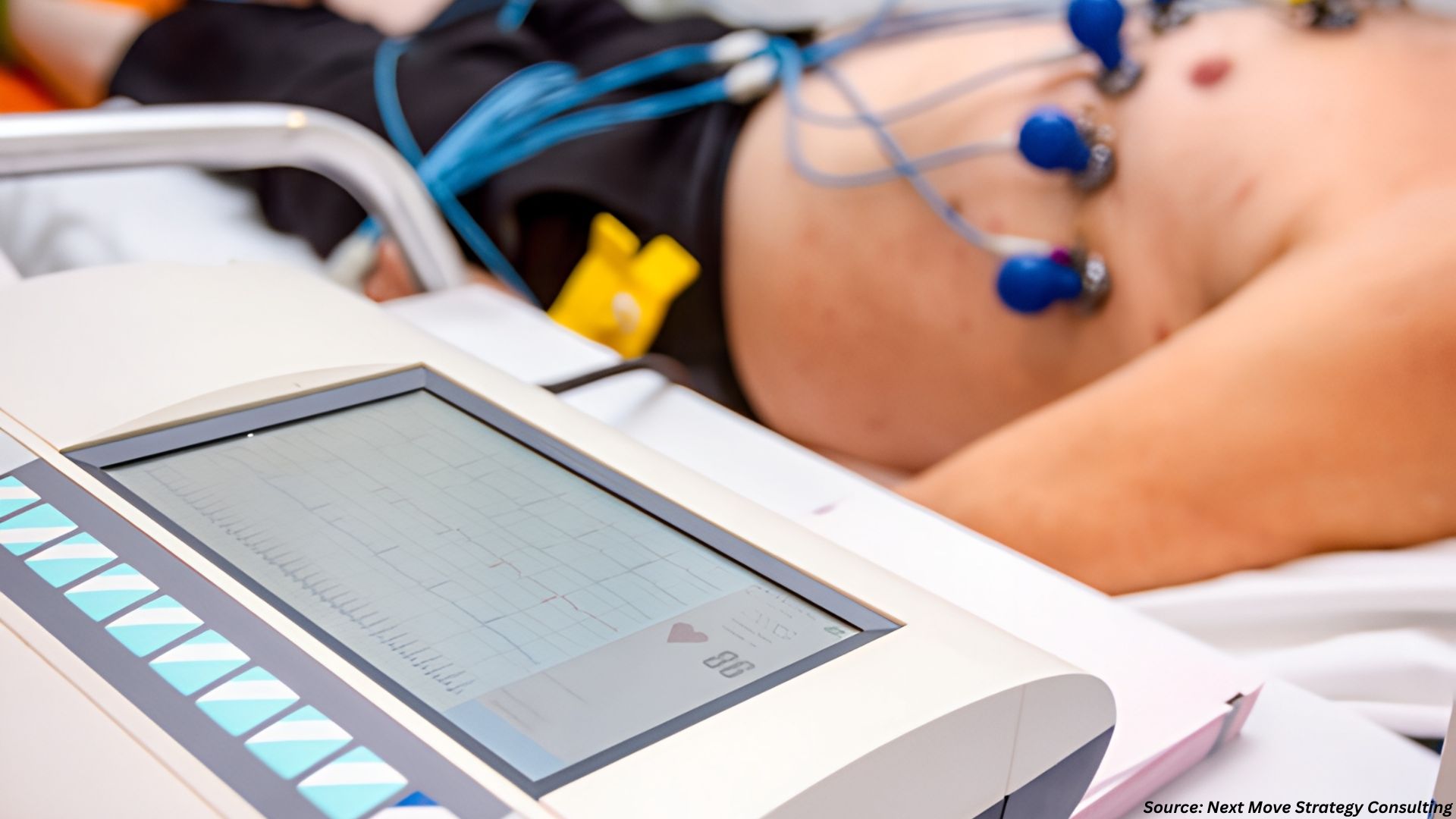
The cardiac patch monitor market is experiencing rapid growth, driven by the increasing prevalence of cardiovascular diseases, rising awareness of continuous heart monitoring, and advancements in wearable medical technology. Wearable cardiac monitor offer a non-invasive, comfortable, and real-time solution for detecting arrhythmias, atrial fibrillation, and other cardiac irregularities, making them increasingly preferred over traditional Holter monitors.
The growing adoption of remote patient monitoring, telehealth integration, and AI-based data analytics is further enhancing diagnostic accuracy and clinical decision-making. Manufacturers are focusing on developing lightweight, waterproof, and long-duration monitoring patches with wireless connectivity and cloud-based data management. By combining comfort, precision, and digital health innovation, the cardiac patch monitor market is revolutionising cardiac diagnostics and enabling proactive, patient-centred care across both clinical and home-based settings.
What Are the Key Cardiac Patch Monitor Market Trends?
How is Longer-Wear, Service-Oriented Ambulatory ECG Changing Clinical Pathways in 2025?
Longer-wear patch monitors and subscription-based interpretation services are reshaping diagnostics. Clinicians increasingly prefer single-use extended-wear patches for intermittent arrhythmia capture compared with short Holter studies because evidence shows a higher diagnostic yield for intermittent atrial fibrillation. This shift reduces repeat testing and shortens diagnostic timelines, but it requires vendors to deliver validated workflows and HTA-grade evidence. Companies should therefore invest in end-to-end service operations such as scalable consumable supply + cloud analytics + certified read teams to convert higher clinical value into recurring revenue, operational scale and validated clinical utility will be decisive in payer negotiations.
How is Clinical Validation and FDA 510(k) Activity Influencing Product Positioning?
Regulatory clearance and published 510(K) records are central to hospital and payer adoption, recent FDA documentation shows active product approvals for patch-style ECG devices. Regulatory stamps shorten procurement cycles for hospitals and enable coding pathways, however, regulators and guideline bodies increasingly ask for outcome evidence to justify wide reimbursement. Vendors must pair 510(k) clearances with peer-reviewed clinical studies and real-world evidence programs to accelerate uptake in systems that require value demonstration. Therefore, firms should prioritise prospective registries and payer-aligned health-economic dossiers alongside regulatory filings.

This chart presents the global AI adoption rates by country for 2024, with the U.S. leading at 45%, followed by the UK (41%), China (39%), Germany (36%), and India (28%). The high penetration of AI technologies indicates a growing focus on data-driven healthcare solutions and predictive analytics. This rise in AI adoption is set to drive cardiac patch monitor market growth, as more health systems and providers integrate AI-powered monitoring platforms for early detection of arrhythmias, remote patient management, and personalized cardiac care. Enhanced AI capabilities improve device efficiency, clinical outcomes, and scalability, spurring further demand and innovation in the cardiac wearable segment across digitally advanced markets.
How are AI and Cloud Analytics Creating Differentiation Beyond Raw ECG Capture?
Advanced machine learning is moving patch monitors from passive recorders to active triage tools, vendors that pair continuous ECG capture with FDA-cleared algorithms reduce clinician review time and false positives, increasing clinical utility. Company annual reports and corporate communications in 2024-2025 highlight investments in AI-assisted diagnostics and partnerships to bring predictive insights into standard workflows. The actionable play is for device makers to secure algorithm regulatory clearances and integrate outputs directly into EHR workflows, enabling premium pricing for curated, clinician-ready insights.
What are the Key Market Drivers, Breakthroughs, and Investment Opportunities that will Shape the Cardiac Patch Monitor Market in the Next Decade?
The cardiac patch monitor market is driven by rising arrhythmia prevalence and the operational need to detect intermittent events that short tests miss. National public-health datasets and clinical practice guidelines increasingly recognise the role of ambulatory monitoring in stroke prevention pathways, creating a steady clinical demand base. At the same time, advances in adhesives, low-power electronics, and cloud analytics are lowering the cost-per-diagnosis and improving patient adherence, enabling broader adoption across outpatient and home-based care.
However, reimbursement heterogeneity, the need for rigorous outcome evidence, and fragmentation in coding frameworks create adoption friction in many markets. Regulatory approvals are necessary but not sufficient, payers and large systems increasingly demand health-economic benefit and integration evidence before scaling procurement. Vendors must therefore combine regulatory, clinical and payer strategies to succeed.

This chart illustrates the percentage of the elderly population (65+) out of the total population in 2024 for selected countries, with Japan having the highest at 29.6%, followed by Italy (24.2%), Germany (22.8%), France (20.3%), Spain (19.1%), and South Korea (15.1%). The growing elderly demographic in these regions significantly boosts demand for continual, non-invasive health monitoring solutions. As a result, the cardiac patch monitor market stands to benefit, higher proportions of ageing individuals drive adoption of wearable cardiac technologies for early arrhythmia detection, long-term heart health management, and remote patient care, making these countries particularly attractive for device rollout and innovation in preventive cardiac care.
Growth Drivers:
What Growth Driver is Created by Rising Atrial Fibrillation Prevalence and Ageing Populations?
The rising prevalence of atrial fibrillation (AF), particularly among ageing populations, is driving accelerated adoption of cardiac patch monitors. AF remains the most common arrhythmia and a leading contributor to stroke risk and hospitalisation. As incidence grows, healthcare systems increasingly prioritise early detection and continuous rhythm assessment. Extended-wear ECG patches enable detection of paroxysmal and asymptomatic AF events that short-term Holter monitors miss, supporting earlier anticoagulation and reduced stroke burden. Consequently, clinical guidelines are reinforcing prolonged monitoring for at-risk patients. Vendors should align commercial strategies with cardiology and primary-care programs focused on stroke prevention and AF management to capture guideline-driven diagnostic demand.
How Does Hospital-at-Home and RPM Expansion Drive Device Adoption?
The accelerating adoption of hospital-at-home and remote patient monitoring (RPM) programs is fueling the uptake of connected cardiac patch monitors. Health systems are expanding decentralised care models to manage chronic cardiac patients at home while lowering hospitalisation costs and improving outcomes. Patch monitors integrating ECG, vital-sign sensors, and cloud-based analytics enable safe patient discharge and continuous post-acute monitoring. These devices support early detection of deterioration and remote escalation when necessary. The strongest value proposition arises when vendors demonstrate measurable reductions in readmission rates, inpatient days, and overall episode costs. Companies should co-develop pilots with providers and document validated economic benefits to strengthen contracting leverage.

This chart displays healthcare expenditure in 2024 by country, showing Denmark and Germany at the top, each spending over USD 6,000 million, followed by the UK and France, while Italy and Spain allocate considerably less. Higher healthcare spending reflects robust investment in medical infrastructure, digital health technologies, and patient care. This trend positively drives cardiac patch monitor market demand, as countries with sizable budgets are more likely to adopt advanced wearable monitoring devices for cardiac health. Increased funding accelerates deployment in remote patient monitoring, early arrhythmia detection, and continuous heart health management, facilitating accessibility and innovation in digital cardiac care across these leading markets.
Growth Inhibitors:
What Principal Inhibitor is Slowing Global Scale-up of Cardiac Patch Monitors?
Global adoption of cardiac event monitor is constrained primarily by fragmented reimbursement systems and inconsistent payer coverage. Even with regulatory clearances, many markets lack uniform CPT or DRG coding, limiting predictable reimbursement flows and slowing commercial expansion. Payers are increasingly focused on health-economic outcomes, such as readmission reduction, cost per diagnosis, and clinical efficiency, rather than diagnostic precision alone. This shift raises entry barriers for vendors without robust evidence of economic value. To overcome these challenges, companies should invest in payer-partnered pilots, multicenter cost-effectiveness studies, and localised evidence generation that establishes coverage precedents and improves reimbursement predictability.
What Emerging Investment Opportunity Should Investors Prioritise?
Global adoption of cardiac patch monitors is constrained primarily by fragmented reimbursement systems and inconsistent payer coverage. Even with regulatory clearances, many markets lack uniform CPT or DRG coding, limiting predictable reimbursement flows and slowing commercial expansion. Payers are increasingly focused on health-economic outcomes, such as readmission reduction, cost per diagnosis, and clinical efficiency, rather than diagnostic precision alone. This shift raises entry barriers for vendors without robust evidence of economic value. To overcome these challenges, companies should invest in payer-partnered pilots, multicenter cost-effectiveness studies, and localised evidence generation that establishes coverage precedents and improves reimbursement predictability.
How Cardiac Patch Monitor Market Segmented in this Report, and What are the Key Insights from the Segmentation Analysis?
By Product Type Insights
Are Extended-Wear and Single-Use Patch Monitors Dominating in 2025?
Based on product type, the market is segmented into single-use patch monitors, reusable patch monitors, single-lead patch monitors, multi-lead patch monitors, short-term wear patch monitors, extended wear patch monitors, and offline record-only patch monitors.
Extended-wear single-use patch monitors have become the clinical preference for intermittent arrhythmia detection because they increase diagnostic yield while keeping adherence high. Regulatory activity in 2024 supports a maturing product class and eases hospital procurement risk. Hospitals and monitoring service providers favour single-use models to simplify infection control and logistics, while reusable solutions remain niche for specific inpatient workflows. Manufacturers are optimising disposable supply chains and patient self-application instructions to support direct-to-patient deployment and home monitoring programs.
By Technology Insights
Is AI-Enabled and Multi-Sensor Patch Technology Becoming the Market Differentiator?
Based on technology, the market is categorised into basic ECG patches, multi-sensor patches, AI-enabled patches, and integrated remote monitoring patches.
AI-enabled patches that combine ECG with motion, respiratory proxies, or other biosignals are gaining traction. Corporate communications and annual reports in 2024–2025 show strategic emphasis on algorithmic interpretation and integrated cloud platforms, regulators and payers now evaluate both device hardware and algorithm outputs. Focusing R&D on clinically validated multi-sensor fusion and secure regulatory clearance for algorithmic outputs to command differentiated pricing.
By Distribution Channel Insights
Is Direct Hospital Procurement vs. Online Direct-To-Patient the Key Battleground?
Based on distribution channel, the market is segmented into direct hospital procurement, online sales, and offline distributors.
Hospitals and monitoring service providers remain primary buyers for high-volume enterprise deployments, while online and retail channels enable direct-to-consumer or clinic-guided home monitoring. Annual reports and company press show enterprise contracts alongside consumer channel pilots. Vendors are operating dual go-to-market motions, an enterprise sales team for integrated health system pilots and a streamlined direct-to-patient channel for ambulatory referrals and post-procedure monitoring.
By Application Insights
Is Arrhythmia/Atrial Fibrillation Detection Still the Largest Clinical Use Case?
Based on application, the market is divided into arrhythmia detection, atrial fibrillation monitoring, ischemic heart disease monitoring, heart failure monitoring, post-procedure monitoring, and general remote cardiac monitoring.
Arrhythmia detection dominates clinical use cases because early diagnosis directly links to stroke-prevention pathways. Public health sources confirm AF as the most common treated arrhythmia, creating sustained clinical demand for ambulatory rhythm capture. Payers will fund monitoring when evidence shows improved clinical management. Vendors must emphasise AF detection sensitivity and link diagnostic workflows to downstream care pathways to maximise utilisation.
By End User Insights
Which Applications are Driving the Cardiac Patch Monitor Market in 2025?
Based on end user, the market is segmented into hospitals, clinics and ambulatory surgical centers, home care settings, and monitoring service providers.
Hospitals, clinics and monitoring service providers remain the primary end users due to procurement scale and clinical complexity. However, home-care and remote monitoring programs are growing fast thanks to hospital-at-home initiatives. Companies with integrated device + cloud + service offerings are best positioned to win enterprise contracts. Building robust onboarding and clinical-support processes for home users to reduce clinician burden and improve adherence.
Regional Outlook
The cardiac patch monitor market share is geographically studied across North America, Europe, Asia Pacific, Middle East & Africa, and Latin America and each region is further studied across countries.
Cardiac Patch Monitor Market in North America
North America remains the leading region for cardiac patch monitor adoption, supported by mature reimbursement frameworks, strong institutional demand, and a growing focus on remote patient management. The region benefits from high cardiovascular disease prevalence and rapid integration of hospital-at-home models that rely on connected ECG monitoring. Large U.S. vendors such as iRhythm and VitalConnect have achieved scale through enterprise contracts and payer-aligned pilots. Regulatory clarity from the U.S. FDA accelerates commercialisation, while Canadian initiatives emphasise cost-effectiveness and outcome validation. The region sets global standards in technology validation, payer engagement, and integrated service models.
Cardiac Patch Monitor Market in the United States
The U.S. represents the global epicentre of cardiac patch monitor commercialisation due to high atrial fibrillation prevalence, rapid RPM adoption, and extensive private-sector investment. The convergence of FDA-cleared technologies, expanding reimbursement coverage, and value-based care initiatives continues to drive clinical integration. Leading manufacturers demonstrate strong innovation pipelines, emphasising multi-sensor monitoring and AI-enhanced analytics. Hospitals and cardiology networks increasingly deploy pilot programs tied to payer outcomes and readmission reduction metrics. Sustained growth depends on scaling these pilots into enterprise-level contracts and maintaining payer alignment through evidence-driven cost-effectiveness demonstrations.
Cardiac Patch Monitor Market in Canada
Canada’s adoption trajectory is steady but evidence-driven, progressing primarily through provincial health authority pilots and hospital network partnerships. National and regional programs prioritise economic and clinical validation before large-scale procurement. Vendors typically engage through targeted pilot rollouts to demonstrate cost-effectiveness, stroke prevention benefits, and workflow integration. While reimbursement frameworks remain less centralised than in the U.S., alignment with provincial telehealth strategies supports expansion. Future growth will depend on vendors’ ability to deliver robust local evidence, align with digital health funding models, and secure provincial endorsements for broader adoption.
Cardiac Patch Monitor Market in Europe
Europe demonstrates heterogeneous adoption patterns driven by national reimbursement systems and varying levels of hospital-at-home readiness. Northern and Western European markets, such as Germany, the Nordics, and the U.K., have progressed fastest due to supportive reimbursement policies and mature digital health ecosystems. CE marking and Health Technology Assessment (HTA) evidence are prerequisites for procurement, requiring strong clinical and economic data packages. In contrast, Southern and Eastern Europe remain in earlier phases of adoption. Vendors must tailor market access strategies country by country, balancing regulatory compliance with local payer expectations.
Cardiac Patch Monitor Market in the United Kingdom
The U.K. market advances cautiously under evidence-led NHS procurement frameworks emphasising cost-effectiveness and patient outcomes. National pilots under NHS England’s digital innovation initiatives determine broader adoption pathways. Vendors with NICE-aligned evidence packages and validated real-world data gain competitive advantage in achieving national uptake. Integration into community and primary-care pathways remains a key priority as the NHS expands virtual wards and remote monitoring models. Securing pilot participation and generating NICE-compliant cost-effectiveness data are critical for scaling adoption across NHS Trusts.
Cardiac Patch Monitor Market in Germany
Germany’s well-developed digital health infrastructure and early adoption of remote monitoring solutions make it one of Europe’s most dynamic markets. The Digital Healthcare Act (DVG) enables reimbursement for approved digital health applications, facilitating access for innovative monitoring tools. Hospital procurement, however, remains decentralised, varying across regional networks. Evidence demonstrating measurable clinical benefit and efficiency gains remains essential for inclusion in reimbursement catalogues. Vendors should align with DiGA pathways and collaborate with regional hospital groups to expand clinical use and reimbursement eligibility.
Cardiac Patch Monitor Market in France
France emphasises clinical validation and national evaluation frameworks in cardiac monitoring adoption. The Haute Autorité de Santé (HAS) plays a central role in assessing technologies for reimbursement eligibility. Vendors begin with localised pilots in university hospitals and regional health agencies to build evidence portfolios. Government-driven digital health programs are expanding remote monitoring reimbursement, particularly within chronic disease management. Opportunities exist where vendors link cardiac patch data to national stroke prevention and telemonitoring initiatives, supporting broader reimbursement inclusion.
Cardiac Patch Monitor Market in Italy
Italy’s cardiac patch monitor market develops regionally, led by university hospitals and academic medical centers piloting remote cardiac monitoring programs. Procurement decisions are made at the regional level, emphasising real-world outcomes and workflow efficiency. Vendors targeting initial adoption through research-led hospitals build strong evidence bases for expansion into regional health systems. Strategic partnerships with academic centers and alignment with national telehealth priorities will be crucial to scale adoption across regions.
Cardiac Patch Monitor Market in Spain
Spain’s adoption of cardiac patch monitoring is advancing through regionally managed health authority pilots. Early deployments occur in tertiary hospitals and are expanded following positive clinical and cost-effectiveness results. Regional autonomy in procurement results in uneven adoption rates but allows flexible experimentation with digital health solutions. Vendors that demonstrate measurable outcome improvements at the hospital level leverage results to secure regional reimbursement and broader deployment.
Cardiac Patch Monitor Market in the Nordics
The Nordic region, led by Sweden, Denmark, and Finland, exhibits strong readiness for digital health integration, centralized procurement, and population-level health data systems. Governments actively promote virtual care and continuous monitoring programs to manage ageing populations and chronic disease burdens. Vendors offering interoperable, secure, and cost-efficient monitoring platforms benefit from favourable evaluation environments. Integration with national eHealth infrastructure and demonstration of population health value are key growth enablers.
Cardiac Patch Monitor Market in the Asia-Pacific
The Asia-Pacific region is the fastest-growing market, led by China, Japan, and Australia. Growth is driven by rising cardiovascular disease incidence, expanding healthcare digitization, and supportive government initiatives. However, adoption levels vary widely due to inconsistent reimbursement and health-system maturity. Partnerships with local distributors and hospital groups are essential for navigating fragmented markets. Vendors should focus on affordability, localized service models, and regulatory alignment to capture APAC’s diverse and rapidly expanding demand base.
Cardiac Patch Monitor Market in China
China’s large-scale investment in digital health infrastructure is accelerating the adoption of cardiac patch monitors. Urban hospitals and private health networks lead early deployments, supported by local partnerships and provincial digital health pilots. Regulatory approvals from the NMPA and compliance with data localisation requirements remain critical for market entry. Domestic and international vendors targeting city-level pilots and private hospital systems are well-positioned to scale as reimbursement frameworks evolve.
Cardiac Patch Monitor Market in Japan
Japan’s rapidly ageing population drives high clinical need for continuous cardiac monitoring. National reimbursement structures and regulatory clarity from the Pharmaceuticals and Medical Devices Agency (PMDA) strongly influence adoption speed. Hospitals prioritise evidence demonstrating improved diagnosis-to-treatment timelines and reduced stroke risk. Vendors should focus on integrating with national telehealth programs and aligning with Ministry of Health initiatives to ensure sustainable reimbursement and broad adoption.
Cardiac Patch Monitor Market in India
India represents a long-term growth opportunity, driven by an escalating cardiovascular disease burden and growing digital health awareness. Affordability, distribution, and rural accessibility remain key challenges. Early adoption is concentrated in private tertiary hospitals and metropolitan health systems running RPM pilots. Vendors should adopt low-cost, modular product models and collaborate with diagnostic networks and insurance partners to extend reach and scalability.
Cardiac Patch Monitor Market in South Korea
South Korea’s advanced healthcare infrastructure and strong government support for digital innovation make it an attractive market for cardiac patch monitors. The national Digital Health Strategy encourages integration of AI-enabled monitoring into routine care. Hospitals and insurers increasingly explore reimbursement for continuous ECG monitoring to improve preventive care. Companies that demonstrate AI-enhanced clinical value and ensure interoperability with national health systems gain an early-mover advantage.
Cardiac Patch Monitor Market in Indonesia
Indonesia remains in the early phase of adoption, with urban hospitals and private healthcare providers leading pilot deployments. Public sector programs are still developing frameworks for digital health reimbursement. Affordability and infrastructure readiness are major constraints. Vendors targeting private hospital networks with scalable, cost-effective patch solutions and localised service support will be best positioned for future expansion.
Cardiac Patch Monitor Market in Australia
Australia demonstrates increasing adoption through remote monitoring pilots targeting rural and chronic cardiac care. National health programs emphasise post-discharge monitoring and telecardiology. Reimbursement models and evidence of health-economic impact remain key enablers for scaling adoption. Vendors should focus on demonstrating outcome improvements within government-funded rural care and telehealth frameworks to strengthen payer confidence.
Cardiac Patch Monitor Market in Latin America
Latin America shows emerging but uneven adoption, led by Mexico, Brazil, and Chile. Early deployments are concentrated in private-sector hospitals and academic medical centers testing RPM applications. Public reimbursement systems remain under development, limiting broader access. Growth will depend on partnerships demonstrating affordability and alignment with national cardiovascular health initiatives. Vendors with bilingual support and adaptable pricing models will gain early traction.
Cardiac Patch Monitor Market in the Middle East & Africa
The Middle East and Africa present a fragmented but expanding market. Wealthier Gulf states such as the UAE and Saudi Arabia lead adoption through advanced private healthcare systems and strong government digital health agendas. Elsewhere, affordability and infrastructure gaps slow uptake. Vendors must tailor offerings to local cost constraints, form distribution partnerships, and target private hospital systems to establish early market presence.
Competitive Landscape
Which Companies Dominate the Cardiac Patch Monitor Market and How do they Compete?
Leading companies in the cardiac patch monitor market, mixes specialists such as Zio/iRhythm-style service models. Large medical-technology firms like Philips, GE HealthCare, ZOLL. Specialists focus on diagnostic service economics and algorithmic accuracy, giants emphasise integrated hospital solutions and distribution. Competition hinges on evidence, reimbursement, and enterprise integration.
Market Dominated by Cardiac Patch Monitor Giants and Specialists
The cardiac patch monitor market is characterised by competition between specialised remote-cardiology service providers and major health-tech and medical-device companies. Specialist players such as iRhythm and VitalConnect scale rapidly through service-based models, offering data analytics, AI-driven insights, and subscription-based monitoring with strong recurring revenue potential. In contrast, established device manufacturers like Philips and GE HealthCare leverage existing enterprise relationships, global distribution, and hospital integration capabilities to capture large institutional contracts. The competitive balance increasingly favours firms that combine validated clinical evidence with operational scalability. Success depends on a dual focus, clinical credibility through published evidence and enterprise-grade service delivery across digital health ecosystems.
Innovation and Adaptability Drive Market Success
Market performance is increasingly determined by a company’s ability to innovate and adapt to evolving care delivery models. Firms investing in validated AI algorithms, cloud interoperability, and multi-sensor wearable platforms are gaining strong commercial traction. Annual reports and 2024–2025 product releases highlight algorithmic ECG interpretation, integration with hospital-at-home ecosystems, and cross-sector partnerships as core differentiators. Companies that demonstrate data-driven outcomes, such as faster AF detection, improved readmission metrics, or reduced monitoring costs, secure greater payer and provider confidence. Rapid publication of peer-reviewed clinical and health-economic outcomes has become central to winning reimbursement and long-term enterprise contract.
Market Players to Opt for Merger & Acquisition Strategies to Expand their Presence
Consolidation and strategic partnerships are key accelerators for growth in the cardiac patch monitor industry. Corporate disclosures and 2024–2025 filings show leading players acquiring service-based monitoring assets and forming alliances with hospital systems, distributors, and digital health platforms to extend market reach. These transactions enable faster geographic expansion, optimised infrastructure, and integrated service delivery across monitoring and analytics workflows. Partnerships also strengthen evidence generation and payer access by embedding technologies within health-system pilots. Companies pursuing targeted M&A and ecosystem collaborations achieve scale advantages, shorten market entry timelines, and enhance commercial predictability across global regions.
List of Key Cardiac Patch Monitor Companies
-
Medtronic plc
-
Philips Healthcare
-
GE Healthcare
-
Hill-Rom Holdings, Inc
-
Bittium Corporation
-
Cardiac Insight Inc
-
LifeSignals Group Inc
-
ZOLL Medical Corporation
-
VivaLNK, Inc.
-
Garmin Ltd
-
SmartCardia Inc
-
Samsung SDS
-
ATsens Co., Ltd
What Are the Latest Key Industry Developments?
-
January 2024- Medtronic partnered with Cardiac Design Labs in January 2024, launching the Padma Rhythms, an external loop recorder (ELR) cardiac patch device, and became its exclusive distributor in India, strengthening Medtronic's diagnostic and monitoring offering in South Asia.
-
July 2025- Philips announced a collaboration with Epic to fully integrate its cardiac patch monitoring and diagnostic ecosystem with Epic’s Aura specialty diagnostics suite, increasing workflow efficiency and direct ECG reporting in the EHR
-
August 2025- GE Healthcare launched several new AI-driven cardiology care pathway innovations at ESC 2025, integrating patch monitoring data with advanced analytics for comprehensive heart care.
What Are the Key Factors Influencing Investment Analysis & Opportunities in the Cardiac Patch Monitor Market?
Investment interest concentrates where recurring revenue, regulatory clearance and demonstrable health-economic benefit intersect. Public company filings show strong top-line growth for specialist service models, private financing rounds underscore investor appetite for scaled RPM platforms. Investors should prioritise companies with regulatory-cleared devices and algorithms, scalable cloud/read-team economics that lead to predictable margins, and signed health-system pilots that produce measurable reductions in admissions or diagnostic latency. Valuation multiples will reflect recurring revenue share and degree of clinical validation, hotspots are North America and selected APAC markets with payer readiness.
Key Benefits for Stakeholders:
Next Move Strategy Consulting (NMSC) presents a comprehensive analysis of the cardiac patch monitor market trends, covering historical trends from 2020 through 2024 and offering detailed forecasts through 2030. Our study examines the market at regional and country levels, providing quantitative projections and insights into key growth drivers, challenges, and investment opportunities across all major Cardiac Patch Monitor segments.
Investors gain exposure to recurring-revenue models and technology-led scale if firms convert clinical pilots into covered service lines, customers benefit from earlier diagnosis, potential reduction in hospital stays, and streamlined monitoring workflows. Vendors and payers realize value when device accuracy, algorithmic triage, and health-economic evidence align to reduce downstream costs and improve outcomes. Successful stakeholders coordinate clinical validation, payer engagement, and scalable operations.
Report Scope
|
Parameters |
Details |
|
Market Size in 2025 |
USD 9.41 Billion |
|
Revenue Forecast in 2030 |
USD 18.39 Billion |
|
Growth Rate |
CAGR of 14.35% from 2025 to 2030 |
|
Analysis Period |
2024–2030 |
|
Base Year Considered |
2024 |
|
Forecast Period |
2025–2030 |
|
Market Size Estimation |
Billion (USD) |
|
Growth Factors |
|
|
Companies Profiled |
15 |
|
Countries Covered |
33 |
|
Market Share |
Available for 10 companies |
|
Customization Scope |
Free customization (equivalent to up to 80 analyst-working hours) after purchase. Addition or alteration to country, regional & segment scope. |
|
Pricing and Purchase Options |
Avail customized purchase options to meet your exact research needs. |
|
Approach |
In-depth primary and secondary research; proprietary databases; rigorous quality control and validation measures. |
|
Analytical Tools |
Porter's Five Forces, SWOT, value chain, and Harvey ball analysis to assess competitive intensity, stakeholder roles, and relative impact of key factors. |
Key Market Segments
By Product Type
-
Single-Use Patch Monitors
-
Reusable Patch Monitors
-
Single-Lead Patch Monitors
-
Multi-Lead Patch Monitors
-
Short-Term Wear Patch Monitors
-
Extended-Wear Patch Monitors
-
Offline Record-Only Patch Monitors
By Technology
-
Basic ECG Patch
-
Multi-Sensor Patch
-
AI-Enabled Patch
-
Integrated Remote Monitoring Patch
By Distribution Channel
-
Direct Hospital Procurement
-
Online Sales
-
Offline Distributors
By Application
-
Arrhythmia Detection
-
Atrial Fibrillation Monitoring
-
Ischemic Heart Disease Monitoring
-
Heart Failure Monitoring
-
Post-Procedure Monitoring
-
General Remote Cardiac Monitoring
By End User
-
Hospitals
-
Clinics and Ambulatory Surgical Centers
-
Home Care Settings
-
Monitoring Service Providers
Geographical Breakdown
-
North America: U.S., Canada, and Mexico.
-
Europe: U.K., Germany, France, Italy, Spain, Sweden, Denmark, Finland, Netherlands, and rest of Europe.
-
Asia Pacific: China, India, Japan, South Korea, Taiwan, Indonesia, Vietnam, Australia, Philippines, Malaysia and rest of APAC.
-
Middle East & Africa (MEA): Saudi Arabia, UAE, Egypt, Israel, Turkey, Nigeria, South Africa, and rest of MEA.
-
Latin America: Brazil, Argentina, Chile, Colombia, and rest of LATAM.
Conclusion & Recommendations
Our report equips stakeholders, industry participants, investors, and consultants with actionable intelligence to capitalise on cardiac patch monitor’s transformative potential. By combining robust data-driven analysis with strategic frameworks, NMSC’s Cardiac Patch Monitor Market Report serves as an indispensable resource for navigating the evolving landscape.
The cardiac patch monitor market is at an inflection point where clinical need AF and heart-failure management; regulatory progress and AI-enabled analytics converge to create scalable commercial models. Success requires an integrated device + software + service capability and clear health-economic evidence. Vendors that combine regulatory clearances, peer-reviewed outcomes, and scalable read/analytics operations will realise the highest margin and fastest payer adoption.


About the Author
 Ridip Gogoi is a research associate recognized for his strong analytical thinking and meticulous attention to detail. He specializes in transforming complex datasets into meaningful insights that support informed business decisions and strategic planning. With a proactive mindset and strong commitment to accuracy, he contributes effectively to market analysis, data validation, and insight generation. Ridip is driven by continuous learning and consistently works to enhance research quality, analytical depth, and reporting clarity across projects.
About the Reviewer
 Supradip Baul is an accomplished business consultant and strategist with over a decade of rich experience in market intelligence, strategy, technology, and business transformation. His work has included rigorous qualitative and quantitative analysis across multiple industries, helping clients shape investment decisions and long-term roadmaps. Earlier in his career, he was associated with Gartner, where he contributed to industry-leading reports and market share analyses. He has worked with leading global companies and holds an MBA with a dual specialization in Marketing and Finance.
At Next Move Strategy Consulting, we understand that insightful market research is the cornerstone of successful business decisions. That's why we employ a robust and multifaceted approach, combining various methodologies to deliver the most accurate and actionable data for our clients.

Research Landscape
We navigate the world of research with two primary approaches:
Qualitative Approach
Our qualitative research methodologies involve immersive techniques such as in-depth interviews, focus groups, and observational studies. By engaging directly with individuals and stakeholders, we uncover valuable insights that quantitative data alone may overlook.

Quantitative Research
In tandem with qualitative methodologies, NMSC leverages the power of Quantitative Research to provide a robust foundation of numerical insights. Through systematic data collection and analysis, we quantify patterns, preferences, and market trends, offering a comprehensive view of the business landscape.
Our quantitative research approach employs diverse tools, including surveys, experiments, and statistical modelling. These methodologies enable us to gather data from a large and representative sample, ensuring the statistical significance of our findings. By employing structured questionnaires and standardized data collection methods, we guarantee the reliability and validity of the information we present to our clients.
Quantitative research is particularly effective in measuring the prevalence of trends, assessing market size, and gauging the impact of various factors on consumer behavior. The numerical precision attained through this approach equips our clients with actionable insights, facilitating data-driven decision-making and strategy formulation.


Our Specialized Toolbox for Industry-Specific Market Research
We deploy a specialized arsenal of techniques tailored to meet your unique requirements. Here's a glimpse into our comprehensive toolbox:

Information Procurement
The stage entails acquiring market data or relevant information through various sources and methodologies.


Market Research Approach
We utilize both top-down and bottom-up approaches in market research analysis to achieve a comprehensive understanding of the market dynamics, leveraging the broad perspective of industry trends and macroeconomic factors alongside detailed insights from specific segments and individual companies.

Porters Five Forces Analysis
We conduct Porter's Five Forces analysis to evaluate the competitive landscape of an industry, providing us with insights into factors that affect profitability and strategic positioning.

SWOT Analysis

Forecasting
We utilize a forecasting model to predict future consumption by considering parameters like population, economics, regulations, market competition, drivers, constraints, technology, and pricing. We also employ statistical techniques such as multilinear regression, exponential smoothing, moving average, ARIMA, and Monte Carlo simulations for accurate predictions. In econometric forecasting, we analyzed short-term and long-term event impacts, attributing values based on regulatory frameworks, economic factors, and market events.





 Speak to Our Analyst