Clinical Trial Site Management Organization (SMO) Market Size, Share, Growth & Forecast by Service Type (Site Start-Up Services, Site Management Services, Retention Services, Regulatory and Ethics Services, Data and Technology Support Services), Therapeutic Area (Oncology, Central Nervous System, Cardiovascular Diseases), Trial Phase, Site Type, Delivery Model (Traditional Site-Based Trials, Hybrid Trials, Fully Decentralized Trials), and Customer Type — Global Analysis 2025-2035
Industry: Healthcare | Publishing Date: July 13, 2026 | Last Updated: September 30, 2026 | No of Pages: N/A | No. of Tables: N/A | No. of Figures: N/A | Format: PDF | Report Code: HC5107
What Is the Clinical Trial Site Management Organization (SMO) Market Size?
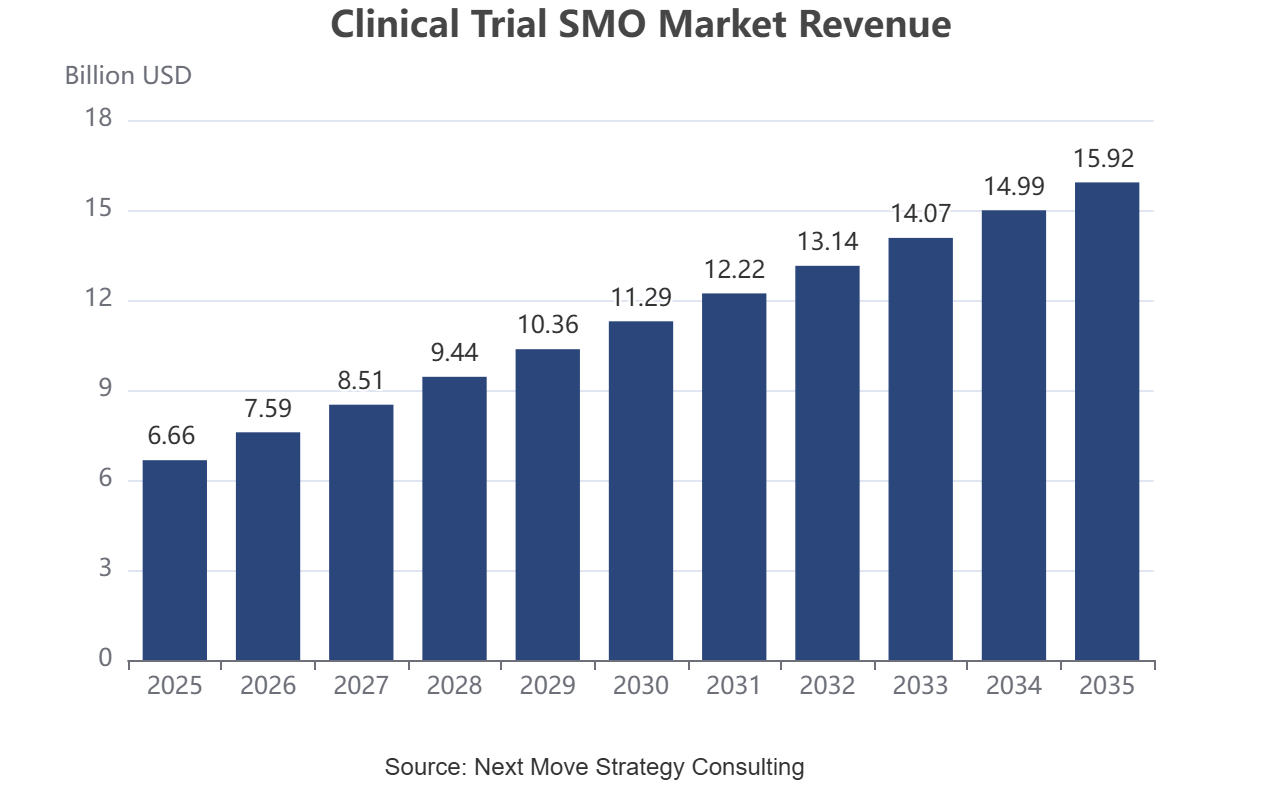
The global Clinical Trial Site Management Organization (SMO) Market was valued at USD 6.05 billion in 2025 and is expected to reach USD 6.66 billion in 2026. Rising outsourcing of site-level operations by pharmaceutical and biotechnology sponsors, expanding clinical trial volumes across oncology and rare disease programs, and accelerating adoption of decentralized and hybrid trial models are projected to propel the market to USD 15.92 billion by 2035, at a CAGR of 10.16% from 2026 to 2035. Key growth drivers include the rising complexity of multi-site global trials, sustained demand for clinical research coordinator staffing, and regulatory modernization under ICH E6(R3).
|
Parameters |
Details |
|
Market Size in 2025 |
USD 6.05 Billion |
|
Market Size in 2026 |
USD 6.66 Billion |
|
Revenue Forecast in 2035 |
USD 15.92 Billion |
|
Growth Rate |
CAGR of 10.16% from 2026 to 2035 |
|
Analysis Period |
2025–2035 |
|
Base Year Considered |
2025 |
|
Forecast Period |
2026–2035 |
|
Market Size Estimation |
Revenue (USD Billion) |
|
Companies Profiled |
20 |
|
Countries Covered |
38 |
|
Market Share |
Available for Top 10 Companies |
Clinical Trial Site Management Organization (SMO) Market Overview
What Is the Clinical Trial Site Management Organization (SMO) Market?
The Clinical Trial SMO Market encompasses organizations that provide outsourced site-level operational support to investigator sites conducting sponsor-initiated clinical trials, spanning site start-up, clinical research coordinator staffing, patient recruitment, regulatory documentation, safety reporting, and site close-out services. SMOs operate as intermediaries between sponsors, contract research organizations, and individual investigator sites, standardizing trial execution across academic medical centers, dedicated research sites, hospitals, and physician practices participating in Phase I through Phase IV and observational studies globally.
How Has the Clinical Trial Site Management Organization (SMO) Market Evolved?
The SMO industry originated in Japan and the United States as staffing agencies supplying clinical research coordinators to individual hospitals lacking dedicated trial infrastructure. NMSC's analysis indicates that the sector has since matured into a multi-service model spanning regulatory support, patient recruitment technology, and data management assistance, with large players such as Hangzhou Tigermed Consulting and CMIC Group building networks exceeding 1,000 affiliated sites. The current phase centers on integrating decentralized trial capabilities, including telemedicine coordination and direct-to-patient logistics, into traditional site-based service models.
How Do Regulations Influence the Clinical Trial Site Management Organization (SMO) Market?
Regulatory modernization is directly reshaping SMO service scope and documentation obligations. The International Council for Harmonisation's ICH E6(R3) Good Clinical Practice guideline, finalized in January 2025 and adopted by the FDA in September 2025 and by the EMA effective July 2025, formalizes risk-based quality management and explicitly recognizes decentralized trial elements, compelling SMOs to upgrade quality management systems. The FDA's September 2024 final guidance on Conducting Clinical Trials with Decentralized Elements further codifies the use of mobile visits and local healthcare providers, expanding the addressable scope of SMO-delivered services beyond brick-and-mortar sites.
Ecosystem Analysis of the Clinical Trial Site Management Organization (SMO) Market
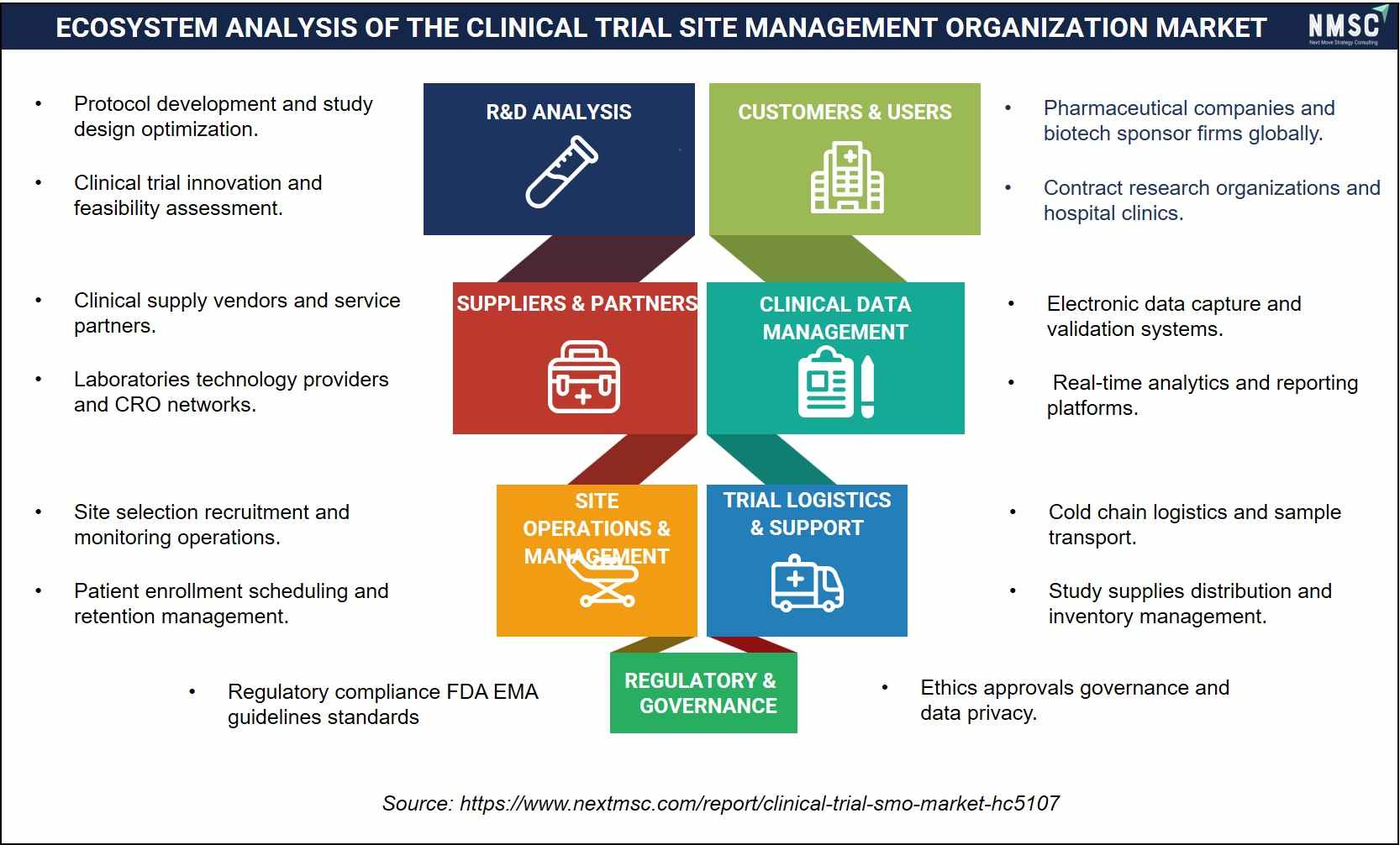
The above ecosystem analysis maps the key components, such as research and development analysis, customers and users, suppliers and partners, clinical data management, site operations and management, and regulatory and governance, shaping the clinical trial site management organisation market. We observed from our analysis that clinical data management and regulatory governance are increasingly becoming the operational backbone of the ecosystem, as real time data capture and audit ready documentation are no longer optional but essential for meeting evolving compliance standards and ensuring seamless site operations across global trials.
|
Key Takeaways |
|
By service type, Site Management Services held the largest share of the Site Management Organisation Market at USD 1.45 billion in 2025 and is projected to reach USD 3.18 billion by 2035, driven by continued outsourcing of clinical trial site operations. Decentralized Clinical Trial Support Services are the fastest-growing segment, expanding at a CAGR of 25.94% from 2026 to 2035. |
|
By therapeutic area, Oncology dominated the market with USD 1.33 billion in 2025 and is expected to reach USD 3.34 billion by 2035, supported by the high volume of oncology clinical trials. Rare Diseases represent the fastest-growing therapeutic area, registering a CAGR of 16.60% from 2026 to 2035. |
|
By trial phase, Phase III accounted for the largest revenue at USD 1.94 billion in 2025 and is projected to reach USD 4.46 billion by 2035, reflecting the complexity and scale of late-stage clinical studies. Medical Device Studies are the fastest-growing segment, expanding at a CAGR of 18.99% during 2026–2035. |
|
By site type, Dedicated Clinical Research Sites led the market with USD 1.57 billion in 2025 and are forecast to reach USD 3.82 billion by 2035. Specialty Clinics are the fastest-growing site type, registering a CAGR of 13.29% from 2026 to 2035 as sponsors increasingly seek specialized patient populations. |
|
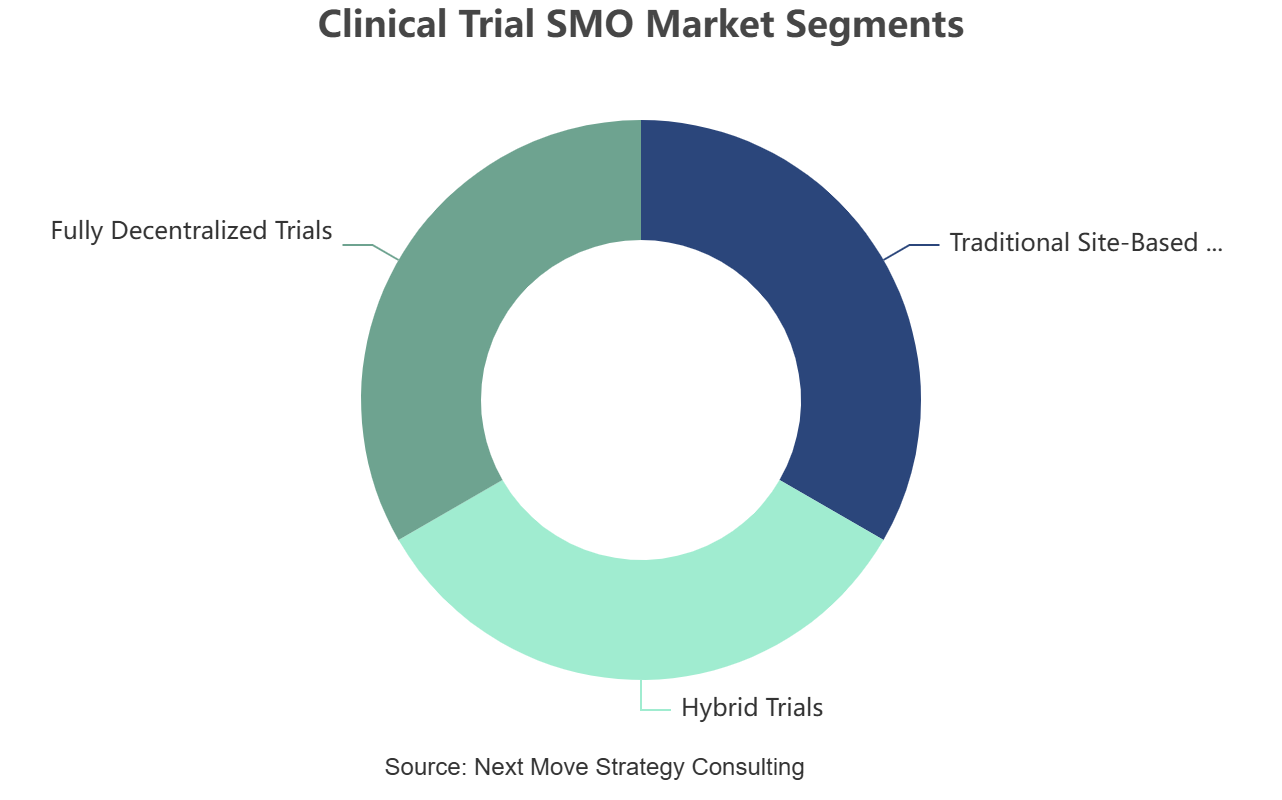
By trial model, Traditional Site-Based Trials generated the highest revenue at USD 3.51 billion in 2025 and are projected to reach USD 6.37 billion by 2035. Fully Decentralized Trials are the fastest-growing model, expanding at a CAGR of 20.25% from 2026 to 2035 due to increasing adoption of virtual and hybrid trial approaches. |
|
By sponsor type, Pharmaceutical Companies held the largest share at USD 2.78 billion in 2025 and are expected to reach USD 6.37 billion by 2035. Non-Profit Research Organizations are the fastest-growing sponsor segment, registering a CAGR of 18.99% during 2026–2035. |
|
North America held the largest regional share of the Site Management Organisation Market at USD 2.06 billion in 2025 and is projected to reach USD 4.93 billion by 2035, growing at a CAGR of 9.04%, supported by a mature clinical research ecosystem and strong outsourcing activity. |
|
Asia-Pacific is expected to be the fastest-growing region, registering a CAGR of 12.42% from 2026 to 2035, driven by expanding clinical research infrastructure, increasing trial activity, and favorable regulatory developments. |
|
The United States dominated the Site Management Organisation Market in 2025, generating USD 1.56 billion and is projected to reach USD 3.55 billion by 2035, supported by its extensive clinical trial network and strong pharmaceutical R&D investment. |
|
India is projected to be the fastest-growing country, expanding at a CAGR of 16.70% from 2026 to 2035, driven by increasing clinical trial outsourcing, a large patient pool, and continued investments in research infrastructure. |
Key Emerging Trends in the Clinical Trial Site Management Organization (SMO) Market
How Is the Shift Toward Decentralized and Hybrid Trial Models Reshaping the SMO Market?
Decentralized and hybrid trial designs are structurally redefining the scope of SMO engagement beyond the traditional investigator site. Through our market assessment, we observed that the FDA's September 2024 final guidance on decentralized clinical trials has given sponsors regulatory clarity to formally incorporate mobile visits, local healthcare provider coordination, and telehealth follow-up into protocol design. SMOs are responding by building telemedicine coordination and direct-to-patient logistics capabilities, positioning themselves as the operational backbone connecting fully decentralized elements back to the accountable investigator site.
How Is ICH E6(R3) Adoption Elevating Quality Management Expectations for the Clinical Trial Site Management Organization (SMO) Market?
The finalization of ICH E6(R3) in January 2025, with FDA adoption in September 2025 and EMA effective application from July 2025, is compelling SMOs to formalize risk-based quality management systems across their site networks. Based on our engagements with industry stakeholders, we found that sponsors are increasingly evaluating SMO partners on documented quality management maturity rather than staffing cost alone, elevating audit readiness and inspection readiness services from ancillary offerings to core differentiators within competitive SMO procurement processes.
How Is Patient Recruitment Technology Transforming Site-Level Trial Enrollment?
Patient identification and pre-screening technology is becoming a structural differentiator among SMOs competing for sponsor contracts. Our findings suggest that SMOs deploying electronic health record screening tools and digital patient engagement platforms are achieving materially faster enrollment timelines than sites relying solely on manual chart review, a capability gap that sponsors are increasingly weighing in vendor selection. This trend is particularly pronounced in oncology and rare disease trials, where eligible patient populations are narrow, and recruitment speed materially affects program timelines.
What Are the Key Market Drivers, Restraints, and Investment Opportunities Shaping the Clinical Trial Site Management Organization (SMO) Market?
|
Driver / Trend / Restraint |
(+/-) % Impact on CAGR Forecast |
Geographic Relevance |
Impact Timeline |
|
Increasing Complexity of Multi-Site Global Clinical Trials Driving Outsourcing to SMOs |
+2.9% |
Global (led by North America and Europe) |
2025–2035 |
|
Implementation of ICH E6(R3) and Risk-Based Quality Management Increasing Demand for Specialized SMO Services |
+2.2% |
Global |
2025–2035 |
|
Global Shortage of Qualified Clinical Research Coordinators Limiting SMO Capacity Expansion |
−1.5% |
North America, Europe |
2025–2033 |
|
Expansion of Oncology and Rare Disease Clinical Trials Creating Demand for Therapeutically Specialized SMOs |
+1.9% |
Global |
2025–2035 |
What Are the Growth Drivers of the Clinical Trial Site Management Organization (SMO) Market?
How Is the Rising Complexity of Multi-Site Global Trials Driving the SMO Market?
The growing share of multi-regional clinical trials spanning oncology, rare disease, and cell and gene therapy protocols is the primary structural driver of SMO demand. Based on NMSC's research, we found that ClinicalTrials. Gov-registered study volumes have sustained multi-year growth in interventional oncology and rare disease trials, protocols that require specialized site-level coordination across regulatory, safety, and patient recruitment functions simultaneously. Sponsors are increasingly outsourcing this coordination to SMOs rather than building it in-house at each investigator site, given the operational cost of maintaining specialized staff across dozens of dispersed locations.
How Is Regulatory Modernization Under ICH E6(R3) Fueling Demand for SMO Services?
The finalized ICH E6(R3) Good Clinical Practice guideline, adopted by the FDA in September 2025 and effective under EMA rules from July 2025, formalizes risk-based quality management and explicitly recognizes decentralized trial elements. Our assessment indicates that sponsors are turning to SMOs with documented quality management systems to absorb the compliance burden of implementing E6(R3) across dispersed site networks, rather than retraining individual investigator site staff, reinforcing SMOs as the operational compliance layer for global trial sponsors.
What Are the Growth Restraints of the Clinical Trial Site Management Organization (SMO) Market?
How Does the Global Shortage of Clinical Research Coordinators Constrain SMO Market Growth?
The persistent shortage of qualified clinical research coordinators and clinical research associates constrains SMO capacity to scale staffing-intensive service lines at the pace sponsor demand requires. Our analysis shows that high CRC turnover rates extend site activation timelines and increase training costs for SMOs, particularly in mature markets including the United States and Western Europe, where competition for qualified clinical research talent among SMOs, CROs, and academic medical centers has intensified staffing cost inflation.
What Are the Growth Opportunities in the Clinical Trial Site Management Organization (SMO) Market?
How Does the Expansion of Oncology and Rare Disease Trials Create a Structural Opportunity for SMOs?
The sustained growth in oncology and rare disease clinical development is creating durable demand for SMOs with specialized therapeutic area staffing and narrow-population patient identification capabilities. Through NMSC's assessment, we found that rare disease trials in particular require SMOs to support geographically dispersed, low-incidence patient recruitment across academic medical centers and specialty clinics, a capability gap that specialized SMOs are positioned to fill at premium service pricing relative to generalist site staffing providers.
How Is the Clinical Trial Site Management Organization (SMO) Market Segmented in This Report, and What Are the Key Insights?
How Is the Clinical Trial Site Management Organization (SMO) Market Segmented by Service Type?
|
Service Type Segment |
2025 (USD Bn) |
2035 (USD Bn) |
CAGR % (2026–2035) |
|
Site Management Services |
1.45 |
3.18 |
7.96% |
|
Patient Recruitment and Retention Services |
1.09 |
2.71 |
9.47% |
|
Site Start-Up Services |
0.85 |
1.91 |
8.30% |
|
Data and Technology Support Services |
0.60 |
2.07 |
13.43% |
|
Regulatory and Ethics Services |
0.55 |
1.27 |
8.73% |
|
Monitoring and Quality Services |
0.48 |
1.11 |
8.54% |
|
Financial and Contract Services |
0.36 |
0.80 |
7.96% |
|
Safety Support Services |
0.24 |
0.64 |
10.17% |
|
Decentralized Clinical Trial Support Services |
0.18 |
1.59 |
25.94% |
|
Site Close-Out Services |
0.18 |
0.48 |
10.17% |
|
Other SMO Services |
0.06 |
0.16 |
10.17% |
NMSC's analysis indicates that the Clinical Trial Site Management Organization (SMO) Market is structured across eleven service categories spanning the full site-level trial lifecycle. Site Management Services dominates at USD 1.45 billion in 2025, anchored by clinical research coordinator staffing and study coordination that remain the core, non-substitutable SMO functions across every trial phase. Patient Recruitment and Retention Services follow closely, reflecting sponsors' sustained prioritization of enrollment timelines. Decentralized Clinical Trial Support Services is the fastest-growing category at a CAGR of 25.94%, propelled directly by the FDA's 2024 decentralized trial guidance and sponsors' expanding use of telemedicine coordination and direct-to-patient logistics within hybrid protocols.
How Is the Clinical Trial Site Management Organization (SMO) Market Segmented by Therapeutic Area?
|
Therapeutic Area Segment |
2025 (USD Bn) |
2035 (USD Bn) |
CAGR % (2026–2035) |
|
Oncology |
1.33 |
3.34 |
9.60% |
|
Cardiovascular Diseases |
0.67 |
1.43 |
7.74% |
|
Central Nervous System |
0.60 |
1.75 |
11.34% |
|
Infectious Diseases |
0.55 |
1.11 |
7.13% |
|
Endocrinology and Metabolic Disorders |
0.48 |
1.27 |
10.17% |
|
Immunology and Inflammatory Diseases |
0.48 |
1.43 |
11.62% |
|
Rare Diseases |
0.36 |
1.59 |
16.60% |
|
Respiratory Diseases |
0.36 |
0.80 |
7.96% |
|
Gastroenterology and Hepatology |
0.30 |
0.80 |
10.17% |
|
Women's Health |
0.24 |
0.80 |
12.93% |
|
Ophthalmology |
0.18 |
0.48 |
10.17% |
|
Dermatological Diseases |
0.18 |
0.48 |
10.17% |
|
Nephrology and Urology |
0.12 |
0.32 |
10.17% |
|
Musculoskeletal Disorders |
0.12 |
0.16 |
2.00% |
|
Other Therapeutic Areas |
0.06 |
0.16 |
10.17% |
Based on our analysis of sponsor pipeline allocation and site-level staffing demand, Oncology dominates the Clinical Trial Site Management Organization (SMO) Market at USD 1.33 billion in 2025, reflecting the sustained volume of solid tumor and hematologic oncology trials requiring specialized clinical research coordinator support. Cardiovascular Diseases and Central Nervous System trials follow as established, high-volume therapeutic categories. Rare Diseases is the fastest-growing therapeutic area at a CAGR of 16.6%, driven by the increasing number of orphan drug development programs that require SMOs to identify and retain narrow, geographically dispersed patient populations across academic medical centers.
How Is the Clinical Trial Site Management Organization (SMO) Market Segmented by Site Type?
|
Site Type Segment |
2025 (USD Bn) |
2035 (USD Bn) |
CAGR % (2026–2035) |
|
Dedicated Clinical Research Sites |
1.57 |
3.82 |
9.19% |
|
Academic Medical Centers |
1.33 |
3.18 |
9.01% |
|
Community Hospitals |
1.09 |
2.39 |
7.96% |
|
Private Research Networks |
0.73 |
2.39 |
12.93% |
|
Physician Practices |
0.60 |
1.75 |
11.34% |
|
Specialty Clinics |
0.42 |
1.43 |
13.29% |
|
Government Hospitals |
0.24 |
0.80 |
12.93% |
|
Other Site Types |
0.06 |
0.16 |
10.17% |
Our evaluation of site-level service delivery patterns shows that Dedicated Clinical Research Sites hold the largest share of the Clinical Trial Site Management Organization (SMO) Market at USD 1.57 billion in 2025, reflecting sponsors' preference for sites with established trial infrastructure and SMO-supplied coordinator continuity. Academic Medical Centers represent the second-largest site category, anchored by specialized therapeutic expertise. Specialty Clinics are the fastest-growing site type at a CAGR of 13.29%, as sponsors increasingly route therapeutic-area-specific trials to focused clinical settings supported by SMO staffing rather than general hospital-based sites.
Regional Outlook of the Clinical Trial Site Management Organization (SMO) Market
|
Region |
2025 (USD Bn) |
2035 (USD Bn) |
CAGR % (2026–2035) |
Key Driver |
|
North America |
2.06 |
4.93 |
9.04% |
FDA decentralized trial guidance; deep oncology site density |
|
Europe |
1.45 |
3.34 |
8.54% |
ICH E6(R3) EMA adoption; harmonized quality management uptake |
|
Asia-Pacific |
1.81 |
5.73 |
12.42% |
Japan single IRB transition; China/India site expansion |
|
Middle East & Africa |
0.36 |
1.11 |
12.07% |
Healthcare diversification investment; new site build-out |
|
Latin America |
0.36 |
0.80 |
7.96% |
Brazil site density; expanding recruitment technology use |
North America
North America remains the most mature market for site management organization services, underpinned by the highest global density of dedicated clinical research sites, established reimbursement frameworks for clinical trial participation, and the earliest regulatory codification of decentralized trial elements through the FDA's September 2024 guidance. Our assessment indicates that sponsors headquartered in the region continue to direct the largest share of global oncology and rare disease trial activity toward North American sites, sustaining SMO demand even as growth rates moderate relative to faster-scaling emerging markets.
U.S.
Based on our engagements, we found that the Clinical Trial Site Management Organization (SMO) Market in U.S. was valued at approximately USD 1.56 Billion in 2025 and is projected to reach USD 3.55 Billion by 2035, advancing at a CAGR of 8.39% from 2026 to 2035. Demand is shaped by the FDA's codified decentralized trial framework and the deepest network of dedicated oncology research sites. Continued expansion of decentralized clinical trials, complex oncology studies, and multi-site research programs is expected to support sustained market growth through the forecast period.
Canada
Through our analysis, we observed that the Clinical Trial Site Management Organization (SMO) Market in Canada was valued at approximately USD 0.27 Billion in 2025 and is projected to reach USD 0.69 Billion by 2035, advancing at a CAGR of 9.94% from 2026 to 2035. Demand is shaped by harmonized alignment with U.S. FDA and Health Canada trial oversight, supporting cross-border multi-regional trial designs. Increasing participation in cross-border clinical trials and growing demand for specialized site management services are expected to strengthen market expansion through 2035.
Europe
Europe's SMO market is shaped by the EMA's July 2025 adoption of ICH E6(R3), which is compelling site networks across the region to formalize risk-based quality management systems ahead of harmonized regulatory expectations. Based on our engagements with regional stakeholders, we found that Germany and the United Kingdom anchor the region's site density, while smaller Nordic markets are increasingly attractive to sponsors for their centralized healthcare data infrastructure, which streamlines patient identification and pre-screening support delivered by SMOs.
UK
Through our analysis, we observed that the Clinical Trial Site Management Organization (SMO) Market in UK was valued at approximately USD 0.26 Billion in 2025 and is projected to reach USD 0.57 Billion by 2035, advancing at a CAGR of 7.86% from 2026 to 2035. Demand is shaped by a mature National Health Service-integrated site network and strong Health Research Authority regulatory infrastructure. Ongoing growth in sponsor-funded clinical research and continued modernization of site operations are expected to support steady market development over the forecast period.
Germany
Based on our engagements, we found that the Clinical Trial Site Management Organization (SMO) Market in Germany was valued at approximately USD 0.28 Billion in 2025 and is projected to reach USD 0.60 Billion by 2035, advancing at a CAGR of 7.89% from 2026 to 2035. Demand is shaped by the region's largest concentration of academic medical centers and early alignment with ICH E6(R3) quality management expectations. Rising volumes of complex clinical trials and increasing adoption of risk-based quality management practices are expected to reinforce long-term market growth through 2035.
France
From our assessment, we noticed that the Clinical Trial Site Management Organization (SMO) Market in France was valued at approximately USD 0.20 Billion in 2025 and is projected to reach USD 0.43 Billion by 2035, advancing at a CAGR of 7.65% from 2026 to 2035. Demand is shaped by centralized ethics committee review processes that SMOs increasingly help sponsors navigate under harmonized EU rules. Continued growth in multinational clinical studies and increasing reliance on specialized site management expertise are expected to create favourable opportunities for market expansion during the forecast period.
Asia-Pacific
Asia-Pacific is the fastest-growing major region in the Clinical Trial Site Management Organization (SMO) Market, propelled by China and India's expanding clinical trial volumes and Japan's 2025 transition toward single Institutional Review Board review. NMSC's analysis indicates that established Japanese SMOs including CMIC Group and EPS Corporation are leveraging multi-decade site relationships to capture rising multi-regional trial demand, while India's growing pool of clinical research coordinators is positioning the country as a cost-competitive site expansion market for global sponsors.
China
Based on our engagements, we found that the Clinical Trial Site Management Organization (SMO) Market in China was valued at approximately USD 0.47 Billion in 2025 and is projected to reach USD 1.55 Billion by 2035, advancing at a CAGR of 12.89% from 2026 to 2035. Demand is shaped by the region's largest site network expansion, supported by accelerating domestic oncology and innovative drug development activity. Rapid expansion of domestic biopharmaceutical innovation and increasing participation in global clinical trials are expected to accelerate demand for site management organization services through 2035.
India
From our assessment, we noticed that the Clinical Trial Site Management Organization (SMO) Market in India was valued at approximately USD 0.27 Billion in 2025 and is projected to reach USD 1.20 Billion by 2035, advancing at a CAGR of 16.70% from 2026 to 2035. Demand is shaped by a rapidly expanding pool of trained clinical research coordinators supporting cost-competitive multi-regional trial site capacity. Expanding clinical research capacity, a growing pool of qualified research professionals, and increasing global sponsor interest are expected to drive robust market growth throughout the forecast period.
Japan
Through our analysis, we observed that the Clinical Trial Site Management Organization (SMO) Market in Japan was valued at approximately USD 0.40 Billion in 2025 and is projected to reach USD 1.03 Billion by 2035, advancing at a CAGR of 9.94% from 2026 to 2035. Demand is shaped by the 2025 Good Clinical Practice Ordinance amendment promoting single Institutional Review Board review, led by pioneers CMIC Group and EPS Corporation. Regulatory modernization and rising participation in multi-regional clinical trials are expected to support continued demand for specialized site management services through 2035.
South Korea
According to our evaluation, the Clinical Trial Site Management Organization (SMO) Market in South Korea was valued at approximately USD 0.18 Billion in 2025 and is projected to reach USD 0.52 Billion by 2035, advancing at a CAGR of 11.11% from 2026 to 2035. Demand is shaped by a technologically advanced site network with strong government support for clinical research infrastructure investment. Strong government support for clinical research infrastructure and increasing international trial activity are expected to sustain market expansion over the forecast period.
Middle East & Africa
The Middle East and Africa region is building clinical trial infrastructure from a comparatively low base, with Saudi Arabia and the United Arab Emirates leading regional investment as part of broader healthcare diversification strategies. Our findings suggest that SMOs entering the region are prioritizing site qualification and regulatory submission support services, given the relatively nascent state of standardized site-level trial infrastructure outside a small number of established academic medical centers.
Saudi Arabia
Based on our engagements, we found that the Clinical Trial Site Management Organization (SMO) Market in Saudi Arabia was valued at approximately USD 0.07 Billion in 2025 and is projected to reach USD 0.23 Billion by 2035, advancing at a CAGR of 12.68% from 2026 to 2035. Demand is shaped by accelerating clinical research investment under national healthcare diversification strategy and expanding site qualification demand. Continued investment in clinical research infrastructure and growing participation in international studies are expected to strengthen market growth through 2035.
UAE
Through our analysis, we observed that the Clinical Trial Site Management Organization (SMO) Market in UAE was valued at approximately USD 0.06 Billion in 2025 and is projected to reach USD 0.19 Billion by 2035, advancing at a CAGR of 12.82% from 2026 to 2035. Demand is shaped by growing status as a regional clinical trial hub supported by streamlined regulatory pathways and international sponsor interest. Expanding clinical research capabilities and increasing international sponsor engagement are expected to support sustained market development throughout the forecast period.
South Africa
Based on our engagements, we found that the Clinical Trial Site Management Organization (SMO) Market in South Africa was valued at approximately USD 0.04 Billion in 2025 and is projected to reach USD 0.13 Billion by 2035, advancing at a CAGR of 12.07% from 2026 to 2035. Demand is shaped by the region's most established academic medical center network with substantial infectious disease and oncology trial experience. Established clinical research expertise and growing involvement in global therapeutic studies are expected to reinforce continued market expansion through 2035.
Latin America
Latin America's SMO market is anchored by Brazil, which hosts the region's largest concentration of dedicated clinical research sites and academic medical centers with established sponsor relationships. Through our market assessment, we observed that regional SMOs are increasingly investing in patient recruitment and retention technology to address enrollment timeline pressures, a persistent constraint for sponsors evaluating Latin American sites against faster-enrolling Asia-Pacific alternatives.
Brazil
Based on our engagements, we found that the Clinical Trial Site Management Organization (SMO) Market in Brazil was valued at approximately USD 0.15 Billion in 2025 and is projected to reach USD 0.32 Billion by 2035, advancing at a CAGR of 7.37% from 2026 to 2035. Demand is shaped by the region's largest concentration of dedicated clinical research sites and established sponsor relationships across therapeutic areas. Rising multinational clinical trial activity and expanding site management capabilities are expected to support steady market growth over the forecast period.
Argentina
Through our analysis, we observed that the Clinical Trial Site Management Organization (SMO) Market in Argentina was valued at approximately USD 0.07 Billion in 2025 and is projected to reach USD 0.15 Billion by 2035, advancing at a CAGR of 7.34% from 2026 to 2035. Demand is shaped by a well-regarded academic medical center network with strong cardiovascular and oncology trial experience. Increasing participation in global clinical research and strong therapeutic-area expertise are expected to support continued market expansion through 2035.
Competitive Landscape of the Clinical Trial Site Management Organization (SMO) Market
|
Dimension |
Key Takeaways |
|
Market Structure |
The Clinical Trial Site Management Organization (SMO) Market is moderately fragmented, combining a small number of large, multi-country SMO groups, including Hangzhou Tigermed Consulting and CMIC Group, with a long tail of regionally focused, single-country SMOs concentrated in India, China, and Latin America. |
|
Innovation Focus |
Leading SMOs are investing in patient recruitment technology, telemedicine coordination platforms, and quality management systems aligned with ICH E6(R3), differentiating on technology-enabled site support rather than staffing cost alone. |
|
M&A Activity |
Consolidation is accelerating as large CRO-affiliated SMOs acquire regional imaging, data management, and site network capabilities, exemplified by Hangzhou Tigermed Consulting's 2025 acquisition of Japan-based imaging CRO Micron. |
How Do Companies Compete in the SMO Market?
Companies in the Clinical Trial Site Management Organization (SMO) Market compete primarily on breadth of investigator site network, depth of therapeutic area staffing expertise, and demonstrated quality management track record with regulatory inspectors. Our analysis shows that sponsors increasingly evaluate SMOs on documented audit and inspection pass rates alongside network scale, elevating quality management system maturity to a primary competitive differentiator alongside geographic coverage and cost.
Which Competitive Archetypes Dominate the SMO Market?
Two competitive archetypes dominate the market: large, CRO-affiliated SMO divisions offering integrated clinical operations, data management, and site support under a single sponsor contract, and independent regional SMOs specializing in single-country or single-therapeutic-area site networks. Based on our market evaluation, we noticed that CRO-affiliated SMOs are winning an increasing share of large, multi-regional sponsor contracts, while independent SMOs retain a competitive advantage in deep local site relationships within specific national markets.
What Innovation and Differentiation Strategies Explain Dominance in the SMO Market?
Dominant SMOs differentiate through proprietary patient recruitment technology, integrated clinical trial management system interfaces, and dedicated decentralized clinical trial support divisions. NMSC's analysis indicates that CMIC Group's digital patient engagement platforms and Tigermed's in-house AI-enabled operations tools exemplify this trend, positioning technology investment as a durable competitive moat against smaller regional SMOs lacking comparable capital resources.
What M&A Activity Is Reshaping the Competitive Structure of the SMO Market?
M&A activity in the Clinical Trial Site Management Organization (SMO) Market is concentrated on capability expansion rather than pure site-network consolidation. Our findings suggest that Tigermed's 2025 acquisition of Micron, a Japan-based imaging CRO, and CMIC Group's Blackstone capital partnership illustrate a broader trend of large SMO-affiliated groups acquiring adjacent clinical development capabilities to offer sponsors a single integrated vendor relationship spanning site management, imaging, and data services.
Key Market Players in the Clinical Trial Site Management Organization (SMO) Market
-
Hangzhou Tigermed Consulting Co., Ltd.
-
SMO ClinPlus Co., Ltd.
-
CMIC Co., Ltd.
-
EPS Corporation
-
Shanghai Jinshi Pharmaceutical Technology Co., Ltd.
-
Simo Clinical Research Co., Ltd.
-
R&G PharmaStudies Co., Ltd.
-
Panthera Biopartners Ltd.
-
SMO-Pharmina Ltd.
-
Comac Medical Ltd.
-
ClinChoice Inc.
-
S4 Research Private Limited
-
Canvass Clinical Research Services Private Limited
-
SMO Clinical Research (I) Pvt. Ltd.
-
Hector Research and Archival Private Limited
-
CliniSMS Research Services Pvt. Ltd.
-
Clinexel Clinical Research Private Limited
-
CBCC Global Research Private Limited
-
Bio Fact
-
CIRS Group
What are the Latest Developments in the Clinical Trial Site Management Organization (SMO) Market?
The Clinical Trial Site Management Organization (SMO) market continues to advance as sponsors increasingly prioritize faster study startup, improved patient recruitment, enhanced site performance, and decentralized clinical trial support. Growing adoption of digital site management tools, stronger investigator site networks, and standardized operational processes is driving greater efficiency across clinical research, enabling SMOs to play an increasingly important role in delivering high-quality, patient-centric trial execution.
Expert Insights

“Clinical trials in 2025 will be beset by rising costs and uncertain regulations while also benefiting from new technologies and expansion of site networks.”
- Paul Evans, Velocity Clinical Research CEO and President
Statement shared in a 2025 clinical trials industry outlook discussing the evolving operational landscape for clinical research.
Market Interpretation
The statement highlights the evolving dynamics of the Clinical Trial Site Management Organization (SMO) market, where increasing trial complexity, regulatory uncertainty, and cost pressures are driving demand for more efficient site management models. At the same time, expanding investigator site networks and the adoption of advanced digital technologies are strengthening site operations, accelerating patient recruitment, and improving overall clinical trial execution across global research programs.
SWOT Analysis of the Clinical Trial Site Management Organization (SMO) Market
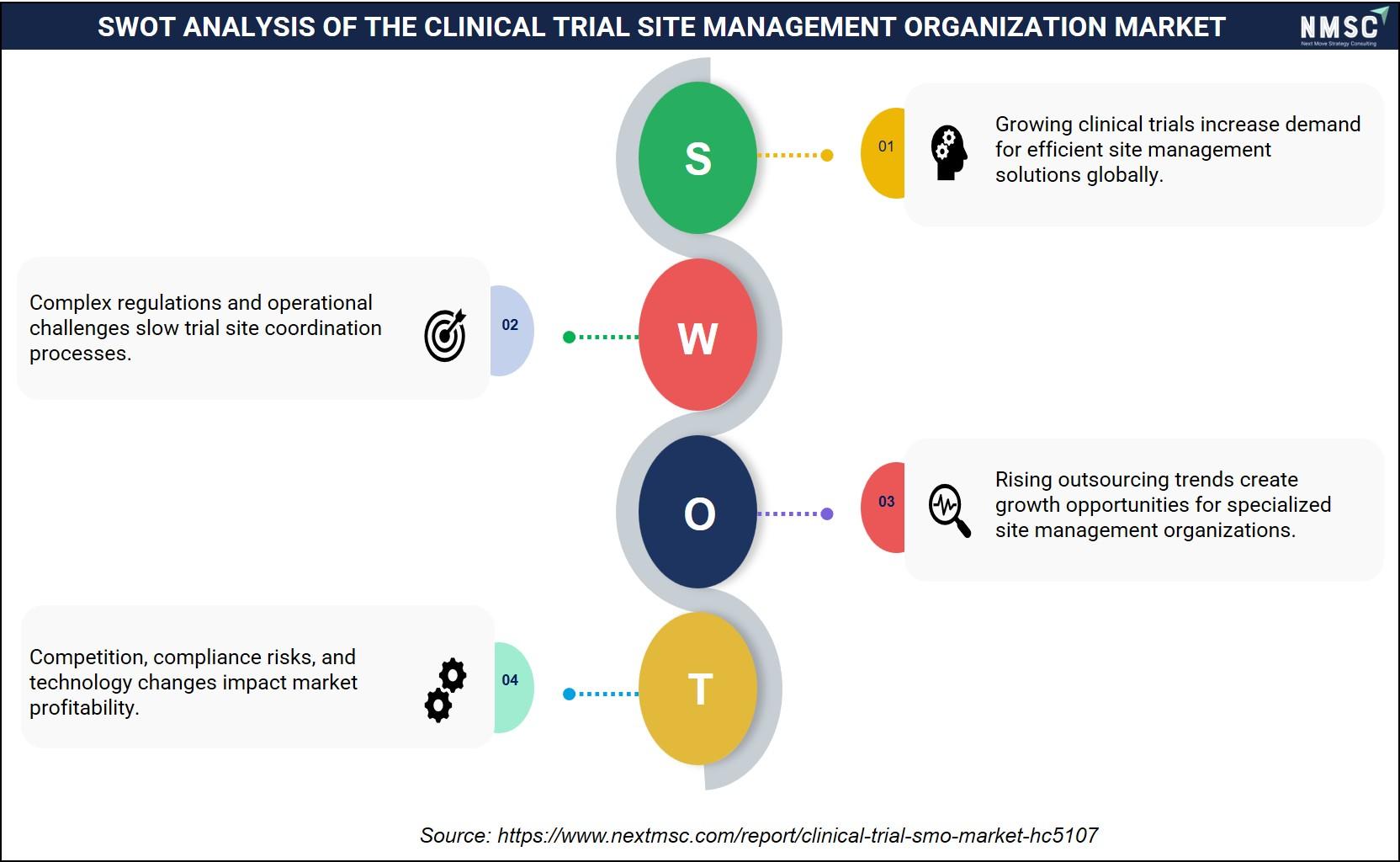
The above SWOT analysis maps the key internal and external factors, such as strengths, weaknesses, opportunities, and threats, shaping the clinical trial site management organisation market. From our analysis, we observed that the strength of growing clinical trial demand is closely counterbalanced by the weakness of complex regulations and operational challenges, creating a dual pressure that pushes organisations to leverage rising outsourcing opportunities while navigating threats from intensifying competition, compliance risks, and rapid technology changes to sustain profitability and market relevance.
Investment Opportunities in the Clinical Trial Site Management Organization (SMO) Market
The Clinical Trial Site Management Organization (SMO) Market is attracting strong investment driven by increasing demand for technology-enabled site networks, efficient patient recruitment capabilities, and integrated clinical trial management services. Capital inflows from private equity and strategic investors are supporting the expansion of multi-country SMO networks, while infrastructure investments in dedicated clinical research sites and clinical research coordinator training are strengthening long-term market capacity, particularly across emerging regions. At the same time, ESG considerations are influencing investment decisions, with growing emphasis on equitable patient access, diverse trial enrollment, and regulatory compliance. These trends, combined with accelerating digital transformation through patient engagement platforms, electronic data capture integration, telemedicine capabilities, and continued strategic acquisitions, are creating attractive long-term investment opportunities across the Clinical Trial Site Management Organization (SMO) Market.
Key Benefits for Stakeholders
The Site Management Organisation Market report delivers actionable insights for enterprise technology leaders, investors, financial analysts, technology vendors, and product teams by providing comprehensive market intelligence on service adoption, competitive dynamics, and regional growth opportunities. It supports technology investment planning, valuation analysis, product development, and market expansion through detailed segmentation by service type, customer category, and geography, along with assessments of technology adoption and competitive positioning. Key emerging trends, investment opportunity analysis, and regional market insights further enable informed decision-making, platform partnership planning, capital allocation, product roadmap prioritization, and long-term growth strategies across the evolving site management organisation ecosystem.
Key Market Segments
By Service Type
-
Site Start-Up Services
-
Site Identification
-
Site Qualification
-
Site Feasibility Assessment
-
Investigator Identification
-
Site Selection
-
-
Site Management Services
-
Clinical Research Coordinator Staffing
-
Site Administration
-
Study Coordination
-
Visit Management
-
Investigator Support
-
Source Documentation Support
-
-
Patient Recruitment and Retention Services
-
Patient Identification
-
Patient Pre-Screening
-
Enrollment Support
-
Patient Retention Programs
-
Patient Engagement Services
-
-
Regulatory and Ethics Services
-
Ethics Committee Support
-
Institutional Review Board Support
-
Regulatory Submission Support
-
Essential Document Management
-
Trial Master File Support
-
Compliance Management
-
-
Data and Technology Support Services
-
Electronic Data Capture Support
-
Clinical Trial Management System Support
-
Electronic Source Support
-
Data Entry Support
-
Query Resolution Support
-
-
Monitoring and Quality Services
-
Site Monitoring Support
-
Quality Assurance Support
-
Audit Readiness Support
-
Inspection Readiness Support
-
-
Safety Support Services
-
Adverse Event Reporting Support
-
Serious Adverse Event Reporting Support
-
Safety Documentation Support
-
-
Financial and Contract Services
-
Budget Development
-
Budget Negotiation
-
Contract Negotiation
-
Investigator Payment Administration
-
-
Decentralized Clinical Trial Support Services
-
Telemedicine Coordination
-
Home Health Coordination
-
Wearable Device Support
-
Direct to Patient Logistics
-
-
Site Close-Out Services
-
Site Close-Out Management
-
Document Archiving
-
Record Retention
-
-
Other SMO Services
By Therapeutic Area
-
Oncology
-
Solid Tumor Oncology
-
Hematologic Oncology
-
-
Central Nervous System
-
Neurology
-
Psychiatry
-
-
Cardiovascular Diseases
-
Endocrinology and Metabolic Disorders
-
Infectious Diseases
-
Respiratory Diseases
-
Immunology and Inflammatory Diseases
-
Gastroenterology and Hepatology
-
Rare Diseases
-
Ophthalmology
-
Dermatological Diseases
-
Women's Health
-
Nephrology and Urology
-
Musculoskeletal Disorders
-
Other Therapeutic Areas
By Trial Phase
-
Phase I
-
First in Human Studies
-
Early Patient Studies
-
-
Phase II
-
Phase IIa Studies
-
Phase IIb Studies
-
-
Phase III
-
Phase IV
-
Investigator-Initiated Studies
-
Medical Device Studies
-
Observational Studies
-
Other Trial Phases
By Site Type
-
Academic Medical Centers
-
Community Hospitals
-
Dedicated Clinical Research Sites
-
Private Research Networks
-
Physician Practices
-
Specialty Clinics
-
Government Hospitals
-
Other Site Types
By Delivery Model
-
Traditional Site-Based Trials
-
Hybrid Trials
-
Fully Decentralized Trials
By Customer Type
-
Pharmaceutical Companies
-
Large Pharmaceutical Companies
-
Mid-Sized Pharmaceutical Companies
-
Emerging Pharmaceutical Companies
-
-
Biotechnology Companies
-
Public Biotechnology Companies
-
Private Biotechnology Companies
-
-
Medical Device Companies
-
Contract Research Organizations
-
Academic Research Institutions
-
Government Research Institutions
-
Non-Profit Research Organizations
-
Other Customers
By Region
-
North America: U.S., Canada, and Mexico
-
Europe: UK, Germany, France, Italy, Spain, Sweden, Denmark, Finland, Netherlands, and Rest of Europe
-
Asia-Pacific: China, India, Japan, South Korea, Taiwan, Indonesia, Vietnam, Australia, Philippines, Malaysia, and Rest of APAC
-
Middle East & Africa: Saudi Arabia, UAE, Egypt, Israel, Turkey, Nigeria, South Africa, and Rest of MEA
-
Latin America: Brazil, Argentina, Chile, Colombia, and Rest of LATAM
Conclusion & Recommendations
The Clinical Trial Site Management Organization (SMO) Market is expected to witness sustained growth through 2035, driven by increasing global clinical trial complexity, expanding adoption of decentralized and hybrid trial models, regulatory modernization under ICH E6(R3), and rising demand for specialized site management services. SMOs should prioritize investments in quality management systems, decentralized trial capabilities, technology-enabled site operations, and multi-country network expansion to strengthen their competitive position. Organizations can maximize long-term value by adopting phased operational strategies that integrate digital trial support, therapeutic area specialization, and scalable site management infrastructure, enabling improved patient recruitment, regulatory compliance, operational efficiency, and high-quality clinical trial execution across global research programs.
About the Author
 Mayurima Roy
— Mayurima Roy is Research Analyst at Next Move Strategy Consulting, where she has spent 4 years working across the firm's full industry coverage rather than a single fixed vertical. Her work centers on structured research, ongoing trend tracking, competitive assessment, and insight-led content development, translating complex market data into clear, decision-ready narratives that support informed client decision-making across diverse global industries, market sectors, and world regions every day.
Mayurima Roy
— Mayurima Roy is Research Analyst at Next Move Strategy Consulting, where she has spent 4 years working across the firm's full industry coverage rather than a single fixed vertical. Her work centers on structured research, ongoing trend tracking, competitive assessment, and insight-led content development, translating complex market data into clear, decision-ready narratives that support informed client decision-making across diverse global industries, market sectors, and world regions every day.
About the Reviewer
 Supradip Baul
— Supradip Baul is an accomplished business consultant and strategist with over a decade of rich experience in market intelligence, strategy, technology, and business transformation. His work has included rigorous qualitative and quantitative analysis across multiple industries, helping clients shape investment decisions and long-term roadmaps. Earlier in his career, he was associated with Gartner, where he contributed to industry-leading reports and market share analyses. He has worked with leading global companies and holds an MBA with a dual specialization in Marketing and Finance.
Supradip Baul
— Supradip Baul is an accomplished business consultant and strategist with over a decade of rich experience in market intelligence, strategy, technology, and business transformation. His work has included rigorous qualitative and quantitative analysis across multiple industries, helping clients shape investment decisions and long-term roadmaps. Earlier in his career, he was associated with Gartner, where he contributed to industry-leading reports and market share analyses. He has worked with leading global companies and holds an MBA with a dual specialization in Marketing and Finance.
At Next Move Strategy Consulting, we understand that insightful market research is the cornerstone of successful business decisions. That's why we employ a robust and multifaceted approach, combining various methodologies to deliver the most accurate and actionable data for our clients.

Research Landscape
We navigate the world of research with two primary approaches:
Qualitative Approach
Our qualitative research methodologies involve immersive techniques such as in-depth interviews, focus groups, and observational studies. By engaging directly with individuals and stakeholders, we uncover valuable insights that quantitative data alone may overlook.

Quantitative Research
In tandem with qualitative methodologies, NMSC leverages the power of Quantitative Research to provide a robust foundation of numerical insights. Through systematic data collection and analysis, we quantify patterns, preferences, and market trends, offering a comprehensive view of the business landscape.
Our quantitative research approach employs diverse tools, including surveys, experiments, and statistical modelling. These methodologies enable us to gather data from a large and representative sample, ensuring the statistical significance of our findings. By employing structured questionnaires and standardized data collection methods, we guarantee the reliability and validity of the information we present to our clients.
Quantitative research is particularly effective in measuring the prevalence of trends, assessing market size, and gauging the impact of various factors on consumer behavior. The numerical precision attained through this approach equips our clients with actionable insights, facilitating data-driven decision-making and strategy formulation.


Our Specialized Toolbox for Industry-Specific Market Research
We deploy a specialized arsenal of techniques tailored to meet your unique requirements. Here's a glimpse into our comprehensive toolbox:

Information Procurement
The stage entails acquiring market data or relevant information through various sources and methodologies.


Market Research Approach
We utilize both top-down and bottom-up approaches in market research analysis to achieve a comprehensive understanding of the market dynamics, leveraging the broad perspective of industry trends and macroeconomic factors alongside detailed insights from specific segments and individual companies.

Porters Five Forces Analysis
We conduct Porter's Five Forces analysis to evaluate the competitive landscape of an industry, providing us with insights into factors that affect profitability and strategic positioning.

SWOT Analysis

Forecasting
We utilize a forecasting model to predict future consumption by considering parameters like population, economics, regulations, market competition, drivers, constraints, technology, and pricing. We also employ statistical techniques such as multilinear regression, exponential smoothing, moving average, ARIMA, and Monte Carlo simulations for accurate predictions. In econometric forecasting, we analyzed short-term and long-term event impacts, attributing values based on regulatory frameworks, economic factors, and market events.





 Speak to Our Analyst