Compressed Natural Gas (CNG) Market By Gas Source (Fossil, Renewable, and Others), By Pressure Level (Low, Medium, and High Pressure CNG), By Station Supply Mode {Pipeline-Fed Stations (City Gas Distribution Networks & Utility-Connected Stations), Non-Pipeline Supply (Mother and Daughter Stations), and Mobile Delivery}, By Pricing Model (Retail and Contract), By End-User {Residential, Commercial, Industrial, and Transportation} – Global Analysis & Forecast, 2025-2035
Industry: Energy & Power | Publishing Date: May 20, 2026 | Last Updated: September 30, 2026 | No of Pages: N/A | No. of Tables: N/A | No. of Figures: N/A | Format: PDF | Report Code: EP4586
Industry Outlook
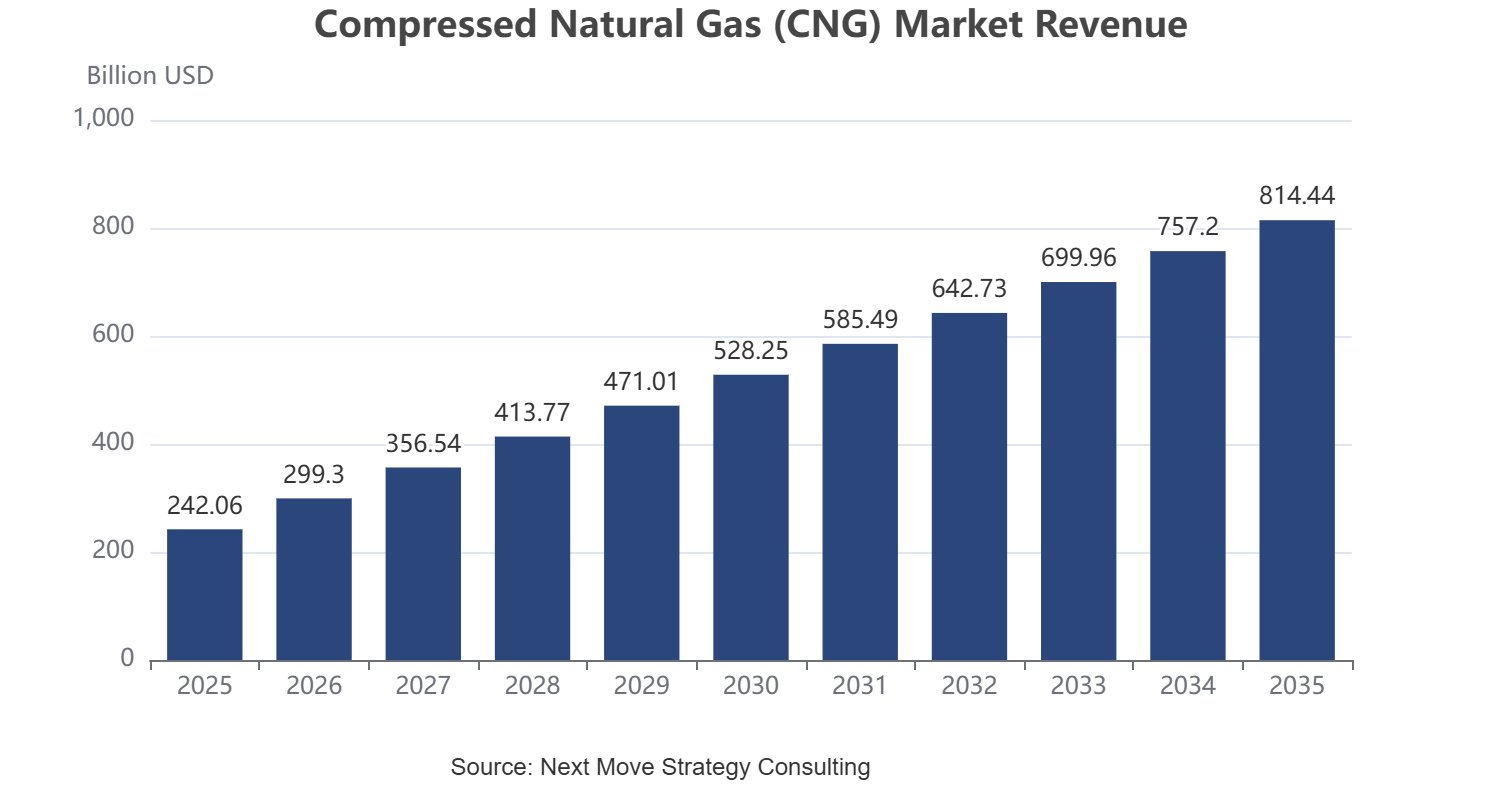
The global CNG Market size was valued at USD 242.06 billion in 2025 and is expected to be valued at USD 273.28 billion by the end of 2026. The industry is projected to grow, hitting USD 814.44 billion by 2035, with a CAGR of 12.9% between 2026 and 2035.
CNG Industry Size & Forecast
|
Parameters |
Details |
|
Market Size in 2026 |
USD 273.28 billion |
|
Revenue Forecast in 2035 |
USD 814.44 billion |
|
Growth Rate |
CAGR of 12.9% from 2026 to 2035 |
|
Analysis Period |
2025–2035 |
|
Base Year Considered |
2025 |
|
Forecast Period |
2026–2035 |
|
Market Size Estimation |
Billion (USD) |
|
Companies Profiled |
20 |
|
Countries Covered |
33 |
|
Market Share |
Available for 10 companies |
The global CNG market is currently positioned as a transitional solution within evolving transport decarbonisation frameworks. NMSC’s analysis indicates that CNG adoption is strongest across urban mobility segments, including public buses, taxis, and last-mile logistics fleets, where immediate emission reduction and cost efficiency are critical. Further, expanding city gas distribution networks and stable fuel economics are supporting steady uptake, particularly in the Asia-Pacific and select European markets. Cost advantages over diesel and policy-driven compliance requirements continue to reinforce its relevance in high-utilisation transport applications.
Looking ahead, the market is transitioning toward a more diversified and sustainability-focused growth phase. The integration of bio-CNG and renewable natural gas is improving lifecycle emissions, strengthening long-term viability. From our evaluation with infrastructure planners, we noticed increasing alignment toward multi-fuel mobility strategies, where CNG complements electrification in constrained segments. Additionally, rising adoption in urban logistics and continued policy support for clean mobility programs are expected to sustain demand. As a result, CNG maintains a strategic role as a bridge fuel within global transport energy transition pathways.
What Are the Key Trends in the CNG Industry?
How Are the Integration of Bio-CNG and Renewable Natural Gas Transforming the CNG Market?
Based on our market assessment, we found that the integration of bio-CNG and renewable natural gas is significantly enhancing the sustainability profile of the CNG market. Governments and energy providers are increasingly promoting biomethane production from agricultural residues, municipal waste, and wastewater streams to align transport fuels with circular economy objectives. Furthermore, blending renewable gas into existing CNG infrastructure enables emissions reduction without requiring major network modifications. This approach allows operators to leverage existing assets while improving lifecycle carbon performance. Additionally, industry stakeholders are prioritising low-carbon fuel certification and traceability mechanisms to support compliance with evolving emission standards. This trend is strengthening the long-term viability of CNG within global decarbonisation strategies.
How Is the Growing Adoption of CNG in Last-Mile Logistics Reshaping Urban Fuel Demand Patterns?
The rapid expansion of e-commerce and urban delivery ecosystems is accelerating the adoption of CNG in last-mile logistics fleets. Industry analysis suggests that logistics operators are increasingly prioritising cost-efficient and low-emission fuel options to manage rising delivery volumes in congested urban environments. Also, from our discussions with fleet operators, we found that CNG vehicles offer a strong balance between operational cost savings and regulatory compliance, particularly in cities with emission control zones. Additionally, predictable fuel pricing and established refuelling infrastructure in urban areas are supporting fleet transition decisions. This shift is gradually transforming fuel consumption patterns, with CNG becoming more embedded in short-haul and high-frequency delivery operations.
How Are Multi-Fuel Transition Strategies Positioning CNG Alongside Electrification Pathways?
The global transport decarbonisation strategies are increasingly adopting a multi-fuel approach, positioning CNG alongside electrification rather than as a competing alternative. NMSC’s evaluation indicates that infrastructure limitations, high upfront EV costs, and operational constraints in heavy-duty segments are encouraging policymakers to adopt phased transition pathways. Additionally, CNG is being strategically deployed in segments such as buses, logistics fleets, and shared mobility, where electrification remains less feasible in the near term. This approach enables immediate emissions reduction while maintaining operational continuity. As a result, CNG is emerging as a complementary fuel within broader clean mobility frameworks.
Ecosystem Analysis of the CNG Industry
The market functions as a multi-layered ecosystem where upstream gas production, compression technologies, infrastructure development, distribution networks, and regulatory oversight collectively determine supply efficiency, cost structure, and adoption across transport and industrial applications.
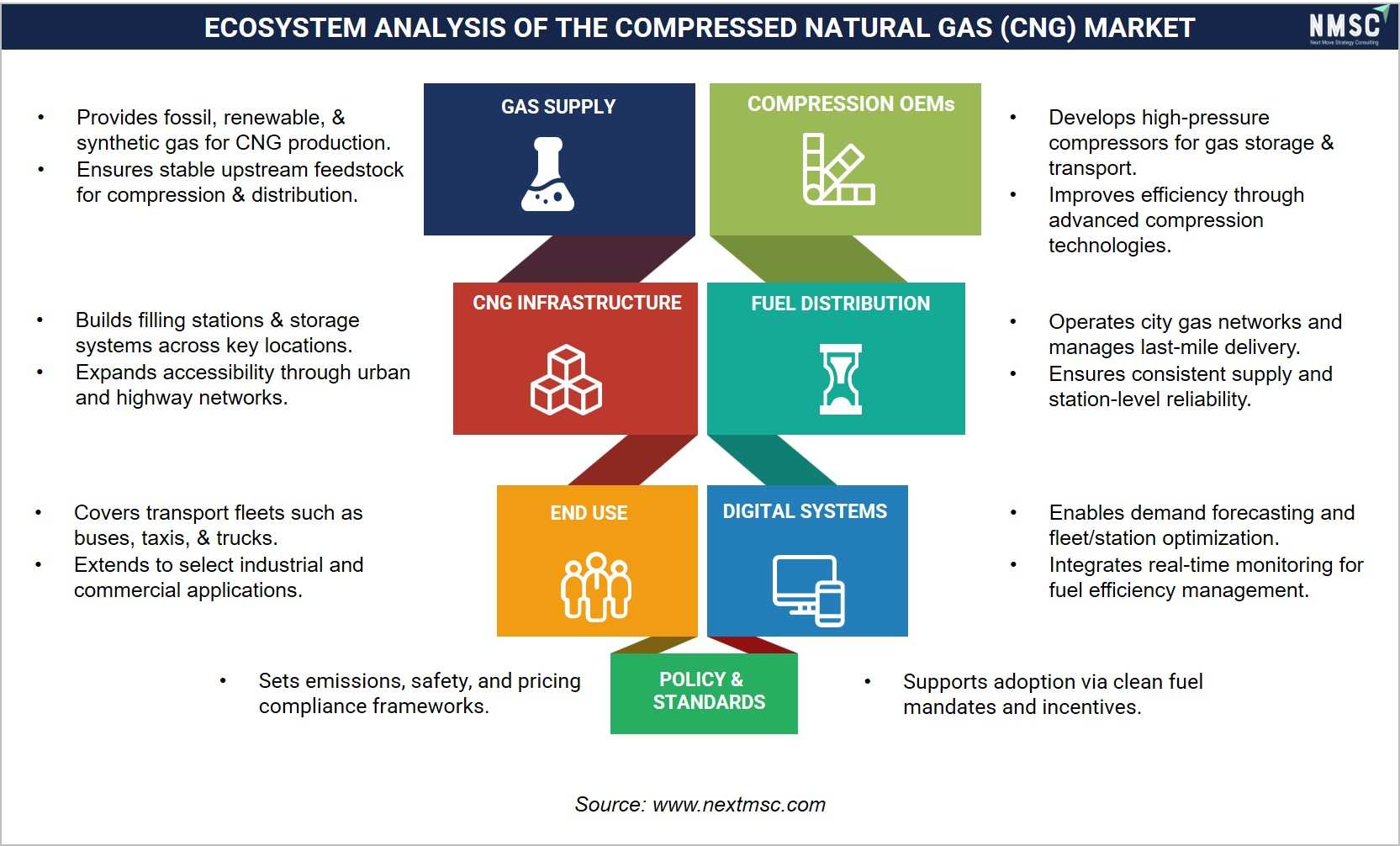
Our analysis indicates that the CNG ecosystem is highly integrated, with interdependencies spanning upstream gas supply, compression technology, distribution infrastructure, and regulatory frameworks. Each layer plays a critical role in determining fuel availability, pricing efficiency, and adoption rates across transportation and industrial sectors. Furthermore, infrastructure expansion and city gas distribution networks are the primary enablers of market penetration, while OEM innovation in compression systems enhances operational efficiency. Regulatory policies further accelerate adoption by mandating cleaner fuel transitions in urban mobility. Overall, the ecosystem structure highlights how coordinated advancements across supply, technology, and policy domains are essential for sustained CNG market growth.
What Are the Key Market Drivers, Breakthroughs, and Investment Opportunities that Will Shape the CNG Industry in the Next Decade?
Growth Catalyst & Risk Assessment Matrix
|
DRIVERS/TRENDS/ RESTRAINTS |
(+/-) % IMPACT ON CAGR FORECAST |
GEOGRAPHIC RELEVANCE |
IMPACT TIMELINE |
|
Strengthening transport decarbonisation policies accelerating CNG adoption |
+2.92% |
Europe, India, China, North America urban corridors |
Medium to Long term (3–6 years) |
|
Cost advantages of CNG over diesel driving large-scale fleet conversions |
+2.57% |
Asia-Pacific, Latin America, North America fleet markets |
Short to Medium term (2–5 years) |
|
Urban clean mobility programs accelerating CNG integration in public transport |
+1.86% |
Asia-Pacific, Europe, and Latin America major cities |
Medium term (2–4 years) |
|
Uneven refuelling infrastructure limiting scalable CNG adoption |
-2.34% |
Africa, Southeast Asia, rural North America, Latin America |
Medium term (2–5 years) |
The CNG market is being strongly driven by tightening global transport decarbonisation policies and the sustained cost advantage of CNG over conventional fuels. Our analysis indicates that regulators and policymakers are increasingly positioning CNG as a practical transitional fuel, enabling immediate emission reductions in urban mobility systems where electrification infrastructure remains constrained. At the same time, fleet operators are prioritising total cost of ownership, with lower fuel costs and price stability encouraging large-scale conversion across buses, logistics, and ride-hailing fleets. Furthermore, the rapid expansion of city gas distribution networks is improving refuelling accessibility, particularly across major urban clusters, thereby enhancing operational feasibility. However, uneven refuelling infrastructure distribution across intercity and rural corridors, along with high upfront conversion costs and slow fleet turnover cycles, continues to act as a key restraint, limiting broader scalability beyond intra-city transport systems. Meanwhile, urban clean mobility programs and policy-backed fleet modernisation initiatives are creating strong growth opportunities, accelerating CNG integration in public transport and reinforcing its role as a transitional solution supporting near-term emission reduction targets.
Growth Drivers:
How Are Strengthening Transport Decarbonisation Policies Accelerating the CNG Market?
Based on our analysis, we found that global transport decarbonisation frameworks are structurally positioning CNG as a transitional fuel between diesel dependency and full electrification. Regulators are tightening emission norms while acknowledging infrastructure constraints in EV deployment, particularly in high-density urban corridors. Based on our interactions with regulators, we noticed that compliance-driven fleet transitions are increasingly favouring CNG due to its immediate deployability. Supporting data reinforces this trend, with the European Environment Agency reporting that road transport accounted for 72.9% of EU transport emissions in 2024, highlighting the urgency for cleaner alternatives. Additionally, India’s expansion to nearly 8,000 CNG stations by 2025 demonstrates strong policy-backed infrastructure readiness, enabling accelerated fleet conversion across urban mobility systems. Taken together, tightening emission regulations and expanding infrastructure are positioning CNG as a practical bridge fuel for accelerating urban transport decarbonization.
How Are the Cost Advantages Over Diesel Driving Fleet Conversion Toward CNG?
Cost efficiency remains one of the most decisive factors influencing CNG adoption across global transport systems. Industry analysis suggests that fleet operators are increasingly prioritizing total cost of ownership models, particularly in high-utilization segments such as logistics, buses, and ride-hailing fleets. From our discussions with operations teams, we found that fuel cost savings directly impact margin stability, especially amid volatile crude oil prices. Data analysis reveals that CNG prices remain consistently lower than conventional fuels, with the U.S. Department of Energy indicating a price advantage of USD 0.18 per diesel gallon equivalent in 2025. Furthermore, elevated diesel prices across Europe, reaching around USD 2.38 per liter in 2026, are reinforcing the economic shift toward CNG as a cost-efficient alternative. As a result, sustained fuel cost savings and price stability are reinforcing CNG’s position as a financially viable alternative for large-scale fleet operations.
Growth Inhibitor:
How Does Uneven Refuelling Infrastructure Distribution Restrict Scalable CNG Adoption Globally?
We observed that the uneven geographic distribution of refuelling infrastructure remains a fundamental structural barrier limiting scalable CNG adoption. NMSC assessment indicates that while urban clusters are witnessing strong expansion of city gas distribution networks, semi-urban and rural regions continue to remain underserved, restricting operational flexibility for transport operators. The lack of refuelling continuity across highways and intercity corridors creates significant route uncertainty, limiting adoption in long-haul freight applications. Additionally, infrastructure investments remain concentrated in high-demand regions due to economic viability constraints, resulting in selective deployment. This imbalance confines CNG usage largely to intra-city fleets such as buses, taxis, and local delivery systems, thereby slowing broader market scalability across global transport networks. Supporting evidence highlights this disparity, with Transport Project (2025) indicating that CNG stations in the U.S. remain highly concentrated in a few states such as California and Texas, limiting nationwide fleet scalability.
Growth Opportunity:
How Are Urban Clean Mobility Programs Accelerating Large-Scale Integration of CNG in Public Transport Systems?
Based on our assessment, we analysed that urban clean mobility programs are creating a structurally significant opportunity for CNG adoption, particularly across public transport systems undergoing rapid fleet modernisation. Governments are prioritising immediate emission reductions in densely populated cities where air quality concerns are most severe. From our evaluation and interactions with policy advisors, we observed that structured funding programs and regulatory mandates are accelerating diesel fleet replacement with CNG alternatives. Supporting data reinforces this trend, with 2025 European DVV data showing over 2,300 CNG urban buses and more than 1,100 intercity units in operation. Therefore, policy-driven urban mobility initiatives are unlocking sustained demand for CNG, enabling large-scale integration across public transport systems while supporting near-term emission reduction targets.
How Is the CNG Industry Segmented in this Report, and What Are the Key Insights From the Segmentation Analysis?
Market Highlights & Strategic Insights - CNG Industry:
|
Segments |
Key Takeaways |
|
Gas Source |
NMSC’s analysis indicates that fossil natural gas dominates the CNG market due to strong availability and cost efficiency, with non-associated gas as the primary source. Renewable natural gas is gaining momentum, particularly in Europe and North America, supported by decarbonisation policies. Synthetic natural gas remains niche. Overall, the supply mix is gradually diversifying, though fossil-based CNG continues to lead due to infrastructure readiness and scalability. |
|
Pressure Level |
High-pressure CNG leads the market as the standard for vehicle storage and transport. Medium-pressure systems support distribution and station operations, while low-pressure usage remains limited to upstream or niche applications. Pressure segmentation is closely linked to operational requirements, with high-pressure systems dominating due to their direct alignment with transportation demand. |
|
Station Supply Mode |
Pipeline-fed stations dominate in regions with developed gas networks, ensuring a reliable supply. Non-pipeline systems, including mother and daughter stations, are critical in expanding access in emerging markets. Mobile delivery and virtual pipeline solutions are gaining traction in remote areas. The market reflects a hybrid structure, shaped by infrastructure availability and regional maturity. |
|
Pricing Model |
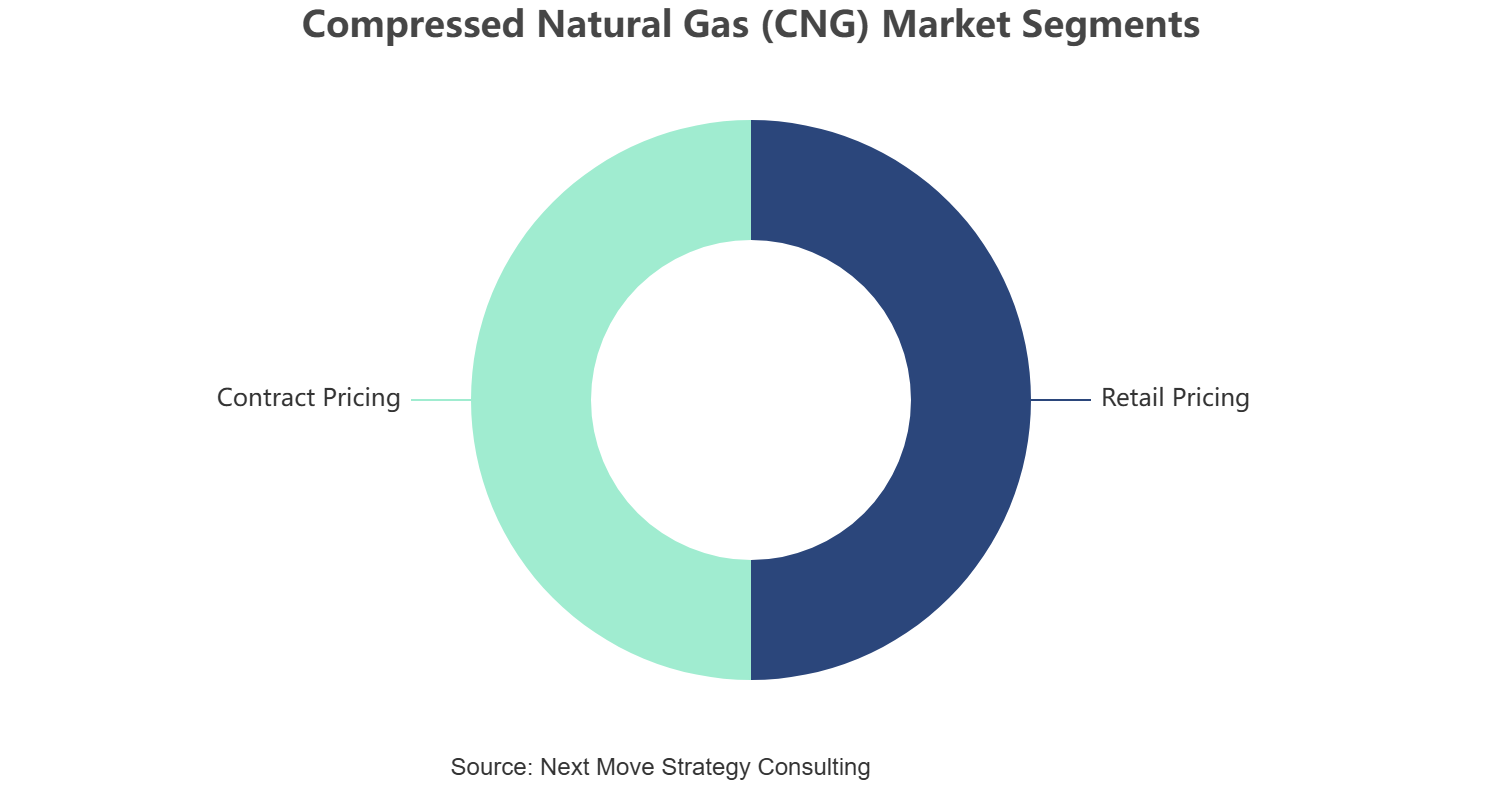
Technical evaluation shows that retail pricing, particularly pay-per-fill, dominates due to widespread use in transportation. Metered pricing supports commercial and industrial consumption, while contract pricing is growing among fleets and bulk users seeking cost stability. Pricing structures vary regionally, influenced by regulatory frameworks and gas pricing policies. |
|
End-User |
Transportation dominates CNG demand, driven by adoption across passenger vehicles, buses, and commercial fleets. Industrial applications provide steady secondary demand, particularly in heating and power generation. Commercial usage is moderate, while residential demand remains minimal. The market is primarily mobility-driven, supported by cost and emission advantages. |
By Gas Source Insights
Is Fossil Natural Gas Still Dominating the CNG Market Share in 2025?
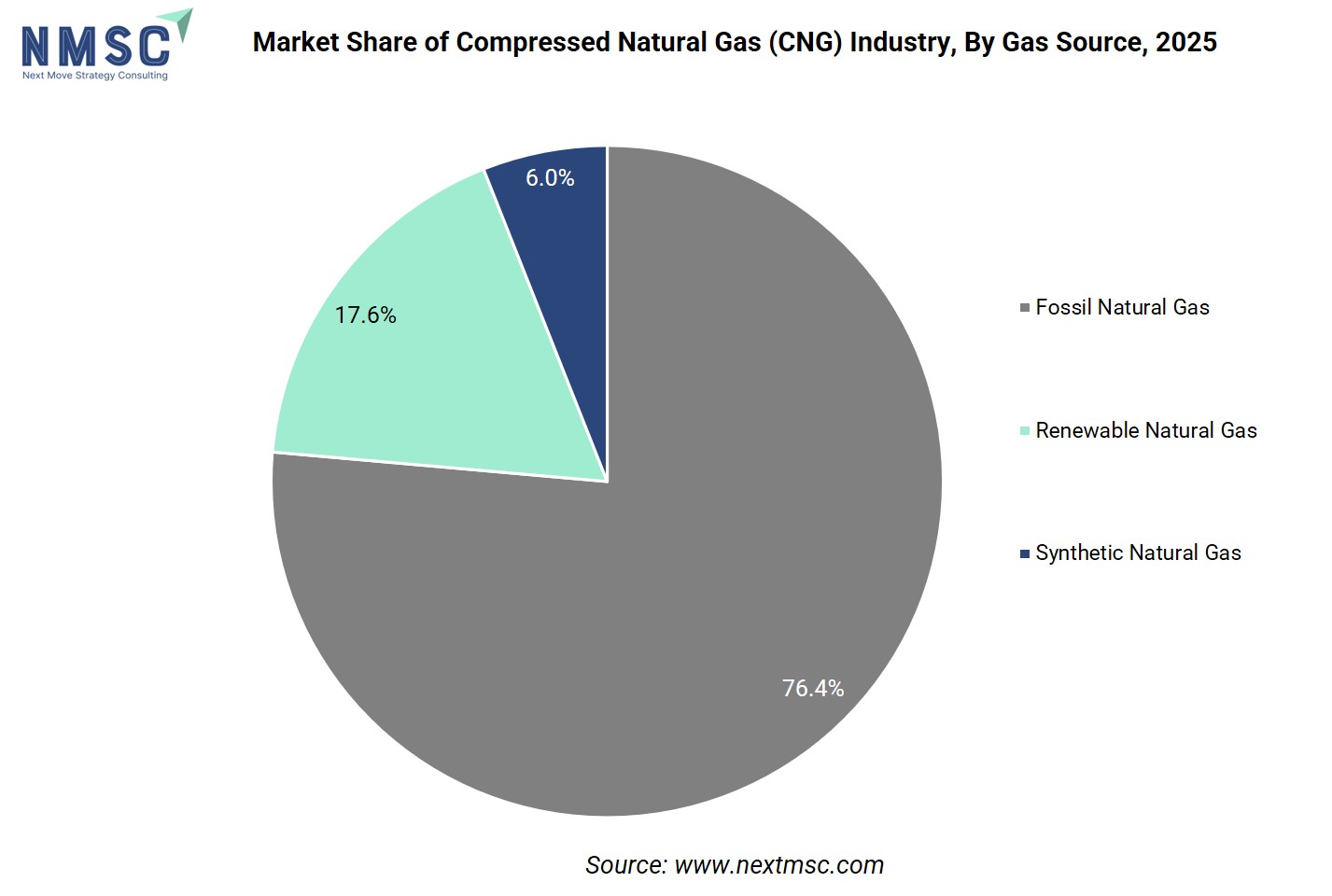
On the basis of gas source, the CNG market is segmented into fossil natural gas, renewable natural gas, and synthetic natural gas.
Based on our assessment, we found that fossil natural gas continues to dominate the global market in 2025, primarily due to its established upstream supply chains, extensive pipeline infrastructure, and cost advantage over alternative fuels. Data from the International Energy Agency indicates that natural gas remains a critical component of the global energy mix, particularly in transport and industrial applications where immediate electrification is less viable. While renewable natural gas is gaining traction through policy incentives and carbon reduction mandates, its scale is still constrained by feedstock availability and higher production costs. Synthetic natural gas remains in a developmental phase, with limited commercial deployment. Overall, the market reflects a transitional structure, where fossil-based CNG anchors current demand, while low-carbon alternatives gradually expand their share, driven by regulatory pressure, sustainability targets, and evolving energy security priorities.
By Pressure Level Insights
Is High-Pressure CNG Driving Market Efficiency and Adoption in 2025?
Based on pressure level, the CNG Market is segmented into low, medium, and high-pressure CNG.
We found that high-pressure CNG clearly dominates the global market in 2025, driven by its direct applicability in transportation, which represents the largest end-use segment. Medium-pressure systems play a crucial enabling role within distribution and station infrastructure, ensuring safe and efficient compression processes, while low-pressure CNG remains confined to upstream and niche applications. The dominance of high-pressure systems is structurally linked to vehicle storage requirements, where higher pressure ensures better fuel efficiency and range. As transport demand continues to expand, particularly in emerging markets, high-pressure CNG will remain central to market growth, supported by ongoing investments in refuelling infrastructure.
By Station Supply Mode Insights
Are Pipeline-Fed Stations Dominating CNG Supply Infrastructure in 2025?
Based on the station supply mode, the CNG Market is segmented into pipeline-fed stations, non-pipeline supply, and mobile delivery.
Pipeline-fed stations clearly dominate the global market in 2025, primarily due to their ability to deliver a continuous, high-volume gas supply with lower operating costs in regions supported by established city gas distribution networks. Data from the International Energy Agency indicates that infrastructure maturity remains a key determinant of CNG adoption, reinforcing the leadership of pipeline-based systems in developed and high-demand urban markets. However, non-pipeline supply models, particularly mother–daughter station networks, are playing an increasingly critical role in extending market reach across emerging economies where pipeline penetration is limited. At the same time, mobile delivery solutions, including virtual pipelines, are gaining strategic importance for last-mile connectivity and remote deployment. Overall, the market reflects a layered infrastructure approach, where pipeline systems anchor core demand, while non-pipeline and mobile models drive incremental expansion, ensuring broader accessibility and supporting long-term market scalability.
By End-User Insights
Is Transportation Driving the Dominance of CNG Market Demand in 2025?
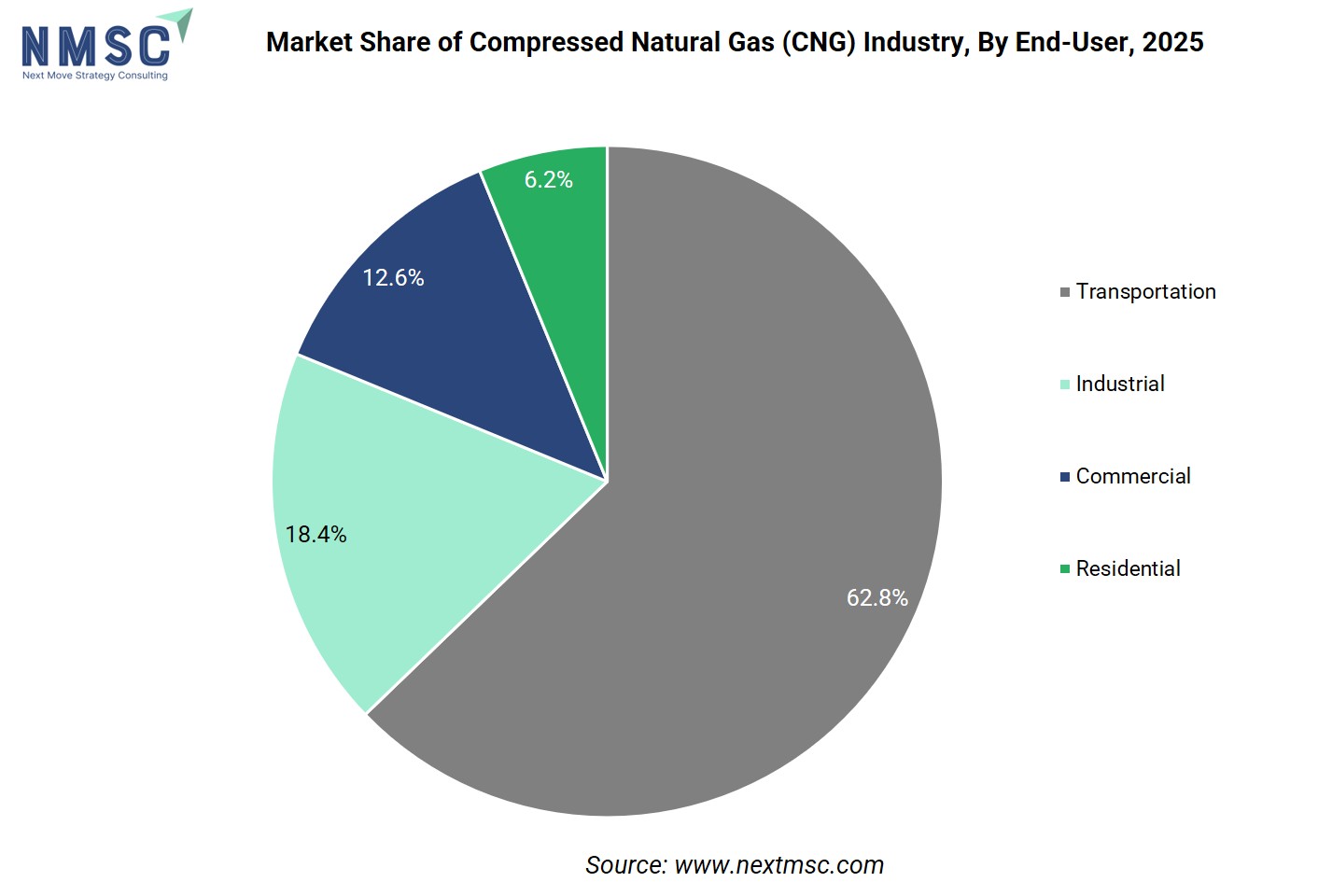
Based on end-user, the CNG Market is segmented into residential, commercial, industrial, and transportation.
We found that transportation dominates the global market in 2025, supported by its direct alignment with fuel substitution needs in mobility and strong policy backing for cleaner transport fuels. Industrial applications provide a stable secondary demand base, particularly in regions with established gas infrastructure and cost-sensitive operations. In contrast, commercial usage remains limited and often indirect, while residential demand is negligible due to the dominance of piped gas systems. The market structure is therefore highly mobility-centric, where transportation drives volume consumption, infrastructure expansion, and investment flows. This dominance is expected to persist, especially in emerging economies, where urbanisation, fleet conversion programs, and emission regulations continue to accelerate CNG adoption across public and commercial transport segments.
Regional Outlook
Geographic Performance Snapshot:
|
Geography |
Key Takeaways |
|
North America |
North America represents a relatively mature CNG market, supported by established natural gas infrastructure and strong adoption in municipal fleets, public transit, and refuse collection vehicles. Demand is concentrated in regions such as the United States, where fuel cost advantages and stable gas supply support fleet-based applications. Adoption remains limited in private vehicles but well-established in high-utilisation commercial segments, supported by regulatory incentives and energy security considerations. |
|
Europe |
Growth in Europe is shaped by stringent emission regulations and diversified clean mobility strategies. CNG adoption is concentrated in countries such as Italy and Germany, where refuelling infrastructure is relatively developed. The fuel plays a transitional role in public transport and light commercial vehicles; however, accelerating electrification policies are gradually moderating long-term growth potential across the region. |
|
Asia‑Pacific |
Asia-Pacific is the largest and fastest-growing CNG market, driven by rapid urbanisation, strong government support, and expanding city gas distribution networks. Countries such as India and China lead adoption, particularly in buses, taxis, and three-wheelers. Growth is supported by air quality initiatives, cost advantages, and large-scale infrastructure expansion across urban transport systems. |
|
Latin America |
Latin America represents a well-established but selectively growing market, with strong adoption in countries such as Argentina and Brazil. Demand is primarily driven by cost savings in passenger vehicles and taxi fleets. Existing refuelling infrastructure supports steady adoption, although economic volatility and policy inconsistencies may limit rapid expansion. |
|
Middle East & Africa |
The Middle East & Africa region is an emerging CNG market, supported by abundant natural gas reserves and increasing focus on fuel diversification. Adoption is expanding in countries such as Iran and Egypt, particularly in public transport and government-led fleet programs. While the Middle East shows stronger infrastructure readiness, Africa remains at an early stage, with demand concentrated in urban centres and gradual infrastructure development. |
The CNG market is geographically studied across North America, Europe, Asia Pacific, the Middle East & Africa, and Latin America, and each region is further studied across countries.
CNG Market in North America
NMSC’s analysis indicates that North America represents a relatively mature yet niche-oriented market, characterised by strong natural gas availability and selective adoption across fleet-based applications. The region’s demand is largely concentrated in municipal transit, refuse collection, and public service fleets, where fuel cost stability and emission reduction mandates play a critical role. From our interactions with infrastructure developers, we observed that refuelling networks are well-developed in specific states but lack uniform nationwide coverage. According to the U.S. Energy Information Administration, the U.S. continues to lead global natural gas production, ensuring long-term supply security. However, increasing electrification investments are gradually reshaping future transport energy strategies. As a result, CNG remains relevant primarily in high-utilisation fleet segments rather than mass passenger vehicle adoption.
CNG Market in the United States
The United States dominates the North American CNG market trends, driven by strong domestic gas production and established fleet applications. Adoption is concentrated in transit buses, refuse trucks, and delivery fleets, where operational cost savings are most pronounced. From our engagement with fleet operators, we observed that infrastructure concentration in states such as California and Texas supports regional scalability but limits nationwide penetration. According to the Alternative Fuels Data Center (2025), the country operates over 1,385 CNG refuelling stations, with a high geographic concentration. While regulatory incentives continue to support alternative fuel adoption, the growing shift toward electric vehicles is influencing long-term investment decisions. The market is expected to remain stable, with continued relevance in commercial fleet operations.
CNG Market in Canada
Our evaluation shows that Canada’s CNG market remains relatively niche but strategically aligned with its broader energy transition goals. Adoption is concentrated in public transit, freight logistics, and municipal fleet operations, supported by the country’s abundant natural gas reserves. According to Natural Resources Canada, the government continues to promote alternative fuels, including CNG and renewable natural gas, under its clean transportation initiatives. Industry evidence further suggests that renewable natural gas integration is gaining traction, particularly in heavy-duty transport segments seeking to reduce lifecycle emissions. However, limited refuelling infrastructure and strong policy emphasis on electrification constrain widespread adoption. As a result, the market is expected to grow gradually, with opportunities concentrated in fleet decarbonisation and low-carbon fuel integration.
CNG Market in Europe
NMSC’s analysis indicates that Europe’s CNG market is moderately developed and highly policy-driven, with adoption shaped by stringent emission regulations, carbon reduction targets, and urban air quality mandates. Road transport continues to contribute significantly to greenhouse gas emissions, reinforcing the need for alternative fuels in urban mobility systems. Adoption is strongest in countries such as Italy and Germany, where infrastructure networks and policy incentives have historically supported natural gas vehicle penetration. From our further assessment, we found that CNG is widely used in public transport, waste management, and logistics fleets. However, the region’s aggressive transition toward electrification and hydrogen technologies is gradually influencing long-term demand dynamics. Overall, CNG is increasingly positioned as a transitional fuel, maintaining relevance in specific applications while facing structural competition from zero-emission alternatives.
CNG Market in the United Kingdom
Our market assessment suggests that UK CNG market is emerging, with adoption primarily concentrated in heavy-duty logistics, freight transport, and waste management fleets. Demand is being shaped by stringent decarbonisation targets and the need to reduce emissions in sectors where electrification faces operational constraints. The UK government continues to promote alternative fuels as part of its broader strategy to achieve net-zero emissions in transport. From our further evaluation, we observed increasing adoption of CNG in long-haul trucking applications, particularly where fuel cost advantages and range capabilities provide operational benefits. However, limited refuelling infrastructure and strong policy focus on electric vehicles constrain large-scale expansion. As a result, the market remains niche but strategically significant, particularly in reducing emissions from freight and commercial transport segments.
CNG Market in Germany
Germany represents a mature CNG market that is gradually stabilising, supported by well-established refuelling infrastructure and earlier policy frameworks that encouraged adoption across passenger vehicles and light commercial fleets. From our analysis, we observed that the dense CNG station network has historically enabled practical deployment, positioning natural gas as a transitional fuel within the broader alternative mobility ecosystem. However, the market is now undergoing a structural shift, as declining subsidy support and a stronger policy emphasis on electrification reshape long-term demand. Concurrently, growing consumer and fleet preference for battery electric vehicles is accelerating this transition, particularly in the passenger segment, where CNG uptake is moderating. Despite this, the CNG continues to hold operational relevance in fleet-based applications, supported by existing infrastructure, cost efficiency, and refuelling advantages. Overall, Germany serves as a benchmark market reflecting both the established utility and gradual displacement of CNG in an electrifying transport landscape.
CNG Market in France
NMSC’s findings suggest that France is witnessing a gradual expansion in CNG adoption, particularly across public transport systems and commercial fleet applications. Government initiatives aimed at improving urban air quality and reducing transport emissions are supporting the adoption of alternative fuels. Clean transport policies continue to emphasise diversification, encouraging the integration of fuels such as CNG into mobility systems. We also observed increasing deployment of CNG buses and freight vehicles in urban areas. Infrastructure development is progressing steadily, although still lagging behind leading European markets. While electrification remains a dominant long-term strategy, CNG is expected to continue playing a transitional role in heavy-duty and commercial transport segments.
CNG Market in Italy
Italy is one of the most mature and well-established CNG markets globally, characterised by extensive infrastructure and high vehicle penetration. The country has developed one of the largest natural gas vehicle fleets in Europe, supported by long-standing policy incentives and strong consumer acceptance. From our evaluation, we analysed that dense refuelling networks enable seamless adoption across both urban and intercity transport systems. Cost advantages and fuel availability continue to drive sustained demand. Italy’s experience demonstrates the effectiveness of consistent policy support, infrastructure investment, and consumer awareness in driving large-scale adoption. As a result, the country serves as a global benchmark for market development.
CNG Market in Spain
Spain’s market is steadily expanding, underpinned by national energy transition policies and the broader EU decarbonisation agenda. According to the Ministry for the Ecological Transition and the Demographic Challenge (MITECO), alternative fuels are being actively promoted to reduce transport emissions and enhance energy diversification. From our assessment, we observed increasing adoption across logistics fleets, municipal services, and urban public transport, where cost efficiency and emission compliance are key drivers. Infrastructure development is gradually improving, with additional refuelling stations supporting wider accessibility across major corridors. However, compared to leading European peers such as Italy, penetration remains moderate. The market is expected to grow steadily, supported by regulatory alignment, fleet renewal programmes, and rising preference for lower-emission fuel alternatives in commercial mobility.
CNG Market in the Nordics
In the Nordics, comprising Sweden, Norway, Denmark, and Finland, our assessment indicates that the region demonstrates selective but strategically targeted adoption of CNG, strongly influenced by its advanced sustainability agenda. Countries such as Sweden and Denmark are leading implementation, particularly in municipal fleets, waste management vehicles, and selected public transport systems. Moreover, the region is increasingly integrating renewable energy and bio-CNG into mobility systems, reinforcing circular economy objectives. Our evaluation further indicates that while infrastructure quality is high in core urban areas, the rapid expansion of electric mobility significantly limits conventional CNG penetration. Nevertheless, the market aligns strongly with long-term decarbonisation strategies, where renewable gas-based CNG variants are expected to retain relevance in hard-to-electrify transport segments.
CNG Market in the Asia-Pacific
NMSC’s regional assessment indicates that Asia-Pacific represents the largest and fastest-growing market globally, driven by rapid urbanisation, expanding city gas distribution infrastructure, and strong policy support for cleaner transport fuels. Countries such as India and China are key contributors, primarily due to rising urban air pollution concerns and the cost advantage of natural gas over conventional fuels like petrol and diesel. In India, we observed significant CNG market expansion in city gas distribution and refuelling networks, which have notably improved accessibility for urban mobility applications. This has supported strong adoption across buses, taxis, and three-wheelers, particularly in densely populated metropolitan regions. Similarly, China continues to demonstrate large-scale deployment through structured fleet integration. Overall, policy support, infrastructure development, and affordability advantages continue to reinforce regional demand, positioning Asia-Pacific to maintain its leadership in the global market.
CNG Market in China
China remains a major global CNG market, supported by strong natural gas consumption and government-backed initiatives promoting cleaner transport fuels. According to the National Bureau of Statistics of China, natural gas usage continues to expand across industrial and transport applications. From our evaluation, we observed widespread deployment of CNG in buses, taxis, and logistics fleets, particularly in major urban clusters where air quality regulations are stringent. However, the market is undergoing a structural transition due to the rapid expansion of electric vehicles and emerging hydrogen mobility strategies. This shift is gradually redefining long-term fuel priorities. Despite this, CNG continues to function as a transitional fuel, especially in regions where electrification infrastructure is uneven. Its role remains important in balancing cost efficiency, emissions reduction, and near-term energy security objectives.
CNG Market in Japan
Japan’s CNG market remains relatively small, primarily due to the country’s strong strategic emphasis on hydrogen and electrification as core decarbonisation pathways. NMSC’s assessment suggests that national energy policy is increasingly aligned toward hydrogen infrastructure development and large-scale electric mobility expansion, thereby limiting the strategic role of conventional gaseous fuels such as CNG. As a result, CNG adoption is largely restricted to niche applications, including selected municipal fleets and a limited number of commercial vehicle operations. Infrastructure availability also remains constrained, which further limits wider market penetration and scalability. Additionally, strong policy and industrial alignment toward zero-emission technologies continue to reduce the long-term relevance of natural gas in the transport sector. Overall, CNG is expected to remain a marginal component of Japan’s transport energy mix, serving only specific operational use cases rather than evolving into a mainstream mobility fuel.
CNG Market in India
India is one of the fastest-growing CNG markets globally, driven by strong policy support and rapid expansion of city gas distribution infrastructure. The country has significantly increased its CNG refuelling network, improving accessibility across key urban transport corridors. From our interactions with industry stakeholders, we observed strong adoption across buses, taxis, and three-wheelers, where cost advantages and tightening emission norms act as primary growth drivers. Fleet operators are increasingly shifting from diesel to CNG, supported by favourable operating economics and lower per-kilometre fuel costs. Infrastructure development continues at a steady pace, particularly across Tier-1 and Tier-2 cities, further strengthening demand visibility. Overall, India’s CNG market is expected to sustain robust growth momentum, underpinned by ongoing urbanisation, regulatory support for cleaner mobility, and continued investment in gas distribution infrastructure.
CNG Market in South Korea
Based on our assessment, we found that South Korea has established strong CNG adoption in public transport systems, particularly in urban bus fleets across major cities. Government-led initiatives focused on improving air quality have been instrumental in driving large-scale deployment of CNG buses, supported by structured infrastructure development. Furthermore, stable demand conditions are underpinned by mature refuelling networks and long-standing regulatory support. However, expansion beyond public transport remains limited as national mobility strategies increasingly prioritise electric vehicles and hydrogen fuel cell technologies. This transition is gradually reshaping long-term fuel preferences. As a result, while CNG continues to play a functional role in urban transit systems, its growth potential is moderating, with electrification emerging as the dominant future pathway.
CNG Market in Taiwan
Taiwan’s CNG market remains relatively small, with adoption largely concentrated in select fleet-based applications rather than broad-based transport usage. Our analysis indicates that the country’s alternative fuel landscape is primarily shaped by strong electrification priorities and relatively limited natural gas transport infrastructure. As a result, CNG penetration remains constrained despite targeted policy initiatives aimed at reducing urban emissions. Further, we observed only gradual growth, as structural limitations such as low infrastructure density and strong competition from electric mobility solutions continue to restrict wider adoption. Fleet operators continue to evaluate CNG on the basis of cost and operational efficiency; however, switching momentum remains modest due to the stronger long-term appeal of electrified options. Overall, Taiwan’s CNG market is expected to expand at a gradual pace, with CNG maintaining a supplementary role within the broader transition toward low-emission transport systems.
CNG Market in Indonesia
From our assessment of the Indonesian market, we analysed that Indonesia is an emerging CNG market, supported by government initiatives focused on utilising abundant domestic natural gas resources for transport applications. Infrastructure development is gradually advancing; however, it remains uneven across regions, which continues to limit large-scale and uniform adoption. Current usage is largely concentrated in selected urban centres and specific fleet-based operations, reflecting a phased rather than widespread deployment pattern. Despite these, supportive policy direction and strong domestic resource availability provide a solid foundation for future expansion. Overall, the market is expected to grow at a steady pace as infrastructure coverage improves and fleet conversion programs gain momentum over the medium term.
CNG Market in Australia
Our regional analysis indicates that Australia’s CNG market remains niche, with limited penetration across transport applications. National energy priorities are primarily focused on LNG exports and the electrification of domestic transport systems, reducing the strategic emphasis on compressed natural gas. Also, we observed that CNG usage is largely restricted to specific fleet-based or industrial applications rather than mainstream mobility. Infrastructure availability remains limited, further constraining adoption potential. In addition, strong policy alignment toward battery electric vehicles and hydrogen mobility reduces incentives for CNG expansion. As a result, the market is expected to remain structurally constrained, with minimal long-term growth prospects in the absence of significant policy or infrastructure shifts.
CNG Market in Latin America
NMSC evaluation indicates that Latin America represents a relatively well-established CNG market, with strong adoption concentrated in countries such as Argentina and Brazil. This maturity is underpinned by favourable fuel cost economics, the availability of domestic natural gas resources, and a comparatively developed refuelling infrastructure network. As a result, natural gas vehicles continue to play a meaningful role in regional transport systems, particularly across passenger vehicles, taxis, and commercial fleets operating in urban centres. Infrastructure maturity in these core markets has helped sustain stable demand conditions over time, supporting consistent vehicle conversion activity. However, adoption levels vary across the region, depending on policy continuity, investment cycles, and the pace of infrastructure upgrades in individual countries. Overall, the market is expected to maintain steady growth, supported by ongoing reliance on cost-efficient fuels and an established ecosystem for CNG vehicle conversion and operations.
CNG Market in the Middle East & Africa
Infrastructure assessment indicates that the Middle East & Africa region represents an emerging but unevenly developed CNG market, supported by abundant natural gas reserves and growing interest in fuel diversification. According to OPEC, the region accounts for a significant share of global gas reserves, ensuring strong long-term supply potential for natural gas-based mobility applications. Within this context, adoption is increasing in countries such as Iran and Egypt, particularly in urban transport fleets where fuel substitution offers clear economic advantages. However, regional expansion remains constrained due to infrastructure disparities, funding limitations, and inconsistent policy frameworks, especially across several African economies where development cycles are still nascent. Despite these, rising urbanisation and increasing emphasis on energy security are gradually supporting market development. Overall, Industry trends indicate that the region is expected to witness moderate growth, primarily concentrated in countries with relatively stronger infrastructure readiness and more supportive regulatory environments.
Regulatory Framework Impacting the CNG Market
The regulatory framework governing the CNG market is evolving into a structured, multi-layered system that balances safety, affordability, infrastructure expansion, and sustainability objectives.
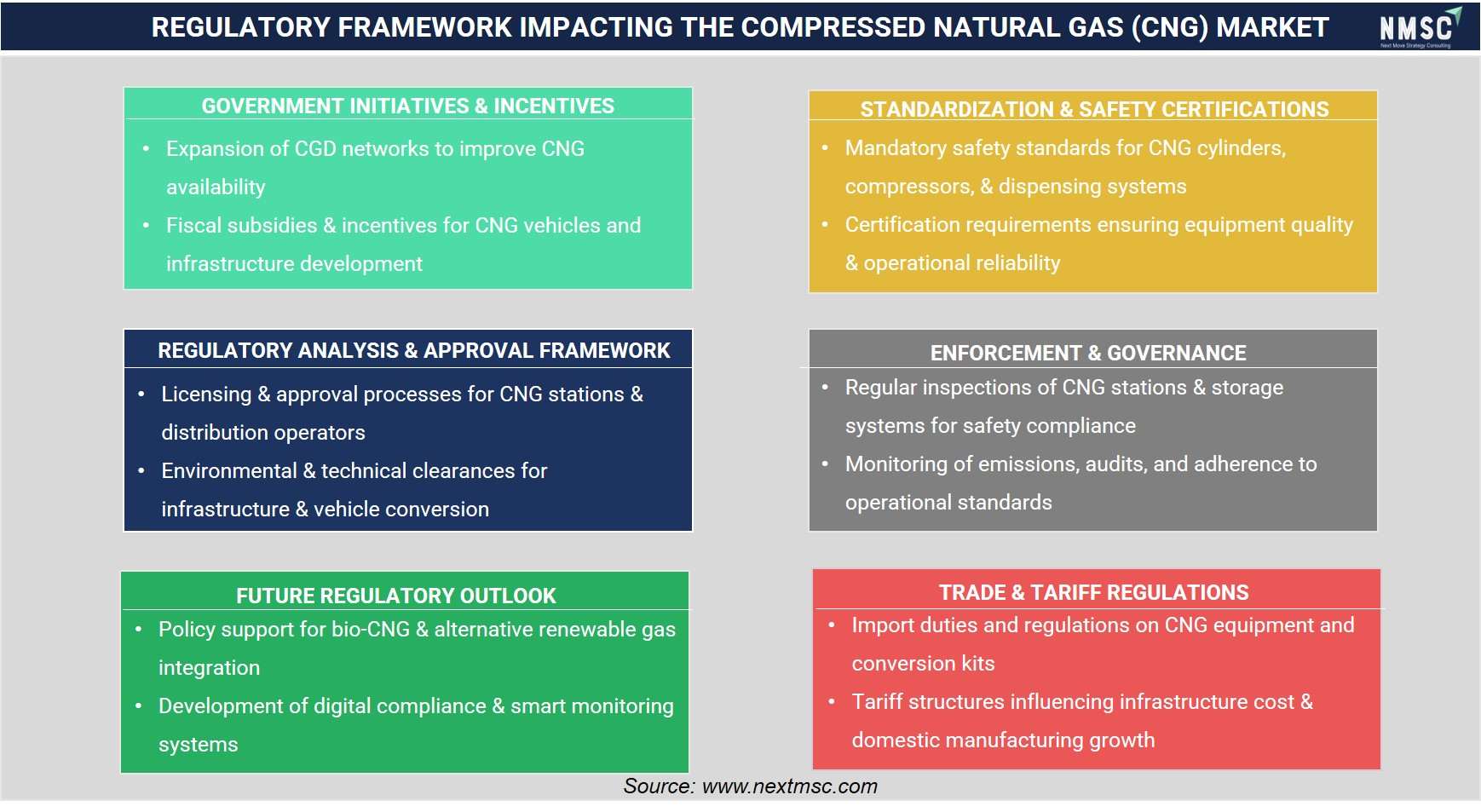
Regulatory analysis indicates that the CNG market is strongly shaped by a multi-layered policy framework spanning incentives, safety standards, and infrastructure governance. Government initiatives supporting city gas distribution expansion and vehicle fuel substitution are accelerating adoption across urban mobility and fleet segments. Standardization of compression, storage, and dispensing systems enhances operational safety and investor confidence, while strict enforcement mechanisms ensure compliance and emission reductions. Trade and tariff regulations influence equipment costs and localization strategies, affecting project economics. Future regulatory shifts toward bio-CNG integration and digital monitoring are expected to further strengthen market transparency and long-term sustainability across the value chain.
Competitive Landscape
Competitive Dynamics & M&A Landscape:
|
Key Takeaways |
|
The competitive landscape is shaped by global compression and infrastructure leaders such as Atlas Copco AB and Ingersoll Rand Inc., alongside downstream fuel providers like Adani Total Gas Limited and Clean Energy Fuels Corp. These players collectively drive market expansion through infrastructure scale, engineering capabilities, and extensive station networks, particularly across urban transport and industrial fuel applications. |
|
Industry analysis suggests that global engineering companies focus on high-efficiency compression systems, digital integration, and large-scale infrastructure deployment, while regional distributors and fuel providers compete through network expansion, pricing strategies, and localised supply reliability. At the same time, specialised players such as Galileo Technologies S.A. and NEUMAN & ESSER GmbH & Co. KG differentiate through modular systems, virtual pipeline solutions, and flexible deployment models targeting infrastructure-constrained and emerging markets. |
|
Innovation in the CNG market is increasingly centred on advanced fuel storage systems, lightweight composite cylinders, high-efficiency pressure regulation technologies, and digitally integrated refuelling infrastructure. Manufacturers are enhancing product capabilities through improved cylinder safety engineering, real-time fuel monitoring, telematics integration, and optimized engine compatibility, enabling greater operational efficiency, regulatory compliance, and emissions reduction. These advancements continue to strengthen competitive differentiation across global commercial transport, public transit, and fleet mobility applications. |
Which Companies Dominate the CNG Market and How Do They Compete?
Our research indicates that the CNG market is led by a combination of global compression technology providers and downstream fuel distributors, each competing across distinct layers of the value chain. Companies such as Atlas Copco AB, Ingersoll Rand Inc., and Burckhardt Compression Holding AG maintain strong positioning through high-efficiency compression systems, global service networks, and engineering reliability, which are critical for high-pressure applications. On the demand side, Clean Energy Fuels Corp. and Adani Total Gas Limited compete through network expansion, supply security, and customer reach. Clean Energy Fuels continues to scale renewable natural gas (RNG) supply for fleet customers, reinforcing its low-carbon strategy. Competitive intensity is therefore shaped by infrastructure depth, geographic footprint, and integration across supply and delivery networks.
Market Dominated by CNG Giants and Specialists
The competitive landscape reflects a dual structure, where multinational engineering firms coexist with specialised CNG solution providers. Large players such as Siemens Energy AG and Baker Hughes Company deliver advanced gas compression and processing technologies suited for large-scale infrastructure projects. In contrast, niche companies like Galileo Technologies S.A. and NEUMAN & ESSER GmbH & Co. KG specialise in modular stations and virtual pipeline systems, enabling deployment in remote or infrastructure-constrained regions. We found that Galileo’s continued focus on modular gas distribution highlights the growing importance of flexible supply models. This balance allows the market to scale efficiently in developed regions while expanding into underserved geographies.
Innovation and Adaptability Drive Market Success
Our market evaluation shows that innovation in compression efficiency, digitalisation, and low-carbon fuel integration is reshaping competition across the CNG ecosystem. Companies such as Cummins Inc. are advancing natural gas engine platforms to improve fuel efficiency and emissions performance, supporting wider adoption in transport fleets. Similarly, Wartsila Oyj Abp is enhancing its capabilities in biogas and synthetic gas compatibility, aligning with evolving decarbonisation goals. At the infrastructure level, Dover Fueling Solutions UK Limited and Gilbarco Inc. are integrating digital controls, automation, and remote monitoring into fueling systems. These developments signal a transition toward smarter, more efficient, and future-ready CNG infrastructure.
Market Players to Opt for Merger & Acquisition Strategies to Expand Their Presence
Our market assessment indicates that consolidation and strategic integration are increasingly shaping competitive positioning across the CNG value chain. Companies are leveraging acquisitions to strengthen technological capabilities and expand global reach. A key example is Chart Industries integrating Howden Group Limited into its portfolio, enhancing its presence in gas compression and handling solutions. This integration supports broader end-to-end offerings across gas infrastructure projects, including those linked to CNG deployment. In parallel, partnerships around renewable natural gas and hydrogen-compatible systems are gaining traction, reflecting a strategic shift toward integrated, low-carbon energy ecosystems and long-term market positioning.
List of Key CNG Companies
-
Ingersoll Rand Inc.
-
Ariel Corporation
-
BAUER Kompressoren GmbH
-
Burckhardt Compression Holding AG
-
NEUMAN & ESSER GmbH & Co. KG
-
Galileo Technologies S.A.
-
Howden Group Limited
-
Gilbarco Inc.
-
Dover Fueling Solutions UK Limited
-
TATSUNO Corporation
-
Zhejiang Censtar Science & Technology Co., Ltd.
-
Adani Total Gas Limited
-
GAIL Gas Limited
-
Gujarat Gas Limited
-
Cummins Inc.
-
Wärtsilä Oyj Abp
-
Baker Hughes Company
-
Siemens Energy AG
What Are the Latest Key Industry Developments?
-
April 2026- CNG prices were raised in Ahmedabad due to global energy cost pressures and supply disruptions. This reflects the increasing linkage between domestic CNG pricing and international gas markets, highlighting pricing volatility risks despite CNG’s cost advantage over conventional fuels.
Expert Insights
 “India's gas market is entering a new phase of growth, supported by significant infrastructure development and clear policy direction.”
- Keisuke Sadamori, IEA Director of Energy Markets and Security
Statement made in the context of the expanding role of natural gas in supporting energy transition strategies, particularly through infrastructure-led fuel diversification and urban mobility decarbonisation efforts across emerging economies.
Market Interpretation
The statement highlights the accelerating structural transformation of the global CNG market, driven by large-scale infrastructure development such as city gas distribution networks, pipeline expansion, and refuelling station deployment. Industry evaluation suggests that natural gas, particularly in the form of CNG for transportation, is increasingly being positioned as a transitional fuel that supports both cost efficiency and emissions reduction objectives in urban mobility systems. This shift is especially prominent in high-demand regions such as India and other Asia-Pacific economies, where transport fuel substitution is being actively supported through regulatory frameworks and policy incentives. Additionally, evolving energy security priorities and decarbonisation commitments are reinforcing long-term investments in gas-based mobility solutions. Overall, this trend is strengthening the integration of CNG within broader sustainable transport and energy transition strategies globally.
SWOT Analysis of the CNG Market
The following SWOT analysis highlights the key internal and external factors shaping the growth trajectory of the CNG market.
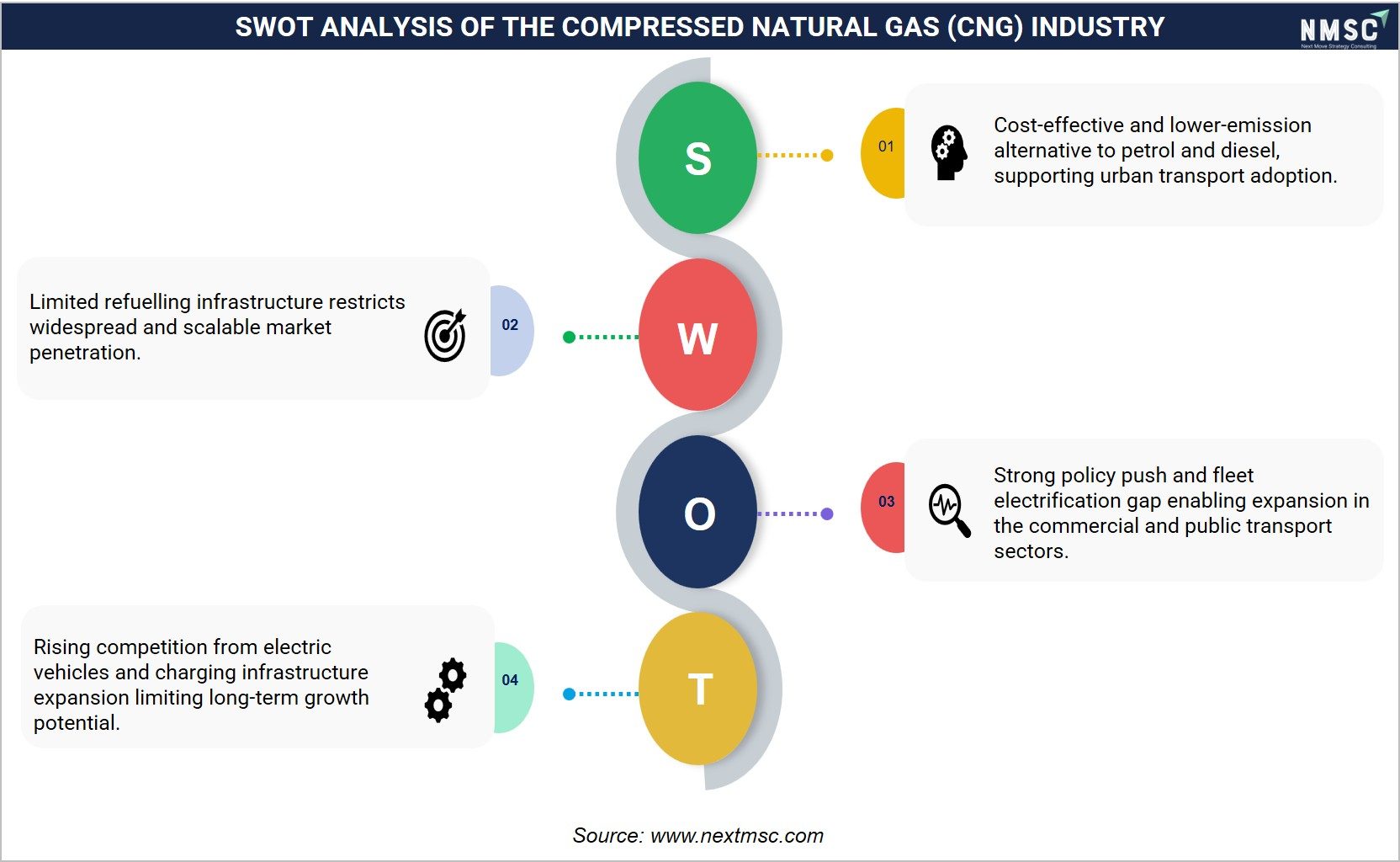
The infographic highlights that the CNG industry stands at a transitional stage, where its advantages in cost efficiency and environmental performance are balanced against infrastructure gaps and rising electric mobility competition. It reflects a market increasingly influenced by policy support and fleet-based demand, while also facing long-term pressure from EV adoption. The SWOT analysis collectively underscores CNG’s role as a bridging fuel in the broader shift toward sustainable transportation systems.
What Are the Key Factors Influencing Investment Analysis & Opportunities in the CNG Market?
Investment activity in the CNG market is increasingly concentrated around technology-led advancements in alternative fuel infrastructure, vehicle conversion systems, and next-generation gas storage solutions. Our research indicates that investors are prioritizing businesses capable of delivering integrated solutions across fuel distribution, high-pressure storage, engine compatibility, and digital fleet management systems. This shift is directing capital toward players with strong engineering capabilities, scalable infrastructure networks, and service-oriented operational models. From our evaluation, we observed that investment sentiment is increasingly influenced by the ability to support fleet decarbonisation, regulatory compliance, fuel efficiency, and long-term operational cost optimisation rather than standalone product offerings.
Our analysis further suggests that investment hotspots are emerging across rapidly urbanising economies in Asia-Pacific and energy-diversification-focused markets in the Middle East, where demand for cleaner transport fuels and gas-based mobility infrastructure is accelerating. At the same time, developed markets continue to attract capital for infrastructure modernisation, renewable natural gas integration, and emission-compliant fleet expansion. We also observed growing investor interest in specialised equipment manufacturers, storage system developers, and infrastructure providers that support modular deployment and operational scalability. This is creating strategic opportunities in smart refuelling technologies, lightweight composite cylinder systems, and digitally connected fleet solutions, reinforcing a long-term shift toward innovation-driven consolidation across the CNG value chain.
Key Benefits for Stakeholders:
Next Move Strategy Consulting (NMSC) provides a comprehensive and evidence-based analysis of the CNG Market, covering historical developments from 2020 to 2025 and offering forward-looking forecasts through 2035. Our study assesses the market at global, regional, and country levels, combining quantitative outlooks with qualitative insights into key growth drivers, adoption constraints, technology evolution, and investment dynamics across major CNG segments.
The CNG market delivers differentiated value across investors, customers, and ecosystem stakeholders through a combination of clean fuel adoption, infrastructure expansion, and regulatory alignment. Investors benefit from exposure to a strategically evolving energy and mobility segment driven by fleet decarbonisation, expanding refuelling infrastructure, and increasing adoption of lower-emission transport solutions, enabling long-term value creation through technology advancement, infrastructure development, and operational scalability. From a customer standpoint, we observed that fleet operators, public transport authorities, and logistics providers gain access to cost-efficient, lower-emission fuel solutions that improve operating economics, energy security, and regulatory compliance across commercial and municipal transport applications.
Our market research further suggests that regulatory frameworks focused on emission reduction, fuel diversification, and clean mobility continue to reinforce the adoption of CNG-based transportation solutions. At the ecosystem level, equipment suppliers, infrastructure developers, and service providers benefit from rising demand for high-pressure storage systems, advanced refuelling technologies, and digitally integrated fleet management solutions, collectively strengthening supply chain efficiency and encouraging continuous innovation across the CNG value chain.
|
Parameters |
Details |
|
Customization Scope |
Free customization (equivalent to up to 80 analyst-working hours) after purchase. Addition or alteration to country, regional & segment scope. |
|
Pricing and Purchase Options |
Avail customized purchase options to meet your exact research needs. |
|
Approach |
In-depth primary and secondary research; proprietary databases; rigorous quality control and validation measures. |
|
Analytical Tools |
Porter's Five Forces, SWOT, value chain, and Harvey ball analysis to assess competitive intensity, stakeholder roles, and relative impact of key factors. |
CNG Market Key Segments
By Gas Source
-
Fossil Natural Gas
-
Associated Gas
-
Non-Associated Gas
-
Refinery Gas
-
-
Renewable Natural Gas
-
Landfill Gas
-
Agricultural Biogas
-
-
Synthetic Natural Gas
By Pressure Level
-
Low-Pressure CNG
-
Medium Pressure CNG
-
High-Pressure CNG
By Station Supply Mode
-
Pipeline-Fed Stations
-
City Gas Distribution Networks
-
Utility-Connected Stations
-
-
Non-Pipeline Supply
-
Mother Stations
-
Daughter Stations
-
-
Mobile Delivery
-
Mobile Refuelling Units
-
Virtual Pipeline Supply
-
By Pricing Model
-
Retail Pricing
-
Pay-Per-Fill
-
Metered Sales
-
-
Contract Pricing
-
Long-Term Supply Contracts
-
Bulk Supply Agreements
-
By End-User
-
Residential
-
Commercial
-
Hospitality
-
Healthcare
-
Offices
-
Retail Establishments
-
-
Industrial
-
Process Heating
-
Boilers
-
Captive Power Generation
-
-
Transportation
-
Light-Duty Vehicles
-
Passenger Cars
-
Light Commercial Vehicles
-
-
Heavy-Duty Transport
-
Long Haul Trucks
-
Refuse Collection
-
-
Off-Highway
-
Mining Vehicles
-
Industrial Vehicles
-
-
Buses
-
Transit Buses
-
City Buses
-
School Buses
-
-
Geographical Breakdown
-
North America: U.S., Canada, and Mexico.
-
Europe: UK, Germany, France, Italy, Spain, Sweden, Denmark, Finland, the Netherlands, and the rest of Europe.
-
Asia Pacific: China, India, Japan, South Korea, Taiwan, Indonesia, Vietnam, Australia, Philippines, Malaysia and the rest of APAC.
-
Middle East & Africa (MEA): Saudi Arabia, UAE, Egypt, Israel, Turkey, Nigeria, South Africa, and the rest of MEA.
-
Latin America: Brazil, Argentina, Chile, Colombia, and the rest of LATAM.
Conclusion & Recommendations
Based on our evaluation, we found that the CNG market is transitioning from a fuel-substitution-driven industry to an integrated, technology-enabled mobility ecosystem. Demand is increasingly shaped by fleet decarbonisation initiatives, expansion of city gas distribution networks, and stricter emission and safety regulations across global transportation markets. Industry evidence suggests that competitive advantage is now defined less by standalone fuel supply and more by the ability to deliver integrated solutions spanning gas sourcing, compression systems, high-pressure storage, refuelling infrastructure, and digital fleet optimisation. We also observed that global and regional market participants are increasingly focusing on operational efficiency, low-carbon fuel integration, and infrastructure scalability, with innovation in composite storage systems, intelligent compression technologies, and connected refuelling platforms reshaping value creation across the industry.
The sector continues to evolve toward higher levels of digitalisation, operational efficiency, and sustainability alignment, particularly across public transport, commercial logistics, and heavy-duty fleet applications. Competition between global engineering providers, infrastructure developers, and specialised fuel distributors is intensifying as market differentiation increasingly shifts toward technology integration, service reliability, and lifecycle cost optimisation. Executives and investors are prioritising participation in businesses with strong infrastructure capabilities, scalable deployment models, and exposure to rapidly urbanising and emission-regulated transport markets. Value creation is strongest where companies align with clean mobility policies, renewable natural gas integration, and long-term fleet transition strategies, enabling sustainable positioning in an increasingly competitive and technology-driven CNG market landscape.
About the Author
 Mayurima Roy
— Mayurima Roy is Research Analyst at Next Move Strategy Consulting, where she has spent 4 years working across the firm's full industry coverage rather than a single fixed vertical. Her work centers on structured research, ongoing trend tracking, competitive assessment, and insight-led content development, translating complex market data into clear, decision-ready narratives that support informed client decision-making across diverse global industries, market sectors, and world regions every day.
Mayurima Roy
— Mayurima Roy is Research Analyst at Next Move Strategy Consulting, where she has spent 4 years working across the firm's full industry coverage rather than a single fixed vertical. Her work centers on structured research, ongoing trend tracking, competitive assessment, and insight-led content development, translating complex market data into clear, decision-ready narratives that support informed client decision-making across diverse global industries, market sectors, and world regions every day.
About the Reviewer
 Supradip Baul
— Supradip Baul is an accomplished business consultant and strategist with over a decade of rich experience in market intelligence, strategy, technology, and business transformation. His work has included rigorous qualitative and quantitative analysis across multiple industries, helping clients shape investment decisions and long-term roadmaps. Earlier in his career, he was associated with Gartner, where he contributed to industry-leading reports and market share analyses. He has worked with leading global companies and holds an MBA with a dual specialization in Marketing and Finance.
Supradip Baul
— Supradip Baul is an accomplished business consultant and strategist with over a decade of rich experience in market intelligence, strategy, technology, and business transformation. His work has included rigorous qualitative and quantitative analysis across multiple industries, helping clients shape investment decisions and long-term roadmaps. Earlier in his career, he was associated with Gartner, where he contributed to industry-leading reports and market share analyses. He has worked with leading global companies and holds an MBA with a dual specialization in Marketing and Finance.
At Next Move Strategy Consulting, we understand that insightful market research is the cornerstone of successful business decisions. That's why we employ a robust and multifaceted approach, combining various methodologies to deliver the most accurate and actionable data for our clients.

Research Landscape
We navigate the world of research with two primary approaches:
Qualitative Approach
Our qualitative research methodologies involve immersive techniques such as in-depth interviews, focus groups, and observational studies. By engaging directly with individuals and stakeholders, we uncover valuable insights that quantitative data alone may overlook.

Quantitative Research
In tandem with qualitative methodologies, NMSC leverages the power of Quantitative Research to provide a robust foundation of numerical insights. Through systematic data collection and analysis, we quantify patterns, preferences, and market trends, offering a comprehensive view of the business landscape.
Our quantitative research approach employs diverse tools, including surveys, experiments, and statistical modelling. These methodologies enable us to gather data from a large and representative sample, ensuring the statistical significance of our findings. By employing structured questionnaires and standardized data collection methods, we guarantee the reliability and validity of the information we present to our clients.
Quantitative research is particularly effective in measuring the prevalence of trends, assessing market size, and gauging the impact of various factors on consumer behavior. The numerical precision attained through this approach equips our clients with actionable insights, facilitating data-driven decision-making and strategy formulation.


Our Specialized Toolbox for Industry-Specific Market Research
We deploy a specialized arsenal of techniques tailored to meet your unique requirements. Here's a glimpse into our comprehensive toolbox:

Information Procurement
The stage entails acquiring market data or relevant information through various sources and methodologies.


Market Research Approach
We utilize both top-down and bottom-up approaches in market research analysis to achieve a comprehensive understanding of the market dynamics, leveraging the broad perspective of industry trends and macroeconomic factors alongside detailed insights from specific segments and individual companies.

Porters Five Forces Analysis
We conduct Porter's Five Forces analysis to evaluate the competitive landscape of an industry, providing us with insights into factors that affect profitability and strategic positioning.

SWOT Analysis

Forecasting
We utilize a forecasting model to predict future consumption by considering parameters like population, economics, regulations, market competition, drivers, constraints, technology, and pricing. We also employ statistical techniques such as multilinear regression, exponential smoothing, moving average, ARIMA, and Monte Carlo simulations for accurate predictions. In econometric forecasting, we analyzed short-term and long-term event impacts, attributing values based on regulatory frameworks, economic factors, and market events.





 Speak to Our Analyst