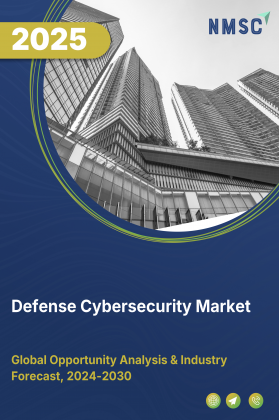
Defense Cybersecurity Market by Offering Type (Hardware, Software, and Services), by Security Domain (Perimeter & Network, Endpoint & Mobile, Data & Application, Identity & Access Management, Intelligence & Analytics, and Cloud Security), by Deployment Mode (On Premises, Cloud Based, and Hybrid Deployment), by Application (Military Communications, Command And Control Systems, Weapons Systems, Intelligence Systems, and Others) – Global Opportunity Analysis and Industry Forecast, 2024–2030
Defense Cybersecurity Market Overview
The global Defense Cybersecurity Market size was valued at USD 21.62 billion in 2023 and is predicted to reach USD 45.94 billion by 2030 with a CAGR of 11.3% from 2024-2030. Defense cybersecurity, also known as military cybersecurity refers to the market for products and services that protect the digital information and systems of defense organizations from cyber threats.
It encompasses a wide range of technologies, strategies, and tools aimed at safeguarding the integrity of organizations' security architecture. It includes the use of firewalls, encryption, antivirus software, intrusion detection systems, access controls, and regular security assessments, among others, to defend against cyber threats and vulnerabilities in the defense sector. The aim of military cybersecurity is to create a secure computing environment that minimizes the risk of cyberattacks and data breaches, thereby safeguarding military personals, organizations, and governments against potential harm or financial losses.
Market Dynamics and Trends
The increasing incidence of cyber threats propels the defense cybersecurity market growth due to the escalating need for advanced protection measures. As organizations and individuals face frequent cyberattacks it necessitates the demand for robust cybersecurity solutions to safeguard sensitive data, maintain operational integrity, and ensure compliance with regulatory standards.
As per the Centre for Strategic & International Studies (CSIS), there are multiple cyberattacks reported around the world, including U.S. officials against Houthi rebels in February 2024, Russian against Germans in March 2024, and Chinese against the Dutch officials in February 2024 among other incidents. These incident highlights the critical role of the defense cybersecurity market in fortifying organizations against cyber threats and safeguarding sensitive operations.
Furthermore, the rising geopolitical tensions including state-sponsored cyber activities, international cyber conflicts, and heightened tensions between nations on the global stage further propels the growth of the market. According to International Crisis Group there are various major conflicts recorded around the world such as Israel-Palestine war started in 7th October, 2023 and the Russia-Ukraine war in the year 2022. The changing geopolitical landscape is driving governments to prioritize and enhance their cyber defense system to safeguard critical assets and maintain national security.
Moreover, the escalating defense expenditure worldwide drives the defense cybersecurity market demand. As countries allocate larger portions of their budgets to defense, they prioritize the protection of critical assets by investing in defense network protection capabilities.
According to a report published by Stockholm International Peace Research Institute (SIPRI), the global military expenditure in the year 2022 accounted for USD 2.24 trillion that is a growth 3.7% from the previous year. This investment not only strengthens national security but also propels the development of cutting-edge technologies designed to counteract the frequent cyber-attacks.
However, the high cost of advanced security solutions associated with adoption and deployment of cutting-edge technologies hinders the growth of the market. On the contrary, the integration of artificial intelligence (AI) in military cybersecurity is expected to create future growth opportunities of the market as AI enhances threat detection, response times, and predictive capabilities that mitigates the emerging cyber threats.
The use of AI-driven advancements enables military organizations to better safeguard critical infrastructure, adapt to evolving threat landscapes, and maintain robust security measures, thereby driving continued innovation and expansion within the cybersecurity sector.
Market Segmentations and Scope of the Study
The military cybersecurity market report is segmented on the basis of offering type, security domain, deployment mode, application, end user, and region. On the basis of offering type, the market is divided into hardware, software, and services. The hardware segment includes network security appliances, encryption hardware modules, biometric authentication devices, and security sensors. The software segment comprises network security software, cloud security platforms, endpoint protection software, application security software, data security software, identity and access management software, security analytics software, and vulnerability management software. The services segment is further categorized into professional services and managed services. Professional services include consulting and design, integration and implementation, incident response and recovery, training and education, and support and maintenance, while managed services include managed detection and response (MDR), managed firewall and network services, and other managed security operations.
On the basis of security domain, the market is classified into perimeter & network, endpoint & mobile, data & application, identity & access management, intelligence & analytics, and cloud security. The perimeter & network segment includes firewalls, IDS/IPS, and DDoS protection solutions. The endpoint & mobile segment covers antivirus/EDR and mobile security solutions. The data & application segment includes DLP, encryption/tokenization, and application security solutions. The identity & access management segment comprises MFA and privileged access management solutions. The intelligence & analytics segment includes SIEM, UEBA, and threat intelligence solutions, while cloud security includes cloud-native protection and workload security.
On the basis of deployment mode, the market is segmented into on-premises, cloud-based, and hybrid deployment. Based on application, the market is categorized into military communications, command and control systems, weapons systems, intelligence systems, critical infrastructure, logistics and supply chain, space and satellite systems, naval and shipboard systems, and avionics and aircraft systems. On the basis of end user, the market is segmented into army and land forces, navy and maritime forces, air force and aerospace, defense agencies, intelligence communities, and defense contractors. Regional breakdown and analysis of each of the aforesaid segments include North America, Europe, Asia-Pacific, and RoW.
Geographical Analysis
North America dominates the defense cybersecurity market share at present and is expected to continue its dominance during the forecast period. This is due to the growing government initiatives to launch cybersecurity measures and the concentration of technology firms in the region, which continuously innovate and collaborate to bolster the nation's cyber defenses.
For example, in September 2023, the U.S. Department of Defense launched its Defense Cyber Strategy outlining four key lines of efforts to enhance cyber awareness and address escalating cyber threats. The strategy highlights the defense cybersecurity industry's crucial role in safeguarding national security and adapting to evolving cyber challenges.
Moreover, the extensive military’s budget allocation further fuels the growth of the market as significant financial resources are allocated to enhance and secure military operations. This investment supports the development and implementation of advanced cybersecurity solutions, ensuring protection against cyber threats and safeguarding critical defense systems.
As per the latest report published by the World Bank Group, Canada’s military expenditure accounted for USD 26.90 billion in 2022 as compared to USD 17.78 billion in 2016 that is a growth of 51.3% in the span of 6 years. As defense agencies seek to stay ahead of evolving cyber threats, these budgetary commitments drive innovation, improve threat detection and response capabilities, and ensure robust security measures that ultimately contribute to the overall defense cybersecurity market expansion.
On the other hand, Asia-Pacific is considered fastest growing region in the defense cybersecurity market trends. This is due to the increasing inter-governmental co-ordinations and rising military programs in the industry as these collaborative efforts enhance information sharing and collective defense strategies.
For instance, in September 2023, the Association of Southeast Asian Nations (ASEAN) opened Cybersecurity and Information Centre of Excellence (ACICE) dedicated to respond unique threats posited by cybersecurity, disinformation and misinformation to defense establishments. This initiative gives an effort to enhance regional collaboration on cybersecurity and projects the growing role of military cybersecurity in the region.
Furthermore, the increasing cyber-attacks further propels the growth of the market in the region as it drives the need for advanced cybersecurity solutions to protect sensitive data and critical infrastructure. The latest CSIS report stated that, in May 2024, Pakistani cyber spies deployed malware against India’s government, aerospace, and defense sectors to infect their targeted devices and access sensitive information. This growing demand for protection fuels the expansion of the market, as companies and government entities seek to enhance their defenses against evolving cyber threats.
Competitive Landscape
The defense cybersecurity industry comprising of various market players suchLockheed Martin Corporation, Raytheon Technologies Corporation (RTX), Northrop Grumman Corporation, BAE Systems plc, General Dynamics Corporation, Thales S.A., Airbus SE, Leonardo S.p.A., Leidos Holdings, Inc., Booz Allen Hamilton Holding Corporation, L3Harris Technologies, Inc., Palantir Technologies Inc., Palo Alto Networks, Inc., CrowdStrike Holdings, Inc., CACI International Inc. and others. These market players are adopting various product launches and partnership to maintain their dominance in the market.
For instance, in March 2025, Lockheed Martin Corporation expanded its cybersecurity capabilities through advanced defense network protection initiatives designed to secure mission-critical military infrastructure and communication systems against increasingly sophisticated cyber threats. The company focused on integrating AI-enabled threat detection, secure data transmission, and cyber-resilient operational frameworks into defense environments. This initiative reflects the growing emphasis on strengthening national security through advanced cyber defense technologies, particularly as governments and military agencies worldwide increase investments in protecting sensitive digital assets, command systems, and operational networks from cyber warfare and malicious intrusions.
Key Benefits
-
The report provides quantitative analysis and estimations of the defense cybersecurity market from 2024 to 2030, which assists in identifying the prevailing industry opportunities.
-
The study comprises a deep-dive analysis of the current and future defense cybersecurity market trends to depict prevalent investment pockets in the industry.
-
Information related to key drivers, restraints, and opportunities and their impact on the market is provided in the report.
-
Competitive analysis of the players, along with their market share is provided in the report.
-
SWOT analysis and Porters Five Forces model is elaborated in the study.
-
Value chain analysis in the market study provides a clear picture of roles of stakeholders.
Defense Cybersecurity Market Key Segments
By Offering Type
-
Hardware
-
Network Security Appliances
-
Encryption Hardware Modules
-
Biometric Authentication Devices
-
Security Sensors
-
-
Software
-
Network Security Software
-
Cloud Security Platforms
-
Endpoint Protection Software
-
Application Security Software
-
Data Security Software
-
Identity and Access Management Software
-
Security Analytics Software
-
Vulnerability Management Software
-
-
Services
-
Professional Services
-
Consulting and Design
-
Integration and Implementation
-
Incident Response and Recovery
-
Training and Education
-
Support and Maintenance
-
-
Managed Services
-
Managed Detection and Response (MDR)
-
Managed Firewall and Network Services
-
Other Managed Security Operations
-
-
By Security Domain
-
Perimeter & Network
-
Firewalls
-
IDS/IPS
-
DDoS
-
-
Endpoint & Mobile
-
Antivirus/EDR
-
Mobile Security
-
-
Data & Application
-
DLP
-
Encryption/Tokenization
-
App Security
-
-
Identity & Access Management
-
MFA
-
Privileged Access
-
-
Intelligence & Analytics
-
SIEM
-
UEBA
-
Threat Intelligence
-
-
Cloud Security
-
Cloud-Native Protection
-
Workload Security
-
By Deployment Mode
-
On Premises
-
Cloud Based
-
Hybrid Deployment
By Application
-
Military Communications
-
Command And Control Systems
-
Weapons Systems
-
Intelligence Systems
-
Critical Infrastructure
-
Logistics And Supply Chain
-
Space and Satellite Systems
-
Naval and Shipboard Systems
-
Avionics and Aircraft Systems
By End User
-
Army And Land Forces
-
Navy And Maritime Forces
-
Air Force And Aerospace
-
Defense Agencies
-
Intelligence Communities
-
Defense Contractors
By Region
-
North America
-
The U.S.
-
Canada
-
Mexico
-
-
Europe
-
The UK
-
Germany
-
France
-
Italy
-
Spain
-
Denmark
-
Netherlands
-
Finland
-
Sweden
-
Norway
-
Russia
-
Rest of Europe
-
-
Asia-Pacific
-
China
-
Japan
-
India
-
South Korea
-
Australia
-
Indonesia
-
Singapore
-
Taiwan
-
Thailand
-
Rest of Asia Pacific
-
-
RoW
-
Latin America
-
Middle East
-
Africa
-
Key Players
-
Lockheed Martin Corporation
-
Raytheon Technologies Corporation (RTX)
-
Northrop Grumman Corporation
-
BAE Systems plc
-
General Dynamics Corporation
-
Thales S.A.
-
Airbus SE
-
Leonardo S.p.A.
-
Leidos Holdings, Inc.
-
Booz Allen Hamilton Holding Corporation
-
L3Harris Technologies, Inc.
-
Palantir Technologies Inc.
-
Palo Alto Networks, Inc.
-
CrowdStrike Holdings, Inc.
-
CACI International Inc.
Report Scope and Segmentation:
|
Parameters |
Details |
|
Market Size in 2023 |
USD 21.62 Billion |
|
Revenue Forecast in 2030 |
USD 45.94 Billion |
|
Growth Rate |
CAGR of 11.3% from 2024 to 2030 |
|
Analysis Period |
2023–2030 |
|
Base Year Considered |
2023 |
|
Forecast Period |
2024–2030 |
|
Market Size Estimation |
Billion (USD) |
|
Growth Factors |
|
|
Countries Covered |
28 |
|
Companies Profiled |
10 |
|
Market Share |
Available for 10 companies |
|
Customization Scope |
Free customization (equivalent up to 80 working hours of analysts) after purchase. Addition or alteration to country, regional, and segment scope. |
|
Pricing and Purchase Options |
Avail customized purchase options to meet your exact research needs. |


About the Author
 Jayanta Das is a senior research analyst delivering high-impact market intelligence across global markets. He leads comprehensive studies covering market assessment, forecasting, competitive evaluation, regulatory review, and trend analysis. Known for his structured and methodical approach, Jayanta excels at converting complex datasets into clear, decision-ready insights for leadership teams. His work supports strategic planning through credible sourcing, analytical precision, strong validation frameworks, and well-structured, business-focused reporting that enables confident decision-making.
About the Reviewer
 Supradip Baul is an accomplished business consultant and strategist with over a decade of rich experience in market intelligence, strategy, technology, and business transformation. His work has included rigorous qualitative and quantitative analysis across multiple industries, helping clients shape investment decisions and long-term roadmaps. Earlier in his career, he was associated with Gartner, where he contributed to industry-leading reports and market share analyses. He has worked with leading global companies and holds an MBA with a dual specialization in Marketing and Finance.
At Next Move Strategy Consulting, we understand that insightful market research is the cornerstone of successful business decisions. That's why we employ a robust and multifaceted approach, combining various methodologies to deliver the most accurate and actionable data for our clients.

Research Landscape
We navigate the world of research with two primary approaches:
Qualitative Approach
Our qualitative research methodologies involve immersive techniques such as in-depth interviews, focus groups, and observational studies. By engaging directly with individuals and stakeholders, we uncover valuable insights that quantitative data alone may overlook.

Quantitative Research
In tandem with qualitative methodologies, NMSC leverages the power of Quantitative Research to provide a robust foundation of numerical insights. Through systematic data collection and analysis, we quantify patterns, preferences, and market trends, offering a comprehensive view of the business landscape.
Our quantitative research approach employs diverse tools, including surveys, experiments, and statistical modelling. These methodologies enable us to gather data from a large and representative sample, ensuring the statistical significance of our findings. By employing structured questionnaires and standardized data collection methods, we guarantee the reliability and validity of the information we present to our clients.
Quantitative research is particularly effective in measuring the prevalence of trends, assessing market size, and gauging the impact of various factors on consumer behavior. The numerical precision attained through this approach equips our clients with actionable insights, facilitating data-driven decision-making and strategy formulation.


Our Specialized Toolbox for Industry-Specific Market Research
We deploy a specialized arsenal of techniques tailored to meet your unique requirements. Here's a glimpse into our comprehensive toolbox:

Information Procurement
The stage entails acquiring market data or relevant information through various sources and methodologies.


Market Research Approach
We utilize both top-down and bottom-up approaches in market research analysis to achieve a comprehensive understanding of the market dynamics, leveraging the broad perspective of industry trends and macroeconomic factors alongside detailed insights from specific segments and individual companies.

Porters Five Forces Analysis
We conduct Porter's Five Forces analysis to evaluate the competitive landscape of an industry, providing us with insights into factors that affect profitability and strategic positioning.

SWOT Analysis

Forecasting
We utilize a forecasting model to predict future consumption by considering parameters like population, economics, regulations, market competition, drivers, constraints, technology, and pricing. We also employ statistical techniques such as multilinear regression, exponential smoothing, moving average, ARIMA, and Monte Carlo simulations for accurate predictions. In econometric forecasting, we analyzed short-term and long-term event impacts, attributing values based on regulatory frameworks, economic factors, and market events.





 Speak to Our Analyst