Glass Hardware Market By Product (Discrete Components, Engineered Systems, and Smart & Automated Hardware), By Material (Stainless Steel, Aluminum, Brass & Bronze, Zinc Alloy, Engineered Polymers, & Others), By Distribution Channel (Direct to Contractor, Direct to Project Owner, Distributor & Wholesaler, Brick & Mortar Retail, E‑commerce, & OEM), By End-User Industry (Residential, Commercial Office, Hospitality, Institutional, & Others) – Global Analysis & Forecast, 2025-2035
Industry: Materials and Chemical | Publishing Date: May 9, 2026 | Last Updated: May 9, 2026 | No of Pages: N/A | No. of Tables: N/A | No. of Figures: N/A | Format: PDF | Report Code: MC4558
Industry Outlook
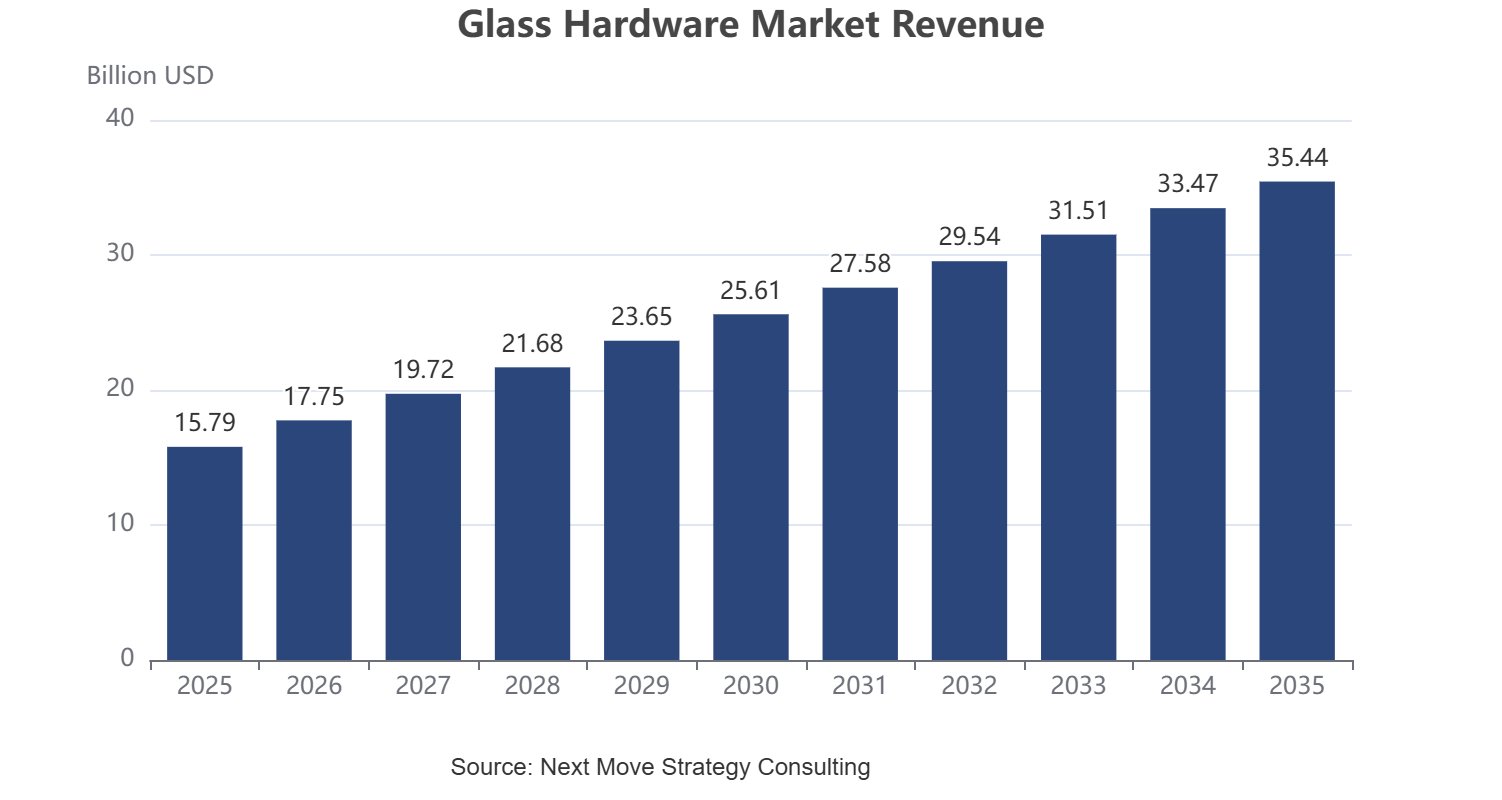
The global Glass Hardware Market size was valued at USD 15.79 billion in 2025 and is expected to be valued at USD 17.12 billion by the end of 2026. The industry is projected to grow, hitting USD 35.44 billion by 2035, with a CAGR of 8.42% between 2026 and 2035.
Glass Hardware Market Size & Forecast
|
Parameters |
Details |
|
Market Size in 2026 |
USD 17.12 billion |
|
Revenue Forecast in 2035 |
USD 35.44 billion |
|
Growth Rate |
CAGR of 8.42% from 2026 to 2035 |
|
Analysis Period |
2025–2035 |
|
Base Year Considered |
2025 |
|
Forecast Period |
2026–2035 |
|
Market Size Estimation |
Billion (USD) |
|
Companies Profiled |
20 |
|
Countries Covered |
33 |
|
Market Share |
Available for 10 companies |
The glass hardware market is currently positioned as a critical supporting segment within the broader construction and architectural ecosystem, driven by the rising adoption of glass-intensive designs across residential, commercial, and institutional applications. NMSC’s analysis indicates that key use cases include facades, partitions, doors, balustrades, and interior fit-outs, where hardware components play a vital role in ensuring both structural integrity and seamless aesthetic integration. Demand is increasingly shaped by the need for precision-engineered, durable, and design-oriented solutions that align with evolving modern architectural preferences.
Additionally, the market is progressing toward greater standardization, localization, and customization, supported by advancements in modular design and supply chain optimization. Manufacturers are aligning product development with stringent safety standards while addressing shifting customer expectations for tailored and performance-driven solutions. Glass hardware market trends further indicate that future growth is influenced by expanding construction pipelines, a growing preference for compliant and high-performance systems, and a gradual shift toward value-added offerings. Based on our interactions with industry consultants, we noticed that the market is expected to witness steady expansion, supported by both new construction activity and retrofit-driven replacement demand, with a gradual shift toward higher-value, design-integrated, and performance-optimized glass hardware systems.
What Are the Key Trends in the Glass Hardware Industry?
How Is Product Standardisation and Modular Design Reshaping the Glass Hardware Market?
The increasing emphasis on product standardisation and modular design is fundamentally transforming how glass hardware systems are manufactured, specified, and installed. Our research indicates that manufacturers are progressively shifting toward pre-engineered, interoperable components that reduce the need for extensive on-site customisation. Based on our interviews with product managers, we observed that modular systems enable faster project execution, lower labour dependency, and improved installation accuracy, particularly in large commercial developments. This trend is also supporting scalability across multi-site projects, allowing developers to maintain uniformity in design and performance. Over time, standardisation is expected to enhance supply chain predictability and reduce lifecycle maintenance complexities.
How Is Technology Integration Transforming the Glass Hardware Market?
Market research indicates that technology integration is increasingly influencing the glass hardware market by enhancing functionality, safety, and user experience across applications. Manufacturers are incorporating smart fittings, automated door systems, and sensor-enabled hardware to align with modern architectural and building automation requirements. This shift is improving operational efficiency while supporting seamless access control and convenience in residential, commercial, and institutional spaces. We also found that the growing demand for intelligent building solutions is accelerating the adoption of technologically advanced glass hardware systems. Overall, this trend is strengthening value addition and supporting market differentiation.
How Is Customisation and Design Flexibility Evolving Customer Expectations?
The rising demand for customisation and enhanced design flexibility is redefining competitive dynamics in the glass hardware market. NMSC’s findings suggest that architects, interior designers, and project owners are increasingly seeking differentiated solutions that align with specific aesthetic visions and functional requirements. The growing preference for bespoke finishes, concealed hardware systems, and minimalist design elements that complement modern architectural trends. Additionally, manufacturers are expanding their product portfolios to include configurable and application-specific solutions, enabling greater adaptability across diverse project types. This trend is not only enhancing end-user experience but also allowing manufacturers to capture higher margins through value-added, design-centric offerings.
How Are Stringent Safety and Compliance Standards Shaping Product Innovation?
Industry evidence suggests that tightening safety regulations and evolving compliance standards are playing a pivotal role in shaping innovation and product development within the market. Based on our market assessment, we noticed that regulatory authorities are increasingly mandating higher performance benchmarks related to load-bearing capacity, durability, corrosion resistance, and overall user safety. In response, manufacturers are investing in advanced materials, precision engineering, and rigorous testing protocols to ensure compliance with these evolving standards. Furthermore, certified and compliant products are gaining stronger preference among developers and institutional buyers, reflecting a growing emphasis on reliability and risk mitigation. Over the long term, adherence to stringent regulatory frameworks is expected to function both as a barrier to entry and a critical competitive differentiator, reinforcing product credibility and strengthening market trust.
Ecosystem Analysis of the Glass Hardware Industry
The infographic maps the end-to-end ecosystem of the global market, illustrating how innovation, supply chains, production systems, distribution networks, and regulatory frameworks collectively shape market development and adoption.

The global glass hardware market functions as a highly interconnected ecosystem where innovation, supply chain dynamics, manufacturing efficiency, and regulatory oversight collectively drive market evolution. Our findings suggest that rising adoption of smart glass systems, architectural modernisation, and premium construction trends are intensifying coordination across stakeholders, from raw material suppliers to end users. We also observed that manufacturers and OEMs are increasingly aligning with contractor-driven demand cycles while adapting to stricter safety and sustainability regulations. Overall, the ecosystem reflects a shift toward integrated, technology-enabled, and design-centric solutions that enhance performance, efficiency, and long-term market competitiveness.
What Are the Key Market Drivers, Breakthroughs, and Investment Opportunities that will Shape the Glass Hardware Industry in the Next Decade?
Growth Catalyst & Risk Assessment Matrix
|
DRIVERS/TRENDS/ RESTRAINTS |
(+/-) % IMPACT ON CAGR FORECAST |
GEOGRAPHIC RELEVANCE |
IMPACT TIMELINE |
|
Expansion of architectural glass applications across residential, commercial, and institutional buildings |
+2.84% |
Asia-Pacific, Middle East, North America urban construction hubs |
Medium to Long term (3-6 years) |
|
Rising urbanization and large-scale commercial infrastructure development increasing installation |
+2.63% |
Asia-Pacific (India, China, Southeast Asia), GCC countries |
Medium to Long term (3-6 years) |
|
Integration of smart and automated glass hardware systems creating premiumization opportunities |
+1.74% |
North America, Europe, high-end Asia-Pacific markets |
Medium term (2-4 years) |
|
High cost of materials and installation complexity limiting adoption |
-2.21% |
Emerging markets (India, Southeast Asia, Africa, Latin America) |
Medium term (2-5 years) |
The glass hardware industry is being strongly driven by sustained expansion in residential and commercial construction, coupled with rising adoption of premium, engineered hardware solutions. Our analysis indicates that developers, architects, and project owners are increasingly prioritizing high-performance materials such as stainless steel, aluminum, and advanced polymers, while simultaneously integrating smart and automated systems to improve security, design appeal, and operational efficiency. Furthermore, the growing penetration of digital procurement platforms and e-commerce channels is enhancing product accessibility and accelerating distribution cycles across contractors and end users. However, cost sensitivity, particularly across mid-tier residential developments and smaller commercial projects, along with ongoing raw material price volatility, continues to act as a key restraint, limiting broader adoption of high-value engineered and intelligent hardware systems.
Growth Drivers:
How Is Architectural Glass Applications Being Accelerating the Glass Hardware Market Expansion?
The proliferation of architectural glass across residential, commercial, and institutional infrastructure is a primary catalyst shaping demand for glass hardware. NMSC’s analysis indicates that the growing preference for frameless designs, transparent facades, and modern interior partitions is significantly increasing the requirement for advanced fittings such as hinges, patch fittings, sliding systems, and balustrade components. Developers are prioritizing aesthetics combined with structural integrity, thereby driving demand for precision-engineered hardware. Industry evidence suggests that urban high-rise construction and premium real estate developments are further reinforcing this trend, positioning glass hardware as a critical enabler of contemporary architectural design.
How Is Urbanisation and Commercial Infrastructure Development Driving Glass Hardware Market Growth?
Our analysis suggests that accelerating urbanisation and large-scale commercial infrastructure projects are substantially contributing to the expansion of the glass hardware ecosystem. Office complexes, retail spaces, hospitality projects, and transportation hubs increasingly incorporate glass-intensive designs to enhance space utilisation and visual appeal. According to the United Nations Department of Economic and Social Affairs in 2024, the global urban population is projected to reach 68% by 2050, reflecting long-term structural urban growth that ensures sustained demand for glass-based building systems and hardware. Furthermore, the rising investments from developers and institutional investors are translating into higher installation volumes for glass doors, partitions, and curtain wall systems. We noticed that the demand is also supported by retrofitting and renovation activities in mature markets. This sustained construction pipeline is ensuring consistent demand for both standardised and customised hardware solutions.

The above chart indicates a steady increase in urban population concentration, with cities accounting for a progressively larger share over time. In the context of the global glass hardware market, this urban shift is a key structural growth driver, as densely populated urban areas accelerate demand for modern residential and commercial infrastructure incorporating glass-based architectural systems. NMSC’s research indicates that rising urbanisation is directly enhancing market penetration by increasing construction activity and renovation projects. Consequently, this trend is fostering greater adoption of advanced, durable, and design-oriented glass hardware solutions across global urban developments.
Growth Inhibitor:
How Do Cost Sensitivity and Installation Complexity Restrain Market Expansion?
We observed that high product costs, combined with installation complexity, represent a key restraint for the market. NMSC’s assessment indicates that the use of premium-grade materials such as stainless steel and specialised coatings significantly increases procurement expenses, particularly in price-sensitive markets. Additionally, glass hardware systems require precise alignment, skilled labour, and strict adherence to safety standards, which collectively elevate overall project costs and extend installation timelines. Industry trends indicate that smaller developers and budget-constrained projects shift toward alternative materials or simplified hardware solutions to manage costs. This persistent cost-performance trade-off continues to constrain broader market penetration, especially across mid-tier construction segments where affordability and ease of installation remain critical decision factors.
Growth Opportunity:
How Is the Shift Toward Smart and Automated Glass Systems Creating New Opportunities?
Based on our assessment, we analysed that the integration of smart technologies into glass hardware systems represents a significant growth opportunity for the market. The increasing adoption of automated sliding doors, sensor-based access systems, and soft-close mechanisms is steadily transforming conventional hardware into intelligent, connected solutions. From our interviews with technology providers, we found that demand is rising for IoT-enabled hardware that enhances user convenience, operational safety, and energy efficiency. This trend is particularly pronounced across commercial buildings, airports, and premium residential developments, where automation and seamless user experience are becoming critical requirements. As global smart building ecosystems continue to expand, manufacturers that incorporate advanced connectivity and automation features into glass hardware are better positioned to differentiate their offerings, strengthen value propositions, and unlock new revenue streams.
How Is the Glass Hardware Industry Segmented in this Report, and What Are the Key Insights from the Segmentation Analysis?
Market Highlights & Strategic Insights - Glass Hardware Industry:
|
Segments |
Key Takeaways |
|
Products |
Product segmentation reflects a clear value distribution in the glass hardware market. Discrete components dominate in volume due to their widespread use in residential and small commercial applications. Engineered systems contribute higher revenue through premium installations such as frameless doors, railings, and glazing systems. Smart and automated hardware remains a smaller but fast-growing segment, supported by increasing demand for security, convenience, and integration with modern building systems. |
|
Material |
Material selection plays a critical role in determining durability, cost, and application suitability. Stainless steel leads due to its strength and corrosion resistance across diverse environments. Aluminum is widely used for its lightweight and cost advantages, particularly in large projects. Brass and bronze cater to premium aesthetic applications, while zinc alloy supports mass-market needs. Engineered polymers are gaining traction in specialized applications requiring flexibility and design adaptability. |
|
Distribution Channel |
The market operates through a project-driven distribution model, as direct sales to contractors and project owners dominate large-scale installations. Distributors and wholesalers ensure product availability across regions, while retail and e-commerce channels cater to smaller buyers and replacement demand. OEM partnerships remain important for integrated systems and large commercial developments requiring standardised solutions. |
|
End-User Industry |
The residential segment leads demand, followed by commercial office spaces, driven by urban construction and modern design trends. Hospitality and institutional sectors emphasize durability and compliance, particularly in high-traffic environments. Retail and infrastructure segments contribute niche demand, focusing on high-performance and visually appealing hardware solutions for specialised applications. |
By Product Insights
Is Product Segmentation Defining Value Creation in the Glass Hardware Market?
On the basis of products, the glass hardware market is segmented into discrete components, engineered systems, and smart & automated hardware.
Based on our assessment, we found that discrete components continue to dominate the market in terms of volume, primarily due to their essential role across nearly all glass installations. Their standardised nature, ease of replacement, and widespread applicability across residential and small commercial projects ensure consistent and recurring demand. However, NMSC’s assessment indicates that engineered systems account for a larger share of market value, as they are increasingly adopted in high-end residential, commercial, and institutional projects where integrated performance, design uniformity, and compliance are critical. These systems also enable faster installation and deliver higher margins for manufacturers. At the same time, smart and automated hardware is emerging as a high-growth segment, supported by rising adoption of intelligent building solutions, particularly in developed markets. Collectively, the market is gradually transitioning from fragmented component demand toward integrated, system-driven, and technology-enabled solutions.
By Material Insights
Is Material Selection Influencing Performance and Value Dynamics in the Glass Hardware Market?
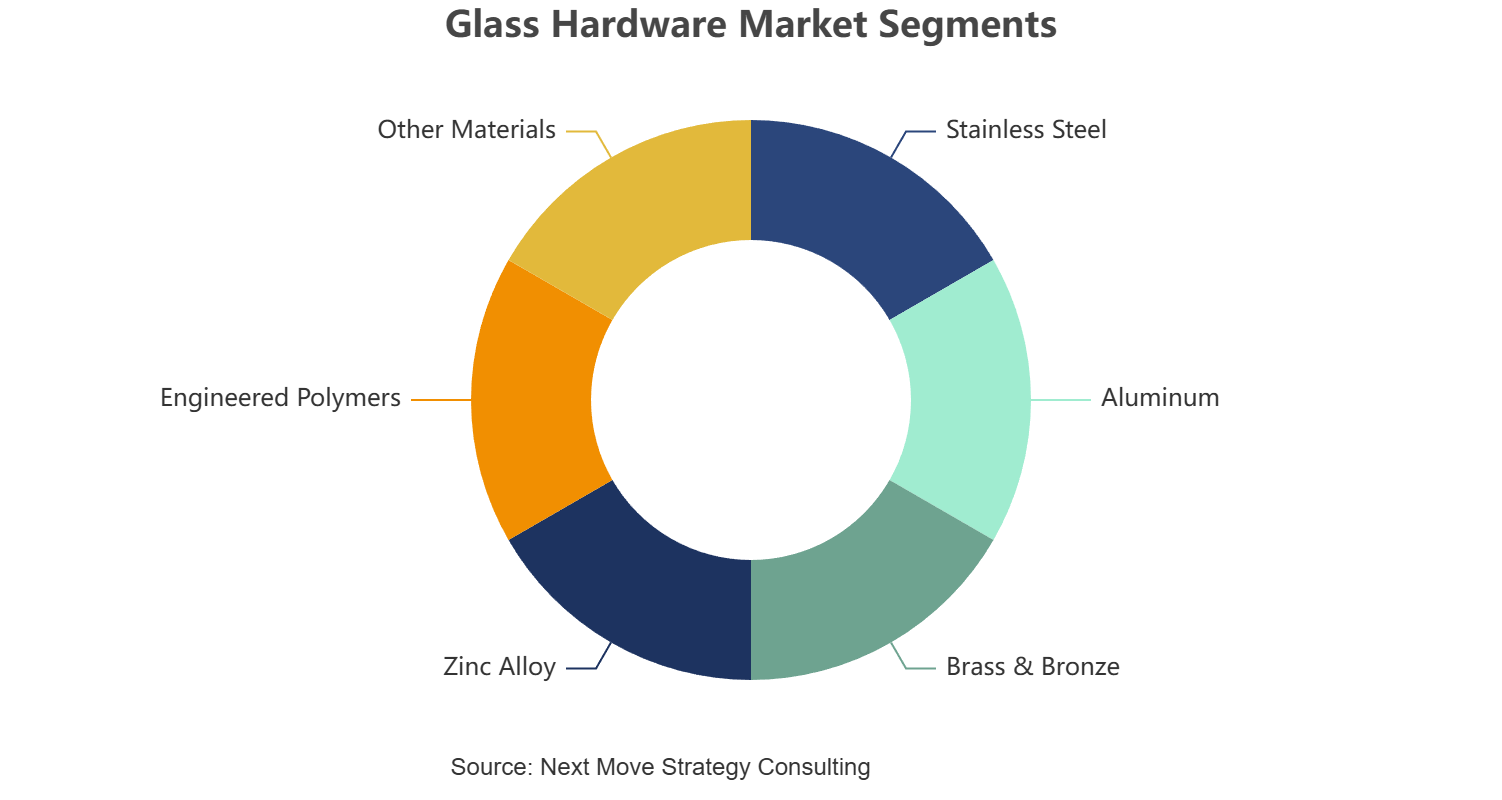
Based on material, the glass hardware market is segmented into stainless steel, aluminium, brass & bronze, zinc alloy, engineered polymers, and other materials.
We found that stainless steel clearly dominates the market due to its unmatched combination of strength, durability, and corrosion resistance, making it suitable for a wide range of applications across residential, commercial, and infrastructure projects. Aluminum follows as a strong secondary material, particularly in cost-sensitive and large-scale installations where weight and ease of fabrication are critical. Brass and bronze remain confined to premium segments, while zinc alloy supports high-volume, price-driven demand. Engineered polymers and other materials, although smaller in share, are gradually gaining importance in specialised and performance-driven applications. Overall, material selection reflects a balance between cost, performance, and application-specific requirements, with a clear dominance of metals in structural and load-bearing components.
By Distribution Channel Insights
Is Distribution Channel Strategy Shaping Market Access in the Glass Hardware Industry?
Based on the distribution channel, the glass hardware market is segmented into direct to contractor, direct to project owner, distributor & wholesaler, brick & mortar retail, e-commerce, and OEM.
Direct-to-contractor sales dominate the market, driven by the project-based nature of the industry and the need for bulk procurement, technical coordination, and timely delivery. Our research indicates that distributor and wholesaler networks form the backbone of market accessibility, particularly in fragmented and regional markets. Direct sales to project owners hold strong relevance in large-scale and premium developments, while OEM partnerships are gaining importance in integrated system delivery. E-commerce is emerging as a fast-growing channel, although from a smaller base, while brick-and-mortar retail continues to support replacement and small-scale demand. Overall, the distribution landscape reflects a hybrid model combining project-driven direct sales with broad-based channel networks.
By End-User Industry Insights
Is End-User Demand Driving Application Diversity in the Glass Hardware Market?
Based on end-user industry, the glass hardware market is segmented into residential, commercial office, hospitality, institutional, retail & display, and infrastructure.
We found that the residential segment dominates the market in terms of volume, driven by widespread adoption across housing developments and renovation activities. The commercial office segment follows closely in terms of value, supported by large-scale installations and higher adoption of engineered systems. Moreover, hospitality and institutional segments provide stable, quality-driven demand, while retail and display contribute niche, design-focused opportunities. Infrastructure, although project-dependent, adds significant value through large-scale and high-performance requirements. Overall, demand distribution reflects a balance between high-volume residential applications and high-value commercial and infrastructure-driven installations.

Regional Outlook
Geographic Performance Snapshot:
|
Geography |
Key Takeaways |
|
North America |
North America represents a mature glass hardware market, driven by strong demand from commercial construction, renovation activities, and high adoption of premium architectural designs. Demand is supported by widespread use of glass in office spaces, retail environments, and residential interiors. Advanced construction standards and strict safety regulations further encourage the use of high-quality, durable hardware solutions, particularly in engineered systems and smart-integrated applications. |
|
Europe |
Growth in Europe is shaped by stringent building regulations, sustainability standards, and a strong emphasis on high-quality materials and design aesthetics. The region shows significant demand for premium glass hardware in commercial, institutional, and heritage renovation projects. Increasing focus on energy-efficient buildings and compliance with safety norms supports the adoption of advanced and certified hardware systems, particularly in Western Europe. |
|
Asia‑Pacific |
Asia-Pacific is the fastest-growing glass hardware market share, driven by rapid urbanization, large-scale residential construction, and expanding commercial infrastructure. Strong demand is observed across emerging economies such as China, India, and Southeast Asia, supported by rising disposable incomes and evolving architectural preferences. Growth is further reinforced by increasing adoption of modern interiors and glass-intensive designs in both residential and commercial segments. |
|
Latin America |
Latin America is an emerging market for glass hardware, supported by gradual growth in construction activity and urban development. Demand is primarily driven by residential and small-scale commercial projects, with increasing adoption of cost-effective hardware solutions. While premium segments remain limited, improving economic conditions and infrastructure investments are expected to support gradual market expansion. |
|
Middle East & Africa |
The Middle East & Africa market is driven by large-scale infrastructure projects, luxury real estate developments, and government-led urban initiatives. The Middle East leads demand, particularly in high-end commercial and hospitality projects that emphasize premium glass installations, while Africa remains a developing market, with demand concentrated in urban centres and driven by basic construction needs. Growth is further supported by ongoing investments in infrastructure and urbanisation. |
The glass hardware market share is geographically studied across North America, Europe, Asia Pacific, the Middle East & Africa, and Latin America, and each region is further studied across countries.
Glass Hardware Market in North America
North America represents a mature, high-value glass hardware industry supported by sustained construction activity and strong renovation cycles. NMSC evaluation indicates that widespread use of architectural glass in office buildings, retail spaces, and premium housing continues to drive consistent demand. According to the U.S. Census Bureau, total U.S. construction spending remained above USD 2 trillion in 2025, reflecting strong sectoral momentum. From our assessment, we observed that stringent safety codes, energy-efficiency mandates, and building certifications are key procurement drivers. The region also demonstrates early adoption of automated and high-performance hardware, particularly in commercial and institutional projects. Overall, these factors collectively reinforce steady market growth and sustained demand for advanced glass hardware solutions across North America.
Glass Hardware Market in the United States
The United States dominates regional demand, driven by robust private construction activity and ongoing commercial redevelopment. According to the U.S. Census Bureau, private construction consistently contributes over 70% of total spending, supporting demand for glass-intensive installations. According to the U.S. Census Bureau, private construction remains the primary growth driver. From our interactions with industry leaders, we observed strong emphasis on compliance, durability, and modern design integration. Additionally, retrofit demand across ageing commercial infrastructure continues to create recurring opportunities for replacement and upgraded hardware systems.
For the global glass hardware market, the table below suggests softened demand from private residential and commercial projects, partially offset by steady opportunities in public and infrastructure developments. Thus, the market growth is expected to remain balanced but moderately constrained by weaker private-sector investment.
Annual Value of Construction in the United States (USD Million)
|
Type of Construction |
2024 |
2025 |
|
Total Private Construction |
1,696,044 |
1,650,755 |
|
Total Public Construction |
498,708 |
517,263 |
Glass Hardware Market in Canada
Our evaluation shows that Canada’s glass hardware market is stable, with demand concentrated in urban centers such as Toronto, Vancouver, and Montreal. The market is supported by steady residential construction and ongoing investments in institutional and infrastructure projects. According to Statistics Canada, building construction investment has remained above USD 14.8 billion in recent periods. Furthermore, climatic conditions significantly influence material selection, with a strong preference for corrosion-resistant and high-durability hardware. Sustainability initiatives and green building certifications are also shaping procurement decisions, encouraging the adoption of energy-efficient and compliant systems. The market demonstrates a balanced demand profile, with steady uptake across both discrete components and engineered systems, particularly in high-rise residential and commercial developments.
Glass Hardware Market in Europe
NMSC’s analysis indicates that Europe represents a highly regulated and sustainability-driven market, where compliance and environmental performance serve as key determinants of product adoption. Demand is supported by both new construction activities and the large-scale renovation of ageing building stock. According to the European Commission, approximately 75% of buildings in the EU are energy inefficient, highlighting a substantial retrofit opportunity across the region. Regulatory requirements such as CE certification, stringent safety standards, and environmental compliance frameworks remain essential for market entry. Western Europe leads in the adoption of premium glass hardware solutions, whereas Central and Eastern Europe are witnessing moderate growth driven by ongoing infrastructure development. To conclude, the market is characterized by strong demand for high-quality, durable, and regulation-compliant hardware systems, reinforcing a performance- and standards-driven competitive landscape.
Glass Hardware Market in the United Kingdom
Our market assessment suggests that the UK glass hardware market is driven by a combination of commercial refurbishment, infrastructure upgrades, and ongoing urban housing development. Demand remains particularly strong across office spaces and retail environments, where modern glass-centric designs are widely adopted to enhance aesthetics and functionality. From our interactions with contractors, we observed a strong emphasis on fire safety regulations, structural compliance, and long-term durability, which are critical decision-making factors in product selection. The market is also witnessing gradual adoption of engineered systems and premium hardware solutions, especially within high-value and complex developments. In addition, increasing focus on sustainability and energy efficiency is influencing procurement patterns, creating opportunities for advanced, compliant, and performance-driven glass hardware solutions.
Glass Hardware Market in Germany
Our analysis reveals that Germany represents one of the most advanced markets in Europe, characterized by rigorous engineering standards and high-quality construction practices. Demand is supported by industrial construction, commercial development, and a strong push toward energy-efficient building initiatives. From our evaluation, we observed that buyers place significant emphasis on precision-engineered, durable, and certified hardware solutions, reflecting a quality- and performance-driven procurement approach. The market also benefits from close alignment with sustainability objectives, which is accelerating the adoption of advanced materials and engineered systems. Thus, Germany’s strong focus on innovation, compliance, and technical excellence positions it as a key market for high-performance glass hardware solutions.
Glass Hardware Market in France
Our regional assessment indicates that France maintains a stable glass hardware market, supported by public infrastructure investments and ongoing residential development programs. Demand is further reinforced by urban renewal initiatives and government-backed construction activities across key cities. We observed that product selection is influenced by a combination of regulatory compliance requirements and evolving aesthetic preferences, particularly in modern architectural glass designs. The market demonstrates balanced demand across standard components and premium engineered systems, with stronger uptake in commercial and institutional applications. In addition, sustainability targets and EU directives are encouraging the adoption of energy-efficient and environmentally compliant hardware solutions, reinforcing a steady and regulation-driven market outlook.
Glass Hardware Market in Italy
Italy’s glass hardware landscape is significantly influenced by renovation and heritage restoration activities, with a substantial share of demand originating from the refurbishment of historic buildings and tourism-related infrastructure. According to the Italian National Institute of Statistics, construction activity continues to be supported by renovation-driven incentives, reinforcing market stability. We observed a strong preference for customized and aesthetically refined hardware solutions, reflecting the country’s emphasis on design and architectural preservation. Demand remains particularly robust across residential and hospitality sectors, where visual appeal and detailing play a central role. The market also demonstrates higher adoption of premium materials such as stainless steel and brass, especially in high-end applications, positioning Italy as a design-centric and value-driven market within the region.
Glass Hardware Market in Spain
Spain’s glass hardware market is undergoing a steady recovery phase, supported by renewed momentum in residential construction and tourism-led infrastructure development. According to the National Institute of Statistics, construction output has shown consistent improvement, particularly in urban and coastal regions. From our assessment, we noticed that hospitality projects such as hotels and resorts are key demand drivers, requiring aesthetically refined and durable hardware solutions. Additionally, urban residential developments are increasingly incorporating modern glass-based interiors, supporting demand for both discrete components and engineered systems. While cost sensitivity remains relevant, particularly in mid-tier projects, there is a gradual shift toward higher-quality materials. The refurbishment of existing infrastructure and retail spaces also presents incremental growth opportunities, making Spain a moderately expanding but opportunity-rich market.
Glass Hardware Market in the Nordics
In the Nordics, comprising Sweden, Norway, Denmark, and Finland, our assessment indicates that the region represents a high-value, sustainability-led market with strong emphasis on advanced construction practices and environmental compliance. From our market evaluation, we noticed that extreme climatic conditions necessitate the use of corrosion-resistant, durable, and high-performance materials, particularly in exterior applications. The region is also characterised by strong adoption of minimalist architectural designs, which heavily rely on glass-based solutions. Regulatory frameworks focused on energy efficiency and carbon reduction further influence procurement decisions. As a result, demand is skewed toward premium, engineered hardware systems that meet stringent standards, making the Nordics a niche but technologically advanced market.
Glass Hardware Market in the Asia-Pacific
Asia-Pacific is the fastest-growing region in the glass hardware market, driven by rapid urbanization, large-scale infrastructure projects, and expanding residential construction. According to the World Bank, urban population growth continues to accelerate across the region, directly supporting construction demand. We found that emerging economies such as China, India, and Southeast Asian countries are witnessing strong adoption of glass-intensive designs in both residential and commercial sectors. Increasing disposable incomes and evolving lifestyle preferences are also encouraging the use of modern interiors. While cost-sensitive demand dominates in developing markets, there is a visible shift toward engineered systems and higher-quality materials in urban centres, indicating long-term market evolution.
Glass Hardware Market in China
Our analysis indicates that China remains the largest and most influential market within the Asia-Pacific region, supported by its expansive construction ecosystem and continuous infrastructure development. Demand spans residential housing, commercial complexes, and public infrastructure projects, creating a high-volume and consistently active market for glass fittings solutions. While cost efficiency continues to be a key purchasing factor, there is a growing emphasis on quality, safety, and regulatory compliance, particularly within urban and large-scale developments. The sheer scale of construction activity ensures sustained demand for both standard components and engineered systems, while ongoing modernisation efforts are gradually accelerating the adoption of higher-value, performance-driven solutions across the market.
Glass Hardware Market in Japan
Japan represents a mature and stability-oriented market, characterised by stringent standards of quality, safety, and precision engineering. According to the Statistics Bureau of Japan, construction investment remains relatively stable, with a strong emphasis on renovation and redevelopment activities. Demand is primarily driven by the refurbishment of ageing buildings and urban redevelopment projects, particularly across major metropolitan areas such as Tokyo and Osaka. Space optimization requirements and advanced architectural designs are encouraging the adoption of compact, high-performance hardware solutions. The market is also witnessing gradual uptake of automated and smart systems, especially within commercial and institutional applications, reinforcing Japan’s position as a technologically advanced market with steady, long-term growth prospects.
Glass Hardware Market in India
Our assessment indicates that India is one of the fastest-growing glass hardware markets globally, driven by rapid urbanisation, expanding real estate activity, and large-scale infrastructure investments. From our market evaluation, we observed that demand is primarily supported by residential housing and commercial developments, with increasing adoption of glass-based designs across urban centres. While cost sensitivity remains a defining market characteristic, there is a gradual shift toward premium and engineered solutions, particularly in Tier 1 cities. Government-led initiatives focused on infrastructure development and smart cities are further reinforcing demand momentum. Overall, these factors position India as a high-growth market with strong long-term potential, supported by both volume expansion and evolving product preferences.
Glass Hardware Market in South Korea
South Korea represents a technologically advanced and stable glass hardware market, supported by modern construction practices and high urban density. Demand is primarily driven by high-rise residential complexes and commercial developments, where contemporary glass-centric architectural designs are widely adopted. The market demonstrates a strong preference for high-quality, durable, and aesthetically refined hardware solutions, reflecting a performance- and design-oriented procurement approach. In addition, the increasing integration of smart building technologies is encouraging the adoption of automated and connected hardware systems, particularly in premium and large-scale projects. Overall, these factors reinforce South Korea’s position as a mature, innovation-driven market with steady demand for advanced glass hardware solutions.
Glass Hardware Market in Taiwan
Based on our assessment of Taiwan’s market, we analysed that Taiwan’s represents a niche yet stable segment, supported by ongoing urban development and commercial construction activity. Demand is largely concentrated in high-quality applications that require durable and reliable hardware solutions, reflecting a performance-driven market orientation. The market places greater emphasis on longevity and precision rather than volume expansion, with moderate adoption of premium materials and engineered systems. Additionally, increasing urban redevelopment and commercial expansion are expected to support gradual growth, positioning Taiwan as a steady, quality-focused market within the region.
Glass Hardware Market in Indonesia
Indonesia represents an emerging glass hardware market with strong growth potential, driven by expanding infrastructure development and rising residential construction activity. Demand is largely concentrated in cost-sensitive segments, with a strong preference for affordable and functionally efficient hardware solutions. Rapid urbanisation and population growth are accelerating residential construction, while government-led infrastructure initiatives are supporting demand across commercial applications. Overall, as economic development continues to progress, the market presents significant long-term opportunities, supported by increasing construction activity and gradual evolution in product adoption.
Glass Hardware Market in Australia
Our regional assessment indicates that Australia represents a developed and stable glass hardware market, supported by consistent residential construction and ongoing commercial development activity. From our observations, demand is strongly influenced by stringent regulatory frameworks, sustainability standards, and high consumer expectations for quality and performance. The market demonstrates robust adoption of premium materials and engineered systems, particularly across urban residential and commercial projects. In addition, growing environmental considerations are driving demand for energy-efficient and compliant hardware solutions, reinforcing a quality-focused and regulation-driven market landscape.
Glass Hardware Market in Latin America
Our regional analysis indicates that Latin America represents an emerging glass hardware market, characterised by gradual improvements in construction activity and ongoing urban development. Demand is primarily driven by residential and small-scale commercial projects, with a strong emphasis on cost-effective and functional solutions. While adoption of premium hardware remains relatively limited, increasing urbanisation and improving economic conditions are expected to support steady market expansion. In addition, infrastructure development initiatives across select countries are contributing to demand, reinforcing a gradually evolving market with long-term growth potential.
Glass Hardware Market in the Middle East & Africa
Our evaluation indicates that the Middle East & Africa region presents a mixed growth landscape, with strong momentum in the Middle East and emerging potential across Africa. GCC countries are driving demand through large-scale infrastructure developments and luxury real estate projects, where premium glazing hardware solutions are widely adopted. In contrast, Africa represents a developing market, with demand largely concentrated in urban centres and driven by fundamental construction requirements. While the Middle East reflects a high-value, project-driven market, Africa continues to evolve through gradual urbanisation and expanding construction activity. Overall, the region offers long-term growth opportunities, supported by ongoing urban development and government-led infrastructure initiatives.
Porter’s Five Forces Analysis of the Glass Hardware Market
The Porter’s Five Forces framework for the glass hardware market evaluates key competitive pressures shaping industry structure, profitability, and long-term growth dynamics.

This Porter’s Five Forces analysis outlines the structural competitiveness of the glass hardware market, highlighting how core industry pressures influence pricing power, innovation intensity, and profitability. Industry evaluation suggests that rising construction activity is strengthening demand while simultaneously intensifying rivalry among manufacturers. Supplier dependence on specialised metals and fluctuating raw material costs adds cost pressure across the value chain. Meanwhile, strong buyer influence from contractors and developers continues to shape pricing strategies. Overall, the framework indicates a moderately consolidated yet highly competitive market environment where differentiation and supply chain efficiency are critical for sustained growth and resilience.
Competitive Landscape
Competitive Dynamics & M&A Landscape:
|
Key Takeaways |
|
The competitive landscape is shaped by global access solution leaders such as dormakaba Holding AG and ASSA ABLOY AB, alongside niche specialists like Q-railing Europe GmbH & Co. KG. These players collectively drive market evolution through scale, technological integration, and premium product offerings, particularly across architect-driven commercial and high-end residential applications. |
|
Industry analysis suggests that global companies emphasize integrated access ecosystems, automation, and high-performance solutions, whereas regional and mid-sized players compete through cost efficiency, customization, and strong distribution networks. Specialists continue to differentiate through design-centric and façade-oriented hardware systems, targeting premium infrastructure segments. |
|
Innovation is centered on smart integration, modular hardware systems, automated door technologies, and sensor-based access control solutions. Companies such as GEZE GmbH and Sugatsune Kogyo Co., Ltd. are advancing product capabilities through engineering precision and user-centric design, reinforcing competitive differentiation across global markets. |
Which Companies Dominate the Glass Hardware Market and How Do They Compete?
Based on our analysis, we found that companies such as dormakaba Holding AG, ASSA ABLOY AB, GEZE GmbH, Q-railing Europe GmbH & Co. KG, and Sugatsune Kogyo Co., Ltd. are collectively shaping the competitive landscape through diversified product portfolios and strong technological positioning. dormakaba and ASSA ABLOY compete at scale through integrated access ecosystems, combining mechanical hardware with digital access and security platforms, while GEZE and Q-railing emphasize engineering precision and architectural specialization. Recent 2025 disclosures, particularly dormakaba’s continued expansion of digital access solutions, highlight a clear industry shift toward smart, connected infrastructure. Our evaluation indicates that competition is increasingly moving beyond standalone components toward lifecycle solutions, including installation, maintenance, and system integration across commercial and institutional environments.
Market Dominated by Glass Hardware Giants and Specialists
Industry analysis suggests that the glass hardware market operates through a layered competitive structure, where global giants and niche specialists coexist yet increasingly compete within overlapping segments. Large multinational players such as ASSA ABLOY AB leverage extensive distribution networks, strong brand equity, and acquisition-led expansion strategies to maintain leadership. In parallel, specialised firms like Comenza, S.L. and Logli Massimo S.p.A. focus on high-end architectural applications, particularly in railing and glazing systems. This dynamic creates a competitive environment where scale advantages coexist with specialised expertise, intensifying competition across both standard and high-value segments.
Innovation and Adaptability Drive Market Success
Innovation is emerging as the primary differentiator in the glass hardware market, particularly in areas such as automation, sustainability, and user-centric design. Based on our interactions with product managers, we found that companies are increasingly focusing on IoT-enabled access systems, energy-efficient door mechanisms, and modular glass hardware solutions that are easily integrated into modern buildings. GEZE GmbH has highlighted advancements in energy-efficient automatic door systems aligned with European sustainability standards, while Sugatsune Kogyo Co., Ltd. continues to introduce precision-engineered motion-control and soft-close technologies. Our research suggest that these innovations are collectively driving a transition toward high-performance, intelligent systems, where functionality, durability, and seamless user experience are becoming critical competitive parameters.
Market Players to Opt for Merger & Acquisition Strategies to Expand Their Presence
Mergers and acquisitions are playing a pivotal role in reshaping the competitive dynamics of the glass hardware market, particularly among large multinational players. We found that ASSA ABLOY AB continues to actively pursue acquisitions in 2025 to strengthen its presence in entrance automation and architectural hardware segments, as reflected in its investor communications. Similarly, dormakaba Holding AG is focusing on strategic investments and portfolio optimisation to expand its digital access and smart building solutions. These strategic moves are not only enhancing product capabilities but also enabling companies to expand geographically and integrate vertically. The trend is accelerating market consolidation, raising entry barriers, and pushing smaller players toward specialisation or partnership-driven growth models.
List of Key Glass Hardware Companies
-
GEZE GmbH
-
SIMONSWERK GmbH
-
Q-railing Europe GmbH & Co. KG
-
Comenza, S.L.
-
Sugatsune Kogyo Co., Ltd.
-
Plaxo Overseas
-
Bohle AG
-
Logli Massimo S.p.A.
-
Gaoyao Ruifa Hardware Manufacturing Co., Ltd.
-
Batul Hardware Co., Ltd.
-
Janson Exports
-
Dongguan Loire Hardware Co., Ltd.
-
Coras Industries
-
AV Industries
-
Zhaoqing Gaoyao Allwin Architectural Hardware Co., Ltd.
-
Goldtech Hardware Corporation Limited
-
King Hardware Co., Ltd.
-
Stahlok Limited
What Are the Latest Key Industry Developments?
Companies such as dormakaba Holding AG, ASSA ABLOY AB, GEZE GmbH, Q-railing Europe GmbH & Co. KG, and Sugatsune Kogyo Co., Ltd. collectively shape the global glass hardware market through continuous product innovation, strategic capacity expansion, and increasing integration of smart and automated solutions. NMSC’s assessment indicates that their focus on energy-efficient systems, IoT-enabled access technologies, and premium architectural hardware is elevating product standards across commercial and residential applications. These developments are also influencing procurement preferences, pushing the market toward higher-value engineered systems. Furthermore, their expansion initiatives and technology-driven portfolios are strengthening global supply chains, accelerating the adoption of advanced glass hardware solutions, and reinforcing the market’s transition toward integrated, design-centric, and performance-driven offerings.
Expert Insights
 “At GEZE, we have understood that buildings make an important contribution to sustainably reducing energy consumption and therefore CO2 emissions. That’s why smart and energy-saving solutions are more than ever the focus for our customers and us.”
-Sandra Alber, Chief Officer Legal & Finance at GEZE
Statement made in the context of the growing emphasis on sustainable building technologies and energy-efficient architectural systems within the global glass and door hardware industry.
Market Interpretation
The statement highlights the increasing integration of sustainability and energy efficiency considerations into the glass hardware and building systems market. Industry evaluation suggests that manufacturers are prioritizing smart, automated, and energy-optimised solutions that contribute to reduced operational energy consumption in buildings. This shift is particularly relevant in applications such as automated doors, facade systems, and access control solutions, where performance efficiency and environmental compliance are becoming key procurement criteria. Additionally, evolving regulatory frameworks and green building standards are further accelerating the adoption of such technologies. Overall, this trend is reinforcing the transition toward intelligent, high-performance, and sustainability-driven glass hardware systems across global construction markets.
SWOT Analysis of the Glass Hardware Market
The following SWOT analysis highlights the key internal and external factors shaping the growth trajectory of the glass hardware market across global construction and architectural applications.

Our evaluation indicates that the glass hardware market is shaped by strong urbanisation-led demand and increasing integration of modern architectural glass solutions. Growth is supported by expanding residential, commercial, and institutional construction activities, along with rising adoption of smart and automated hardware systems in premium developments. However, challenges such as import dependency, installation complexity, and raw material price fluctuations continue to pressure cost structures and supply stability. Overall, the market is transitioning toward technology-driven and design-oriented solutions, where long-term competitiveness depends on innovation, quality assurance, and resilient supply chains across global construction ecosystems.
What Are the Key Factors Influencing Investment Analysis & Opportunities in the Glass Hardware Market?
Investment activity in the glass hardware market is increasingly concentrated around technology-led transformation in building systems and integrated architectural solutions. Our research indicates that investors are prioritizing firms capable of delivering end-to-end solutions combining mechanical hardware, automation, and digital access infrastructure. This shift is driving capital toward companies with strong engineering depth, scalable product ecosystems, and recurring service-oriented business models. From our evaluation, we noticed that funding sentiment is increasingly influenced by the ability to align with smart building adoption, sustainability mandates, and lifecycle efficiency requirements rather than standalone product strength.
Our analysis further suggests that investment hotspots are emerging across fast-urbanising regions in the Asia-Pacific and infrastructure-expanding economies in the Middle East, where demand for modern construction systems is accelerating. At the same time, developed markets continue to attract capital for premium and compliance-driven innovations, particularly in renovation and energy-efficient building upgrades. We also observed growing investor interest in niche manufacturers and OEM suppliers that enable customization and modular deployment. This is creating strategic opportunities in smart integration technologies, advanced glazing systems, and automated access solutions, reinforcing a long-term shift toward innovation-driven consolidation across the value chain.
Key Benefits for Stakeholders:
Next Move Strategy Consulting (NMSC) provides a comprehensive and evidence-based analysis of the glass hardware market, covering historical developments from 2020 to 2025 and offering forward-looking forecasts through 2035. Our study assesses the market at global, regional, and country levels, combining quantitative outlooks with qualitative insights into key growth drivers, adoption constraints, technology evolution, and investment dynamics across major glass hardware segments.
The glass hardware market delivers differentiated value across investors, customers, and ecosystem stakeholders through a combination of technological evolution, construction modernization, and regulatory alignment. Investors benefit from exposure to a structurally expanding segment driven by smart infrastructure adoption, integrated building systems, and increasing preference for premium architectural solutions, enabling long-term value creation through consolidation and innovation-led differentiation. From a customer standpoint, we observed that developers, architects, and contractors gain access to more advanced, durable, and design-flexible hardware systems that enhance safety, aesthetics, and operational efficiency across residential, commercial, and institutional projects.
Market evidence further suggests that regulatory frameworks focused on energy efficiency, building safety, and sustainability further reinforce the adoption of high-performance solutions. At the ecosystem level, suppliers and technology providers benefit from rising demand for modular systems, digital access integration, and standardised compliance-driven products, collectively strengthening supply chain efficiency and encouraging continuous product innovation across the value chain.
|
Parameters |
Details |
|
Customization Scope |
Free customization (equivalent to up to 80 analyst-working hours) after purchase. Addition or alteration to country, regional & segment scope. |
|
Pricing and Purchase Options |
Avail customized purchase options to meet your exact research needs. |
|
Approach |
In-depth primary and secondary research; proprietary databases; rigorous quality control and validation measures. |
|
Analytical Tools |
Porter's Five Forces, SWOT, value chain, and Harvey ball analysis to assess competitive intensity, stakeholder roles, and relative impact of key factors. |
Glass Hardware Market Key Segments
By Products
-
Discrete Components
-
Clamps & Connectors
-
Hinges & Pivots
-
Handles & Pulls
-
Rollers & Tracks
-
Locks & Latches
-
Fasteners & Anchors
-
Seals & Gaskets
-
Other Discrete Components
-
-
Engineered Systems
-
Balustrade & Railing Systems
-
Frameless Door Systems
-
Sliding Door Systems
-
Shower Enclosure Systems
-
Point-Fixed & Glazing Systems
-
Other Engineered Systems
-
-
Smart & Automated Hardware
-
Automated Door Operators
-
Electronic Locks & Access Control
-
Smart Sensors & Integration Modules
-
Other Smart Hardware
-
By Material
-
Stainless Steel
-
Aluminum
-
Brass & Bronze
-
Zinc Alloy
-
Engineered Polymers
-
Other Materials
By Distribution Channel
-
Direct to Contractor
-
Direct to Project Owner
-
Distributor & Wholesaler
-
Brick & Mortar Retail
-
E-commerce
-
OEM
By End-User Industry
-
Residential
-
Commercial Office
-
Hospitality
-
Institutional
-
Retail & Display
-
Infrastructure
Geographical Breakdown
-
North America: U.S., Canada, and Mexico.
-
Europe: UK, Germany, France, Italy, Spain, Sweden, Denmark, Finland, the Netherlands, and the rest of Europe.
-
Asia Pacific: China, India, Japan, South Korea, Taiwan, Indonesia, Vietnam, Australia, Philippines, Malaysia and the rest of APAC.
-
Middle East & Africa (MEA): Saudi Arabia, UAE, Egypt, Israel, Turkey, Nigeria, South Africa, and the rest of MEA.
-
Latin America: Brazil, Argentina, Chile, Colombia, and the rest of LATAM.
Conclusion & Recommendations
Based on our evaluation, we found that the glass hardware market is transitioning from a component-driven industry to a system-integrated, technology-enabled ecosystem. Demand is increasingly shaped by smart infrastructure adoption, architectural modernisation, and stricter sustainability and safety requirements across global construction markets. Industry evidence suggests that competitive advantage is now defined less by standalone product supply and more by the ability to deliver integrated solutions combining design flexibility, automation, and long-term performance reliability. We also observed that global and regional players are converging toward premiumization, with innovation in materials, modular systems, and digital access technologies reshaping value creation across the industry.
The sector continues to evolve toward higher levels of automation, customisation, and sustainability alignment, particularly across urban infrastructure and commercial real estate development. Competition between global system providers and specialised manufacturers is intensifying as product differentiation increasingly shifts toward technology integration and lifecycle service capabilities. Executives and investors prioritise participation in firms with strong innovation pipelines, scalable integrated systems, and exposure to fast-growing urban construction markets. Value creation is strongest where companies align with regulatory-driven modernisation and offer end-to-end architectural solutions, enabling long-term positioning in a consolidating and increasingly technology-led market landscape.
About the Author
 Mayurima Roy
— Mayurima Roy is Research Analyst at Next Move Strategy Consulting, where she has spent 4 years working across the firm's full industry coverage rather than a single fixed vertical. Her work centers on structured research, ongoing trend tracking, competitive assessment, and insight-led content development, translating complex market data into clear, decision-ready narratives that support informed client decision-making across diverse global industries, market sectors, and world regions every day.
Mayurima Roy
— Mayurima Roy is Research Analyst at Next Move Strategy Consulting, where she has spent 4 years working across the firm's full industry coverage rather than a single fixed vertical. Her work centers on structured research, ongoing trend tracking, competitive assessment, and insight-led content development, translating complex market data into clear, decision-ready narratives that support informed client decision-making across diverse global industries, market sectors, and world regions every day.
About the Reviewer
 Supradip Baul
— Supradip Baul is an accomplished business consultant and strategist with over a decade of rich experience in market intelligence, strategy, technology, and business transformation. His work has included rigorous qualitative and quantitative analysis across multiple industries, helping clients shape investment decisions and long-term roadmaps. Earlier in his career, he was associated with Gartner, where he contributed to industry-leading reports and market share analyses. He has worked with leading global companies and holds an MBA with a dual specialization in Marketing and Finance.
Supradip Baul
— Supradip Baul is an accomplished business consultant and strategist with over a decade of rich experience in market intelligence, strategy, technology, and business transformation. His work has included rigorous qualitative and quantitative analysis across multiple industries, helping clients shape investment decisions and long-term roadmaps. Earlier in his career, he was associated with Gartner, where he contributed to industry-leading reports and market share analyses. He has worked with leading global companies and holds an MBA with a dual specialization in Marketing and Finance.
At Next Move Strategy Consulting, we understand that insightful market research is the cornerstone of successful business decisions. That's why we employ a robust and multifaceted approach, combining various methodologies to deliver the most accurate and actionable data for our clients.

Research Landscape
We navigate the world of research with two primary approaches:
Qualitative Approach
Our qualitative research methodologies involve immersive techniques such as in-depth interviews, focus groups, and observational studies. By engaging directly with individuals and stakeholders, we uncover valuable insights that quantitative data alone may overlook.

Quantitative Research
In tandem with qualitative methodologies, NMSC leverages the power of Quantitative Research to provide a robust foundation of numerical insights. Through systematic data collection and analysis, we quantify patterns, preferences, and market trends, offering a comprehensive view of the business landscape.
Our quantitative research approach employs diverse tools, including surveys, experiments, and statistical modelling. These methodologies enable us to gather data from a large and representative sample, ensuring the statistical significance of our findings. By employing structured questionnaires and standardized data collection methods, we guarantee the reliability and validity of the information we present to our clients.
Quantitative research is particularly effective in measuring the prevalence of trends, assessing market size, and gauging the impact of various factors on consumer behavior. The numerical precision attained through this approach equips our clients with actionable insights, facilitating data-driven decision-making and strategy formulation.


Our Specialized Toolbox for Industry-Specific Market Research
We deploy a specialized arsenal of techniques tailored to meet your unique requirements. Here's a glimpse into our comprehensive toolbox:

Information Procurement
The stage entails acquiring market data or relevant information through various sources and methodologies.


Market Research Approach
We utilize both top-down and bottom-up approaches in market research analysis to achieve a comprehensive understanding of the market dynamics, leveraging the broad perspective of industry trends and macroeconomic factors alongside detailed insights from specific segments and individual companies.

Porters Five Forces Analysis
We conduct Porter's Five Forces analysis to evaluate the competitive landscape of an industry, providing us with insights into factors that affect profitability and strategic positioning.

SWOT Analysis

Forecasting
We utilize a forecasting model to predict future consumption by considering parameters like population, economics, regulations, market competition, drivers, constraints, technology, and pricing. We also employ statistical techniques such as multilinear regression, exponential smoothing, moving average, ARIMA, and Monte Carlo simulations for accurate predictions. In econometric forecasting, we analyzed short-term and long-term event impacts, attributing values based on regulatory frameworks, economic factors, and market events.





 Speak to Our Analyst