Iron Chelates Market By Chemistry (Fe-EDTA, Fe-DTPA, Fe-EDDHA, Fe-EDDHSA, Fe-HBED, Fe-HEDTA, Fe-IDHA, Amino Acid Chelate, Other), By Physical Form (Liquid, Solid, Other), By Application Mode (Soil, Foliar, Fertigation, Hydroponics, Seed Treatment, Other), By Crop Type (Field Crops, Fruits & Vegetables, Turf & Ornamentals, Plantation Crops, Other), By Channel (Direct, Distributor, Retail, E-commerce, Formulator, Other) – Global Analysis & Forecast, 2025–2035
Industry: Agriculture | Publishing Date: July 10, 2026 | Last Updated: September 30, 2026 | No of Pages: N/A | No. of Tables: N/A | No. of Figures: N/A | Format: PDF | Report Code: AG5082
Industry Outlook
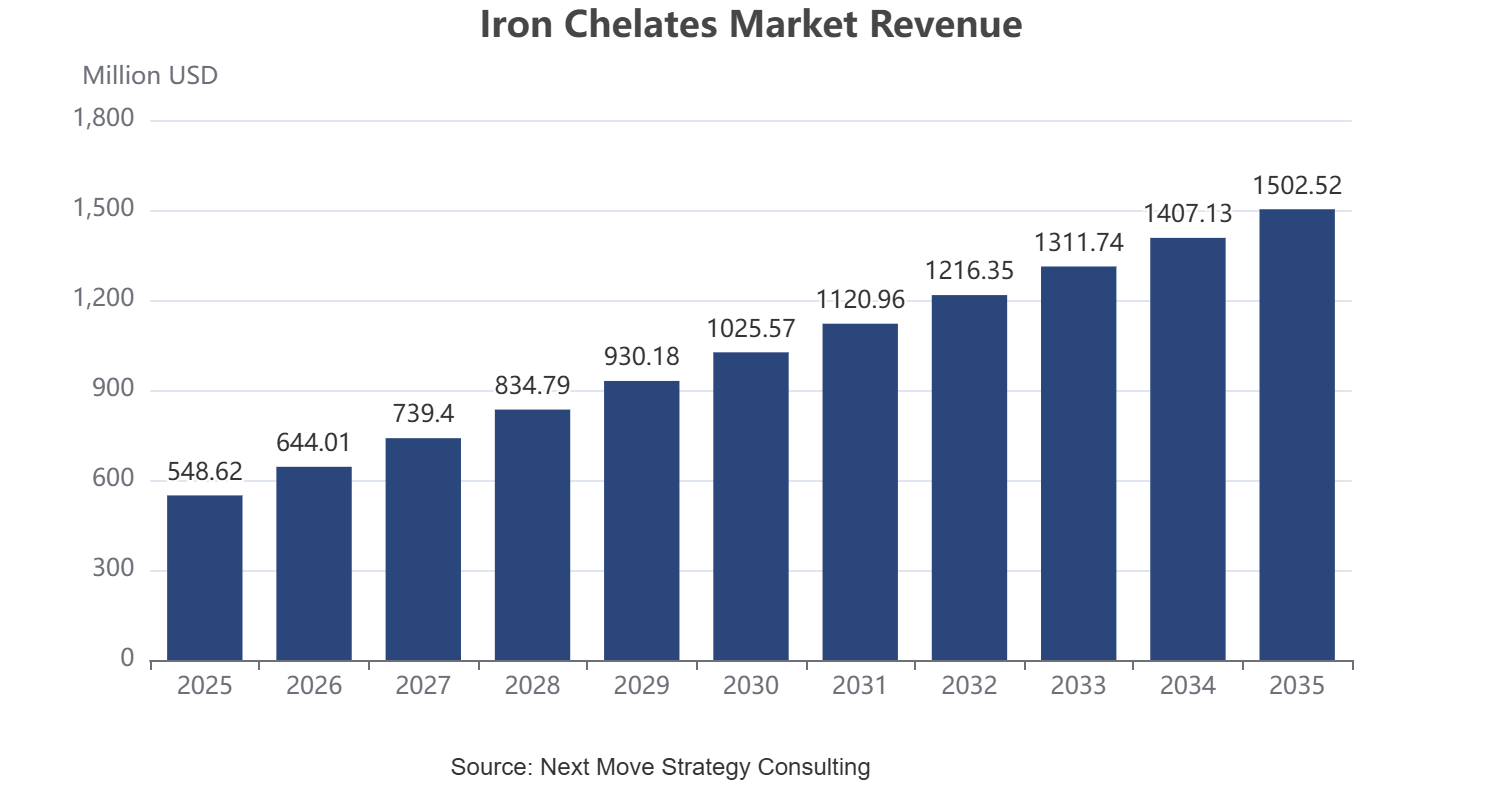
The Iron Chelates Market size was valued at USD 548.62 million in 2025 and is expected to be valued at USD 606.77 million by the end of 2026. The industry is projected to grow, hitting USD 1502.52 million by 2035, with a CAGR of 10.6% between 2026 and 2035.
Iron Chelates Market Size & Forecast
|
Parameters |
Details |
|
Market Size in 2026 |
USD 606.77 million |
|
Revenue Forecast in 2035 |
USD 1502.52 million |
|
Growth Rate |
CAGR of 10.6% from 2026 to 2035 |
|
Analysis Period |
2025–2035 |
|
Base Year Considered |
2025 |
|
Forecast Period |
2026–2035 |
|
Market Size Estimation |
Million (USD) |
|
Companies Profiled |
20 |
|
Countries Covered |
33 |
|
Market Share |
Available for 10 companies |
NMSC’s assessment indicates that the iron chelates market is being reshaped by several structural trends, primarily driven by the global shift toward sustainable agriculture and stricter input efficiency regulations. Farmers are increasingly adopting precise and environmentally responsible nutrient management practices that reduce chemical losses and improve soil health. This has strengthened demand for highly efficient micronutrient solutions, with iron chelates gaining prominence due to their superior stability and effectiveness across diverse and challenging soil conditions. In parallel, precision agriculture techniques such as fertigation and foliar feeding are being widely integrated, enabling better nutrient uptake and more targeted application strategies aligned with modern regulatory and sustainability frameworks.
In addition, the evolution of application methods and the rising adoption of climate-resilient farming practices are significantly influencing usage patterns within the iron chelates market. Integrated nutrient delivery systems, supported by drip irrigation and data-driven application schedules, are improving efficiency and correcting deficiencies more rapidly. At the same time, we observed that climate variability is increasing reliance on stabilized micronutrient formulations that can perform consistently under stress conditions and variable soil environments. The expansion of specialty crop cultivation is accelerating demand for iron chelates, as high-value fruits, vegetables, and greenhouse crops require precise micronutrient balance to maintain quality and yield uniformity. Overall, these combined factors are reinforcing iron chelates as a critical component of modern, precision-oriented, and sustainability-driven agricultural production systems worldwide.
What Are the Key Trends in the Iron Chelates Industry?
How Are the Expansion of Sustainable Agriculture and Input Efficiency Regulations Shaping Micronutrient Usage Patterns?
Our market analysis suggests that the growing emphasis on sustainable agriculture is steadily transforming micronutrient application practices across global farming systems. Increasing regulatory focus on input efficiency, soil conservation, and reduced chemical dependency is encouraging farmers to adopt more precise and environmentally responsible fertilization methods. These developments are shifting demand toward micronutrient solutions that offer higher uptake efficiency and lower environmental losses. Moreover, iron chelates are gaining traction due to their stability and ability to deliver nutrients effectively even in challenging soil conditions. Additionally, sustainability-oriented farming frameworks are promoting balanced nutrient programs that minimize over-application and improve long-term soil health. Precision application techniques, including fertigation and foliar feeding, are also being integrated with micronutrient use to enhance efficiency. As a result, agricultural stakeholders are increasingly aligning nutrient strategies with regulatory expectations and sustainability goals, thereby reshaping purchasing decisions and reinforcing the role of efficient micronutrient formulations in modern crop production systems.
How Is the Evolution of Application Methods Transforming Iron Chelates Usage in Modern Agriculture?
The application of nutrients in agriculture is shifting from traditional soil-based methods toward more integrated and efficient delivery systems. Farmers are increasingly combining soil application with foliar spraying and fertigation to improve nutrient absorption and correct deficiencies faster in crops. This transition is especially visible in high-value horticulture and controlled environment farming, where precise nutrient management is required for consistent yield quality. Drip irrigation systems are also enhancing targeted delivery of iron chelates directly to the root zone, reducing nutrient losses and improving uptake efficiency. Additionally, our evaluation shows that foliar feeding is gaining importance for the rapid correction of iron deficiency symptoms such as chlorosis in sensitive crops. Application decisions in the iron chelates market are becoming more data-driven, with growers adjusting dosage based on crop stage and soil conditions. This evolving approach is making nutrient management more responsive and improving overall agricultural productivity across diverse farming systems.
How Is the Integration of Climate-Resilient Farming Practices Increasing Dependence on Stabilized Micronutrient Formulations?
Climate variability is increasingly reshaping agricultural production systems, leading to greater adoption of climate-resilient farming practices across major crop-growing regions. Rising temperatures, irregular rainfall patterns, and prolonged dry or wet stress conditions are affecting nutrient availability in soils, thereby influencing fertilizer efficiency. Our research indicates that farmers are progressively shifting toward stabilized micronutrient formulations that can maintain effectiveness under fluctuating environmental conditions. Moreover, these formulations are gaining importance in soils with variable pH levels where nutrient mobility is often restricted. Additionally, climate-smart agriculture practices, including mulching, conservation tillage, and controlled irrigation, are being combined with advanced micronutrient inputs to improve crop adaptability. Iron chelates, in particular, are being preferred due to their stability and consistent performance under stress conditions. As farming systems evolve to manage climate risks more effectively, demand for reliable and bioavailable nutrient solutions is increasing, strengthening their role in sustainable crop production strategies globally.
How Is the Expansion of Specialty Crop Cultivation Reshaping Trends for Iron Chelates Market Demand?
NMSC’s market analysis suggests that the growth of specialty crop cultivation is significantly influencing nutrient management practices across global agriculture. Fruits, vegetables, ornamentals, and greenhouse crops require a precise micronutrient balance due to their sensitivity to iron deficiency and its direct impact on crop quality. Farmers are increasingly using iron chelates to prevent chlorosis and maintain uniform plant growth during critical development stages. Export-oriented farming systems are also adopting these inputs to meet strict quality standards in international markets. Moreover, the shift from bulk commodity crops to high-value horticultural production is increasing the need for stable and highly bioavailable nutrient solutions. Specialty crops demand consistent appearance, colour, and yield uniformity, which further strengthens the role of iron chelates in crop nutrition programs. This transition is reshaping fertilizer consumption patterns globally and supporting the expansion of precision agriculture practices in intensive farming systems.
PESTEL Analysis of the Iron Chelates Market
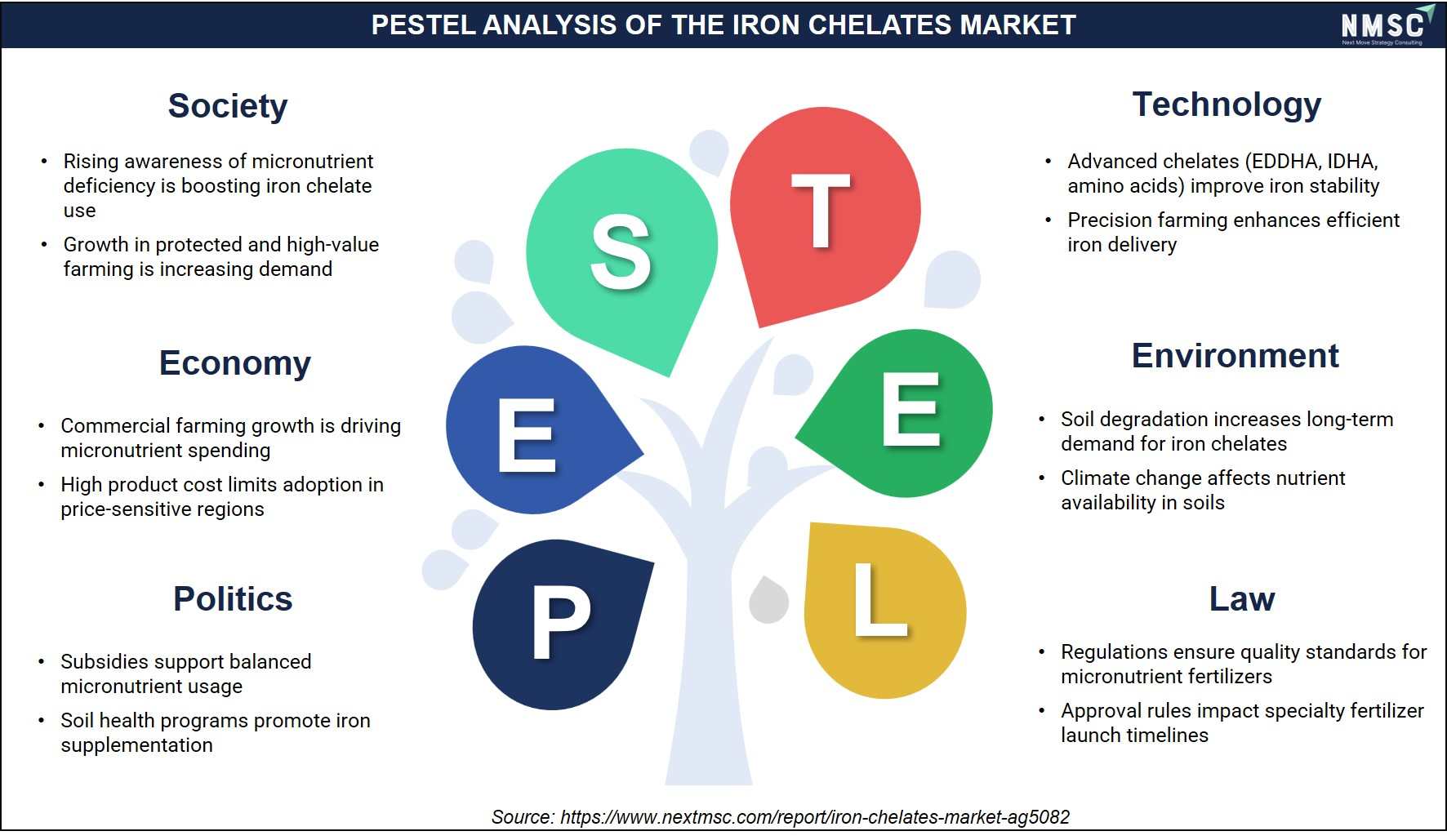
NMSC’s analysis indicates that the iron chelates market is influenced by supportive agricultural policies and soil health programs encouraging balanced micronutrient use. Rising demand for high-value crops and commercial agriculture expansion strengthens economic adoption, while awareness of soil nutrient deficiencies drives improved fertilization practices. Technological advancements in chelation chemistry and precision farming enhance application efficiency. Environmental stress from soil degradation and climate variability increases reliance on stable formulations. However, strict fertilizer regulations and compliance requirements under legal frameworks continue to impact product approval and market accessibility across regions.
What Are the Key Market Drivers, Breakthroughs, and Investment Opportunities that will Shape the Iron Chelates Market in the Next Decade?
Growth Catalyst & Risk Assessment Matrix
|
Drivers / Restraints / Opportunity |
(+/−) % Impact on CAGR Forecast |
Geographic Relevance |
Impact Timeline |
|
Intensifying global soil micronutrient depletion is increasing reliance on iron chelates in crop nutrition systems |
+3.2% |
Global (Asia-Pacific, Europe, North America, Latin America) |
Long term (4–8 years) |
|
Rising global fruit and vegetable production is accelerating demand for iron chelates in horticulture systems |
+2.8% |
Global, especially Asia-Pacific and Europe |
Medium–Long term (3–7 years) |
|
Stringent fertilizer regulatory compliance and certification costs are limiting market penetration of iron chelates |
−2.4% |
Europe, North America, select regulated markets |
Medium term (2–6 years) |
|
Expansion of precision nutrient management platforms is creating scalable integration opportunities for iron chelates |
+3.1% |
North America, Europe, Asia-Pacific, developed agri-markets |
Long term (4–8 years) |
Based on NMSC’s evaluation, it is found that the iron chelates market is being shaped by a combination of strong structural drivers, a key regulatory restraint, and a high-growth technological opportunity. Intensifying soil micronutrient depletion and rising global fruit and vegetable production are significantly increasing demand for iron chelates across major agricultural regions. Moreover, these drivers are reinforcing the shift toward bioavailable and stable micronutrient solutions in intensive crop systems. However, stringent fertilizer regulatory compliance and certification costs are creating barriers to entry, particularly for smaller manufacturers operating in price-sensitive markets. In addition, our assessment confirms that expanding precision nutrient management platforms are unlocking new integration opportunities by enabling data-driven and targeted micronutrient application. Furthermore, increasing adoption of digital farming systems is improving the efficiency and scalability of iron chelates usage. Overall, these combined factors indicate a balanced market outlook, where structural demand growth is moderated by regulatory challenges but strengthened by technological advancement and precision agriculture integration.
Growth Drivers:
How Is Intensifying Global Soil Micronutrient Depletion Driving Demand for Iron Chelates in Crop Nutrition Systems?
Based on research conducted by NMSC, it is observed that long-term intensive cultivation practices are weakening soil micronutrient balance across major agricultural regions, especially high-yield cereal and horticulture belts, where repeated cropping cycles reduce natural iron availability. Agricultural stakeholders such as agronomists and fertilizer additive distributors are increasingly adjusting nutrient correction strategies in alkaline and calcareous soil zones due to persistent iron immobilization challenges. Moreover, global agricultural governance frameworks are prioritizing soil restoration and nutrient-use efficiency improvements under sustainability-oriented policies, reinforcing balanced fertilization practices. In addition, commercial farmers and controlled environment agriculture operators are shifting toward highly bioavailable formulations to sustain chlorophyll synthesis and crop colouration under variable soil conditions. According to USDA NRCS (2024), calcareous soils are associated with iron chlorosis risks, while IFDC reports that soil degradation affects one-third of global land area, generating nearly USD 40 billion annual losses. Consequently, these factors strengthen the role of iron chelates in modern crop nutrition systems.
How Is Rising Global Fruit and Vegetable Production Accelerating Demand for Iron Chelates in Crop Nutrition Systems?
Based on our evaluation, we found that expanding global fruit and vegetable production is steadily increasing due to rising demand for nutrient-rich foods and intensifying commercial horticulture activities across developed and emerging economies. Iron deficiency management is becoming more critical in high-value crops where yield consistency, appearance, and market quality strongly influence profitability. Moreover, producers are increasingly adopting micronutrient-enriched fertilization programs, particularly in alkaline and calcareous soils where iron availability is limited. Fruits and vegetables, being highly sensitive to micronutrient imbalance, are driving greater use of stable and bioavailable iron chelates in fertigation and precision farming systems. According to FAO Agricultural Production Statistics (2024), global crop output reached nearly 9.9 billion tonnes in 2023, including around 952 million tonnes of fruit production, while OECD-FAO (2024) projects 1.2% annual food consumption growth through 2033. Overall, this sustained expansion is reinforcing the iron chelates market demand in modern horticultural crop nutrition systems.
Growth Inhibitor:
How Are Stringent Fertilizer Regulatory Compliance and Certification Costs Limiting Market Penetration of Iron Chelates?
Tightening fertilizer regulatory frameworks across major agricultural economies is significantly increasing compliance requirements for micronutrient fertilizers such as iron chelates. Manufacturers are required to meet strict standards covering contaminant limits, product composition, labeling accuracy, and extensive technical documentation, which is extending approval timelines and increasing operational complexity. Our assessment highlights that varying regulatory systems across regions are creating additional burdens for companies operating in multiple markets, particularly in terms of testing and certification alignment. Small and mid-sized manufacturers are more heavily impacted due to limited resources for repeated registration and documentation procedures. Moreover, according to the European Commission proposal COM (2025) 531, compliance with EU fertilizer registration requirements can cost between USD 11,000 and 550,000, while the Council of the European Union (2024) reports annual compliance costs of around USD 62,000 for large firms and USD 4,900 for SMEs. Consequently, these rising costs are restricting affordability and slowing wider adoption of iron chelates in price-sensitive agricultural regions globally.
Growth Opportunity:
How Is the Expansion of Precision Nutrient Management Platforms Creating Opportunities for Scalable Iron Chelates Integration?
Agricultural digitalization is increasingly transforming fertilizer application practices through the adoption of precision nutrient management platforms that optimize input use at field level. These systems, supported by satellite imaging, soil sensors, and AI-based agronomic tools, are shifting nutrient delivery from uniform application toward highly targeted and data-driven correction strategies. Our research indicates that this transition is improving the relevance of stable and fully soluble micronutrients such as iron chelates in modern farming systems. Furthermore, rising investments from both public and private sectors are accelerating the development of smart agriculture ecosystems, enabling integration between irrigation automation and real-time nutrient monitoring. According to USDA ERS (2024), 70% of large-scale U.S. crop farms use guidance and autosteering systems, while 68% use soil and yield mapping tools; additionally, over 50% of planted acres apply automated guidance systems, with increasing adoption of spatial decision tools. In addition, a 2025 publication by the Indian Council of Agricultural Research (ICAR) highlighted that fertilizer nutrient recovery efficiency remains extremely low globally, with micronutrient use efficiency estimated at only 1–5% under conventional application methods. The study further noted that precision nutrient management technologies can improve nutrient use efficiency by 5–15%, increase grain yield by 6–15%, and improve farm net returns by 7–25%, reinforcing the growing demand for advanced micronutrient solutions such as iron chelates within precision agriculture systems. As a result, this convergence of digital farming and nutrient science is creating scalable opportunities for iron chelates across diverse agricultural environments.
How is the Iron Chelates Market Segmented in this Report, and What are the Key Insights from the Segmentation Analysis?
Market Highlights & Strategic Insights - Iron Chelates Market:
|
Segments |
Key Takeaways |
|
Chemistry |
The Chemistry segment includes Fe-EDTA, Fe-DTPA, Fe-EDDHA, Fe-EDDHSA, Fe-HBED, Fe-HEDTA, Fe-IDHA, Amino Acid Chelate, and Other Iron Chelates. Fe-EDDHA dominates due to its superior stability and high effectiveness in alkaline and calcareous soils where iron availability is severely limited. Other chelates remain relevant across specific crop and soil conditions, but Fe-EDDHA leads adoption in high-value and deficiency-prone agricultural regions. |
|
Physical Form |
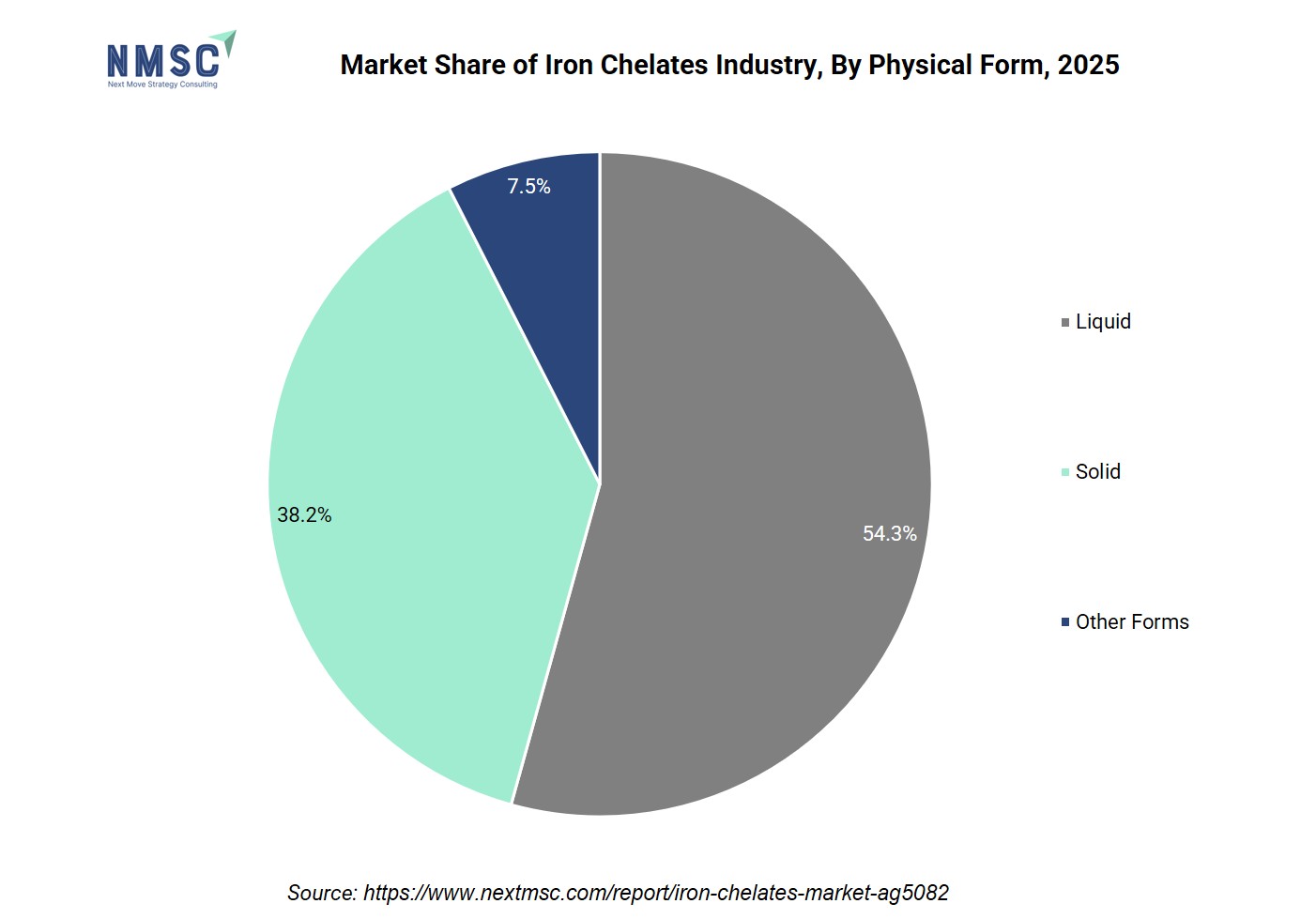
The Physical Form segment includes Liquid, Solid, and Other formulations. Liquid iron chelates dominate due to superior solubility, rapid nutrient availability, and strong compatibility with fertigation and foliar spray systems. Their ease of application supports precision agriculture practices and improves efficiency in nutrient uptake. Solid and other forms continue to serve traditional farming and niche applications, but liquid formulations remain the most widely adopted globally. |
|
Application Mode |
The Application Mode segment includes soil application, foliar application, fertigation, hydroponics, seed treatment, and other methods. Soil application dominates the Iron Chelates Market due to its widespread use in traditional large-scale farming systems. However, its efficiency is often constrained in alkaline soils where iron availability is reduced. Meanwhile, foliar application and fertigation are gaining traction for faster nutrient uptake and precision delivery, while hydroponics and seed treatment are emerging in controlled and early-stage crop nutrition systems. |
|
Crop Type |
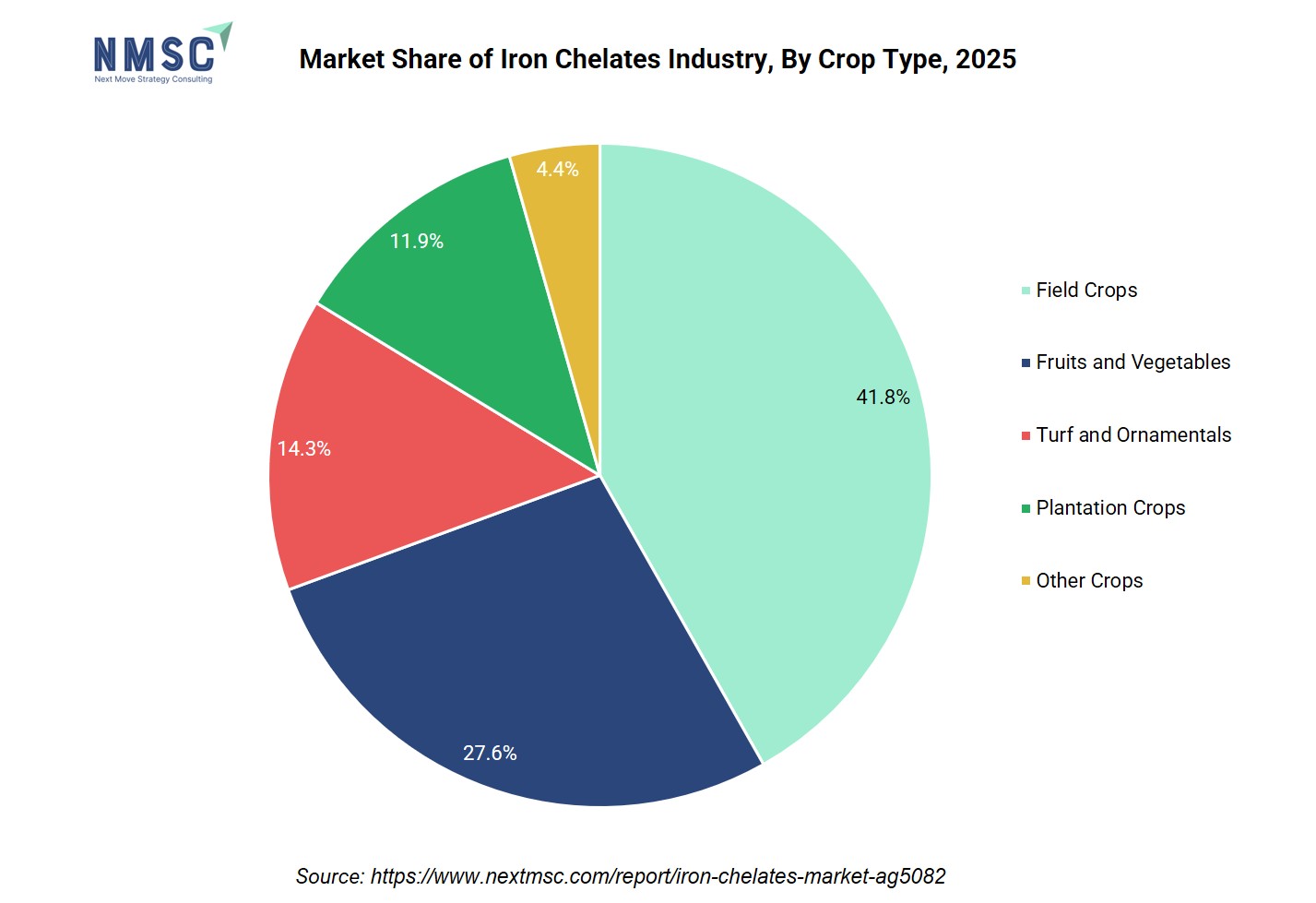
The Crop Type segment includes Field Crops, Fruits and Vegetables, Turf and Ornamentals, Plantation Crops, and Other Crops. Field crops dominate due to extensive cultivation areas and high prevalence of micronutrient deficiencies in cereals and grains. Their large-scale production systems drive consistent demand for iron correction solutions. Other crop categories contribute to market expansion, but field crops remain the primary consumption segment globally. |
|
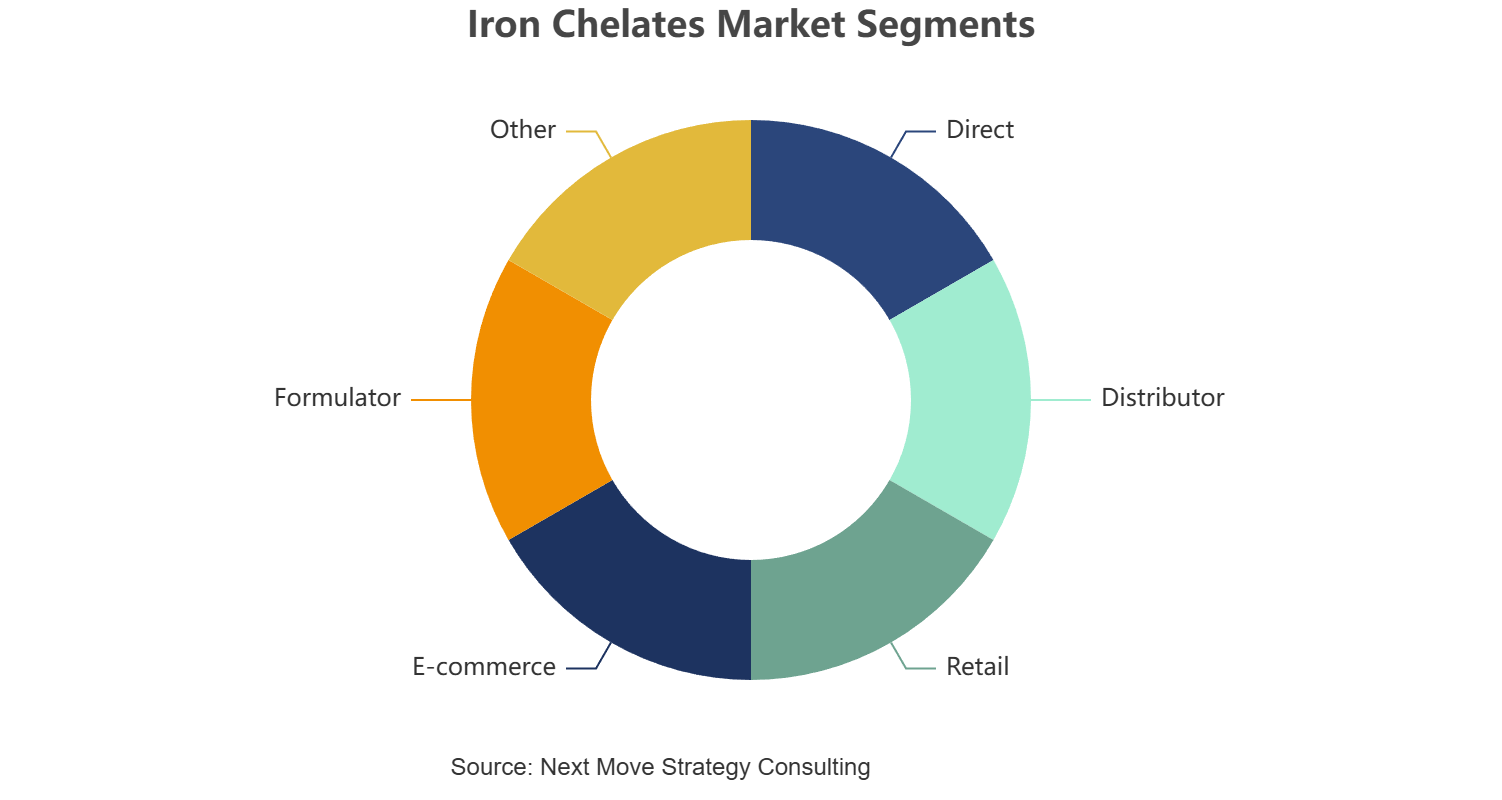
Channel |
The Channel segment includes Direct, Distributor, Retail, E-commerce, Formulator, and Other channels. Distributor channels dominate due to their extensive reach in rural and semi-urban agricultural markets and strong linkage with agro-dealer networks. They ensure efficient product availability across fragmented farming regions. Direct and retail channels also play important roles in specific buyer groups, while e-commerce and formulators are gradually expanding with digitalization and customized product demand. |
By Chemistry
How Is Chelation Chemistry Segmentation Shaping Soil-Specific Application Efficiency and Product Adoption Patterns in The Iron Chelates Market?
On the basis of chemistry, the iron chelates market is segmented into Fe-EDTA, Fe-DTPA, Fe-EDDHA, Fe-EDDHSA, Fe-HBED, Fe-HEDTA, Fe-IDHA, Amino Acid Chelate, and other iron chelates.
From our evaluation, we found that Fe-EDDHA dominates usage in alkaline and calcareous soils because of its strong stability and sustained iron availability under high pH conditions. Furthermore, Fe-DTPA is widely applied in greenhouse cultivation and moderately acidic soils where balanced solubility is required for controlled nutrient delivery. Fe-EDTA continues to hold relevance in cost-sensitive applications due to its affordability and broad compatibility with standard fertilization practices. Fe-IDHA and amino acid chelates are gradually expanding in adoption, supported by their improved environmental compatibility and efficient nutrient uptake behavior. Fe-HBED and Fe-EDDHSA are increasingly used in high-value horticulture systems requiring precise micronutrient control. Overall, remaining chelate types serve niche roles in specialized agronomic applications across targeted farming environments.
By Physical Form
How Is Physical Form Segmentation Influencing Application Efficiency and Adoption Patterns in The Iron Chelates Market?
Based on physical form, the iron chelates market is segmented into liquid, solid, and other formulations, reflecting different application preferences across agricultural systems.
Liquid iron chelates dominate adoption due to their high solubility, ease of application, and compatibility with fertigation and foliar spray systems, making them highly suitable for precision agriculture practices. Solid forms, including powders and granules, are widely used in traditional farming systems where soil application remains the primary method and cost efficiency is a key consideration. Our findings reveal that these formulations also offer better storage stability and longer shelf life under varied climatic conditions. Moreover, other forms, including specialty and customized formulations, are gradually emerging in niche applications such as controlled environment agriculture and hydroponic systems. Collectively, physical form segmentation is increasingly shaping product selection based on irrigation infrastructure, crop type, and nutrient delivery efficiency across global agricultural markets.
By Application Mode
How Is Application Mode Segmentation Influencing Nutrient Delivery Efficiency in The Iron Chelates Market?
Based on application mode, the iron chelates market is segmented into soil application, foliar application, fertigation, hydroponics, seed treatment, and other methods.
Our analysis indicates that soil application currently dominates the iron chelates market due to its widespread use in traditional farming systems and its suitability for large-scale field crops. However, its efficiency can be limited in alkaline and calcareous soils where iron immobilization reduces nutrient availability. Foliar application is gaining strong traction as it enables rapid correction of iron deficiency and immediate uptake through leaves, particularly in horticulture and high-value crops. Fertigation is increasingly adopted in precision agriculture systems as it ensures uniform nutrient distribution through irrigation networks. Hydroponics is emerging as a high-efficiency segment where controlled environments require fully soluble and stable micronutrients. Seed treatment is also expanding as it supports early-stage crop vigor and root development. In this context, segmentation patterns are increasingly aligning with precision-driven farming systems, crop specificity, and nutrient efficiency requirements across global agriculture.
By Crop Type
How Is Crop Type Segmentation Influencing Demand Patterns in The Iron Chelates Market?
On the basis of crop type, the iron chelates market is segmented into field crops, fruits and vegetables, turf and ornamentals, plantation crops, and other crops, reflecting diverse nutrient requirements across agricultural production systems.
We found that field crops dominate the iron chelates market due to their extensive cultivation area and widespread occurrence of soil nutrient imbalances, particularly in cereals and grains. Fruits and vegetables are emerging as a high-growth segment as these crops are highly sensitive to iron deficiency, directly affecting yield quality, appearance, and market value. Turf and ornamentals also show strong adoption, driven by the need for aesthetic quality and uniform green colour in landscaping and sports turf applications. Moreover, plantation crops such as tea, coffee, and rubber utilize iron chelates to maintain long-term productivity under intensive cultivation systems. Other crops represent niche applications across specialized farming systems. In this way, segmentation patterns are increasingly influenced by crop sensitivity, economic value, and cultivation intensity across global agriculture markets.
Regional Outlook
Geographic Performance Snapshot:
|
Geography |
Key Takeaways |
|
North America |
North America Iron Chelates Market is driven by high agricultural mechanization and soil chemistry constraints in large-scale farming systems. Precision agriculture, automated fertigation, and variable-rate technologies increase demand for stable iron chelates. Our market analysis shows that intensive mechanized farming and monocropping have led to soil nutrient depletion, while high pH and calcareous soils reduce iron availability, causing chlorosis in crops like maize, soybean, and wheat. Consequently, farmers are adopting Fe-EDDHA and Fe-DTPA formulations to improve nutrient uptake efficiency and maintain yield stability. Data-driven soil testing further supports targeted application and optimized micronutrient management. |
|
Europe |
Our assessment indicates Strict regulations and strong sustainability goals are driving demand for iron chelates in Europe. Furthermore, policies like REACH and the Farm to Fork strategy are promoting eco-friendly micronutrient use. Moreover, restrictions on nutrient runoff and chemical residues are encouraging farmers to adopt efficient iron chelates for better nutrient uptake with lower environmental impact. Focus on soil health and reduced fertilizer use is supporting adoption of Fe-EDDHA in alkaline soils. Additionally, precision agriculture is improving application efficiency and overall nutrient management. |
|
Asia-Pacific |
Population-driven food demand and large-scale agricultural activity are key growth drivers for iron chelates in Asia Pacific. Furthermore, our findings indicate that intensive farming and continuous cropping are depleting soil nutrients, increasing iron deficiency in major crops. Moreover, expanding cereal and horticulture production is strengthening demand for efficient micronutrient solutions. Adoption of modern irrigation methods like fertigation and foliar sprays is improving application efficiency. Government support for balanced fertilization and rising awareness of soil health are further accelerating adoption across both commercial farms and smallholder systems. |
|
Latin America |
Strong export-oriented agriculture and large-scale farming are driving iron chelates demand in Latin America. Furthermore, our Iron Chelates Market analysis shows that countries like Brazil and Argentina depend on high-value crops such as soybeans, coffee, and sugarcane, requiring efficient micronutrient management. Moreover, soil variability and iron deficiency in alkaline and weathered soils are supporting the adoption of iron chelates. Additionally, modern irrigation practices and large farm structures are improving nutrient efficiency, while export quality standards are further reinforcing the use of advanced formulations for consistent crop performance. |
|
Middle East & Africa |
Our observation highlights that the iron chelates market in the Middle East & Africa is driven by high reliance on irrigation-based agriculture across arid and semi-arid regions. Farming systems increasingly depend on drip irrigation and fertigation, which require highly soluble micronutrient formulations for efficient nutrient delivery. Additionally, alkaline soils and low organic matter reduce natural iron availability, increasing the need for iron supplementation. Growth in protected cultivation, including greenhouse and hydroponic farming, further supports demand for precise nutrient management. The government's focus on food security and agricultural efficiency is also encouraging adoption, strengthening the use of iron chelates in irrigation-dependent farming systems. |
The iron chelates market is geographically studied across North America, Europe, Asia Pacific, the Middle East & Africa, and Latin America, and each region is further studied across countries.
Iron Chelates Market in North America
North America iron chelates market is driven by high agricultural mechanization and persistent soil chemistry constraints across large-scale farming systems. Furthermore, the widespread adoption of precision agriculture technologies, including variable-rate application systems, GPS-enabled machinery, and automated fertigation networks, is strengthening demand for highly stable and bioavailable iron chelate formulations. Mechanized farming practices in the United States and Canada have intensified soil nutrient depletion due to continuous monocropping and heavy dependence on synthetic fertilizers over long production cycles. Additionally, our market research shows that soil chemistry challenges such as high pH levels, calcareous soil structures, and limited micronutrient solubility significantly reduce iron availability, contributing to widespread iron chlorosis in crops like maize, soybean, and wheat. As a result, growers are increasingly adopting advanced chelates such as Fe-EDDHA and Fe-DTPA to improve nutrient efficiency and maintain yield stability. Moreover, improved soil testing practices and data-driven nutrient management are further supporting targeted iron chelate application across the region.
Iron Chelates Market in the United States
NMSC’s analysis indicates that demand dynamics in the United States are closely linked to crop-specific nutrient stress emerging from large-scale monocropping systems, particularly maize and soybean cultivation, where repeated planting cycles intensify iron deficiency risks. Moreover, soil management challenges are increasingly intersecting with advanced irrigation and fertilization technologies across commercial farming operations focused on improving input efficiency and yield stability. Fertigation and precision irrigation systems are widely adopted as core nutrient delivery mechanisms, enabling targeted micronutrient application across variable field conditions. In addition, manufacturers are introducing formulation-level innovations, particularly liquid and amino acid-based chelates designed for faster uptake and improved crop response performance. Furthermore, consolidated agricultural retail and distribution systems are enhancing product availability and market penetration across diverse farming regions. Adoption of sustainability-oriented nutrient practices is also influencing farmer decision-making. Consequently, the United States iron chelates market is advancing through technology-led, efficiency-driven, and precision-focused agricultural nutrient management systems.
Iron Chelates Market in Canada
Canada’s demand for iron chelates is strongly shaped by the expansion of controlled cultivation systems, particularly greenhouse and hydroponic production environments, where precision nutrient management is essential. Unlike conventional open-field farming, controlled agriculture prioritizes consistency, solubility, and accurate nutrient delivery throughout crop cycles. Moreover, our assessment confirms that horticultural diversification is increasing demand for stable micronutrient solutions across fruits and vegetables, especially in high-value crop segments requiring uniform growth and quality output. Distribution networks are also expanding into remote and geographically challenging regions, improving access to advanced agricultural inputs. In addition, Fe-EDDHA and amino acid-based chelates are gaining importance due to their high stability and effectiveness under controlled growing conditions. Furthermore, increasing adoption of sustainable production practices is encouraging growers to integrate more efficient nutrient delivery systems supported by agronomic guidance. As a result, Canada’s iron chelates market is evolving toward structured, system-based agricultural models centered on protected cultivation, precision nutrient delivery, and resource-efficient farming practices.
Iron Chelates Market in Europe
Europe iron chelates market is primarily driven by stringent regulatory frameworks and rising sustainability compliance requirements across agricultural practices. Furthermore, regulations such as REACH and the European Union’s Farm to Fork strategy are encouraging the adoption of environmentally safe and efficient micronutrient solutions, thereby increasing demand for advanced iron chelates. Moreover, our evaluation shows that strict limitations on nutrient runoff and chemical residue levels are pushing farmers to shift toward formulations that improve nutrient use efficiency while minimizing environmental impact. From a sustainability point, there is growing emphasis on soil health preservation and reduction of excess fertilizer dependency, which is reinforcing the use of stable chelated iron sources such as Fe-EDDHA in alkaline soils. Additionally, increasing adoption of precision agriculture and controlled nutrient management systems is helping optimize application rates and improve crop absorption efficiency. As a result, manufacturers are focusing on developing eco-friendly and highly bioavailable iron chelate products that align with evolving European environmental and agricultural compliance standards across major farming economies.
Iron Chelates Market in the United Kingdom
From our review of the market, we observe that specialized agricultural systems and structured horticultural production are shaping nutrient demand behavior, particularly across protected cultivation zones where precision input use is essential. Nutrient imbalance in intensively farmed soils is steadily increasing the need for iron correction solutions, especially within greenhouse operations and controlled-environment farming setups in the United Kingdom. Moreover, hydroponic systems and regulated irrigation techniques are enabling accurate nutrient delivery, thereby improving application efficiency and reducing losses and environmental discharge. In addition, stricter regulatory expectations related to runoff control and environmental protection are influencing fertilizer selection and usage patterns across farming activities. Furthermore, the adoption of digital agriculture platforms is supporting nutrient tracking, optimizing input utilization, and enabling data-driven farm management decisions. Distribution systems remain well-established and consistently connected, ensuring reliable availability of agricultural inputs across key farming regions and specialized production clusters. Agronomic consultancy services are increasingly assisting farmers in refining nutrient strategies and improving crop outcomes. Consequently, the market is steadily moving toward precision-oriented nutrient management practices aligned with sustainability goals and operational efficiency improvements.
Iron Chelates Market in Germany
Technologically advanced agricultural systems and high-efficiency farming practices define nutrient management patterns in Germany, where precision input use is essential. Our analysis shows that demand for iron chelates is driven by crop systems requiring accurate micronutrient balancing to support yield stability, quality consistency, and uniform crop development. Greenhouse farming and controlled cultivation remain key application areas, ensuring reliable nutrient uptake under regulated conditions. Moreover, automation in irrigation and fertilization is improving operational accuracy while reducing inefficiencies and optimizing resource use. In addition, environmental regulations promoting sustainable fertilizer usage are shaping product selection and encouraging responsible application practices. Formulation-level innovations are enhancing nutrient absorption efficiency and strengthening crop response consistency under varying soil and climatic conditions. Digital agriculture adoption is expanding steadily, enabling data-driven nutrient planning and precision farm management. Overall, the market is shifting toward digitally integrated agricultural systems where nutrient management is closely aligned with productivity optimization and sustainability objectives.
Iron Chelates Market in France
Diverse agricultural production systems and large-scale farming operations define nutrient usage patterns in France, particularly across cereal cultivation and horticulture segments operating under varying soil conditions. Moreover, soil heterogeneity across major agricultural regions contributes to uneven iron availability, increasing the need for targeted micronutrient correction strategies within the iron chelates market. Our analysis indicates that farmers are increasingly adopting soil diagnostic tools and mapping systems to improve fertilizer placement accuracy and enhance field-level nutrient efficiency. Sustainability-oriented agricultural policies are reinforcing responsible fertilizer usage and encouraging balanced nutrient application practices across farming systems. Strong agricultural infrastructure and distribution networks ensure consistent input availability for both commercial and specialized growers. Furthermore, agronomic advisory services are supporting more structured nutrient planning at the farm level. Consequently, the market is gradually shifting toward optimized nutrient management systems that improve productivity while maintaining compliance with environmental and sustainability requirement.
Iron Chelates Market in Italy
Italy’s agricultural landscape is strongly influenced by high-value horticultural production and diversified crop systems, particularly across fruit and vegetable cultivation zones where crop quality and yield consistency are critical. Moreover, persistent soil nutrient imbalances continue to drive the need for efficient iron supplementation to support plant development and prevent chlorosis in sensitive crops. Our assessment shows that drip irrigation and fertigation systems are widely adopted, enabling precise and efficient nutrient delivery across farming operations. In addition, soil testing practices are increasingly guiding fertilizer decisions, improving nutrient-use efficiency and reducing excessive application. Export-oriented agricultural production is further reinforcing the demand for high-performance micronutrient solutions that ensure uniform crop quality. Fragmented farm structures support localized input distribution, improving accessibility for small and medium-scale growers. Consequently, Italy’s iron chelates market is evolving toward efficiency-oriented nutrient management systems focused on improving crop quality, productivity stability, and long-term agricultural sustainability.
Iron Chelates Market in Spain
NMSC’s analysis indicates that agricultural systems in Spain are strongly shaped by arid climatic conditions and irrigation-dependent farming practices across major production zones, where water scarcity remains a key constraint within the iron chelate market. Intensive horticulture and greenhouse cultivation significantly contribute to iron chelate demand, particularly in export-oriented crop systems requiring consistent quality and yield performance. Water-efficient irrigation methods are improving nutrient delivery precision and enhancing uptake efficiency under limited water availability. In addition, export-driven agriculture is reinforcing the need for stable and high-quality micronutrient inputs that comply with international quality standards. Regulatory emphasis on sustainable water use is influencing fertilizer selection and encouraging efficient resource management practices. Fertigation systems are increasingly adopted to improve application accuracy and reduce nutrient losses. Climate variability is also encouraging the use of more resilient nutrient solutions. Overall, the market is aligning toward efficiency-driven agricultural systems focused on productivity stability, resource optimization, and sustainable crop production.
Iron Chelates Market in the Nordics
Cold climatic conditions and limited arable land strongly define agricultural systems across the Nordic region, where open-field cultivation is restricted for extended periods. Moreover, greenhouse farming and controlled-environment agriculture dominate production systems, ensuring stable year-round crop output in the iron chelates market. Our analysis indicates that nutrient delivery systems in protected cultivation setups are increasingly optimized for precision and efficiency to maximize resource use. Environmental sustainability policies are also shaping agricultural input selection, encouraging reduced chemical dependency and more responsible nutrient management practices. In addition, digital monitoring systems are supporting better crop condition tracking and improving nutrient application decisions in controlled farming environments. Supply chains remain well-structured despite geographic constraints, ensuring consistent availability of agricultural inputs. Consequently, the region is increasingly oriented toward controlled cultivation systems and precision-based nutrient management practices focused on efficiency, sustainability, and stable agricultural productivity.
Iron Chelates Market in the Asia-Pacific
Asia Pacific market is primarily driven by large-scale agricultural activity and strong population-driven food demand across emerging economies. Furthermore, rapid population growth in countries such as India and China is increasing pressure on the agricultural sector to enhance crop productivity, thereby boosting the use of iron chelates for correcting widespread micronutrient deficiencies. Moreover, intensive farming practices and continuous cropping cycles have led to significant soil nutrient depletion, particularly in alkaline and alluvial soils, increasing the prevalence of iron chlorosis in key crops. Expanding cultivation of cereals, fruits, and vegetables is strengthening demand for efficient micronutrient management solutions. Additionally, we observed that the gradual adoption of modern irrigation systems, including fertigation and foliar application methods, is improving the effectiveness of iron chelate usage. Government initiatives promoting balanced fertilization are further supporting iron chelates market expansion, while increasing awareness of soil health management is accelerating adoption across both commercial farms and smallholder agricultural systems in the region.
Iron Chelates Market in China
Large-scale agricultural production systems and persistent soil nutrient imbalance are significantly influencing fertilizer demand across intensively cultivated regions in China. Continuous cropping practices and high input agriculture are contributing to declining soil fertility, increasing reliance on micronutrient correction strategies within the iron chelates market. Our analysis indicates that precision agriculture tools and digital monitoring systems are being progressively integrated into farming operations to enhance nutrient use efficiency and reduce input wastage. In addition, regulatory measures aimed at controlling excessive fertilizer application are encouraging more balanced nutrient management practices. Improvements in fertilizer formulations are supporting better nutrient uptake and crop performance across variable soil conditions. Strong rural distribution networks continue to ensure widespread product availability, while agronomic advisory systems are strengthening farm-level decision-making. Consequently, the market is evolving toward structured, data-supported agricultural practices focused on productivity enhancement, soil restoration, and resource efficiency.
Iron Chelates Market in Japan
Japan’s agricultural sector is characterized by highly advanced controlled-environment systems and precision-oriented cultivation practices that strongly influence nutrient demand patterns. Moreover, greenhouse farming, hydroponics, and vertical cultivation systems dominate high-value crop production, requiring highly stable and fully soluble micronutrient solutions. Our assessment indicates that automation and robotics are widely integrated across agricultural operations, improving efficiency in planting, irrigation, and nutrient delivery processes. Strict regulatory standards governing environmental safety and agricultural inputs are shaping fertilizer selection and promoting high-efficiency nutrient use. Advanced monitoring systems, including soil and crop sensors, are enabling highly accurate, data-driven nutrient application strategies. Furthermore, innovation in agricultural technologies is enhancing crop quality consistency and yield stability across specialized farming systems. As a result, Japan’s iron chelates market is increasingly defined by precision agriculture integration, high productivity requirements, and quality-driven production systems.
Iron Chelates Market in India
Large-scale agricultural activity combined with widespread micronutrient deficiencies is a key factor shaping fertilizer demand in India. Moreover, long-term soil nutrient depletion, particularly in intensively cultivated regions, is increasing the requirement for iron supplementation across major crop systems within the iron chelates market. Our evaluation shows that the adoption of drip irrigation and fertigation technologies is gradually improving nutrient use efficiency and enabling more targeted application practices. In addition, government-led soil health initiatives are promoting balanced fertilization and increasing farmer awareness regarding micronutrient management. Expanding rural distribution networks are improving access to modern agricultural inputs across fragmented farming regions. However, affordability constraints among small and marginal farmers continue to influence adoption rates significantly. Rising food demand and productivity pressures are reinforcing the need for efficient crop nutrition strategies. Consequently, the market is progressing toward more scalable, cost-sensitive nutrient management systems focused on productivity improvement, soil restoration, and sustainable agricultural development.
Iron Chelates Market in South Korea
NMSC’s regional analysis suggests that agricultural sector is increasingly shaped by smart farming systems and advanced controlled cultivation infrastructure that enhance nutrient management efficiency. Moreover, greenhouse farming remains the dominant production system, particularly for high-value horticultural crops that require precise and stable micronutrient delivery. Our analysis indicates that digital agriculture platforms and automation technologies are progressively improving nutrient application accuracy through real-time monitoring and system-based input adjustments. In addition, government-backed sustainability programs are encouraging the adoption of environmentally balanced fertilization practices across agricultural operations. Continuous investment in agricultural research and development is further driving innovation in fertilizer formulations and improving product efficiency under controlled environments. Well-established distribution networks ensure consistent input availability across key farming regions. Overall, South Korea’s iron chelates market is transitioning toward highly integrated, technology-driven agricultural systems focused on efficiency, productivity optimization, and precision-based crop management.
Iron Chelates Market in Taiwan
Our research indicates that Taiwan’s iron chelates market is characterized by high-tech agricultural infrastructure and precision-based cultivation practices that support efficient micronutrient management. Controlled-environment agriculture and hydroponic systems are widely adopted, particularly for high-value crops that require consistent and optimized nutrient delivery. Smart irrigation technologies are improving fertilizer application efficiency by enabling precise control over water and nutrient distribution. Environmental regulations are also influencing fertilizer usage patterns by promoting sustainable and low-impact agricultural practices. Strong technological infrastructure supports advanced farming operations, allowing growers to integrate automation and monitoring systems into routine agricultural activities. Digital tools are increasingly being used for crop monitoring, nutrient management, and decision-making in farm operations. As a result, farming systems are gradually shifting toward structured, technology-driven cultivation models. This transition is strengthening the adoption of efficient micronutrient solutions, including iron chelates, across protected and high-value production systems. Overall, agricultural practices in Taiwan are becoming more precision-oriented, efficiency-driven, and productivity-focused across key cultivation environments.
Iron Chelates Market in Indonesia
The iron chelates market in Indonesia is undergoing a gradual transformation driven by modernization efforts and expanding crop cultivation across key farming regions in the country. Our findings reveal that soil nutrient deficiencies are becoming more prominent, increasing the need for micronutrient-based fertilizer solutions to support crop productivity. Improvements in irrigation infrastructure are enhancing nutrient application efficiency and enabling better water management in agricultural operations. Government-led agricultural development programs are encouraging the adoption of improved farming practices and efficient input usage. Distribution networks are steadily improving in rural areas, increasing farmer access to agricultural inputs. Crop diversification across cereals, horticulture, and plantation crops is further contributing to the rising demand for balanced nutrient solutions. However, adoption levels vary depending on farm size, regional infrastructure, and awareness levels among farmers. As a result, the market is gradually moving toward more structured input usage patterns supported by modernization initiatives.
Iron Chelates Market in Australia
NMSC’s evaluation indicates that Australia’s agricultural sector is strongly influenced by large-scale farming systems and arid soil conditions that require efficient nutrient management practices in the iron chelates market. Precision agriculture technologies are widely adopted, improving fertilizer application efficiency and enabling accurate resource utilization across extensive farming areas. Water-efficient irrigation systems are extensively implemented to support optimized nutrient delivery under limited water availability conditions. Environmental regulations are shaping sustainable farming practices and encouraging responsible agricultural input usage. Similarly, digital farm analytics tools are increasingly used to monitor soil conditions and optimize nutrient application strategies. Distribution systems are well-developed, ensuring consistent access to agricultural inputs across major farming regions. Adoption of technology-driven farming practices is steadily increasing, particularly among large commercial farms focused on productivity and cost efficiency. The integration of data-driven decision-making tools is further improving nutrient management outcomes.
Iron Chelates Market in Latin America
Latin America iron chelates market is primarily driven by its strong export-oriented agricultural sector and the presence of large-scale commercial farms. Furthermore, our regional analysis shows that countries such as Brazil and Argentina rely heavily on high-value crop production, including soybeans, coffee, fruits, and sugarcane, which increases the need for efficient micronutrient management to sustain yield quality for global export markets. Extensive farming operations and soil variability across the region contribute to frequent iron deficiency issues, particularly in alkaline and weathered soils. From a production standpoint, large farm holdings enable higher adoption of advanced agricultural inputs, including iron chelates, to optimize productivity and maintain consistent crop quality. Additionally, the growing use of modern irrigation systems and improved fertilizer management practices is supporting more effective application of micronutrients. Export quality requirements and increasing focus on yield consistency are further encouraging farmers to adopt high-performance iron chelate formulations to enhance plant health and ensure competitiveness in international agricultural trade markets across the region.
Iron Chelates Market in the Middle East & Africa
The iron chelates market in the Middle East & Africa is primarily supported by high irrigation dependence across arid and semi-arid agricultural systems. Farming in the region relies heavily on controlled irrigation methods such as drip irrigation and fertigation, which require highly soluble micronutrient formulations for efficient nutrient delivery. From an agronomic perspective, these systems increase the need for stable iron chelates to ensure uniform distribution and effective uptake under challenging soil conditions. In addition, prevalent alkaline soils and low organic matter further restrict natural iron availability, intensifying the requirement for external supplementation. Our research indicates that expansion of protected cultivation, including greenhouse and hydroponic farming, is also strengthening demand for precision nutrient management solutions. Government initiatives focused on food security and agricultural efficiency are further supporting adoption. As a result, iron chelates are increasingly used to improve nutrient uptake efficiency and stabilize crop yields in controlled irrigation-based farming systems across the region.
Supply Chain Structure of the Iron Chelates Market
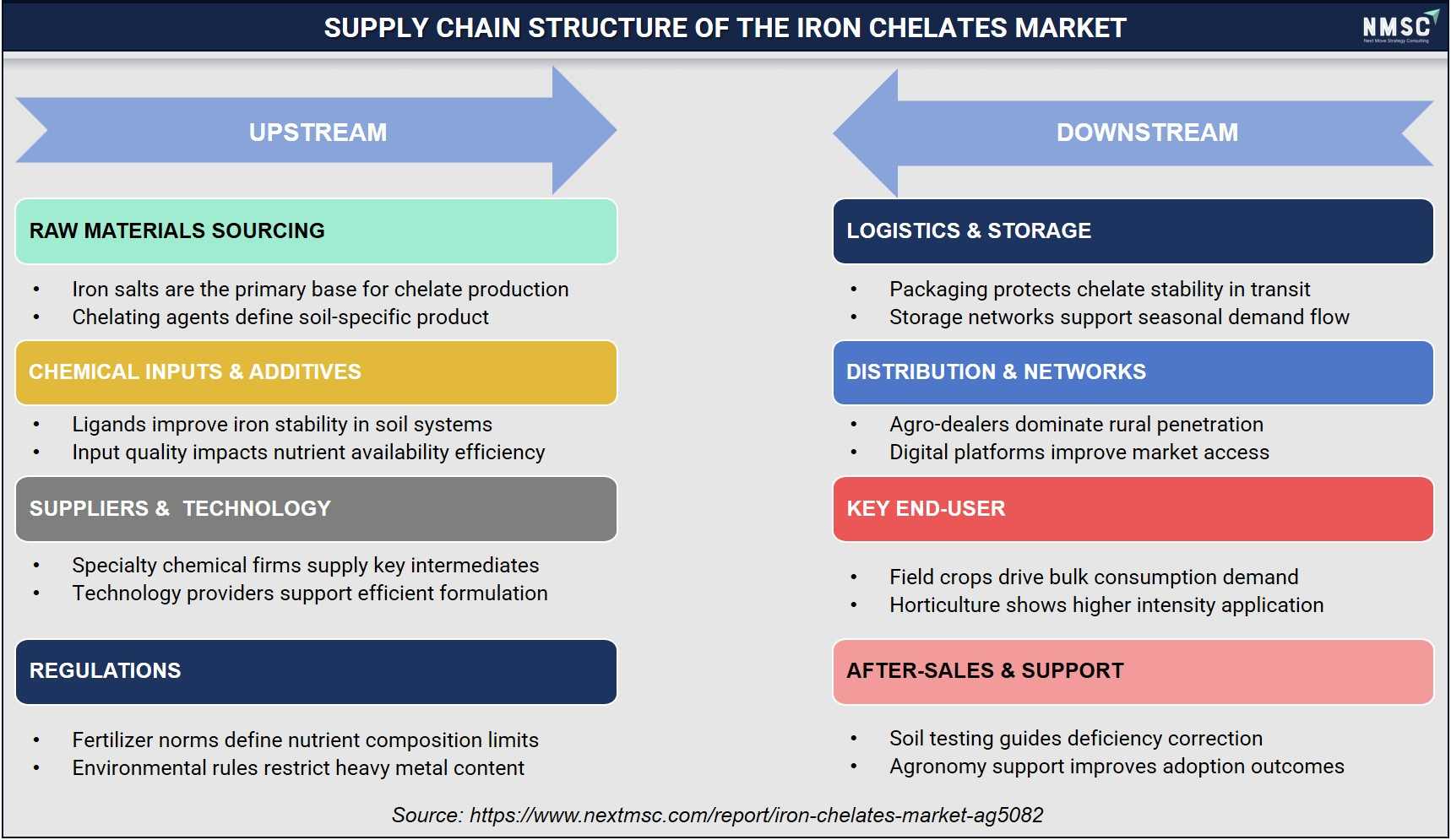
The supply chain structure of the iron chelates market demonstrates how upstream raw material sourcing, chemical inputs, and production processes shape product efficiency, stability, and cost dynamics, while downstream logistics networks, distribution channels, and agronomic support systems influence market reach, adoption intensity, and commercialization across agricultural micronutrient ecosystems. Additionally, our assessment indicates integration of advanced formulation technologies and controlled synthesis enhances performance consistency across varying soil conditions, further supporting precision farming practices and improving nutrient uptake efficiency in field applications globally across real-world agricultural systems at scale effectively.
Competitive Landscape
Competitive Dynamics & M&A Landscape:
|
Key Takeaways |
|
Our analysis indicates that competitive dynamics in the iron chelates market are shaped by a combination of multinational agrochemical corporations and specialized micronutrient manufacturers competing on innovation, formulation efficiency, agronomic expertise, and global distribution capabilities. Companies such as BASF SE, Syngenta Crop Protection AG, Yara International ASA, ICL Group Ltd., Haifa Chemicals Ltd., and Nouryon Chemicals B.V. leverage strong R&D capabilities, diversified micronutrient portfolios, and extensive global supply networks to maintain competitive leadership. At the same time, regional and specialty manufacturers including Aries Agro Limited, Agmin Chelates Pty Ltd., ATP Nutrition Ltd., and Trade Corporation International S.A.U. compete through cost-efficient production models, localized supply chains, and crop-specific solutions, creating a balanced competitive environment where both technological advancement and affordability influence market positioning and adoption across agricultural applications. |
|
Based on our assessment, we found that innovation remains a critical differentiator, with companies continuously enhancing chelate technologies such as EDTA, EDDHA, and biodegradable alternatives to improve iron stability and nutrient availability under varying soil conditions. Leading participants including BASF SE, Yara International ASA, Syngenta Crop Protection AG, BRANDT, Inc., and Nufarm Limited are increasingly integrating precision agriculture technologies, crop-specific micronutrient programs, and agronomic advisory services to enhance nutrient efficiency and strengthen farmer engagement. These initiatives support improved nutrient uptake, higher crop productivity, and more efficient fertilizer application practices. Meanwhile, companies such as COMPO EXPERT GmbH, Van Iperen International B.V., Deretil Agronutritional S.L., and BMS Micro-Nutrients NV focus on customized formulations tailored to local crop requirements and soil chemistry, strengthening their competitiveness in specialized and regional markets. |
|
Our market analysis suggests that acquisitions, strategic partnerships, and expansion initiatives are increasingly shaping the competitive structure of the iron chelates market. Major companies such as Syngenta Crop Protection AG, BASF SE, Nouryon Chemicals B.V., Yara International ASA, ICL Group Ltd., and Sociedad Química y Minera de Chile S.A. are actively pursuing acquisitions and collaborations to broaden product portfolios, strengthen technological capabilities, and expand geographic reach. These strategies support access to advanced micronutrient technologies while enhancing global distribution efficiency and operational integration. Additionally, companies including COMPO EXPERT GmbH, Van Iperen International B.V., Protex International, and Aglukon Spezimpedünger GmbH & Co. KG are focusing on partnerships, manufacturing expansion, and distribution alliances to strengthen market competitiveness. Regional manufacturers are also forming collaborative agreements to improve supply chain access and maintain relevance against multinational suppliers in the evolving iron chelates market. |
Which Companies Dominate the Iron Chelates Market and How Do They Compete?
NMSC’s assessment indicates that the iron chelates market is led by a mix of multinational agrochemical corporations and specialized micronutrient producers that compete through innovation, product diversification, agronomic expertise, and global distribution capabilities. Major participants such as BASF SE, Nouryon Chemicals B.V., Yara International ASA, Syngenta Crop Protection AG, Haifa Chemicals Ltd., and ICL Group Ltd. maintain strong competitive positions through advanced R&D infrastructure, broad micronutrient portfolios, and established international supply networks. These companies actively focus on high-efficiency chelate technologies such as EDTA, EDDHA, and next-generation biodegradable formulations to improve iron bioavailability across alkaline and calcareous soil conditions.
Competition is further strengthened by specialized nutrition companies including COMPO EXPERT GmbH, Van Iperen International B.V., BRANDT, Inc., Deretil Agronutritional S.L., BMS Micro-Nutrients NV, and Aglukon Spezialdünger GmbH & Co. KG, which compete through crop-specific formulations, technical agronomic support, and customized nutrient management programs. At the regional level, companies such as Aries Agro Limited, ATP Nutrition Ltd., Agmin Chelates Pty Ltd., and Trade Corporation International S.A.U. enhance market competitiveness through localized distribution, cost-efficient manufacturing, and region-specific product development. This combination of global innovation leadership and regional adaptability creates a highly competitive market environment where both technology and pricing efficiency determine long-term success.
Market Dominated by Iron Chelates Giants and Specialists
The iron chelates market is characterized by the presence of large-scale agrochemical companies alongside specialized micronutrient manufacturers that collectively shape the industry’s competitive structure. Our analysis shows that companies including BASF SE, Syngenta Crop Protection AG, Yara International ASA, ICL Group Ltd., Haifa Chemicals Ltd., and Nouryon Chemicals B.V. dominate through strong technological capabilities, integrated agricultural solutions, and extensive global market access. These companies continue to invest in premium chelating technologies designed to improve micronutrient stability, solubility, and nutrient uptake efficiency under challenging soil conditions.
At the same time, specialized producers such as COMPO EXPERT GmbH, Van Iperen International B.V., Deretil Agronutritional S.L., BMS Micro-Nutrients NV, and Protex International contribute to market depth through specialized micronutrient expertise and flexible product customization. Regional companies including Aries Agro Limited and Agmin Chelates Pty Ltd. further strengthen competition through localized manufacturing and pricing advantages. This dual-layered structure creates a balanced ecosystem where innovation, agronomic performance, and regional supply responsiveness collectively drive market expansion.
Innovation and Adaptability Drive Market Success
Innovation and adaptability remain central to competitive success in the iron chelates market as producers continuously enhance formulation efficiency to meet evolving agricultural and environmental requirements. We observed that leading companies such as BASF SE, Yara International ASA, Syngenta Crop Protection AG, ICL Group Ltd., and Haifa Chemicals Ltd. are increasingly focused on developing advanced EDTA, EDDHA, and biodegradable chelate technologies that improve nutrient efficiency and environmental compatibility. These innovations are particularly important in alkaline and calcareous soils where iron deficiency significantly affects crop productivity.
In addition to formulation improvements, companies are integrating precision agriculture technologies, digital agronomy platforms, and crop-specific micronutrient programs to strengthen customer engagement and optimize nutrient application efficiency. Firms such as BRANDT, Inc., Van Iperen International B.V. and Nufarm Limited are also investing in sustainable crop nutrition technologies and bio-based nutrient enhancement solutions to align with evolving sustainability goals. Meanwhile, regional companies continue to compete effectively by offering adaptable and cost-efficient products tailored to local crop conditions and farmer requirements, ensuring broader market penetration and sustained demand growth.
Market Players to Opt for Merger & Acquisition Strategies to Expand Their Presence
Merger and acquisition activities are becoming increasingly important in the iron chelates market as companies seek to strengthen product portfolios, enhance manufacturing capabilities, and expand global market access. Industry leaders such as BASF SE, Syngenta Crop Protection AG, Nouryon Chemicals B.V., Yara International ASA, ICL Group Ltd., and Nufarm Limited are increasingly pursuing acquisitions, strategic alliances, and technology partnerships to improve their micronutrient offerings and accelerate innovation development. We also found that companies including COMPO EXPERT GmbH, BRANDT, Inc., and Sociedad Química y Minera de Chile S.A. are focusing on partnerships and capacity expansion initiatives to strengthen operational efficiency and widen distribution reach. Regional manufacturers are similarly engaging in collaborations and distributor partnerships to remain competitive against multinational suppliers while improving access to emerging agricultural markets. As consolidation continues across the agricultural input sector, companies with broader product ecosystems, advanced micronutrient technologies, and integrated agronomic support capabilities are expected to strengthen their long-term market positioning.
List of Key Iron Chelates Companies
-
Nouryon Chemicals B.V.
-
BASF SE
-
Yara International ASA
-
Syngenta Group
-
Haifa Group
-
COMPO EXPERT GmbH
-
Van Iperen International B.V.
-
ICL Group Ltd.
-
TIMAC AGRO International
-
BRANDT, Inc.
-
Deretil Agronutritional S.L.
-
Rovensa Next
-
BMS Micro-Nutrients NV
-
OMEX Agrifluids Ltd.
-
Sustainable Agro Solutions, S.A.U.
-
Cifo S.r.l.
-
Balchem Corporation
-
Solufeed Ltd.
-
Aries Agro Limited
-
Protex International
What Are the Latest Key Industry Developments?
-
October 2025 – Nouryon highlighted the commercialization of its patented HBED iron chelate technology during World Fertilizer Day 2025. The company emphasized the superior stability and efficiency of Fe-HBED iron chelates in alkaline and calcareous soils, supporting advanced specialty crop nutrition applications.
SWOT Analysis of the Iron Chelates Market
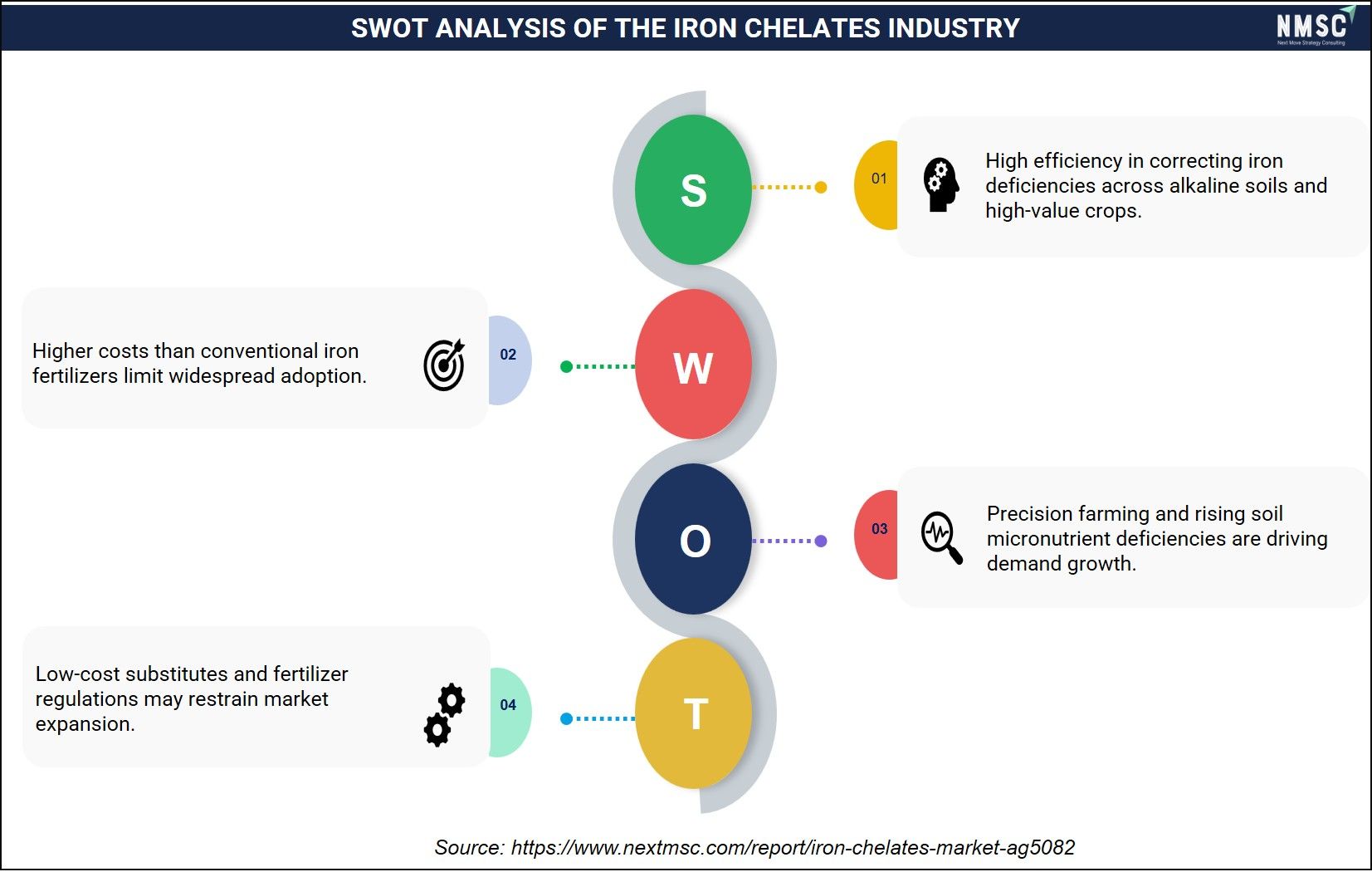
The market demonstrates strong agronomic efficiency, particularly in correcting iron deficiencies in alkaline soils and high-value crops. However, higher product costs compared to conventional iron fertilizers limit adoption, especially in price-sensitive markets. Furthermore, growing adoption of precision farming and rising micronutrient deficiencies present significant iron chelates market growth opportunities across modern agricultural systems. Moreover, our analysis indicates that increasing soil health awareness is supporting demand for efficient nutrient solutions. At the same time, the market faces competitive pressure from low-cost substitutes and potential constraints from evolving fertilizer regulations, which may restrict the expansion of premium iron chelate products in certain regions.
What Are the Key Factors Influencing Investment Analysis & Opportunities in the Iron Chelates Market?
Our analysis indicates that investment momentum in the iron chelates market is being driven by the increasing prevalence of iron-deficient and alkaline soils across major agricultural economies. Rising pressure to enhance crop productivity, along with the expansion of high-value horticulture, greenhouse cultivation, and protected farming systems, is accelerating demand for advanced micronutrient formulations such as EDDHA and EDTA iron chelates. Moreover, the growing adoption of fertigation, hydroponics, and precision agriculture technologies is creating long-term commercial opportunities for manufacturers focused on highly soluble and efficient nutrient solutions. Government initiatives supporting soil health management and balanced fertilization practices are further strengthening investment confidence across the agricultural micronutrient industry.
At the same time, our assessment reveals that investment opportunities are expanding through innovations in biodegradable chelates, liquid micronutrient formulations, and controlled-release nutrient delivery technologies tailored for modern farming operations. Increasing awareness regarding nutrient-use efficiency and sustainable agricultural productivity is encouraging strategic capacity expansion across Asia Pacific and Latin America, where intensive farming activities continue to elevate micronutrient consumption. The iron chelates market is also benefiting from rising application across cereals, fruits, vegetables, and commercial greenhouse crops, supporting stable long-term revenue generation for producers and distributors. However, fluctuating raw material costs and relatively high formulation expenses remain key considerations influencing investment strategies in cost-sensitive agricultural markets.
Key Benefits for Stakeholders:
Next Move Strategy Consulting (NMSC) provides a comprehensive and evidence-based analysis of the iron chelates market, covering historical developments from 2020 to 2025 and offering forward-looking forecasts through 2035. Our study evaluates the market at global, regional, and country levels, combining quantitative projections with qualitative insights into agricultural micronutrient demand, soil nutrient management trends, precision farming adoption, formulation advancements, regulatory developments, and investment opportunities across major Iron Chelates segments.
The iron chelates market creates differentiated value across fertilizer manufacturers, agricultural input suppliers, distributors, greenhouse operators, and investors through the increasing focus on crop nutrition efficiency and sustainable agricultural productivity. Our assessment confirms that investors benefit from rising demand for high-efficiency micronutrient fertilizers, expansion of controlled-environment agriculture, and increasing adoption of chelated iron formulations such as EDDHA, EDTA, and DTPA in alkaline and iron-deficient soils. Additionally, companies with advanced formulation capabilities, strong distribution networks, and integrated agronomic support services are strengthening product accessibility, nutrient efficiency, and long-term competitive positioning across global agricultural markets.
For growers and agricultural producers, the market delivers advantages through improved nutrient absorption, enhanced crop yield stability, and better soil nutrient management across diverse farming systems. From our industry insights, it is evident that evolving sustainable agriculture practices, precision fertigation systems, and government-supported soil health initiatives are supporting technology adoption and strengthening long-term market expansion. Overall, value creation is increasingly shared across stakeholders through micronutrient innovation, digital farming integration, supply-chain optimization, and expansion of sustainable crop nutrition solution.
|
Parameters |
Details |
|
Customization Scope |
Free customization (equivalent to up to 80 analyst-working hours) after purchase. Addition or alteration to country, regional & segment scope. |
|
Pricing and Purchase Options |
Avail customized purchase options to meet your exact research needs. |
|
Approach |
In-depth primary and secondary research; proprietary databases; rigorous quality control and validation measures. |
|
Analytical Tools |
Porter's Five Forces, SWOT, value chain, and Harvey ball analysis to assess competitive intensity, stakeholder roles, and relative impact of key factors. |
Key Market Segments
By Chemistry
-
Fe-EDTA
-
Fe-DTPA
-
Fe-EDDHA
-
Fe-EDDHSA
-
Fe-HBED
-
Fe-HEDTA
-
Fe-IDHA
-
Amino Acid Chelate
-
Other Iron Chelates
By Physical Form
-
Liquid
-
Solution
-
Suspension
-
-
Solid
-
Powder
-
Granule
-
Microgranule
-
-
Other
By Application Mode
-
Soil Application
-
Foliar Application
-
Fertigation
-
Hydroponics
-
Seed Treatment
-
Other
By Crop Type
-
Field Crops
-
Cereals
-
Oilseeds
-
Pulses
-
Fibre Crops
-
-
Fruits and Vegetables
-
Turf and Ornamentals
-
Plantation Crops
-
Other Crops
By Channel
-
Direct
-
Distributor
-
Retail
-
E-commerce
-
Formulator
-
Other
Geographical Breakdown
-
North America: U.S., Canada, and Mexico.
-
Europe: UK, Germany, France, Italy, Spain, Sweden, Denmark, Finland, the Netherlands, and the rest of Europe.
-
Asia Pacific: China, India, Japan, South Korea, Taiwan, Indonesia, Vietnam, Australia, Philippines, Malaysia and the rest of APAC.
-
Middle East & Africa (MEA): Saudi Arabia, UAE, Egypt, Israel, Turkey, Nigeria, South Africa, and the rest of MEA.
-
Latin America: Brazil, Argentina, Chile, Colombia, and the rest of LATAM.
Conclusion & Recommendations
Based on our evaluation, we found that the iron chelates market is steadily evolving due to the increasing need for efficient micronutrient management across modern agricultural systems. Rising concerns regarding iron-deficient soils, declining soil fertility, and productivity optimization are accelerating the adoption of chelated iron fertilizers in both conventional and precision farming practices. Expanding greenhouse cultivation, fertigation technologies, and high-value crop production are further strengthening long-term market demand across developed and emerging agricultural economies. Technological advancements in water-soluble formulations and controlled nutrient delivery systems are also supporting product innovation and operational efficiency. However, fluctuations in raw material costs and pricing pressure in cost-sensitive regions continue to influence market competitiveness. Overall, the market demonstrates stable growth potential driven by sustainable agriculture initiatives, improved nutrient-use efficiency, and global agricultural modernization trends.
Companies should prioritize investments in advanced chelation technologies, sustainable nutrient formulations, and region-specific product development strategies to strengthen long-term competitive positioning across the iron chelates market. Strategic expansion across Asia Pacific and Latin America is becoming increasingly relevant due to rising agricultural intensification, widespread micronutrient deficiencies, and demand for higher crop productivity. In addition, our review of the market shows that partnerships with fertilizer distributors, agritech companies, and greenhouse farming operators can improve product accessibility and enhance market penetration across diversified crop categories. Manufacturers investing in biodegradable chelates, liquid micronutrient formulations, and precision fertigation-compatible solutions are better positioned to align with evolving sustainable farming practices. Strengthening digital agronomy support services, farmer education initiatives, and supply-chain efficiency strategies may further improve nutrient management outcomes while supporting long-term revenue growth and brand differentiation across global agricultural markets.
About the Author
 Tushmi Dutta
— Tushmi Dutta is a focused researcher specializing in detailed analysis and insight-driven research across diverse business landscapes. She supports strategic initiatives through structured data interpretation, thorough validation, and clear communication of findings that aid informed decision-making. With a strong interest in writing, she enjoys presenting research insights in an engaging and accessible manner. Beyond work, she enjoys traveling, reading, painting, and continuously learning new skills that contribute to her creative and professional growth.
Tushmi Dutta
— Tushmi Dutta is a focused researcher specializing in detailed analysis and insight-driven research across diverse business landscapes. She supports strategic initiatives through structured data interpretation, thorough validation, and clear communication of findings that aid informed decision-making. With a strong interest in writing, she enjoys presenting research insights in an engaging and accessible manner. Beyond work, she enjoys traveling, reading, painting, and continuously learning new skills that contribute to her creative and professional growth.
About the Reviewer
 Supradip Baul
— Supradip Baul is an accomplished business consultant and strategist with over a decade of rich experience in market intelligence, strategy, technology, and business transformation. His work has included rigorous qualitative and quantitative analysis across multiple industries, helping clients shape investment decisions and long-term roadmaps. Earlier in his career, he was associated with Gartner, where he contributed to industry-leading reports and market share analyses. He has worked with leading global companies and holds an MBA with a dual specialization in Marketing and Finance.
Supradip Baul
— Supradip Baul is an accomplished business consultant and strategist with over a decade of rich experience in market intelligence, strategy, technology, and business transformation. His work has included rigorous qualitative and quantitative analysis across multiple industries, helping clients shape investment decisions and long-term roadmaps. Earlier in his career, he was associated with Gartner, where he contributed to industry-leading reports and market share analyses. He has worked with leading global companies and holds an MBA with a dual specialization in Marketing and Finance.
At Next Move Strategy Consulting, we understand that insightful market research is the cornerstone of successful business decisions. That's why we employ a robust and multifaceted approach, combining various methodologies to deliver the most accurate and actionable data for our clients.

Research Landscape
We navigate the world of research with two primary approaches:
Qualitative Approach
Our qualitative research methodologies involve immersive techniques such as in-depth interviews, focus groups, and observational studies. By engaging directly with individuals and stakeholders, we uncover valuable insights that quantitative data alone may overlook.

Quantitative Research
In tandem with qualitative methodologies, NMSC leverages the power of Quantitative Research to provide a robust foundation of numerical insights. Through systematic data collection and analysis, we quantify patterns, preferences, and market trends, offering a comprehensive view of the business landscape.
Our quantitative research approach employs diverse tools, including surveys, experiments, and statistical modelling. These methodologies enable us to gather data from a large and representative sample, ensuring the statistical significance of our findings. By employing structured questionnaires and standardized data collection methods, we guarantee the reliability and validity of the information we present to our clients.
Quantitative research is particularly effective in measuring the prevalence of trends, assessing market size, and gauging the impact of various factors on consumer behavior. The numerical precision attained through this approach equips our clients with actionable insights, facilitating data-driven decision-making and strategy formulation.


Our Specialized Toolbox for Industry-Specific Market Research
We deploy a specialized arsenal of techniques tailored to meet your unique requirements. Here's a glimpse into our comprehensive toolbox:

Information Procurement
The stage entails acquiring market data or relevant information through various sources and methodologies.


Market Research Approach
We utilize both top-down and bottom-up approaches in market research analysis to achieve a comprehensive understanding of the market dynamics, leveraging the broad perspective of industry trends and macroeconomic factors alongside detailed insights from specific segments and individual companies.

Porters Five Forces Analysis
We conduct Porter's Five Forces analysis to evaluate the competitive landscape of an industry, providing us with insights into factors that affect profitability and strategic positioning.

SWOT Analysis

Forecasting
We utilize a forecasting model to predict future consumption by considering parameters like population, economics, regulations, market competition, drivers, constraints, technology, and pricing. We also employ statistical techniques such as multilinear regression, exponential smoothing, moving average, ARIMA, and Monte Carlo simulations for accurate predictions. In econometric forecasting, we analyzed short-term and long-term event impacts, attributing values based on regulatory frameworks, economic factors, and market events.





 Speak to Our Analyst