Multi-Robot Orchestration Software Market Size, Share, Growth & Forecast by Component (Orchestration Software), Integration Type (Vendor-Specific, Vendor-Agnostic), Function (Basic Fleet Management, Advanced Multi-Agent), Robot Type (Stationary Industrial, Mobile), Control Architecture (Centralized), Deployment (Cloud, On-Premise, Hybrid), Pricing Model (SaaS, License, Usage, Hybrid), Application (Material Handling), and Industry Vertical (Warehouse & Logistics) — Global Analysis 2026–2035
Industry: ICT & Media | Publishing Date: July 13, 2026 | Last Updated: October 9, 2026 | No of Pages: N/A | No. of Tables: N/A | No. of Figures: N/A | Format: PDF | Report Code: IC2120
What Is the Multi-Robot Orchestration Software Market Size?
The global Multi-Robot Orchestration Software Market was valued at USD 1.5 billion in 2025 and is expected to reach USD 1.8 billion in 2026. Accelerating adoption of autonomous mobile robots in warehousing and manufacturing, growing deployment of multi-agent robotic systems, and increasing demand for AI-driven fleet intelligence are projected to propel the market to USD 9.2 billion by 2035, advancing at a CAGR of 19.8% from 2026 to 2035. Key growth drivers include the proliferation of e-commerce fulfillment centers requiring simultaneous multi-robot coordination, the rapid scaling of Industry 4.0 manufacturing automation, expanding government-backed robotics programs, and rising enterprise demand for vendor-agnostic orchestration platforms that reduce dependency on single-vendor robot ecosystems.
|
Parameters |
Details |
|
Market Size in 2025 |
USD 1.5 Billion |
|
Market Size in 2026 |
USD 1.8 Billion |
|
Revenue Forecast in 2035 |
USD 9.2 Billion |
|
Growth Rate |
CAGR of 19.8% from 2026 to 2035 |
|
Analysis Period |
2025–2035 |
|
Base Year Considered |
2025 |
|
Forecast Period |
2026–2035 |
|
Market Size Estimation |
Billion USD |
|
Companies Profiled |
17 |
|
Countries Covered |
33 |
|
Market Share |
Top 10 |
Multi-Robot Orchestration Software Market Overview
What Is the Multi-Robot Orchestration Software Market?
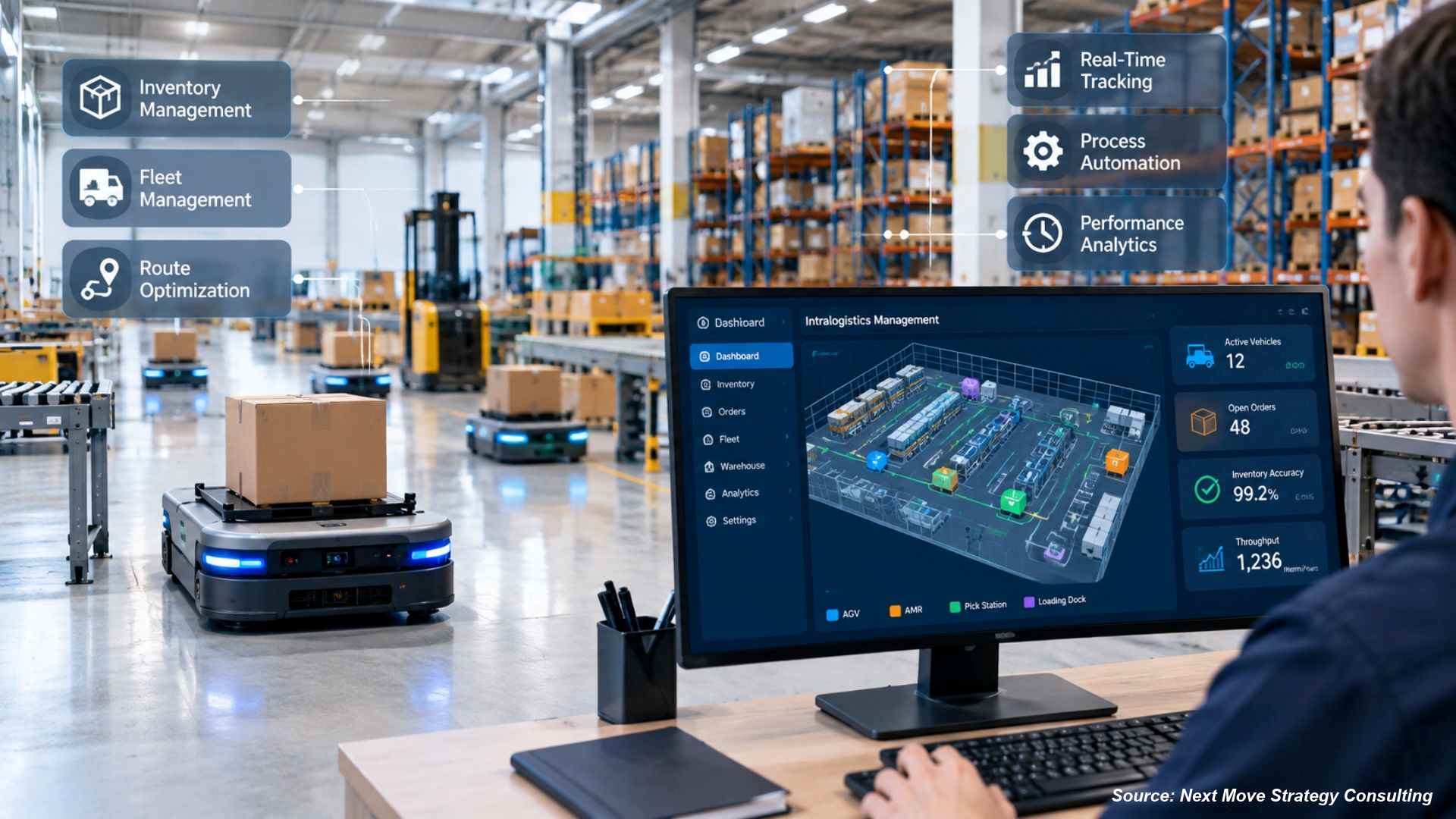
Multi-Robot Orchestration Software is a technology layer that enables centralized or distributed coordination, task allocation, collision avoidance, path planning, and real-time monitoring of heterogeneous robot fleets operating across shared physical environments. Unlike single-robot control systems, the Multi-Robot Orchestration Software Market supports simultaneous management of stationary industrial robots, autonomous mobile robots, aerial drones, and specialized service robots within unified digital command platforms. The market spans orchestration software, middleware, and managed services delivered via cloud-based, on-premise, or hybrid deployment architectures across warehouse, manufacturing, healthcare, agriculture, and defense environments.
How Has the Multi-Robot Orchestration Software Market Evolved?
The Multi-Robot Orchestration Software Market has evolved through distinct technological generations. The first generation focused on proprietary, vendor-locked fleet management systems for homogeneous robot fleets within single facilities. The second generation introduced middleware abstraction layers enabling limited cross-vendor interoperability. NMSC's analysis indicates that the current generation is characterized by AI-native orchestration platforms leveraging reinforcement learning, digital twins, and real-time sensor fusion to manage large-scale heterogeneous robot fleets across distributed multi-site environments, driven by Industry 4.0 mandates and the explosive growth of automated fulfillment infrastructure globally.
How Do Regulations Influence the Multi-Robot Orchestration Software Market?
Regulatory developments are reshaping the Multi-Robot Orchestration Software Market across multiple dimensions. The European Union's Machinery Regulation (EU) 2023/1230, which replaces the Machinery Directive 2006/42/EC, introduces updated safety requirements for autonomous and collaborative robotic systems operating alongside human workers. In the United States, OSHA's robotic safety standards and NIST guidelines for autonomous robot interaction directly influence orchestration software safety architecture requirements. Compliance mandates are compelling software vendors to embed real-time safety monitoring, human-robot interaction management, and incident logging into their orchestration platforms.
How Is Technology Adoption Expanding Across the Multi-Robot Orchestration Software Market?
Technology adoption across the Multi-Robot Orchestration Software Market is accelerating as enterprises scale robot fleet deployments beyond single-vendor and single-site implementations. Based on our market evaluation, we noticed that open standards initiatives such as the Open-RMF framework, developed under the OpenRobotics foundation, and the VDA 5050 protocol for AGV and AMR communication, are reducing interoperability barriers. Cloud-native orchestration platforms with consumption-based SaaS pricing models are lowering adoption barriers for mid-market logistics and manufacturing operators, while enterprise-grade vendors are deploying AI and machine learning capabilities to optimize fleet scheduling and predictive maintenance across distributed robotic environments.
|
Key Takeaway |
|
By component, Orchestration Software held the largest share of the Multi-Robot Orchestration Software Market at USD 0.75 billion in 2025, driven by enterprise demand for centralized robot fleet management, real-time task scheduling, and AI-driven path optimization across warehouse and manufacturing environments. |
|
The Services segment is the fastest-growing component in the Multi-Robot Orchestration Software Market at a CAGR of 24.8% from 2026 to 2035, fueled by rising enterprise demand for integration services, managed orchestration services, and ongoing technical support as robot fleet deployments scale globally. |
|
By integration type, Vendor-Specific Platforms dominated the Multi-Robot Orchestration Software Market at USD 0.87 billion in 2025, reflecting the installed base advantages of established industrial automation vendors including Siemens, ABB, and KUKA in large enterprise deployments. |
|
Vendor-Agnostic Platforms are the fastest-growing integration type in the Multi-Robot Orchestration Software Market at a CAGR of 23.5% from 2026 to 2035, as enterprises increasingly demand multi-vendor robot fleet interoperability and avoidance of single-vendor lock-in. |
|
By function, Advanced Multi-Agent Orchestration is the leading AI-driven functional segment in the Multi-Robot Orchestration Software Market, projected to expand from USD 0.42 billion in 2025 to USD 2.60 billion by 2035 at a CAGR of 20.1%, driven by AI-based multi-robot coordination demand. |
|
Enterprise Integration is the fastest-growing function in the Multi-Robot Orchestration Software Market at a CAGR of 22.6% from 2026 to 2035, driven by demand for connectivity between robot orchestration platforms and enterprise WMS, ERP, and MES systems. |
|
By robot type, Mobile Robots commanded the largest share of the Multi-Robot Orchestration Software Market at USD 0.61 billion in 2025, reflecting the dominant deployment of AMRs and AGVs in warehouse, logistics, and manufacturing applications globally. |
|
Multi-Modal Robot Systems are the fastest-growing robot type in the Multi-Robot Orchestration Software Market at a CAGR of 26.3% from 2026 to 2035, as enterprises deploy integrated fleets combining mobile robots, robotic arms, and aerial drones within unified orchestration environments. |
|
By deployment, Cloud-Based Solutions led the Multi-Robot Orchestration Software Market at USD 0.71 billion in 2025, as enterprises leverage scalable cloud infrastructure for centralized fleet data aggregation, remote monitoring, and AI-driven optimization. |
|
Hybrid Solutions are the fastest-growing deployment model in the Multi-Robot Orchestration Software Market at a CAGR of 27.5% from 2026 to 2035, enabling low-latency edge processing alongside cloud-based analytics for mission-critical robot fleet operations. |
|
North America held the largest regional share of the Multi-Robot Orchestration Software Market at USD 0.60 billion in 2025, projected to reach USD 3.10 billion by 2035 at a CAGR of 17.9%, anchored by the highest concentration of fulfillment center automation investment and a mature industrial robotics ecosystem. |
|
Asia-Pacific is the fastest-growing major region in the Multi-Robot Orchestration Software Market at a CAGR of 21.0%, propelled by China's large-scale smart manufacturing initiatives, Japan's collaborative robot deployments, and South Korea's semiconductor factory automation programs. |
|
The United States is the single largest country market in the Multi-Robot Orchestration Software Market, representing over 75% of North American revenue in 2025, driven by Amazon, Walmart, and FedEx's massive automated fulfillment network expansions. |
|
China is the fastest-growing national market in Asia-Pacific within the Multi-Robot Orchestration Software Market at a CAGR of 22.8%, propelled by national smart manufacturing programs under Made in China 2025 and the Robotics Plus Internet initiative. |
Key Emerging Trends in the Multi-Robot Orchestration Software Market
How Is AI-Driven Task Allocation Transforming the Multi-Robot Orchestration Software Market?
Artificial intelligence is fundamentally reshaping task allocation within the Multi-Robot Orchestration Software Market by replacing static rule-based scheduling with dynamic reinforcement learning models. From our research, we found that platforms such as InOrbit and Formant now embed ML-driven fleet optimization engines that continuously adapt robot assignments based on real-time operational data. Amazon Robotics' Sequoia fulfillment system exemplifies this transformation, combining robotic pods with AI-driven orchestration to reduce order processing time. This shift from deterministic to adaptive task allocation enables operators to achieve higher throughput, lower idle time, and improved energy efficiency across large-scale robot fleets.
How Is Open Interoperability Standards Adoption Reshaping the Multi-Robot Orchestration Software Market?
The emergence of open interoperability standards is creating structural change in the Multi-Robot Orchestration Software Market by enabling heterogeneous robot fleets to operate under unified orchestration platforms. Our analysis shows that the VDA 5050 standard, developed by the German Association of the Automotive Industry, is being adopted by leading European logistics operators to enable seamless communication between AGVs and AMRs from different manufacturers. The Open-RMF framework, maintained by OpenRobotics, provides an open-source orchestration layer used in healthcare and logistics deployments. These open standards are directly accelerating vendor-agnostic platform adoption and reducing integration complexity for enterprise buyers.
What Role Is Digital Twin Technology Playing in the Evolution of the Multi-Robot Orchestration Software Market?
Digital twin technology is emerging as a mission-critical capability within the Multi-Robot Orchestration Software Market, enabling operators to simulate, test, and optimize robot fleet deployments in virtual environments before live implementation. Based on NMSC's research, we found that platforms from Siemens and Rockwell Automation now offer integrated digital twin environments that mirror physical warehouse or factory layouts and robot behavior patterns. NVIDIA's Isaac Sim platform provides a high-fidelity simulation environment increasingly used for orchestration algorithm validation and robot fleet planning. Digital twin integration reduces fleet deployment risk, accelerates commissioning timelines, and enables continuous performance optimization.
Strategic Framework of the Multi-Robot Orchestration Software Market
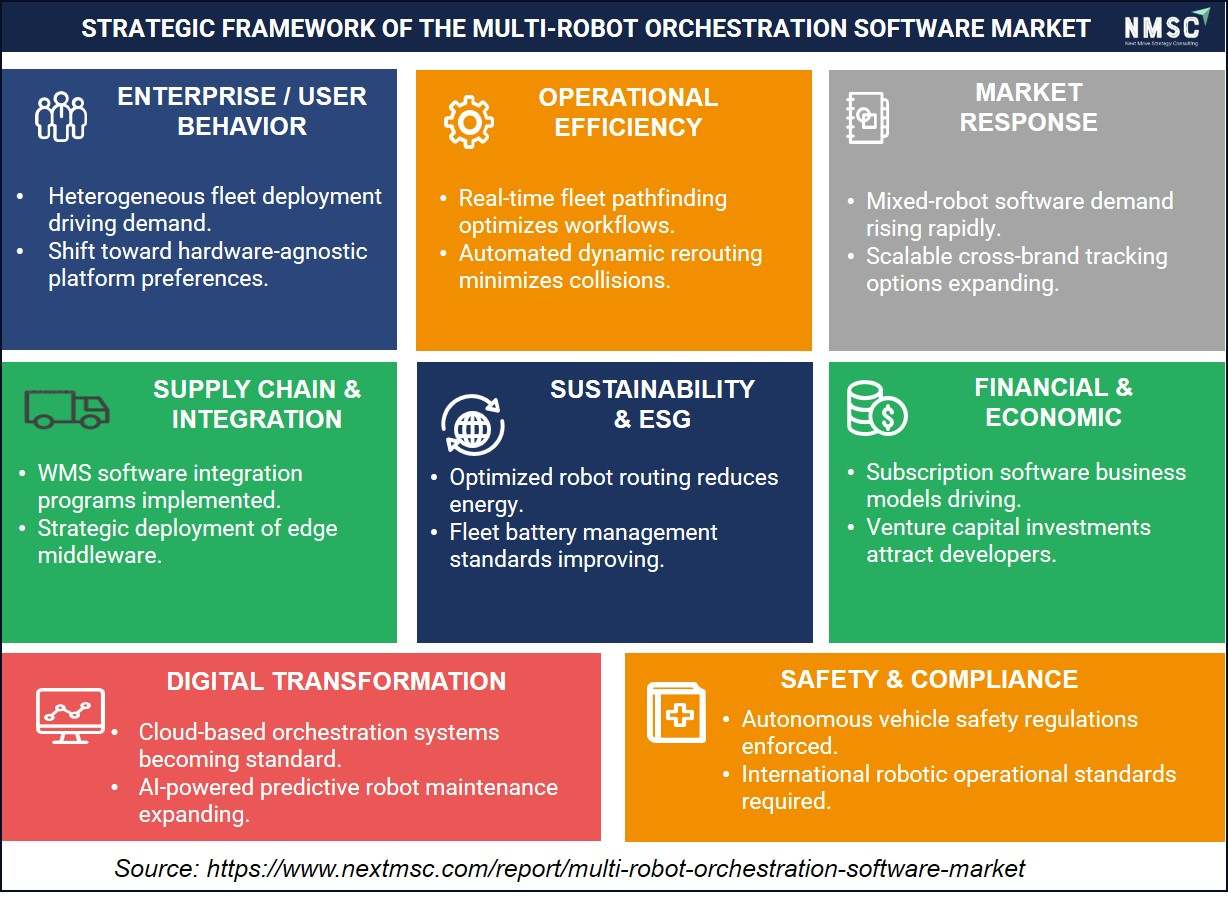
The strategic framework highlights the key factors shaping the growth of the Multi-Robot Orchestration Software Market. Increasing deployment of heterogeneous robot fleets, demand for hardware-agnostic platforms, and real-time fleet optimization are driving adoption across industries. Market expansion is further supported by cloud-based orchestration, AI-powered maintenance, warehouse management system (WMS) integration, and sustainability initiatives. Subscription-based business models and rising investments accelerate innovation, while evolving safety regulations and robotic operational standards ensure secure and compliant deployment of multi-robot ecosystems worldwide.
How Is Edge Computing Integration Influencing the Multi-Robot Orchestration Software Market?
Through our market assessment, we observed that the integration of edge computing into orchestration architectures is a defining trend within the Multi-Robot Orchestration Software Market, driven by the need for sub-millisecond latency in safety-critical robot control decisions. Enterprises operating high-density robot fleets in manufacturing or dynamic warehouse environments cannot rely solely on cloud-based orchestration due to network latency constraints. Vendors including Fetch Robotics and Geekplus are deploying edge orchestration nodes that process real-time sensor data locally while synchronizing fleet-level analytics with cloud platforms. This hybrid edge-cloud architecture is expected to become the standard deployment model for enterprise-scale robot orchestration.
What Are the Key Market Drivers, Breakthroughs, and Investment Opportunities that Will Shape the Multi-Robot Orchestration Software Market Industry in the Next Decade?
|
Drivers / Trends / Restraints |
(+/-) % Impact on CAGR Forecast |
Geographic Relevance |
Impact Timeline |
|
Explosive Growth in E-Commerce Fulfillment Automation |
+3.2% |
North America, APAC, Europe |
2025–2032 |
|
Industry 4.0 Manufacturing Automation Mandates |
+2.6% |
Europe, APAC, North America |
2025–2035 |
|
Open Interoperability Standards Adoption (VDA 5050, Open-RMF) |
+1.8% |
Global |
2025–2030 |
|
AI/ML-Driven Fleet Optimization Demand |
+2.1% |
North America, APAC |
2026–2035 |
|
Digital Twin Integration for Fleet Simulation |
+1.4% |
Europe, North America |
2026–2035 |
|
Edge Computing for Low-Latency Orchestration |
+1.2% |
North America, APAC, Europe |
2026–2032 |
|
Vendor Lock-In Risk Perception |
-1.0% |
Global (SMB/Mid-market) |
Ongoing |
|
High Integration Complexity for Legacy Systems |
-1.3% |
Europe, LATAM, MEA |
2025–2028 |
|
Cybersecurity Vulnerabilities in Connected Robot Fleets |
-0.8% |
All regions |
Ongoing |
|
Healthcare Robotics and Logistics Automation Convergence |
+1.6% |
North America, Europe, APAC |
2026–2035 |
What Are the Growth Drivers of the Multi-Robot Orchestration Software Market?
How Is the Explosive Growth of E-Commerce Fulfillment Driving the Multi-Robot Orchestration Software Market?
The sustained global expansion of e-commerce fulfillment infrastructure is the single most powerful driver for the Multi-Robot Orchestration Software Market demand. Based on our analysis, warehouse operators are deploying fleets of hundreds to thousands of autonomous mobile robots requiring sophisticated real-time orchestration to manage simultaneous picking, transport, and charging operations. Amazon's investments in robotic fulfillment technologies, publicly disclosed across multiple annual reports, reflect the scale of capital now directed toward multi-robot environments. According to the International Federation of Robotics (IFR), global professional service robot installations in logistics reached record levels in 2023, underscoring the structural nature of this demand driver.
How Is Industry 4.0 Manufacturing Automation Fueling Multi-Robot Orchestration Software Market Expansion?
The global transition to Industry 4.0 smart manufacturing environments is generating structural, multi-year demand for the Multi-Robot Orchestration Software Market. Manufacturing facilities integrating collaborative robot arms, autonomous mobile platforms, and automated guided vehicles require orchestration software that coordinates these heterogeneous assets in real time. Through NMSC's assessment, we found that Germany's Platform Industrie 4.0 initiative, supported by the Federal Ministry for Economic Affairs and Climate Action, explicitly promotes advanced robotics orchestration as a core smart factory competency. South Korea's Smart Factory initiative and Japan's Society 5.0 program generate equivalent demand across Asia-Pacific manufacturing ecosystems.
How Is the Adoption of Open Interoperability Standards Expanding the Multi-Robot Orchestration Software Market?
The broad adoption of open communication standards is accelerating the deployment of heterogeneous robot fleets that require vendor-agnostic orchestration platforms within the Multi-Robot Orchestration Software Market. Our findings suggest that the VDA 5050 protocol, standardizing communication between industrial truck fleet management systems and AGVs/AMRs from any manufacturer, has been adopted by major European automotive and logistics companies. The Open-RMF framework, supported by OpenRobotics under the Apache 2.0 license, provides a multi-floor, multi-robot, multi-vendor orchestration middleware layer actively deployed in hospital and logistics environments. These standards reduce integration risk and directly expand the serviceable market for vendor-agnostic orchestration software.
What Are the Growth Inhibitors of the Multi-Robot Orchestration Software Market?
How Does High Integration Complexity with Legacy Systems Constrain Multi-Robot Orchestration Software Market Penetration?
High integration complexity with existing warehouse management systems, manufacturing execution systems, and enterprise resource planning platforms represents a significant structural constraint on the Multi-Robot Orchestration Software Market. Many industrial facilities operate legacy automation infrastructure with proprietary communication protocols incompatible with modern cloud-native orchestration platforms. Our assessment indicates that system integration projects for multi-vendor robot fleet deployments typically require six to eighteen months of engineering effort, creating substantial total cost of ownership concerns for mid-market and smaller enterprise buyers. The U.S. NIST Manufacturing Extension Partnership documents analogous technology integration challenges faced by smaller U.S. manufacturers undertaking automation upgrades.
How Do Cybersecurity Vulnerabilities in Connected Robot Fleets Inhibit Multi-Robot Orchestration Software Market Growth?
Cybersecurity risks associated with networked robot fleet management represent a growing inhibitor for the Multi-Robot Orchestration Software Market, particularly in critical infrastructure, defense, and healthcare deployments. Orchestration platforms that centralize control of multiple robots create high-value attack surfaces; a successful intrusion could disrupt entire facility operations or compromise sensitive operational data. Based on our market evaluation, the Cybersecurity and Infrastructure Security Agency (CISA) has issued advisories highlighting risks specific to industrial control systems and autonomous mobile robot networks. These concerns extend sales cycles, increase compliance requirements, and drive demand for security-certified orchestration architectures.
What Are the Growth Opportunities in the Multi-Robot Orchestration Software Market?
How Does Healthcare Robotics Deployment Create a Multi-Billion-Dollar Opportunity in the Multi-Robot Orchestration Software Market?
Healthcare represents a structurally significant and underserved growth opportunity within the Multi-Robot Orchestration Software Market, as hospitals deploy increasingly complex mixed fleets of autonomous delivery robots, surgical assistants, disinfection robots, and pharmacy automation systems requiring coordinated orchestration. Our analysis shows that the Open-RMF framework was specifically extended with hospital deployment profiles to address this emerging vertical. The U.S. Department of Veterans Affairs' hospital robotics programs and Singapore's hospital automation initiatives under the Smart Nation program document real-world multi-robot healthcare deployments. Vendors developing healthcare-certified orchestration platforms with HIPAA-compliant data handling will capture significant first-mover advantages.
How Does the Expansion of Agricultural Robotics Create New Opportunities in the Multi-Robot Orchestration Software Market?
Precision agriculture is emerging as a high-growth application vertical within the Multi-Robot Orchestration Software Market, with farms deploying coordinated fleets of ground-based autonomous robots and aerial drones for planting, monitoring, spraying, and harvesting operations. Our findings suggest that the U.S. Department of Agriculture's National Agricultural Statistics Service reports sustained labor shortages across the agricultural sector, creating structural demand for robotic automation. Multi-robot orchestration platforms capable of managing mixed fleets of terrestrial robots and UAVs simultaneously across large outdoor environments represent a technically differentiated and commercially attractive opportunity for specialized vendors targeting this growing vertical.
How Does the Defense and Security Sector Represent a High-Value Opportunity for the Multi-Robot Orchestration Software Market?
The defense and security sector represents a high-value, high-barrier Multi-Robot Orchestration Software Market opportunity, with military organizations deploying coordinated fleets of ground robots, aerial drones, and maritime unmanned vehicles for surveillance, logistics, and combat support missions. NMSC's analysis indicates that the U.S. Department of Defense's Replicator Initiative, publicly announced in 2023, prioritizes the rapid fielding of large numbers of autonomous systems, creating direct procurement demand for defense-grade multi-robot orchestration software. NATO's science and technology programs document allied nation investments in autonomous system coordination frameworks, and vendors with appropriate security certifications will secure long-term government contracts.
Pain Points Analysis of the Multi-robot Orchestration Software Market
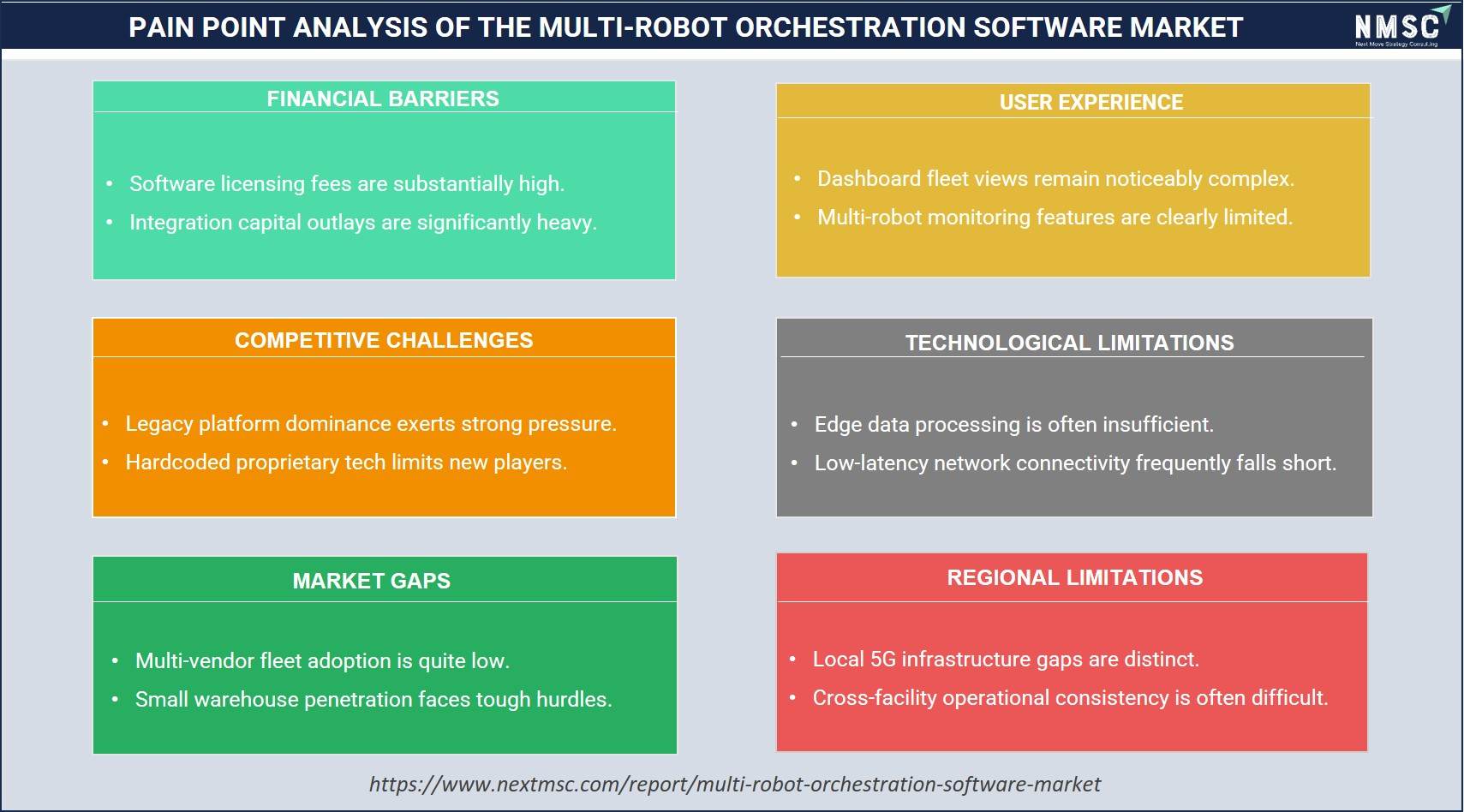
The pain point analysis of the Multi-Robot Orchestration Software Market highlights several barriers affecting widespread adoption. High software licensing and integration costs create financial challenges, while complex dashboards and limited multi-robot monitoring capabilities impact user experience. Market growth is further constrained by legacy platform dominance, proprietary technologies, insufficient edge computing capabilities, and network latency issues. Additionally, low multi-vendor fleet adoption, limited penetration among small warehouses, and regional disparities in 5G infrastructure and operational consistency continue to hinder seamless deployment and scalability.
How Is the Multi-Robot Orchestration Software Market Segmented in This Report, and What Are the Key Insights from the Segmentation Analysis?
How Do Component Segments Shape the Multi-Robot Orchestration Software Market Revenue Structure?
|
Component Segment |
2025 (USD Bn) |
2035 (USD Bn) |
CAGR (%) |
|
Orchestration Software |
0.75 |
3.78 |
17.6% |
|
Middleware |
0.42 |
2.39 |
19.1% |
|
Services |
0.33 |
3.03 |
24.8% |
Based on our analysis of enterprise robot fleet management investment patterns, the Multi-Robot Orchestration Software Market is segmented into Orchestration Software, Middleware, and Services. The Orchestration Software segment holds the dominant revenue share, constituting the core layer responsible for task scheduling, fleet monitoring, collision avoidance, and dynamic path planning across heterogeneous robot fleets. Our assessment indicates that Middleware is experiencing strong and accelerating adoption as enterprises deploy mixed-vendor robot environments requiring communication translation and protocol bridging between disparate robotic systems. The Services segment, encompassing integration, managed orchestration, professional consulting, and ongoing support contracts, is the fastest-growing component at a CAGR of 24.8%, driven by increasing enterprise complexity in robot fleet deployments and growing need for vendor-assisted commissioning and lifecycle management globally.
How Does Integration Type Differentiation Define Competitive Positioning in the Multi-Robot Orchestration Software Market?
|
Integration Type Segment |
2025 (USD Bn) |
2035 (USD Bn) |
CAGR (%) |
|
Vendor-Specific Platforms |
0.87 |
3.96 |
16.3% |
|
Vendor-Agnostic Platforms |
0.63 |
5.24 |
23.5% |
From our research, we found that the Multi-Robot Orchestration Software Market is segmented into Vendor-Specific Platforms and Vendor-Agnostic Platforms based on integration type. Vendor-Specific Platforms currently hold the dominant revenue share, reflecting the deep installed base of proprietary orchestration ecosystems offered by major industrial automation vendors such as Siemens, ABB, and KUKA, which integrate tightly with their respective robot hardware portfolios and deliver optimized performance within homogeneous fleets. However, through NMSC's assessment, we found that Vendor-Agnostic Platforms represent the fastest-growing and strategically disruptive segment at a CAGR of 23.5%, as enterprises managing mixed robot fleets increasingly demand interoperable orchestration layers independent of hardware vendor relationships. The open-source Open-RMF framework and commercial vendor-agnostic platforms from InOrbit and Formant exemplify this growing adoption pattern.
How Do Functional Capabilities Drive Value Differentiation in the Multi-Robot Orchestration Software Market?
|
Function Segment |
2025 (USD Bn) |
2035 (USD Bn) |
CAGR (%) |
|
Basic Fleet Management |
0.45 |
1.84 |
15.1% |
|
Advanced Multi-Agent Orchestration |
0.42 |
2.6 |
20.1% |
|
Predictive Fleet Management |
0.18 |
1.3 |
21.8% |
|
Enterprise Integration |
0.45 |
3.46 |
22.6% |
Our analysis of enterprise robot fleet operational requirements indicates that the Multi-Robot Orchestration Software Market is segmented by function into Basic Fleet Management, Advanced Multi-Agent Orchestration, Predictive Fleet Management, and Enterprise Integration. Basic Fleet Management constitutes the foundational layer for initial fleet visibility and task queuing, serving entry-level adopters. Advanced Multi-Agent Orchestration, encompassing real-time multi-robot coordination, dynamic task reallocation, and conflict-free path planning, is the dominant function category reflecting the complexity of modern warehouse and manufacturing robot deployments. Predictive Fleet Management, leveraging machine learning for proactive health monitoring, is among the fastest-growing functions at a CAGR of 21.8%. Enterprise Integration is the highest-CAGR functional segment at 22.6%, connecting orchestration platforms with WMS, ERP, MES, and SCADA systems to embed robot fleet intelligence within broader enterprise digital operations.
How Does Robot Type Diversity Shape Demand for Multi-Robot Orchestration Software Market Solutions?
|
Robot Type Segment |
2025 (USD Bn) |
2035 (USD Bn) |
CAGR (%) |
|
Stationary Industrial Robots |
0.28 |
1.1 |
14.7% |
|
Mobile Robots |
0.61 |
3.04 |
17.4% |
|
Aerial Robots |
0.14 |
1.02 |
21.9% |
|
Specialized Service Robots |
0.23 |
1.56 |
21.0% |
|
Multi-Modal Robot Systems |
0.24 |
2.48 |
26.3% |
Based on our evaluation of global robot deployment patterns, the Multi-Robot Orchestration Software Market is segmented by robot type into Stationary Industrial Robots, Mobile Robots, Aerial Robots, Specialized Service Robots, and Multi-Modal Robot Systems. Mobile Robots, comprising autonomous mobile robots and automated guided vehicles, constitute the dominant robot type segment reflecting massive deployment scale in warehouse, logistics, and manufacturing environments globally. Stationary Industrial Robots represent a steady revenue base where orchestration adds value through collaborative workspace management. Aerial Robots are experiencing strong adoption in inventory management and agricultural applications. Multi-Modal Robot Systems, integrating multiple robot form factors within single orchestration environments, represent the highest-growth robot type at a CAGR of 26.3%, advancing from USD 0.24 billion in 2025 to USD 2.48 billion by 2035, reflecting enterprise ambition to deploy comprehensive robotic automation ecosystems rather than siloed single-type fleets.
How Does Control Architecture Selection Impact Multi-Robot Orchestration Software Market Adoption?
|
Control Architecture Segment |
2025 (USD Bn) |
2035 (USD Bn) |
CAGR (%) |
|
Centralized Control Systems |
0.6 |
2.58 |
15.7% |
|
Distributed Control Systems |
0.45 |
2.76 |
19.8% |
|
Hybrid Control Systems |
0.45 |
3.86 |
23.9% |
From our market assessment, we observed that the Multi-Robot Orchestration Software Market is segmented by control architecture into Centralized Control Systems, Distributed Control Systems, and Hybrid Control Systems. Centralized Control Systems currently hold the largest revenue share, preferred by enterprises deploying medium-scale fleets requiring predictable, coordinated behavior within bounded environments. Distributed Control Systems are gaining adoption in large-scale and outdoor deployments where centralized coordination introduces unacceptable latency or single-point-of-failure risks. Hybrid Control Systems, combining centralized strategic planning with distributed tactical execution, are the fastest-growing architecture at a CAGR of 23.9%, recognized as the optimal balance between coordination efficiency and resilience for enterprise-scale deployments requiring both operational intelligence and real-time adaptability.
How Does Deployment Model Preference Reflect Enterprise Priorities in the Multi-Robot Orchestration Software Market?
|
Deployment Model Segment |
2025 (USD Bn) |
2035 (USD Bn) |
CAGR (%) |
|
Cloud-Based Solutions |
0.71 |
3.86 |
18.5% |
|
On-Premise Solutions |
0.52 |
2.3 |
16.0% |
|
Hybrid Solutions |
0.27 |
3.04 |
27.5% |
Based on our analysis of enterprise robotic deployment strategies, the Multi-Robot Orchestration Software Market is segmented by deployment model into Cloud-Based Solutions, On-Premise Solutions, and Hybrid Solutions. Cloud-Based Solutions hold the dominant revenue share, leveraging scalable infrastructure for centralized fleet data aggregation, AI model training, remote monitoring, and over-the-air software updates across geographically distributed robot deployments. On-Premise Solutions remain essential for manufacturing and healthcare environments where data sovereignty, low-latency requirements, and regulatory constraints preclude full cloud dependency. Hybrid Solutions are the fastest-growing deployment model at a CAGR of 27.5%, integrating edge-based real-time control with cloud-based analytics and enterprise system integration, representing the architecture best suited to the diverse operational requirements of large-scale enterprise robot deployments globally.
How Do Pricing Models Define Commercial Accessibility in the Multi-Robot Orchestration Software Market?
|
Pricing Model Segment |
2025 (USD Bn) |
2035 (USD Bn) |
CAGR (%) |
|
Subscription-Based (SaaS) |
0.56 |
3.22 |
19.2% |
|
License-Based |
0.47 |
1.84 |
14.6% |
|
Usage-Based |
0.21 |
1.84 |
24.3% |
|
Hybrid Pricing |
0.26 |
2.3 |
24.5% |
In our analysis of enterprise procurement preferences, we assessed that the Multi-Robot Orchestration Software Market is segmented by pricing model into Subscription-Based (SaaS), License-Based, Usage-Based, and Hybrid Pricing. Subscription-Based SaaS holds the dominant revenue share, offering predictable recurring cost structures aligned with enterprise IT procurement preferences and enabling continuous software updates and cloud-delivered AI capabilities. License-Based pricing remains prevalent among large enterprise deployments with stable robot fleet sizes and on-premise requirements. Usage-Based pricing is gaining traction as operators seek cost structures proportional to actual robot utilization. Hybrid Pricing models combining base subscription fees with usage-based variable components are the fastest-growing pricing structure at a CAGR of 24.5%, offering commercial flexibility that accommodates both predictable baseline operations and demand-driven scaling.
How Do Application Verticals Drive Multi-Robot Orchestration Software Market Revenue Concentration?
|
Application Segment |
2025 (USD Bn) |
2035 (USD Bn) |
CAGR (%) |
|
Material Handling |
0.51 |
2.58 |
17.5% |
|
Order Fulfillment |
0.48 |
2.76 |
19.1% |
|
Production Lines |
0.33 |
1.66 |
17.5% |
|
Inventory Management |
0.18 |
2.2 |
28.5% |
Our findings suggest that the Multi-Robot Orchestration Software Market is segmented by application into Material Handling, Order Fulfillment, Production Lines, and Inventory Management. Material Handling and Order Fulfillment together constitute the largest application segments, reflecting the dominant deployment of orchestrated robot fleets in warehouse and distribution center environments where simultaneous multi-robot coordination for goods movement and order picking is mission-critical. Production Line orchestration, managing collaborative robot arms alongside mobile platforms in manufacturing environments, represents a stable and growing application segment. Inventory Management is the fastest-growing application at a CAGR of 28.5%, advancing from USD 0.18 billion in 2025 to USD 2.20 billion by 2035, fueled by retailer and distributor demand for continuous real-time inventory intelligence from coordinated ground robot and aerial drone deployments.
Which Industry Verticals Generate the Most Value in the Multi-Robot Orchestration Software Market?
|
Industry Vertical |
2025 (USD Bn) |
2035 (USD Bn) |
CAGR (%) |
|
Warehouse & Logistics |
0.54 |
2.94 |
18.5% |
|
Manufacturing |
0.37 |
1.94 |
18.0% |
|
Healthcare |
0.14 |
1.1 |
22.8% |
|
Retail & Hospitality |
0.14 |
0.92 |
20.8% |
|
Agriculture |
0.11 |
0.83 |
22.4% |
|
Construction and Mining |
0.09 |
0.64 |
21.6% |
|
Defense and Security |
0.11 |
0.83 |
22.4% |
Based on our analysis of robot adoption patterns across industry sectors, the Multi-Robot Orchestration Software Market is segmented into Warehouse and Logistics, Manufacturing, Healthcare, Retail and Hospitality, Agriculture, Construction and Mining, and Defense and Security verticals. Warehouse and Logistics commands the dominant revenue share at USD 0.54 billion in 2025, driven by the enormous scale of automated fulfillment center deployments globally and the mission-critical nature of real-time multi-robot coordination in high-throughput distribution environments. Manufacturing is the second-largest vertical, with smart factory initiatives driving adoption of orchestrated mixed robot fleets. Healthcare is among the fastest-growing verticals at a CAGR of 22.8%, as hospitals deploy multi-robot systems for pharmacy delivery, surgical room logistics, and disinfection automation. Agriculture, Construction and Mining, and Defense and Security represent high-growth emerging verticals where early-stage deployments of coordinated autonomous systems are generating increasing software orchestration demand.
Regional Outlook
Geographic Performance Snapshot
|
Region |
2025 (USD Bn) |
2035 (USD Bn) |
CAGR (%) |
Key Driver |
|
North America |
0.6 |
3.1 |
17.9% |
E-commerce fulfillment, industrial IoT |
|
Europe |
0.4 |
2.12 |
18.2% |
Industry 4.0, automotive robotics |
|
Asia-Pacific |
0.36 |
2.39 |
21.0% |
Smart manufacturing, China robotics scale |
|
Middle East & Africa |
0.07 |
0.46 |
20.8% |
Vision 2030, smart city logistics |
|
Latin America |
0.07 |
0.46 |
20.8% |
Manufacturing nearshoring, agri-robotics |
North America Multi-Robot Orchestration Software Market
North America is the global leader in the Multi-Robot Orchestration Software Market, accounting for USD 0.60 billion in 2025 and forecast to reach USD 3.10 billion by 2035 at a CAGR of 17.9%. The region benefits from the world's highest concentration of automated fulfillment infrastructure investment, with major e-commerce and retail operators deploying large-scale multi-robot systems across their distribution networks. A mature industrial robotics ecosystem, strong venture capital support for robotics startups, and advanced cloud infrastructure underpin sustained market leadership. Regulatory developments including OSHA's updated robotic safety guidance are compelling investment in safety-certified orchestration architectures across the region.
U.S. Multi-Robot Orchestration Software Market
Based on our engagements with enterprise automation stakeholders, the United States represents over 75% of the North American Multi-Robot Orchestration Software Market and constitutes the world's single largest national market for robot fleet orchestration. The U.S. benefits from the highest concentration of large-scale automated warehouse operators, a robust domestic robotics hardware and software vendor ecosystem including Fetch Robotics, Locus Robotics, Boston Dynamics, and InOrbit, and a federal policy environment supportive of advanced manufacturing automation through the Manufacturing USA network. Amazon's publicly disclosed investments in robotic fulfillment systems have catalyzed competitive automation spending across the entire U.S. logistics sector.
Canada Multi-Robot Orchestration Software Market
Through our analysis, Canada represents approximately 15% of North American Multi-Robot Orchestration Software Market revenue. Canadian manufacturing, mining, and logistics sectors are increasing automation investments, with automotive assembly facilities in Ontario and British Columbia adopting multi-robot production line orchestration. The National Research Council of Canada's industrial research assistance programs support SME adoption of advanced robotics. Canada's Artificial Intelligence and Data Act creates a forward-looking regulatory framework influencing autonomous system deployment standards. Canadian retailers and third-party logistics operators are progressively deploying AMR-based fulfillment orchestration systems across their distribution infrastructure.
Mexico Multi-Robot Orchestration Software Market
From our assessment, Mexico is the fastest-growing market within North America in the Multi-Robot Orchestration Software Market at an estimated CAGR of 20.5%. Mexico's rapid emergence as a global nearshoring destination for electronics and automotive manufacturing is driving multi-robot adoption across new factory developments in Monterrey and Tijuana. The Secretaria de Economia's industrial promotion programs support advanced automation investment. Mexico's logistics sector is expanding automated warehouse infrastructure to serve both domestic e-commerce growth and cross-border U.S.-Mexico supply chain operations requiring orchestrated robot fleet management capabilities.
Europe Multi-Robot Orchestration Software Market
Europe is the second-largest region in the Multi-Robot Orchestration Software Market, contributing USD 0.40 billion in 2025 and forecast to reach USD 2.12 billion by 2035 at a CAGR of 18.2%. Europe's manufacturing excellence, particularly in automotive and industrial machinery sectors, and the region's strategic commitment to Industry 4.0 adoption under national and EU-wide digital transformation programs are primary growth drivers. Germany's Platform Industrie 4.0, the EU's Digital Decade strategy, and strong investment in smart factory deployments across automotive and pharmaceutical sectors position Europe as both a major demand market and a significant source of multi-robot orchestration technology innovation throughout the forecast period.
UK Multi-Robot Orchestration Software Market
According to our evaluation, the United Kingdom represents approximately 20% of European Multi-Robot Orchestration Software Market revenue. The UK's logistics and retail sectors are among the most automated in Europe, with major grocery retailers and e-commerce operators deploying advanced robot fleet management systems. The UK Automation and Robotics initiative under Innovate UK provides funding for advanced robot deployment projects. Post-Brexit, the UK maintains independent industrial safety standards aligned with global best practices, while the Made Smarter national program supports SME manufacturing automation adoption, creating growing demand for accessible multi-robot orchestration solutions.
Germany Multi-Robot Orchestration Software Market
Germany is the largest individual country market for Multi-Robot Orchestration Software in Europe, driven by its world-class automotive and engineering sectors and deep institutional commitment to Industry 4.0. German automakers Volkswagen, BMW, and Mercedes-Benz deploy large-scale multi-robot production systems requiring sophisticated orchestration. Siemens and KUKA, both headquartered in Germany, hold strong domestic market positions. The Federal Ministry for Economic Affairs supports robot adoption through digital transformation grants, and Germany's strong Mittelstand manufacturing sector represents a large addressable market for practical, interoperable orchestration solutions across the country.
France Multi-Robot Orchestration Software Market
Through our analysis, France is the third-largest European Multi-Robot Orchestration Software Market, driven by automotive sector automation, pharmaceutical manufacturing, and ambitious public-sector digital transformation. France's national AI strategy and France 2030 investment plan allocate significant funding toward advanced manufacturing robotics. French logistics operators including Geodis and FM Logistic are deploying multi-robot fulfillment systems. The French government's re-industrialization agenda actively promotes robot adoption in manufacturing, creating durable demand for enterprise-grade orchestration platforms throughout the forecast period.
Italy Multi-Robot Orchestration Software Market
Based on our engagements, Italy is a growing market for Multi-Robot Orchestration Software, with adoption concentrated in manufacturing, food processing, and pharmaceutical sectors. Italy's Transizione 4.0 and Transizione 5.0 programs provide tax credit incentives for investments in digital manufacturing technologies including advanced robotic systems. Italian machine-tool manufacturers and automotive suppliers are significant robot orchestration buyers. The Ministry of Economic Development supports digital manufacturing transformation programs that drive enterprise-level adoption of multi-robot coordination platforms across Italian industrial districts and manufacturing regions.
Spain Multi-Robot Orchestration Software Market
From our assessment, Spain demonstrates accelerating momentum in the Multi-Robot Orchestration Software Market, with primary adoption drivers in automotive, food and beverage, and logistics sectors. The PERTE for electric vehicles and its associated smart manufacturing investments are creating direct demand for multi-robot production orchestration. Spanish logistics operators are expanding automated warehouse capabilities, particularly in the Barcelona and Madrid industrial corridors. Inditex's highly automated supply chain, serving Zara and other retail brands, is a notable early adopter of advanced multi-robot orchestration for garment fulfillment operations.
Sweden Multi-Robot Orchestration Software Market
Sweden represents a high-quality demand market for Multi-Robot Orchestration Software, characterized by advanced industrial automation adoption across automotive, pulp and paper, and precision engineering sectors. Volvo and its supplier network are significant buyers of production line orchestration systems. Sweden's strong robotics research ecosystem supports domestic innovation in fleet management technologies. The Swedish government's Digitalization Strategy and Vinnova innovation agency programs support advanced manufacturing automation. Sweden's high labor costs create persistent structural demand for robotic automation that drives orchestration software investment across the industrial sector.
Denmark Multi-Robot Orchestration Software Market
Based on our engagements, Denmark is a significant and mature Multi-Robot Orchestration Software market within Northern Europe, with Mobile Industrial Robots (MiR), headquartered in Odense, representing one of the world's leading AMR manufacturers. Denmark's concentration of life sciences, food processing, and manufacturing companies creates enterprise-grade demand for multi-robot orchestration platforms. The Odense Robotics cluster, Europe's leading robotics innovation hub, drives continuous technology development. Danish pharmaceutical companies including Novo Nordisk are significant buyers of orchestrated robotic automation systems for manufacturing and logistics.
Finland Multi-Robot Orchestration Software Market
Through our analysis, Finland represents a specialized and technically advanced Multi-Robot Orchestration Software market, with adoption concentrated in manufacturing, mining, and port logistics automation. Finnish technology companies are internationally recognized for operational innovation in mining automation, with Sandvik's autonomous mining equipment deployments representing large-scale multi-robot coordination requirements. Finland's government-supported automation programs and strong information and communications technology sector support adoption of advanced orchestration platforms. Nokia's global manufacturing operations also represent enterprise demand for production line orchestration software.
Netherlands Multi-Robot Orchestration Software Market
From our assessment, the Netherlands is a strategically important Multi-Robot Orchestration Software market, positioned as Europe's primary logistics gateway with Rotterdam Port and Schiphol Airport serving as global trade hubs requiring advanced automation. Dutch logistics operators including PostNL and Coolblue are significant automated warehouse operators. The Netherlands Enterprise Agency supports digital manufacturing programs that accelerate robot adoption. The Dutch Top Sectors policy specifically includes High Tech Systems and Materials as a priority industry, driving institutional investment in advanced robotic systems and their orchestration software platforms across the national innovation ecosystem.
Rest of Europe Multi-Robot Orchestration Software Market
The Rest of Europe, comprising Poland, Belgium, Switzerland, Austria, Czech Republic, Portugal, and other nations, collectively represents a growing segment of the European Multi-Robot Orchestration Software Market. Poland is emerging as a significant robot adoption market, driven by its large and rapidly modernizing manufacturing sector. Switzerland's precision manufacturing and pharmaceutical industries are sophisticated robotic automation buyers. Belgium's logistics sector, serving as a key European distribution hub, is increasingly deploying multi-robot warehouse systems. Czech Republic automotive plants are among the most automated in Central Europe, creating enterprise orchestration demand across the region.
Asia-Pacific Multi-Robot Orchestration Software Market
Asia-Pacific is the fastest-growing major region in the Multi-Robot Orchestration Software Market, advancing from USD 0.36 billion in 2025 to an estimated USD 2.39 billion by 2035 at a CAGR of 21.0%. China's scale-up of smart manufacturing facilities, Japan's collaborative robot leadership, South Korea's semiconductor factory automation, and India's emerging manufacturing sector collectively drive regional expansion. Government-backed robotics adoption programs across the region, including China's Robot Industry Development Plan and South Korea's Smart Factory initiative, provide structural policy support for the market throughout the forecast period.
China Multi-Robot Orchestration Software Market
Based on our engagements, China is the largest single market in Asia-Pacific for Multi-Robot Orchestration Software at a CAGR of 22.8%, driven by government-mandated smart manufacturing adoption, the world's largest industrial robot installation base, and domestic champions including Geekplus and CoEvolution Technology in the AMR orchestration space. China's Made in China 2025 strategy and Robot Industry Development Plan target significant increases in robot density across manufacturing sectors. Domestic e-commerce platforms Alibaba's Cainiao and JD.com have deployed large-scale multi-robot fulfillment systems, making China a global reference market for advanced robot orchestration technology.
India Multi-Robot Orchestration Software Market
Through our analysis, India is among the fastest-growing national markets within the Asia-Pacific Multi-Robot Orchestration Software Market at an estimated CAGR of 23.5%. India's manufacturing expansion under the Production Linked Incentive scheme, the development of large-scale logistics parks under PM Gati Shakti, and the rapid scaling of domestic e-commerce fulfillment infrastructure are primary growth drivers. The Indian government's National Manufacturing Policy explicitly supports advanced automation adoption. Amazon, Flipkart, and domestic third-party logistics operators are investing in automated warehouse infrastructure requiring multi-robot orchestration, establishing India as a high-growth emerging market for orchestration software vendors.
Japan Multi-Robot Orchestration Software Market
From our assessment, Japan is the second-largest Asia-Pacific market for Multi-Robot Orchestration Software, supported by its world-leading industrial robot manufacturing sector and high concentration of automated manufacturing facilities. Japanese automakers Toyota, Honda, and Nissan operate globally benchmarked automated production systems. Japan's Society 5.0 vision and Ministry of Economy, Trade and Industry robotics promotion programs drive enterprise adoption. Collaborative robot leader Fanuc and manufacturing solutions provider Yaskawa are significant domestic orchestration technology developers. Japan's aging workforce creates structural demand for robotic automation driving long-term orchestration software investment.
South Korea Multi-Robot Orchestration Software Market
Based on our engagements, South Korea demonstrates high maturity in the Multi-Robot Orchestration Software Market, supported by one of the world's highest industrial robot densities and a globally dominant semiconductor and electronics manufacturing sector. Samsung's and LG's automated production facilities represent large-scale orchestration software deployments. South Korea's Smart Factory initiative targets a significant expansion of automated factory deployments among SMEs. Hyundai Motor Company's acquisition of Boston Dynamics signals the country's strategic commitment to advanced mobile robotics, creating new orchestration software demand across diverse manufacturing and logistics applications.
Taiwan Multi-Robot Orchestration Software Market
Through our analysis, Taiwan's Multi-Robot Orchestration Software Market is concentrated in semiconductor manufacturing, electronics assembly, and precision engineering sectors. TSMC and Foxconn operate among the world's most technically sophisticated manufacturing environments requiring advanced multi-robot coordination. Taiwan's Industrial Technology Research Institute supports robotics research and technology commercialization. The government's Smart Machinery plan promotes advanced automation adoption across Taiwan's dense manufacturing ecosystem. Taiwan's orchestration software market benefits from strong domestic adoption among technology manufacturers and proximity to other high-growth Asia-Pacific robot deployment markets.
Indonesia Multi-Robot Orchestration Software Market
From our assessment, Indonesia is among the fastest-growing Multi-Robot Orchestration Software markets in Southeast Asia, driven by expanding e-commerce fulfillment infrastructure, manufacturing sector growth, and government industrial automation support under Making Indonesia 4.0. Major e-commerce platforms including Tokopedia and Shopee are investing in automated warehouse infrastructure. The government's National Industrial Development Policy promotes smart manufacturing adoption across priority sectors. Indonesia's rapidly growing consumer market and the expansion of fulfillment networks across its archipelago geography create unique multi-facility orchestration coordination requirements.
Vietnam Multi-Robot Orchestration Software Market
Based on our engagements, Vietnam is an emerging and high-growth market for Multi-Robot Orchestration Software in Southeast Asia, supported by Vietnam's emergence as a global manufacturing hub through China-plus-one supply chain diversification. Samsung, LG, and Intel operate large manufacturing facilities in Vietnam that increasingly incorporate robotic automation. The government's National Digital Transformation Program and Industry 4.0 strategy support advanced manufacturing technology adoption. Vietnamese e-commerce growth is driving warehouse automation investment, establishing the foundational demand base for orchestration platforms across the country.
Australia Multi-Robot Orchestration Software Market
Through our analysis, Australia is the most mature Multi-Robot Orchestration Software market in Asia-Pacific outside Northeast Asia, with adoption across mining, warehousing, agriculture, and healthcare sectors. Australia's mining sector, particularly Fortescue Metals Group and Rio Tinto, operates among the world's most advanced autonomous mining vehicle fleets requiring sophisticated orchestration. The government's Industry Growth Centers initiative supports advanced manufacturing technology adoption. Australian grocery retailers Woolworths and Coles are deploying automated fulfillment centers requiring multi-robot orchestration. The Commonwealth Scientific and Industrial Research Organisation (CSIRO) conducts robotics research supporting domestic technology development.
Philippines Multi-Robot Orchestration Software Market
From our assessment, the Philippines represents a developing but growing Multi-Robot Orchestration Software market in Southeast Asia, supported by expanding e-commerce infrastructure, growing BPO-linked logistics automation, and government ICT modernization initiatives. The Philippine government's AmBisyon Natin 2040 and Inclusive Innovation Industrial Strategy support advanced technology adoption in manufacturing and logistics. Major retail and logistics operators are increasingly investing in warehouse automation to manage growing online retail fulfillment volumes. Early deployments of AGV and AMR systems in Manila and Cebu logistics facilities are creating foundational demand for orchestration software platforms.
Malaysia Multi-Robot Orchestration Software Market
Based on our engagements, Malaysia is a growing Multi-Robot Orchestration Software market in Southeast Asia, characterized by the government's MyDigital strategy targeting advanced manufacturing and digital economy expansion. Malaysia's electronics manufacturing sector, hosting facilities for Intel, Infineon, and STMicroelectronics, represents a significant orchestration software demand base. The government's National Automation and Industry 4.0 Policy supports SME manufacturing technology adoption. Kuala Lumpur's emergence as a regional logistics hub and the growing e-commerce fulfillment sector are driving AMR-based warehouse automation investment requiring multi-robot orchestration capabilities.
Rest of Asia-Pacific Multi-Robot Orchestration Software Market
The Rest of Asia-Pacific, comprising Singapore, Thailand, New Zealand, Bangladesh, and other markets, collectively represents a growing share of the regional Multi-Robot Orchestration Software Market. Singapore, despite its small geographic size, is a strategically important adoption market and innovation hub, with the Singapore Economic Development Board actively attracting advanced robotics technology companies. Thailand's automotive and electronics manufacturing sectors are progressively adopting Industry 4.0 technologies including multi-robot automation. New Zealand's agricultural sector is an early adopter of autonomous field robotics requiring coordination capabilities. These markets contribute collectively to regional growth momentum throughout the forecast period.
Middle East and Africa Multi-Robot Orchestration Software Market
The Middle East and Africa region is advancing in the Multi-Robot Orchestration Software Market, growing from USD 0.07 billion in 2025 to USD 0.46 billion by 2035 at a CAGR of 20.8%. Vision-driven national transformation programs in Saudi Arabia and the UAE are the primary growth engines, with smart city logistics, healthcare automation, and oil and gas facility robot deployments representing the main application areas. Sovereign cloud infrastructure investment across the Gulf Cooperation Council is expanding the digital foundation for robot orchestration platform deployment, while South Africa's manufacturing sector and Nigeria's emerging logistics automation represent additional demand nodes.
Saudi Arabia Multi-Robot Orchestration Software Market
Based on our engagements, Saudi Arabia is the largest Multi-Robot Orchestration Software market in the MEA region, driven by Vision 2030's industrial diversification agenda, NEOM smart city robotic logistics requirements, and ARAMCO's advanced facility automation programs. The Saudi Authority for Data and Artificial Intelligence (SDAIA) promotes AI and robotics technology adoption across industrial and government sectors. Smart city logistics for NEOM and Red Sea projects require advanced multi-robot coordination capabilities. The Saudi Industrial Development Fund supports technology adoption investments in manufacturing automation, creating direct demand for enterprise-grade orchestration software platforms.
UAE Multi-Robot Orchestration Software Market
Through our analysis, the UAE is the second-largest Multi-Robot Orchestration Software market in MEA, powered by Dubai's smart city ambitions and Abu Dhabi's industrial diversification strategy. The UAE National AI Strategy 2031 promotes advanced robotics deployment across healthcare, logistics, and government services. Dubai's smart logistics initiatives, including autonomous last-mile delivery programs, require multi-robot orchestration capabilities. Emirates' airport logistics and major retail automation programs represent significant enterprise deployment requirements. The UAE's concentration of financial services and hospitality firms creates diverse robot fleet orchestration demand across multiple application sectors.
Egypt Multi-Robot Orchestration Software Market
From our assessment, Egypt is an emerging Multi-Robot Orchestration Software market, supported by government industrial modernization programs under Egypt Vision 2030 and an expanding manufacturing sector. The Suez Canal Economic Zone is attracting advanced manufacturing investment that incorporates robotic automation. Egyptian logistics operators serving growing e-commerce demand are making initial automated warehouse investments. The Technology Innovation and Entrepreneurship Center (TIEC) supports technology adoption programs. Egypt's large population and growing consumer market are creating expanding logistics automation demand that will drive orchestration software adoption over the forecast period.
Israel Multi-Robot Orchestration Software Market
Based on our engagements, Israel occupies a unique position within the Multi-Robot Orchestration Software Market as both a significant technology innovation source and an enterprise adopter. Israeli robotics startups are globally recognized for advanced autonomous system development. Israel's defense sector drives demand for multi-robot coordination in unmanned ground and aerial vehicle deployments. The Israel Innovation Authority supports robotics research and development programs. Israeli manufacturing and logistics sectors are sophisticated automation adopters. The country's strong technology ecosystem and defense technology heritage are shaping Israel's unique orchestration software landscape within the MEA region.
Turkey Multi-Robot Orchestration Software Market
Through our analysis, Turkey is a growing Multi-Robot Orchestration Software market within the MEA region, characterized by an expanding manufacturing sector, growing e-commerce logistics infrastructure, and government-backed Industry 4.0 programs. Turkey's National Artificial Intelligence Strategy 2021-2025 promotes advanced technology adoption across industrial sectors. Turkish automotive manufacturers including Ford Otosan and Tofas are significant industrial robot buyers. The growing e-commerce sector, driven by platforms like Trendyol and Hepsiburada, is creating demand for automated warehouse infrastructure requiring multi-robot orchestration. Turkey's manufacturing sector competitiveness drives progressive adoption of smart factory technologies.
Nigeria Multi-Robot Orchestration Software Market
From our assessment, Nigeria is Sub-Saharan Africa's largest and most rapidly growing Multi-Robot Orchestration Software market, powered by its large consumer economy, rapidly expanding logistics sector, and government digitalization initiatives. The National Information Technology Development Agency's digital transformation programs support technology adoption. Nigerian e-commerce growth driven by Jumia and Konga is stimulating automated fulfillment investment. Manufacturing sector modernization under the National Industrial Revolution Plan is creating demand for robotic production automation. Early-stage adoption of AGV-based warehouse systems in Lagos represents the foundation of Nigeria's multi-robot orchestration demand base.
South Africa Multi-Robot Orchestration Software Market
Based on our engagements, South Africa is the most mature Multi-Robot Orchestration Software market in Sub-Saharan Africa, driven by its established manufacturing sector, sophisticated retail logistics infrastructure, and relatively advanced technology adoption compared to regional peers. South African automotive manufacturers Volkswagen South Africa and Toyota South Africa operate automated production facilities. Major retailers Shoprite and Pick n Pay are investing in automated fulfillment capabilities. Mining automation by Anglo American and Sibanye-Stillwater represents additional demand for multi-robot orchestration in safety-critical underground environments across the country.
Rest of MEA Multi-Robot Orchestration Software Market
The Rest of Middle East and Africa, comprising Kuwait, Qatar, Bahrain, Oman, Jordan, Morocco, Kenya, Ghana, and other nations, collectively represents a growing segment of the MEA Multi-Robot Orchestration Software Market. GCC nations outside Saudi Arabia and UAE are investing in national automation strategies aligned with their own diversification visions. Qatar's post-World Cup infrastructure investments include smart logistics facilities requiring robot orchestration. Morocco is emerging as a nearshore manufacturing hub for European automotive companies, driving industrial robot adoption. Kenya's growing e-commerce and agriculture technology sectors represent early-stage orchestration software demand.
Latin America Multi-Robot Orchestration Software Market
Latin America is an emerging growth market in the Multi-Robot Orchestration Software sector, advancing from USD 0.07 billion in 2025 to USD 0.46 billion by 2035 at a CAGR of 20.8%. Brazil and Mexico collectively account for approximately 65% of regional revenue. The rapid expansion of e-commerce fulfillment infrastructure, manufacturing nearshoring investments, and agricultural automation programs are the primary growth drivers. Improving cloud infrastructure, hyperscaler regional data center investments, and evolving robotics adoption programs under national industrial transformation strategies are establishing the technology foundation for sustained multi-robot orchestration market expansion throughout Latin America.
Brazil Multi-Robot Orchestration Software Market
Based on our engagements, Brazil is the largest Multi-Robot Orchestration Software market in Latin America, accounting for approximately 40% of regional revenue in 2025. Brazil's booming e-commerce sector, led by Mercado Libre and Magazine Luiza, is driving investment in automated fulfillment infrastructure. The government's Mover program for automotive sector modernization and Industry 4.0 promotion initiatives support advanced manufacturing automation. Brazil's agricultural technology sector, one of the world's most innovative, is deploying robotic systems for planting, monitoring, and harvesting operations that require coordinated orchestration capabilities. AWS, Azure, and Google Cloud operate Brazilian cloud regions supporting cloud-native orchestration deployment.
Argentina Multi-Robot Orchestration Software Market
Through our analysis, Argentina is the second-largest Multi-Robot Orchestration Software market in Latin America, with a strong technology talent pool and a growing manufacturing automation sector. Argentine agricultural technology companies are globally recognized innovators in precision agriculture robotics, creating domestic demand for multi-robot field orchestration. The Ministry of Science, Technology and Innovation supports robotics research programs. Argentine manufacturing facilities in automotive and food processing sectors are progressively adopting robotic automation. Consumption-based pricing models provide commercial flexibility that supports continued adoption among Argentine enterprise buyers despite broader economic volatility.
Chile Multi-Robot Orchestration Software Market
From our assessment, Chile represents a stable and growing Multi-Robot Orchestration Software market, benefiting from one of Latin America's strongest economies and highest technology adoption rates. Chile's mining sector, particularly copper mining operations by Codelco and BHP, is among the world's most advanced in autonomous vehicle deployment, creating sophisticated multi-robot orchestration demand for underground and surface operations. The government's Transforma program supports digital economy development and technology adoption. Chilean retail and logistics operators including Falabella and SAAM are investing in warehouse automation infrastructure, contributing to growing demand for orchestration software platforms.
Colombia Multi-Robot Orchestration Software Market
Based on our engagements, Colombia is among the fastest-growing Multi-Robot Orchestration Software markets in Latin America, supported by Bogota's emergence as a regional technology hub and accelerating e-commerce adoption. Colombia's National Logistics Policy and government infrastructure investment programs are supporting advanced logistics facility development. Colombian manufacturing and agricultural sectors are progressively adopting automation technologies, with the government's Innpulsa innovation program supporting industry-specific robotic deployment initiatives that include multi-robot coordination requirements across key production and distribution sectors.
Rest of LATAM Multi-Robot Orchestration Software Market
The Rest of Latin America, comprising Peru, Ecuador, Uruguay, Bolivia, Paraguay, Costa Rica, Panama, and Caribbean nations, represents a smaller but growing component of the Multi-Robot Orchestration Software Market. Peru's mining sector automation, driven by global copper and gold production requirements, creates demand for autonomous vehicle fleet orchestration. Costa Rica's advanced manufacturing services exports and nearshoring position create enterprise automation demand. Uruguay's technology services export industry and proactive digital economy policies support early-stage orchestration software adoption. Panama's strategic logistics position creates demand for automated port and warehousing orchestration systems.
Competitive Landscape
|
Key Takeaways |
Details |
|
Market Structure |
The Multi-Robot Orchestration Software Market features multi-tiered competition among large industrial automation conglomerates (Siemens, ABB, Rockwell Automation), specialized robot fleet management platform vendors (InOrbit, Formant, Meili Robots), and robotics hardware companies expanding into orchestration software (Boston Dynamics, Geekplus, GreyOrange), each competing on distinct value propositions across different enterprise segments and deployment scales. |
|
Innovation Focus |
Innovation in the Multi-Robot Orchestration Software Market centers on AI-native fleet optimization using reinforcement learning, digital twin integration for virtual fleet simulation, open standards adoption (VDA 5050, Open-RMF) for vendor-agnostic interoperability, edge-cloud hybrid architectures for low-latency control, and cybersecurity-hardened orchestration platforms for critical infrastructure deployments. |
|
M&A Activity |
Zebra Technologies' acquisition of Fetch Robotics in 2021 exemplified vertical integration strategies combining robot hardware and orchestration software. ABB's acquisition of ASTI Mobile Robotics extended its AMR portfolio with integrated orchestration capabilities. Increasing private equity interest in fleet management software platforms and continued consolidation among mid-market orchestration software vendors is expected through the 2025–2028 timeframe. |
Source: www.nextmsc.com
How Do Companies Compete in the Multi-Robot Orchestration Software Market?
The Multi-Robot Orchestration Software Market is characterized by multi-tiered competitive dynamics spanning large industrial automation conglomerates, specialized fleet management software vendors, and robotics hardware companies extending into orchestration software. Industrial conglomerates including Siemens, ABB, and Rockwell Automation compete on the breadth of integrated automation solutions, deep enterprise customer relationships, and established system integration capabilities. Specialized platform vendors such as InOrbit, Formant, Meili Robots, and Vecna Robotics differentiate on fleet management software depth, vendor-agnostic interoperability, and cloud-native platform flexibility. Robotics hardware companies including Boston Dynamics, Geekplus, and GreyOrange compete on end-to-end ecosystem control, integrating proprietary hardware performance advantages with orchestration software to deliver differentiated return on investment.
Which Kind of Companies Dominate the Multi-Robot Orchestration Software Market?
Three distinct categories of companies dominate the Multi-Robot Orchestration Software Market. First, global industrial automation conglomerates including Siemens AG, ABB Ltd., Rockwell Automation, and KUKA AG leverage extensive enterprise relationships, broad automation portfolio integration, and global service networks to serve large-enterprise orchestration software requirements across manufacturing and logistics sectors worldwide. Second, specialized robot fleet management platform vendors including InOrbit, Formant, Meili Robots, Vecna Robotics, and WAKU Robotics provide cloud-native, vendor-agnostic orchestration platforms targeting mid-market and enterprise buyers seeking hardware-independent solutions. Third, vertically integrated robotics companies including Boston Dynamics, Geekplus, GreyOrange, Locus Robotics, Mobile Industrial Robots, and Fetch Robotics deliver tightly integrated hardware-software orchestration ecosystems optimized for specific application verticals such as warehouse fulfillment and manufacturing logistics.
AI-Native Differentiation and Open Standards Drive Market Success in the Multi-Robot Orchestration Software Market
Innovation leadership in the Multi-Robot Orchestration Software Market is concentrated around AI-native fleet intelligence, vendor-agnostic interoperability through open standards, and edge-cloud hybrid architectures. Vendors embedding reinforcement learning into real-time task allocation and dynamic path planning are demonstrating measurable throughput improvements that justify premium pricing. Open-RMF and VDA 5050 adoption is differentiating platforms that reduce enterprise integration complexity, enabling faster deployment and lower total cost of ownership. Cybersecurity hardening, ISO/TS 15066 collaborative robot safety compliance, and digital twin integration capabilities are emerging as critical competitive differentiators in regulated deployment environments including healthcare, pharmaceuticals, and defense sectors.
Market Players to Opt for Merger and Acquisition Strategies to Expand Their Presence in the Multi-Robot Orchestration Software Market
Mergers and acquisitions are reshaping the competitive landscape of the Multi-Robot Orchestration Software Market as companies seek to accelerate capability development and expand addressable markets. Zebra Technologies' acquisition of Fetch Robotics combined enterprise mobility hardware expertise with AMR orchestration capabilities, creating a vertically integrated warehouse automation offering. ABB's acquisition of ASTI Mobile Robotics added AMR capabilities to ABB's existing industrial robot orchestration portfolio. Our analysis indicates that ongoing consolidation among mid-tier orchestration platform vendors, private equity investment in cloud-native fleet management software companies, and strategic acquisitions targeting digital twin integration, AI optimization, and cybersecurity capabilities are the most likely M&A themes through the 2025-2028 period.
Who Are the Key Market Players in the Multi-Robot Orchestration Software Market?
-
Siemens AG
-
ABB Ltd.
-
Rockwell Automation, Inc.
-
Dematic Corp.
-
KUKA AG
-
Fetch Robotics, Inc.
-
GreyOrange Pte. Ltd.
-
Locus Robotics Corp.
-
Mobile Industrial Robots A/S (MiR)
-
InOrbit, Inc.
-
CoEvolution Technology Co., Ltd.
-
WAKU Robotics GmbH
-
Vecna Robotics, Inc.
-
Formant, Inc.
-
Meili Robots AG
-
Boston Dynamics, Inc.
-
Geekplus Technology Co., Ltd.
What Are the Latest Developments in the Multi-Robot Orchestration Software Market Industry?
|
Date |
Event |
|
February 2026 |
Siemens partnered with AMR specialist Expert Technologies Group to create the UK's first fully customizable AMR manufacturing capability, supporting autonomous fleet deployment and orchestration. |
|
June 2025 |
Siemens introduced new AI and robotics capabilities for automated guided vehicles (AGVs), enabling autonomous fleet coordination and AI-powered orchestration. |
|
March 2025 |
Siemens and the Institute of Robotics and Mechatronics launched a collaboration focused on future autonomous production systems and robotics. |
Source: www.nextmsc.com
What Are the Investment Opportunities in the Multi-Robot Orchestration Software Market?
Capital Inflows and Venture Activity
The Multi-Robot Orchestration Software Market continues to attract substantial venture and institutional capital investment. Locus Robotics raised over USD 150 million in venture funding, while GreyOrange secured significant capital for its global robotics-as-a-service expansion. InOrbit has attracted multiple investment rounds supporting its vendor-agnostic orchestration platform development. Our analysis indicates that robotics software platforms focused on cloud-native, AI-driven orchestration are among the most attractive venture investment targets in the industrial software sector. The National Venture Capital Association (NVCA) reports that robotics and autonomous systems represented a growing share of U.S. venture capital deployments in 2023 and 2024, reflecting sustained investor confidence in automation technology markets including orchestration software.
Infrastructure Investment
Data center and edge computing infrastructure investment is a critical enabler of Multi-Robot Orchestration Software Market growth. Hyperscalers including AWS, Microsoft Azure, and Google Cloud are expanding industrial IoT and edge computing infrastructure to support low-latency robot fleet management at scale. Microsoft's commitment to invest USD 80 billion in AI-optimized data centers in FY2025, partially directed toward industrial automation and robotics applications, directly expands the cloud infrastructure capacity available for orchestration platform delivery. Telecommunications investments in 5G private network infrastructure by Ericsson, Nokia, and domestic carriers are expanding low-latency connectivity essential for real-time multi-robot coordination in manufacturing and warehouse environments globally.
ESG and Sustainable Robotics Automation
Environmental, Social, and Governance considerations are increasingly shaping investment decisions within the Multi-Robot Orchestration Software Market. Multi-robot orchestration platforms that optimize fleet energy consumption, minimize idle robot movements, and enable efficient battery management and charging scheduling are commanding preference in enterprise procurement evaluations. The U.S. Department of Energy's Better Plants program documents energy efficiency imperatives for manufacturing sector participants that make robotics energy optimization a business priority. European enterprise buyers operating under EU Green Deal obligations are prioritizing robotic automation systems with demonstrable energy efficiency benefits, creating a commercial opportunity for orchestration platforms delivering comprehensive energy consumption analytics.
Digital Transformation Enablement
Multi-Robot Orchestration Software platforms serve as foundational infrastructure for broader enterprise digital transformation programs, making them structurally integral to multi-year manufacturing and logistics technology investment cycles. Enterprises undertaking warehouse management system modernization, ERP upgrades, and manufacturing execution system implementations require orchestration software as the robotic intelligence layer that bridges physical operations with digital systems. NMSC's analysis indicates that the NIST Manufacturing USA program explicitly positions advanced robot coordination as a key technology capability for domestic manufacturing competitiveness, creating durable policy-aligned demand for enterprise-grade orchestration platforms across U.S. industrial sectors and allied manufacturing nations globally.
Private Equity and Strategic M&A Activity
Private equity firms are increasing capital deployment into the Multi-Robot Orchestration Software Market, targeting cloud-native fleet management software companies, robotic middleware platforms, and specialized vertical orchestration solutions. Thoma Bravo and Vista Equity Partners have historically been active acquirers of industrial software companies, and the attractive recurring revenue profiles of SaaS-based orchestration platforms make them compelling private equity targets. Our assessment indicates that the highest-conviction M&A opportunities within the market include vendor-agnostic middleware platforms, AI optimization engine developers, healthcare-certified orchestration software vendors, and defense-grade autonomous system coordination platform providers through the 2025-2028 investment window.
Key Benefits for Stakeholders
For Enterprise Buyers
Enterprise buyers gain comprehensive, vendor-neutral insights into the Multi-Robot Orchestration Software Market, including quantitative sizing across all components, integration types, functional capabilities, robot types, control architectures, deployment models, pricing models, applications, and industry verticals. This intelligence supports robot fleet strategy planning, vendor evaluation, and multi-year technology investment roadmaps. The competitive landscape analysis enables procurement teams to benchmark vendor capabilities and pricing models, while the segmentation analysis enables build-versus-buy decision-making with evidence-based confidence and analytical rigor throughout the planning process.
For Investors and Financial Analysts
Investors and financial analysts access a structured, data-rich assessment of the Multi-Robot Orchestration Software Market's growth trajectory, competitive dynamics, M&A pipeline, and segment-level revenue forecasts through 2035. The CAGR analysis by segment, region, and industry vertical enables precise portfolio construction and valuation modeling across the robotics software investment universe. Detailed coverage of all 17 key market players, combined with latest development tracking, provides an early-signal framework for identifying acquisition targets, high-growth emerging vendors, and at-risk incumbents within the global multi-robot orchestration software landscape.
For Orchestration Software Vendors and Platform Providers
Orchestration software vendors and platform providers gain actionable intelligence on white-space opportunities, competitive positioning gaps, and fastest-growing subsegments within the Multi-Robot Orchestration Software Market. Function and robot type analysis reveals underserved areas including Multi-Modal Robot Systems orchestration and healthcare-certified fleet management. The regional outlook sections identify geographic expansion priorities with regulatory and market maturity context. The pricing model and deployment analysis enables vendors to refine go-to-market strategies, identify cross-sell opportunities, and optimize channel mix between direct enterprise sales and systems integrator partnerships globally.
For Government and Regulatory Bodies
Government agencies and regulatory bodies gain a structured analysis of how national robotics programs, industrial automation policies, and safety regulations including the EU Machinery Regulation, OSHA robotic safety standards, and national Industry 4.0 initiatives are influencing the Multi-Robot Orchestration Software Market structure and competitive dynamics. Country-level insights provide policymakers with evidence-based perspectives on how regulatory design choices affect domestic manufacturing competitiveness, robot deployment adoption, and industrial technology investment attraction. The defense and security analysis provides direct relevance to autonomous system procurement policy development.
Key Market Segments
By Component
-
Orchestration Software
-
Middleware
-
Services
By Integration Type
-
Vendor-Specific Platforms
-
Vendor-Agnostic Platforms
By Function
-
Basic Fleet Management
-
Advanced Multi-Agent Orchestration
-
Predictive Fleet Management
-
Enterprise Integration
By Robot Type
-
Stationary Industrial Robots
-
Mobile Robots
-
Aerial Robots
-
Specialized Service Robots
-
Multi-Modal Robot Systems
By Control Architecture
-
Centralized Control Systems
-
Distributed Control Systems
-
Hybrid Control Systems
By Deployment Model
-
Cloud-Based Solutions
-
On-Premise Solutions
-
Hybrid Solutions
By Pricing Model
-
Subscription-Based (SaaS)
-
License-Based
-
Usage-Based
-
Hybrid Pricing
By Application
-
Material Handling
-
Order Fulfillment
-
Production Lines
-
Inventory Management
By Industry Vertical
-
Warehouse & Logistics
-
Manufacturing
-
Healthcare
-
Retail & Hospitality
-
Agriculture
-
Construction and Mining
-
Defense and Security
Conclusion and Recommendations
Long-Term Outlook
The Multi-Robot Orchestration Software Market is entering a decade of sustained and structurally driven expansion, propelled by the convergence of e-commerce automation investment, Industry 4.0 manufacturing transformation, and AI-native platform capability development. The market is forecast to grow from USD 1.8 billion in 2026 to USD 9.2 billion by 2035 at a CAGR of 19.8%. This growth reflects both the expansion of robot fleet deployment scale across established verticals and the emergence of new application domains including healthcare robotics, precision agriculture, and defense autonomous systems. Open interoperability standards adoption is structurally expanding the addressable market for vendor-agnostic orchestration platforms throughout the forecast period.
Strategic Positioning Recommendations
Platform vendors should prioritize AI-native differentiation through embedded reinforcement learning for fleet optimization, digital twin integration for virtual commissioning, and cybersecurity-hardened architectures for regulated deployment environments. Vendors establishing leadership in open-standards interoperability supporting VDA 5050 and Open-RMF will capture the rapidly growing vendor-agnostic platform segment at a CAGR of 23.5%. Hybrid edge-cloud deployment architecture investment is non-negotiable for vendors targeting manufacturing and healthcare environments where latency requirements preclude full cloud dependency. Geographic expansion into Asia-Pacific, particularly India and Southeast Asia, represents the highest near-term market share capture opportunity for international orchestration software vendors entering this dynamic region.
Investment Attractiveness
The Multi-Robot Orchestration Software Market represents an attractive investment environment with recurring SaaS revenue models, high customer retention driven by deep operational integration, and durable secular growth drivers including e-commerce fulfillment expansion and smart manufacturing transformation. The highest-conviction investment themes include vendor-agnostic platform vendors at a 23.5% CAGR, Hybrid Deployment model specialists at a 27.5% CAGR, Predictive Fleet Management solutions at a 21.8% CAGR, and healthcare-vertical certified orchestration platform providers at a 22.8% CAGR. Multi-Modal Robot Systems orchestration represents the highest-growth robot type segment at 26.3% CAGR, offering significant investment upside for vendors building coordination capabilities across heterogeneous robot form factors.
Market Shifts and Key Risks
The most significant market shift underway is the migration from proprietary vendor-specific orchestration systems toward vendor-agnostic, open-standards-based platforms as enterprises build heterogeneous multi-vendor robot fleets. This shift benefits open-platform vendors and cloud-native orchestration specialists at the expense of proprietary ecosystem incumbents. Key risks include cybersecurity vulnerabilities in networked robot fleets constraining adoption in critical infrastructure environments, regulatory complexity across jurisdictions increasing platform compliance costs, economic cyclicality affecting capital expenditure on warehouse automation, and the potential for robotics hardware consolidation reducing independent orchestration software market opportunities over the forecast horizon.
Growth Pathways
Organizations seeking to maximize value from the Multi-Robot Orchestration Software Market should pursue a three-horizon strategy. In the near term through 2027, prioritize cloud-native platform deployment and open-standards interoperability development to capture the rapidly growing vendor-agnostic platform segment. In the mid-term from 2027 to 2031, invest in AI-driven predictive fleet management, digital twin integration for virtual commissioning, and vertical-specific orchestration capabilities for healthcare and agriculture sectors. In the long term from 2031 to 2035, position for edge-cloud hybrid architectures managing multi-modal robot fleets across distributed multi-site enterprise environments as robot deployment scale exceeds current platform capacity limits.
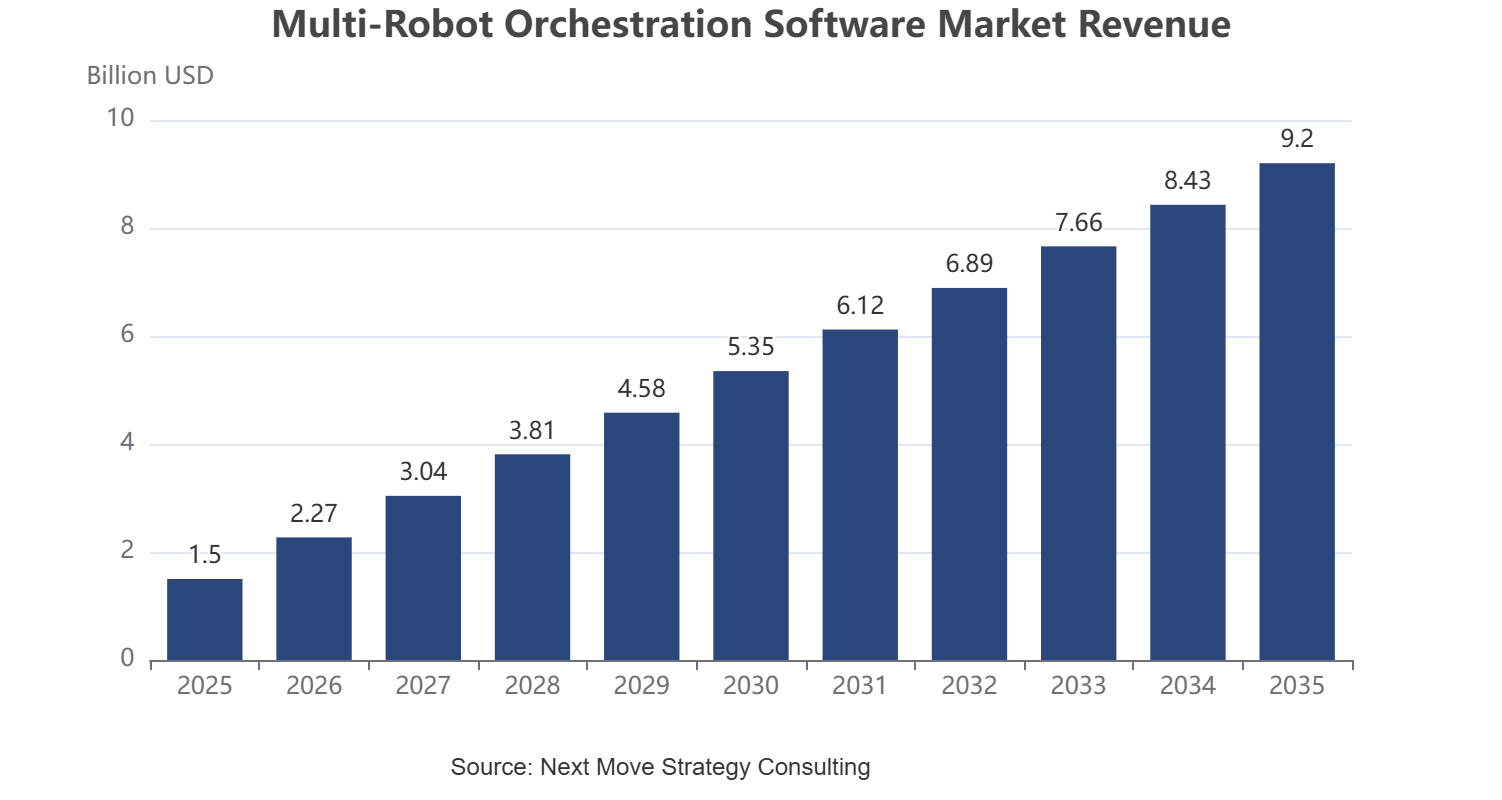
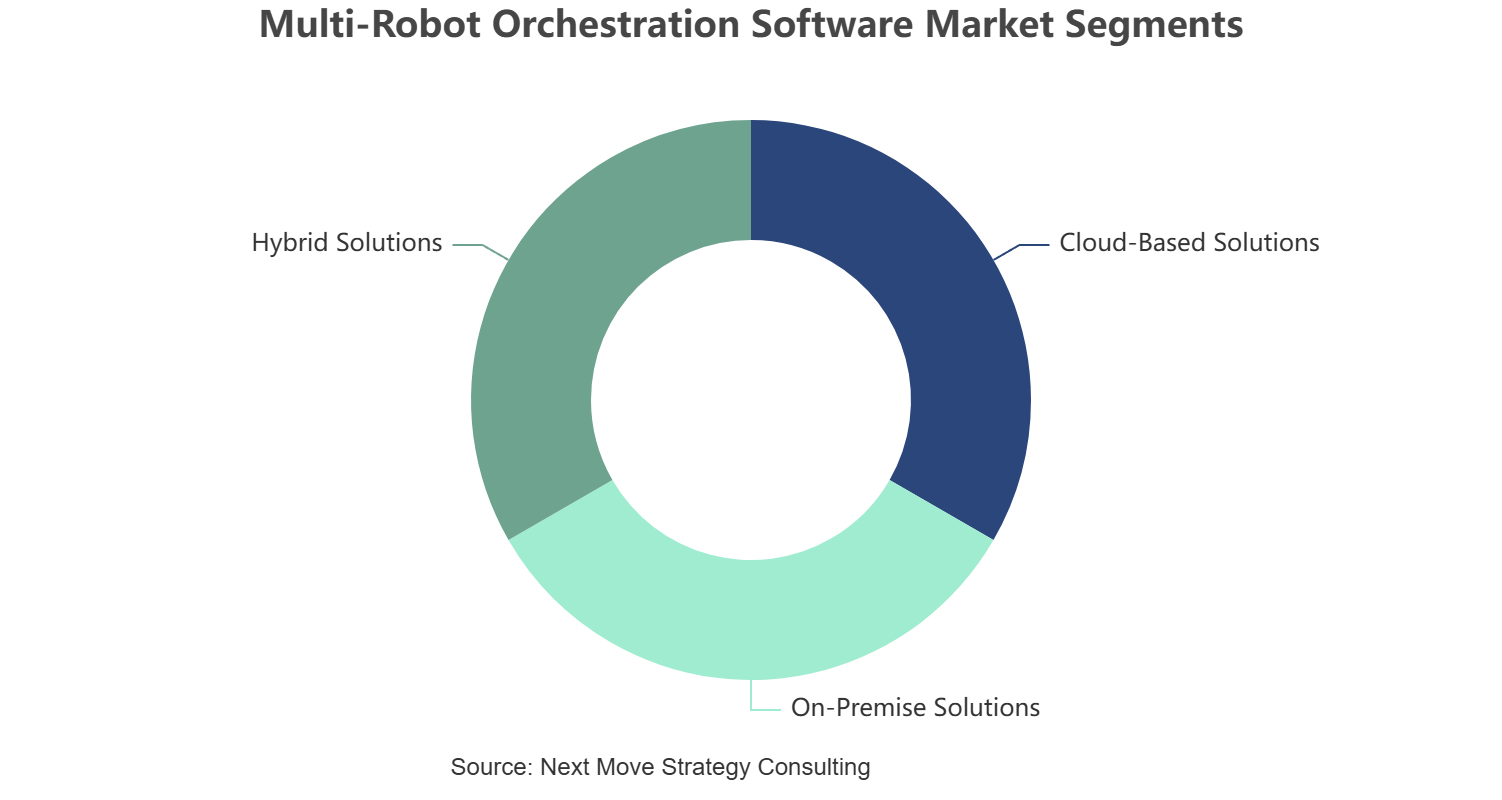
About the Author
 Liza Phukan
— Liza Phukan is Research Associate at Next Move Strategy Consulting, where she has covered emerging industries and market research across sectors for 3.5 years. Her work includes analyzing industry developments, validating market data, and developing structured business content from research findings. She uses secondary research and data-validation practices to turn complex market information into clear decision-useful market analysis for business audiences and support report development and B2B.
Liza Phukan
— Liza Phukan is Research Associate at Next Move Strategy Consulting, where she has covered emerging industries and market research across sectors for 3.5 years. Her work includes analyzing industry developments, validating market data, and developing structured business content from research findings. She uses secondary research and data-validation practices to turn complex market information into clear decision-useful market analysis for business audiences and support report development and B2B.
About the Reviewer
 Supradip Baul
— Supradip Baul is an accomplished business consultant and strategist with over a decade of rich experience in market intelligence, strategy, technology, and business transformation. His work has included rigorous qualitative and quantitative analysis across multiple industries, helping clients shape investment decisions and long-term roadmaps. Earlier in his career, he was associated with Gartner, where he contributed to industry-leading reports and market share analyses. He has worked with leading global companies and holds an MBA with a dual specialization in Marketing and Finance.
Supradip Baul
— Supradip Baul is an accomplished business consultant and strategist with over a decade of rich experience in market intelligence, strategy, technology, and business transformation. His work has included rigorous qualitative and quantitative analysis across multiple industries, helping clients shape investment decisions and long-term roadmaps. Earlier in his career, he was associated with Gartner, where he contributed to industry-leading reports and market share analyses. He has worked with leading global companies and holds an MBA with a dual specialization in Marketing and Finance.
At Next Move Strategy Consulting, we understand that insightful market research is the cornerstone of successful business decisions. That's why we employ a robust and multifaceted approach, combining various methodologies to deliver the most accurate and actionable data for our clients.

Research Landscape
We navigate the world of research with two primary approaches:
Qualitative Approach
Our qualitative research methodologies involve immersive techniques such as in-depth interviews, focus groups, and observational studies. By engaging directly with individuals and stakeholders, we uncover valuable insights that quantitative data alone may overlook.

Quantitative Research
In tandem with qualitative methodologies, NMSC leverages the power of Quantitative Research to provide a robust foundation of numerical insights. Through systematic data collection and analysis, we quantify patterns, preferences, and market trends, offering a comprehensive view of the business landscape.
Our quantitative research approach employs diverse tools, including surveys, experiments, and statistical modelling. These methodologies enable us to gather data from a large and representative sample, ensuring the statistical significance of our findings. By employing structured questionnaires and standardized data collection methods, we guarantee the reliability and validity of the information we present to our clients.
Quantitative research is particularly effective in measuring the prevalence of trends, assessing market size, and gauging the impact of various factors on consumer behavior. The numerical precision attained through this approach equips our clients with actionable insights, facilitating data-driven decision-making and strategy formulation.


Our Specialized Toolbox for Industry-Specific Market Research
We deploy a specialized arsenal of techniques tailored to meet your unique requirements. Here's a glimpse into our comprehensive toolbox:

Information Procurement
The stage entails acquiring market data or relevant information through various sources and methodologies.


Market Research Approach
We utilize both top-down and bottom-up approaches in market research analysis to achieve a comprehensive understanding of the market dynamics, leveraging the broad perspective of industry trends and macroeconomic factors alongside detailed insights from specific segments and individual companies.

Porters Five Forces Analysis
We conduct Porter's Five Forces analysis to evaluate the competitive landscape of an industry, providing us with insights into factors that affect profitability and strategic positioning.

SWOT Analysis

Forecasting
We utilize a forecasting model to predict future consumption by considering parameters like population, economics, regulations, market competition, drivers, constraints, technology, and pricing. We also employ statistical techniques such as multilinear regression, exponential smoothing, moving average, ARIMA, and Monte Carlo simulations for accurate predictions. In econometric forecasting, we analyzed short-term and long-term event impacts, attributing values based on regulatory frameworks, economic factors, and market events.





 Speak to Our Analyst