Organic Spices Market By Product Form (Whole Organic Spices, Ground Organic Spices, Paste and Liquid Spices, and Others), By Distribution Channel (Retail, Online, and B2B), By Price Tier (Premium, Mid-Range, and Economy), By Packaging Material (Conventional and Sustainable), By Application (Culinary Use, Food Processing, and Health & Wellness Applications), By End-User (Household Consumers, Foodservice Operators, Food & Beverage Manufacturers, and Others) – Global Analysis & Forecast, 2025-2035
Industry Outlook
The global Organic Spices Market size was valued at USD 16.49 billion in 2025 and is expected to be valued at USD 18.27 billion by the end of 2026. The industry is projected to grow, hitting USD 45.98 billion by 2035, with a CAGR of 10.8% between 2026 and 2035.
Organic Spices Market Size & Forecast
|
Parameters |
Details |
|
Market Size in 2026 |
USD 18.27 billion |
|
Revenue Forecast in 2035 |
USD 45.98 billion |
|
Growth Rate |
CAGR of 10.8% from 2026 to 2035 |
|
Analysis Period |
2025–2035 |
|
Base Year Considered |
2025 |
|
Forecast Period |
2026–2035 |
|
Market Size Estimation |
Billion (USD) |
|
Companies Profiled |
20 |
|
Countries Covered |
33 |
|
Market Share |
Available for 10 companies |
NMSC’s assessment indicates that the organic spices market is currently positioned at a strong inflection point, driven by an accelerating consumer shift toward clean-label, chemical-free, and traceable food ingredients. Demand is expanding across household consumption, food processing, and foodservice applications, where organic spices are increasingly utilized to ensure safety, authenticity, and premium product positioning. Based on our interactions with retail buyers and category managers, we observed growing integration of organic spice variants into packaged foods and gourmet offerings. Additionally, the expansion of e-commerce channels and certification-led trust frameworks is further improving market accessibility and accelerating global adoption.
The future outlook for the organic spices industry remains highly positive, supported by premiumisation in culinary applications, sustainability-focused sourcing practices, and rising farm-to-fork transparency expectations. Digital retail ecosystems and traceability technologies are enabling stronger brand differentiation while enhancing consumer confidence in product authenticity. On the supply side, regenerative farming practices and ESG-aligned procurement strategies are emerging as key enablers of long-term resilience and compliance. As health consciousness and ethical consumption continue to deepen globally, organic spices are expected to transition from niche, premium products to mainstream culinary essentials, supported by sustained demand expansion across both developed and emerging markets.
What Are the Key Trends in the Organic Spices Industry?
How is Premiumisation and Culinary Diversification Expanding Organic Spice Usage?
Our market evaluation indicates that premiumisation and the diversification of global culinary preferences are significantly expanding the application scope of organic spices. We analysed that restaurants, gourmet food brands, and packaged food manufacturers are increasingly integrating organic spices to enhance authenticity, deepen flavour profiles, and support premium product positioning. At the same time, rising consumer interest in ethnic cuisines, fusion foods, and health-oriented recipes is accelerating demand for differentiated organic spice variants across both foodservice and retail channels. Consumers increasingly associate organic certification with superior quality, safety perception, and enhanced sensory experience, reinforcing willingness to pay a premium. This trend is particularly pronounced in developed economies, where experiential dining and high-end food positioning are key consumption drivers. Overall, this evolving culinary landscape is expected to sustain strong demand growth and broaden the functional and premium applications of organic spices across global markets.
How are Sustainable Farming Practices and Ethical Sourcing Reshaping Supply Chains?
Sustainable farming and ethical sourcing practices are emerging as a key structural trend in the organic spices market. Based on our assessment of agricultural value chains, we evaluated increasing adoption of regenerative agriculture techniques, organic soil management practices, and eco-friendly pest control methods among certified growers. Global buyers are increasingly prioritizing suppliers that align with ESG commitments and meet evolving sustainability reporting requirements, making compliance a critical procurement criterion. Additionally, ethical sourcing practices are contributing to improved long-term soil health and productivity while ensuring adherence to stringent international organic certification standards. This shift is enhancing supply chain resilience, improving traceability, and strengthening supplier credibility in global trade. Overall, sustainability compliance is steadily evolving into a key competitive differentiator, influencing pricing power, market access, and long-term supply stability in the organic spices industry.
How is Traceability and Farm-to-Fork Transparency Strengthening Consumer Trust?
Industry analysis suggests that farm-to-fork transparency is becoming a defining trend shaping trust and credibility in the organic spices market. We found increasing adoption of blockchain-based verification systems, QR-coded packaging, and digital traceability platforms to authenticate organic sourcing claims and improve supply chain visibility. Consumers, retailers, and institutional buyers are increasingly demanding verifiable proof of origin to mitigate risks of adulteration, mislabelling, and quality inconsistency. Brands offering end-to-end traceability are achieving stronger shelf acceptance and preferential positioning in premium retail channels. This trend is not only strengthening consumer confidence and brand trust but also enabling suppliers to differentiate more effectively in competitive and price-sensitive markets. Overall, enhanced transparency is emerging as a key value driver, influencing purchasing decisions, improving compliance credibility, and supporting premiumisation across the industry.
How is E-commerce Expansion and Direct-to-Consumer Channels Reshaping Market Access?
NMSC’s research indicates that the rapid expansion of sustainable e-commerce and direct-to-consumer (D2C) platforms is significantly reshaping distribution dynamics in the organic spices market. Consumers are increasingly purchasing organic spices through online grocery platforms, specialty health stores, and brand-owned digital channels, driven by convenience, broader product assortments, and greater transparency in labelling and sourcing information. Furthermore, D2C models are enabling smaller and emerging organic spice brands to bypass traditional intermediaries, strengthen direct consumer relationships, and improve margin structures. Subscription-based spice kits and curated organic blends are also gaining traction, reflecting evolving consumption preferences toward convenience and personalisation. This digital transition is enhancing market penetration across urban and semi-urban regions while simultaneously improving brand visibility and encouraging repeat purchase behaviour`. Overall, the shift toward digital-first distribution is restructuring value chains, intensifying competition, and expanding long-term growth potential in the industry.
Consumer Behaviour Analysis of the Organic Spices Industry
The consumer behaviour journey in the organic spices market reflects a structured shift from awareness to loyalty, driven by rising health consciousness, clean-label adoption, and increasing demand for traceable and sustainably sourced food ingredients.
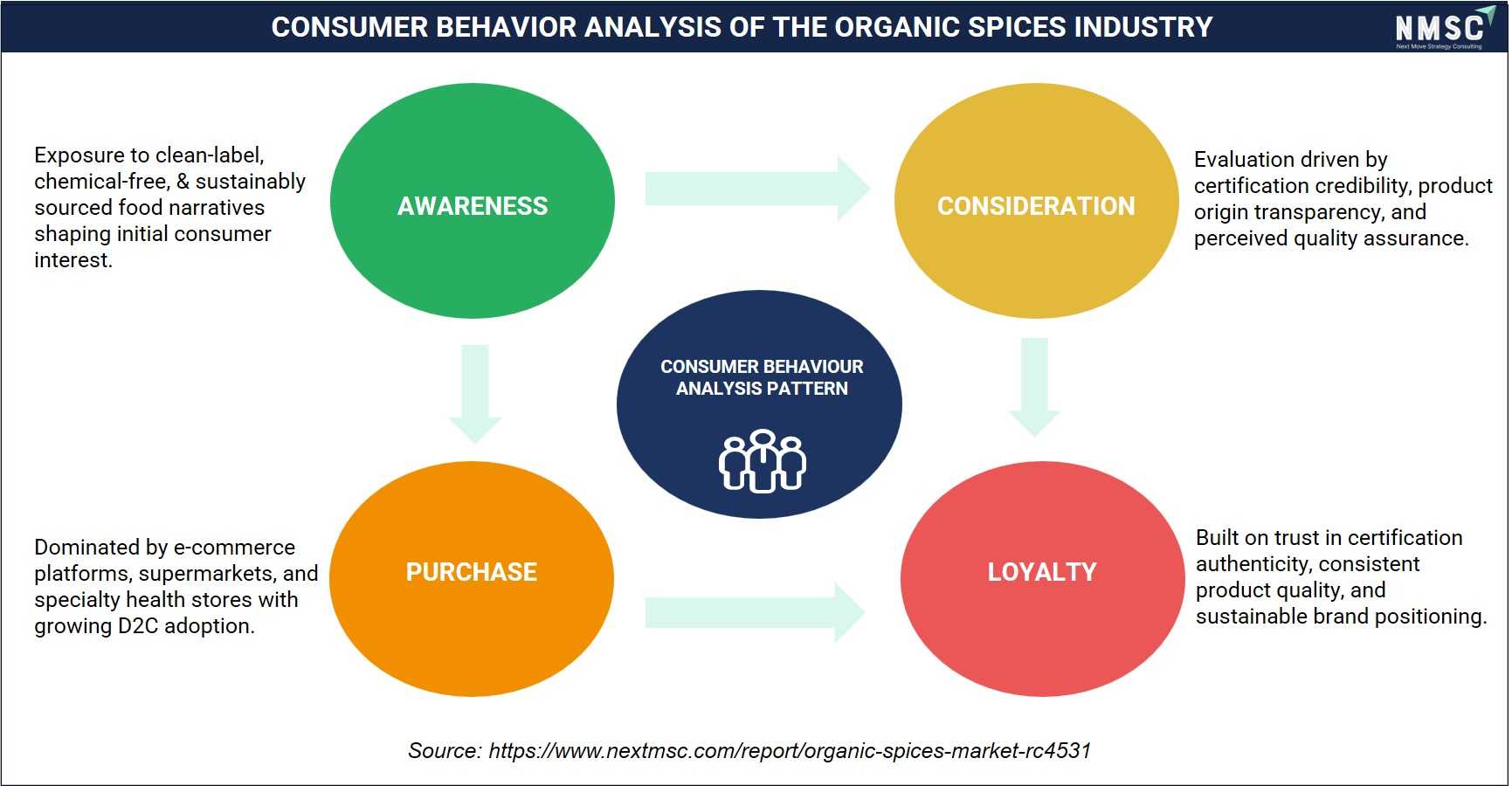
NMSC’s analysis indicates that the consumer behaviour journey in the organic spices market follows a structured progression from awareness to loyalty, shaped by health consciousness, sustainability awareness, and demand for transparency. At the awareness stage, consumers are influenced by clean-label and chemical-free food narratives. Consideration is primarily driven by certification credibility, origin verification, and perceived product quality. Purchase behaviour is concentrated across e-commerce platforms, supermarkets, specialty health retailers, and emerging direct-to-consumer channels, improving accessibility and brand reach. Loyalty is further strongly influenced by trust in certification systems, consistent product performance, ESG-aligned sourcing, and transparent branding practices, resulting in sustained repeat purchases and long-term brand preference in the market.
What Are the Key Market Drivers, Breakthroughs, And Investment Opportunities That Will Shape the Organic Spices Industry in the Next Decade?
Growth Catalyst & Risk Assessment Matrix
|
Drivers/Trends/ Restraints |
(+/-) % Impact on CAGR Forecast |
Geographic Relevance |
Impact Timeline |
|
Rising consumer preference for clean-label, chemical-free, and certified organic food products accelerates demand for organic spices |
+2.92% |
North America, Europe, urban Asia-Pacific markets (India, China, Japan, Australia) |
Medium to Long term (3–6 years) |
|
Expansion of organic certification frameworks and export-oriented supply chains improves global market accessibility and trust |
+2.67% |
Asia-Pacific exporters, Europe (EU Organic compliance), North America import markets |
Medium to Long term (3–6 years) |
|
Growth of digital retail channels and traceability-enabled procurement systems enhance premium positioning of organic spices |
+1.81% |
Global, with strongest traction in North America, Europe, and urban Asia-Pacific |
Short to Medium term (2–4 years) |
|
High certification costs, fragmented smallholder supply base, and inconsistent quality standardization restrict large-scale scalability |
-2.24% |
Emerging markets (India, Southeast Asia, Africa, Latin America) |
Medium term (2–5 years) |
The organic spices market is being strongly shaped by rising consumer preference for clean-label, chemical-free food products alongside expanding penetration of organised retail and e-commerce distribution channels. Our research indicates that health-conscious consumers, food processors, and institutional buyers are increasingly shifting toward certified organic spices to ensure safety, traceability, and compliance with global food quality standards. Product managers and procurement teams are prioritizing verified sourcing and transparent supply chains, supported by strengthening organic certification frameworks and improved export-oriented compliance systems. Industry trends indicate that digital retail platforms are further accelerating product accessibility and brand visibility across domestic and international markets. However, the market continues to face constraints from high certification costs, fragmented smallholder supply structures, and inconsistent raw material standardization, which collectively limit large-scale scalability and price competitiveness in certain regions.
Growth Drivers:
How Is Rising Health Consciousness and Clean-Label Accelerating the Organic Spices Market Demand?
NMSC’s assessment indicates that the organic spices landscape is experiencing strong momentum driven by escalating consumer preference for chemical-free, clean-label, and nutritionally safer food ingredients. We noticed that urban households, particularly health-conscious millennials and Gen Z consumers, are increasingly shifting away from conventionally processed spices due to concerns over pesticide residues and synthetic additives. Demand is notably rising across packaged organic spice blends used in home cooking, ready-to-eat meals, and premium foodservice applications. According to Eurostat in 2025, 10.8% of total agricultural land in the European Union is under organic farming, with countries like Austria exceeding 25%, demonstrating strong policy-driven adoption supporting organic spice inputs. Furthermore, supermarkets and speciality organic retailers are expanding shelf space for certified organic spice SKUs, reinforcing visibility and adoption. This behavioural shift is expected to intensify further as preventive healthcare awareness and dietary transparency continue to influence purchasing decisions globally.
How Are Expanding Organic Certification Frameworks and Export-Oriented Supply Chains Driving Organic Spices Market Growth?
Strengthening organic certification systems and increasing global trade integration are significantly accelerating the organic spices market trends. Based on our evaluation of supply-side dynamics, we found that certification credibility from bodies such as USDA Organic and EU Organic has become a key enabler for market entry, especially for exporters in the Asia-Pacific regions. According to the International Trade Centre (ITC) in 2025, global exports of spices reached over USD 4.45 billion in 2024-25, with organic-certified products accounting for a steadily rising share due to premium demand in developed markets. Moreover, adherence to stringent certification standards is improving product acceptance in high-value markets such as North America and Europe. Market research indicates that suppliers investing in traceable farming practices and compliant post-harvest handling systems are gaining stronger procurement contracts from multinational food brands. Improved cold chain logistics and standardised processing infrastructure are therefore reducing contamination risks, thereby enhancing global competitiveness and supporting sustained export-led growth.
Growth Inhibitor:
Why Are High Certification Costs and Fragmented Supply Chains Limiting Market Scalability?
We observed that despite strong demand, the organic spices market expansion faces a critical restraint in the form of high certification costs combined with fragmented agricultural supply networks. Small and marginal farmers, who constitute a large portion of spice cultivation in key producing regions, struggle to afford certification compliance expenses and periodic audits. According to FAO Organic Agriculture Data in 2025, organic farmland accounts for only around 2.1% of total global agricultural land, reflecting structural barriers such as certification complexity and limited farmer transition rates. Our interactions with certification bodies indicate that the lack of coordinated farming clusters leads to inconsistent quality output and higher aggregation costs for processors. Fragmented landholdings also reduce economies of scale, making it difficult to standardise organic farming practices efficiently. These structural inefficiencies not only elevate final product pricing but also slow down large-scale adoption by price-sensitive consumer segments and institutional buyers.
Growth Opportunity:
How Is Digital Retail Expansion and Traceability Innovation Creating New Organic Spices Market Growth Opportunities?
Based on our assessment, we found that the rapid expansion of e-commerce platforms, coupled with advancements in traceability technologies, presents a significant growth opportunity for the market. Direct-to-consumer digital channels are enabling organic spice brands to bypass traditional intermediaries, thereby improving margin structures, strengthening customer relationships, and enhancing brand loyalty. Additionally, blockchain-enabled traceability systems are increasingly being adopted to verify sourcing authenticity and reinforce consumer trust, particularly in premium product segments. We found that consumers in developed markets are willing to pay higher price premiums for verifiable organic sourcing and transparency. This shift is also enabling smaller and emerging brands to scale rapidly through online marketplaces, targeted digital marketing, and subscription-based delivery models. Overall, this digital ecosystem is expanding market accessibility, improving price realisation, and accelerating long-term revenue growth across the organic spices industry.
How Is the Organic Spices Market Segmented in This Report, And What Are the Key Insights from the Segmentation Analysis?
|
Segments |
Key Takeaways |
|
Product Form |
Product segmentation shows clear value differentiation, as whole organic spices dominate due to strong household usage, especially turmeric, chilli, cumin, and pepper. Ground spices hold a significant share in processed foods and blends, offering higher value addition, while organic spice extracts like essential oils and oleoresins form a smaller but fast-growing premium segment, driven by nutraceutical, pharmaceutical, and flavouring applications where demand for concentrated functional ingredients is rising. |
|
Price Tier |
Premium organic spices are growing rapidly with health-conscious and gourmet demand, whereas mid-range remains the core segment due to balanced pricing and certification. The economy segment serves price-sensitive markets but faces constraints from certification costs. |
|
Pack Size |
Pack size trends are driven by usage behaviour, where small packs dominate retail due to affordability and trial demand. Medium packs serve regular household use, while large packs cater to foodservice and industrial buyers. E-commerce growth is further boosting demand for small, resealable packs. |
|
Application |
Application segmentation indicates that culinary use dominates the market, driven by home cooking and foodservice preparation, where organic spices support daily consumption and menu differentiation. Food processing remains a key segment, with manufacturers increasingly incorporating organic spices into processed foods, bakery, and ready-to-cook products to meet clean-label requirements. Meanwhile, health and wellness applications, including nutraceuticals and Ayurveda, are emerging as niche but high-value segments, supported by rising demand for functional and plant-based ingredients. |
|
End User |
End-user segmentation indicates that household consumers dominate the market due to widespread daily consumption, rising health awareness, and strong retail accessibility. Food & beverage manufacturers represent a key volume driver, integrating organic spices into processed and packaged foods to meet clean-label requirements. Foodservice operators are emerging as a fast-growing segment, supported by premium dining and global cuisine expansion. Meanwhile, pharmaceutical and nutraceutical companies operate within a niche but high-value segment, leveraging the functional benefits of organic spices for specialized applications. |
By Product Type Insights
Is Product Type Segmentation Driving Value Differentiation in the Organic Spices Market?
On the basis of product type, the organic spices market share is segmented into whole organic spices, ground organic spices, spice blends, extracts & oleoresins, paste and liquid spices, and others.
Based on our assessment, we found that whole and ground organic spices collectively dominate the market, forming the structural backbone of demand across both household and commercial applications. Whole spices continue to benefit from strong consumer perception around authenticity, purity, and longer shelf life, while ground spices lead in terms of convenience and ease of use, particularly in urban consumption patterns. Our market evaluation further indicates that value-added formats such as spice blends and paste-based products are expanding steadily, supported by evolving cooking habits and demand for ready-to-use solutions. Meanwhile, extracts and oleoresins remain niche, primarily catering to industrial applications. Overall, the market reflects a balanced shift toward convenience without displacing traditional consumption formats.

By Distribution Channel Insights
Is Distribution Channel Reshaping Accessibility and Commercialisation in the Organic Spices Market?
Based on distribution channel, the organic spices market is segmented into retail, online, and B2B.
We found that retail currently dominates the market in terms of value share, primarily due to strong organised trade penetration, consumer preference for physical product verification, and high trust in certified retail environments. Supermarkets and specialty stores remain the primary purchase points, especially in urban markets across developed economies. However, online channels are emerging as the fastest-growing segment, driven by e-commerce expansion, digital trust-building mechanisms, and improved logistics networks. Industry evidence suggests that B2B channels remain structurally important due to large-scale demand from food manufacturers and foodservice operators. The market is gradually evolving toward a hybrid distribution structure where retail anchors adoption, online accelerates growth, and B2B drives volume scalability.
By Packaging Material Insights
Is Conventional Packaging Adoption Reshaping the Organic Spices Market in 2025?
Based on the packaging material, the organic spices market is segmented into conventional materials and sustainable materials.
We found that conventional packaging materials currently account for the majority share of the organic spices market, as they effectively ensure product stability, longer shelf life, and supply chain efficiency across diverse climatic conditions. At the same time, our evaluation indicates that sustainable packaging is increasingly influencing purchasing decisions, particularly among environmentally conscious consumers aligned with organic product values. Brands are gradually integrating eco-friendly materials to strengthen differentiation and compliance with evolving regulations. However, cost considerations and functional limitations continue to constrain rapid substitution. Overall, the market is witnessing a gradual but strategic shift toward sustainability, without immediate displacement of conventional formats.
By End-User Insights
Is End-User Diversification Reshaping Demand Dynamics in the Organic Spices Market?
Based on end-user, the organic spices market is segmented into household consumers, foodservice operators, food & beverage manufacturers, and pharmaceutical & nutraceutical companies.
We found that household consumers currently dominate the market due to widespread daily usage, rising health awareness, and strong retail and e-commerce accessibility. Home cooking remains the primary application channel, particularly across Asia-Pacific and North American urban households. However, food & beverage manufacturers represent a structurally important volume driver, as they increasingly integrate organic spices into processed and packaged food products to meet clean-label requirements. Industry evidence further suggests that foodservice operators are emerging as a fast-growing segment, supported by premium dining and expanding global cuisine adoption. Meanwhile, pharmaceutical and nutraceutical applications continue to develop within niche, high-value segments. Overall, the market is evolving toward a balanced end-user structure, where households anchor demand, industrial users drive scale, and foodservice supports premiumization.

Regional Outlook
Geographic Performance Snapshot:
|
Geography |
Key Takeaways |
|
North America |
North America represents a mature Organic Spices market, driven by strong demand for clean-label products, established retail infrastructure, and high organic penetration. Based on our evaluation, we observed that consumption is strong across households, food manufacturers, and premium foodservice channels. Further, strict FDA labelling norms and rising preference for traceable, non-GMO ingredients are reinforcing premiumization. Supermarkets and specialty organic stores remain key distribution channels, supporting stable and high-value market demand across the region. |
|
Europe |
Europe is a highly regulated market, supported by strict EU organic certification standards and strong sustainability awareness. Based on our assessment, we found strong demand in Western Europe, particularly in Germany, France, and the UK. Food retailers and processors prioritize certified sourcing and full traceability compliance. Additionally, sustainability regulations and clean-label preferences continue to drive consistent growth across both retail and industrial applications. |
|
Asia‑Pacific |
Asia-Pacific is the fastest-growing Organic Spices market, driven by large-scale production, rising health awareness, and expanding consumption. We found strong demand in India, China, and Southeast Asia, supported by urbanization and growing middle-class income. Industry evidence further suggests that modern retail expansion and export-oriented production, especially from India, are key growth drivers. The region serves as both a major consumption base and a global supply hub for organic spices. |
|
Latin America |
Latin America is an emerging market with steady growth supported by agricultural exports and gradual domestic adoption. Demand is mainly concentrated in urban households and small food processors. Industry insights suggest that Brazil and Argentina are leading adoption of organic certification, mainly for export markets. However, limited retail penetration and higher certification costs continue to restrict faster expansion, though long-term growth potential remains strong. |
|
Middle East & Africa |
The Middle East & Africa region shows a dual-market structure, with the Middle East driving demand through premium foodservice and hospitality sectors. Our assessment indicates that strong reliance on imports and a growing demand in Gulf countries. Africa remains an early-stage market with consumption centred in urban areas. However, rising urbanisation and improving distribution networks are expected to support gradual market development. |
The organic spices market is geographically studied across North America, Europe, Asia Pacific, the Middle East & Africa, and Latin America, and each region is further studied across countries.
Organic Spices Market in North America
North America represents a mature and highly regulated organic spices market, driven by strong consumer preference for clean-label, non-GMO, and traceable food ingredients. Our assessment indicates that demand is supported by a well-established retail infrastructure and high penetration of organic-certified products across household consumption, foodservice, and food manufacturing sectors. According to USDA and FAO-aligned organic trade datasets, the United States remains one of the largest importers of organic ingredients globally, reflecting a structural dependence on certified international supply chains.
Based on our interactions with retail category managers, we observed continued shelf expansion of organic spice SKUs across mainstream supermarkets and specialty retail outlets. Stringent FDA labelling regulations and rising wellness-oriented consumption patterns are reinforcing premium positioning, while food manufacturers increasingly integrate organic spices into processed food formulations to meet clean-label compliance and product differentiation requirements. Overall, market growth in North America is being driven more by value addition and product innovation than volume expansion, consistent with its mature market structure.
Organic Spices Market in the United States
NMSC’s analysis indicates that the United States is the largest and most advanced market within North America for organic spices. Based on the USDA National Organic Program framework, we found that stringent certification and labelling standards play a critical role in shaping product integrity, compliance requirements, and market entry barriers. Demand is strongly driven by health-conscious consumers, food processors, and premium foodservice operators seeking clean-label and functional ingredient solutions. Organic spices such as organic turmeric, pepper, cinnamon, and ginger are increasingly utilised in functional foods, nutraceutical formulations, and fortified product categories. FAO and USDA trade data indicate sustained imports of organic agricultural commodities, reflecting limited domestic spice cultivation and structural reliance on certified global supply chains. Additionally, e-commerce platforms and natural food retailers are improving product accessibility, while traceability, certification authenticity, and clean-label positioning continue to serve as key competitive differentiators in the market.
Organic Spices Market in Canada
Canada represents a steadily growing organic spices market, supported by strong regulatory alignment with organic certification systems governed by the Canadian Food Inspection Agency. We observed increasing consumer preference for verified organic and sustainably sourced food ingredients, particularly in major urban centers such as Toronto and Vancouver. Industry evidence suggests that retail chains and health-focused grocery outlets are expanding organic spice assortments in response to rising wellness-oriented consumption patterns and demand for clean-label products. Furthermore, Canada remains highly dependent on imports for spice supply, reinforcing structural reliance on certified global sourcing networks. Demand is especially strong for ground spices and blended variants used in home cooking and organic packaged food applications. Overall, the market is experiencing consistent growth, driven by health awareness, retail expansion, and import-led supply chain integration.
Organic Spices Market in Europe
NMSC’s research indicates that Europe is one of the most regulated and sustainability-driven organic spices markets globally. Strict EU organic certification standards significantly influence production practices, import compliance, and retail labelling requirements across member states. Our research suggests strong consumer preference for traceable, ethically sourced, and pesticide-free ingredients, particularly in Western Europe, which accounts for the majority of regional consumption across households, food processing, and premium foodservice sectors. Europe also remains a major importer of organic seasoning blends from Asia-Pacific regions, especially India, reflecting structural dependence on certified external supply chains. Additionally, sustainability compliance and ESG-linked sourcing policies are increasingly shaping procurement decisions among retailers and food manufacturers. Overall, regulatory stringency and sustainability-led procurement frameworks are reinforcing Europe’s position as a high-value, compliance-driven market with strong demand for certified organic spice products.
Organic Spices Market in the United Kingdom
Our market assessment suggests that the United Kingdom represents a mature and highly premium-oriented organic spices market. Strong consumer awareness of organic certification standards and food safety regulations continues to underpin demand across the region. Supermarkets and specialty health retailers play a dominant role in distribution, supported by well-established organic product visibility and shelf penetration. Demand is further driven by rising interest in ethnic cuisines, clean-label cooking practices, and functional nutrition-oriented diets. FAO-aligned import data indicates a high dependency on international spice supply chains, particularly from India and Southeast Asia, reflecting limited domestic production capacity. Additionally, we observed increasing adoption of organic spice blends in ready-to-cook meals and gourmet food applications. Overall, the UK market is characterised by mature consumption patterns, import-led supply dependence, and strong premiumisation trends across both retail and processed food segments.
Organic Spices Market in Germany
Germany represents one of the most structurally disciplined organic spices markets in Europe, where purchasing behaviour is strongly influenced by trust, certification verification, and sustainability alignment. Based on our assessment, we found that organic spices are no longer positioned as niche wellness products but are fully embedded within mainstream grocery consumption as well as industrial food formulation processes. Demand is particularly strong across clean-label processed foods, seasoning blends, and health-oriented cooking applications. Retailers play a critical role in reinforcing certification credibility and shaping consumer trust through stringent product selection and labelling practices. Meanwhile, food manufacturers are increasingly prioritizing supplier transparency, traceability, and ESG-aligned sourcing over cost optimization alone. Overall, procurement dynamics in Germany are shifting toward compliance-driven and origin-transparent sourcing frameworks, making trust and verification the primary competitive differentiators in the market.
Organic Spices Market in France
France’s organic spices ecosystem is defined more by culinary culture than regulatory push, with a strong emphasis on taste authenticity and premium food experiences. Our industry assessment indicates that demand is heavily concentrated in gourmet cooking, artisanal food production, and premium retail consumption channels. In this context, organic spices are increasingly perceived as quality enhancers that elevate flavour complexity rather than being positioned primarily as health-driven substitutes. Foodservice operators, particularly fine dining establishments and fusion restaurants, are integrating certified spices to strengthen flavour positioning and culinary differentiation. Additionally, branding narratives and origin-based storytelling are becoming as influential as certification itself in shaping consumer preferences. Overall, the French market is distinctly experience-driven, where culinary heritage, sensory appeal, and premium positioning collectively define organic spice consumption patterns.
Organic Spices Market in Italy
Italy’s organic spices landscape is evolving through a gradual premiumisation of traditional Mediterranean cuisine rather than abrupt dietary shifts. Our analysis indicates that adoption is strongest in sauces, ready meals, and export-oriented packaged food categories, where organic positioning enhances brand value and supports international market competitiveness. Domestic consumption remains stable but moderate, as spices are still perceived as complementary rather than central components in everyday cooking. Our further interactions with food manufacturers suggest that organic certification is increasingly leveraged as a branding and differentiation tool in global trade rather than purely a domestic consumption driver. Overall, the market reflects incremental integration, where organic spices are steadily incorporated into value-added food segments without significant disruption to traditional culinary patterns.
Organic Spices Market in Spain
NMSC’s analysis indicates that Spain is in a transitional growth phase, where organic spices adoption is being shaped by both agricultural expansion and rising urban health consciousness. We observed that consumption is primarily concentrated in metropolitan households and tourism-driven foodservice channels, where exposure to diverse cuisines is higher. While organic products are gradually gaining shelf space, consumer awareness and penetration levels remain lower compared to leading Western European markets. Retailers are actively supporting category development through in-store education initiatives and expansion of private-label organic offerings. Overall, the market is steadily building momentum, but it remains more supply-supported than fully demand-mature at this stage, reflecting a gradual transition toward broader consumer adoption.
Organic Spices Market in the Nordics
The Nordics represent one of the most sustainability-sensitive consumption environments globally, where purchasing decisions are strongly influenced by environmental ethics and long-term ecological considerations. We observed that organic spices are widely integrated into clean-label packaged foods and wellness-oriented diets, particularly across Sweden, Denmark, and Norway. Consumers demonstrate relatively low-price sensitivity when strong sustainability credentials and verified sourcing are present. Our interactions with retailers further suggest that eco-friendly packaging, carbon footprint considerations, and full lifecycle transparency are decisive factors in product acceptance and shelf prioritisation. Overall, the market operates less as a conventional food category and more as a sustainability-driven compliance ecosystem, where environmental performance and traceability significantly shape competitive positioning and demand realisation.
Organic Spices Market in the Asia-Pacific
Based on our regional assessment, we observed that Asia-Pacific serves as the structural backbone of the global organic spices market, combining large-scale production leadership with rapidly expanding domestic consumption. India remains the dominant global supplier, while China, Southeast Asia, and Australia are emerging as important demand contributors. The region operates on a dual dynamic, characterised by export-driven certification systems alongside rising domestic health awareness and clean-label consumption trends. We also observed significant investment in farm-level certification clusters, regenerative agriculture practices, and digital traceability systems to strengthen global competitiveness. Overall, growth in Asia-Pacific is not linear but layered, driven simultaneously by agricultural modernisation, supply chain formalisation, and evolving dietary preferences, reinforcing its central role in global organic spice trade flows.
Organic Spices Market in China
China’s organic spices market is evolving from a food safety–driven framework toward more structured premium consumption behaviour. Based on our assessment, we observed that demand is primarily concentrated in urban middle-class households and packaged food manufacturing sectors, where quality assurance and safety perception remain key purchase drivers. Organic adoption is still in a trust-building phase rather than a fully mature consumption cycle, reflecting relatively early-stage consumer confidence in certification systems. E-commerce platforms are playing a disproportionate role in shaping awareness, product discovery, and trial adoption across digital-first consumers. Overall, the market is expanding steadily, but growth remains more institutional and regulation-influenced than culturally embedded, indicating a transitional stage of development in organic spice consumption.
Organic Spices Market in Japan
Japan represents a highly controlled, quality-sensitive market where consistency and safety assurance outweigh category expansion. Organic spices are primarily used in functional foods, convenience meals, and health-oriented formulations rather than traditional cooking applications. The market is defined by strict supplier qualification standards and minimal tolerance for variability in quality, taste, or compliance. Our interactions with food manufacturers suggest that procurement is highly specification-driven, with strong emphasis on product stability, traceability, and safety assurance throughout the supply chain. Overall, organic spices in Japan function more as functional input ingredients within industrial food systems rather than as standalone culinary staples, reflecting a mature, quality-first market structure with limited but stable growth potential.
Organic Spices Market in India
India functions as both the global production hub and a rapidly strengthening domestic consumption market for organic spices. We observed strong expansion in certified farming clusters supported by export-oriented infrastructure and improving traceability systems across key cultivation regions. Unlike import-dependent markets, India benefits from integrated supply chains spanning cultivation, processing, and exports, enabling greater control over quality and cost efficiencies. There is also increasing alignment with international compliance standards to access premium global markets and strengthen export competitiveness. The country’s structural advantage lies in its large-scale production capacity, crop diversity, and well-established spice cultivation ecosystems that are naturally suited to organic conversion. Overall, India’s position is reinforced by its dual role as a dominant global supplier and an emerging high-growth domestic market.
We also observed that the rapid growth of e-commerce in India is boosting the organic spices market by improving product accessibility and consumer reach across urban and semi-urban areas. Online platforms make it easier for consumers to find certified organic spices, compare prices, and access a wider variety of products than traditional retail channels. This increased convenience, along with rising health awareness and demand for chemical-free food, is driving higher adoption of organic spices.

Organic Spices Market in South Korea
NMSC’s regional analysis suggests that South Korea is an emerging premium consumption market where organic spices are gaining traction through health, wellness, and convenience food trends. Demand is primarily concentrated in packaged foods, seasoning blends, and functional dietary products, reflecting evolving urban consumption patterns. The market remains import-dependent due to limited domestic spice production, creating a strong reliance on international supply chains. Digital grocery platforms and online retail ecosystems are significantly accelerating product visibility, consumer awareness, and trial adoption. Overall, growth remains steady but is still in the early expansion phase, driven more by lifestyle and wellness shifts than deep culinary integration, indicating a gradually evolving premium consumption structure.
Organic Spices Market in Taiwan
Taiwan represents a niche but steadily developing organic spices market characterised by health-conscious urban consumption patterns. We observed that demand is largely import-driven and concentrated within wellness-oriented retail channels and e-commerce platforms. Consumer awareness is improving gradually, particularly in major urban centers where exposure to clean-label and functional food trends is higher. Our interactions with distributors suggest that premium positioning, product authenticity, and trust in certification are key purchasing drivers in this market. Overall, the market is evolving at a measured pace, supported by rising interest in clean-label and functional food ingredients, indicating a stable but gradual expansion trajectory.
Organic Spices Market in Indonesia
Indonesia holds strong structural relevance as a spice-producing nation transitioning toward certified organic export ecosystems. Our assessment indicates that export-oriented farming is expanding, particularly for key spices such as cloves, nutmeg, and pepper. Domestic consumption remains limited but is gradually improving in urban areas with rising health and wellness awareness. Certification adoption is primarily driven by access to high-value international markets and export compliance requirements rather than domestic demand pull. However, fragmented supply chains, limited processing infrastructure, and logistical constraints continue to restrict scalability and value-chain efficiency. Overall, the market remains in a foundational development stage, characterized by export-led growth and early-stage structural formalization of organic spice production systems.
Organic Spices Market in Australia
NMSC’s evaluation indicates that Australia is a mature, premium-oriented organic spices market where sustainability and health positioning strongly influence consumption patterns. Organic spices are widely accepted as mainstream pantry essentials rather than niche wellness products, reflecting high consumer awareness and trust in certification systems. Supermarkets and specialty retailers dominate distribution, supported by strong regulatory frameworks and well-established organic labelling standards. Product differentiation is increasingly driven by sustainable packaging practices, brand transparency, and ethical sourcing commitments rather than formulation alone. Overall, the market reflects stable, high-value consumption patterns with limited volatility, characteristic of a fully mature and structurally consolidated organic spices ecosystem.
Organic Spices Market in Latin America
Our regional analysis indicates that Latin America is an early-stage organic spices market with strong export potential but uneven domestic adoption. Consumption is primarily concentrated in urban centers and small-scale food processing industries, reflecting limited but emerging local demand. Certification adoption is gradually increasing, particularly in Brazil and Argentina, although it remains highly cost-sensitive and influenced by export requirements. Our further interactions with producers suggest that market expansion is largely dependent on integration with North American and European supply chains, which act as primary demand drivers. Domestic demand is growing at a gradual pace, but structural constraints such as fragmented supply chains, certification costs, and limited infrastructure continue to restrict large-scale market acceleration. Overall, the region remains in a foundational growth stage with export-led development dynamics.
Organic Spices Market in the Middle East & Africa
Our evaluation indicates that the Middle East & Africa region exhibits a fragmented organic spices market characterised by strong import-led demand in Gulf countries and early-stage adoption across African economies. We found that premium hospitality, tourism, and retail sectors act as the primary demand centers in the Middle East, supported by high-income consumer bases and exposure to international cuisines. In contrast, Africa remains largely price-driven, with limited penetration of certified organic products due to affordability constraints and awareness gaps. Logistics infrastructure limitations and low certification awareness continue to act as key bottlenecks across the region. Overall, while growth potential exists, it remains highly uneven across subregions, reflecting a dual-speed market structure with developed import-led demand in the Gulf and nascent development in African markets.
Strategic Framework of the Organic Spices Market
The strategic framework of the organic spices ecosystem illustrates how evolving demand dynamics, regulatory pressures, and supply chain modernisation collectively shape competitive behaviour and long-term value creation across the global organic ingredient’s ecosystem.
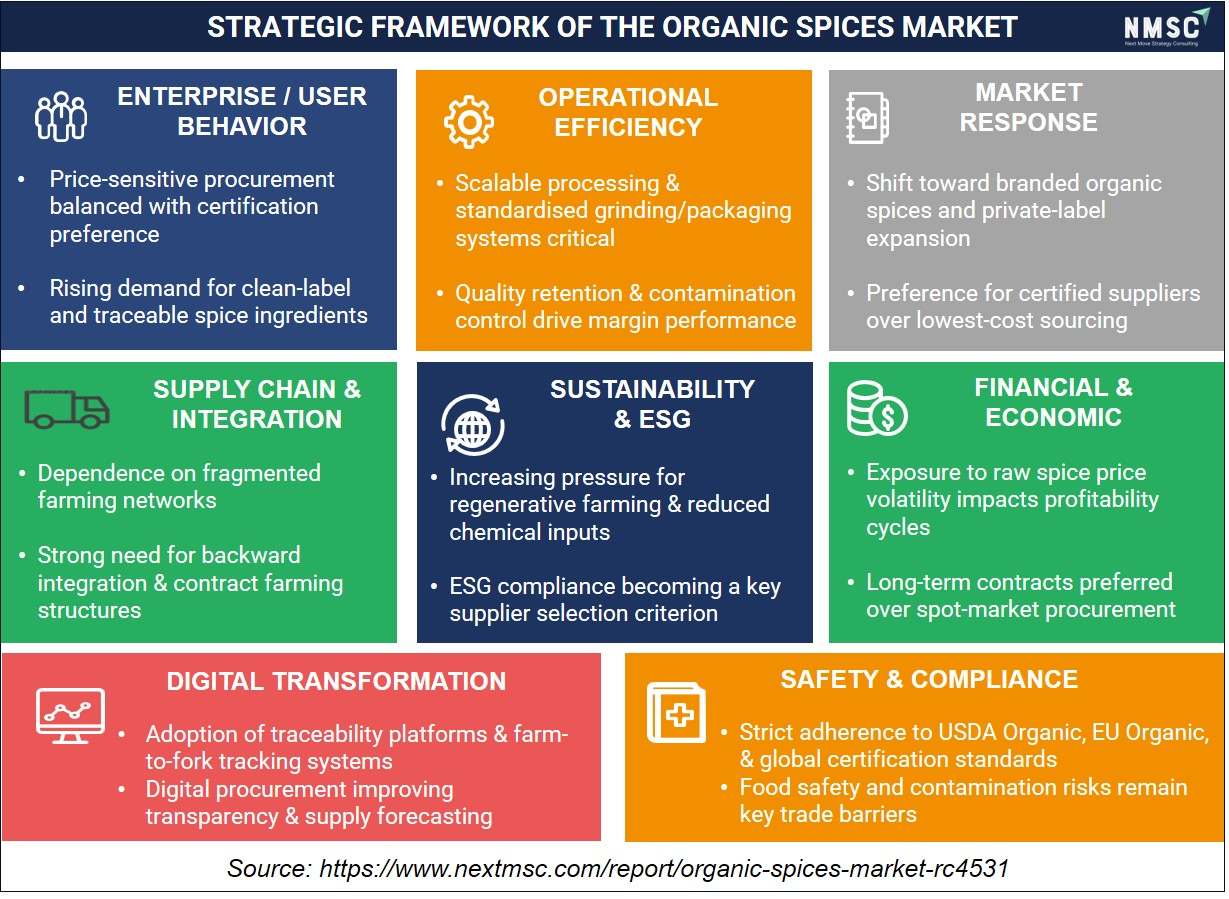
The organic spices market is increasingly defined by the convergence of traceability, certification, and value-chain integration rather than traditional commodity trade dynamics. Based on our assessment, we found that enterprise procurement is shifting toward verified organic sourcing, while operational systems are being optimised for quality retention and scalable processing. ESG alignment and regulatory compliance are becoming decisive factors in supplier selection across global markets. We noticed that digital traceability and contract farming structures are strengthening transparency across fragmented supply networks. Overall, the market is evolving into a structured, compliance-driven ecosystem where trust, sustainability, and operational efficiency determine competitive advantage.
Competitive Landscape
Competitive Dynamics & M&A Landscape:
|
Key Takeaways |
|
The competitive landscape of the Organic Spices Market is shaped by a mix of global ingredient giants such as McCormick & Company and OFI (Olam Food Ingredients), alongside highly specialised processors like Synthite Industries, Akay Natural Ingredients, and regional exporters such as Suminter India Organics. These players collectively influence market evolution through scale advantages, certification strength, and deep integration across sourcing, processing, and branded distribution networks, particularly in clean-label food, nutraceutical, and premium seasoning applications. |
|
Multinational leaders focus on vertically integrated sourcing ecosystems, global retail branding, and supply chain control, while mid-sized and regional players compete through origin authenticity, flexible manufacturing, and export-oriented customization. We observed that Indian and European specialists increasingly leverage farm-level partnerships and contract cultivation models to strengthen traceability and cost efficiency. Competitive differentiation is increasingly defined by ESG compliance, organic certification credibility, and the ability to ensure consistent quality across fragmented agricultural supply bases. |
|
Innovation within the sector is centred on functional ingredient development, spice extracts, oleoresins, and digitally enabled traceability systems. Companies such as Akay Natural Ingredients and Synthite Industries are advancing high-value applications for nutraceuticals and functional foods, while global firms like McCormick are expanding premium organic seasoning portfolios to strengthen brand positioning. Digital supply chain tracking, certification automation, and clean-label reformulation are becoming critical competitive levers, reinforcing differentiation across both retail and industrial segments. |
Which Companies Dominate the Organic Spices Market and How Do They Compete?
NMSC’s assessment indicates that competition in the organic spices market is anchored by a combination of global ingredient leaders, branded consumer goods companies, and export-focused specialty manufacturers. We found that McCormick & Company leads in branded retail dominance, while OFI (Olam Food Ingredients) and Nedspice Processing India strengthen large-scale sourcing and industrial supply networks. In parallel, Akay Natural Ingredients and Synthite Industries focus on high-value spice extracts and oleoresins, serving nutraceutical and functional food industries. Furthermore, Suminter India Organics and Spice Nest Impex are gaining relevance in certified export-driven supply chains. Competitive positioning is increasingly defined by traceability systems, product standardisation, and integrated farm-to-processing control rather than pricing strategies alone.
Market Dominated by Organic Spices Giants and Specialists
The market structure is increasingly polarised between multinational ingredient giants and highly specialised regional exporters. Based on our assessment, we observed that global firms such as McCormick and OFI dominate branded retail and industrial procurement contracts due to their integrated sourcing ecosystems and global distribution reach. In contrast, companies like Herbes del Molí (Spain), Pacific Spice Company (US), and Vora Spice Mills operate in niche or regional supply chains, focusing on flexibility and customised product offerings. Moreover, Indian cooperatives such as Kandhamal Apex Spices Association play a critical role in aggregating smallholder production for export markets. Industry evidence suggests that competitive advantage now depends on balancing scale efficiency with origin-specific authenticity and certification depth.
Innovation and Adaptability Drive Market Success
Innovation in the organic spices market is increasingly centred on functional applications, process efficiency, and certification-backed product engineering. We analysed that Akay Natural Ingredients and Synthite Industries are expanding their focus on spice-derived bioactives, essential oils, and standardised extracts for nutraceutical and pharmaceutical applications. We also observed that AKO GmbH is strengthening its position in European seasoning blends by focusing on formulation precision and industrial customization. Meanwhile, organic-focused exporters such as Eastmade Spices and MM Organic Food Exports are adopting digital traceability tools to meet stricter international compliance expectations. Industry evidence suggests that innovation is no longer product-centric but system-driven, integrating sourcing, processing, and compliance into a unified value proposition.
Market Players to Opt for Merger & Acquisition Strategies to Expand Their Presence
Structural expansion in the organic spices market is being driven more by capacity scaling and strategic alliances than aggressive consolidation. We evaluated that Nedspice is expanding its processing capabilities across origin markets to strengthen supply reliability for European and North American buyers. Similarly, OFI continues to reinforce its upstream sourcing network through long-term agricultural partnerships rather than traditional acquisition-heavy growth. We also noticed that Suminter India Organics is strengthening farmer-linked organic cultivation clusters to enhance export consistency. The market’s expansion strategy is increasingly focused on securing origin control, ensuring certification integrity, and reducing supply chain fragmentation, rather than pursuing large-scale mergers or horizontal consolidation.
List of Key Organic Spices Companies
-
McCormick & Company, Incorporated
-
Organic Spices Inc.
-
Suminter India Organics Private Limited
-
Eastmade Spices and Herbs Private Limited
-
Vora Spice Mills LLP
-
ISLEWORTH TRADELINKS LIMITED
-
Spice Nest Impex Private Limited
-
Herbes del Molí, S.L.
-
Organic Ingredients India
-
MM Organic Food Exports Ltd.
-
Starwest Botanicals
-
Spicepure International
-
Nedspice Processing India Private Limited
-
OFI GROUP LIMITED
-
Synthite Industries Private Limited
-
AKO GmbH
-
Akay Natural Ingredients Private Limited
-
Pacific Spice Company, Inc.
What Are the Latest Key Industry Developments?
-
November 2025 - McCormick & Company announced a major redesign of its McCormick Gourmet spice range, including a significant expansion of certified organic variants across global flavours.
Expert Insights
 “Demand for flavor remains the foundation of our growth… the demand for flavor continues to have a long runway. We are seeing a clear shift toward clean-label ingredients, organic sourcing, and greater transparency, which is reshaping how spice products are developed and marketed globally.”
-Brendan Foley, CEO of McCormick & Company
Statement made in the context of rising consumer preference for natural ingredients, clean-label products, and premium flavor experiences within the global organic spices market.
Market Interpretation
The statement highlights the sustained importance of flavor as a core demand driver, while also reflecting the growing convergence of taste, health, and transparency in the organic spices market. Industry analysis suggests that consumers are increasingly prioritizing organic and minimally processed ingredients that align with clean-label and wellness-focused lifestyles. This is driving manufacturers to enhance sourcing practices, invest in traceability systems, and expand premium organic product portfolios. Additionally, evolving consumer preferences toward ethnic cuisines and authentic taste profiles are accelerating demand for high-quality, origin-specific spices. Digital retail expansion and improved supply chain transparency are further enabling brands to communicate product provenance and quality, strengthening consumer trust. Overall, this trend is reinforcing long-term growth in the market, with flavour innovation and clean-label positioning emerging as key competitive differentiators.
Supply Chain Analysis of the Organic Spices Industry
The following supply chain analysis highlights a structured overview of the organic spices market supply chain, mapping the flow from raw material sourcing to final consumption. It highlights how certified farming practices, primary processing, logistics, and distribution networks collectively ensure product integrity, traceability, and market efficiency.
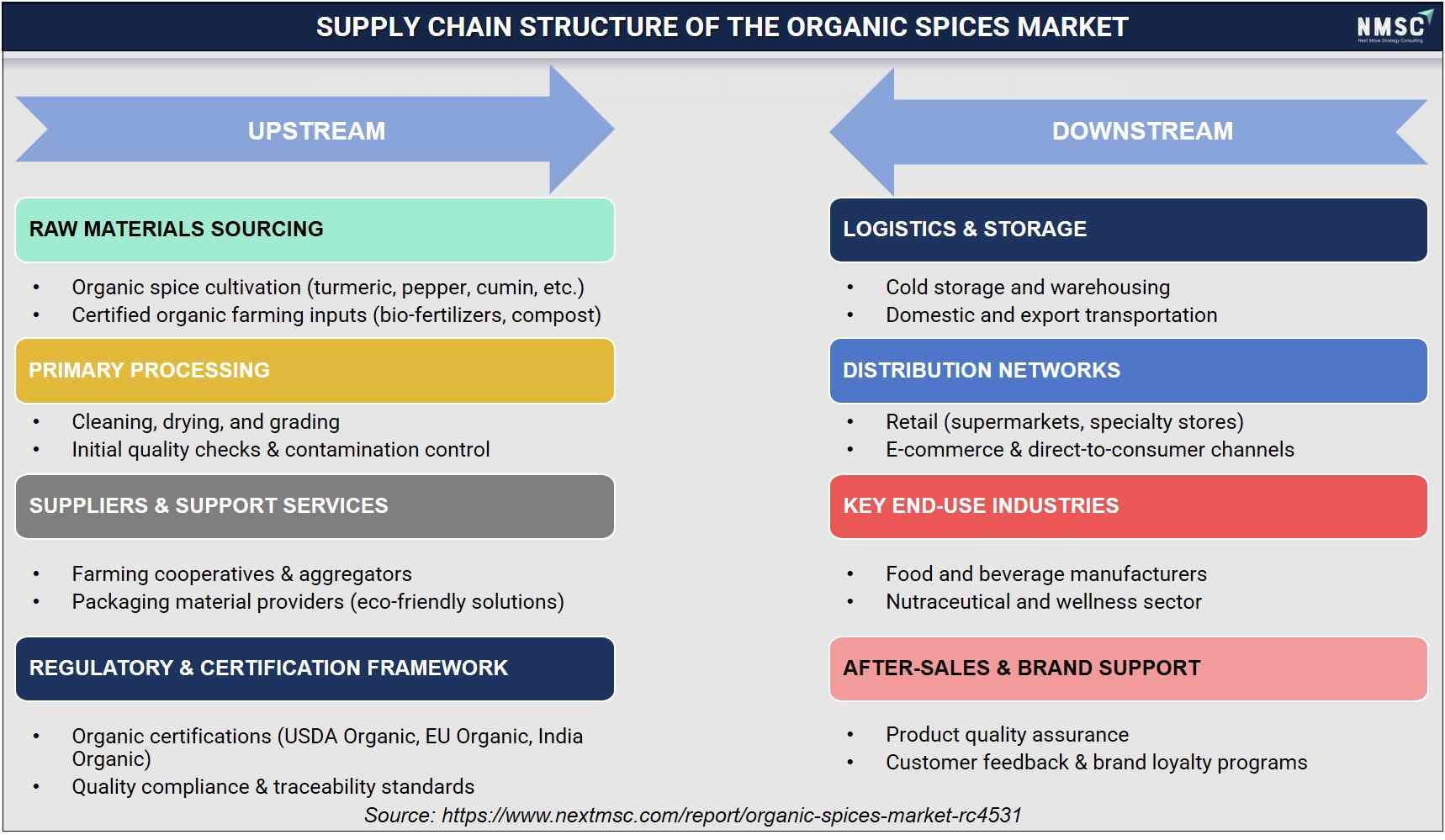
The infographic outlines the end-to-end supply chain of the organic spices market, highlighting key stages from farm-level sourcing to final consumer delivery. It emphasizes the critical role of certified organic farming, stringent quality control, and efficient distribution networks in maintaining product integrity. The structure demonstrates how regulatory compliance and traceability enhance consumer trust, while evolving distribution channels like e-commerce expand market reach. Overall, the supply chain directly impacts pricing, quality consistency, and global competitiveness, making it a crucial determinant of growth and sustainability in the market.
What Are the Key Factors Influencing Investment Analysis & Opportunities in the Organic Spices Market?
Based on our market research, we assessed that investment activity in the organic spices market is increasingly shifting toward value-chain control, traceability infrastructure, and branded premiumisation rather than raw agricultural expansion alone. Institutional investors and strategic food ingredient players are prioritising integrated sourcing models, particularly those that link contract farming with certified organic processing units to enhance supply reliability and quality control. Moreover, valuations are strengthening for companies demonstrating robust ESG compliance, advanced digital traceability systems, and direct-to-retail distribution capabilities, as these attributes reduce supply risk while enhancing pricing power and margin stability.
From our further interactions with industry investors, we identified that rising interest in niche processors focused on functional spices, standardised extracts, and clean-label blends targeting nutraceutical and wellness applications. Private equity and corporate venture capital participation are intensifying in export-oriented hubs such as India and Southeast Asia, where supply scalability and cost advantages are strongest. Additionally, emerging strategic opportunities are being identified in blockchain-enabled sourcing platforms, regenerative agriculture ecosystems, and vertically integrated spice brands. Overall, investment momentum is increasingly concentrated around premiumisation, supply chain transparency, and functional food convergence, signalling a structural shift away from traditional commodity-driven spice trading models toward value-added, innovation-led market frameworks.
Key Benefits for Stakeholders:
Next Move Strategy Consulting (NMSC) provides a comprehensive and evidence-based analysis of the organic spices market, covering historical developments from 2020 to 2025 and offering forward-looking forecasts through 2035. Our study assesses the market at global, regional, and country levels, combining quantitative outlooks with qualitative insights into key growth drivers, adoption constraints, technology evolution, and investment dynamics across major organic spices segments.
The organic spices market creates differentiated value across investors, customers, and supply chain stakeholders through a convergence of health, sustainability, and premiumization dynamics. From our assessment, we noticed that investors benefit primarily from structurally resilient demand, ESG-aligned positioning, and growing valuation premiums tied to traceability, certification integrity, and vertically integrated sourcing models. Additionally, increasing preference for businesses that combine scalable procurement networks with branded organic product portfolios, enabling stronger pricing power and margin stability.
For customers, this delivers clear advantages in terms of food safety, clean-label assurance, and access to higher-quality, traceable ingredients that align with preventive health and wellness priorities. From a regulatory standpoint, supportive policy frameworks around organic certification and sustainable agriculture strengthen trust and market transparency. Overall, value creation is increasingly shared across stakeholders through improved transparency, health-driven consumption, and structured supply chain modernization.
|
Parameters |
Details |
|
Customization Scope |
Free customization (equivalent to up to 80 analyst-working hours) after purchase. Addition or alteration to country, regional & segment scope. |
|
Pricing and Purchase Options |
Avail customized purchase options to meet your exact research needs. |
|
Approach |
In-depth primary and secondary research; proprietary databases; rigorous quality control and validation measures. |
|
Analytical Tools |
Porter's Five Forces, SWOT, value chain, and Harvey ball analysis to assess competitive intensity, stakeholder roles, and relative impact of key factors. |
Organic Spices Market Key Segments
By Product Form
-
Whole Organic Spices
-
Pepper
-
Cardamom
-
Cinnamon
-
Clove
-
Nutmeg & Mace
-
Chilli
-
Seeds
-
Cumin
-
Coriander
-
Fennel
-
Mustard
-
Turmeric
-
Fenugreek
-
-
Others
-
-
Ground Organic Spices
-
Turmeric Powder
-
Chilli Powder
-
Coriander Powder
-
Cumin Powder
-
Pepper Powder
-
Ginger Powder
-
Garlic Powder
-
Others
-
-
Spice Blends
-
Culinary blends
-
Curry powder
-
Garam masala
-
Ras el hanout
-
Five spices
-
-
Functional spice blends
-
Immunity blends
-
Herbal wellness blends
-
-
-
Extracts & Oleoresins
-
Essential Oils
-
Steam-distilled spice oils
-
Food-grade volatile oils
-
-
Oleoresins
-
Paprika
-
Pepper
-
-
Others
-
-
Paste and Liquid Spices
-
Wet pastes
-
Ginger paste
-
Curry paste
-
Others
-
-
Liquid concentrates
-
Spice suspensions
-
Oil-based spice mixes
-
-
-
Others
By Price Tier
-
Premium
-
Mid-Range
-
Economy
By Pack Size
-
Small Packs
-
Medium Packs
-
Large and Bulk Packs
By Packaging Material
-
Conventional Materials
-
Plastic
-
Glass
-
Metal
-
-
Sustainable Materials
-
Recyclable
-
Biodegradable
-
Compostable
-
By Distribution Channel
-
Retail
-
Modern Trade
-
Traditional Trade
-
-
Online
-
Marketplace
-
Direct-to-Consumer
-
-
B2B
-
Foodservice
-
Food Processing
-
By Application
-
Culinary Use
-
Home Cooking
-
Foodservice Preparation
-
-
Food Processing
-
Processed Food Products
-
Bakery & Confectionery
-
Ready-to-Cook Meals
-
-
Health & Wellness Applications
-
Pharmaceuticals & Ayurveda
-
Nutraceuticals
-
By End User
-
Household Consumers
-
Foodservice Operators
-
Food & Beverage Manufacturers
-
Pharmaceutical & Nutraceutical Companies
Geographical Breakdown
-
North America: U.S., Canada, and Mexico.
-
Europe: UK, Germany, France, Italy, Spain, Sweden, Denmark, Finland, the Netherlands, and the rest of Europe.
-
Asia Pacific: China, India, Japan, South Korea, Taiwan, Indonesia, Vietnam, Australia, Philippines, Malaysia and the rest of APAC.
-
Middle East & Africa (MEA): Saudi Arabia, UAE, Egypt, Israel, Turkey, Nigeria, South Africa, and the rest of MEA.
-
Latin America: Brazil, Argentina, Chile, Colombia, and the rest of LATAM.
Conclusion & Recommendations
Based on our evaluation, we analysed that the organic spices market is entering a structurally mature yet rapidly value-evolving phase, where growth is increasingly defined by trust, traceability, and product sophistication rather than basic category expansion. Demand is being reinforced by a sustained consumer shift toward clean-label consumption, deeper integration into processed food formulations, and accelerating adoption across foodservice and wellness-oriented applications. While traditional whole spices continue to anchor volume consumption, value creation is progressively concentrated in ground spices, functional extracts, and branded premium offerings. Furthermore, transparency-enabled sourcing and certification compliance are emerging as critical competitive differentiators across global trade flows.
Looking ahead, the market is expected to increasingly reward vertically integrated players capable of controlling quality from farm to finished product while maintaining strong regulatory alignment and ESG credibility. Digital traceability systems, regenerative agriculture practices, and direct-to-consumer channels will play a defining role in shaping competitive advantage. For executives and investors, the strategic imperative lies in building resilient sourcing ecosystems and differentiated premium brands rather than competing in commoditised supply segments. Overall, industry evidence points to a decisive shift toward a trust-led, preimmunized, and transparency-driven organic spices ecosystem with sustained long-term value creation potential.


About the Author
 Mayurima Roy is Research Analyst at Next Move Strategy Consulting, where she has spent 4 years working across the firm's full industry coverage rather than a single fixed vertical. Her work centers on structured research, ongoing trend tracking, competitive assessment, and insight-led content development, translating complex market data into clear, decision-ready narratives that support informed client decision-making across diverse global industries, market sectors, and world regions every day.
About the Reviewer
 Supradip Baul is an accomplished business consultant and strategist with over a decade of rich experience in market intelligence, strategy, technology, and business transformation. His work has included rigorous qualitative and quantitative analysis across multiple industries, helping clients shape investment decisions and long-term roadmaps. Earlier in his career, he was associated with Gartner, where he contributed to industry-leading reports and market share analyses. He has worked with leading global companies and holds an MBA with a dual specialization in Marketing and Finance.
At Next Move Strategy Consulting, we understand that insightful market research is the cornerstone of successful business decisions. That's why we employ a robust and multifaceted approach, combining various methodologies to deliver the most accurate and actionable data for our clients.

Research Landscape
We navigate the world of research with two primary approaches:
Qualitative Approach
Our qualitative research methodologies involve immersive techniques such as in-depth interviews, focus groups, and observational studies. By engaging directly with individuals and stakeholders, we uncover valuable insights that quantitative data alone may overlook.

Quantitative Research
In tandem with qualitative methodologies, NMSC leverages the power of Quantitative Research to provide a robust foundation of numerical insights. Through systematic data collection and analysis, we quantify patterns, preferences, and market trends, offering a comprehensive view of the business landscape.
Our quantitative research approach employs diverse tools, including surveys, experiments, and statistical modelling. These methodologies enable us to gather data from a large and representative sample, ensuring the statistical significance of our findings. By employing structured questionnaires and standardized data collection methods, we guarantee the reliability and validity of the information we present to our clients.
Quantitative research is particularly effective in measuring the prevalence of trends, assessing market size, and gauging the impact of various factors on consumer behavior. The numerical precision attained through this approach equips our clients with actionable insights, facilitating data-driven decision-making and strategy formulation.


Our Specialized Toolbox for Industry-Specific Market Research
We deploy a specialized arsenal of techniques tailored to meet your unique requirements. Here's a glimpse into our comprehensive toolbox:

Information Procurement
The stage entails acquiring market data or relevant information through various sources and methodologies.


Market Research Approach
We utilize both top-down and bottom-up approaches in market research analysis to achieve a comprehensive understanding of the market dynamics, leveraging the broad perspective of industry trends and macroeconomic factors alongside detailed insights from specific segments and individual companies.

Porters Five Forces Analysis
We conduct Porter's Five Forces analysis to evaluate the competitive landscape of an industry, providing us with insights into factors that affect profitability and strategic positioning.

SWOT Analysis

Forecasting
We utilize a forecasting model to predict future consumption by considering parameters like population, economics, regulations, market competition, drivers, constraints, technology, and pricing. We also employ statistical techniques such as multilinear regression, exponential smoothing, moving average, ARIMA, and Monte Carlo simulations for accurate predictions. In econometric forecasting, we analyzed short-term and long-term event impacts, attributing values based on regulatory frameworks, economic factors, and market events.





 Speak to Our Analyst