Pasta Market By Raw Material (Durum Wheat Semolina, Common Wheat, Mix and Others), By Product Type (Long Pasta, Short Pasta, Sheet Pasta and Others), By Form (Dried Pasta, Fresh Pasta and Others), By Distribution Channel (Supermarkets and Hypermarkets, E-Commerce Platforms and Others), By Price Tier (Economy, Premium & Gourmet), By End User (Household, Restaurants & Cafes, Institutional Buyers) – Global Analysis & Forecast, 2025–2030
Industry: Retail and Consumer | Publishing Date: June 6, 2026 | Last Updated: October 16, 2026 | No of Pages: N/A | No. of Tables: N/A | No. of Figures: N/A | Format: PDF | Report Code: RC3793
Pasta Industry Outlook
The global Pasta Market size was valued at USD 60.40 billion in 2024, and is expected to be valued at USD 64.81 billion by the end of 2025. The industry is projected to grow, hitting USD 92.18 billion by 2030, with a CAGR of 7.3% between 2025 and 2030.
The market is undergoing a transformation driven by consumer demand for healthier, sustainable, and high-quality products. Consumers are increasingly seeking pasta made from whole grains, gluten-free, high-protein, or legume-based ingredients, prompting brands to innovate and reformulate offerings to meet these nutritional and dietary preferences.
Regulatory measures and food safety standards are reinforcing compliance while encouraging manufacturers to adopt eco-friendly practices, such as sustainable sourcing and recyclable packaging. This shift is influencing product development, packaging innovation, and marketing strategies as companies aim to differentiate themselves in a highly competitive market and align with evolving consumer expectations.
Rising household disposable income further fuels demand for premium and convenient pasta products, enabling consumers to invest in specialty, fortified, and artisanal offerings. Alongside interest in sustainability and nutrition, these dynamics encourage brands to expand product lines, introduce innovative formulations, and adopt environmentally responsible practices, supporting market growth, product diversification, and competitive differentiation across both established and emerging markets.
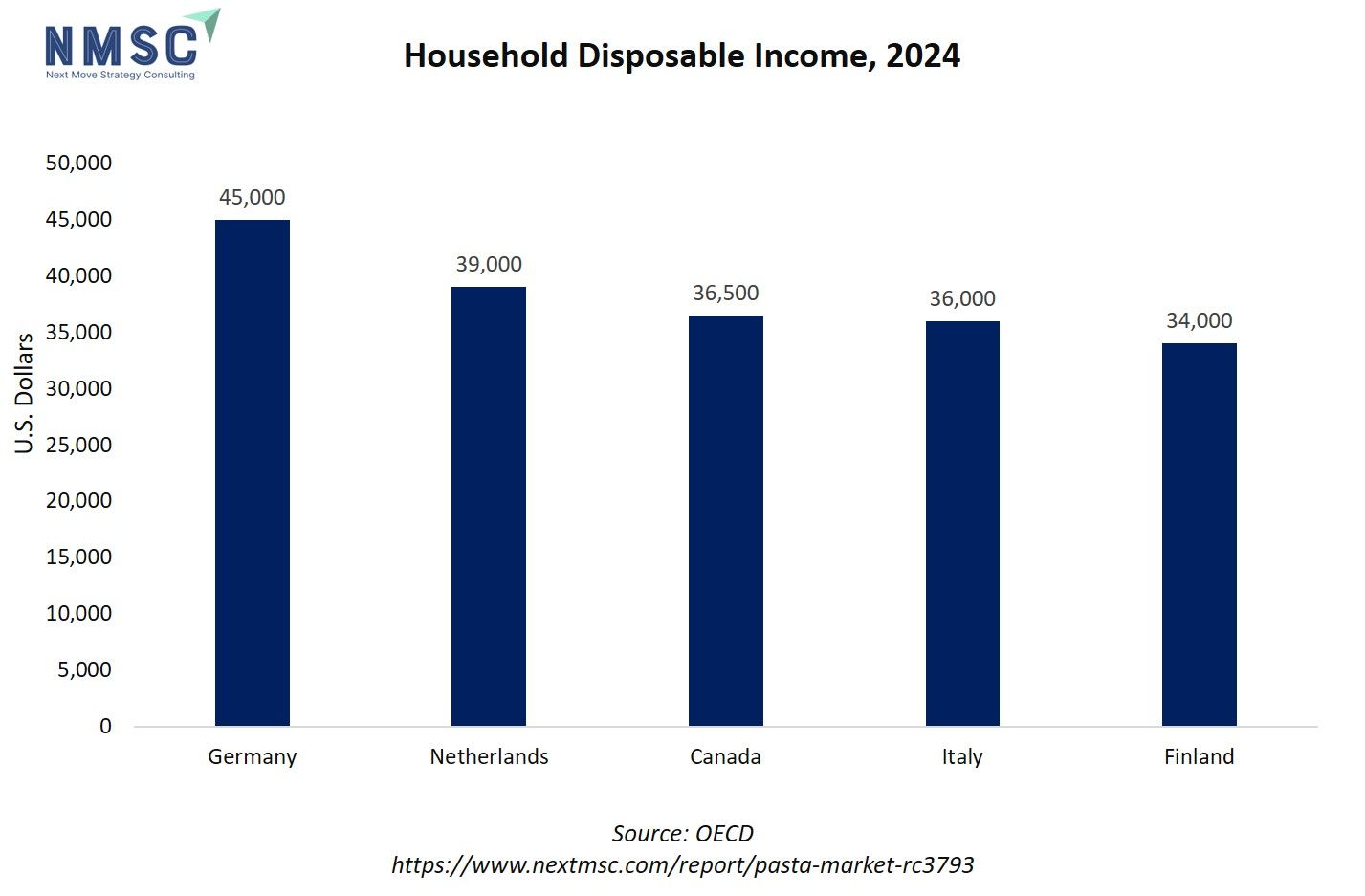
The chart showing household disposable income by country in 2024 is highly indicative, as higher disposable income strongly correlates with increased spending on premium and convenience food products, including pasta. Countries like Germany, the Netherlands, and Canada, which report higher household disposable incomes, represent attractive markets for pasta brands, as consumers in these regions are more likely to invest in premium, health-focused, and artisanal pasta products that align with evolving dietary preferences and lifestyle trends.
What Are the key trends in pasta industry?
How is the pasta market embracing health-conscious consumer preferences?
Rising consumer demand for healthier choices is steering the pasta market demand towards gluten-free, organic, and high-protein varieties. According to the USDA’s Food Buying Guide, whole grain and enriched pasta stand out for their higher fiber and nutritional value, while Food Data Central offers detailed nutrient insights that support informed purchasing decisions.
To meet these evolving preferences, pasta manufacturers are increasingly adopting alternative grains and fortification strategies, enabling them to align with health-focused trends and strengthen trust among health-conscious consumers.
How is the pasta market adapting to plant-based and alternative diets?
The rising popularity of plant-based diets is reshaping the pasta market trends, boosting demand for varieties made with legumes, lentils, chickpeas, and other alternative grains. The FAO highlights the growing role of pulses in global diets due to their protein content, fiber, and sustainability advantages. In response, pasta producers are expanding portfolios with legume-based, gluten-free, and high-protein options, addressing consumer health priorities while aligning with broader sustainability goals.
How is the pasta market responding to food safety and quality standards?
Consumers are placing greater emphasis on food safety and quality when choosing pasta, with a growing preference for products that comply with rigorous regulatory, nutritional, and hygiene standards. This shift reflects rising consumer awareness of the potential health risks associated with processed foods and the desire for greater transparency in sourcing and production.
The European Food Safety Authority (EFSA) underscores the importance of monitoring contaminants such as mycotoxins in cereals and pasta products to safeguard public health. For the pasta market, this focus on safety is shaping how manufacturers source raw materials, implement traceability systems, and maintain strict quality controls throughout the production process. By investing in safety certifications and transparent labeling, pasta brands not only build consumer trust but also strengthen their competitive positioning in an increasingly quality-conscious marketplace.

The chart showing the Food Price Index for cereals from 2015 to 2024 highlights periods of price volatility, which can directly influence consumer purchasing behavior in the pasta sector. Rising food prices, particularly in 2021–2022 when the index peaked at 154.7, have driven consumers toward more cost-conscious choices, potentially affecting demand for premium pasta varieties.
Conversely, periods of lower or stabilizing cereal prices, such as in 2016–2017 and 2024, create a favorable environment for pasta brands to introduce higher-value products, including organic, specialty, and convenience pasta, as consumers have greater discretionary capacity for non-essential food purchases. Markets experiencing moderate and stable food prices are therefore particularly attractive for growth in premium and health-focused pasta segments.
What Are the Key Market Drivers, Breakthroughs, and Investment Opportunities that will Shape the Pasta Industry in Next Decade?
The industry is rapidly evolving in response to shifting consumer preferences, health trends, and environmental pressures. Consumers increasingly demand gluten-free, high-protein, whole grain, and legume-based pasta, prompting manufacturers to innovate with alternative grains, fortified products, and plant-based ingredients.
Rising disposable incomes, as noted by the OECD, enable households to invest in premium and convenient pasta products, while economic downturns drive demand for affordable staples. At the same time, climate change and extreme weather events in key durum wheat regions, such as Turkey, have disrupted supply chains and increased production costs, highlighting the need for resilient sourcing and consistent quality.
Sustainability trends and the incorporation of pulses present significant growth opportunities. Brands that focus on eco-friendly production, innovative packaging, and nutritious formulations can appeal to environmentally conscious and health-focused consumers. By aligning product innovation with convenience, nutrition, and sustainability, the pasta sector is positioned to capture long-term growth, meet evolving dietary preferences, and strengthen its competitive edge in a global market, increasingly driven by conscious consumption.
Growth Drivers:
How is the increasing demand for healthier pasta options influencing market growth?
Consumers are increasingly seeking pasta products that align with health-conscious diets, such as gluten-free, high-protein, and whole grain options. The Food and Agriculture Organization (FAO) emphasizes the importance of incorporating a variety of starchy foods, including pasta, into a balanced diet, preferably in wholegrain form, to ensure adequate nutrient intake.
Manufacturers are responding by developing pasta products that meet these health trends, such as incorporating alternative grains and fortifying products with additional nutrients. This shift is driving market growth as companies align their offerings with evolving consumer preferences.
How does household disposable income influence pasta consumption patterns?
According to the OECD, household disposable income plays a significant role in shaping food consumption patterns, and the pasta market is no exception. Rising disposable incomes lead consumers to trade up to premium, value-added, and convenient pasta products, reflecting a willingness to pay for higher quality and variety.
Conversely, when disposable income declines during economic slowdowns, households tend to focus on affordability, increasing demand for essential and budget-friendly pasta options. These dynamics underline the importance of income levels in driving shifts between premium and mass-market pasta segments, making product range and pricing strategies critical for industry players.
Growth Inhibitors:
How are climate change and environmental factors affecting pasta production?
Climate change continues to challenge durum wheat production, particularly in Mediterranean regions where the crop is concentrated. In 2024, extreme weather events, including droughts and floods, significantly reduced wheat yields in countries like Turkey, affecting both quantity and quality. The FAO reports that climate hazards caused an estimated 3.5% loss in cereal production, highlighting broader risks to staple crops. These disruptions can increase production costs, create supply chain challenges, and impact the availability of high-quality durum wheat, which is critical for pasta manufacturing. Manufacturers face difficulties maintaining consistent supply and meeting quality standards amid these environmental pressures.
What opportunities does the rise of plant-based and legume-based diets create for the pasta market?
The Food and Agriculture Organization (FAO) highlights the growing global incorporation of pulses and legumes into diets, driven by their high protein and fiber content, as well as their sustainability benefits. This trend presents a significant opportunity for pasta manufacturers to diversify their product offerings by integrating these ingredients, catering to the increasing consumer demand for plant-based, nutritious, and environmentally friendly food options. By developing pasta products made from chickpeas, lentils, or other legumes, companies align with global dietary trends and sustainability initiatives, positioning themselves favourably in the evolving food market.
How Is the pasta market segmented in this report, and what are the key insights from segmentation analysis?
By Raw Material Insights
How is the Pasta Market Shaped by Durum Wheat Semolina, Wheat, Mix and Others?
Based on raw material type, the pasta market report is segmented into Durum Wheat Semolina, Wheat, Mix and Others.
Durum wheat semolina is the traditional and most widely preferred raw material for pasta. Its high protein content and strong gluten structure give pasta the ideal texture and firmness. It is especially suited for long and shaped pasta, making it the backbone of traditional pasta production in many countries. Its consistent quality and reliable performance make it the preferred choice for both manufacturers and consumers seeking classic pasta experiences.
Wheat-based pasta offers flexibility and widespread accessibility. While it be slightly less firm than durum wheat semolina, its affordability and versatility make it a staple in everyday cooking. Wheat pasta is used across a variety of shapes and dishes, making it popular for household meals, restaurants, and institutional cooking. Its adaptability ensures it caters to broad consumer preferences.
The Mix category includes pasta made from a combination of different grains, such as wheat blended with rice, maize, or other cereals. This allows manufacturers to balance taste, texture, and nutritional value, offering a versatile product that appeals to health-conscious consumers. Mixed-grain pasta targets niche markets seeking both functional benefits and unique flavors, providing variety beyond traditional single-grain options.
This segment covers pasta made from maize, rice, barley, and other alternative grains or ingredients like quinoa, lentils, or chickpeas. These pastas cater to dietary preferences such as gluten-free, high-protein, or nutrient-rich diets. They appeal to health-conscious consumers and those seeking innovative or specialty pasta options beyond traditional wheat-based varieties.
By Product Type Insights
Which Product is Emerging as the Most Flexible in the Pasta Market?
Based on product type, the market is segmented into Long Pasta, Short Pasta, Sheet Pasta, Stuffed Pasta and Others.
Long pasta, such as spaghetti and linguine, is one of the most iconic and widely consumed forms of pasta. Its ability to pair well with a variety of sauces and cooking styles makes it a universal favorite. Long pasta is especially popular in traditional dishes and continues to hold strong cultural and culinary significance worldwide.
Short pasta includes shapes like penne, macaroni, and fusilli, which are known for their versatility. Their structure allows them to hold sauces effectively, making them ideal for baked dishes, salads, and everyday meals. Short pasta appeals strongly to households and food service outlets due to its practicality and adaptability.
Sheet pasta, such as lasagna and cannelloni, is valued for its structured form that works as the base for layered and filled dishes. It is less commonly consumed in daily meals but plays an important role in traditional and festive cooking. Sheet pasta represents indulgence and special occasion dining.
Stuffed pasta, including ravioli and tortellini, is positioned as a premium product type. It is appreciated for its rich fillings and culinary variety, catering to consumers looking for more gourmet or restaurant-style experiences. While not as widely consumed as long or short pasta, it adds depth and diversity to the market.
The Others category encompasses unique and specialty pasta types that don’t fit neatly into the main groups. These include region-specific shapes, artisanal hand-made varieties, and innovative creations designed to cater to niche culinary trends tied to local traditions or modern experimentation, this category highlights the diversity and evolving creativity within the pasta market.
By Form Insights
How is the Pasta Market Shaped by Form Segmentation?
Based on form, the market is segmented into Dried Pasta, Fresh Pasta, Frozen Pasta and Ready-to-Eat.
Dried pasta is the most common and widely used form, valued for its long shelf life, easy storage, and versatility. It is available in countless shapes and sizes, making it suitable for both simple household meals and large-scale food service. Its durability and convenience make it the foundation of the global pasta sector.
Fresh pasta is softer, more delicate, and associated with authentic Italian cooking. It is typically made with fewer preservatives and has a shorter shelf life, giving it a premium and artisanal appeal. Fresh pasta is favored for its rich texture and flavor, making it popular in restaurants and among consumers seeking gourmet experiences.
Frozen pasta offers a middle ground between dried and fresh, preserving the taste and texture of freshly made pasta while extending its usability. It is widely used in food service and retail sectors, especially for stuffed or specialty pasta types. Frozen pasta appeals to consumers who prioritize convenience without compromising on quality.
Ready-to-eat pasta is designed for maximum convenience, requiring little to no preparation. Packaged in microwavable containers or pre-cooked formats, it caters to busy lifestyles and on-the-go consumption. This segment reflects the growing demand for quick, hassle-free meal solutions while still providing variety and taste.
By Distribution Channel Insights
How Distribution Channel are Driving the Pasta Market?
Based on distribution channel, the market is segmented into Supermarkets and Hypermarkets, E-Commerce Platforms, Specialty Stores, Food Service and Restaurants.
Supermarkets and hypermarkets remain the leading distribution channels for pasta, offering wide product variety, competitive pricing, and convenience. They serve as the go-to destination for bulk purchases and cater to both mainstream and premium pasta categories. Their strong presence ensures mass accessibility and visibility for pasta brands.
E-commerce platforms have emerged as an important sales channel, driven by changing consumer habits and the demand for home delivery. Online platforms provide access to global and niche pasta brands, accompanied by product reviews and comparisons. This channel appeals especially to urban consumers seeking convenience and variety at their fingertips.
Specialty stores focus on premium, gourmet, or artisanal pasta products that not be available in mainstream retail outlets. They cater to discerning consumers looking for authenticity, unique ingredients, or region-specific varieties. Specialty stores help pasta brands build a premium image and connect with quality-conscious buyers.
Food service establishments, including restaurants, cafes, and catering services, represent a significant channel for pasta consumption. These outlets rely on pasta’s versatility to serve diverse cuisines and menu offerings. This channel also plays a key role in popularizing premium and specialty pasta by introducing consumers to new flavours and formats.
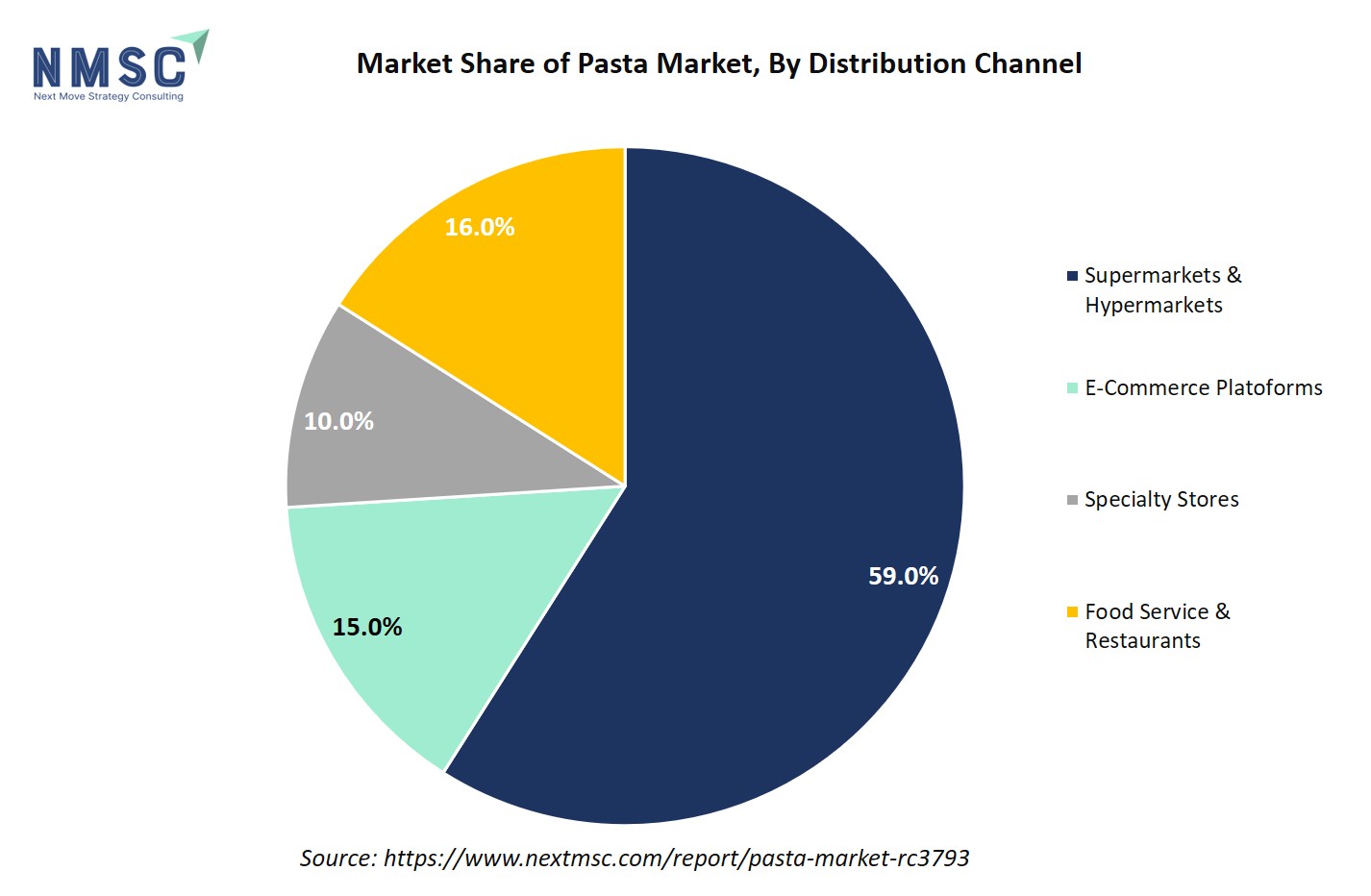
The chart shows the pasta market share by distribution channel, with Supermarkets & Hypermarkets leading at 59%, followed by Food Service & Restaurants at 16%, E-Commerce Platforms at 15%, and Specialty Stores at 10%. This distribution highlights that the largest sales occur through offline channels, where consumers physically inspect products, compare quality, and access trusted brands, driving significant revenue for traditional retail.
The substantial share held by online retail indicates strong growth potential fueled by e-commerce platforms, digital marketing, and home delivery services, which make it convenient for consumers to explore a wide range of pasta products, including premium, health-focused, and artisanal options. Consequently, this varied distribution channel mix supports the broad adoption of pasta products, underpinned by evolving dietary preferences and increasing digital engagement across markets.
Regional Outlook
The market share is geographically studied across North America, Europe, Asia Pacific, Latin America and the Middle East & Africa and each region is further studied across countries.
Pasta Market in North America
In North America, the pasta market is being driven by steady consumer demand, concerns over the secure supply of durum wheat, and rising interest in convenient product formats. Advances in milling and food processing technologies are enhancing yield and ensuring consistent quality, while stronger food-safety and traceability systems are reinforcing trust among retailers and institutional buyers.
At the same time, the expansion of e-commerce and the growth of private-label offerings in supermarkets are improving accessibility but also intensifying price competition. In response, pasta manufacturers are diversifying product ranges and investing in automation to streamline production, reduce unit costs, and remain competitive in a rapidly evolving market landscape.
Pasta Market in the United States
According to the USDA Economic Research Service, U.S. wheat production, including durum, reached approximately 1.97 billion bushels in the 2024/25 marketing year, reflecting a significant year-over-year increase. In the context of the pasta market, this abundant wheat supply strengthens raw material security, helping manufacturers maintain consistent production and meet growing consumer demand.
It also provides the flexibility to innovate with new product formats, such as dried, frozen, and ready-to-eat pasta, while supporting competitive pricing strategies. Moreover, a stable durum supply reduces the risk of production disruptions, enabling manufacturers to plan long-term investments, optimize supply chains, and capture growth opportunities across both premium and mass-market segments.
Pasta Market in Canada
Canada’s market is strongly influenced by its export-oriented production and trade agreements. In 2024, Canadian exports of cereals and pasta products totalled approximately USD 6.7 billion, with the majority destined for the U.S. market. his export-driven demand encourages investment in production technologies, milling efficiency, and product diversification, which in turn strengthens domestic supply and supports the overall growth of Canada’s pasta market.
Pasta Market in Europe
The European market is increasingly shaped by circular economy initiatives that aim to reduce food waste and enhance sustainability throughout the supply chain. Pasta manufacturers are implementing resource-efficient processing and packaging methods, which minimize production losses and optimize the use of durum wheat and other key ingredients. These sustainable practices help lower operational costs while responding to rising consumer demand for environmentally responsible products. By aligning with these expectations, pasta brands are strengthening consumer trust and driving growth across both retail and food-service channels in Europe.
Pasta Market in the United Kingdom
The UK market is increasingly driven by evolving consumer lifestyles that favour convenience and time-saving meal solutions. Busy households and urban professionals are seeking ready-to-cook, microwavable, and portion-controlled pasta options that fit into fast-paced routines. This trend encourages manufacturers to innovate with diverse formats, pre-seasoned meals, and easy-to-prepare offerings. By aligning product development with these convenience-focused preferences, pasta producers expand their market share and cater to the modern UK consumer.
Pasta Market in Germany
The German market is increasingly shaped by consumers’ growing focus on health and nutrition. Shoppers are seeking products that align with wellness trends, including whole-grain, organic, gluten-free, and high-protein pasta varieties. This shift is encouraging manufacturers to innovate and diversify their product portfolios, introducing premium and specialty options that cater to evolving dietary preferences.
Beyond health, German consumers also value quality, sustainability, and transparency in production, prompting brands to adopt environmentally responsible practices and clear labeling. Together, these trends are driving growth in both retail and food-service channels, positioning health-focused innovation as a key driver for the German pasta market.
Pasta Market in France
The market in France is shaped by a strong cultural emphasis on culinary tradition while also embracing the rise of premium and artisanal offerings. Consumers increasingly value authenticity, regional specialties, and high-quality raw materials such as durum wheat semolina. At the same time, health-conscious choices and gourmet preferences are fueling demand for organic, gluten-free, and specialty pasta varieties. This blend of tradition and premiumization is encouraging producers to balance heritage with innovation, reinforcing pasta’s role as both a staple and a gourmet product in French households.
Pasta Market in Spain
Spain’s market is strengthened by a stable domestic grain supply, which provides manufacturers with the flexibility to innovate and diversify product offerings while reducing dependence on imports and exposure to global price fluctuations. This reliability enables producers to maintain competitive pricing, invest in premium and specialty pasta lines, and emphasize locally sourced ingredients appealing to increasingly quality- and sustainability-conscious consumers.
The strong domestic wheat and spelt harvest also support the country’s export capabilities, reinforcing Spain’s position as a supplier of high-quality pasta across Europe and creating opportunities for growth in both retail and food-service channels. According to Eurostat, Spain harvested approximately 7,431.41 thousand tonnes of wheat and spelt in 2024, underpinning this market resilience.
Pasta Market in Italy
Italy’s market is heavily shaped by its strong export orientation, which drives producers to maintain exceptional quality standards, expand into specialty and regional varieties, and adopt advanced processing technologies. In 2024, Italy exported over 2.4 million tons of pasta, accounting for nearly 60% of its total production, according to the International Pasta Organization. This high international demand fuels continuous innovation and premiumization, helping Italian pasta retain its reputation as both a traditional staple and a gourmet product while reinforcing the country’s leadership in the global pasta market.
Pasta Market in Asia Pacific
The Asia-Pacific market is being shaped by rapid urbanization and evolving consumer lifestyles, with households increasingly seeking convenient and quick meal solutions. This trend is driving demand for ready-to-cook, microwavable, and portion-controlled pasta products, prompting manufacturers to introduce diverse flavours, premium options, and easy-to-prepare formats.
In 2025, the region’s urban population is expected to reach approximately 2.59 billion, representing 53.6% of the total population, underscoring the growing market for convenience-oriented pasta products and the opportunities for growth across urban centres.
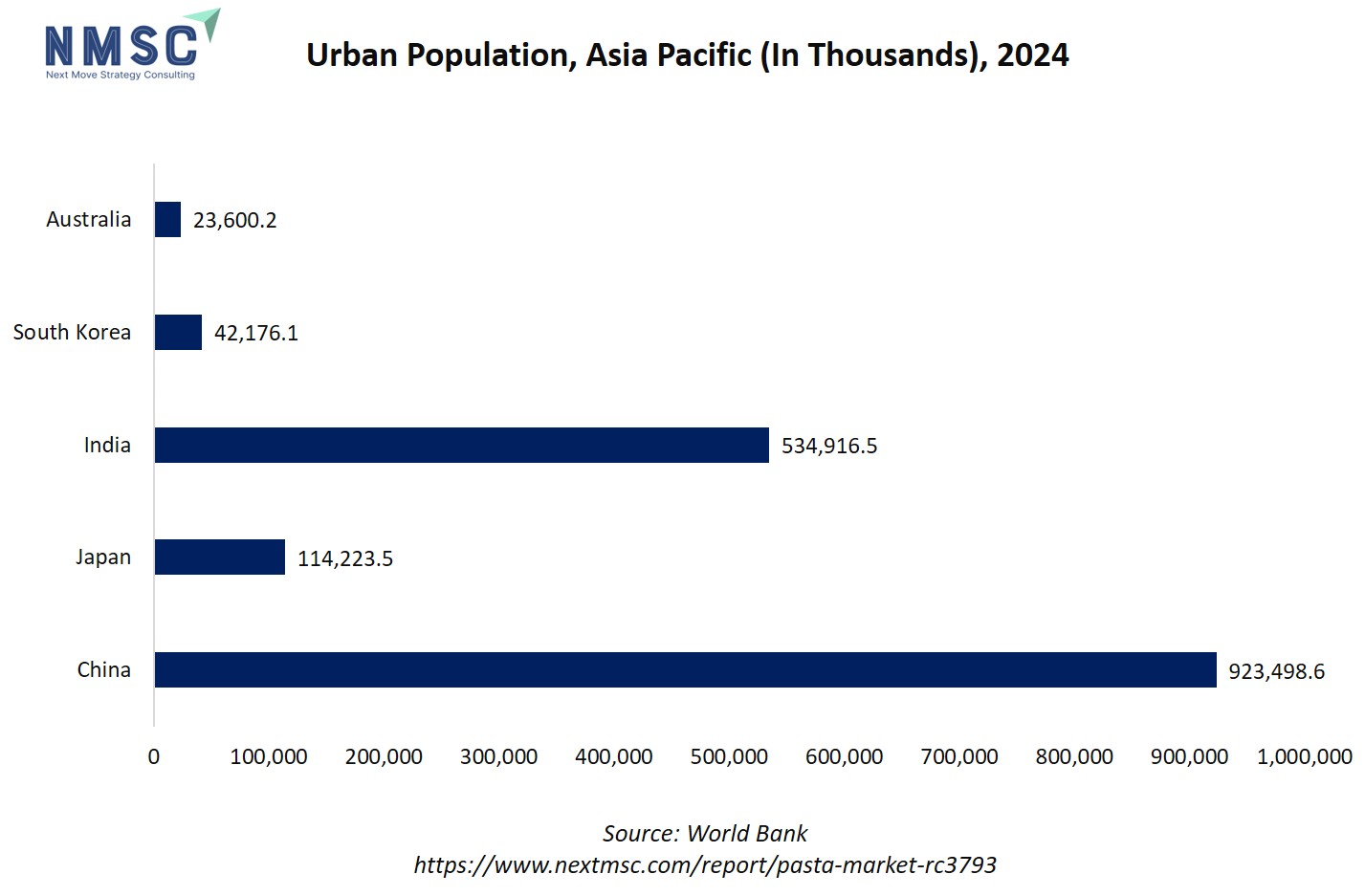
The chart shows the total urban population across key Asia Pacific countries, with China leading at 923,498.6 thousand, followed by India at 534,916.5 thousand, Japan at 114,223.5 thousand, South Korea at 42,176.1 thousand, and Australia at 23,600.2 thousand. This distribution highlights that the largest consumer base for pasta products is concentrated in China and India, where urban populations drive demand for convenient, nutritious, and premium food products.
Countries with smaller urban populations, such as South Korea and Australia, still represent significant markets due to higher per capita consumption and willingness to adopt specialty and artisanal pasta options. The sizeable urban populations across the region underscore the growth potential for both offline and online retail channels, supporting market expansion, product diversification, and adoption of health-focused pasta products in Asia Pacific.
Pasta Market in China
China’s market benefits from a strong domestic wheat supply, which provides a stable foundation for manufacturers to produce a wide range of products, from traditional dried pasta to value-added and ready-to-cook formats. Reliable wheat availability enables competitive pricing and supports investment in product innovation, helping brands meet growing consumer demand for convenient and affordable pasta options.
In 2025, China is projected to harvest 141 million tonnes of wheat, reinforcing the industry’s production capacity and creating opportunities to expand both domestic consumption and product variety.
Pasta Market in Japan
Japan’s market is being increasingly shaped by the rising popularity of one-plate microwave meals, which combine pasta with vegetables and proteins in a single, convenient tray. These ready-to-eat options appeal to busy consumers seeking both convenience and affordability, particularly in households with dual incomes. In 2024, the one-plate microwave meal segment grew to USD 130 million, a 50.7% year-on-year increase, reflecting strong demand for quick meal solutions. This trend is expected to continue into 2025, driving greater consumption of pasta products designed for ready-to-eat formats and supporting innovation in convenient, portion-controlled offerings.
Pasta Market in India
India’s market is being shaped by rapid urbanization and evolving consumer lifestyles, with increasing demand for convenient and quick meal solutions. Urban households are showing a growing preference for ready-to-cook, microwavable, and portion-controlled pasta products.
In 2025, India’s urban population is projected to reach 481 million, representing around 34.6% of the total population, highlighting the expanding market for convenience-oriented pasta. Manufacturers are responding by introducing diverse flavors, premium lines, and easy-to-prepare formats, catering to busy urban consumers and driving sustained growth in the country’s pasta sector.
Pasta Market in South Korea
The South Korean market is increasingly influenced by the growing popularity of convenience and ready-to-eat meal options. Busy lifestyles, rising numbers of single-person households, and a preference for quick, easy-to-prepare meals have fueled demand for microwavable, pre-cooked, and portion-controlled pasta formats.
Manufacturers are responding with innovative flavours, premium offerings, and convenient packaging, aligning with evolving consumer preferences and supporting sustained growth in the country’s industry.
Pasta Market in Australia
The Australian market is being shaped by a growing consumer preference for healthier and alternative pasta options, including gluten-free, whole grain, and plant-based varieties. This trend reflects increasing health consciousness, evolving dietary preferences, and a greater emphasis on sustainable food choices. In response, pasta manufacturers are innovating and expanding their product portfolios to meet these demands, driving growth and diversification within the Australian pasta market.
Pasta Market in Latin America
The Latin American market is benefiting from a growing shift toward processed and convenient foods. Urbanization, changing dietary habits, and the rising demand for quick meal solutions are driving increased pasta consumption across the region. The Inter-American Development Bank (IDB) highlights pasta as one of the 80 processed food products with the highest growth potential, representing a market opportunity of approximately USD 2.8 billion. As consumers increasingly seek easy-to-prepare meals, pasta is well-positioned to meet these needs, supporting market expansion and encouraging product innovation throughout Latin America.
Pasta Market in the Middle East & Africa
The market in the Middle East and Africa is being driven by growing consumer interest in affordable yet nutritious meal options. Pasta, with its versatility, long shelf life, and ability to pair with protein and vegetable sources, meets the region’s need for cost-effective, balanced meals. Manufacturers are responding by expanding product offerings to include fortified, whole-grain, and ready-to-cook pasta formats, catering to both households and institutional buyers. This focus on accessible, nutritious convenience foods is supporting sustained growth in the regional pasta market.
Competitive Landscape
Who are the Leading Companies in the Pasta Market and How are they Competing?
Global pasta competition is shaped by a combination of long-established manufacturers and emerging artisanal or digital-first brands. Legacy players like Barilla, De Cecco, Garofalo, and Rummo dominate through extensive distribution networks, strong brand recognition, and decades-long customer loyalty. These companies leverage economies of scale, advanced production technologies, and trusted reputations to maintain leadership across mass-market and premium segments. Their ability to adapt to evolving consumer preferences, such as organic, high-protein, gluten-free, and sustainably packaged pasta helps them secure consistent market share.
In contrast, smaller, niche, and digital-native brands such as Setaro, Rustichilla d’Abruzzo, Mancini Pastaficio Agricolo, and La Molisana focus on artisanal quality, regional authenticity, and innovative product offerings. These companies thrive by engaging directly with consumers, using social media, limited-edition releases, and influencer partnerships to generate buzz. Their agility in responding to trends allows them to build loyal followings and pressures larger incumbents to innovate and diversify their portfolios.
Market Dominated by Lipstick Giants and Specialists
The market is primarily shaped by a mix of well-established giants and niche specialists. Large brands like De Cecco, Garofalo, and Barilla dominate mainstream channels with wide distribution and strong brand recognition, while smaller artisanal producers such as Setaro, Rustichilla d’Abruzzo, and Mancini Pastaficio Agricolo focus on regional and premium segments. Competition is driven by product quality, heritage, and the ability to cater to evolving consumer preferences, with each player carving out distinct niches across states and markets.
Innovation and Adaptability Drive Market Success
Innovation plays a crucial role in the competitive landscape of the pasta sector. For instance, Rummo has introduced the Maxima line, a high-protein pasta made from organic durum wheat semolina and yellow peas, catering to health-conscious consumers. Similarly, La Molisana has embraced traditional pasta-making techniques while incorporating modern innovations like bronze-cut and high-protein pasta products. Such innovations not only enhance product offerings but also strengthen brand loyalty and market positioning.
Market Players to Opt for Merger & Acquisition Strategies to Expand their Presence
Mergers and acquisitions are playing a key role in shaping competition across the pasta landscape. La Molisana is strategically expanding its presence in the U.S. market by exploring joint ventures and acquisition opportunities. This approach is aimed at capitalizing on the brand’s growing international popularity, broadening its distribution channels, and strengthening its position in the competitive global pasta market. By targeting partnerships and acquisitions, La Molisana seeks to enhance its production capabilities, reach new consumer segments, and reinforce its reputation as a premium pasta brand worldwide.
List of Key Lipstick Companies
-
Garofalo
-
Pastificio Lucio
-
Divella
-
La Molisana
-
Granoro
-
Pasta Zara
-
Colavita
-
Agnesi
-
Buitoni Pasta
-
Valdigrano
-
Setaro
-
Rustichilla D'abruzzo
-
Mancini Pastaficio Agricolo
What are The Latest Key Industry Developments?
-
July 2025 - Garofalo introduced the “Real Italian Carbs” campaign in the U.S., aiming to promote authentic Italian pasta and combat misconceptions about pasta consumption. The initiative emphasizes quality and authenticity, aligning with growing consumer interest in traditional food products.
-
July 2025 - Banza, known for its chickpea-based pasta, has expanded its product line to include a new gluten-free pasta made from a blend of brown rice and chickpeas. This new line, launched in 2025, offers improved texture and flavour, catering to consumers seeking healthier and allergen-free pasta options. The product is available in various shapes, including penne, rotini, elbows, and spaghetti, and is certified gluten-free, non-GMO, vegan, kosher, and allergen-free.
What Are the Key Factors Influencing Investment Analysis & Opportunities in Pasta Market?
The pasta market is attracting significant investment interest due to its steady growth and shifting consumer preferences toward health, convenience, and premium quality. Funding trends indicate rising capital flows into brands that focus on innovation, sustainability, and product diversification, signalling investor confidence in companies that align with modern dietary and lifestyle trends. Valuations are shaped by brand equity, product uniqueness, and market positioning, with artisanal, organic, and high-protein pasta commanding higher multiples.
Investment hotspots are emerging in regions with increasing disposable incomes and demand for convenient, nutritious foods, such as North America and Europe. Companies offering gluten-free, protein-enriched, or environmentally sustainable pasta are particularly appealing, presenting opportunities for mergers, acquisitions, and venture funding. Overall, the market offers attractive prospects for investors seeking exposure to a sector combining tradition, innovation, and sustainable growth
Key Benefits for Stakeholders:
Next Move Strategy Consulting (NMSC) presents a comprehensive analysis of the global Pasta Market, covering historical trends from 2020 through 2024 and offering detailed forecasts through 2030. Our study examines the sector at global, regional, and country levels, providing quantitative projections and insights into key growth drivers, challenges, and investment opportunities across all major pasta segments.
The industry creates value for a range of stakeholders in distinct ways. Investors benefit from steady revenue growth, premium product segments, and opportunities in mergers, acquisitions, and innovative product launches, offering attractive returns in a resilient market. Policymakers gain from the industry’s contribution to employment, regional economic development, and export revenues, particularly in major production hubs like Italy.
Customers enjoy diverse, high-quality options that cater to evolving dietary preferences, including organic, gluten-free, and protein-enriched varieties, while benefiting from convenience and innovation in packaging and product formats. Collectively, the industry fosters economic growth, consumer satisfaction, and sustainable business practices, making it mutually advantageous for all involved parties.
Report Scope
|
Parameters |
Details |
|
Market Size in 2025 |
USD 64.81 Billion |
|
Revenue Forecast in 2030 |
USD 92.18 Billion |
|
Growth Rate |
CAGR of 7.3% from 2025 to 2030 |
|
Analysis Period |
2024–2030 |
|
Base Year Considered |
2024 |
|
Forecast Period |
2025–2030 |
|
Market Size Estimation |
Billion (USD) |
|
Growth Factors |
|
|
Countries Covered |
28 |
|
Companies Profiled |
15 |
|
Market Share |
Available for 10 companies |
|
Customization Scope |
Free customization (equivalent up to 80 analyst-working hours) after purchase. Addition or alteration to country, regional & segment scope. |
|
Pricing and Purchase Options |
Avail customized purchase options to meet your exact research needs. |
|
Approach |
In-depth primary and secondary research; proprietary databases; rigorous quality control and validation measures. |
|
Analytical Tools |
Porter's Five Forces, SWOT, value chain, and Harvey ball analysis to assess competitive intensity, stakeholder roles, and relative impact of key factors. |
Key Market Segments
By Raw Material
-
Durum Wheat Semolina
-
Common Wheat
-
Mix
-
Barley
-
Rice
-
Maize
-
Others
By Product Type
-
Long Pasta
-
Spaghetti
-
Linguine
-
Fettuccine
-
Vermicelli
-
-
Short Pasta
-
Penne
-
Macaroni
-
Rigatoni
-
Farfalle
-
Fusilli
-
Rotini
-
-
Sheet Pasta
-
Lasagna
-
Cannelloni
-
-
Stuffed Pasta
-
Ravioli
-
Tortellini
-
Agnolotti
-
-
Others
By Form
-
Dried Pasta
-
Fresh Pasta
-
Frozen Pasta
-
Ready-to-Eat
By Distribution Channel
-
Supermarkets and Hypermarkets
-
E-Commerce Platforms
-
Specialty Stores
-
Food Service and Restaurants
By Price Tier
-
Economy
-
Premium and Gourmet
By End User
-
Household
-
Restaurants and Cafes
-
Institutional Buyers
-
Hospitals
-
Schools and Colleges
-
Corporate Canteens
-
Geographical Breakdown
-
North America: U.S., Canada, and Mexico.
-
Europe: U.K., Germany, France, Italy, Spain, Sweden, Denmark, Finland, Netherlands, and rest of Europe.
-
Asia Pacific: China, India, Japan, South Korea, Taiwan, Indonesia, Vietnam, Australia, Philippines, and rest of APAC.
-
Middle East & Africa (MENA): Saudi Arabia, UAE, Egypt, Israel, Turkey, Nigeria, South Africa, and rest of MENA.
-
Latin America: Brazil, Argentina, Chile, Colombia, and rest of LATAM.
Conclusion & Recommendations
The future pasta market outlook will be shaped by its ability to innovate, adopt sustainable practices, and offer greater personalization while addressing the growing global demand for healthy, convenient, and premium pasta products. Growth opportunities lie in expanding into emerging markets, developing eco-friendly production and packaging solutions, and diversifying product ranges to meet changing dietary preferences.
For investors, the sector presents attractive prospects for long-term growth and brand-value appreciation. For executives, success will depend on driving product innovation, building strategic partnerships, and strengthening consumer engagement to capture the loyalty of an increasingly health-conscious customer base.


About the Author
 Jayanta Das
— Jayanta Das is Senior Analyst at Next Move Strategy Consulting, where he has spent 4.5 years covering the firm's full industry taxonomy — spanning aerospace and defense, healthcare, BFSI, energy and power, semiconductors, and beyond — rather than one specialization. His work follows NextMSC's research model, combining data mining, analytics, and secondary research to build market sizing and forecasts behind NextMSC's 2,000-plus research reports, trusted by more than 3,000 organizations globally.
Jayanta Das
— Jayanta Das is Senior Analyst at Next Move Strategy Consulting, where he has spent 4.5 years covering the firm's full industry taxonomy — spanning aerospace and defense, healthcare, BFSI, energy and power, semiconductors, and beyond — rather than one specialization. His work follows NextMSC's research model, combining data mining, analytics, and secondary research to build market sizing and forecasts behind NextMSC's 2,000-plus research reports, trusted by more than 3,000 organizations globally.
About the Reviewer
 Supradip Baul
— Supradip Baul is an accomplished business consultant and strategist with over a decade of rich experience in market intelligence, strategy, technology, and business transformation. His work has included rigorous qualitative and quantitative analysis across multiple industries, helping clients shape investment decisions and long-term roadmaps. Earlier in his career, he was associated with Gartner, where he contributed to industry-leading reports and market share analyses. He has worked with leading global companies and holds an MBA with a dual specialization in Marketing and Finance.
Supradip Baul
— Supradip Baul is an accomplished business consultant and strategist with over a decade of rich experience in market intelligence, strategy, technology, and business transformation. His work has included rigorous qualitative and quantitative analysis across multiple industries, helping clients shape investment decisions and long-term roadmaps. Earlier in his career, he was associated with Gartner, where he contributed to industry-leading reports and market share analyses. He has worked with leading global companies and holds an MBA with a dual specialization in Marketing and Finance.
At Next Move Strategy Consulting, we understand that insightful market research is the cornerstone of successful business decisions. That's why we employ a robust and multifaceted approach, combining various methodologies to deliver the most accurate and actionable data for our clients.

Research Landscape
We navigate the world of research with two primary approaches:
Qualitative Approach
Our qualitative research methodologies involve immersive techniques such as in-depth interviews, focus groups, and observational studies. By engaging directly with individuals and stakeholders, we uncover valuable insights that quantitative data alone may overlook.

Quantitative Research
In tandem with qualitative methodologies, NMSC leverages the power of Quantitative Research to provide a robust foundation of numerical insights. Through systematic data collection and analysis, we quantify patterns, preferences, and market trends, offering a comprehensive view of the business landscape.
Our quantitative research approach employs diverse tools, including surveys, experiments, and statistical modelling. These methodologies enable us to gather data from a large and representative sample, ensuring the statistical significance of our findings. By employing structured questionnaires and standardized data collection methods, we guarantee the reliability and validity of the information we present to our clients.
Quantitative research is particularly effective in measuring the prevalence of trends, assessing market size, and gauging the impact of various factors on consumer behavior. The numerical precision attained through this approach equips our clients with actionable insights, facilitating data-driven decision-making and strategy formulation.


Our Specialized Toolbox for Industry-Specific Market Research
We deploy a specialized arsenal of techniques tailored to meet your unique requirements. Here's a glimpse into our comprehensive toolbox:

Information Procurement
The stage entails acquiring market data or relevant information through various sources and methodologies.


Market Research Approach
We utilize both top-down and bottom-up approaches in market research analysis to achieve a comprehensive understanding of the market dynamics, leveraging the broad perspective of industry trends and macroeconomic factors alongside detailed insights from specific segments and individual companies.

Porters Five Forces Analysis
We conduct Porter's Five Forces analysis to evaluate the competitive landscape of an industry, providing us with insights into factors that affect profitability and strategic positioning.

SWOT Analysis

Forecasting
We utilize a forecasting model to predict future consumption by considering parameters like population, economics, regulations, market competition, drivers, constraints, technology, and pricing. We also employ statistical techniques such as multilinear regression, exponential smoothing, moving average, ARIMA, and Monte Carlo simulations for accurate predictions. In econometric forecasting, we analyzed short-term and long-term event impacts, attributing values based on regulatory frameworks, economic factors, and market events.





 Speak to Our Analyst