Platelet Concentration Systems Market Size, Share, Growth & Forecast by Product Type (PRP Systems, PRF & Matrix Systems, Blood Center Platelet Systems, BMAC Systems, Other Systems), Revenue Stream (Equipment, Kits, Consumables, Software & Services), Processing Principle (Manual, Automated, Semi-Automated), Source Material (Autologous, Allogeneic), Use Setting, Application, End User, Distribution Channel, and Region — Global Analysis 2026–2035
Industry: Healthcare | Publishing Date: July 13, 2026 | Last Updated: September 30, 2026 | No of Pages: N/A | No. of Tables: N/A | No. of Figures: N/A | Format: PDF | Report Code: HC5100
What Is the Platelet Concentration Systems Market Size?
The global Platelet Concentration Systems Market was valued at USD 1.42 billion in 2025 and is expected to reach USD 1.50 billion in 2026. Growing clinical adoption of platelet-rich plasma (PRP) therapies, advances in centrifugation and apheresis technologies, and expanding applications in orthopedics, sports medicine, aesthetics, and wound care are projected to drive the market to USD 2.48 billion by 2035, advancing at a CAGR of 5.7% from 2026 to 2035. Key growth drivers include the aging global population increasing musculoskeletal disorder prevalence, rising demand for minimally invasive regenerative procedures, expanded clinical evidence supporting PRP efficacy, and growing blood center automation requirements across transfusion medicine institutions worldwide.
|
Parameters |
Details |
|
Market Size in 2025 |
USD 1.42 Billion |
|
Market Size in 2026 |
USD 1.50 Billion |
|
Revenue Forecast in 2035 |
USD 2.48 Billion |
|
Growth Rate |
CAGR of 5.7% from 2026 to 2035 |
|
Analysis Period |
2025–2035 |
|
Base Year Considered |
2025 |
|
Forecast Period |
2026–2035 |
|
Market Size Estimation |
Billion USD |
|
Companies Profiled |
20 |
|
Countries Covered |
33 |
|
Market Share |
Top 10 |
Platelet Concentration Systems Market Overview
What Is the Platelet Concentration Systems Market?
The Platelet Concentration Systems Market encompasses devices, kits, software, and consumables used to isolate and concentrate platelets from whole blood, bone marrow aspirate, or donor blood to produce therapeutic preparations such as platelet-rich plasma (PRP), platelet-rich fibrin (PRF), and bone marrow aspirate concentrate (BMAC). These systems enable clinicians to deliver autologous biologics containing growth factors and cytokines directly to sites of injury, accelerating tissue repair in orthopedics, aesthetics, dentistry, wound care, sports medicine, and transfusion medicine. The market covers both point-of-care clinical systems and large-scale blood center platforms used in apheresis and whole blood processing.
How Has the Platelet Concentration Systems Market Evolved?
The Platelet Concentration Systems Market has undergone three distinct transformation phases. The first phase centered on manual open-kit systems requiring skilled laboratory personnel and producing inconsistent platelet yields. The second phase introduced closed automated console systems capable of producing standardized PRP concentrations with reduced contamination risk. NMSC's analysis indicates that the current phase is defined by multi-application platforms, including BMAC systems, PRF matrix preparation kits, and software-integrated apheresis consoles, which serve both clinical and blood center settings simultaneously. Automation and disposable closed-kit formats now dominate the competitive product design direction across the global market landscape.
How Do Regulations Influence the Platelet Concentration Systems Market?
Regulatory oversight substantially shapes the Platelet Concentration Systems Market structure and competitive dynamics. In the United States, the FDA classifies PRP devices primarily as Class II medical devices under the 510(k) pathway, requiring substantial equivalence demonstrations before market access. The European Union's Medical Device Regulation (MDR 2017/745) imposed more rigorous clinical evidence requirements on platelet concentration systems marketed in EU member states from 2021 onward. Our assessment indicates that these regulatory changes are raising compliance barriers for smaller manufacturers while creating certification moats for established players such as Arthrex, Terumo BCT, and Haemonetics. Japan's PMDA and China's NMPA maintain separate review pathways that influence market entry timelines across Asia-Pacific.
How Is Technology Adoption Expanding Across the Platelet Concentration Systems Market?
Technology adoption across the Platelet Concentration Systems Market demand is accelerating toward closed automated systems and single-use disposable kits that minimize operator variability and contamination risk. Closed-loop centrifugation systems now dominate clinical procurement in North America and Western Europe. From our research, we found that software-enabled systems with programmable centrifugation profiles and integrated quality monitoring are gaining rapid clinical acceptance, particularly in academic medical centers and high-volume orthopedic surgery practices. In blood center settings, continuous-flow apheresis technology from Terumo BCT and Haemonetics is progressively replacing whole blood processing for platelet collection, improving donor experience and yield consistency.
|
Key Takeaways |
|
By product type, PRP Systems held the largest share of the Platelet Concentration Systems Market, valued at approximately USD 0.61 billion in 2025. PRP Systems benefit from the broadest clinical application base spanning orthopedics, sports medicine, aesthetics, and wound care, making closed kit and automated console PRP sub-segments the primary revenue generators across the global market. |
|
Among PRP system sub-segments, Closed Kit Systems represent the fastest-growing sub-segment within PRP Systems, projected to advance at a CAGR of 7.2% from 2026 to 2035, driven by clinical demand for standardized, contamination-resistant preparation protocols replacing open manual systems in point-of-care settings. |
|
By revenue stream, the Equipment segment led the Platelet Concentration Systems Market at USD 0.58 billion in 2025, anchored by automated console system placements across orthopedic surgery centers and blood center facilities. Equipment revenue is reinforced by long-term service agreements and software subscription models. |
|
Kits represent the fastest-growing revenue stream in the Platelet Concentration Systems Market at a CAGR of 6.5% from 2026 to 2035, reflecting the consumable-driven razor-and-blade business model that creates recurring revenue streams for manufacturers following initial console placements across clinical facilities globally. |
|
By processing principle, Centrifugation dominates the Platelet Concentration Systems Market, accounting for approximately 67% of total revenue in 2025, as centrifugation-based PRP and PRF preparation remains the most widely adopted technique across clinical, laboratory, and blood center settings globally. |
|
Apheresis is the fastest-growing processing principle in the Platelet Concentration Systems Market at a CAGR of 6.8% from 2026 to 2035, as blood centers increasingly transition to continuous-flow apheresis platforms offering higher platelet yield, reduced donor burden, and improved transfusion medicine safety standards. |
|
By application, Orthopedics held the largest application share in the Platelet Concentration Systems Market at USD 0.38 billion in 2025, driven by widespread PRP adoption in joint injections, tendon repair, and ligament reconstruction procedures performed in outpatient clinic and operating room settings. |
|
Aesthetics is the fastest-growing application segment in the Platelet Concentration Systems Market share at a CAGR of 7.8% from 2026 to 2035, propelled by rising consumer demand for PRP-based hair restoration, facial rejuvenation, and skin quality treatments offered in aesthetic medicine clinics globally. |
|
North America held the largest regional share of the Platelet Concentration Systems Market, valued at USD 0.56 billion in 2025, underpinned by the highest concentration of orthopedic and aesthetic procedures, robust reimbursement infrastructure, and FDA-cleared device availability supporting clinical adoption. |
|
Asia-Pacific is the fastest-growing region in the Platelet Concentration Systems Market at a CAGR of 7.3% from 2026 to 2035, advancing from USD 0.28 billion in 2025, driven by increasing musculoskeletal procedure volumes in China, Japan, India, and South Korea alongside growing aesthetic medicine market expansion. |
|
The United States is the dominant single country market in the Platelet Concentration Systems Market, contributing approximately 74% of North American market revenue in 2025, supported by the world's highest concentration of orthopedic surgery volume, aesthetic medicine clinics, and blood center infrastructure. |
|
China is the fastest-growing national market in the Platelet Concentration Systems Market at a CAGR of 8.4% from 2026 to 2035, driven by rapidly expanding orthopedic procedure volumes, NMPA regulatory pathway development for PRP systems, and growing sports medicine and aesthetic medicine adoption. |
Key Emerging Trends in the Platelet Concentration Systems Market
How Is the Shift Toward Closed-System PRP Platforms Transforming the Platelet Concentration Systems Market?
Closed-system PRP platforms are fundamentally reshaping clinical procurement decisions across the Platelet Concentration Systems Market by eliminating operator-dependent preparation variables and reducing contamination risk. Through our market assessment, we observed that systems such as Arthrex's ACP Double Syringe and EmCyte's Pure PRP II are displacing open-kit alternatives across high-volume orthopedic and sports medicine practices. FDA's preference for sterile closed-loop preparation pathways under 510(k) guidance reinforces this transition. Hospitals and ambulatory surgery centers increasingly standardize on closed-kit platforms to ensure consistent platelet concentration ratios and support outcomes documentation requirements for institutional quality management programs.
What Role Is Automation Playing in the Evolution of the Platelet Concentration Systems Market?
Automation and intelligent software integration are emerging as transformative forces across the Platelet Concentration Systems Market. Software-enabled centrifugation systems now allow clinicians to select programmable preparation protocols tailored to specific clinical applications, delivering PRP with defined platelet concentration multiples above baseline. Our findings suggest that companies including Stryker and Terumo BCT are integrating data capture and workflow management software into their platelet concentration consoles, enabling electronic documentation of preparation parameters and connecting device performance to clinical outcomes tracking. This software layer creates a durable data moat and drives long-term clinical account retention for leading manufacturers.
How Is the Expansion of Aesthetic Medicine Applications Reshaping the Platelet Concentration Systems Market?
The global expansion of aesthetic medicine is creating one of the most dynamic demand growth vectors in the Platelet Concentration Systems Market. PRP-based hair restoration, facial rejuvenation, and skin quality treatments are experiencing rapid adoption in aesthetic clinics across North America, Europe, the Middle East, and Asia-Pacific. Based on NMSC's research, we found that aesthetic medicine applications represent the fastest-growing end-use segment, driven by rising consumer acceptance of autologous biologic treatments as alternatives to synthetic injectables. Companies including Regen Lab SA and Dr. PRP USA LLC have developed aesthetic-specific PRP kits optimized for dermatological and hair restoration applications serving aesthetic medicine practitioners globally.
How Is the Growth of Blood Center Platelet Demand Influencing the Platelet Concentration Systems Market?
Blood center platelet demand is creating a structurally distinct and high-volume growth segment within the Platelet Concentration Systems Market. Apheresis-derived platelets increasingly replace whole blood-pooled platelet concentrates in transfusion medicine, driven by improved pathogen safety profiles, longer shelf life management capabilities, and reduced alloimmunization risk for immunocompromised recipients. Our assessment indicates that the American Red Cross and major European blood center networks are progressively expanding their apheresis platelet collection capacity, generating sustained demand for automated apheresis consoles and associated single-use collection kits from Terumo BCT, Haemonetics, and Fresenius Kabi across international blood center markets.
What Are the Key Market Drivers, Breakthroughs, and Investment Opportunities that Will Shape the Platelet Concentration Systems Industry in the Next Decade?
|
Drivers / Trends / Restraints |
(+/-) % Impact on CAGR Forecast |
Geographic Relevance |
Impact Timeline |
|
Rising Orthopedic and Sports Medicine Procedure Volume |
+1.4% |
Global (North America, Europe, APAC) |
2025–2035 |
|
Growing Aesthetic Medicine PRP Adoption |
+1.1% |
North America, Europe, MEA, APAC |
2025–2032 |
|
Blood Center Apheresis Platelet Transition |
+0.8% |
North America, Europe |
2025–2030 |
|
Aging Population and Musculoskeletal Disorder Prevalence |
+0.9% |
Global (all regions) |
2026–2035 |
|
Closed-System and Automated Platform Adoption |
+0.7% |
North America, Europe, APAC |
2025–2028 |
|
Reimbursement Limitations for PRP in Clinical Settings |
-1.0% |
North America, Europe |
Ongoing |
|
Regulatory Stringency Under FDA 510(k) and EU MDR |
-0.6% |
North America, Europe |
Ongoing |
|
Clinical Evidence Gaps in Select Applications |
-0.5% |
Global |
Ongoing |
|
BMAC and PRF Innovation Opportunities |
+0.9% |
Global |
2026–2035 |
|
E-Commerce and Distributor Channel Expansion |
+0.6% |
APAC, MEA, LATAM |
2026–2035 |
What Are the Growth Drivers of the Platelet Concentration Systems Market?
How Is the Rising Global Burden of Musculoskeletal Disorders Driving Demand in the Platelet Concentration Systems Market?
The escalating global prevalence of musculoskeletal disorders constitutes a primary structural driver for the Platelet Concentration Systems Market. According to the World Health Organization (WHO), musculoskeletal conditions affect approximately 1.71 billion people worldwide, with osteoarthritis, tendinopathy, and rotator cuff injuries among the most common clinical indications for PRP intervention. Our analysis shows that orthopedic procedure volumes are growing at sustained rates in both developed and emerging markets, with outpatient joint injection volumes increasing as clinicians seek biologic alternatives to corticosteroids. This patient population growth directly translates into sustained demand for PRP and BMAC preparation systems across orthopedic clinics and ambulatory surgery centers globally throughout the forecast period.
How Does the Shift Toward Regenerative Medicine Fuel Platelet Concentration Systems Market Growth?
The broader healthcare industry shift toward regenerative and personalized medicine is creating durable structural demand within the Platelet Concentration Systems Market. Clinicians across orthopedics, sports medicine, wound care, and dentistry increasingly incorporate autologous platelet concentrates as adjuncts to surgical repair, tissue engineering scaffolds, and chronic wound management protocols. Based on our market evaluation, we noticed that leading academic medical centers in the United States and Europe are expanding their regenerative medicine programs, driving institutional adoption of automated platelet concentration systems for both research and clinical application. The U.S. National Institutes of Health (NIH) has funded multiple investigator-initiated studies examining PRP efficacy across musculoskeletal and dermatological conditions supporting evidence accumulation.
How Is Blood Center Modernization Driving Platelet Concentration Systems Market Expansion?
Blood center modernization programs represent a high-volume and recurring procurement driver for apheresis-based platelet collection systems within the Platelet Concentration Systems Market. The U.S. Department of Health and Human Services (HHS) National Blood Collection and Utilization Survey data indicate that platelet transfusion demand remains substantial across oncology, transplant, and trauma patient populations. From our assessment, transfusion medicine institutions globally are transitioning from whole blood-derived pooled platelet production to single-donor apheresis collections, offering superior pathogen safety profiles and inventory efficiency. This infrastructure transition creates durable demand for automated apheresis consoles, single-use collection kits, and platelet pooling and filtration systems from specialized blood center equipment manufacturers throughout the forecast period.
Pain Point Analysis of the Platelet Concentration Systems Market
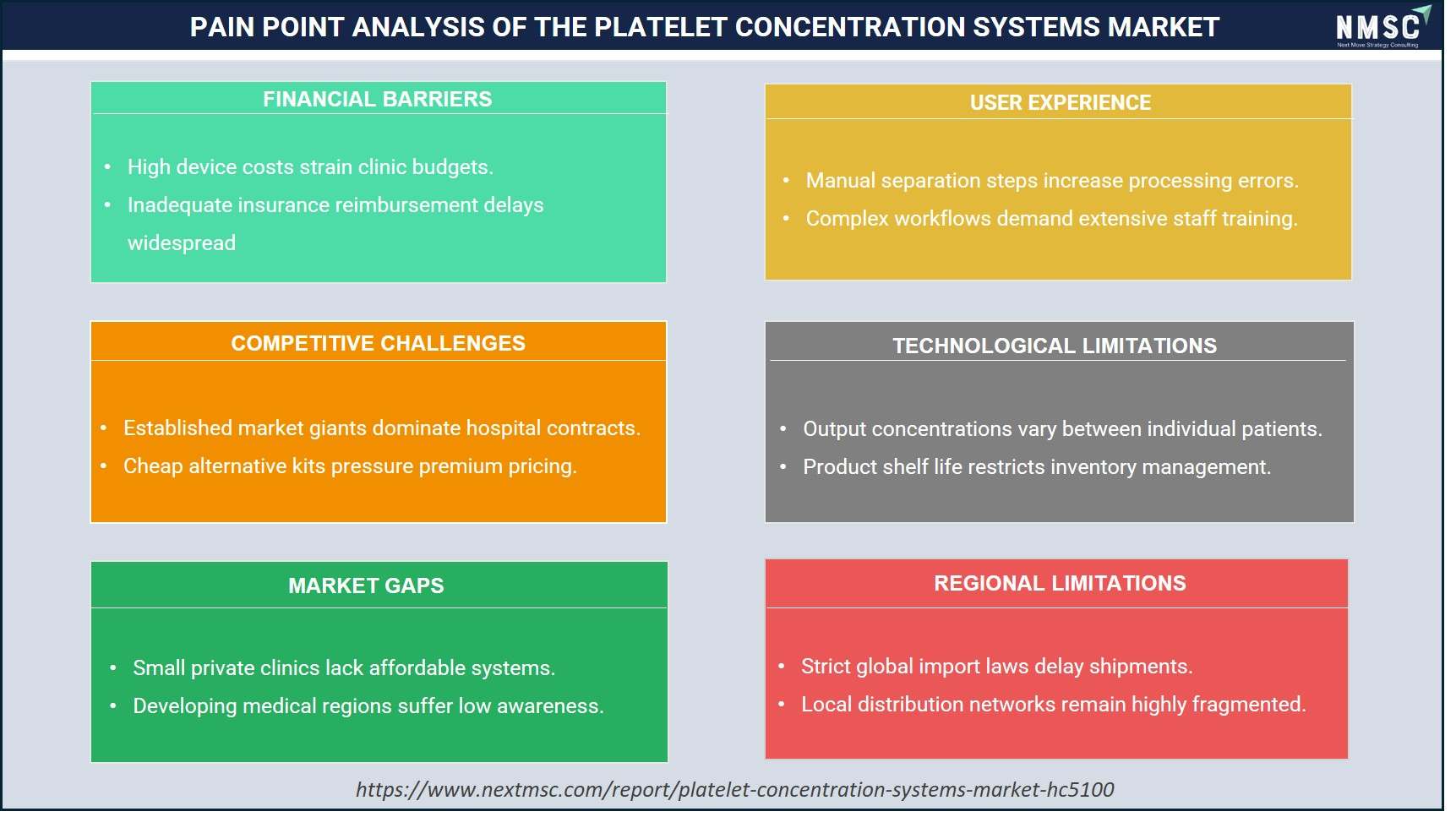
The infographic highlights the key pain points affecting the Platelet Concentration Systems Market. High device costs and limited insurance reimbursement create financial barriers for healthcare providers. Complex procedures and manual processing steps increase the risk of errors and require extensive staff training. Market competition from established players and lower-cost alternatives challenges growth opportunities. Additionally, technological limitations, low awareness in developing regions, and fragmented distribution networks hinder broader adoption, while strict import regulations can delay product availability across global markets.
What Are the Growth Inhibitors of the Platelet Concentration Systems Market?
How Do Reimbursement Limitations Constrain the Platelet Concentration Systems Market?
Reimbursement coverage limitations represent one of the most significant near-term structural constraints on the Platelet Concentration Systems Market. In the United States, the Centers for Medicare and Medicaid Services (CMS) has not established definitive national coverage determinations for PRP in many musculoskeletal applications, including knee osteoarthritis and chronic Achilles tendinopathy. Our analysis indicates that private payer coverage for PRP injections remains inconsistent across carrier policies, requiring providers to navigate complex prior authorization processes that restrict adoption. This reimbursement uncertainty limits PRP adoption to cash-pay or well-insured patient populations in clinical settings, constraining the total addressable market for platelet concentration systems in orthopedic and sports medicine applications.
How Do Clinical Evidence Gaps Limit Adoption Rates in the Platelet Concentration Systems Market?
Despite a growing body of clinical literature supporting PRP efficacy across multiple applications, evidence gaps and heterogeneity in trial methodology continue to restrain broader institutional adoption within the Platelet Concentration Systems Market. Variability in PRP preparation protocols, platelet concentration ratios, leukocyte inclusion, injection volumes, and patient selection criteria across published studies makes it difficult for clinical societies and payer organizations to establish definitive evidence-based treatment guidelines. NMSC's analysis indicates that this evidence fragmentation particularly affects adoption in wound care and cosmetic applications, where comparative efficacy data against established standard-of-care treatments remain limited across large-scale randomized controlled trials conducted in regulated healthcare settings.
What Are the Growth Opportunities in the Platelet Concentration Systems Market?
How Does the Emergence of BMAC Systems Create a High-Value Opportunity in the Platelet Concentration Systems Market?
Bone marrow aspirate concentrate (BMAC) systems represent an emerging high-value growth opportunity within the Platelet Concentration Systems Market, as clinicians seek increasingly potent autologous biologic preparations beyond standard PRP. BMAC systems concentrate not only platelets but also mesenchymal stem cells, growth factors, and anti-inflammatory cytokines from bone marrow aspirate, offering a richer regenerative profile for complex orthopedic reconstructions, spinal procedures, and bone healing applications. Our findings suggest that the BMAC segment is expanding from orthopedic spine surgery into sports medicine and dental bone augmentation, with platforms from Celling Biosciences and Arteriocyte Medical Systems gaining clinical traction in academic and specialty orthopedic centers globally.
How Do E-Commerce and Distributor Channels Expand Market Reach for Platelet Concentration Systems?
The expansion of e-commerce procurement and regional distributor networks is creating new geographic market access opportunities for platelet concentration systems manufacturers, particularly across Asia-Pacific, the Middle East, Latin America, and Eastern Europe. Based on NMSC's research, we found that smaller aesthetic medicine clinics and dental practices in emerging markets are increasingly sourcing PRP kits through digital procurement platforms, enabling brands such as Regen Lab SA, Dr. PRP USA LLC, and Juventix Regenerative Medical to expand beyond direct sales coverage areas. Regional distributors provide regulatory navigation support and last-mile logistics capabilities essential for penetrating markets with complex import regulations and healthcare procurement structures.
How Does the Growth of PRF and Membrane Systems Create Incremental Revenue Opportunities in the Platelet Concentration Systems Market?
Platelet-rich fibrin (PRF) and related membrane systems represent an incrementally expanding product category within the Platelet Concentration Systems Market, particularly in oral and maxillofacial surgery, implant dentistry, and periodontics. PRF systems require no anticoagulants or bovine thrombin, producing a fibrin matrix rich in platelets and growth factors that functions as a natural scaffold for tissue regeneration. Through NMSC's assessment, we found that BTI Biotechnology Institute and Vivostat A/S have established strong positions in PRF membrane technology, serving oral surgery and reconstructive surgery departments in Europe and Latin America. Liquid PRF innovations are further expanding dental aesthetic and socket preservation applications across global dental implant markets.
SWOT Analysis of the Platelet Concentration Systems Market
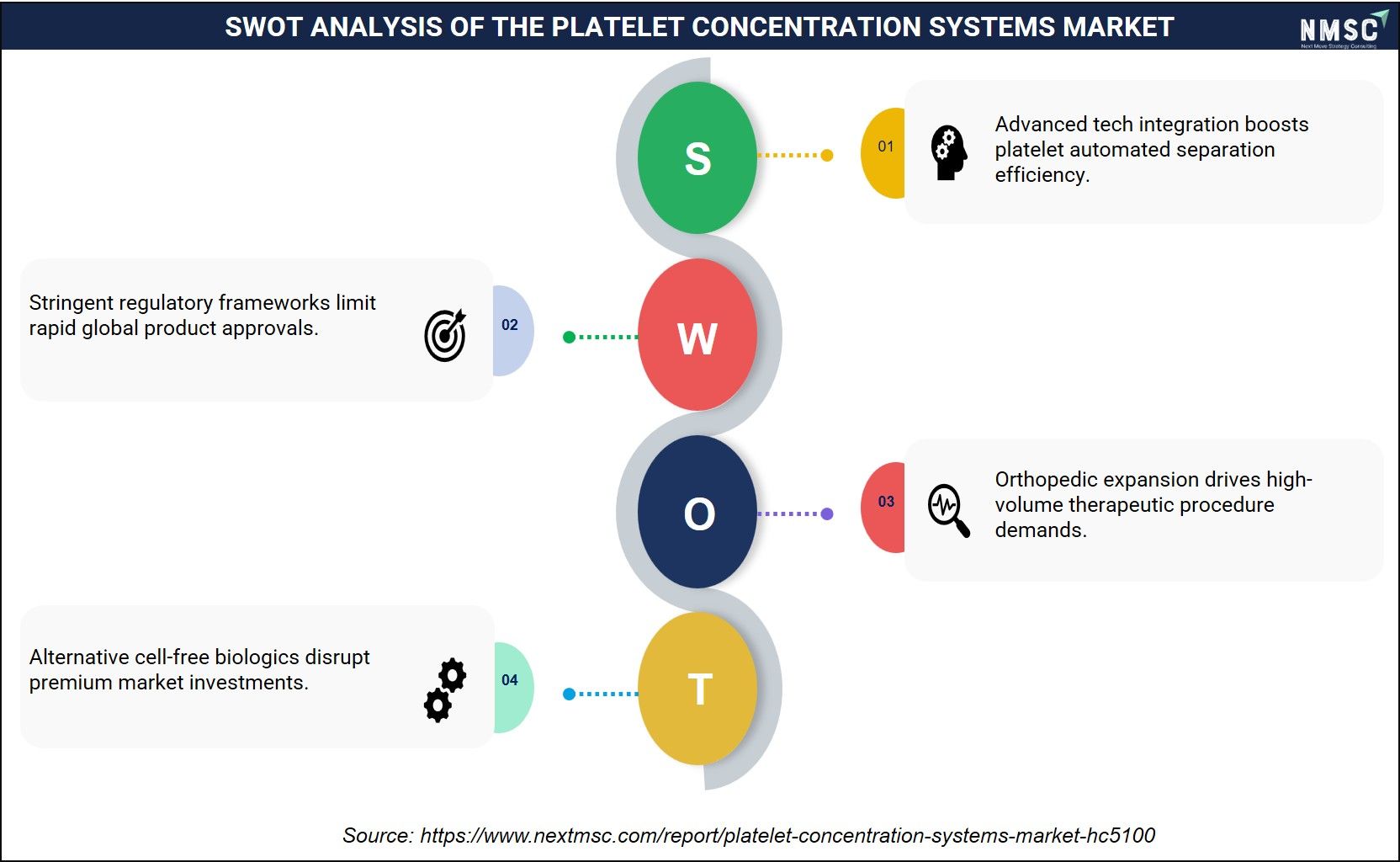
The SWOT analysis highlights the key internal and external factors influencing the Platelet Concentration System Market. Strengths include advanced automation technologies that improve platelet separation efficiency and product consistency. However, stringent regulatory requirements can slow product approvals and market entry. Significant opportunities arise from the growing adoption of platelet-rich plasma (PRP) therapies, particularly in orthopedics, sports medicine, and regenerative healthcare. At the same time, the emergence of alternative biologic treatments and cell-free regenerative therapies presents a competitive threat, potentially impacting investment and adoption of platelet concentration systems.
How Is the Platelet Concentration Systems Market Segmented in This Report, and What Are the Key Insights from the Segmentation Analysis?
How Do Different Product Types Define the Competitive Architecture of the Platelet Concentration Systems Market?
|
Product Type Segment |
2025 (USD Bn) |
2035 (USD Bn) |
CAGR (%) |
|
PRP Systems |
0.61 |
1.06 |
5.7% |
|
PRF and Matrix Systems |
0.17 |
0.30 |
5.9% |
|
Blood Center Platelet Systems |
0.26 |
0.44 |
5.4% |
|
BMAC Systems |
0.09 |
0.19 |
7.8% |
|
Other Systems |
0.29 |
0.49 |
5.4% |
Based on our analysis of clinical adoption patterns and product innovation trajectories, the Platelet Concentration Systems Market is structured across PRP Systems (including Closed Kit, Open Kit, Automated Console, and Manual Kit variants), PRF and Matrix Systems (Liquid PRF, Fibrin Matrix, and Membrane Systems), Blood Center Platelet Systems (Apheresis, Whole Blood Processing, Platelet Pooling, and Filtration Systems), BMAC Systems, and Other Systems including Hybrid and residual platforms. PRP Systems dominate market revenue due to broad clinical application across orthopedics, sports medicine, aesthetics, dentistry, and wound care, with Closed Kit Systems increasingly displacing open and manual kit variants for their standardization benefits. BMAC Systems represent the fastest-growing product sub-segment, driven by growing adoption in complex orthopedic reconstruction and sports medicine applications.
How Does Revenue Stream Segmentation Reveal the Commercial Model of the Platelet Concentration Systems Market?
|
Revenue Stream Segment |
2025 (USD Bn) |
2035 (USD Bn) |
CAGR (%) |
|
Equipment |
0.58 |
0.93 |
4.8% |
|
Kits |
0.44 |
0.83 |
6.5% |
|
Consumables |
0.28 |
0.52 |
6.4% |
|
Software and Services |
0.12 |
0.20 |
5.2% |
Our market assessment of Platelet Concentration Systems Market commercial models indicates a structure comprising Equipment (centrifuges, apheresis consoles, and processing units), Kits (single-use closed preparation kits), Consumables (collection sets, filtration components, anticoagulants, and reagents), and Software and Services (workflow management platforms, maintenance contracts, and training). The Equipment segment currently holds the dominant revenue position due to the capital value of automated console systems, particularly apheresis platforms deployed in blood center facilities. Kits and Consumables collectively constitute a fast-growing recurring revenue base, as manufacturers leverage the razor-and-blade model where installed equipment generates sustained consumable demand across multi-year clinical relationships.
How Do Processing Technologies Differentiate Product Positioning Across the Platelet Concentration Systems Market?
|
Processing Principle Segment |
2025 (USD Bn) |
2035 (USD Bn) |
CAGR (%) |
|
Centrifugation |
0.95 |
1.62 |
5.5% |
|
Apheresis |
0.32 |
0.58 |
6.1% |
|
Filtration |
0.08 |
0.14 |
5.7% |
|
Hybrid |
0.07 |
0.14 |
7.2% |
The Platelet Concentration Systems Market is segmented by processing principle into Centrifugation, Apheresis, Filtration, and Hybrid platforms. Centrifugation maintains overwhelming market dominance, underpinning virtually all PRP, PRF, and BMAC preparation systems used across clinical point-of-care settings due to its operational simplicity, cost-effectiveness, and established clinical evidence base. Apheresis represents the most significant growth processing modality, driven by blood center adoption of continuous-flow platelet collection to replace pooled whole blood processing. Hybrid systems combining centrifugation and filtration technologies are an emerging innovation frontier, particularly in applications requiring ultra-pure platelet concentrates for transfusion-critical patient populations requiring the highest safety standards.
How Does Source Material Selection Influence Clinical and Commercial Dynamics in the Platelet Concentration Systems Market?
|
Source Material Segment |
2025 (USD Bn) |
2035 (USD Bn) |
CAGR (%) |
|
Whole Blood |
0.72 |
1.22 |
5.4% |
|
Bone Marrow Aspirate |
0.20 |
0.41 |
7.4% |
|
Donor Blood |
0.36 |
0.61 |
5.4% |
|
Other Materials |
0.14 |
0.24 |
5.5% |
The Platelet Concentration Systems Market is segmented by source material into Whole Blood, Bone Marrow Aspirate, Donor Blood, and Other Materials. Whole Blood is the dominant source material, underpinning the majority of PRP and PRF preparations across clinical settings due to the simplicity of autologous peripheral blood draws compared to aspirate collection procedures. Bone Marrow Aspirate is the fastest-growing source material, aligned with the expanding BMAC market segment where clinicians harvest iliac crest or tibial marrow to produce multi-cellular regenerative preparations for orthopedic and spine applications. Donor Blood processing through apheresis constitutes the blood center segment, where single-donor platelet collections generate therapeutic transfusion units for oncology and trauma patients.
Which Use Settings Generate the Most Value Across the Platelet Concentration Systems Market?
|
Use Setting Segment |
2025 (USD Bn) |
2035 (USD Bn) |
CAGR (%) |
|
Clinic |
0.46 |
0.80 |
5.7% |
|
Operating Room |
0.32 |
0.54 |
5.4% |
|
Blood Center |
0.38 |
0.67 |
5.8% |
|
Laboratory |
0.26 |
0.47 |
6.1% |
The Platelet Concentration Systems Market is segmented by use setting into Clinic, Operating Room, Blood Center, and Laboratory environments. The Clinic segment holds the largest use setting share, as outpatient orthopedic injection clinics, sports medicine facilities, aesthetic medicine practices, and dental offices represent the broadest deployment base for point-of-care PRP and PRF preparation systems. The Operating Room segment serves complex surgical procedures including rotator cuff repair, ACL reconstruction, and total joint replacement augmented with PRP or BMAC. Blood Center deployments represent a high-volume and capital-intensive segment concentrated in transfusion medicine facilities. The Laboratory setting is the fastest-growing use environment, driven by expanding research applications and quality control testing workflows.
How Do Application-Level Insights Reveal Growth Priorities in the Platelet Concentration Systems Market?
|
Application Segment |
2025 (USD Bn) |
2035 (USD Bn) |
CAGR (%) |
|
Orthopedics |
0.38 |
0.64 |
5.3% |
|
Sports Medicine |
0.20 |
0.35 |
5.8% |
|
Aesthetics |
0.17 |
0.36 |
7.8% |
|
Dentistry |
0.14 |
0.24 |
5.5% |
|
Wound Care |
0.16 |
0.28 |
5.8% |
|
Transfusion Medicine |
0.28 |
0.47 |
5.3% |
|
Other |
0.09 |
0.14 |
4.5% |
Based on our analysis of clinical demand trends, the Platelet Concentration Systems Market is segmented by application into Orthopedics, Sports Medicine, Aesthetics, Dentistry, Wound Care, Transfusion Medicine, and Other applications. Orthopedics commands the largest application share, supported by the widespread use of PRP injections for knee osteoarthritis, tendinopathy, rotator cuff augmentation, and fracture healing across outpatient orthopedic practices globally. Aesthetics is the fastest-growing application segment, as rising consumer demand for PRP-based hair restoration, skin rejuvenation, and anti-aging treatments fuels rapid adoption in aesthetic medicine clinics. Sports Medicine maintains strong growth momentum driven by professional and recreational athlete PRP treatment adoption for acute and chronic soft tissue injuries.
How Are Distribution Channels Shaping Go-to-Market Strategies in the Platelet Concentration Systems Market?
|
Channel Segment |
2025 (USD Bn) |
2035 (USD Bn) |
CAGR (%) |
|
Direct Sales |
0.64 |
1.06 |
5.2% |
|
Distributors |
0.46 |
0.82 |
6.0% |
|
OEM and Private Label |
0.18 |
0.31 |
5.6% |
|
E-Commerce |
0.14 |
0.29 |
7.6% |
The Platelet Concentration Systems Market is segmented by distribution channel into Direct Sales, Distributors, OEM and Private Label, and E-Commerce. Direct Sales dominates, particularly for capital equipment including apheresis consoles and automated PRP systems sold to hospitals, blood centers, and large orthopedic surgery groups, where dedicated medical device sales representatives provide clinical training, workflow integration support, and ongoing account management. Distributor channels are the primary route-to-market for kit and consumable sales across smaller clinical practices, dental offices, and emerging markets. E-Commerce is the fastest-growing distribution channel in the Market, reflecting growing willingness of aesthetic medicine and dental practitioners to procure standardized PRP kits through digital procurement platforms.
Regional Outlook
Geographic Performance Snapshot
|
Region |
2025 (USD Bn) |
2035 (USD Bn) |
CAGR (%) |
Key Driver |
|
North America |
0.56 |
0.96 |
5.5% |
Orthopedic and aesthetic procedure volumes |
|
Europe |
0.34 |
0.58 |
5.5% |
MDR compliance, blood center modernization |
|
Asia-Pacific |
0.28 |
0.56 |
7.3% |
Orthopedic expansion, aesthetic medicine growth |
|
Middle East and Africa |
0.13 |
0.24 |
6.3% |
Medical tourism, aesthetic medicine |
|
Latin America |
0.11 |
0.14 |
2.4% |
Private healthcare, dental PRP adoption |
North America Platelet Concentration Systems Market
North America is the global leader in the Platelet Concentration Systems Market, valued at USD 0.56 billion in 2025 and forecast to reach USD 0.96 billion by 2035 at a CAGR of 5.5%. The region benefits from the highest global concentration of orthopedic surgery volume, a mature aesthetic medicine industry, and a well-developed blood center infrastructure anchored by the American Red Cross and America's Blood Centers. FDA 510(k)-cleared devices command institutional procurement trust, and direct-to-physician sales models are well established. Ongoing clinical trials examining PRP efficacy across musculoskeletal applications are expected to support insurance coverage expansion and drive incremental market growth throughout the forecast period.
U.S. Platelet Concentration Systems Market
Based on our engagements with market stakeholders, the United States represents approximately 74% of North American Platelet Concentration Systems Market revenue, constituting the world's largest national market. The U.S. market benefits from the greatest concentration of high-volume orthopedic surgeons, sports medicine physicians, and aesthetic medicine practitioners adopting PRP and BMAC protocols. The Centers for Medicare and Medicaid Services (CMS) coverage policy evolution remains the most consequential regulatory development for the U.S. PRP market trajectory. Leading manufacturers including Arthrex, Stryker, and Zimmer Biomet maintain dominant positions through strong hospital and ambulatory surgery center account relationships and proprietary system clinical training programs.
Canada Platelet Concentration Systems Market
Through our analysis, Canada represents approximately 18% of North American Platelet Concentration Systems Market revenue. Canadian adoption of PRP systems is concentrated in major metropolitan orthopedic clinics in Toronto, Vancouver, Calgary, and Montreal, where sports medicine and musculoskeletal practices lead clinical utilization. Health Canada's medical device licensing framework governs platelet concentration system approvals, with Class III device designations applying to more complex automated systems. Blood center modernization within Canadian Blood Services infrastructure is driving sustained apheresis system procurement. Canada's publicly funded provincial healthcare systems create more constrained reimbursement environments compared to U.S. private payer markets for PRP applications.
Mexico Platelet Concentration Systems Market
From our assessment, Mexico represents the fastest-growing North American market for Platelet Concentration Systems, advancing at a CAGR of 6.8% from 2026 to 2035. Mexico's private hospital sector and growing medical tourism industry across Tijuana, Monterrey, and Mexico City are primary demand drivers. COFEPRIS regulatory framework governs medical device approvals, creating pathways for FDA-cleared devices to access the Mexican market. Aesthetic medicine is the dominant growth application in Mexico, with PRP hair restoration and facial rejuvenation treatments gaining strong consumer acceptance across private dermatology and cosmetic surgery clinics serving both domestic and international patients seeking cost-effective regenerative treatments.
Europe Platelet Concentration Systems Market
Europe is the second-largest region in the Platelet Concentration Systems Market, contributing USD 0.34 billion in 2025 and forecast to reach USD 0.58 billion by 2035 at a CAGR of 5.5%. The EU Medical Device Regulation (MDR 2017/745) has imposed enhanced clinical evidence and post-market surveillance requirements on platelet concentration system manufacturers, reshaping competitive positioning toward well-capitalized established players. European blood center modernization programs, particularly across Germany, France, the UK, and the Nordics, continue to drive apheresis system procurement. Aesthetic medicine represents a high-growth application across Southern and Western Europe, while wound care adoption is expanding through specialized hospital departments and advanced wound management centers.
UK Platelet Concentration Systems Market
Based on our engagements, the United Kingdom holds the largest individual country position in the European Platelet Concentration Systems Market, supported by a well-developed NHS and private healthcare dual system, NHS Blood and Transplant (NHSBT) blood center infrastructure, and a highly developed aesthetic medicine private sector. MHRA governs medical device approvals post-Brexit under UK MDR 2002, with transitional arrangements for CE-marked devices. The UK's high private orthopedic surgery volume and significant aesthetic medicine sector collectively drive consistent demand for PRP closed-kit systems and automated console platforms across England, Scotland, Wales, and Northern Ireland.
Germany Platelet Concentration Systems Market
Through our analysis, Germany represents Europe's second-largest Platelet Concentration Systems Market, driven by its extensive hospital system, high orthopedic surgery volumes, and strong sports medicine culture. German blood center operators including DRK-Blutspendedienste represent significant procurement accounts for Terumo BCT and Haemonetics apheresis systems. The German medical device market operates under EU MDR with oversight from the BfArM and Zentralstelle der Laender fuer Gesundheitsschutz (ZLG). German orthopedic surgeons demonstrate high adoption rates for evidence-based PRP protocols, particularly in knee and hip osteoarthritis management within both public and private hospital settings across the country.
France Platelet Concentration Systems Market
From our assessment, France is the third-largest European market for Platelet Concentration Systems, with significant demand driven by its Etablissement Francais du Sang (EFS) national blood transfusion service network modernizing toward apheresis-based platelet collection. French orthopedic and sports medicine practices have demonstrated strong PRP adoption. ANSM is the competent authority for medical device regulation under the EU MDR framework. The French aesthetic medicine sector is among the largest in Europe, supporting growing PRP kit demand. France's national health insurance (Assurance Maladie) does not generally reimburse PRP injections, making the private pay market the primary commercial pathway for clinical platelet concentration systems.
Italy Platelet Concentration Systems Market
According to evaluation, Italy is a mid-tier European market for Platelet Concentration Systems, with notable adoption driven by professional sports medicine, dental and oral surgery PRP applications, and aesthetic medicine. Italian orthopedic and sports medicine physicians have been active early adopters of PRP and PRF technologies, particularly in professional football, cycling, and motorsport medicine contexts. AIFA and the Ministry of Health oversee medical device regulation under EU MDR. BTI Biotechnology Institute maintains strong traction in Italian dental and orthopedic markets through its PRGF-Anitua PRF technology. Italy's aging population is increasing osteoarthritis-related PRP injection demand across private orthopedic clinics throughout the country.
Spain Platelet Concentration Systems Market
Based on our evaluation, Spain demonstrates growing momentum in the Platelet Concentration Systems Market, driven by a dynamic private healthcare sector, strong sports medicine culture, and dental market PRP adoption. BTI Biotechnology Institute, headquartered in Vitoria-Gasteiz, Spain, is a globally significant PRF technology innovator with substantial domestic and European market presence. AEMPS governs medical device approvals under EU MDR. Spain's professional football and motorsport medicine sectors are high-visibility end-users of PRP and BMAC systems, generating physician awareness and patient demand. Growing aesthetic medicine adoption across Madrid, Barcelona, and Valencia contributes meaningfully to kit segment revenue growth.
Sweden Platelet Concentration Systems Market
Through our analysis, Sweden is a high-per-capita market for Platelet Concentration Systems, supported by a highly developed public healthcare system, advanced blood center infrastructure through Karolinska University Hospital and regional blood center networks, and a progressive sports medicine sector. The Swedish Medical Products Agency (MPA) oversees EU MDR implementation. Swedish blood centers have historically been early adopters of apheresis technology from Haemonetics and Terumo BCT. Orthopedic PRP adoption is growing within academic medical center contexts. Sweden's healthcare procurement framework favors evidence-based decision-making, making clinical evidence development critical for sustained market access expansion.
Denmark Platelet Concentration Systems Market
Through our analysis, Denmark maintains an advanced Platelet Concentration Systems Market, supported by one of Europe's most digitized healthcare systems, a high-volume blood center network through Blodbanken Denmark and regional centers, and strong orthopedic and sports medicine adoption. The Danish Medicines Agency (DKMA) implements EU MDR. Denmark's high per-capita private healthcare expenditure supports aesthetic PRP adoption in Copenhagen and major cities. Danish blood centers operate sophisticated apheresis platforms for thrombapheresis and platelet donation programs, representing sustained procurement accounts for major apheresis system manufacturers serving the Nordic and broader European markets.
Finland Platelet Concentration Systems Market
From our assessment, Finland's Platelet Concentration Systems Market is characterized by high healthcare system sophistication, a modernizing Finnish Red Cross Blood Service blood center network, and growing orthopedic and sports medicine demand. Fimea is the national medicines and medical devices agency implementing EU MDR. Finland's high-quality public orthopedic surgery system is the primary procurement channel for PRP and BMAC systems used in joint reconstruction augmentation procedures. The Finnish private aesthetic medicine sector, while smaller relative to Southern European markets, is growing steadily and adding incremental PRP kit demand across major Finnish metropolitan centers.
Netherlands Platelet Concentration Systems Market
Based on our engagements, the Netherlands occupies a strategically important position in the European Platelet Concentration Systems Market, hosting Sanquin Blood Supply, one of Europe's most advanced national blood center organizations and a significant procurement entity for apheresis platelet collection systems. The CIBG and IGJ regulate medical devices under EU MDR in the Netherlands. Dutch academic medical centers including Amsterdam UMC and Erasmus MC are active research and clinical adoption sites for PRP and BMAC systems. The Netherlands also serves as a regional distribution hub for platelet concentration system manufacturers distributing across the Benelux and adjacent European markets throughout the forecast period.
Rest of Europe Platelet Concentration Systems Market
The Rest of Europe, encompassing Poland, Belgium, Switzerland, Austria, Portugal, Czech Republic, and other nations, collectively represents a meaningful and growing portion of the European Platelet Concentration Systems Market. Poland and Czech Republic are emerging adoption markets driven by growing private orthopedic and dental practices. Switzerland demonstrates high per-capita PRP adoption across private medical centers in Zurich, Geneva, and Basel. Belgium hosts sophisticated blood center operations through the Belgian Red Cross Flanders Blood Service. Portugal and Austria contribute growing demand from aesthetic medicine and orthopedic sports medicine sectors, particularly among affluent urban patient populations seeking regenerative treatment alternatives.
Asia-Pacific Platelet Concentration Systems Market
Asia-Pacific is the fastest-growing major region in the Platelet Concentration Systems Market, advancing from USD 0.28 billion in 2025 to an estimated USD 0.56 billion by 2035 at a CAGR of 7.3%. The region's growth is driven by rapidly expanding orthopedic and aesthetic procedure volumes in China, Japan, South Korea, India, and Australia, alongside growing sports medicine and hair restoration PRP adoption. Regulatory frameworks across Japan (PMDA), China (NMPA), South Korea (MFDS), Australia (TGA), and India (CDSCO) are progressively adapting to accommodate advanced autologous biologic preparation systems, improving market access conditions for international Platelet Concentration Systems manufacturers throughout the forecast period.
China Platelet Concentration Systems Market
Based on our engagements, China is the largest Platelet Concentration Systems Market in Asia-Pacific, valued at approximately USD 0.10 billion in 2025 and growing at a CAGR of 8.4% from 2026 to 2035. China's expanding private orthopedic hospital sector, professional sports medicine adoption, and rapidly growing aesthetic medicine industry are primary demand drivers. The NMPA's medical device registration framework governs market access, with increasing encouragement for domestic platelet concentration system manufacturers. China's blood center network modernization under the National Health Commission is also creating apheresis system procurement opportunities for international manufacturers such as Terumo BCT and Fresenius Kabi establishing local supply chain and distribution capabilities.
India Platelet Concentration Systems Market
Through our analysis, India represents a high-potential and fast-growing market for Platelet Concentration Systems, advancing at a CAGR of 7.6% from 2026 to 2035. India's CDSCO regulates medical devices under the Medical Devices Rules 2017, creating a structured approval pathway for imported platelet concentration systems. Demand is primarily driven by the rapidly growing private orthopedic sector in metropolitan cities, increasing sports medicine awareness, growing aesthetic medicine adoption, and a large national blood transfusion infrastructure. Apollo Hospitals, Fortis Healthcare, and Max Healthcare are among the institutional adopters of PRP systems. The National Blood Transfusion Council coordinates blood center modernization programs driving apheresis adoption nationally.
Japan Platelet Concentration Systems Market
From our assessment, Japan is the second-largest Asia-Pacific market for Platelet Concentration Systems, supported by a highly sophisticated healthcare system, an aging population with high musculoskeletal disorder prevalence, and advanced blood center infrastructure through the Japanese Red Cross Society. PMDA regulates medical devices under the Pharmaceutical and Medical Device Act. Japanese orthopedic surgeons demonstrate strong interest in evidence-based PRP and BMAC protocols for knee and hip joint applications. Terumo Corporation and other Japanese manufacturers have home market advantages in blood center apheresis equipment. Japan's large aesthetic medicine market is generating incremental PRP kit adoption particularly in hair restoration and skin rejuvenation applications.
South Korea Platelet Concentration Systems Market
According to evaluation, South Korea demonstrates high Platelet Concentration Systems Market maturity, supported by a sophisticated aesthetic medicine sector globally recognized as a leading destination for cosmetic procedures, a strong sports medicine culture, and advanced blood center operations through the Korean Red Cross Blood Services. MFDS regulates medical devices under the Medical Devices Act. South Korea's concentrated aesthetic medicine clusters in Seoul's Gangnam-gu represent significant PRP kit consumption points, and Korean-manufactured PRP kits have emerged as competitive alternatives to Western brands across Asian markets, benefiting from favorable manufacturing costs and regional brand recognition.
Taiwan Platelet Concentration Systems Market
Through our analysis, Taiwan's Platelet Concentration Systems Market is concentrated in orthopedic sports medicine, aesthetic dermatology, and dental applications across Taipei, Taichung, and Kaohsiung's private medical centers. The TFDA regulates medical device approvals. Taiwan's professional baseball, basketball, and athletics medical staff have contributed to sports medicine PRP awareness. Taiwan's national blood system through the Taiwan Blood Services Foundation operates apheresis platelet collection programs. The growing medical aesthetics sector in Taipei is generating demand for user-friendly closed-kit PRP systems marketed toward aesthetics-focused clinicians serving local and medical tourism patient populations.
Indonesia Platelet Concentration Systems Market
Based on our engagements, Indonesia is among the most rapidly growing Platelet Concentration Systems Markets in Southeast Asia, driven by a large population of 277 million, a growing private hospital sector, and expanding aesthetic medicine adoption in Jakarta, Surabaya, and Bali. BPOM regulates medical devices. Indonesia's National Health Insurance program administered by BPJS Kesehatan governs public sector procurement, while the private hospital sector drives premium device adoption. Regional distributors play a critical role in market penetration given Indonesia's archipelagic geography. Aesthetic PRP applications including hair restoration and facial rejuvenation are among the fastest-growing demand categories across Indonesian private clinics.
Vietnam Platelet Concentration Systems Market
From our assessment, Vietnam is an emerging and high-growth Platelet Concentration Systems Market in Southeast Asia, supported by rapidly developing private hospital infrastructure, a young and health-conscious population, and growing aesthetic medicine adoption in Ho Chi Minh City and Hanoi. The Drug Administration of Vietnam (DAV) regulates medical device approvals. Vietnam's sports medicine sector is developing alongside growing professional athletic program investment. PRP kits distributed through regional healthcare distributors represent the primary product access pathway. The country's strong economic growth and expanding medical tourism activity are supporting premium private healthcare service adoption across Vietnamese metropolitan centers.
Australia Platelet Concentration Systems Market
Through our analysis, Australia is the most mature Platelet Concentration Systems Market in Asia-Pacific outside Northeast Asia, with strong adoption across orthopedic surgery, sports medicine, and aesthetic medicine. The TGA regulates medical devices under the Therapeutic Goods Act 1989. Australia has a high per-capita rate of orthopedic procedures and an active sports medicine culture aligned with AFL, rugby, cricket, and Olympic athletics. Australian Red Cross Lifeblood operates a sophisticated national blood collection network with apheresis platelet programs. The growing aesthetic medicine market in Sydney, Melbourne, and Brisbane contributes PRP kit demand, particularly in hair restoration and dermal rejuvenation applications.
Philippines Platelet Concentration Systems Market
Based on our engagements, the Philippines is a developing but growing Platelet Concentration Systems Market in Southeast Asia, supported by a large private hospital sector led by institutions such as St. Luke's Medical Center and Makati Medical Center, and a growing aesthetic medicine industry. The FDA Philippines (FDAP) regulates medical device approvals. The Philippine National Blood Program coordinated through the Department of Health is progressively modernizing blood collection infrastructure. Metro Manila's concentration of private specialists in orthopedics, sports medicine, and aesthetic dermatology represents the primary demand center for PRP closed-kit systems distributed through established regional healthcare distributors.
Malaysia Platelet Concentration Systems Market
From our assessment, Malaysia is a mid-tier and growing Platelet Concentration Systems Market, supported by a well-developed private healthcare sector anchored by hospital groups such as IHH Healthcare and KPJ Healthcare, alongside government blood center modernization through the National Blood Centre (PDN). NPRA regulates medical devices. Malaysia's growing sports medicine culture aligned with badminton, football, and athletics is generating PRP adoption in private sports medicine clinics. Kuala Lumpur's aesthetic medicine sector is expanding rapidly, adding PRP kit demand across licensed aesthetic clinics. Malaysia's position as a Southeast Asia regional healthcare hub supports distributor network reach across the broader ASEAN region.
Rest of Asia-Pacific Platelet Concentration Systems Market
The Rest of Asia-Pacific, encompassing Singapore, Thailand, Bangladesh, Sri Lanka, New Zealand, and other nations, collectively represents a growing share of the regional Platelet Concentration Systems Market. Singapore, despite its small geographic size, functions as a regional platelet concentration systems hub with HSA medical device regulation, high private healthcare spending, and Singapore General Hospital and Raffles Hospital serving as sophisticated PRP adoption sites. Thailand's medical tourism sector in Bangkok supports PRP aesthetic application demand. New Zealand's orthopedic and rugby sports medicine culture drives PRP adoption. Bangladesh and Sri Lanka represent early-stage but developing markets supported by regional distributor networks.
Middle East and Africa Platelet Concentration Systems Market
The Middle East and Africa represent a growing region in the Platelet Concentration Systems Market, advancing from USD 0.13 billion in 2025 to USD 0.24 billion by 2035 at a CAGR of 6.3%. The region's growth is driven by significant aesthetic medicine sectors in the UAE and Saudi Arabia, growing medical tourism infrastructure, expanding sports medicine programs aligned with FIFA World Cup legacy investments, and progressive blood center modernization. Sovereign wealth fund-backed healthcare infrastructure projects in Saudi Arabia and the UAE are creating capital investment opportunities for platelet concentration system manufacturers seeking to establish direct commercial presence and regional distributor relationships.
Saudi Arabia Platelet Concentration Systems Market
Based on our engagements, Saudi Arabia is the largest Platelet Concentration Systems Market in the Middle East and Africa, driven by Vision 2030's healthcare transformation investments, the King Faisal Specialist Hospital network, and a rapidly expanding aesthetic medicine sector in Riyadh, Jeddah, and Dammam. SFDA regulates medical devices. The Saudi National Blood Bank and regional blood center network operations drive apheresis system demand. Sports medicine adoption is growing significantly aligned with Saudi Arabia's FIFA World Cup 2034 preparations and expanding professional sports leagues. Aesthetic PRP applications are among the highest-volume clinical use cases across private dermatology practices in major Saudi cities.
UAE Platelet Concentration Systems Market
Through our analysis, the UAE is the second-largest Platelet Concentration Systems Market in MEA, powered by Dubai and Abu Dhabi's well-developed private healthcare ecosystems, significant medical tourism flows, and a major aesthetic medicine industry serving both domestic and international patients. DHA and DOH regulate healthcare services and devices in Dubai and Abu Dhabi respectively, with the MOHAP governing national medical device registration. UAE clinicians in orthopedics and aesthetic medicine are early adopters of premium platelet concentration system brands. The Dubai Sports City healthcare ecosystem and Abu Dhabi's sports medicine programs for professional athletes generate additional institutional demand beyond the aesthetic medicine sector.
Egypt Platelet Concentration Systems Market
From our assessment, Egypt is an emerging Platelet Concentration Systems Market in Africa, driven by a large population of 106 million people, an active orthopedic specialist base concentrated in Cairo and Alexandria, and a growing private aesthetic medicine sector. Egypt's National Blood Transfusion Service (NBTS) is progressively modernizing its collection infrastructure. CAPA is the regulatory authority for medical devices. Egypt's young and sports-active population generates sports medicine demand. Egyptian orthopedic surgeons are gradually adopting PRP protocols supported by growing clinical training programs sponsored by international device manufacturers establishing regional distribution networks across North Africa.
Israel Platelet Concentration Systems Market
Based on our analysis, Israel maintains a technically sophisticated Platelet Concentration Systems Market, both as a user and as an innovation contributor to regenerative medicine technologies. The Ministry of Health and AMAR regulate medical devices. Israeli orthopedic and sports medicine centers are active PRP and BMAC adopters, and several Israeli biotech companies are developing advanced platelet-derived growth factor therapies. Magen David Adom operates the national blood services with apheresis programs supporting transfusion medicine. Israel's defense medicine and rehabilitation programs generate demand for advanced wound care PRP applications across military and civilian medical facilities throughout the country.
Turkey Platelet Concentration Systems Market
Through our evaluation, Turkey is a significant and growing Platelet Concentration Systems Market in the broader MEA region, driven by a high-volume private healthcare sector, a thriving medical tourism industry, and one of the most active aesthetic medicine markets globally. TITCK regulates medical devices. Istanbul's concentration of aesthetic dermatology clinics and hair transplantation centers generates substantial PRP kit demand. Turkish Blood Service (Kizilay) blood center operations drive apheresis system procurement. Turkey's major football clubs' medical departments and sports medicine centers contribute to orthopedic PRP adoption. Medical tourism from Arab countries seeking PRP aesthetic treatments in Istanbul adds further commercial demand.
Nigeria Platelet Concentration Systems Market
According to evaluation, Nigeria represents Sub-Saharan Africa's largest Platelet Concentration Systems Market by population potential, though adoption remains early-stage primarily concentrated in private tertiary hospitals in Lagos and Abuja. NAFDAC regulates medical devices. Nigeria's National Blood Transfusion Service (NBTS) is progressively upgrading blood collection capabilities. Private specialist orthopedic and aesthetic medicine practices are the primary Platelet Concentration Systems adopters. Regional medical device distributors serve as the primary access channel. Nigeria's growing medical tourism ecosystem and improving healthcare infrastructure are expected to support sustained market development throughout the 2026 to 2035 forecast period.
South Africa Platelet Concentration Systems Market
From our assessment, South Africa is the most mature Platelet Concentration Systems Market in Sub-Saharan Africa, driven by a well-developed private hospital sector anchored by Netcare, Mediclinic, and Life Healthcare groups, and a sophisticated South African National Blood Service (SANBS) operating large-scale apheresis platelet collection programs. The SAHPRA regulates medical devices. South African orthopedic and sports medicine specialists, particularly those supporting professional cricket, rugby, and football teams, are established PRP users. Aesthetic medicine adoption is growing rapidly in Cape Town, Johannesburg, and Pretoria. SANBS represents a major recurring procurement account for apheresis system manufacturers in the region.
Rest of MEA Platelet Concentration Systems Market
The Rest of the Middle East and Africa, encompassing Kuwait, Qatar, Bahrain, Oman, Jordan, Morocco, Kenya, Ghana, and other nations, collectively represents a growing segment of the Platelet Concentration Systems Market. GCC countries outside Saudi Arabia and UAE are investing in hospital-based sports medicine and aesthetic medicine programs generating PRP system demand. Morocco serves as a North Africa medical hub with growing PRP adoption in Casablanca and Rabat private clinics. Kenya is Sub-Saharan Africa's fastest-growing healthcare economy, with Nairobi's Aga Khan Hospital and Nairobi Hospital representing early Platelet Concentration Systems adopters. Jordan's medical tourism sector generates aesthetic PRP demand from regional patients visiting specialized private clinics.
Latin America Platelet Concentration Systems Market
Latin America represents a developing segment of the Platelet Concentration Systems Market, valued at USD 0.11 billion in 2025 and forecast to reach USD 0.14 billion by 2035 at a CAGR of 2.4%. Brazil and Argentina collectively account for the majority of regional demand. Growth is driven by the private healthcare sector's adoption of PRP in orthopedics and aesthetics, dental PRP applications in implant dentistry, and growing sports medicine programs aligned with professional football and athletics culture. Reimbursement limitations within public healthcare systems make private-pay models the dominant commercial pathway for platelet concentration systems throughout the Latin American region across the forecast period.
Brazil Platelet Concentration Systems Market
Based on our engagements, Brazil is the largest Platelet Concentration Systems Market in Latin America, driven by a large private hospital sector, an active sports medicine culture aligned with professional football and athletics, and a significant aesthetic medicine market. ANVISA regulates medical devices under Resolucao da Diretoria Colegiada (RDC) frameworks. The Hemobras national blood products company and regional hemotherapy centers operate apheresis platforms. Brazilian orthopedic specialists and aesthetic dermatologists are well-informed PRP adopters. Albert Einstein Israelita Hospital and Sirio Libanes Hospital in Sao Paulo represent premium clinical Platelet Concentration Systems adoption centers serving high-net-worth patient populations.
Argentina Platelet Concentration Systems Market
Through our analysis, Argentina is the second-largest Platelet Concentration Systems Market in Latin America, with strong adoption in Buenos Aires' well-developed private medical sector. ANMAT regulates medical devices. Argentina's professional football medicine programs, led by major clubs and the AFA national federation medical staff, are established PRP and BMAC users. Buenos Aires' private orthopedic clinics and dental specialists represent the primary commercial demand centers. PRP aesthetic applications are growing across private dermatology practices. Argentina's economic volatility has historically constrained capital equipment procurement, making kit-based disposable PRP systems the dominant commercial format across the national market.
Chile Platelet Concentration Systems Market
From our assessment, Chile represents a small but stable Platelet Concentration Systems Market, benefiting from one of Latin America's most financially sound private healthcare systems and a growing sports medicine sector. ISP regulates medical devices. Chilean orthopedic and dental specialists in Santiago and Valparaiso are the primary PRP system users. Chile's growing aesthetic medicine market is adding incremental demand for PRP kits across licensed private clinics. Distributors serve as the primary route-to-market for international platelet concentration system manufacturers. The professional cycling, football, and skiing medicine programs generate niche sports medicine PRP demand aligned with Chile's athletic culture.
Colombia Platelet Concentration Systems Market
According to evaluation, Colombia is among the growing Platelet Concentration Systems Markets in Latin America, driven by Bogota's well-developed private healthcare sector, Colombia's passion for professional football, and an expanding aesthetic medicine industry. INVIMA regulates medical devices. Colombian orthopedic specialists and sports medicine physicians at Clinica Las Americas and Fundacion Santa Fe de Bogota represent institutional Platelet Concentration Systems adopters. The Cruz Roja Colombiana blood center network drives smaller-scale apheresis procurement. Colombia's growing medical tourism sector, particularly for aesthetic procedures, contributes incremental PRP demand from regional international patients visiting private Bogota clinics.
Rest of LATAM Platelet Concentration Systems Market
The Rest of Latin America, including Peru, Ecuador, Uruguay, Bolivia, Paraguay, Costa Rica, and Panama, collectively represents a small but developing portion of the Platelet Concentration Systems Market. Peru and Ecuador are experiencing early-stage growth in private orthopedic PRP adoption in Lima and Quito. Uruguay has a notably advanced private healthcare sector relative to its size, with Montevideo medical centers adopting PRP protocols for orthopedic applications. Costa Rica's medical tourism industry generates aesthetic PRP demand from North American patients. Panama's regional healthcare hub position supports distributor-based platelet concentration system market access across Central America and the northern Andean sub-region.
Competitive Landscape
Competitive Dynamics and M&A Landscape
|
Key Takeaways |
Details |
|
Market Structure |
The Platelet Concentration Systems Market features a tiered competitive structure comprising global medical device majors (Terumo BCT, Haemonetics, Fresenius Kabi, Stryker, Zimmer Biomet, Smith and Nephew), orthobiologics specialists (Arthrex, Bioventus, BTI Biotechnology Institute, Regen Lab SA), and niche point-of-care PRP kit manufacturers (EmCyte, APEX Biologix, Royal Biologics, Dr. PRP USA LLC, Juventix, Vivostat), each competing across distinct product and geographic sub-segments of the industry. |
|
Innovation Focus |
Innovation in the Platelet Concentration Systems Market is concentrated in closed-system automated PRP platforms, BMAC system development, liquid PRF technology advancement, software-integrated processing consoles with outcomes tracking, and aesthetic-optimized single-use PRP kits. Companies are investing in clinical evidence generation, particularly randomized controlled trials for knee osteoarthritis and tendinopathy, to support regulatory approvals and payer reimbursement advocacy. |
|
M&A Activity |
Consolidation activity in the Platelet Concentration Systems Market reflects the strategic value assigned to orthobiologics and regenerative medicine platforms. Zimmer Biomet's focus on biologics integration within its musculoskeletal surgery franchise, Stryker's Interventional Spine and Biologics portfolio investments, and Bioventus's acquisitions demonstrate major orthopedic device companies' strategies to internalize platelet concentration capabilities alongside implant and bone graft product lines. |
How Do Companies Compete in the Platelet Concentration Systems Market?
The Platelet Concentration Systems Market is characterized by multi-tiered competition across global medical device companies, orthobiologics specialists, and niche point-of-care kit manufacturers. Global majors including Terumo BCT, Haemonetics, and Fresenius Kabi compete primarily in the blood center apheresis segment on the basis of system automation, throughput, donor experience, and long-term service contracts. Orthopedic-focused competitors including Arthrex, Zimmer Biomet, and Stryker compete through surgeon-trusted brands, clinical training programs, and integration of platelet concentration systems within broader surgical procedure ecosystems. Niche PRP kit manufacturers including EmCyte, APEX Biologix, and Dr. PRP USA LLC compete on kit cost, preparation protocol flexibility, and direct-to-physician marketing effectiveness across aesthetic and sports medicine segments.
Which Kind of Companies Dominate the Platelet Concentration Systems Market?
Three distinct categories of companies dominate the Platelet Concentration Systems Market. First, global blood center technology leaders including Terumo Blood and Cell Technologies, Haemonetics Corporation, and Fresenius Kabi AG provide large-scale apheresis systems, whole blood processing platforms, and platelet pooling and filtration technologies to hospitals and blood centers worldwide. Second, orthopedic-focused medical device companies including Arthrex, Zimmer Biomet, Stryker, Smith and Nephew, and Bioventus market integrated PRP and BMAC systems to orthopedic surgeons, sports medicine physicians, and ambulatory surgery centers. Third, regenerative medicine specialists including BTI Biotechnology Institute, Regen Lab SA, EmCyte Corporation, Celling Biosciences, and Vivostat A/S focus on evidence-based niche PRP and PRF platforms serving orthopedic, dental, aesthetic, and wound care applications.
AI-Native Differentiation and Open Standards Drive Market Success in the Platelet Concentration Systems Market
Innovation focus across the Platelet Concentration Systems Market is increasingly centered on software-enabled automated systems, closed sterile preparation pathways, multi-application platform versatility, and clinical evidence differentiation. Companies that develop proprietary automated centrifugation protocols with defined platelet concentration ratios backed by peer-reviewed clinical data are achieving premium pricing and superior account retention rates across institutional procurement channels. Clinical training programs, anatomical injection technique education, and digital outcomes tracking platforms are becoming key non-product differentiators. Manufacturers investing in prospective clinical registries and randomized controlled trial sponsorship are building regulatory and payer relations advantages that translate into competitive market access benefits.
Market Players to Opt for Merger and Acquisition Strategies to Expand Their Presence in the Platelet Concentration Systems Market
Mergers and acquisitions are progressively reshaping the Platelet Concentration Systems Market competitive map. Major orthopedic device companies are evaluating acquisitions of specialized PRP and BMAC technology companies to expand their biologics portfolios and provide surgeons with integrated biologic-implant procedure solutions. Private equity interest in regenerative medicine platforms has elevated valuations of companies with proprietary PRP system technology and established distributor networks. Strategic acquisitions targeting aesthetics-specific PRP kit companies are expected as global aesthetic medicine conglomerates seek to internalize platelet concentration capabilities within their injectable and device portfolios. Consolidation among niche PRF and BMAC platform developers is anticipated throughout the 2025 to 2030 timeframe.
Who Are the Key Market Players in the Platelet Concentration Systems Market?
-
Terumo Blood and Cell Technologies, Inc.
-
Haemonetics Corporation
-
Fresenius Kabi AG
-
Arthrex, Inc.
-
Zimmer Biomet Holdings, Inc.
-
Stryker Corporation
-
Smith and Nephew plc
-
Bioventus Inc.
-
Macopharma
-
BTI Biotechnology Institute
-
Regen Lab SA
-
Crown Laboratories, Inc.
-
EmCyte Corporation
-
Arteriocyte Medical Systems, Inc.
-
Celling Biosciences
-
APEX Biologix
-
Royal Biologics Inc.
-
Vivostat A/S
-
Juventix Regenerative Medical, LLC
-
Dr PRP USA LLC
What Are the Latest Developments in the Platelet Concentration Systems Industry?
|
Date |
Event |
|
December 2024 |
Announced the sale of its Whole Blood business to GVS, including blood collection, processing, and filtration solutions used in transfusion medicine and platelet processing workflows. |
Expert Insights
 "PRP has emerged as a widely utilised therapeutic option in clinical settings because of its regenerative properties in various medical fields, including orthopaedics, dermatology, and dentistry. Numerous clinical studies have demonstrated the efficacy of PRP, providing compelling evidence for its ability to enhance healing rates, reduce pain, and improve functional outcomes."
— Tetsuya Kawase and contributing researchers
Frontiers in Bioengineering and Biotechnology, 2024 editorial on advances in platelet-concentrate therapy.
Market Interpretation
This expert assessment highlights the expanding clinical acceptance of platelet-concentrate therapies across multiple specialities. As evidence supporting PRP efficacy continues to grow, healthcare facilities are increasingly investing in platelet concentration systems that enable efficient preparation of autologous platelet-rich plasma at the point of care. The trend is expected to drive market expansion through broader physician adoption and increasing procedural volumes.
What Are the Investment Opportunities in the Platelet Concentration Systems Market?
Capital Inflows and Regenerative Medicine Investment Activity
The Platelet Concentration Systems Market continues to attract increasing levels of private and strategic investment as regenerative medicine becomes a mainstream component of modern healthcare. We observed that platelet-rich plasma (PRP), platelet-rich fibrin (PRF), and bone marrow aspirate concentrate (BMAC) technologies are receiving growing attention from both established medical device manufacturers and growth-stage investors seeking exposure to biologics-driven treatment platforms. Strategic investments by orthopaedic, sports medicine, and wound care companies are supporting technology expansion, while venture capital firms are increasingly targeting regenerative medicine innovators with differentiated preparation systems, proprietary protocols, and strong clinical evidence portfolios. The market's recurring consumable revenue model and expanding clinical adoption create an attractive long-term investment environment.
Healthcare Infrastructure and Blood Center Modernization
Healthcare infrastructure investments represent a significant growth opportunity within the Platelet Concentration Systems Market. We found that blood center modernization initiatives across Asia-Pacific, the Middle East, Latin America, and parts of Eastern Europe are driving demand for automated apheresis systems and advanced blood component processing technologies. As healthcare systems transition from traditional whole blood collection and processing methods toward automated and high-efficiency platforms, equipment replacement cycles and new facility investments are generating substantial procurement opportunities. These infrastructure upgrades support long-term market expansion while creating favorable conditions for manufacturers with established technology portfolios and strong regional distribution networks.
ESG and Sustainable Medical Technology Adoption
Environmental, Social, and Governance (ESG) considerations are increasingly influencing purchasing and investment decisions across healthcare markets. Hospitals, blood centers, and healthcare networks are placing greater emphasis on infection prevention, waste reduction, and operational sustainability when evaluating platelet concentration technologies. Single-use closed-system processing platforms that minimize contamination risks and improve procedural safety are gaining preference among institutional buyers. We further analyzed that manufacturers investing in environmentally responsible production processes, reduced packaging waste, and enhanced device efficiency may benefit from stronger procurement positioning as sustainability criteria become more prominent within healthcare purchasing frameworks across developed markets.
Digital Transformation and Connected Regenerative Medicine Platforms
Digital transformation initiatives are creating new investment opportunities across the Platelet Concentration Systems Market. Manufacturers are increasingly integrating software-enabled processing systems, procedural analytics, cloud-based data management tools, and treatment outcome tracking capabilities into their product offerings. These digital capabilities help healthcare providers standardize procedures, improve treatment consistency, and generate valuable clinical evidence supporting broader adoption. We observed that investment in connected medical devices and data-driven regenerative medicine platforms is becoming a strategic priority as companies seek to differentiate their offerings, strengthen customer retention, and build proprietary clinical datasets that can support future product development and regulatory submissions.
Private Equity and Strategic Consolidation Activity
Private equity firms and strategic acquirers continue to view the Platelet Concentration Systems Market as an attractive consolidation opportunity within the broader regenerative medicine sector. Investment activity is increasingly focused on companies with proprietary platelet concentration technologies, diversified clinical application portfolios, and established physician networks across orthopedics, aesthetics, wound care, and sports medicine. We assessed that platform-building strategies are emerging, with investors evaluating acquisitions of specialized PRP and PRF technology providers to create broader regenerative medicine ecosystems capable of serving multiple healthcare specialties through unified commercial operations. Growth equity investors are particularly interested in aesthetics-focused companies, where cash-pay treatment models, strong consumer demand, and favorable profitability profiles create compelling long-term return potential.
Key Benefits for Stakeholders
For Medical Device Manufacturers
Medical device manufacturers gain comprehensive, vendor-neutral insights into the Regenerative Medicine Blood Components Market, including detailed market sizing across product categories such as Platelet-Rich Plasma (PRP), Bone Marrow Aspirate Concentrate (BMAC), Platelet-Rich Fibrin (PRF), and blood center systems. The analysis supports strategic product portfolio optimization, revenue opportunity identification, and investment prioritization across high-growth segments. Competitive benchmarking and regional demand assessments further enable manufacturers to refine commercialization strategies, allocate R&D resources effectively, and strengthen market positioning in an increasingly competitive regenerative medicine landscape.
For Orthopedic and Sports Medicine Companies
Orthopedic and sports medicine companies benefit from application-level market intelligence covering musculoskeletal disorders, sports injury management, and regenerative treatment adoption trends. Detailed demand analysis, competitive assessments, and regional growth evaluations support clinical program expansion, distributor network selection, and market entry prioritization. The report also provides insights into physician adoption patterns and emerging treatment applications, enabling organizations to align product development and educational initiatives with evolving clinical requirements.
For Blood Center Operators
Blood center operators gain access to detailed assessments of apheresis technologies, blood processing systems, and collection infrastructure trends across key geographic markets. The analysis supports capital expenditure planning, equipment modernization initiatives, and vendor evaluation processes. Country-level infrastructure assessments and market forecasts help operators optimize procurement strategies, improve operational efficiency, and strengthen long-term planning for expanding regenerative medicine and blood component processing capabilities.
For Investors and Private Equity Firms
Investors and private equity firms receive a structured evaluation of the Regenerative Medicine Blood Components Market's growth outlook, investment attractiveness, competitive landscape, and merger and acquisition activity. Segment-level revenue forecasts, CAGR analysis, and company benchmarking provide a strong foundation for valuation modeling, due diligence, and portfolio strategy development. The report also highlights emerging growth opportunities and innovation trends, helping investors identify high-potential companies and technologies within the regenerative medicine ecosystem.
For Aesthetic Medicine Companies
Aesthetic medicine companies gain valuable insights into the rapidly expanding use of PRP and related blood-derived regenerative therapies in cosmetic and dermatological applications. Market maturity assessments, growth opportunity analysis, and regional adoption trends help organizations identify priority markets for expansion and optimize product positioning strategies. The report further supports distributor selection, marketing investment planning, and competitive differentiation efforts within the growing aesthetics segment.
For Healthcare Distributors
Healthcare distributors benefit from comprehensive regional and country-level market intelligence that supports territory prioritization, product portfolio expansion, and channel strategy development. Detailed analysis of product demand, end-user adoption, and healthcare infrastructure trends enables distributors to optimize inventory planning and resource allocation. The report also assists in identifying high-growth market segments and tailoring clinical training initiatives to maximize sales performance and customer engagement.
For Regulatory and Policy Organizations
Regulatory agencies and policy organizations gain a structured understanding of market dynamics, competitive developments, and regulatory influences shaping the Regenerative Medicine Blood Components Market. The analysis provides valuable context for medical device regulation, clinical evidence requirements, reimbursement frameworks, and safety standards development. Country-level assessments further support evidence-based policymaking and help stakeholders evaluate the potential impact of regulatory changes on market growth and healthcare innovation.
For Research Institutions and Academia
Research institutions and academic organizations gain access to detailed segmentation data, technology trend analysis, and commercialization insights across the regenerative medicine landscape. The report supports grant proposal development, research prioritization, and clinical trial planning by identifying emerging opportunities and unmet clinical needs. Additionally, market intelligence on innovation pathways and industry adoption trends helps researchers evaluate technology transfer prospects and strengthen collaborations with industry partners.
Key Market Segments
By Product Type
-
PRP Systems
-
Closed Kit Systems
-
Open Kit Systems
-
Automated Console Systems
-
-
BMAC Systems
-
Manual Kit Systems
-
Automated Systems
-
-
PRF and Matrix Systems
-
Liquid PRF Systems
-
Fibrin Matrix Systems
-
Membrane Systems
-
-
Blood Center Platelet Systems
-
Apheresis Systems
-
Whole Blood Processing Systems
-
Platelet Pooling Systems
-
Platelet Filtration Systems
-
-
Other Platelet Systems
-
Hybrid Systems
-
Other Systems
-
By Revenue Stream
-
Equipment
-
Kits
-
Consumables
-
Software and Services
By Processing Principle
-
Centrifugation
-
Apheresis
-
Filtration
-
Hybrid
By Source Material
-
Whole Blood
-
Bone Marrow Aspirate
-
Donor Blood
-
Other Materials
By Use Setting
-
Clinic
-
Operating Room
-
Blood Center
-
Laboratory
By Application
-
Orthopedics
-
Sports Medicine
-
Aesthetics
-
Dentistry
-
Wound Care
-
Transfusion Medicine
-
Other
By Channel
-
Direct Sales
-
Distributors
-
OEM and Private Label
-
E-Commerce
By Region
-
North America: U.S., Canada, Mexico
-
Europe: UK, Germany, France, Italy, Spain, Sweden, Denmark, Finland, Netherlands, Rest of Europe
-
Asia-Pacific: China, India, Japan, South Korea, Taiwan, Indonesia, Vietnam, Australia, Philippines, Malaysia, Rest of APAC
-
Middle East and Africa: Saudi Arabia, UAE, Egypt, Israel, Turkey, Nigeria, South Africa, Rest of MEA
-
Latin America: Brazil, Argentina, Chile, Colombia, Rest of LATAM
Conclusion and Recommendations
Long-Term Outlook
The Platelet Concentration Systems Market is entering a decade of sustained commercial expansion anchored by structurally resilient demand drivers including global aging demographics, rising musculoskeletal disorder prevalence, aesthetic medicine market expansion, and blood center modernization investment cycles. The market is forecast to advance from USD 1.50 billion in 2026 to USD 2.48 billion by 2035 at a CAGR of 5.7%, a trajectory supported by progressive clinical evidence accumulation across PRP and BMAC applications, expanding geographic market access in Asia-Pacific and MEA, and ongoing product innovation toward closed automated systems. NMSC's analysis indicates that the structural shift from open manual kit preparation to standardized automated platforms will be the defining market transformation over the forecast horizon, reshaping competitive dynamics in favor of evidence-backed, software-enabled system providers.
Strategic Positioning Recommendations
Manufacturers in the Platelet Concentration Systems Market should prioritize clinical evidence investment as the highest-leverage strategic activity for 2025 to 2030. Companies that sponsor high-quality randomized controlled trials examining PRP and BMAC efficacy in high-prevalence indications including knee osteoarthritis, rotator cuff repair augmentation, and chronic tendinopathy will build durable competitive advantages in regulatory credibility, clinical society endorsement, and payer reimbursement advocacy. Geographic expansion into Asia-Pacific, particularly China, India, South Korea, and Australia, should be prioritized through distributor network development and regulatory pathway navigation given the region's 7.3% CAGR growth trajectory. Aesthetic medicine segment investment offers the highest near-term CAGR opportunity at 7.8% with cash-pay revenue models and rapid distributor channel penetration potential.
Investment Attractiveness
The Platelet Concentration Systems Market represents an attractive investment environment given durable secular demand, recurring consumable revenue streams reinforcing installed equipment bases, high clinical switching costs supporting long account relationships, and multiple high-growth sub-segments including BMAC systems at 7.8% CAGR, aesthetic applications at 7.8% CAGR, e-commerce channel distribution at 7.6% CAGR, and hybrid processing technologies at 7.2% CAGR. Our assessment indicates that the highest-conviction investment themes for the 2025 to 2035 period include aesthetics-focused PRP kit companies, BMAC platform developers, and blood center apheresis technology providers. Private equity roll-up strategies targeting niche PRP and PRF kit manufacturers offer attractive platform consolidation opportunities within the fragmented point-of-care segment.
Market Shifts and Key Risks
The most significant market shift underway is the transition from open-kit manual PRP preparation toward closed-system automated platforms with software-defined centrifugation protocols, driven by clinical standardization demands, regulatory evidence requirements, and institutional quality management mandates. This shift creates structural winners among manufacturers with proprietary automated console technologies and risks marginalizing commodity open-kit suppliers without differentiated clinical positioning. Key risks include continued reimbursement uncertainty for PRP across major public payer systems in the U.S. and Europe, ongoing clinical evidence heterogeneity constraining guideline development, and potential regulatory reclassification of advanced platelet preparations in key markets increasing approval timelines and compliance costs for manufacturers.
Growth Pathways
Organizations seeking to maximize value from the Platelet Concentration Systems Market should pursue a three-horizon growth strategy. In the near term (2025 to 2027), focus on clinical evidence generation, closed-system platform migration, and aesthetic medicine market entry through distributor network activation across high-growth geographies. In the mid-term (2027 to 2031), invest in geographic expansion across Asia-Pacific and MEA, software-integrated outcomes tracking platform development, and BMAC system commercialization targeting complex orthopedic reconstruction markets with unmet clinical needs. In the long term (2031 to 2035), position for market leadership in standardized point-of-care regenerative medicine platforms serving the convergence of orthopedics, aesthetics, and wound care as clinical evidence matures and payer coverage expands.
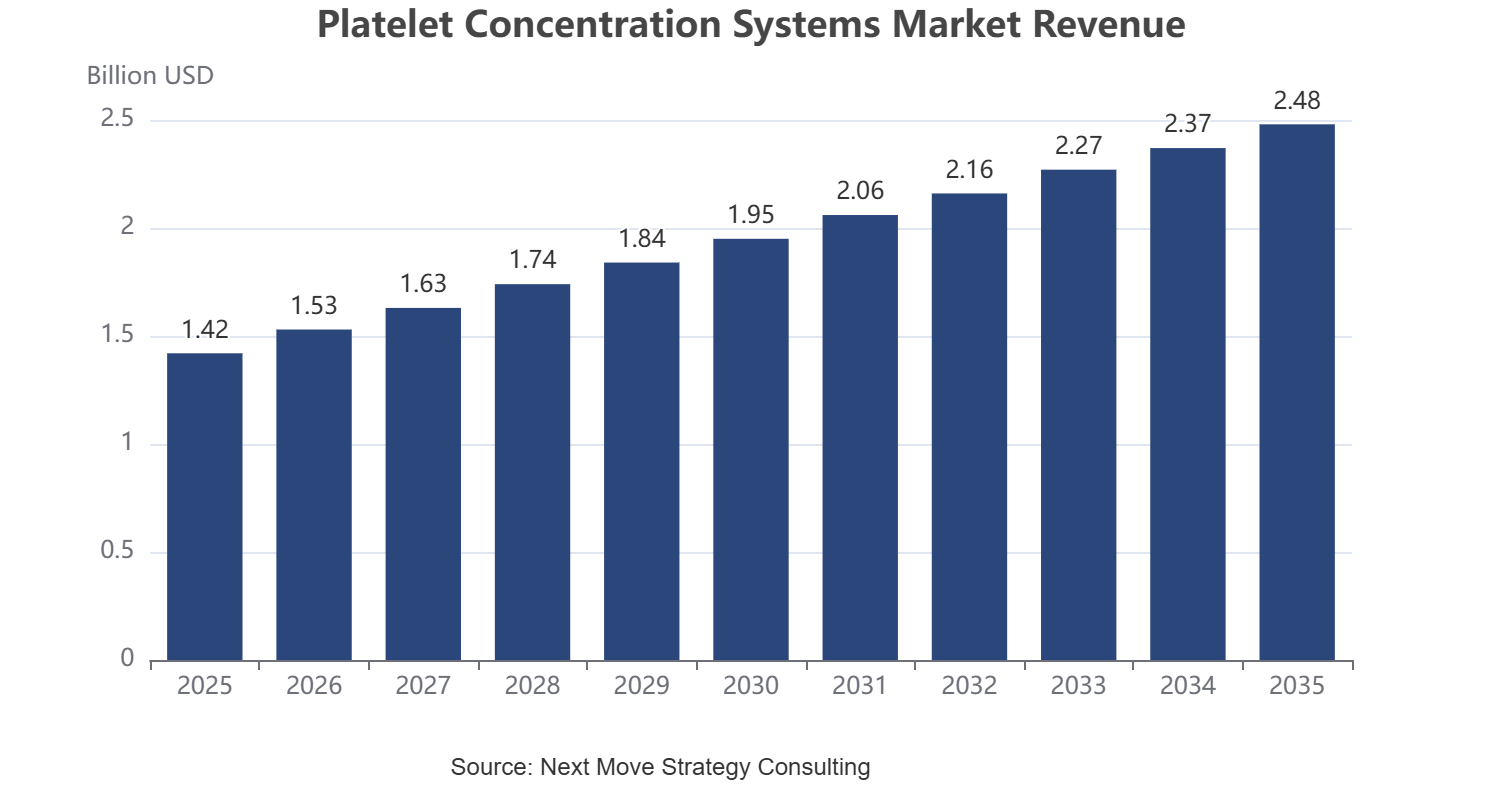
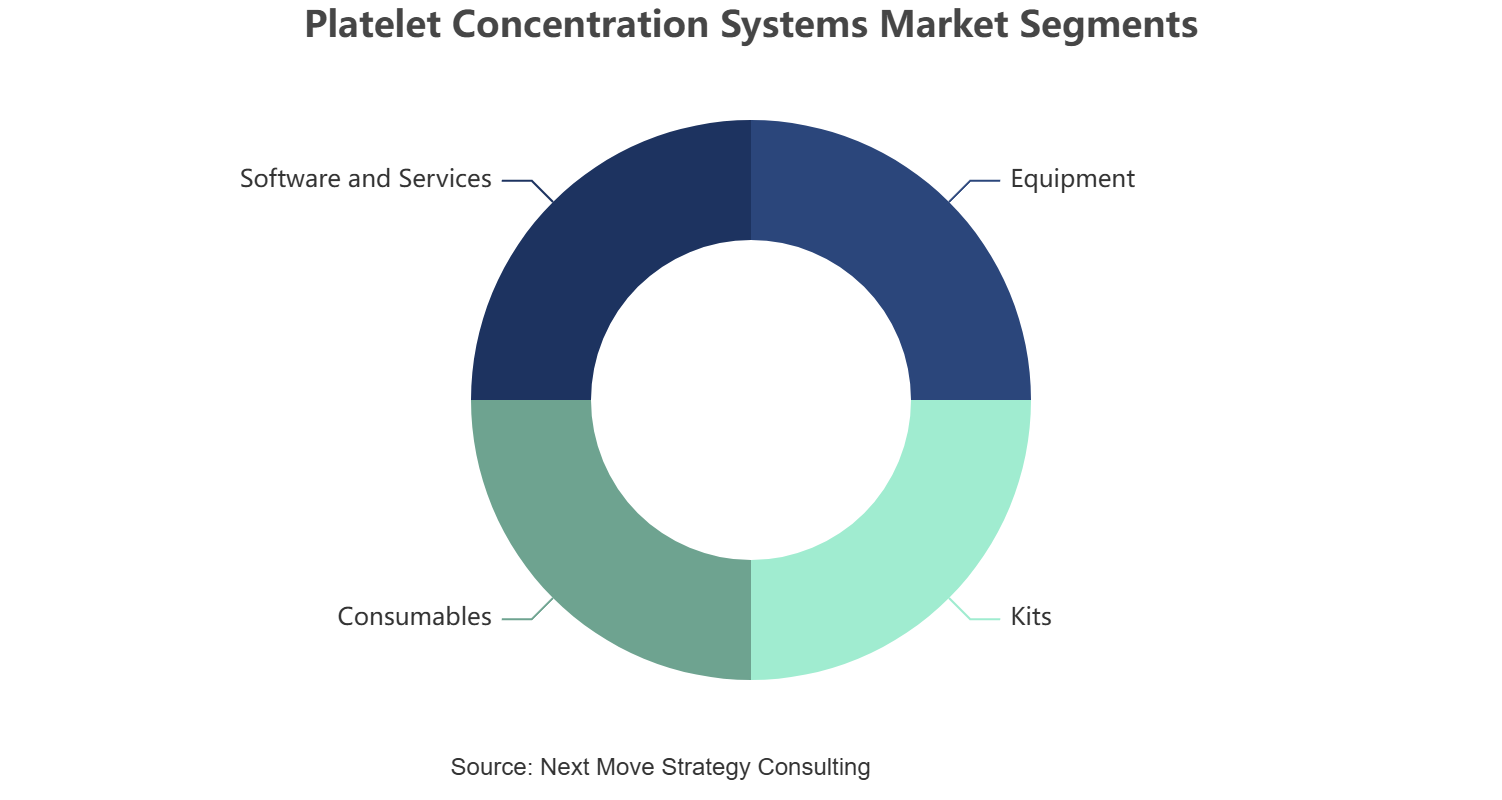
About the Author
 Liza Phukan
— Liza Phukan is Research Associate at Next Move Strategy Consulting, where she has covered emerging industries and market research across sectors for 3.5 years. Her work includes analyzing industry developments, validating market data, and developing structured business content from research findings. She uses secondary research and data-validation practices to turn complex market information into clear decision-useful market analysis for business audiences and support report development and B2B.
Liza Phukan
— Liza Phukan is Research Associate at Next Move Strategy Consulting, where she has covered emerging industries and market research across sectors for 3.5 years. Her work includes analyzing industry developments, validating market data, and developing structured business content from research findings. She uses secondary research and data-validation practices to turn complex market information into clear decision-useful market analysis for business audiences and support report development and B2B.
About the Reviewer
 Supradip Baul
— Supradip Baul is an accomplished business consultant and strategist with over a decade of rich experience in market intelligence, strategy, technology, and business transformation. His work has included rigorous qualitative and quantitative analysis across multiple industries, helping clients shape investment decisions and long-term roadmaps. Earlier in his career, he was associated with Gartner, where he contributed to industry-leading reports and market share analyses. He has worked with leading global companies and holds an MBA with a dual specialization in Marketing and Finance.
Supradip Baul
— Supradip Baul is an accomplished business consultant and strategist with over a decade of rich experience in market intelligence, strategy, technology, and business transformation. His work has included rigorous qualitative and quantitative analysis across multiple industries, helping clients shape investment decisions and long-term roadmaps. Earlier in his career, he was associated with Gartner, where he contributed to industry-leading reports and market share analyses. He has worked with leading global companies and holds an MBA with a dual specialization in Marketing and Finance.
At Next Move Strategy Consulting, we understand that insightful market research is the cornerstone of successful business decisions. That's why we employ a robust and multifaceted approach, combining various methodologies to deliver the most accurate and actionable data for our clients.

Research Landscape
We navigate the world of research with two primary approaches:
Qualitative Approach
Our qualitative research methodologies involve immersive techniques such as in-depth interviews, focus groups, and observational studies. By engaging directly with individuals and stakeholders, we uncover valuable insights that quantitative data alone may overlook.

Quantitative Research
In tandem with qualitative methodologies, NMSC leverages the power of Quantitative Research to provide a robust foundation of numerical insights. Through systematic data collection and analysis, we quantify patterns, preferences, and market trends, offering a comprehensive view of the business landscape.
Our quantitative research approach employs diverse tools, including surveys, experiments, and statistical modelling. These methodologies enable us to gather data from a large and representative sample, ensuring the statistical significance of our findings. By employing structured questionnaires and standardized data collection methods, we guarantee the reliability and validity of the information we present to our clients.
Quantitative research is particularly effective in measuring the prevalence of trends, assessing market size, and gauging the impact of various factors on consumer behavior. The numerical precision attained through this approach equips our clients with actionable insights, facilitating data-driven decision-making and strategy formulation.


Our Specialized Toolbox for Industry-Specific Market Research
We deploy a specialized arsenal of techniques tailored to meet your unique requirements. Here's a glimpse into our comprehensive toolbox:

Information Procurement
The stage entails acquiring market data or relevant information through various sources and methodologies.


Market Research Approach
We utilize both top-down and bottom-up approaches in market research analysis to achieve a comprehensive understanding of the market dynamics, leveraging the broad perspective of industry trends and macroeconomic factors alongside detailed insights from specific segments and individual companies.

Porters Five Forces Analysis
We conduct Porter's Five Forces analysis to evaluate the competitive landscape of an industry, providing us with insights into factors that affect profitability and strategic positioning.

SWOT Analysis

Forecasting
We utilize a forecasting model to predict future consumption by considering parameters like population, economics, regulations, market competition, drivers, constraints, technology, and pricing. We also employ statistical techniques such as multilinear regression, exponential smoothing, moving average, ARIMA, and Monte Carlo simulations for accurate predictions. In econometric forecasting, we analyzed short-term and long-term event impacts, attributing values based on regulatory frameworks, economic factors, and market events.





 Speak to Our Analyst