Private 5G Market By Offering (Infrastructure Hardware, Software, & Services), By Deployment Model (On-Premise, Hybrid, & Cloud-Hosted), By Spectrum Type (Licensed, Shared, & Unlicensed), By Network Size (Small Campus, Medium Enterprise, & Large industrial), By Buyer Type (Enterprise Direct, Telecom Operator-Led, & System Integrator-Led), By End-User Industry (Manufacturing, Energy and Utilities, Mining, Logistics and Ports, & Others) – Global Analysis & Forecast, 2026-2035
Industry: Semiconductor & Electronics | Publishing Date: June 26, 2026 | Last Updated: June 26, 2026 | No of Pages: N/A | No. of Tables: N/A | No. of Figures: N/A | Format: PDF | Report Code: SE4813
Industry Outlook
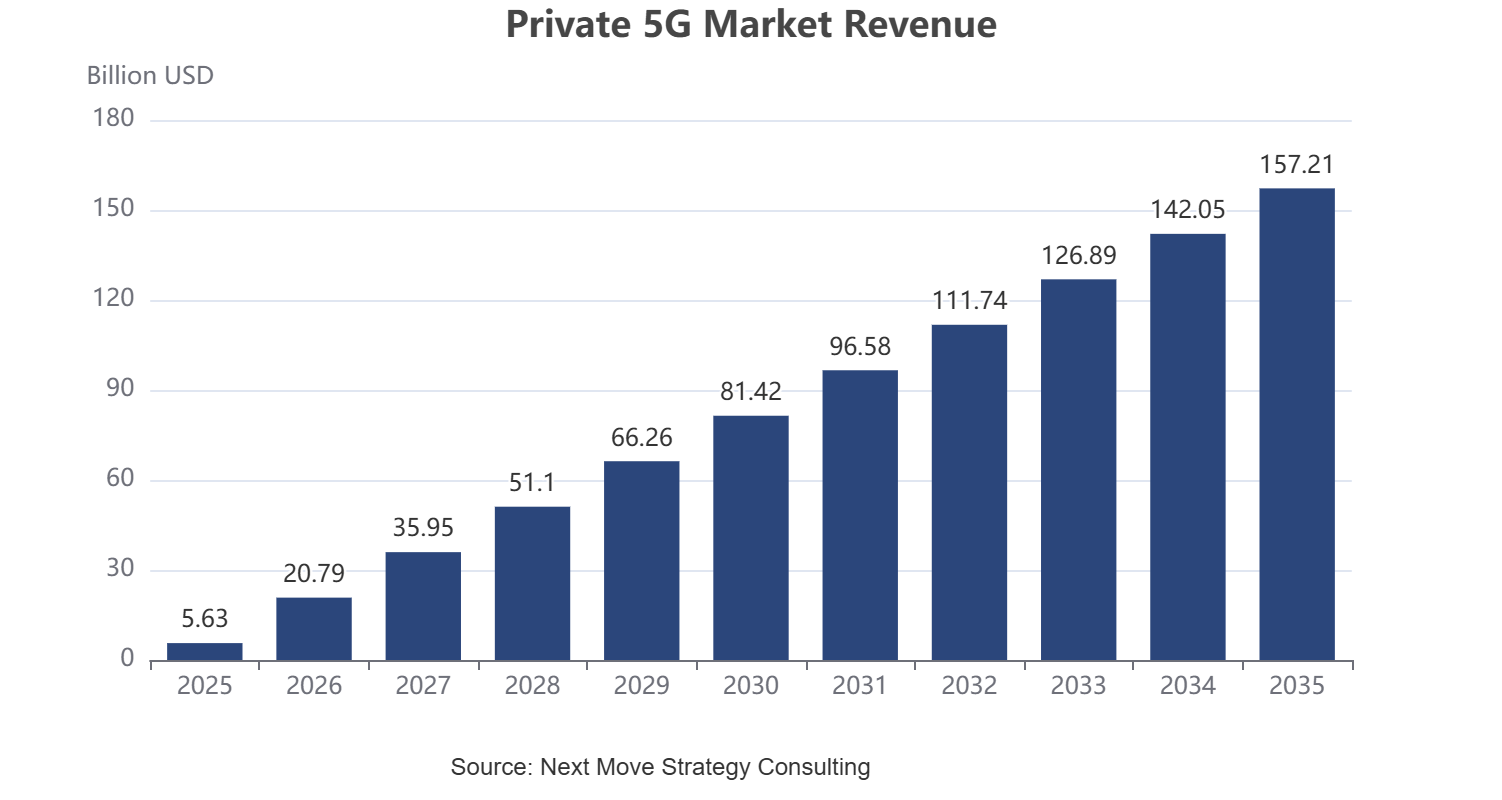
The Private 5G Market size was valued at USD 5.63 billion in 2025 and is expected to be valued at USD 7.86 billion by the end of 2026. The industry is projected to grow, hitting USD 157.21 billion by 2035, with a CAGR of 39.5% between 2026 and 2035.
Private 5G Industry Size & Forecast
|
Parameters |
Details |
|
Market Size in 2026 |
USD 7.86 billion |
|
Revenue Forecast in 2035 |
USD 157.21 billion |
|
Growth Rate |
CAGR of 39.5% from 2026 to 2035 |
|
Analysis Period |
2025–2035 |
|
Base Year Considered |
2025 |
|
Forecast Period |
2026–2035 |
|
Market Size Estimation |
Billion (USD) |
|
Companies Profiled |
20 |
|
Countries Covered |
33 |
|
Market Share |
Available for 10 companies |
Private 5G Market Overview
The Private 5G Market is currently positioned at an early but rapidly scaling stage within the broader industrial connectivity and digital transformation ecosystem. We noticed that demand is primarily driven by enterprise AI adoption, cloud migration, and the increasing requirement for low-latency, secure, and deterministic connectivity across mission-critical industrial environments. Key applications span smart manufacturing, logistics automation, energy systems, and real-time monitoring use cases where legacy wireless networks and public mobile infrastructure fail to consistently deliver required performance levels. Additionally, enterprises are increasingly prioritizing operational control, data sovereignty, and localised network management, which is accelerating the shift toward private 5G-based deployment models.
The market’s growth trajectory is strongly supported by structural shifts toward edge-driven architectures, network slicing, and industrial automation integration. We identified that edge computing is transforming private 5G into a distributed intelligence layer that enables real-time decision-making, predictive maintenance, and mission-critical automation closer to operational environments. Additionally, network slicing and virtualisation are enabling secure isolation of multiple workloads over shared infrastructure, improving service quality, scalability, and resource efficiency. We also observed that integration with robotics, autonomous systems, and digital twin technologies is reinforcing private 5G as a foundational enabler of Industry 4.0 transformation. Overall, our industry analysis suggests that private 5G is transitioning from pilot-scale deployments toward enterprise-wide adoption as a core industrial connectivity utility.
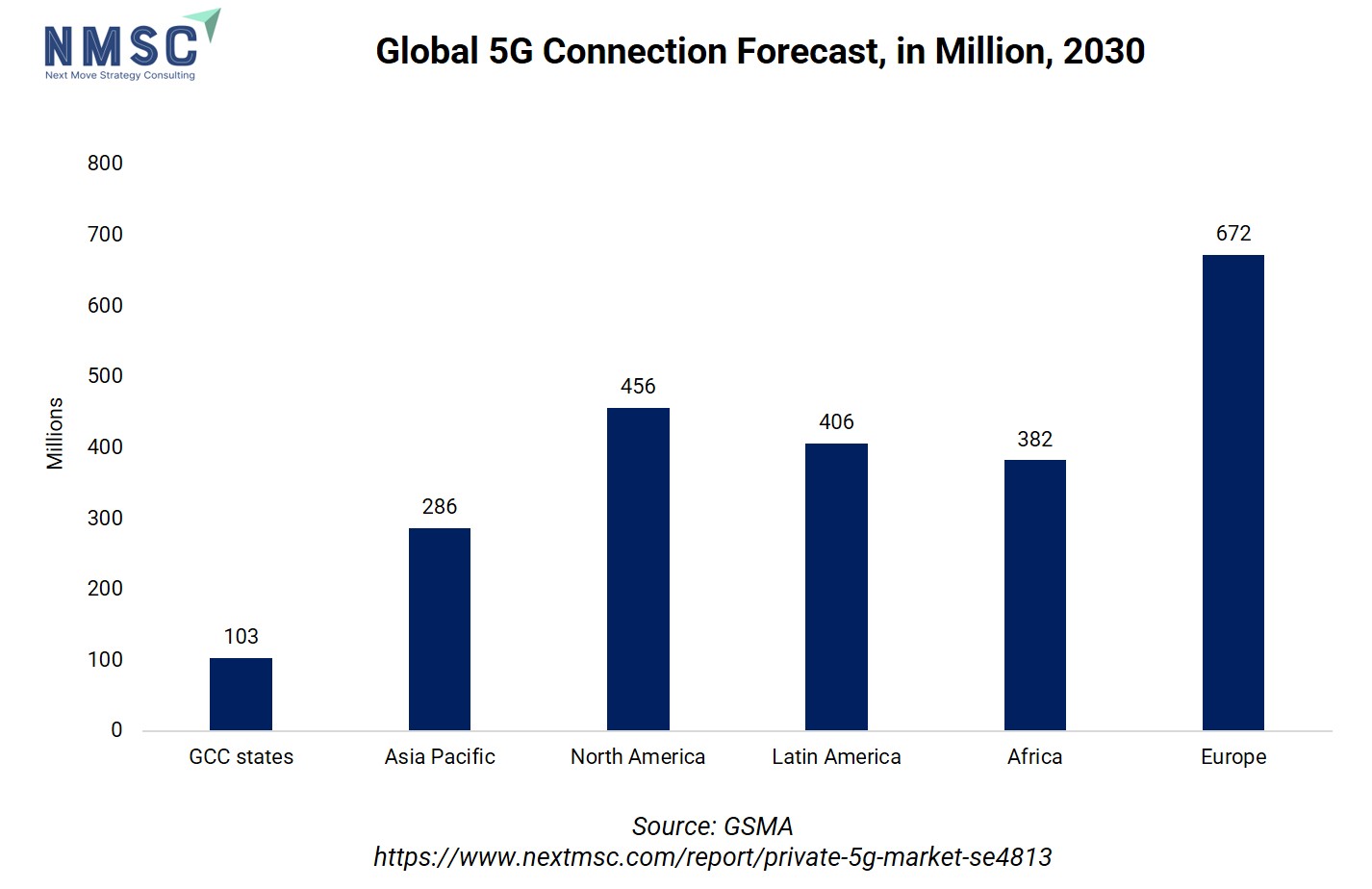
The above global 5G connection forecast reaching millions of connections by 2030 directly strengthens the long-term growth foundation of the Private 5G market by significantly expanding the underlying connectivity ecosystem. We noticed that as public 5G penetration scales globally, it accelerates infrastructure maturity, reduces deployment costs, and improves device interoperability, all of which lower barriers for enterprises to adopt dedicated private networks. This large-scale expansion of 5G connectivity signals strong structural validation of the technology lifecycle, where Private 5G emerges as a premium extension layer for enterprises requiring deterministic performance, security, and ultra-low latency. The surge in total connections also intensifies vendor competition and ecosystem innovation, enabling faster commercialisation of private network solutions across manufacturing, logistics, energy, and smart infrastructure sectors.
What Are the Key Trends in the Private 5G Market?
How is Edge-Driven Network Architecture Transforming the Private 5G Market?
Based on our assessment, we observed that enterprises are rapidly shifting toward edge-driven architectures, where data processing and decision-making are increasingly moved closer to operational environments rather than centralized cloud systems. This shift is fundamentally reshaping private 5G into a distributed intelligence layer that supports real-time industrial operations by enabling localized data handling at the network edge. As a result, manufacturers, logistics providers, and utilities are integrating edge computing with private 5G to support applications such as low-latency automation, predictive maintenance, and machine vision. This localized processing approach reduces dependency on backhaul-heavy cloud infrastructure while significantly improving responsiveness and operational resilience in mission-critical environments. Therefore, edge integration is increasingly viewed as essential for ensuring deterministic and reliable performance in highly automated production systems.
How is Network Slicing and Virtualization Reshaping Enterprise Private 5G Adoption?
Network slicing and virtualization are becoming core design principles in enterprise private 5G deployments, enabling multiple applications to operate independently over a shared physical infrastructure. In our evaluation, enterprises are increasingly leveraging network slicing to logically segment environments, allowing mission-critical operations, IoT connectivity, and enterprise communications to function in parallel without interference. This architectural separation enhances security isolation while also enabling more precise bandwidth allocation and improved service quality across diverse industrial use cases. In parallel, virtualization strengthens this framework by reducing infrastructure complexity and enabling more flexible scaling of private 5G networks based on evolving workload demands. Therefore, enterprises increasingly view slicing and virtualisation as foundational enablers for aligning connectivity performance with diverse and dynamic operational requirements.
How is Industrial Automation Integration Driving Private 5G Evolution?
Our research indicates that private 5G is becoming deeply embedded within industrial automation ecosystems, supporting robotics, autonomous systems, and digital twin applications. This growing integration is closely tied to broader Industry 4.0 transformation strategies, where enterprises are prioritising deterministic and ultra-reliable communication to enable advanced automation use cases. As these digital transformation initiatives mature, private 5G is increasingly serving as the underlying connectivity layer that enables real-time coordination between machines, sensors, and control systems across complex production environments. Building on this foundation, we observed that manufacturers and logistics operators are actively prioritizing private 5G deployments to support scalable automation workflows while reducing operational latency and improving responsiveness. Overall, this convergence is positioning private 5G as a foundational enabler of intelligent, automation-driven industrial operations.
Ecosystem Analysis of the Private 5G Market
The Private 5G ecosystem is evolving as a multi-layered industrial connectivity framework, integrating telecom infrastructure, cloud-edge systems, and enterprise applications to enable secure, low-latency, and highly reliable networks for mission-critical operations across industries.
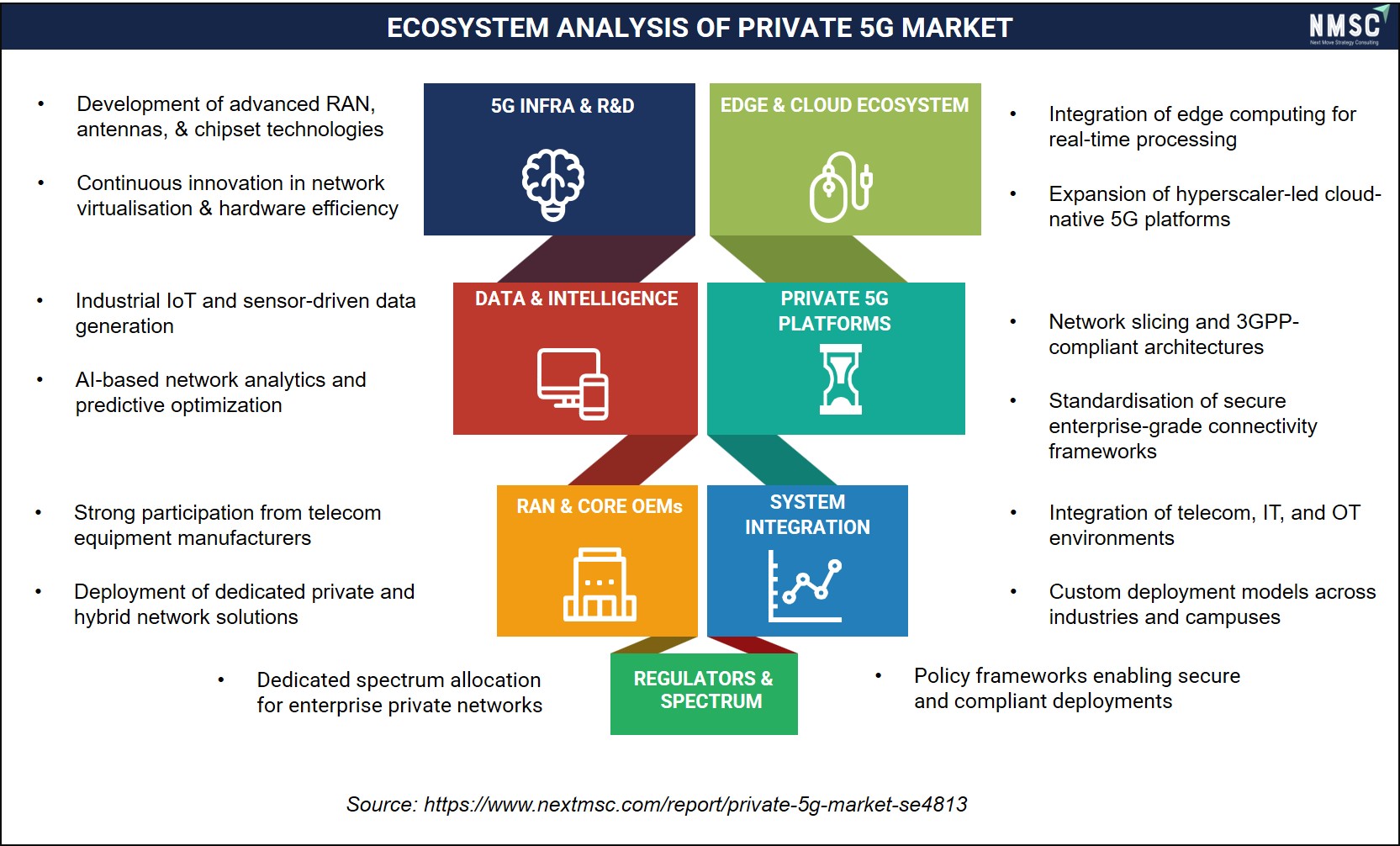
The above infographic illustrates that the Private 5G ecosystem is transitioning into a layered, technology-integrated architecture driven by convergence of telecom infrastructure, edge computing, and cloud-native platforms. Enterprises are increasingly relying on dedicated networks supported by standardised 3GPP frameworks to ensure secure, low-latency, and high-performance connectivity. Industry evidence suggests that collaboration among OEMs, hyperscalers, and system integrators is accelerating scalable deployment models across manufacturing, logistics, and energy sectors. Regulatory support for spectrum allocation further strengthens adoption. Overall, this ecosystem is reshaping industrial connectivity into a software-defined, intelligent infrastructure layer supporting long-term digital transformation.
What Are the Key Market Drivers, Breakthroughs, and Investment Opportunities that will Shape the Private 5G Industry in the Next Decade?
|
Drivers / Trends / Restraints |
(+/-) % Impact on CAGR Forecast |
Geographic Relevance |
Impact Timeline |
|
Enterprise AI adoption and cloud migration increasing demand for low-latency, edge-enabled private 5G networks |
+3.55% |
Global (EU, U.S., China, Japan, South Korea, India) |
Short to Medium term (2–5 years) |
|
Dedicated and shared spectrum access enabling localized campus networks and improving private 5G commercial viability |
+3.02% |
Europe (Germany, UK), Asia-Pacific, select North America |
Short to Medium term (2–5 years) |
|
Public funding and industrial digitalization programs supporting private 5G trials, reducing risk and accelerating deployment |
+2.70% |
Europe, China, Japan, South Korea, India, U.S. |
Short to Medium term (2–6 years) |
|
Uneven enterprise digital maturity limiting large-scale private 5G adoption due to gaps in AI, cloud, and IT-OT integration |
-2.85% |
Global, stronger in SME-heavy and emerging markets |
Medium to Long term (3–7 years) |
The Private 5G Market is being structurally shaped by rising digital infrastructure demand, uneven deployment maturity, and the growing need for flexible, high-performance connectivity solutions. NMSC’s research indicates that accelerating enterprise adoption of advanced digital technologies is increasing demand for reliable, low-latency, and location-independent network capabilities. However, deployment remains uneven, with faster rollouts in urban and industrial clusters compared to suburban and less-developed regions, creating persistent connectivity gaps. While regulatory support and public investment initiatives are improving infrastructure availability, implementation delays and integration constraints continue to slow adoption in several markets. Additionally, the widening gap between digital transformation needs and network readiness is reinforcing the role of private 5G as a transitional enabler for enterprise modernization. Overall, the market remains high-growth but structurally uneven, driven by adoption momentum, deployment disparities, and ecosystem readiness challenges.
Growth Drivers:
How is Enterprise AI and Cloud Workloads Accelerating the Private 5G Market?
Based on NMSC’s assessment, we found that the acceleration of enterprise AI adoption and cloud-native workload migration is fundamentally reshaping connectivity requirements across industrial operations, thereby strengthening private 5G market demand. As enterprises shift from legacy IT systems to AI-enabled, data-intensive architectures, they require deterministic latency, secure data routing, and reliable edge-to-cloud integration, which traditional Wi-Fi or public mobile networks struggle to consistently deliver. According to Eurostat, we observed that this structural shift is already well underway, with 52.74% of EU enterprises using cloud computing services in 2025 and 19.95% adopting AI technologies, rising to 84.67% and 55.03% respectively in large enterprises. Based on our further interviews with product managers in manufacturing automation firms, we observed that private 5G is increasingly being positioned as a control layer for AI-driven robotics, predictive maintenance, and machine vision systems. As AI workloads become distributed across edge and cloud environments, enterprises are prioritizing private 5G as a foundational enabler of secure, real-time industrial intelligence.
How is Dedicated and Shared Spectrum Access Accelerating Commercial Viability of Private 5G Networks?
The evolution of dedicated and shared spectrum frameworks is a foundational catalyst enabling the commercial scalability of private 5G networks across industrial environments. Our assessment indicates that enterprises are increasingly dependent on localized spectrum access models that allow them to deploy campus-based networks with greater autonomy, reduced regulatory friction, and improved operational control. Traditional nationwide spectrum allocation models are less suited to industrial use cases, where coverage is geographically confined, but performance requirements are highly deterministic. According to Bundesnetzagentur, we found that countries adopting structured local licensing regimes are already witnessing strong enterprise uptake, with Germany recording 484 local 5G applications and corresponding frequency assignments in the 3.700–3.800 MHz band by 2025. Furthermore, manufacturers and logistics operators prioritize predictable spectrum availability to support automation, robotics, and mission-critical communications. Overall, shared and localized spectrum frameworks are directly lowering entry barriers, thereby converting private 5G from a conceptual enterprise solution into a commercially viable deployment model.
Growth Inhibitor:
How is Uneven Enterprise Digital Maturity Limiting Private 5G Deployment Scale?
Our current market analysis indicates that uneven digital maturity across enterprises remains a major structural restraint on private 5G adoption. While large enterprises are rapidly integrating AI, cloud, and analytics capabilities, a significant portion of small and mid-sized enterprises still lack the foundational digital infrastructure required to operationalize private 5G networks effectively. Based on our further evaluation of enterprise readiness across industrial sectors, we found that private 5G deployments require not only network infrastructure but also deep integration with production systems, cybersecurity frameworks, and data analytics capabilities. Eurostat data highlights this gap, showing that only 33.02% of EU enterprises conducted data analytics internally in 2025, with a stark contrast between 78.84% of large enterprises and 27.86% of small firms. Therefore, many organizations struggle to move beyond pilot projects due to limited internal expertise and fragmented IT-OT systems. This maturity gap slows down commercialization cycles, restricting private 5G adoption primarily to digitally advanced enterprises and delaying broader market scaling.
Growth Opportunity:
How are Public Funding and Industrial Digitalization Programs Unlocking Private 5G Market Expansion?
Public funding initiatives and national industrial digitalization programs are creating a strong structural opportunity for private 5G deployment, as governments are increasingly treating advanced connectivity as a strategic economic enabler, particularly for manufacturing, logistics, healthcare, and smart infrastructure ecosystems. Based on our analysis of policy-driven innovation ecosystems, we found that targeted funding for 5G trials and research is reducing the financial and technical risks associated with enterprise adoption. For instance, the European Commission allocated approximately USD 149.7 million in 2025 under the Smart Networks and Services Joint Undertaking, along with an additional USD 28.05 million dedicated to large-scale 5G pilots across industrial sectors. Such funding is accelerating proof-of-concept deployments and improving vendor–enterprise collaboration. As public investment aligns with industrial modernization goals, private 5G is increasingly transitioning from experimental deployments to structured, repeatable enterprise adoption models, particularly in manufacturing-intensive economies with large-scale industrial output.
How is the Private 5G Industry Segmented in this Report, and What are the Key Insights from the Segmentation Analysis?
|
Segments |
Key Takeaways |
|
Offering |
The Private 5G Market is led by infrastructure hardware and software integration, with RAN equipment and core network hardware forming the backbone of deployments. Small cells and edge appliances are widely used for localized, low-latency operations. Software layers such as network orchestration, AI-driven optimization, and MEC platforms are becoming critical for performance management. Services, especially integration and managed services, are growing steadily as enterprises require end-to-end deployment and operational support. |
|
Spectrum Type |
Shared and localized spectrum models are emerging as the most practical option, offering flexibility and lower regulatory complexity. Licensed spectrum supports high-performance use cases, while unlicensed spectrum remains limited to niche applications due to interference and reliability constraints. |
|
Buyer Type |
Enterprise direct adoption leads the market as organizations seek control and customization. Telecom operator-led models support early deployments, while system integrators are gaining importance for end-to-end implementation and IT-OT integration. |
|
Sales Channel |
Direct sales dominate large enterprise deployments, while partner channels are expanding due to ecosystem complexity. OEM bundling is emerging as a strategic channel, integrating private 5G with industrial systems and platforms. |
|
End-User Industry |
Manufacturing dominates due to automation and Industry 4.0 adoption. Energy, mining, and logistics are key growth sectors, while airports, smart cities, healthcare, and defense represent high-value, specialized use cases. |
By Offering Insights
Is Infrastructure Hardware Dominating While Software and Services Drive Future Value in the Private 5G Market?
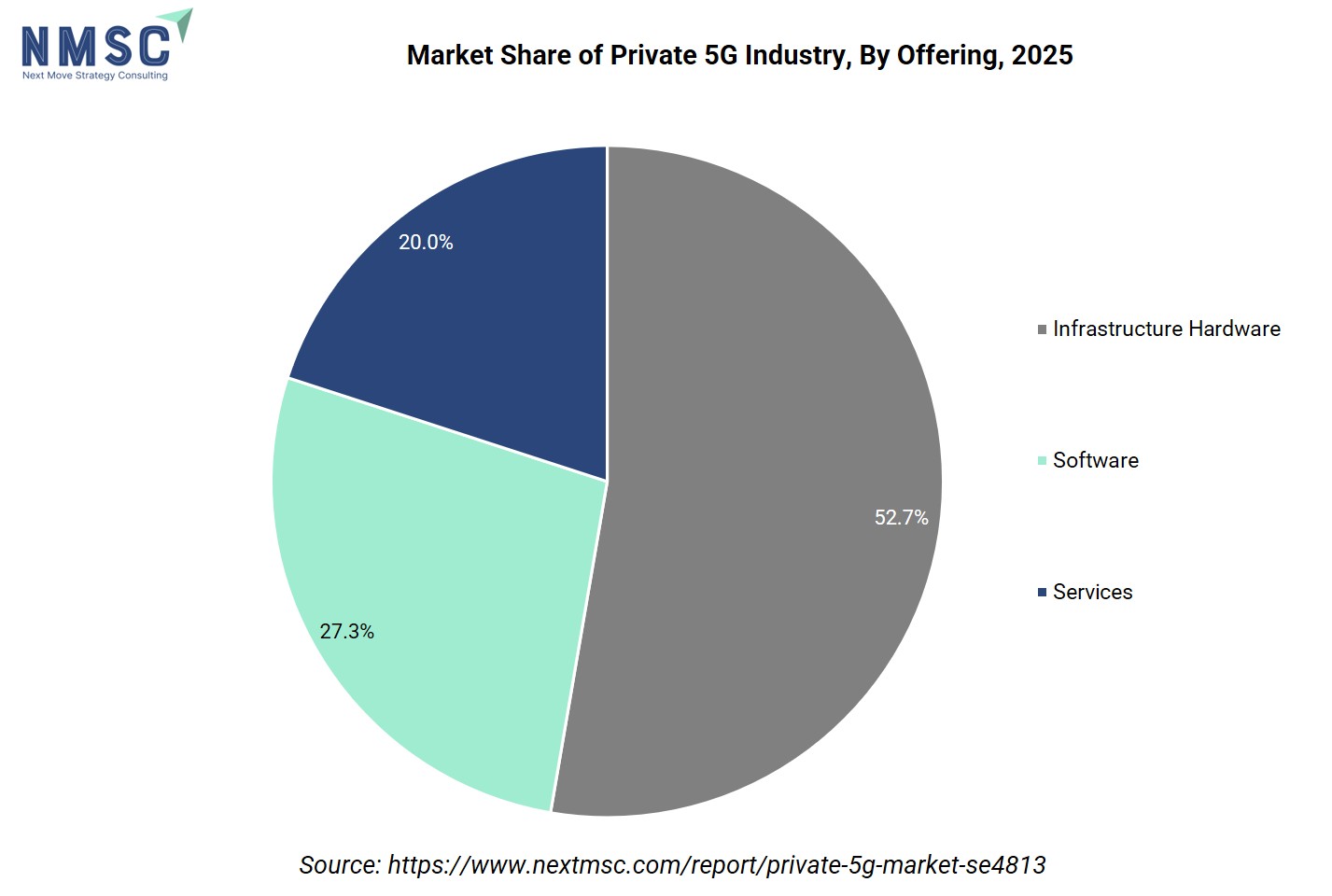
On the basis of offering, the Private 5G Market is segmented into infrastructure hardware, software, and services.
NMSC’s analysis indicates that infrastructure hardware continues to dominate the Private 5G Market due to its essential role in establishing dedicated, high-performance network environments across industrial sites. However, the market is undergoing a clear transition toward a more integrated and value-driven ecosystem where software and services are gaining strategic importance. As enterprises move beyond initial network deployment toward large-scale operationalization, the demand for intelligent network orchestration, automation, and lifecycle management is accelerating. Software enables continuous optimization and adaptability, while services ensure successful integration with complex IT-OT environments. This shift is particularly evident in advanced manufacturing and logistics sectors, where private 5G is evolving from a connectivity solution into a core digital infrastructure layer supporting real-time, data-driven operations and long-term enterprise transformation.
By Deployment Model Insights
Is Deployment Strategy Shifting from On-Premise Control to Hybrid Flexibility in the Private 5G Market?
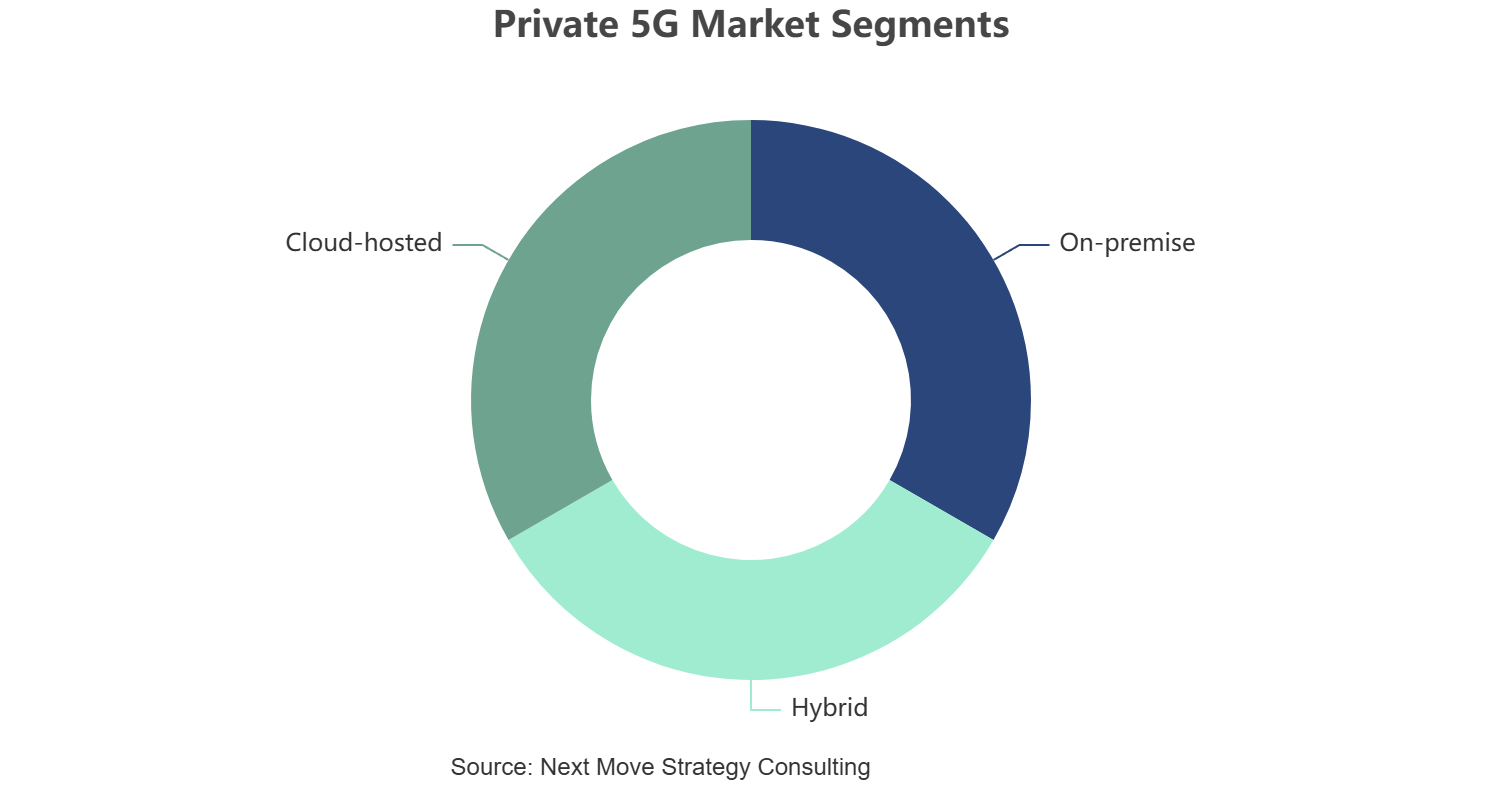
Based on the deployment model, the Private 5G Market is segmented into on-premise, hybrid, and cloud-hosted.
Our assessment indicates that while on-premise deployment currently leads due to its ability to deliver deterministic performance and strong data control, the market is gradually evolving toward hybrid architectures that combine operational reliability with cloud-driven scalability. Enterprises are increasingly adopting hybrid models as they expand digital capabilities without compromising core operational requirements. Industry trends further indicate that cloud-hosted deployment will continue to grow selectively, particularly as cloud providers enhance edge capabilities and security frameworks. Over time, the interplay between on-premise control and cloud flexibility is expected to define deployment strategies, shaping a more adaptive and scalable private 5G ecosystem.
By Network Size Insights
Is Large Industrial Deployment Driving Scale in the Private 5G Market?
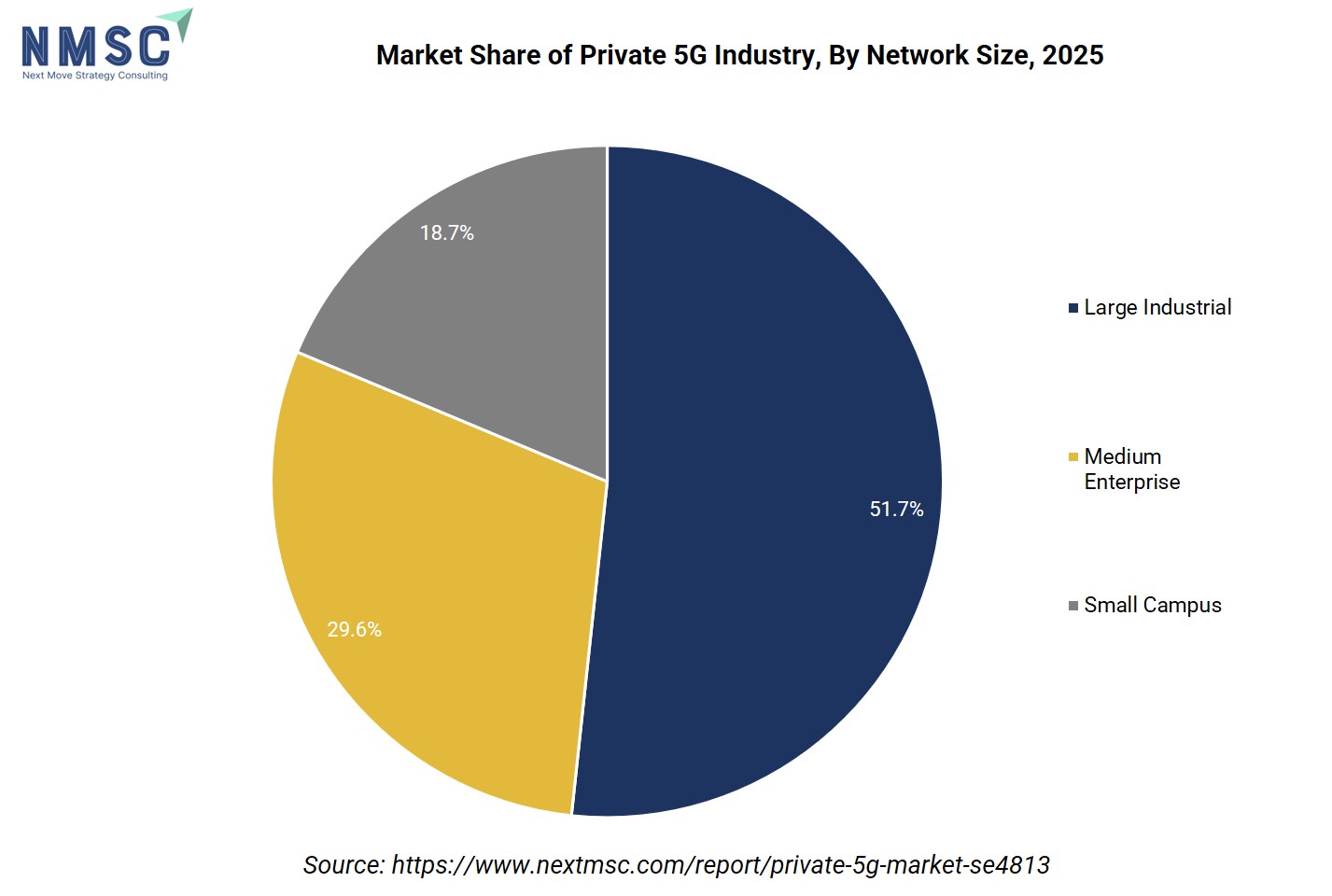
Based on the network size, the Private 5G Market is segmented into small campus, medium enterprise, and large industrial.
The Private 5G industry continues to be anchored by large industrial deployments, which account for the majority of revenue due to their scale, complexity, and clear operational ROI. Our research indicates a gradual broadening of the deployment landscape, with medium enterprise and small campus networks contributing to wider market penetration. While large-scale networks remain central to high-value use cases, smaller deployments are increasingly supporting pilot programs and targeted applications. This evolving mix reflects a shift toward more flexible and modular adoption patterns, enabling enterprises to align network investments with specific operational requirements while supporting steady market expansion over time.
By End-User Industry Insights
How is Manufacturing Leading the Private 5G Adoption Across Sectors?
Based on end-user industry, the Private 5G Market is segmented into manufacturing, energy and utilities, mining, logistics and ports, airports, healthcare, smart cities, defense, retail, and others.
We analysed that the Private 5G Market remains strongly anchored in manufacturing, where large-scale automation, high data volumes, and clear productivity gains continue to justify sustained investment. However, current market analysis indicates a steady broadening of adoption across multiple industries, reflecting a shift from sector-specific deployments to a more horizontal infrastructure play. Energy, mining, and logistics are emerging as high-impact sectors due to their need for reliable connectivity across distributed and asset-intensive operations, while airports and defense continue to prioritize secure, mission-critical communication environments. At the same time, healthcare, smart cities, and retail are progressing more gradually, driven by targeted use cases and evolving digital maturity. This expanding industry mix suggests that private 5G is transitioning from a specialized industrial solution toward a versatile connectivity layer supporting diverse operational models.
Regional Outlook
Geographic Performance Snapshot:
|
Geography |
Key Takeaways |
|
North America |
North America is a mature Private 5G Market, supported by early enterprise adoption and strong telecom ecosystems. The U.S. CBRS framework is enabling enterprise-led deployments across manufacturing, logistics, and smart infrastructure. Furthermore, increasing adoption of hybrid models, while telecom operators and system integrators are accelerating commercialization through use-case-driven deployments. |
|
Europe |
Europe’s market is shaped by structured regulation and industrial policy alignment. Localized spectrum models in Germany and the UK are supporting enterprise deployments, particularly in manufacturing and automotive sectors. Moreover, strict data protection and interoperability requirements are driving standardized and compliance-focused deployment strategies. |
|
Asia‑Pacific |
Asia-Pacific is the fastest-growing region, driven by industrialization and government-led digital programs. China leads in scale, while Japan and South Korea focus on advanced automation. Infrastructure assessment indicates that India is emerging steadily, with demand concentrated in manufacturing, ports, and mining sectors. |
|
Latin America |
Latin America is an emerging market with gradual adoption due to infrastructure and regulatory limitations. Deployment is concentrated in mining, energy, and logistics, with enterprises focusing on pilot projects. Moreover, broader growth depends on improving telecom infrastructure and regulatory clarity. |
|
Middle East & Africa |
The region is developing steadily, supported by digital transformation initiatives in GCC countries. Adoption is led by oil & gas, ports, and infrastructure sectors. Industry evidence suggests that while the Middle East is advancing commercially, Africa remains in early stages with pilot-driven growth. |
The Private 5G Market is geographically studied across North America, Europe, Asia Pacific, the Middle East & Africa, and Latin America, and each region is further studied across countries.
Private 5G Market in North America
North America represents one of the most mature and commercially active Private 5G Markets, driven by early enterprise digitization and supportive spectrum frameworks. NMSC’s analysis indicates that the U.S. CBRS band has significantly accelerated enterprise-led deployments by lowering entry barriers for localized spectrum access, leading to strong utilization of shared spectrum across manufacturing, logistics, and utilities. Building on this regulatory advantage, enterprises are increasingly prioritizing hybrid architectures that integrate edge and cloud capabilities to support scalable and low-latency operations. In parallel, we observed that Canada is progressing steadily in adopting private 5G for industrial use cases, although at a comparatively measured pace due to spectrum allocation and ecosystem maturity differences. Overall, strong telecom ecosystems, hyperscaler participation, and advanced IT infrastructure position North America as a leader in scalable, use-case-driven private 5G deployments.
Private 5G Market in the United States
The United States is the largest contributor to North America’s Private 5G Market, supported by the CBRS spectrum model and strong enterprise investment in digital infrastructure. Based on our evaluation, we observed that sectors such as manufacturing, defense, and logistics are leading adoption due to increasing demand for secure and low-latency connectivity. FCC data further highlights the continued expansion of CBRS deployments, with thousands of licenses issued to enterprises and service providers, reinforcing widespread enterprise participation. This momentum is supported by increasing collaboration between telecom operators, cloud providers, and system integrators, creating a more integrated deployment ecosystem. As a result, enterprises are moving beyond pilot projects toward full-scale implementations, particularly in smart factories and warehouse automation. Collectively, these trends reinforce the United States as a benchmark market for scalable and industrial-grade private 5G deployments.
Private 5G Market in Canada
Our assessment indicates that Canada’s Private 5G Market is developing steadily, supported by government-backed spectrum allocation and industrial innovation programs. This policy support has enabled localized spectrum licensing through Innovation, Science and Economic Development Canada (ISED), encouraging greater enterprise participation. As a result, adoption is primarily concentrated in sectors such as mining, energy, and remote operations, where connectivity gaps create strong demand for private 5G use cases. In these environments, Canadian enterprises are prioritizing network reliability and extended coverage to support geographically dispersed operations. While deployment scale remains smaller than that of the United States, increasing investment in private networks across resource-intensive industries is steadily strengthening market momentum. Overall, this positions Canada as a niche but strategically important market within the North American private 5G landscape.
Private 5G Market in Europe
Europe represents a highly structured and policy-driven Private 5G Market, characterised by strong regulatory alignment and coordinated industrial strategy. Localised spectrum frameworks in countries such as Germany and the UK are enabling enterprise-controlled deployments by providing direct access to dedicated frequencies. This regulatory clarity is further reinforced by European Commission-led investment programs that continue to support 5G innovation and infrastructure development. Building on this foundation, we observed that Industry 4.0 initiatives are a key driver of adoption, particularly across automotive and manufacturing sectors where advanced automation is critical. At the same time, strict data privacy regulations under GDPR are shaping deployment preferences, favouring on-premise or localised network architectures to ensure compliance. Overall, Europe effectively combines regulatory certainty with industrial demand, supporting steady and scalable growth in private 5G deployments.
Private 5G Market in the United Kingdom
Our market assessment suggests that the UK is a leading adopter of shared spectrum models, particularly through Ofcom’s Shared Access licensing framework. Ofcom data indicates the presence of hundreds of active licenses, supporting both enterprise and non-MNO private network deployments and reinforcing broad market participation. This adoption is primarily driven by sectors such as manufacturing, ports, and smart infrastructure, where demand for localised and reliable connectivity is increasing. Building on this momentum, we observed strong government backing through innovation programs and testbeds, which are accelerating real-world deployments and use-case validation. As a result, enterprises are increasingly implementing private 5G to enhance operational efficiency and support advanced automation. Overall, the UK market is characterised by flexible spectrum access and strong collaboration between industry stakeholders, enabling a dynamic and scalable private 5G ecosystem.
Private 5G Market in Germany
Based on our analysis, we found that Germany is the most advanced Private 5G Market in Europe, driven by its strong industrial base and proactive spectrum policy. The regulatory framework is closely aligned with Germany’s Industry 4.0 initiatives, which are driving strong demand from manufacturing and automotive sectors for high-performance, low-latency connectivity. In response, German enterprises are prioritizing full network control and on-premise deployment models to ensure data security and operational reliability. Collectively, this structured approach to localized spectrum and industrial integration has positioned Germany as a global benchmark for enterprise-led private 5G adoption.
Private 5G Market in France
NMSC’s findings suggest that France’s Private 5G Market is evolving steadily, supported by regulatory initiatives and broader industrial modernization programs. ARCEP has played a key role in facilitating spectrum access for enterprise use cases, particularly across logistics and utilities, where demand for reliable and efficient connectivity is increasing. This has led to growing adoption focused on improving operational efficiency in critical sectors. Building on this progress, we observed increasing participation from telecom operators and system integrators, contributing to a more structured deployment ecosystem. While the market remains at a comparatively earlier stage than Germany, continued policy support and targeted deployments are strengthening its foundation. Overall, France is steadily positioning itself as an emerging but strategically important market in Europe.
Private 5G Market in Italy
Italy’s Private 5G Market is emerging, driven by industrial digitisation and smart manufacturing initiatives. While regulatory support for spectrum access is gradually improving, overall deployment scale remains relatively limited, reflecting the early stage of market development. Based on our analysis, we found that adoption is primarily concentrated in manufacturing clusters and logistics hubs, where localised connectivity demand is strongest. In line with this early-stage maturity, enterprises are actively exploring private 5G through pilot projects, with a gradual transition toward commercial deployments. As these initiatives evolve, infrastructure readiness and investment levels are expected to play a critical role in scaling adoption. Overall, Italy represents a developing market with targeted industrial momentum and long-term growth potential.
Private 5G Market in Spain
Based on our assessment, we analysed that Spain is progressing steadily in private 5G adoption, supported by national digitalisation strategies and EU funding programs. This support is driving deployments across smart cities, ports, and industrial automation, where demand for advanced connectivity solutions is increasing. Furthermore, government-backed initiatives are actively accelerating pilot projects and early-stage implementations. However, despite this progress, large-scale enterprise adoption remains in a developing phase, with growth dependent on continued regulatory support and infrastructure investment. Overall, Spain represents an emerging private 5G market with strong policy backing and gradual movement toward broader commercialisation.
Private 5G Market in the Nordics
The Nordics region represents an innovation-driven Private 5G Market, supported by strong telecom ecosystems and early 5G rollout. Countries such as Sweden and Finland are leading in industrial use cases and technology development, driven by a high degree of digital maturity. Based on our analysis, we found that adoption is primarily concentrated in sectors such as manufacturing, mining, and smart infrastructure, where advanced connectivity is critical for operational efficiency. This progress is further supported by strong collaboration between enterprises, technology vendors, and research institutions, which is accelerating innovation and real-world deployment of advanced use cases. As a result, the region is characterised by high technological readiness and early adoption of next-generation private 5G applications.
Private 5G Market in the Asia-Pacific
Our regional assessment indicates that Asia-Pacific is the fastest-growing Private 5G Market, driven by rapid industrial expansion and government-led digital transformation initiatives. Within the region, China leads in deployment scale, while Japan and South Korea are focusing on high-value, automation-driven use cases, reflecting diverse market priorities. This growth is further supported by proactive government policies and funding programs that are accelerating 5G adoption across key industries. As a result, we observed strong demand from sectors such as manufacturing, ports, and mining, where private 5G enables enhanced operational efficiency and reliability. Collectively, the region’s scale, diversity, and policy support position Asia-Pacific as a key global growth engine for private 5G deployments.
Private 5G Market in China
China dominates the global Private 5G Market in terms of deployment volume, supported by large-scale infrastructure expansion. The extensive infrastructure of China, combined with strong government support and close integration with national industrial policy, is driving widespread private 5G adoption across sectors such as manufacturing, mining, and smart cities. As a result, enterprises are able to rapidly deploy and commercialize private 5G solutions at scale. Overall, China’s centralised approach and policy-driven execution position it as a global leader in high-volume private 5G deployments.
Private 5G Market in Japan
NMSC’s analysis indicates that Japan focuses on high-value, precision-driven private 5G deployments, particularly across manufacturing and robotics-driven environments. This approach is supported by the Ministry of Internal Affairs and Communications, which has enabled local 5G licensing frameworks to facilitate enterprise participation. Within this regulatory environment, enterprises are prioritising network reliability and advanced automation to support highly controlled and efficient operations. As a result, we observed strong integration of private 5G with robotics and smart factory systems, enabling precise and low-latency industrial processes. Overall, Japan’s market is characterised by technological sophistication and targeted deployment strategies, positioning it as a leader in high-performance private 5G use cases.
Private 5G Market in India
India is an emerging Private 5G Market, supported by recent spectrum allocation reforms and ongoing enterprise digitalization. The Department of Telecommunications has enabled enterprises to deploy captive private networks, lowering regulatory barriers and encouraging direct enterprise participation. As a result, adoption is beginning to take shape across sectors such as manufacturing, logistics, and smart infrastructure, where demand for reliable and low-latency connectivity is increasing. Building on this early momentum, we observed growing interest from large enterprises, although most deployments remain in the pilot or initial rollout phase. As these initiatives progress, India’s expanding industrial base and broader digital transformation efforts are expected to play a critical role in scaling adoption. Overall, India presents strong long-term potential as a developing but strategically important private 5G market.
Private 5G Market in South Korea
South Korea represents a technologically advanced Private 5G Market, supported by a robust national 5G infrastructure and high digital maturity. This strong foundation is driving private 5G adoption across smart factories and industrial automation use cases, where demand for high-performance connectivity is critical. Government support, combined with close collaboration between telecom operators and major technology firms, is further accelerating deployment and innovation. As a result, enterprises are rapidly adopting advanced use cases and scaling implementations across industrial environments. Overall, South Korea’s market is characterised by high readiness, strong ecosystem alignment, and rapid execution of private 5G deployments.
Private 5G Market in Taiwan
NMSC’s findings suggest that Taiwan is emerging as a key Private 5G Market, particularly within semiconductor and electronics manufacturing, where operational precision is critical. Enterprises in these sectors are increasingly deploying private 5G to support high-precision industrial processes that require low-latency and highly reliable connectivity. This requirement is further reinforced by government initiatives that are actively supporting innovation and accelerating adoption across advanced manufacturing environments. As a result, we observed strong and targeted uptake of private 5G solutions designed to meet stringent performance standards. Overall, Taiwan’s specialised industrial base is driving focused and high-value private 5G adoption.
Private 5G Market in Indonesia
Indonesia is at an early stage of private 5G adoption, driven by ongoing industrial and urban development initiatives. Based on our evaluation, we found that deployment remains limited but is gradually expanding across manufacturing and smart city projects, where demand for improved connectivity is emerging. However, this growth is constrained by infrastructure gaps and regulatory challenges, which continue to act as key barriers to large-scale implementation. Despite these limitations, we observed that rising digitalisation efforts and supportive government initiatives are beginning to create a more favourable environment for adoption. As these structural challenges are addressed, Indonesia is expected to witness steady, phased growth in private 5G deployments over the long term.
Private 5G Market in Australia
Australia is steadily developing as a Private 5G Market, supported by strong enterprise demand across mining, utilities, and remote operations. Based on our analysis, we noticed that private 5G is being deployed to address critical connectivity gaps in geographically dispersed environments, where traditional network infrastructure is insufficient. This has led to concentrated adoption within resource-intensive industries that require reliable and low-latency communication for operational efficiency. Building on this momentum, we observed that regulatory support and continued enterprise investment are driving gradual market expansion. Overall, Australia’s unique geographic and industrial landscape is shaping targeted private 5G adoption, with steady growth expected as deployment scales over time.
Private 5G Market in Latin America
Our regional analysis indicates that Latin America is an emerging but strategically evolving Private 5G Market, where adoption is progressing in a targeted and sector-specific manner rather than broad-based deployment. Demand is primarily concentrated in mining, oil & gas, and logistics, particularly in countries such as Brazil and Chile, where large-scale industrial operations require reliable connectivity in remote locations. Government and regulatory bodies are gradually opening spectrum frameworks, although fragmentation and policy inconsistency remain challenges. Furthermore, enterprises are prioritizing pilot deployments and partnerships with telecom operators to validate business cases before scaling. However, as industrial digitalisation accelerates and connectivity gaps persist, private 5G is increasingly being viewed as a targeted solution for high-value, asset-intensive environments, supporting gradual but steady market expansion.
Private 5G Market in the Middle East & Africa
The Middle East & Africa region is developing into a high-potential Private 5G Market, driven by government-led digital transformation initiatives and infrastructure modernisation programs. GCC countries such as the UAE and Saudi Arabia are leading adoption, particularly in oil & gas, ports, and smart city projects, where secure and ultra-reliable connectivity is critical. Regulatory frameworks in these markets are becoming increasingly supportive, enabling both enterprise- and operator-led deployments. This progress is further reinforced by strong alignment between national digital strategies and private 5G use cases, especially in industrial automation and critical infrastructure. In contrast, Africa remains at an earlier stage of development, with adoption largely limited to pilot projects and innovation programs. Challenges such as limited spectrum access, lower enterprise readiness, and persistent connectivity gaps continue to constrain large-scale deployment. However, long-term potential remains significant as governments and enterprises increasingly prioritize digital infrastructure development across the region.
Regulatory Framework Impacting the Private 5G Market
The regulatory landscape for the Private 5G Market is evolving to enable enterprise-grade connectivity through flexible spectrum access, standardised architectures, and stronger governance frameworks.
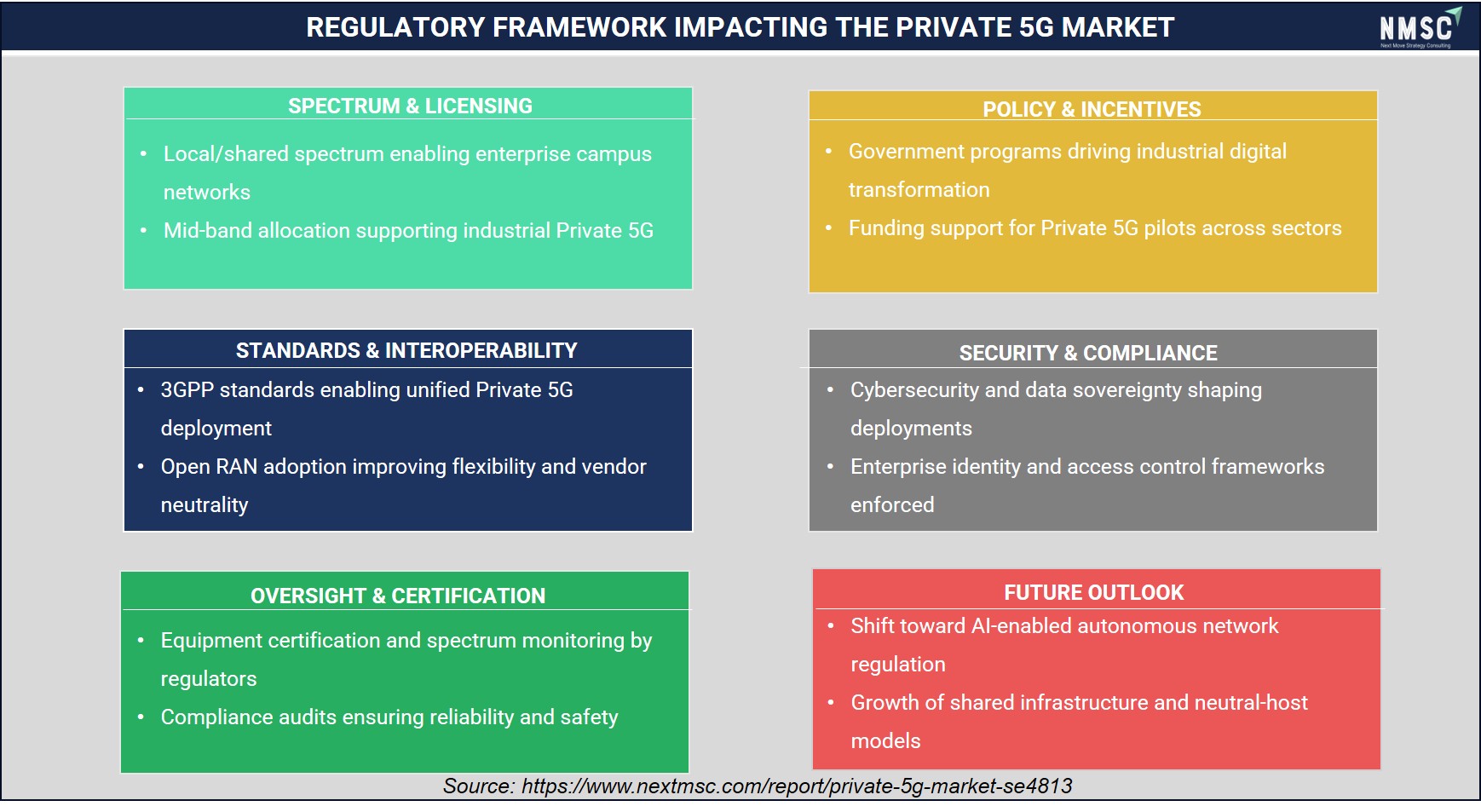
The above infographic illustrates that the regulatory framework governing Private 5G is increasingly shifting toward enabling enterprise-driven digital infrastructure rather than restricting it. Spectrum liberalisation, industrial policy support, and standardised architectures are collectively accelerating deployment across manufacturing, logistics, and critical infrastructure sectors. Furthermore, governments are actively encouraging Private 5G adoption through funding programs and flexible licensing models, while maintaining strong oversight on security and compliance. At the same time, industry-wide alignment on interoperability and Open RAN principles is improving ecosystem scalability. Overall, the regulatory environment is becoming a key catalyst for Private 5G commercialisation and long-term industrial digital transformation.
Competitive Landscape
Competitive Dynamics & M&A Landscape
|
Key Takeaways |
|
The competitive landscape of the Private 5G Market is led by global telecom OEMs such as Telefonaktiebolaget LM Ericsson, Nokia Oyj, Huawei Technologies Co., Ltd., Samsung Electronics Co., Ltd., and ZTE Corporation, alongside software-driven and Open RAN specialists like Mavenir Systems, Inc., Parallel Wireless, Inc., and Airspan Networks Holdings LLC. Based on our analysis, we found that competition is increasingly defined by end-to-end solution capability, cloud-native architecture, and enterprise-specific customization across industrial use cases |
|
Global OEMs are focusing on integrated private 5G ecosystems combining RAN, core, and services, while specialized players differentiate through modular, software-defined, and Open RAN-based deployments. Companies such as Druid Software Limited and Cumucore Oy are strengthening their positions in enterprise core networks, while firms like Cisco Systems, Inc. and Qualcomm Technologies, Inc. are enabling ecosystem expansion through edge computing and chipset innovation. Strategic alignment between telecom vendors, cloud providers, and system integrators is becoming central to competitive positioning. |
|
Innovation remains a critical differentiator in the Private 5G Market, particularly in areas such as Open RAN, AI-driven network optimization, and edge computing integration. Vendors are increasingly prioritising interoperability, network slicing, and automation capabilities to support enterprise digital transformation. Companies are also focusing on flexible deployment models, including hybrid and on-premise architectures, to address diverse operational requirements. Additionally, partnerships and ecosystem collaborations are replacing traditional M&A activity, as firms seek to accelerate deployment, scalability and expand market reach without heavy consolidation. |
Which Companies Dominate the Private 5G Market and How Do They Compete?
We found that the Private 5G Market is led by a mix of large telecom vendors and specialised network software providers, each competing across different layers of the value chain. Companies such as Nokia Oyj and Samsung Electronics Co., Ltd. are positioning themselves as end-to-end solution providers, integrating RAN, core, and enterprise platforms. Nokia, for instance, has continued expanding its private wireless footprint across industrial campuses, reinforcing its leadership in mission-critical networks. At the same time, Mavenir Systems, Inc. and Parallel Wireless, Inc. are competing through Open RAN architectures, offering cost-efficient and cloud-native alternatives. Therefore, we observed that differentiation is increasingly driven by deployment flexibility, ecosystem partnerships, and vertical-specific solutions.
Market Dominated by Private 5G Giants and Specialists
Through NMSC's assessment, we found that the competitive landscape is characterised by a clear divide between global incumbents and niche innovators. Large players such as Huawei Technologies Co., Ltd. and ZTE Corporation dominate in scale-driven markets, particularly in Asia, where integrated infrastructure and government-backed deployments support rapid rollout. In contrast, companies like Druid Software Limited and Cumucore Oy focus on specialised core network solutions tailored for enterprise use cases. Industry analysis further suggests that Druid continues to expand its Raemis platform for enterprise private networks. While large vendors compete on scale and integration, smaller players differentiate through modularity, faster deployment cycles, and strong system integrator partnerships.
Innovation and Adaptability Drive Market Success
Innovation is a central competitive lever, particularly as enterprises demand more flexible and software-defined networks. Based on our evaluation, we found that companies such as Cisco Systems, Inc. and Qualcomm Technologies, Inc. are driving innovation through cloud-native architectures and edge computing integration. Qualcomm has continued advancing private 5G through its chipset and reference platform ecosystem, enabling scalable deployments across industries. We also observed increasing focus on AI-driven network optimisation, network slicing, and MEC integration. These advancements are enabling enterprises to move from connectivity-centric deployments to fully integrated digital operations, strengthening the role of private 5G as a strategic infrastructure layer.
Market Players to Opt for Merger & Acquisition Strategies to Expand Their Presence
Our market analysis suggests that while large-scale acquisitions remain limited, strategic partnerships and selective investments are shaping competitive expansion. Companies are prioritizing ecosystem collaboration over consolidation to accelerate market penetration. For instance, Airspan Networks Holdings LLC has continued restructuring and strengthening its Open RAN positioning through partnerships and financial reorganization. Similarly, Accelleran NV has expanded its footprint through collaborations with system integrators and enterprise customers. The market remains highly fragmented, with alliances, joint deployments, and co-innovation models acting as the primary mechanisms for scaling rather than traditional M&A consolidation.
List of Key Private 5G Companies
-
Telefonaktiebolaget LM Ericsson
-
Nokia Oyj
-
ZTE Corporation
-
Cisco Systems, Inc.
-
Qualcomm Technologies, Inc.
-
Mavenir Systems, Inc.
-
Airspan Networks Holdings LLC
-
Parallel Wireless, Inc.
-
Druid Software Limited
-
Comba Telecom Systems Holdings Limited
-
AttoCore Limited
-
Cumucore Oy
-
GXC, Inc.
-
Pente Networks, Inc.
-
Star Solutions International Inc.
-
Niral Networks Private Limited
-
Accelleran N.V.
-
RunEL NGMT Ltd.
What Are the Latest Key Industry Developments?
-
March 2026- Ericsson launched EP5G Elements, a new entry-level suite of 33 radios designed for small-scale warehouses. This strategic pivot targets mid-market logistics, moving beyond massive industrial sites to capture market share in smaller, agile enterprise environments.
-
February 2026- Nokia Oyj surpassed 1,000 private network contracts. Strategically, Nokia began shifting focus toward high-value mission-critical contracts while transitioning its broader campus edge business into a partner-led model to optimise profitability and scale through systems integrators.
-
October 2025- Telefonaktiebolaget LM Ericsson signed an MoU with e& to deploy its Private 5G platform for enterprise digital transformation. The initiative focuses on scalable, secure connectivity across industries, reinforcing private 5G as a core layer for enterprise modernisation and monetisation strategies.
-
October 2025- Telefonaktiebolaget LM Ericsson partnered with Airbus to deploy private 5G across manufacturing sites in Europe and beyond. The network supports use cases such as AR, predictive maintenance, and digital twins, highlighting strong industrial adoption and operational integration.
-
February, 2025- Samsung Electronics completed the industry-first RedCap (Reduced Capability) trial on a Private 5G network with Hyundai Motor. This development is strategically vital for Industrial IoT, as it allows lower-cost, power-efficient 5G devices to connect to factory networks without high hardware overhead.
Expert Insights
 “Enterprises see Private 5G as an enabler for their digital transformation, and the Infosys approach of vertically aligned pre-integrated business solutions can accelerate 5G adoption. HPE and Infosys are working together by combining HPE’s Private 5G solutions with Infosys as-a-Service offering and pre-integrated vertical use-cases for faster customer value realization.”
- Mark Colaluca, Vice President/GM Communication Technology Group of HPE
Statement made in the context of Infosys-HPE collaboration on rolling out Private 5G-as-a-Service solutions.
Market Interpretation
The statement reflects the accelerating shift toward managed, platform-based Private 5G deployment models, where enterprises are prioritizing speed of implementation, operational simplicity, and outcome-driven connectivity services over traditional network ownership. Infosys’ Private 5G-as-a-Service offering highlights the broader industry transition toward pre-integrated, multi-vendor ecosystems that reduce integration overhead while enabling scalable industrial applications. Industry evidence suggests that demand is rising for flexible private network architectures that support high-performance use cases such as smart factories, automated logistics, and IoT-driven operations. This trend is positioning Private 5G as a core digital infrastructure layer that enables enterprise-wide transformation through consumption-based, service-oriented deployment frameworks.
Strategic Framework of the Private 5G Industry
The Private 5G Market is being shaped by enterprise digitalization, industrial automation, and regulatory evolution, where connectivity is increasingly positioned as a critical enabler of operational intelligence, efficiency, and secure data exchange across industries.
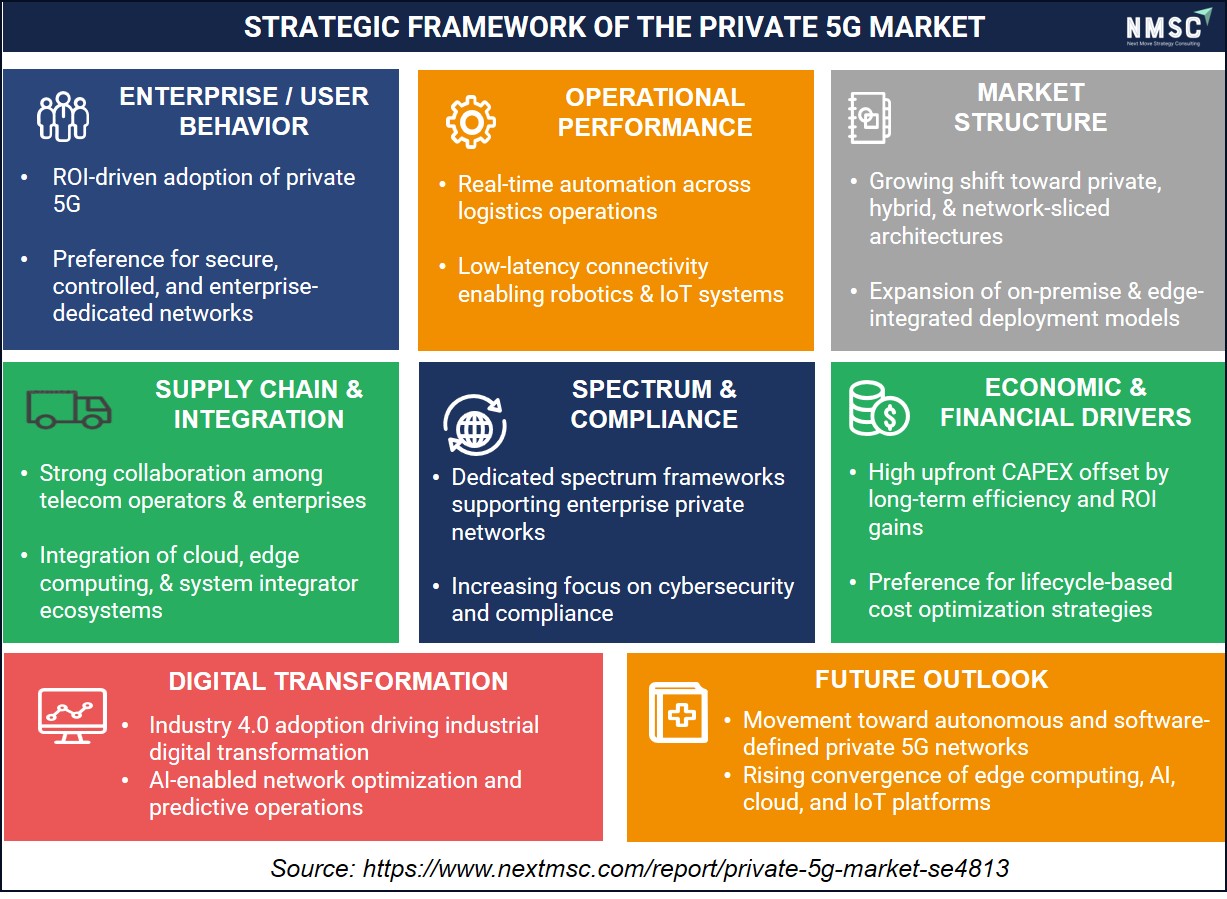
Our evaluation indicates that the Private 5G Market is evolving into a foundational enterprise connectivity layer supporting industrial automation, digital transformation, and mission-critical operations. We noticed that enterprises are prioritizing secure, low-latency, and controllable network architectures to enable real-time decision-making and operational efficiency. The convergence of edge computing, network slicing, and dedicated spectrum frameworks is reshaping deployment models across manufacturing, logistics, and infrastructure-intensive sectors. Furthermore, increasing collaboration between telecom operators, hyperscalers, and system integrators, accelerating commercialisation. Overall, this shift positions private 5G as a strategic enabler of intelligent, software-defined industrial ecosystems with strong long-term scalability potential.
What Are the Key Factors Influencing Investment Analysis & Opportunities in the Private 5G Market?
Based on our analysis of current investment flows, we found that the Private 5G Market is attracting a highly strategic mix of corporate venture capital, telecom ecosystem funding, and industrial co-investment, rather than traditional standalone infrastructure financing. Investor interest is being primarily driven by the convergence of AI-enabled manufacturing, edge computing, and industrial automation, where private networks are viewed as critical operational infrastructure rather than experimental telecom assets. Enterprises and system integrators are increasingly co-investing alongside telecom vendors to de-risk deployment and accelerate time-to-value in factory, logistics, and energy environments.
Our research further suggests that funding activity is concentrating around Open RAN, edge orchestration platforms, and private network core software, as these layers enable vendor-neutral and scalable deployments. Valuations are increasingly influenced by recurring enterprise contracts and managed service models, rather than hardware sales alone. Private 5G is now positioned as a long-cycle infrastructure play, where returns are tied to industrial digitisation and ecosystem lock-in. Overall, capital is flowing toward scalable platform providers and integration-focused firms that simplify deployment complexity and expand enterprise adoption.
Key Benefits for Stakeholders:
Next Move Strategy Consulting (NMSC) provides a comprehensive and evidence-based analysis of the market, covering historical developments from 2020 to 2025 and offering forward-looking forecasts through 2035. Our study assesses the market at global, regional, and country levels, combining quantitative outlooks with qualitative insights into key growth drivers, adoption constraints, technology evolution, and investment dynamics across major private 5G segments. The Private 5G Market creates a multi-layered value structure across investors, enterprise customers, and ecosystem stakeholders, with each group capturing distinct strategic and operational advantages. From an investor analysis, we observed that value creation is driven by long-duration enterprise contracts, recurring managed service revenues, and increasing demand for platform-based network solutions, which collectively improve revenue visibility and strengthen ecosystem positioning. For enterprise customers, Private 5G delivers tangible operational benefits such as deterministic connectivity, improved automation, and tighter integration between IT and OT environments, enabling more resilient and data-driven industrial operations.
Based on our discussions with industrial operators, we found that decision-makers increasingly view private networks as core infrastructure rather than discretionary IT investment. From a policy standpoint, regulators and governments are actively enabling adoption through localised spectrum access, innovation funding, and digital industrialisation programs, which reduce entry barriers and accelerate deployment. Overall, evidence suggests that Private 5G is emerging as a shared-value ecosystem where capital efficiency, operational transformation, and policy support reinforce each other, creating sustained long-term market momentum.
|
Parameters |
Details |
|
Customization Scope |
Free customization (equivalent to up to 80 analyst-working hours) after purchase. Addition or alteration to country, regional & segment scope. |
|
Pricing and Purchase Options |
Avail customized purchase options to meet your exact research needs. |
|
Approach |
In-depth primary and secondary research; proprietary databases; rigorous quality control and validation measures. |
|
Analytical Tools |
Porter's Five Forces, SWOT, value chain, and Harvey ball analysis to assess competitive intensity, stakeholder roles, and relative impact of key factors. |
Key Market Segments
By Offering
-
Infrastructure Hardware
-
Radio Access Network Equipment
-
Macro base stations
-
Small cells
-
Massive MIMO radios
-
Distributed antenna systems
-
-
Core Network Hardware
-
On-premise core servers
-
Edge compute appliances
-
Packet core hardware nodes
-
-
Transport and Backhaul
-
Fronthaul equipment
-
Backhaul microwave systems
-
Switching and routing hardware
-
-
User Equipment
-
Industrial routers
-
5G gateways
-
IoT modules
-
Customer premises equipment
-
-
Passive Infrastructure
-
Antennas
-
Cabling
-
Power systems
-
-
-
Software
-
Core Network Software
-
5G standalone core
-
Packet core software
-
Network slicing control
-
-
RAN Software
-
Open RAN software
-
Baseband software
-
Virtual RAN
-
-
Network Management and Orchestration
-
OSS platforms
-
Automation platforms
-
AI-driven network optimization
-
-
Edge and Application Platforms
-
MEC platforms
-
Industry application frameworks
-
API platforms
-
-
Security Software
-
Network security
-
Identity management
-
Threat detection
-
-
-
Services
-
Integration and Deployment
-
Network design
-
Installation
-
Testing and commissioning
-
-
Managed Services
-
Network operations
-
SLA-based management
-
Remote monitoring
-
-
Professional Services
-
Consulting
-
Use-case design
-
Industry customization
-
-
Support and Maintenance
-
AMC contracts
-
Software updates
-
Technical support
-
-
Training and Enablement
-
By Deployment Model
-
On-premise
-
Hybrid
-
Cloud-hosted
By Spectrum Type
-
Licensed spectrum
-
Shared spectrum
-
Unlicensed spectrum
By Network Size
-
Small campus
-
Medium enterprise
-
Large industrial
By Buyer Type
-
Enterprise direct
-
Telecom operator-led
-
System integrator-led
By Sales Channel
-
Direct sales
-
Partner channel
-
OEM bundling
By End-User Industry
-
Manufacturing
-
Energy and utilities
-
Mining
-
Logistics and ports
-
Airports
-
Healthcare
-
Smart cities
-
Defense
-
Retail
-
Others
Geographical Breakdown
-
North America: U.S., Canada, and Mexico.
-
Europe: UK, Germany, France, Italy, Spain, Sweden, Denmark, Finland, the Netherlands, and the rest of Europe.
-
Asia Pacific: China, India, Japan, South Korea, Taiwan, Indonesia, Vietnam, Australia, Philippines, Malaysia and the rest of APAC.
-
Middle East & Africa (MEA): Saudi Arabia, UAE, Egypt, Israel, Turkey, Nigeria, South Africa, and the rest of MEA.
-
Latin America: Brazil, Argentina, Chile, Colombia, and the rest of LATAM.
Conclusion & Recommendations
The Private 5G Market is moving beyond pilot deployments toward becoming a core layer of industrial digital infrastructure. Market evidence suggests that adoption is being driven by the convergence of AI-enabled operations, edge computing, and the need for secure, deterministic connectivity in mission-critical environments. We observed that while large telecom vendors continue to anchor the ecosystem, software-defined and Open RAN players are reshaping competition through flexible, cloud-native approaches. At the same time, evolving spectrum policies and enterprise-focused licensing models are lowering structural barriers, enabling broader deployment across manufacturing, logistics, energy, and critical infrastructure sectors.
Looking ahead, the Private 5G is expected to increasingly integrate with cloud and AI ecosystems, strengthening its role as an operational backbone rather than a standalone network investment. Long-term growth will depend on how effectively enterprises align connectivity with automation, analytics, and digital transformation strategies. From a strategic standpoint, we advise executives to focus on use-case-led deployment strategies and ecosystem partnerships rather than isolated network investments. Investors should prioritise scalable platform providers and integration-driven companies that simplify enterprise adoption. Overall, we found that competitive advantage will increasingly depend on execution capability, interoperability, and alignment with industrial transformation outcomes.
About the Author
 Mayurima Roy
— Mayurima Roy is Research Analyst at Next Move Strategy Consulting, where she has spent 4 years working across the firm's full industry coverage rather than a single fixed vertical. Her work centers on structured research, ongoing trend tracking, competitive assessment, and insight-led content development, translating complex market data into clear, decision-ready narratives that support informed client decision-making across diverse global industries, market sectors, and world regions every day.
Mayurima Roy
— Mayurima Roy is Research Analyst at Next Move Strategy Consulting, where she has spent 4 years working across the firm's full industry coverage rather than a single fixed vertical. Her work centers on structured research, ongoing trend tracking, competitive assessment, and insight-led content development, translating complex market data into clear, decision-ready narratives that support informed client decision-making across diverse global industries, market sectors, and world regions every day.
About the Reviewer
 Supradip Baul
— Supradip Baul is an accomplished business consultant and strategist with over a decade of rich experience in market intelligence, strategy, technology, and business transformation. His work has included rigorous qualitative and quantitative analysis across multiple industries, helping clients shape investment decisions and long-term roadmaps. Earlier in his career, he was associated with Gartner, where he contributed to industry-leading reports and market share analyses. He has worked with leading global companies and holds an MBA with a dual specialization in Marketing and Finance.
Supradip Baul
— Supradip Baul is an accomplished business consultant and strategist with over a decade of rich experience in market intelligence, strategy, technology, and business transformation. His work has included rigorous qualitative and quantitative analysis across multiple industries, helping clients shape investment decisions and long-term roadmaps. Earlier in his career, he was associated with Gartner, where he contributed to industry-leading reports and market share analyses. He has worked with leading global companies and holds an MBA with a dual specialization in Marketing and Finance.
At Next Move Strategy Consulting, we understand that insightful market research is the cornerstone of successful business decisions. That's why we employ a robust and multifaceted approach, combining various methodologies to deliver the most accurate and actionable data for our clients.

Research Landscape
We navigate the world of research with two primary approaches:
Qualitative Approach
Our qualitative research methodologies involve immersive techniques such as in-depth interviews, focus groups, and observational studies. By engaging directly with individuals and stakeholders, we uncover valuable insights that quantitative data alone may overlook.

Quantitative Research
In tandem with qualitative methodologies, NMSC leverages the power of Quantitative Research to provide a robust foundation of numerical insights. Through systematic data collection and analysis, we quantify patterns, preferences, and market trends, offering a comprehensive view of the business landscape.
Our quantitative research approach employs diverse tools, including surveys, experiments, and statistical modelling. These methodologies enable us to gather data from a large and representative sample, ensuring the statistical significance of our findings. By employing structured questionnaires and standardized data collection methods, we guarantee the reliability and validity of the information we present to our clients.
Quantitative research is particularly effective in measuring the prevalence of trends, assessing market size, and gauging the impact of various factors on consumer behavior. The numerical precision attained through this approach equips our clients with actionable insights, facilitating data-driven decision-making and strategy formulation.


Our Specialized Toolbox for Industry-Specific Market Research
We deploy a specialized arsenal of techniques tailored to meet your unique requirements. Here's a glimpse into our comprehensive toolbox:

Information Procurement
The stage entails acquiring market data or relevant information through various sources and methodologies.


Market Research Approach
We utilize both top-down and bottom-up approaches in market research analysis to achieve a comprehensive understanding of the market dynamics, leveraging the broad perspective of industry trends and macroeconomic factors alongside detailed insights from specific segments and individual companies.

Porters Five Forces Analysis
We conduct Porter's Five Forces analysis to evaluate the competitive landscape of an industry, providing us with insights into factors that affect profitability and strategic positioning.

SWOT Analysis

Forecasting
We utilize a forecasting model to predict future consumption by considering parameters like population, economics, regulations, market competition, drivers, constraints, technology, and pricing. We also employ statistical techniques such as multilinear regression, exponential smoothing, moving average, ARIMA, and Monte Carlo simulations for accurate predictions. In econometric forecasting, we analyzed short-term and long-term event impacts, attributing values based on regulatory frameworks, economic factors, and market events.





 Speak to Our Analyst