8K Technology in 2026: Innovation vs. Market Reality
8K technology has long been positioned as the next leap in display innovation. With four times the resolution of 4K, it promises unmatched clarity, sharper visuals, and immersive viewing experiences. However, developments in 2025–2026 reveal a more complex picture—one where innovation continues, but market adoption faces real challenges.
This blog explores the latest shifts in 8K technology based strictly on verified developments from leading industry players.
The Rise of AI-Powered 8K Displays
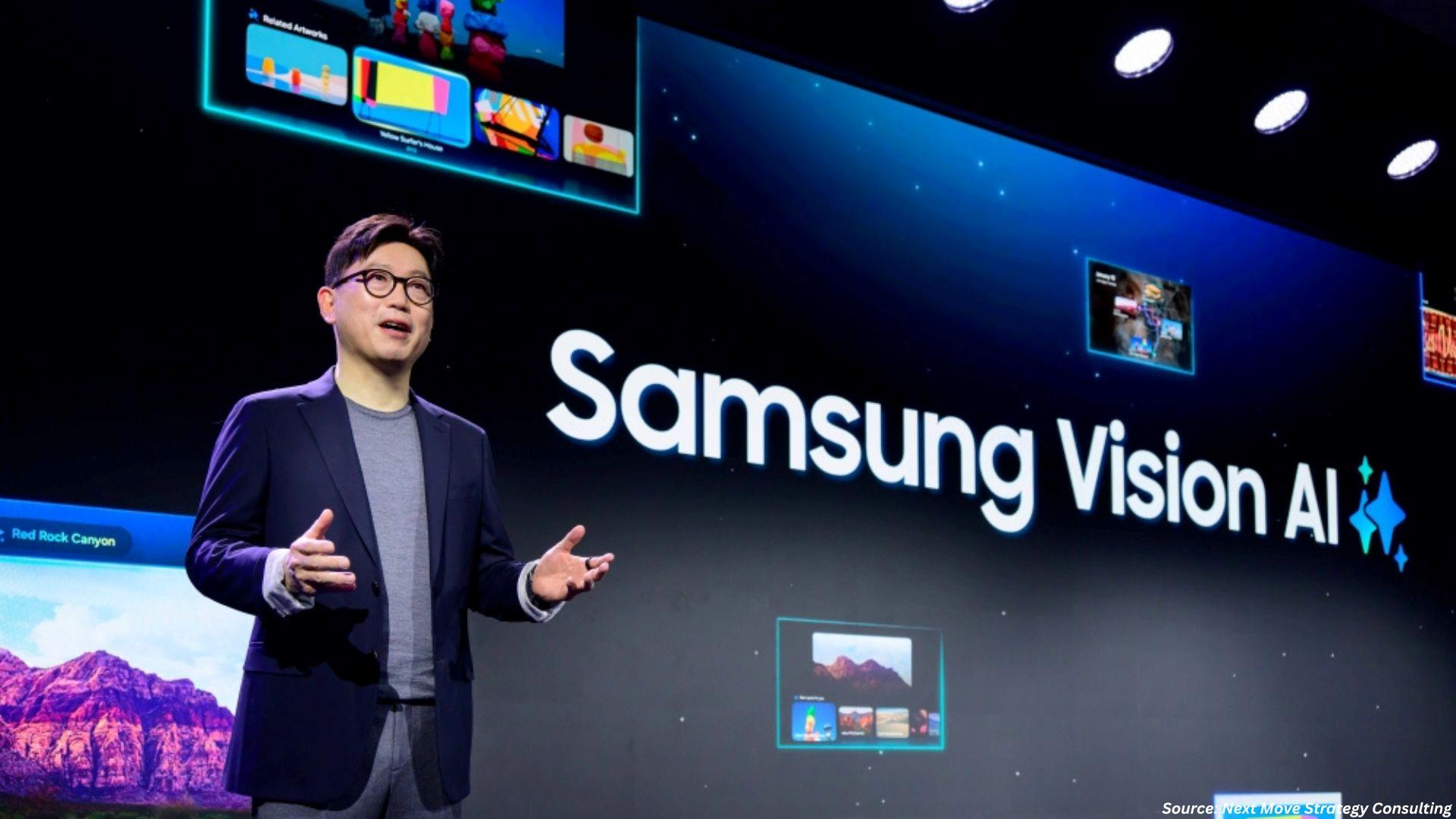
One of the most notable advancements in 8K technology is its integration with artificial intelligence (AI). According to Samsung’s official announcement, the company introduced Samsung Vision AI, a system designed to deliver personalized, AI-powered screen experiences.
Key highlights include:
-
AI-driven content optimization for better picture quality
-
Real-time enhancement of visuals regardless of source resolution
-
Personalized viewing experiences tailored to user behavior

Samsung emphasized that its new display innovations aim to “enrich everyday life” by combining ultra-high resolution with intelligent processing.
Analysis from Next Move Strategy Consulting indicates that the integration of artificial intelligence is reshaping 8K technology from a purely hardware-centric advancement into a software-driven ecosystem, where the overall value is increasingly determined by intelligent processing rather than resolution alone.
8K Technology Challenges: Slowing Market Momentum
Despite technological progress, the commercial momentum of 8K has slowed. A key development highlighting this trend is LG’s decision to stop manufacturing 8K TV panels.
According to PCMag:
-
LG has halted production of 8K LCD TV panels
-
The decision reflects limited consumer demand
-
The market is not scaling as quickly as expected
Key Challenges Facing 8K Adoption
|
Challenge |
Explanation |
|
Limited Content |
Native 8K content remains scarce |
|
High Costs |
8K TVs are significantly more expensive |
|
Marginal Consumer Benefit |
Many users do not perceive a major difference from 4K |
|
Infrastructure Gaps |
Streaming and broadcasting 8K requires high bandwidth |
Our observations at Next Move Strategy Consulting indicate that the decline in panel production highlights a typical adoption gap, where technological innovation is progressing ahead of ecosystem readiness—such as content availability, pricing, and infrastructure—thereby slowing widespread adoption.
AI vs. Hardware: A Shift in Competitive Focus
The contrast between Samsung’s AI-led innovation and LG’s production pullback highlights a major industry shift. Instead of competing purely on resolution, companies are now focusing on:
-
Smart display ecosystems
-
AI-based enhancement
-
User-centric personalization
This suggests that the future of 8K will not depend solely on pixel density but on how effectively those pixels are utilized.
Analysis from Next Move Strategy Consulting indicates that the industry is transitioning from a “resolution race” to an “experience race,” where companies that integrate artificial intelligence, content optimization, and user personalization are better positioned to achieve sustained growth in the premium display segment.
Next Move Strategy Consulting’s View: Industry Impact
The recent developments around 8K technology are expected to reshape the broader display market in several ways:
-
Shift toward AI-first displays: Manufacturers will prioritize AI capabilities over resolution upgrades
-
Selective investment in 8K: Companies may limit production to premium segments
-
Acceleration of hybrid technologies: Technologies like AI upscaling will bridge the gap between 4K and 8K
-
Content ecosystem pressure: Streaming platforms and broadcasters will face increasing pressure to support higher resolutions
This evolving landscape suggests that 8K will remain relevant, but as part of a broader intelligent display ecosystem rather than a standalone innovation.
Where 8K Still Holds Strong Potential
Even with slower adoption, 8K technology continues to have strong use cases:
-
Commercial displays and digital signage
-
Medical imaging and precision visualization
-
Professional video production and editing
-
Simulation and training environments
These applications benefit more directly from ultra-high resolution than the average consumer market.
Enterprise and professional segments are likely to drive near-term demand for 8K technology. Consumer adoption may follow later, once content availability and affordability improve.
8K vs. 4K: Practical Comparison
|
Feature |
4K |
8K |
|
Resolution |
3840 × 2160 |
7680 × 4320 |
|
Content Availability |
High |
Limited |
|
Cost |
Moderate |
High |
|
Consumer Adoption |
Widespread |
Niche |
|
AI Integration |
Growing |
Advanced |
While 8K offers superior resolution, the current value gap between 4K and 8K remains narrow for most users. This reinforces the need for complementary technologies such as AI upscaling to justify adoption.

Next Steps: What Businesses Should Do
1. Invest in AI integration: Focus on intelligent display features rather than resolution alone
2. Target premium segments first: Position 8K products for high-end and professional use cases
3. Strengthen content partnerships: Collaborate with content providers to expand 8K availability
4. Optimize pricing strategies: Address affordability barriers to improve adoption
5. Monitor consumer behavior closely: Adapt strategies based on real demand signals
Final Thoughts
8K technology in 2026 stands at a crossroads. On one hand, innovations like AI-powered displays are pushing boundaries. On the other, market realities such as limited demand and high costs are slowing momentum.
The future of 8K will depend less on resolution itself and more on how effectively it integrates with AI, content ecosystems, and real-world applications.
8K is not fading—it is evolving. Its success will hinge on its ability to deliver meaningful, intelligent experiences rather than simply more pixels.
About the Author
 Sanyukta Deb
— Sanyukta Deb is Digital Marketing Team Lead at Next Move Strategy Consulting, where she has led content strategy and technical SEO for the firm's B2B market research publications for over 2 years. Her editorial process translates NextMSC's primary and secondary research — spanning technology, industrial, and consumer sectors — into commercial narratives, backed by search-intent, keyword, and competitive analysis. She brings 5 years of overall experience in digital marketing and content strategy.
Sanyukta Deb
— Sanyukta Deb is Digital Marketing Team Lead at Next Move Strategy Consulting, where she has led content strategy and technical SEO for the firm's B2B market research publications for over 2 years. Her editorial process translates NextMSC's primary and secondary research — spanning technology, industrial, and consumer sectors — into commercial narratives, backed by search-intent, keyword, and competitive analysis. She brings 5 years of overall experience in digital marketing and content strategy.
About the Reviewer
 Debashree Dey
— Debashree Dey is Assistant Manager at Next Move Strategy Consulting, where she supports cross-vertical market content and communications across diverse industries for 6 years. Her professional background includes senior content writing, communications, and published manuscript authorship, with experience developing audience-focused business narratives and maintaining clear, consistent messaging. Her role supports research-led content development and editorial quality across NextMSC publications.
Debashree Dey
— Debashree Dey is Assistant Manager at Next Move Strategy Consulting, where she supports cross-vertical market content and communications across diverse industries for 6 years. Her professional background includes senior content writing, communications, and published manuscript authorship, with experience developing audience-focused business narratives and maintaining clear, consistent messaging. Her role supports research-led content development and editorial quality across NextMSC publications.

















Add Comment