How Edge AI and IoT Expansion Are Accelerating the TinyML Market?
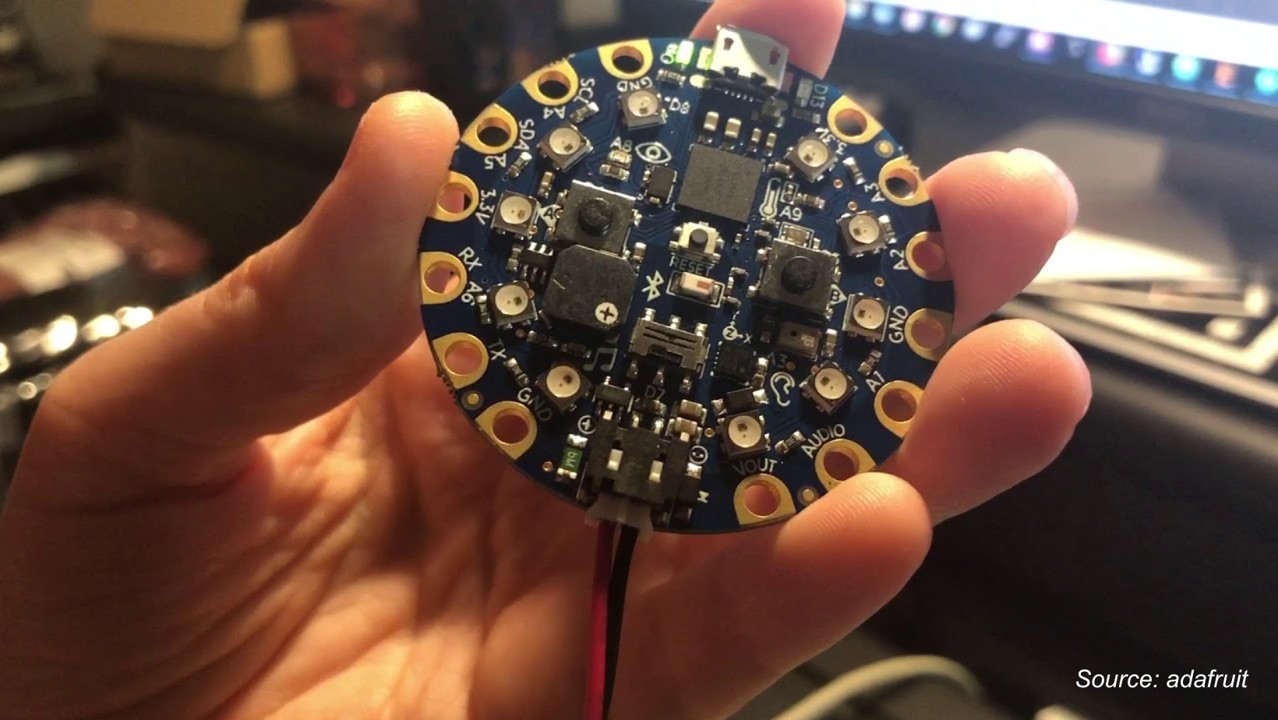
TinyML is emerging as a foundational layer within the broader artificial intelligence ecosystem, enabling machine learning inference directly on microcontrollers and resource-constrained edge devices. As a result, AI deployment is moving away from centralized cloud processing toward distributed, low-latency, and power-efficient intelligence at the edge. This transition is being reinforced by the broader digital infrastructure landscape, where increasing data generation from IoT devices, industrial systems, and consumer electronics is placing pressure on bandwidth, latency, and energy consumption. At the same time, our analysis suggests industry bodies such as the International Energy Agency continue to highlight the rising electricity demand associated with digital technologies and data infrastructure, particularly as AI workloads scale across sectors. This reinforces the importance of improving computational efficiency at the edge to manage both system costs and energy intensity
According to NMSC, the TinyML Market size was valued at USD 1.76 billion in 2025 and is expected to be valued at USD 2.49 billion by the end of 2026. The industry is projected to grow, hitting USD 18.20 billion by 2035, with a CAGR of 24.73% between 2026 and 2035.
Curious about the TinyML Market? Download Your FREE Sample Report Now
On-Device TinyML Is Establishing the Foundation for Ultra-Low-Power, Real-Time Intelligence
Our analysis indicates that TinyML has become the clearest expression of the market’s shift toward decentralized AI execution. By enabling inference directly on microcontrollers, TinyML significantly reduces latency, eliminates cloud dependency, and operates within strict power constraints, making it ideal for real-time and always-on applications.
This transition is being actively supported by advancements across semiconductor and embedded AI ecosystems. For instance, Microchip Technology introduced ready-to-deploy machine learning application packages in February 2026, allowing developers to integrate pre-trained models for use cases such as keyword spotting and predictive maintenance directly onto microcontrollers. This significantly lowers the barrier to TinyML deployment and accelerates time-to-market for embedded AI solutions.
At the same time, Ambiq Micro reported strong commercial momentum for its SPOT (Subthreshold Power Optimized Technology) platform, which has already powered over 290 million devices globally. This highlights that ultra-low-power, always-on AI is not only technically viable but also commercially scalable across wearables, healthcare devices, and industrial sensors.
Further innovation is also visible in next-generation architectures. BrainChip Holdings reached a key milestone with the sampling of its AKD1500 neuromorphic co-processor, delivering high-performance inference at sub-300 mW power consumption. This reflects a broader shift toward event-driven, brain-inspired computing models that are inherently aligned with TinyML requirements.
For end users, this translates into real-time responsiveness, offline functionality, and extended battery life, while for manufacturers, it enables cost-efficient intelligence without requiring high-performance computing infrastructure. As a result, TinyML is increasingly becoming the baseline architecture for embedded AI across resource-constrained environments.

Why Is Edge Computing Accelerating the Adoption of Distributed TinyML Architectures?
TinyML adoption is being further amplified by the expansion of edge computing, which is redefining how data is processed across distributed systems. Our analysis indicates that AI architectures are increasingly evolving toward hierarchical intelligence models, where inference is performed at multiple layers, including device-level, edge nodes, and cloud systems.
This shift is being supported by ecosystem expansion and infrastructure investments. For example, Syntiant Corp expanded its Penang facility in January 2026 to strengthen global R&D and manufacturing capabilities for ultra-low-power AI processors. This development reflects growing demand for specialized hardware that can support large-scale deployment of TinyML across industries.
In practical terms, this evolution reduces network congestion, enhances data privacy, and enables faster decision-making in latency-sensitive environments such as industrial automation, smart cities, and connected infrastructure. For enterprises, this translates into improved operational efficiency, while for OEMs, it enables scalable AI deployment across billions of connected devices.

Are Energy Constraints and Efficiency Requirements Reinforcing TinyML as a Core AI Architecture?
Our market assessment indicates that energy efficiency is emerging as a central driver of TinyML adoption, particularly as digital infrastructure continues to scale. Running AI workloads in centralized environments is increasingly energy-intensive, whereas TinyML enables inference within milliwatt-level power envelopes. This is particularly critical in battery-powered and remote deployments, where energy availability is constrained and system longevity is essential. By reducing reliance on continuous data transmission and enabling localized processing, TinyML significantly lowers overall system energy consumption. From a strategic standpoint, this positions TinyML as a key enabler of sustainable AI deployment, aligning with broader industry efforts to reduce energy intensity while scaling digital infrastructure. As energy efficiency becomes a core purchasing criterion, TinyML is transitioning from a performance optimization tool to a fundamental architectural requirement.

Company Developments and Latest Advancements in the TinyML Sector
Industry participants are actively advancing the TinyML ecosystem through continuous innovation across hardware, software, and deployment frameworks. Our analysis indicates that leading players are prioritizing scalability, ease of integration, and energy-efficient performance to accelerate real-world adoption of on-device AI solutions.
Strong focus on simplifying deployment, with the introduction of pre-trained models, optimized inference engines, and developer-friendly toolkits to reduce complexity and shorten time-to-market.
Advancements in ultra-low-power AI hardware and embedded processors, driven by companies such as Microchip Technology, Ambiq Micro, and Syntiant Corp, enabling efficient on-device inference across diverse applications.
Increasing ecosystem convergence and strategic collaboration, including initiatives such as Nordic Semiconductor’s acquisition of Neuton.AI and partnerships like Himax Technologies with Vuzix, supporting integrated and scalable TinyML deployments.
Overall, these developments collectively indicate that the TinyML market is transitioning from early-stage innovation toward mature, scalable commercialization, where efficiency, interoperability, and ease of deployment are becoming central to competitive differentiation.
The Road Ahead: Will TinyML Define the Next Era of Smart, Connected Systems?
In conclusion, our analysis confirms that the TinyML market is undergoing a significant transformation driven by technological innovation, expanding edge applications, and increasing demand for decentralised intelligence. As industries prioritise efficiency, privacy, and real-time processing, TinyML adoption continues to accelerate across diverse use cases.
Looking ahead, we identified that organisations investing in advanced model optimisation techniques, robust edge hardware, and integrated AI ecosystems are best positioned to lead the market. Conversely, stakeholders that rely on traditional, cloud-dependent architectures face limitations in scalability and responsiveness. Therefore, TinyML is set to play a defining role in shaping the future of intelligent, connected systems, establishing itself as a critical driver of next-generation digital transformation.
About the Author
 Saista Faiyaz
— Saista Faiyaz is Research Associate at Next Move Strategy Consulting, where she has covered consumer markets and healthcare technologies for 3 years. Her work includes primary interview review, secondary-source validation, market sizing, and structured analysis of company and industry data. She supports research by comparing evidence across sources, organizing findings into market narratives, and documenting assumptions used in analysis. Her scope includes cross-market benchmarking, and reports.
Saista Faiyaz
— Saista Faiyaz is Research Associate at Next Move Strategy Consulting, where she has covered consumer markets and healthcare technologies for 3 years. Her work includes primary interview review, secondary-source validation, market sizing, and structured analysis of company and industry data. She supports research by comparing evidence across sources, organizing findings into market narratives, and documenting assumptions used in analysis. Her scope includes cross-market benchmarking, and reports.
About the Reviewer
 Supradip Baul
— Supradip Baul is an accomplished business consultant and strategist with over a decade of rich experience in market intelligence, strategy, technology, and business transformation. His work has included rigorous qualitative and quantitative analysis across multiple industries, helping clients shape investment decisions and long-term roadmaps. Earlier in his career, he was associated with Gartner, where he contributed to industry-leading reports and market share analyses. He has worked with leading global companies and holds an MBA with a dual specialization in Marketing and Finance.
Supradip Baul
— Supradip Baul is an accomplished business consultant and strategist with over a decade of rich experience in market intelligence, strategy, technology, and business transformation. His work has included rigorous qualitative and quantitative analysis across multiple industries, helping clients shape investment decisions and long-term roadmaps. Earlier in his career, he was associated with Gartner, where he contributed to industry-leading reports and market share analyses. He has worked with leading global companies and holds an MBA with a dual specialization in Marketing and Finance.


















Add Comment