Is Sustainable Packaging Entering an Era of Verified Accountability?

Packaging Market is no longer defined by isolated material changes or aspirational sustainability messaging. In 2024–2025, it is being reshaped by measurable commitments, certified recovery systems, and consumer-backed validation. Two major corporate developments illustrate this structural transition clearly. Samsung Electronics advanced its long-term sustainable material commitments, while AE Global partnered with rePurpose Global to introduce verified plastic-negative and plastic-neutral packaging certifications. Together, these initiatives signal that sustainability in packaging is moving from intent to accountability.
Sustainable Materials as a Strategic Foundation
According to Samsung’s official announcement, the company began replacing plastic packaging materials with environmentally sustainable alternatives such as recycled plastics, bio-based plastics, and certified paper materials. The company formed a dedicated task force spanning design, development, purchasing, marketing, and quality control to reengineer packaging systems. Plastic holder trays for mobile devices were replaced with pulp molds, accessory bags were substituted with eco-friendly materials, and protective films were reduced. For home appliances, plastic bags were replaced with recycled-material or bioplastic alternatives. Samsung also committed to using only fiber materials certified by global environmental organizations for packaging and manuals. Beyond material substitution, the company set measurable circular economy targets. By 2030, Samsung aims to use 500,000 tons of recycled plastics and collect 7.5 million tons of discarded products cumulatively from 2009. The company publicly stated that it would adopt environmentally sustainable materials even if this results in increased cost. This development demonstrates that sustainable packaging is being embedded into long-term supply chain planning rather than positioned as a short-term branding initiative.
Circular and Sustainable Packaging: Visualizing Material Recovery
The central green bag with the recycling symbol highlights recycling and material recovery as the core of eco-friendly packaging strategies. Surrounding icons suggest complementary elements in sustainable packaging:
-
Small green circle with a trash icon: Indicates proper waste management and separation of recyclable materials.
-
Brown icon with a plant and bar chart: Represents environmental performance tracking, such as measuring impact and efficiency in using sustainable materials.
-
Funnel-like shape: Symbolizes the filtration or processing of materials to recover and reuse plastics, paper, or bio-based content.
The combination of these visual elements reflects a holistic packaging approach where material substitution, recycling, and measurable impact work together, consistent with trends highlighted by Samsung Electronics and AE Global’s certified packaging initiatives.
Key Players and Strategic Moves Shaping the Packaging Market
Major companies in the packaging market, including WestRock Company, International Paper, Ball Corporation, Amcor plc, DS Smith, Sonoco Products Company, Packaging Corporation of America, Crown Holdings, Inc., Berry Global Inc., Sealed Air, Stora Enso, Smurfit Kappa, UFlex Limited, Oji Holdings Corporation, Graphic Packaging International, LLC, and others, are actively driving market growth. These players are employing a range of strategies, such as regional acquisitions, to strengthen their market presence and maintain competitive dominance.
Plastic-Negative and Plastic-Neutral Certification
While material substitution addresses input reduction, another transformation is focused on impact verification. Plastic neutral certification indicates that a brand collects the same amount of plastic used in its packaging. Plastic negative certification indicates that twice the amount of plastic used in packaging has been collected from the environment. The verification system supporting these badges includes traceable data, impact reporting, and regular third-party audits. The certifications are displayed directly on packaging to communicate measurable environmental impact to consumers. Consumer research cited in the release revealed that 95% of consumers indicated a willingness to pay more for products that fund plastic recovery. Among consumers who prioritize impact in purchasing decisions, willingness to pay rises further.
From Raw Materials to Reuse: Closing the Packaging Loop
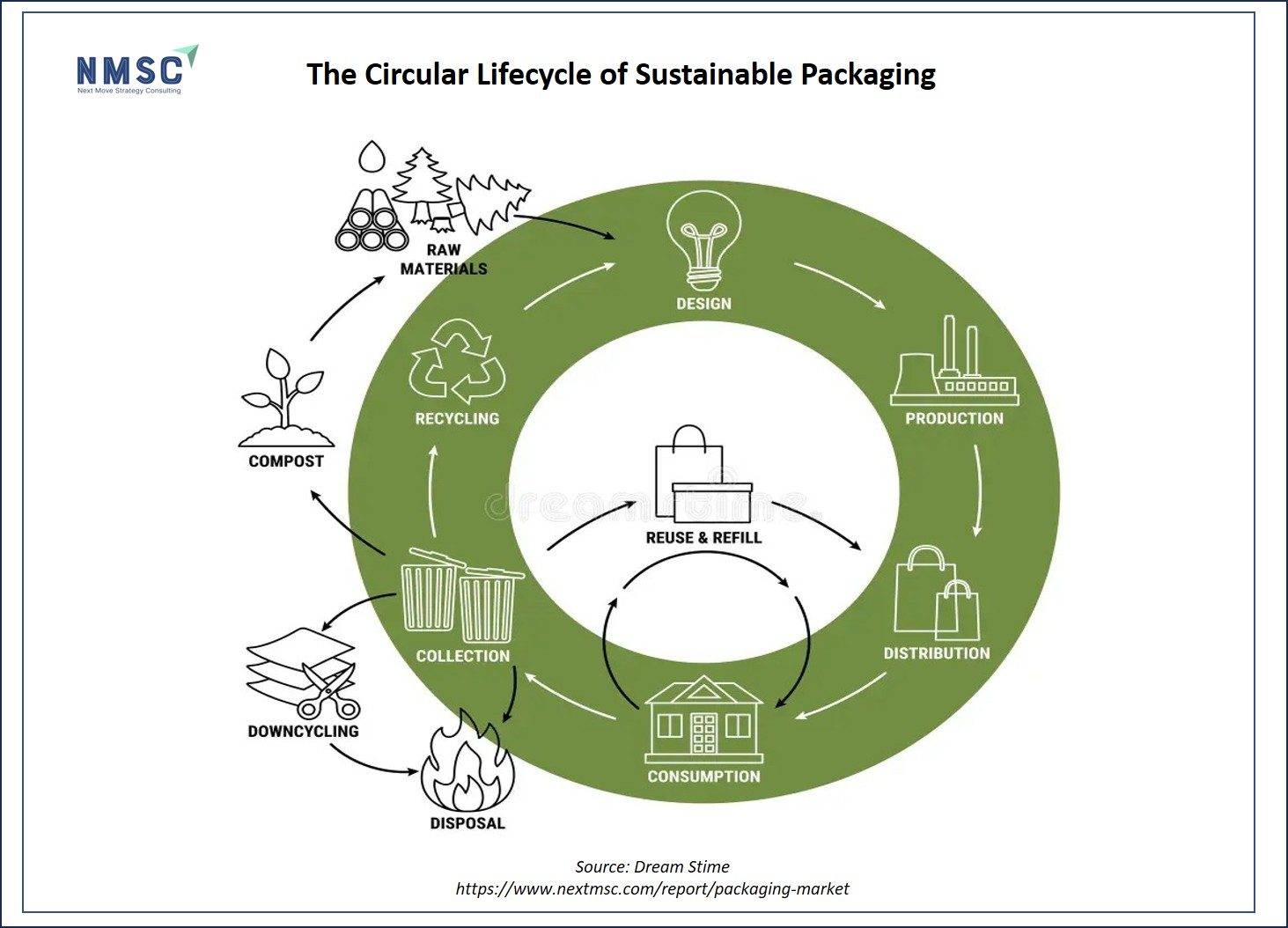
The circular lifecycle of sustainable packaging, showing how materials move through design, production, distribution, and consumption, with an emphasis on minimizing waste. Packaging begins with raw materials, which are transformed through design and production into consumer-ready products. After distribution and consumption, packaging can enter a loop of reuse and refill to extend its life. Collected materials are either recycled, composted, or downcycled, while materials that cannot be processed enter disposal. This approach highlights how sustainable packaging integrates reuse, recycling, and responsible disposal to reduce environmental impact and promote a closed-loop system.
Structural Shifts in Sustainable Packaging
Samsung emphasizes upstream material substitution and circularity targets. AE Global and rePurpose Global focus on downstream plastic recovery and third-party verification. One reduces reliance on conventional plastic inputs, while the other ensures environmental compensation beyond packaging usage. Sustainability initiatives are backed by measurable metrics rather than qualitative commitments. Second, sustainability is integrated into operational strategy, not confined to marketing departments. Third, consumer sentiment data supports commercial viability, with 95% of surveyed consumers expressing willingness to pay more for recovery-backed products. These elements indicate that sustainable packaging is transitioning toward performance-based differentiation.
Next Move Strategy Consulting Perspective
From a strategic advisory standpoint, sustainable packaging is entering a performance accountability phase. Companies that combine material redesign with certified recovery mechanisms are likely to establish stronger long-term positioning. Material innovation reduces environmental footprint at the source. Certification systems create measurable trust at the point of purchase. When integrated, these strategies reinforce both operational resilience and brand credibility. The emphasis on verified data, third-party audits, and traceable recovery programs suggests that future competitive advantage will depend on measurable environmental performance rather than narrative positioning.
Conclusion
The evidence from 2024–2025 corporate disclosures shows that sustainable packaging is undergoing a fundamental shift. Material replacement initiatives demonstrate long-term circular economy planning. Plastic-negative and plastic-neutral certifications introduce traceable and audited recovery standards. Consumer data confirms willingness to financially support responsible packaging practices. The direction is clear. Sustainability in packaging is no longer defined by aspiration. It is increasingly defined by quantifiable impact, verified performance, and strategic integration.
Next Steps
-
Evaluate material substitution opportunities using recycled or bio-based inputs aligned with certified fiber standards
-
Assess the feasibility of plastic-neutral or plastic-negative certification programs supported by traceable recovery data
-
Integrate third-party audited impact reporting into packaging sustainability frameworks
-
Align long-term circular economy targets with measurable tonnage commitments
-
Communicate verified environmental performance clearly through on-pack labeling
About the Author
 Sanyukta Deb
— Sanyukta Deb is Digital Marketing Team Lead at Next Move Strategy Consulting, where she has led content strategy and technical SEO for the firm's B2B market research publications for over 2 years. Her editorial process translates NextMSC's primary and secondary research — spanning technology, industrial, and consumer sectors — into commercial narratives, backed by search-intent, keyword, and competitive analysis. She brings 5 years of overall experience in digital marketing and content strategy.
Sanyukta Deb
— Sanyukta Deb is Digital Marketing Team Lead at Next Move Strategy Consulting, where she has led content strategy and technical SEO for the firm's B2B market research publications for over 2 years. Her editorial process translates NextMSC's primary and secondary research — spanning technology, industrial, and consumer sectors — into commercial narratives, backed by search-intent, keyword, and competitive analysis. She brings 5 years of overall experience in digital marketing and content strategy.
About the Reviewer
 Debashree Dey
— Debashree Dey is Assistant Manager at Next Move Strategy Consulting, where she supports cross-vertical market content and communications across diverse industries for 6 years. Her professional background includes senior content writing, communications, and published manuscript authorship, with experience developing audience-focused business narratives and maintaining clear, consistent messaging. Her role supports research-led content development and editorial quality across NextMSC publications.
Debashree Dey
— Debashree Dey is Assistant Manager at Next Move Strategy Consulting, where she supports cross-vertical market content and communications across diverse industries for 6 years. Her professional background includes senior content writing, communications, and published manuscript authorship, with experience developing audience-focused business narratives and maintaining clear, consistent messaging. Her role supports research-led content development and editorial quality across NextMSC publications.

















Add Comment