What Is Industry 4.0 and How Is It Transforming Manufacturing?
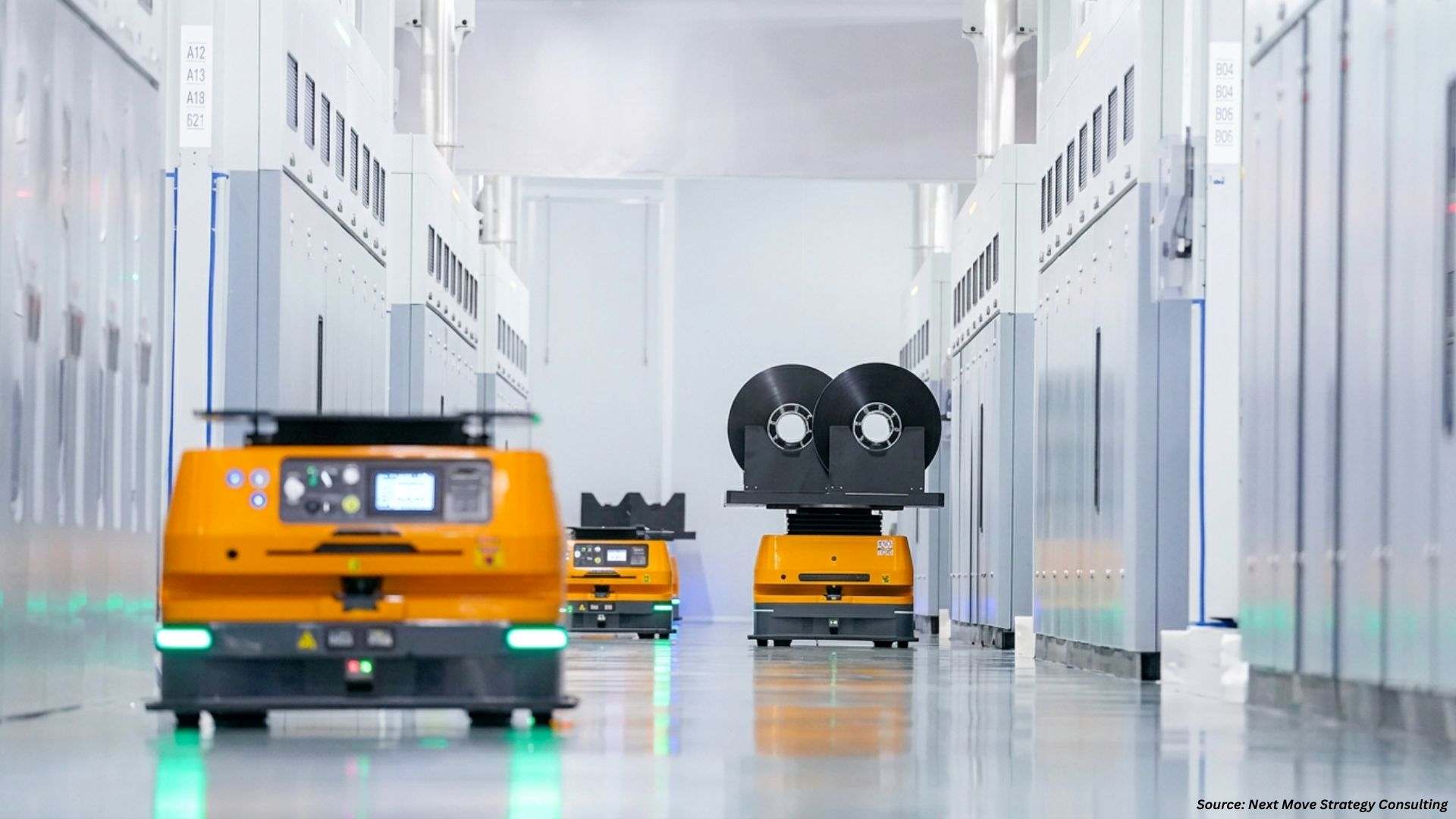
Industry 4.0 Market is no longer a distant vision. It is actively redefining how industries operate, innovate, and compete on a global scale. The integration of intelligent systems, real-time data, and automation is enabling manufacturers to move beyond traditional production methods toward highly adaptive and efficient ecosystems.
This transformation is not theoretical. Verified developments from global industry events and real-world manufacturing facilities clearly demonstrate how Industry 4.0 is being implemented today.
What Defines Industry 4.0 in the Modern Era?
At its core, Industry 4.0 represents the convergence of physical manufacturing with digital intelligence. It allows machines, systems, and humans to communicate seamlessly, creating a connected and responsive production environment.
Unlike earlier industrial revolutions, this phase is driven by data. Technologies such as artificial intelligence, digital twins, and smart automation systems are enabling predictive and self-optimizing operations.
Core Technologies Driving Industry 4.0
|
Technology |
Function |
Industrial Impact |
|
Artificial Intelligence |
Data analysis and |
Enables predictive |
|
Digital Twins |
Virtual simulation of systems |
Reduces downtime and |
|
Smart Sensors |
Real-time monitoring |
Improves accuracy |
|
Cybersecurity Systems |
Data protection |
Ensures safe connected |
End-to-End Smart Manufacturing Workflow in Industry 4.0
How Data-Driven Systems Power Modern Manufacturing
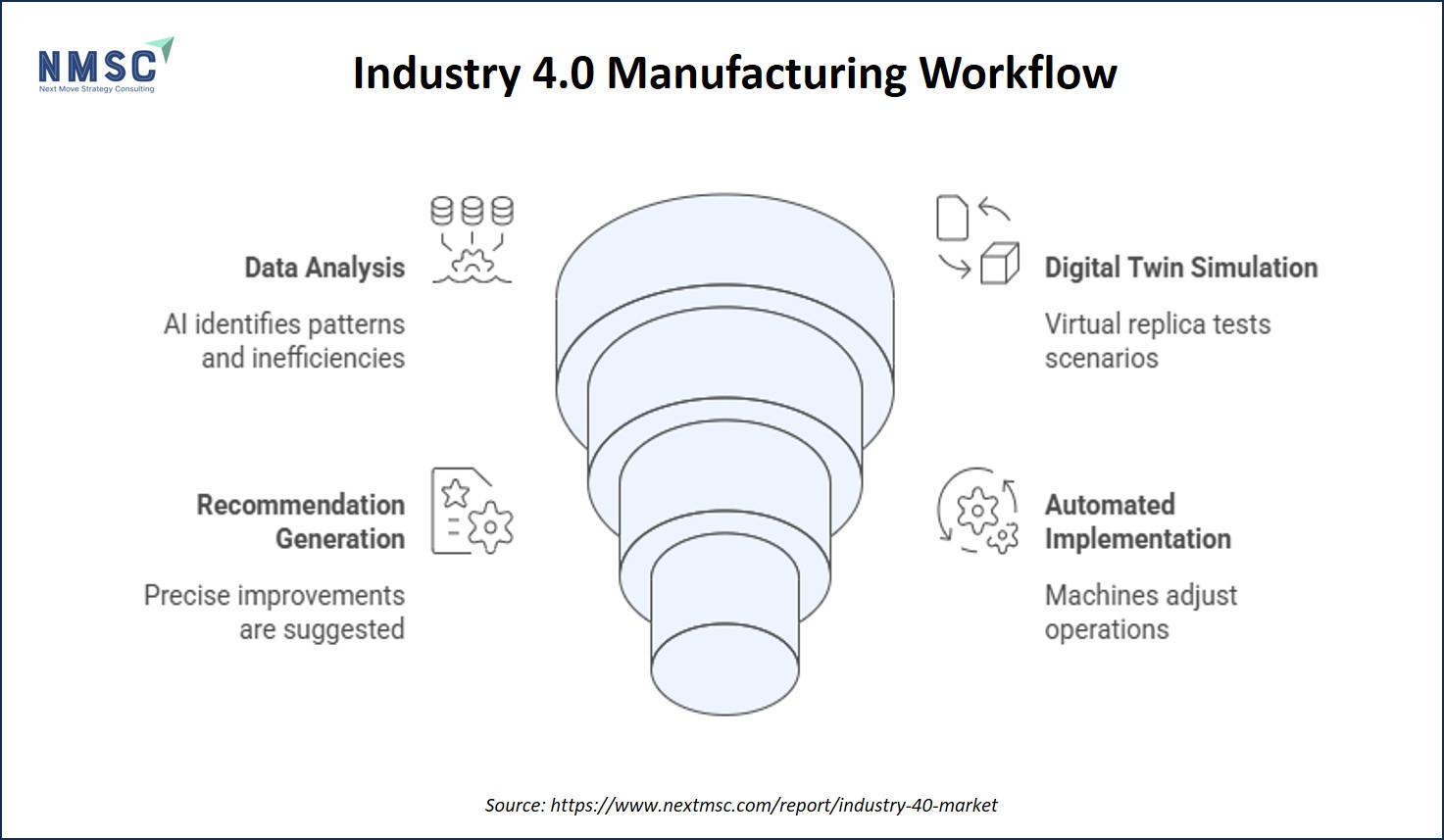
This infographic illustrates how Industry 4.0 transforms traditional manufacturing into an intelligent, connected, and continuously improving system. It visually represents the seamless flow of data, decision-making, and automation across the production lifecycle.
At the first stage, smart sensors and connected devices embedded in machinery collect real-time operational data. This includes performance metrics, energy usage, and production status. The data is then transmitted to centralized platforms where advanced analytics and artificial intelligence systems process it to identify patterns, inefficiencies, and optimization opportunities.
In the next phase, digital twin technology creates a virtual replica of the physical production environment. This allows manufacturers to simulate different scenarios, test improvements, and predict outcomes without disrupting actual operations. Based on these simulations, the system generates precise recommendations.
Finally, automated control systems implement these improvements directly on the production floor. Machines adjust operations in real time, ensuring optimal performance, reduced waste, and improved product quality. This creates a continuous feedback loop where every cycle enhances efficiency and sustainability.
How Are Global Platforms Accelerating Industry 4.0 Adoption?
The rapid advancement of Industry 4.0 is strongly supported by international collaboration. Events such as the World Advanced Manufacturing & Future Mobility Exhibition (WAM Morocco 2026) highlight how nations and enterprises are aligning their strategies around digital transformation.
Held in Casablanca from January 20 to 22, 2026, the event brought together more than 60 speakers from over 20 countries and delivered more than 45 hours of strategic discussions. It also featured over 100 participating companies from 18 countries.
The discussions focused on key pillars of Industry 4.0, including artificial intelligence, cybersecurity, green manufacturing, and supply chain resilience. Experts emphasized that these elements are critical not only for operational efficiency but also for national competitiveness and economic security.
Impact Areas of Industry 4.0
This pie chart highlights where Industry 4.0 delivers the most value. Operational efficiency leads with 28%, showing how smart systems streamline processes and improve productivity. Energy savings follow at 22%, reflecting the strong emphasis on sustainability and optimized resource usage.
Quality improvement accounts for 20%, driven by AI-based detection and real-time monitoring systems that reduce defects. Cost reduction and innovation each hold 15%, indicating that while savings are important, Industry 4.0 also enables long-term innovation and new business models.
Intelligent Workflow Behind Industry 4.0 Systems
How Connectivity, Intelligence, and Automation Interact
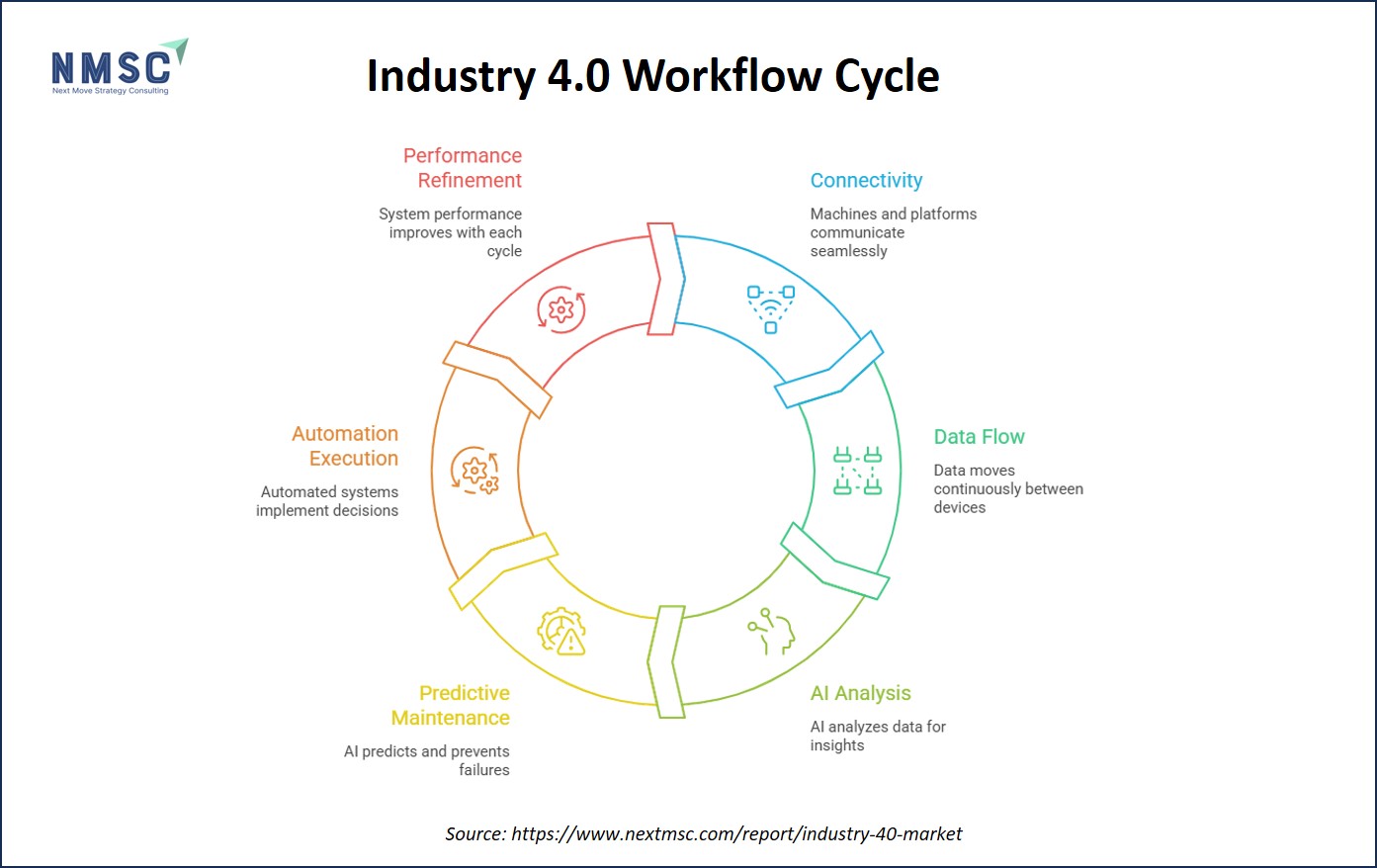
This infographic section focuses on the interconnected nature of Industry 4.0 systems. It shows how machines, platforms, and software communicate seamlessly through integrated networks. Data flows continuously between devices, enabling synchronized operations across the entire manufacturing environment. This connectivity ensures that every stage of production is aligned, reducing delays and improving coordination.
Another key visual element highlights the role of artificial intelligence in transforming raw data into actionable insights. The infographic demonstrates how AI models analyze patterns, predict potential failures, and recommend corrective actions before issues occur. This predictive capability reduces downtime and enhances overall operational reliability, making manufacturing systems more proactive rather than reactive.
The final segment illustrates how automation executes decisions with precision and speed. Once insights are generated, automated systems adjust machine settings, optimize workflows, and maintain consistent production quality. This creates a self-improving system where each cycle refines performance, leading to higher efficiency and reduced resource consumption.
Key Highlights from WAM Morocco 2026
|
Metric |
Value |
|
Number of Speakers |
60+ |
|
Participating Countries |
20+ |
|
Strategic Content Hours |
45+ |
|
Participating Companies |
100+ |
|
Countries Represented |
18 |
Global platforms are accelerating Industry 4.0 adoption by fostering collaboration, investment, and knowledge exchange.
How Is Industry 4.0 Transforming Smart Manufacturing?
The most compelling evidence of Industry 4.0 lies in its real-world implementation. Advanced manufacturing facilities are already leveraging intelligent technologies to achieve measurable improvements in efficiency, sustainability, and production quality.
A leading lithium-ion battery manufacturing plant has implemented a comprehensive Industry 4.0 framework supported by artificial intelligence and digital systems.
Measurable Impact of Industry 4.0 Implementation
|
Performance Area |
Result Achieved |
|
Energy Efficiency |
Increased by 16% |
|
Unit Energy Consumption |
Reduced by 47% |
|
Carbon Emissions |
Reduced by 18.5% |
|
Detection Efficiency |
Increased by 60% |
|
Debugging Cycle Time |
Reduced by 40% |
The facility utilized advanced solutions such as AI-driven energy management systems, intelligent defect detection, and digital twin simulations. These technologies enabled real-time optimization and significantly improved production outcomes. Industry 4.0 is delivering tangible results by enhancing operational efficiency and reducing environmental impact.
Why Is Sustainability Central to Industry 4.0?
Sustainability is not an optional component of Industry 4.0. It is deeply embedded in its design. Modern manufacturing systems are built to optimize resource usage while minimizing environmental impact.
The implementation of intelligent energy regulation systems has enabled significant reductions in energy consumption and emissions. For example, AI-based systems can dynamically adjust energy usage across production lines, ensuring efficiency without compromising output.
Additionally, the adoption of digital twins allows manufacturers to simulate and refine processes before physical execution, reducing waste and improving overall system efficiency. Industry 4.0 aligns industrial productivity with sustainability goals, making environmentally responsible manufacturing achievable.
Real-Time Decision Making in Industry 4.0
How Smart Systems Enable Instant Optimization
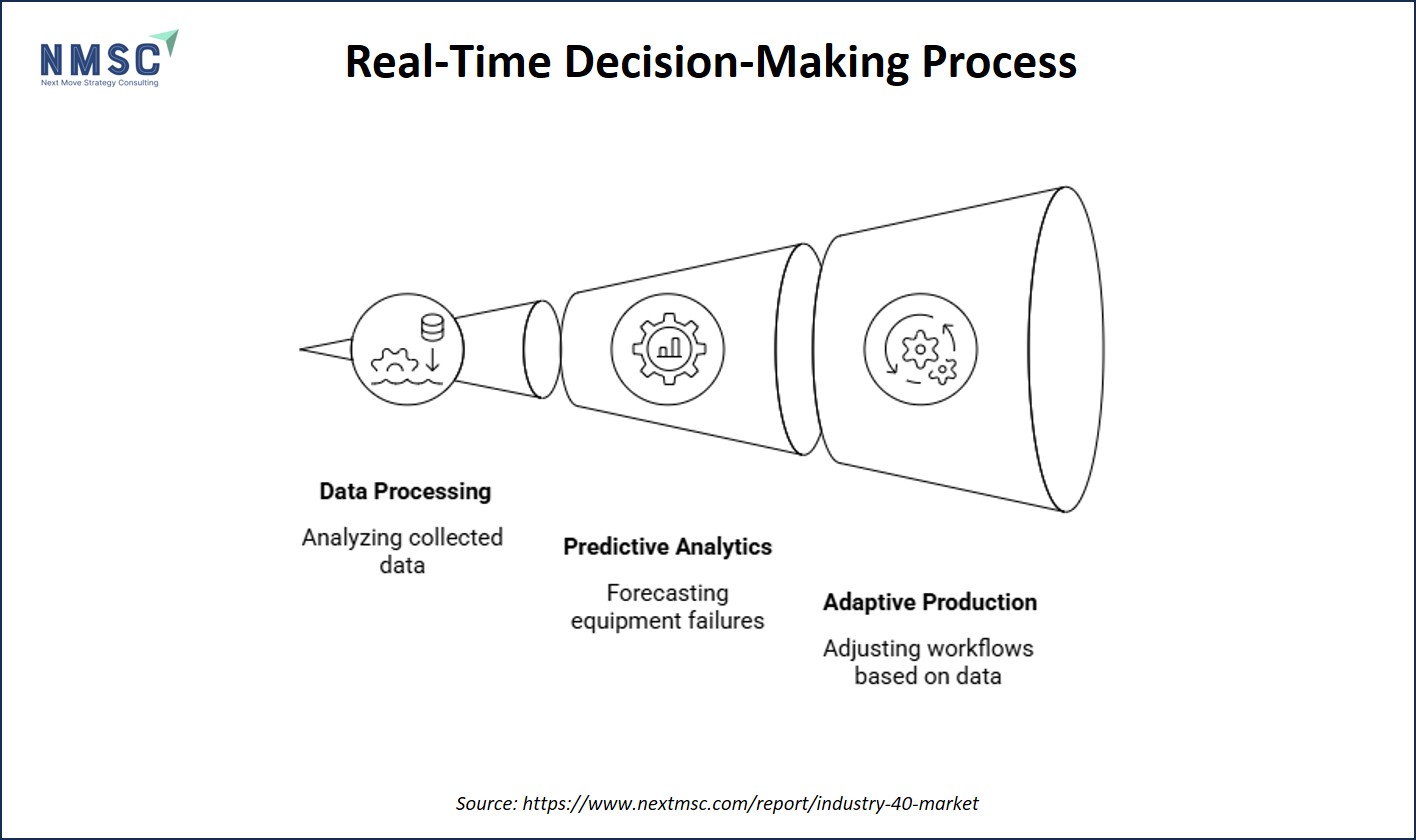
This infographic highlights how Industry 4.0 enables real-time decision-making within manufacturing environments. It visually represents how data collected from machines is instantly processed and translated into actionable insights. Unlike traditional systems that rely on periodic monitoring, Industry 4.0 operates continuously, allowing manufacturers to respond to changes as they happen.
A key layer in the infographic showcases predictive analytics. By analyzing historical and live data, systems can forecast equipment failures, detect anomalies, and recommend preventive actions. This not only reduces unplanned downtime but also improves maintenance efficiency and extends equipment lifespan.
The final visual element focuses on adaptive production systems. These systems automatically adjust workflows based on real-time inputs such as demand fluctuations, resource availability, or performance variations. This ensures optimal productivity while maintaining consistent quality standards.
How Does Industry 4.0 Strengthen Industrial Competitiveness?
Industry leaders at WAM Morocco 2026 emphasized that Industry 4.0 is not solely about technological advancement. It is also about strengthening economic resilience and global competitiveness.
Artificial intelligence is increasingly seen as the foundation of next-generation industrial ecosystems, enabling faster decision-making and improved operational agility. At the same time, cybersecurity has become critical as factories become more interconnected, ensuring the protection of sensitive data and infrastructure.
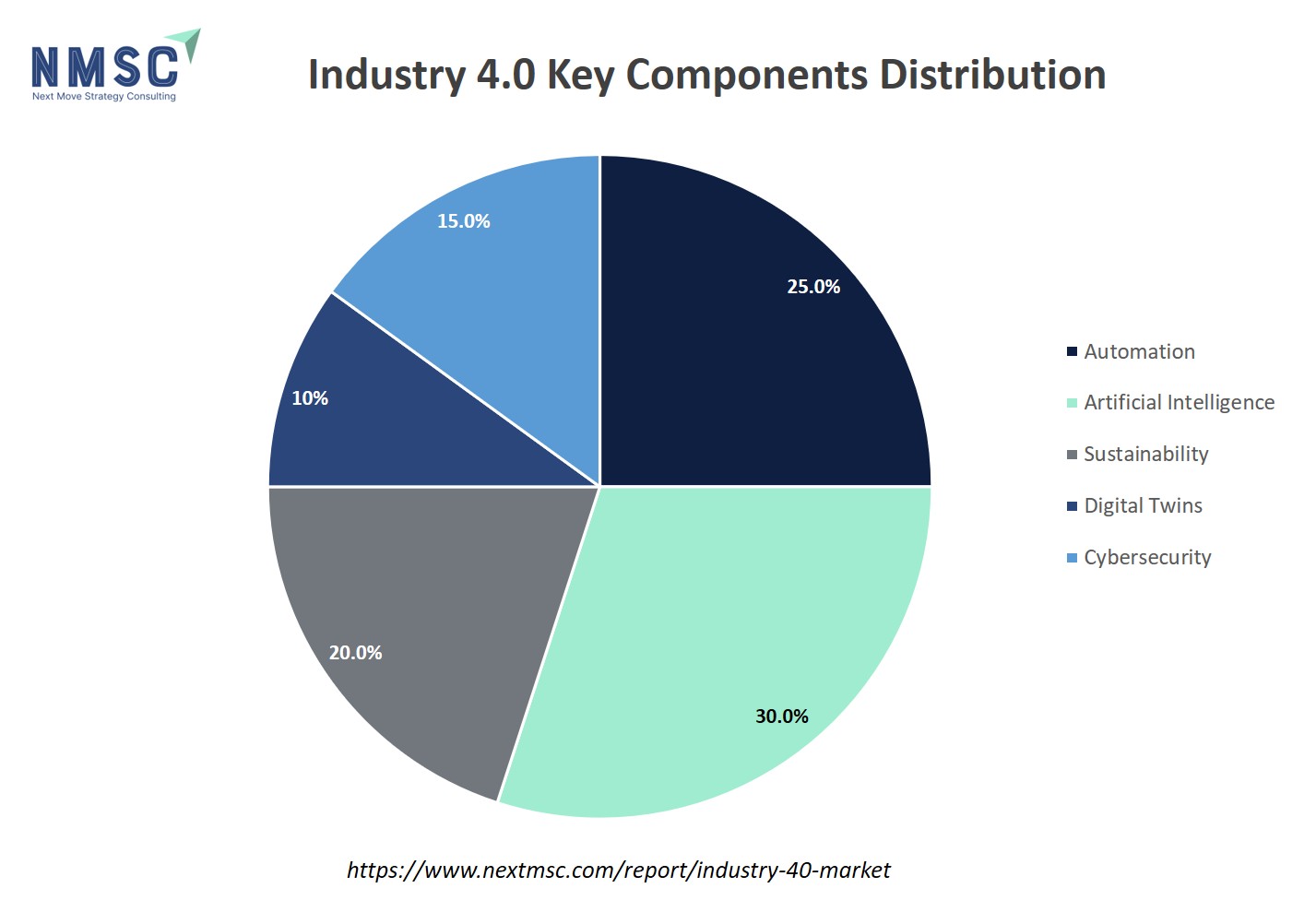
Industry 4.0 Key Components Distribution
This pie chart visually breaks down the major pillars driving Industry 4.0. Artificial Intelligence holds the largest share at 30%, reflecting its central role in enabling predictive analytics, automation, and decision-making. Automation follows at 25%, highlighting its importance in improving efficiency and reducing manual intervention.
Sustainability accounts for 20%, emphasizing the growing focus on energy optimization and emission reduction in modern manufacturing. Cybersecurity, at 15%, underscores the need to protect interconnected systems and sensitive industrial data. Digital Twins represent 10%, showcasing their role in simulation and process optimization.
Key Players Driving Industry 4.0 Innovation
The Industry 4.0 landscape is shaped by a diverse group of leading companies, including ABB Ltd., Siemens AG, Cognex Corporation, Schneider Electric SE, Honeywell International Inc., Emerson Electric Co., Rockwell Automation, Inc., General Electric Company, Robert Bosch GmbH, and Cisco Systems Inc., among others. These organizations are actively strengthening their market positions through strategic initiatives such as product innovations, mergers and acquisitions, and collaborative partnerships to sustain their competitive edge in the global Industry 4.0 ecosystem.
What Should Businesses Do Next?
As Industry 4.0 continues to evolve, organizations must take a structured approach to adoption. The focus should be on integrating technology with clear operational goals.
Next Steps
Businesses should begin by investing in artificial intelligence systems that enable real-time data analysis and decision-making. Implementing digital twin technology can significantly improve process optimization and reduce production risks. At the same time, strengthening cybersecurity frameworks is essential to protect interconnected systems.
Equally important is aligning manufacturing strategies with sustainability objectives. Reducing energy consumption and emissions not only improves efficiency but also supports long-term environmental goals. Finally, organizations should actively participate in global industry platforms to stay informed and connected with emerging trends. A strategic, technology-driven approach is essential for successfully navigating the Industry 4.0 transformation.
-
Invest in artificial intelligence systems to enable real-time data analysis and smarter decision-making across manufacturing operations
-
Implement digital twin technology to simulate, test, and optimize production processes before real-world deployment
-
Strengthen cybersecurity frameworks to protect interconnected systems, data flows, and critical industrial infrastructure
-
Align manufacturing strategies with sustainability goals by adopting intelligent energy management and emission reduction systems
-
Participate in global industry platforms and collaborations to stay updated on emerging trends, technologies, and investment opportunities
Final Thoughts
Industry 4.0 represents a fundamental shift in how manufacturing systems operate. It combines intelligence, automation, and sustainability to create highly efficient and adaptive industrial ecosystems.
With proven results and strong global momentum, Industry 4.0 is no longer optional. It is a critical pathway for organizations aiming to remain competitive in the future of manufacturing. Industry 4.0 is transforming industries through data-driven innovation, measurable efficiency gains, and sustainable practices, making it a cornerstone of modern industrial development.
About the Author
 Sanyukta Deb
— Sanyukta Deb is Digital Marketing Team Lead at Next Move Strategy Consulting, where she has led content strategy and technical SEO for the firm's B2B market research publications for over 2 years. Her editorial process translates NextMSC's primary and secondary research — spanning technology, industrial, and consumer sectors — into commercial narratives, backed by search-intent, keyword, and competitive analysis. She brings 5 years of overall experience in digital marketing and content strategy.
Sanyukta Deb
— Sanyukta Deb is Digital Marketing Team Lead at Next Move Strategy Consulting, where she has led content strategy and technical SEO for the firm's B2B market research publications for over 2 years. Her editorial process translates NextMSC's primary and secondary research — spanning technology, industrial, and consumer sectors — into commercial narratives, backed by search-intent, keyword, and competitive analysis. She brings 5 years of overall experience in digital marketing and content strategy.
About the Reviewer
 Debashree Dey
— Debashree Dey is Assistant Manager at Next Move Strategy Consulting, where she supports cross-vertical market content and communications across diverse industries for 6 years. Her professional background includes senior content writing, communications, and published manuscript authorship, with experience developing audience-focused business narratives and maintaining clear, consistent messaging. Her role supports research-led content development and editorial quality across NextMSC publications.
Debashree Dey
— Debashree Dey is Assistant Manager at Next Move Strategy Consulting, where she supports cross-vertical market content and communications across diverse industries for 6 years. Her professional background includes senior content writing, communications, and published manuscript authorship, with experience developing audience-focused business narratives and maintaining clear, consistent messaging. Her role supports research-led content development and editorial quality across NextMSC publications.


















Add Comment