Denmark Skin Care Products Market, By Product Type (Face Care, Body Care, Hand and Foot Care, and Others), By Form (Cream and Lotion, Serum, Gel, Oil, Balm and Stick,, and Others), By Function (Cleanse, Hydrate, Treat, Protect, Exfoliate, Soothe, Brighten, and Others), By Price Tier (Mass, Masstige, Premium, and Luxury), By Distribution Channel (Offline and Online), By Consumer Gender (Women, Men, and Unisex), By Consumer Age Group (Baby & Child and Adult) – Analysis & Forecast, 2025–2035
Industry: Retail and Consumer | Latest Edition: September 30, 2026 | No of Pages: 215 | No. of Tables: 100 | No. of Figures: 93 | Format: PDF | Report Code: RC5053
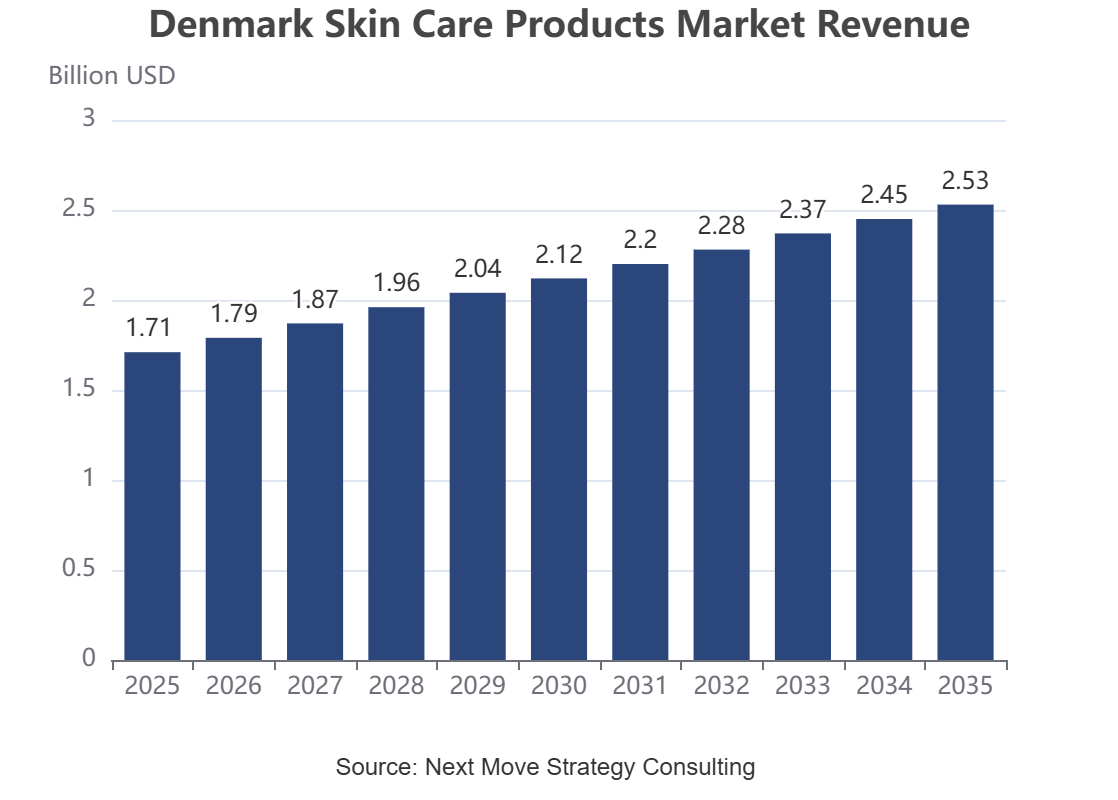
Denmark Skin Care Products Market Size & Forecast
|
Parameters |
Details |
|
Market Size in 2025 |
USD 1.71 billion |
|
Market Size in 2026 |
USD 1.95 billion |
|
Revenue Forecast in 2035 |
USD 2.53 billion |
|
Growth Rate |
CAGR of 2.92% from 2026 to 2035 |
|
Analysis Period |
2025–2035 |
|
Base Year Considered |
2025 |
|
Forecast Period |
2026–2035 |
|
Market Size Estimation |
Billion (USD) |
|
Companies Profiled |
15 |
|
Market Share |
Available for 10 companies |
Industry Outlook
The Denmark Skin Care Products Market was valued at USD 1.71 billion in 2025 and is expected to reach USD 1.95 billion by the end of 2026. The market is projected to grow to USD 2.53 billion by 2035, at a CAGR of 2.92% between 2026 and 2035. Growth is shaped by Denmark’s mature, high-income consumer base, strong demand for sustainable and clean-label formulations, and steady premiumization within an already well-penetrated Nordic skincare retail environment.
What are the Key Market Drivers, Restraints, and Opportunities that will Shape the Denmark Skin Care Products Industry in the Next Decade?
Growth Catalyst & Risk Assessment Matrix
|
DRIVERS / TRENDS / RESTRAINTS |
(+/–) % IMPACT ON CAGR FORECAST |
GEOGRAPHIC RELEVANCE |
IMPACT TIMELINE |
|
Strong consumer preference for sustainable, clean-label, and dermatologically tested skincare formulations driving premiumization across the Danish market |
+1.10% |
Denmark (Copenhagen, Aarhus, and other major urban centers) |
Medium to Long term (2–5 years) |
|
Rising adoption of minimalist, multi-functional skincare routines among Danish consumers seeking efficacy-driven, dermatologist-recommended product formulations |
+0.85% |
Denmark (nationwide, concentrated among health-conscious urban demographics) |
Short to Medium term (1–4 years) |
|
Growing male grooming and unisex skincare adoption expanding the consumer base beyond traditional female-focused product categories |
+0.70% |
Denmark (nationwide, with strongest momentum in Copenhagen) |
Medium term (2–4 years) |
|
Expansion of pharmacy and specialty beauty retail formats offering dermocosmetic and clinically positioned skincare products to discerning Danish consumers |
+0.55% |
Denmark (pharmacy and specialty beauty retail networks nationwide) |
Medium to Long term (3–6 years) |
|
Market maturity and high existing penetration of skincare products limiting incremental volume growth potential relative to emerging markets |
–0.95% |
Denmark (nationwide, saturated urban and suburban retail markets) |
Short to Medium term (1–3 years) |
The Denmark Skin Care Products Market reflects the characteristics of a mature, high-income Nordic economy, where consumer behaviour is increasingly shaped by sustainability values, ingredient transparency, and demand for clinically validated formulations rather than rapid category expansion. As one of Europe’s most environmentally conscious consumer markets, Denmark presents steady, premiumization-led growth potential, with market dynamics influenced more by product innovation and channel evolution than by underlying demographic or income-driven volume expansion.
Growth Drivers:
How is Consumer Demand for Sustainable and Clean-Label Formulations Driving Growth in Denmark’s Skin Care Market?
Danish consumers consistently rank among Europe’s most environmentally and ingredient-conscious skincare buyers, driving sustained demand for clean-label, sustainably sourced, and dermatologically tested formulations. Brands offering transparent ingredient sourcing, recyclable packaging, and certified organic or natural credentials are capturing disproportionate consumer preference relative to conventional mass-market products. This sustainability-driven purchasing behavior is reinforcing premiumization across the Danish skincare category, encouraging both domestic and international brands to prioritize environmental credentials within their product development and marketing strategies.
How is the Shift Toward Minimalist, Efficacy-Driven Skincare Routines Shaping Danish Consumer Demand?
Danish consumers are increasingly favouring streamlined, minimalist skincare routines built around fewer, higher-efficacy products rather than extensive multi-step regimens, reflecting a broader Nordic preference for functional simplicity and clinical credibility. This trend is driving demand for dermatologist-recommended serums, treatments, and moisturizers with clearly substantiated active ingredient claims. Brands able to demonstrate clinical efficacy through evidence-based formulations and transparent labelling are well positioned to capture this discerning, quality-focused segment of the Danish skincare consumer base.
How is Growing Male Grooming and Unisex Skincare Adoption Expanding Denmark’s Consumer Base?
Denmark’s progressive social attitudes toward gender-neutral personal care are accelerating adoption of male grooming and unisex skincare products beyond traditional female-focused categories. Danish men are increasingly incorporating cleansers, moisturizers, and targeted treatments into daily routines, supported by expanding retail assortments and marketing specifically positioned for gender-inclusive skincare. This broadening consumer base is creating incremental category growth opportunities, particularly within Face Care and Body Care segments, as brands develop formulations and packaging tailored to Denmark’s diversifying skincare consumer demographic.
Growth Inhibitor:
How is Market Maturity Constraining Volume Growth in Denmark’s Skin Care Products Market?
Denmark’s skincare market is characterized by high existing product penetration and well-established consumer purchasing habits, limiting the scope for significant incremental volume growth compared to emerging or underpenetrated markets. With most Danish consumers already engaged in regular skincare routines, category expansion depends primarily on value-based premiumization, product innovation, and incremental category switching rather than new consumer acquisition. This structural maturity constrains the market’s overall growth rate relative to faster-growing regions, positioning Denmark as a stable but slower-expanding skincare market.
Growth Opportunity:
How is Dermocosmetic and Clinical Skincare Retail Expansion Creating New Growth Avenues in Denmark?
The expansion of pharmacy-based and specialty beauty retail formats offering dermocosmetic, clinically positioned skincare products presents a significant opportunity within Denmark’s mature market. Danish consumers increasingly trust pharmacy-recommended and dermatologist-endorsed products, creating a premium growth channel less exposed to general retail price competition. Brands able to secure pharmacy distribution and clinical positioning, particularly within treatment-focused categories such as serums and targeted anti-aging formulations, are well positioned to capture incremental value growth despite Denmark’s overall market maturity.
How is the Denmark Skin Care Products Industry Segmented in this Report, and What are the Key Insights from the Segmentation Analysis?
By Distribution Channel Insights
How Are Distribution Channels Influencing Consumer Access in the Denmark Skin Care Products Market?
Based on distribution channel, the Denmark Skin Care Products Market is segmented into offline and online channels.
The market is supported by an integrated retail landscape that enables consumers to access skincare products through multiple purchasing channels. According to our analysis, we found that consumers increasingly rely on a combination of physical stores and digital platforms to research, compare, and purchase skincare products. Offline channels continue to offer trusted retail environments with opportunities for product evaluation and expert guidance, while online channels provide greater convenience, broader product availability, and easy access to both domestic and international brands. This balanced retail ecosystem is strengthening consumer engagement and enhancing overall market accessibility.
By Consumer Gender Insights
How Does Consumer Gender Segmentation Shape Skincare Preferences in the Denmark Skin Care Products Market?
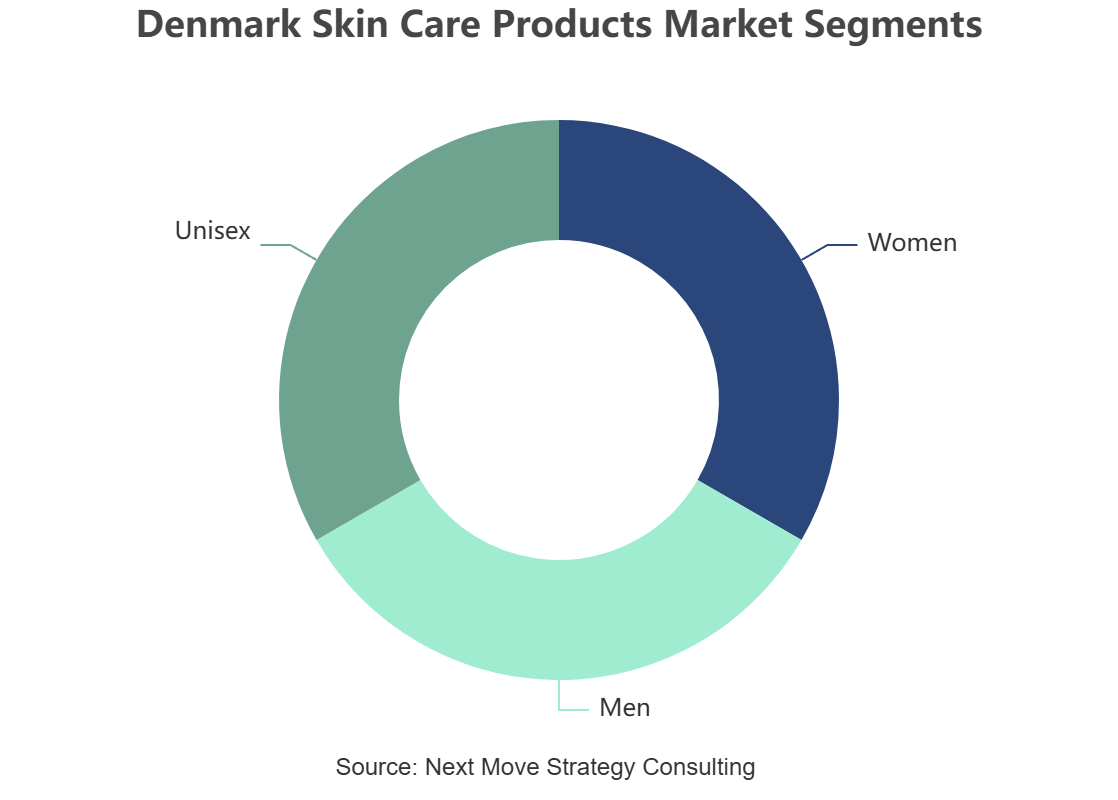
Based on consumer gender, the Denmark Skin Care Products Market is segmented into women, men, and unisex.
The market caters to a diverse consumer base through skincare products designed to meet varying skin concerns, routines, and lifestyle preferences. Through our assessment, we observed that consumers are placing greater emphasis on ingredient efficacy, sustainability, and skin compatibility, encouraging broader adoption of products across all gender segments. Women's skincare includes solutions for hydration, anti-ageing, brightening, and overall skin wellness, while men's products focus on daily grooming and skin maintenance. Unisex formulations continue to gain popularity as consumers increasingly favor inclusive, functional, and minimalist skincare products.
Price Point Analysis of Denmark in Care Products Industry:
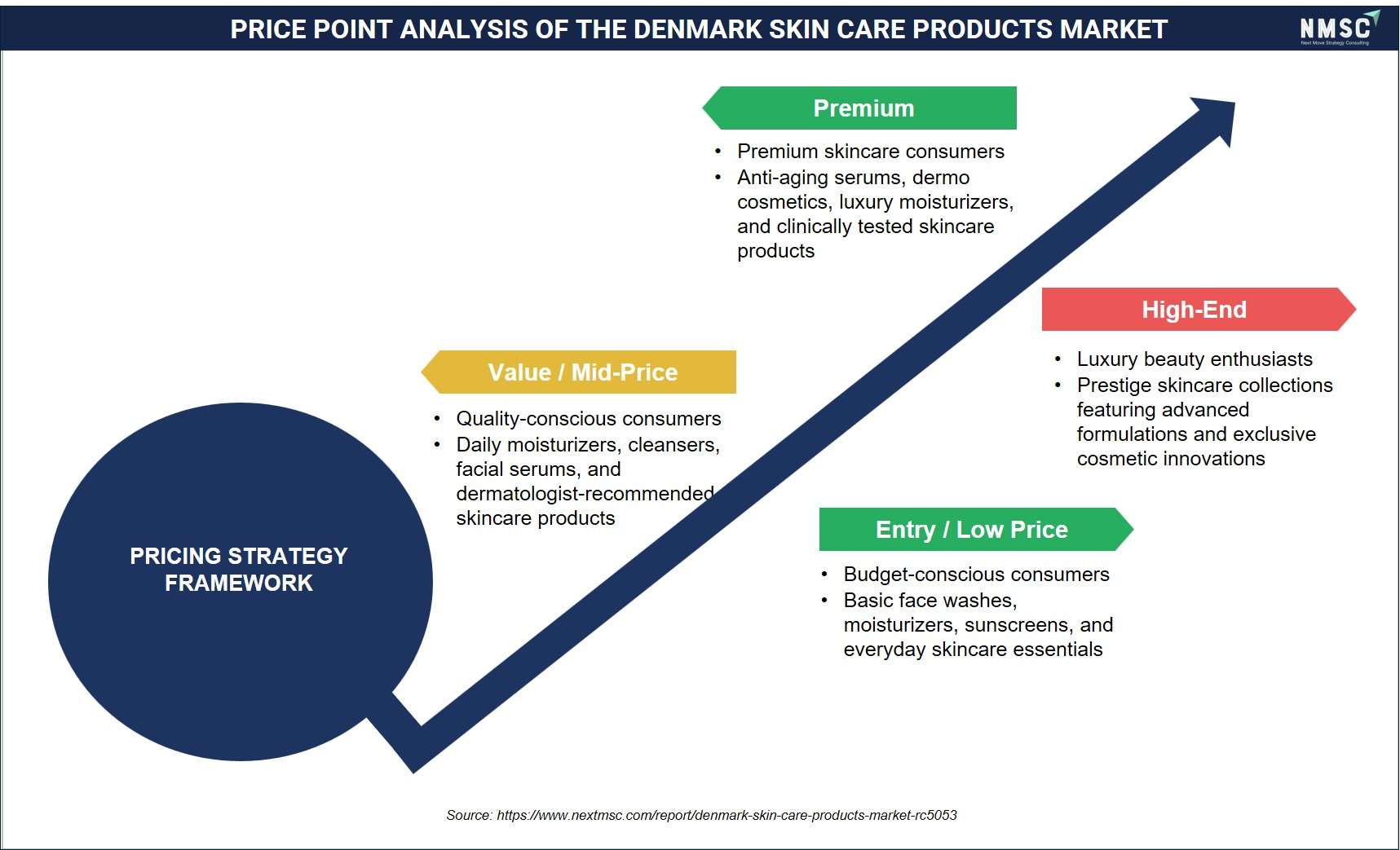
The above infographic presents a price point analysis of the Denmark skin care products market, outlining a tiered pricing strategy that spans budget-friendly essentials to premium clinical collections. Entry and value segments serve cost-conscious and quality-focused consumers with daily cleansers, moisturizers, and dermatologist-recommended products, while premium and high-end tiers cater to buyers seeking anti-aging serums, dermo cosmetics, and advanced formulations. Looking ahead, we observed that this diversified approach effectively addresses varying consumer needs and purchasing power across the Danish market.
Key Segments
By Product Type
-
Face Care
-
Cleansers
-
Foaming Cleansers
-
Oil and Balm Cleansers
-
Micellar Waters and Wipes
-
-
Moisturizers
-
Day Creams
-
Night Creams
-
Gel Moisturizers
-
Facial Oils
-
-
Treatments
-
Serums
-
Ampoules and Boosters
-
Peels and Exfoliants
-
Spot Treatments
-
-
Masks
-
Sheet Masks
-
Wash-Off Masks
-
Sleeping Masks
-
-
Eye Care
-
Lip Care
-
Toners and Mists
-
-
Body Care
-
Body Moisturizers
-
Body Treatments
-
Body Exfoliants
-
-
Hand and Foot Care
-
Hand Care
-
Foot Care
-
-
Sun Care
-
Sunscreen
-
After Sun
-
Self-Tanning
-
-
Other Skin Care
-
Sets and Bundles
-
Residual and Bundled Products
-
By Form
-
Cream and Lotion
-
Serum
-
Gel
-
Oil
-
Balm and Stick
-
Mask
-
Foam and Mousse
-
Spray and Mist
-
Wipe and Pad
-
Powder
-
Other
By Function
-
Cleanse
-
Hydrate
-
Treat
-
Protect
-
Exfoliate
-
Soothe
-
Brighten
-
Anti-Aging
-
Acne Care
-
Firming
-
Other
By Price Tier
-
Mass
-
Masstige
-
Premium
-
Luxury
By Distribution Channel
-
Offline
-
Mass Retail
-
Specialty Beauty
-
Pharmacy and Drugstore
-
Department Store
-
Professional and Clinic
-
Direct Selling
-
Travel Retail
-
Other Offline
-
-
Online
-
Brand Site
-
Marketplace
-
Retailer Site
-
By Consumer Gender
-
Women
-
Men
-
Unisex
By Consumer Age Group
-
Baby and Child
-
Adult
Competitive Landscape
The competitive landscape of the Denmark Skin Care Products Market is characterized by the strong presence of established multinational beauty conglomerates alongside specialized dermocosmetic and clinical skincare brands well-suited to Denmark’s discerning, sustainability-focused consumer base. Competitive differentiation increasingly depends on ingredient transparency, sustainability credentials, and pharmacy or specialty retail distribution strength rather than price competition alone, reflecting the premium and value-conscious positioning that characterizes Denmark’s mature skincare retail environment.
Key Players of the Denmark Skin Care Products Market:
-
Caudalie International UK Societas
-
Galderma Nordic, Filial af Galderma Nordic AB, Sverige
-
L'Occitane International SA
-
Clarins SA
-
Unilever Danmark A/S
-
KAO Denmark A/S
-
Oriflame Cosmetics SA
-
SISLEY ApS
-
DermaPharm A/S
-
TMC Nordic A/S
-
Lesley Cosmetics ApS
-
Amway Danmark ApS
-
Rituals Cosmetics Denmark ApS
Key players shaping this competitive ecosystem include Nu Skin Scandinavia A/S, Caudalie International UK Societas, Galderma Nordic, Filial af Galderma Nordic AB, Sverige, L'Occitane International SA, and others. These companies compete through sustainability credentials, clinical formulation credibility, and strong pharmacy and specialty retail partnerships across Denmark’s mature skincare market.
Consumer Behavior Analysis of the Denmark Skin Care Products Industry:
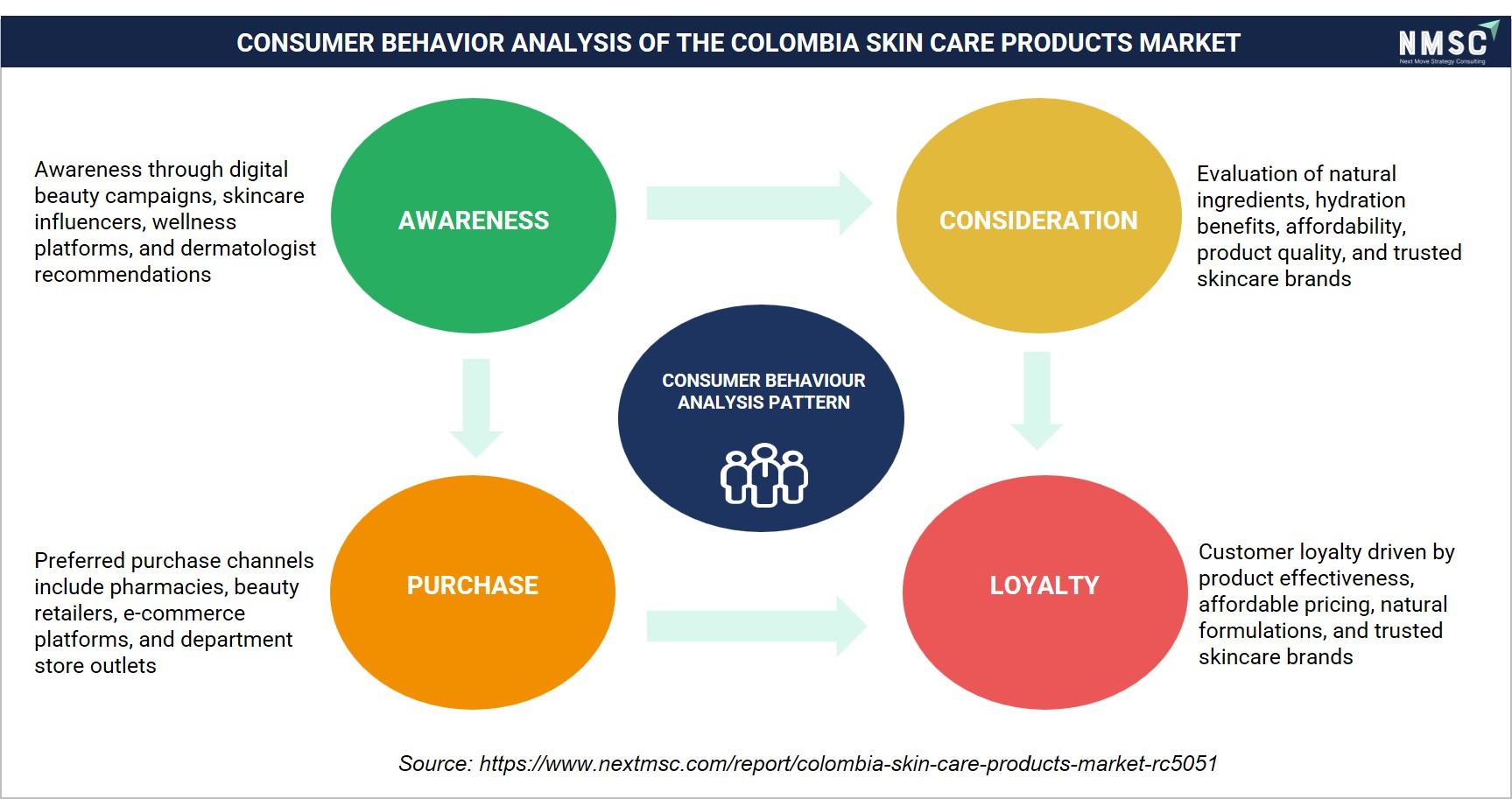
The above infographic presents a consumer behavior analysis of the Denmark skin care products market, mapping the journey from awareness to loyalty. Shaped by dermatologists, pharmacy recommendations, and scientific campaigns, consumers prioritize dermatologically tested formulations, ingredient safety, and clinical performance before purchasing through pharmacies, drugstores, online retailers, and specialty beauty stores. Looking ahead, we observed that loyalty is reinforced by proven efficacy, dermatologist trust, and formulation consistency, ensuring sustained brand engagement across the market.
Key Benefits for Stakeholders
Next Move Strategy Consulting (NMSC) presents a comprehensive analysis of the Denmark Skin Care Products Market, covering historical trends from 2020 through 2025 and detailed forecasts through 2035. Our study examines the market across all key segments including product type, form, function, price tier, distribution channel, consumer gender, and consumer age group, providing quantitative projections alongside insights into growth drivers, challenges, and investment opportunities within Denmark’s mature, sustainability-driven skincare ecosystem.
Our assessment provides brand owners, retailers, distributors, and investors operating in Denmark’s skincare market with actionable demand visibility across price tiers, distribution channels, and product categories. Stakeholders gain value through segment-level forecasting that supports product portfolio planning, channel investment decisions, and market entry strategies suited to Denmark’s sustainability-focused consumer base, clinical retail dynamics, and steady, premiumization-led growth environment, enabling informed capital allocation throughout the forecast period.
|
Parameters |
Details |
|
Customization Scope |
Free customization (equivalent to up to 80 analyst-working hours) after purchase. |
|
Pricing and Purchase Options |
Avail customized purchase options to meet your exact research needs. |
|
Approach |
In-depth primary and secondary research; proprietary databases; rigorous quality control and validation measures. |
|
Analytical Tools |
Porter’s Five Forces, SWOT, value chain, and Harvey ball analysis to assess competitive intensity, stakeholder roles, and relative impact of key factors. |
Conclusion
The Denmark Skin Care Products Market presents a stable, premiumization-driven growth trajectory underpinned by strong consumer demand for sustainable, clean-label, and clinically validated formulations within an already mature retail environment. With the market projected to grow from USD 1.71 billion in 2025 to USD 2.53 billion by 2035 at a CAGR of 2.92%, Denmark represents a steady, value-focused market shaped by an established competitive landscape spanning multinational beauty conglomerates and specialized dermocosmetic brands positioned to capture incremental premium growth.
About the Author
 Mayurima Roy
— Mayurima Roy is Research Analyst at Next Move Strategy Consulting, where she has spent 4 years working across the firm's full industry coverage rather than a single fixed vertical. Her work centers on structured research, ongoing trend tracking, competitive assessment, and insight-led content development, translating complex market data into clear, decision-ready narratives that support informed client decision-making across diverse global industries, market sectors, and world regions every day.
Mayurima Roy
— Mayurima Roy is Research Analyst at Next Move Strategy Consulting, where she has spent 4 years working across the firm's full industry coverage rather than a single fixed vertical. Her work centers on structured research, ongoing trend tracking, competitive assessment, and insight-led content development, translating complex market data into clear, decision-ready narratives that support informed client decision-making across diverse global industries, market sectors, and world regions every day.
About the Reviewer
 Supradip Baul
— Supradip Baul is an accomplished business consultant and strategist with over a decade of rich experience in market intelligence, strategy, technology, and business transformation. His work has included rigorous qualitative and quantitative analysis across multiple industries, helping clients shape investment decisions and long-term roadmaps. Earlier in his career, he was associated with Gartner, where he contributed to industry-leading reports and market share analyses. He has worked with leading global companies and holds an MBA with a dual specialization in Marketing and Finance.
Supradip Baul
— Supradip Baul is an accomplished business consultant and strategist with over a decade of rich experience in market intelligence, strategy, technology, and business transformation. His work has included rigorous qualitative and quantitative analysis across multiple industries, helping clients shape investment decisions and long-term roadmaps. Earlier in his career, he was associated with Gartner, where he contributed to industry-leading reports and market share analyses. He has worked with leading global companies and holds an MBA with a dual specialization in Marketing and Finance.
At Next Move Strategy Consulting, we understand that insightful market research is the cornerstone of successful business decisions. That's why we employ a robust and multifaceted approach, combining various methodologies to deliver the most accurate and actionable data for our clients.

Research Landscape
We navigate the world of research with two primary approaches:
Qualitative Approach
Our qualitative research methodologies involve immersive techniques such as in-depth interviews, focus groups, and observational studies. By engaging directly with individuals and stakeholders, we uncover valuable insights that quantitative data alone may overlook.

Quantitative Research
In tandem with qualitative methodologies, NMSC leverages the power of Quantitative Research to provide a robust foundation of numerical insights. Through systematic data collection and analysis, we quantify patterns, preferences, and market trends, offering a comprehensive view of the business landscape.
Our quantitative research approach employs diverse tools, including surveys, experiments, and statistical modelling. These methodologies enable us to gather data from a large and representative sample, ensuring the statistical significance of our findings. By employing structured questionnaires and standardized data collection methods, we guarantee the reliability and validity of the information we present to our clients.
Quantitative research is particularly effective in measuring the prevalence of trends, assessing market size, and gauging the impact of various factors on consumer behavior. The numerical precision attained through this approach equips our clients with actionable insights, facilitating data-driven decision-making and strategy formulation.


Our Specialized Toolbox for Industry-Specific Market Research
We deploy a specialized arsenal of techniques tailored to meet your unique requirements. Here's a glimpse into our comprehensive toolbox:

Information Procurement
The stage entails acquiring market data or relevant information through various sources and methodologies.


Market Research Approach
We utilize both top-down and bottom-up approaches in market research analysis to achieve a comprehensive understanding of the market dynamics, leveraging the broad perspective of industry trends and macroeconomic factors alongside detailed insights from specific segments and individual companies.

Porters Five Forces Analysis
We conduct Porter's Five Forces analysis to evaluate the competitive landscape of an industry, providing us with insights into factors that affect profitability and strategic positioning.

SWOT Analysis

Forecasting
We utilize a forecasting model to predict future consumption by considering parameters like population, economics, regulations, market competition, drivers, constraints, technology, and pricing. We also employ statistical techniques such as multilinear regression, exponential smoothing, moving average, ARIMA, and Monte Carlo simulations for accurate predictions. In econometric forecasting, we analyzed short-term and long-term event impacts, attributing values based on regulatory frameworks, economic factors, and market events.





 Speak to Our Analyst