Online Jewelry Market By Type (Fine Jewelry, Fashion Jewelry), By Product Category (Rings, Earrings, Necklaces and Pendants, Bracelets and Bangles, Mangalsutras, Others), By Price Segment (Luxury, Premium, Mass Market, Budget Fashion), By Business Model {Brand-owned (D2C) platforms, Omnichannel Legacy Brands, Digital Native Brands, and Others}, By Primary Purchase Occasion (Everyday Wear, Wedding and Bridal, Festive and Occasional Wear, Gifting) – Global Analysis and Forecast, 2026–2035
Industry: Retail and Consumer | Publishing Date: April 20, 2026 | Last Updated: September 30, 2026 | No of Pages: N/A | No. of Tables: N/A | No. of Figures: N/A | Format: PDF | Report Code: RC3913
Industry Outlook
The global Online Jewelry Market size was valued at USD 255.41 billion in 2025 and is expected to reach USD 302.54 billion by 2026. Looking ahead, the industry is projected to expand significantly, reaching USD 1388.92 billion by 2035, registering a CAGR of 18.5% from 2026 to 2035.
The industry is expanding steadily as rising household purchasing power encourages consumers to spend more on discretionary categories, including fine and fashion jewelry. As people have more income left after meeting essential expenses, they are increasingly willing to indulge in premium pieces, statement designs, and luxury accessories through digital platforms. Online shopping adds to this momentum by offering convenience, wider product visibility, and access to exclusive collections that are available in physical stores. For brands, this trend creates a strong opportunity to highlight premium and limited-edition pieces, elevate digital storefronts, and introduce flexible payment options that make higher-value purchases feel more accessible. Companies that align their messaging and product strategies with shifting consumer spending patterns are well-positioned to capture recurring demand and strengthen long-term loyalty in the expanding digital jewelry landscape.
Another major catalyst for the market is the continuous improvement in global digital infrastructure, which is bringing millions of new shoppers into the online ecosystem each year. As internet access becomes more reliable and widespread, particularly in emerging economies, jewelry brands gain the ability to reach customers far beyond traditional retail locations. This has fueled the rise of mobile-first shopping experiences, virtual try-ons, and hyper-personalized recommendations that make silver necklaces for sale more engaging and trustworthy. Retailers who invest in seamless websites, intuitive apps, and localized digital strategies more effectively attract first-time online buyers and build deeper engagement. By tapping into the widening base of digitally confident consumers, online jewelry companies expand their global footprint, unlock new revenue streams, and stay competitive in a fast-evolving marketplace.
What Are the Key Trends in the Online Jewelry Industry?
How Is the Online Jewelry Market Poised for Explosive E Commerce Growth?
The market is undergoing a fundamental shift as digital channels increasingly become the preferred destination for consumers seeking convenience, variety, and personalized experiences. Rising internet penetration, seamless digital payments, and tech-savvy younger buyers are driving this evolution, transforming how jewelry is discovered and purchased. According to a GJEPC backed report, online jewelry sales are projected to reach USD 39 billion by 2027. This rapid growth reflects not just a shift in consumer behavior, but also an opportunity for companies to strengthen global reach through digital storefronts, optimized mobile experiences, and immersive features like virtual try-on. For businesses, the actionable insight is to invest strategically in end-to-end e-commerce capabilities, including AI-driven personalization, robust logistics, and digital marketing that resonates with both domestic and international audiences. Embracing this trend will position brands to capture the expanding online demand while aligning with government-supported export initiatives.
How Is Augmented Reality Changing the Online Jewelry Shopping Experience?
The online jewelry market is seeing a shift as more brands use augmented reality and virtual try-on tools to make shopping more interactive and realistic. These technologies let customers see how rings, necklaces, and earrings will look on them through their phones or computers, helping them make confident choices without visiting a store. This approach is changing how people shop for jewelry online, making it more engaging and personal. For jewelry companies, adopting AR isn’t just a tech upgrade, it’s a way to stand out in a competitive market, reduce product returns, and encourage purchases. By adding AR features to mobile apps and websites, and pairing them with smart recommendations, brands create a smoother, fun shopping experience that keeps customers exploring and coming back.
How Is Sustainability Shaping the Online Jewelry Market?
Today’s jewelry buyers care more about ethical sourcing and environmental impact than ever before. Many prefer lab-grown diamonds, recycled metals, and certified ethical products because they want transparency about where their jewelry comes from. This shift is changing the market, pushing brands to showcase eco-friendly practices and the story behind each piece on their websites and apps. Highlighting ethical sourcing, promoting collections made from recycled or lab-grown materials, and clearly sharing these practices online strengthen a brand’s reputation, connect with younger, conscious consumers, and build trust. In a competitive digital marketplace, sustainability is a key factor that encourages customers to choose one brand over another.
What Are the Key Market Drivers, Breakthroughs, and Investment Opportunities That Will Shape the Online Jewelry Industry in the Next Decade?
The online jewelry industry is experiencing strong momentum as consumers increasingly embrace digital platforms for purchasing fine, fashion, and customised jewelery. This growth is driven by rising disposable incomes, evolving fashion preferences, and the convenience of browsing wide assortments from home. Advancements in digital technologies, such as virtual try-on tools, high-resolution product imaging, AI-driven personalisation, and seamless mobile shopping, are enhancing customer confidence and reducing the traditional hesitations associated with buying jewelry online. Brands and retailers that invest in immersive digital experiences, diversified product lines, and fast, reliable fulfilment are gaining a competitive edge as they meet the expectations of a more informed and digitally active consumer base.
However, the market also faces challenges, including intense competition between global and regional players, concerns around product authenticity, and the need to maintain secure and transparent online transactions. Logistics complexities, return policies for high-value items, and the difficulty of replicating an in-store luxury experience further add to operational pressures. Despite these constraints, companies that prioritize trust-building, offer certification transparency, adopt omnichannel strategies, and focus on agile supply chains are well-positioned to capture sustained demand. By delivering reliable quality, personalized offerings, and smooth digital experiences, fine jewelry e-commerce providers strengthen customer loyalty and secure long-term growth in an increasingly sophisticated and competitive marketplace.
Growth Drivers:
How Is Rising Household Disposable Income Boosting the Online Jewelry Market?
Rising household disposable income is significantly boosting the online jewelry market demand by enabling consumers to spend more confidently on premium and personalized pieces. As financial comfort increases, buyers are more willing to explore higher-quality options, including fine jewelry, certified diamonds, and designer collections available through digital platforms. With greater purchasing power, consumers also gravitate toward convenience, using online configurators, virtual try-ons, and transparent pricing to compare styles and customize designs. This shift supports higher average order values and encourages repeat purchases. Combined with expanding digital literacy and secure payment systems, increased disposable income is accelerating the growth and sophistication of the online jewelry shopping experience.
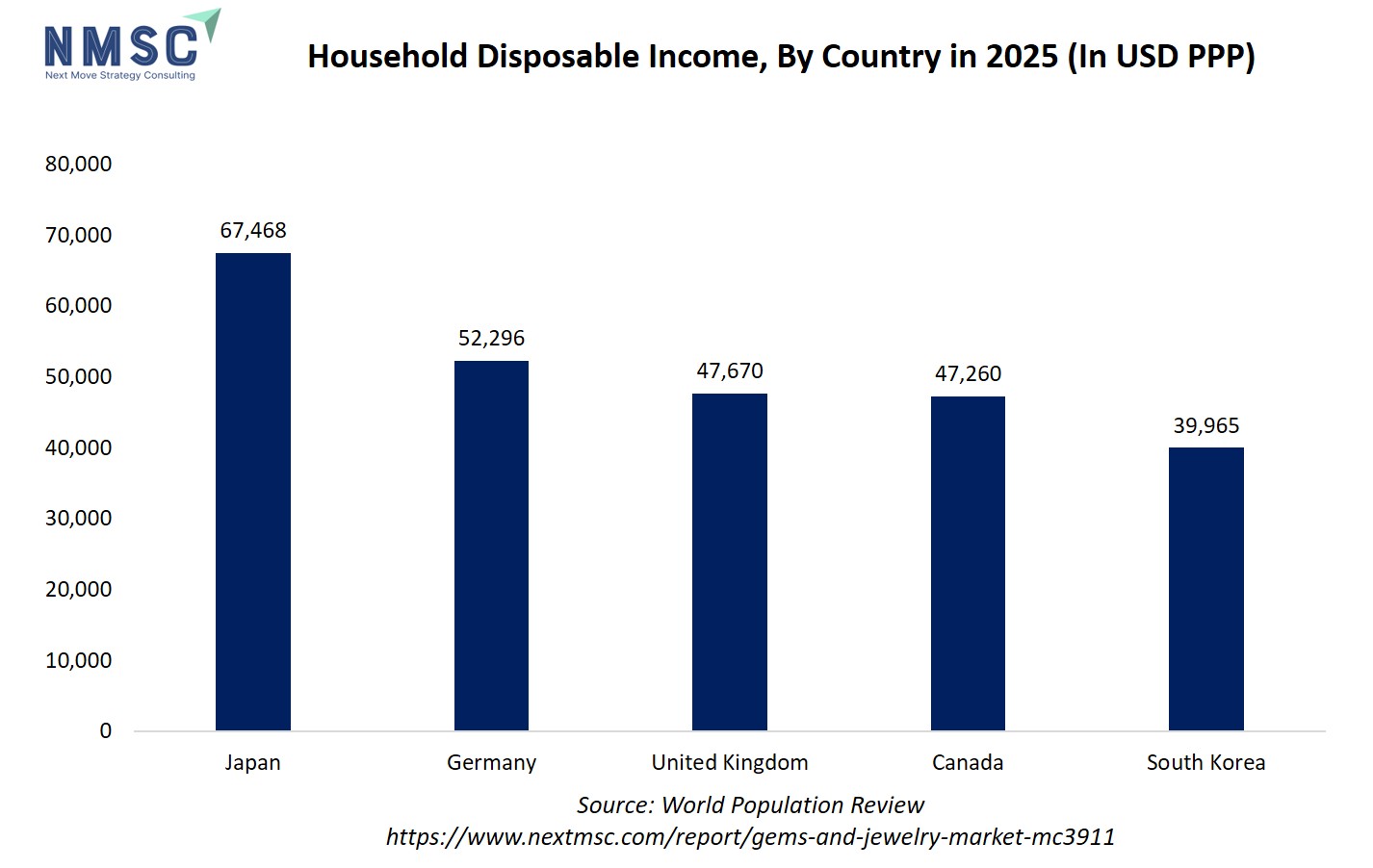
This chart shows the projected household disposable income by country in 2025, with Japan leading significantly, followed by Germany, the United Kingdom, Canada, and South Korea. Higher disposable income typically translates to more discretionary spending, which positively impacts demand for luxury and non-essential products like online jewelry. Countries at the top of this list, especially Japan and Germany, are likely to see greater growth in the market as consumers will have more financial flexibility to spend on premium goods, digital retail experiences, and gifting through e-commerce channels, making these markets particularly attractive for jewelry brands and platforms aiming for expansion in 2025.
How Is Increasing Global Internet Access Driving the Online Jewelry Industry?
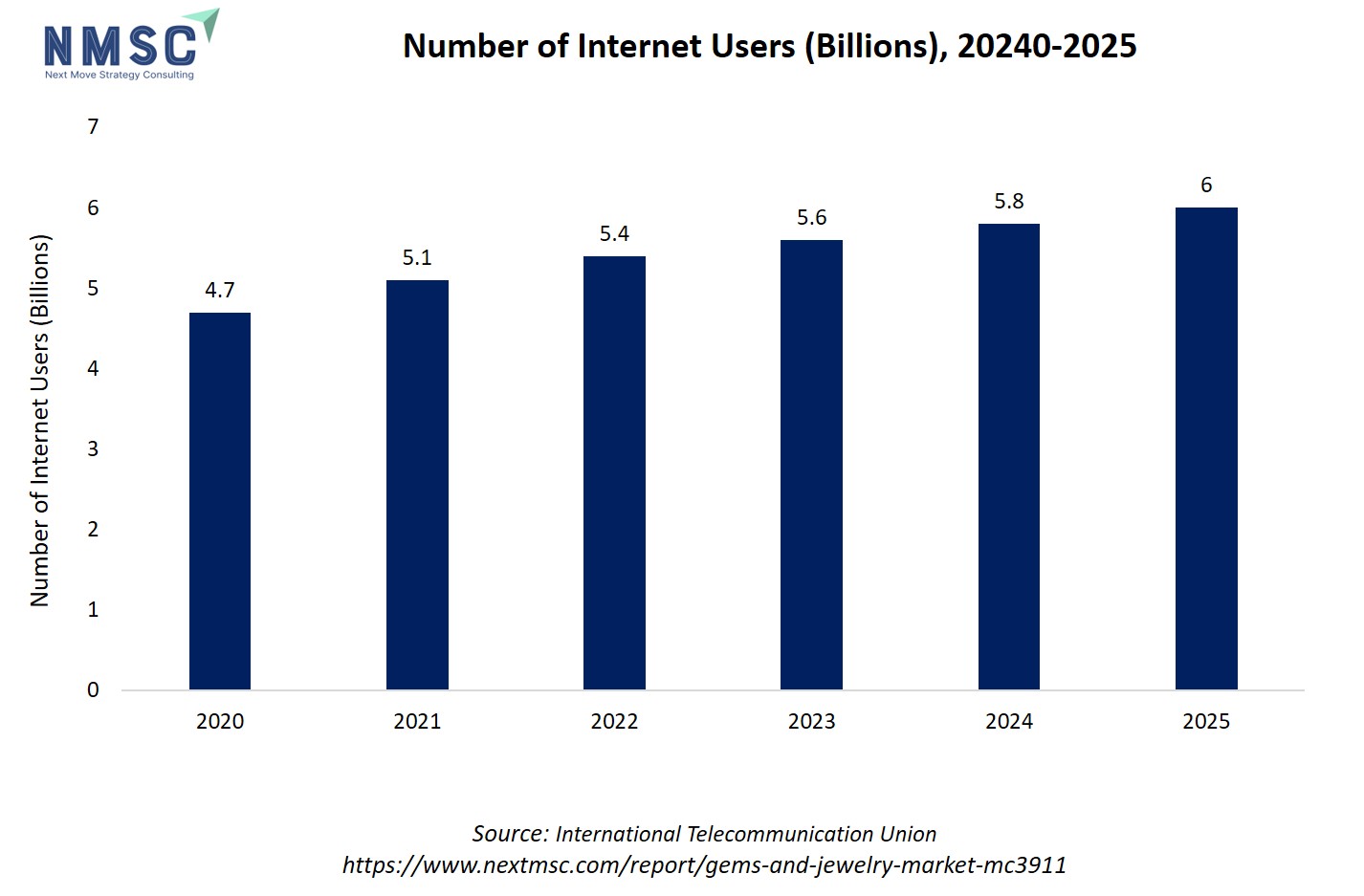
The growth of the online jewelry industry is being fueled by the rapid increase in global internet access, which allows more people to shop online than ever before. According to the International Telecommunication Union, about 6 billion people, or roughly 74% of the world’s population, are now using internet. As internet connectivity improves, especially in emerging and middle income regions, jewelry brands reach a much larger audience of digitally savvy consumers. Online retailers take advantage of this trend by enhancing their digital platforms, making websites and apps mobile-friendly, and tailoring products and marketing to local preferences. Introducing entry-level luxury pieces and partnering with regional logistics providers help attract first-time online buyers. By leveraging the growing digital infrastructure, jewelry companies expand their reach, increase sales, and tap into new markets more effectively.
Growth Inhibitors:
How Is Rising Inflation Slowing Down the Online Jewelry Market?
A major challenge for the market is high inflation, which reduces how much people spend on non-essential items. According to OECD data, inflation in member countries has stayed high in 2025. As everyday costs go up, households are more likely to focus on essentials and cut back on luxury purchases like rings, necklaces, and other jewelry. This slow growth for online jewelry sellers, even among consumers with higher incomes. To overcome this, brands offer more affordable designs, highlight value-for-money craftsmanship, or provide flexible payment options such as instalments or buy-now-pay-later plans. By adjusting their products and pricing to match customers’ tighter budgets, online jewelry companies continue to attract buyers and maintain sales despite the inflationary pressures.
Growth Opportunities:
How Is Better Internet Connectivity Creating Growth Opportunities for Market?
A major growth opportunity for the online jewelry industry comes from faster and more reliable internet, due to the spread of fibre broadband and 5G networks. According to OECD data, the availability of gigabit broadband and the amount of mobile data used per subscription have both increased significantly. This means more consumers enjoy smooth, high-quality online shopping experiences, from detailed product images to virtual try-ons and easy mobile payments. For jewelry brands, this is a chance to create richer, more engaging digital storefronts that feel like a luxury shopping experience. Features like 3D product views, virtual showrooms, and live stylist guidance make it easier for customers to explore and purchase jewelry online. By taking advantage of faster connectivity, online jewelry companies attract more customers, improve buying confidence, and increase sales.
How Online Jewelry Industry Segmented in This Report, and What Are the Key Insights from the Segmentation Analysis?
By Product Insights
Is the Online Jewelry Industry in 2025 Shaped by Diverse Products?
Based on product, the market is segmented into gold jewelry, diamond jewelry, platinum jewelry, silver jewelry, gemstone jewelry and fashion jewelry.
The gold jewelry segment remains one of the most influential categories in the market, driven by its broad appeal, cultural significance, and versatility across consumer groups. Within this segment, plain gold, studded gold, and gold coins offer distinct value propositions that attract different types of online buyers. Plain gold pieces appeal to consumers seeking timeless, everyday elegance, while studded gold designs featuring diamonds or gemstones cater to those looking for premium, statement-oriented styles. Gold coins, on the other hand, blend ornamental value with investment appeal, making them popular among buyers who prioritize both aesthetic and long-term worth. Together, these varied offerings strengthen the digital gold jewelry ecosystem, enabling brands to target multiple price points, style preferences, and purchase motivations through a single segment.
By Business Model Insights
Is the Online Jewelry Market in 2025 Being Shaped by Business Model?
On the basis of business model, the market is segmented into brand led and marketplace led.
Brand Led models play a crucial role in shaping the online jewelry market, allowing companies to maintain full control over product storytelling, pricing, and customer experience through brand websites and brand apps. These platforms offer a curated environment where brands highlight craftsmanship, sustainability, and design identity while delivering personalized journeys using tools like virtual try-ons, style advisors, and loyalty programs. With stronger ownership of consumer data, brands tailor recommendations, improve retention, and build deeper emotional connections. This model supports premium positioning and consistent brand perception, making it ideal for companies that prioritize exclusivity, differentiation, and long-term customer relationships.
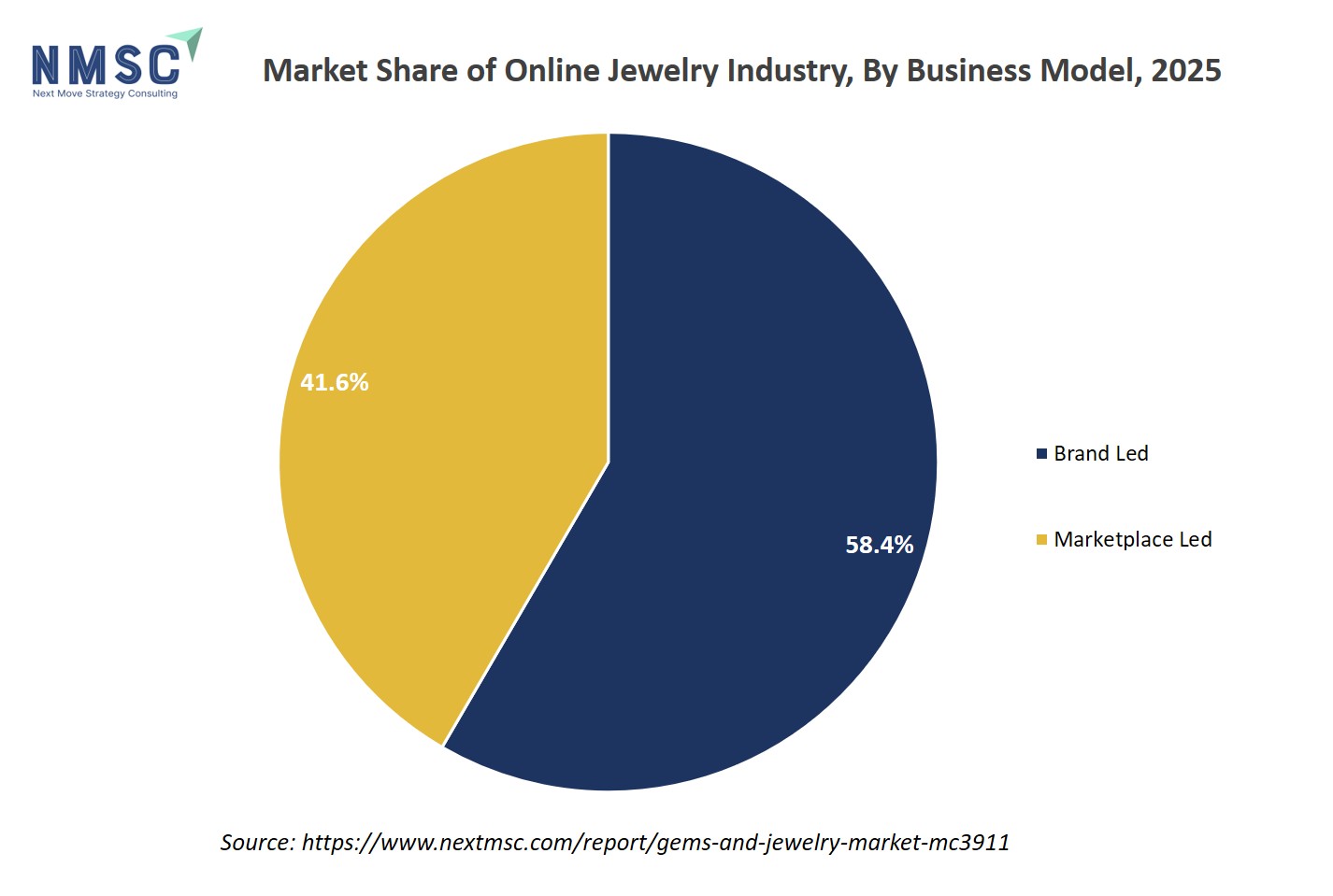
Marketplace led models, including e-commerce marketplaces and multi-brand online stores, expand reach by placing jewelry brands in high-traffic digital ecosystems where consumers compare styles, prices, and materials easily. Marketplaces offer scale, convenience, and broader visibility, attracting buyers who value assortment and competitive pricing. For emerging or niche jewelry brands, multi-brand platforms provide access to established audiences, reducing customer acquisition costs and accelerating growth. This model benefits companies aiming for rapid expansion and accessibility, as the wide exposure and continuous demand within marketplaces help drive sales volume and brand discovery across diverse consumer segments.
By Price Tier Insights
How Are Price Tier Driving the Online Jewelry Industry in 2025?
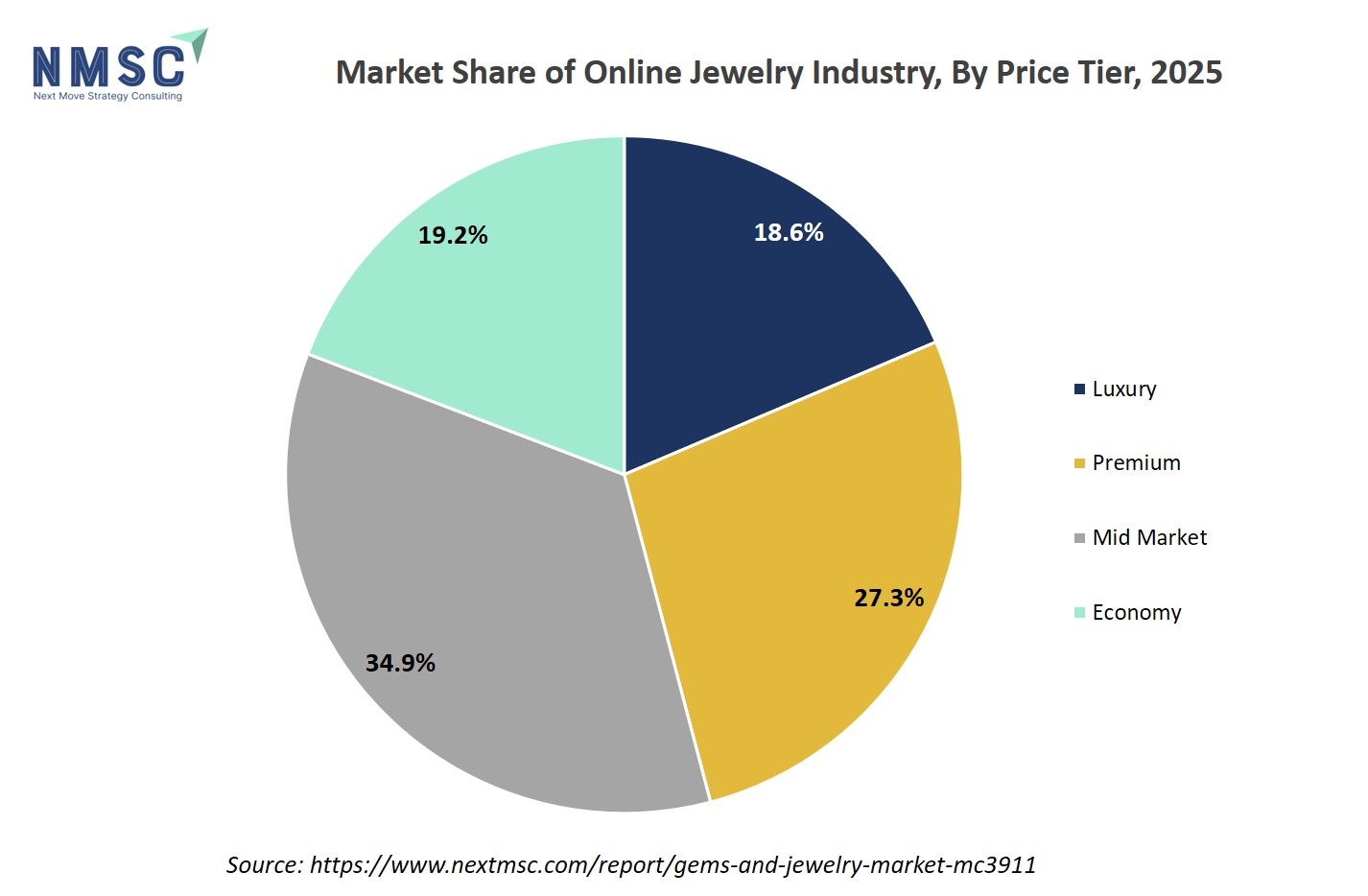
On the basis of price tier, the market is segmented into luxury, premium, mid-market and economy.
The Luxury price tier represents the highest end of the market, defined by exceptional craftsmanship, rare materials, artistic design, and strong brand heritage. Consumers in this segment seek exclusivity and long-lasting value, purchasing from renowned global houses that offer bespoke pieces, high-end collections, and immersive digital shopping experiences. Luxury brands focus heavily on storytelling, ethical sourcing, and superior service, such as virtual consultations and personalised packaging, to recreate the prestige of in-store luxury within an online environment. This tier strengthens the market by attracting affluent buyers who prioritize authenticity, design excellence, and timeless investment quality.
The Premium price tier caters to customers who want high-quality jewelry with refined aesthetics but at more accessible price points than luxury offerings. Brands in this segment balance fine materials, modern craftsmanship, and thoughtful design with affordability, making premium jewelry appealing for both gifting and self-purchase. Online, this tier thrives through contemporary collections, strong visual merchandising, and features like virtual try-ons or customisation tools. Premium players benefit from rising demand for everyday fine jewelry and value-driven luxury, positioning themselves as stylish yet attainable options for a broad and growing digital audience.
By Application Insights
Which Application is Driving the Online Jewelry Market in 2025?
On the basis of application, the market is segmented into personal use, ceremonial use and gifting use.
The personal use segment plays a central role in shaping the online jewelry market, driven by evolving lifestyle needs and the growing preference for self-expression through accessories. This category includes daily wear, fashion and styling, and occasion wear, each serving a distinct consumer mindset. Daily wear pieces, like minimal gold studs, delicate chains, or simple rings, appeal to buyers seeking comfort, durability, and versatility for everyday use. Fashion and styling jewelry captures trend-focused consumers who enjoy refreshing their look frequently with contemporary designs that complement outfits and personal aesthetics. Occasion wear, on the other hand, includes more elaborate pieces chosen for parties, celebrations, or special events where elegance and visual impact matter. Together, these subsegments reflect how online shoppers increasingly view jewelry as both a personal statement and an extension of their lifestyle, encouraging brands to offer diverse styles, easy customisation, and seamless digital experiences that support frequent and intentional purchasing decisions.
Regional Outlook
The online jewelry market is geographically studied across North America, Europe, Asia Pacific, the Middle East & Africa, and Latin America and each region is further studied across countries.
Online Jewelry Market in North America
A key driver for the online jewelry market in North America is the growing consumer preference for personalised and immersive shopping experiences. Jewelry brands are increasingly using digital tools, such as virtual try-ons and customization platforms, to engage shoppers directly online. This shift toward interactive and tailored experiences encourages consumers to purchase premium and ethically sourced pieces through digital channels, strengthening the overall growth of the market in the region.
Online Jewelry Market in the United States
In the U.S., a significant driver of the market is the growing emphasis on sustainable and ethically sourced products. Modern consumers are becoming more conscious of the environmental and social impact of their purchases, actively seeking brands that prioritize transparency in sourcing and responsible craftsmanship. Jewelry companies are responding by highlighting ethical practices, using recycled metals, conflict-free stones, and sustainable production methods. This focus on sustainability resonates with buyers who value both quality and conscience, encouraging repeat engagement and stronger brand loyalty. As a result, online platforms that effectively communicate these values are seeing increased consumer trust and higher adoption, which in turn fuels the expansion and overall growth of the U.S. market.
Online Jewelry Market in Canada
In Canada, the online jewelry market is experiencing a growing demand for convenience and seamless digital shopping experiences. Consumers are increasingly looking for platforms that allow them to browse, customize, and purchase jewelry from the comfort of their homes, without compromising on quality or service. Online retailers that offer easy navigation, detailed product visualisation, and reliable delivery options are meeting this demand, making digital channels a preferred choice for Canadian shoppers. This shift toward convenience-driven online purchasing is helping to expand the reach of jewelry brands and accelerate growth in Canada’s market.
Online Jewelry Market in Europe
In Europe, a prominent driver of the market is the growing influence of fashion trends and social media on consumer purchasing behaviour. Shoppers are increasingly inspired by digital content, influencer recommendations, and style guides, which encourage them to explore and buy jewelry online. Brands that actively engage with consumers through social platforms, offer trend-driven collections, and provide visually appealing online experiences are able to capture attention and drive sales. This strong connection between fashion consciousness and digital engagement is fueling the expansion of the market across European countries.
Online Jewelry Market in the United Kingdom
In the UK, a key driver of the online jewelry market is the rising popularity of bespoke and personalized pieces. Consumers are seeking unique designs that reflect their individual style or commemorate special occasions, and online platforms make it easier to customize jewelry to these specific preferences. Retailers offering flexible design tools, engraving options, and made-to-order services are meeting this demand, enhancing customer satisfaction and engagement. This focus on personalization is driving growth in the UK’s market, as more shoppers turn to digital channels for one-of-a-kind pieces.
Online Jewelry Market in Germany
A key driver of the online jewelry market in Germany is the country’s strong online shopping penetration. According to Destatis, 83% of German internet users shopped online in 2024, indicating a large and digitally experienced consumer base. This widespread adoption of e-commerce allows jewelry brands launching online in Germany to effectively reach and engage shoppers, offer seamless purchasing experiences, and showcase a range of products from premium to everyday jewelry, thereby driving growth in the country’s market.
Online Jewelry Market in France
Within Europe’s growing e-commerce landscape, France’s strong digital engagement is creating opportunities for jewelry brands to connect with a broader online audience. French consumers are increasingly shopping across multiple categories, including fashion and accessories, which allows jewelry companies to tap into this digital spending behavior. By leveraging online platforms, brands showcase their collections, engage consumers with personalized experiences, and capture a larger share of the market, driving growth in France’s online jewelry sector.
Online Jewelry Market in Italy
In Italy, the online jewelry market is driven by the country’s rich heritage of craftsmanship and design, which fuels demand for high-quality, artisanal pieces. Italian consumers increasingly value unique and well-crafted jewelry, and online platforms allow brands to showcase intricate designs and reach buyers beyond traditional retail locations. By highlighting craftsmanship, storytelling, and exclusive collections, jewelry brands attract discerning customers and expand their digital presence, supporting growth in Italy’s market.
Online Jewelry Market in Spain
In Spain, a significant driver of the market is the growing influence of social media and digital marketing on consumer behaviour. Spanish shoppers are increasingly inspired by trends showcased on platforms like Instagram and TikTok, seeking stylish and fashionable jewelry that reflects current styles. Jewelry brands that actively engage with consumers through visually appealing content, influencer collaborations, and interactive campaigns are able to capture attention and drive online purchases, fueling growth in Spain’s digital jewelry market.
Online Jewelry Market in the Nordics
Nordic European countries, such as Denmark and Sweden, are highly favourable markets for online jewelry due to their advanced digital adoption and strong purchasing power. Consumers in these regions are digitally savvy and accustomed to shopping online, which makes them receptive to premium and design-focused jewelry offerings. This combination of wealth and e-commerce maturity allows brands to effectively target discerning buyers, showcase high-quality collections, and drive growth in the Nordic market.
Online Jewelry Market in the Asia-Pacific
Across the Asia-Pacific region, the online jewelry market is being driven by increasing digital connectivity and the expanding middle class. In markets such as India and China, consumers are becoming more comfortable with online shopping and have higher disposable income, creating opportunities for jewelry brands to grow their presence. This environment enables brands to reach a wider audience, offer diverse collections, and even explore cross-border sales, fueling the expansion of the market in the region.
Online Jewelry Market in China
China’s online jewelry market is being fueled by a tech-savvy population and the widespread use of mobile commerce. The country’s mature e-commerce ecosystem allows jewelry brands to effectively utilise digital platforms and mobile payment solutions to reach consumers. This strong digital infrastructure supports seamless online shopping experiences, helping brands showcase their collections, engage buyers, and drive growth in China’s online jewelry sector.
Online Jewelry Market in Japan
In Japan, a key driver of the market is the strong consumer preference for high-quality, branded, and luxury products. Japanese shoppers value craftsmanship, brand reputation, and attention to detail, and online platforms allow jewelry brands to showcase these attributes effectively. By offering curated collections, limited-edition pieces, and reliable e-commerce experiences, brands attract discerning customers and strengthen their presence in Japan’s digital jewelry market.
Online Jewelry Market in India
A significant driver of the online jewelry market in India is the robust investment momentum within the country’s e-commerce sector. In 2024–25, e-commerce attracted USD 3.1 billion across 79 deals, highlighting strong investor confidence in the potential of digital retail. This surge of capital is enabling online jewelry brands to scale their operations, enhance and optimize digital platforms, and offer a wider range of products tailored to diverse consumer preferences. It also allows companies to strengthen logistics, improve customer service, and implement targeted marketing strategies that reach both urban centers and emerging towns. By supporting innovation, technology adoption, and strategic expansion, this favorable investment climate is playing a crucial role in accelerating the growth and maturity of India’s market.
Online Jewelry Market in South Korea
South Korea’s online jewelry market is being driven by a digitally savvy and design-conscious consumer base. The country’s advanced e-commerce infrastructure and familiarity with online shopping make it an ideal environment for premium and fashion-focused jewelry. Brands that offer stylish, high-quality collections and seamless digital experiences are able to engage discerning buyers effectively, fueling growth in South Korea’s online jewelry sector.
Online Jewelry Market in Taiwan
In Taiwan, a key driver of the online jewelry market is the growing interest in personalized and customizable pieces. Consumers increasingly seek jewelry that reflects their individual style or commemorates special occasions, and online platforms make it easier for brands to offer tailored options. By providing customization tools, exclusive designs, and interactive shopping experiences, jewelry retailers attract engaged buyers and expand their digital presence, supporting growth in Taiwan’s market.
Online Jewelry Market in Indonesia
In Indonesia, the online jewelry market is being fueled by a digitally connected and increasingly affluent consumer base. As more shoppers become comfortable with mobile-first commerce and online shopping, jewelry brands have the opportunity to reach customers who traditionally purchased offline. By leveraging digital channels, companies expand their reach, showcase diverse collections, and engage new audiences, driving growth in Indonesia’s online jewelry sector.
Online Jewelry Market in Australia
In Australia, the online jewelry market is being supported by a strong e-commerce ecosystem and a consumer base with considerable purchasing power. Jewelry brands use digital platforms to reach customers across the country, offering premium collections and personalized services that cater to diverse tastes. This combination of infrastructure and consumer readiness helps drive the growth of Australia’s online jewelry sector.
Online Jewelry Market in Latin America
In Latin America, a key driver of the market is the increasing adoption of mobile commerce and social media shopping. Consumers in the region are becoming more comfortable discovering and purchasing products through smartphones and digital platforms, which allows jewelry brands to showcase their collections directly to engaged audiences. By leveraging social media campaigns, influencer partnerships, and interactive online experiences, brands expand their reach, build brand awareness, and drive growth in the Latin American market.
Online Jewelry Market in the Middle East & Africa
In the Middle East and Africa, a key driver of the market is the rising demand for luxury and statement pieces among younger, digitally connected consumers. As more shoppers in the region turn to online platforms for convenience and variety, jewelry brands tap into this trend by offering exclusive designs, limited-edition collections, and personalized experiences. This growing affinity for premium and distinctive jewelry online is helping to expand the market and strengthen digital retail channels across the region.
Competitive Landscape
Which Companies Dominate the Online Jewelry Industry and How Do They Compete?
Leading companies in the online jewelry industry, such as Signet Jewelers Limited, Pandora A/S, Brilliant Earth Group, Inc., BlueStone Jewellery & Lifestyle Pvt Ltd, Mejuri Inc., Chow Sang Sang Holdings International Ltd., Luk Fook Holdings (International) Ltd., Swarovski AG, Monica Vinader Ltd., Gorjana & Griffin, Inc., GIVA Jewellery Pvt Ltd, PDPAOLA S.L., Missoma Ltd., Catbird NYC, Inc., Aurate New York LLC, Astrid & Miyu Ltd., BaubleBar, Inc., Stone and Strand, Inc., Kinn Studio, Inc., Melorra Jewellery Pvt. Ltd, have built strong competitive positions through brand strength, digital excellence, and product innovation. Mejuri and Brilliant Earth emphasize modern, ethically sourced, and customizable fine jewelry, appealing to digitally savvy consumers seeking transparency and craftsmanship. Pandora leverages its global recognition and omnichannel presence to deliver consistent brand experiences across markets, while Richemont and LVMH strengthen the premium and luxury segments with high-end jewelry, superior design capabilities, and strong online boutiques. These companies differentiate themselves through storytelling, digital-first retail strategies, and strong customer engagement, enabling them to attract loyal buyers in a rapidly expanding e-commerce environment.
Market Dominated by Online Jewelry Giants and Specialists
The online jewelry industry is shaped by a mix of global luxury houses and agile digital-first brands, each contributing uniquely to the industry’s evolution. Major players like Mejuri Inc., Brilliant Earth, Pandora, KAY.com, Richemont, and LVMH leverage strong brand heritage, extensive product lines, and sophisticated e-commerce ecosystems to reach broad audiences and set the standard for quality, design, and customer experience. Meanwhile, specialized and digitally native brands such as The Future Rocks Company, Eternate, GIVA Jewelry, VRAI by Diamond Foundry, Swarovski, Kendra Scott, Anna Sheffield, GrownBrilliance.com, and Kinn focus on niche strengths, from lab-grown diamonds and sustainability to contemporary craftsmanship and personalized design. Together, these companies create a balanced market landscape where global giants drive scale and consistency, while innovative niche brands push creativity, ethical sourcing, and digital engagement, fostering healthy competition and accelerating the growth of the online jewelry industry.
Innovation and Adaptability Drive Market Success
Innovation is a key driver of success in the online jewelry market, with companies continually developing new products and applications to meet evolving consumer demands. VRAI by Diamond Foundry demonstrated how innovation and adaptability are becoming essential drivers of success in the market with its launch of the world’s first Bitcoin-backed lab-grown diamonds. By merging sustainable fine jewelry with digital-asset ownership, the brand is tapping into a new generation of tech-savvy, investment-minded consumers who expect modern value propositions beyond traditional luxury. This initiative not only reinforces VRAI’s leadership in lab-grown diamonds but also highlights how online jewelry brands differentiate themselves through bold, technology-driven offerings. As digital culture continues to shape consumer behaviour, such hybrid concepts help brands attract new audiences, strengthen engagement, and stay competitive in an increasingly innovation-led market landscape.
List of Key Online Jewelry Companies
-
Signet Jewelers Limited
-
Pandora A/S
-
Brilliant Earth Group, Inc.
-
BlueStone Jewellery & Lifestyle Pvt Ltd
-
Mejuri Inc.
-
Chow Sang Sang Holdings International Ltd.
-
Luk Fook Holdings (International) Ltd.
-
Swarovski AG
-
Monica Vinader Ltd.
-
Gorjana & Griffin, Inc.
-
GIVA Jewellery Pvt Ltd
-
PDPAOLA S.L.
-
Missoma Ltd.
-
Catbird NYC, Inc.
-
Aurate New York LLC
-
Astrid & Miyu Ltd.
-
BaubleBar, Inc.
-
Stone and Strand, Inc.
-
Kinn Studio, Inc.
-
Melorra Jewellery Pvt. Ltd
What Are the Latest Key Industry Developments?
-
November 2024 - Mejuri Inc. strengthened its position in the online jewelry market by expanding its omnichannel footprint with a new store at Square One in Mississauga in November 2024. This move supports its digital-first strategy by connecting its strong online presence with experiential retail, helping drive brand visibility and customer engagement across both channels.
What Are the Key Factors Influencing Investment Analysis & Opportunities in the Online Jewelry Market?
Investment in the online jewelry industry is increasingly driven by the demand for convenient, personalized, and digitally immersive shopping experiences. Investors are attracted to companies that leverage advanced e-commerce technologies, such as augmented reality try-ons, AI-powered recommendations, and seamless mobile payment solutions, alongside strong branding and design capabilities. Firms that offer curated collections, flexible payment options, and direct-to-consumer models are particularly appealing, as they capture a wider range of consumer segments, from fashion-conscious millennials to high-net-worth buyers seeking premium or ethically sourced pieces. Strategic investment decisions focus on companies with scalable digital platforms, strong logistics networks, and the ability to integrate offline and online touchpoints, providing a seamless customer journey and fostering long-term loyalty.
Valuations in the online jewelry sector are influenced by brand differentiation, operational efficiency, and the ability to deliver high-quality products and engaging experiences consistently. Companies that combine innovative digital features with strong supply chain management, ethical sourcing practices, and data-driven marketing strategies tend to attract higher investor interest. Geographic regions with high internet penetration, growing disposable incomes, and mature e-commerce ecosystems, such as North America, Europe, and Asia-Pacific are emerging as key growth and investment hotspots. Firms that align technical and operational excellence with strategic positioning in these markets are best poised to capitalize on the rising global demand for online jewelry.
Key Benefits for Stakeholders:
Next Move Strategy Consulting (NMSC) presents a comprehensive analysis of the online jewelry market trends, covering historical trends from 2020 through 2025 and offering detailed forecasts through 2035. Our study examines the market at regional and country levels, providing quantitative projections and insights into key growth drivers, challenges, and investment opportunities across all major online jewelry segments.
The online jewelry industry creates value for a wide spectrum of stakeholders by combining digital convenience with evolving consumer preferences for personalized and accessible luxury. Investors benefit from the sector’s strong e-commerce expansion and the growing shift toward premium, design-led brands that scale efficiently online. Brands and retailers gain access to broader audiences, lower operational costs, and the ability to leverage data-driven insights for targeted marketing and curated product offerings. Manufacturers and designers benefit from rising demand for customizable, ethically sourced, and niche jewelry collections, while logistics and technology partners find opportunities in improved delivery networks, virtual try-on tools, and secure payment systems. This interconnected ecosystem supports shared growth, where innovation in digital experiences, brand differentiation, and consumer trust fuels long-term value for both market participants and customers worldwide.
Report Scope:
|
Parameters |
Details |
|
Market Size in 2026 |
USD 302.54 billion |
|
Revenue Forecast in 2035 |
USD 1388.92 Billion |
|
Growth Rate |
CAGR of 18.5% from 2026 to 2035 |
|
Analysis Period |
2025–2035 |
|
Base Year Considered |
2025 |
|
Forecast Period |
2026–2035 |
|
Market Size Estimation |
Billion (USD) |
|
Growth Factors |
|
|
Companies Profiled |
20 |
|
Countries Covered |
33 |
|
Market Share |
Available for 10 companies |
|
Customization Scope |
Free customization (equivalent to up to 80 analyst-working hours) after purchase. Addition or alteration to country, regional & segment scope. |
|
Pricing and Purchase Options |
Avail customized purchase options to meet your exact research needs. |
|
Approach |
In-depth primary and secondary research; proprietary databases; rigorous quality control and validation measures. |
|
Analytical Tools |
Porter's Five Forces, SWOT, value chain, and Harvey ball analysis to assess competitive intensity, stakeholder roles, and relative impact of key factors. |
Key Market Segments
By Type
-
Fine Jewelry
-
Gold Jewelry
-
Plain Gold Jewelry
-
Studded Gold Jewelry
-
Diamond Studded Gold Jewelry
-
Gemstone Studded Gold Jewelry
-
-
-
Diamond Jewelry
-
Solitaire Jewelry
-
Diamond Fashion Jewelry
-
-
Silver Jewelry
-
Sterling Silver Jewelry
-
Artisan or Oxidized Silver Jewelry
-
-
Platinum Jewelry
-
-
Fashion Jewelry
-
Imitation Jewelry
-
Designer Fashion Jewelry
-
By Product Category
-
Rings
-
Earrings
-
Necklaces and Pendants
-
Bracelets and Bangles
-
Mangalsutras
-
Other Categories
By Price Segment
-
Luxury
-
Premium
-
Mass Market
-
Budget Fashion
By Business Model
-
Brand-owned (D2C) platforms
-
Omnichannel Legacy Brands
-
Digital Native Brands
-
-
Multi Vendor Online Marketplaces
-
Horizontal General Marketplaces
-
Vertical Jewelry Specific Marketplaces
-
By Primary Purchase Occasion
-
Everyday Wear
-
Wedding and Bridal
-
Festive and Occasional Wear
-
Gifting
Geographical Breakdown
-
North America: U.S., Canada, and Mexico.
-
Europe: UK, Germany, France, Italy, Spain, Sweden, Denmark, Finland, the Netherlands, and rest of Europe.
-
Asia Pacific: China, India, Japan, South Korea, Taiwan, Indonesia, Vietnam, Australia, Philippines, Malaysia and rest of APAC.
-
Middle East & Africa (MEA): Saudi Arabia, UAE, Egypt, Israel, Turkey, Nigeria, South Africa, and rest of MEA.
-
Latin America: Brazil, Argentina, Chile, Colombia, and rest of LATAM
Conclusion & Recommendations
Our report equips stakeholders, industry participants, investors, and consultants with actionable intelligence to harness the accelerating growth potential of the online jewelry industry. By combining strategic insights with consumer behavior analysis, NMSC’s online jewelry market report serves as a comprehensive guide for navigating a digitally driven retail landscape. The market is positioned for sustained expansion, supported by rising e-commerce adoption, growing interest in personalized and ethically sourced jewelry, and the increasing influence of digital shopping experiences. Key strategic takeaways underscore the importance of brand differentiation, seamless omni-channel integration, and trust-building mechanisms such as certifications and transparent sourcing. Companies that prioritize strong digital branding, immersive virtual try-on technologies, and curated product offerings are best placed to capture market share and strengthen long-term customer loyalty.
For executives and investors, capitalizing on these trends requires focusing on high-growth consumer segments, leveraging advanced analytics to refine product recommendations, and expanding partnerships with designers, logistics networks, and technology innovators. Prioritizing regions with strong digital penetration, rising disposable incomes, and growing demand for customizable jewelry enhances competitive positioning. Additionally, emphasizing craftsmanship, sustainability, and customer experience helps brands stand out in a crowded online marketplace, unlocking meaningful opportunities for value creation across the global online jewelry ecosystem.


About the Author
 Mayurima Roy
— Mayurima Roy is Research Analyst at Next Move Strategy Consulting, where she has spent 4 years working across the firm's full industry coverage rather than a single fixed vertical. Her work centers on structured research, ongoing trend tracking, competitive assessment, and insight-led content development, translating complex market data into clear, decision-ready narratives that support informed client decision-making across diverse global industries, market sectors, and world regions every day.
Mayurima Roy
— Mayurima Roy is Research Analyst at Next Move Strategy Consulting, where she has spent 4 years working across the firm's full industry coverage rather than a single fixed vertical. Her work centers on structured research, ongoing trend tracking, competitive assessment, and insight-led content development, translating complex market data into clear, decision-ready narratives that support informed client decision-making across diverse global industries, market sectors, and world regions every day.
About the Reviewer
 Supradip Baul
— Supradip Baul is an accomplished business consultant and strategist with over a decade of rich experience in market intelligence, strategy, technology, and business transformation. His work has included rigorous qualitative and quantitative analysis across multiple industries, helping clients shape investment decisions and long-term roadmaps. Earlier in his career, he was associated with Gartner, where he contributed to industry-leading reports and market share analyses. He has worked with leading global companies and holds an MBA with a dual specialization in Marketing and Finance.
Supradip Baul
— Supradip Baul is an accomplished business consultant and strategist with over a decade of rich experience in market intelligence, strategy, technology, and business transformation. His work has included rigorous qualitative and quantitative analysis across multiple industries, helping clients shape investment decisions and long-term roadmaps. Earlier in his career, he was associated with Gartner, where he contributed to industry-leading reports and market share analyses. He has worked with leading global companies and holds an MBA with a dual specialization in Marketing and Finance.
At Next Move Strategy Consulting, we understand that insightful market research is the cornerstone of successful business decisions. That's why we employ a robust and multifaceted approach, combining various methodologies to deliver the most accurate and actionable data for our clients.

Research Landscape
We navigate the world of research with two primary approaches:
Qualitative Approach
Our qualitative research methodologies involve immersive techniques such as in-depth interviews, focus groups, and observational studies. By engaging directly with individuals and stakeholders, we uncover valuable insights that quantitative data alone may overlook.

Quantitative Research
In tandem with qualitative methodologies, NMSC leverages the power of Quantitative Research to provide a robust foundation of numerical insights. Through systematic data collection and analysis, we quantify patterns, preferences, and market trends, offering a comprehensive view of the business landscape.
Our quantitative research approach employs diverse tools, including surveys, experiments, and statistical modelling. These methodologies enable us to gather data from a large and representative sample, ensuring the statistical significance of our findings. By employing structured questionnaires and standardized data collection methods, we guarantee the reliability and validity of the information we present to our clients.
Quantitative research is particularly effective in measuring the prevalence of trends, assessing market size, and gauging the impact of various factors on consumer behavior. The numerical precision attained through this approach equips our clients with actionable insights, facilitating data-driven decision-making and strategy formulation.


Our Specialized Toolbox for Industry-Specific Market Research
We deploy a specialized arsenal of techniques tailored to meet your unique requirements. Here's a glimpse into our comprehensive toolbox:

Information Procurement
The stage entails acquiring market data or relevant information through various sources and methodologies.


Market Research Approach
We utilize both top-down and bottom-up approaches in market research analysis to achieve a comprehensive understanding of the market dynamics, leveraging the broad perspective of industry trends and macroeconomic factors alongside detailed insights from specific segments and individual companies.

Porters Five Forces Analysis
We conduct Porter's Five Forces analysis to evaluate the competitive landscape of an industry, providing us with insights into factors that affect profitability and strategic positioning.

SWOT Analysis

Forecasting
We utilize a forecasting model to predict future consumption by considering parameters like population, economics, regulations, market competition, drivers, constraints, technology, and pricing. We also employ statistical techniques such as multilinear regression, exponential smoothing, moving average, ARIMA, and Monte Carlo simulations for accurate predictions. In econometric forecasting, we analyzed short-term and long-term event impacts, attributing values based on regulatory frameworks, economic factors, and market events.





 Speak to Our Analyst