
Stock Video Market Size, Share, Growth & Forecast by License Type (Commercial Royalty Free, Editorial Royalty Free, and Others), by Pricing Model (Subscription, Credit Pack, Single Clip, Enterprise Contract, Other Pricing Model), by Content Type (Live Action, Aerial, Archive, and Other Content Type), Resolution (SD, HD, 4K, 6K and Above, Raw, Other Resolution), and by Channel (Self Serve, Sales Led, API, Marketplace, Other Channel) — Global Analysis 2025–2035
Industry: ICT & Media | Publishing Date: July 13, 2026 | Last Updated: September 30, 2026 | No of Pages: N/A | No. of Tables: N/A | No. of Figures: N/A | Format: PDF | Report Code: IC5102
What Is the Stock Video Market Size?
The global Stock Video Market size was valued at USD 1.8 billion in 2025 and is expected to reach USD 2 billion in 2026. Sustained growth in digital content production, creator economy expansion, and enterprise demand for premium visual assets are projected to propel the market to USD 4.6 billion by 2035, advancing at a CAGR of 10.2% from 2026 to 2035. Key growth drivers include the proliferation of short-form video platforms, rising 4K content standards, increasing AI-powered video workflows, and the rapid expansion of independent creators and SMBs using stock footage for digital marketing.
|
Parameters |
Details |
|
Market Size in 2025 |
USD 1.8 Billion |
|
Market Size in 2026 |
USD 2.0 Billion |
|
Revenue Forecast in 2035 |
USD 4.6 Billion |
|
Growth Rate |
CAGR of 10.2% from 2026 to 2035 |
|
Analysis Period |
2025–2035 |
|
Base Year Considered |
2025 |
|
Forecast Period |
2026–2035 |
|
Market Size Estimation |
Billion USD |
|
Companies Profiled |
20 |
|
Countries Covered |
36 |
|
Market Share |
Top 10 |
Stock Video Market Overview
What Is the Stock Video Market?
The Stock Video Market encompasses the commercial licensing and distribution of pre-produced video footage, motion graphics, aerial clips, and archival content through digital platforms under standardized royalty-free, rights-managed, or editorial licensing agreements. Unlike custom video production, stock video enables buyers including individual creators, agencies, enterprises, and broadcasters to acquire professionally produced visual content at lower cost and faster timelines. The market supports digital advertising, media production, e-learning, social content, and corporate communications across all major industry verticals globally.
How Has the Stock Video Market Evolved?
The Stock Video Market has passed through several structural transformation phases. The first phase centered on physical tape libraries and broadcast-focused editorial rights-managed licensing. The second phase moved to online digital delivery and introduced royalty-free licensing that democratized access. From our research, we found that the current phase is characterized by subscription-based consumption models, AI-assisted search and curation, UGC-style authentic footage, and integration with creative cloud platforms such as Adobe Creative Cloud and Canva, dramatically expanding both the supplier base and the addressable buyer market globally.
How Do Regulations Influence the Stock Video Market?
Regulatory considerations across the Stock Video Market center on intellectual property law, model and property release requirements, and data privacy compliance. Copyright frameworks including the Digital Millennium Copyright Act (DMCA) in the United States and the EU Copyright Directive shape how platforms manage contributor content and enforce licensing terms. GDPR and CCPA influence how platforms collect user and contributor data. Model release requirements enforced by most major stock video platforms ensure that human subjects depicted in commercial content have provided documented consent, creating important compliance infrastructure for the entire ecosystem.
How Is Technology Adoption Expanding Across the Stock Video Market?
NMSC's analysis indicates that technology adoption is reshaping the Stock Video Market at multiple levels. AI-powered search, automated keywording, and semantic video discovery tools are reducing content selection time for buyers. Machine learning-based quality scoring is improving the contributor review pipeline. API-based integrations allow enterprise buyers to embed stock video directly into digital asset management systems and creative workflows. Cloud delivery infrastructure ensures high-definition 4K assets are distributed globally with minimal latency, while AI-assisted editing tools are enabling buyers to customize stock video content at scale.
|
Key Takeaways |
|
By license type, Commercial Royalty Free held the largest share of the Stock Video Market at USD 0.82 billion in 2025, driven by its widespread adoption among content creators, marketers, agencies, and enterprises seeking flexible and cost-effective licensing models. Commercial Royalty Free subscription bundles are also the fastest-growing licensing format, projected to reach USD 2.1 billion by 2035 at a CAGR of 10.8%, fueled by the rapid expansion of creator economy platforms and increasing digital marketing adoption among SMBs. |
|
By pricing model, Subscription accounted for the largest share of the Stock Video Market at USD 0.72 billion in 2025, supported by recurring revenue models, platform stickiness, and predictable content acquisition budgets among professional users. Enterprise Contract is the fastest-growing pricing model, expected to register a CAGR of 11.6% from 2026 to 2035, as large organizations seek custom licensing agreements, volume-based pricing structures, and integrated content management capabilities. |
|
By content type, Live Action dominated the Stock Video Market with revenue of USD 0.72 billion in 2025, underpinned by broad demand across advertising, corporate communications, e-learning, entertainment, and social media content production. Motion Graphics is the fastest-growing content type, projected to expand at a CAGR of 12.4% from 2026 to 2035, driven by increasing demand for animated explainers, branded visual assets, UI overlays, and digital marketing content. |
|
By resolution, HD (1080p) held the largest share of the Stock Video Market in 2025, representing approximately USD 0.72 billion in revenue, as it continues to serve as the primary delivery standard for web, broadcast, and corporate video applications worldwide. 4K is the fastest-growing resolution segment, anticipated to grow at a CAGR of 13.2% from 2026 to 2035, supported by expanding ultra-high-definition display adoption and evolving platform quality requirements. |
|
By buyer type, Agency buyers represented the largest segment in the Stock Video Market, contributing USD 0.45 billion in 2025, driven by high-volume content production requirements across digital advertising, social media marketing, and brand campaigns. Creator is the fastest-growing buyer segment, forecast to advance at a CAGR of 12.8% from 2026 to 2035, fueled by the rapid growth of independent creators across YouTube, TikTok, Instagram, podcast video platforms, and other digital content ecosystems. |
|
By channel, Self Serve remained the dominant distribution channel in the Stock Video Market, accounting for USD 0.90 billion in 2025, as most customers acquire content directly through platform-based search, licensing, and download interfaces. API is the fastest-growing channel, projected to register a CAGR of 13.8% from 2026 to 2035, driven by increasing integration with enterprise digital asset management systems, automated content workflows, and AI-enabled creative production platforms. |
|
North America held the largest regional share in the Stock Video Market at USD 0.72 billion in 2025, projected to reach USD 1.84 billion by 2035 at a CAGR of 10.4%, supported by the world's highest digital advertising expenditure, widespread adoption of video-based marketing strategies, a highly developed creator ecosystem, and strong enterprise spending on content production and digital communications. |
|
Asia-Pacific is the fastest-growing region in the Stock Video Market at a CAGR of 12.2% from 2026 to 2035, driven by expanding OTT platform investments, rapid creator economy growth, increasing digital advertising expenditure, and rising adoption of video content across marketing, entertainment, and corporate communications. |
|
The United States is the single largest country market in the Stock Video Market, underpinned by the presence of leading stock media platform providers, strong digital advertising spending, a mature creator economy, advanced content production infrastructure, and substantial enterprise demand for licensed visual assets. |
|
India is the fastest-growing national market within Asia-Pacific in the Stock Video Market at a CAGR of 15.2%, propelled by rapid OTT platform expansion, growing participation in the creator economy, increasing digital marketing investments, and rising demand for licensed video content across media, advertising, and corporate sectors. |
Key Emerging Trends in the Stock Video Market
How Is the Rise of Authentic UGC-Style Footage Reshaping the Stock Video Market?
Authenticity has emerged as a defining creative currency across the Stock Video Market. Traditional highly polished stock footage is increasingly being supplemented by UGC-style clips that simulate real-world, unscripted visual storytelling. Our findings suggest that platforms such as Shutterstock and Getty Images have curated dedicated authentic footage collections in direct response to brand advertiser demand for culturally resonant, diverse, and genuine-looking visual content. Brands including major consumer goods companies are now explicitly briefing agencies to source UGC-style stock footage for social media campaigns to improve audience engagement rates and reduce the perception of inauthentic advertising.
How Is AI-Powered Search and Curation Transforming the Stock Video Market?
Artificial intelligence is fundamentally reshaping how buyers discover and select content within the Stock Video Market. Semantic search capabilities now allow buyers to search using natural language descriptions rather than keyword strings, substantially reducing content discovery time. Our assessment indicates that Adobe Stock's AI-powered search and Shutterstock's TAISK platform demonstrate how computer vision and natural language processing can dramatically improve content relevance. AI-driven auto-keywording tools are also benefiting contributors by increasing their clip discoverability, creating a virtuous cycle of improved catalog utilization and revenue generation across major stock video platforms.
How Is the 4K and Beyond Resolution Transition Reshaping Buyer Expectations in the Stock Video Market?
The transition to 4K and higher resolution standards is a structural trend within the Stock Video Market, as broadcast, streaming, and commercial production standards migrate to 4K and 6K delivery formats. Apple ProRes RAW and BRAW capture formats are enabling contributors to supply broadcast-grade raw assets through premium platform tiers. Through our market assessment, we observed that streaming platforms including Netflix and Amazon Prime enforce resolution and codec standards that make 4K stock footage a functional prerequisite for licensed content. This transition is driving higher average selling prices and supporting premium tier growth across the stock video ecosystem globally.
How Is the Creator Economy Expansion Driving New Demand Dynamics in the Stock Video Market?
The global expansion of the creator economy is generating a new and rapidly growing buyer cohort within the stock video market. Independent video creators producing content for YouTube, TikTok, Instagram Reels, and podcast video channels are increasingly supplementing original footage with licensed stock video to maintain publishing cadence and production quality. Our analysis shows that Canva's integration of stock video directly into its video editor, with access to Pexels and Getty libraries, has materially lowered the usage barrier for non-professional creators. This democratization is expanding total addressable buyer volume while shifting average deal size toward lower-cost subscription and credit pack models.
Ecosystem Analysis of the Stock Video Market
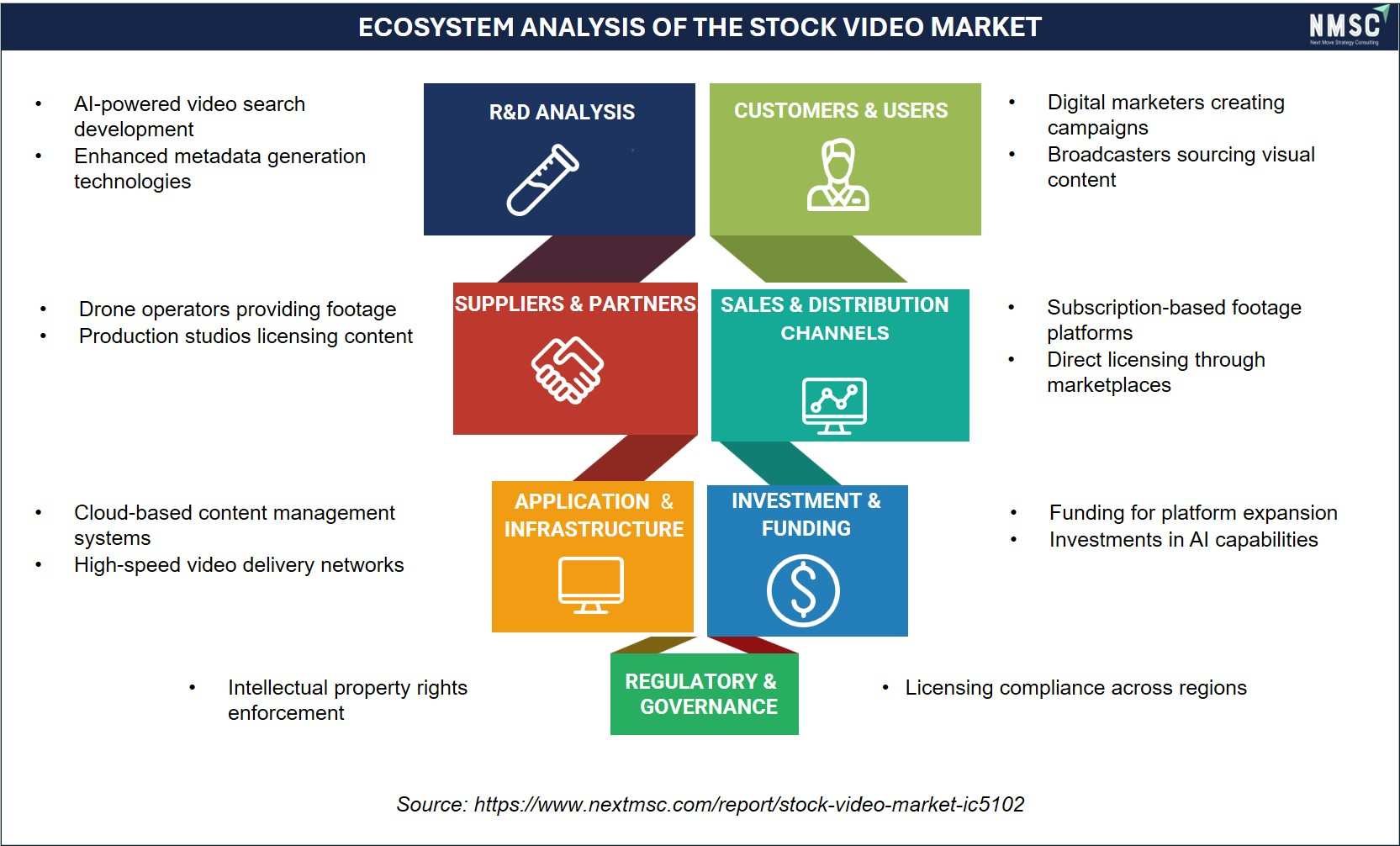
NMSC's analysis indicates that the market is supported by a dynamic ecosystem comprising content creators, technology providers, distribution platforms, and licensing frameworks. Our assessment finds that AI-powered search capabilities, metadata enhancement technologies, and cloud-based content management systems are improving content discoverability and accessibility. Furthermore, expanding digital marketing activities and growing investments in platform innovation continue to accelerate the stock video market growth.
What Are the Key Market Drivers, Breakthroughs, and Investment Opportunities that Will Shape the Stock Video Market Industry in the Next Decade?
|
Drivers / Trends / Restraints |
(+/-) % Impact on CAGR Forecast |
Geographic Relevance |
Impact Timeline |
|
Creator Economy Expansion |
+2.1% |
Global (led by North America, APAC) |
2025–2030 |
|
4K and Higher Resolution Adoption |
+1.4% |
North America, Europe, APAC |
2025–2030 |
|
AI-Powered Content Discovery |
+1.2% |
Global (all regions) |
2025–2032 |
|
Enterprise Contract Growth |
+1.0% |
North America, Europe |
2026–2035 |
|
Motion Graphics Demand Surge |
+0.9% |
Global |
2026–2035 |
|
API Channel Expansion |
+0.8% |
North America, Europe, APAC |
2026–2035 |
|
Generative AI Video Competition |
-1.5% |
Global |
2026–2035 |
|
Rights Management Complexity |
-0.7% |
Europe, North America |
Ongoing |
|
Platform Consolidation Pressure |
-0.5% |
Global |
2025–2028 |
|
OTT and Streaming Platform Investment |
+1.3% |
Global |
2025–2033 |
What Are the Growth Drivers of the Stock Video Market?
How Is the Expansion of Digital Advertising Spend Driving Demand in the Stock Video Market?
Digital advertising is a primary structural driver of the Stock Video Market, as brand marketers, agencies, and performance advertisers require large volumes of high-quality visual content to support multi-channel campaign execution. According to the U.S. Small Business Administration, digital marketing adoption among SMBs has grown substantially, creating a large downstream demand pool for affordable stock video licensing. Video advertising across social, connected TV, and programmatic platforms now represents the fastest-growing segment of digital media spend. This growth creates sustained and compounding demand for professionally produced stock video as brands scale their content production operations globally.
How Is the Proliferation of Short-Form Video Platforms Fueling Stock Video Market Growth?
The rapid global adoption of short-form video platforms has created a new structural demand engine within the Stock Video Market. Creators and brands producing content for TikTok, Instagram Reels, YouTube Shorts, and Pinterest Video require a continuous supply of visually compelling clips, transitions, and motion graphic overlays. From our research, we found that the U.S. Copyright Office's framework for licensed content on social media platforms provides the legal infrastructure that makes stock video integration into social platforms commercially viable. Platforms enabling royalty-safe, licensed stock video usage are directly benefiting from this content production acceleration driven by creator economy participation rates.
How Is the Growth of Over-the-Top Streaming Platforms Creating Structural Demand for the Stock Video Market?
Global OTT and streaming platform expansion has created both direct and indirect demand channels for the Stock Video Market. Direct demand comes from streaming services using stock footage in documentary, factual, and branded content programming. Indirect demand comes from the media production ecosystem supporting these platforms, including independent production companies, post-production houses, and marketing agencies that require stock footage for show marketing, trailer production, and social media promotional content. Based on NMSC's research, we found that the U.S. Federal Communications Commission's data on broadband adoption reflects the infrastructure underpinning video streaming growth that generates downstream stock video demand.
What Are the Growth Inhibitors of the Stock Video Market?
How Is the Rise of Generative AI Video Technology Constraining the Stock Video Market?
Generative AI video tools represent the most significant emerging competitive threat to the Stock Video Market. Text-to-video generation platforms including OpenAI's Sora, Runway, and Pika Labs enable creators and marketers to produce custom video clips from text prompts without purchasing stock footage licenses. Through NMSC's assessment, we found that this technology is particularly disruptive in commodity motion graphic and simple live-action clip categories where buyer requirements can be met by AI-generated outputs at minimal cost. While current AI video quality limitations preserve near-term stock video demand, the continued rapid improvement of generative AI video capabilities represents a structural medium-term headwind for catalog-based stock video revenue growth.
How Does Rights Management Complexity Limit Adoption of Premium Stock Video Content?
Rights management complexity, particularly for rights-managed and editorial stock video content, creates friction in the buyer purchase journey and limits adoption of premium licensing tiers. Editorial rights-managed content carries restrictions on commercial usage, geographic territory, time periods, and distribution channels that require legal review before deployment. Our analysis shows that many mid-market and SMB buyers default to royalty-free content specifically to avoid licensing complexity, narrowing the addressable market for premium rights-managed stock video. The U.S. Copyright Office publishes guidance on licensing and rights registration that reflects the broader regulatory complexity affecting commercial video licensing decisions.
What Are the Growth Opportunities in the Stock Video Market?
How Does the API Channel Expansion Create a Multi-Billion Dollar Opportunity in the Stock Video Market?
API-based distribution represents one of the highest-growth strategic opportunities within the Stock Video Market. Enterprise buyers, digital asset management platforms, CMS providers, and AI creative tools are increasingly seeking programmatic access to stock video libraries for automated content workflows. Our findings suggest that Getty Images, Shutterstock, and Adobe Stock have all expanded their API offerings to support enterprise integration use cases. The U.S. National Institute of Standards and Technology's API standards framework reflects the broader enterprise technology adoption of API-first architectures that create demand for stock video API licensing at scale. API contracts command higher average revenue per user relative to individual subscriptions.
How Does the Expansion of Creator Economy Platforms Present a Structural Growth Opportunity for the Stock Video Market?
Creator economy platforms are generating a structurally significant and growing buyer base for the Stock Video Market. Independent content creators monetizing through YouTube Partner Program, TikTok Creator Fund, Patreon, and newsletter subscriptions are professionalizing their content production and increasingly investing in licensed stock footage. The U.S. Bureau of Labor Statistics tracks employment in media and digital content creation roles, reflecting the formal workforce expansion supporting this trend. Stock video platforms offering creator-specific subscription tiers at accessible price points are best positioned to capture this growing buyer cohort and convert free users into paying subscribers globally.
How Does Enterprise Digital Transformation Drive Premium Stock Video Market Opportunity?
Enterprise digital transformation programs are creating sustained demand for high-volume, enterprise-licensed stock video across corporate communications, e-learning, internal training, and digital marketing functions. As organizations migrate from physical event-based communication to video-first digital channels, the demand for licensed visual content embedded in corporate presentations, LMS platforms, and marketing automation tools is growing. Our assessment indicates that the U.S. Department of Education's reports on digital learning infrastructure growth directly reflect the e-learning vertical's rising demand for licensable stock video. Enterprise contract buyers represent high-lifetime-value customers within the stock video ecosystem with significantly higher average revenue per account.
How Is the Stock Video Market Segmented in This Report, and What Are the Key Insights from the Segmentation Analysis?
How Do Different License Types Define Market Revenue Distribution in the Stock Video Market?
|
License Type Segment |
2025 (USD Bn) |
2035 (USD Bn) |
CAGR (%) |
|
Commercial Royalty Free |
0.82 |
2.1 |
10.8% |
|
Editorial Royalty Free |
0.32 |
0.72 |
9.4% |
|
Commercial Rights Managed |
0.28 |
0.72 |
10.0% |
|
Editorial Rights Managed |
0.18 |
0.4 |
8.3% |
|
Other License Type |
0.2 |
0.66 |
12.6% |
Based on our market evaluation, we noticed that the Stock Video Market is segmented by license type into Commercial Royalty Free, Editorial Royalty Free, Commercial Rights Managed, Editorial Rights Managed, and Other License Type categories. Commercial Royalty Free dominates the market at USD 0.82 billion in 2025, driven by the broad applicability of royalty-free footage across advertising, e-learning, social media, and corporate communications without the usage restrictions inherent in rights-managed licensing. Editorial Royalty Free is widely used by media organizations requiring newsworthy visual content for non-commercial publication contexts. Commercial Rights Managed content commands premium pricing due to its exclusivity provisions, while Editorial Rights Managed serves broadcast and press applications. Other license types, including hybrid and territory-specific arrangements, are the fastest-growing at a CAGR of 12.6%.
How Do Pricing Models Shape Revenue Architecture and Buyer Behavior in the Stock Video Market?
|
Pricing Model Segment |
2025 (USD Bn) |
2035 (USD Bn) |
CAGR (%) |
|
Subscription |
0.72 |
1.84 |
10.6% |
|
Credit Pack |
0.36 |
0.92 |
10.0% |
|
Single Clip |
0.27 |
0.6 |
8.3% |
|
Enterprise Contract |
0.27 |
0.8 |
11.6% |
|
Other Pricing Model |
0.18 |
0.44 |
9.5% |
Through our market assessment, we observed that the Stock Video Market is segmented by pricing model into Subscription, Credit Pack, Single Clip, Enterprise Contract, and Other Pricing Model tiers. Subscription leads at USD 0.72 billion in 2025, reflecting the strong preference of creators, agencies, and SMBs for predictable all-inclusive access to stock video libraries at a fixed monthly or annual cost. Credit Pack models offer flexibility for buyers with irregular download volumes, while Single Clip purchases serve occasional buyers with specific one-off requirements. Enterprise Contract is the fastest-growing pricing model at a CAGR of 11.6% from 2026 to 2035, as large organizations negotiate volume licensing, seat-based access, and API integration terms that align with enterprise procurement processes and risk management requirements.
How Do Different Content Types Drive Usage and Revenue Composition in the Stock Video Market?
|
Content Type Segment |
2025 (USD Bn) |
2035 (USD Bn) |
CAGR (%) |
|
Live Action |
0.72 |
1.66 |
9.8% |
|
Aerial |
0.27 |
0.7 |
10.0% |
|
Archive |
0.2 |
0.44 |
8.2% |
|
Motion Graphics |
0.27 |
0.86 |
12.4% |
|
UGC Style |
0.18 |
0.54 |
11.6% |
|
News |
0.09 |
0.18 |
7.2% |
|
Other Content Type |
0.07 |
0.22 |
12.0% |
NMSC's analysis indicates that the Stock Video Market is segmented by content type into Live Action, Aerial, Archive, Motion Graphics, UGC Style, News, and Other categories. Live Action dominates at USD 0.72 billion in 2025 due to its versatile application across advertising, e-learning, corporate video, and social content production. Aerial footage, enabled by the proliferation of drone capture technology, serves real estate, tourism, and cinematic production buyers seeking premium establishing shots. Archive and News content serve media and documentary production applications. Motion Graphics is the fastest-growing content type at a CAGR of 12.4% from 2026 to 2035, driven by explainer video, digital advertising, and social media content demand. UGC-style footage is growing rapidly at 11.6% CAGR as brands seek authentic, relatable visual narratives.
How Does Resolution Segmentation Reflect Technology Adoption Trends in the Stock Video Market?
|
Resolution Segment |
2025 (USD Bn) |
2035 (USD Bn) |
CAGR (%) |
|
SD |
0.09 |
0.1 |
1.1% |
|
HD |
0.72 |
1.48 |
8.0% |
|
4K |
0.63 |
2 |
13.2% |
|
6K and Above |
0.18 |
0.62 |
13.2% |
|
Raw |
0.09 |
0.28 |
12.0% |
|
Other Resolution |
0.09 |
0.12 |
2.9% |
Our findings suggest that the Stock Video Market is segmented by resolution into SD, HD, 4K, 6K and Above, Raw, and Other formats. HD remains the dominant resolution at USD 0.72 billion in 2025, as it continues to serve the broadest range of web, broadcast, and social media delivery requirements. 4K is the fastest co-growing segment alongside 6K and Above, both advancing at a CAGR of 13.2% from 2026 to 2035, reflecting the accelerating transition in consumer display technology, streaming platform delivery standards, and commercial broadcast requirements. Raw and 6K-and-above segments serve high-end broadcast and cinema production buyers requiring maximum post-production flexibility. SD content is declining as a proportion of total downloads as legacy format usage fades globally.
How Do Different Buyer Types Define Demand Structure and Revenue in the Stock Video Market?
|
Buyer Type Segment |
2025 (USD Bn) |
2035 (USD Bn) |
CAGR (%) |
|
Creator |
0.27 |
0.86 |
12.8% |
|
SMB |
0.27 |
0.7 |
10.0% |
|
Agency |
0.45 |
1.1 |
9.4% |
|
Enterprise |
0.36 |
0.96 |
10.4% |
|
Media and Broadcast |
0.27 |
0.6 |
8.3% |
|
Other Buyer Type |
0.18 |
0.38 |
7.8% |
Based on our analysis of platform subscription data and content licensing patterns, we observed that the Stock Video Market is segmented by buyer type into Creator, SMB, Agency, Enterprise, Media and Broadcast, and Other categories. Agency buyers represent the largest segment at USD 0.45 billion in 2025, driven by consistent high-volume content requirements across advertising, social media management, and digital marketing production. Enterprise buyers represent the second-largest revenue segment and the strongest growth opportunity for premium contract licensing. Creator is the fastest-growing buyer type at a CAGR of 12.8% from 2026 to 2035, as independent video creators expand their content operations and require reliable access to licensed stock footage for professional-quality output. SMB adoption is growing at a healthy 10.0% CAGR as digital marketing investment among small businesses increases globally.
How Are Distribution Channels Reshaping Go-to-Market Strategies in the Stock Video Market?
|
Channel Segment |
2025 (USD Bn) |
2035 (USD Bn) |
CAGR (%) |
|
Self Serve |
0.9 |
2.12 |
9.0% |
|
Sales Led |
0.36 |
0.86 |
9.2% |
|
API |
0.18 |
0.72 |
13.8% |
|
Marketplace |
0.27 |
0.7 |
10.0% |
|
Other Channel |
0.09 |
0.2 |
8.3% |
Our assessment indicates that the Stock Video Market is segmented by channel into Self Serve, Sales Led, API, Marketplace, and Other distribution models. Self Serve dominates at USD 0.90 billion in 2025, reflecting the inherently direct and self-directed nature of most stock video purchases made through platform search and download interfaces by creators, SMBs, and agencies. Sales Led channels support enterprise and media buyer acquisition through account management, custom licensing negotiation, and content advisory services. API is the fastest-growing channel at a CAGR of 13.8% from 2026 to 2035, as enterprise digital asset management integration, AI creative workflow automation, and programmatic content procurement accelerate. Marketplace channels aggregate multiple content sources and serve buyers seeking comparative licensing options.
Regional Outlook
Geographic Performance Snapshot
|
Region |
2025 (USD Bn) |
2035 (USD Bn) |
CAGR (%) |
Key Driver |
|
North America |
0.72 |
1.84 |
10.4% |
Digital ad spend, creator economy, enterprise content |
|
Europe |
0.45 |
1.06 |
9.0% |
Media production, GDPR-compliant licensing, broadcast demand |
|
Asia-Pacific |
0.36 |
1.1 |
12.2% |
OTT growth, India creator economy, digital marketing |
|
Middle East and Africa |
0.14 |
0.36 |
10.0% |
Vision 2030, media production investment |
|
Latin America |
0.13 |
0.3 |
9.2% |
Digital advertising growth, SMB content investment |
North America Stock Video Market
North America is the global epicenter of the Stock Video Market, accounting for USD 0.72 billion in 2025 and forecast to reach USD 1.84 billion by 2035 at a CAGR of 10.4%. The region benefits from the headquarters of all major stock video platforms including Getty Images, Shutterstock, Adobe Stock, and Dissolve. Strong enterprise technology and marketing budgets, the world's highest density of professional content creators, and a deeply developed digital advertising ecosystem underpin sustained market leadership. Regulatory frameworks including DMCA and CCPA have matured into well-understood compliance standards that facilitate commercial licensing at scale.
U.S. Stock Video Market
Based on our engagements with North American content buyers, the United States represents over 70% of North American Stock Video revenue in 2025. The U.S. benefits from the highest concentration of Fortune 500 enterprise content marketing budgets, the headquarters of all major stock video platforms, and the world's most developed creator economy infrastructure. YouTube's Partner Program and TikTok's Creator Fund, both U.S.-originated, are generating downstream stock video demand from independent creators. The U.S. Copyright Office's robust licensing framework provides the legal certainty underpinning commercial stock video transactions at scale across advertising, media, and corporate sectors.
Canada Stock Video Market
Through our analysis, Canada represents approximately 14% of North American Stock Video revenue in 2025. Canadian media production companies, advertising agencies in Toronto and Vancouver, and a growing creator economy are primary demand drivers. Canada's digital media and entertainment sector benefits from production tax incentives and a close commercial relationship with U.S. content buyers. The Personal Information Protection and Electronic Documents Act (PIPEDA) governs data handling practices for stock video platforms operating in Canada. Stock video platforms including Dissolve, headquartered in Calgary, reflect Canada's indigenous stock video industry presence.
Mexico Stock Video Market
From our assessment, Mexico is a growing market within the North American Stock Video landscape, driven by expanding digital advertising investment, a growing e-commerce sector, and increasing SMB adoption of video marketing. Mexico's Instituto Federal de Telecomunicaciones (IFT) provides regulatory oversight of digital media distribution. Local Spanish-language content production is creating demand for culturally specific stock footage that reflects Mexican demographics and landscapes. Multinational brands executing Latin American marketingcampaigns frequently source Mexican market-specific stock video through global platform subscriptions, creating steady and growing demand.
Europe Stock Video Market
Europe is the second-largest region in the Stock Video Market, contributing USD 0.45 billion in 2025 and forecast to reach USD 1.06 billion by 2035 at a CAGR of 9.0%. Europe's mature media production sector, strong broadcast infrastructure, and sophisticated advertising industry create consistent demand for high-quality licensed stock footage. The EU Copyright Directive and GDPR have established compliance frameworks that all major stock video platforms must navigate to operate in European markets. Platform consolidation through partnerships with European media groups and localized content initiatives is increasing market penetration across the region.
UK Stock Video Market
Based on our engagements with European content buyers, the United Kingdom is Europe's largest individual country market for Stock Video, representing approximately 24% of European revenue in 2025. The UK's world-class advertising and creative industry, anchored in London, creates consistent high-volume demand for premium stock footage across commercial and editorial applications. PA Media Group and Alamy, both UK-headquartered platforms, reflect the country's significant indigenous stock media industry presence. The UK's Intellectual Property Office provides the copyright and licensing framework governing commercial stock video transactions across domestic and cross-border use cases.
Germany Stock Video Market
Through our analysis, Germany is the second-largest European market in the Stock Video landscape, driven by a leading advertising industry, strong media production sector, and advanced corporate communications requirements. German advertising agencies in Munich, Hamburg, and Berlin are significant enterprise stock video buyers. GEMA and VG Bild-Kunst rights management societies shape the licensing environment for audiovisual content in Germany. Corporate buyers in automotive, manufacturing, and pharmaceutical sectors use stock video extensively in training, marketing, and product communication materials. The Bundeszentrale für politische Bildung also represents a non-commercial buyer of archival and editorial footage.
France Stock Video Market
From our assessment, France is the third-largest European Stock Video market, distinguished by its internationally recognized advertising and luxury brand industry. French advertising agencies, broadcast networks including France Televisions, and fashion brands represent significant buyers of premium commercial and editorial stock footage. The Centre National du Cinema et de l'Image Animee (CNC) provides regulatory oversight of audiovisual production. French data protection authority CNIL's active GDPR enforcement compels all stock video platforms to maintain compliant data processing practices. Culturally specific French-language and Francophone stock footage is in growing demand from brands targeting French-speaking audiences globally.
Italy Stock Video Market
According to our evaluation, Italy is a mid-tier European market in the Stock Video space, with meaningful adoption in fashion, luxury goods, tourism, and food and beverage content production. Italian fashion houses and luxury brands are significant buyers of high-production-value commercial stock footage. The RAI broadcasting network and Italian advertising agencies are editorial and commercial stock video consumers. Italy's Autorita per le Garanzie nelle Comunicazioni (AGCOM) governs digital media and content licensing. The PNRR's digital transformation investments are also creating new public sector and educational content production demand within Italy.
Spain Stock Video Market
Based on our evaluation, Spain demonstrates growing momentum in the Stock Video Market, driven by a dynamic advertising sector, a vibrant tourism industry, and growing digital media production. Spanish advertising agencies in Madrid and Barcelona are consistent buyers of royalty-free and rights-managed commercial footage. The Agencia Espanola de Proteccion de Datos (AEPD) enforces GDPR compliance for stock video platforms operating in Spain. Spanish-language content production for Latin American markets creates additional localization-driven demand. Spain's growing independent content creator community is also driving creator-tier subscription adoption through platforms supporting Spanish-language interface and content discovery.
Sweden Stock Video Market
Through our analysis, Sweden is a high-per-capita Stock Video consumer within the Nordic region, supported by a highly digitized advertising industry, advanced media production sector, and strong government investment in digital public services. Swedish advertising agencies and broadcasters including SVT are consistent stock footage buyers. The Integritetsskyddsmyndigheten (IMY) enforces GDPR compliance for digital platforms. Sweden's robust creator economy and e-commerce sector also generate growing demand for stock video in product marketing and social content applications. Nordic climate and landscape stock footage from Swedish contributors commands a premium in global catalogs.
Denmark Stock Video Market
From our assessment, Denmark is among the most advanced digital economies in Europe for Stock Video adoption. Danish advertising agencies, public broadcasters including DR, and corporate communications teams represent consistent stock video buyers. The Danish Business Authority and the Danish Data Protection Agency (Datatilsynet) govern the commercial and data compliance environment. Denmark's concentration of pharmaceutical and life sciences companies creates demand for medical and scientific stock video. Denmark's digital media sector, including strong podcast and video content production activity, is generating growing creator economy stock video demand.
Finland Stock Video Market
Based on our engagements, Finland's Stock Video market is characterized by high digital adoption and strong corporate communications demand from technology sector leaders. Nokia and other Finnish technology companies use stock video extensively in corporate presentations and internal communications. The Finnish Broadcasting Company (Yle) and private broadcasters are editorial stock footage buyers. The Office of the Data Protection Ombudsman provides GDPR oversight. Finland's MyData initiative reflects a domestic sophistication around data rights that extends into how stock video platforms operate in this market. Finnish media production companies are both buyers and significant contributors to global stock video catalogs.
Netherlands Stock Video Market
According to our evaluation, the Netherlands is a significant hub for European Stock Video distribution, hosting major cloud and CDN infrastructure that supports fast content delivery across the continent. Dutch advertising agencies, media companies, and multinational corporations headquartered in Amsterdam and Rotterdam are consistent stock video buyers. The Autoriteit Persoonsgegevens (AP) is an active GDPR enforcement body that shapes platform compliance requirements. The Netherlands also serves as a regional headquarters location for Getty Images and Shutterstock's European operations, reflecting the country's strategic importance as a stock media distribution hub.
Rest of Europe Stock Video Market
Through our analysis, the Rest of Europe, comprising Poland, Belgium, Switzerland, Austria, Portugal, Czech Republic, and other European nations, collectively represents a growing and commercially significant portion of the European Stock Video Market. Poland and Czech Republic are emerging as adoption leaders in Central and Eastern Europe, driven by growing creative and digital marketing sectors. Switzerland hosts significant pharmaceutical, financial services, and luxury goods buyers with high stock video consumption. Belgium, home to EU institutions, generates meaningful public sector and NGO demand for editorial and news stock footage. Austria's tourism and cultural sector creates specialized landscape and heritage content demand.
Asia-Pacific Stock Video Market
Asia-Pacific is the fastest-growing major region in the Stock Video Market, advancing from USD 0.36 billion in 2025 to an estimated USD 1.10 billion by 2035 at a CAGR of 12.2%. The region's growth is propelled by OTT platform investment across India, Indonesia, and Southeast Asia, China's massive digital advertising market, the advanced creator economies of Japan and South Korea, and rising digital marketing adoption among SMBs across emerging Asian economies. Regulatory frameworks including India's DPDPA and Japan's APPI are shaping how stock video platforms manage contributor and buyer data across the region.
China Stock Video Market
Based on our engagements, China is the largest single market in Asia-Pacific for Stock Video, driven by its massive digital advertising ecosystem, prolific domestic video production industry, and government-backed content initiatives. Chinese digital platforms including Baidu, Alibaba, and Tencent operate domestic stock media subsidiaries alongside access to international platforms. China's Cybersecurity Law and Personal Information Protection Law (PIPL) create data localization requirements that influence how international stock video platforms operate in the country. The growing investment in domestic drama, digital advertising, and corporate communications is creating sustained demand for high-quality licensed video content.
India Stock Video Market
Through our analysis, India is the fastest-growing national market within the Asia-Pacific Stock Video region, advancing at a CAGR of 15.2%. India's OTT platform ecosystem, led by JioCinema, Hotstar, and SonyLIV, is driving demand for licensed content across production and marketing workflows. The Information Technology Act and the Digital Personal Data Protection Act 2023 (DPDPA), notified under MeitY, govern data practices for stock video platforms. India's rapidly growing creator economy, anchored in YouTube and Instagram, is generating a new generation of stock video buyers. Rising smartphone video production quality is also expanding the Indian contributor base for global stock video platforms.
Japan Stock Video Market
From our assessment, Japan is the second-largest Asia-Pacific market for Stock Video, supported by mature advertising, broadcasting, and corporate communications sectors. Japanese enterprises maintain high production standards for marketing and communications content, creating consistent demand for premium stock footage. The Act on Protection of Personal Information (APPI), enforced by the Personal Information Protection Commission (PPC), governs platform data practices. Japan's Society 5.0 digital transformation framework is driving enterprise investment in digital content. Major Japanese broadcasters including NHK and Nippon TV are significant editorial stock footage buyers, while advertising agencies such as Dentsu and Hakuhodo generate substantial commercial stock video market demand.
South Korea Stock Video Market
Based on our engagements, South Korea demonstrates high Stock Video maturity, supported by one of the world's highest broadband penetration rates, a global K-content entertainment industry, and a proactive technology adoption culture. Korean entertainment companies, advertising agencies, and OTT platforms including TVING and Wavve are consistent stock video buyers. The Personal Information Protection Act (PIPA), enforced by the PIPC, governs data compliance. South Korea's global leadership in gaming, entertainment content, and technology advertising creates above-average per-capita stock video consumption. K-drama production companies also use stock footage for establishing shots and supplementary visual content.
Taiwan Stock Video Market
Through our analysis, Taiwan's Stock Video market is concentrated in the technology marketing, semiconductor industry corporate communications, and digital advertising sectors. TSMC, Foxconn, and MediaTek require high-quality stock footage for global investor relations, employee communications, and brand marketing content. Taiwan's Personal Data Protection Act (PDPA) governs platform data handling. The government's digital economy initiatives and growing startup ecosystem are expanding enterprise stock video adoption. Taiwanese advertising agencies in Taipei are consistent commercial royalty-free footage buyers for multinational brand campaigns targeting both domestic and international audiences.
Indonesia Stock Video Market
From our assessment, Indonesia is among the most rapidly growing Stock Video markets in Southeast Asia, driven by its large and young digital population, fast-growing creator economy, and expanding e-commerce and digital advertising sectors. Major Indonesian platforms including Gojek, Tokopedia, and Traveloka are enterprise stock video buyers for product marketing and social content. The Personal Data Protection Law (PDP Law) enacted in 2022 establishes governance requirements for digital platforms. Indonesian content creators, particularly on YouTube and TikTok, represent a growing creator-tier buyer cohort. Jakarta-based advertising agencies are expanding their stock video subscription usage as digital campaign volumes increase.
Vietnam Stock Video Market
Based on our engagements, Vietnam is an emerging and high-growth market for Stock Video in Southeast Asia, supported by accelerating digital economy development and a manufacturing sector expanding through supply chain diversification. Vietnamese e-commerce platforms, digital advertisers, and content creators are early adopters of stock video licensing. Vietnam's Cybersecurity Law and Decree 13/2023/ND-CP on Personal Data Protection are establishing governance requirements. Growing smartphone penetration and OTT platform adoption are expanding the addressable buyer base. Vietnam's tourism sector is also a meaningful buyer of landscape and cultural stock footage for promotional content production.
Australia Stock Video Market
Through our analysis, Australia is the most mature Stock Video market in Asia-Pacific outside Northeast Asia, with strong adoption across media production, advertising, government communications, and corporate sectors. The Privacy Act 1988 and the Privacy Legislation Amendment Act 2024 govern data handling for stock video platforms. Screen Australia supports the broader production ecosystem that generates demand for licensed stock footage. Australian advertising agencies and media companies are sophisticated buyers of both royalty-free and rights-managed commercial footage. The Commonwealth government's digital transformation initiatives are also driving public sector stock video consumption for communications and education content.
Philippines Stock Video Market
From our assessment, the Philippines is a developing but rapidly growing Stock Video market, supported by a large business process outsourcing industry that requires presentation and training video content, and a growing digital advertising sector. The Data Privacy Act of 2012, enforced by the National Privacy Commission (NPC), governs data practices for platforms operating in the Philippines. Philippine content creators, particularly in the Filipino-language YouTube and TikTok space, represent a growing creator-tier buyer cohort. Digital media companies in Metro Manila are increasing stock video subscription adoption as social media marketing content production volumes rise.
Malaysia Stock Video Market
Based on our engagements, Malaysia is a mid-tier and growing Stock Video market in Southeast Asia, characterized by strong government-led digital transformation and a maturing advertising sector. The Personal Data Protection Act 2010 (PDPA) provides the data governance framework for platforms. Kuala Lumpur-based advertising agencies serve both domestic Malaysian and regional Southeast Asian brand clients, generating consistent commercial royalty-free footage demand. Malaysia's tourism industry and hospitality sector are significant buyers of landscape and cultural stock video. Petronas and Maybank, Malaysia's largest corporations, are enterprise-tier stock video buyers for corporate communications and marketing productions.
Rest of Asia-Pacific Stock Video Market
Through our analysis, the Rest of Asia-Pacific, comprising Thailand, Singapore, Bangladesh, Sri Lanka, New Zealand, and smaller Pacific economies, collectively represents a growing share of the regional Stock Video Market. Singapore is a punching-above-its-weight hub for regional stock media buying, with multinational corporate headquarters and advertising agency regional offices generating consistent premium demand. Thailand's growing digital economy and tourism marketing sector drive royalty-free footage consumption. New Zealand's creative production industry, supported by the New Zealand Film Commission, creates both supply and demand in the regional stock video ecosystem.
Middle East and Africa Stock Video Market
The Middle East and Africa region is a growing market within the global Stock Video Market, advancing from USD 0.14 billion in 2025 to USD 0.36 billion by 2035 at a CAGR of 10.0%. Vision-driven national transformation programs in Saudi Arabia and the UAE are the primary growth engines, supplemented by a growing media and entertainment production sector across the Gulf, Israel's technology sector, and South Africa's advanced advertising industry. Digital media investment, OTT platform expansion, and government communications modernization are all driving structured stock video demand across the MEA region.
Saudi Arabia Stock Video Market
Based on our engagements, Saudi Arabia is the largest Stock Video market in the Middle East and Africa region, driven by Vision 2030's media and entertainment sector development, the establishment of NEOM, and growing digital advertising investment. The Saudi Authority for Data and Artificial Intelligence (SDAIA) governs data practices for digital platforms operating in the country. MBC Group and the growing independent content creator community on YouTube and Snap represent significant stock video demand sources. Saudi production companies serving the Vision Realization Corp's communications requirements are consistent buyers of commercial royalty-free and rights-managed footage for domestic and regional content production.
UAE Stock Video Market
Through our analysis, the UAE is the second-largest Stock Video market in MEA, powered by Dubai's globally recognized advertising and media production industry. Dubai Media City and Abu Dhabi Media serve as regional anchors for content production and distribution. The UAE Data Law and DIFC Data Protection Law govern platform data compliance. Dubai-based advertising agencies serving GCC-region brand clients are consistent and growing buyers of commercial stock footage for multichannel marketing campaigns. UAE government communications initiatives and the tourism authority's content production requirements also generate meaningful public sector stock video demand.
Egypt Stock Video Market
From our assessment, Egypt is an emerging Stock Video market within MEA, supported by a large population of 106 million people, a vibrant media and entertainment production history, and growing digital advertising investment. Egyptian television networks, digital platforms, and advertising agencies are primary stock video buyers. The Personal Data Protection Law (Law No. 151 of 2020) establishes data governance requirements. Cairo's growing independent content creator community on YouTube and TikTok is expanding the creator-tier buyer base. Egypt's film and drama production history creates specialized demand for archival and historical stock footage within the regional market.
Israel Stock Video Market
Based on our engagements, Israel occupies a unique position within the Stock Video Market as both a significant consumer of stock footage and an important contributor and technology innovator. Israeli technology startups, multinational R&D centers, and advertising agencies in Tel Aviv are consistent commercial stock video buyers. The Israeli Protection of Privacy Law and the Privacy Protection Authority (PPA) govern platform data practices. Israeli companies use stock video extensively in global marketing campaigns, investor presentations, and product launch communications. Israel's technology and cybersecurity sector creates demand for technology-themed stock footage spanning both commercial and editorial applications.
Turkey Stock Video Market
Through our analysis, Turkey is a mid-sized and growing Stock Video market within MEA, characterized by a dynamic advertising sector, a significant media production industry, and a large independent content creator population. Turkish advertising agencies in Istanbul are consistent commercial royalty-free footage buyers. Turkey's Personal Data Protection Law (KVKK), enforced by the Personal Data Protection Authority, governs platform data compliance. The growing Turkish YouTube and social media creator ecosystem is expanding creator-tier stock video demand. Turkey's tourism industry also drives meaningful landscape and cultural stock footage consumption for domestic and international promotional content.
Nigeria Stock Video Market
From our assessment, Nigeria is Sub-Saharan Africa's largest Stock Video market, powered by Nollywood's global influence as the world's second-largest film industry by volume, a rapidly growing digital advertising ecosystem, and an expanding creator economy. The Nigeria Data Protection Act 2023 (NDPA), enforced by the Nigeria Data Protection Commission (NDPC), establishes data governance requirements. Lagos-based advertising agencies, media companies, and OTT platforms including Showmax Nigeria are growing stock video buyers. Nigerian content creators on YouTube represent a growing and commercially significant creator-tier buyer cohort within the MEA regional market.
South Africa Stock Video Market
Based on our engagements, South Africa is the most mature and developed Stock Video market in Sub-Saharan Africa, driven by Johannesburg's status as the continent's commercial advertising capital and a well-established media and production sector. The Protection of Personal Information Act (POPIA), which came into full effect in 2021 under the Information Regulator, governs platform data compliance. South African advertising agencies and broadcasters including SABC and MultiChoice Group are consistent editorial and commercial stock video buyers. Johannesburg's growing independent content creator community represents an expanding creator-tier demand source within the broader regional market.
Rest of MEA Stock Video Market
Through our analysis, the Rest of Middle East and Africa, encompassing Kuwait, Qatar, Bahrain, Oman, Jordan, Morocco, Kenya, Ghana, Ethiopia, and other nations, collectively represents a growing segment of the regional Stock Video Market. GCC countries including Qatar and Kuwait are investing in media production and national communications infrastructure under their respective national vision programs. Kenya is Africa's fastest-growing digital economy after Nigeria, with a growing creator economy and expanding digital advertising sector driving stock video adoption. Morocco serves as a production hub for both French and Arab-language content, creating meaningful stock footage demand.
Latin America Stock Video Market
Latin America is a growing region in the Stock Video Market, advancing from USD 0.13 billion in 2025 to USD 0.30 billion by 2035 at a CAGR of 9.2% from 2026 to 2035. Brazil and Mexico collectively account for approximately 65% of regional stock video revenue. Growing digital advertising investment, OTT platform expansion, and rising SMB adoption of video marketing are the primary growth drivers. Content creators on YouTube, TikTok, and Instagram across the region are expanding the creator-tier buyer base, while established advertising agencies in major metropolitan markets maintain consistent commercial footage subscription volumes.
Brazil Stock Video Market
Based on our engagements, Brazil is the largest Stock Video market in Latin America, accounting for approximately 40% of regional revenue in 2025. Brazil's Lei Geral de Protecao de Dados (LGPD), enforced by the Autoridade Nacional de Protecao de Dados (ANPD), governs data compliance for stock video platforms. Sao Paulo-based advertising agencies and media production companies are the largest commercial stock video buyers. Brazil's massive YouTube creator ecosystem represents a significant and growing creator-tier buyer base. OTT platforms including Globoplay and major international streamers drive demand for licensed footage in production and promotional content workflows.
Argentina Stock Video Market
Through our analysis, Argentina is the second-largest Stock Video market in Latin America, with a strong advertising and media production industry and a vibrant independent content creator community. Argentina's Personal Data Protection Law (Law No. 25.326) governs data handling, with ongoing modernization toward GDPR alignment. Buenos Aires hosts a dense concentration of advertising agencies and production companies that are consistent commercial stock footage buyers. Argentine content creators on YouTube and Twitch represent a meaningful creator-tier buyer cohort. The country's robust film and television production sector also creates specialized demand for archival and production-quality stock footage.
Chile Stock Video Market
From our assessment, Chile represents a stable and growing Stock Video market, benefiting from one of Latin America's strongest digital advertising sectors and highest internet penetration rates. Chile's new Data Protection Law approved in 2024 aligns with GDPR standards. Santiago-based advertising agencies and corporate communications teams are primary stock video buyers. Chile's growing technology startup ecosystem and e-commerce sector are expanding SMB stock video adoption. The financial services sector, led by Banco de Chile and BancoEstado, and the retail sector, led by Falabella and Cencosud, use commercial stock footage extensively for multi-channel marketing campaigns.
Colombia Stock Video Market
Based on our engagements, Colombia is among the fastest-growing Stock Video markets in Latin America, supported by Bogota's emergence as a regional technology and creative hub, a dynamic digital advertising sector, and growing creator economy participation. Colombia's Statutory Law 1581 of 2012 on Personal Data Protection, regulated by the Superintendencia de Industria y Comercio (SIC), establishes platform compliance requirements. Bogota-based advertising agencies and media companies are consistent buyers of commercial royalty-free footage. Colombia's growing YouTube and Instagram creator economy is expanding creator-tier stock video demand across the national market.
Rest of LATAM Stock Video Market
Through our analysis, the Rest of Latin America, including Peru, Ecuador, Uruguay, Bolivia, Paraguay, Costa Rica, Panama, and Caribbean nations, represents a smaller but growing component of the Stock Video Market. Peru and Ecuador are experiencing growing digital advertising investment that creates SMB and agency stock video demand. Uruguay has a notably advanced technology services sector with growing e-commerce and digital marketing activity. Costa Rica's technology services hub generates corporate communications stock video demand. Panama's financial services and logistics sector creates specialized corporate content production requirements. Caribbean tourism sectors across multiple nations drive landscape and cultural footage demand.
Consumer Behavior Analysis of the Stock Video Market
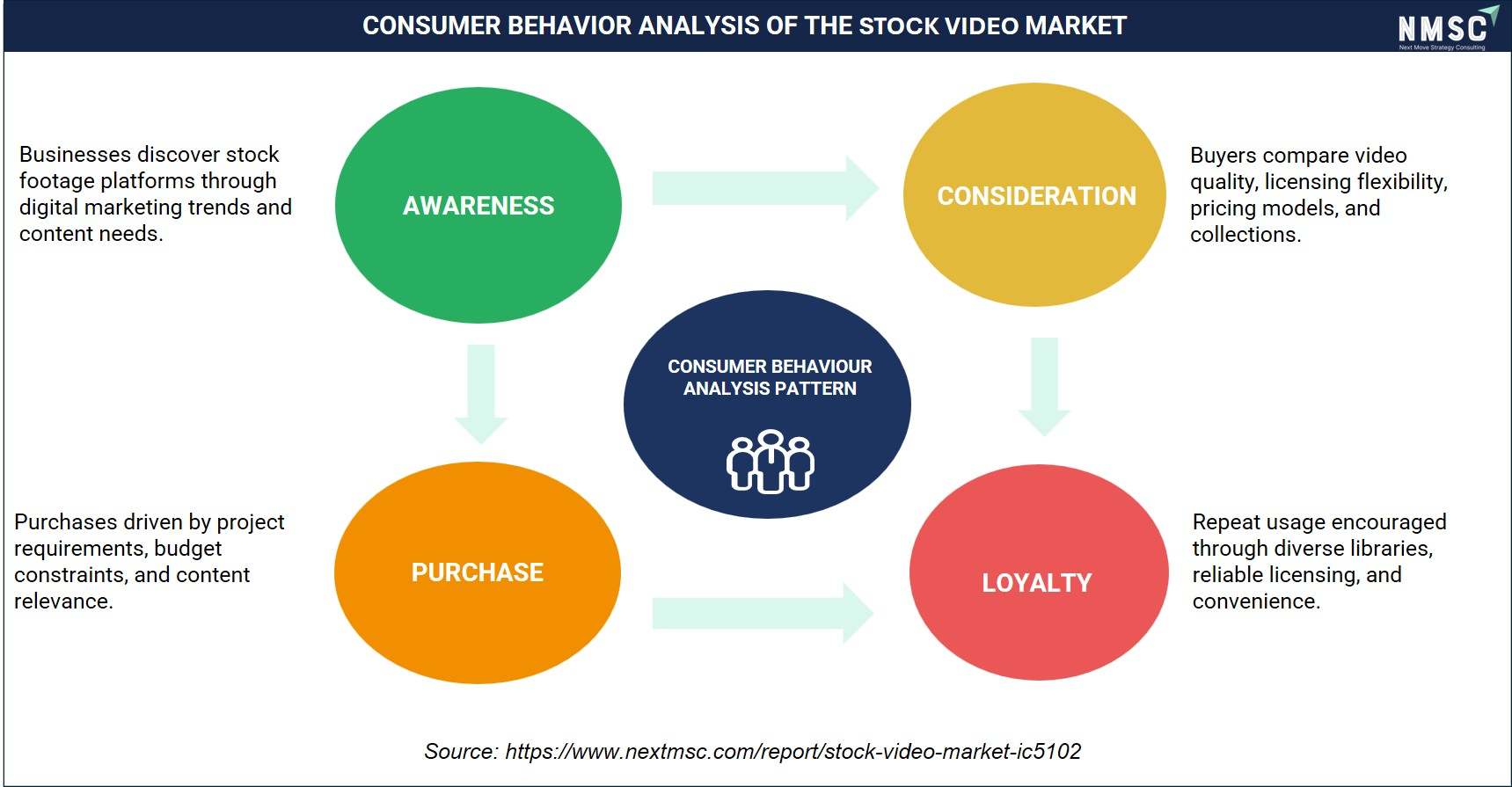
Based on NMSC's evaluation, we found that consumer behavior in the Stock Video market progresses through awareness, consideration, purchase, and loyalty stages. Our assessment identifies that buyers prioritize content quality, licensing flexibility, pricing transparency, and relevance to project requirements when selecting footage. Moreover, extensive content libraries, seamless user experiences, and reliable licensing models encourage repeat purchases, strengthen customer retention, and support sustained platform engagement.
Competitive Landscape
Competitive Dynamics and M&A Landscape
|
Key Takeaways |
Details |
|
Market Structure |
The Stock Video Market features competition among large integrated stock media platforms (Getty Images, Shutterstock, Adobe Stock), creator-focused platforms (Artlist, MotionElements), niche specialist providers (NatureFootage, Filmsupply), and emerging AI-native video tools competing at the commodity end of the market. |
|
Innovation Focus |
Innovation in the Stock Video Market centers on AI-powered search and content discovery, motion graphics and animation catalog expansion, API integration capabilities, UGC-style authentic footage collections, and contributor monetization platform improvements to attract high-quality exclusive footage. |
|
M&A Activity |
Canva's strategic investments in stock media access, Adobe's deep integration of Stock within Creative Cloud, and Shutterstock's acquisition of Pond5 and Getty Images reflect ongoing consolidation. Private equity interest in stock media platform scalability and recurring subscription revenue continues to shape the competitive landscape. |
How Do Companies Compete in the Stock Video Market?
The Stock Video Market is characterized by multi-tiered competition across integrated stock media platforms, creator-economy-focused licensing services, and niche specialist providers. Large integrated platforms including Getty Images, Shutterstock, and Adobe Stock compete on catalog breadth, AI-powered search quality, subscription pricing flexibility, and platform integration depth. Creator-focused platforms including Artlist and Canva compete on simplicity, royalty-safe licensing clarity, and workflow integration. Niche providers including Filmsupply, NatureFootage, and Stocksy United compete on content exclusivity, editorial quality, and contributor co-op ownership models. Pricing strategies range from unlimited subscription at flat monthly rates to per-clip credits and custom enterprise contracts.
Which Kind of Companies Dominate the Stock Video Market?
Three distinct categories of companies dominate the Stock Video Market. First, large-scale integrated stock media platforms including Getty Images, Shutterstock, Adobe Stock, Alamy, and Depositphotos provide broad multi-format visual content libraries spanning photography, video, and vector assets with global distribution infrastructure. Second, creator economy-focused licensing platforms including Artlist, Canva, MotionElements, and Inmagine Lab provide streamlined royalty-free video licensing optimized for independent creators and SMBs prioritizing simplicity and creative workflow integration. Third, specialty and premium providers including Filmsupply, Stocksy United, NatureFootage, Bridgeman Art Library, and Newsflare serve professional media production, fine art, and news-focused buyer segments requiring exclusive, curated, or archival content.
AI-Native Differentiation and Open Standards Drive Market Success in the Stock Video Market
Innovation focus across the Stock Video Market is concentrated in AI-powered semantic search and content recommendation engines that dramatically improve buyer discovery efficiency, motion graphics and animation library expansion driven by demand for digital marketing assets, contributor platform enhancements to attract exclusive high-resolution and authentic content, and API integration capabilities that embed stock video access directly into enterprise creative workflows. Platforms that invest in AI metadata enrichment and semantic search are capturing superior engagement metrics and conversion rates. Contributor exclusivity programs and co-operative ownership models, as pioneered by Stocksy United, represent differentiated strategies for attracting premium content quality in a crowded global marketplace.
Market Players to Opt for Merger and Acquisition Strategies to Expand Their Presence in the Stock Video Market
Mergers and acquisitions are reshaping the competitive structure of the Stock Video Market. Shutterstock's acquisition of Pond5 and its content partnership agreements reflect horizontal consolidation strategies aimed at expanding specialty video catalogs. Adobe's deep embedding of Adobe Stock within Creative Cloud demonstrates platform integration as an M&A substitute, while Canva's investments in visual content access reflect the broader creative software ecosystem's appetite for stock media inventory. Consolidation around AI-powered content creation platforms competing with traditional stock video is expected to accelerate during the 2025 to 2028 period as generative AI video capabilities mature and traditional platforms seek to acquire AI talent and technology to defend their market position.
Who Are the Key Market Players in the Stock Video Market?
-
Getty Images Holdings, Inc.
-
Shutterstock, Inc.
-
Adobe Inc.
-
Canva Pty Ltd
-
Freepik Company, S.L.U.
-
Artlist Ltd.
-
Footage Firm, Inc.
-
Inmagine Lab Pte. Ltd.
-
Eezy LLC
-
Alamy Ltd.
-
DepositPhotos Inc.
-
Dreamstime LLC
-
Stocksy United Co-operative
-
MotionElements Private Limited
-
PA Media Group Limited
-
Newsflare Limited
-
Filmsupply, LLC
-
Bridgeman Art Library Limited
-
NatureFootage, Inc.
-
Dissolve Ltd.
What Are the Latest Developments in the Stock Video Industry?
|
Date |
Event |
|
April 2026 |
Freepik Company, S.L.U. rebranded and integrated its entire creative ecosystem under the name Magnific, unifying its classic 250 million stock asset repository with specialized AI video, audio, and generation models. The company revealed it has reached USD 200 million in Annual Recurring Revenue (ARR) with over 1 million active paid subscribers. |
|
April 2026 |
Canva Pty Ltd executed a dual technology acquisition of agentic AI architecture platform Simtheory and automated customer data platform Ortto. The acquisitions are designed to scale complex creative workflows, transitioning the service from a design engine into an end-to-end AI marketing and video management workspace. |
Expert Insights

“With the rapid rise in demand for compelling visual content across industries, there has never been a better time for our two businesses to come together. By combining our complementary strengths, we can better address customer opportunities while delivering exceptional value to our partners, contributors, and stockholders.”
— Craig Peters, CEO, Getty Images
Statement made during the announcement of the Getty Images–Shutterstock merger, discussing increasing global demand for visual content and the strategic expansion of content creation and distribution capabilities.
Market Interpretation
NMSC's analysis indicates that the stock video market is experiencing sustained growth as enterprises, advertisers, media platforms, streaming services, and digital creators increasingly rely on high-quality visual assets to support content-intensive engagement strategies. The statement highlights rising demand for diversified visual media libraries, including video, imagery, 3D assets, and AI-enabled creative content. As competition intensifies across digital marketing, social media, e-commerce, and entertainment sectors, stock content providers are pursuing consolidation, technology investments, and broader content portfolios to strengthen market positioning and address evolving customer requirements.
What Are the Investment Opportunities in the Stock Video Market?
Capital Inflows and Platform Consolidation
The Stock Video Market is attracting growing private equity and venture capital interest, driven by the recurring subscription revenue model, high platform switching costs, and exposure to structural tailwinds from creator economy expansion and digital advertising growth. Our assessment indicates that PE firms with established media and software portfolios are evaluating acquisition targets across mid-tier royalty-free platforms with growing subscription bases and under-monetized API distribution capabilities. The consolidation of fragmented stock video catalogs into integrated platforms with AI-powered search and workflow integration represents a high-conviction investment thesis throughout the 2025 to 2030 period.
Infrastructure Investment in AI and Metadata Technology
Infrastructure investment in AI-powered search, automated keywording, and semantic video discovery is critical for competitive differentiation across the Stock Video Market. From our research, we found that platforms investing in large-scale AI metadata tagging systems and natural language processing for video content retrieval are demonstrating superior buyer engagement and conversion metrics. Investment in cloud-native content delivery infrastructure capable of streaming 4K and 6K resolution previews globally at low latency represents another structurally necessary infrastructure priority. The U.S. Department of Energy's data center efficiency standards reflect the broader infrastructure investment environment supporting these technology capabilities.
ESG and Diversity Considerations in Content Investment
ESG and diversity considerations are increasingly influential in stock video platform investment and content strategy decisions. Corporate buyers and advertising agencies are under increasing pressure from stakeholders to ensure that licensed visual content reflects diversity, equity, and inclusion principles across race, gender, age, disability representation, and geographic origin. Our analysis shows that platforms with documented diversity initiatives in contributor recruitment and content curation are differentiating their value proposition with enterprise buyers who have formal supplier diversity and inclusive marketing commitments. The U.S. Equal Employment Opportunity Commission's data on workforce diversity reflects the broader corporate ESG environment shaping stock video content strategy.
Digital Transformation and Enterprise Integration Opportunity
Enterprise digital transformation programs are creating sustained investment opportunity within the Stock Video Market through the growing demand for API-based stock video integration into digital asset management systems, marketing automation platforms, and AI creative workflows. Our findings suggest that enterprise buyers integrating stock video libraries via API generate significantly higher average revenue per account compared to self-serve subscription buyers, while also demonstrating higher retention rates and expanding usage over time. Investment in enterprise sales capacity, API developer tooling, and custom licensing frameworks represents a structurally attractive opportunity for platform operators seeking to capture higher-value enterprise customer segments.
PE and VC Activity
Private equity and venture capital activity in the Stock Video Market reflects both consolidation and disruption dynamics. PE firms are actively evaluating roll-up strategies combining mid-tier stock video platforms to achieve catalog scale, AI investment leverage, and enterprise sales efficiency. VC investment is concentrated in AI video generation startups that compete at the commodity end of the stock video market, creating both competitive pressure on traditional platforms and potential acquisition targets for larger players seeking to integrate generative AI capabilities. The National Venture Capital Association's tracking of media technology investment reflects the broader venture activity environment shaping the competitive trajectory of the stock video ecosystem globally.
Key Benefits for Stakeholders
For Platform Operators
Platform operators gain comprehensive intelligence on the Stock Video Market, including licensing trends, content type demand patterns, pricing model evolution, and regional growth opportunities. The report provides detailed segmentation analysis and competitive benchmarking to support catalog investment decisions, content acquisition strategies, and pricing optimization initiatives. Regional market assessments and buyer behavior insights further enable platform operators to prioritize geographic expansion opportunities, improve contributor engagement programs, and strengthen competitive positioning within the global stock media ecosystem.
For Enterprise Buyers
Enterprise buyers gain vendor-neutral insights into the Stock Video Market, including market sizing, licensing model analysis, competitive landscape assessment, and buyer segment trends. This intelligence supports procurement planning, content sourcing strategies, and budget allocation decisions across marketing, corporate communications, training, and digital media initiatives. The report's evaluation of licensing structures and pricing models enables organizations to optimize content acquisition programs while ensuring compliance, scalability, and cost efficiency across enterprise-wide video content operations.
For Investors and Private Equity Firms
Investors and private equity firms gain access to a structured assessment of the Stock Video Market's expansion outlook, competitive dynamics, revenue opportunities, and long-term industry transformation trends. Detailed CAGR forecasts, segment-level growth analysis, and M&A landscape evaluations support investment screening, valuation modeling, and portfolio strategy development. Company benchmarking and market evolution insights provide an analytical framework for identifying acquisition targets, assessing platform scalability, and evaluating future value creation opportunities across the stock media value chain through 2035.
For Content Creators and Contributors
Content creators and contributors gain actionable intelligence on the fastest-growing content categories, licensing formats, buyer segments, and resolution preferences within the Stock Video Market. The report highlights emerging demand trends across motion graphics, 4K content, creator-driven media platforms, and enterprise content applications. These insights enable contributors to optimize production strategies, prioritize high-demand content formats, diversify platform participation, and align creative investments with evolving market opportunities and buyer preferences.
For Regulatory and Policy Stakeholders
Regulatory agencies and policy stakeholders gain evidence-based insights into the Stock Video Market's regulatory environment, intellectual property landscape, licensing frameworks, and compliance requirements across major jurisdictions. The report provides perspectives on how copyright regulations, digital content policies, and licensing standards influence market structure and commercial practices. Regional analysis supports policymaking initiatives related to digital media governance, content monetization frameworks, creator rights protection, and cross-border digital content distribution.
For Technology Vendors
Technology vendors gain visibility into emerging investment priorities across the Stock Video Market, including artificial intelligence, metadata management, API integration, content discovery, search optimization, and digital asset delivery infrastructure. The report identifies technology adoption trends and platform modernization requirements that are shaping future competitive differentiation. These insights help solution providers refine product development roadmaps, target high-growth customer segments, and align innovation strategies with evolving platform technology spending and automation requirements.
Key Market Segments
By License Type
-
Commercial Royalty Free
-
Editorial Royalty Free
-
Commercial Rights Managed
-
Editorial Rights Managed
-
Other License Type
By Pricing Model
-
Subscription
-
Credit Pack
-
Single Clip
-
Enterprise Contract
-
Other Pricing Model
By Content Type
-
Live Action
-
Aerial
-
Archive
-
Motion Graphics
-
UGC Style
-
News
-
Other Content Type
By Resolution
-
SD
-
HD
-
4K
-
6K and Above
-
Raw
-
Other Resolution
By Buyer Type
-
Creator
-
SMB
-
Agency
-
Enterprise
-
Media and Broadcast
-
Other Buyer Type
By Channel
-
Self Serve
-
Sales Led
-
API
-
Marketplace
-
Other Channel
By Region
-
North America: U.S., Canada, and Mexico.
-
Europe: UK, Germany, France, Italy, Spain, Sweden, Denmark, Finland, the Netherlands, and the rest of Europe.
-
Asia Pacific: China, India, Japan, South Korea, Taiwan, Indonesia, Vietnam, Australia, Philippines, Malaysia and the rest of APAC.
-
Middle East & Africa (MEA): Saudi Arabia, UAE, Egypt, Israel, Turkey, Nigeria, South Africa, and the rest of MEA.
-
Latin America: Brazil, Argentina, Chile, Colombia, and the rest of LATAM.
Conclusion and Recommendations
Long-Term Outlook
The Stock Video Market is entering a decade of sustained structural growth driven by the creator economy, digital advertising expansion, enterprise content digitization, and OTT platform proliferation. The market is forecast to grow from USD 2.0 billion in 2026 to USD 4.6 billion by 2035 at a CAGR of 10.2%. Our analysis shows that this growth reflects both the expanding volume of digital video content production globally and the increasing willingness of buyers across all segments to access professionally produced visual content through licensed subscription and API-based platforms rather than investing in costly custom video production for every content requirement.
Strategic Positioning Recommendations
Platform operators should prioritize investment in AI-powered semantic search and content recommendation capabilities as the primary driver of buyer engagement and subscription retention. Authentic UGC-style and diverse footage collections represent a differentiation opportunity that commands premium buyer preference and enterprise procurement specification. API distribution channel investment is non-negotiable for platforms targeting enterprise digital asset management and AI creative workflow integration, as API-led buyers demonstrate the highest revenue per account metrics. Vendors without localized content collections for high-growth Asia-Pacific and MEA markets will face structural disadvantage in regional procurement processes for stock video content.
Investment Attractiveness
The Stock Video Market represents an attractive investment environment given recurring subscription revenue model, high buyer switching costs driven by workflow integration, and structural exposure to creator economy and digital advertising secular growth trends. Our assessment indicates that the highest-conviction investment themes include API channel distribution growth at 13.8% CAGR, 4K resolution transition capturing premium pricing, Motion Graphics content type at 12.4% CAGR, and the Creator buyer segment at 12.8% CAGR. Investors should monitor consolidation plays in authentic and exclusive footage platforms, enterprise API licensing specialists, and AI-native video metadata technology providers.
Market Shifts and Key Risks
The most significant market shift underway is the emergence of generative AI video as a structural competitive alternative to stock video in commodity use cases. Text-to-video generation tools are progressively capable of producing simple clips, motion graphics, and animated elements that previously required stock footage licensing. This shift creates medium-term revenue headwind in lower-value clip categories while potentially accelerating demand for premium, exclusive, authentic, and high-resolution stock footage that AI tools cannot yet replicate. Key risks include AI video quality improvement outpacing platform innovation response timelines, rights management complexity limiting growth in rights-managed premium segments, and platform consolidation reducing competitive diversity.
Growth Pathways
Organizations seeking to maximize value from the Stock Video Market should pursue a three-horizon strategy. In the near term covering 2025 to 2027, prioritize subscription base growth through creator and SMB acquisition, API distribution capability development, and authentic footage catalog curation to establish differentiated market positioning. In the mid-term covering 2027 to 2031, invest in enterprise contract expansion, 4K and motion graphics catalog depth, and AI-powered search platform development to capture premium buyer migration and workflow integration revenue. In the long term covering 2031 to 2035, position for multi-format visual content platform dominance that integrates stock video, photography, vector assets, and licensed generative AI content into unified creative workflow ecosystems.
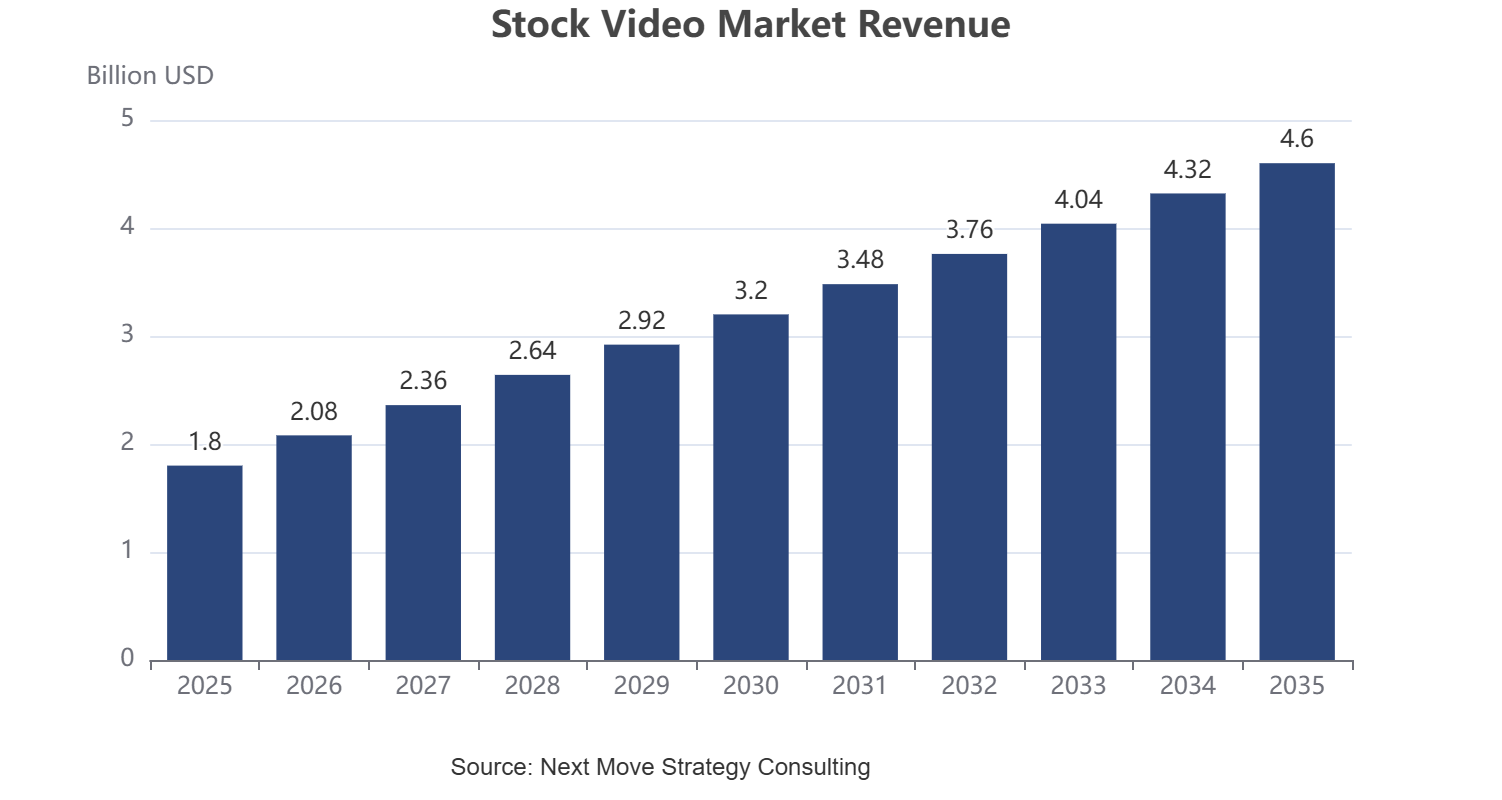
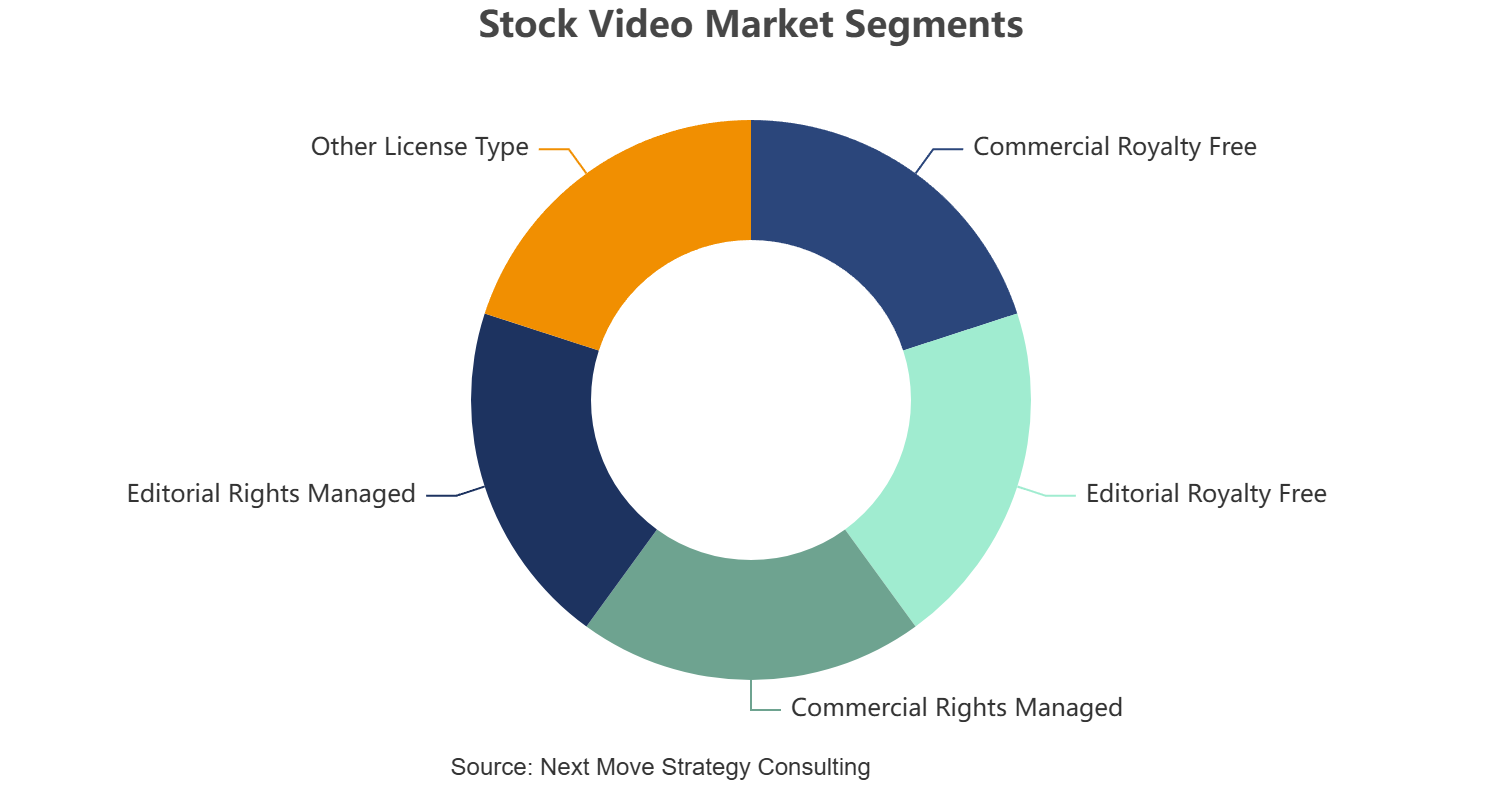
About the Author
 Saista Faiyaz
— Saista Faiyaz is Research Associate at Next Move Strategy Consulting, where she has covered consumer markets and healthcare technologies for 3 years. Her work includes primary interview review, secondary-source validation, market sizing, and structured analysis of company and industry data. She supports research by comparing evidence across sources, organizing findings into market narratives, and documenting assumptions used in analysis. Her scope includes cross-market benchmarking, and reports.
Saista Faiyaz
— Saista Faiyaz is Research Associate at Next Move Strategy Consulting, where she has covered consumer markets and healthcare technologies for 3 years. Her work includes primary interview review, secondary-source validation, market sizing, and structured analysis of company and industry data. She supports research by comparing evidence across sources, organizing findings into market narratives, and documenting assumptions used in analysis. Her scope includes cross-market benchmarking, and reports.
About the Reviewer
 Supradip Baul
— Supradip Baul is an accomplished business consultant and strategist with over a decade of rich experience in market intelligence, strategy, technology, and business transformation. His work has included rigorous qualitative and quantitative analysis across multiple industries, helping clients shape investment decisions and long-term roadmaps. Earlier in his career, he was associated with Gartner, where he contributed to industry-leading reports and market share analyses. He has worked with leading global companies and holds an MBA with a dual specialization in Marketing and Finance.
Supradip Baul
— Supradip Baul is an accomplished business consultant and strategist with over a decade of rich experience in market intelligence, strategy, technology, and business transformation. His work has included rigorous qualitative and quantitative analysis across multiple industries, helping clients shape investment decisions and long-term roadmaps. Earlier in his career, he was associated with Gartner, where he contributed to industry-leading reports and market share analyses. He has worked with leading global companies and holds an MBA with a dual specialization in Marketing and Finance.
At Next Move Strategy Consulting, we understand that insightful market research is the cornerstone of successful business decisions. That's why we employ a robust and multifaceted approach, combining various methodologies to deliver the most accurate and actionable data for our clients.

Research Landscape
We navigate the world of research with two primary approaches:
Qualitative Approach
Our qualitative research methodologies involve immersive techniques such as in-depth interviews, focus groups, and observational studies. By engaging directly with individuals and stakeholders, we uncover valuable insights that quantitative data alone may overlook.

Quantitative Research
In tandem with qualitative methodologies, NMSC leverages the power of Quantitative Research to provide a robust foundation of numerical insights. Through systematic data collection and analysis, we quantify patterns, preferences, and market trends, offering a comprehensive view of the business landscape.
Our quantitative research approach employs diverse tools, including surveys, experiments, and statistical modelling. These methodologies enable us to gather data from a large and representative sample, ensuring the statistical significance of our findings. By employing structured questionnaires and standardized data collection methods, we guarantee the reliability and validity of the information we present to our clients.
Quantitative research is particularly effective in measuring the prevalence of trends, assessing market size, and gauging the impact of various factors on consumer behavior. The numerical precision attained through this approach equips our clients with actionable insights, facilitating data-driven decision-making and strategy formulation.


Our Specialized Toolbox for Industry-Specific Market Research
We deploy a specialized arsenal of techniques tailored to meet your unique requirements. Here's a glimpse into our comprehensive toolbox:

Information Procurement
The stage entails acquiring market data or relevant information through various sources and methodologies.


Market Research Approach
We utilize both top-down and bottom-up approaches in market research analysis to achieve a comprehensive understanding of the market dynamics, leveraging the broad perspective of industry trends and macroeconomic factors alongside detailed insights from specific segments and individual companies.

Porters Five Forces Analysis
We conduct Porter's Five Forces analysis to evaluate the competitive landscape of an industry, providing us with insights into factors that affect profitability and strategic positioning.

SWOT Analysis

Forecasting
We utilize a forecasting model to predict future consumption by considering parameters like population, economics, regulations, market competition, drivers, constraints, technology, and pricing. We also employ statistical techniques such as multilinear regression, exponential smoothing, moving average, ARIMA, and Monte Carlo simulations for accurate predictions. In econometric forecasting, we analyzed short-term and long-term event impacts, attributing values based on regulatory frameworks, economic factors, and market events.





 Speak to Our Analyst