AI CCTV: Smarter Security or Bigger Privacy Risk?
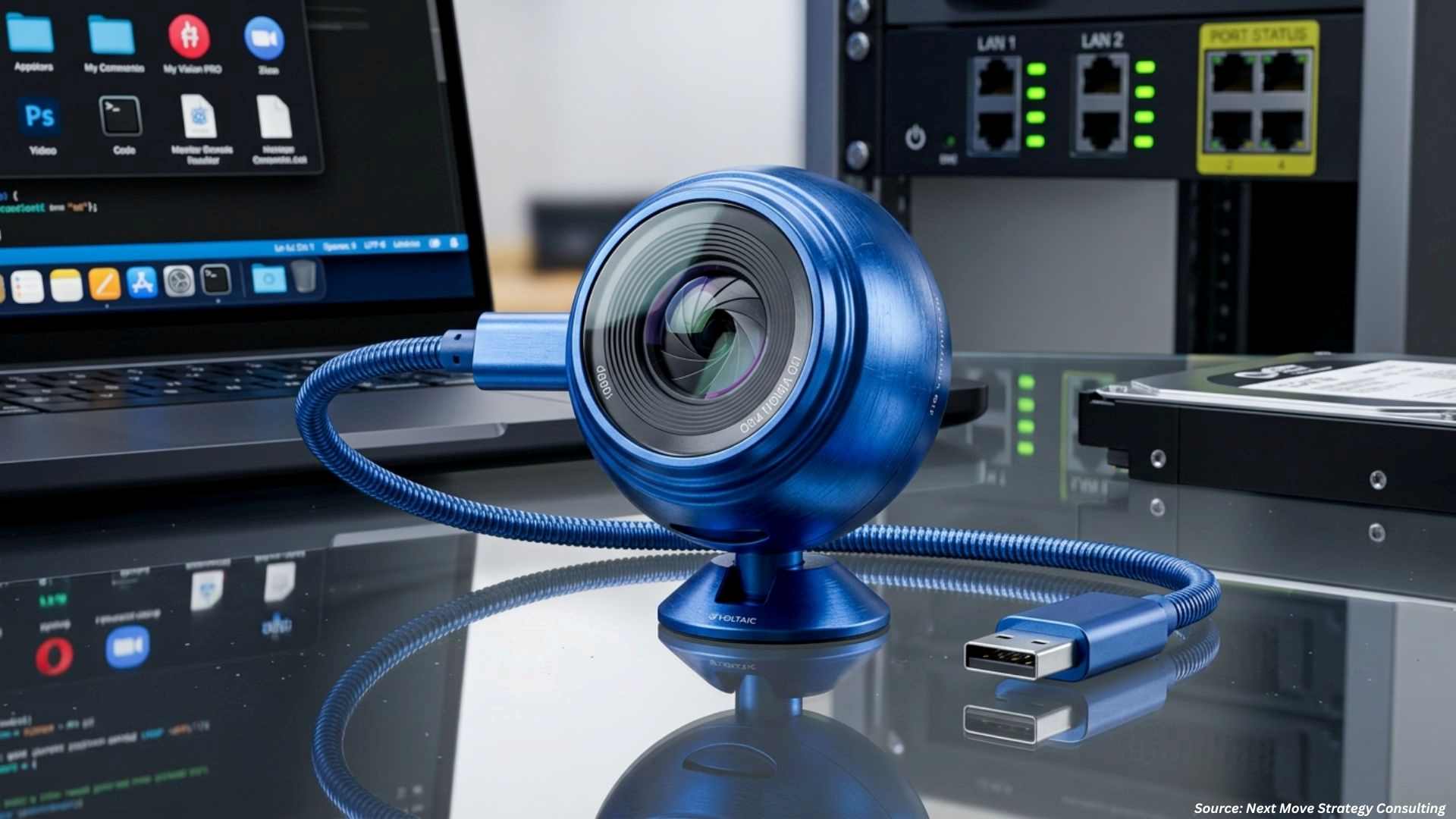
Artificial intelligence is changing how surveillance works. Traditional CCTV systems mostly recorded footage and depended on people to watch screens for hours. Today, AI-powered CCTV can detect unusual behavior, flag incidents, and automate responses in real time. That promises faster public safety decisions and better operational efficiency.
But there is another side to the story. A 2024 cybersecurity study from Northeastern University found that many modern cameras may leak video signals through unintended electromagnetic emissions, creating a new privacy threat. That means smarter cameras also need smarter protection.
Why Is AI CCTV Getting So Much Attention?
Cities, transport hubs, retail spaces, campuses, and public venues need faster monitoring at scale. Human operators cannot effectively track hundreds of live feeds at once. AI helps by scanning multiple streams simultaneously and escalating only relevant alerts.
According to Strategy&, governments can use AI-enabled video monitoring to improve safety while reducing agency funding pressure through smarter operations and new revenue models.
AI CCTV Market is gaining attention because it solves a scale problem that manual monitoring cannot. It reviews multiple feeds faster, improves incident visibility, and supports safer public environments.
How Is AI CCTV Redefining Modern Surveillance?
AI CCTV is transforming traditional surveillance into an intelligent security system that can monitor multiple feeds, detect unusual activity, and trigger faster responses in real time. It helps reduce manual workload, improves operational efficiency, and supports safer public and private spaces. At the same time, growing privacy and cybersecurity concerns are pushing organizations to adopt stronger governance, secure infrastructure, and transparent data practices.

How Is AI CCTV Upgrading Public Monitoring?
AI CCTV does more than record events. It can analyze movement patterns, detect violations, and trigger responses instantly.
Examples highlighted in the 2025 source include traffic violation detection, illegal dumping identification, toll collection through number plate recognition, and faster incident management. Strategy& also noted that monetizing data streams could reduce total investment by up to 40%, while selected applications could lower deployment and operating funding needs by 30%.
Traditional vs AI CCTV
|
Feature |
Traditional CCTV |
AI CCTV |
|
Monitoring |
Manual |
Automated + human review |
|
Alerts |
After incident |
Real-time alerts |
|
Scale |
Limited by staff |
High-volume monitoring |
|
Traffic Use Cases |
Basic evidence recording |
Detection, tolling, analytics |
|
Efficiency |
Lower |
Higher |
AI CCTV transforms surveillance from passive recording into active decision support. It improves speed, scalability, and operational value.
Why Is AI CCTV Becoming the Backbone of Smart Security?
AI CCTV is evolving beyond simple video recording into a proactive security solution that identifies risks, analyzes behavior patterns, and enables quicker decision-making. Its ability to automate monitoring, enhance traffic management, and optimize resource use makes it valuable for cities, businesses, and public venues. As adoption grows, success will depend on balancing innovation with privacy protection and strong cybersecurity measures.

What Are the Biggest Privacy and Security Risks?
This is where the conversation becomes more important.
Northeastern University researchers developed EM Eye, a technique that captured live video from cameras by decoding electromagnetic radiation emitted by internal wiring. Researchers tested 12 camera types, including smartphones, dash cams, and home security cameras. Depending on the device, eavesdropping ranges varied from under 1 foot to 16 feet.
Even more concerning, the camera did not always need to be actively recording if the lens remained open.
Smarter surveillance without cybersecurity can create new vulnerabilities. Hardware leakage risks show that privacy protection must go beyond passwords and cloud security.
How Are Technology Investments Shaping the AI CCTV Market?
The pie chart shows that Video Analytics Software leads investment priorities with 28%, reflecting the growing demand for intelligent monitoring, automated alerts, and real-time threat detection. Smart Cameras & Edge Devices follow at 24%, highlighting the shift toward on-device processing and faster decision-making without relying entirely on centralized systems. Cloud Storage & Data Management accounts for 22%, indicating the importance of scalable storage, remote access, and secure handling of large video datasets. Cybersecurity Solutions represent 16%, emphasizing the need to protect connected surveillance networks from hacking and data breaches. Meanwhile, System Integration Services hold 10%, showing the continued need to connect cameras, analytics platforms, and security infrastructure into unified ecosystems. Overall, the chart reflects a market focused on intelligence, connectivity, and secure digital surveillance.

How Can Organizations Build Trust With AI CCTV?
The strongest systems balance safety with accountability.
The 2025 public monitoring source recommends proactive privacy governance, regulatory compliance, and stronger cyber defenses when handling surveillance data.
Organizations should use clear signage where monitoring exists, minimize unnecessary data collection, encrypt stored footage, patch firmware regularly, audit vendors, and define retention rules. Where possible, anonymized datasets can support analytics without exposing identities.
AI CCTV Trust Framework
|
Pillar |
What It Means |
|
Transparency |
Tell people cameras are in use |
|
Security |
Protect devices, networks, and storage |
|
Privacy |
Limit unnecessary data collection |
|
Governance |
Set rules for access and retention |
|
Accountability |
Audit systems and vendors regularly |
Trust grows when surveillance systems are secure, transparent, and proportionate. Responsible governance is as important as technical performance.
How Are Leading Companies Driving Competition in the AI CCTV Market?
The AI CCTV market features a diverse group of global and regional players, including Hikvision, Dahua Technology, Hanwha Vision, Axis Communications, Bosch Security Systems, Honeywell International Inc., Panasonic Holdings Corporation, Cisco Systems Inc., Avigilon Corporation, Aetherica Jakarta Indonesia, SECOM Indonesia, Ademco Security Group, Johnson Controls, Inc., Anviz Global Inc., MOBOTIX AG, and others. These companies are strengthening their market positions through strategic initiatives such as geographic expansion, new product launches, technology upgrades, and regional partnerships to sustain competitiveness in the evolving AI CCTV industry.

Is AI CCTV Worth It?
The answer depends on implementation.
If deployed responsibly, AI CCTV can improve safety, reduce monitoring overload, and support smarter city operations. If deployed carelessly, it can create privacy backlash, cybersecurity exposure, and reputational damage.
The technology itself is not the final answer. Governance determines the outcome.
AI CCTV is most valuable when intelligence is matched with ethics and engineering discipline. Balanced deployment creates sustainable long-term value.
Strategic Integration of AI CCTV: Market Drivers and the Impact of APRA Regulations
The pie chart highlights that Smart City Surveillance and Business & Commercial Security are the primary drivers of AI CCTV adoption, collectively accounting for 55% of the market, but the introduction of regulations like the American Privacy Rights Act (APRA) directly explains the significant 20% share held by Privacy & Cybersecurity Upgrades. APRA mandates strict federal standards for data minimization and the handling of biometric information, forcing organizations to prioritize AI systems that feature robust encryption and privacy-by-design. Consequently, as APRA increases the legal risks associated with facial recognition and "Retail Intelligence" (15%), the market is shifting toward sophisticated AI solutions that can deliver high-level security and analytics while remaining strictly compliant with these evolving privacy mandates.

Next Steps
Audit current camera infrastructure for cyber risks. Prioritize AI use cases with measurable public benefit. Create clear privacy and retention policies. Choose vendors with proven security standards. Review systems regularly as threats evolve.
-
Audit current camera infrastructure for cyber risks.
-
Prioritize AI use cases with measurable public benefit.
-
Create clear privacy and retention policies.
-
Choose vendors with proven security standards.
-
Review systems regularly as threats evolve.
About the Author
 Tania Dey
— Tania Dey is a content writer specializing in transformation-led, insight-driven storytelling. She develops research-backed, high-impact content aligned with evolving business priorities, digital behavior, and audience expectations. Her work helps organizations sharpen value propositions, strengthen visibility, and communicate strategic intent with clarity and precision. Grounded in data-informed storytelling, she brings a strong focus on relevance, consistency, and measurable digital impact across platforms.
Tania Dey
— Tania Dey is a content writer specializing in transformation-led, insight-driven storytelling. She develops research-backed, high-impact content aligned with evolving business priorities, digital behavior, and audience expectations. Her work helps organizations sharpen value propositions, strengthen visibility, and communicate strategic intent with clarity and precision. Grounded in data-informed storytelling, she brings a strong focus on relevance, consistency, and measurable digital impact across platforms.
About the Reviewer
 Sanyukta Deb
— Sanyukta Deb is Digital Marketing Team Lead at Next Move Strategy Consulting, where she has led content strategy and technical SEO for the firm's B2B market research publications for over 2 years. Her editorial process translates NextMSC's primary and secondary research — spanning technology, industrial, and consumer sectors — into commercial narratives, backed by search-intent, keyword, and competitive analysis. She brings 5 years of overall experience in digital marketing and content strategy.
Sanyukta Deb
— Sanyukta Deb is Digital Marketing Team Lead at Next Move Strategy Consulting, where she has led content strategy and technical SEO for the firm's B2B market research publications for over 2 years. Her editorial process translates NextMSC's primary and secondary research — spanning technology, industrial, and consumer sectors — into commercial narratives, backed by search-intent, keyword, and competitive analysis. She brings 5 years of overall experience in digital marketing and content strategy.

















Add Comment