How Is Battery Storage Reshaping Clean Power Systems?
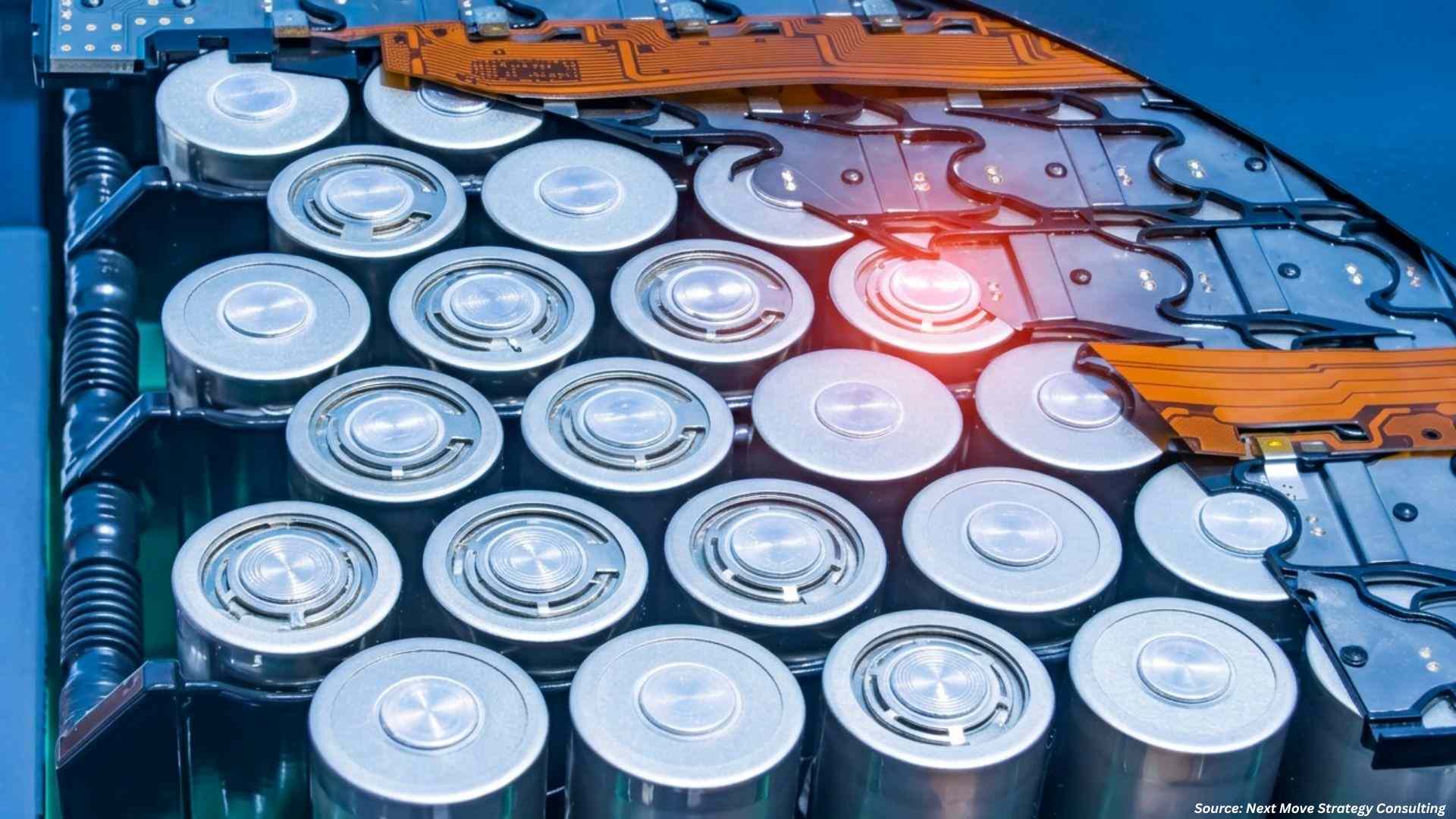
Battery Energy Storage System Market are rapidly becoming one of the most important technologies in the global energy transition. Once viewed mainly as backup infrastructure, they are now helping grids absorb renewable power, manage demand peaks, and improve reliability. Falling prices and larger deployments in 2025 show that storage is shifting from a supporting role to a strategic asset.
At its core, a battery storage system captures electricity when supply is high and releases it when demand rises. This simple function creates major value for utilities, businesses, and countries expanding renewable generation.
Why Is Battery Storage Growing So Quickly?
The strongest driver is economics. According to BloombergNEF’s 2025 Energy Storage Systems Cost Survey, the global average turnkey price for battery storage systems fell to US$117/kWh, down 31% from 2024 levels. Lower costs make new projects easier to finance and improve long-term returns.
Manufacturing improvements are playing a major role. Larger battery cells, more energy-dense container systems, and better integration methods are reducing the cost of delivering complete installed projects. In practical terms, buyers are getting more storage capacity for less money.

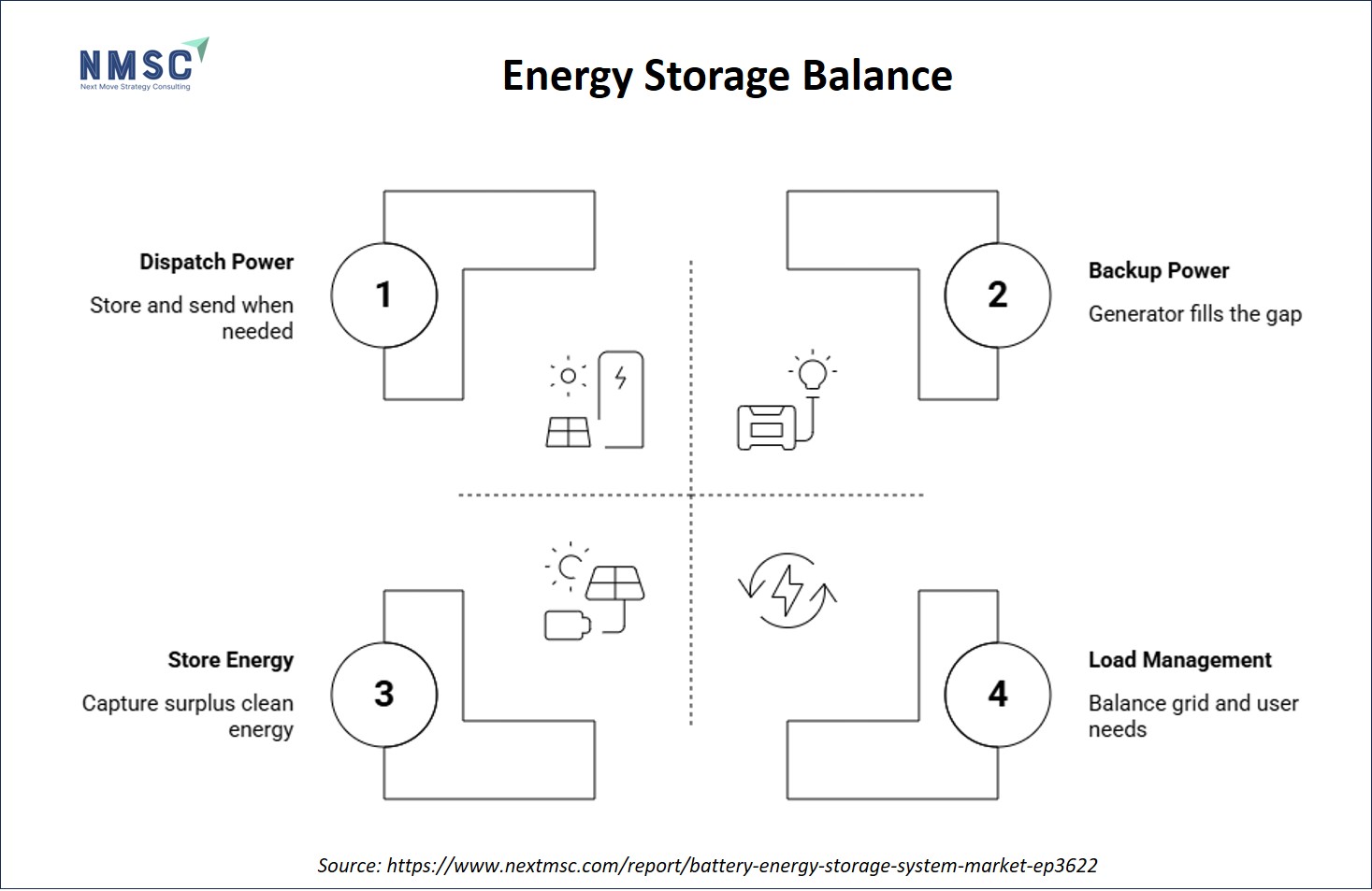
How Integrated Storage Systems Balance Clean Energy Supply and Backup Power
This image highlights the role of battery storage as the central link between renewable generation, backup systems, and end users. Clean energy is captured and stored rather than lost during periods of excess production, then dispatched when demand increases or renewable output declines. The inverter and electrical panel manage smooth power distribution, while the generator serves as an emergency reserve. Together, these components create a flexible energy ecosystem that supports uninterrupted operations, better load management, and a faster transition toward sustainable electricity networks.
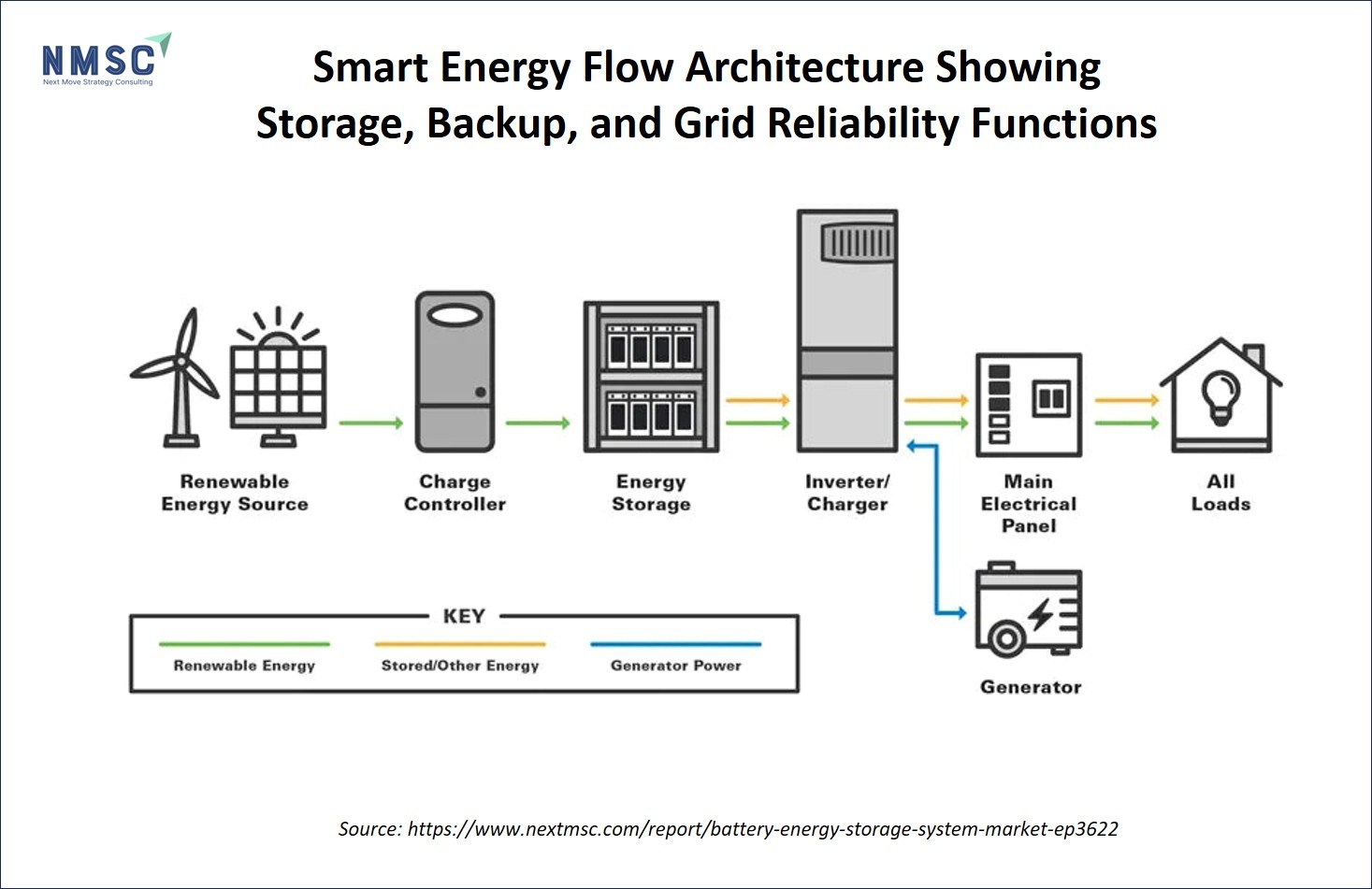
How Battery Energy Storage Systems Integrate Renewable Power with Daily Electricity Demand
This image illustrates the operating flow of a battery energy storage system connected to renewable energy sources and end-use loads. Electricity generated from solar or wind sources first moves through a charge controller, which regulates incoming power before storing it in the battery system. The stored energy is then converted by the inverter/charger into usable electricity for the main electrical panel and connected loads. The diagram also shows a generator as a backup source, supplying power when renewable generation or stored energy is insufficient. Overall, it highlights how battery storage enables cleaner, more reliable, and continuous power delivery.
How Are Large Projects Changing the Market?
Real-world deployments are proving how valuable storage can be at scale. One of the most significant examples in 2025 is the Eraring battery expansion in New South Wales, Australia. Wärtsilä announced the fourth stage of the project, adding 360 MWh and bringing total capacity to 700 MW / 3,160 MWh.
This makes Eraring the largest battery project in Australia and one of the largest in the world. More importantly, it demonstrates how storage is being used as critical grid infrastructure rather than a temporary pilot project.
Large systems like Eraring can provide frequency control, firming capacity, and system strength support while helping balance rising renewable generation as coal plants retire.
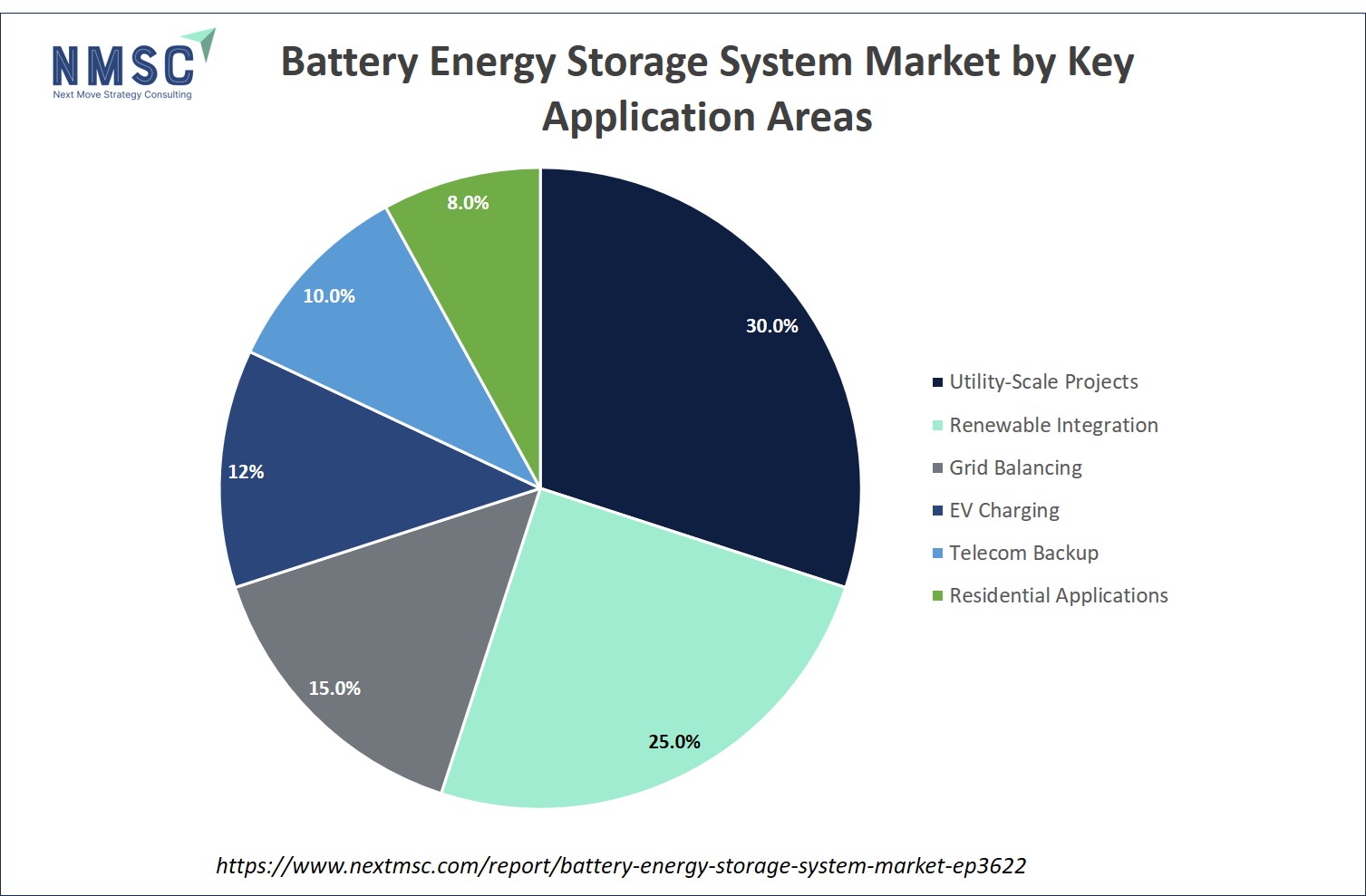
How Battery Energy Storage Demand Is Distributed Across Major End-Use Segments
The pie chart highlights how battery energy storage demand is distributed across major application segments. Utility-scale projects lead with 30%, reflecting strong investment in large grid-connected systems that support renewable integration and energy reliability. Renewable integration accounts for 25%, showing the growing need to store solar and wind power for use when generation falls. Grid balancing represents 15%, driven by the need to stabilize electricity networks during demand fluctuations. EV charging contributes 12%, as storage helps manage fast-charging loads and supports charging infrastructure expansion. Telecom backup holds 10%, where batteries ensure uninterrupted network operations, while residential applications make up 8%, reflecting rising adoption of home energy storage for backup power and self-consumption.
Battery Energy Storage Systems by the Numbers
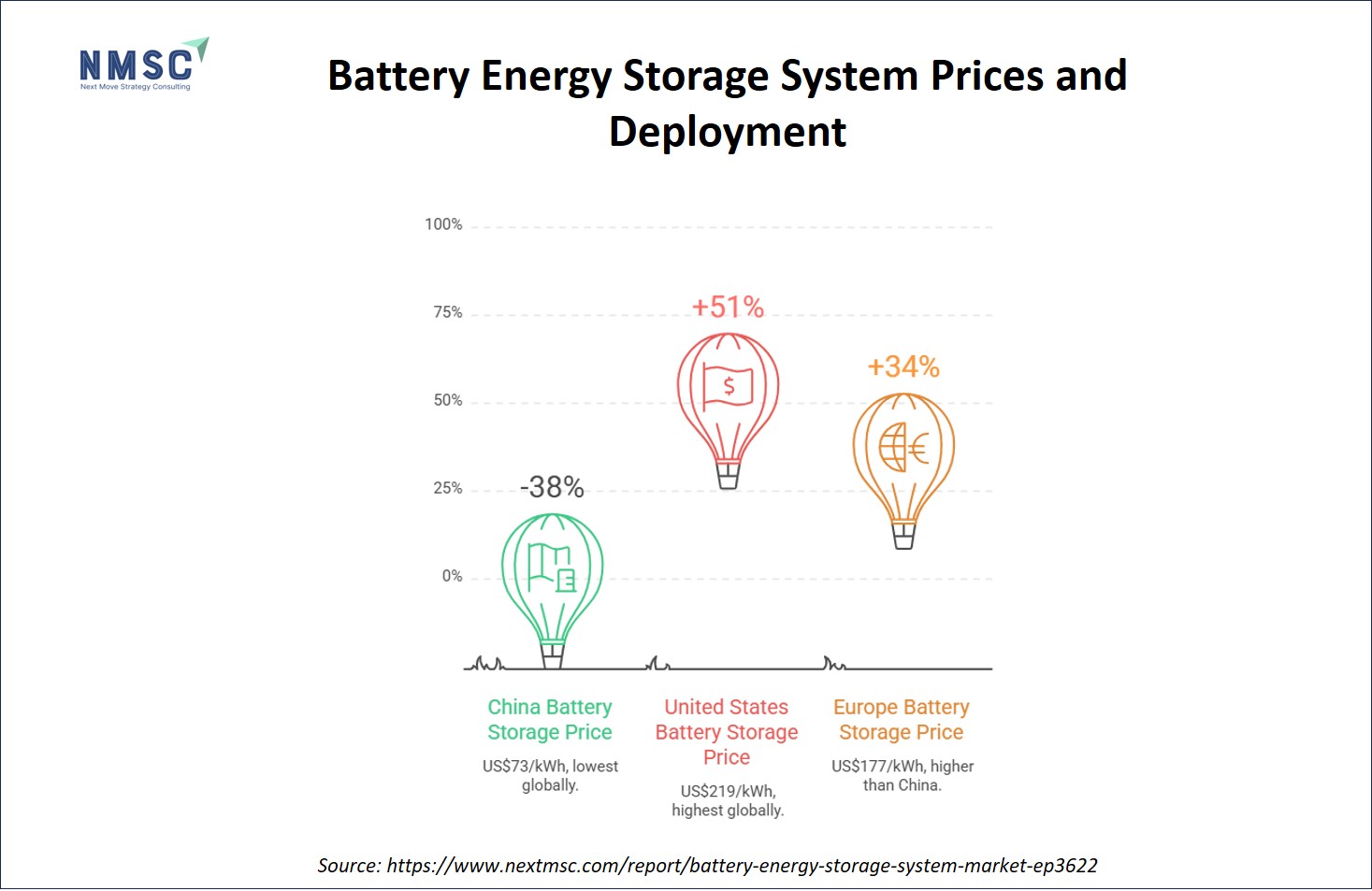
Battery energy storage entered a stronger growth phase in 2025 as economics and scale improved together. Global average turnkey system prices dropped to US$117/kWh, while China led on cost competitiveness at US$73/kWh. Europe and the United States followed at US$177/kWh and US$219/kWh, showing how regional policies and supply chains still influence pricing. On the deployment side, Australia’s Eraring project reached 700 MW / 3,160 MWh, highlighting how utility-scale storage is becoming essential infrastructure for balancing renewable power and strengthening grid reliability.
Major Trends Shaping the Present
Storage Is Making Solar More Flexible
Analysis from Ember suggests that combining solar power with storage can make dispatchable electricity increasingly competitive. This is important because it allows solar generation to serve demand beyond daylight hours, including evening peaks.
The market implication is clear: renewable energy is no longer limited to when the sun shines.
Software Is Becoming Essential
As battery projects grow larger, digital management systems are becoming just as important as physical hardware. Wärtsilä highlighted its GEMS Digital Energy Platform for optimizing the Eraring project’s performance and reliability.
This reflects a broader industry trend where software helps maximize revenue, extend asset life, and improve grid response times.
Regional Cost Gaps Still Matter
Battery pricing still differs significantly across regions. In 2025, China remained the lowest-cost market at US$73/kWh, while Europe averaged US$177/kWh and the United States reached US$219/kWh.
These gaps are shaped by tariffs, policy settings, supply chains, and local market conditions.
2025 Price Snapshot
|
Region |
Average Turnkey Price |
|
China |
US$73/kWh |
|
Global Average |
US$117/kWh |
|
Europe |
US$177/kWh |
|
United States |
US$219/kWh |
Battery Energy Storage Systems Creating a Smarter Renewable Power Network
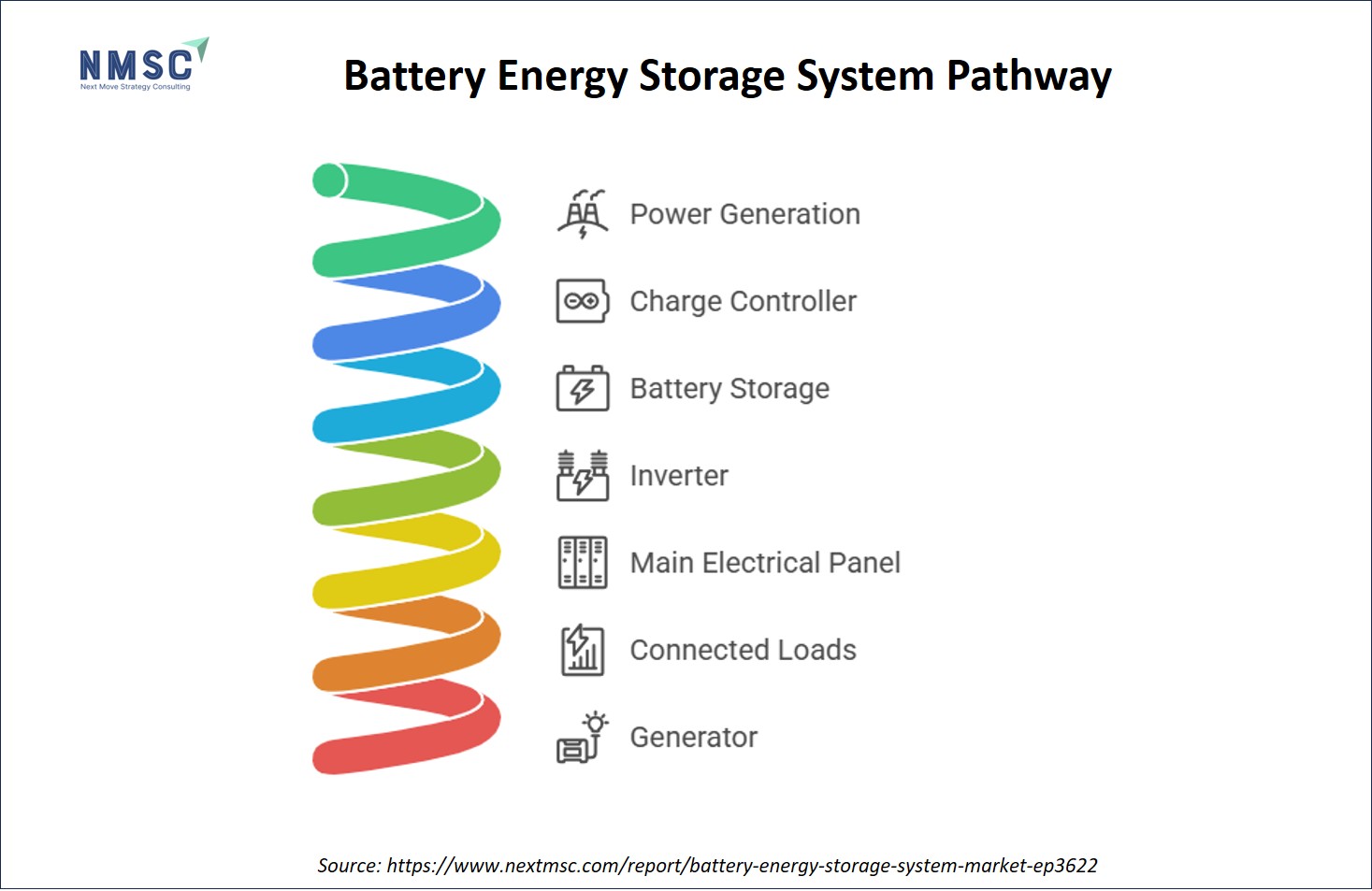
The diagram presents the full energy pathway within a battery energy storage system designed to maximize renewable electricity use. Power generated from sources such as solar panels or wind turbines is first regulated through a charge controller, then stored in battery units for later consumption. When electricity is needed, the inverter converts stored power into usable current and sends it through the main electrical panel to connected loads. The inclusion of a generator adds backup support, ensuring continuous energy availability. This setup shows how storage systems improve efficiency, reduce dependence on conventional power sources, and strengthen energy reliability.
Why Should Businesses and Utilities Pay Attention?
For utilities, storage offers a practical way to balance intermittent renewable supply, improve resilience, and reduce stress on transmission networks. For businesses, it can support energy security goals and reduce exposure to volatile electricity pricing.
The broader value lies in flexibility. Instead of building only new generation capacity, organizations can use stored energy more intelligently across the day.
Leading Companies Shaping the Battery Energy Storage System Market
The global battery energy storage system market is led by major players including Exide Industries, Amara Raja Energy & Mobility, Fluence Energy India (ASE), BYD, Sungrow, Larsen & Toubro, HBL Power Systems, Exicom Tele-Systems, Livguard, OKAYA Power, Tata Power, JSW Energy, Adani Green Energy, LG Energy Solution (LGES), and Waaree Energies. These companies compete through diversified product portfolios serving utility-scale storage, renewable integration, grid stabilization, electric vehicle charging infrastructure, telecom backup power, and residential energy needs.
Next Steps
-
Compare storage costs with current peak electricity expenses.
-
Explore pairing storage with renewable assets for greater flexibility.
-
Evaluate software platforms alongside hardware procurement.
-
Monitor regional policy changes that affect project economics.
-
Track large-scale projects for proven deployment models.
Final Thought
Battery energy storage is no longer an emerging option it is becoming a core component of modern power systems. Sharp price declines in 2025, combined with landmark projects such as Eraring, show that storage is now commercially viable at scale. Its ability to improve grid reliability, support renewable energy, and create operational flexibility makes it valuable for utilities, businesses, and governments alike. As technology continues to advance and deployment expands, battery storage is set to play a defining role in the future of clean and dependable energy.
About the Author
 Sanyukta Deb
— Sanyukta Deb is Digital Marketing Team Lead at Next Move Strategy Consulting, where she has led content strategy and technical SEO for the firm's B2B market research publications for over 2 years. Her editorial process translates NextMSC's primary and secondary research — spanning technology, industrial, and consumer sectors — into commercial narratives, backed by search-intent, keyword, and competitive analysis. She brings 5 years of overall experience in digital marketing and content strategy.
Sanyukta Deb
— Sanyukta Deb is Digital Marketing Team Lead at Next Move Strategy Consulting, where she has led content strategy and technical SEO for the firm's B2B market research publications for over 2 years. Her editorial process translates NextMSC's primary and secondary research — spanning technology, industrial, and consumer sectors — into commercial narratives, backed by search-intent, keyword, and competitive analysis. She brings 5 years of overall experience in digital marketing and content strategy.
About the Reviewer
 Debashree Dey
— Debashree Dey is Assistant Manager at Next Move Strategy Consulting, where she supports cross-vertical market content and communications across diverse industries for 6 years. Her professional background includes senior content writing, communications, and published manuscript authorship, with experience developing audience-focused business narratives and maintaining clear, consistent messaging. Her role supports research-led content development and editorial quality across NextMSC publications.
Debashree Dey
— Debashree Dey is Assistant Manager at Next Move Strategy Consulting, where she supports cross-vertical market content and communications across diverse industries for 6 years. Her professional background includes senior content writing, communications, and published manuscript authorship, with experience developing audience-focused business narratives and maintaining clear, consistent messaging. Her role supports research-led content development and editorial quality across NextMSC publications.















Add Comment