AI Cardiology Diagnosis Market Size, Share, Growth & Forecast by Type (ECG AI Interpretation & Rhythm Analytics, Echocardiography AI, Nuclear Cardiology AI, Intracoronary Imaging AI, Multimodality Cardiology AI Platforms), Deployment Mode (Cloud-Based SaaS, On-Premises, Edge, Device-Embedded AI), Revenue Stream (Recurring Subscription, Per-Study Fee, and Perpetual Licence), and End User (Hospitals and Health Systems, Cardiology Group Practices and Clinics) — Global Analysis 2025-2035
Industry: Healthcare | Publishing Date: July 13, 2026 | Last Updated: September 30, 2026 | No of Pages: N/A | No. of Tables: N/A | No. of Figures: N/A | Format: PDF | Report Code: HC5105
What Is the AI Cardiology Diagnosis Market Size?
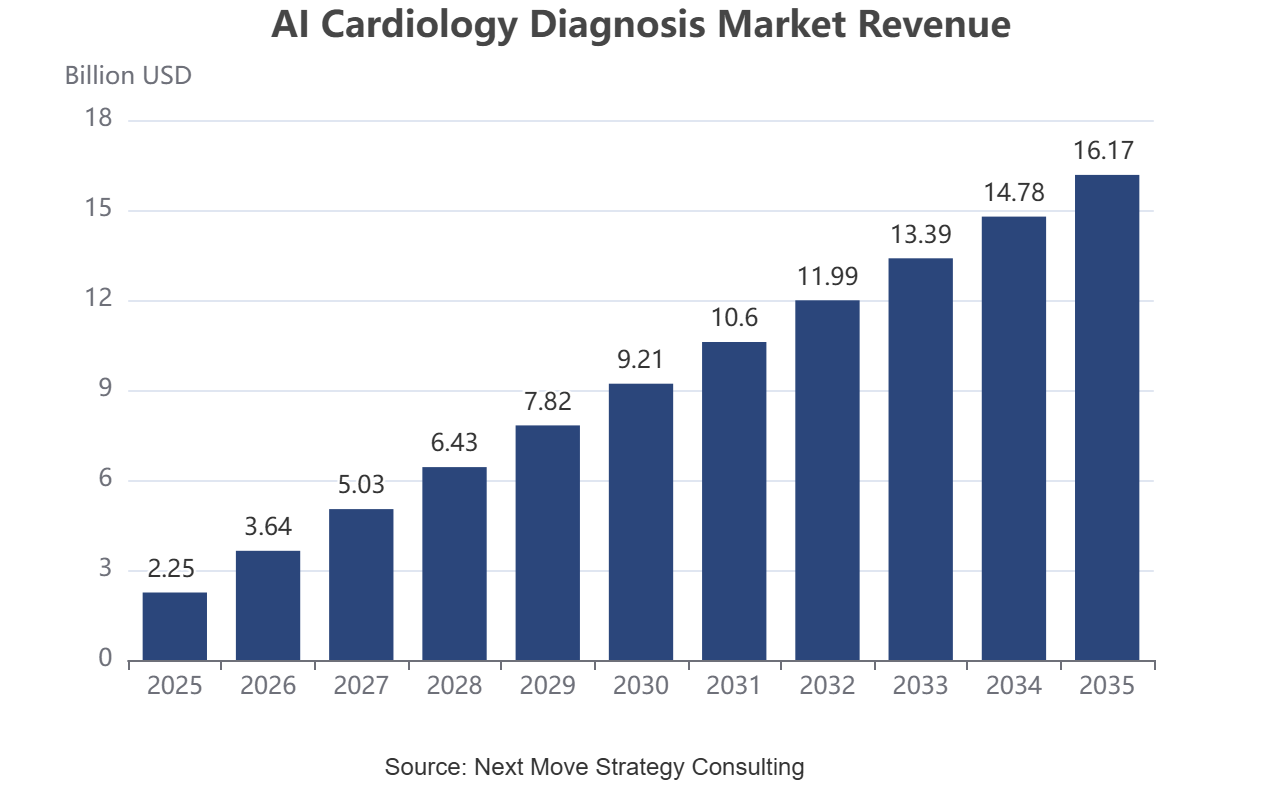
The global AI Cardiology Diagnosis Market was valued at USD 2.25 billion in 2025 and is expected to reach USD 2.74 billion in 2026. Rising FDA clearance volume for cardiovascular AI/ML software, expanding CMS reimbursement for AI-enabled coronary CT analysis, and growing adoption of AI-interpreted ECG and echocardiography platforms are projected to propel the market to USD 16.17 billion by 2035, at a CAGR of 21.8% from 2026 to 2035. Growth is driven by rising cardiovascular disease burden, favourable reimbursement policy, and expanding regulatory clearance pathways for diagnostic AI.
|
Parameters |
Details |
|
Market Size in 2025 |
USD 2.25 Billion |
|
Market Size in 2026 |
USD 2.74 Billion |
|
Revenue Forecast in 2035 |
USD 16.17 Billion |
|
Growth Rate |
CAGR of 21.8% from 2026 to 2035 |
|
Analysis Period |
2025–2035 |
|
Base Year Considered |
2025 |
|
Forecast Period |
2026–2035 |
|
Market Size Estimation |
Revenue (USD Billion) |
|
Companies Profiled |
20 |
|
Countries Covered |
38 |
|
Market Share |
Available for Top 10 Companies |
Ecosystem Analysis of the AI Cardiology Diagnosis Industry
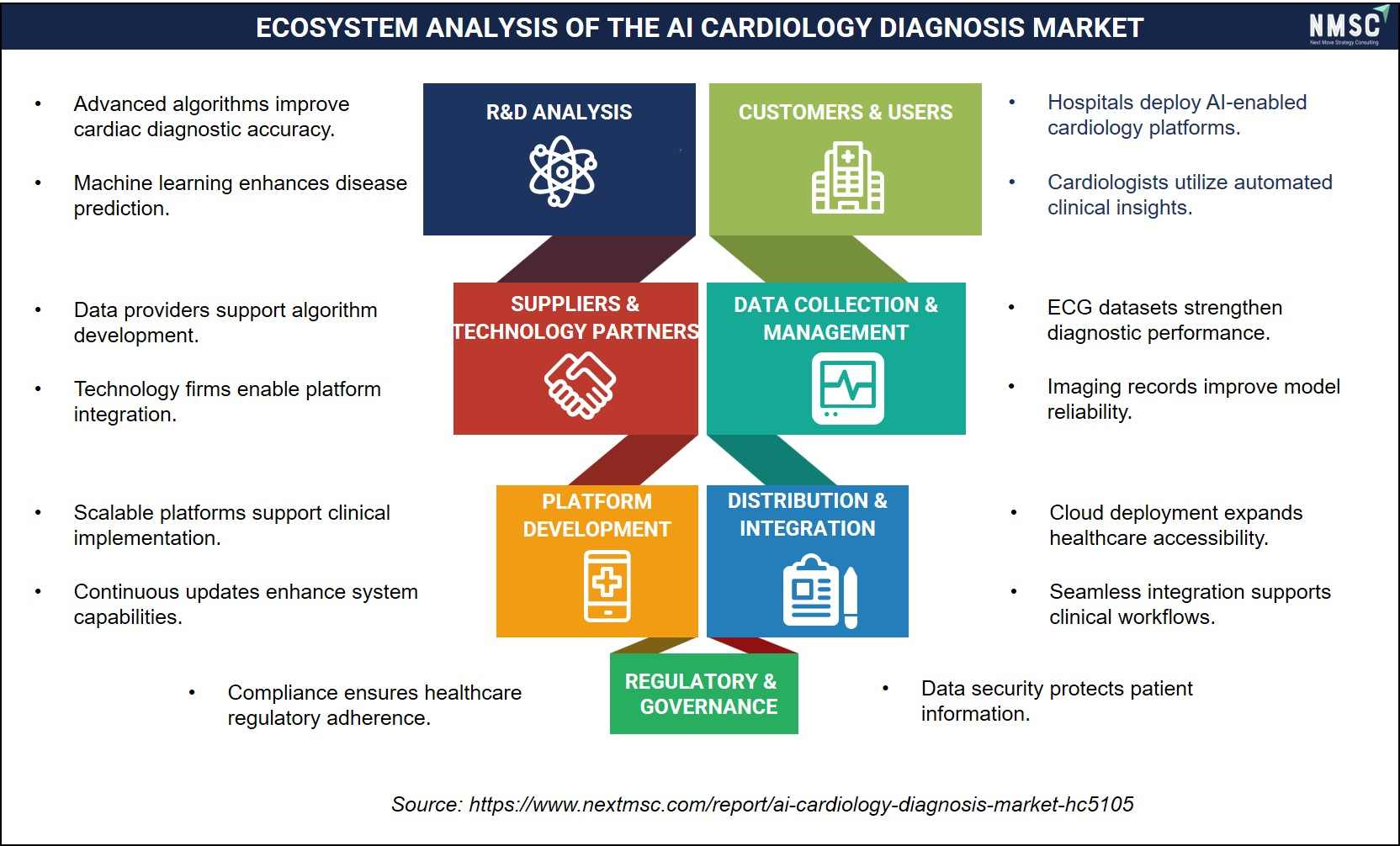
The ecosystem analysis below maps the key components, such as research and development, customers and users, suppliers and technology partners, data collection and management, platform development, distribution and integration, and regulatory and governance, shaping the AI cardiology diagnosis market. From our analysis, we observed that the interplay between platform developers and regulatory governance is becoming the central axis of the ecosystem, as compliance requirements now directly influence data management protocols and integration strategies adopted by hospitals and cardiologists.
AI Cardiology Diagnosis Market Overview
The AI Cardiology Diagnosis Industry covers AI-enabled interpretation and analytics across ECG, echocardiography, cardiac MRI, cardiac CT, nuclear cardiology, and intracoronary imaging modalities, deployed via cloud, on-premises, edge, and device-embedded models. Based on our market evaluation, we noticed that the market has evolved rapidly from single-modality rhythm-detection algorithms toward comprehensive multimodality platforms, propelled by a rise in FDA cardiovascular AI/ML clearances from 62 in 2024 to 92 in 2025. Regulatory momentum, including the AMA's Category I CPT code for AI-enabled coronary plaque analysis effective January 2026, is accelerating clinical and commercial technology adoption across hospitals and diagnostic imaging centers.
|
Key Takeaways |
|
By type, ECG AI Interpretation & Rhythm Analytics held the largest share of the AI Cardiology Diagnosis Market at USD 0.72 billion in 2025 and is projected to reach USD 3.88 billion by 2035, driven by its widespread use in automated ECG analysis and arrhythmia detection. Cardiac CT AI is the fastest-growing segment, expanding at a CAGR of 31.56% from 2026 to 2035. |
|
By deployment mode, Cloud-Based SaaS dominated the market with USD 1.03 billion in 2025 and is forecast to reach USD 6.14 billion by 2035, supported by scalable AI deployment and centralized data management. Edge is the fastest-growing deployment model, registering a CAGR of 34.86% during 2026–2035. |
|
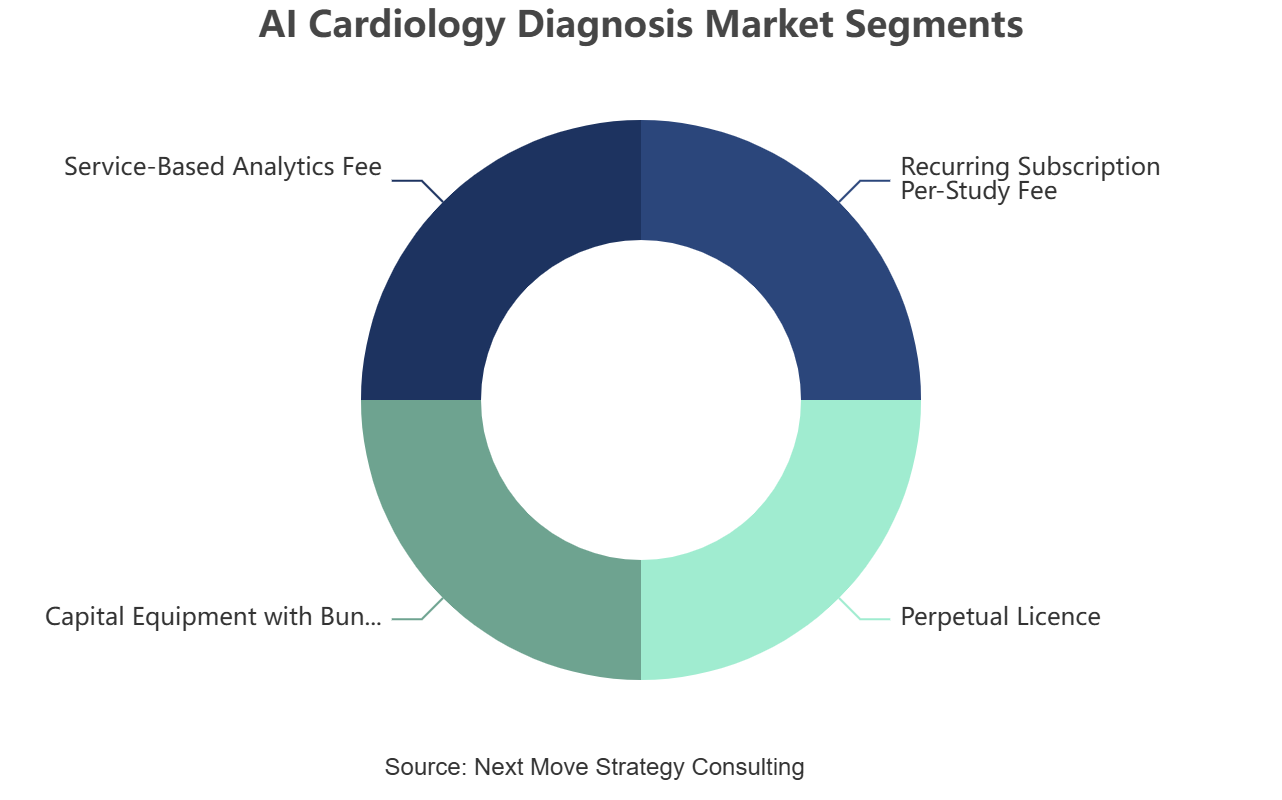
By revenue stream, Per-Study Fee accounted for the largest revenue at USD 0.77 billion in 2025 and is expected to reach USD 3.88 billion by 2035, reflecting its widespread adoption in diagnostic workflows. Service-Based Analytics Fee is the fastest-growing revenue model, expanding at a CAGR of 29.62% from 2026 to 2035. |
|
By end user, Hospitals and Health Systems led the market with USD 0.90 billion in 2025 and are projected to reach USD 5.17 billion by 2035, driven by increasing adoption of AI-assisted cardiac diagnostics. Remote Cardiac Monitoring Service Providers are the fastest-growing end-user segment, registering a CAGR of 32.96% during 2026–2035. |
|
North America held the largest regional share at USD 0.99 billion in 2025 and is projected to reach USD 5.82 billion by 2035, growing at a CAGR of 19.12%, supported by advanced healthcare infrastructure and early AI adoption. |
|
Asia-Pacific is expected to be the fastest-growing region, registering a CAGR of 26.98% from 2026 to 2035, driven by expanding healthcare digitalization, rising cardiovascular disease prevalence, and increasing investments in AI-enabled diagnostics. |
|
The United States dominated the market in 2025, generating USD 0.79 billion and is projected to reach USD 4.42 billion by 2035, supported by strong adoption of AI-powered cardiac imaging and diagnostic technologies. |
|
India is projected to be the fastest-growing country, expanding at a CAGR of 33.59% from 2026 to 2035, driven by rapid healthcare digitalization, growing investments in AI-enabled diagnostics, and increasing demand for advanced cardiovascular care. |
Key Emerging Trends in the AI Cardiology Diagnosis Market
How Is the Surge in FDA Cardiovascular AI/ML Clearances Reshaping Market Adoption?
Regulatory clearance velocity is directly expanding the commercially available AI cardiology toolset. Through our market assessment, we observed that FDA cardiology AI/ML clearances rose from 62 in 2024 to 92 in 2025, with coronary CT applications, including plaque quantification, calcium scoring, and FFR-CT tools, forming the largest single clearance category, signalling a structural shift of regulatory and clinical attention toward cardiac CT AI applications.
How Is CMS Reimbursement Expansion Accelerating AI-Enabled Coronary CT Adoption?
Payer policy is becoming a primary adoption lever for AI cardiology diagnostics. NMSC's analysis indicates that CMS raised the 2025 hospital outpatient payment rate for coronary CT angiography from USD 175 to USD 357.13 and increased FFR-CT Analysis payment to USD 1,017, while the AMA's new Category I CPT code for AI-enabled coronary plaque analysis takes effect in January 2026, collectively removing reimbursement uncertainty that previously constrained hospital-level adoption.
How Is Point-of-Care Handheld and Wearable ECG AI Expanding Diagnostic Access?
Point-of-care and wearable ECG AI platforms are extending cardiac diagnostic capability beyond traditional hospital settings. Our findings suggest that AliveCor's FDA-cleared Kardia 12L system, trained on 1.75 million ECGs to detect 35 cardiac conditions from a reduced-lead handheld device, exemplifies a broader trend of bringing hospital-grade AI rhythm interpretation into clinics, ambulances, and remote monitoring settings previously unable to support advanced ECG analysis.
What Are the Key Market Drivers, Restraints, and Investment Opportunities Shaping the AI Cardiology Diagnosis Market?
|
Driver / Trend / Restraint |
(+/−) % Impact on CAGR Forecast |
Geographic Relevance |
Impact Timeline |
|
FDA AI/ML Clearance Volume Growth |
+2.4% |
North America, Europe |
2025–2035 |
|
CMS Reimbursement Expansion for AI Coronary CT |
+2.1% |
North America |
2025–2030 |
|
Rising Cardiovascular Disease Burden in Asia-Pacific |
+1.8% |
Asia-Pacific |
2026–2035 |
|
Clinical Workflow Integration Complexity |
-1.2% |
Global |
2025–2029 |
|
Data Privacy and Algorithm Validation Concerns |
-0.9% |
Europe, North America |
Ongoing |
What Are the Growth Drivers of the AI Cardiology Diagnosis Market?
How Is Rising FDA Clearance Volume Driving the Market?
The rapid increase in FDA-authorized cardiovascular AI/ML devices is the primary structural driver of market expansion. Based on NMSC's research, we found that the FDA's official AI/ML-enabled medical device database recorded a rise in cardiology-specific clearances from 62 in 2024 to 92 in 2025, expanding the commercially deployable toolset available to hospitals and diagnostic centers across ECG, echocardiography, and cardiac CT applications.
How Is Expanding CMS Reimbursement Fueling Demand for AI Cardiology Diagnostics?
A favourable payer policy directly translates regulatory clearance into commercial adoption. Our assessment indicates that CMS's 2025 final rule more than doubled the hospital outpatient payment rate for coronary CT angiography and increased FFR-CT Analysis payment to USD 1,017, while the AMA's Category I CPT code 75577 for AI-enabled coronary plaque analysis, effective January 2026, provides durable reimbursement certainty that is accelerating hospital investment in AI-enabled cardiac CT platforms.
What Is the Key Growth Restraint of the AI Cardiology Diagnosis Market?
How Does Clinical Workflow Integration Complexity Constrain Market Growth?
Integrating AI diagnostic outputs into existing hospital picture archiving and electronic health record systems remains operationally complex, slowing deployment timelines for otherwise FDA-cleared technologies. Our analysis shows that hospitals report extended implementation cycles when interfacing AI cardiology platforms with legacy imaging infrastructure, particularly across smaller community hospitals and diagnostic imaging centers lacking dedicated informatics resources for AI tool integration.
What Is the Key Growth Opportunity in the AI Cardiology Diagnosis Market?
How Does Expansion of AI-Enabled Coronary Plaque Analysis Create Growth Opportunities?
The AMA's new Category I CPT code for AI-enabled coronary plaque analysis, effective January 2026 and covering platforms from HeartFlow, Cleerly, and Elucid, creates a durable reimbursement pathway that structurally expands the addressable market for cardiac CT AI. Through NMSC's assessment, we found that this coding transition, following more than five years of clinical evidence generation, positions coronary plaque AI as a standard-of-care diagnostic pathway rather than an emerging technology category.
How Is the AI Cardiology Diagnosis Industry Segmented in This Report, and What Are the Key Insights?
How Is the AI Cardiology Diagnosis Market Segmented by Type?
|
Type Segment |
2025 (USD Bn) |
2035 (USD Bn) |
CAGR % (2026–2035) |
|
ECG AI Interpretation & Rhythm Analytics |
0.72 |
3.88 |
17.97% |
|
Echocardiography AI |
0.49 |
3.23 |
20.52% |
|
Cardiac CT AI |
0.27 |
3.88 |
31.56% |
|
Cardiac MRI AI |
0.23 |
1.62 |
21.80% |
|
Nuclear Cardiology AI |
0.18 |
1.13 |
20.01% |
|
Intracoronary Imaging AI |
0.18 |
1.13 |
20.01% |
|
Multimodality Cardiology AI Platforms |
0.18 |
1.29 |
21.80% |
NMSC's analysis indicates that the market spans seven type categories, with ECG AI Interpretation & Rhythm Analytics dominant at USD 0.72 billion in 2025, reflecting the ubiquity of ECG as a first-line cardiac diagnostic modality across resting, Holter, and wearable formats. Cardiac CT AI is the fastest-growing category at a CAGR of 31.56%, propelled directly by CMS's 2025 reimbursement increases and the AMA's Category I CPT code for AI-enabled coronary plaque analysis effective January 2026.
How Is the AI Cardiology Diagnosis Market Segmented by Deployment Mode?
|
Deployment Mode Segment |
2025 (USD Bn) |
2035 (USD Bn) |
CAGR % (2026–2035) |
|
Cloud-Based SaaS |
1.03 |
6.14 |
19.25% |
|
On-Premises |
0.49 |
2.59 |
17.57% |
|
Device-Embedded AI |
0.36 |
2.91 |
23.41% |
|
Edge |
0.18 |
3.23 |
34.86% |
|
Hybrid |
0.18 |
1.29 |
21.80% |
Based on our evaluation of deployment infrastructure, Cloud-Based SaaS holds the largest share of the market at USD 1.03 billion in 2025, reflecting hospitals' preference for centrally updated, vendor-managed AI models. Edge is the fastest-growing deployment mode at a CAGR of 34.86%, driven by demand for real-time, low-latency inference at the point of care in emergency and ambulatory settings where cloud connectivity cannot be assured.
How Is the AI Cardiology Diagnosis Market Segmented by End User?
|
End User Segment |
2025 (USD Bn) |
2035 (USD Bn) |
CAGR % (2026–2035) |
|
Hospitals and Health Systems |
0.90 |
5.17 |
18.82% |
|
Cardiology Group Practices and Clinics |
0.45 |
2.91 |
20.39% |
|
Diagnostic Imaging Centres |
0.32 |
1.94 |
19.74% |
|
Remote Cardiac Monitoring Service Providers |
0.23 |
3.56 |
32.96% |
|
Ambulatory Surgery Centres |
0.14 |
0.97 |
21.80% |
|
Pharmaceutical & Contract Research Organisations |
0.14 |
0.97 |
21.80% |
|
Academic & Research Institutions |
0.09 |
0.65 |
21.80% |
Through our market assessment, Hospitals and Health Systems represent the largest end-user segment at USD 0.90 billion in 2025, anchored by inpatient and emergency department cardiac CT and ECG AI deployment. Remote Cardiac Monitoring Service Providers is the fastest-growing end-user category at a CAGR of 32.96%, reflecting expanding wearable and ambulatory ECG monitoring service adoption outside traditional hospital settings.
Regional Outlook of the AI Cardiology Diagnosis Industry
|
Region |
2025 (USD Bn) |
2035 (USD Bn) |
CAGR % (2026–2035) |
Key Driver |
|
North America |
0.99 |
5.82 |
19.12% |
FDA AI/ML clearance volume; CMS coronary CT reimbursement |
|
Europe |
0.49 |
3.07 |
19.84% |
CE-marking pathways; hospital imaging network adoption |
|
Asia-Pacific |
0.49 |
5.17 |
26.98% |
Rising cardiovascular disease burden; diagnostic capacity investment |
|
Middle East & Africa |
0.14 |
1.13 |
23.91% |
Healthcare digitization strategy; cloud-based deployment |
|
Latin America |
0.14 |
0.97 |
21.80% |
Brazil/Argentina hospital imaging infrastructure expansion |
North America
North America is the most mature market for AI cardiology diagnosis, underpinned by the highest global volume of FDA cardiovascular AI/ML clearances and CMS's 2025 reimbursement increases for AI-enabled coronary CT services. Our assessment indicates that the region's combination of regulatory clarity, established CPT coding pathways, and concentrated presence of leading AI cardiology vendors is sustaining premium adoption even as growth rates moderate relative to faster-scaling emerging markets.
U.S.
Based on our engagements, we found that the AI Cardiology Diagnosis Market in the U.S. was valued at approximately USD 0.79 Billion in 2025 and is projected to reach USD 4.42 Billion by 2035, advancing at a CAGR of 18.45% from 2026 to 2035. Demand is shaped by CMS's 2025 reimbursement increases for AI-enabled coronary CT and the AMA's Category I CPT code for coronary plaque analysis, effective January 2026. Continued reimbursement support, rapid clinical validation, and expanding hospital adoption of AI-powered cardiology diagnostic solutions are expected to sustain strong market growth through the forecast period.
Canada
Through our analysis, we observed that the market in Canada was valued at approximately USD 0.10 Billion in 2025 and is projected to reach USD 0.64 Billion by 2035, advancing at a CAGR of 20.33% from 2026 to 2035. Demand is shaped by growing provincial health system pilots of AI-enabled echocardiography and ECG interpretation platforms. Ongoing deployment of AI-enabled cardiac imaging and ECG interpretation technologies across provincial healthcare systems is expected to support steady market expansion through 2035.
Europe
Europe's market is shaped by CE-marking pathways for AI-based medical devices and a growing base of notified-body-certified cardiovascular AI tools. Based on our engagements with regional stakeholders, we found that Germany and the UK anchor regional demand through large hospital imaging networks, while national reimbursement frameworks across the bloc remain less standardized than the United States' CPT-code-based system.
UK
Based on our engagements, we found that the market in UK was valued at approximately USD 0.09 Billion in 2025 and is projected to reach USD 0.49 Billion by 2035, advancing at a CAGR of 18.35% from 2026 to 2035. Demand is shaped by NHS-integrated AI diagnostic pilots operating under MHRA's evolving software-as-a-medical-device framework. Expanding integration of AI into NHS cardiology workflows and continued regulatory progress are expected to drive broader adoption of AI-based diagnostic solutions over the forecast period.
Germany
Through our analysis, we observed that the AI Cardiology Diagnosis Market in Germany was valued at approximately USD 0.11 Billion in 2025 and is projected to reach USD 0.61 Billion by 2035, advancing at a CAGR of 18.53% from 2026 to 2035. Demand is shaped by the region's largest hospital imaging infrastructure and early adoption of CE-marked cardiac CT AI tools. Strong hospital digitalization initiatives and increasing clinical adoption of AI-assisted cardiac imaging are expected to reinforce sustained market growth through 2035.
France
From our assessment, we noticed that the market in France was valued at approximately USD 0.06 Billion in 2025 and is projected to reach USD 0.37 Billion by 2035, advancing at a CAGR of 18.85% from 2026 to 2035. Demand is shaped by expanding public hospital investment in AI-enabled cardiac imaging interpretation capacity. Continued investment in AI-enabled cardiovascular diagnostics and modernization of public healthcare infrastructure are expected to create favorable opportunities for market expansion during the forecast period.
Asia-Pacific
Asia-Pacific is the fastest-growing major region in the market, propelled by China and Japan's large cardiovascular imaging infrastructure and India's rapidly expanding diagnostic capacity. NMSC's analysis indicates that rising cardiovascular disease burden across the region's aging populations is driving government and private hospital investment in AI-enabled diagnostic tools capable of extending specialist-level interpretation into capacity-constrained healthcare systems.
China
Based on our engagements, we found that the AI Cardiology Diagnosis Market in China was valued at approximately USD 0.13 Billion in 2025 and is projected to reach USD 1.45 Billion by 2035, advancing at a CAGR of 28.01% from 2026 to 2035. Demand is shaped by the world's largest cardiovascular imaging volume, supporting broad-based ECG and echocardiography AI adoption. Rapid adoption of AI across large-scale cardiovascular imaging networks and continued healthcare digitalization are expected to strengthen long-term market growth through 2035.
India
Through our analysis, we observed that the market in India was valued at approximately USD 0.07 Billion in 2025 and is projected to reach USD 1.14 Billion by 2035, advancing at a CAGR of 33.59% from 2026 to 2035. Demand is shaped by rapidly expanding diagnostic imaging capacity and rising government digital health investment. Expanding diagnostic infrastructure, rising cardiovascular disease burden, and increasing digital health investments are expected to accelerate adoption of AI-driven cardiology diagnosis solutions throughout the forecast period.
Japan
From our assessment, we noticed that the market in Japan was valued at approximately USD 0.09 Billion in 2025 and is projected to reach USD 0.72 Billion by 2035, advancing at a CAGR of 23.54% from 2026 to 2035. Demand is shaped by a mature, quality-focused cardiology imaging market with established nuclear cardiology and echocardiography AI use. Growing demand for highly accurate, AI-assisted cardiac imaging and diagnostic workflows is expected to support steady market growth through 2035.
South Korea
According to evaluation, the AI Cardiology Diagnosis Market in South Korea was valued at approximately USD 0.05 Billion in 2025 and is projected to reach USD 0.47 Billion by 2035, advancing at a CAGR of 25.35% from 2026 to 2035. Demand is shaped by a technologically advanced healthcare system with high per-capita AI diagnostic tool adoption. Continued advancement of digitally connected healthcare systems and strong adoption of AI-enabled diagnostic technologies are expected to sustain robust market expansion over the forecast period.
Middle East & Africa
The Middle East and Africa region is building AI cardiology diagnostic capacity from a comparatively low base, with Saudi Arabia and the UAE leading regional investment as part of broader healthcare digitization strategies. Our findings suggest that SMOs and health systems entering the region are prioritizing cloud-based deployment models that minimize on-site infrastructure requirements while extending specialist-level cardiac diagnostic capability to underserved areas.
UAE
Based on our engagements, we found that the AI Cardiology Diagnosis Market in UAE was valued at approximately USD 0.02 Billion in 2025 and is projected to reach USD 0.20 Billion by 2035, advancing at a CAGR of 25.19% from 2026 to 2035. Demand is shaped by growing status as a regional AI healthcare hub supported by streamlined device registration pathways. Government-led healthcare digital transformation and growing deployment of AI-enabled diagnostic platforms are expected to support continued market growth through 2035.
Saudi Arabia
Through our analysis, we observed that the market in Saudi Arabia was valued at approximately USD 0.02 Billion in 2025 and is projected to reach USD 0.24 Billion by 2035, advancing at a CAGR of 26.35% from 2026 to 2035. Demand is shaped by large-scale healthcare digitization investment under national diversification strategy. Ongoing investment in digital healthcare infrastructure and AI-enabled clinical services is expected to reinforce long-term market expansion during the forecast period.
South Africa
From our assessment, we noticed that the market in South Africa was valued at approximately USD 0.01 Billion in 2025 and is projected to reach USD 0.11 Billion by 2035, advancing at a CAGR of 23.43% from 2026 to 2035. Demand is shaped by the region's most established cardiology imaging and diagnostic infrastructure. Increasing adoption of AI-assisted cardiac imaging technologies and gradual modernization of diagnostic infrastructure are expected to support steady market development through 2035.
Latin America
Latin America's AI cardiology diagnosis market is anchored by Brazil, the region's largest healthcare technology market with established hospital imaging infrastructure. Through our market assessment, we observed that Argentina's academic medical centers are increasingly piloting AI-enabled echocardiography and ECG interpretation tools, though regional adoption remains constrained relative to North America and Asia-Pacific by slower reimbursement policy development.
Brazil
Based on our engagements, we found that the AI Cardiology Diagnosis Market in Brazil was valued at approximately USD 0.06 Billion in 2025 and is projected to reach USD 0.39 Billion by 2035, advancing at a CAGR of 21.15% from 2026 to 2035. Demand is shaped by the region's largest healthcare technology market and established hospital cardiac imaging base. Growing investment in hospital digitalization and expanding use of AI-assisted cardiovascular imaging are expected to strengthen market growth over the forecast period.
Argentina
Through our analysis, we observed that the AI Cardiology Diagnosis Market in Argentina was valued at approximately USD 0.02 Billion in 2025 and is projected to reach USD 0.17 Billion by 2035, advancing at a CAGR of 22.28% from 2026 to 2035. Demand is shaped by academic medical center pilots of AI-enabled echocardiography and ECG interpretation tools. Rising adoption of AI-supported cardiac diagnostic tools within leading healthcare institutions is expected to support continued market expansion through 2035.
Regulatory Framework Impacting The Ai Cardiology Diagnosis Market
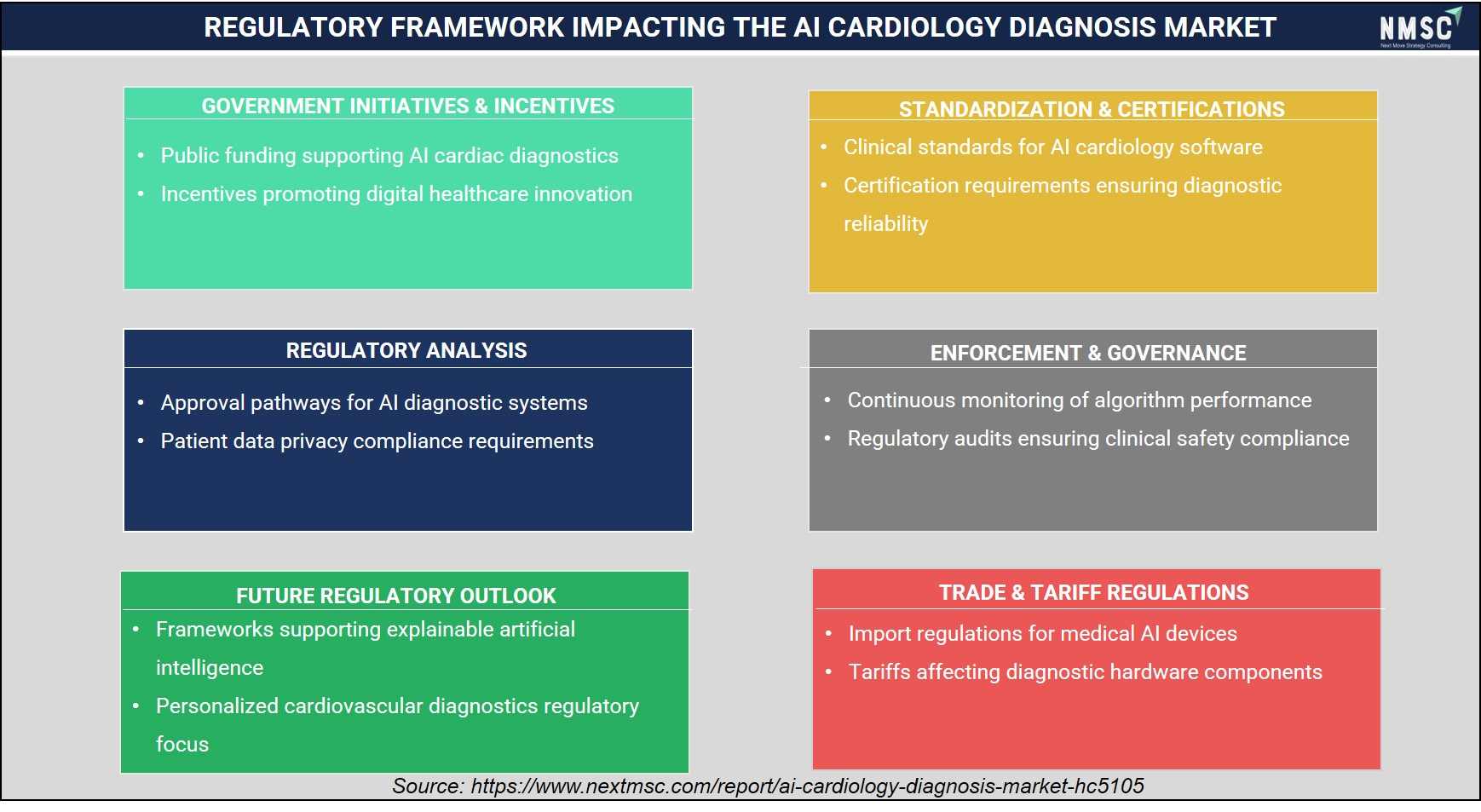
The below regulatory framework analysis maps the key factors, such as government initiatives and incentives, approval pathways, standardization and certifications, enforcement and governance, future regulatory outlook, and trade and tariff regulations, shaping the AI cardiology diagnosis market. We observed from our analysis that the shift toward explainable AI and personalized diagnostics is increasingly influencing approval pathways, pushing developers to prioritize transparency and clinical validation alongside traditional compliance requirements.
Competitive Landscape of the AI Cardiology Diagnosis Market
|
Dimension |
Key Takeaways |
|
Market Structure |
The AI Cardiology Diagnosis Market combines large diversified medical device and imaging companies including GE HealthCare, Siemens Healthineers, and Philips with focused AI cardiology specialists such as HeartFlow, Cleerly, and Viz.ai. |
|
Innovation Focus |
Leading vendors are investing in FDA clearance breadth and CMS reimbursement pathway development, differentiating on regulatory-verified clinical evidence rather than algorithmic novelty alone. |
|
M&A Activity |
Consolidation is concentrated on large imaging and device companies acquiring specialized cardiac AI software developers to embed diagnostic AI directly into imaging hardware and clinical platforms. |
How Do Companies Compete in the AI Cardiology Diagnosis Industry?
Companies in the AI Cardiology Diagnosis Market compete on breadth of FDA-cleared indications, depth of CMS and commercial payer reimbursement coverage, and integration capability with hospital imaging and electronic health record systems. Our analysis shows that vendors with established Category I CPT codes, such as HeartFlow's FFRCT and coronary plaque analysis, hold a durable commercial advantage over competitors still operating under temporary Category III codes.
What Innovation and Differentiation Strategies Explain Dominance in the Market?
Dominant vendors differentiate through large validated clinical evidence bases and multi-year regulatory engagement that culminate What Are the in durable reimbursement codes. NMSC's analysis indicates that HeartFlow's more than 500 peer-reviewed publications and 250,000-plus patients assessed exemplify this trend, positioning clinical evidence depth as a competitive moat against newer entrants lacking comparable outcomes data.
What M&A Activity Is Reshaping the Competitive Structure of the AI Cardiology Diagnosis Market?
M&A activity is concentrated on large medical device and imaging companies acquiring specialized AI cardiology software developers to embed diagnostic algorithms directly into imaging hardware. Our findings suggest that Philips' 2024 acquisition of intravascular imaging AI specialist SpectraWAVE illustrates a broader trend of diversified imaging companies acquiring focused AI capability rather than building comparable algorithms internally.
Key Market Players in the AI Cardiology Diagnosis Market
-
iRhythm Technologies, Inc.
-
Abbott Laboratories
-
HeartFlow, Inc.
-
AliveCor, Inc.
-
Siemens Healthineers AG
-
Canon Medical Systems Corporation
-
Boston Scientific Corporation
-
BIOTRONIK SE & Co. KG
-
Viz.ai, Inc.
-
Eko Health, Inc.
-
Cleerly, Inc.
-
Aidoc Medical Ltd.
-
Ultromics Limited
-
Anumana, Inc.
-
Us2.ai Pte. Ltd.
-
Idoven 1986, S.L.
-
Baxter International Inc.
What Are the Latest Developments in the AI Cardiology Diagnosis Market?
|
Date |
Event |
|
August 2025 |
GE HealthCare introduced new AI-enhanced cardiology solutions at ESC 2025, including CE-marked ViewPoint EchoPilot, CardIQ Suite, and Revolution Vibe. The technologies integrate AI and automation across echocardiography, cardiac CT, and MR workflows to improve diagnostic confidence and streamline cardiac care pathways. |
|
August 2025 |
Philips showcased its latest AI-driven cardiac care portfolio at ESC Congress 2025, highlighting AI-powered ultrasound, imaging, and integrated cardiovascular workflows that support earlier diagnosis, personalized treatment planning, and long-term patient management through connected clinical platforms. |
Expert Insights

“AI offers clear, immense potential across multiple stages of clinical practice. In enhancing diagnostic accuracy and efficiency, I see huge value in AI for image analysis – particularly in interpreting complex cardiovascular imaging and identifying abnormalities that the human eye might otherwise miss. AI will also enable faster data processing, and reduce administrative burdens on clinicians, allowing us to dedicate more time to patient care”
- Jose Zamorano Chief of Cardiology at the University Hospital Ramón y Cajal in Madrid
Statement made during Philips' presentation of its AI-driven cardiac care solutions at the ESC Congress 2025.
Market Interpretation
The statement underscores the expanding role of AI in cardiology diagnosis by improving the accuracy and efficiency of cardiovascular image interpretation while streamlining clinical workflows. As healthcare providers increasingly adopt AI to accelerate diagnosis, reduce clinician workload, and enhance decision-making, demand for AI-powered cardiac imaging and diagnostic platforms is expected to strengthen across hospitals and specialty cardiology centers.
Investment Opportunities in the AI Cardiology Diagnosis Market
Capital inflows into the AI Cardiology Diagnosis Market are concentrated on vendors with established CMS reimbursement pathways, as investors increasingly weigh Category I CPT code status alongside FDA clearance breadth. Based on NMSC's research, we found that Philips' acquisition of intravascular imaging AI specialist SpectraWAVE reflects a broader infrastructure investment thesis favoring diagnostic depth over standalone algorithm development. ESG considerations are increasingly relevant as AI-enabled cardiac diagnostics expand access to specialist-level interpretation in underserved regions, supporting health equity objectives referenced in FDA's Good Machine Learning Practice framework.
Key Benefits for Stakeholders
Enterprise technology leaders and CIOs benefit from this report's Deployment Mode and Type segmentation, which identifies where cloud, edge, and device-embedded AI investment is concentrated across cardiac imaging modalities. Investors and financial analysts benefit from the regional outlook and competitive landscape sections, which quantify revenue concentration by geography and reimbursement pathway maturity, supporting capital allocation decisions. Technology vendors and product teams benefit from the Key Emerging Trends section, which identifies FDA clearance velocity and CMS reimbursement expansion as the primary drivers of near-term commercial opportunity.
Key Market Segments
By Type
-
ECG AI Interpretation & Rhythm Analytics
-
Resting 12-Lead ECG AI
-
Holter/Event ECG AI
-
Stress ECG AI
-
Telemetry ECG AI
-
Mobile ECG AI
-
Wearable Patch Rhythm AI
-
Implantable Loop Recorder AI
-
Smartwatch Rhythm AI
-
-
Echocardiography AI
-
Transthoracic Echo AI
-
Transesophageal Echo AI
-
Stress Echo AI
-
Point-of-Care Handheld Echo AI
-
-
Cardiac MRI AI
-
Ventricular Function and Volumetry AI
-
Late Gadolinium Enhancement AI
-
Myocardial Tissue Characterisation AI
-
-
Cardiac CT AI
-
Stenosis Grading AI
-
FFR-CT AI
-
Coronary Calcium Scoring AI
-
-
Nuclear Cardiology AI
-
SPECT Perfusion AI
-
PET Perfusion AI
-
-
Intracoronary Imaging AI
-
IVUS AI
-
OCT AI
-
- Multimodality Cardiology AI Platforms
-
Comprehensive Imaging AI Suites
-
AI-Enabled Clinical Platforms
-
By Deployment Mode
-
Cloud-Based SaaS
-
On-Premises
-
Edge
-
Device-Embedded AI
-
Hybrid
By Revenue Stream
-
Recurring Subscription
-
Per-Study Fee
-
Perpetual Licence
-
Capital Equipment with Bundled AI
-
Service-Based Analytics Fee
By End User
-
Hospitals and Health Systems
-
Cardiology Group Practices and Clinics
-
Diagnostic Imaging Centres
-
Ambulatory Surgery Centres
-
Remote Cardiac Monitoring Service Providers
-
Pharmaceutical & Contract Research Organisations
-
Academic & Research Institutions
By Region
-
North America: U.S., Canada, Mexico
-
Europe: UK, Germany, France, Italy, Spain, Sweden, Denmark, Finland, Netherlands, Rest of Europe
-
Asia-Pacific: China, India, Japan, South Korea, Taiwan, Indonesia, Vietnam, Australia, Philippines, Malaysia, Rest of APAC
-
Middle East & Africa: Saudi Arabia, UAE, Egypt, Israel, Turkey, Nigeria, South Africa, Rest of MEA
-
Latin America: Brazil, Argentina, Chile, Colombia, Rest of LATAM
Conclusion & Recommendations
The AI Cardiology Diagnosis Market is positioned for sustained high growth through 2035, advancing from USD 2.25 billion in 2025 to USD 16.17 billion by 2035 at a CAGR of 21.8% from 2026 to 2035, driven by expanding FDA clearance volume and CMS reimbursement certainty for AI-enabled cardiac imaging. Vendors should prioritize clinical evidence generation sufficient to secure durable Category I CPT codes, following the pathway established by HeartFlow's FFRCT and coronary plaque analysis services, to convert regulatory clearance into sustained commercial reimbursement. The most durable growth pathway lies in expanding cardiac CT AI and remote cardiac monitoring service adoption across Asia-Pacific, where cardiovascular disease burden and diagnostic capacity investment are both accelerating ahead of mature North American and European markets.
About the Author
 Mayurima Roy
— Mayurima Roy is Research Analyst at Next Move Strategy Consulting, where she has spent 4 years working across the firm's full industry coverage rather than a single fixed vertical. Her work centers on structured research, ongoing trend tracking, competitive assessment, and insight-led content development, translating complex market data into clear, decision-ready narratives that support informed client decision-making across diverse global industries, market sectors, and world regions every day.
Mayurima Roy
— Mayurima Roy is Research Analyst at Next Move Strategy Consulting, where she has spent 4 years working across the firm's full industry coverage rather than a single fixed vertical. Her work centers on structured research, ongoing trend tracking, competitive assessment, and insight-led content development, translating complex market data into clear, decision-ready narratives that support informed client decision-making across diverse global industries, market sectors, and world regions every day.
About the Reviewer
 Supradip Baul
— Supradip Baul is an accomplished business consultant and strategist with over a decade of rich experience in market intelligence, strategy, technology, and business transformation. His work has included rigorous qualitative and quantitative analysis across multiple industries, helping clients shape investment decisions and long-term roadmaps. Earlier in his career, he was associated with Gartner, where he contributed to industry-leading reports and market share analyses. He has worked with leading global companies and holds an MBA with a dual specialization in Marketing and Finance.
Supradip Baul
— Supradip Baul is an accomplished business consultant and strategist with over a decade of rich experience in market intelligence, strategy, technology, and business transformation. His work has included rigorous qualitative and quantitative analysis across multiple industries, helping clients shape investment decisions and long-term roadmaps. Earlier in his career, he was associated with Gartner, where he contributed to industry-leading reports and market share analyses. He has worked with leading global companies and holds an MBA with a dual specialization in Marketing and Finance.
At Next Move Strategy Consulting, we understand that insightful market research is the cornerstone of successful business decisions. That's why we employ a robust and multifaceted approach, combining various methodologies to deliver the most accurate and actionable data for our clients.

Research Landscape
We navigate the world of research with two primary approaches:
Qualitative Approach
Our qualitative research methodologies involve immersive techniques such as in-depth interviews, focus groups, and observational studies. By engaging directly with individuals and stakeholders, we uncover valuable insights that quantitative data alone may overlook.

Quantitative Research
In tandem with qualitative methodologies, NMSC leverages the power of Quantitative Research to provide a robust foundation of numerical insights. Through systematic data collection and analysis, we quantify patterns, preferences, and market trends, offering a comprehensive view of the business landscape.
Our quantitative research approach employs diverse tools, including surveys, experiments, and statistical modelling. These methodologies enable us to gather data from a large and representative sample, ensuring the statistical significance of our findings. By employing structured questionnaires and standardized data collection methods, we guarantee the reliability and validity of the information we present to our clients.
Quantitative research is particularly effective in measuring the prevalence of trends, assessing market size, and gauging the impact of various factors on consumer behavior. The numerical precision attained through this approach equips our clients with actionable insights, facilitating data-driven decision-making and strategy formulation.


Our Specialized Toolbox for Industry-Specific Market Research
We deploy a specialized arsenal of techniques tailored to meet your unique requirements. Here's a glimpse into our comprehensive toolbox:

Information Procurement
The stage entails acquiring market data or relevant information through various sources and methodologies.


Market Research Approach
We utilize both top-down and bottom-up approaches in market research analysis to achieve a comprehensive understanding of the market dynamics, leveraging the broad perspective of industry trends and macroeconomic factors alongside detailed insights from specific segments and individual companies.

Porters Five Forces Analysis
We conduct Porter's Five Forces analysis to evaluate the competitive landscape of an industry, providing us with insights into factors that affect profitability and strategic positioning.

SWOT Analysis

Forecasting
We utilize a forecasting model to predict future consumption by considering parameters like population, economics, regulations, market competition, drivers, constraints, technology, and pricing. We also employ statistical techniques such as multilinear regression, exponential smoothing, moving average, ARIMA, and Monte Carlo simulations for accurate predictions. In econometric forecasting, we analyzed short-term and long-term event impacts, attributing values based on regulatory frameworks, economic factors, and market events.





 Speak to Our Analyst