Bridal Jewelry Market By Material Type (Precious Metals, Stones, and Other Materials), By Product Type (Rings, Engagement Rings, Wedding Bands, Neckwear, Chokers, Pendants, Long Necklaces , Layered Necklaces, Earrings, Jhumkas, Studs Wristwear, Bracelets, Others), By Price Tier (Entry Tier, Mid-Market, Premium, Luxury), By Distribution Channel (Online, Brand Websites, Offline, Independent Jewelers) – Global Analysis & Forecast, 2026–2035
Industry: Retail and Consumer | Publishing Date: December 13, 2025 | Last Updated: September 30, 2026 | No of Pages: N/A | No. of Tables: N/A | No. of Figures: N/A | Format: PDF | Report Code: RC3877
Industry Outlook
The global Bridal Jewelry Market size was valued at USD 100.88 billion in 2025 and is expected to reach USD 107.84 billion by 2026. Looking ahead, the industry is projected to expand significantly, reaching USD 196.59 billion by 2035, registering a CAGR of 6.9% from 2026 to 2035.
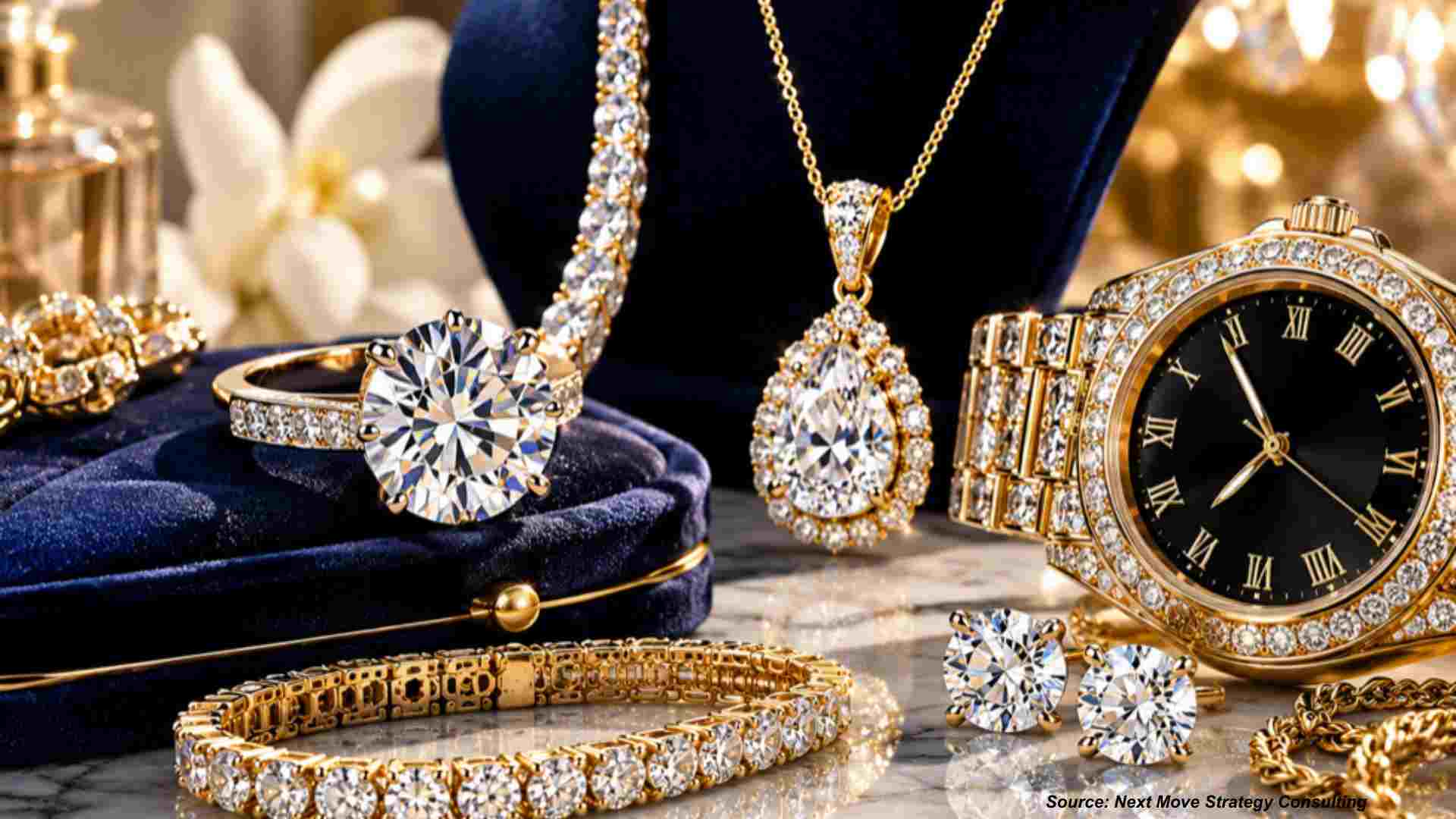
The bridal jewelry segment, as of today, stands at a vibrant intersection of tradition and innovation. It continues to serve its core purpose symbolizing commitment and love through engagement rings, wedding bands, necklaces, earrings, and bridal sets, but the way consumers approach these pieces is rapidly changing.
Established luxury houses co-exist alongside bespoke makers and online brands, all catering to brides who increasingly value personalisation, storytelling, and sustainability. The rise of lab-grown diamonds, recycled metals, and ethically sourced gemstones reflects shifting consumer values, while digital tools like virtual try-ons and CAD design are making custom bridal pieces more accessible.
Looking ahead, luxury bridal accessories remains deeply rooted in cultural and ceremonial contexts, but its use cases are broadening. Many brides now prefer jewelry that extends beyond the wedding day, choosing lightweight and versatile pieces they can wear daily instead of heavy statement items meant only for the ceremony.
Custom and heirloom-style designs, vintage inspirations, and convertible jewelry are gaining traction. Looking forward, the industry is poised to grow further by embracing sustainability, tech-enabled customisation, and inclusive design. As consumer education improves and technology becomes more embedded in the shopping journey, bridal jewelry evolves into a more personal, ethically responsible, and digitally enriched segment of the broader jewelry market.
Moreover, growing urban populations boost the bridal jewelry market demand by increasing exposure to modern fashion trends, higher disposable incomes, and greater access to branded and premium jewelry stores. Urban consumers often seek contemporary, customizable, and everyday-wear pieces, driving demand for innovative designs and diversified product lines. This urban-driven lifestyle shift significantly accelerates industry growth.

The chart highlights the substantial urban populations across countries like Germany, the UK, and France, which directly impacts the bridal jewelry market share by indicating concentrated, affluent consumer bases with higher purchasing power and more exposure to global fashion trends. Urban centers typically drive demand for premium wedding jewelry due to greater access to luxury retail, digital platforms, and broader lifestyle influences, while smaller urban populations, as seen in Australia and Canada, result in more niche or regionally focused market opportunities.
What Are the Key Trends in the Bridal Jewelry Industry?
How Wedding-Driven Demand is Sustaining Growth in the Bridal Jewelry Market?
Weddings have always played a central role in jewellery consumption, influencing buying patterns and styles. In India, this cultural significance translates into a strong and consistent demand for bridal jewellery. According to the World Gold Council, bridal jewellery accounts for approximately 50 to 55% by weight of the gold jewellery market in the country.
This highlights that a significant portion of gold consumption is wedding-driven, making bridal jewellery the cornerstone of market growth. The trend also points to opportunities for brands to innovate with lighter, customized, or intricately designed pieces while continuing to cater to the traditional demand for wedding-related gold ornaments.
How are Colored Gemstones and Soft Hues Shaping the Bridal Jewelry Market Trends?
Colored gemstones and soft pastel hues are increasingly influencing bridal jewelry preferences, as couples seek personalized and distinctive pieces beyond traditional diamonds and gold. Shades like morganite, sapphire, and rose quartz are gaining popularity in engagement rings, earrings, and necklaces, offering a delicate and romantic aesthetic.
Market reports highlight that younger consumers are drawn to customizable designs that reflect individual style, birthstones, or wedding themes. Jewelry brands are responding by expanding collections with colored gemstones, soft-hued metals like rose gold, and mixed stone designs to cater to this growing demand.
Retailers that showcase high-quality imagery, detailed gemstone information, and styling suggestions online further enhance buyer confidence and engagement. This trend not only drives aesthetic innovation but also opens premium pricing opportunities in the bridal jewelry market share.
How are Layered and Convertible Designs Influencing Bridal Jewelry Preferences?
Layered and convertible jewelry is emerging as a major trend in the bridal segment, appealing to consumers seeking versatility, personalization, and value for money. Pieces such as stackable rings, detachable pendants, and adjustable necklaces allow brides to mix, match, and style jewelry for multiple occasions beyond the wedding day.
Recent reports indicate that younger couples increasingly favour multifunctional designs that combine elegance with practicality, reflecting a shift toward experiential and customizable luxury. Jewelry brands are responding by offering collections that can be reconfigured, layered, or paired with complementary pieces, enhancing the overall user experience. Retailers leveraging digital platforms to showcase styling options, video tutorials, and mix and match recommendations further boost engagement and conversion. This trend not only drives innovation in design but also encourages repeat purchases in the industry.
What Are the Key Market Drivers, Breakthroughs, and Investment Opportunities that will Shape the Bridal Jewelry Industry in the Next Decade?
The bridal jewelry market today is being reshaped by evolving consumer values and new technologies. Sustainability and ethical sourcing are now front and centre modern couples increasingly demand lab-grown diamonds, recycled metals, and transparent supply chains. At the same time, digital platforms and e-commerce are transforming how bridal jewelry is designed, sold, and experienced, offering highly personalized and immersive shopping journeys.
Breaking through in this landscape are brands that balance tradition with innovation offering both classic forms and bespoke designs rooted in meaning. Looking ahead, the sector is well-positioned to expand further by addressing demand for eco-conscious luxury, driving deeper personalisation, and leveraging tech like virtual try on and CAD-based design to scale custom experiences.
Growth Drivers:
How is Rising Wedding Expenditure and Increasing Disposable Incomes Driving the Bridal Jewelry Market Growth?
Rising wedding expenditure, along with growing disposable incomes, is fueling stronger demand for bridal jewelry across markets. As couples and families allocate larger budgets to weddings, there is a noticeable shift toward high-quality, designer, and customized pieces. In emerging wedding jewelry sectors, weddings are becoming more elaborate, prompting greater spending on engagement rings, bridal sets, and luxury accessories.
Consumers are increasingly prioritizing aesthetics, brand appeal, and intricate designs over basic affordability. Jewelry brands are responding by offering premium collections, exclusive designs, and flexible purchasing options. This trend not only boosts market demand but also encourages innovation in design and materials, reinforcing bridal jewelry as a key growth segment.

The above chart highlights that countries such as Japan, Germany, the United Kingdom, and Canada have high levels of household disposable income, which is a critical driver for the bridal jewelry market expansion because consumers in these wedding jewelry segment have greater purchasing power, allowing them to spend more on premium, customized, and luxury bridal jewelry items.
Higher disposable incomes typically correspond with increased consumer confidence and willingness to spend on significant life events like weddings, leading to a robust demand for jewelry that is viewed as a symbol of status and celebration. Consequently, the strong disposable income levels reflected in these countries create favorable conditions for sustained and potentially accelerated market growth in the bridal jewelry segment.
Could Digital Adoption and B2B E-Commerce Expansion Boost Bridal Jewelry Market Growth?
Rapid digital adoption across the bridal jewelry value chain is transforming how manufacturers, wholesalers, and retailers collaborate, forecast demand, and manage inventory. B2B e-commerce platforms are simplifying procurement through real-time catalogues, transparent pricing, digital certifications, and faster order fulfilment, while integrated ERP systems reduce costs associated with logistics, inventory holding, and overproduction.
Industry reports indicate that small and mid-sized jewelry retailers are increasingly leveraging digital procurement to access a wider range of suppliers and expand product assortment without heavy capital investment. For bridal jewelry brands, investing in digital catalogues, API-linked inventory visibility, and secure online ordering systems enables quicker replenishment, seamless order tracking, and trust through certified product authenticity. These advancements not only streamline operations but also allow businesses to scale efficiently amid rising wedding expenditures and design-focused consumer demand.

The rising adoption of B2B e-commerce is transforming the bridal jewelry market by enabling manufacturers, wholesalers, and retailers to efficiently manage sourcing, distribution, and sales on a global scale. Expanded digital platforms allow businesses to reach wider markets, streamline procurement of raw materials and finished products, reduce transaction costs, and foster collaborations between brands and vendors.
This digital shift accelerates product innovation, shortens time to market for new bridal jewelry collections, and supports better inventory management. As a result, businesses offer a broader variety of designs and collections, enhancing customer access worldwide and driving overall growth in the bridal jewelry market.
Growth Inhibitors:
How are Fluctuating Raw Material Prices and Imitation Jewelry Threatening the Bridal Jewelry Market?
Fluctuating prices of raw materials, such as gold, silver, and precious gemstones, pose a major challenge to the wedding jewelry market growth. When the cost of these materials rises unpredictably, manufacturers face higher production expenses, which lead to increased prices for consumers or reduced profit margins for businesses.
At the same time, the growing availability of imitation or artificial jewelry offers buyers cheaper alternatives, reducing their need to invest in genuine bridal pieces. These factors together create uncertainty in pricing, affect consumer buying decisions, and slow down the overall growth of the market. As a result, the bridal jewelry industry must carefully manage costs and differentiate its offerings to maintain demand and sustain growth.
How Is the Growing Demand for Lab-Grown Diamond Bridal Collections Creating a Strategic Investment Opportunity?
The shift toward lab-grown diamonds in bridal jewelry presents a compelling investment opportunity. As lab-grown diamonds become more affordable and ethically attractive, they are being increasingly adopted in engagement rings and bridal sets. For investors, supporting brands that specialize in lab-grown bridal lines offers exposure to a segment that aligns with sustainability trends and appeals strongly to younger consumers. Moreover, vertical integration from diamond production to direct-to-consumer bridal collections unlocks strong margins, especially as production technology improves and energy efficiency increases.
How Is the Bridal Jewelry Market Report Segmented, and What are the Key Insights From the Segmentation Analysis?
By Material Type Insights
Is the Bridal Jewelry Industry in 2025 Shaped by Material Type?
Based on material type, the market is segmented into precious metals, stones and other materials. The precious metals are further segmented into gold, platinum and silver, whereas the stones are further divided into diamond, polki, gemstone, and lab-grown diamond.
Gold remains the dominant material for bridal jewellery globally in 2025 and historically and by spend because of cultural importance, perceived store of value and established bridal rituals, even when volume dips occur at high price points. That said, the landscape is fragmenting, where platinum is growing among premium, contemporary brides, silver anchors mid-market offers, natural diamonds still lead prestige engagement styles, while lab-grown diamonds are rapidly eating into mid-price diamond share and enabling larger-looking stones at lower prices. Polki and coloured gemstones retain strong regional bridal relevance and storytelling value, and other materials are the sustainable axis for trend-forward collections.
Platinum is resurging in bridal jewellery, driven by younger buyers seeking a contemporary, durable white-metal alternative to gold. Global platinum jewellery demand increased in 2024 and saw notable growth in India and China. Platinum’s higher price and perceived luxury position it for premium bridal lines.
Natural diamonds continue to anchor classic engagement and luxury bridal accessories, though demand has softened. Despite fluctuations in overall diamond purchases, natural stones still hold strong prestige in high-value bridal pieces. Provenance, certification, and origin now play a greater role in buying decisions, making it essential for retailers to highlight certified natural diamonds and offer trade-in or upgrade options to assure long-term value for customers.
By Product Type Insights
Is the Bridal Jewelry Market in 2025 Being Shaped by Product Type?
On the basis of product type, the market is segmented into rings, including engagement rings, wedding bands, and bridal finger rings; neckwear, such as chokers, long necklaces, layered necklaces, and pendants; earrings, including studs, drop earrings, chandbalis, and jhumkas; wristwear, such as bangles and bracelets and other bridal jewelry items.
Rings, especially engagement rings and wedding bands, dominate the global bridal jewellery market by value, driven by emotional significance, high personalization, and diamond-centric demand. Neckwear and earrings are the major spend drivers in South Asian and Middle Eastern weddings, where multi-event bridal sets remain customary. Wristwear holds cultural importance, whereas chokers, chandbalis and layered necklaces shape current fashion trends. The market is increasingly hybrid, where traditional heavy sets remain strong for ceremonial wear, while modern brides adopt lightweight, modular and re-wearable designs across functions.
Neckwear is a visually significant part of bridal styling, especially in regions like South Asia and the Middle East. The segment includes chokers, long necklaces, layered necklaces and pendants. Materials used span gold, polki, gemstones, diamonds and enamel work. Bridal neckwear features intricate craftsmanship, sometimes forming complete sets with earrings and maang tikkas. Depending on the culture and attire, neckwear ranges from heavy ceremonial pieces to sleek modern designs, offering a wide variety across markets.
Chokers are a key bridal category, valued for their regal appearance and compatibility with both traditional and contemporary outfits. Crafted using gold, polki, gemstones, diamonds or pearls, chokers feature bold central motifs, floral patterns or detailed craftsmanship. Many brides pair chokers with longer necklaces to create layered looks. In cultures with elaborate bridal attire, chokers serve as the main highlight around the neckline, making them an essential part of premium bridal sets.
Pendants appeal to brides seeking simplicity, elegance or minimalist styling for events like engagement ceremonies, receptions or post-wedding occasions. They are commonly crafted in gold, diamonds, gemstones or solitaires. Pendants include floral motifs, initials, religious symbols or clean geometric designs. This category is widely chosen due to its everyday wear potential and affordability relative to full necklace sets, making pendants an essential component of modern bridal collections.
By Price Tier Insights
How is Price Tier Driving the Bridal Jewelry Industry in 2025?
On the basis of price tier, the market is segmented into entry tier, mid-market, premium and luxury.
The luxury segment represents the highest tier of bridal jewelry, defined by rare materials, exceptional artistry, and exclusive brand-driven creations. Jewelry includes high-carat natural diamond engagement rings, platinum bridal sets, heritage polki masterpieces, rare gemstone compositions, and limited-edition designer collections. These pieces feature exceptional clarity diamonds, museum-grade gemstones, and artisanal techniques such as jadau, hand-engraving, or bespoke customisation. Luxury bridal jewelry is typically purchased for high-profile, multi-day ceremonies where craftsmanship, prestige, and brand value are of utmost importance.
The mid-market segment offers a balance of design, authenticity, and affordability. Jewelry in this tier includes certified diamond rings, mid-weight gold neckwear, gemstone-studded earrings, and intricately designed bangles suitable for both main ceremonies and related events. Materials such as 18 Karat and 22 Karat gold, natural diamonds, polki, and high-quality gemstones are commonly used. Brides in this tier seek traditional craftsmanship with modern styling, leading to high demand for versatile pieces that are worn beyond the wedding. This segment serves the broadest customer base across regions.
Premium bridal jewelry comprises high-quality materials, intricate craftsmanship, and distinctive design detailing. Products typically include heavy gold bridal sets, diamond chokers, polki and kundan long necklaces, statement jhumkas, and elaborate bracelets crafted using superior-grade gemstones and diamonds. The premium tier caters to brides who prioritise craftsmanship, heritage techniques, and exclusivity. This segment features handcrafted pieces, unique motifs, and designer-led collections, making it a preferred choice for grand weddings and culturally rich bridal attire where opulence and authenticity play key roles
By Distribution Channel Insights
Are Distribution Channels Shaping the Bridal Jewelry Market in 2025?
On the basis of distribution channel, the market is segmented into online channels, including brand websites and marketplace platforms and offline channels, comprising of branded stores, multi-brand stores, independent jewelers, and designer studios.
The online segment includes all digital platforms through which bridal jewelry is browsed, selected, or purchased. This category covers official brand websites, marketplace portals, social commerce platforms, and mobile shopping apps. Online channels offer access to a wide range of designs, customization tools, certification information, and virtual try-on experiences. Brides increasingly explore collections online before making final decisions, making this segment an important discovery, comparison, and purchasing route across markets.
Brand websites serve as official digital storefronts for jewelry brands, offering curated bridal collections, certifications, customization features, and exclusive online designs. These platforms provide direct brand-to-consumer interactions, enabling brides to explore detailed product specifications, craftsmanship notes, and virtual previews. Brand websites typically feature engagement rings, wedding bands, bridal sets, and premium designs with transparent pricing and authentication details. This segment supports both browsing and purchasing for tech-savvy bridal consumers.
The offline segment consists of physical retail environments where brides experience jewelry firsthand. These outlets include branded stores, multi-brand stores, independent jewelers, and designer studios. Offline retail remains significant for bridal purchases due to the need for physical trial, tactile evaluation, in-person consultations, and assurance of authenticity. The segment caters to a wide spectrum of buying preferences, from luxury bridal sets to customized regional designs.

Regional Outlook
The bridal jewelry market dynamics is geographically studied across North America, Europe, Asia Pacific, the Middle East & Africa, and Latin America and each region is further studied across countries.
Bridal Jewelry Market in North America
North America’s market demand is shaped by a blend of strong discretionary spending in the U.S., elevated interest in certified diamonds, and steady appetite for branded luxury and mid-market pieces. The U.S. market’s size and resilient consumer spending underpin much of the region’s jewellery momentum.
Finished jewellery sales rebounded in 2024 as consumers traded up on average spend per item, supporting higher-value engagement rings and wedding bands. This dynamic encourages retailers to invest in digital try on, certification transparency and omnichannel experiences, which in turn raises bridal jewellery penetration across incomes
Bridal Jewelry Market in the United States
The United States leads with scale, sophisticated retail infrastructure and a high prevalence of diamond-centric engagement traditions; these factors keep rings as the core bridal purchase. The market’s size supports broad assortment strategies from entry to luxury, and a resilient holiday/occasion economy lifts bridal purchases.
Lab-grown diamonds and direct-to-consumer brands have expanded choice and price access, encouraging younger buyers into diamond ownership and therefore growing bridal ring demand even when unit volumes soften. The result is more frequent customization, flexible financing and certification services designed that convert online interest into high-value bridal purchases.
Bridal Jewelry Market in Canada
Canada’s market is smaller but follows similar North American patterns, that is, steady retail sales, growing e-commerce and a preference for certified stones and trusted retail brands. Recent retail statistics show modest growth in retail sales and mixed performance across jewellery subsegments. Costume and mid-market jewellery have seen particular strength, while fine jewellery regained momentum after pandemic disruptions.
Canadian shoppers increasingly demand ethical sourcing and clear provenance, prompting retailers to emphasize certification and sustainable sourcing, a factor that nudges bridal buyers toward certified natural diamonds, lab-grown alternatives, or responsibly sourced metals, thereby shaping product assortments and raising overall bridal category penetration.
Bridal Jewelry Market in Europe
Europe’s bridal jewellery landscape is diverse, which includes Western Europe, combining heritage craftsmanship and luxury houses, while other EU markets lean more toward mid-market gold and gemstone traditions. Jewelry remained the most resilient core luxury category in Bain and EU production data show Italy, France and Germany are leading producers. Italy alone accounts for a substantial share of EU jewellery output.
These structural strengths support high-end bridal demand for craftsmanship, while digital channels and travel retail further stimulate purchases, especially when tourists shop for luxury jewellery. Together, these drivers keep bridal jewellery healthy despite short-term macro softness.
Bridal Jewelry Market in the United Kingdom
The UK combines strong heritage jewellery buying with robust retail and e-commerce capabilities. London remains an important global centre for high-end bridal purchases and bespoke design. Luxury spending pressures and tourism flows influence bridal spending, inbound tourism and pre-wedding travel lift high-ticket purchases, while younger domestic buyers are price sensitive and open to lab-grown diamonds and branded entry luxury offerings.
The mix of tourist demand, strong designer studios and jewellers serving bespoke bridal commissions sustains the UK’s bridal segment, with retailers investing in both online customisation and in-store experiential services to capture the full bridal funnel.
Bridal Jewelry Market in Germany
Germany’s wedding jewellery demand is supported by strong household incomes, a preference for high-quality craftsmanship, and interest in mid-to-premium pieces rather than ultra-luxury options. Germany plays an important but understated role in Europe’s jewellery production compared with Italy, and consumers prioritise certified quality, durability, and convenient omnichannel shopping.
This practical and quality-driven buyer behaviour has pushed bridal collections toward classic wedding bands, simple engagement rings, and reliable warranties, helping the bridal segment maintain steady growth even when high-end discretionary spending declines.
Bridal Jewelry Market in France
France’s bridal jewellery demand benefits from luxury heritage, globally recognised maisons and strong domestic production. Paris and other fashion hubs elevate designer bridal pieces and bespoke commissions. However, everyday bridal purchases include gold and diamond selections for middle and premium tiers.
Luxury-led retail dynamics and international tourist spending bolster high-ticket bridal purchases, while local demand for artisanal and contemporary designs supports a broad market. The combination of tourist retail, maison visibility and domestic craftsmanship keeps France a high-impact region for premium bridal jewellery.
Bridal Jewelry Market in Italy
Italy is Europe’s production powerhouse for jewellery and a global centre for bridal craftsmanship. Eurostat lists Italy as the largest jewellery producer in the EU. Traditional techniques and design leadership drive both domestic bridal demand and a strong export market.
Italian bridal buyers value design heritage and bespoke pieces, and watchful tourist inflows also fuel high-end bridal purchases. The production base supports supply to global bridal collections and sustains specialised artisan offerings that elevate the premium and luxury bridal segments.
Bridal Jewelry Market in Spain
Spain blends Mediterranean gold traditions with rising interest in contemporary bridal styling. Domestic bridal purchases typically span mid-market gold and gemstone pieces, with designer boutiques active in key cities. While Spain does not match Italy’s manufacturing scale, regional preferences for ornate gold and local designer studios sustain bridal demand for both traditional and modern looks. Seasonal tourism and destination weddings also increase bridal purchase activity, translating into higher spend on rings and necklaces by international and domestic buyers alike.
Bridal Jewelry Market in the Nordics
The Nordics display unique bridal jewellery trends, defined by minimalist, design-focused aesthetics, strong interest in sustainability, and a preference for contemporary designer pieces over heavy traditional sets. High disposable incomes and digital sophistication support demand for premium mid-market and niche luxury bridal jewellery, while lab-grown diamonds and ethically sourced metals strongly appeal to younger buyers. These preferences encourage brands to highlight sustainable sourcing, modular designs, and seamless online experiences, helping expand the bridal category beyond classic ceremonial sets.
Bridal Jewelry Market in the Asia-Pacific
Asia-Pacific is the world’s most important growth engine for bridal jewellery, driven by cultural traditions, rising disposable incomes, expanding middle classes and a complex mix of ceremonial gold demand and western-style diamond engagement cultures. The World Gold Council and industry groups note that divergent performance in India showed resilience in gold jewellery demand, while China experienced sharper declines as prices weighed on volumes, but value remains substantial. Rapid digital adoption and social commerce amplify discovery, while domestic manufacturing supports both mass and premium bridal offerings. These structural drivers make APAC the primary battleground for bridal jewellery expansion.
Bridal Jewelry Market in China
China’s market is shaped by rising disposable incomes, evolving wedding traditions, and a strong preference for meaningful, status-driven pieces. Gold remains central, especially 24K and heritage-inspired designs, while demand for diamond engagement rings continues to grow among younger couples seeking modern styles.
Urban consumers are increasingly drawn to branded jewellery, customization, and certified stones, reflecting a shift toward quality and authenticity. Digital platforms, livestream shopping, and social commerce also play a major role in influencing purchase decisions. Together, these factors drive steady expansion in China’s highly competitive bridal jewellery landscape.
Bridal Jewelry Market in Japan
Japan’s bridal jewellery demand benefits from high domestic affluence, tourism and a strong market for premium engagement rings and designer bridal pieces. Post-pandemic tourism and luxury shopping contributed to jewellery sales, and local tastes favour refined, understated designs that pair well with Western engagement traditions.
The market’s preference for high-quality craftsmanship and its openness to international luxury maisons support steady bridal demand, while retailers increasingly blend in-store bespoke services with online discovery to capture bridal buyers.
Bridal Jewelry Market in India
The market in India is being driven by growing disposable incomes and the rising trend of lavish weddings. As families spend more on wedding celebrations, there is increased demand for high-quality, stylish, and personalised bridal jewelry.
The cultural significance of weddings, combined with the desire for unique and elegant pieces, encourages consumers to invest in premium jewelry. This trend is helping the market grow and pushing brands to offer more innovative designs and diverse collections to meet customer expectations.
Bridal Jewelry Market in South Korea
South Korea’s bridal jewellery scene mixes a strong local jewellery design culture with a rising appetite for contemporary, lighter gram gold and platinum engagement styles. Younger, fashion-forward consumers drive demand for 14 Karat and 18 Karat contemporary collections and lab-grown diamond alternatives.
Social commerce and influencer-led drops further accelerate the trend. The country’s high urbanisation, digital adoption and appetite for design innovation make it a trendsetter for fusion bridal looks across APAC, encouraging brands to produce lighter, designed options rather than heavy ceremonial sets.
Bridal Jewelry Market in Taiwan
Taiwan’s market is driven by steady incomes, strong cultural emphasis on gold gifting, and growing adoption of modern engagement ring traditions. Yellow gold and intricate wedding sets remain popular for family ceremonies, while younger couples increasingly prefer diamond solitaires, minimalist designs, and personalised pieces that reflect individual style.
Brand trust and certification play an important role, with consumers seeking reliable quality and transparent sourcing. Digital discovery, social media influence, and online-to-offline retail integration continue to shape buying behaviour. Together, these trends support consistent demand across both traditional and contemporary bridal jewellery segments in Taiwan.
Bridal Jewelry Market in Indonesia
Indonesia’s bridal collections’ demand is driven by ceremonial traditions, large wedding markets, rising urban incomes and platform-driven retail expansion. Gold remains culturally significant, especially in traditional ceremonies, while modern urban brides increasingly buy designer and gemstone pieces for pre-wedding events.
Rapid e-commerce growth and social commerce enable designers and independent jewellers to reach brides beyond major cities, broadening category penetration. These drivers combine to lift bridal jewellery demand across income bands and create opportunities for modular, lighter-gram bridal collections.
Bridal Jewelry Market in Australia
Australia’s market is shaped by high disposable incomes, a strong preference for quality craftsmanship, and rising demand for contemporary engagement and wedding pieces. Diamond solitaires, oval and round cuts, and minimalist designs remain popular, while interest in coloured gemstones and custom-made rings is growing.
Consumers place strong emphasis on ethically sourced materials, with lab-grown diamonds and responsibly mined metals gaining traction among younger couples. The industry is also influenced by digital research, online configurators, and omnichannel retail experiences. These factors collectively support steady growth across both premium and mid-market bridal jewellery segments in Australia.
Bridal Jewelry Market in Latin America
Latin America’s market is highly diverse, with some countries maintaining strong gold traditions while major urban centres increasingly adopt diamond engagement trends influenced by U.S. culture. Economic volatility and import tariffs affect affordability, steering consumers toward locally made pieces or lower-grade designs.
Growing e-commerce penetration is improving access to designer and mid-market bridal options, yet supply chain limitations and price sensitivity keep overall growth gradual and focused mainly on affluent urban buyers and wedding spending linked to diaspora families.
Bridal Jewelry Market in the Middle East & Africa
The Middle East remains a high-value bridal jewellery region, with cultural demand for gold-heavy sets, large necklaces and high-karat pieces. GCC affluence and cultural gifting traditions sustain strong bridal spend, while duty-free and luxury retail hubs attract tourist purchases.
Africa is more varied, where North Africa follows Mediterranean gold preferences, whereas Sub-Saharan markets are nascent with growing urban demand for mid-market bridal pieces. In the Middle East, gold’s cultural cachet and jewellery’s role as a wealth store keep bridal categories robust. In Africa, rising urban incomes and expanding retail infrastructure are creating early-stage bridal demand growth.
Competitive Landscape
Which Companies Dominate the Bridal Jewelry Industry and How do they Compete?
Tiffany & Co./LVMH, Cartier, Bvlgari, Harry Winston, Graff, Chopard, Boucheron they compete on heritage, high-jewellery craftsmanship and exclusive bridal collections, leaning on flagship stores and celebrity collaborations to protect margins. Specialist accessible-luxury brands like Pandora, Blue Nile previously, now part of broader retail groups focuses on design breadth, sustainability and price transparency to win younger brides.
Regional heavyweights like Chow Tai Fook, Chow Sang Sang, Lukfook, Kalyan dominate local bridal segments via dense store networks, localized designs and festival promotions. Players differentiate by channel mix, flagship retail, omnichannel and marketplaces to capture both high-value and volume bridal spend.
Market Dominated by Bridal Jewelry Giants and Specialists
The global bridal jewelry market competition is multi-layered. Luxury groups such as Richemont, LVMH, and Bvlgari focus on exclusivity and high-jewellery bridal offerings in Greater China and Southeast Asia. Regional conglomerates, including Chow Tai Fook, Chow Sang Sang, and Lukfook capitalise on cultural bridal demand and rapid store expansion, while Kalyan uses omnichannel strategies to reach markets beyond South Asia.
Online specialists and bridal marketplaces like Blue Nile, Signet’s brands, and Pandora’s direct channels appeal to price-sensitive buyers through configurators and fast delivery. As a result, luxury players maintain halo status through curated experiences, while regional and online competitors compete on convenience, price, and localized assortments.
Innovation and Adaptability Drive the Bridal Jewelry Market Success
Top players are investing in product, sustainability and tech to stay relevant. Tiffany under LVMH has introduced distinctive settings and flagship redesigns to re-ignite desire. Pandora is scaling lab-grown diamonds and recycled metals to appeal to younger, eco-conscious brides. Chopard and others publicise responsible sourcing and ethical gold to protect brand trust.
Online leaders use 3D configurators, virtual try-ons and fast fulfilment to convert bridal shoppers. Even Graff and boutique houses refresh retail experiences and limited-edition bridal lines to sustain exclusivity. These innovations sharpen price and quality stories and help capture shifting bridal preferences.
Market Players to Opt for Merger & Acquisition Strategies to Expand their Presence
Merger and acquisition strategies continue to redefine competitive positioning in the bridal jewelry market landscape. For instance, in India, De Beers teamed up with the Gem & Jewellery Export Promotion Council to launch the INDRA alliance, specifically targeting independent retailers of bridal and wedding jewelry.
This collaboration provides training, marketing support, and other resources to promote natural diamonds in bridal collections. Such strategic alliances help brands strengthen their distribution networks, enhance visibility in the bridal segment, and offer a wider range of high-quality jewelry to consumers, ultimately driving growth in the sector.
Key Players
-
T&Co.
-
Chow Tai Fook Jewellery Company Limited
-
Cartier
-
Pandora
-
Blue Nile Inc.
-
Chopard
-
Harry Winston, Inc.
-
MIKIMOTO
-
Lukfook Group
-
Chow Sang Sang Jewellery Company Limited
-
Boucheron
-
Kalyan Jewellers.
-
Bvlgari
What Are the Latest Key Industry Developments?
-
August 2024 - De Beers & Tanishq (Titan) has launched a 360° partnership, education for staff, traceability tech, and joint marketing to grow bridal natural diamond penetration in India.
-
October 2024 - De Beers and Signet launched a joint Worth the Wait marketing campaign aimed at Zillennial couples emphasizing natural diamonds and modern love in the bridal segment, training 80% of Signet’s sales counsellors.
What Are the Key Factors Influencing Investment Analysis & Opportunities in the Bridal Jewelry Market?
Investment analysis in the bridal jewelry market is shaped by shifting consumer preferences, brand premiumization, and accelerating digital adoption, all of which influence where capital flows. Funding trends increasingly favour brands that blend craftsmanship with technology, such as those offering virtual try-ons, AI-driven customization, and transparent sourcing, creating strong investor interest in scalable, digitally enabled business models. Valuations tend to be higher for companies with strong brand equity, differentiated design capabilities, and an omnichannel presence, as these attributes support long-term revenue stability and margin expansion.
Investment hotspots are emerging around sustainable jewelry, lab-grown diamond innovators, and premium bridal-focused designers expanding into global markets. Startups that offer personalised bridal collections, efficient supply chains, or innovative D2C experiences are also attracting attention due to their ability to disrupt traditional retail models.
Overall, opportunities are strongest where tradition, technology, and premium consumer experiences converge, making the bridal jewelry segment an appealing space for strategic and growth-oriented investments.
Key Benefits for Stakeholders:
Next Move Strategy Consulting (NMSC) presents a comprehensive analysis of the Bridal Jewelry Market, covering historical trends from 2020 through 2025 and offering detailed forecasts through 2035. Our study examines the industry at regional and country levels, providing quantitative projections and insights into key growth drivers, challenges, and investment opportunities across all major bridal jewelry segments.
The industry benefits a wide range of stakeholders by creating strong economic, experiential, and growth-oriented opportunities across the value chain. Investors gain from consistent demand driven by cultural significance, rising disposable incomes, and premiumization trends that ensure stable revenue streams and attractive margins. Customers benefit through greater access to diverse styles, customization options, certified gemstones, and seamless omnichannel shopping experiences that enhance trust and convenience.
Manufacturers and designers’ profit from expanding design innovation, digital craftsmanship, and the rising popularity of personalized, sustainable, and culturally inspired collections. Retailers enjoy increased footfall and higher average transaction values, especially as bridal purchases involve premium upgrades and repeat family buying.
Suppliers and artisans also gain through steady production cycles, rising interest in handcrafted techniques, and global market visibility. Overall, the industry creates a thriving ecosystem where economic value, consumer experience, and cultural relevance intersect to support long-term growth for all stakeholders.
Report Scope
|
Parameters |
Details |
|
Market Size in 2026 |
USD 107.84 Billion |
|
Revenue Forecast in 2035 |
USD 196.59 Billion |
|
Growth Rate |
CAGR of 6.9% from 2026 to 2035 |
|
Analysis Period |
2025–2035 |
|
Base Year Considered |
2025 |
|
Forecast Period |
2026–2035 |
|
Market Size Estimation |
Billion (USD) |
|
Growth Factors |
|
|
Companies Profiled |
15 |
|
Countries Covered |
33 |
|
Market Share |
Available for 10 companies |
|
Customization Scope |
Free customization (equivalent to up to 80 analyst-working hours) after purchase. Addition or alteration to country, regional & segment scope. |
|
Pricing and Purchase Options |
Avail customized purchase options to meet your exact research needs. |
|
Approach |
In-depth primary and secondary research; proprietary databases; rigorous quality control and validation measures. |
|
Analytical Tools |
Porter's Five Forces, SWOT, value chain, and Harvey ball analysis to assess competitive intensity, stakeholder roles, and relative impact of key factors. |
Bridal Jewelry Market Key Segments
By Material Type
-
Precious Metals
-
Gold
-
Platinum
-
Silver
-
-
Stones
-
Diamond
-
Polki
-
Gemstone
-
Lab Grown Diamond
-
-
Other Materials
By Product Type
-
Rings
-
Engagement Rings
-
Wedding Bands
-
Bridal Finger Rings
-
-
Neckwear
-
Chokers
-
Long Necklaces
-
Layered Necklaces
-
Pendants
-
-
Earrings
-
Studs
-
Drop Earrings
-
Chandbalis
-
Jhumkas
-
-
Wristwear
-
Bangles
-
Bracelets
-
-
Others
By Price Tier
-
Entry Tier
-
Mid-Market
-
Premium
-
Luxury
By Distribution Channel
-
Online
-
Brand Websites
-
Marketplace Platforms
-
-
Offline
-
Branded Stores
-
Multi Brand Stores
-
Independent Jewelers
-
Designer Studios
-
Geographical Breakdown
-
North America: U.S., Canada, and Mexico.
-
Europe: UK, Germany, France, Italy, Spain, Sweden, Denmark, Finland, the Netherlands, and rest of Europe.
-
Asia Pacific: China, India, Japan, South Korea, Taiwan, Indonesia, Vietnam, Australia, Philippines, Malaysia and rest of APAC.
-
Middle East & Africa (MEA): Saudi Arabia, UAE, Egypt, Israel, Turkey, Nigeria, South Africa, and rest of MEA.
-
Latin America: Brazil, Argentina, Chile, Colombia, and rest of LATAM.
Conclusion & Recommendations
According to our report, the bridal jewelry market is positioned for sustained growth as premiumization, digital innovation, and evolving consumer tastes reshape competitive dynamics. Brands that successfully merge tradition with modern design, enhance transparency, and strengthen omnichannel capabilities are likely to capture greater market share. With rising interest in sustainable materials, personalized offerings, and immersive online experiences, the industry’s future will continue to favour players that prioritize craftsmanship, technology integration, and differentiated customer engagement.
Executives should focus on accelerating product innovation, strengthening digital retail infrastructure, and building flexible supply chains to stay competitive. Investors leverage emerging trends such as lab-grown diamonds, artisanal craftsmanship, and tech-enabled retail models to identify high-potential ventures. Policymakers support the sector by encouraging skill development, promoting ethical sourcing, and enabling smoother trade flows. Acting on these insights will help all stakeholders capitalize on the evolving opportunities within the global bridal jewelry landscape.


About the Author
 Bidhudhyoti Nag
— Bidhudhyoti Nag is a skilled market researcher known for delivering structured insights that support strategic decision-making. With strong analytical capabilities and a keen understanding of evolving market dynamics, he contributes to opportunity assessment, trend tracking, and insight-driven content development. He is passionate about translating research into clear narratives that inform business thinking and thought leadership. Outside of work, he enjoys sports, traveling, and exploring diverse cultures that broaden his global perspective.
Bidhudhyoti Nag
— Bidhudhyoti Nag is a skilled market researcher known for delivering structured insights that support strategic decision-making. With strong analytical capabilities and a keen understanding of evolving market dynamics, he contributes to opportunity assessment, trend tracking, and insight-driven content development. He is passionate about translating research into clear narratives that inform business thinking and thought leadership. Outside of work, he enjoys sports, traveling, and exploring diverse cultures that broaden his global perspective.
About the Reviewer
 Supradip Baul
— Supradip Baul is an accomplished business consultant and strategist with over a decade of rich experience in market intelligence, strategy, technology, and business transformation. His work has included rigorous qualitative and quantitative analysis across multiple industries, helping clients shape investment decisions and long-term roadmaps. Earlier in his career, he was associated with Gartner, where he contributed to industry-leading reports and market share analyses. He has worked with leading global companies and holds an MBA with a dual specialization in Marketing and Finance.
Supradip Baul
— Supradip Baul is an accomplished business consultant and strategist with over a decade of rich experience in market intelligence, strategy, technology, and business transformation. His work has included rigorous qualitative and quantitative analysis across multiple industries, helping clients shape investment decisions and long-term roadmaps. Earlier in his career, he was associated with Gartner, where he contributed to industry-leading reports and market share analyses. He has worked with leading global companies and holds an MBA with a dual specialization in Marketing and Finance.
At Next Move Strategy Consulting, we understand that insightful market research is the cornerstone of successful business decisions. That's why we employ a robust and multifaceted approach, combining various methodologies to deliver the most accurate and actionable data for our clients.

Research Landscape
We navigate the world of research with two primary approaches:
Qualitative Approach
Our qualitative research methodologies involve immersive techniques such as in-depth interviews, focus groups, and observational studies. By engaging directly with individuals and stakeholders, we uncover valuable insights that quantitative data alone may overlook.

Quantitative Research
In tandem with qualitative methodologies, NMSC leverages the power of Quantitative Research to provide a robust foundation of numerical insights. Through systematic data collection and analysis, we quantify patterns, preferences, and market trends, offering a comprehensive view of the business landscape.
Our quantitative research approach employs diverse tools, including surveys, experiments, and statistical modelling. These methodologies enable us to gather data from a large and representative sample, ensuring the statistical significance of our findings. By employing structured questionnaires and standardized data collection methods, we guarantee the reliability and validity of the information we present to our clients.
Quantitative research is particularly effective in measuring the prevalence of trends, assessing market size, and gauging the impact of various factors on consumer behavior. The numerical precision attained through this approach equips our clients with actionable insights, facilitating data-driven decision-making and strategy formulation.


Our Specialized Toolbox for Industry-Specific Market Research
We deploy a specialized arsenal of techniques tailored to meet your unique requirements. Here's a glimpse into our comprehensive toolbox:

Information Procurement
The stage entails acquiring market data or relevant information through various sources and methodologies.


Market Research Approach
We utilize both top-down and bottom-up approaches in market research analysis to achieve a comprehensive understanding of the market dynamics, leveraging the broad perspective of industry trends and macroeconomic factors alongside detailed insights from specific segments and individual companies.

Porters Five Forces Analysis
We conduct Porter's Five Forces analysis to evaluate the competitive landscape of an industry, providing us with insights into factors that affect profitability and strategic positioning.

SWOT Analysis

Forecasting
We utilize a forecasting model to predict future consumption by considering parameters like population, economics, regulations, market competition, drivers, constraints, technology, and pricing. We also employ statistical techniques such as multilinear regression, exponential smoothing, moving average, ARIMA, and Monte Carlo simulations for accurate predictions. In econometric forecasting, we analyzed short-term and long-term event impacts, attributing values based on regulatory frameworks, economic factors, and market events.





 Speak to Our Analyst