Patient Recruitment Market Size, Share, Growth, Trends, and Forecast 2025-2035, by Commercial Deliverable (Managed Recruitment Services), by Commercial Model (Service Fee, Subscription License), by Buyer Type (Sponsor, CRO, Site Network), by Study Model (Interventional, Observational, Registry), by Trial Phase (Phase I, Phase II), by Therapeutic Area (Oncology, CNS), by Channel (Site Referral, HCP Referral, EHR and Claims) – Global Analysis and Forecast, 2025–2035
Industry: Healthcare | Publishing Date: July 8, 2026 | Last Updated: September 30, 2026 | No of Pages: N/A | No. of Tables: N/A | No. of Figures: N/A | Format: PDF | Report Code: HC5020
What Is the Patient Recruitment Market Size?
The global Patient Recruitment Market was valued at an estimated USD 3.5 billion in 2025 and is projected to reach USD 3.8 billion in 2026. By 2035, the market is forecast to achieve USD 8.9 billion, expanding at a CAGR of 9.9% from 2026 to 2035. This growth trajectory is driven by the accelerating global volume of clinical trials, rising protocol complexity that demands specialized patient identification capabilities, expanding adoption of decentralized and hybrid trial models, and growing integration of electronic health record data for patient matching and eligibility pre-screening. Pharmaceutical sponsors, CROs, and site networks are actively increasing investment in technology-enabled patient recruitment solutions to reduce enrollment timelines, which remain among the most significant cost drivers in clinical drug development.
|
Parameters |
Details |
|
Market Size in 2025 |
USD 3.5 Billion |
|
Market Size in 2026 |
USD 3.8 Billion |
|
Revenue Forecast in 2035 |
USD 8.9 Billion |
|
Growth Rate |
CAGR of 9.9% from 2026 to 2035 |
|
Analysis Period |
2025–2035 |
|
Base Year Considered |
2025 |
|
Forecast Period |
2026–2035 |
|
Market Size Estimation |
Billion USD |
|
Companies Profiled |
20 |
|
Countries Covered |
33 |
|
Market Share |
Top 10 |
Patient Recruitment Market Overview
What Is the Patient Recruitment Market?
The Patient Recruitment Market comprises specialized services, digital platforms, data-driven solutions, and engagement strategies designed to identify, screen, enroll, and retain participants for clinical trials. The market supports pharmaceutical companies, biotechnology firms, contract research organizations (CROs), academic research centers, and healthcare institutions by improving access to eligible patient populations. We observed that patient recruitment solutions help reduce enrollment delays, enhance participant diversity, and improve trial completion rates through a combination of technology-enabled outreach, patient databases, and recruitment management services.
How Has the Patient Recruitment Market Evolved?
The Patient Recruitment Market has evolved through several phases of clinical research transformation. The initial phase relied heavily on physician referrals, site-based outreach, print advertising, and traditional recruitment campaigns. The second phase introduced digital marketing, patient registries, electronic health record (EHR)-based identification, and centralized recruitment services. We analysed that the current phase is driven by AI-powered patient matching, decentralized clinical trial models, real-world data integration, and patient-centric engagement platforms that enable faster and more precise participant identification across complex clinical studies.
How Do Regulations Influence the Patient Recruitment Market?
Regulatory developments play a significant role in shaping the Patient Recruitment Market. Guidance from regulatory authorities such as the U.S. Food and Drug Administration (FDA), the European Medicines Agency (EMA), and regional ethics committees has increased focus on patient diversity, informed consent transparency, data privacy, and ethical recruitment practices. These requirements are driving demand for compliant recruitment technologies, multilingual patient engagement programs, secure data management systems, and community-based outreach initiatives that support broader and more inclusive clinical trial participation.
How Is Technology Adoption Expanding Across the Patient Recruitment Market?
Technology adoption across the Patient Recruitment Market is accelerating as clinical research organizations and sponsors increasingly implement digital and data-driven recruitment strategies. Artificial intelligence, machine learning, electronic health record analytics, social media targeting, and patient relationship management platforms are improving recruitment efficiency and participant engagement. At the same time, decentralized trial infrastructure, telehealth-enabled pre-screening, mobile applications, and real-world data sources are expanding patient access to clinical studies, enabling faster enrollment timelines and improving recruitment outcomes across diverse therapeutic areas.
|
Key Takeaways |
|
By solution type, Managed Recruitment Services held the largest share of the Patient Recruitment Market at USD 1.52 billion in 2025, projected to reach USD 3.50 billion by 2035 at a CAGR of 8.7%, supported by increasing outsourcing of patient enrollment activities by pharmaceutical companies and CROs. Recruitment Software and Platforms is the fastest-growing segment, expanding from USD 1.09 billion in 2025 to USD 3.21 billion by 2035 at a CAGR of 11.4%, driven by AI-enabled patient identification, digital outreach, and automated screening technologies. |
|
By service model, Service Fee accounted for the largest revenue share at USD 1.26 billion in 2025, reflecting the continued preference for traditional recruitment engagement structures. Hybrid Model is the fastest-growing segment in the Patient Recruitment Market, forecast to grow from USD 0.54 billion in 2025 to USD 1.92 billion by 2035 at a CAGR of 13.5%, as sponsors increasingly combine technology platforms with managed recruitment services. |
|
By buyer type, Sponsor represented the largest segment with USD 1.65 billion in 2025, projected to reach USD 3.80 billion by 2035 at a CAGR of 8.7%, driven by growing investment in clinical development programs. CRO is witnessing strong adoption of specialized recruitment solutions, advancing from USD 0.99 billion in 2025 to USD 2.47 billion by 2035 at a CAGR of 9.6%. |
|
By trial phase, Phase III studies accounted for the largest share of the Patient Recruitment Market at USD 1.19 billion in 2025, reaching USD 2.67 billion by 2035 at a CAGR of 8.4%, supported by the large patient populations required for late-stage clinical validation. |
|
By therapeutic area, Oncology held the largest market share at USD 0.78 billion in 2025 and is expected to reach USD 1.90 billion by 2035 at a CAGR of 9.3%, driven by the growing volume of cancer clinical trials worldwide. Rare Disease is the fastest-growing therapeutic segment, increasing from USD 0.34 billion in 2025 to USD 1.12 billion by 2035 at a CAGR of 12.7%, reflecting rising orphan drug development activity and the need for specialized patient identification capabilities. |
|
North America held the largest regional share of the Patient Recruitment Market at USD 1.47 billion in 2025, projected to reach USD 3.38 billion by 2035 at a CAGR of 8.7%, supported by a highly developed clinical research ecosystem, extensive trial activity, and advanced healthcare data infrastructure. |
|
Asia-Pacific is the fastest-growing major region in the Patient Recruitment Market, expanding from USD 0.63 billion in 2025 to USD 1.87 billion by 2035 at a CAGR of 11.5%, driven by increasing clinical trial outsourcing, large patient pools, and expanding healthcare digitization across emerging economies. |
|
The United States dominated the Patient Recruitment Market in 2025, driven by its well-established clinical trial ecosystem, strong pharmaceutical R&D investments, and advanced healthcare infrastructure. |
|
China is the fastest-growing country in the Patient Recruitment Market, supported by increasing clinical trial outsourcing, a large patient pool, expanding CRO activities, and rapid healthcare digitalization. |
Key Emerging Trends in the Patient Recruitment Market
How Is Artificial Intelligence Transforming Patient Identification and Eligibility Matching in the Patient Recruitment Market?
From our research, we found that AI-powered eligibility matching is rapidly replacing manual protocol-to-patient screening across leading trial networks. Platforms deployed by companies including Trialbee and AutoCruitment use natural language processing to parse complex inclusion and exclusion criteria against structured and unstructured EHR data, substantially reducing pre-screening timelines. NMSC's analysis indicates that AI-assisted identification tools are now embedded in the workflows of a significant proportion of large-scale Phase II and Phase III oncology studies, fundamentally reshaping the speed and precision of patient enrollment across the global Patient Recruitment Market.
How Are Decentralized and Hybrid Trial Designs Reshaping Patient Recruitment Market Dynamics?
Through our market assessment, we observed that the adoption of decentralized and hybrid trial models has permanently expanded the geographic reach of clinical study recruitment. By enabling remote consent, telemedicine-facilitated pre-screening, and home nursing visits, sponsors can access patient populations geographically distant from traditional investigator sites. Our assessment indicates that decentralized recruitment channels now account for an increasing proportion of enrollment in therapeutic areas including rare disease, immunology, and cardiometabolic conditions, where patient populations are diffuse and site-based enrollment presents significant logistical barriers within the Patient Recruitment Market.
How Is the Integration of Real-World Data Assets Creating New Revenue Streams in the Patient Recruitment Market?
Based on our market evaluation, we noticed that access to claims data, EHR repositories, and patient registry assets is becoming a strategic differentiator for patient recruitment vendors. Companies that have built or licensed proprietary data access infrastructure are commanding premium pricing and attracting multi-year platform agreements from biopharmaceutical sponsors. Our findings suggest that EHR and claims-based patient identification now supports a growing proportion of Phase III and Phase IV enrollment campaigns, particularly in cardiometabolic disease and CNS disorders where longitudinal real-world data provides essential context for protocol-compliant patient identification in the Patient Recruitment Market.
How Is Diversity and Equity Advocacy Influencing Investment in the Patient Recruitment Market?
In our observation, growing regulatory and sponsor commitment to diversifying clinical trial populations is generating meaningful incremental demand for community-based and advocacy-channel recruitment services within the Patient Recruitment Market. The FDA's diversity action plan requirements for certain studies, introduced under the Food and Drug Omnibus Reform Act of 2022, have created a compliance-driven need for tailored outreach, multilingual patient education materials, and engagement through patient advocacy groups. Our analysis shows that community and advocacy channel spending is growing at an accelerated pace relative to other recruitment channels, as sponsors seek to satisfy both regulatory mandates and ethical imperatives related to representative trial populations.
Consumer Behavior Analysis of the Patient Recruitment Market
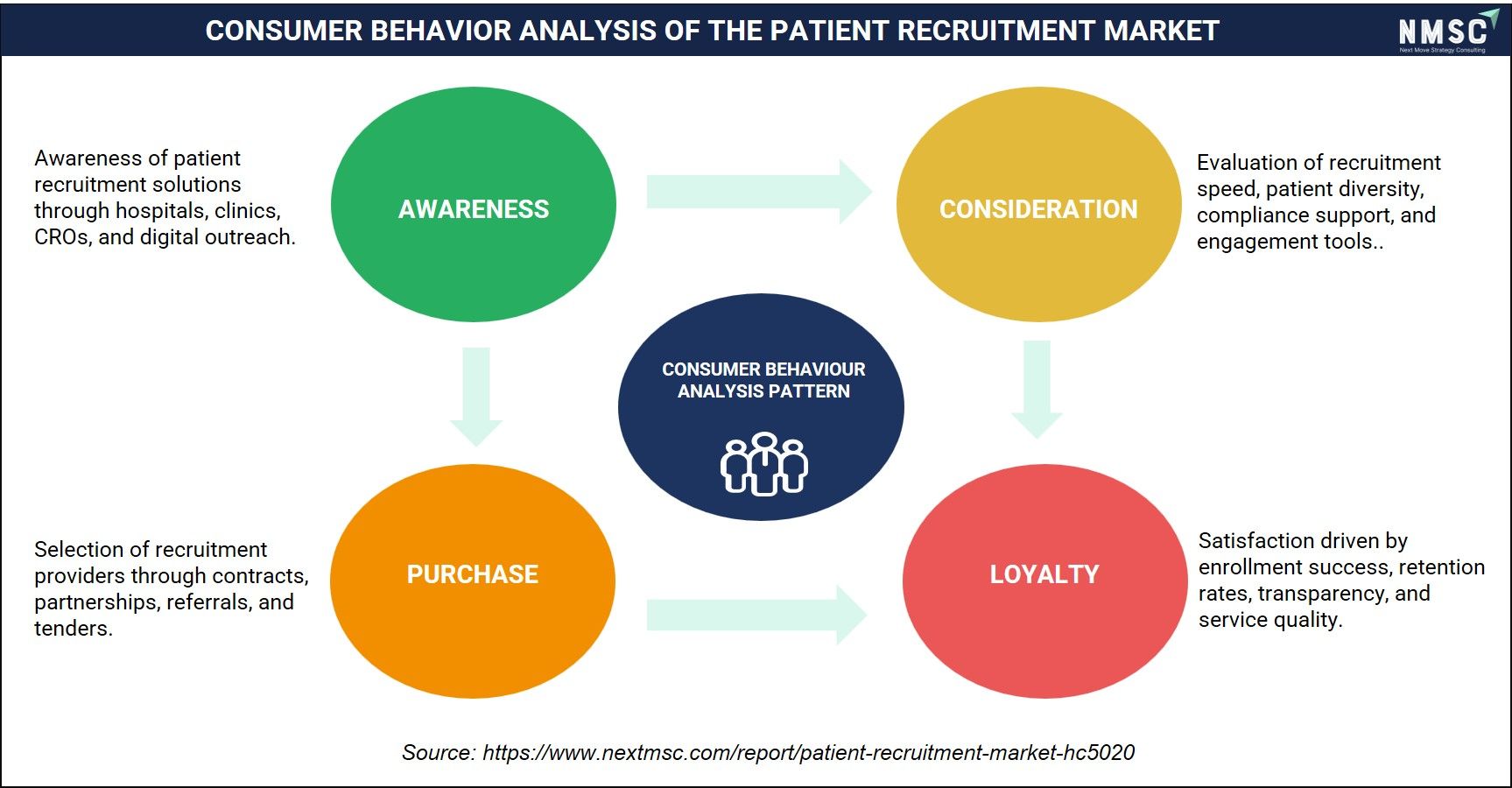
The consumer behavior analysis of the Patient Recruitment Market follows a four-stage decision-making cycle: awareness, consideration, purchase, and loyalty. Stakeholders such as pharmaceutical companies, biotechnology firms, and CROs first become aware of recruitment solutions through industry networks, digital channels, and healthcare partnerships. During consideration, they evaluate factors such as enrollment efficiency, patient diversity capabilities, compliance support, and technology integration. Purchase decisions are driven by contracts, partnerships, and service performance. Long-term loyalty is established through successful patient enrollment outcomes, retention rates, regulatory compliance, transparency, and consistent service quality.
What Are the Key Market Drivers, Breakthroughs, and Investment Opportunities That Will Shape the Patient Recruitment Market in the Next Decade?
The Patient Recruitment Market is entering a decade of structural transformation driven by converging forces including regulatory-mandated diversity requirements, AI-powered platform maturation, mainstreaming of decentralized trial infrastructure, and expanding real-world data ecosystems. These dynamics collectively create a compelling commercial growth environment while introducing competitive and operational complexity for existing service providers. NMSC's analysis indicates that the interplay of technology investment, regulatory evolution, and therapeutic-area-specific demand shifts will determine the competitive hierarchy of the market through the 2026-2035 forecast period.
|
Drivers / Trends / Restraints |
+/- % Impact on CAGR Forecast |
Geographic Relevance |
Impact Timeline |
|
Rising clinical trial volume and complexity |
+1.8% |
Global |
Near-term (2026-2028) |
|
AI and ML patient matching platforms |
+1.5% |
North America, Europe |
Near-to-mid-term (2026-2030) |
|
Decentralized trial adoption |
+1.2% |
North America, APAC |
Mid-term (2027-2032) |
|
Diversity and equity mandates |
+0.8% |
North America, Europe |
Near-to-long-term (2026-2035) |
|
Real-world data ecosystem expansion |
+1.0% |
Global |
Mid-to-long-term (2028-2035) |
|
Patient data privacy regulations (GDPR, HIPAA) |
-0.6% |
Europe, North America |
Near-to-long-term (2026-2035) |
|
Patient dropout and retention challenges |
-0.5% |
Global |
Ongoing |
|
Rare disease and precision oncology growth |
+1.1% |
Global |
Mid-to-long-term (2028-2035) |
What Are the Growth Drivers of the Patient Recruitment Market?
How Is Rising Clinical Trial Volume Driving Demand in the Patient Recruitment Market?
Based on NMSC's research, we found that the global proliferation of registered clinical trials is a primary structural driver of the Patient Recruitment Market. According to ClinicalTrials.gov data maintained by the U.S. National Library of Medicine, more than 480,000 studies have been registered on the platform, with new registrations continuing to grow annually. The increasing complexity of protocol designs, including adaptive designs, biomarker-stratified enrollment, and companion diagnostic requirements, means each study demands more sophisticated patient identification and outreach infrastructure. This complexity inherently increases the per-trial commercial opportunity for specialized patient recruitment service and technology providers across the ecosystem.
How Is the Adoption of AI and Data-Driven Technologies Creating Growth in the Patient Recruitment Market?
Through NMSC's assessment, we found that AI and machine learning applications represent a transformational growth catalyst for the Patient Recruitment Market, particularly in patient identification, pre-screening automation, and site performance prediction. Government investment in health information technology infrastructure, including the ONC Cures Act interoperability rules that mandate API-based EHR data access in the United States, has created the foundational data layer on which AI recruitment tools operate. Our findings suggest that sponsors who deploy AI-enabled recruitment strategies consistently demonstrate faster enrollment completion versus traditional site-referral approaches, creating compelling return-on-investment evidence that accelerates technology adoption across the market.
How Are Regulatory Diversity Mandates Expanding the Patient Recruitment Market Opportunity?
Our analysis shows that explicit regulatory requirements for diverse clinical trial participation are translating into measurable commercial investment in community outreach and equity-focused recruitment channels within the Patient Recruitment Market. The FDA's Diversity Plans guidance issued under the Food and Drug Omnibus Reform Act of 2022 requires sponsors of certain late-stage trials to submit diversity action plans, directly mandating investment in targeted recruitment activities for underrepresented populations. According to the NIH, its mandate for diversity in federally funded research has similarly increased institutional demand for multilingual, culturally competent patient engagement services, expanding the addressable market for community-based and advocacy-channel recruitment vendors.
Ecosystem Analysis of the Patient Recruitment Market
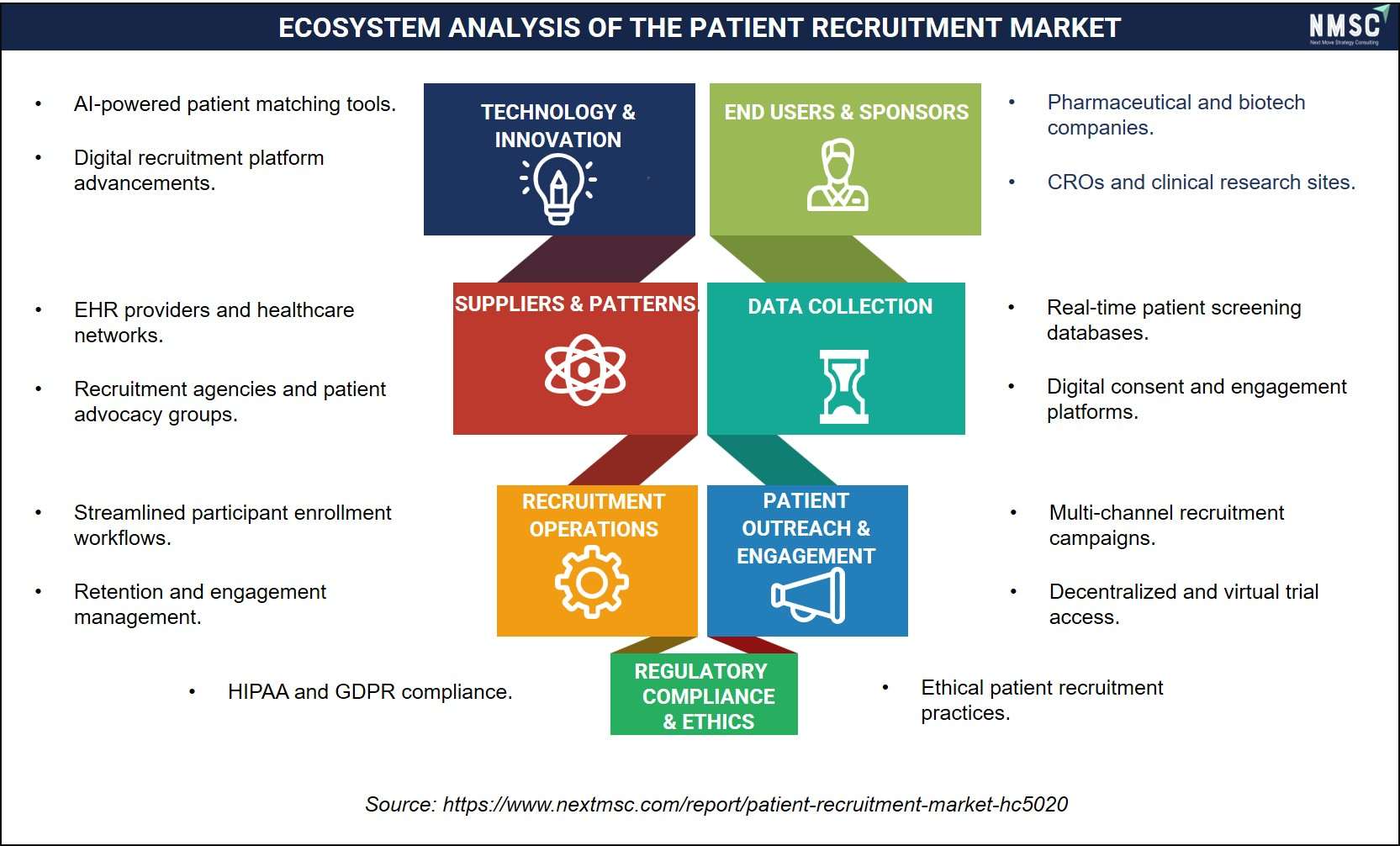
The ecosystem of the Patient Recruitment Market consists of interconnected stakeholders and operational functions that collectively support clinical trial enrollment and retention. Technology and innovation providers develop AI-driven recruitment platforms, data analytics tools, and patient matching solutions, while suppliers and partners contribute recruitment services, patient databases, and outreach capabilities. Data collection systems leverage EHRs, registries, and real-world data sources to identify eligible participants. Recruitment operations and patient engagement activities drive enrollment and retention, supported by pharmaceutical companies, biotechnology firms, CROs, and clinical research sites. Regulatory compliance and ethical oversight form the foundation of the ecosystem, ensuring patient privacy, informed consent, and adherence to global clinical trial standards.
What Are the Growth Inhibitors of the Patient Recruitment Market?
How Do Patient Data Privacy Regulations Constrain Growth in the Patient Recruitment Market?
NMSC's analysis indicates that increasingly stringent patient data privacy regulations represent a meaningful constraint on the growth of digital and data-driven recruitment channels within the Patient Recruitment Market. The General Data Protection Regulation in Europe imposes strict requirements on the processing of health data for research purposes, including explicit consent obligations that limit the scale of AI-driven EHR and claims-based patient identification. In the United States, HIPAA requirements govern permissible uses of protected health information for patient recruitment outreach, requiring compliant access protocols that add operational complexity and cost. These regulatory frameworks constrain the speed at which new data assets can be commercially deployed for recruitment purposes.
How Does Patient Dropout and Retention Challenge the Patient Recruitment Market?
From our research, we found that while the primary commercial focus of the Patient Recruitment Market centers on initial enrollment, the challenge of patient retention represents an under-addressed inhibitor of full market value realization. Studies that experience high dropout rates require ongoing re-recruitment efforts, consuming additional budget and extending timelines in ways that erode the demonstrated value of initial enrollment investments. According to data from the U.S. Department of Health and Human Services, a significant proportion of clinical trials fail to complete enrollment on time, with a meaningful share of the challenge attributable to patient dropout after initial consent, creating persistent budget pressure that limits efficiency gains achievable through advanced patient recruitment strategies.
What Are the Growth Opportunities in the Patient Recruitment Market?
How Is the Rare Disease and Precision Oncology Segment Creating Premium Opportunities in the Patient Recruitment Market?
Our assessment indicates that rare disease and precision oncology clinical development programs represent the highest-value commercial opportunities in the Patient Recruitment Market, due to the extreme difficulty of identifying molecularly or genetically defined patient populations at scale. These indications require highly specialized matching capabilities, deep registry and patient advocacy network access, and global site coordination that commands premium pricing from both managed service and platform providers. According to the National Organization for Rare Disorders, approximately 7,000 rare diseases affect 300 million people globally yet the vast majority lack approved therapies, creating a sustained and growing pipeline of rare disease trials that will require advanced patient recruitment solutions throughout the forecast period.
How Is the Expansion of Decentralized Clinical Trials Opening New Market Opportunities in Patient Recruitment?
Based on our market evaluation, we noticed that the institutionalization of decentralized clinical trial infrastructure following the COVID-19 pandemic has created durable commercial opportunity for remote-enabled patient recruitment services within the Patient Recruitment Market. Regulatory guidance from both the FDA and EMA supporting decentralized trial elements has validated sponsor investment in remote consent platforms, telehealth-facilitated pre-screening, and home-based clinical assessments. Our observation is that decentralized and hybrid trial models expand the effective enrollment radius of each investigator site, enabling access to patient populations in rural, underserved, and international geographies that were previously inaccessible, substantially increasing the addressable population for any given study.
How Is the Integration of Patient Communities and Advocacy Networks Creating New Revenue in the Patient Recruitment Market?
Through our market assessment, we observed that patient advocacy organizations and disease-specific patient communities represent an increasingly monetized asset class within the Patient Recruitment Market. Organizations representing conditions such as multiple sclerosis, lupus, and various oncology indications maintain engaged patient communities with stated willingness to participate in research, providing a direct and high-conversion recruitment channel for clinical trial sponsors. According to the National Health Council, patient advocacy organizations are playing an expanding role in facilitating clinical research access, and commercial partnerships between recruitment vendors and advocacy networks are formalizing into structured business arrangements that create sustainable, recurring revenue streams within the broader patient recruitment ecosystem.
How Is the Patient Recruitment Market Segmented in This Report, and What Are the Key Insights from the Segmentation Analysis?
Which Commercial Deliverable Sub-Segment Holds the Largest Share, and Which Is Growing the Fastest in the Patient Recruitment Market?
|
Segments |
2025 (USD Bn) |
2035 (USD Bn) |
CAGR (%) |
|
Managed Recruitment Services |
1.52 |
3.50 |
8.7% |
|
Recruitment Software and Platforms |
1.09 |
3.21 |
11.4% |
|
Patient Networks and Data Access |
0.89 |
2.19 |
9.4% |
The Commercial Deliverable segment of the Patient Recruitment Market is structured across three primary categories: Managed Recruitment Services, Recruitment Software and Platforms, and Patient Networks and Data Access. Managed Recruitment Services encompass strategy and feasibility consulting, patient identification and matching, outreach and media, pre-screening and enrollment support, site support and referral management, retention and logistics, and program management, and currently represent the dominant category at an estimated USD 1.52 billion in 2025 due to the continued preference of large sponsors for comprehensive outsourcing arrangements. Recruitment Software and Platforms, which include matching and referral platforms, CRM and workflow tools, patient portal and navigator apps, analytics and reporting suites, and study website solutions, represent the fastest-growing category at an estimated CAGR of 11.4% through 2035, driven by strong platform adoption among mid-sized biotechnology companies and CROs seeking scalable, technology-first enrollment solutions within the global Patient Recruitment Market.
Which Commercial Model Is Dominating, and Which Is Expected to Grow the Fastest in the Patient Recruitment Market?
|
Segments |
2025 (USD Bn) |
2035 (USD Bn) |
CAGR (%) |
|
Service Fee |
1.26 |
2.85 |
8.5% |
|
Subscription License |
0.74 |
2.10 |
11.0% |
|
Access Fee |
0.44 |
0.94 |
7.9% |
|
Success Fee |
0.51 |
1.09 |
7.8% |
|
Hybrid Model |
0.54 |
1.92 |
13.5% |
The Commercial Model segment of the Patient Recruitment Market reflects the diverse contractual structures through which services, platforms, and data assets are commercially delivered. The Service Fee model holds the dominant position at an estimated USD 1.26 billion in 2025, reflecting legacy contracting practices in which sponsors pay for discrete deliverables on a time-and-materials or fixed-fee basis. The Subscription License model is growing rapidly at an estimated CAGR of 11.0% as software platform vendors transition to SaaS-based pricing that provides predictable recurring revenue and encourages deeper platform integration. The Hybrid Model is the fastest-growing commercial structure overall at an estimated CAGR of 13.5% through 2035, reflecting growing sponsor interest in outcome-aligned commercial arrangements that share both the risk and reward of enrollment performance within the Patient Recruitment Market.
Which Buyer Type Segment Is Leading Revenue Generation in the Patient Recruitment Market?
|
Segments |
2025 (USD Bn) |
2035 (USD Bn) |
CAGR (%) |
|
Sponsor |
1.65 |
3.80 |
8.7% |
|
Clinical Research Organization |
0.99 |
2.47 |
9.6% |
|
Site Network |
0.46 |
1.07 |
8.8% |
|
Academic Health System |
0.27 |
0.85 |
12.1% |
|
Public Sector |
0.13 |
0.71 |
18.5% |
The Buyer Type segment of the Patient Recruitment Market reflects distinct procurement patterns and strategic priorities across five key categories. Sponsors, representing pharmaceutical, biotechnology, and medical device manufacturers, account for the dominant share at an estimated USD 1.65 billion in 2025, as they bear primary responsibility for trial enrollment milestones and hold the largest individual study budgets for recruitment support. CROs represent the fastest-growing buyer segment among established categories at an estimated CAGR of 9.6%, driven by functional service provider model expansion where sponsors delegate enrollment responsibility to CRO partners who in turn subcontract or in-source recruitment platform capabilities. The Public Sector buyer category, while currently modest at an estimated USD 0.13 billion in 2025, is projected to grow at the highest CAGR of 18.5% through 2035 as government-funded research networks including NIH-sponsored clinical trial units invest in systematic patient recruitment infrastructure.
How Do Different Study Models Shape Patient Recruitment Market Revenue and Growth?
|
Segments |
2025 (USD Bn) |
2035 (USD Bn) |
CAGR (%) |
|
Interventional |
2.24 |
5.16 |
8.7% |
|
Observational |
0.67 |
1.60 |
9.1% |
| Registry
|
0.23 |
0.65 |
10.9% |
|
Decentralized and Hybrid |
0.36 |
1.49 |
15.3% |
The Study Model segment of the Patient Recruitment Market identifies four distinct research design categories, each with unique recruitment needs and commercial implications. Interventional studies dominate the segment at an estimated USD 2.24 billion in 2025, reflecting their higher enrollment complexity, longer recruitment windows, and larger per-study recruitment budgets relative to observational and registry designs. Observational studies represent the second-largest category, increasingly leveraging EHR and claims-based identification tools to efficiently assemble large cohorts with minimal patient contact burden. Registry studies are growing at an estimated CAGR of 10.9% as disease-specific registries become valuable assets for both recruitment and real-world evidence generation. Decentralized and Hybrid study models represent the fastest-growing category at an estimated CAGR of 15.3%, reflecting the accelerating mainstreaming of remote trial participation models across therapeutic areas and geographies within the broader Patient Recruitment Market.
Which Trial Phase Generates the Most Revenue in the Patient Recruitment Market?
|
Segments |
2025 (USD Bn) |
2035 (USD Bn) |
CAGR (%) |
|
Phase I |
0.38 |
0.89 |
8.9% |
|
Phase II |
0.86 |
2.00 |
8.8% |
|
Phase III |
1.19 |
2.67 |
8.4% |
|
Phase IV and Post-Market |
0.79 |
2.76 |
13.3% |
|
Other Phases |
0.28 |
0.58 |
7.6% |
The Trial Phase segment of the Patient Recruitment Market reflects distinct enrollment requirements and budget allocations associated with each stage of clinical development. Phase III trials represent the dominant revenue category at an estimated USD 1.19 billion in 2025, driven by their large target enrollment sizes, multinational site footprints, and premium budgets allocated to enrollment completion. Phase II represents the second-largest category, increasingly utilizing advanced patient matching and digital outreach tools to accelerate proof-of-concept enrollment in oncology, CNS, and immunology indications. Phase IV and Post-Market studies represent the fastest-growing phase category at an estimated CAGR of 13.3% through 2035, reflecting growing regulatory requirements for post-approval safety and effectiveness data collection and the corresponding demand for large-scale, long-duration patient recruitment and retention programs within the Patient Recruitment Market.
Which Therapeutic Area Drives the Highest Demand for Patient Recruitment Market Services?
|
Segments |
2025 (USD Bn) |
2035 (USD Bn) |
CAGR (%) |
|
Oncology |
0.78 |
1.90 |
9.3% |
|
Central Nervous System |
0.54 |
1.30 |
9.2% |
|
Cardiometabolic |
0.47 |
1.05 |
8.4% |
|
Immunology |
0.43 |
1.07 |
9.5% |
|
Infectious Disease and Vaccines |
0.36 |
0.89 |
9.4% |
|
Rare Disease |
0.34 |
1.12 |
12.7% |
|
Women's Health |
0.22 |
0.67 |
11.8% |
|
Other Therapeutic Areas |
0.36 |
0.90 |
9.6% |
The Therapeutic Area segment of the Patient Recruitment Market reveals a heterogeneous demand landscape across disease categories. Oncology holds the dominant position at an estimated USD 0.78 billion in 2025, reflecting the highest per-study recruitment complexity driven by biomarker stratification, companion diagnostic requirements, and the competitive enrollment environment among multiple concurrent studies targeting the same patient population. CNS and Immunology represent the second and fourth-largest therapeutic area categories respectively, both benefiting from long-term pipeline expansion in Alzheimer's disease, multiple sclerosis, rheumatoid arthritis, and related conditions. Rare Disease represents the fastest-growing therapeutic area at an estimated CAGR of 12.7% through 2035, reflecting an accelerating orphan drug pipeline and the premium commercial value of specialized recruitment capabilities in these indication-specific markets within the broader Patient Recruitment Market.
Which Recruitment Channel Is Generating the Most Value in the Patient Recruitment Market?
|
Segments |
2025 (USD Bn) |
2035 (USD Bn) |
CAGR (%) |
|
Site Referral |
0.86 |
1.72 |
7.2% |
|
Healthcare Provider Referral |
0.56 |
1.19 |
7.8% |
|
EHR and Claims |
0.42 |
1.29 |
11.8% |
|
Registry and Panel |
0.38 |
1.03 |
10.5% |
|
Paid Digital |
0.59 |
1.59 |
10.4% |
|
Community and Advocacy |
0.31 |
1.04 |
12.9% |
|
Call Center and Navigator |
0.38 |
1.04 |
10.6% |
The Channel segment of the Patient Recruitment Market encompasses the full spectrum of mechanisms through which eligible patients are identified, engaged, and directed toward clinical study participation. Site Referral remains the dominant channel at an estimated USD 0.86 billion in 2025, reflecting the foundational role of investigator-initiated patient identification in trial enrollment, particularly in specialized academic and hospital-based research centers. EHR and Claims represents one of the fastest-growing channels at an estimated CAGR of 11.8% as API-based data access enabled by ONC interoperability rules unlocks scalable patient identification capabilities for sponsors and CROs. Community and Advocacy channel spending is growing at the highest estimated CAGR of 12.9% through 2035, driven by regulatory diversity mandates and the demonstrated conversion efficiency of advocacy-network-sourced patient referrals within the Patient Recruitment Market.
Regional Outlook of the Patient Recruitment Market
|
Region |
2025 (USD Bn) |
2035 (USD Bn) |
CAGR 2026-2035 (%) |
|
North America |
1.47 |
3.38 |
8.7% |
|
Europe |
0.89 |
2.10 |
8.9% |
|
Asia-Pacific |
0.63 |
1.87 |
11.5% |
|
Middle East and Africa |
0.22 |
0.72 |
12.9% |
|
Latin America |
0.29 |
0.83 |
11.2% |
North America Patient Recruitment Market
Based on our engagements across the North American clinical research ecosystem, the region maintains a dominant position in the global Patient Recruitment Market, accounting for an estimated USD 1.47 billion in 2025. The U.S. market benefits from an unparalleled concentration of pharmaceutical sponsors, CROs, academic medical centers, and technology vendors. High clinical trial density, mature regulatory frameworks overseen by the FDA, and early adoption of AI-driven patient identification and decentralized trial infrastructure collectively sustain the region's leadership. Canada contributes a growing share through its publicly funded research network and increasing CRO presence, while Mexico is emerging as a cost-competitive enrollment destination within the broader North America Patient Recruitment Market.
United States Patient Recruitment Market
Based on our engagements with stakeholders across the U.S. clinical research industry, the United States represents the single largest country market, accounting for the majority of North America's estimated USD 1.47 billion regional revenue in 2025. The country hosts the highest volume of active clinical trials globally, supported by robust FDA regulatory infrastructure that mandates clear informed consent procedures and increasingly requires diversity action plans. Technology adoption is advanced, with AI-powered matching platforms, EHR-integrated patient recruitment tools, and patient navigator apps broadly deployed across major site networks and academic medical centers. Competitive intensity is high, with all leading global patient recruitment vendors maintaining significant U.S. operational footprints.
Canada Patient Recruitment Market
Through our analysis of the Canadian clinical research landscape, Canada represents a stable and growing contributor to the North America Patient Recruitment Market. The country's publicly funded healthcare system provides a unique structural advantage for patient recruitment through centralized EHR access in certain provinces, enabling relatively efficient population-level patient identification for clinical study eligibility. Health Canada's clinical trial authorization process is aligned with ICH GCP standards, supporting international sponsor confidence. Academic health systems at institutions including the University Health Network and McGill University Health Centre anchor significant trial activity, and specialized patient recruitment service providers are expanding their Canadian presence to support both domestic and multinational studies.
Mexico Patient Recruitment Market
From our assessment of clinical research activity in Mexico, the country is emerging as an increasingly viable patient recruitment destination, driven by a large treatment-naive patient population, cost-competitive trial execution, and growing regulatory alignment with international standards under COFEPRIS oversight. Therapeutic areas including cardiometabolic disease, infectious disease, and women's health present substantial enrollment opportunities given the epidemiological profile of the Mexican population. NMSC's analysis indicates that international CROs and patient recruitment service providers are expanding their site networks and outreach capabilities in Mexico to serve multinational Phase II and Phase III studies seeking diverse and cost-efficient enrollment populations.
Europe Patient Recruitment Market
According to our evaluation of the European clinical research environment, Europe represents the second-largest regional market in the global Patient Recruitment Market, with an estimated value of USD 0.89 billion in 2025. The European Medicines Agency's Clinical Trials Regulation, which came into full effect through the CTIS portal, has harmonized trial approval processes across EU member states, reducing administrative fragmentation and improving enrollment coordination. Germany, the United Kingdom, and France lead regional trial activity, while Scandinavian markets contribute through population registry-enabled patient recruitment infrastructure. GDPR compliance requirements introduce recruitment channel constraints but simultaneously drive innovation in privacy-preserving patient identification methodologies across the Europe Patient Recruitment Market.
United Kingdom Patient Recruitment Market
Based on our engagements across the UK clinical research sector, the United Kingdom maintains a strong position in the Europe Patient Recruitment Market, supported by the NHS's centralized health data infrastructure, which provides access to one of the world's most comprehensive longitudinal patient datasets. The NIHR Clinical Research Network provides structured patient recruitment support across NHS trusts, creating a publicly funded enrollment infrastructure that complements commercial recruitment services. Post-Brexit, the UK has pursued an independent regulatory pathway under the MHRA while maintaining alignment with international GCP standards, ensuring continued attractiveness to multinational sponsors seeking high-quality European enrollment sites within the regional patient recruitment ecosystem.
Germany Patient Recruitment Market
Through our analysis of the German clinical research landscape, Germany represents the largest individual country market for patient recruitment within Continental Europe, supported by a high density of academic medical centers, a robust pharmaceutical manufacturing base, and a strong tradition of investigator-initiated research. The German healthcare system's hospital and specialist physician network provides a strong foundation for site-referral and HCP-referral recruitment channels. Our assessment indicates that Germany's strict data protection standards, governed by both GDPR and supplemental national legislation, create compliance complexity for digital recruitment channels but have spurred development of privacy-compliant patient matching solutions tailored to the German clinical research environment.
France Patient Recruitment Market
From our assessment of the French clinical trial market, France plays a significant role in the Europe Patient Recruitment Market, underpinned by active sponsorship from domestic pharmaceutical companies and a strong academic research network supported by INSERM and the APHP hospital group. The French regulatory authority ANSM has implemented streamlined trial authorization processes, improving site start-up timelines. France's National Cancer Institute network supports oncology-specific patient recruitment through coordinated national patient databases, making oncology one of the country's strongest recruitment indication areas. NMSC's analysis indicates growing adoption of digital outreach and patient navigator tools among French site networks within the Europe Patient Recruitment Market.
Italy Patient Recruitment Market
According to our evaluation, Italy contributes a meaningful share to the Europe Patient Recruitment Market, particularly in therapeutic areas including cardiometabolic disease, oncology, and rare diseases where Italian academic medical centers have strong specialist research traditions. The Italian Medicines Agency AIFA has implemented regulatory reforms aimed at reducing clinical trial approval timelines, improving Italy's attractiveness as an enrollment destination for multinational studies. Our observation is that site performance variability remains a challenge in Italy, creating commercial demand for site support and referral management services that can improve enrollment consistency across the fragmented Italian investigator site landscape.
Spain Patient Recruitment Market
Based on our engagements across the Spanish clinical research ecosystem, Spain is a notable contributor to the Europe Patient Recruitment Market, supported by its large public hospital network, strong clinical research history in infectious disease and oncology, and cost-competitive trial execution relative to Northern European markets. The Spanish Agency of Medicines and Medical Devices, AEMPS, has pursued regulatory streamlining in alignment with the EU Clinical Trials Regulation. NMSC's analysis indicates that Spain's diverse patient population and high patient willingness to participate in clinical research make it a strategically attractive enrollment destination for sponsors seeking scale and demographic diversity within European multinational trials.
Sweden Patient Recruitment Market
Through our analysis of the Swedish healthcare and research environment, Sweden offers a unique structural advantage for the Patient Recruitment Market through its national population registries, which provide comprehensive longitudinal health data linkable at the individual level and represent one of Europe's most powerful real-world data assets for clinical trial patient identification. The Medical Products Agency regulates clinical trials in accordance with EU standards, and Sweden's public health system facilitates strong academic-commercial research partnerships. Our findings suggest that Sweden is particularly well-positioned for observational and registry-based patient recruitment due to its registry infrastructure and high healthcare data digitization rates.
Denmark Patient Recruitment Market
From our assessment of the Danish clinical research landscape, Denmark contributes to the Europe Patient Recruitment Market through its advanced national health registry infrastructure, including the Danish National Patient Registry and the Civil Registration System, which enable comprehensive patient identification capabilities for clinical trial recruitment. Denmark's small but highly integrated healthcare system supports efficient site coordination and patient follow-up, making it a high-quality enrollment destination per capita. Our observation is that Danish academic medical centers have strong track records in cardiovascular and metabolic disease research, supporting competitive patient recruitment activity in cardiometabolic indication areas.
Finland Patient Recruitment Market
According to our evaluation, Finland's contribution to the Europe Patient Recruitment Market reflects its exceptional national health data ecosystem, including the Finnish Institute for Health and Welfare's registries that provide population-level health and disease data supporting advanced patient identification for clinical research. Finland's relatively small population is offset by its data quality and patient participation willingness, making it a high-value enrollment destination for specialty indications. NMSC's analysis indicates that Finland's public health system and academic research institutions, particularly the Helsinki University Hospital network, provide structured patient recruitment infrastructure that complements commercial patient recruitment services offered by multinational vendors.
Netherlands Patient Recruitment Market
Based on our engagements with stakeholders in the Dutch clinical research sector, the Netherlands holds a strong position in the Europe Patient Recruitment Market, supported by a highly educated and health-literate patient population, a concentration of major pharmaceutical company European operations, and world-class academic medical centers including the Amsterdam UMC and Erasmus MC. The Netherlands' strong tradition of multicenter trial coordination and its role as a European hub for CRO operations support active and well-coordinated patient recruitment activity across therapeutic areas including oncology, immunology, and cardiometabolic disease. Our assessment indicates growing adoption of digital patient engagement and EHR-based matching tools among Dutch research sites.
Asia-Pacific Patient Recruitment Market
Through our market assessment, we observed that Asia-Pacific is the fastest-growing Patient Recruitment Market geography globally, with an estimated value of USD 0.63 billion in 2025 and a projected CAGR of 11.5% through 2035. The region's growth is driven by rapid expansion of domestic pharmaceutical R&D investment in China and India, growing clinical trial activity across Japan and South Korea, regulatory modernization across multiple APAC markets, and the availability of large and diverse patient populations increasingly sought by global sponsors for late-phase trial enrollment. Technology infrastructure investment including EHR digitization and digital health platform adoption is also accelerating the commercial viability of advanced recruitment channels across Asia-Pacific Patient Recruitment Market geographies.
China Patient Recruitment Market
Based on our engagements across the Chinese clinical research industry, China represents the most significant growth opportunity in the Asia-Pacific Patient Recruitment Market. The National Medical Products Administration has implemented accelerated trial approval reforms and greater alignment with ICH guidelines, making China increasingly accessible for global Phase II and Phase III study enrollment. Domestic pharmaceutical innovation investment has expanded the volume of domestically sponsored trials, creating additional commercial demand for patient recruitment services. Our analysis shows that China's large patient population, high disease burden across oncology and cardiometabolic indications, and growing clinical site infrastructure collectively position it as the fastest-growing country market in the global Patient Recruitment Market.
India Patient Recruitment Market
Through our analysis of the Indian clinical research landscape, India offers a compelling combination of patient volume, therapeutic area diversity, and cost-competitive enrollment for the Asia-Pacific Patient Recruitment Market. The Central Drugs Standard Control Organisation has pursued regulatory reforms under New Drugs and Clinical Trials Rules 2019 that have improved trial approval timelines and increased India's attractiveness for multinational studies. India's large treatment-naive patient populations across oncology, infectious disease, and cardiometabolic indications are particularly valued by global sponsors. Our observation is that growth in India's clinical research infrastructure, including CRO capacity and institutional site networks, is expanding the commercial footprint of both domestic and international patient recruitment vendors.
Japan Patient Recruitment Market
From our assessment of the Japanese clinical research environment, Japan maintains a well-established position in the Asia-Pacific Patient Recruitment Market, characterized by high research quality standards, a mature pharmaceutical industry, and regulatory oversight by the Pharmaceuticals and Medical Devices Agency. Japan's healthcare system, with its universal coverage and high physician engagement in clinical research, provides a strong structural foundation for site-referral and HCP-referral recruitment channels. Our findings suggest that language and cultural considerations create demand for Japan-specific patient engagement solutions and culturally adapted recruitment materials, presenting commercial opportunities for specialized regional patient recruitment service providers.
South Korea Patient Recruitment Market
According to our evaluation, South Korea is an increasingly important participant in the Asia-Pacific Patient Recruitment Market, driven by government investment in biopharmaceutical R&D, a highly connected digital health ecosystem, and strong clinical trial activity at leading academic medical centers including the Asan Medical Center and Samsung Medical Center. The Ministry of Food and Drug Safety has streamlined clinical trial approval processes, and South Korea's high healthcare digitization rate supports advanced EHR-based patient identification capabilities. NMSC's analysis indicates that South Korea's combination of research quality, digital infrastructure, and regulatory alignment makes it a strategically attractive enrollment destination for global sponsors targeting APAC patient populations.
Taiwan Patient Recruitment Market
Based on our engagements with clinical research stakeholders in Taiwan, the Taiwan Patient Recruitment Market benefits from a well-functioning National Health Insurance system that provides comprehensive longitudinal health data, supporting EHR-based patient identification for clinical trials. The Taiwan Food and Drug Administration maintains efficient clinical trial authorization processes aligned with ICH standards. Taiwan's academic medical centers, including National Taiwan University Hospital, have strong track records in oncology and cardiometabolic research. Our assessment indicates that Taiwan's population-level health data infrastructure and established trial experience make it a valued enrollment partner for multinational clinical studies in the Asia-Pacific Patient Recruitment Market.
Indonesia Patient Recruitment Market
Through our analysis of the Indonesian clinical research landscape, Indonesia represents an emerging participant in the Asia-Pacific Patient Recruitment Market, with a large population presenting substantial enrollment potential in infectious disease, cardiometabolic, and respiratory indication areas. The National Agency of Drug and Food Control has been working toward greater regulatory alignment with international standards, and government health system investment has improved clinical research infrastructure in major urban centers including Jakarta and Surabaya. Our observation is that recruitment channel maturity remains lower relative to more established APAC markets, presenting commercial opportunities for patient recruitment vendors seeking early-mover positioning in this large and growing market.
Vietnam Patient Recruitment Market
From our assessment of the Vietnamese healthcare and research environment, Vietnam is an emerging growth market within the Asia-Pacific Patient Recruitment Market, characterized by a young population, a growing burden of non-communicable diseases, and increasing government investment in healthcare infrastructure and clinical research capabilities.
Australia Patient Recruitment Market
Based on our engagements across the Australian clinical research sector, Australia holds a distinctive position in the Asia-Pacific Patient Recruitment Market through its combination of a well-regulated research environment governed by the Therapeutic Goods Administration, a favorable tax incentive program for clinical trial expenses, and English-language trial conduct that lowers operational complexity for international sponsors. Australia's relatively small population is offset by high per-capita trial activity and strong academic-commercial research partnerships. Our findings suggest that Australia serves as a preferred early-phase development destination for global biotechnology companies, generating meaningful demand for patient identification and pre-screening services within the regional patient recruitment ecosystem.
Philippines Patient Recruitment Market
According to our evaluation, the Philippines contributes to the Asia-Pacific Patient Recruitment Market through its large and diverse patient population, English-proficiency advantage that facilitates patient communication and trial conduct, and a regulatory framework governed by the Food and Drug Administration Philippines. Disease areas including infectious disease, oncology, and cardiometabolic conditions present substantial enrollment potential. Our assessment indicates that the Philippines is gaining traction as a clinical trial destination, with international CROs and site management organizations establishing or expanding operations in Manila and other major urban centers to serve multinational enrollment programs requiring APAC geographic diversity.
Malaysia Patient Recruitment Market
Through our analysis of the Malaysian clinical research landscape, Malaysia offers a growing contribution to the Asia-Pacific Patient Recruitment Market, supported by its multiethnic patient population providing demographic diversity valued by global sponsors, and an increasingly professionalized clinical research industry governed by the National Pharmaceutical Regulatory Agency. Malaysia's public hospital network and private specialist centers provide a growing site infrastructure for clinical trial enrollment. NMSC's analysis indicates that Malaysia is positioning itself as a regional hub for clinical research management services in Southeast Asia, and patient recruitment service providers are recognizing the country's potential as both an enrollment destination and an operational base for broader ASEAN market coverage.
Middle East and Africa Patient Recruitment Market
From our assessment of the Middle East and Africa clinical research environment, the MEA region represents the fastest-growing Patient Recruitment Market geography on a percentage basis, with an estimated value of USD 0.22 billion in 2025 and a projected CAGR of 12.9% through 2035. Growth is driven by government-led clinical research infrastructure investment in Saudi Arabia, the UAE, and Israel, growing disease burden across oncology and cardiometabolic indications, and increasing alignment with international regulatory standards. While the region's absolute market scale remains smaller than North America or Europe, its growth trajectory reflects both the nascent stage of commercial patient recruitment market development and the rapidly expanding clinical trial activity base across MEA markets.
Saudi Arabia Patient Recruitment Market
Based on our engagements with healthcare and research stakeholders in Saudi Arabia, the country leads the Middle East and Africa Patient Recruitment Market in terms of regulatory infrastructure maturity and government-sponsored clinical research investment. The Saudi Food and Drug Authority has implemented international GCP-aligned clinical trial regulations, and Vision 2030 healthcare transformation initiatives include targeted investment in clinical research capacity and pharmaceutical manufacturing. The King Abdullah International Medical Research Center and King Faisal Specialist Hospital represent anchor academic research institutions. Our analysis shows that Saudi Arabia's large patient population and government commitment to healthcare investment create a compelling foundation for commercial patient recruitment market growth.
UAE Patient Recruitment Market
Through our analysis of the UAE clinical research sector, the United Arab Emirates is positioning itself as a regional hub for clinical research and pharmaceutical development within the Middle East and Africa Patient Recruitment Market. The Ministry of Health and Prevention has streamlined clinical trial approval processes, and free zone research infrastructure including the Dubai Health Authority and Abu Dhabi's healthcare ecosystem provide specialized support for international sponsors. Our observation is that the UAE's multicultural patient population, high healthcare infrastructure quality, and strategic geographic location make it an attractive enrollment destination for studies requiring Middle Eastern demographic representation alongside international trial conduct standards.
Egypt Patient Recruitment Market
From our assessment, Egypt contributes to the Middle East and Africa Patient Recruitment Market through its large population, high disease burden across infectious disease, cardiometabolic, and oncology indications, and a growing clinical research site network. The Egyptian Drug Authority oversees clinical trial approvals, and recent regulatory reforms have aimed at improving authorization timelines. Egypt's cost-competitive trial execution environment and large treatment-naive patient populations are attractive to global sponsors seeking high-volume enrollment sites in the MEA region. NMSC's analysis indicates that international CROs are increasingly engaging Egyptian academic medical centers and private hospital sites for multinational Phase II and Phase III enrollment campaigns.
Israel Patient Recruitment Market
According to our evaluation, Israel occupies a distinctive position in the Middle East and Africa Patient Recruitment Market as a technologically advanced, highly regulated clinical research market with strong biotechnology and pharmaceutical innovation credentials. The Israeli Ministry of Health oversees clinical trial approvals under robust GCP standards, and Israel's advanced health digitization, including comprehensive longitudinal patient EHR systems operated by Clalit and Maccabi health services, provides exceptional real-world data infrastructure for patient identification. Our findings suggest that Israel's combination of research quality, genomic diversity among its population, and data infrastructure positions it as a high-value niche enrollment market for precision medicine and oncology studies.
Turkey Patient Recruitment Market
Based on our engagements across the Turkish clinical research industry, Turkey represents a growing participant in the Middle East and Africa Patient Recruitment Market, offering a large population, diverse ethnic and genetic background, and clinical research infrastructure strengthened by both public and private investment. The Turkish Medicines and Medical Devices Agency, TITCK, oversees clinical trial regulations aligned with EU standards. Turkey's academic medical centers, particularly those affiliated with major universities in Istanbul and Ankara, provide a foundation for specialist enrollment in oncology, cardiometabolic disease, and immunology therapeutic areas. NMSC's analysis indicates that Turkey's geographic positioning at the crossroads of Europe and the Middle East supports its appeal as an enrollment destination for multinational studies.
Nigeria Patient Recruitment Market
Through our analysis of the Nigerian clinical research landscape, Nigeria presents emerging growth opportunities in the Middle East and Africa Patient Recruitment Market, underpinned by its status as Africa's most populous country with a substantial burden of infectious disease including malaria and HIV, as well as growing non-communicable disease prevalence. The National Agency for Food and Drug Administration and Control, NAFDAC, regulates clinical trials and has pursued alignment with international standards. Infrastructure gaps including limited site network capacity and variable HCP engagement with clinical research represent near-term constraints, but government and international organization investment in research infrastructure is gradually expanding Nigeria's commercial patient recruitment market potential.
South Africa Patient Recruitment Market
From our assessment of the South African clinical research sector, South Africa is the most established clinical research market on the African continent and an important anchor for the Middle East and Africa Patient Recruitment Market. The South African Health Products Regulatory Authority provides internationally aligned clinical trial oversight, and South Africa has strong experience in infectious disease, HIV/AIDS, and tuberculosis research through partnerships with global health organizations including the NIH and WHO. Academic research institutions including the Wits Health Consortium and the South African Tuberculosis Vaccine Initiative have established robust patient recruitment capabilities, and South Africa's diverse patient population continues to attract multinational sponsor interest.
Latin America Patient Recruitment Market
According to our evaluation of the Latin American clinical research environment, Latin America represents a growing regional market in the global Patient Recruitment Market, with an estimated value of USD 0.29 billion in 2025 and a projected CAGR of 11.2% through 2035. Brazil and Argentina collectively account for the majority of regional trial activity, while Chile and Colombia are rapidly developing their clinical research profiles. The region offers a combination of large patient populations, meaningful disease burden across cardiometabolic, oncology, and infectious disease indications, and cost-competitive enrollment relative to North America and Western Europe. Regulatory harmonization efforts within the region, including ANVISA modernization in Brazil, are improving trial authorization timelines and sponsor confidence in Latin America Patient Recruitment Market quality.
Brazil Patient Recruitment Market
Based on our engagements with Brazilian clinical research stakeholders, Brazil leads the Latin America Patient Recruitment Market in terms of both clinical trial volume and commercial patient recruitment activity. ANVISA has implemented significant clinical trial regulatory reforms that have streamlined approval processes and improved Brazil's alignment with ICH GCP standards. Brazil's large, diverse patient population, with substantial representation of mixed ethnicities valued for pharmacogenomic and diversity-focused study enrollment, is a key recruitment asset. NMSC's analysis indicates that Sao Paulo and Rio de Janeiro serve as anchor trial markets, with growing site network capacity expanding enrollment capability into additional Brazilian states within the Latin America Patient Recruitment Market.
Argentina Patient Recruitment Market
Through our analysis of the Argentine clinical research landscape, Argentina represents a well-established participant in the Latin America Patient Recruitment Market, with a long tradition of clinical research activity and a regulatory environment overseen by ANMAT that has maintained international alignment. Argentina's European-heritage patient population provides demographic diversity valued for certain therapeutic area studies, and the country's academic medical center network in Buenos Aires provides a strong foundation for specialist clinical research. Our assessment indicates that Argentina's experienced investigator base and patient familiarity with clinical trial participation support higher-than-average enrollment conversion rates relative to other LATAM markets, making it a reliable and efficient patient recruitment location.
Chile Patient Recruitment Market
From our assessment of the Chilean clinical research sector, Chile is emerging as a premium-quality enrollment destination within the Latin America Patient Recruitment Market, supported by a relatively high per-capita income, strong healthcare infrastructure, and a regulatory environment overseen by the Instituto de Salud Publica that maintains rigorous GCP standards. Chile's smaller patient population is offset by high trial site quality and efficient regulatory review processes. Our findings suggest that Chile's strong institutional capacity, including academic medical centers affiliated with the Universidad de Chile and Pontificia Universidad Catolica de Chile, supports enrollment in oncology, cardiometabolic, and immunology studies where research quality and protocol compliance are prioritized.
Colombia Patient Recruitment Market
According to our evaluation, Colombia is a growing contributor to the Latin America Patient Recruitment Market, driven by its expanding clinical research infrastructure, cost-competitive trial execution environment, and a regulatory framework overseen by INVIMA that has been updated to align with international clinical trial standards. Colombia's diverse patient population and significant disease burden across oncology, infectious disease, and cardiometabolic indications provide substantial enrollment potential. NMSC's analysis indicates that Bogota and Medellin serve as primary clinical research hub cities, with CROs and patient recruitment service providers increasingly establishing Colombian operational presences to support multinational Phase II and Phase III enrollment programs.
Competitive Landscape
Competitive Dynamics and M&A Landscape
|
Key Takeaways |
Details |
|
Market Structure |
The Patient Recruitment Market is characterized by a multi-tier competitive landscape comprising global CROs such as IQVIA, ICON, Thermo Fisher Scientific (PPD), Parexel, Fortrea, and Medpace, alongside specialized digital recruitment platforms including AutoCruitment, Trialbee, Antidote Technologies, and Clariness, each competing through distinct operational and technological capabilities. |
|
Innovation Focus |
Innovation within the Patient Recruitment Market is centered on AI-driven patient identification, data-driven matching platforms, decentralized and hybrid clinical trial recruitment models, digital outreach strategies, and advanced analytics that enhance enrollment efficiency and patient engagement. |
|
M&A Activity |
The market continues to experience strategic consolidation through acquisitions, partnerships, and service portfolio expansion by leading CROs and technology providers. Companies are strengthening their global site networks, integrating digital recruitment capabilities, and expanding AI-enabled enrollment solutions to improve clinical trial execution and competitive positioning. |
How Do Companies Compete in the Patient Recruitment Market?
The Patient Recruitment Market is characterized by a multi-tier competitive landscape comprising integrated contract research organizations (CROs), specialized patient recruitment technology providers, and digital engagement platforms. Large CRO-affiliated companies including IQVIA, ICON, Thermo Fisher Scientific (through PPD), Parexel, Fortrea, and Medpace compete on the breadth of clinical development services, global site network access, regulatory expertise, and long-standing sponsor relationships. Technology-focused providers such as AutoCruitment, Trialbee, Antidote Technologies, Clariness, and StudyKIK differentiate through AI-enabled patient matching, digital outreach capabilities, enrollment analytics, and platform scalability.
Which Kind of Companies Dominate the Patient Recruitment Market?
Three distinct categories of companies dominate the Patient Recruitment Market. First, integrated CRO leaders including IQVIA, ICON, Thermo Fisher Scientific (PPD), Parexel, Fortrea, and Medpace leverage global clinical operations, extensive investigator networks, and full-service trial management capabilities to support large-scale recruitment programs. Second, technology-native recruitment specialists such as AutoCruitment, Trialbee, Antidote Technologies, StudyKIK, and Clariness provide AI-driven patient identification, digital advertising, and data-powered enrollment solutions. At last, patient engagement and decentralized trial platforms are expanding their presence by offering virtual recruitment models, remote patient access, and technology-enabled clinical participation services.
AI-Driven Recruitment Technologies and Digital Engagement Drive Market Success in the Patient Recruitment Market
Innovation across the Patient Recruitment Market is centered on AI-powered patient matching algorithms, predictive enrollment analytics, decentralized and hybrid clinical trial models, digital advertising ecosystems, and real-world data integration. Companies that successfully combine advanced analytics with broad patient outreach capabilities are improving enrollment speed, reducing screen failure rates, and enhancing trial diversity. The integration of electronic health records, wearable technologies, and digital patient engagement platforms is further strengthening competitive differentiation and supporting scalable recruitment strategies.
Market Players to Opt for Merger and Acquisition Strategies to Expand Their Presence in the Patient Recruitment Market
Mergers, acquisitions, and strategic partnerships continue to reshape the competitive dynamics of the Patient Recruitment Market. Large CROs are expanding their digital capabilities through acquisitions of technology-focused recruitment platforms and investments in AI-enabled enrollment solutions. Strategic collaborations between recruitment technology providers, healthcare organizations, and clinical research sponsors are strengthening patient access and global site networks. Industry participants are also pursuing geographic expansion and platform integration strategies to enhance operational efficiency and strengthen their position in the evolving clinical trial ecosystem.
Who Are the Key Market Players in the Patient Recruitment Market?
-
IQVIA Holdings Inc.
-
ICON plc
-
Thermo Fisher Scientific Inc.
-
Parexel International Corporation
-
Laboratory Corporation of America Holdings
-
Fortrea Holdings Inc.
-
Medpace Holdings, Inc.
-
WuXi AppTec Co., Ltd.
-
WCG Clinical, Inc.
-
Clariness GmbH
-
BBK Worldwide, LLC
-
Antidote Technologies, Inc.
-
Trialbee AB
-
Elligo Health Research, Inc.
-
AutoCruitment, LLC
-
StudyKIK, LLC
-
Veristat, LLC
-
Clinical Site Services, LLC
-
PatientWing, LLC
-
Clinical Trial Media, Inc.
What Are the Latest Developments in the Patient Recruitment Market ?
|
Date |
Event |
|
Jan 2026 |
Veeva introduced its eSource Application for Research Sites, enabling direct electronic capture of clinical trial data and reducing paper-based processes. |
|
Apr 2025 |
Veeva launched SiteVault CTMS, a clinical trial management system designed specifically for research sites to manage studies and participants more efficiently. |
Expert Insights
 "Increasing diversity in clinical trials requires a multifaceted approach rather than a monolithic one. In our research, we see certain decentralized elements, like local labs, can dramatically boost enrollment among Black participants, so you must be intentional when applying DCT solutions. It's not one size fits all."
— Ken Getz, Executive Director, Tufts Center for the Study of Drug Development (Tufts CSDD)
Statement made in connection with research from the PACT consortium regarding the impact of decentralized clinical trial (DCT) models on patient enrollment and diversity.
Market Interpretation:
This insight highlights one of the strongest structural trends shaping the Patient Recruitment Market the transition toward decentralized and hybrid clinical trials. Rather than relying solely on traditional site-based recruitment, sponsors are increasingly leveraging local laboratories, remote monitoring, telehealth, and digital engagement tools to improve patient access and enrollment diversity. The statement also underscores that successful patient recruitment strategies must be tailored to specific populations, driving demand for specialized recruitment platforms and data-driven engagement solutions.
What Are the Investment Opportunities in the Patient Recruitment Market?
Capital Inflows and Venture Activity
The Patient Recruitment Market continues to attract growing levels of private equity, venture capital, and strategic healthcare investment as clinical trial sponsors increasingly prioritize enrollment efficiency and participant retention. We noticed that investor interest has expanded significantly toward AI-powered patient matching platforms, digital recruitment technologies, and decentralized trial enablement providers. Venture-backed startups focused on predictive recruitment analytics, patient engagement applications, and automated eligibility screening solutions are attracting capital due to their ability to reduce trial delays and improve recruitment outcomes across complex clinical studies.
Infrastructure Investment
Infrastructure investment represents a foundational growth opportunity within the Patient Recruitment Market, particularly across decentralized clinical trial ecosystems. Investments in remote consent platforms, telehealth-enabled pre-screening systems, patient engagement infrastructure, and home-based clinical assessment networks are expanding the operational capabilities of modern recruitment programs. Moreover, we found that increasing adoption of healthcare interoperability frameworks and electronic health record integration is strengthening the data foundation required for next-generation patient identification and enrollment platforms, creating long-term opportunities for infrastructure-focused investors.
ESG and Inclusive Clinical Research
Environmental, Social, and Governance (ESG) priorities are becoming increasingly important in Patient Recruitment Market investment strategies. Diversity, equity, and inclusion initiatives in clinical research are creating demand for recruitment solutions that improve access to underrepresented patient populations. Regulatory emphasis on inclusive trial enrollment is encouraging sponsors to invest in community-based outreach programs, multilingual engagement strategies, and technology platforms that support equitable participation. Vendors capable of demonstrating measurable improvements in participant diversity are increasingly positioned to attract ESG-focused institutional capital alongside traditional healthcare investors.
Digital Transformation Enablement
Digital transformation remains one of the strongest investment themes within the Patient Recruitment Market. AI-powered eligibility matching engines, patient relationship management platforms, predictive site performance analytics, and automated patient communication systems are transforming how clinical trials identify and engage participants. We further analysed that these technologies help address major enrollment challenges including complex eligibility criteria, participant dropout, recruitment inefficiencies, and site performance variability. As sponsors continue to digitize clinical development operations, demand for scalable recruitment technology platforms is expected to increase substantially.
Private Equity and Strategic M&A Activity
Private equity firms and strategic acquirers are actively pursuing opportunities across the Patient Recruitment Market, particularly among technology-enabled recruitment providers and specialized patient access platforms. Consolidation activity is accelerating as CROs and clinical research service organizations seek to strengthen their technology capabilities through acquisitions and strategic partnerships. We assessed that companies possessing differentiated patient data assets, advanced AI-driven matching capabilities, strong sponsor relationships, and scalable platform business models represent the most attractive acquisition targets. Investors should monitor continued consolidation among recruitment technology vendors, decentralized trial service providers, and patient engagement platform operators as M&A activity remains a significant value-creation driver through the forecast period.
Key Benefits for Stakeholders
For Pharmaceutical Sponsors and Biotechnology Companies
Pharmaceutical sponsors and biotechnology companies gain comprehensive insights into the Patient Recruitment Market, including quantitative market sizing, segmentation by solution type, service model, therapeutic area, trial phase, and buyer category. This intelligence supports clinical development planning, recruitment strategy optimization, vendor selection, and budget allocation decisions. Our market analysis enables sponsors to identify the most effective recruitment approaches for accelerating enrollment timelines, improving patient diversity, and enhancing overall clinical trial performance.
For CROs and Clinical Research Organizations
Contract Research Organizations (CROs) and clinical research service providers access detailed analysis of recruitment trends, competitive dynamics, and regional enrollment opportunities across the Patient Recruitment Market. Segment-level forecasts and service category assessments support strategic planning, partnership development, and expansion of patient recruitment capabilities. The report helps CROs evaluate emerging technologies, benchmark recruitment performance models, and identify high-growth therapeutic areas and geographies for business development initiatives.
For Technology Vendors and Platform Providers
Patient recruitment technology vendors and platform providers gain actionable intelligence on growth opportunities, competitive positioning, and evolving customer requirements within the Patient Recruitment Market. Solution type analysis highlights demand trends across AI-powered matching platforms, patient engagement technologies, decentralized trial support tools, and EHR-integrated recruitment solutions. Our regional and segment-level insights help vendors refine product development priorities, optimize go-to-market strategies, identify partnership opportunities, and target the fastest-growing market segments.
For Investors and Financial Analysts
Investors and financial analysts gain a structured assessment of the Patient Recruitment Market's growth potential, investment landscape, competitive environment, and consolidation activity through 2035. Revenue forecasts across solution categories, therapeutic areas, buyer types, and geographic regions support valuation modeling, portfolio strategy development, and acquisition target identification. The report provides visibility into emerging technology trends, M&A opportunities, and high-growth segments that are expected to shape future market expansion.
For Healthcare Systems, Academic Research Centers, and Regulatory Bodies
Healthcare systems, academic research institutions, and regulatory stakeholders gain valuable insights into patient enrollment trends, diversity-focused recruitment initiatives, and the evolving role of digital technologies in clinical trial participation. Country-level and regional analysis provides evidence-based perspectives on recruitment accessibility, patient engagement effectiveness, and enrollment infrastructure development. The report also supports policy evaluation and strategic decision-making related to clinical research participation, decentralized trial adoption, and equitable patient access to clinical studies worldwide.
Key Market Segments
By Commercial Deliverable
-
Managed Recruitment Services
-
Strategy and Feasibility
-
Patient Identification and Matching
-
Outreach and Media
-
Pre-Screening and Enrollment
-
Site Support and Referral Management
-
Retention and Logistics
-
Program Management
-
Other Services
-
-
Recruitment Software and Platforms
-
Matching and Referral Platforms
-
Recruitment CRM and Workflow
-
Patient Portal and Navigator Apps
-
Analytics and Reporting
-
Study Websites and Creative
-
Other Software
-
-
Patient Networks and Data Access
-
Patient Networks
-
Registries and Communities
-
EHR and Claims Access
-
Media Audience Data
-
Other Access and Data
-
By Commercial Model
-
Service Fee
-
Subscription License
-
Access Fee
-
Success Fee
-
Hybrid Model
By Buyer Type
-
Sponsor
-
Clinical Research Organization
-
Site Network
-
Academic Health System
-
Public Sector
By Study Model
-
Interventional
-
Observational
-
Registry
-
Decentralized and Hybrid
By Trial Phase
-
Phase I
-
Phase II
-
Phase III
-
Phase IV and Post-Market
-
Other Phases
By Therapeutic Area
-
Oncology
-
Central Nervous System
-
Cardiometabolic
-
Immunology
-
Infectious Disease and Vaccines
-
Rare Disease
-
Women's Health
-
Other Therapeutic Areas
By Channel
-
Site Referral
-
Healthcare Provider Referral
-
EHR and Claims
-
Registry and Panel
-
Paid Digital
-
Community and Advocacy
-
Call Center and Navigator
By Region
-
North America: U.S., Canada, and Mexico.
-
Europe: UK, Germany, France, Italy, Spain, Sweden, Denmark, Finland, the Netherlands, and the rest of Europe.
-
Asia Pacific: China, India, Japan, South Korea, Taiwan, Indonesia,
-
Middle East & Africa (MEA): Saudi Arabia, UAE, Egypt, Israel, Turkey, Nigeria, South Africa, and the rest of MEA.
-
Latin America: Brazil, Argentina, Chile, Colombia, and the rest of LATAM.
Conclusion and Recommendations
Long-Term Outlook
The Patient Recruitment Market is entering a period of sustained expansion, supported by the growing complexity of clinical trials, increasing demand for patient-centric research models, and the continued adoption of digital recruitment technologies. The market is expected to maintain strong growth through 2035 as pharmaceutical companies, biotechnology firms, and CROs prioritize faster enrollment timelines and improved participant retention. We further analysed that the transition toward decentralized and hybrid clinical trial models, combined with increasing use of real-world data and artificial intelligence, will continue to reshape recruitment strategies across global research programs.
Strategic Positioning Recommendations
Patient recruitment providers should prioritize technology-enabled differentiation through AI-powered patient matching, EHR-integrated identification systems, and advanced participant engagement platforms. Organizations that combine proprietary patient access networks with strong compliance capabilities and proven enrollment outcomes will be best positioned to secure long-term sponsor relationships. Investment in diversity-focused recruitment programs, decentralized trial support services, and multilingual engagement capabilities will become increasingly important as regulators and sponsors place greater emphasis on inclusive clinical trial participation. Vendors operating solely as traditional recruitment service providers may face increasing pricing pressure without meaningful technological differentiation.
Investment Attractiveness
The Patient Recruitment Market represents an attractive investment opportunity due to its direct connection to global pharmaceutical R&D spending, expanding clinical trial activity, and increasing reliance on outsourced recruitment solutions. We assessed that the highest-conviction investment themes include AI-driven recruitment platforms, rare disease enrollment services, precision oncology recruitment solutions, decentralized clinical trial infrastructure, and real-world data-enabled patient identification systems. The recurring revenue potential associated with platform subscriptions, long-term sponsor contracts, and multi-study recruitment agreements further enhances the market's appeal for both private equity and growth-stage investors.
Market Shifts and Key Risks
The most significant market shift underway is the transition from traditional site-based recruitment toward digitally enabled, data-driven patient identification and engagement models. This transformation is creating opportunities for technology-focused vendors while increasing competitive pressure on conventional service providers. Key risks for the Patient Recruitment Market include tightening regulations surrounding patient data privacy and digital health information usage, budget constraints affecting pharmaceutical R&D expenditures, increasing competition among recruitment technology vendors, and the potential commoditization of AI-based matching capabilities as adoption becomes more widespread. Regulatory changes related to patient diversity requirements and cross-border data access will also influence future market dynamics.
Growth Pathways
Organizations seeking to maximize value from the Patient Recruitment Market should pursue a phased growth strategy. In the near term (2025–2027), focus on expanding digital outreach capabilities, AI-enabled patient screening, and decentralized trial recruitment infrastructure. In the mid-term (2027–2031), invest in EHR interoperability, real-world data integration, and patient engagement ecosystems that improve recruitment efficiency and retention outcomes. In the long term (2031–2035), position for advanced predictive recruitment models, global patient network expansion, and fully integrated digital clinical trial ecosystems capable of supporting increasingly complex precision medicine and rare disease research programs.
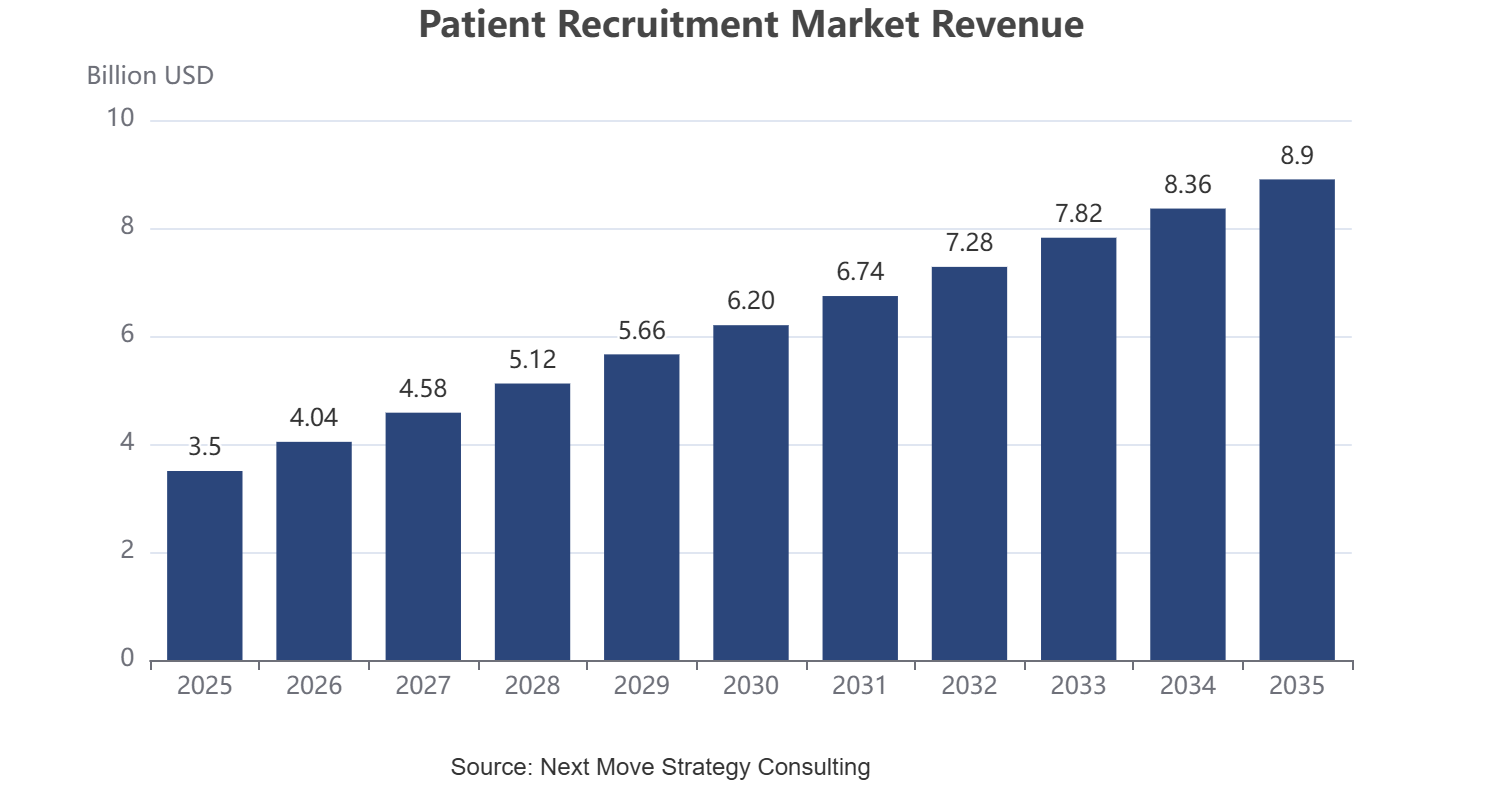
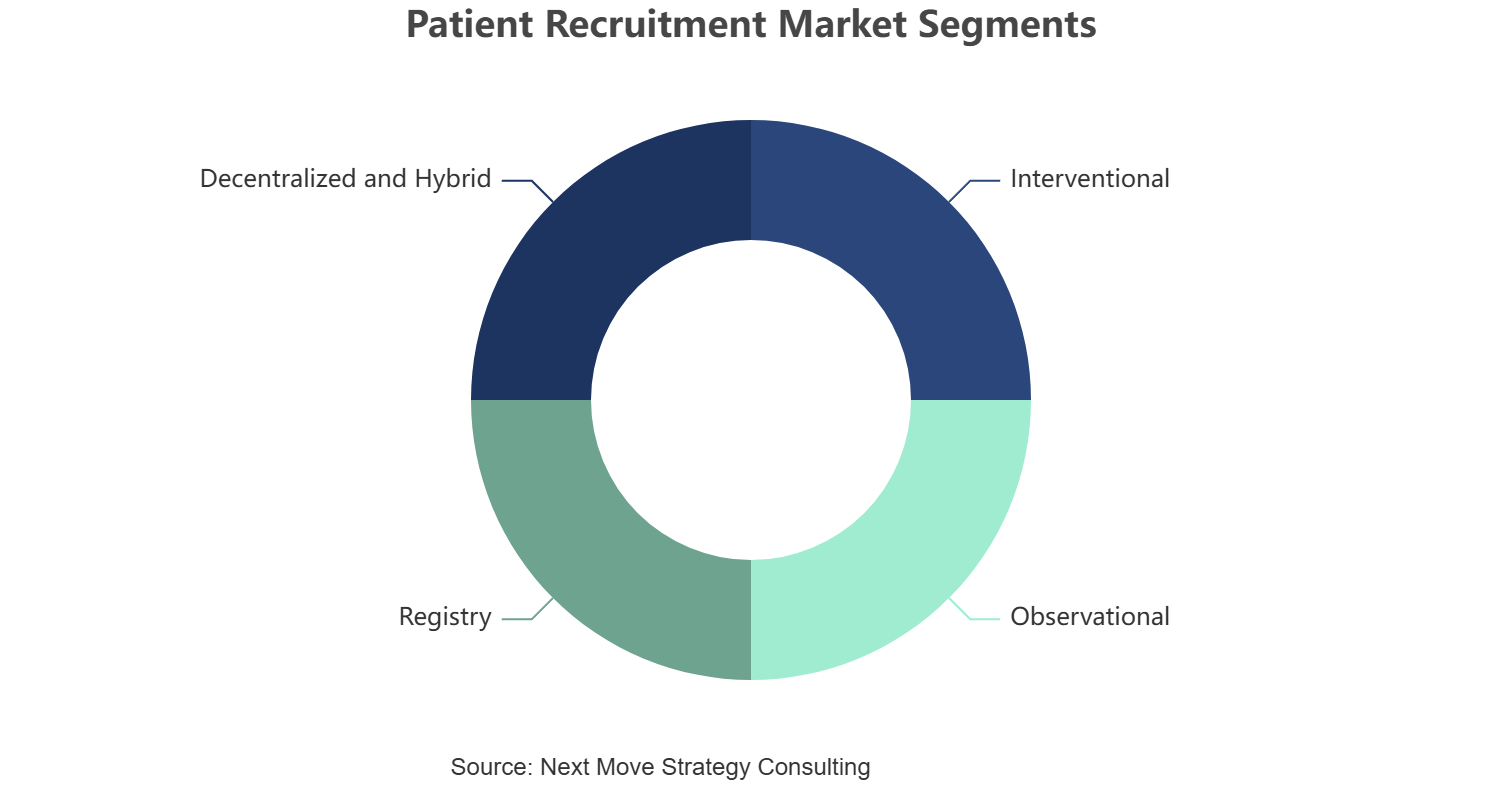
About the Author
 Liza Phukan
— Liza Phukan is Research Associate at Next Move Strategy Consulting, where she has covered emerging industries and market research across sectors for 3.5 years. Her work includes analyzing industry developments, validating market data, and developing structured business content from research findings. She uses secondary research and data-validation practices to turn complex market information into clear decision-useful market analysis for business audiences and support report development and B2B.
Liza Phukan
— Liza Phukan is Research Associate at Next Move Strategy Consulting, where she has covered emerging industries and market research across sectors for 3.5 years. Her work includes analyzing industry developments, validating market data, and developing structured business content from research findings. She uses secondary research and data-validation practices to turn complex market information into clear decision-useful market analysis for business audiences and support report development and B2B.
About the Reviewer
 Supradip Baul
— Supradip Baul is an accomplished business consultant and strategist with over a decade of rich experience in market intelligence, strategy, technology, and business transformation. His work has included rigorous qualitative and quantitative analysis across multiple industries, helping clients shape investment decisions and long-term roadmaps. Earlier in his career, he was associated with Gartner, where he contributed to industry-leading reports and market share analyses. He has worked with leading global companies and holds an MBA with a dual specialization in Marketing and Finance.
Supradip Baul
— Supradip Baul is an accomplished business consultant and strategist with over a decade of rich experience in market intelligence, strategy, technology, and business transformation. His work has included rigorous qualitative and quantitative analysis across multiple industries, helping clients shape investment decisions and long-term roadmaps. Earlier in his career, he was associated with Gartner, where he contributed to industry-leading reports and market share analyses. He has worked with leading global companies and holds an MBA with a dual specialization in Marketing and Finance.
At Next Move Strategy Consulting, we understand that insightful market research is the cornerstone of successful business decisions. That's why we employ a robust and multifaceted approach, combining various methodologies to deliver the most accurate and actionable data for our clients.

Research Landscape
We navigate the world of research with two primary approaches:
Qualitative Approach
Our qualitative research methodologies involve immersive techniques such as in-depth interviews, focus groups, and observational studies. By engaging directly with individuals and stakeholders, we uncover valuable insights that quantitative data alone may overlook.

Quantitative Research
In tandem with qualitative methodologies, NMSC leverages the power of Quantitative Research to provide a robust foundation of numerical insights. Through systematic data collection and analysis, we quantify patterns, preferences, and market trends, offering a comprehensive view of the business landscape.
Our quantitative research approach employs diverse tools, including surveys, experiments, and statistical modelling. These methodologies enable us to gather data from a large and representative sample, ensuring the statistical significance of our findings. By employing structured questionnaires and standardized data collection methods, we guarantee the reliability and validity of the information we present to our clients.
Quantitative research is particularly effective in measuring the prevalence of trends, assessing market size, and gauging the impact of various factors on consumer behavior. The numerical precision attained through this approach equips our clients with actionable insights, facilitating data-driven decision-making and strategy formulation.


Our Specialized Toolbox for Industry-Specific Market Research
We deploy a specialized arsenal of techniques tailored to meet your unique requirements. Here's a glimpse into our comprehensive toolbox:

Information Procurement
The stage entails acquiring market data or relevant information through various sources and methodologies.


Market Research Approach
We utilize both top-down and bottom-up approaches in market research analysis to achieve a comprehensive understanding of the market dynamics, leveraging the broad perspective of industry trends and macroeconomic factors alongside detailed insights from specific segments and individual companies.

Porters Five Forces Analysis
We conduct Porter's Five Forces analysis to evaluate the competitive landscape of an industry, providing us with insights into factors that affect profitability and strategic positioning.

SWOT Analysis

Forecasting
We utilize a forecasting model to predict future consumption by considering parameters like population, economics, regulations, market competition, drivers, constraints, technology, and pricing. We also employ statistical techniques such as multilinear regression, exponential smoothing, moving average, ARIMA, and Monte Carlo simulations for accurate predictions. In econometric forecasting, we analyzed short-term and long-term event impacts, attributing values based on regulatory frameworks, economic factors, and market events.





 Speak to Our Analyst