Electronic Patient-Reported Outcomes (ePRO) Market Size, Share, Growth & Forecast by Offering (Software, Instrument Library, Professional Services, Managed Services, Device), by Outcome Assessment Type (ePRO, eClinRO, eObsRO, ePerfO), by Deployment Model (BYOD, Provisioned Device, Hybrid), by Buyer Type (Pharmaceutical, Biotechnology, CRO, Academic, Healthcare Provider, Government), and by Therapeutic Area, Global Analysis 2026–2035
Industry: Healthcare | Publishing Date: July 7, 2026 | Last Updated: September 30, 2026 | No of Pages: N/A | No. of Tables: N/A | No. of Figures: N/A | Format: PDF | Report Code: HC4990
What Is the Electronic Patient-Reported Outcomes (ePRO) Market Size?
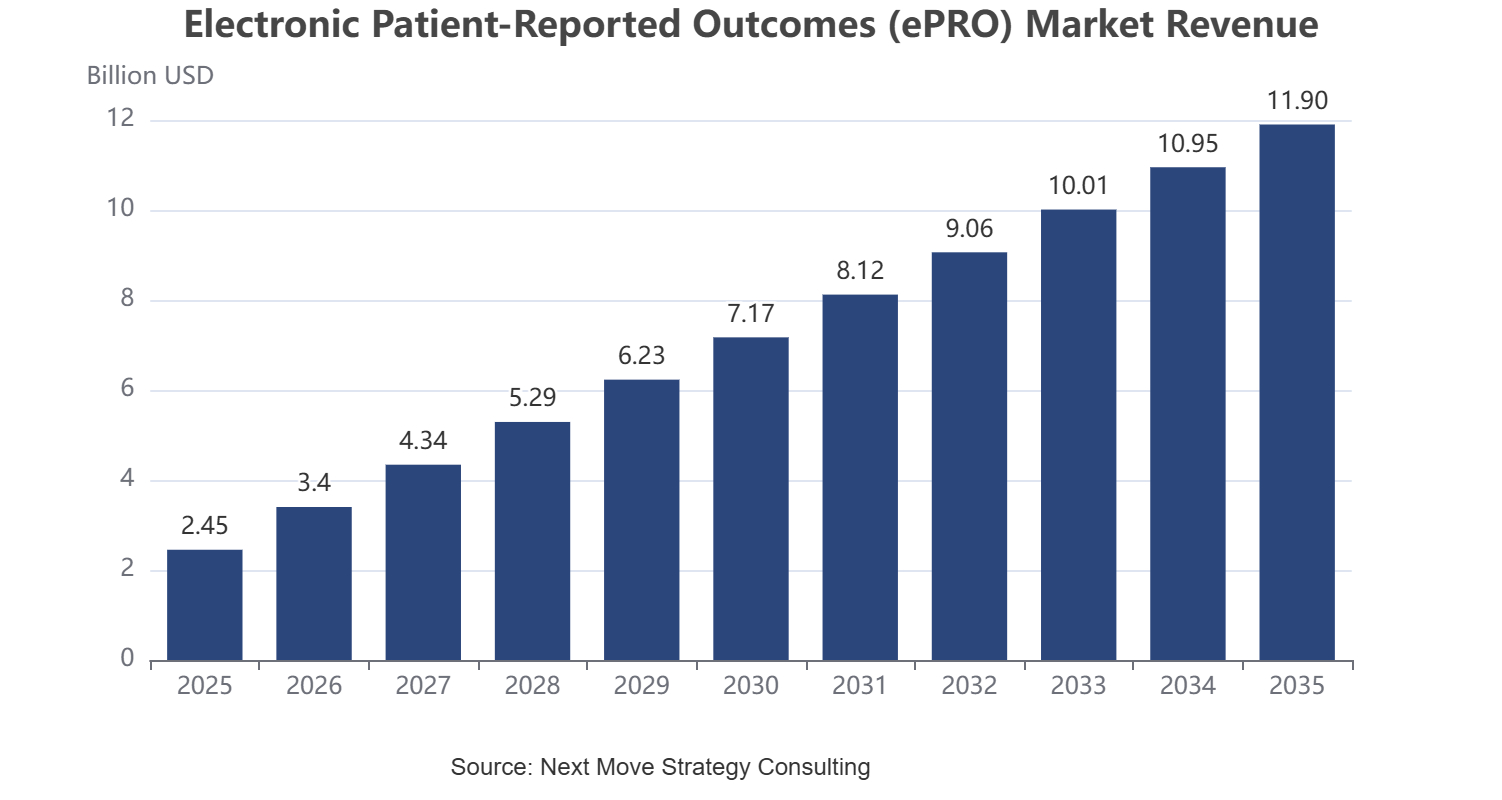
The global Electronic Patient-Reported Outcomes (ePRO) Market was valued at USD 2.45 billion in 2025 and is estimated to reach USD 2.87 billion in 2026. Rising adoption of decentralized and hybrid clinical trial models, expanding regulatory emphasis on patient-centered registrational endpoints, and growing integration of artificial intelligence within eCOA platforms are projected to propel the market to USD 11.90 billion by 2035, advancing at a CAGR of 17.1% from 2026 to 2035. Additional growth drivers include expanding bring-your-own-device data capture, rising global clinical trial registration volume, increasing orphan and rare disease drug development activity, and regulatory modernization under ICH E6(R3) Good Clinical Practice.
|
Parameters |
Details |
|
Market Size in 2025 |
USD 2.45 Billion |
|
Market Size in 2026 |
USD 2.87 Billion |
|
Revenue Forecast in 2035 |
USD 11.90 Billion |
|
Growth Rate |
CAGR of 17.1% from 2026 to 2035 |
|
Analysis Period |
2025–2035 |
|
Base Year Considered |
2025 |
|
Forecast Period |
2026–2035 |
|
Market Size Estimation |
USD Billion |
|
Companies Profiled |
20 |
|
Countries Covered |
38 |
|
Market Share |
Top 10 |
Electronic Patient-Reported Outcomes (ePRO) Market Overview
What Is the Electronic Patient-Reported Outcomes (ePRO) Market?
Electronic Patient-Reported Outcomes (ePRO) refers to the digital capture of symptom, health status, and quality-of-life data directly from clinical trial participants through smartphones, tablets, wearables, and web-based instruments. From our research, we found that the Electronic Patient-Reported Outcomes (ePRO) Market spans software platforms, instrument libraries, professional services, managed services, and provisioned devices that together support pharmaceutical sponsors, biotechnology firms, and contract research organizations in collecting validated patient-centered endpoints across decentralized and site-based clinical trials worldwide.
How Has the Electronic Patient-Reported Outcomes (ePRO) Market Evolved?
The market has progressed through several distinct technology phases. Early paper-based diaries gave way to standalone handheld electronic devices during the 2000s, followed by web and mobile-enabled platforms supporting bring-your-own-device data capture. Through our market assessment, we observed that the current phase is centered on AI-enabled analytics, multilingual validated questionnaire libraries, and unified eCOA ecosystems that integrate ePRO, eClinRO, eObsRO, and ePerfO assessments within a single configurable platform architecture.
How Do Regulations Influence the Electronic Patient-Reported Outcomes (ePRO) Market?
Regulatory modernization is a structural driver of the Market. The FDA's final guidance on Core Patient-Reported Outcomes in Cancer Clinical Trials, issued in October 2024, and the FDA's final guidance on Conducting Clinical Trials with Decentralized Elements, issued in September 2024, formally encourage sponsors to deploy validated electronic instruments for capturing patient experience data. Internationally, ICH E6(R3) Good Clinical Practice, adopted in January 2025 and endorsed by FDA in September 2025, explicitly incorporates computerized systems and remote data capture into global trial conduct standards, reinforcing demand for compliant ePRO platforms.
How Is Technology Adoption Expanding Across the Electronic Patient-Reported Outcomes (ePRO) Market?
Technology adoption across the Market is accelerating as sponsors transition from provisioned-device models toward bring-your-own-device and hybrid deployment architectures. We noticed that artificial intelligence is increasingly embedded within compliance monitoring, analytics, and patient engagement modules, while integration with wearables and electronic health records is expanding the scope of continuous symptom capture beyond traditional clinic visits, supporting both interventional studies and post-marketing real-world evidence generation.
|
Key Takeaways |
|
By offering, Software Revenue held the largest share at USD 1.10 billion in 2025, driven by demand for cloud-based ePRO platform software and AI-enabled add-on modules. Managed Services Revenue is the fastest-growing offering sub-segment at a CAGR of 18.5% through 2035, as sponsors increasingly outsource study operations support and device logistics to specialized vendors. |
|
By outcome assessment type, ePRO instruments generated USD 1.37 billion in 2025, maintaining the dominant share within the Electronic Patient-Reported Outcomes (ePRO) Market. ePerfO assessments represent the fastest-growing assessment type at a CAGR of 20.3% through 2035, reflecting rising use of objective performance-based digital endpoints in neurology and musculoskeletal trials. |
|
By deployment model, Provisioned Device deployment led with USD 1.27 billion in 2025, reflecting sponsor preference for standardized, validated hardware in regulated trials. Bring Your Own Device deployment is the fastest-growing model at a CAGR of 19.8% through 2035, supported by lower per-patient costs and broadening smartphone penetration among trial participants. |
|
By buyer type, Pharmaceutical Companies accounted for USD 0.93 billion in 2025, the largest buyer category in the Electronic Patient-Reported Outcomes (ePRO) Market. Contract Research Organizations represent the fastest-growing buyer type at a CAGR of 19.0% through 2035, as sponsors increasingly delegate biometrics and eCOA operations to specialized outsourcing partners. |
|
By therapeutic area, Oncology generated USD 0.58 billion in 2025, the leading clinical application of ePRO instruments. Rare Diseases is the fastest-growing therapeutic area at a CAGR of 18.6% through 2035, driven by rising orphan drug development activity and regulatory emphasis on patient-centered rare disease endpoints. |
|
North America held the largest regional share in the Electronic Patient-Reported Outcomes (ePRO) Market at USD 1.10 billion in 2025, projected to reach USD 4.40 billion by 2035, supported by the concentration of leading eCOA platform vendors and the highest global clinical trial registration volume. |
|
Asia-Pacific is the fastest-growing major region in the Electronic Patient-Reported Outcomes (ePRO) Market at a CAGR of 21.2% through 2035, propelled by rising clinical trial activity in China and India and expanding contract research capacity across the region. |
|
Latin America records the fastest overall regional CAGR at 23.3% through 2035 from a smaller revenue base, as Brazil and Argentina expand their participation in global multi-regional clinical trials. |
|
The United States is the largest national market in the Electronic Patient-Reported Outcomes (ePRO) Market, underpinned by the headquarters presence of leading eCOA vendors and the highest concentration of FDA-regulated registrational trials. |
|
India is the fastest-growing national market within Asia-Pacific in the Electronic Patient-Reported Outcomes (ePRO) Market, supported by expanding contract research capacity, rising biopharmaceutical R&D investment, and growing smartphone-enabled patient participation in clinical trials. |
Key Emerging Trends in the Electronic Patient-Reported Outcomes (ePRO) Industry
How Is Artificial Intelligence Reshaping the Electronic Patient-Reported Outcomes (ePRO) Market?
Artificial intelligence is transforming the market by enabling natural language symptom capture, predictive non-compliance alerts, and automated data quality review. From our research, we found that Clinical Ink launched its TrialLens AI-driven analytics dashboard in April 2025 to visualize and query eCOA data in real time. This convergence reduces manual data review burden for clinical operations teams and accelerates identification of protocol deviations, compelling competing platforms to embed comparable AI capabilities to remain relevant to sponsors.
How Is Bring Your Own Device Adoption Transforming Data Capture in the Electronic Patient-Reported Outcomes (ePRO) Market?
Bring Your Own Device adoption is reshaping participant experience within the Market by allowing patients to complete validated assessments on personal smartphones rather than provisioned hardware. Based on our market evaluation, we noticed that Statistics & Data Corporation launched a dedicated BYOD ePRO solution in August 2024, reflecting broader industry movement toward device-agnostic data capture. This shift lowers per-patient technology costs for sponsors and is compelling provisioned-device-focused vendors to expand cross-platform compatibility.
How Are Wearables and Remote Monitoring Expanding the Scope of the Electronic Patient-Reported Outcomes (ePRO) Market?
Integration of wearable sensors with ePRO platforms is expanding data collection beyond subjective patient diaries to include continuous physiological and activity data. Through our analysis, we observed that platforms increasingly combine ePRO questionnaires with connected devices to corroborate self-reported symptoms against objective measures, an approach valuable in respiratory, cardiovascular, and movement disorder trials. This convergence is prompting eCOA vendors to establish device integration partnerships, creating new managed services revenue tied to device provisioning and data harmonization.
How Is Decentralized Clinical Trial Growth Influencing the Electronic Patient-Reported Outcomes (ePRO) Market?
Decentralized and hybrid clinical trial models are structurally increasing reliance on ePRO platforms as the primary mechanism for remote symptom and outcome capture. We found that the FDA's September 2024 final guidance on Conducting Clinical Trials with Decentralized Elements formally validates remote data collection approaches that depend heavily on validated electronic instruments. This regulatory clarity is accelerating sponsor adoption of decentralized-ready eCOA platforms, expanding the addressable market beyond traditional site-based studies.
Ecosystem Analysis of the Electronic Patient-Reported Outcomes (ePRO) Industry
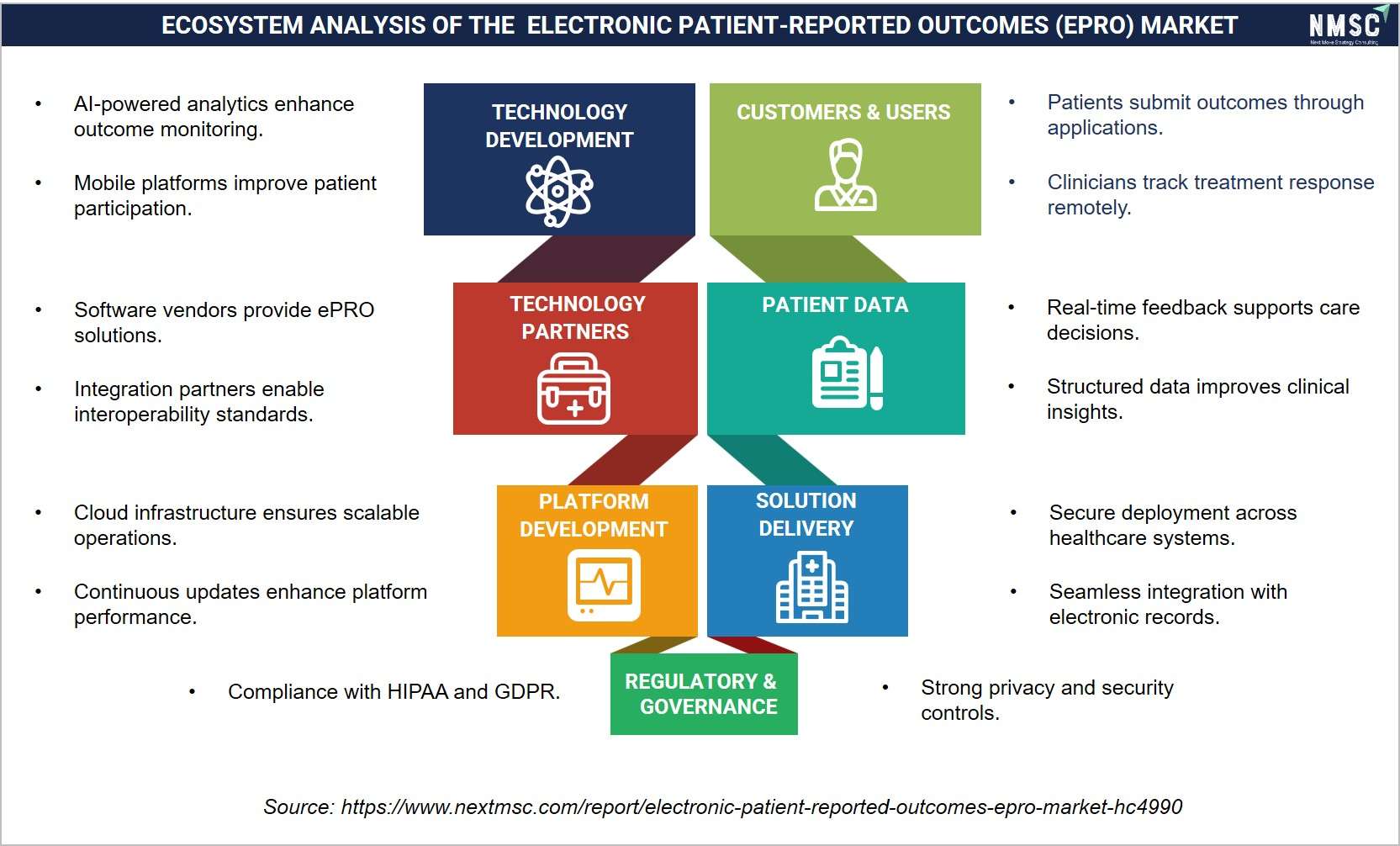
The ePRO market ecosystem integrates technology developers, software partners, healthcare providers, patients, and regulatory authorities to support digital outcome reporting. Based on our assessment, collaboration across these stakeholders strengthens platform innovation, data interoperability, and secure information exchange. Consequently, patient-reported data flows efficiently into clinical workflows, enabling remote monitoring, evidence-based decision-making, and improved treatment outcomes while supporting scalable healthcare digitalization.
What Are the Key Market Drivers, Breakthroughs, and Investment Opportunities that Will Shape the Electronic Patient-Reported Outcomes (ePRO) Industry in the Next Decade?
|
Drivers / Trends / Restraints |
(+/-) % Impact on CAGR Forecast |
Geographic Relevance |
Impact Timeline |
|
Rising Decentralized and Hybrid Clinical Trial Adoption |
+2.6% |
Global (led by North America, Europe) |
2025–2032 |
|
FDA and ICH Regulatory Modernization (E6(R3), Core Oncology PRO Guidance) |
+2.2% |
Global |
2025–2030 |
|
Expanding Use of ePRO as Registrational Trial Endpoints |
+1.8% |
Global |
2026–2035 |
|
AI-Enabled Compliance Monitoring and Patient Engagement Analytics |
+2.0% |
Global |
2026–2035 |
|
Growing CRO Outsourcing of eCOA and Biometrics Services |
+1.4% |
Global |
2025–2032 |
|
Rising Orphan and Rare Disease Trial Activity |
+1.5% |
North America, Europe |
2026–2035 |
|
Wearable and Remote Monitoring Integration |
+1.2% |
North America, Europe, Asia-Pacific |
2025–2030 |
|
Cross-Border Health Data Privacy Regulatory Complexity |
-1.1% |
Europe, Asia-Pacific |
Ongoing |
|
Instrument Validation and Implementation Cost Burden |
-0.8% |
Emerging Pharma, Academic Sponsors Globally |
2025–2028 |
|
Expansion of Multi-Regional Trials in Asia-Pacific and Latin America |
+1.6% |
Asia-Pacific, Latin America |
2026–2035 |
What Are the Growth Drivers of the Electronic Patient-Reported Outcomes (ePRO) Market?
How Is Regulatory Emphasis on Patient-Centered Endpoints Driving the Electronic Patient-Reported Outcomes (ePRO) Market?
Regulatory agencies are increasingly encouraging patient-reported endpoints in registrational trials. The FDA's final guidance on Core Patient-Reported Outcomes in Cancer Clinical Trials, published in the Federal Register on October 18, 2024, by the Oncology Center of Excellence, CBER, and CDER, recommends a standardized core set of PRO measures for anti-cancer therapy trials. This regulatory clarity reduces instrument selection ambiguity for sponsors and is compelling broader adoption of validated electronic capture platforms across oncology and adjacent therapeutic areas within the Market.
How Is Rising Global Clinical Trial Volume Expanding the Electronic Patient-Reported Outcomes (ePRO) Market?
Sustained growth in registered clinical trials is directly expanding demand for ePRO instrumentation. According to the U.S. National Library of Medicine, ClinicalTrials.gov listed 590,801 registered studies spanning 226 countries and territories as of December 2025. We found that this expanding global trial footprint, combined with rising trial complexity and multi-regional enrollment, is increasing the number of studies that require multilingual, validated electronic patient-reported outcome instruments within the Market.
How Is International Regulatory Harmonization Under ICH E6(R3) Supporting the Electronic Patient-Reported Outcomes (ePRO) Market?
International harmonization of Good Clinical Practice standards is reinforcing demand for compliant electronic data capture systems. The International Council for Harmonisation adopted the revised ICH E6(R3) Good Clinical Practice guideline in January 2025, with the U.S. FDA issuing final adoption guidance on September 9, 2025, and the European Medicines Agency's overarching principles taking effect on July 23, 2025. In our observation, the guideline explicitly incorporates computerized systems, remote monitoring, and risk-based oversight, directly supporting sponsor investment in validated ePRO infrastructure across the Market.
What Are the Growth Inhibitors of the Electronic Patient-Reported Outcomes (ePRO) Market?
How Does Cross-Border Health Data Privacy Regulation Constrain the Electronic Patient-Reported Outcomes (ePRO) Market?
Cross-jurisdictional health data privacy requirements add compliance complexity for ePRO platform vendors operating multi-regional trials. The European Union's General Data Protection Regulation classifies health data as a special category requiring heightened protection under Article 9, as confirmed by the European Commission, compelling ePRO vendors to implement region-specific data residency, consent, and access-control architectures. We noticed that this regulatory fragmentation extends platform validation timelines and increases the operational cost of deploying a single ePRO solution across globally dispersed trial sites.
How Does Instrument Validation Complexity Limit Electronic Patient-Reported Outcomes (ePRO) Market Penetration?
Achieving measurement equivalence between paper-based and electronic versions of validated patient-reported outcome instruments remains a documented implementation barrier. The International Society for Pharmacoeconomics and Outcomes Research's ePRO Good Research Practices Task Force has published formal recommendations on the evidentiary standards required to demonstrate equivalence between paper and electronic PRO measures. We further observed that this validation burden extends study start-up timelines and raises upfront costs for smaller sponsors, particularly emerging biotechnology companies with limited in-house biometrics expertise.
What Are the Growth Opportunities in the Electronic Patient-Reported Outcomes (ePRO) Market?
How Does Rising Rare Disease Drug Development Create Opportunity in the Electronic Patient-Reported Outcomes (ePRO) Market?
Expanding orphan drug development activity is creating durable demand for validated ePRO instruments tailored to small, geographically dispersed rare disease populations. Research published via the National Institutes of Health's PubMed Central indicates that more than half of recent specialty drug-indication pairs approved by the FDA carried an orphan designation. Through our market evaluation, we believe this sustained rare disease pipeline is expanding opportunities for ePRO vendors offering remote, low-burden assessment capabilities for dispersed and pediatric patient populations.
How Does Decentralized Trial Guidance Create New Opportunity in the Electronic Patient-Reported Outcomes (ePRO) Market?
The FDA's formal endorsement of decentralized and hybrid clinical trial conduct is creating structural opportunity for ePRO vendors with mature remote deployment capabilities. The FDA's September 2024 final guidance on Conducting Clinical Trials with Decentralized Elements provides sponsors with a regulatory roadmap for incorporating remote data collection into registrational study design. We assessed that vendors with proven decentralized eCOA infrastructure are positioned to capture disproportionate share of newly designed decentralized and hybrid protocols.
How Does AI-Enabled Compliance Monitoring Create Opportunity in the Electronic Patient-Reported Outcomes (ePRO) Market?
Artificial intelligence-enabled compliance monitoring and analytics modules represent an emerging high-value opportunity within the Market. In our analysis, vendors that embed predictive non-adherence alerts, automated query generation, and natural language symptom analysis within their platforms are capturing premium pricing relative to baseline data capture functionality. We assessed that this AI Add-On Module category is positioned to grow faster than the broader software segment, creating attractive white-space for vendors with established machine learning capabilities.
How Is the Electronic Patient-Reported Outcomes (ePRO) Industry Segmented in This Report, and What Are the Key Insights from the Segmentation Analysis?
By Offering
How Does Offering Segmentation Reveal the Structural Composition of the Electronic Patient-Reported Outcomes (ePRO) Market?
|
Offering Segment |
2025 (USD Bn) |
2035 (USD Bn) |
CAGR (%) |
|
Software Revenue |
1.10 |
5.69 |
17.9% |
|
Professional Services Revenue |
0.54 |
2.43 |
16.2% |
|
Managed Services Revenue |
0.34 |
1.86 |
18.5% |
|
Instrument Library Revenue |
0.25 |
1.01 |
15.0% |
|
Device Revenue |
0.22 |
0.91 |
15.3% |
Based on our analysis of clinical trial technology procurement patterns, we observed that the Electronic Patient-Reported Outcomes (ePRO) Market is segmented by offering into Software Revenue, Professional Services Revenue, Managed Services Revenue, Instrument Library Revenue, and Device Revenue. Software Revenue, spanning Cloud, On-Premise, and Hybrid ePRO Platform Software alongside Patient Engagement, Notification, Analytics, Compliance Monitoring, and Integration Add-On Modules, continues to dominate due to recurring subscription economics and AI-enabled analytics expansion. Managed Services Revenue, covering Study Operations Support and Device Logistics, is the fastest-growing offering as sponsors increasingly outsource operational biometrics functions.
By Outcome Assessment Type
How Does Outcome Assessment Type Shape Revenue Distribution Across the Electronic Patient-Reported Outcomes (ePRO) Market?
|
Outcome Assessment Type |
2025 (USD Bn) |
2035 (USD Bn) |
CAGR (%) |
|
ePRO |
1.37 |
6.20 |
16.3% |
|
eClinRO |
0.54 |
2.62 |
17.1% |
|
eObsRO |
0.32 |
1.68 |
18.0% |
|
ePerfO |
0.22 |
1.40 |
20.3% |
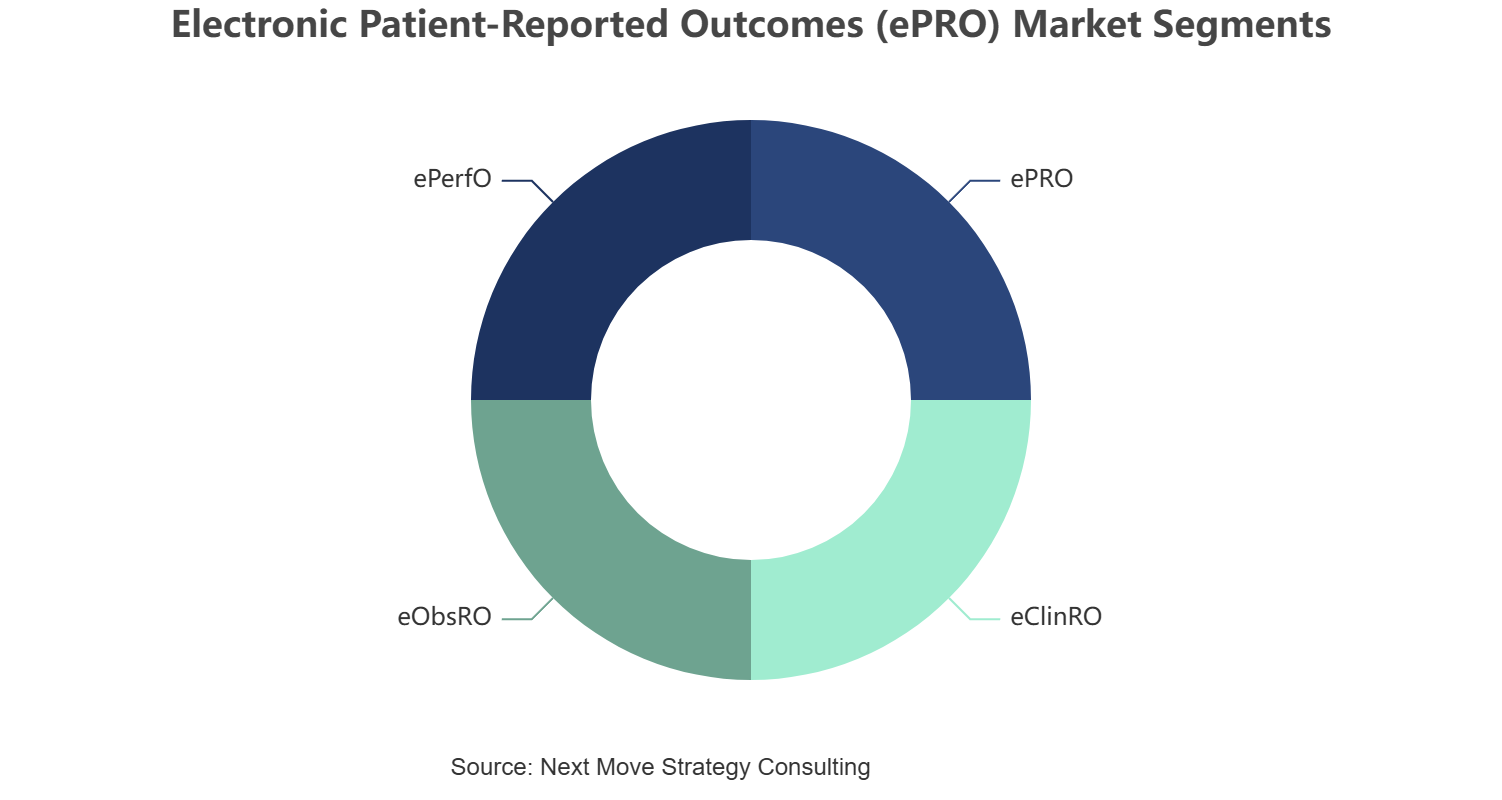
We found that the Market is segmented by outcome assessment type into ePRO, eClinRO, eObsRO, and ePerfO instruments. ePRO assessments, capturing symptoms and quality-of-life data directly from patients, continue to dominate given their central role in regulatory-accepted patient experience endpoints. eClinRO and eObsRO instruments support clinician- and observer-reported data in pediatric and dependent-population trials, while ePerfO assessments, measuring objective task-based performance, represent the fastest-growing assessment type as sponsors increasingly pair subjective and objective digital endpoints within neurology and musculoskeletal trial protocols.
By Deployment Model
How Does Deployment Model Influence Adoption Patterns in the Electronic Patient-Reported Outcomes (ePRO) Market?
|
Deployment Model |
2025 (USD Bn) |
2035 (USD Bn) |
CAGR (%) |
|
Provisioned Device |
1.27 |
5.50 |
15.8% |
|
Bring Your Own Device |
0.69 |
4.20 |
19.8% |
|
Hybrid Deployment |
0.49 |
2.20 |
16.2% |
On the basis of trial device strategy, we observed that the Market is segmented by deployment model into Provisioned Device, Bring Your Own Device, and Hybrid Deployment. Provisioned Device deployment continues to dominate in registrational and regulated trials requiring standardized, validated hardware and controlled data security environments. Bring Your Own Device deployment is the fastest-growing model as sponsors seek to reduce per-patient technology costs, while Hybrid Deployment is gaining traction in studies combining provisioned devices for core endpoints with personal smartphones for supplementary patient engagement.
By Buyer Type
Which Buyer Types Are Driving Purchasing Decisions in the Electronic Patient-Reported Outcomes (ePRO) Market?
|
Buyer Type |
2025 (USD Bn) |
2035 (USD Bn) |
CAGR (%) |
|
Pharmaceutical Companies |
0.93 |
4.20 |
16.3% |
|
Biotechnology Companies |
0.54 |
2.85 |
18.1% |
|
Contract Research Organizations |
0.59 |
3.35 |
19.0% |
|
Academic Research Organizations |
0.20 |
0.85 |
15.6% |
|
Healthcare Providers |
0.15 |
0.55 |
13.9% |
|
Government Research Organizations |
0.04 |
0.10 |
9.6% |
Based on our analysis of clinical trial sponsorship patterns, we observed that the Market is segmented by buyer type into Pharmaceutical Companies, Biotechnology Companies, Contract Research Organizations, Academic Research Organizations, Healthcare Providers, and Government Research Organizations. Pharmaceutical Companies, led by Large Pharma sponsors running global registrational programs, continue to generate the largest buyer revenue. Contract Research Organizations represent the fastest-growing buyer category as sponsors increasingly delegate eCOA design, build, and operational support to specialized outsourcing partners, while Biotechnology Companies expand adoption alongside rising clinical-stage funding activity.
By Therapeutic Area
How Does Therapeutic Area Segmentation Reflect Clinical Demand in the Electronic Patient-Reported Outcomes (ePRO) Market?
|
Therapeutic Area |
2025 (USD Bn) |
2035 (USD Bn) |
CAGR (%) |
|
Oncology |
0.58 |
2.76 |
16.9% |
|
Neurology |
0.31 |
1.62 |
18.0% |
|
Psychiatry |
0.21 |
1.05 |
17.5% |
|
Rare Diseases |
0.19 |
1.05 |
18.6% |
|
Cardiovascular |
0.21 |
1.00 |
16.9% |
|
Metabolic Disorders |
0.19 |
0.92 |
17.1% |
|
Respiratory |
0.15 |
0.68 |
16.3% |
|
Infectious Diseases |
0.14 |
0.62 |
16.0% |
|
Immunology |
0.14 |
0.66 |
16.8% |
|
Gastroenterology |
0.10 |
0.46 |
16.5% |
|
Dermatology |
0.08 |
0.36 |
16.2% |
|
Ophthalmology |
0.06 |
0.27 |
16.2% |
|
Women's Health |
0.06 |
0.28 |
16.7% |
|
Other Therapeutic Areas |
0.03 |
0.17 |
18.9% |
We noticed that the Market is segmented by therapeutic area into Oncology, Neurology, Psychiatry, Rare Diseases, Cardiovascular, Metabolic Disorders, Respiratory, Infectious Diseases, Immunology, Gastroenterology, Dermatology, Ophthalmology, Women's Health, and Other Therapeutic Areas. Oncology continues to dominate given high registrational trial volume and the FDA's standardized core cancer PRO measures, while Rare Diseases is the fastest-growing therapeutic area as orphan drug development activity accelerates. Neurology and Immunology trials are also expanding ePRO adoption rapidly as sponsors rely on patient-reported symptom and quality-of-life endpoints to support regulatory submissions in dispersed patient populations.
Regional Outlook
Geographic Performance Snapshot
|
Region |
2025 (USD Bn) |
2035 (USD Bn) |
CAGR (%) |
Key Driver |
|
North America |
1.10 |
4.40 |
14.9% |
Leading eCOA vendor base, highest trial registration volume |
|
Europe |
0.62 |
2.45 |
14.7% |
ICH E6(R3) adoption, EU Clinical Trials Regulation harmonization |
|
Asia-Pacific |
0.46 |
3.15 |
21.2% |
Rising trial volume in China, India; expanding CRO capacity |
|
Middle East & Africa |
0.12 |
0.68 |
18.9% |
GCC clinical research investment, expanding trial infrastructure |
|
Latin America |
0.15 |
1.22 |
23.3% |
Growing multi-regional trial participation in Brazil, Argentina |
North America Electronic Patient-Reported Outcomes (ePRO) Market
North America is the largest region in the Electronic Patient-Reported Outcomes (ePRO) Market, accounting for USD 1.10 billion in 2025 and forecast to reach USD 4.40 billion by 2035 at a CAGR of 14.9%. The region benefits from the headquarters presence of leading eCOA platform vendors, the deepest concentration of FDA-regulated registrational trials, and mature regulatory frameworks including the FDA's Core Patient-Reported Outcomes in Cancer Clinical Trials guidance and decentralized trial guidance that actively encourage validated electronic data capture.
U.S. Electronic Patient-Reported Outcomes (ePRO) Market
Based on our engagements, we found that the United States represents the largest single national market within the Electronic Patient-Reported Outcomes (ePRO) Market, supported by the headquarters presence of Medidata, IQVIA, Oracle, Clario, and Suvoda. The FDA's Core Patient-Reported Outcomes in Cancer Clinical Trials guidance and decentralized trial guidance directly shape sponsor instrument selection and trial design. Deep biopharmaceutical R&D investment and mature CRO infrastructure underpin sustained national market leadership.
Canada Electronic Patient-Reported Outcomes (ePRO) Market
Through our analysis, we observed that Canada represents a smaller but technologically mature share of the North American Market. Health Canada's clinical trial regulatory framework aligns closely with FDA and ICH E6(R3) standards, supporting cross-border trial harmonization. Canadian academic medical centers and CROs are active adopters of cloud-based eCOA platforms, particularly within oncology and rare disease research networks supported by federal health research funding.
Mexico Electronic Patient-Reported Outcomes (ePRO) Market
From our assessment, Mexico is the fastest-growing national market within North America in the Electronic Patient-Reported Outcomes (ePRO) Market. Mexico's COFEPRIS regulatory authority oversees clinical trial conduct, while the country's growing role as a nearshoring destination for multi-regional trials is expanding demand for multilingual, BYOD-enabled ePRO platforms. Rising contract research capacity and improving smartphone penetration support continued adoption among Mexican trial sites.
Europe Electronic Patient-Reported Outcomes (ePRO) Market
Europe is the second-largest region in the Market, contributing USD 0.62 billion in 2025 and forecast to reach USD 2.45 billion by 2035 at a CAGR of 14.7%. The region's regulatory environment, anchored by the European Medicines Agency's adoption of ICH E6(R3) Good Clinical Practice with overarching principles effective July 2025, is reinforcing sponsor investment in compliant electronic data capture and remote monitoring infrastructure across major national markets.
UK Electronic Patient-Reported Outcomes (ePRO) Market
According to evaluation, the United Kingdom represents one of Europe's largest individual markets for the Market. The Medicines and Healthcare products Regulatory Agency oversees clinical trial conduct and has actively supported decentralized trial elements following its post-Brexit regulatory modernization agenda. London and Oxford-based academic medical centers and CROs are significant adopters of cloud-based ePRO platforms across oncology and rare disease research programs.
Germany Electronic Patient-Reported Outcomes (ePRO) Market
Based on our engagements, Germany is the largest individual European market within the Market, supported by its extensive pharmaceutical manufacturing base and dense academic medical research network. The Federal Institute for Drugs and Medical Devices (BfArM) oversees clinical trial authorization under the EU Clinical Trials Regulation, while German sponsors increasingly adopt validated multilingual ePRO instruments to support large, multi-site registrational programs.
France Electronic Patient-Reported Outcomes (ePRO) Market
Through our analysis, France represents a significant European market for the Market, supported by the Agence Nationale de Sécurité du Médicament's (ANSM) oversight of clinical trial authorization under the EU Clinical Trials Regulation. French academic hospitals and CROs are active adopters of decentralized and hybrid trial elements, with growing public research funding supporting digital health and PRO instrument validation programs.
Italy Electronic Patient-Reported Outcomes (ePRO) Market
From our assessment, Italy demonstrates steady adoption within the Market, supported by the Italian Medicines Agency's (AIFA) clinical trial oversight and a dense network of academic research hospitals. Public investment under Italy's National Recovery and Resilience Plan has directed funding toward digital health infrastructure, supporting growing adoption of validated ePRO platforms across oncology and chronic disease research programs.
Spain Electronic Patient-Reported Outcomes (ePRO) Market
According to evaluation, Spain is demonstrating growing momentum within the Electronic Patient-Reported Outcomes (ePRO) Market, supported by the Spanish Agency of Medicines and Medical Devices (AEMPS) and a dense network of academic hospitals participating in multi-regional European trials. Spanish CROs and sponsors increasingly adopt bring-your-own-device ePRO platforms to support patient-centric oncology, rare disease, and cardiovascular trial programs.
Sweden Electronic Patient-Reported Outcomes (ePRO) Market
Based on our engagements, Sweden maintains a highly digitized clinical research environment within the Market, supported by the Swedish Medical Products Agency's (Läkemedelsverket) oversight and a strong national tradition of registry-based and patient-reported outcome research. Swedish academic medical centers are early adopters of validated electronic instruments across oncology, neurology, and rare disease research networks.
Denmark Electronic Patient-Reported Outcomes (ePRO) Market
Through our analysis, Denmark demonstrates advanced adoption within the Electronic Patient-Reported Outcomes (ePRO) Market, supported by the Danish Medicines Agency's clinical trial oversight and a strong national digital health infrastructure. Denmark's concentration of life sciences companies and academic medical centers generates consistent demand for validated ePRO instruments across rare disease and oncology research programs conducted under EU Clinical Trials Regulation harmonization.
Finland Electronic Patient-Reported Outcomes (ePRO) Market
From our assessment, Finland's Electronic Patient-Reported Outcomes (ePRO) Market reflects high cloud adoption and strong national digital health infrastructure. The Finnish Medicines Agency (Fimea) oversees clinical trial authorization, while Finland's advanced telecommunications and smartphone penetration support growing bring-your-own-device ePRO adoption among academic medical centers and CROs participating in Nordic and broader European multi-regional trials.
Netherlands Electronic Patient-Reported Outcomes (ePRO) Market
According to evaluation, the Netherlands serves as an important European hub within the Market, supported by the Medicines Evaluation Board's clinical trial oversight and a dense concentration of academic medical centers and CROs. Dutch sponsors are active adopters of cloud-based, multilingual eCOA platforms supporting cross-border European registrational trial programs under EU Clinical Trials Regulation harmonization.
Rest of Europe Electronic Patient-Reported Outcomes (ePRO) Market
Based on our engagements, the Rest of Europe, comprising Poland, Belgium, Switzerland, Austria, Portugal, and other European nations, collectively represents a growing share of the Electronic Patient-Reported Outcomes (ePRO) Market. Poland and the Czech Republic are emerging as preferred sites for cost-efficient multi-regional registrational trials, while Switzerland's concentration of global pharmaceutical headquarters generates strong demand for validated, multilingual ePRO platform adoption across the region.
Asia-Pacific Electronic Patient-Reported Outcomes (ePRO) Market
Asia-Pacific is the fastest-growing major region in the Market, advancing from USD 0.46 billion in 2025 to an estimated USD 3.15 billion by 2035 at a CAGR of 21.2%. The region's growth is propelled by rapidly expanding clinical trial volume in China and India, growing contract research capacity, and advancing digital health adoption across Japan, South Korea, Taiwan, and Australia.
China Electronic Patient-Reported Outcomes (ePRO) Market
Through our analysis, China is the largest single market in Asia-Pacific for the Market, driven by rapidly rising clinical trial registration volume and growing participation of Chinese sponsors in global multi-regional registrational programs. China's National Medical Products Administration (NMPA) oversees clinical trial authorization, while domestic and international CROs are expanding eCOA and ePRO platform adoption across oncology and chronic disease trial portfolios.
India Electronic Patient-Reported Outcomes (ePRO) Market
From our assessment, India is the fastest-growing national market within the Asia-Pacific Market. The Central Drugs Standard Control Organisation (CDSCO) oversees clinical trial conduct, while India's expanding contract research capacity, rising biopharmaceutical R&D investment, and growing smartphone-enabled patient participation are accelerating adoption of bring-your-own-device ePRO platforms across oncology, infectious disease, and metabolic disorder trial programs.
Japan Electronic Patient-Reported Outcomes (ePRO) Market
According to evaluation, Japan is the second-largest Asia-Pacific market for the Electronic Patient-Reported Outcomes (ePRO) Market, supported by the Pharmaceuticals and Medical Devices Agency's (PMDA) rigorous clinical trial oversight and a mature pharmaceutical manufacturing base. Japanese sponsors prioritize validated, culturally adapted patient-reported outcome instruments, supporting steady demand for multilingual eCOA platforms across oncology and chronic disease research programs.
South Korea Electronic Patient-Reported Outcomes (ePRO) Market
Based on our engagements, South Korea demonstrates high adoption maturity within the Electronic Patient-Reported Outcomes (ePRO) Market, supported by the Ministry of Food and Drug Safety's (MFDS) clinical trial oversight and an advanced digital health infrastructure. South Korean academic medical centers and CROs are active adopters of AI-enabled eCOA platforms across oncology, cardiovascular, and rare disease research programs.
Taiwan Electronic Patient-Reported Outcomes (ePRO) Market
Through our analysis, Taiwan's Market is supported by the Taiwan Food and Drug Administration's (TFDA) clinical trial oversight and a growing concentration of contract research organizations serving regional sponsors. Taiwanese academic medical centers are increasingly adopting validated ePRO instruments across oncology and infectious disease trial programs supported by government biomedical research funding initiatives.
Indonesia Electronic Patient-Reported Outcomes (ePRO) Market
From our assessment, Indonesia is among the fastest-emerging markets in Southeast Asia for the Electronic Patient-Reported Outcomes (ePRO) Market. Indonesia's National Agency of Drug and Food Control (BPOM) oversees clinical trial authorization, while growing biopharmaceutical investment and expanding smartphone penetration support early-stage adoption of bring-your-own-device ePRO platforms across infectious disease and metabolic disorder research programs.
Vietnam Electronic Patient-Reported Outcomes (ePRO) Market
According to evaluation, Vietnam represents an emerging market within the Market, supported by the Drug Administration of Vietnam's clinical trial oversight and growing participation in multi-regional Asia-Pacific registrational trials. Rising contract research investment and improving digital health infrastructure are supporting gradual adoption of validated electronic patient-reported outcome instruments across infectious disease and oncology trial programs.
Australia Electronic Patient-Reported Outcomes (ePRO) Market
Based on our engagements, Australia is the most mature Asia-Pacific market for the Market outside Northeast Asia, supported by the Therapeutic Goods Administration's (TGA) clinical trial oversight and a strong academic medical research network. Australian sponsors and CROs are active early adopters of decentralized and hybrid trial elements, supporting sustained demand for validated bring-your-own-device ePRO platforms.
Philippines Electronic Patient-Reported Outcomes (ePRO) Market
Through our analysis, the Philippines is a developing but growing market within the Electronic Patient-Reported Outcomes (ePRO) Market, supported by the Food and Drug Administration Philippines' clinical trial oversight and an expanding contract research sector. Growing biopharmaceutical investment and improving smartphone-enabled patient access support gradual adoption of validated electronic patient-reported outcome instruments across infectious disease and oncology research programs.
Malaysia Electronic Patient-Reported Outcomes (ePRO) Market
From our assessment, Malaysia represents a mid-tier and growing market within the Electronic Patient-Reported Outcomes (ePRO) Market, supported by the National Pharmaceutical Regulatory Agency's (NPRA) clinical trial oversight and Kuala Lumpur's emergence as a regional contract research hub. Malaysian academic medical centers are gradually adopting validated multilingual ePRO platforms across oncology and metabolic disorder trial programs.
Rest of Asia-Pacific Electronic Patient-Reported Outcomes (ePRO) Market
According to evaluation, the Rest of Asia-Pacific, comprising Thailand, Singapore, Bangladesh, Sri Lanka, Pakistan, New Zealand, and smaller regional markets, collectively represents a growing share of the Market. Singapore's Health Sciences Authority oversees a sophisticated regulatory environment that has attracted regional headquarters of major eCOA vendors, while Thailand's expanding contract research sector generates steady demand for validated ePRO platform adoption.
Middle East and Africa Electronic Patient-Reported Outcomes (ePRO) Market
The Middle East and Africa region recorded USD 0.12 billion in 2025 within the Market, forecast to reach USD 0.68 billion by 2035 at a CAGR of 18.9%. Growth is driven by expanding clinical research infrastructure investment across Saudi Arabia and the UAE, supplemented by Israel's advanced biotechnology sector and South Africa's established academic clinical research network.
Saudi Arabia Electronic Patient-Reported Outcomes (ePRO) Market
Based on our engagements, Saudi Arabia is the largest Market within the Middle East and Africa region, supported by the Saudi Food and Drug Authority's (SFDA) clinical trial oversight and Vision 2030's healthcare research investment priorities. Growing academic medical center participation in multi-regional oncology and rare disease trials supports rising adoption of validated electronic patient-reported outcome platforms.
UAE Electronic Patient-Reported Outcomes (ePRO) Market
Through our analysis, the UAE is the second-largest Electronic Patient-Reported Outcomes Market within the MEA region, supported by the UAE Ministry of Health and Prevention's clinical trial oversight and Dubai and Abu Dhabi's ambitions as regional biotechnology and clinical research hubs. Growing international CRO presence supports rising adoption of cloud-based ePRO platforms across oncology and metabolic disorder research programs.
Egypt Electronic Patient-Reported Outcomes (ePRO) Market
From our assessment, Egypt is an emerging market within the Electronic Patient-Reported Outcomes (ePRO) Market, supported by the Egyptian Drug Authority's clinical trial oversight and a growing pharmaceutical manufacturing and research base. Egypt's large population and expanding contract research sector are creating gradual demand for validated electronic patient-reported outcome instruments across infectious disease and chronic disease trial programs.
Israel Electronic Patient-Reported Outcomes (ePRO) Market
According to evaluation, Israel occupies a distinctive position within the Electronic Patient-Reported Outcomes (ePRO) Market as both a significant digital health technology origin country and an active clinical trial site. The Israeli Ministry of Health oversees clinical trial conduct, while Israel's concentration of biotechnology startups and academic medical centers supports advanced adoption of AI-enabled ePRO and wearable-integrated data capture platforms.
Turkey Electronic Patient-Reported Outcomes (ePRO) Market
Based on our engagements, Turkey is a mid-sized and growing Market within the MEA region, supported by the Turkish Medicines and Medical Devices Agency's clinical trial oversight and a dynamic pharmaceutical manufacturing sector. Istanbul-based academic medical centers and CROs increasingly adopt validated multilingual ePRO platforms across oncology and cardiovascular trial programs.
Nigeria Electronic Patient-Reported Outcomes (ePRO) Market
Through our analysis, Nigeria is the largest Electronic Patient-Reported Outcomes (ePRO) Market in Sub-Saharan Africa, supported by the National Agency for Food and Drug Administration and Control's (NAFDAC) clinical trial oversight and growing international CRO presence. Nigeria's large population and expanding infectious disease and maternal health research programs are creating early-stage demand for validated mobile-enabled patient-reported outcome instruments.
South Africa Electronic Patient-Reported Outcomes (ePRO) Market
From our assessment, South Africa is the most mature Market in Sub-Saharan Africa, supported by the South African Health Products Regulatory Authority's (SAHPRA) clinical trial oversight and a well-established academic clinical research network. South African academic medical centers are sophisticated adopters of validated ePRO platforms across HIV, tuberculosis, and oncology research programs.
Rest of MEA Electronic Patient-Reported Outcomes (ePRO) Market
According to evaluation, the Rest of Middle East and Africa, encompassing Kuwait, Qatar, Bahrain, Oman, Jordan, Morocco, Kenya, and other nations, collectively represents a growing segment of the Electronic Patient-Reported Outcomes (ePRO) Market. Gulf Cooperation Council countries outside Saudi Arabia and the UAE are investing in national clinical research infrastructure, while Kenya's expanding academic research network generates early-stage demand for validated ePRO platform adoption.
Latin America Electronic Patient-Reported Outcomes (ePRO) Market
Latin America records the fastest overall regional CAGR in the Electronic Patient-Reported Outcomes (ePRO) Market at 23.3% from 2026 to 2035, advancing from USD 0.15 billion in 2025 to USD 1.22 billion by 2035. Brazil and Argentina collectively account for the majority of regional demand, supported by expanding participation in global multi-regional registrational trials and growing contract research infrastructure investment.
Brazil Electronic Patient-Reported Outcomes (ePRO) Market
Based on our engagements, Brazil is the largest Electronic Patient-Reported Outcomes (ePRO) Market in Latin America, supported by the National Health Surveillance Agency's (ANVISA) clinical trial oversight and a dense network of academic medical centers participating in global oncology and infectious disease registrational trials. Brazilian CROs increasingly adopt validated, Portuguese-language ePRO platforms to support multi-regional sponsor programs.
Argentina Electronic Patient-Reported Outcomes (ePRO) Market
Through our analysis, Argentina is the second-largest Electronic Patient-Reported Outcomes (ePRO) Market in Latin America, supported by the National Administration of Drugs, Foods and Medical Devices' (ANMAT) clinical trial oversight and a strong concentration of academic research hospitals. Buenos Aires-based CROs are active adopters of validated Spanish-language ePRO platforms across oncology and rare disease registrational trial programs.
Chile Electronic Patient-Reported Outcomes (ePRO) Market
From our assessment, Chile represents a smaller but stable Market in Latin America, supported by the Institute of Public Health's (ISP) clinical trial oversight and a well-regarded academic medical research infrastructure. Chilean CROs and academic medical centers are steady adopters of validated electronic patient-reported outcome instruments across oncology and cardiovascular trial programs.
Colombia Electronic Patient-Reported Outcomes (ePRO) Market
According to evaluation, Colombia is among the fastest-growing Market in Latin America, supported by the National Institute for Food and Drug Surveillance's (INVIMA) clinical trial oversight and Bogota's emergence as a regional contract research hub. Growing international sponsor trial activity supports rising adoption of validated Spanish-language ePRO platforms across infectious disease and oncology research programs.
Rest of LATAM Electronic Patient-Reported Outcomes (ePRO) Market
Based on our engagements, the Rest of Latin America, including Peru, Ecuador, Uruguay, Bolivia, Paraguay, Costa Rica, Panama, and Caribbean nations, represents a smaller but growing component of the Market. Peru and Ecuador are experiencing early-stage clinical trial growth, while Uruguay's advanced data protection framework and Costa Rica's nearshore research services sector support gradual regional adoption of validated ePRO platforms.
Competitive Landscape
Competitive Dynamics and M&A Landscape
|
Key Takeaways |
Details |
|
Market Structure |
The Electronic Patient-Reported Outcomes (ePRO) Market features layered competition among large clinical technology platforms (Medidata, IQVIA, Oracle, Veeva), specialized eCOA-focused vendors (Clario, Suvoda, Clinical Ink, Kayentis, YPrime, Medable, Viedoc), and instrument library and biometrics specialists (ArisGlobal, OpenClinica, DATATRAK, Clinion). |
|
Innovation Focus |
Innovation centers on AI-enabled analytics and compliance monitoring, bring-your-own-device architecture, multilingual validated instrument libraries, and unified eCOA platforms integrating ePRO, eClinRO, eObsRO, and ePerfO assessments within a single configurable system. |
|
M&A Activity |
Eli Lilly's acquisition of digital health company Aparito strengthened pharmaceutical in-house ePRO and wearable data capabilities, while continued consolidation among mid-tier eCOA vendors is expected as larger platforms seek to expand validated instrument libraries and managed services capacity. |
How Do Companies Compete in the Electronic Patient-Reported Outcomes (ePRO) Market?
Companies in the Electronic Patient-Reported Outcomes (ePRO) Market compete on platform configurability, validated instrument library breadth, multilingual support, and global managed services capacity. Large clinical technology platforms differentiate through end-to-end trial technology suites that bundle ePRO with electronic data capture and clinical trial management systems, while specialized eCOA vendors compete on deployment speed, BYOD architecture, and dedicated biometrics services for complex registrational programs.
Which Kind of Companies Dominate the Electronic Patient-Reported Outcomes (ePRO) Market?
Two broad categories of companies dominate the Electronic Patient-Reported Outcomes (ePRO) Market. First, large integrated clinical technology platforms, including Medidata Solutions, IQVIA, Oracle, and Veeva Systems, deliver ePRO capability as part of broader unified clinical trial technology suites spanning electronic data capture, randomization, and trial management. Second, specialized eCOA-focused vendors, including Clario, Suvoda, Clinical Ink, YPrime, Medable, Kayentis, and Viedoc Technologies, compete purely on depth of validated instrument libraries, deployment flexibility, and dedicated eCOA biometrics services.
AI-Native Differentiation and Open Standards Drive Market Success in the Electronic Patient-Reported Outcomes (ePRO) Market
Vendors embedding AI-native analytics, automated compliance monitoring, and natural language patient engagement directly within their ePRO platforms are capturing premium positioning. We assessed that growing adoption of standardized data exchange formats, including CDISC standards for clinical data interoperability, is reducing integration friction between eCOA platforms and downstream electronic data capture and biostatistics systems, rewarding vendors that prioritize open, interoperable platform architecture over proprietary closed ecosystems.
Market Players to Opt for Merger and Acquisition Strategies to Expand Their Presence in the Electronic Patient-Reported Outcomes (ePRO) Market
Mergers and acquisitions continue to reshape the competitive structure of the Electronic Patient-Reported Outcomes (ePRO) Market. Eli Lilly's acquisition of Aparito illustrates pharmaceutical sponsors' strategic interest in owning digital health and ePRO capabilities directly. We expect continued consolidation among mid-tier instrument library and managed services vendors as larger clinical technology platforms seek to expand validated content libraries, multilingual translation capacity, and global device logistics infrastructure through targeted acquisitions.
Who Are the Key Market Players in the Electronic Patient-Reported Outcomes (ePRO) Industry?
-
Medidata Solutions, Inc.
-
IQVIA Holdings Inc.
-
Clario Inc.
-
Bracket Global LLC
-
Oracle Corporation
-
Veeva Systems Inc.
-
YPrime, LLC
-
Medable, Inc.
-
Suvoda LLC
-
Clinical Ink, Inc.
-
Kayentis SAS
-
Ciwit B.V.
-
Medrio, Inc.
-
Viedoc Technologies AB
-
OpenClinica, LLC
-
ArisGlobal LLC
-
THREAD, Inc.
-
TransPerfect Global, Inc.
-
DATATRAK International, Inc.
-
Clinion IT Services Private Limited
What Are the Latest Developments in the Electronic Patient-Reported Outcomes (ePRO) Market?
|
Date |
Event |
|
May 2026 |
Medidata (Dassault Systèmes) unveiled a new suite of AI-powered imaging capabilities within the Medidata Data Experience. The update features automated text redaction (32% faster) and high-accuracy anatomy verification, aimed at removing critical bottlenecks in oncology clinical trials |
|
February 2026 |
Thermo Fisher Scientific announced a definitive agreement to acquire Clario, a leader in endpoint data solutions (including eCOA/ePRO), for USD 8.875 billion. This move is designed to integrate Clario’s specialized clinical trial data capabilities into Thermo Fisher’s broader life sciences portfolio. |
|
January 2026 |
Medable, Inc. launched its "PI Summary Agent," an AI-driven tool designed to assist principal investigators by monitoring and summarizing eCOA data. This represents a continued industry trend toward "agentic" AI that performs specific, high-burden research tasks to improve oversight |
|
May 2025 |
Clario completed the acquisition of WCG’s eCOA business. The acquisition was aimed at strengthening Clario’s position in neuroscience clinical trials by integrating WCG’s established eCOA technologies and team into their existing digital endpoint platform. |
What Are the Investment Opportunities in the Electronic Patient-Reported Outcomes (ePRO) Industry?
Capital Inflows and Venture Activity
The Electronic Patient-Reported Outcomes (ePRO) Market continues to attract sustained capital investment from both strategic and financial acquirers. Eli Lilly's acquisition of UK-based digital health company Aparito reflects pharmaceutical sponsors' growing willingness to acquire ePRO and wearable data capabilities directly rather than license them from third-party vendors. We noticed that continued private equity and strategic interest in mid-tier eCOA and instrument library vendors reflects durable investor confidence in the recurring, subscription-based economics underlying the broader market.
Infrastructure and Platform Investment
Platform vendors are directing sustained investment toward cloud infrastructure, AI analytics capability, and multilingual validated instrument libraries supporting global multi-regional trials. Through our analysis, we observed that Medidata's continued integration of Rave eCOA with its broader Rave electronic data capture platform, and Veeva's expansion of its Vault-native eCOA module, illustrate how established vendors are investing to deliver unified, natively interoperable trial technology suites rather than standalone point solutions.
ESG and Patient-Centric Trial Design Considerations
Patient-centricity and accessibility considerations are increasingly shaping ePRO platform investment priorities. We assessed that vendors investing in multilingual instrument libraries, low-bandwidth mobile interfaces, and accessibility-compliant design are better positioned to support trial diversity objectives across geographically and socioeconomically dispersed patient populations, an investment theme reinforced by ICH E6(R3)'s explicit emphasis on participant-centered trial design and proportionate, risk-based data quality oversight.
Digital Transformation Enablement
ePRO platforms increasingly serve as the foundational data layer for broader sponsor digital trial transformation programs spanning electronic data capture, randomization, clinical trial management, and real-world evidence generation. We further analysed that sponsors undertaking enterprise-wide clinical technology modernization increasingly favor vendors offering natively unified eCOA, EDC, and CTMS suites over best-of-breed point-solution combinations, reinforcing platform consolidation as a durable multi-year investment theme.
Strategic M&A Activity
Strategic acquisitions are reshaping competitive positioning across the Electronic Patient-Reported Outcomes (ePRO) Market. Eli Lilly's acquisition of Aparito illustrates how pharmaceutical sponsors are pursuing vertical integration of digital health and ePRO capabilities. We assessed that continued consolidation among mid-tier instrument library, translation, and device logistics vendors is likely as larger clinical technology platforms seek to expand validated content libraries and global managed services capacity through targeted acquisitions over the next several years.
Key Benefits for Stakeholders
For Pharmaceutical and Biotechnology Sponsors
Pharmaceutical and biotechnology sponsors gain comprehensive, vendor-neutral insight into the Electronic Patient-Reported Outcomes (ePRO) Market, including quantitative sizing across offering, outcome assessment type, deployment model, buyer type, and therapeutic area. This intelligence supports vendor selection, budget planning, and platform standardization decisions across global registrational trial portfolios, enabling clinical operations teams to benchmark vendor capability against documented regulatory expectations.
For Contract Research Organizations
Contract Research Organizations gain detailed insight into buyer-type adoption trends, competitive vendor positioning, and deployment model shifts that directly inform technology partnership and subcontracting strategy. The segmentation and regional analysis support CRO business development teams in identifying high-growth therapeutic areas and geographies where validated ePRO capability represents a meaningful competitive differentiator in sponsor proposals.
For Investors and Financial Analysts
Investors and financial analysts access a structured, data-rich assessment of the Market's growth trajectory, competitive dynamics, and segment-level revenue forecasts through 2035. Company profiles covering all 20 covered vendors, combined with latest development tracking, provide an early-signal framework for identifying acquisition targets and emerging competitive threats across the global eCOA technology landscape.
For Regulatory Bodies and Academic Research Organizations
Regulatory bodies and academic research organizations gain a structured analysis of how evolving guidance, including the FDA's Core Patient-Reported Outcomes in Cancer Clinical Trials guidance and ICH E6(R3), is shaping ePRO platform adoption and instrument validation practices. Country-level insights provide policymakers and academic medical centers with evidence-based perspective on regional clinical trial technology adoption and infrastructure readiness.
Regulatory Framework Impacting the Electronic Patient-Reported Outcomes (ePRO) Industry
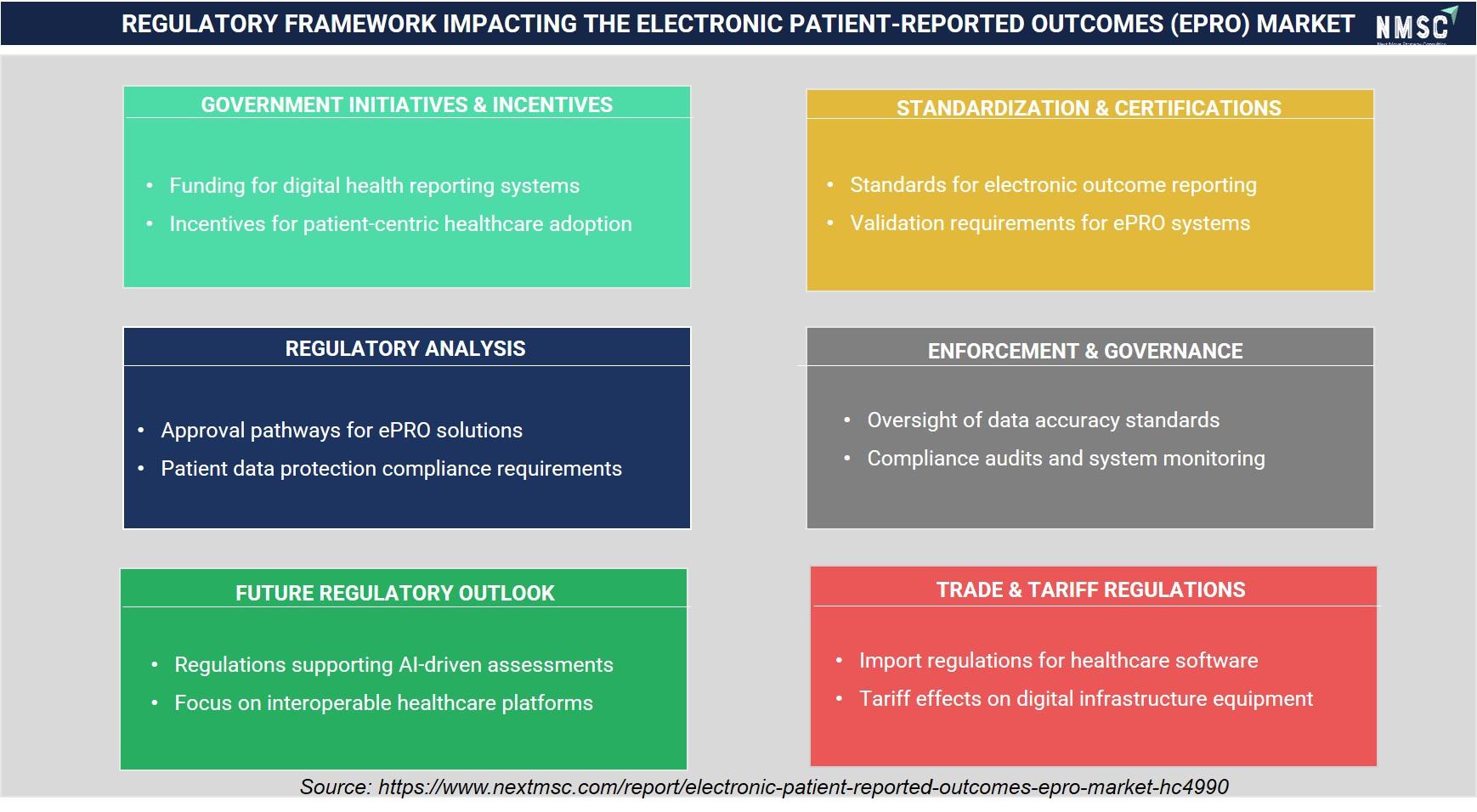
The regulatory framework shapes ePRO market growth through data privacy requirements, software validation standards, government incentives, and compliance oversight. Our analysis indicates that evolving healthcare regulations encourage secure, interoperable, and standardized digital reporting systems. Furthermore, certification requirements and governance frameworks enhance user confidence, while future policies supporting AI-enabled assessments and connected healthcare platforms accelerate innovation and long-term market adoption.
Key Market Segments
By Offering
-
Software Revenue
-
ePRO Platform Software
-
Cloud ePRO Platforms
-
On-Premise ePRO Platforms
-
Hybrid ePRO Platforms
-
-
ePRO Add-On Modules
-
Patient Engagement Modules
-
Notification Modules
-
Analytics Modules
-
Compliance Monitoring Modules
-
Integration Modules
-
-
-
Instrument Library Revenue
-
Licensed Clinical Assessments
-
Validated Questionnaire Libraries
-
Digital Outcome Measure Libraries
-
-
Professional Services Revenue
-
Study Design Services
-
Protocol Configuration
-
Assessment Design
-
Workflow Design
-
-
Study Build Services
-
Questionnaire Programming
-
System Configuration
-
Workflow Setup
-
-
Validation Services
-
User Acceptance Testing Support
-
Regulatory Validation
-
Quality Assurance
-
-
Deployment Services
-
Site Enablement
-
User Training
-
Go-Live Support
-
-
-
Managed Services Revenue
-
Study Operations Support
-
Help Desk Services
-
Participant Support
-
Site Support
-
-
Device Logistics
-
Provisioning Coordination
-
Shipping and Retrieval
-
Device Replacement Support
-
-
Data Management Support
-
Monitoring
-
Data Review
-
Compliance Monitoring
-
-
-
Device Revenue
-
Provisioned Smartphones
-
Provisioned Tablets
-
Provisioned Wearables
-
Other Provisioned Devices
-
By Outcome Assessment Type
-
ePRO
-
eClinRO
-
eObsRO
-
ePerfO
By Deployment Model
-
Bring Your Own Device
-
Provisioned Device
-
Hybrid Deployment
By Buyer Type
-
Pharmaceutical Companies
-
Large Pharma
-
Specialty Pharma
-
Emerging Pharma
-
-
Biotechnology Companies
-
Large Biotech
-
Mid-Sized Biotech
-
Early-Stage Biotech
-
-
Contract Research Organizations
-
Global CROs
-
Regional CROs
-
Specialty CROs
-
-
Academic Research Organizations
-
Universities
-
Research Institutes
-
Academic Medical Centers
-
-
Healthcare Providers
-
Hospitals
-
Health Systems
-
Specialty Clinics
-
-
Government Research Organizations
By Therapeutic Area
-
Oncology
-
Neurology
-
Psychiatry
-
Rare Diseases
-
Cardiovascular
-
Metabolic Disorders
-
Respiratory
-
Infectious Diseases
-
Immunology
-
Gastroenterology
-
Dermatology
-
Ophthalmology
-
Women's Health
-
Other Therapeutic Areas
By Region
-
North America: U.S., Canada, Mexico
-
Europe: UK, Germany, France, Italy, Spain, Sweden, Denmark, Finland, Netherlands, Rest of Europe
-
Asia-Pacific: China, India, Japan, South Korea, Taiwan, Indonesia, Vietnam, Australia, Philippines, Malaysia, Rest of APAC
-
Middle East & Africa: Saudi Arabia, UAE, Egypt, Israel, Turkey, Nigeria, South Africa, Rest of MEA
-
Latin America: Brazil, Argentina, Chile, Colombia, Rest of LATAM
Conclusion and Recommendations
Long-Term Outlook
The Electronic Patient-Reported Outcomes (ePRO) Market is entering a sustained multi-year growth phase driven by regulatory modernization, decentralized trial expansion, and artificial intelligence integration. The market is forecast to grow from USD 2.87 billion in 2026 to USD 11.90 billion by 2035, at a CAGR of 17.1%. We further analysed that this trajectory reflects both rising global clinical trial volume and the structural shift of sponsors toward outsourced, cloud-native eCOA infrastructure rather than legacy paper-based or standalone device-based data collection.
Strategic Positioning Recommendations
Platform vendors should prioritize AI-native analytics, bring-your-own-device architecture, and broad multilingual validated instrument libraries to capture sponsor demand across decentralized and multi-regional trial designs. Vendors lacking demonstrated regulatory compliance under ICH E6(R3) and FDA decentralized trial guidance will face structural disadvantage in registrational trial procurement processes for the Market contracts.
Investment Attractiveness
The Market represents an attractive investment environment given durable secular demand drivers, recurring subscription-based revenue models, and structural sponsor preference for outsourced eCOA infrastructure. We assessed that the highest-conviction investment themes include Managed Services Revenue, ePerfO assessment type, Bring Your Own Device deployment, and Rare Disease therapeutic area adoption, each exhibiting above-market CAGR through 2035.
Market Shifts and Key Risks
The most significant structural shift underway is the migration from provisioned-device-only deployment toward bring-your-own-device and hybrid models, alongside growing integration of ePRO with broader unified eCOA and electronic data capture suites. Key risks for the Market include cross-jurisdictional health data privacy compliance complexity, instrument validation cost burdens for smaller sponsors, and potential macroeconomic pressure on biopharmaceutical R&D spending.
Growth Pathways
Stakeholders seeking to maximize value from the Market should pursue a phased approach. In the near term, prioritize bring-your-own-device readiness and ICH E6(R3) compliance alignment. In the mid-term, invest in AI-enabled analytics and compliance monitoring modules to differentiate platform offerings. In the long term, position for unified eCOA platform architecture that natively integrates ePRO, eClinRO, eObsRO, and ePerfO assessment types alongside electronic data capture and clinical trial management systems.
About the Author
 Saista Faiyaz
— Saista Faiyaz is Research Associate at Next Move Strategy Consulting, where she has covered consumer markets and healthcare technologies for 3 years. Her work includes primary interview review, secondary-source validation, market sizing, and structured analysis of company and industry data. She supports research by comparing evidence across sources, organizing findings into market narratives, and documenting assumptions used in analysis. Her scope includes cross-market benchmarking, and reports.
Saista Faiyaz
— Saista Faiyaz is Research Associate at Next Move Strategy Consulting, where she has covered consumer markets and healthcare technologies for 3 years. Her work includes primary interview review, secondary-source validation, market sizing, and structured analysis of company and industry data. She supports research by comparing evidence across sources, organizing findings into market narratives, and documenting assumptions used in analysis. Her scope includes cross-market benchmarking, and reports.
About the Reviewer
 Supradip Baul
— Supradip Baul is an accomplished business consultant and strategist with over a decade of rich experience in market intelligence, strategy, technology, and business transformation. His work has included rigorous qualitative and quantitative analysis across multiple industries, helping clients shape investment decisions and long-term roadmaps. Earlier in his career, he was associated with Gartner, where he contributed to industry-leading reports and market share analyses. He has worked with leading global companies and holds an MBA with a dual specialization in Marketing and Finance.
Supradip Baul
— Supradip Baul is an accomplished business consultant and strategist with over a decade of rich experience in market intelligence, strategy, technology, and business transformation. His work has included rigorous qualitative and quantitative analysis across multiple industries, helping clients shape investment decisions and long-term roadmaps. Earlier in his career, he was associated with Gartner, where he contributed to industry-leading reports and market share analyses. He has worked with leading global companies and holds an MBA with a dual specialization in Marketing and Finance.
At Next Move Strategy Consulting, we understand that insightful market research is the cornerstone of successful business decisions. That's why we employ a robust and multifaceted approach, combining various methodologies to deliver the most accurate and actionable data for our clients.

Research Landscape
We navigate the world of research with two primary approaches:
Qualitative Approach
Our qualitative research methodologies involve immersive techniques such as in-depth interviews, focus groups, and observational studies. By engaging directly with individuals and stakeholders, we uncover valuable insights that quantitative data alone may overlook.

Quantitative Research
In tandem with qualitative methodologies, NMSC leverages the power of Quantitative Research to provide a robust foundation of numerical insights. Through systematic data collection and analysis, we quantify patterns, preferences, and market trends, offering a comprehensive view of the business landscape.
Our quantitative research approach employs diverse tools, including surveys, experiments, and statistical modelling. These methodologies enable us to gather data from a large and representative sample, ensuring the statistical significance of our findings. By employing structured questionnaires and standardized data collection methods, we guarantee the reliability and validity of the information we present to our clients.
Quantitative research is particularly effective in measuring the prevalence of trends, assessing market size, and gauging the impact of various factors on consumer behavior. The numerical precision attained through this approach equips our clients with actionable insights, facilitating data-driven decision-making and strategy formulation.


Our Specialized Toolbox for Industry-Specific Market Research
We deploy a specialized arsenal of techniques tailored to meet your unique requirements. Here's a glimpse into our comprehensive toolbox:

Information Procurement
The stage entails acquiring market data or relevant information through various sources and methodologies.


Market Research Approach
We utilize both top-down and bottom-up approaches in market research analysis to achieve a comprehensive understanding of the market dynamics, leveraging the broad perspective of industry trends and macroeconomic factors alongside detailed insights from specific segments and individual companies.

Porters Five Forces Analysis
We conduct Porter's Five Forces analysis to evaluate the competitive landscape of an industry, providing us with insights into factors that affect profitability and strategic positioning.

SWOT Analysis

Forecasting
We utilize a forecasting model to predict future consumption by considering parameters like population, economics, regulations, market competition, drivers, constraints, technology, and pricing. We also employ statistical techniques such as multilinear regression, exponential smoothing, moving average, ARIMA, and Monte Carlo simulations for accurate predictions. In econometric forecasting, we analyzed short-term and long-term event impacts, attributing values based on regulatory frameworks, economic factors, and market events.





 Speak to Our Analyst