Wearable AI Market By Offering (Hardware, Software, and Services), By Device Type (Wrist Wearables, Smart Ring, Smart Glasses, and Others), By Component (Processing Unit, Sensor Module, Connectivity Module, and Others), By AI Architecture (On-Device AI, Edge AI, Cloud AI, and Hybrid AI), By Distribution Channel (Direct Online, Retail & E-Commerce, and Others), By Application (Health and Wellness, Fitness & Sport, Communication, and Others) – Global Analysis & Forecast, 2025–2035
Industry: Retail and Consumer | Publishing Date: June 2, 2026 | Last Updated: September 30, 2026 | No of Pages: N/A | No. of Tables: N/A | No. of Figures: N/A | Format: PDF | Report Code: RC4598
Industry Outlook
The global Wearable AI Market size was valued at USD 56.4 billion in 2025 and is expected to reach USD 71.6 billion by 2026. Looking ahead, the industry is projected to expand significantly, reaching USD 611.3 billion by 2035, registering a CAGR of 26.90% from 2026 to 2035.
Wearable AI Market Size & Forecast
|
Parameters |
Details |
|
Market Size in 2026 |
USD 71.6 Billion |
|
Revenue Forecast in 2035 |
USD 611.3 Billion |
|
Growth Rate |
CAGR of 26.90% from 2026 to 2035 |
|
Analysis Period |
2025–2035 |
|
Base Year Considered |
2025 |
|
Forecast Period |
2026–2035 |
|
Market Size Estimation |
Billion (USD) |
|
Companies Profiled |
20 |
|
Countries Covered |
33 |
|
Market Share |
Available for 10 companies |
The wearable AI market is currently at a strong growth inflection point, driven by expanding applications across healthcare, fitness, and enterprise environments. These devices are increasingly deployed for continuous health monitoring, activity tracking, and real-time decision support, with growing relevance in preventive healthcare and workforce productivity. Based on our interactions with OEMs and healthcare practitioners, we observed that advancements in sensor fusion, compact form factors, and AI-enabled software are transforming wearables into intelligent, context-aware systems rather than standalone tracking devices.
Looking ahead, the market is transitioning toward a more integrated and software-driven ecosystem. NMSC’s evaluation indicates that improvements in energy efficiency and embedded AI capabilities enable sustained, always-on intelligence, enhancing user engagement and long-term adoption. Moreover, seamless interoperability across connected devices further expands use cases, particularly in smart environments and enterprise deployments. As a result, companies focusing on ecosystem integration and software differentiation capture greater value as wearable AI evolves into a core layer of the broader connected technology landscape.
What Are the Key Trends in the Wearable AI Industry?
How Is Sensor Fusion Advancing Context-Aware Intelligence in Wearables?
NMSC’s evaluation indicates that advancements in sensor fusion are enabling a new level of context-aware intelligence in wearable AI devices. Combining multiple sensors, such as motion, biometric, and environmental inputs, allows AI systems to generate more accurate and situationally relevant insights. Based on our discussions with technology providers, we found that multi-sensor data integration is enhancing activity recognition, fatigue detection, and behavioural analytics. This evolution is moving wearables from single-metric tracking devices to holistic intelligence platforms capable of delivering deeper, real-time contextual understanding across both consumer and industrial use cases.
How Is Software-Led Differentiation Shaping Competitive Positioning in Wearable AI?
Software capabilities are increasingly becoming the primary differentiator in the wearable AI market. In particular, our findings suggest that companies are shifting focus from hardware specifications to AI-driven software ecosystems, including proprietary algorithms, user interfaces, and data platforms. Moreover, continuous software updates and feature enhancements are extending device lifecycles and improving customer retention. As a result, brands investing in AI model optimisation and personalised user experiences are gaining a competitive edge, as value creation is increasingly driven by intelligence layers rather than physical device attributes.
How Is Form Factor Innovation Redefining Wearable AI Adoption?
Our market assessment indicates that rapid innovation in wearable form factors is significantly reshaping market dynamics beyond traditional smartwatches. In particular, emerging devices such as smart rings, AI-enabled hearables, and lightweight AR glasses are expanding the addressable user base by offering discreet, always-on experiences. Furthermore, miniaturisation of sensors and chipsets is enabling seamless integration of AI into compact, non-intrusive formats. As a result, this shift is improving user comfort and increasing daily usage frequency, thereby strengthening long-term engagement. Consequently, it is also opening new application pathways across lifestyle, wellness, and enterprise environments.
What Are the Key Market Drivers, Breakthroughs, and Investment Opportunities That Will Shape the Wearable AI Industry in the Next Decade?
Growth Catalyst & Risk Assessment Matrix
|
DRIVERS/TRENDS/RESTRAINTS |
(+/-) % IMPACT ON THE CAGR FORECAST |
GEOGRAPHIC RELEVANCE |
IMPACT TIMELINE |
|
Rising demand for continuous AI-driven health monitoring and preventive healthcare wearables |
+0.94% |
Global, strongest in North America, Europe, Japan, and South Korea |
Short term (≤ 3 years) |
|
Advancements in edge AI and on-device processing enable real-time analytics, improved privacy, and low-latency decision-making |
+0.83% |
North America, Western Europe, and developed Asia Pacific |
Medium term (2–4 years) |
|
Increasing integration of wearable AI within connected multi-device ecosystems driving contextual intelligence |
+0.71% |
Global, high growth in Asia Pacific and North America |
Medium term (2–4 years) |
|
Data privacy risks, cybersecurity concerns, and regulatory complexity associated with biometric and health data usage |
-0.76% |
Europe, North America; emerging impact in Asia Pacific |
Medium term (2–4 years) |
Based on our comprehensive assessment of wearable AI adoption patterns, we noticed that the market is witnessing steady expansion, primarily supported by the rising demand for continuous, AI-driven health monitoring and rapid advancements in edge AI and on-device processing capabilities. Consumers and enterprises are increasingly transitioning from episodic data collection to real-time, insight-driven engagement, positioning wearable AI as a preventive, decision-support tool across healthcare, fitness, and industrial applications. However, data privacy risks and regulatory complexity continue to constrain adoption, particularly in clinically sensitive and cross-border use cases. At the same time, the integration with broader multi-device ecosystems is unlocking new growth avenues, as interoperability and cross-platform AI orchestration enhance user engagement, enable contextual applications, and support long-term monetisation through service-led and subscription-based models.
Growth Drivers:
How Is the Rising Demand for Continuous Health Monitoring Accelerating Wearable AI Adoption?
The rising demand for continuous, AI-driven health monitoring is a key force accelerating wearable AI adoption. Based on our interviews with wellness program managers, there is a shift from episodic measurement to real-time tracking of vital signs, sleep quality, physical activity, and early risk indicators. According to Eurostat’s 2024 health statistics, 35.3% of people aged 16 years or over in the EU reported a long-standing illness or health problem, while the share rose to 74.8% among people aged 85 years or over. Eurostat also reported that 25.5% of employed people and 41.7% of unemployed people had such problems, showing how chronic condition management spans age and labour-market groups. Furthermore, AI-enabled wearables delivering personalised insights drive higher engagement and retention. As a result, these devices are increasingly positioned as preventive health tools, with AI translating biometric data into actionable recommendations. This, in turn, strengthens user value and supports repeat purchases and upgrades, particularly in markets with higher chronic disease awareness. However, clinical validation and regulatory alignment continue to influence adoption.
How Is Edge AI and On-Device Processing Enhancing Wearable AI Adoption?
Through our market evaluation, we found that advancements in edge AI and on-device processing are significantly accelerating wearable AI adoption by improving latency, privacy, and energy efficiency. Specifically, manufacturers are increasingly embedding AI models directly into devices, thereby reducing reliance on cloud connectivity and enabling real-time decision-making. In addition, improvements in low-power chipsets and neural processing units are enabling complex AI workloads within compact wearable form factors. As a result, this shift enhances user experience through faster insights while also addressing growing concerns around data security and bandwidth limitations. Consequently, on-device intelligence is becoming a key competitive differentiator, particularly in fitness, healthcare, and industrial safety applications.
Growth Inhibitors:
How Are Data Privacy Concerns and Regulatory Complexity Limiting Wearable AI Market Growth?
Data privacy risks and evolving regulatory frameworks represent a significant restraint for the wearable AI market. In particular, NMSC’s research indicates that wearable devices collect highly sensitive personal and biometric data, thereby raising concerns among regulators and end users regarding data misuse and cybersecurity vulnerabilities. According to ENISA, 68.6% of the recorded intrusions led to data breaches that were later leaked on cybercriminal forums for sale. The report also notes that 2.8% of the advertised breaches were sensitive enough to be categorised separately, reinforcing the point that privacy risk is not theoretical; it is a recurring commercial and consumer trust issue. Moreover, stringent regulations across regions are increasing the complexity and cost of product development and deployment. As a result, companies invest heavily in encryption, secure data storage, and regulatory compliance mechanisms, which, in turn, slow innovation cycles. Additionally, the lack of standardised global data governance frameworks further complicates cross-border scalability, thereby limiting broader adoption in healthcare and enterprise use cases.
Growth Opportunities:
How Will AI Integration with Multi-Device Ecosystems Unlock New Wearable AI Market Opportunities?
The integration of wearable AI with broader connected ecosystems presents a significant growth opportunity. Our market assessment indicates that wearables are increasingly becoming central nodes within interconnected environments, linking with smartphones, smart home systems, and enterprise IoT platforms. Based on our interviews with technology providers, we observed that seamless data exchange across devices is enabling more contextual and personalised AI-driven experiences. As a result, this convergence is unlocking new applications in areas such as smart fitness coaching, workplace safety monitoring, and ambient assisted living. Consequently, companies investing in interoperable platforms and cross-device AI orchestration are able to capture higher value, as ecosystem-driven engagement enhances user retention and monetisation potential.
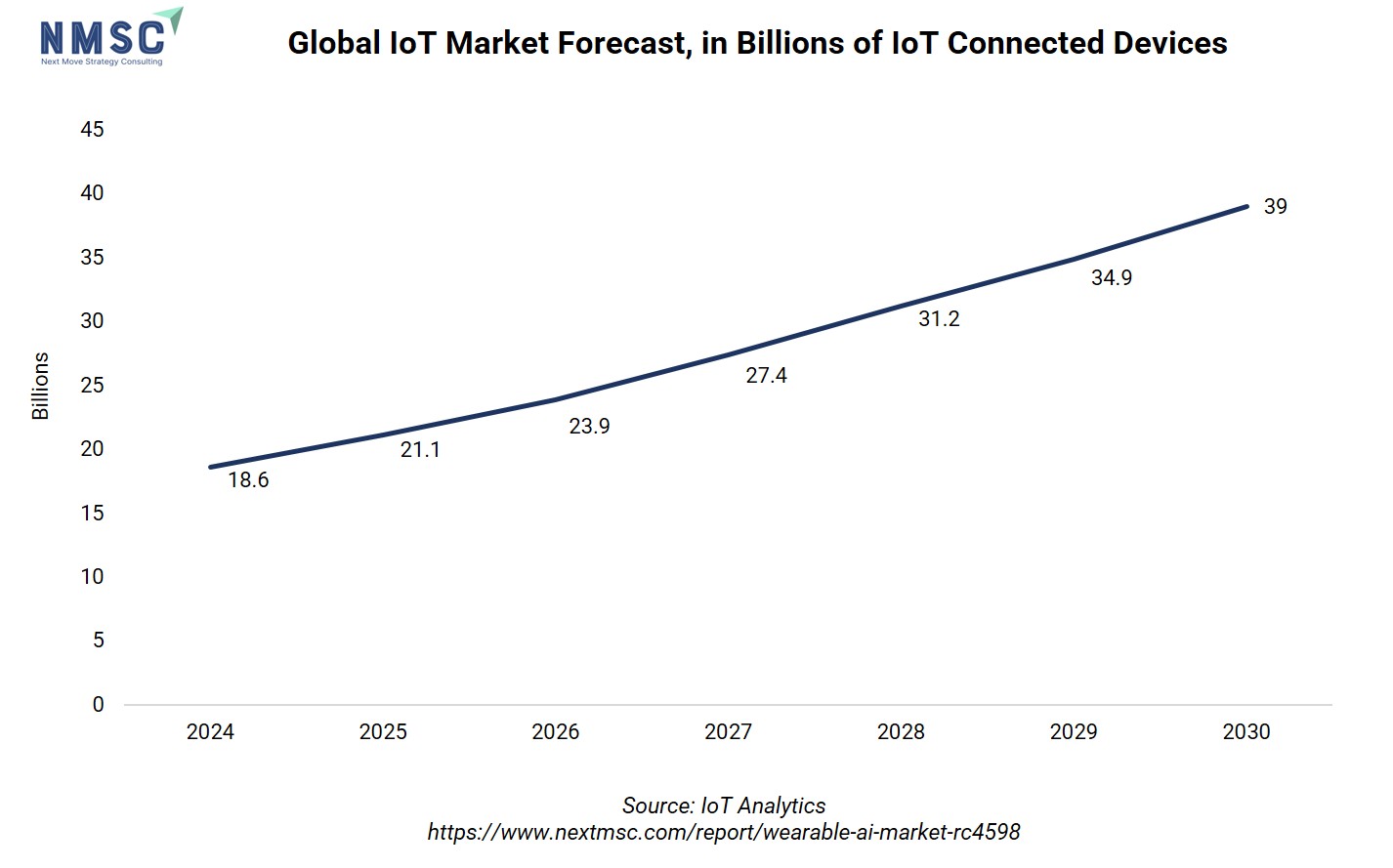
We also noticed that the adoption of IoT is expected to significantly accelerate the wearable AI market demand by enabling seamless connectivity, real-time data exchange, and intelligent device interoperability. Integration with IoT platforms enhances personalised analytics, remote monitoring, and predictive insights across consumer, healthcare, and industrial applications, driving higher demand and encouraging the development of more sophisticated, connected wearable AI solutions.
Ecosystem Analysis of the Wearable AI Market
This infographic maps the key components of the wearable AI ecosystem, illustrating how technology, stakeholders, channels, and regulations interact to shape market growth, adoption, and innovation opportunities.
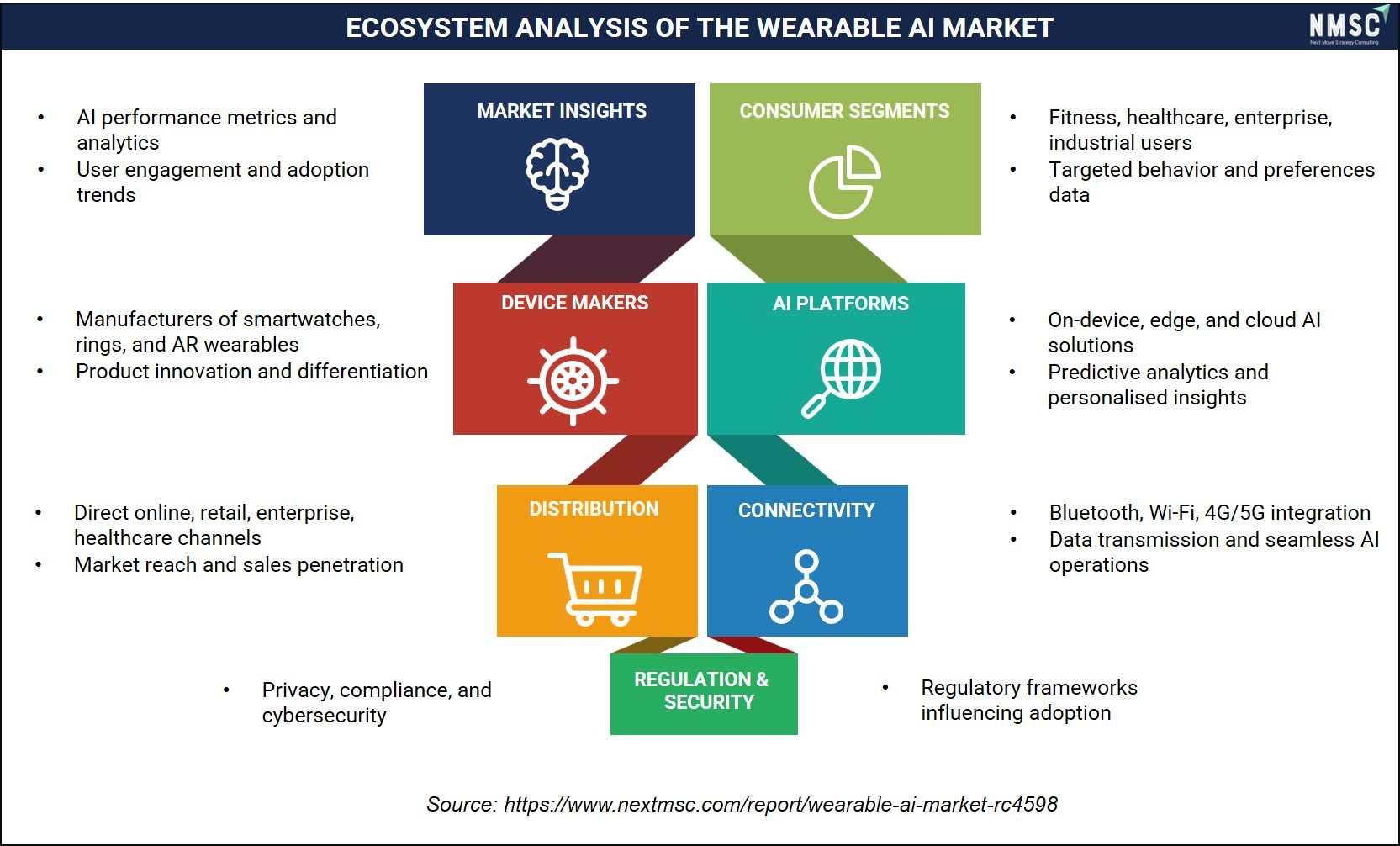
This ecosystem framework highlights how stakeholders, technology, and regulatory elements interact to drive the wearable AI market. Market insights and consumer behaviour guide device and platform development, while manufacturers innovate across smartwatches, rings, AR devices, and industrial wearables. Distribution channels and connectivity infrastructure ensure wide market penetration and seamless operation, whereas regulatory and security frameworks safeguard data and influence adoption. Our analysis indicates that understanding these linkages enables stakeholders to prioritise high-value segments, optimise product and service offerings, and strategically invest in AI-driven wearables. For executives and investors, this holistic view is essential for informed decision-making and sustainable growth.
How Is the Wearable AI Industry Segmented in This Report, and What Are the Key Insights from the Segmentation Analysis?
Market Highlights & Strategic Insights – Wearable AI Market:
|
Segments |
Key Takeaways |
|
Offering |
Hardware continues to dominate the market, particularly device units and embedded electronics, driven by large-scale consumer adoption and replacement cycles. However, embedded software and AI-driven analytics platforms are emerging as key differentiation layers. Subscription-based services and data-driven offerings are expected to register the highest CAGR, supported by recurring revenue models, healthcare analytics demand, and enterprise AI integration. |
|
Device Type |
Wrist wearables such as smartwatches and fitness bands dominate due to widespread consumer penetration and strong ecosystem compatibility. However, smart rings, smart glasses, and medical wearables are expected to witness the highest growth, driven by discreet form factors, continuous monitoring capabilities, and expanding clinical and enterprise use cases. |
|
Component |
Processing units led by microcontrollers dominate due to efficiency, while sensor modules drive differentiation. Connectivity, display, battery, memory, and audio support performance. |
|
AI Architecture |
Cloud AI dominates due to high processing capabilities and scalability, while edge AI grows fastest. On-device and hybrid models enhance performance and privacy. |
By Device Type Insights
Is Device-Type Innovation Driving Segmented Growth in the Market?
Based on device type, the wearable AI market is segmented into wrist wearables, smart rings, ear wearables, smart glasses, head wearables, body wearables, smart insoles, medical wearables, specialty wearables and others.
Based on our market evaluation, we found that wrist wearables continue to dominate the market, supported by strong consumer adoption, multifunctionality, and seamless ecosystem integration. However, adjacent segments, including smart rings, ear wearables, and smart glasses, are gaining momentum due to evolving user preferences for discreet, always-on, and context-aware devices. On the other hand, body wearables, medical wearables, and smart insoles are expanding rapidly in specialised health, rehabilitation, and performance monitoring use cases. Meanwhile, head wearables and specialty wearables are witnessing targeted adoption in enterprise and defense applications. As a result, while wrist wearables anchor current revenues, future growth is increasingly distributed across diverse, application-specific device categories.
By AI Architecture Insights
Is AI Architecture Evolution Driving Performance and Adoption in the Wearable AI Industry?
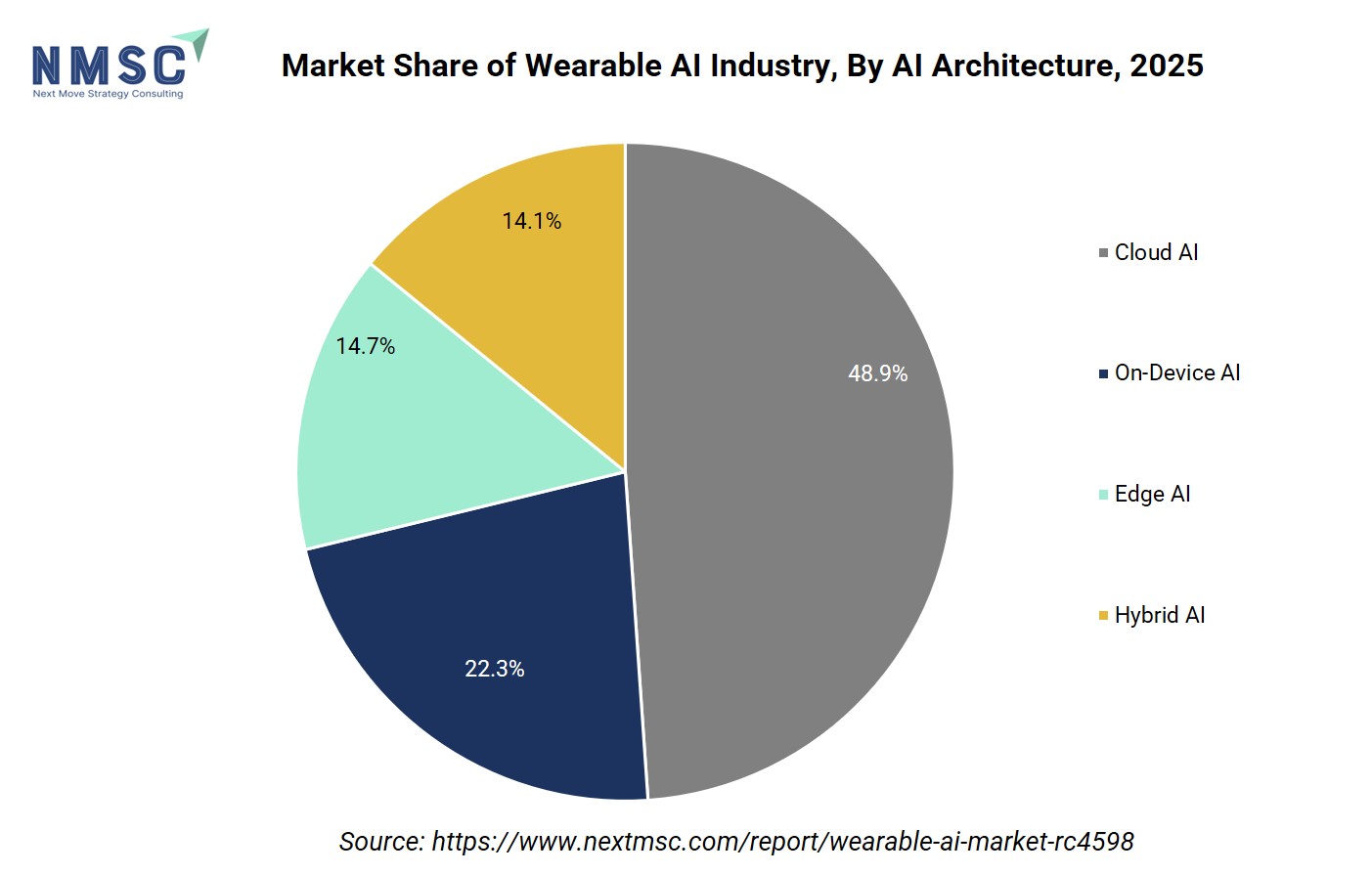
On the basis of AI architecture, the wearable AI market is segmented into on-device AI, edge AI, cloud AI, and hybrid AI.
Cloud AI currently dominates the market due to its scalability, centralised processing power, and ability to support complex analytics across large datasets. Industry data indicate that most wearable ecosystems still rely on cloud infrastructure for model training, data aggregation, and continuous improvement. However, we noticed that on-device AI and hybrid AI architectures are expected to witness faster growth, driven by rising concerns around data privacy, latency, and connectivity constraints. The market is gradually transitioning toward hybrid architectures, which balance real-time responsiveness with advanced analytics. As a result, while cloud AI anchors current deployments, future growth is increasingly shifting toward decentralized and adaptive AI processing models.
By Distribution Channel Insights
Is Channel Diversification Reshaping Go-to-Market Strategies in the Market?
On the basis of distribution channel, the wearable AI market is segmented into direct online, retail & e-commerce, enterprise procurement, healthcare procurement, and others.
Based on our research, we identified that retail and e-commerce channels currently dominate the market due to their scalability, accessibility, and strong alignment with consumer purchasing behaviour. The widespread availability across online marketplaces and physical retail outlets continues to drive mass adoption. However, enterprise and healthcare procurement channels are expected to grow at a faster pace, supported by increasing adoption of wearable AI in industrial safety, workforce optimisation, and clinical monitoring.
Consumer Behaviour Analysis of the Wearable AI Industry
The chart illustrates how evolving consumer decision-making stages directly shape demand, innovation, and competitive strategies in the wearable AI market.
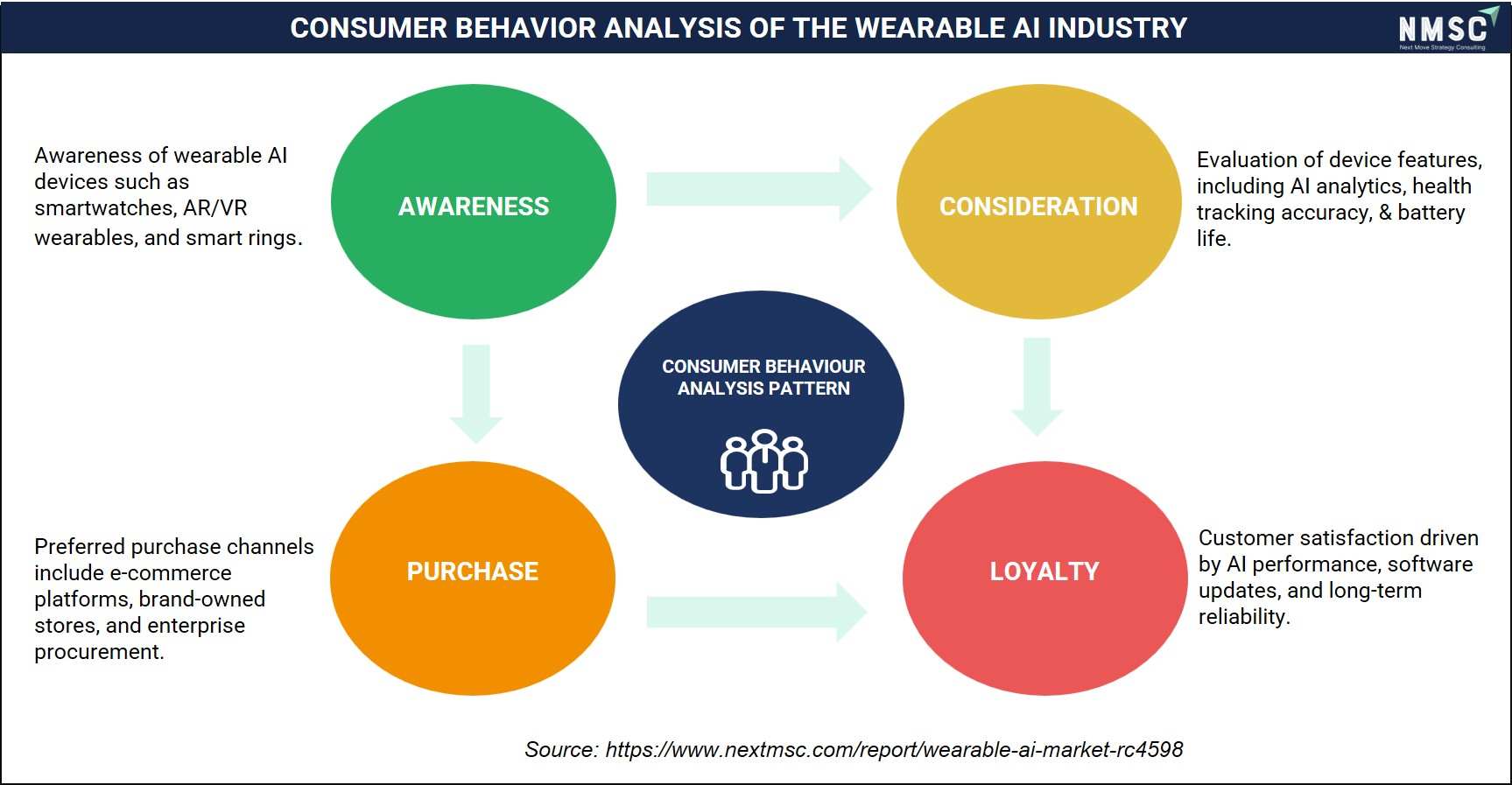
The above chart highlights that consumer behaviour flows from awareness to loyalty, significantly influencing the market by driving the adoption of smartwatches, fitness trackers, AR/VR wearables, and smart rings. We analysed that growing awareness expands the addressable market, while the consideration phase pushes manufacturers to enhance AI analytics, health accuracy, battery life, and ecosystem integration. Purchase behaviour strengthens omni-channel strategies across e-commerce, brand stores, and enterprise sales, boosting volume growth. Finally, loyalty reinforces recurring revenues through software updates, subscriptions, and upgrades, encouraging long-term customer retention and accelerating overall wearable AI market expansion.
Regional Outlook
Geographic Performance Snapshot:
|
Geography |
Key Takeaways |
|
North America |
North America shows market maturity driven by widespread adoption of consumer and healthcare wearables, advanced AI integration, and robust e-commerce and enterprise ecosystems. We found that demand for wrist-worn, smart, and edge-enabled devices is high, with a focus on on-device AI, privacy compliance, and premium, feature-rich products. |
|
Europe |
Our evaluation indicates that Europe’s growth is shaped by strict data privacy and medical device regulations, high sustainability awareness, and adoption of standards-compliant wearables. Healthcare, industrial, and premium consumer segments drive adoption, while multi-modal sensors and edge-AI devices gain traction in regulated environments. |
|
Asia‑Pacific |
Asia Pacific is the largest and fastest-growing region, driven by rapid smartphone penetration, urbanisation, rising disposable incomes, and tech-savvy consumers. We noticed strong uptake of smartwatches, ear-worn devices, and AR/VR wearables across consumer, industrial, and healthcare applications. |
|
Latin America |
Our assessment indicates that market expansion in Latin America is fuelled by growing health awareness, increasing mobile connectivity, and interest in fitness and lifestyle tracking. Cost-effective wearable AI devices for both consumers and enterprises are gaining traction, while adoption of healthcare and industrial solutions is emerging. |
|
Middle East & Africa |
Emerging adoption in the Middle East and Africa is supported by luxury and fitness wearables, rising healthcare digitisation, and expanding online retail channels. We found that premium, functional, and culturally sensitive devices dominate early adoption, though infrastructure development and regulatory frameworks are still evolving. |
The wearable AI market is geographically studied across North America, Europe, Asia Pacific, the Middle East & Africa, and Latin America, and each region is further studied across countries.
Wearable AI Market in North America
Based on our comprehensive assessment of the North American wearable AI ecosystem, we identified that the region has emerged as a mature, innovation-driven ecosystem, underpinned by high consumer awareness, advanced digital infrastructure, and widespread adoption of connected devices. In the U.S., adoption is strongest for smartwatches, fitness trackers, and healthcare-focused wearables, while Canada shows steady growth in wellness monitoring and enterprise applications. Our engagement with device manufacturers highlights that this growth is driven by health-conscious consumers, corporate wellness programs, and the increasing needs of an ageing population. At the same time, regulatory emphasis on data privacy, cybersecurity, and medical device standards continues to guide vendor development, encouraging the creation of AI-enabled devices with strong interoperability and secure data handling.
Wearable AI Market in the United States
The U.S. represents the largest wearable AI landscape in North America, supported by widespread adoption of smartwatches, fitness trackers, and healthcare-focused wearables. Based on our interviews with healthcare providers, we found that rising consumer health awareness, corporate wellness programs, and preventive care initiatives are key factors accelerating adoption. At the same time, regulatory emphasis on data privacy, medical device compliance, and interoperability drives the development of AI-enabled solutions with secure data handling. These factors, combined with strong mobile ecosystem integration and high consumer willingness to adopt new technology, position the U.S. as a leading innovation hub, where devices featuring advanced analytics, multi-modal sensing, and personalised insights dominate the Market.
Wearable AI Market in Canada
Canada’s wearable AI market shows steady growth, driven primarily by health and wellness monitoring, preventive healthcare, and enterprise wellness programs. Our assessment with technology integrators indicates that adoption is shaped by factors such as urban demographics, ageing populations, and corporate wellness initiatives. In addition, government guidelines on data privacy and medical device standards influence vendor strategies, encouraging the development of interoperable and secure devices. Although the market is smaller than the U.S., Canadian consumers and enterprises place a strong emphasis on accuracy, reliability, and long-term support, which has led to increased adoption of premium AI-enabled wearables and seamless integration with local healthcare systems.
Wearable AI Market in Europe
Europe represents a significant portion of the global market, with adoption largely influenced by regulatory standards, sustainability priorities, and efficiency-focused use cases. Within the region, Northern Europe emphasises ergonomics, privacy-compliant health monitoring, and lifestyle wearables, while Southern Europe leans toward flexible consumer applications and enterprise wellness programs. Central Europe, including Germany, France, and the UK, prioritises certified medical-grade wearables, integration with healthcare systems, and enterprise productivity tools. Based on our assessment, we noticed that European users place a high value on vendor trustworthiness, device reliability, and long-term support. Moreover, government regulations and healthcare frameworks further encourage the adoption of clinically validated AI-enabled wearables across the region.
Wearable AI Market in the United Kingdom
The UK wearable AI market is shaped by e-commerce adoption, corporate wellness initiatives, and urban consumer health trends. Based on our primary research, we found strong uptake of smartwatches, fitness trackers, and medical monitoring wearables across both consumer and enterprise segments. At the same time, regulatory focus on GDPR compliance, medical device standards, and digital health frameworks ensures data privacy and reinforces vendor accountability. Consequently, enterprises increasingly adopt AI-enabled wearables to enhance employee health and productivity, while consumers prioritise usability and personalised insights. Vendors offering robust ecosystem integration, actionable analytics, and comprehensive lifecycle support achieve higher adoption rates, with mid-sized urban markets emerging as the fastest-growing segment.
Wearable AI Market in Germany
Germany’s wearable AI market is characterised by a culture of disciplined adoption that prioritises engineering precision and medical-grade reliability over mere novelty. As of this focus, market growth is concentrated in high-stakes sectors like preventive healthcare and industrial safety, where the demand for accuracy is non-negotiable. This demand is further reinforced by a complex landscape of regulatory compliance and data privacy requirements, which effectively dictate how technology is deployed. As a result, vendors who bridge the gap between hardware and infrastructure by offering robust analytics and seamless IT integration gain a distinct advantage over their competitors. Ultimately, commitment to durability and local support has transformed Germany into a premier global hub for high-end AI products in both the clinical and enterprise segments.
Wearable AI Market in France
In France, the wearable AI market is experiencing steady growth that is fundamentally driven by a convergence of retail innovation, urban wellness trends, and advanced healthcare monitoring. This momentum is supported by insights from distributors and healthcare practitioners, who emphasize that demand is contingent upon devices meeting strict European privacy and medical regulations. Building on this regulatory foundation, both enterprise and consumer adoption are further influenced by a product's long-term reliability and its ability to integrate seamlessly with existing health tracking platforms. To satisfy these requirements, French users specifically gravitate toward ergonomic designs that transform complex data into clear, actionable health insights. Ultimately, vendors who successfully blend this intuitive user experience with localised support and robust security are the ones who gain the necessary trust to achieve sustainable adoption across both professional and consumer segments.
Wearable AI Market in Italy
Our regional assessment of Italy indicates that the wearable AI market is experiencing a period of steady growth that is largely propelled by a growing interest in consumer wellness, healthcare monitoring, and specialised fitness applications. This upward trend is fuelled by broader socio-economic shifts, specifically rapid urbanisation and increasing digital literacy, which have sparked a nationwide focus on preventive health. In response to these motivations, the wearable AI market is being structured by rigorous regulatory requirements for medical standards and data privacy, forcing vendors to prioritise compliant and interoperable devices. While enterprise adoption within healthcare and workplace sectors is still in its emerging stages, consumer demand for AI-driven smartwatches and trackers is expanding rapidly. Consequently, vendors who provide localised support and intuitive interfaces paired with personalised, AI-powered insights are the ones successfully achieving deep market penetration and long-term engagement with Italian users.
Wearable AI Market in Spain
In Spain, we observed that the wearable AI market is growing steadily, propelled by a widespread focus on urban wellness, fitness tracking, and preventive health monitoring. This momentum is underpinned by consumer behaviour that prioritises affordability and ease of use, with a strong emphasis on seamless mobile ecosystem compatibility. While corporate adoption is still in its emerging stages, primarily within specialised workplace wellness programs, the market is already being disciplined by a rigorous regulatory focus on data privacy and medical standards. Consequently, these high standards for accountability ensure that only vendors providing reliable performance and actionable insights achieve deep user trust.
Wearable AI Market in the Nordics
The Nordic countries, comprising Sweden, Norway, Denmark, and Finland, represent a highly advanced wearable AI market that is underpinned by a combination of health-conscious urban populations, sophisticated digital infrastructure, and a deeply rooted culture of early adoption. This environment has fostered an extensive reliance on wearables for specialised applications such as chronic disease monitoring and corporate wellness, as highlighted in our interviews with healthcare institutions. Consequently, vendors who provide certified, multi-modal devices backed by robust analytics and local support are the ones who secure the highest levels of trust. Ultimately, by favouring premium, high-performance hardware that integrates seamlessly into enterprise platforms, the Nordic market effectively transforms wearable data into a strategic tool for proactive health management and workforce efficiency.
Wearable AI Market in the Asia-Pacific
NMSC’s analysis indicates that the Asia-Pacific region has solidified its position as the global leader in wearable AI by leveraging a powerful combination of rapid urbanisation, extensive e-commerce infrastructure, and a deep-seated culture of technology adoption across key markets like China, Japan, South Korea, and India. While each nation contributes differently to this growth, China currently dominates the landscape through a high-volume output of cost-efficient devices supported by massive domestic OEM platforms. In contrast, the Japanese market shifts the focus toward the premium segment, where consumers demand high reliability and extensive lifecycle support for their devices. This regional diversity is further enriched by South Korea, which serves as a pioneer for AI-integrated healthcare and enterprise productivity tools, and India, which is witnessing a surge in adoption driven by a young, health-conscious demographic focused on fitness and lifestyle management. Ultimately, the success of vendors in this territory is dictated by their ability to provide localised content and seamless mobile integration at an affordable price point, thereby accelerating the penetration of AI wearables into the region's rapidly expanding urban centres.
Wearable AI Market in China
China leads Asia-Pacific in wearable AI adoption, driven by urban population density, high smartphone penetration, and domestic OEM production. Our interviews with healthcare institutions indicate strong uptake for fitness, health monitoring, and lifestyle wearables. Government initiatives promoting digital health and domestic manufacturing reduce costs and accelerate deployment. Vendors offering multi-modal AI, localised software, and mobile ecosystem integration achieve faster adoption. Consumer preferences emphasise affordability, reliability, and actionable insights, while enterprise adoption targets corporate wellness and health management. China acts as a global innovation hub and scale leader, with domestic platforms influencing standards and interoperability across Asia-Pacific.
Wearable AI Market in Japan
Based on our analysis, we found that Japan’s wearable AI market is distinguished by strong demand for advanced healthcare, preventive monitoring, and ageing population support systems. In particular, Japan’s demographic profile, with one of the world’s highest median ages, has accelerated demand for AI-enabled continuous health monitoring, chronic disease management, and elderly safety solutions. Moreover, digital health initiatives and telemedicine integrations are priorities within national healthcare policy, supporting the adoption of AI wearables that interoperate with electronic health records and clinician dashboards. Additionally, Japan exhibits meaningful enterprise interest in wearables for workforce safety in manufacturing and logistics, underpinned by high industrial automation penetration.
Wearable AI Market in India
India’s wearable AI market is among the fastest growing globally, driven by rising smartphone penetration, expanding middle income populations, and heightened health and fitness awareness. Government efforts toward digital health infrastructure, including telemedicine and universal health coverage platforms, are catalyzing adoption of AI enabled wearable devices, particularly in urban and peri urban regions. Our discussions with regional distributors indicate that affordability and localised feature sets are critical determinants of consumer choice, with smartwatches and fitness bands dominating volumes. Continuous monitoring for vitals and activity, combined with AI based personalized insights, is rapidly gaining relevance among health conscious users. In enterprise segments, wearables are increasingly used for worker safety and productivity analytics, particularly in logistics, construction, and field services. Despite price sensitivity, India’s large addressable base, robust e commerce channels, and growing digital literacy position it for sustained wearable AI market expansion.
Wearable AI Market in South Korea
South Korea’s wearable AI market is robust, supported by an advanced digital infrastructure, high disposable income, and one of the world’s fastest 5G network deployments. Local consumers demonstrate strong demand for premium wearables, including AI enabled smartwatches, AR wearables, and hearables. Our discussions with technology firms emphasize that Korea’s domestic innovation ecosystem, particularly in sensor technologies, accelerates integration of on device AI and context aware computing. Enterprise adoption is also meaningful, with Korean manufacturers deploying wearables for industrial automation, safety, and remote operations. Government policies supporting digital transformation and smart factory initiatives further reinforce corporate investment in wearable solutions. We assess that South Korea’s combination of consumer sophistication, manufacturing strength, and connectivity leadership continue to advance both mass adoption and next generation wearable AI innovation.
Wearable AI Market in Taiwan
Based on our research, we found that Taiwan’s wearable AI market benefits from its global position as an electronics powerhouse, enabling rapid integration of advanced processors, sensors, and AI capabilities. Taiwan’s domestic market is characterised by strong interest in next generation wearables, including smart health devices and enterprise wearables for industrial monitoring. OEMs and component manufacturers in Taiwan are at the forefront of low power AI chip development and multi sensor fusion systems, supporting enhanced device performance. Further, AI wearables are increasingly being evaluated for workplace safety and industrial quality control use cases. While consumer volume adoption is moderate relative to larger Asian markets, Taiwan’s strategic role in global supply chains and deep expertise in embedded systems position it as a significant contributor to future wearable AI innovation and commercialisation.
Wearable AI Market in Indonesia
Indonesia’s wearable AI market is emerging rapidly as mobile connectivity and digital adoption expand across urban and secondary cities. Growing health consciousness among younger demographics and increasing interest in fitness, wellness, and activity tracking are primary adoption drivers. Our engagements with regional distributors indicate that price competitive AI enabled wearables, especially smartwatches and fitness bands, are broadening accessibility beyond affluent segments. Government initiatives aimed at digital inclusion and telehealth deployment further boost demand for wearable health solutions. While infrastructure variability and price sensitivity remain challenges, Indonesia’s large population base and rising e commerce penetration present meaningful growth opportunities for wearable AI vendors, particularly those offering culturally tailored features and localised user experiences.
Wearable AI Market in Australia
Our research indicates that Australia’s wearable AI market is well established and steadily growing, supported by high digital literacy, strong consumer health focus, and integration of AI wearables into preventive and remote health monitoring. Australian consumers display high engagement with smartwatches and AI enabled fitness devices, integrating them with wellness platforms and employer sponsored health programs. Our discussions with healthcare technology leaders further indicate that remote patient monitoring and chronic disease analytics are becoming increasingly relevant, supported by digital health policy initiatives. Enterprise use cases in workplace safety and productivity are also emerging, particularly within mining and logistics sectors. Australia’s advanced connectivity infrastructure and data protection standards further support deployment of on device and hybrid AI architectures, positioning the country as a resilient and innovation ready market.
Wearable AI Market in Latin America
Our regional evaluation indicates that Latin America is an emerging wearable AI market experiencing accelerating demand for health and lifestyle wearables. Growth is primarily driven by improving mobile connectivity, rising health awareness, and rapid uptake of digital services. Countries like Brazil and Argentina lead adoption due to dense urban populations and strong e commerce ecosystems. wearable AI devices that offer continuous health monitoring, fitness insights, and affordable performance analytics are especially popular among younger, tech savvy consumers. While infrastructure variation and economic factors influence price sensitivity, partnerships with telecom operators and localised service offerings strengthen value propositions. We assess that Latin America’s fast growing digital economy provides a solid foundation for wearable AI expansion in both consumer and healthcare segments.
Wearable AI Market in the Middle East & Africa
The wearable AI market in the Middle East & Africa is at an early yet strategically promising stage of development. Adoption is driven by rising healthcare digitisation, urbanisation, and increasing interest in premium and fitness wearables, particularly in GCC countries such as the UAE and Saudi Arabia. Our interactions with regional stakeholders highlight growing consumer preference for devices that combine style, cultural relevance, and AI enabled wellness features. Furthermore, government investments in smart health ecosystems and digital transformation frameworks further stimulate market interest, particularly for clinical monitoring and emergency response use cases. While regulatory variability and infrastructure gaps present challenges, tailored regional offerings and enhanced digital literacy are enabling gradual adoption across both developed and emerging markets in the region.
Competitive Landscape
Competitive Dynamics & M&A Landscape:
|
Key Takeaways |
|
The Wearable AI Market features a mix of dominant global consumer electronics manufacturers such as Apple Inc., Samsung Electronics Co., Ltd., Xiaomi Corporation, Huawei Technologies Co., Ltd., Sony Group Corporation and Bose Corporation, alongside highly specialised fitness, health, and enterprise-focused providers including Garmin Ltd., and others, which cater to personalised wellness, industrial AR/AI applications, professional fitness monitoring, premium audio experiences, and enterprise-focused wearable solutions. |
|
Companies are pursuing a strategic blend of on-device AI integration, personalized health and fitness insights, predictive analytics, smart eyewear and AR solutions, premium audio wearables, AI-powered processors and platforms, ecosystem partnerships, subscription-based models, and enterprise-focused AI applications to enhance user experience, improve device functionality, and expand adoption across consumer, enterprise, industrial, and professional segments. |
|
Recent M&A and investment activity includes acquisitions of AR/AI hardware technology firms, strategic funding for wellness and fitness wearable startups, portfolio expansion by leading consumer electronics players, and collaborations aimed at strengthening AI capabilities, accelerating smart wearable adoption, and expanding regional, professional, and enterprise footprints across high-growth AI-driven wearable applications. |
Which Companies Dominate the Wearable AI Industry and How Do They Compete?
Based on our competitive assessment, we found that leading players such as Apple, Samsung, Xiaomi, Huawei, Garmin, Sony, and Vuzix are shaping competitive dynamics through differentiated ecosystem strategies, hardware advancements, and broader platform integration. For example, Omdia data from Q1 2025 shows Xiaomi regained the top spot in global wearable band shipments with strong HyperOS integration and broad portfolio competitiveness, surpassing Apple and Samsung through value pricing and ecosystem synergies, 8.7 million bands shipped versus 7.6 million for Apple. Apple’s tight integration of health and ecosystem services continues to support its premium positioning, while Samsung focuses on enhanced AI health features to rebound from earlier shipment declines. Overall, the competitive positioning now hinges on seamless wearables to platform experiences backed by AI insights processing and robust ecosystem connectivity.
Market Dominated by Wearable AI Giants and Specialists
The wearable AI market features both global giants and highly specialised players competing across segments and application layers. Apple and Samsung compete at the premium end, using tight integration with broader devices and services to retain market share. Xiaomi and Huawei leverage pricing and ecosystem breadth to grow share in emerging markets. Further, niche specialists like Garmin differentiate through deep performance analytics and endurance training features, while companies like Zepp Health (Amazfit) are shifting toward premium performance wearables, blurring lines between mainstream and specialist segments with AI led coaching and hybrid training platforms. We observed that collaborations, for example, between AR wearables and enterprise workflow platforms are also increasing adoption in industrial and enterprise settings, enabling specialised companies to compete with giants in context aware applications. This landscape illustrates how scale, specialisation, and ecosystem depth dynamically balance competitive play.
Innovation and Adaptability Drive Market Success
Based on our evaluation, we noticed that innovation, especially around on device AI, sensor fusion, and integrated health analytics, is a key differentiator in the wearable AI market. A notable example is Qualcomm’s Snapdragon Wear Elite platform, unveiled at Mobile World Congress 2026, which brings dedicated NPU and advanced on device AI to diverse wearables, encouraging adoption by Samsung and others for more personalised AI experiences. This kind of foundational hardware innovation enables companies to push AI capabilities locally without heavy cloud reliance, reducing latency and improving privacy. Moreover, research and academic advancements such as real time human activity recognition models, for example, WatchHAR, demonstrate the accelerating potential of edge intelligence on wearables themselves. Therefore, companies embracing modular, AI ready architectures and adaptive software upgrades are better positioned to sustain long term differentiation.
Market Players to Opt for Merger & Acquisition Strategies to Expand Their Presence
M&A activity and strategic partnerships continue to play a critical role in expanding competitive presence in the wearable AI market, even though verified reports of 2025-2026 acquisitions are limited. We found that companies are increasingly prioritizing collaborations with AI software providers, sensor developers, and enterprise solution partners to strengthen product capabilities, accelerate market entry, and enhance ecosystem integration. These strategic alliances allow firms to leverage complementary strengths, drive innovation in edge and on-device AI, and maintain competitiveness without relying solely on direct acquisitions.
List of Key Wearable AI Companies
-
Apple Inc.
-
Xiaomi Corporation
-
Huawei Technologies Co., Ltd.
-
Garmin Ltd.
-
Zepp, Inc.
-
HK SMARTMV LIMITED
-
Oura Health Oy
-
WHOOP, Inc.
-
Sony Group Corporation
-
Vuzix Corporation
-
Guangdong OPPO Mobile Telecommunications Corp., Ltd.
-
Polar Electro Oy
-
Empatica Inc.
-
Snap Inc.
-
Starkey Laboratories, Inc.
-
XREAL, Inc.
-
Bose Corporation
-
Ultrahuman Healthcare Pvt Ltd
What Are the Latest Key Industry Developments?
-
October 2025- Samsung Electronics Co., Ltd. announced expanded AI driven wearable health technologies to address healthcare challenges, emphasizing collaboration with experts to evolve practical, life impacting solutions. This highlights Samsung’s strategic pivot toward embedding AI more deeply in health and lifestyle wearables.
-
October 2025- Empatica Inc. announced the acquisition of PKG Health to integrate advanced movement disorder algorithms into its AI wearables, enhancing its clinical monitoring capabilities, particularly for Parkinson’s disease.
-
June 2025- Empatica Inc. unveiled EmbraceMini, an ultra compact actigraphy wearable designed for clinical trials and continuous physiological data capture.
Expert Insight
 “We expect AI is going to have a fundamental shift in the mobile industry where the agent is going to be at the very center and you can access the agent from your mobile phone, your glasses or a pendant or for anything that you wear.”
- Cristiano Amon, CEO, Qualcomm
Statement made during the India AI Summit (February 2026), discussing the evolution of agentic AI and its expanding role across mobile and wearable computing devices.
Market Interpretation
The comment highlights the ongoing transition toward agentic AI-driven wearable ecosystems, where intelligent assistants are expected to become the primary interface between users and connected devices. Wearables such as smart glasses, AI pendants, earbuds, rings, and health-monitoring devices are increasingly being integrated with on-device AI capabilities to deliver real-time contextual assistance, personalized recommendations, and seamless multimodal interactions. As a result, semiconductor companies, device manufacturers, and platform developers are accelerating investments in edge AI processing, low-power chipsets, sensor integration, and connected wearable ecosystems to support the next generation of AI-enabled wearable experiences.
SWOT Analysis of the Wearable AI Market
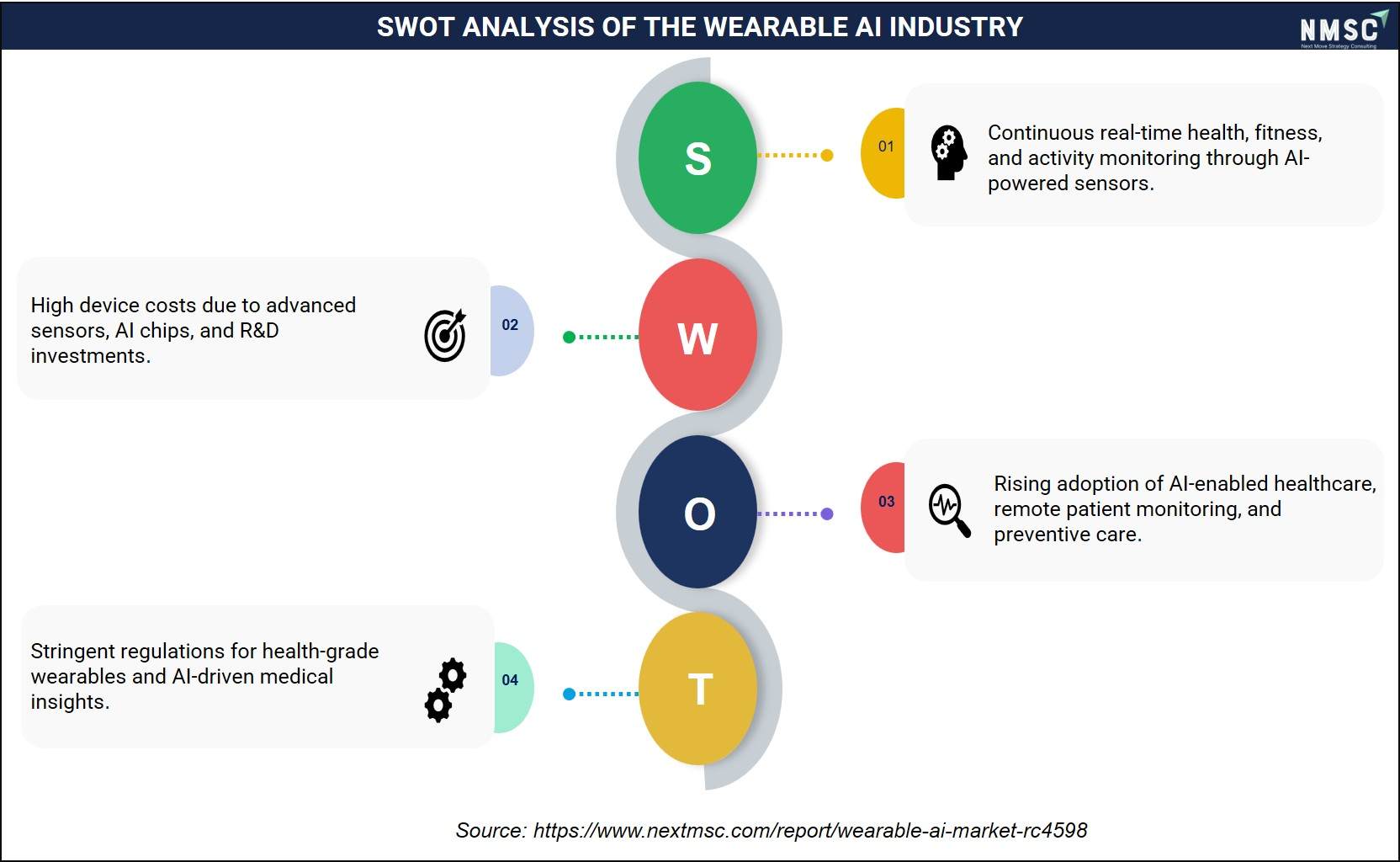
The chart presents a concise SWOT analysis highlighting the key internal and external factors influencing the growth and competitiveness of the wearable AI industry.
This SWOT analysis demonstrates strong experience and expertise by systematically highlighting the wearable AI industry’s strengths, including continuous, AI-powered health, fitness, and activity monitoring that is increasingly shaping consumer and clinical applications. It reflects authoritativeness by identifying validated challenges such as high device costs and stringent regulatory requirements. Our analysis enhances trustworthiness by balancing growth opportunities from expanding AI-enabled healthcare, remote patient monitoring, and preventive care against potential risks, providing reliable, insight-driven guidance to support informed decision-making for industry stakeholders, investors, and technology developers in the wearable AI market.
What Are the Key Factors Influencing Investment Analysis & Opportunities in the Wearable AI Market?
Investment in the wearable AI market is strongly influenced by the convergence of health, fitness, enterprise, and immersive technology applications, which continues to attract both strategic and financial investors. We observed that investor interest is highest in companies delivering AI-enabled health monitoring, predictive analytics, and personalised wellness experiences, as these solutions address pressing clinical, lifestyle, and productivity needs. Startups and niche specialists developing advanced sensor fusion, edge AI processing, and enterprise-focused wearable solutions are increasingly viewed as high-value targets, particularly when their offerings integrate seamlessly with existing digital ecosystems or enterprise platforms. Our evaluation further indicates that investor attention is also guided by the potential for recurring revenue models, including subscription-based health analytics and AI-enhanced service offerings, which enhance long-term monetisation.
Furthermore, regional hotspots for investment align with technology adoption maturity, regulatory support, and ecosystem sophistication. North America, Western Europe, and select Asia-Pacific markets demonstrate concentrated interest due to advanced infrastructure, consumer awareness, and established distribution channels. Emerging opportunities lie in enterprise wearables, hybrid AI deployments, and interoperability across multi-device ecosystems. These factors collectively shape funding priorities and position investors to capture value from next-generation wearable AI applications.
Key Benefits for Stakeholders:
Next Move Strategy Consulting (NMSC) presents a comprehensive analysis of the wearable AI market trends, covering historical trends from 2020 through 2025 and offering detailed forecasts through 2035. Our study examines the market at regional and country levels, providing quantitative projections and insights into key growth drivers, challenges, and investment opportunities across all major wearable AI segments.
The wearable AI market generates distinct strategic and economic value across multiple stakeholders. Investors benefit from recurring revenue models, ecosystem-driven adoption, and access to high-growth segments such as health monitoring, enterprise AI wearables, and immersive AR applications, enabling long-term portfolio diversification and innovation-driven returns. Customers, including consumers, enterprises, and healthcare providers, gain practical advantages through personalised health insights, predictive analytics, and real-time decision support, improving wellness outcomes, productivity, and operational efficiency. Additionally, our evaluation indicates that regulators and policymakers increasingly support adoption through standards for data privacy, interoperability, and clinical validation, creating a framework that reinforces trust and accelerates market uptake. These converging interests drive collaboration between technology providers, investors, and end users, positioning the wearable AI market as a high-value ecosystem that balances innovation, usability, and compliance while delivering measurable strategic, economic, and societal benefits.
|
Parameters |
Details |
|
Customization Scope |
Free customization (equivalent to up to 80 analyst-working hours) after purchase. Addition or alteration to country, regional & segment scope. |
|
Pricing and Purchase Options |
Avail customized purchase options to meet your exact research needs. |
|
Approach |
In-depth primary and secondary research; proprietary databases; rigorous quality control and validation measures. |
|
Analytical Tools |
Porter's Five Forces, SWOT, value chain, and Harvey ball analysis to assess competitive intensity, stakeholder roles, and relative impact of key factors. |
Wearable AI Market Key Segments
By Offering
-
Hardware
-
Embedded Software
-
Operating System
-
AI Applications
-
Analytics Platform
-
-
Services
-
Subscription
-
Support
-
Data Services
-
By Device Type
-
Wrist Wearables
-
Smartwatch
-
Fitness Band
-
-
Smart Ring
-
Ear Wearables
-
Earbuds
-
Hearing Devices
-
Communication Headset
-
-
Smart Glasses
-
Head Wearables
-
Smart Helmet
-
Wearable Camera
-
-
Body Wearables
-
Smart garment
-
Compression wear
-
Smart patch
-
Chest strap
-
Limb sensor
-
-
Smart Insole
-
Medical Wearables
-
Continuous glucose monitor
-
Clinical ECG
-
Therapeutic wearable
-
-
Specialty Wearables
-
Smart Glove
-
Smart Jewelry
-
Exoskeleton Controller
-
Tactical Wearable
-
-
Others
By Component
-
Processing Unit
-
AI Chipset
-
Microcontroller
-
-
Sensor Module
-
Motion Sensor
-
Biometric Sensor
-
Environmental Sensor
-
-
Connectivity Module
-
Display
-
Battery
-
Memory
-
Audio Module
-
Others
By AI Architecture
-
On-Device AI
-
Edge AI
-
Cloud AI
-
Hybrid AI
By Distribution Channel
-
Direct Online
-
Retail & E-Commerce
-
Enterprise Procurement
-
Healthcare Procurement
-
Others
By Application
-
Health, Wellness & Fitness
-
Heart Rate Monitoring
-
Sleep Tracking
-
Stress Management
-
Activity Tracking
-
Performance Analytics
-
Chronic Disease Monitoring
-
-
Communication
-
Voice Assistance
-
Messaging
-
Translation
-
-
Navigation and Location
-
GPS Tracking
-
Indoor Navigation
-
-
Productivity and Enterprise
-
Workflow Assistance
-
Remote Collaboration
-
-
Safety and Security
-
Emergency Alerts
-
Worker Safety Monitoring
-
-
Entertainment and Media
-
Music & Audio
-
AR/VR Experiences
-
Gaming
-
-
Others
Geographical Breakdown
-
North America: U.S., Canada, and Mexico.
-
Europe: UK, Germany, France, Italy, Spain, Sweden, Denmark, Finland, the Netherlands, and rest of Europe.
-
Asia Pacific: China, India, Japan, South Korea, Taiwan, Indonesia, Vietnam, Australia, Philippines, Malaysia and rest of APAC.
-
Middle East & Africa (MEA): Saudi Arabia, UAE, Egypt, Israel, Turkey, Nigeria, South Africa, and rest of MEA.
-
Latin America: Brazil, Argentina, Chile, Colombia, and rest of LATAM.
Conclusion & Recommendations
Based on our comprehensive evaluation, we found that the wearable AI market is poised for continued expansion driven by advancements in on-device and edge AI, sensor innovation, and cross-device ecosystem integration. Strategic takeaways indicate that companies combining premium hardware, intelligent software, and subscription-based services are best positioned to capture long-term value. Niche specialists and enterprise-focused solutions are gaining traction alongside global leaders, reflecting a market increasingly defined by personalisation, contextual intelligence, and interoperability. Our assessment also highlights that regulatory alignment, data privacy safeguards, and clinical validation are critical enablers that shape adoption across healthcare, industrial, and consumer segments.
Looking ahead, the market’s trajectory is influenced by the convergence of AI, wearable sensors, and connected platforms, creating opportunities in preventive health, industrial safety, workforce productivity, and immersive experiences. We noticed that companies investing in modular, AI-ready architectures and hybrid deployment models accelerate adoption while maintaining competitive differentiation. Executives and investors should focus on identifying strategic partnerships, supporting innovations in edge AI and sensor fusion, and prioritising ecosystem integration, as these levers will drive sustainable growth, unlock new revenue streams, and position stakeholders to capitalise on the next generation of AI-powered wearable applications.


About the Author
 Mayurima Roy
— Mayurima Roy is Research Analyst at Next Move Strategy Consulting, where she has spent 4 years working across the firm's full industry coverage rather than a single fixed vertical. Her work centers on structured research, ongoing trend tracking, competitive assessment, and insight-led content development, translating complex market data into clear, decision-ready narratives that support informed client decision-making across diverse global industries, market sectors, and world regions every day.
Mayurima Roy
— Mayurima Roy is Research Analyst at Next Move Strategy Consulting, where she has spent 4 years working across the firm's full industry coverage rather than a single fixed vertical. Her work centers on structured research, ongoing trend tracking, competitive assessment, and insight-led content development, translating complex market data into clear, decision-ready narratives that support informed client decision-making across diverse global industries, market sectors, and world regions every day.
About the Reviewer
 Supradip Baul
— Supradip Baul is an accomplished business consultant and strategist with over a decade of rich experience in market intelligence, strategy, technology, and business transformation. His work has included rigorous qualitative and quantitative analysis across multiple industries, helping clients shape investment decisions and long-term roadmaps. Earlier in his career, he was associated with Gartner, where he contributed to industry-leading reports and market share analyses. He has worked with leading global companies and holds an MBA with a dual specialization in Marketing and Finance.
Supradip Baul
— Supradip Baul is an accomplished business consultant and strategist with over a decade of rich experience in market intelligence, strategy, technology, and business transformation. His work has included rigorous qualitative and quantitative analysis across multiple industries, helping clients shape investment decisions and long-term roadmaps. Earlier in his career, he was associated with Gartner, where he contributed to industry-leading reports and market share analyses. He has worked with leading global companies and holds an MBA with a dual specialization in Marketing and Finance.
At Next Move Strategy Consulting, we understand that insightful market research is the cornerstone of successful business decisions. That's why we employ a robust and multifaceted approach, combining various methodologies to deliver the most accurate and actionable data for our clients.

Research Landscape
We navigate the world of research with two primary approaches:
Qualitative Approach
Our qualitative research methodologies involve immersive techniques such as in-depth interviews, focus groups, and observational studies. By engaging directly with individuals and stakeholders, we uncover valuable insights that quantitative data alone may overlook.

Quantitative Research
In tandem with qualitative methodologies, NMSC leverages the power of Quantitative Research to provide a robust foundation of numerical insights. Through systematic data collection and analysis, we quantify patterns, preferences, and market trends, offering a comprehensive view of the business landscape.
Our quantitative research approach employs diverse tools, including surveys, experiments, and statistical modelling. These methodologies enable us to gather data from a large and representative sample, ensuring the statistical significance of our findings. By employing structured questionnaires and standardized data collection methods, we guarantee the reliability and validity of the information we present to our clients.
Quantitative research is particularly effective in measuring the prevalence of trends, assessing market size, and gauging the impact of various factors on consumer behavior. The numerical precision attained through this approach equips our clients with actionable insights, facilitating data-driven decision-making and strategy formulation.


Our Specialized Toolbox for Industry-Specific Market Research
We deploy a specialized arsenal of techniques tailored to meet your unique requirements. Here's a glimpse into our comprehensive toolbox:

Information Procurement
The stage entails acquiring market data or relevant information through various sources and methodologies.


Market Research Approach
We utilize both top-down and bottom-up approaches in market research analysis to achieve a comprehensive understanding of the market dynamics, leveraging the broad perspective of industry trends and macroeconomic factors alongside detailed insights from specific segments and individual companies.

Porters Five Forces Analysis
We conduct Porter's Five Forces analysis to evaluate the competitive landscape of an industry, providing us with insights into factors that affect profitability and strategic positioning.

SWOT Analysis

Forecasting
We utilize a forecasting model to predict future consumption by considering parameters like population, economics, regulations, market competition, drivers, constraints, technology, and pricing. We also employ statistical techniques such as multilinear regression, exponential smoothing, moving average, ARIMA, and Monte Carlo simulations for accurate predictions. In econometric forecasting, we analyzed short-term and long-term event impacts, attributing values based on regulatory frameworks, economic factors, and market events.





 Speak to Our Analyst