
Antiviral Drugs Market By Drug Class {Viral Entry Inhibitors (Attachment Inhibitors, Fusion Inhibitors, and Others), Viral Genome Replication Inhibitors (Reverse Transcriptase Inhibitors, and Others), Viral Protease Inhibitors, Host-Targeting Antivirals}, By Molecule Type (Small-Molecule Antivirals, Biologics, and Others), By Drug Type, By Route of Administration, By Treatment Regimen, By Patient Population, By Disease Management Setting, and By End User – Global Analysis & Forecast, 2025–2035
Industry: Healthcare | Publishing Date: February 21, 2026 | Last Updated: October 5, 2026 | No of Pages: N/A | No. of Tables: N/A | No. of Figures: N/A | Format: PDF | Report Code: HC4187
Industry Outlook
The Antiviral Drugs Market size was valued at USD 69.68 billion in 2025, and is expected to be valued at USD 73.10 billion by the end of 2026. The industry is projected to grow, hitting USD 112.53 billion by 2035, with a CAGR of 4.91% between 2026 and 2035.
Antiviral Drugs Market Size & Forecast
|
Parameters |
Details |
|
Market Size in 2026 |
USD 73.10 Billion |
|
Revenue Forecast in 2035 |
USD 112.53 Billion |
|
Growth Rate |
CAGR of 4.91% from 2026 to 2035 |
|
Analysis Period |
2025–2035 |
|
Base Year Considered |
2025 |
|
Forecast Period |
2026–2035 |
|
Market Size Estimation |
Billion (USD) |
|
Companies Profiled |
20 |
|
Countries Covered |
33 |
|
Market Share |
Available for 10 companies |
Based on NMSC’s primary research, the global antiviral drugs market is exhibiting structurally resilient growth, driven by the rising prevalence of chronic viral infections, periodic outbreak cycles, and ongoinginvestment in antiviral R&D. Our assessment is informed by direct interviews with infectious disease physicians, hospital pharmacists, public health officials, and pharmaceutical manufacturers, alongside analysis of prescription trends and treatment guideline updates. Stakeholders consistently highlighted increasing clinical focus on early-stage intervention, resistance management, and oral antiviral therapies to reduce disease severity and hospital burden. From our discussions with clinicians and hospital procurement teams, we observed that therapeutic efficacy, resistance profiles, and availability across care settings are key determinants of prescribing behaviour. While branded antivirals continue to dominate high-value indications, generic penetration is expanding, particularly in chronic viral disease management.
Moreover, through direct evaluation of regulatory approvals, clinical pipeline activity, and procurement programmes across North America, Europe, and Asia-Pacific, we observed that market adoption is shaped by reimbursement frameworks, national treatment protocols, and public health preparedness policies. North America benefits from strong antiviral stockpiling initiatives and rapid adoption of novel therapies, while Europe places greater emphasis on cost-effectiveness assessments and guideline-driven utilisation. Emerging markets such as India and parts of Latin America show increasing uptake, supported by domestic generic manufacturing and public-sector procurement. Across our interviews with industry executives and healthcare administrators, competition was consistently characterised by lifecycle management strategies, combination therapies, and supply-chain reliability, reinforcing the market’s transition from outbreak-driven demand toward sustained, protocol-based antiviral utilisation.
Variations in national healthcare expenditure influence antiviral market readiness by shaping public funding capacity, reimbursement frameworks, and access to innovative therapies.
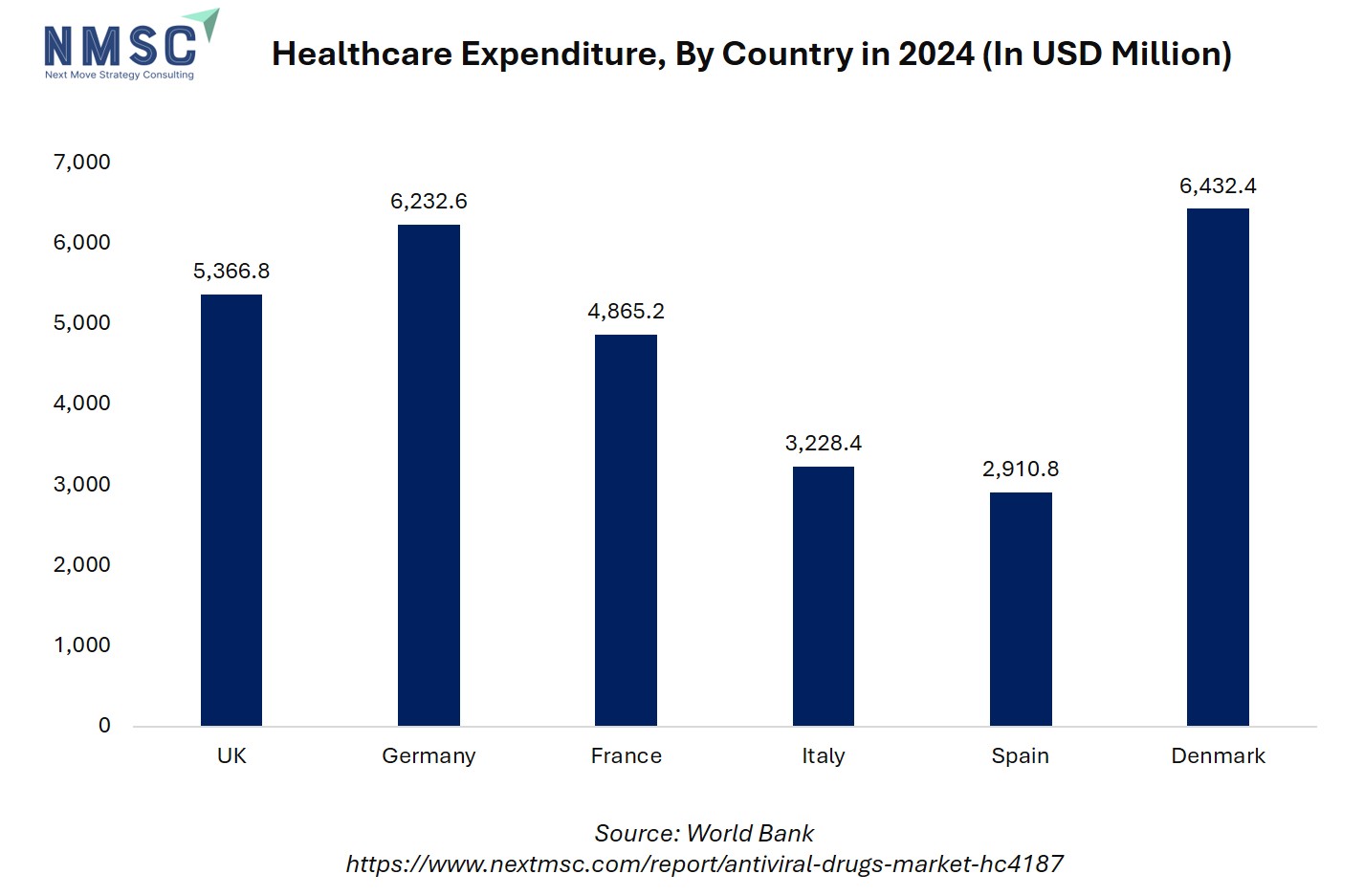
This chart highlights healthcare expenditure by country in 2024, providing important macroeconomic context for the market. Countries with higher healthcare spending demonstrate stronger capacity to fund antiviral procurement, support reimbursement programs, and accelerate adoption of both innovative and generic therapies. Elevated expenditure levels typically correlate with broader formulary coverage, faster regulatory approvals, and greater investment in infectious disease management and prevention. In contrast, lower-spending regions often rely more heavily on cost-effective generics and government-backed supply mechanisms, influencing pricing and access dynamics. Overall, variations in healthcare expenditure underscore differences in antiviral market maturity, funding readiness, and long-term demand potential across regions, making this indicator a valuable proxy for understanding regional uptake and policy support within the global antiviral drugs ecosystem.
What Are the Key Trends in the Antiviral Drugs Industry?
How is Earlier Clinical Intervention Influencing Antiviral Treatment Practices?
As part of NMSC’s primary research into the market, insights were gathered through interviews with infectious disease physicians across tertiary hospitals, supported by a review of prescription trends and national treatment guideline updates.
Findings indicate that clinicians are increasingly prioritising earlier initiation of antiviral therapy to limit disease progression and reduce inpatient burden. Stakeholders highlighted a growing preference for oral antivirals that enable outpatient treatment and continuity of care, particularly for high-risk patient groups. Prescribing patterns show a gradual shift toward simplified dosing regimens to improve adherence. However, clinicians consistently noted that delayed diagnosis and uneven access to early testing continue to constrain widespread early intervention.
How is Antiviral Resistance Shaping Current Research and Development Priorities?
Discussions with pharmaceutical R&D teams, virology researchers, and regulatory affairs professionals involved in the market, indicate that resistance considerations are increasingly shaping antiviral R&D strategies. Stakeholders pointed to rising viral mutation rates and long-term treatment durability as key factors influencing compound selection and trial design. Pipeline activity shows growing attention to combination therapies, long-acting formulations, and host-targeted mechanisms intended to mitigate resistance development. At the same time, interviewees highlighted that extended clinical validation timelines and high development costs continue to limit the speed at which new antiviral approaches reach commercialisation.
How do Regulatory Preparedness Frameworks Affect Antiviral Market Adoption?
Interviews with regulatory authorities, public-health officials, and government procurement bodies, combined with evaluation of emergency approval pathways and national stockpiling programmes, indicate that regulatory preparedness plays a significant role in shaping antiviral adoption. Stakeholders noted that antivirals aligned with outbreak preparedness strategies tend to experience more predictable demand during public-health emergencies. Regional patterns across North America, Europe, and Asia-Pacific show variation in how preparedness policies translate into procurement volumes. Regulatory teams also emphasised that post-approval surveillance requirements and region-specific compliance obligations increase operational complexity for manufacturers operating across multiple jurisdictions.
How do Reimbursement and Payer Structures Influence Antiviral Utilisation Patterns?
Insights from reimbursement policy reviews and tender outcome analysis indicate that payer frameworks play a decisive role in shaping utilisation patterns in the antiviral drugs market. Access is largely determined by inclusion in national treatment protocols and favourable cost-effectiveness positioning. Utilisation trends show that while branded antivirals retain importance in specialty and high-value indications, generic antivirals are increasingly deployed for chronic viral disease management through public-sector purchasing channels. Variations in regional reimbursement structures continue to contribute to uneven utilisation patterns and disparities in patient access.
How is Artificial Intelligence Influencing Antiviral Drug Discovery and Development Workflows?
As part of NMSC’s primary research, interviews were conducted with pharmaceutical R&D leaders, computational biology teams, and clinical research partners, alongside a review of AI-enabled antiviral discovery programs and preclinical development pipelines. Evidence from these engagements indicates that AI tools are increasingly being applied to accelerate target identification, compound screening, and lead optimisation in antiviral combination therapy development. Stakeholders reported growing use of machine-learning models trained on viral protein structures and resistance datasets to prioritise candidate molecules earlier in the discovery cycle. Development workflows show that AI-supported approaches are being integrated primarily at preclinical and early development stages to improve efficiency and reduce attrition.
At the same time, discussions with regulatory affairs specialists and clinical development teams indicate that AI adoption remains uneven beyond early-stage research. Stakeholders noted limitations related to data quality, model interpretability, and regulatory acceptance of AI-generated evidence, which continue to restrict broader deployment across late-stage trials and regulatory submissions. As a result, while AI is becoming an enabling tool within antiviral R&D workflows, its impact remains concentrated in discovery and early optimisation rather than end-to-end development.
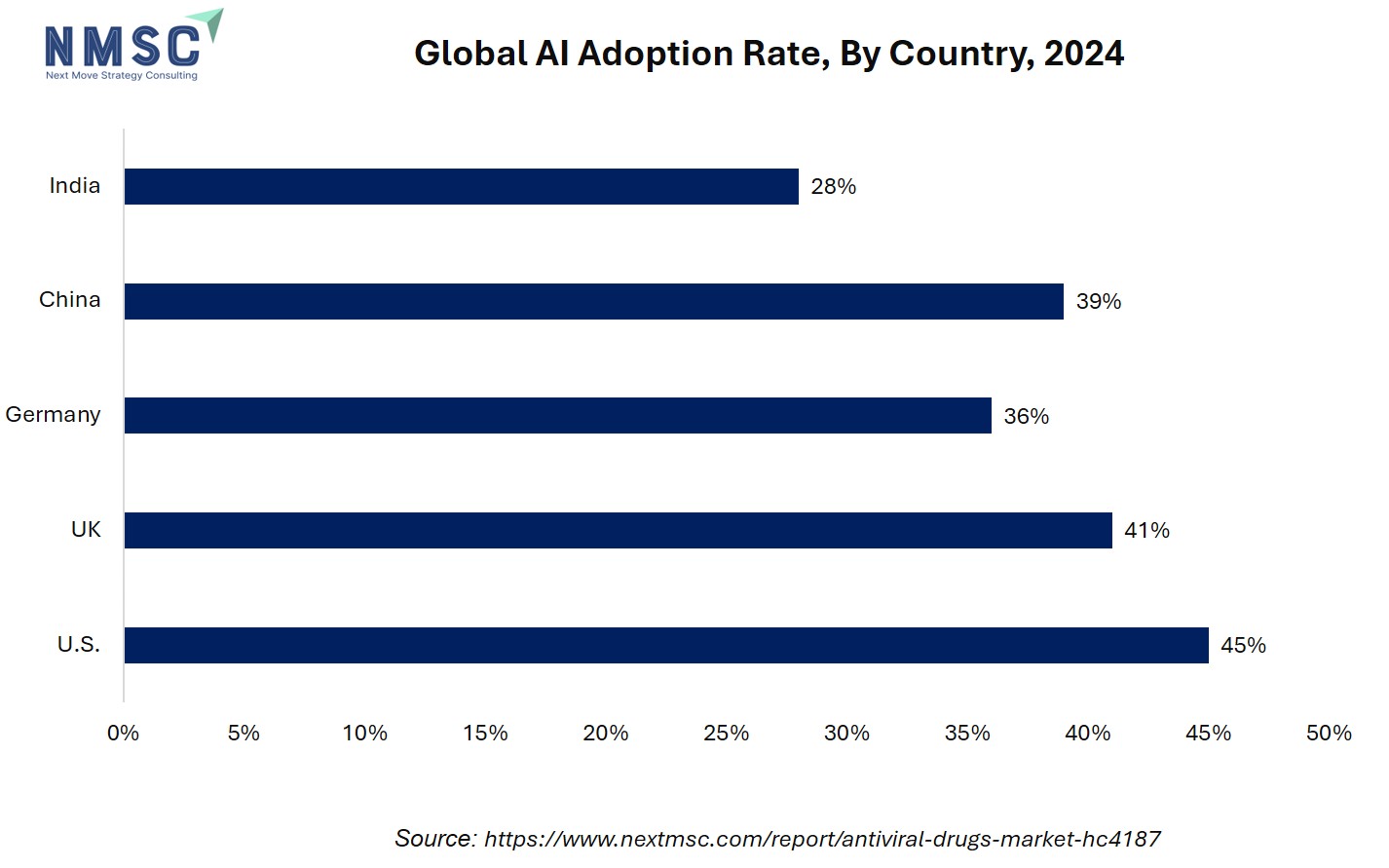
The chart highlights significant variation in AI adoption rates across countries in 2024, reflecting differing levels of digital maturity, investment capacity, and regulatory readiness. Advanced economies show higher adoption, driven by strong enterprise AI integration, mature data infrastructure, and supportive innovation ecosystems, while emerging markets trail due to gaps in skills, data availability, and implementation costs. Overall, the distribution underscores that AI adoption is no longer experimental but increasingly mainstream in leading markets, with adoption depth closely tied to national technology strategy and industry digitalisation levels.
Ecosystem Analysis of Antiviral Drugs Market
This infographic presents a holistic value-chain and ecosystem view of the antiviral drugs industry, illustrating how insights flow from R&D analysis through customers, suppliers, manufacturing, distribution, and regulatory governance. It highlights the interdependence between drug discovery and development, supplier and partner ecosystems, and data collection mechanisms such as clinical trials and real-world evidence. By placing customers and users alongside R&D, the framework emphasizes that antiviral innovation is increasingly shaped by clinical needs, treatment outcomes, and adherence patterns rather than laboratory research alone.
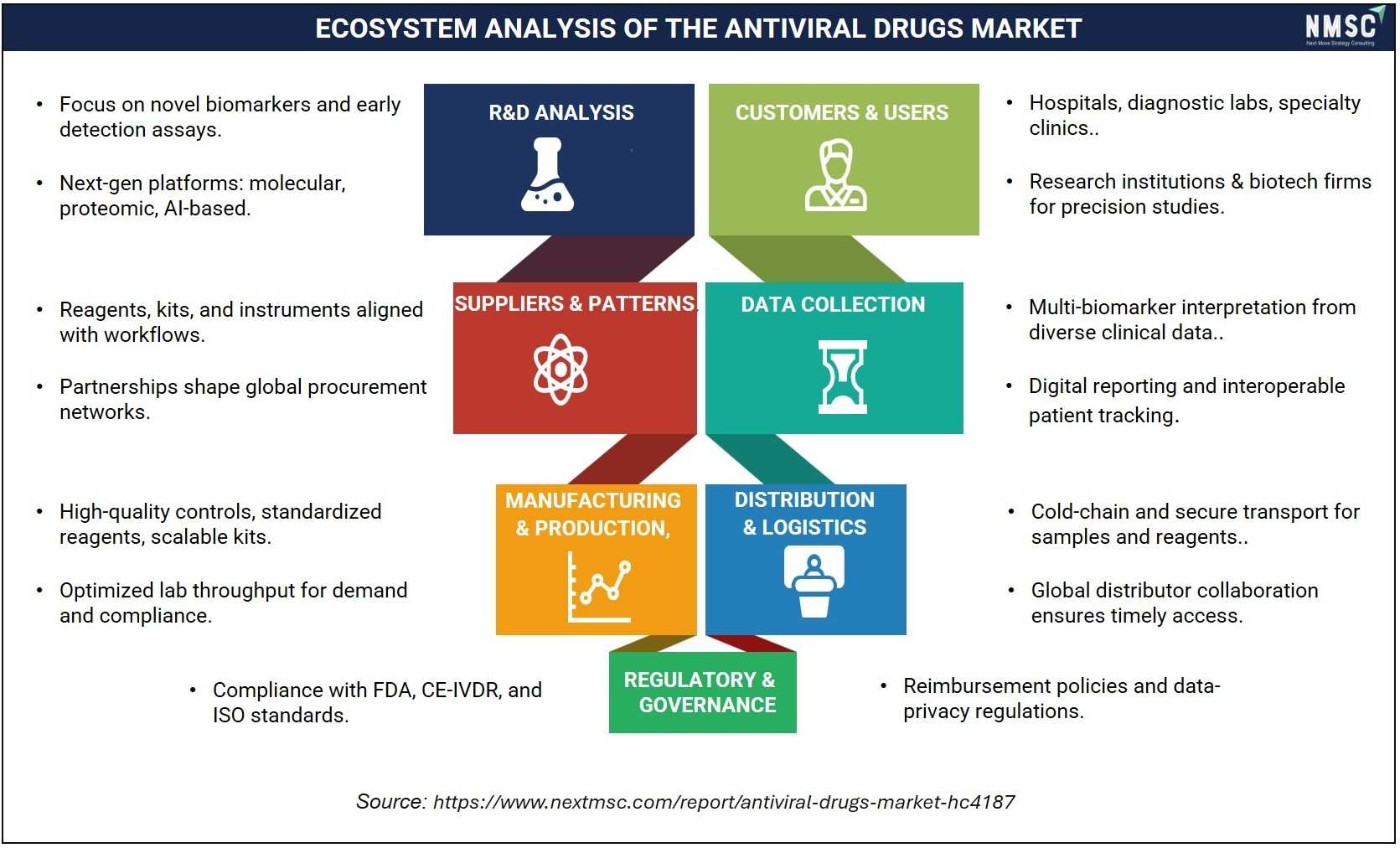
The lower half of the infographic focuses on execution and market delivery, covering manufacturing and production efficiency, distribution and logistics reliability, and the overarching role of regulatory and governance structures. It underscores how quality control, cost structures, supply chain resilience, and compliance with regulatory standards collectively determine market access and scalability. Overall, the infographic conveys that success in the antiviral drugs industry depends on coordinated decision-making across the entire value chain, where data, regulation, and operational execution are as critical as scientific innovation.
What are the Key Market Drivers, Breakthroughs, and Investment Opportunities that will Shape the Antiviral Drugs Industry in the Next Decade?
Growth Catalyst & Risk Assessment Matrix
|
Drivers / Trends / Restraints |
(+/–) % Impact on CAGR Forecast |
Geographic Relevance |
Impact Timeline |
|
Rising prevalence of chronic viral infections (HIV, hepatitis, herpes) |
+1.8% to +2.5% |
Global, strongest in North America, Asia-Pacific |
Medium to long term |
|
Government stockpiling & pandemic preparedness programs |
+1.2% to +1.8% |
North America, Europe, select Asia-Pacific |
Short to medium term |
|
Expansion of generic antivirals in emerging markets |
+0.8% to +1.3% |
India, Latin America, Southeast Asia |
Medium term |
|
Advances in antiviral R&D (long-acting & combination therapies) |
+0.7% to +1.1% |
North America, Europe |
Medium to long term |
|
Increasing use of real-world evidence in treatment protocols |
+0.4% to +0.7% |
North America, Europe |
Medium term |
Based on a comprehensive evaluation of antiviral drugs market dynamics, the market is experiencing structurally sustained growth driven by the rising prevalence of chronic viral infections, increasing public-health preparedness, and continued innovation in host-targeted antiviral therapies development. Interactions with infectious disease physicians, hospital pharmacists, pharmaceutical manufacturers, and public-sector procurement authorities indicate that antivirals are increasingly viewed as essential, long-term therapeutic tools rather than episodic outbreak responses. Advances in drug formulations, resistance-management strategies, and real-world evidence generation have improved treatment outcomes and expanded usage across care settings. At the same time, pricing pressure, regulatory complexity, and uneven access remain key constraints, particularly in cost-sensitive and resource-limited regions. The expansion of generic antivirals and government-backed procurement programs is also creating new growth opportunities by improving affordability and access.
Growth Drivers:
How are Infectious Viral Diseases Driving Antiviral Drug Demand?
Interactions with infectious disease clinicians and hospital pharmacy teams indicate that the continued incidence of infectious viral diseases, including influenza, COVID-19, RSV, and other acute viral infections, is a key driver of episodic demand in the market. Insights from tertiary hospitals and specialty care settings show increased reliance on short-course antiviral therapy to reduce disease severity, shorten recovery time, and limit transmission during peak infection periods. Prescription trends and treatment protocol updates reflect rapid uptake of antivirals during seasonal outbreaks and public-health emergencies, positioning these therapies as front-line interventions rather than maintenance treatments. Regions experiencing recurrent outbreaks or higher infection rates demonstrate pronounced demand surges, followed by normalization outside peak periods, resulting in inherently variable antiviral consumption patterns.
How are Public-Health Preparedness And Government Procurement Programs Supporting Antiviral Drugs Market Growth?
Evaluation of national procurement programs indicates that government-led preparedness initiatives play a key role in supporting demand in the antiviral drugs market. Stockpiling policies, emergency response planning, and inclusion of antivirals in national treatment guidelines help create stable baseline demand and reduce reliance on outbreak-driven purchasing. Across North America, Europe, and Asia-Pacific, antivirals aligned with preparedness frameworks benefit from faster uptake and larger-volume public-sector contracts. This approach increasingly extends into pre-outbreak drug development. In February 2026, the U.S. BARDA launched a $100 million SMART Antiviral Prize to encourage development of antivirals for high-risk virus families such as Togaviridae and Flaviviridae before outbreaks occur, reducing commercial risk for developers. Overall, government preparedness programs help moderate demand volatility by sustaining procurement across pre-outbreak, outbreak, and inter-epidemic periods.
Growth Inhibitor:
How are Pricing Pressure And Regulatory Complexity Constraining Antiviral Drugs Market Expansion?
Assessment of reimbursement frameworks, regulatory approval processes, and stakeholder input from payers and pharmaceutical manufacturers indicates that pricing pressure and regulatory complexity act as key restraints on growth in the antiviral drugs market. Respondents consistently cite stringent cost-effectiveness requirements, price controls, and prolonged approval timelines as factors limiting revenue expansion, particularly for branded antivirals. Reimbursement decisions and tender outcomes show that pricing negotiations delay market entry and restrict formulary inclusion. Regulatory affairs teams also emphasise that post-approval surveillance obligations and region-specific compliance requirements increase operational burden, especially for multi-market launches.
Growth Opportunity:
How is The Expansion Of Generic Antivirals And Access-Focused Programs Creates Antiviral Drugs Market Opportunities?
Evaluation of generic drug pipelines, domestic manufacturing capabilities, and public-sector health initiatives highlights the expansion of generic antivirals as a major growth opportunity for the antiviral drugs market. Discussions with manufacturers and procurement authorities indicate that affordable generics are enabling wider treatment coverage, particularly in emerging markets such as India, Southeast Asia, and Latin America. Tender activity and access programs show that generic antivirals support faster adoption, improved treatment continuity, and broader inclusion in national healthcare systems. These dynamics position access-focused strategies as a critical lever for long-term volume growth across both chronic and outbreak-driven antiviral indications.
Consumer Behaviour Analysis:
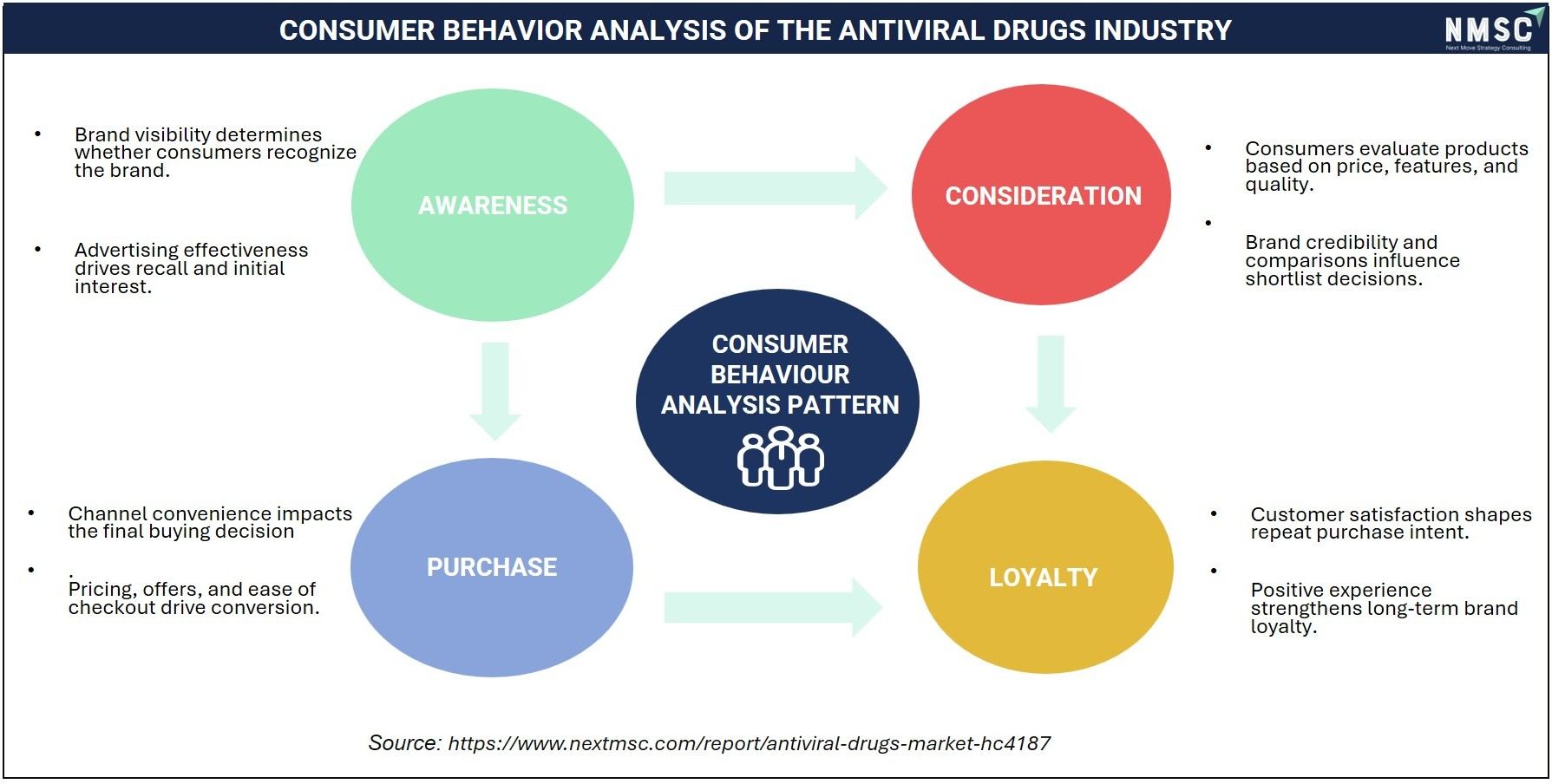
This infographic illustrates the consumer behavior journey in the antiviral drugs market, showing how brand visibility and awareness initiate interest, how evaluation of price, quality, and credibility drives consideration, and how access and purchasing convenience influence final decisions. It further highlights how treatment experience and satisfaction play a critical role in shaping repeat usage and long-term brand loyalty.
How Is the Antiviral Drugs Market Segmented In This Report, And What Are the Key Insights From he Segmentation Analysis?
Market Highlights & Strategic Insights – Antiviral Drugs Market:
|
Segment |
Key Takeaways |
|
Drug Class |
Genome replication inhibitors and protease inhibitors form the commercial backbone of the antiviral drugs market due to broad applicability across chronic and acute infections and strong resistance durability. Entry inhibitors, integrase inhibitors, and neuraminidase inhibitors play targeted roles, mainly within combination regimens. Host-targeting antivirals remain adjunctive with limited standalone commercial impact. |
|
Viral Indication |
Chronic viral infections, including HIV, hepatitis B, hepatitis C, and herpesviruses, generate stable, recurring demand due to long-term treatment protocols. Respiratory viruses drive episodic, high-volume usage during seasonal outbreaks. Emerging viruses remain strategically relevant but contribute irregular revenues. |
|
Molecule Type |
Small-molecule antivirals dominate volume due to oral delivery, scalable manufacturing, and cost efficiency. Biologics offer high clinical value in severe infections but face cost and administration constraints. Nucleic-acid-based therapies remain largely developmental with selective adoption. |
|
Drug Type |
Generic antivirals account for the majority of treatment volume, particularly in public healthcare systems. Innovator drugs drive market value through premium pricing and differentiated mechanisms. Biosimilars are an emerging segment with gradual relevance as biologic exclusivities expire. |
|
Route of Administration |
Oral antivirals dominate utilization due to outpatient suitability and adherence advantages. Parenteral and intravenous therapies are primarily used in hospital settings for severe or acute cases. Long-acting and alternative delivery formats remain limited commercially. |
|
Treatment Regimen |
Combination therapy is standard for chronic infections, supporting efficacy and resistance management. Fixed-dose combinations enhance adherence, while monotherapy remains relevant in select acute or prophylactic settings. |
|
Patient Population |
Adult patients represent the largest treated population, driven by chronic viral infections. Immunocompromised patients account for disproportionately high antiviral utilization. Pediatric use remains more limited due to safety and regulatory constraints. |
By Drug Class Insights
Which Drug Classes Shaped Adoption in the Antiviral Drugs Market?
Based on mechanism-of-action–level analysis, the antiviral drugs market is primarily shaped by genome replication inhibitors, protease inhibitors, and selected entry and integration inhibitors. Genome replication inhibitors and protease inhibitors form the therapeutic backbone due to their effectiveness across both chronic and acute viral infections and durable resistance profiles. Other classes, including entry inhibitors and neuraminidase inhibitors, play more targeted roles within indication-specific and combination therapy settings.
From clinical and formulary-level interactions, prescribing preferences consistently favor drug classes supported by long-term safety data, established resistance management, and compatibility with combination regimens. These attributes are critical in chronic viral infections, where sustained efficacy directly influences treatment continuity. As a result, genome replication inhibitors are commonly positioned as first-line therapies, while protease inhibitors retain strategic relevance in treatment-experienced and resistant patient populations, supporting regimen optimization and salvage therapy.
By Viral Indication Insights
Which Viral Indications Drove Sustained Demand in the Antiviral Drugs Market?
Based on indication-level assessment, chronic viral infections, particularly HIV, hepatitis B, hepatitis C, and herpesviruses drive the most stable and predictable demand due to lifelong or extended treatment requirements. These indications benefit from structured care pathways, routine monitoring, and sustained public and private healthcare funding. In contrast, respiratory viruses contribute episodic, high-volume demand during seasonal outbreaks and public health emergencies.
Review of procurement and prescribing patterns indicates that chronic viral indications form the baseline of antiviral market demand, supported by continuous treatment requirements and routine prescription cycles. In contrast, outbreak-driven indications, particularly respiratory viral infections, generate short-term surges in demand that are closely tied to seasonal trends or public health events rather than sustained utilization. Treatments for emerging viral infections remain strategically important for health system preparedness; however, their commercial contribution is intermittent, as procurement is typically episodic and driven by contingency planning rather than ongoing clinical use.
By Route of Administration Insights
How did Route of Administration Influence Market Adoption Patterns?
Based on administration-level analysis, oral antivirals dominate market adoption due to their suitability for outpatient care, chronic disease management, and improved patient adherence. Oral formulations enable decentralized treatment delivery and support long-term therapy continuity, particularly for HIV and hepatitis management. Parenteral antivirals are largely confined to hospital settings and severe or acute infections.
From treatment workflow evaluations, route of administration plays a decisive role in shaping access, utilization, and continuity of antiviral therapy. Oral antivirals are strongly favored for early intervention and long-term disease management because they enable outpatient treatment, support consistent adherence, and reduce reliance on hospital infrastructure. These advantages make oral formulations particularly suitable for chronic viral infections that require sustained therapy over extended periods. In contrast, injectable and intravenous antivirals are typically reserved for high-acuity cases, where rapid therapeutic exposure, controlled dosing, or close clinical monitoring is required. As a result, their use is largely concentrated in hospital settings and acute care scenarios, limiting broader utilization despite their clinical importance in severe infections.
Regional Outlook:
Geographic Performance Snapshot:
|
Regions |
Key Takeaways |
|
North America |
North America represents a major market for antiviral drugs, supported by high diagnosis rates, strong reimbursement coverage, and advanced healthcare infrastructure. Demand is driven by widespread use of antivirals for HIV, hepatitis, and respiratory viral infections, alongside government stockpiling initiatives and rapid uptake of newly approved therapies. Continued investment in infectious disease R&D and public-health preparedness reinforces regional market stability. |
|
Europe |
Europe is a well-established antiviral drugs market, driven by guideline-based treatment protocols, universal healthcare coverage, and strong regulatory oversight. Adoption is supported by steady use of antivirals for chronic viral diseases, increasing penetration of cost-effective generics, and centralized procurement through public health systems. Emphasis on pharmacovigilance and cost-effectiveness assessments shapes regional utilization patterns. |
|
Asia-Pacific |
Asia-Pacific is the largest and fastest-growing regional market, reflecting a high viral disease burden, expanding access to treatment, and large-scale generic drug manufacturing in countries such as China and India. Government-led health programs, rising diagnostic coverage, and public-sector procurement are accelerating antiviral adoption across both chronic and outbreak-driven indications. |
|
Rest of the World |
The Rest of the World market is supported by improving healthcare access across Latin America, the Middle East, and parts of Africa. Growth is driven by international funding initiatives, inclusion of antivirals in national essential medicines lists, and gradual expansion of public-sector treatment programs, resulting in steady but uneven regional demand growth. |
The Antiviral Drugs Market is geographically studied across North America, Europe, Asia Pacific, and Rest of the World, and each region is further studied across countries.
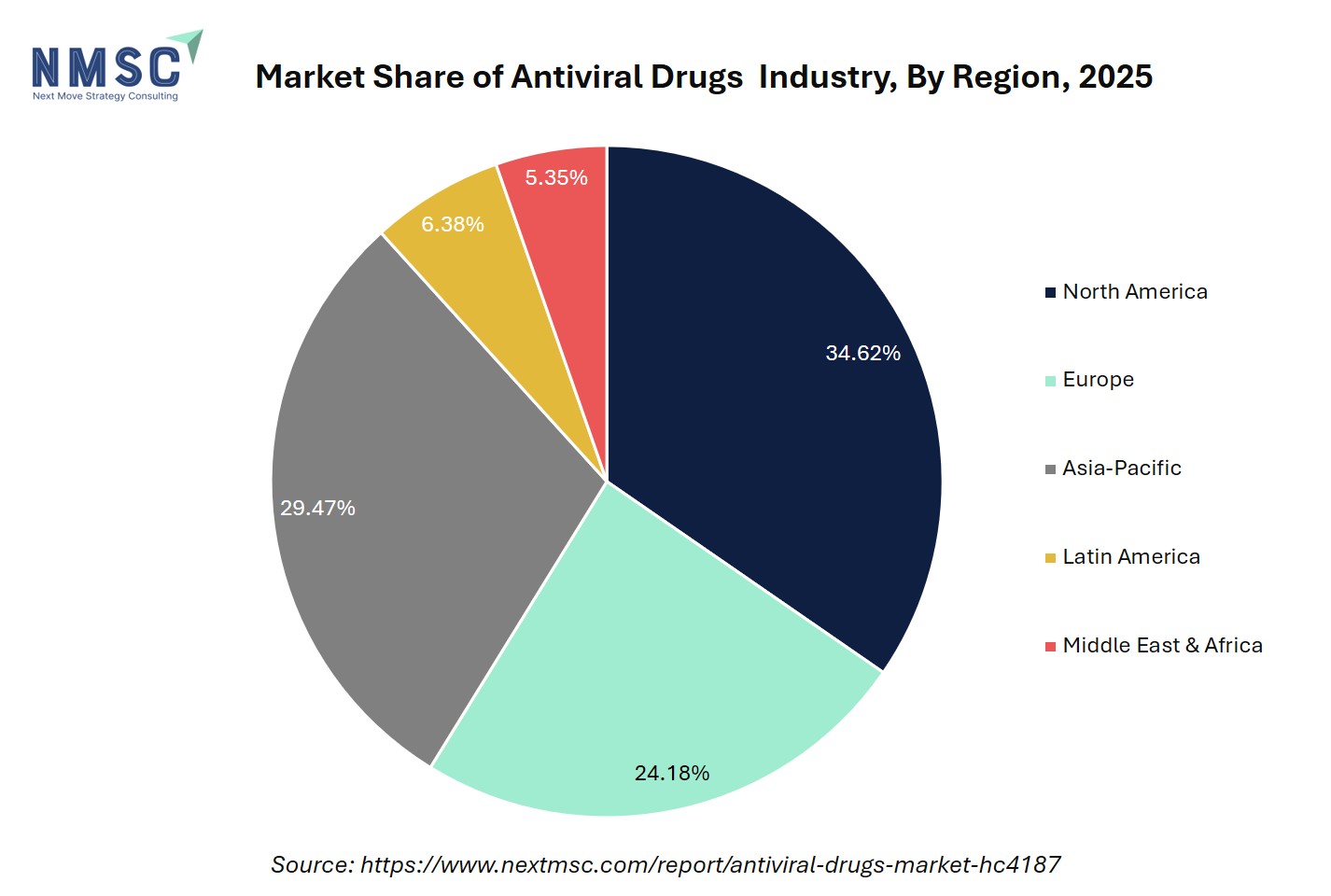
Antiviral Drugs Market in North America
Based on our engagements with infectious disease clinicians, hospital pharmacists, public-health procurement officials, and pharmaceutical manufacturers, North America represents a mature and structurally resilient antiviral drugs market. Demand is sustained by high diagnostic penetration, strong reimbursement coverage, and well-established treatment protocols for HIV, hepatitis, and respiratory viral infections. Public health preparedness programs and strategic stockpiling further reinforce baseline demand beyond routine clinical use. Our regional assessment indicates that regulatory clarity, advanced clinical trial infrastructure, and robust pharmacovigilance systems support rapid adoption of newly approved antivirals. Stakeholders also highlighted the importance of real-world evidence in guiding formulary decisions and long-term utilization. While pricing pressure exists, particularly for branded therapies, the region continues to prioritise clinical effectiveness, safety, and supply reliability, supporting sustained market stability across both chronic and outbreak-driven indications.
Antiviral Drugs Market in the United States
From our direct interactions with hospital system leaders, and pharmacy directors, , we observed that the United States remains the most influential antiviral drugs market in North America. High disease screening rates, strong insurer coverage, and rapid regulatory pathways enable early uptake of novel antiviral therapies. Clinicians increasingly prioritise oral and outpatient antivirals to reduce hospital burden and improve patient adherence. Federal preparedness programs and national treatment guidelines play a central role in stabilising demand during both endemic and emergency scenarios. Our assessment indicates that post-marketing surveillance, outcomes data, and payer-driven formulary evaluations strongly influence long-term adoption. While pricing negotiations and access restrictions remain key challenges, the depth of clinical infrastructure and public funding ensures sustained demand across high-value antiviral indications.
Antiviral Drugs Market in Canada
Based on interviews with provincial procurement authorities, hospital pharmacists, and infectious disease specialists, Canada’s antiviral drugs market is characterised by centralized decision-making, cost-effectiveness scrutiny, and guideline-driven adoption. Provincial formularies and public reimbursement programs shape access, with generics widely used for chronic viral disease management and selective funding for innovative antivirals demonstrating clear clinical benefit. Our assessment shows that public procurement helps stabilise baseline demand but may lengthen nationwide adoption timelines due to multi-layered review processes. Procurement priorities consistently center on equitable access, supply reliability, and robust pharmacovigilance. Although overall market expansion is gradual, Canada’s value-based healthcare approach and coordinated national frameworks support predictable antiviral utilisation across both hospital and community care settings.
Antiviral Drugs Market in Europe
Through engagements with regulatory bodies, and national procurement authorities, we observed that Europe’s antiviral drugs market is shaped by strong regulatory oversight, health technology assessments, and public reimbursement frameworks. Adoption patterns vary across countries, but pharmacovigilance requirements, cost-effectiveness evaluations, and budget impact analyses consistently influence market access. European public health systems emphasize long-term disease control and preparedness, supporting stable demand for antivirals used in chronic and infectious disease management. Our assessment highlights that multi-country regulatory compliance and pricing negotiations increase launch complexity, particularly for branded therapies. However, centralized healthcare systems and established treatment protocols provide manufacturers with predictable demand once reimbursement is secured, reinforcing Europe’s role as a structurally important antiviral market.
Antiviral Drugs Market in the United Kingdom
From our discussions with NHS procurement teams, formulary committees, and clinical guideline contributors, we observed that the UK antiviral drugs market is strongly governed by centralized evaluation and commissioning processes. National treatment pathways and NICE assessments determine routine access, while emergency preparedness mechanisms address outbreak-related demand. Clinicians increasingly favor antivirals that reduce hospital admissions and support treatment delivery in community settings. As a result, sustained adoption within the NHS depends heavily on robust health-economic evidence, post-marketing surveillance, and demonstrated real-world outcomes. Although procurement processes and post-Brexit supply-chain factors add complexity, the UK’s centralized healthcare system and integrated data infrastructure enable consistent, evidence-led utilization of antivirals across both chronic and acute care settings..
Antiviral Drugs Market in Germany
Based on our engagements with hospital pharmacy directors, statutory health insurance representatives, and clinical research stakeholders, Germany’s antiviral drugs market is characterised by disciplined, evidence-driven adoption and high expectations around clinical benefit and supply reliability. Moreover, market access is shaped by structured benefit assessments and reimbursement negotiations, which require manufacturers to demonstrate clear therapeutic value relative to current treatment protocols. Clinicians and payers favor antivirals that show strong safety profiles, consistent real-world performance, and reliable pharmacovigilance support. As a result, hospitals place high value on long-term supplier stability and predictable product availability, particularly for chronic viral disease management. Although access and reimbursement evaluations are rigorous, products that meet these criteria tend to achieve stable, long-term positioning once approved. This reflects Germany’s emphasis on quality standards, regulatory compliance, and the efficient, sustainable functioning of the healthcare system.
Antiviral Drugs Market in France
From discussions with hospital groups, regional health agencies, and formulary decision-makers, we observed that France’s antiviral drugs market is governed by centralized pricing negotiations and comparative clinical evaluations. Public hospitals and university medical centers serve as primary demand hubs, while community care settings support ongoing treatment for chronic viral infections. Stakeholders emphasised cost containment, patient safety, and post-marketing surveillance as critical decision criteria. Our assessment suggests that manufacturers demonstrating strong health-economic value and engagement with national and regional clinical networks experience smoother inclusion into treatment pathways. Although pricing controls influence launch strategies, France’s structured healthcare system generates stable demand after reimbursement and access approval, particularly for antivirals that align with national public-health priorities and long-term disease management programs.
Antiviral Drugs Market in Italy
Based on our interactions with regional health authorities, hospital pharmacists, and infectious disease clinicians, Italy’s antiviral drugs market reflects regional diversity driven by its decentralised healthcare structure. Northern regions in Europe typically adopt new therapies earlier due to stronger infrastructure and budget capacity, while southern regions rely more heavily on centralized tender cycles. Moreover, our assessment indicates that manufacturers supporting regional health systems with real-world evidence, cost-offset arguments, and strong distributor networks improve uptake prospects. Overall demand remains steady, shaped by long-term disease management needs rather than short-term volume surges.
Antiviral Drugs Market in Spain
Through engagements with regional health ministries, hospital procurement teams, and clinical specialists, we observed that Spain’s antiviral drugs market is shaped by autonomous community budgets operating within national treatment guidelines. Major metropolitan hospital systems drive demand for chronic antiviral therapies, particularly in HIV and hepatitis care, while centralized frameworks ensure consistency in clinical practice. Stakeholders reported that economic pressures encourage competitive pricing and careful budget allocation, influencing procurement outcomes, which in turn boost the market growth. Our assessment indicates that fragmented regional funding cycles can delay nationwide rollout, making phased regional adoption common. Manufacturers that align with regional priorities, demonstrate value within constrained budgets, and maintain strong local partnerships tend to achieve more consistent market penetration across Spain’s diverse healthcare landscape.
Antiviral Drugs Market in the Nordics
Based on interviews with national health agencies and hospital pharmacy networks, the Nordic antiviral drugs market prioritises clinical rigor, long-term safety, and system-wide efficiency. This focus is supported by high digital maturity, which enables rapid real-world evidence generation and underpins value-based procurement and outcome-focused decision-making. At the system level, centralized or semi-centralized purchasing structures facilitate timely access to cost-effective antivirals, while specialist centers drive the adoption of innovative therapies that demonstrate clear clinical advantages. Across stakeholders, sustainability, lifecycle accountability, and low operational burden are increasingly influential in treatment selection. Consequently, manufacturers that engage early with registry-based evidence initiatives and clearly demonstrate long-term value align closely with Nordic healthcare priorities.
Antiviral Drugs Market in the Asia-Pacific
Based on our engagements with health ministry officials, hospital administrators, and pharmaceutical manufacturers across the region, we observed that the Asia-Pacific antiviral drugs market combines high disease burden with expanding access and heterogeneous healthcare maturity. In this particular region market demand is shaped by a mix of public-sector procurement, domestic manufacturing capacity, and rising diagnostic coverage. Advanced healthcare systems prioritise reliability, safety, and clinical differentiation, while emerging markets focus on affordability, volume access, and simplified treatment regimens. Our assessment indicates that government-led treatment programs and public–private partnerships play a central role in stabilising demand, particularly for chronic viral diseases. Manufacturers operating in the region are required to balance premium positioning in developed markets with access-driven strategies in cost-sensitive economies, making localisation and flexible commercial models critical for sustained regional participation.
Antiviral Drugs Market in China
Based on our review of national treatment programs and interactions with hospital groups and domestic manufacturers, we observed that China’s antiviral drugs market is driven by large-scale access initiatives, strong domestic generics production, and regionally administered procurement systems. Market Demand is concentrated in public hospitals, where provincial formularies and volume-based procurement strongly influence uptake. Stakeholders highlighted that domestic manufacturers benefit from integrated supply chains and cost advantages, enabling broad distribution across chronic and infectious disease indications. Our assessment indicates that while access is expanding, adoption patterns vary by province due to budget priorities and local implementation. For international manufacturers, success depends on localisation, alignment with domestic procurement mechanisms, and support for pharmacovigilance and post-marketing evidence within China’s evolving regulatory environment.
Antiviral Drugs Market in Japan
Based on the discussions with hospital pharmacy directors, regulators, and clinical investigators, we observed that Japan’s antiviral drugs market is characterised by cautious, evidence-driven adoption and a strong emphasis on safety and reliability. Clinicians prioritise therapies with proven long-term outcomes, high adherence, and minimal risk, particularly given the country’s ageing population. Regulatory pathways are structured and predictable, but market access requires robust local evidence and post-marketing surveillance commitments. Our assessment indicates that brand trust, consistent supply, and strong local service infrastructure significantly influence purchasing decisions. While uptake of innovation may be gradual, therapies that demonstrate clear clinical value and lifecycle reliability tend to achieve durable positioning within Japan’s highly disciplined healthcare system.
Antiviral Drugs Market in India
Based on our interactions with domestic manufacturers, public procurement officials, and hospital pharmacists, we observed that India’s antiviral drugs market is shaped by high-volume demand, strong generics manufacturing capacity, and access-focused public health programs. Procurement is largely driven by government tenders and state-level initiatives, with affordability and supply continuity as primary decision criteria. Chronic viral disease management and outbreak preparedness underpin steady demand, while private-sector hospitals support selective uptake of branded therapies. Our assessment indicates that manufacturers optimising for scale, cost efficiency, and wide distribution achieve faster penetration. Market dynamics favour modular supply strategies and strong local partnerships, reflecting India’s emphasis on broad access and sustainable treatment coverage.
Antiviral Drugs Market in South Korea
Through engagements with hospital formulary committees, biotech firms, and public-health stakeholders, we observed that South Korea’s antiviral drugs market demonstrates high readiness for clinically validated innovation. Advanced diagnostics, structured reimbursement pathways, and strong domestic R&D capabilities support relatively rapid adoption once therapeutic value is established. Demand is concentrated in large hospital systems and specialty clinics, where clinicians prioritise efficacy, safety, and integration with digital health infrastructure. Our assessment indicates that partnerships with local pharmaceutical and biotechnology firms accelerate market entry and acceptance. However, high expectations for evidence quality and post-marketing performance mean that sustained adoption depends on continuous clinical validation and reliable supply support.
Antiviral Drugs Market in Taiwan
Based on our engagements with public health authorities, hospital pharmacists, and local distributors, we observed that Taiwan’s antiviral drugs market is supported by high diagnostic coverage, structured reimbursement, and coordinated healthcare delivery. Demand is concentrated in tertiary hospitals and specialist clinics, where formulary decisions are guided by clinical guidelines and cost-effectiveness considerations. Stakeholders highlighted the importance of consistent supply, clear safety profiles, and post-marketing monitoring in sustaining adoption. Our assessment indicates that Taiwan’s compact healthcare system and strong data infrastructure enable rapid evaluation of treatment outcomes, supporting timely formulary updates. Manufacturers that align closely with national reimbursement criteria and provide robust pharmacovigilance support tend to achieve broader acceptance, particularly for antivirals addressing chronic viral infections and high-risk patient populations.
Antiviral Drugs Market in Indonesia
Through interviews with health ministry officials, hospital procurement teams, and regional distributors, we observed that Indonesia’s antiviral drugs market remains early-stage but steadily expanding. Demand is primarily driven by public hospitals in major urban centers, supported by national health coverage and donor-aligned treatment programs. Affordability, simplified dosing, and reliable distribution are central to adoption decisions, particularly outside metropolitan areas. Our assessment indicates that fragmented procurement processes and variable infrastructure influence rollout speed, leading to phased adoption across regions. Manufacturers that partner with local distributors, support capacity-building initiatives, and offer flexible commercial models are better positioned to scale access. Overall growth is shaped by gradual improvements in diagnostics, funding stability, and public-sector treatment coverage.
Antiviral Drugs Market in Australia
Based on discussions with public procurement bodies, hospital pharmacy networks, and infectious disease clinicians, we observed that Australia’s antiviral drugs market is characterised by stable funding, strong diagnostic penetration, and centralized reimbursement processes. Demand is driven by chronic viral disease management and preparedness-oriented procurement, with clinicians favouring therapies that support outpatient care and demonstrate strong safety profiles. Geographic dispersion heightens the importance of supply reliability and national distribution coverage. Our assessment indicates that manufacturers with established local presence, distributor partnerships, and post-marketing engagement perform well. While access decisions are shaped by health-economic review cycles, Australia’s coordinated healthcare system provides predictable demand for antivirals that align with national treatment priorities.
Antiviral Drugs Market in Latin America
From engagements with public-health officials, hospital buyers, and regional distributors, we observed that Latin America’s antiviral drugs market is highly heterogeneous, shaped by varying healthcare funding levels and procurement structures. Public-sector programs drive volume demand for chronic viral disease management, while private healthcare systems support selective uptake of innovative therapies. Price sensitivity, import costs, and regulatory timelines influence market access across countries. Our assessment indicates that local manufacturing partnerships, tiered pricing strategies, and participation in national treatment initiatives improve penetration. However, economic volatility and fragmented regulatory environments continue to affect adoption consistency, requiring manufacturers to tailor commercial and distribution strategies on a country-by-country basis.
Antiviral Drugs Market in the Middle East & Africa
Through discussions with health ministries, international procurement partners, and regional distributors, we observed a bifurcated antiviral market across the Middle East and Africa. Gulf countries demonstrate higher per-capita spending and rapid adoption supported by strong healthcare infrastructure and centralized procurement. In contrast, many African markets rely on donor-supported programs and public-sector tenders to expand access. Stakeholders emphasised supply-chain resilience, affordability, and program continuity as critical success factors. Our assessment indicates that manufacturers combining premium, integrator-led strategies in the Middle East with access-oriented, scalable models in Africa are better positioned to achieve sustainable, long-term participation across this diverse region.
Competitive Landscape
Competitive Dynamics & M&A Landscape:
|
Key Takeaways |
|
The global Antiviral Drugs market is characterized by the presence of large multinational pharmaceutical companies such as Pfizer Inc., Gilead Sciences, Inc., Merck & Co., Johnson & Johnson, GSK plc, and F. Hoffmann-La Roche Ltd, alongside strong generic and specialty players including Cipla Limited, Sun Pharmaceutical Industries Ltd, Dr. Reddy’s Laboratories Ltd., Aurobindo Pharma Limited, Teva Pharmaceutical Industries Ltd., Viatris Inc, Hetero, and Zydus Healthcare Limited. Large innovators lead in novel molecule development and branded antivirals, while generics manufacturers compete on scale, affordability, and rapid market entry post-patent expiry. |
|
Vendor strategies increasingly prioritize broad-spectrum antivirals, long-acting formulations, and oral therapies, alongside lifecycle management through label expansions and combination regimens. Companies such as Shionogi & Co., BioCryst Pharmaceuticals, Inc, and SIGA focus on niche and emerging viral indications, while global players strengthen hospital and public-health portfolios through antivirals targeting influenza, HIV, hepatitis, herpesviruses, and emerging pathogens. |
|
Recent merger, acquisition, and partnership activity in the antiviral drugs market reflects a strategic shift toward pipeline expansion, access to novel antiviral mechanisms, and geographic reach, particularly in emerging markets. Collaborations for contract manufacturing, licensing, and government supply agreements support faster commercialization, supply security, and sustained revenue growth across both branded and generic antiviral segments. |
Which Companies Dominate the Antiviral Drugs Industry and How do they Compete?
Based on our analysis of antiviral portfolios, regulatory approvals, clinical guideline inclusion, and global procurement patterns, the antiviral drugs market is led by a core group of multinational pharmaceutical companies with deep virology expertise and long-standing infectious disease franchises. Companies such as Gilead Sciences, Pfizer, Merck & Co., Roche, AbbVie, and Johnson & Johnson consistently dominate high-value antiviral segments, including HIV, hepatitis, influenza, and pandemic-response antivirals. From our review of prescribing behavior and payer formularies, these companies are preferred where long-term efficacy, resistance control, safety data, and global regulatory approvals are critical decision factors. Competition at this tier is driven by breadth of antiviral pipelines, lifecycle management through combination therapies, and the ability to support large-scale public health programs across regions.
Market Dominated by Antiviral Drugs Giants and Specialists
From our observations, the competitive landscape is further strengthened by companies with focused antiviral and infectious disease strategies, including GSK plc, Takeda Pharmaceutical, ViiV Healthcare, Astellas Pharma, and Shionogi & Co. Our interactions with infectious disease clinicians and hospital procurement teams indicate that these players gain traction through differentiated mechanisms of action, strong clinical trial design, and leadership in specific viral indications such as HIV, influenza, and specialty viral infections. In practice, these companies compete by optimizing adherence, improving tolerability, and advancing next-generation antivirals rather than competing solely on scale.
Innovation and Adaptability Drive Market Success
Innovation remains a core determinant of competitive advantage in the antiviral drugs market. From our analysis of clinical pipelines and late-stage trials, leading companies continue to invest in resistance-resilient therapies, long-acting formulations, and host-targeting antivirals. Players such as Gilead, Pfizer, Roche, and Takeda demonstrate strong positioning through RNA polymerase inhibitors, integrase inhibitors, monoclonal antibodies, and combination regimens. We observed that companies integrating real-world evidence, advanced virology platforms, and precision medicine approaches are better positioned to sustain long-term relevance as viral mutation and resistance patterns evolve.
Market Players to Opt for Merger & Acquisition Strategies to Expand their Presence
Mergers and acquisitions remain a forward-looking growth lever in the pharmaceutical industry as companies seek faster access to differentiated science, clinical pipelines, and expanded therapeutic capabilities. In 2025, Johnson & Johnson completed its acquisition of Intra-Cellular Therapies, Inc., underscoring its strategic focus on enhancing clinical development platforms through targeted consolidation; Intra-Cellular Therapies now operates as part of J&J’s Innovative Medicine business following the closing of the transaction in April 2025, reflecting the company’s broader commitment to bolstering late-stage assets and research depth. Similarly, Merck & Co. entered into and completed the acquisition of Verona Pharma plc, a UK-based biotechnology company focused on respiratory disease therapies, making Verona a wholly owned Merck subsidiary and expanding Merck’s portfolio and pipeline reach. Rather than solely expanding scale, these deals emphasize scientific breadth, accelerated clinical pathways, and long-term portfolio resilience. As competition intensifies, M&A is being used to shorten innovation cycles, diversify therapeutic coverage, and strengthen end-to-end capabilities across global pharmaceutical ecosystems.
Pestel Analysis of Antiviral Drugs Industry
This infographic presents a concise PESTEL analysis of the antiviral drugs industry, illustrating how external macro-environmental forces collectively shape market structure, innovation, and adoption. Political and legal factors highlight the industry’s dependence on government health programs, regulatory approvals, and patent frameworks, which directly influence market access, pricing, and competitive intensity. Economic conditions such as public reimbursement pressure and healthcare spending trends determine affordability and volume growth, while social factors rising viral disease prevalence, aging populations, and improved diagnostic awareness continue to sustain long-term demand for antiviral therapies.
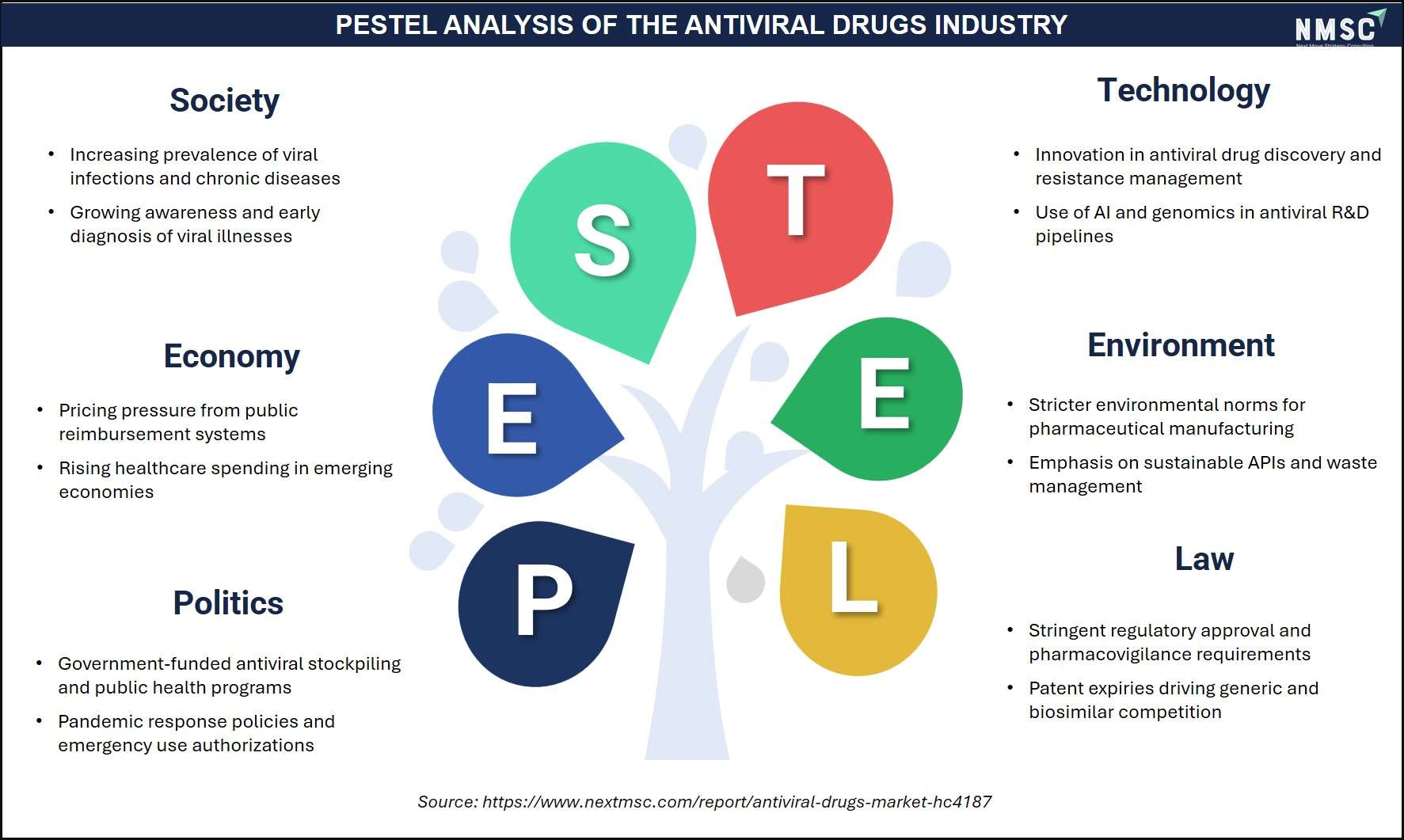
Technological and environmental dimensions reflect the industry’s forward-looking transformation. Advances in antiviral R&D, resistance management, and AI-enabled drug discovery are improving treatment efficacy and pipeline productivity, strengthening innovation-led growth. At the same time, increasing environmental scrutiny is pushing manufacturers toward sustainable production practices and resilient supply chains. Together, these PESTEL factors demonstrate that the antiviral drugs market is driven not only by clinical need but also by regulatory discipline, technological progress, and evolving societal expectations, reinforcing its strategic importance within the global healthcare ecosystem.
List of Key Antiviral Drugs Companies
-
Pfizer Inc.
-
Gilead Sciences, Inc
-
Merck & Co.
-
Takeda Pharmaceutical Company Limited.
-
Bristol-Myers Squibb Company
-
Cipla Limited
-
Aurobindo Pharma Limited
-
F. Hoffmann-La Roche Ltd
-
Dr. Reddy’s Laboratories Ltd.
-
Sun Pharmaceutical Industries Ltd
-
Teva Pharmaceutical Industries Ltd.
-
Viatris Inc
-
Hetero.
-
Zydus Healthcare Limited
-
Roche
-
Shionogi & Co.
-
BioCryst Pharmaceuticals, Inc
-
SIGA
What Are The Latest Key Industry Developments?
-
June 2025 – Gilead Sciences’ Yeztugo (lenacapavir) received FDA approval as the first and only twice-yearly injectable HIV-1 pre-exposure prophylaxis (PrEP) option, based on strong Phase 3 trial data showing high preventive efficacy; this milestone expands long-acting antiviral options and supports broader prevention strategies in high-risk populations
-
September 2025 – FDA accepted New Drug Application for Shionogi’s ensitrelvir as the first oral antiviral for COVID-19 post-exposure prevention. The U.S. FDA’s acceptance of ensitrelvir’s NDA signals a potential market introduction of a novel oral preventive therapy that works after exposure, differentiating it from existing treatments that are used post-symptom onset. If approved, this would be the first oral therapy in the U.S. for COVID-19 prevention following exposure.
-
April 2025 – Johnson & Johnson completed its acquisition of Intra-Cellular Therapies, integrating the company into its Innovative Medicine business and adding the commercialized asset CAPLYTA alongside a late-stage neuroscience pipeline. The transaction underscores Johnson & Johnson’s strategy to reinforce long-term portfolio durability through differentiated clinical platforms and late-stage assets, while accelerating growth in high-value therapeutic areas via targeted M&A.
What Are The Key Factors Influencing Investment Analysis & Opportunities In The Antiviral Drugs Market?
Investment analysis in the antiviral drugs market has increasingly shifted toward platform-oriented and lifecycle-driven business models, rather than single-asset or short-duration therapeutic plays. Based on our evaluation of recent funding activity, licensing deals, M&A transactions, and strategic collaborations, we observed that investors are prioritising companies with diversified antiviral portfolios, durable revenue streams, and strong capabilities across discovery, clinical development, and post-approval lifecycle management. Capital allocation increasingly favours developers with proven regulatory execution, scalable manufacturing, and established commercial access across public health systems. Assets addressing chronic viral diseases or offering broad-spectrum applicability consistently attract higher strategic interest than episodic, outbreak-dependent therapies.
We also observed growing investment concentration around antiviral platforms that integrate resistance management, long-acting formulations, and data-enabled pharmacovigilance, reflecting investor focus on durability of clinical relevance and long-term utilisation. Strategic investors including large pharmaceutical companies, contract manufacturers, and public–private health partners are playing a more prominent role than purely financial sponsors, seeking pipeline replenishment, supply security, and ecosystem control. For investors, the most compelling opportunities lie in antiviral developers combining scientific differentiation with operational maturity, predictable reimbursement pathways, and the ability to sustain value across patent cycles, generic competition, and evolving treatment guidelines.
|
Parameters |
Details |
|
Customization Scope |
Free customization (equivalent to up to 80 analyst-working hours) after purchase. Addition or alteration to country, regional & segment scope. |
|
Pricing and Purchase Options |
Avail customized purchase options to meet your exact research needs. |
|
Approach |
In-depth primary and secondary research; proprietary databases; rigorous quality control and validation measures. |
|
Analytical Tools |
Porter's Five Forces, SWOT, value chain, and Harvey ball analysis to assess competitive intensity, stakeholder roles, and relative impact of key factors. |
Key Benefits for Stakeholders:
Next Move Strategy Consulting (NMSC) presents a comprehensive analysis of the Antiviral Drugs market, covering historical developments from 2020 to 2025 and providing forward-looking forecasts through 2035. The study evaluates the antiviral drugs market at the global, regional, and country levels, delivering quantitative outlooks alongside qualitative insights into key growth drivers, access constraints, regulatory dynamics, therapeutic innovation, and investment trends across major antiviral segments. The analysis integrates perspectives from clinical practice, public health systems, manufacturing, and commercial execution to provide a comprehensive view of how antiviral demand and adoption evolve across chronic, acute, and outbreak-driven indications.
From our perspective, the antiviral drugs industry delivers measurable value to a broad stakeholder base. Investors benefit from durable revenue streams supported by chronic disease management, diversified portfolios, and lifecycle extension strategies. Healthcare systems and payers gain clinical and economic value through therapies that reduce disease progression, hospitalisation burden, and long-term complications. Pharmaceutical manufacturers, contract developers, and supply partners benefit from sustained demand, long-term procurement programs, and post-approval lifecycle opportunities. By aligning therapeutic innovation with access, affordability, and public health priorities, the market creates long-term value across the healthcare ecosystem while supporting resilience, preparedness, and sustainable growth.
Antiviral Drugs Market Key Segments
By Drug Class
-
Viral Entry Inhibitors
-
Viral attachment inhibitors
-
Fusion inhibitors
-
Host receptor antagonists
-
Co-receptor blockers
-
Endosomal acidification inhibitors
-
-
Viral Uncoating Inhibitors
-
Ion channel blockers
-
Capsid destabilizers
-
-
Viral Genome Replication Inhibitors
-
Reverse transcriptase inhibitors
-
Nucleoside RT inhibitors (NRTIs)
-
Non-nucleoside RT inhibitors (NNRTIs)
-
-
Polymerase inhibitors
-
Nucleoside / nucleotide analogs
-
Non-nucleoside polymerase inhibitors
-
-
RNA-dependent RNA polymerase (RdRp) inhibitors
-
-
Viral Protease Inhibitors
-
Aspartyl protease inhibitors
-
Serine protease inhibitors
-
Cysteine protease inhibitors
-
-
Viral Integration & Assembly Inhibitors
-
Integrase strand transfer inhibitors (INSTIs)
-
Capsid assembly inhibitors
-
-
Viral Release & Maturation Inhibitors
-
Neuraminidase inhibitors
-
Viral budding inhibitors
-
-
Host-Targeting Antivirals
-
Immune signaling modulators
-
Cytokine modulators
-
Interferon modulators
-
-
Host enzyme inhibitors
-
Kinase inhibitors
-
Cyclophilin inhibitors
-
Lipid metabolism modifiers
-
-
Endocytosis pathway modulators
-
By Viral Indication
-
Retroviruses
-
HIV-1
-
HIV-2
-
-
Hepatitis Viruses
-
Hepatitis B virus (HBV)
-
Hepatitis C virus (HCV)
-
Hepatitis D virus (HDV)
-
-
Respiratory Viruses
-
Influenza A & B
-
SARS-CoV-2
-
Respiratory syncytial virus (RSV)
-
Human rhinoviruses
-
Human parainfluenza viruses
-
-
Herpesviridae
-
Herpes simplex virus-1 (HSV-1)
-
Herpes simplex virus-2 (HSV-2)
-
Cytomegalovirus (CMV)
-
Varicella-zoster virus (VZV)
-
-
Enteric Viruses
-
Norovirus
-
Rotavirus
-
-
Emerging & Arboviruses
-
Dengue virus
-
Zika virus
-
Ebola virus
-
Nipah virus
-
-
Other Viral Infections
By Molecule Type
-
Small-Molecule Antivirals
-
Biologics
-
Monoclonal antibodies
-
Recombinant antiviral proteins
-
Intravenous immunoglobulin (IVIG)
-
Peptide-based antivirals
-
-
Nucleic-Acid-Based Therapeutics
-
siRNA
-
Antisense oligonucleotides
-
mRNA-based antivirals
-
Gene-editing antivirals
-
By Drug Type
-
Innovator drugs
-
Generic drugs
-
Biosimilars
By Route of Administration
-
Oral
-
Parenteral
-
Intravenous
-
Intramuscular
-
Subcutaneous
-
-
Inhalation
-
Topical
-
Dermal
-
Ocular
-
-
Transdermal
By Treatment Regimen
-
Monotherapy
-
Combination therapy
-
Fixed-dose combinations
-
Multi-drug regimens
-
-
Line of therapy
-
First-line
-
Second-line
-
Salvage therapy
-
By Patient Population
-
Pediatric population
-
Neonatal
-
Pediatric
-
-
Adult population
-
Immunocompetent
-
Immunocompromised
-
-
Geriatric population
By Disease Management Setting
-
Acute treatment
-
Chronic management
-
Prophylactic use
-
Pre-exposure prophylaxis
-
Post-exposure prophylaxis
-
By Distribution Channel
-
Hospital pharmacies
-
Retail pharmacies
-
Chain pharmacies
-
Independent pharmacies
-
-
Online pharmacies
-
Government & institutional supply
-
Specialty distributors
By End User
-
Hospitals & specialty clinics
-
Ambulatory care centers
-
Homecare settings
-
Research & Academic Institutions
Geographical Breakdown
-
North America: U.S., Canada, and Mexico.
-
Europe: UK, Germany, France, Italy, Spain, Sweden, Denmark, Finland, the Netherlands, and the Rest of Europe.
-
Asia Pacific: China, India, Japan, South Korea, Taiwan, Indonesia, Vietnam, Australia, Philippines, Malaysia and the rest of APAC.
-
Middle East & Africa (MEA): Saudi Arabia, UAE, Egypt, Israel, Turkey, Nigeria, South Africa, and the rest of MEA.
-
Latin America: Brazil, Argentina, Chile, Colombia, and the rest of LATAM.
Conclusion & Recommendations
This report equips stakeholders, industry participants, investors, and consultants with actionable intelligence to capitalize on the structural transformation underway in the Antiviral Drugs market. By combining rigorous data-driven analysis with proven strategic frameworks, NMSC’s Antiviral Drugs Market Report serves as a critical decision-support resource for navigating a rapidly evolving healthcare landscape.
The antiviral drugs market is positioned for sustained expansion, supported by the rising prevalence of chronic viral infections, increasing public-health preparedness, and growing demand for effective outpatient and long-term treatment solutions. Key strategic insights highlight the increasing importance of broad-spectrum antivirals, resistance-aware drug design, long-acting formulations, and strong post-marketing surveillance, as these capabilities improve clinical durability, adherence, and health-system value. Developers that prioritise robust clinical evidence, scalable manufacturing, and lifecycle management strategies consistently achieve stronger market access, sustained utilisation, and predictable revenue streams.
For executives and investors, value capture increasingly requires focus on high-impact therapeutic areas such as HIV, hepatitis, and emerging respiratory viral threats, alongside continued investment in R&D, regulatory execution, and access-driven commercial models. Expanding presence in high-burden and high-growth regions, particularly Asia-Pacific and select emerging markets, unlocks additional demand pools. Operational reliability, supply continuity, and demonstrable real-world outcomes further strengthen stakeholder trust and accelerate adoption, creating durable value across the global antiviral drugs ecosystem.
Expert Insights

“AI will accelerate clinical development and companies, hospitals, and society will benefit from it”
— Joaquín Duato, CEO of Johnson & Johnson


About the Author
 Saista Faiyaz
— Saista Faiyaz is Research Associate at Next Move Strategy Consulting, where she has covered consumer markets and healthcare technologies for 3 years. Her work includes primary interview review, secondary-source validation, market sizing, and structured analysis of company and industry data. She supports research by comparing evidence across sources, organizing findings into market narratives, and documenting assumptions used in analysis. Her scope includes cross-market benchmarking, and reports.
Saista Faiyaz
— Saista Faiyaz is Research Associate at Next Move Strategy Consulting, where she has covered consumer markets and healthcare technologies for 3 years. Her work includes primary interview review, secondary-source validation, market sizing, and structured analysis of company and industry data. She supports research by comparing evidence across sources, organizing findings into market narratives, and documenting assumptions used in analysis. Her scope includes cross-market benchmarking, and reports.
About the Reviewer
 Supradip Baul
— Supradip Baul is an accomplished business consultant and strategist with over a decade of rich experience in market intelligence, strategy, technology, and business transformation. His work has included rigorous qualitative and quantitative analysis across multiple industries, helping clients shape investment decisions and long-term roadmaps. Earlier in his career, he was associated with Gartner, where he contributed to industry-leading reports and market share analyses. He has worked with leading global companies and holds an MBA with a dual specialization in Marketing and Finance.
Supradip Baul
— Supradip Baul is an accomplished business consultant and strategist with over a decade of rich experience in market intelligence, strategy, technology, and business transformation. His work has included rigorous qualitative and quantitative analysis across multiple industries, helping clients shape investment decisions and long-term roadmaps. Earlier in his career, he was associated with Gartner, where he contributed to industry-leading reports and market share analyses. He has worked with leading global companies and holds an MBA with a dual specialization in Marketing and Finance.
At Next Move Strategy Consulting, we understand that insightful market research is the cornerstone of successful business decisions. That's why we employ a robust and multifaceted approach, combining various methodologies to deliver the most accurate and actionable data for our clients.

Research Landscape
We navigate the world of research with two primary approaches:
Qualitative Approach
Our qualitative research methodologies involve immersive techniques such as in-depth interviews, focus groups, and observational studies. By engaging directly with individuals and stakeholders, we uncover valuable insights that quantitative data alone may overlook.

Quantitative Research
In tandem with qualitative methodologies, NMSC leverages the power of Quantitative Research to provide a robust foundation of numerical insights. Through systematic data collection and analysis, we quantify patterns, preferences, and market trends, offering a comprehensive view of the business landscape.
Our quantitative research approach employs diverse tools, including surveys, experiments, and statistical modelling. These methodologies enable us to gather data from a large and representative sample, ensuring the statistical significance of our findings. By employing structured questionnaires and standardized data collection methods, we guarantee the reliability and validity of the information we present to our clients.
Quantitative research is particularly effective in measuring the prevalence of trends, assessing market size, and gauging the impact of various factors on consumer behavior. The numerical precision attained through this approach equips our clients with actionable insights, facilitating data-driven decision-making and strategy formulation.


Our Specialized Toolbox for Industry-Specific Market Research
We deploy a specialized arsenal of techniques tailored to meet your unique requirements. Here's a glimpse into our comprehensive toolbox:

Information Procurement
The stage entails acquiring market data or relevant information through various sources and methodologies.


Market Research Approach
We utilize both top-down and bottom-up approaches in market research analysis to achieve a comprehensive understanding of the market dynamics, leveraging the broad perspective of industry trends and macroeconomic factors alongside detailed insights from specific segments and individual companies.

Porters Five Forces Analysis
We conduct Porter's Five Forces analysis to evaluate the competitive landscape of an industry, providing us with insights into factors that affect profitability and strategic positioning.

SWOT Analysis

Forecasting
We utilize a forecasting model to predict future consumption by considering parameters like population, economics, regulations, market competition, drivers, constraints, technology, and pricing. We also employ statistical techniques such as multilinear regression, exponential smoothing, moving average, ARIMA, and Monte Carlo simulations for accurate predictions. In econometric forecasting, we analyzed short-term and long-term event impacts, attributing values based on regulatory frameworks, economic factors, and market events.





 Speak to Our Analyst