Global Chatbot in BFSI Market By Component (Solutions and Services), By Platform Type (Web-based, Mobile-based, Social Media), By Enterprise Size (Large Enterprises, Small & Medium Enterprises), By Deployment Mode (Cloud, On-Premise, Hybrid), By Interaction Mode (Text, Voice/IVR, Multimodal), By Technology Type (Rule-Based, NLP/AI-Powered, Hybrid), By Channel Integration, By Application, By Sub-Vertical Industry – Analysis and Forecast, 2025–2035
What Is the Chatbot in BFSI Market Size?
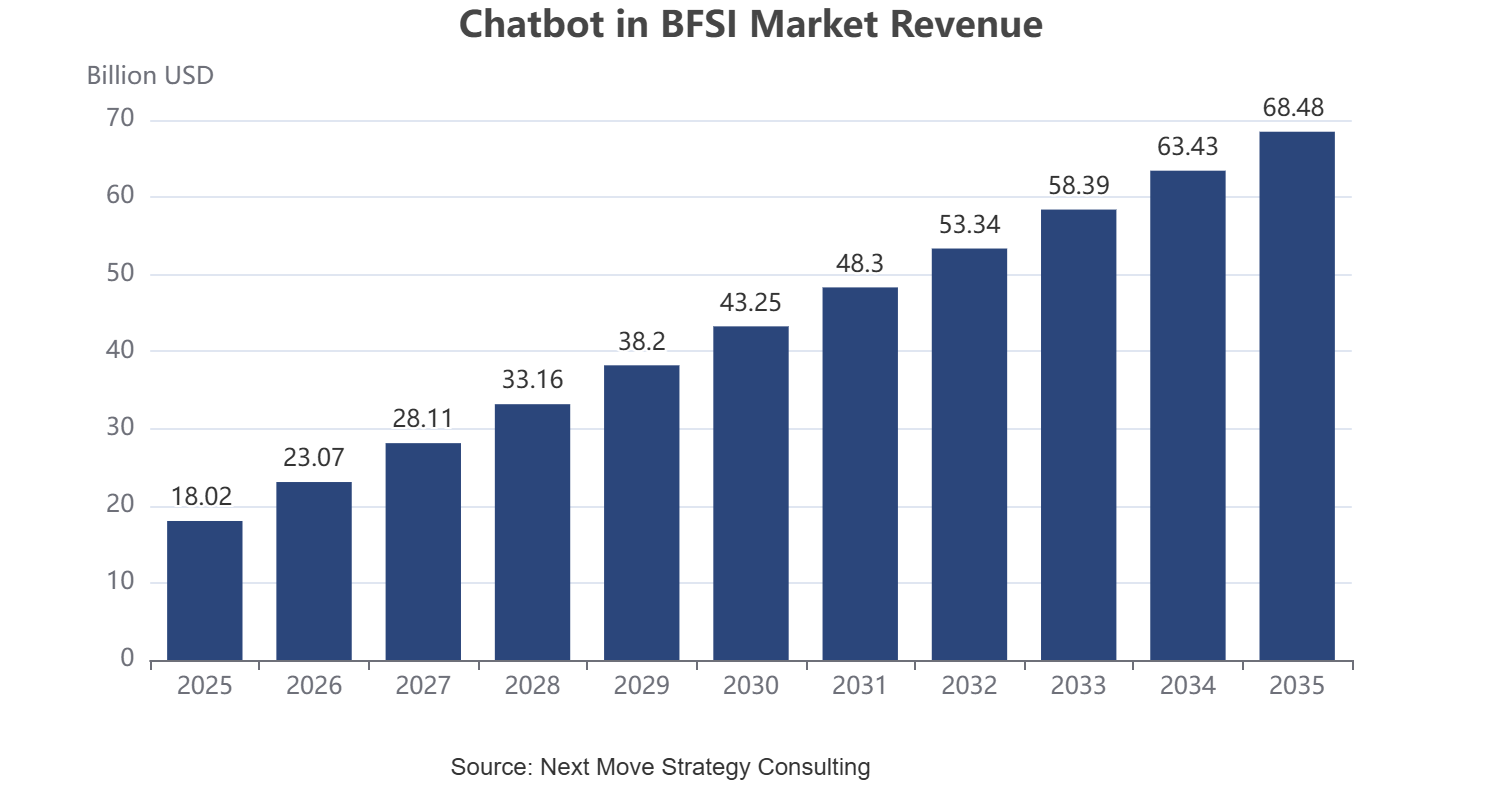
The global Chatbot in BFSI Market was valued at USD 18.02 Billion in 2025, advancing to USD 19.39 Billion in 2026, and projected to reach USD 68.48 Billion by 2035, expanding at a CAGR of 8.51% from 2026 to 2035. Growth is propelled by accelerating digital banking transformation, rising demand for 24/7 automated customer service, the proliferation of AI-native conversational platforms, and regulatory mandates encouraging frictionless client onboarding. The NLP/AI-Powered technology segment dominates adoption, while Asia Pacific emerges as the fastest-growing regional market fueled by digital financial inclusion initiatives.
|
Parameters |
Details |
|
Market Size in 2025 |
USD 18.02 Billion |
|
Market Size in 2026 |
USD 19.39 Billion |
|
Revenue Forecast in 2035 |
USD 68.48 Billion |
|
Growth Rate |
CAGR of 8.51% from 2026 to 2035 |
|
Analysis Period |
2025–2035 |
|
Base Year Considered |
2025 |
|
Forecast Period |
2026–2035 |
|
Market Size Estimation |
USD Billion |
|
Companies Profiled |
20 |
|
Countries Covered |
33 |
|
Market Share |
Top 10 |
Chatbot in BFSI Market Overview
How Is the Chatbot in BFSI Market Defined and Structured?
The Chatbot in BFSI Market encompasses AI-powered and rule-based conversational systems deployed across banking, financial services, and insurance to automate customer interactions, operational workflows, and compliance processes. NMSC's analysis indicates that the market spans a comprehensive value chain from foundational data infrastructure technologies, including real-time in-memory databases and AI orchestration platforms, to front-end conversational interfaces embedded within digital banking portals, mobile applications, and messaging ecosystems. The scope covers enterprise deployments by large financial institutions as well as scalable solutions serving fintech lenders and neobanks.
How Has the Structural Evolution of AI Chatbots in BFSI Transformed Operations?
From our research, we found that BFSI chatbots have evolved from simple rule-based FAQ engines deployed in the early 2010s to sophisticated multimodal agents capable of real-time transaction processing, fraud detection alerting, and personalized wealth advisory interactions. The structural shift has been enabled by advances in natural language processing, low-latency in-memory computing platforms, and open API ecosystems. Our assessment indicates that institutions investing in AI-native chatbot architectures have reduced average call center handle times and improved first-contact resolution rates substantially.
What Is the Regulatory Environment Shaping the Chatbot in BFSI Landscape?
Based on NMSC's research, we found that the regulatory environment for AI-driven chatbots in BFSI is increasingly formalized across major jurisdictions. The Financial Stability Board has published guidance on AI governance frameworks; the European Banking Authority has outlined algorithmic accountability requirements; the Reserve Bank of India has issued directives on digital customer interface standards; and the U.S. Consumer Financial Protection Bureau continues to examine conversational AI disclosures under existing consumer protection statutes. Compliance-by-design is now a key procurement criterion for institutional buyers.
How Is Technology Adoption Progressing Across the Chatbot in BFSI Ecosystem?
Through NMSC's assessment, we observed that technology adoption is bifurcating between large incumbent banks deploying enterprise-grade NLP platforms integrated with core banking systems and agile fintechs leveraging API-first chatbot microservices. Cloud-native deployment is the dominant modality, accounting for 60% of market revenue in 2025, driven by scalability requirements, cost efficiency, and faster iteration cycles. Hybrid deployment models are gaining ground as regulated institutions balance data residency compliance with cloud flexibility, signaling a maturation of the Chatbot in BFSI Market adoption curve.
|
Key Takeaways |
|
The Solutions segment dominated the Chatbot in BFSI Market at USD 10.81 billion in 2025, accounting for 60% of total revenue, driven by strong enterprise demand for standalone, web-based, and messaging-based conversational AI platforms across banking and insurance institutions. |
|
The Services segment is expected to witness faster growth through 2035, supported by increasing demand for system integration, managed services, training, and consulting as AI deployments become more sophisticated and deeply integrated with core banking systems. |
|
Web-based platforms held the largest Platform Type share at USD 7.21 billion in 2025, reflecting the continued importance of bank portals and insurer websites as primary customer interaction channels. |
|
Mobile-based platforms are projected to be the fastest-growing platform segment, supported by accelerating mobile-first banking adoption and expanding smartphone penetration across Asia Pacific, Latin America, and Africa. |
|
Large Enterprises accounted for USD 12.61 billion in 2025, representing approximately 70% of the global market, as Tier-1 banks and multinational insurers continue to lead investments in conversational AI technologies. |
|
The Small and Medium Enterprise segment is anticipated to expand at a faster pace through 2035, enabled by cloud-native SaaS chatbot platforms that lower deployment costs and reduce technical barriers for smaller financial institutions. |
|
Cloud deployment dominated the market at USD 10.81 billion in 2025, representing 60% of total revenue, driven by scalability requirements and the growing preference for vendor-managed AI infrastructure. |
|
Hybrid deployment is expected to emerge as the fastest-growing deployment mode, as regulated financial institutions seek to balance cloud agility with the data control and security advantages of on-premise environments. |
|
NLP/AI-Powered chatbots represented the largest technology segment at USD 9.01 billion in 2025, capturing approximately 50% of market share, reflecting increasing adoption of generative AI and transformer-based conversational architectures. |
|
NLP/AI-Powered technology is also expected to remain the fastest-growing technology category through 2035, as financial institutions progressively replace legacy rule-based systems with LLM-enabled conversational platforms and agentic AI solutions. |
|
Europe held the largest regional share at USD 5.97 billion in 2025, accounting for approximately 33.1% of global revenue, supported by strong digital banking penetration, favorable regulatory frameworks, and widespread AI adoption across banking and insurance institutions. |
|
Asia Pacific is projected to be the fastest-growing regional market, registering a CAGR of 15.57% from 2026 to 2035, driven by financial inclusion initiatives, rapid digital banking adoption, and supportive fintech regulations across emerging economies. |
|
The United States represented the largest individual country market in 2025, supported by extensive AI infrastructure investments, mature cloud ecosystems, and early adoption of generative AI across banking and insurance operations. |
|
India is expected to be one of the fastest-growing national markets, driven by expanding digital payment ecosystems, financial inclusion programs, multilingual AI adoption, and regulatory initiatives that are accelerating the deployment of AI-powered conversational banking solutions. |
Key Emerging Trends in the Chatbot in BFSI Market
How Is Generative AI Redefining Customer Engagement in the Chatbot in BFSI Market?
Generative AI integration represents the most disruptive trend reshaping the Chatbot in BFSI Market. From our research, we found that leading banks are embedding large language model capabilities into customer-facing chatbots to enable dynamic, context-aware responses beyond scripted FAQ flows. JPMorgan Chase, for example, has disclosed LLM research investments targeting internal and customer-facing AI tools. This shift reduces hallucination risk through retrieval-augmented generation architectures, where real-time in-memory databases like Redis and Aerospike serve as the high-speed knowledge layer powering accurate, low-latency conversational responses.
How Are Real-Time Data Platforms Enabling Hyper-Personalized BFSI Chatbot Experiences?
Our assessment indicates that hyper-personalisation is emerging as a key competitive differentiator in the Chatbot in BFSI Market, enabled by real-time in-memory data platforms. Companies like Hazelcast, KX Systems, and SingleStore provide the sub-millisecond data access layer that chatbot engines require to deliver instantaneous, contextually accurate responses, including real-time account balances, transaction alerts, and personalised product recommendations. BFSI institutions deploying these platforms report materially improved customer satisfaction scores and session completion rates.
How Is Omnichannel Integration Reshaping the Chatbot in BFSI Market's Deployment Architecture?
NMSC's analysis indicates that omnichannel convergence is transforming how chatbot workloads are architected in BFSI environments. Financial institutions are consolidating siloed chatbot deployments, spanning website, mobile app, messaging apps, IVR, and social media, into unified AI orchestration hubs. APIs and omnichannel middleware platforms are enabling seamless context handoff across channels, ensuring that a conversation initiated on WhatsApp can continue on the bank's mobile app without session loss. This architectural evolution increases deployment complexity and drives demand for system integration and managed service providers.
How Are Regulatory and Compliance Requirements Accelerating Chatbot Adoption in BFSI?
Compliance-driven chatbot deployment is an underappreciated growth accelerator in the Chatbot in BFSI Market. Our findings suggest that KYC automation, AML screening prompts, and regulatory disclosure obligations are increasingly routed through AI chatbots, enabling institutions to satisfy compliance requirements at scale without equivalent headcount expansion. The European Banking Authority's AI governance guidelines and the CFPB's emerging guidance on automated customer communication are incentivizing institutions to deploy auditable, explainable AI chatbot frameworks rather than opaque black-box models.
What Are the Key Market Drivers, Breakthroughs, and Investment Opportunities That Will Shape the Chatbot in BFSI Market in the Next Decade?
Growth Catalyst & Risk Assessment Matrix
|
Drivers / Trends / Restraints |
(+/-) % Impact on CAGR Forecast |
Geographic Relevance |
Impact Timeline |
|
Digital Banking Transformation |
+3.2% |
Global |
Immediate (2025–2027) |
|
AI/NLP Technology Maturity |
+2.8% |
North America, Asia Pacific |
Near-term (2025–2028) |
|
Financial Inclusion Mandates |
+18.02% |
Asia Pacific, MEA, LATAM |
Medium-term (2026–2030) |
|
Omnichannel Customer Experience |
+1.9% |
Global |
Near-term (2025–2028) |
|
Regulatory Compliance Automation |
+1.4% |
Europe, North America |
Near-term (2025–2028) |
|
Data Privacy & AI Accountability |
–1.6% |
Europe, North America |
Immediate (2025–2027) |
|
Legacy System Integration Barriers |
–1.2% |
Global |
Near-term (2025–2029) |
|
Lack of Customer Trust in AI |
–0.9% |
MEA, LATAM |
Medium-term (2026–2030) |
What Are the Growth Drivers of the Chatbot in BFSI Market?
How Is the Acceleration of Digital Banking Transformation Driving Demand in the Chatbot in BFSI Market?
The global shift toward branchless, app-first financial services is the primary structural driver of the Chatbot in BFSI Market. Based on NMSC's research, we found that the Bank for International Settlements documented that digital payment volumes surged by over 40% between 2020 and 2023, reflecting a fundamental change in how consumers access financial services. As institutions scale digital channels, chatbots serve as the scalable frontline interaction layer, handling account inquiries, loan pre-qualifications, and payment confirmations without human intervention, dramatically reducing cost-per-interaction relative to branch or call center equivalents.
How Does Rising Demand for 24/7 Automated Customer Service Propel the Chatbot in BFSI Market?
Customer expectations for instant, round-the-clock service have fundamentally altered service delivery economics in BFSI. Through our market assessment, we observed that the U.S. Federal Deposit Insurance Corporation's consumer surveys consistently indicate that digital channel preference has grown among all demographic cohorts, with younger customers overwhelmingly preferring self-service digital interactions. AI chatbots address this expectation by enabling institutions to provide immediate responses to high-volume, low-complexity queries, such as balance inquiries, card blocks, and EMI calculations, without proportional staffing increases, making chatbot ROI compelling even for mid-sized institutions.
How Do Financial Inclusion Mandates Create a Structural Tailwind for the Chatbot in BFSI Market?
Government-led financial inclusion programs are generating a structurally underpenetrated demand base for conversational AI in emerging markets. Our analysis shows that India's Pradhan Mantri Jan Dhan Yojana has enrolled over 500 million zero-balance accounts, while the Reserve Bank of India's digital lending guidelines encourage AI-assisted onboarding for rural populations. Similarly, the Central Bank of Nigeria's financial inclusion strategy targets 95% adult banking inclusion by 2024. In these markets, voice-enabled and text-based chatbots in local languages represent the primary viable interface for first-time banking users with limited digital literacy.
What Are the Growth Inhibitors of the Chatbot in BFSI Market?
How Do Data Privacy Regulations and AI Accountability Standards Constrain the Chatbot in BFSI Market?
Stringent data privacy frameworks represent the primary regulatory restraint on the Chatbot in BFSI Market. NMSC's analysis indicates that the European Union's General Data Protection Regulation imposes explicit consent requirements for automated decision-making in financial services, including AI chatbot interactions that influence credit decisions or insurance eligibility. Similarly, the EBA's guidelines on internal governance require financial institutions to maintain explainability and auditability of AI systems, creating compliance costs that disproportionately impact smaller institutions and slow enterprise procurement cycles. Cross-border data transfer restrictions further fragment global deployments.
How Do Legacy Core Banking System Integration Challenges Impede Chatbot Deployment in BFSI?
Legacy technology infrastructure remains a significant deployment barrier across established financial institutions. Based on our engagements, a substantial portion of Tier-1 and Tier-2 banks operate on core banking systems that predate modern API architectures, requiring expensive middleware layers, custom integration projects, and extended deployment timelines before AI chatbots can access real-time account data. The FDIC's technology supervision reports note that many community banks face particular challenges integrating third-party AI solutions with proprietary or vendor-locked core banking platforms, creating a friction point that extends time-to-value and increases total cost of deployment.
What Are the Growth Opportunities in the Chatbot in BFSI Market?
How Does the Expansion of Voice and Multimodal AI Create New Opportunities in the Chatbot in BFSI Market?
The transition from text-only chatbots to voice and multimodal interaction modes presents a significant expansion opportunity in the Chatbot in BFSI Market. Our findings suggest that voice-activated chatbots integrated with telephony and IVR systems enable financial institutions to serve customers who are unable or unwilling to engage via text-based interfaces, including elderly populations, visually impaired users, and rural customers using feature phones. IVR-integrated AI is projected to be among the fastest-growing interaction modes, and companies with real-time audio processing infrastructure, such as KX Systems and InterSystems, are well-positioned to serve this demand.
How Do Emerging Fintech Lending and Neobank Ecosystems Create a High-Growth Opportunity for the Chatbot in BFSI Market?
The global proliferation of fintech lenders and neobanks represents a distinct high-velocity opportunity segment. Based on our assessment, these digital-native institutions have no legacy infrastructure constraints and are building AI chatbot functionality as a core product layer rather than a retrofit. The Financial Stability Board's fintech surveillance data shows rapid growth in digital credit origination volumes across Southeast Asia, Africa, and Latin America, where alternative lenders are deploying AI chatbots to automate loan applications, creditworthiness assessments, and repayment reminders. This cohort represents a high-growth, high-intent buyer segment for chatbot platform vendors.
How Does the Demand for Fraud Detection and Risk Monitoring Chatbots Create Strategic Opportunities in the Chatbot in BFSI Market?
Real-time fraud detection and risk monitoring represent an underserved but rapidly growing application area for conversational AI in BFSI. NMSC's analysis indicates that the BIS has documented increasing financial cybercrime volumes globally, and institutions are exploring proactive chatbot-driven fraud alert and verification workflows to reduce fraud losses without adding manual review headcount. AI chatbots capable of real-time transaction anomaly notification, cardholder identity verification, and instant dispute initiation, powered by low-latency in-memory platforms, offer a compelling value proposition aligned with both loss reduction and customer satisfaction objectives.
Porter's Five Forces Analysis of the Chatbot in BFSI Market
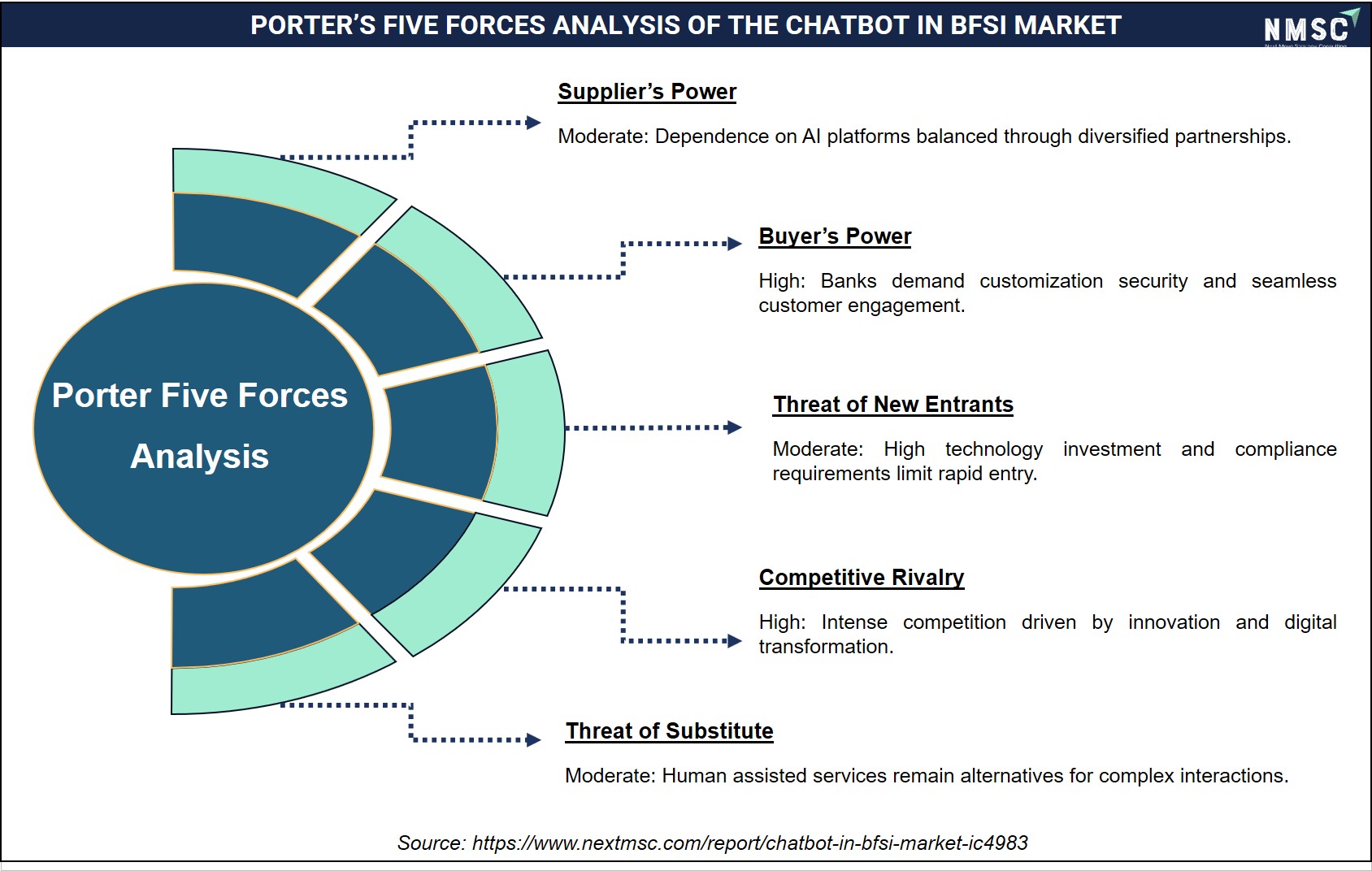
The above infographic presents Porter's Five Forces analysis of the Chatbot in BFSI Market, illustrating the competitive factors that shape industry dynamics and market attractiveness. It highlights the influence of competitive rivalry, bargaining power of buyers and suppliers, threat of substitutes, and barriers to new entrants. The framework provides a strategic view of how technological innovation, customer expectations, and competitive intensity collectively influence growth opportunities and long-term positioning within the global Chatbot in BFSI ecosystem.
How Is the Chatbot in BFSI Market Segmented in This Report, and What Are the Key Insights from the Segmentation Analysis?
Which Component Category Dominates Revenue Generation in the Chatbot in BFSI Market?
|
Segments |
2025 (USD Billion) |
2035 (USD Billion) |
CAGR (2026–2035) |
|
Solutions |
10.81 |
47.94 |
16.06% |
|
Services |
7.21 |
20.54 |
11.04% |
The Component segment of the Chatbot in BFSI Market is structured across Solutions and Services, with the Solutions category commanding 60% of total revenue at USD 10.81 Billion in 2025. Web-based and standalone chatbot solutions represent the dominant sub-categories, as financial institutions prioritize browser-accessible customer service automation and dedicated AI agents for specific service workflows. Messaging-based solutions are also gaining traction through increasing adoption of enterprise messaging platforms. Within Services, System Integration and Implementation constitutes the most significant sub-segment, reflecting the extensive effort required to connect chatbot systems with core banking platforms, CRM solutions, and regulatory compliance infrastructure.
Which Platform Type Generates the Most Revenue and Which Is Growing the Fastest in the Chatbot in BFSI Market?
|
Segments |
2025 (USD Billion) |
2035 (USD Billion) |
CAGR (2026–2035) |
|
Web-based |
7.21 |
22.82 |
12.21% |
|
Mobile-based |
7.21 |
29.53 |
15.14% |
|
Social Media |
3.60 |
16.13 |
16.18% |
The Platform Type segmentation reveals a balanced initial split between web-based and mobile-based platforms, each contributing USD 7.21 Billion in 2025, followed by social media platforms at USD 3.60 Billion. Mobile-based platforms are projected to register the fastest growth through 2035, supported by rising smartphone penetration and the increasing preference for mobile banking experiences. Social media-based chatbot deployments spanning WhatsApp, Facebook Messenger, and WeChat are also expanding rapidly, providing financial institutions with highly accessible and cost-efficient customer engagement channels.
How Do Large Enterprises and SMEs Differ in Their Chatbot in BFSI Market Adoption Trajectories?
|
Segments |
2025 (USD Billion) |
2035 (USD Billion) |
CAGR (2026–2035) |
|
Large Enterprises |
12.61 |
42.72 |
12.98% |
|
Small & Medium Enterprises |
5.41 |
25.76 |
16.89% |
Large enterprises dominate the Enterprise Size segment segment with USD 12.61 Billion in 2025, accounting for approximately 70% of market revenue, as Tier-1 banks and global insurers continue to lead complex, multi-channel chatbot deployments requiring advanced integration, security, and regulatory compliance capabilities. However, the Small and Medium Enterprises segment is expected to witness stronger growth over the forecast period, supported by the increasing availability of cloud-native SaaS platforms that lower implementation costs and deployment complexity. Community banks, regional insurance providers, and mid-sized fintech firms are increasingly adopting conversational AI solutions to enhance customer engagement and operational efficiency.
How Does the Deployment Mode Mix Reflect Evolving Infrastructure Priorities in the Chatbot in BFSI Market?
|
Segments |
2025 (USD Billion) |
2035 (USD Billion) |
CAGR (2026–2035) |
|
Cloud |
10.81 |
50.82 |
16.74% |
|
On-Premise |
5.41 |
14.95 |
10.70% |
|
Hybrid |
1.80 |
2.71 |
4.18% |
Cloud deployment leads the Deployment Mode segment with a 60% revenue share and USD 10.81 Billion in 2025, reflecting the BFSI sector's ongoing migration toward scalable and flexible AI infrastructure. Cloud-native chatbot platforms enable rapid model updates, elastic scalability, and seamless integration with cloud-based CRM and analytics solutions. On-premise deployment maintains a significant presence due to stringent data sovereignty and regulatory requirements among highly regulated institutions. Hybrid architectures are expected to gain momentum over the forecast period as organizations seek to balance compliance requirements with deployment agility and operational flexibility.
How Are Text, Voice, and Multimodal Interaction Modes Reshaping Customer Engagement in the Chatbot in BFSI Market?
|
Segments |
2025 (USD Billion) |
2035 (USD Billion) |
CAGR (2026–2035) |
|
Text |
9.01 |
37.54 |
15.34% |
|
Voice / IVR |
5.41 |
19.98 |
13.96% |
|
Multimodal |
3.60 |
10.96 |
11.78% |
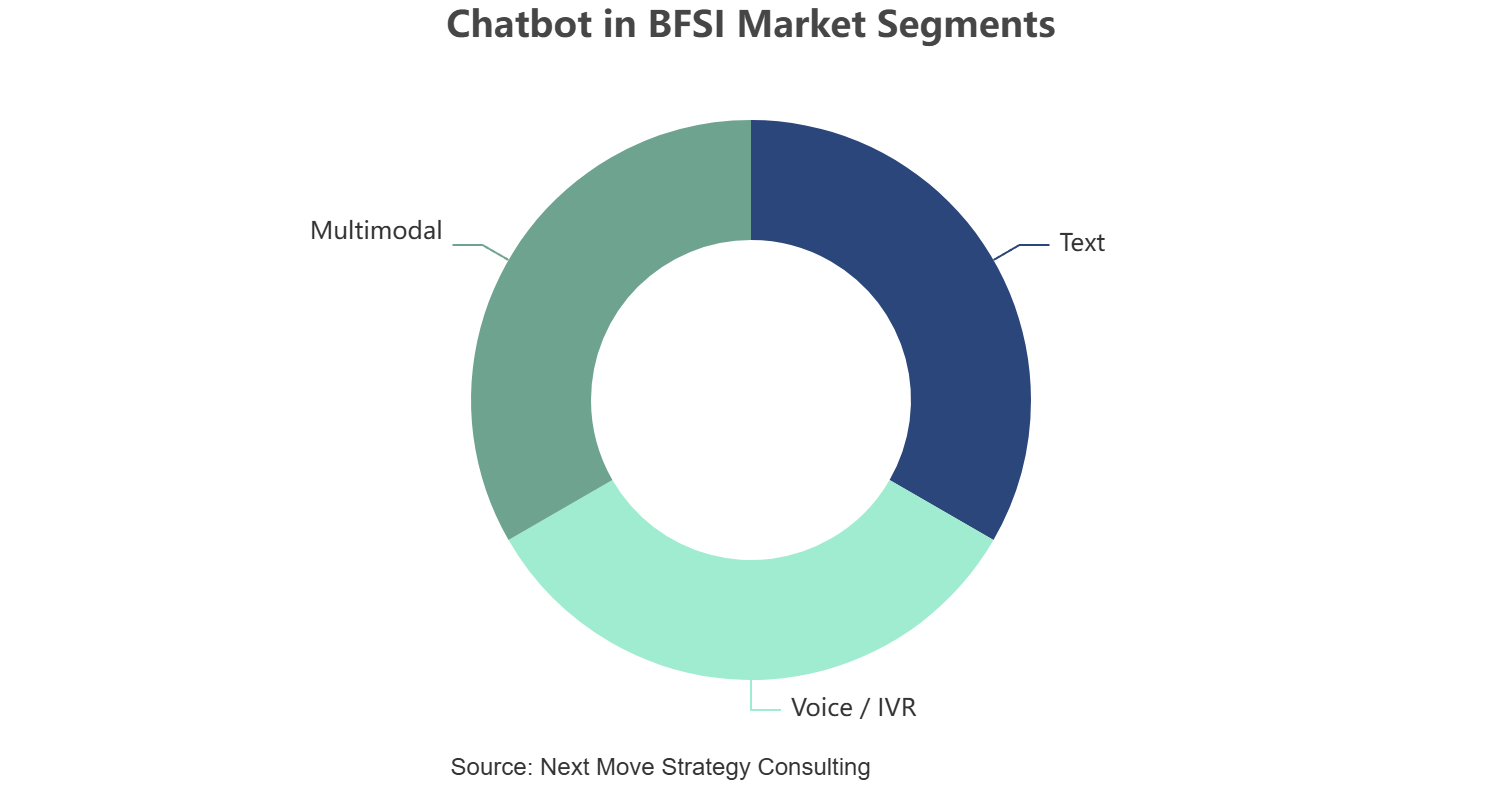
Text-based chatbots dominate the Interaction Mode segment at USD 9.01 Billion in 2025, representing 50% of total market revenue owing to the maturity of text-based customer service interfaces across banking websites and mobile applications. Voice and IVR-enabled chatbots account for a substantial share of the market, serving customers who continue to prefer telephone-based interactions. Meanwhile, multimodal chatbots integrating voice, text, image recognition, and document capture capabilities are witnessing increasing adoption as financial institutions pursue more personalized and seamless customer experiences across multiple touchpoints.
How Is the Shift from Rule-Based to NLP/AI-Powered Technology Redefining the Chatbot in BFSI Market Landscape?
|
Segments |
2025 (USD Billion) |
2035 (USD Billion) |
CAGR (2026–2035) |
|
Rule-Based |
5.41 |
13.70 |
9.75% |
|
NLP / AI-Powered |
9.01 |
48.62 |
18.35% |
|
Hybrid |
3.60 |
6.16 |
5.52% |
The Technology Type segment highlights the industry's accelerating transition toward AI-driven conversational architectures. NLP and AI-powered chatbots lead the segment with USD 9.01 Billion in revenue in 2025 and are expected to strengthen their market position through 2035, supported by advances in generative AI, large language models, and contextual understanding capabilities. Rule-based systems continue to register steady growth owing to their established presence in highly regulated environments and suitability for standardized workflows. Hybrid architectures, combining deterministic logic with AI inference capabilities, are also gaining traction as institutions modernize legacy chatbot deployments while maintaining operational reliability and compliance.
How Does Channel Integration Strategy Determine Competitive Positioning in the Chatbot in BFSI Market?
|
Segments |
2025 (USD Billion) |
2035 (USD Billion) |
CAGR (2026–2035) |
|
Bank / Insurer Website & Mobile App |
5.41 |
22.82 |
15.48% |
|
Messaging Apps |
3.60 |
16.31 |
16.31% |
|
Email-to-Bot |
1.80 |
6.53 |
13.75% |
|
Telephony / IVR |
3.60 |
14.67 |
15.08% |
|
Social Media |
1.80 |
3.56 |
7.06% |
|
APIs / Omni-channel Hubs |
1.81 |
4.59 |
9.75% |
Bank and insurer-owned digital properties, including websites and mobile applications, constitute the dominant channel integration category with USD 5.41 Billion in 2025, as institutions prioritize secure and branded AI experiences on owned platforms. Messaging applications represent the second-largest channel, reflecting the strategic importance of platforms such as WhatsApp and WeChat in customer communication. APIs and omni-channel hubs are expected to witness robust growth over the forecast period, enabling financial institutions to unify customer interactions and maintain seamless session continuity across multiple touchpoints and communication channels.
Which Application Areas Are Generating the Highest Demand in the Chatbot in BFSI Market?
|
Segments |
2025 (USD Billion) |
2035 (USD Billion) |
CAGR (2026–2035) |
|
Customer Service / Contact Center Augmentation |
5.41 |
19.86 |
13.88% |
|
Sales & Marketing |
2.70 |
10.27 |
14.30% |
|
Payments & Transactions |
2.70 |
10.27 |
14.30% |
|
Fraud & Risk Monitoring |
1.80 |
8.22 |
16.38% |
|
Policy Servicing |
1.80 |
6.85 |
14.31% |
|
KYC & Onboarding |
1.80 |
7.54 |
15.42% |
|
Loan Origination Support |
1.81 |
5.47 |
11.69% |
Customer Service and Contact Center Augmentation dominates the By Application segment with USD 5.41 Billion in 2025, reflecting the industry's continued emphasis on reducing service costs and improving response efficiency. Sales and Marketing chatbots are increasingly being deployed to support lead qualification and personalized customer engagement initiatives. KYC and Onboarding applications are gaining strategic importance amid intensifying regulatory requirements and rising customer expectations for frictionless account opening processes. Fraud and Risk Monitoring is projected to experience strong growth due to the increasing need for real-time anomaly detection and financial crime prevention capabilities. Loan Origination Support is also expected to expand steadily as banks and fintech institutions automate lending workflows and customer interactions.
How Does Sub-Vertical Industry Composition Reflect Adoption Intensity Across the Chatbot in BFSI Market?
|
Segments |
2025 (USD Billion) |
2035 (USD Billion) |
CAGR (2026–2035) |
|
Retail & Commercial Banking |
5.41 |
28.73 |
18.17% |
|
Insurance |
3.60 |
17.95 |
17.43% |
|
Wealth & Asset Management |
2.70 |
9.56 |
13.48% |
|
Capital Markets & Brokerage |
1.80 |
5.40 |
11.61% |
|
Payment Processors & Digital Wallets |
2.70 |
4.96 |
6.27% |
|
Fintech Lending & Neobanks |
1.81 |
1.88 |
0.38% |
Retail and Commercial Banking leads the Sub-Vertical Industry segment with USD 5.41 Billion in 2025, driven by the high volume of interactions and the broad range of chatbot use cases spanning account servicing, lending support, and payments. Insurance represents the second-largest sub-vertical, with conversational AI deployments supporting policy servicing, claims processing, and customer engagement activities. Wealth and Asset Management institutions are increasingly leveraging chatbot technologies for onboarding and portfolio-related inquiries, while Payment Processors, Digital Wallet providers, and Fintech Lending and Neobanks continue to integrate conversational AI capabilities as a core component of their digital-first operating models.
Regional Outlook of the Chatbot in BFSI Market
Geographic Performance Snapshot
|
Region / Country |
2025 (USD Billion) |
2035 (USD Billion) |
CAGR (2026–2035) |
|
North America |
4.32 |
15.25 |
13.44% |
|
Europe |
5.97 |
21.38 |
13.61% |
|
Asia Pacific |
5.09 |
21.63 |
15.57% |
|
Latin America |
1.49 |
6.11 |
15.16% |
|
Middle East & Africa |
1.15 |
4.11 |
13.58% |
North America Chatbot in BFSI Market
Based on our engagements with financial services stakeholders across the region, North America remains one of the largest contributors to the global Chatbot in BFSI Market, accounting for USD 4.32 Billion in 2025. Growth is supported by deep AI investment concentration among Tier-1 U.S. banks, a mature cloud infrastructure ecosystem, and proactive regulatory engagement through the Federal Reserve's responsible AI guidance. Technology adoption is accelerating across both retail and commercial banking use cases, with generative AI chatbot programs announced by several large institutions. The regional market is projected to reach USD 15.25 Billion by 2035, registering a CAGR of 13.44%.
United States Chatbot in BFSI Market
Through our analysis, the United States represents the largest national market within North America and one of the largest globally in the Chatbot in BFSI landscape. Market demand is underpinned by the high concentration of Tier-1 commercial banks, insurance carriers, and capital markets firms. The FDIC's digital banking examination framework and the Federal Reserve's guidance on responsible AI deployment have established structured pathways for chatbot adoption. Competitive intensity remains high, with leading cloud platform providers and specialized AI vendors competing for enterprise contracts. Generative AI investments across banking and insurance institutions are expected to further strengthen the country's market position over the forecast period.
Canada Chatbot in BFSI Market
From our assessment, Canada's Chatbot in BFSI Market reflects a concentrated banking sector; the country's six largest banks command a dominant share of financial services activity, creating both significant chatbot procurement authority and a measured, compliance-conscious adoption pace. The Office of the Superintendent of Financial Institutions has published guidance on technology and cyber risk, providing a framework within which AI chatbot deployments must operate. Canada's market is valued at USD 0.11 Billion in 2025, with strong projected growth to USD 0.57 Billion by 2035 supported by open banking regulatory developments.
Mexico Chatbot in BFSI Market
According to an evaluation of Mexico's financial services landscape, the Chatbot in BFSI Market is benefiting from the Comisión Nacional Bancaria y de Valores' fintech regulatory framework, which has licensed over 30 entities under the Fintech Law. A large unbanked adult population and high mobile penetration are creating structural demand for conversational AI tools that can facilitate account opening, credit disbursement, and payment services in Spanish-language interfaces. Mexico's market is estimated at USD 0.06 Billion in 2025 and is projected to reach USD 0.30 Billion by 2035.
Europe Chatbot in BFSI Market
Based on our research, Europe's Chatbot in BFSI Market is shaped by a complex regulatory environment combining GDPR obligations, EBA algorithmic governance requirements, and the EU AI Act's risk classification framework, which imposes stricter requirements on AI systems used in financial services. Despite regulatory complexity, adoption is progressing steadily, particularly in digitally advanced markets such as the Nordic countries, Germany, the United Kingdom, and the Netherlands. Europe accounted for the largest regional market in 2025, valued at USD 5.97 Billion, and is projected to reach USD 21.38 Billion by 2035, expanding at a CAGR of 13.61%.
United Kingdom Chatbot in BFSI Market
Through our analysis, the United Kingdom's Chatbot in BFSI Market benefits from the FCA's Innovation Hub and regulatory sandbox programs that have enabled over 60 cohorts of fintech and AI-in-finance companies to test supervised innovations. Post-Brexit regulatory divergence has given the FCA flexibility to pursue a more principles-based AI governance approach compared to the EU. The UK market is valued at USD 0.09 Billion in 2025, with a robust pipeline of chatbot deployments across challenger banks, insurance platforms, and open banking aggregators, forecast to reach USD 0.46 Billion by 2035.
Germany Chatbot in BFSI Market
Based on our market evaluation, Germany's Chatbot in BFSI Market is characterized by BaFin's digital transformation agenda and the dominance of universal banks and savings institutions that are steadily accelerating AI adoption. Germany's strong engineering culture drives demand for technically robust and compliant AI architectures rather than rapid experimentation. Investments by major banking groups in conversational AI infrastructure are expected to support continued market expansion through 2035.
France Chatbot in BFSI Market
In our observation, France's Chatbot in BFSI Market is driven by major banking groups deploying conversational AI across retail and private banking segments. The Autorité de Contrôle Prudentiel et de Résolution provides oversight of technology risk in financial institutions, with AI governance becoming an increasing supervisory priority. France's market is valued at USD 0.06 Billion in 2025, projected to reach USD 0.31 Billion by 2035. Insurance penetration is high, and chatbot deployments for policy servicing and claims processing represent a significant growth driver.
Italy Chatbot in BFSI Market
According to evaluation of Italy's financial services sector, the Chatbot in BFSI Market is advancing within a banking industry characterized by ongoing consolidation and digital transformation investment. The Bank of Italy's technology supervision framework mandates operational resilience standards that shape AI procurement. Italy's market is valued at USD 0.04 Billion in 2025, forecast to reach USD 0.21 Billion by 2035. The insurance sector, with high household insurance penetration, represents a notable chatbot deployment area for claims and policy management automation.
Spain Chatbot in BFSI Market
Through our market assessment, Spain's Chatbot in BFSI Market is being propelled by the digital transformation investments of major Spanish banking groups, which have become global leaders in digital banking platforms. The Banco de España's regulatory sandbox, established under Royal Decree-Law 7/2021, provides a structured testing environment for AI-driven financial services innovations. Spain's market is valued at USD 0.04 Billion in 2025, expected to reach USD 0.20 Billion by 2035. Mobile banking penetration is among the highest in Europe, driving mobile-channel chatbot investment.
Sweden Chatbot in BFSI Market
Based on NMSC's research, Sweden's advanced digital banking ecosystem, where cashless transactions dominate and mobile banking penetration is exceptionally high, creates a highly receptive environment for conversational AI deployment. Finansinspektionen actively monitors technology risks within the financial sector, encouraging responsible AI adoption. Continued investments by neobanks and payment platforms are expected to support robust growth in chatbot deployments across banking and financial services.
Denmark Chatbot in BFSI Market
Our analysis shows that Denmark's highly digitized financial sector and leadership in open banking implementation create a favorable environment for chatbot adoption. The Danish Financial Supervisory Authority has engaged constructively with fintech innovation while maintaining robust supervisory standards. Denmark's market is estimated at USD 0.02 Billion in 2025, with steady projected growth to USD 0.11 Billion by 2035. Pension fund administration and mortgage banking represent sector-specific chatbot deployment opportunities.
Finland Chatbot in BFSI Market
From our assessment, Finland's Chatbot in BFSI Market reflects the country's position as a digitally advanced economy with very high mobile and internet banking penetration rates. The Financial Supervisory Authority of Finland maintains stringent operational resilience requirements for AI systems used in customer-facing financial services. Finland's market is valued at USD 0.02 Billion in 2025, projected to reach USD 0.11 Billion by 2035, supported by ongoing investment by domestic banks and Nordic financial conglomerates in conversational AI platforms.
Netherlands Chatbot in BFSI Market
Through NMSC's assessment, the Netherlands occupies a strategically significant position within the European Chatbot in BFSI Market, hosting globally active financial institutions and a mature fintech ecosystem. The Dutch Authority for the Financial Markets and De Nederlandsche Bank collaboratively oversee AI governance in financial services. The Netherlands market is valued at USD 0.04 Billion in 2025, forecast to reach USD 0.21 Billion by 2035. Payments innovation and sustainable finance digital advisory represent high-priority chatbot application areas.
Asia Pacific Chatbot in BFSI Market
Based on our engagements across the Asia Pacific region, the Chatbot in BFSI Market is projected to witness the fastest growth among all regions, expanding from USD 5.09 Billion in 2025 to USD 21.63 Billion by 2035 at a CAGR of 15.57%. Growth is underpinned by financial inclusion initiatives, government-backed digital banking licensing regimes, rapid adoption of mobile-first banking, and the proliferation of superapps integrating financial services with conversational AI capabilities. Regulatory sandbox programs in Singapore, India, Indonesia, and Australia are enabling accelerated experimentation with AI chatbot architectures in supervised environments, positioning Asia Pacific as the fastest-growing regional market.
China Chatbot in BFSI Market
According to evaluation, China represents the largest national market in Asia Pacific for the Chatbot in BFSI Market, valued at USD 0.13 Billion in 2025 and projected to reach USD 0.88 Billion by 2035 at a CAGR of approximately 21.2%. The integration of AI chatbots within WeChat, Alipay, and major state-owned bank mobile applications has normalized conversational financial services for hundreds of millions of users. The People's Bank of China's FinTech Development Plan provides directional guidance for AI adoption, while domestic technology champions are deploying proprietary LLM-powered banking chatbots.
India Chatbot in BFSI Market
Based on NMSC's research, India represents one of the fastest-growing national markets within the global Chatbot in BFSI landscape. The RBI's digital lending guidelines, the scale of the UPI ecosystem processing billions of transactions annually, and the Jan Dhan Yojana's financial inclusion initiatives have created a vast addressable market for conversational AI tools deployed in Hindi, Tamil, Bengali, and other regional languages. NBFC chatbot deployments for rural credit and customer engagement represent a rapidly expanding opportunity area.
Japan Chatbot in BFSI Market
Through our analysis, Japan's Chatbot in BFSI Market reflects the country's accelerating digitalization push, supported by the Financial Services Agency's fintech and digital finance policy roadmap. Japan's market is valued at USD 0.07 Billion in 2025, expected to reach USD 0.41 Billion by 2035. Traditional megabanks are investing heavily in AI-powered contact center automation and digital advisory chatbots as part of broader digital transformation programs. Japan's aging population also creates demand for accessible, voice-enabled financial service interactions designed for older user demographics.
South Korea Chatbot in BFSI Market
Our findings suggest that South Korea's sophisticated digital financial services market, featuring internet-only banks such as KakaoBank and Toss, is a high-velocity adopter of conversational AI in BFSI. The Financial Services Commission has implemented internet banking frameworks and AI governance guidelines that balance innovation with consumer protection. South Korea's market is valued at USD 0.05 Billion in 2025, forecast to reach USD 0.32 Billion by 2035 at approximately 20.2% CAGR, with open banking expansion driving cross-institution AI service development.
Australia Chatbot in BFSI Market
Based on our market evaluation, Australia's Chatbot in BFSI Market is shaped by the Consumer Data Right framework, which mandates open banking data sharing, and ASIC's guidance on digital product disclosure obligations. Major Australian banks and the growing neobank sector are deploying AI chatbots for account inquiry, mortgage pre-qualification, and insurance quote generation. Australia's market is valued at USD 0.04 Billion in 2025 and is projected to reach USD 0.25 Billion by 2035, with cloud-native deployments dominating new investment.
Taiwan Chatbot in BFSI Market
From our assessment, Taiwan's Financial Supervisory Commission has established a fintech regulatory sandbox that supports AI-in-finance experimentation, while major domestic banks are investing in NLP-powered chatbots for retail and SME banking interactions in Traditional Chinese. Wealth management and digital insurance are emerging as priority application areas, supporting continued expansion of conversational AI adoption across the country's financial services sector.
Indonesia Chatbot in BFSI Market
Through NMSC's assessment, Indonesia's Chatbot in BFSI Market is experiencing rapid growth driven by the country's large unbanked and underbanked population and the OJK's digital banking framework that has enabled the emergence of digital-only banks. Mobile-first chatbot deployments in Bahasa Indonesia are becoming a strategic priority for fintech lenders and digital banks seeking to scale customer acquisition and servicing while maintaining cost efficiency.
Vietnam Chatbot in BFSI Market
Based on our engagements, Vietnam's rapidly expanding digital banking sector, supported by the State Bank of Vietnam's digital transformation strategy, is creating strong demand for Vietnamese-language conversational AI solutions in retail banking and digital lending. The country's young and mobile-native population, coupled with high smartphone penetration, provides a favorable environment for sustained chatbot adoption across financial institutions.
Philippines Chatbot in BFSI Market
According to evaluation, the Bangko Sentral ng Pilipinas' Digital Payments Transformation Roadmap and digital banking licensing initiatives have accelerated fintech investment in the Philippines. Chatbot deployments supporting remittance services, e-wallet customer support, and agricultural lending are emerging use cases. Increasing AI infrastructure investment and growing digital banking penetration are expected to create favorable long-term growth opportunities.
Malaysia Chatbot in BFSI Market
Our analysis indicates that Bank Negara Malaysia's financial sector blueprint and open banking initiatives are driving conversational AI adoption among banks and insurers. Islamic finance chatbot deployments providing Sharia-compliant product information and advisory services represent a distinctive characteristic of the Malaysian market. Ongoing digital transformation efforts are expected to strengthen chatbot implementation across the country's BFSI ecosystem.
Middle East & Africa Chatbot in BFSI Market
Through our analysis, the Middle East and Africa region represents a high-potential, dual-speed market for the Chatbot in BFSI landscape. Gulf Cooperation Council countries led by Saudi Arabia and the UAE are deploying AI chatbots as part of broader digital transformation agendas, while Sub-Saharan African economies are increasingly leveraging conversational AI to support mobile-money and financial inclusion initiatives. The regional market was valued at USD 1.15 Billion in 2025 and is forecast to reach USD 4.11 Billion by 2035, representing a CAGR of 13.58%.
Saudi Arabia Chatbot in BFSI Market
Based on NMSC's research, Saudi Arabia's Chatbot in BFSI Market is advancing under the Vision 2030 Financial Sector Development Program, which aims to accelerate digital banking and increase the share of digital payments across the economy. The Saudi Central Bank has introduced fintech regulations and AI governance frameworks that provide a structured environment for chatbot deployment. Continued investments in digital transformation are expected to support strong market expansion over the forecast period.
UAE Chatbot in BFSI Market
The UAE exhibits one of the highest AI adoption intensities within the Middle East and Africa region, supported by the DIFC FinTech Hive, ADGM's regulatory sandbox framework, and the Central Bank of the UAE's open banking initiatives. Major financial institutions have announced investments in AI-powered customer engagement platforms, reinforcing the country's position as a regional leader in chatbot deployment across retail and private banking.
Egypt Chatbot in BFSI Market
According to our evaluation, Egypt's Central Bank digital transformation roadmap has encouraged financial institutions to invest in digital service channels, including conversational AI for retail banking. Egypt's large population and expanding digital payments ecosystem, driven by Meeza card adoption and mobile wallet proliferation, create a significant addressable market. Egypt's Chatbot in BFSI Market is valued at USD 0.02 Billion in 2025, forecast to reach USD 0.09 Billion by 2035.
Israel Chatbot in BFSI Market
Through our analysis, Israel's globally recognized fintech and AI ecosystem positions the country as an important innovation hub within the Middle East and Africa Chatbot in BFSI Market. The Bank of Israel's fintech initiatives and regulatory sandbox programs support AI experimentation in banking applications. Cybersecurity-integrated financial chatbot architectures represent a notable area of specialization, contributing to the country's strategic importance despite its relatively modest domestic market size.
Turkey Chatbot in BFSI Market
Based on our market evaluation, Turkey's dynamic banking sector, which has experienced rapid mobile banking adoption, is increasingly deploying AI chatbots for customer service automation and digital loan origination. The Banking Regulation and Supervision Agency continues to oversee technology risks within the sector, while advances in Turkish-language NLP capabilities are strengthening chatbot effectiveness and supporting broader adoption.
Nigeria Chatbot in BFSI Market
In our observation, Nigeria, as Sub-Saharan Africa's largest economy, is witnessing accelerating fintech adoption, with the Central Bank of Nigeria's cashless policy and digital finance initiatives creating structural demand for conversational AI. Mobile money chatbots and digital banking onboarding assistants are emerging as high-priority applications, supported by growing smartphone penetration and expanding financial inclusion efforts.
South Africa Chatbot in BFSI Market
Through NMSC's assessment, South Africa's Chatbot in BFSI Market benefits from a relatively mature banking sector featuring JSE-listed financial conglomerates with active AI investment programs. The South African Reserve Bank's Prudential Authority monitors technology risk, and open banking policy development is underway. South Africa's market is valued at USD 0.01 Billion in 2025, projected to reach USD 0.06 Billion by 2035 at approximately 19.5% CAGR, with insurance and wealth management chatbots complementing banking applications.
Latin America Chatbot in BFSI Market
Based on our engagements across the region, Latin America's Chatbot in BFSI Market was valued at USD 1.49 Billion in 2025 and is projected to reach USD 6.11 Billion by 2035, growing at a CAGR of 15.16%. Brazil dominates regional activity, supported by the Pix instant payment system and Banco Central do Brasil's Open Finance framework. Across the region, regulatory modernization, increasing smartphone penetration, and the rapid expansion of digital banking and fintech ecosystems are creating favorable conditions for conversational AI deployment across banking, insurance, and payment services.
Brazil Chatbot in BFSI Market
Based on our research, Brazil remains the dominant market within Latin America for the Chatbot in BFSI landscape. The Banco Central do Brasil's Pix instant payment infrastructure, Open Finance framework, and progressive digital banking regulations have created a favorable ecosystem for AI chatbot deployment. Major banks and challenger institutions are increasingly deploying Portuguese-language conversational AI solutions for account servicing, credit origination, and investment advisory applications.
Argentina Chatbot in BFSI Market
From our assessment, Argentina's Chatbot in BFSI Market is navigating a complex macroeconomic environment while digital banking adoption continues to accelerate, particularly across remittance, savings, and investment services. The Banco Central de la República Argentina's digital finance guidelines support fintech development, creating opportunities for conversational AI solutions aimed at improving customer engagement and operational efficiency.
Chile Chatbot in BFSI Market
According to evaluation, Chile's Chatbot in BFSI Market benefits from the country's relatively high digital banking penetration, fintech law enacted in 2023, and CMF's (Comisión para el Mercado Financiero) active technology supervision agenda. Chile's stable macroeconomic environment and advanced payment infrastructure support measured but consistent chatbot investment among banking and insurance players. Chile's market is valued at USD 0.02 Billion in 2025, forecast to reach USD 0.10 Billion by 2035.
Colombia Chatbot in BFSI Market
Through our analysis, Colombia's Chatbot in BFSI Market reflects the country's expanding fintech ecosystem, supported by the Superintendencia Financiera de Colombia's regulatory sandbox and digital financial services oversight framework. Mobile banking penetration has increased significantly, and major Colombian banks are investing in Spanish-language AI chatbots for retail and SME banking applications, supporting continued growth in conversational banking services.
Strategic Framework of the Chatbot in BFSI Market
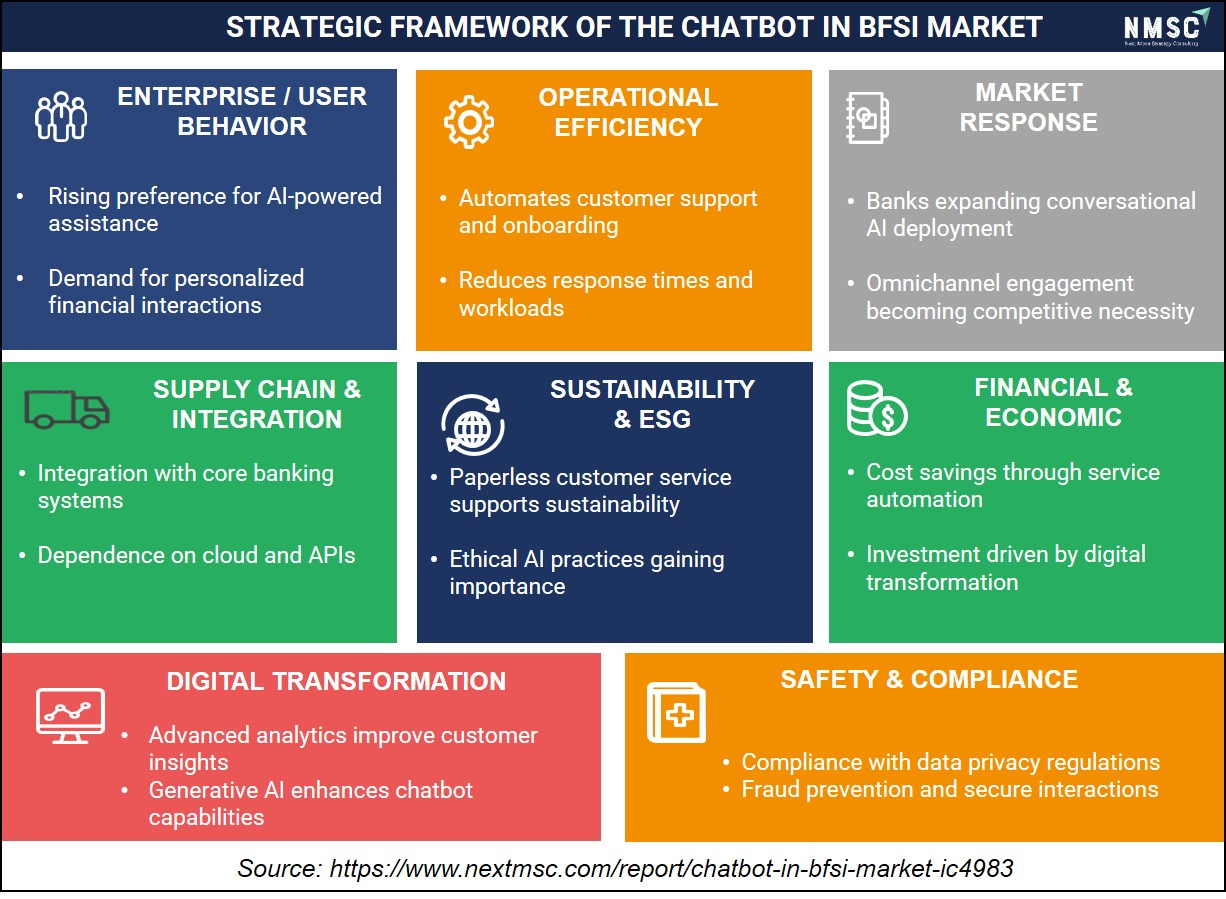
The above framework illustrates key forces shaping the Chatbot in BFSI market across user behaviour, operations, integration, compliance, and financial outcomes. We observed that rising demand for AI-powered, personalised interactions is driving adoption, while automation of customer support and onboarding reduces response times and workloads. Integration with core banking systems via cloud and APIs remains critical, and compliance with data privacy alongside fraud prevention ensures secure interactions. Further, cost savings, generative AI capabilities, and paperless ESG benefits continue to fuel investment in this space.
Competitive Landscape
Competitive Dynamics and M&A Landscape
|
Key Takeaways |
Details |
|
Market Structure |
Moderately fragmented, comprising established enterprise conversational AI vendors, customer engagement platform providers, and AI-native specialists delivering chatbot solutions tailored for banking, insurance, and financial services institutions. |
|
Innovation Focus |
Generative AI integration, multilingual NLP capabilities, omnichannel customer engagement, voice AI, agentic workflows, conversational analytics, and industry-specific compliance and personalization features. |
|
M&A Activity |
Strategic consolidation focused on acquisitions of AI-native chatbot developers, voice AI specialists, customer experience platforms, and BFSI-focused conversational intelligence providers to strengthen product portfolios and geographic presence. |
How Do Companies Compete in the Chatbot in BFSI Market?
The Chatbot in BFSI Market competitive landscape is characterised by a combination of enterprise conversational AI providers, customer engagement specialists, and AI-native platform vendors. Companies including Kore.ai, IBM, Amelia, Verint Systems, NICE, eGain, and LivePerson compete by offering end-to-end conversational AI capabilities spanning chatbot development, omnichannel orchestration, analytics, and customer experience management. Meanwhile, specialised vendors such as Kasisto, Personetics, PolyAI, Cognigy, and Boost.ai focus on domain-specific AI capabilities, voice automation, and personalized financial interactions. Our analysis indicates that competition is increasingly centred on generative AI capabilities, integration flexibility, multilingual support, regulatory compliance, and customer experience outcomes rather than solely on traditional chatbot functionality.
Which Kind of Companies Dominate the Chatbot in BFSI Market?
Enterprise conversational AI platforms and customer engagement technology providers dominate the Chatbot in BFSI Market in terms of revenue and installed customer base. Companies such as International Business Machines Corporation, NICE Ltd., Verint Systems Inc., LivePerson, Inc., and Kore.ai Inc. compete through comprehensive AI orchestration platforms, advanced analytics capabilities, and extensive professional service networks. Their long-standing relationships with banks, insurers, and financial institutions provide a competitive advantage in large-scale deployments. At the same time, AI-native vendors including Kasisto, Cognigy, PolyAI, Personetics, and Boost.ai are increasingly challenging established players by delivering specialized capabilities optimized for financial services use cases and conversational intelligence.
AI-Native Differentiation and Open Standards Drive Market Success in the Chatbot in BFSI Market
NMSC's analysis indicates that AI-native differentiation, particularly in large language model integration, multilingual natural language processing, voice AI, and customer personalization, is emerging as a key competitive advantage in the Chatbot in BFSI Market. Companies such as Kasisto and Personetics leverage deep expertise in financial services to deliver personalized banking experiences, while PolyAI and Boost.ai are strengthening their positions through advanced voice and conversational AI capabilities. Vendors emphasizing open integration architectures, omnichannel engagement, and interoperability with core banking and CRM systems are increasingly preferred by BFSI institutions seeking to enhance customer experiences while avoiding vendor lock-in.
Market Players to Opt for Merger and Acquisition Strategies to Expand Their Presence in the Chatbot in BFSI Market
The Chatbot in BFSI Market is expected to witness increasing merger and acquisition activity through 2035 as larger customer engagement and AI platform vendors seek to strengthen their capabilities in generative AI, voice AI, and industry-specific conversational intelligence. Based on prevailing industry trends, acquisitions of AI-native chatbot developers, customer experience automation providers, and vertical-focused conversational AI specialists are expected to represent the primary consolidation pathways. Strategic partnerships and cross-border acquisitions are also anticipated to increase as vendors seek to expand their technological capabilities, strengthen regional footprints, and address evolving customer requirements within highly regulated BFSI environments.
Who Are the Key Market Players in the Chatbot in BFSI Market?
-
JiHaptik Technologies Limited
-
Kore.ai Inc.
-
International Business Machines Corporation
-
[24]7.ai, Inc.
-
Aivo S.A.
-
Artificial Solutions International AB
-
Creative Virtual Ltd.
-
eGain Corporation
-
Inbenta Holdings Inc.
-
Gupshup Inc.
-
Amelia US LLC
-
Kasisto, Inc.
-
LivePerson, Inc.
-
Bitonic Technology Labs, Inc
-
Cognigy GmbH
-
PolyAI Ltd.
-
Personetics Technologies Ltd.
-
NICE Ltd.
-
Verint Systems Inc.
-
BOOST AI AS
What Are the Latest Developments in the Chatbot in BFSI Market?
|
Date |
Event |
|
August 2025 |
Private equity firm Thoma Bravo announced a definitive agreement to acquire Verint Systems in a transaction valued at approximately USD 2 billion. Following completion, Verint is expected to be combined with Calabrio to create a larger AI-driven customer experience platform. |
|
March 2025 |
NICE introduced CXone Orchestrator, an AI-powered platform designed to orchestrate virtual agents, human agents, and back-office workflows on a unified architecture. The solution incorporates agentic AI capabilities and enables end-to-end customer service automation. |
Expert Insights

“The job fear is a moot point. The jobs will not disappear, but their nature will change. Humans have always evolved alongside technology. Before emails, we communicated through paper mail, then adapted to email, and now to WhatsApp. The same will happen with AI. Going forward, the nature of jobs will split into two categories: those who build agents for others to use, and those who use agents to get their work done. Either way, people will work with AI agents”.
— Raj Koneru, Founder and CEO of Kore.ai
The statement was made in an interview with The Times of India in March 2025, discussing the rise of AI agents and their implications for enterprise operations and workforce transformation.
Market Interpretation
The comment highlights the ongoing evolution of the Chatbot in BFSI Market from conventional conversational interfaces toward agentic AI systems capable of supporting and augmenting human work rather than replacing it. As banks, insurers, and financial institutions increasingly integrate AI-powered agents into customer service, onboarding, and operational workflows, the role of employees is expected to shift toward supervising, orchestrating, and collaborating with AI systems. This transition is likely to accelerate the adoption of intelligent conversational platforms that combine human expertise with autonomous AI capabilities, reinforcing agentic AI as a key long-term growth driver in the Chatbot in BFSI Market.
What Are the Investment Opportunities in the Chatbot in BFSI Market?
How Is Capital Flowing Into the Chatbot in BFSI Market Ecosystem?
The Chatbot in BFSI Market is attracting significant capital inflows across its value chain. From our research, we found that venture capital investment in conversational AI for financial services has been concentrated in NLP platform startups, AI-native in-memory database vendors, and compliance automation tools. PE-backed growth equity rounds have targeted mid-market BFSI chatbot platform vendors seeking to scale enterprise sales capacity and geographic coverage. The BIS's reports on fintech investment trends confirm that AI-related financial technology investments have constituted an increasing share of total global fintech deal volumes, with conversational AI as a significant sub-category.
What Infrastructure Investment Opportunities Exist in the Chatbot in BFSI Market?
Infrastructure investment opportunities in the Chatbot in BFSI Market are concentrated in three areas. First, real-time data platform upgrades, specifically in-memory computing, vector database infrastructure, and streaming analytics, that provide the low-latency foundation for enterprise chatbot systems. Second, cloud-native AI orchestration infrastructure that enables institutions to integrate multiple AI models within a unified chatbot framework. Third, cybersecurity and compliance infrastructure, including AI audit logging, explainability tooling, and data anonymisation platforms, which is increasingly mandated by regulatory frameworks in the EU, UK, and U.S., creating a recurring compliance investment cycle.
How Do ESG Considerations Influence the Chatbot in BFSI Market Investment Landscape?
ESG considerations are increasingly influencing investment decisions in the Chatbot in BFSI Market. Through our market assessment, we observed that financial institutions with active ESG commitments are prioritizing chatbot programs that advance financial inclusion, reduce carbon footprint by replacing paper-based and branch-based service delivery, and demonstrate algorithmic fairness in credit and insurance chatbot decision workflows. The Financial Stability Board's climate disclosure framework indirectly elevates demand for digital-first, low-carbon service delivery models, of which AI chatbots are a core component, creating ESG-aligned investment narratives for institutional capital allocators.
How Does Digital Transformation Investment Intersect With Chatbot in BFSI Market Opportunities?
Digital transformation capital expenditure across global BFSI institutions is a primary funding conduit for Chatbot in BFSI Market growth. Based on our evaluation of annual reports and investor disclosures from major global banking groups, digital transformation budget allocations have consistently increased as a percentage of total IT spending, with AI and automation, including conversational AI, as the primary destination categories. This structural budget shift is creating a durable, multi-year investment opportunity for chatbot platform and infrastructure vendors. PE and VC investors with BFSI technology portfolios are well-positioned to capture value from this sustained capital reallocation.
Key Benefits for Stakeholders
For Financial Institutions and Banks
Financial institutions and banks gain access to a comprehensive assessment of the Chatbot in BFSI Market across components, deployment models, interaction modes, applications, and regional markets. Our analysis provides insights into technology adoption trends, competitive benchmarking, and regulatory developments, enabling organizations to prioritize AI investments, optimize customer engagement strategies, enhance operational efficiency, and strengthen their long-term digital transformation initiatives.
For Insurance Companies
Insurance companies benefit from detailed intelligence on chatbot deployment trends across policy servicing, claims management, customer support, and underwriting processes. The study provides visibility into sub-vertical growth opportunities, emerging AI capabilities, and regional adoption patterns, helping insurers improve customer experiences, streamline operations, and ensure compliance with evolving regulatory requirements.
For Fintech Lenders and Neobanks
Fintech lenders and neobanks obtain data-driven insights into market size, growth prospects, and technology trends shaping conversational AI adoption. The analysis supports platform selection, investment prioritization, and expansion planning by identifying high-growth applications, regional opportunities, and evolving customer engagement models, enabling digital-first financial institutions to strengthen their competitive positioning.
For Technology Vendors and Platform Providers
Technology vendors and platform providers gain a structured understanding of demand patterns across banking, insurance, wealth management, and fintech segments. Our analysis highlights competitive dynamics, innovation priorities, merger and acquisition activity, and emerging opportunities associated with generative AI, agentic AI, omnichannel engagement, and multilingual conversational platforms, enabling companies to refine go-to-market strategies and accelerate business expansion.
For Investors and Financial Analysts
Investors and financial analysts receive a comprehensive evaluation of the Chatbot in BFSI Market's growth outlook, competitive landscape, and value creation opportunities through 2035. Market size estimates, forecasts, and segment-level analysis provide valuable inputs for investment decisions, while assessments of technology evolution, consolidation trends, and strategic developments offer deeper visibility into long-term market potential and emerging investment themes.
Key Market Segments
By Component
-
Solutions
-
Standalone
-
Web-based
-
Messaging-based
-
Other Solutions
-
-
Services
-
Managed Services
-
Professional Services
-
Training and Consulting
-
System Integration and Implementation
-
Support and Maintenance
-
By Platform Type
-
Web-based
-
Mobile-based
-
Social Media
By Enterprise Size
-
Large Enterprises
-
Small & Medium Enterprises
By Deployment Mode
-
Cloud
-
On-Premise
-
Hybrid
By Interaction Mode
-
Text
-
Voice / IVR
-
Multimodal
By Technology Type
-
Rule-Based
-
NLP / AI-Powered
-
Hybrid
By Channel Integration
-
Bank / Insurer Website & Mobile App
-
Messaging Apps
-
Email-to-Bot
-
Telephony / IVR
-
Social Media
-
APIs / Omni-channel Hubs
By Application
-
Customer Service / Contact Center Augmentation
-
Sales & Marketing
-
Payments & Transactions
-
Fraud & Risk Monitoring
-
Policy Servicing
-
KYC & Onboarding
-
Loan Origination Support
By Sub-Vertical Industry
-
Retail & Commercial Banking
-
Insurance
-
Wealth & Asset Management
-
Capital Markets & Brokerage
-
Payment Processors & Digital Wallets
-
Fintech Lending & Neobanks
By Region
-
North America: U.S., Canada, Mexico
-
Europe: UK, Germany, France, Italy, Spain, Sweden, Denmark, Finland, Netherlands, Rest of Europe
-
Asia-Pacific: China, India, Japan, South Korea, Taiwan, Indonesia, Vietnam, Australia, Philippines, Malaysia, Rest of APAC
-
Middle East and Africa: Saudi Arabia, UAE, Egypt, Israel, Turkey, Nigeria, South Africa, Rest of MEA
-
Latin America: Brazil, Argentina, Chile, Colombia, Rest of LATAM
Conclusion and Recommendations
Long-Term Outlook and Strategic Positioning
The Chatbot in BFSI Market is positioned for sustained high-growth expansion, progressing from USD 18.02 Billion in 2025 to USD 68.48 Billion by 2035 at a CAGR of 8.51%. NMSC's analysis indicates that this trajectory is structurally supported by the digital banking imperative, AI technology maturity, financial inclusion priorities, and regulatory complexity that simultaneously mandate and constrain chatbot deployment. The market will increasingly bifurcate between commodity chatbot deployments for high-volume, low-complexity queries and premium AI-native solutions capable of nuanced, multi-turn financial advisory interactions.
Investment Attractiveness and Market Shifts
Investment attractiveness is highest in three sub-segments, NLP/AI-Powered technology (CAGR ~23.0%), Multimodal interaction (CAGR ~23.2%), and SME enterprise size (CAGR ~21.7%). Asia Pacific presents the most compelling regional investment thesis at 20.7% CAGR, with India and Vietnam offering the highest individual national growth trajectories. The shift from standalone chatbot deployments to integrated omnichannel AI orchestration hubs, with APIs/Omni-channel platforms growing at ~23.2% CAGR, represents a structural market shift that will reshape competitive dynamics and vendor positioning through 2035.
Key Risks and Growth Pathways
The primary risk factors modulating the market outlook are data privacy regulation evolution, particularly under the EU AI Act's high-risk AI classification; legacy system integration complexity, and customer trust deficits in AI decision-making in sensitive financial contexts. Growth pathways are most compelling in emerging markets where financial inclusion gaps create a structural first-mover advantage for AI chatbot platforms with multilingual, voice-first capabilities. BFSI institutions are recommended to prioritize open-architecture, modular chatbot platforms that allow AI model substitution and regulatory compliance updates without full re-deployment cycles.
Strategic Recommendations
For technology vendors: invest in BFSI-specific AI compliance tooling and sub-vertical domain training to differentiate from horizontal AI platform competitors. For financial institutions: adopt a dual-speed deployment approach, standardising commodity chatbot functions on cloud platforms while reserving bespoke AI development for high-value, differentiated customer interactions. For investors: target mid-market consolidation opportunities in real-time data infrastructure and conversational AI compliance platform segments, where fragmentation creates acquisition value. For regulators: develop outcome-based AI governance frameworks that encourage innovation while maintaining explainability and consumer protection standards.
About the Author
 Mayurima Roy is a research analyst delivering data-driven insights that support strategic planning and market understanding. She combines analytical rigor with strong content development skills, translating complex information into clear, actionable narratives for diverse audiences. Her work includes structured research, trend tracking, competitive assessment, and insight-led content creation that supports informed decision-making. Curious and detail-oriented by nature, she continually deepens her understanding of evolving markets while pursuing creative interests such as crafting and video creation.
About the Reviewer
 Supradip Baul is an accomplished business consultant and strategist with over a decade of rich experience in market intelligence, strategy, technology, and business transformation. His work has included rigorous qualitative and quantitative analysis across multiple industries, helping clients shape investment decisions and long-term roadmaps. Earlier in his career, he was associated with Gartner, where he contributed to industry-leading reports and market share analyses. He has worked with leading global companies and holds an MBA with a dual specialization in Marketing and Finance.
At Next Move Strategy Consulting, we understand that insightful market research is the cornerstone of successful business decisions. That's why we employ a robust and multifaceted approach, combining various methodologies to deliver the most accurate and actionable data for our clients.

Research Landscape
We navigate the world of research with two primary approaches:
Qualitative Approach
Our qualitative research methodologies involve immersive techniques such as in-depth interviews, focus groups, and observational studies. By engaging directly with individuals and stakeholders, we uncover valuable insights that quantitative data alone may overlook.

Quantitative Research
In tandem with qualitative methodologies, NMSC leverages the power of Quantitative Research to provide a robust foundation of numerical insights. Through systematic data collection and analysis, we quantify patterns, preferences, and market trends, offering a comprehensive view of the business landscape.
Our quantitative research approach employs diverse tools, including surveys, experiments, and statistical modelling. These methodologies enable us to gather data from a large and representative sample, ensuring the statistical significance of our findings. By employing structured questionnaires and standardized data collection methods, we guarantee the reliability and validity of the information we present to our clients.
Quantitative research is particularly effective in measuring the prevalence of trends, assessing market size, and gauging the impact of various factors on consumer behavior. The numerical precision attained through this approach equips our clients with actionable insights, facilitating data-driven decision-making and strategy formulation.


Our Specialized Toolbox for Industry-Specific Market Research
We deploy a specialized arsenal of techniques tailored to meet your unique requirements. Here's a glimpse into our comprehensive toolbox:

Information Procurement
The stage entails acquiring market data or relevant information through various sources and methodologies.


Market Research Approach
We utilize both top-down and bottom-up approaches in market research analysis to achieve a comprehensive understanding of the market dynamics, leveraging the broad perspective of industry trends and macroeconomic factors alongside detailed insights from specific segments and individual companies.

Porters Five Forces Analysis
We conduct Porter's Five Forces analysis to evaluate the competitive landscape of an industry, providing us with insights into factors that affect profitability and strategic positioning.

SWOT Analysis

Forecasting
We utilize a forecasting model to predict future consumption by considering parameters like population, economics, regulations, market competition, drivers, constraints, technology, and pricing. We also employ statistical techniques such as multilinear regression, exponential smoothing, moving average, ARIMA, and Monte Carlo simulations for accurate predictions. In econometric forecasting, we analyzed short-term and long-term event impacts, attributing values based on regulatory frameworks, economic factors, and market events.





 Speak to Our Analyst