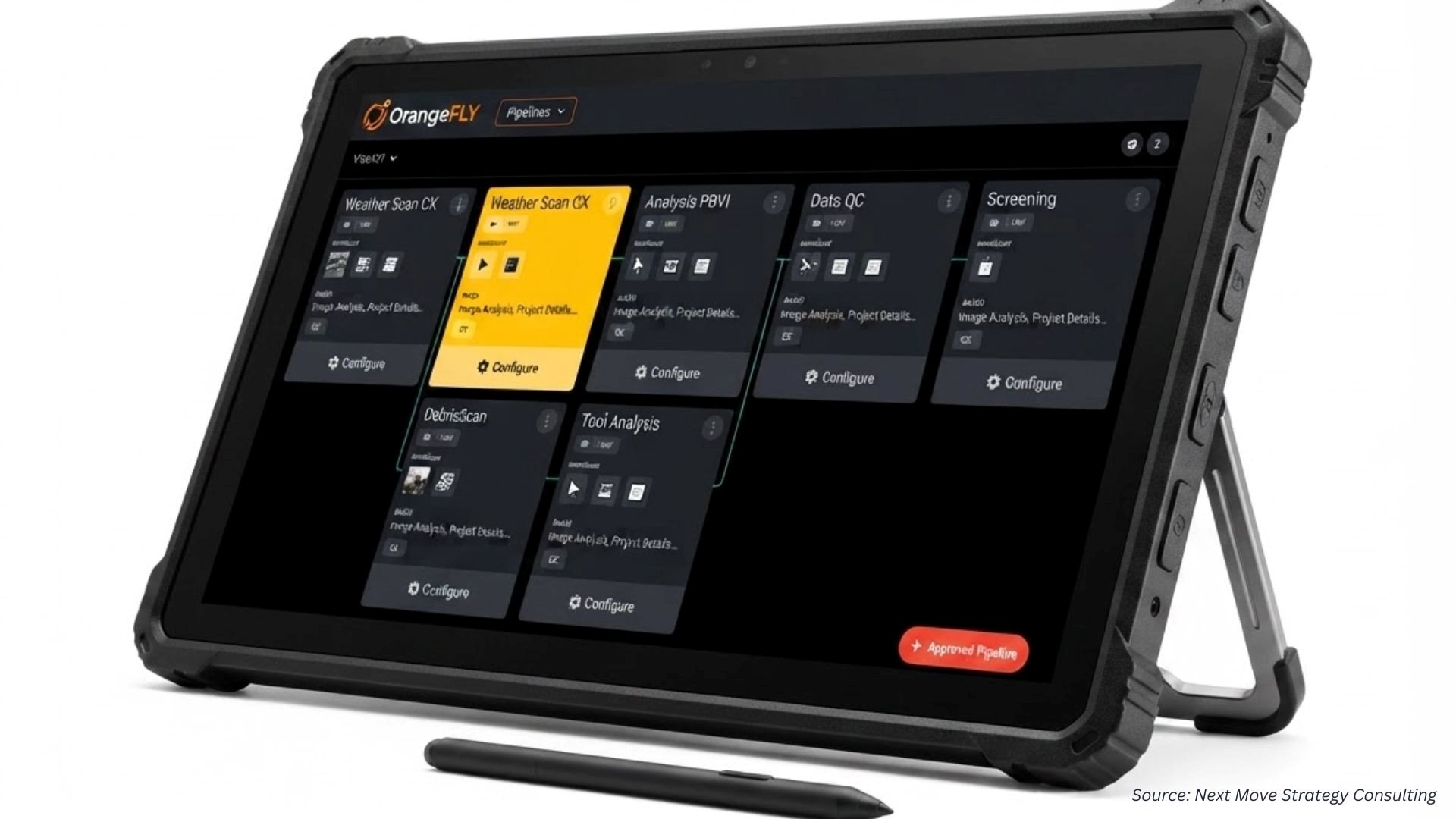
CI/CD Market Size, Share, Growth & Forecast by Offering (Core Software: CI Platform, CD Platform, Unified CI/CD Platform, Build and Runner Platform, GitOps Platform, Mobile CI/CD Platform, Release Management Platform; Services: Professional, Managed, Technical Support), Deployment Model (SaaS, Self-Managed, Hybrid), Buyer Type (Developers, Platform Engineering, DevOps and SRE, Security and Compliance, IT Operations), Industry, and Sales Channel — Global Analysis 2025–2035
Industry: ICT & Media | Publishing Date: July 7, 2026 | Last Updated: September 30, 2026 | No of Pages: N/A | No. of Tables: N/A | No. of Figures: N/A | Format: PDF | Report Code: IC4997
What Is the CI/CD Market Size?
The global CI/CD Market was valued at USD 5.8 billion in 2025 and is expected to reach USD 6.8 billion in 2026. Accelerating DevOps adoption, cloud-native application development, and enterprise demand for software delivery automation are projected to propel the market to USD 28.6 billion by 2035, advancing at a CAGR of 17.3% from 2026 to 2035. Key growth drivers include the widespread adoption of microservices and containerized architectures, rising demand for AI-assisted pipeline orchestration, increasing regulatory requirements for software supply chain security, and the rapid expansion of platform engineering functions within enterprise technology organizations.
|
Parameters |
Details |
|
Market Size in 2025 |
USD 5.8 Billion |
|
Market Size in 2026 |
USD 6.8 Billion |
|
Revenue Forecast in 2035 |
USD 28.6 Billion |
|
Growth Rate |
CAGR of 17.3% from 2026 to 2035 |
|
Analysis Period |
2025–2035 |
|
Base Year Considered |
2025 |
|
Forecast Period |
2026–2035 |
|
Market Size Estimation |
Billion USD |
|
Companies Profiled |
20 |
|
Countries Covered |
38 |
|
Market Share |
Top 10 |
CI/CD Market Overview
What Is the CI/CD Market?
The CI/CD Market encompasses software platforms, tools, and professional services that automate the processes of integrating code changes, building and testing applications, and deploying software releases to production environments. Continuous Integration (CI) ensures that code contributions from multiple developers are validated automatically through build and test pipelines, while Continuous Delivery (CD) automates the release orchestration, deployment, and rollback processes. Together, these capabilities form the backbone of modern software engineering practices, enabling organizations to accelerate release cycles, improve code quality, and reduce deployment risk across cloud, on-premises, and hybrid infrastructure environments.
How Has the CI/CD Market Evolved?
The CI/CD Market has undergone three major evolutionary phases. The first phase focused on build automation and unit testing frameworks, pioneered by tools such as Jenkins and CruiseControl. The second phase introduced cloud-native SaaS CI/CD platforms that eliminated infrastructure management overhead, with providers including GitHub Actions, GitLab CI/CD, and CircleCI democratizing access to automated pipelines. From our market assessment, we observed that the current phase is defined by platform engineering consolidation, GitOps-driven infrastructure management, AI-assisted pipeline authoring, and the convergence of security tooling with delivery workflows under DevSecOps methodologies across enterprise software organizations.
How Do Regulations Influence the CI/CD Market?
Regulatory frameworks governing software supply chain security and data handling are emerging as significant structural drivers of the CI/CD Market. The U.S. Executive Order on Improving the Nation’s Cybersecurity (EO 14028) introduced Software Bill of Materials (SBOM) requirements that mandate automated dependency tracking within CI pipelines. The EU Cyber Resilience Act imposes security-by-design obligations on software vendors, creating demand for integrated security scanning and compliance reporting capabilities within CI/CD platforms. HIPAA, PCI-DSS, and SOC 2 compliance requirements in healthcare, financial services, and technology sectors are further compelling organizations to adopt CI/CD tools with built-in audit logging and access governance controls.
How Is Technology Adoption Expanding Across the CI/CD Market?
Technology adoption across the CI/CD Market is accelerating as enterprises migrate from traditional on-premises build infrastructure to cloud-native SaaS platforms and GitOps-based deployment models. Containerization via Docker and Kubernetes orchestration has become the default deployment target for CI/CD pipelines, driving demand for container-aware build runners and Helm-based release management. Our analysis shows that artificial intelligence is being embedded directly into pipeline authoring tools, enabling automated test generation, anomaly detection in build failures, and predictive rollback recommendations. The rapid growth of platform engineering as a discipline is further centralizing CI/CD toolchain governance within dedicated internal developer platform teams across large enterprises.
|
Key Takeaways |
|
By offering, Core Software held the largest share of the CI/CD Market at USD 3.8 billion in 2025, with CI Platforms and CD Platforms collectively representing the dominant sub-segments due to widespread enterprise adoption of automated build, test, and deployment workflows across cloud-native software delivery environments. |
|
Unified CI/CD Platforms are the fastest-growing sub-segment under Core Software at a CAGR of 18.5% from 2026 to 2035, as enterprises consolidate fragmented pipeline toolchains onto single platforms such as GitHub Actions, GitLab, and Harness to reduce toolchain complexity and improve developer experience. |
|
By deployment model, SaaS led the CI/CD Market with USD 3.2 billion in 2025, reflecting strong enterprise preference for cloud-hosted, low-maintenance pipeline infrastructure that eliminates the operational overhead of managing on-premises build server fleets. |
|
Hybrid deployment is the fastest-growing deployment model in the CI/CD Market at a CAGR of 18.8% from 2026 to 2035, driven by large enterprises operating regulated workloads that require self-managed runners within cloud-connected hybrid delivery architectures. |
|
By organization size, Enterprise organizations generated USD 2.9 billion in 2025, representing the largest customer segment in the CI/CD Market due to extensive software engineering teams, complex multi-environment deployment requirements, and significant investment in platform engineering initiatives. |
|
SMB organizations represent the fastest-growing size segment at a CAGR of 17.5% from 2026 to 2035, as affordable SaaS-based CI/CD subscription tiers from GitHub, GitLab, and CircleCI lower adoption barriers and enable even small development teams to implement automated delivery pipelines. |
|
By buyer type, Developers accounted for USD 1.9 billion in 2025, commanding the largest share, as developer-led adoption of CI/CD tooling continues to drive bottom-up purchasing decisions in software-intensive organizations across all industry verticals. |
|
Security and Compliance teams represent the fastest-growing buyer type in the CI/CD Market at a CAGR of 18.1% from 2026 to 2035, driven by the convergence of DevSecOps practices and regulatory requirements for automated security scanning, SBOM generation, and software supply chain attestation within CI/CD pipelines. |
|
By industry, Software and Internet companies generated USD 2.0 billion in 2025, maintaining the dominant share as digital-native organizations operate the highest pipeline execution volumes and invest most heavily in CI/CD toolchain optimization and developer productivity improvements. |
|
Healthcare and Life Sciences represents the fastest-growing industry vertical in the CI/CD Market at a CAGR of 17.9% from 2026 to 2035, driven by digital health platform modernization, FDA software validation guidelines for medical devices, and increasing adoption of agile software delivery practices within regulated pharmaceutical and healthcare technology organizations. |
|
By sales channel, Direct sales generated USD 2.2 billion in 2025, reflecting the continued importance of enterprise account management and custom deployment support for large-scale CI/CD platform implementations across global organizations. |
|
Cloud Marketplace is the fastest-growing sales channel at a CAGR of 18.9% from 2026 to 2035, as enterprises increasingly procure CI/CD tooling through AWS Marketplace, Azure Marketplace, and Google Cloud Marketplace to align spending with existing cloud committed-use discounts and centralize procurement governance. |
|
North America held the largest regional share in the CI/CD Market at USD 2.6 billion in 2025, projected to reach USD 12.4 billion by 2035 at a CAGR of 17.0%, underpinned by the presence of leading platform vendors, the highest global density of software engineering talent, and the most mature enterprise DevOps adoption landscape. |
|
Asia-Pacific is the fastest-growing major region in the CI/CD Market at a CAGR of 17.9% from 2026 to 2035, driven by India’s rapidly expanding technology outsourcing sector, China’s enterprise software modernization programs, and South Korea’s and Taiwan’s advanced semiconductor and electronics manufacturing software requirements. |
|
The United States is the single largest country market in the CI/CD Market, home to the global headquarters of Microsoft (GitHub), Amazon (AWS CodePipeline), GitLab, and Harness, alongside the highest concentration of Fortune 500 enterprise DevOps buyers and the deepest venture capital investment in developer tooling infrastructure globally. |
|
India is the fastest-growing national market within Asia-Pacific in the CI/CD Market at a CAGR of 20.5% from 2026 to 2035, propelled by the world’s largest software engineering workforce, a thriving SaaS ecosystem, and rapid enterprise technology modernization across domestic and global delivery organizations headquartered in Bengaluru, Hyderabad, and Pune. |
Key Emerging Trends in the CI/CD Market
How Is the Rise of Platform Engineering Transforming the CI/CD Market?
Platform engineering is fundamentally reshaping the CI/CD Market by centralizing toolchain governance within dedicated internal developer platform teams. Rather than allowing individual development teams to independently select and maintain their own CI/CD stacks, enterprises are establishing platform engineering groups that curate standardized pipeline templates, self-service developer portals, and governed build infrastructure. Our analysis of enterprise software delivery organizations indicates that this shift is driving significant consolidation of multi-vendor CI/CD toolchains onto unified platforms such as Harness, GitLab, and GitHub Enterprise, reducing per-pipeline maintenance costs and improving software delivery metrics across organizations.
How Is AI-Assisted Pipeline Authoring Reshaping the CI/CD Market?
AI-assisted pipeline authoring represents one of the most commercially significant emerging capabilities in the CI/CD Market. Vendors including GitHub, GitLab, and Harness have introduced AI-powered features that generate pipeline configurations from natural language descriptions, predict build failure root causes, and recommend optimized test execution strategies. Our market assessment indicates that GitHub Copilot for Actions and GitLab Duo are already embedded in developer workflows at large technology companies. Automated test generation within CI pipelines reduces manual test authoring overhead and improves code coverage consistency, directly accelerating software release velocity and reducing regression defect rates in production environments.
How Is GitOps Becoming a Core Architectural Pattern in the CI/CD Market?
GitOps, the practice of using Git repositories as the authoritative source of truth for infrastructure and application configuration, has emerged as a foundational architectural pattern within the CI/CD Market. Tools including ArgoCD, Flux, and Weave GitOps enable continuous reconciliation between declared infrastructure state in Git and actual runtime state in Kubernetes clusters. Through our analysis, we found that enterprise adoption of GitOps is creating demand for dedicated GitOps platform vendors and driving GitOps-native features within established CI/CD platforms. This architectural shift is particularly pronounced in financial services, telecom, and public cloud-native software organizations managing large Kubernetes fleet deployments.
How Is DevSecOps Integration Driving Growth in the CI/CD Market?
The convergence of security tooling with CI/CD pipelines under the DevSecOps paradigm is creating a structurally important growth vector within the CI/CD Market. Static application security testing (SAST), software composition analysis (SCA), container image scanning, and SBOM generation are increasingly being embedded as mandatory pipeline stages rather than post-deployment activities. From our assessment, we observed that the U.S. Executive Order on cybersecurity and the EU Cyber Resilience Act are compelling enterprises to instrument CI/CD pipelines with automated security controls. Vendors such as Snyk, Checkmarx, and JFrog Xray have developed deep integrations with leading CI platforms, creating a growing software supply chain security tooling sub-market within the broader CI/CD ecosystem.
Strategic Framework of the CI/CD Market
The strategic framework highlights the core factors shaping the CI/CD Market. Based on our assessment, rising enterprise demand for faster software releases, automated development workflows, and cloud-native deployment is accelerating market growth. Furthermore, DevOps adoption, AI-enabled automation, integrated toolchains, sustainability initiatives, and evolving security and compliance requirements are strengthening operational efficiency and supporting long-term digital transformation strategies.
What Are the Key Market Drivers, Breakthroughs, and Investment Opportunities that Will Shape the CI/CD Industry in the Next Decade?
|
Drivers / Trends / Restraints |
(+/-) % Impact on CAGR Forecast |
Geographic Relevance |
Impact Timeline |
|
Surging DevOps and Platform Engineering Adoption |
+2.6% |
Global (led by North America, Europe) |
2025–2030 |
|
AI-Assisted Pipeline Automation |
+1.8% |
North America, Europe, APAC |
2025–2030 |
|
Cloud-Native and Kubernetes-First Architectures |
+1.5% |
North America, APAC, Europe |
2025–2030 |
|
Software Supply Chain Security Mandates |
+1.2% |
North America, Europe |
2025–2035 |
|
GitOps and Infrastructure as Code Expansion |
+0.9% |
Global |
2026–2035 |
|
Toolchain Fragmentation and Integration Complexity |
-1.1% |
SMB, Mid-Market globally |
2025–2028 |
|
Self-Hosted Runner Management Costs |
-0.7% |
Enterprise globally |
Ongoing |
|
Open-Source Competition Pressuring Commercial Margins |
-0.6% |
All regions |
Ongoing |
|
Cloud Marketplace Distribution Expansion |
+1.3% |
North America, Europe |
2025–2032 |
|
Mobile CI/CD Platform Growth |
+0.8% |
North America, APAC |
2026–2035 |
What Are the Growth Drivers of the CI/CD Market?
How Is the Accelerating Adoption of DevOps and Platform Engineering Driving the CI/CD Market?
DevOps adoption and the rapid expansion of platform engineering functions within enterprise technology organizations represent the primary structural growth catalyst for the CI/CD Market. Organizations that implement CI/CD pipelines typically achieve measurable improvements in deployment frequency, change failure rates, and mean time to recover, as documented by the DORA (DevOps Research and Assessment) program hosted by Google. The U.S. Department of Defense’s DevSecOps Reference Design mandates CI/CD pipeline implementation for all new software programs. NMSC’s analysis indicates that platform engineering teams are now the fastest-growing software engineering specialty, directly increasing enterprise CI/CD platform procurement and standardization activity.
How Is the Proliferation of Cloud-Native and Kubernetes-First Architectures Fueling CI/CD Market Growth?
The mass enterprise adoption of containerized and Kubernetes-orchestrated application architectures is creating structural demand for CI/CD platforms that natively support container image build, Helm chart deployment, and Kubernetes-aware rollback management. The Cloud Native Computing Foundation (CNCF) reported that Kubernetes adoption has reached over 96% among surveyed enterprise organizations, creating a near-universal requirement for Kubernetes-compatible CI/CD tooling. Based on NMSC’s research, we found that cloud-native application delivery patterns including progressive delivery, canary releases, and feature flag management are extending the functional scope of CD platforms beyond traditional deployment automation into sophisticated traffic management and experimentation capabilities.
How Are Software Supply Chain Security Mandates Expanding the CI/CD Market?
Regulatory and executive-level mandates targeting software supply chain security are creating mandatory CI/CD infrastructure investment across U.S. federal agencies and regulated private sector organizations. The U.S. Executive Order 14028 on Improving the Nation’s Cybersecurity explicitly requires Software Bill of Materials generation and automated vulnerability scanning within software development pipelines. The National Institute of Standards and Technology (NIST) Secure Software Development Framework (SSDF) provides detailed guidance on embedding security controls within CI/CD workflows. Our findings suggest that these mandates are elevating CI/CD from a developer productivity investment to a board-level compliance requirement in government, defense, financial services, and critical infrastructure sectors.
What Are the Growth Inhibitors of the CI/CD Market?
How Does Toolchain Fragmentation and Integration Complexity Constrain CI/CD Market Growth?
Toolchain fragmentation across diverse CI/CD platforms, version control systems, artifact repositories, container registries, and deployment targets creates significant integration complexity that limits adoption speed among mid-market and SMB organizations. Many enterprises operate legacy build systems including Jenkins, TeamCity, and Bamboo alongside newer cloud-native platforms, creating duplicated maintenance overhead and inconsistent pipeline governance. Our assessment indicates that the U.S. Government Accountability Office has documented analogous software modernization challenges in federal agency technology environments, noting that integration complexity and workforce skills gaps are primary barriers. Reducing this complexity remains a top platform engineering priority and influences vendor selection toward unified CI/CD platforms.
How Does the Cost of Self-Hosted Runner Infrastructure Limit CI/CD Market Penetration?
For enterprises with large-scale, high-frequency build workloads or stringent data residency requirements, the infrastructure and operational costs of maintaining self-hosted runner fleets represent a meaningful total cost of ownership consideration. Compute-intensive build workloads for mobile applications, machine learning models, and large monorepo codebases can generate substantial cloud compute bills under SaaS CI/CD pricing models, compelling organizations to invest in on-premises or self-hosted hybrid runners. NMSC’s analysis indicates that build cost optimization is a primary procurement consideration for enterprise buyers evaluating CI/CD platforms, influencing platform selection and often extending commercial negotiation timelines within large enterprise accounts.
What Are the Growth Opportunities in the CI/CD Market?
How Does the Convergence of AI and CI/CD Pipelines Create Multi-Billion Dollar Opportunities in the CI/CD Market?
Artificial intelligence integration within CI/CD platforms represents the highest-potential emerging commercial opportunity in the market through the automation of test generation, predictive build failure analysis, and AI-driven deployment optimization. The National Science Foundation has funded multiple research programs examining AI-assisted software testing and automated code quality analysis, reinforcing the technical validity of AI-augmented CI/CD workflows. Our analysis shows that vendors capable of embedding large language model capabilities for pipeline authoring, intelligent test prioritization, and anomaly-based rollback triggering will command premium pricing and create durable competitive moats against commodity CI/CD platform providers across enterprise and mid-market buyer segments.
How Is the Growth of Internal Developer Platforms Expanding the CI/CD Market Addressable Opportunity?
The rapid growth of internal developer platform initiatives within large enterprises is creating a structurally expanding commercial opportunity for CI/CD vendors that provide self-service portal capabilities, golden path templates, and platform-as-a-product features. The CNCF’s Platform Engineering Working Group has documented widespread enterprise investment in internal developer portals built on tools such as Backstage, directly expanding the integration surface for CI/CD pipeline embedding. Based on our market evaluation, we noticed that platform engineering investments are increasing CI/CD platform deal sizes as enterprises procure enterprise license agreements covering developer portal, pipeline orchestration, and GitOps capabilities from unified vendor platforms rather than assembling bespoke toolchain combinations.
How Does Digital Transformation in Regulated Industries Present Structural Opportunities in the CI/CD Market?
Digital transformation initiatives across highly regulated industries including healthcare, financial services, and public sector are creating structurally significant late-adopter demand for CI/CD platforms that bundle compliance validation, audit logging, and policy-as-code enforcement capabilities. The U.S. Food and Drug Administration’s Software as a Medical Device (SaMD) guidance framework requires documented software development life cycle controls that are most efficiently implemented within automated CI/CD workflows. Our findings suggest that healthcare technology organizations, government agencies modernizing legacy systems under cloud migration programs, and financial institutions adopting cloud-native core banking architectures represent the highest-growth late-adopter segments within the CI/CD Market opportunity landscape over the 2025–2035 forecast period.
How Is the CI/CD Market Segmented in This Report, and What Are the Key Insights from the Segmentation Analysis?
How Does Offering-Based Segmentation Reveal the Structural Composition of the CI/CD Market?
|
Offering Segment |
2025 (USD Bn) |
2035 (USD Bn) |
CAGR (%) |
|
Core Software |
3.8 |
18.9 |
17.4% |
|
— CI Platform |
1.2 |
5.9 |
17.3% |
|
— CD Platform |
1.0 |
4.9 |
17.3% |
|
— Unified CI/CD Platform |
0.7 |
3.8 |
18.5% |
|
— Build and Runner Platform |
0.3 |
1.5 |
17.5% |
|
— GitOps Platform |
0.3 |
1.5 |
17.5% |
|
— Mobile CI/CD Platform |
0.2 |
1.1 |
18.6% |
|
— Release Management Platform |
0.1 |
0.2 |
7.2% |
|
Services |
2.0 |
9.7 |
17.0% |
|
— Professional Services |
0.8 |
3.8 |
16.9% |
|
— Managed Services |
0.7 |
3.6 |
17.8% |
|
— Technical Support |
0.5 |
2.3 |
16.5% |
Based on our analysis of enterprise software delivery investment patterns, we observed that the CI/CD Market is segmented into Core Software and Services, with Core Software comprising CI Platforms, CD Platforms, Unified CI/CD Platforms, Build and Runner Platforms, GitOps Platforms, Mobile CI/CD Platforms, and Release Management Platforms. Core Software dominates at USD 3.8 billion in 2025 due to high enterprise demand for automated build, test, and deployment orchestration capabilities. CI Platforms remain the single largest sub-segment driven by widespread adoption of source code integration and build automation workflows, while Unified CI/CD Platforms are growing fastest at 18.5% CAGR as organizations consolidate toolchains onto single vendor platforms for improved governance and developer experience.
How Does Deployment Model Shape Revenue Distribution Across the CI/CD Market?
|
Deployment Model |
2025 (USD Bn) |
2035 (USD Bn) |
CAGR (%) |
|
SaaS |
3.2 |
16.2 |
17.6% |
|
Self-Managed |
1.6 |
6.8 |
15.5% |
|
Hybrid |
1.0 |
5.6 |
18.8% |
Through our market assessment, we observed that the CI/CD Market is segmented by deployment model into SaaS, Self-Managed, and Hybrid configurations. SaaS dominates at USD 3.2 billion in 2025 as organizations prefer cloud-hosted platforms that eliminate runner infrastructure management and enable consumption-based scaling. Self-Managed deployment remains relevant for enterprises with strict data residency requirements, air-gapped environments, and large compute-intensive build workloads where cloud egress economics favor on-premises build infrastructure. Hybrid deployment is the fastest-growing model at 18.8% CAGR as large enterprises combine cloud-hosted orchestration with self-managed runners within regulated hybrid delivery architectures across financial services and defense sectors.
How Does Organization Size Influence CI/CD Market Adoption Patterns?
|
Organization Size |
2025 (USD Bn) |
2035 (USD Bn) |
CAGR (%) |
|
Enterprise |
2.9 |
14.2 |
17.2% |
|
Mid-Market |
1.7 |
8.4 |
17.3% |
|
SMB |
1.2 |
6.0 |
17.5% |
Based on NMSC’s research, we found that the CI/CD Market is segmented by organization size into Enterprise, Mid-Market, and SMB categories. Enterprise organizations dominate at USD 2.9 billion in 2025 due to large software engineering teams, complex multi-cloud deployment targets, and significant investment in platform engineering disciplines that centralize CI/CD toolchain governance. Mid-Market organizations are adopting cloud-native CI/CD platforms at accelerating rates as SaaS pricing models align costs with team size. SMBs represent the fastest-growing segment at 17.5% CAGR driven by affordable subscription tiers, GitHub Free and GitLab Free plans, and simplified pipeline configuration tooling that makes professional CI/CD accessible to small development teams without dedicated DevOps functions.
Which Buyer Functions Are Driving Purchasing Decisions in the CI/CD Market?
|
Buyer Type |
2025 (USD Bn) |
2035 (USD Bn) |
CAGR (%) |
|
Developers |
1.9 |
9.4 |
17.3% |
|
Platform Engineering |
1.2 |
6.0 |
17.5% |
|
DevOps and SRE |
1.0 |
4.9 |
17.2% |
|
Security and Compliance |
0.8 |
4.2 |
18.1% |
|
IT Operations |
0.9 |
4.1 |
16.4% |
NMSC’s analysis indicates that the CI/CD Market is segmented by buyer type into Developers, Platform Engineering, DevOps and SRE, Security and Compliance, and IT Operations functions. Developers represent the largest buyer segment at USD 1.9 billion in 2025 as developer-led, bottom-up adoption of CI/CD tooling continues to drive the majority of initial platform purchases. Platform Engineering teams are the second-largest buyer segment, reflecting the organizational formalization of CI/CD toolchain governance. Security and Compliance is the fastest-growing buyer category at 18.1% CAGR as DevSecOps integration and software supply chain security regulatory requirements elevate CI/CD pipeline security controls to a board-level compliance obligation across regulated enterprise technology environments.
Which Industry Verticals Generate the Most Value in the CI/CD Market?
|
Industry |
2025 (USD Bn) |
2035 (USD Bn) |
CAGR (%) |
|
Software and Internet |
2.0 |
9.8 |
17.2% |
|
BFSI |
0.9 |
4.6 |
17.7% |
|
Telecom and Media |
0.7 |
3.4 |
17.1% |
|
Retail and E-Commerce |
0.6 |
3.0 |
17.5% |
|
Healthcare and Life Sciences |
0.5 |
2.6 |
17.9% |
|
Manufacturing and Industrial |
0.4 |
2.0 |
17.5% |
|
Public Sector |
0.4 |
2.0 |
17.5% |
|
Other Industries |
0.3 |
1.2 |
14.9% |
Our assessment indicates that the CI/CD Market is segmented by industry into Software and Internet, BFSI, Telecom and Media, Retail and E-Commerce, Healthcare and Life Sciences, Manufacturing and Industrial, Public Sector, and Other Industries. Software and Internet companies dominate at USD 2.0 billion in 2025 as digital-native organizations operate the highest pipeline execution volumes and most aggressively invest in developer productivity tooling. BFSI is the second-largest vertical at USD 0.9 billion driven by core banking modernization, open banking API development, and PCI-DSS compliance requirements for automated security validation within software delivery pipelines. Healthcare and Life Sciences represents the fastest-growing industry vertical at 17.9% CAGR driven by digital health platform development and FDA software validation requirements.
How Are Sales Channels Reshaping Go-to-Market Strategies in the CI/CD Market?
|
Sales Channel |
2025 (USD Bn) |
2035 (USD Bn) |
CAGR (%) |
|
Direct |
2.2 |
10.4 |
16.8% |
|
Cloud Marketplace |
1.6 |
9.0 |
18.9% |
|
Partner and Reseller |
1.2 |
5.8 |
17.0% |
|
Community and Open Source |
0.8 |
3.4 |
15.6% |
Based on our analysis of enterprise CI/CD procurement patterns, we observed that the CI/CD Market is segmented by sales channel into Direct, Cloud Marketplace, Partner and Reseller, and Community and Open Source channels. Direct sales dominate at USD 2.2 billion in 2025 due to enterprise preference for dedicated account management, custom implementation support, and enterprise license agreements with volume pricing. Cloud Marketplace is the fastest-growing channel at 18.9% CAGR as enterprises leverage AWS Marketplace, Azure Marketplace, and Google Cloud Marketplace to consume CI/CD platform licenses against existing cloud spend commitments, streamlining procurement and reducing contracting cycle times significantly for both vendors and enterprise buyers across all organizational size segments.
Regional Outlook
Geographic Performance Snapshot
|
Region |
2025 (USD Bn) |
2035 (USD Bn) |
CAGR (%) |
Key Driver |
|
North America |
2.6 |
12.4 |
17.0% |
Platform engineering leadership, hyperscaler DevTools |
|
Europe |
1.4 |
6.8 |
17.0% |
DevSecOps compliance, Cyber Resilience Act |
|
Asia-Pacific |
1.2 |
6.2 |
17.9% |
India SaaS boom, cloud-native manufacturing |
|
Middle East & Africa |
0.3 |
1.8 |
20.0% |
Vision 2030 digitization, tech hub growth |
|
Latin America |
0.3 |
1.4 |
18.0% |
Fintech-driven DevOps, hyperscaler expansion |
North America CI/CD Industry
North America leads the global CI/CD Market, accounting for USD 2.6 billion in 2025 and forecast to reach USD 12.4 billion by 2035 at a CAGR of 17.0%. The region benefits from the global headquarters of Microsoft (GitHub), Amazon Web Services, GitLab, Harness, and CircleCI, alongside the highest concentration of software engineering talent and enterprise DevOps maturity globally. Strong enterprise technology budgets, widespread Kubernetes adoption, and the deepest platform engineering organizational investment drive sustained market leadership. U.S. federal cybersecurity mandates including EO 14028 are compelling government agencies and defense contractors to invest significantly in automated CI/CD pipeline security controls.
U.S. CI/CD Industry
Based on our engagements with enterprise technology organizations, the United States represents over 80% of North American CI/CD Market revenue and is the world’s single largest national market at USD 2.1 billion in 2025, forecast to reach USD 10.1 billion by 2035. The U.S. benefits from the highest concentration of Fortune 500 enterprise DevOps buyers, the headquarters of all leading CI/CD platform vendors, and a mature venture capital ecosystem supporting developer tooling innovation. The U.S. Department of Defense’s software factory model, including Platform One and Iron Bank, has institutionalized CI/CD pipeline adoption across defense programs, creating a durable federal sector demand base for enterprise CI/CD platform vendors.
Canada CI/CD Industry
Through our analysis, Canada represents approximately 11% of North American CI/CD Market revenue at USD 0.3 billion in 2025, forecast to reach USD 1.4 billion by 2035. Canadian financial institutions and insurance firms including RBC, TD Bank, and Sun Life are among the most sophisticated enterprise CI/CD buyers, investing in cloud-native delivery platforms for digital banking, insurance application modernization, and regulatory reporting automation. The federal government’s Digital Operations Strategic Plan and GC Cloud Adoption Strategy have accelerated public sector CI/CD adoption. Canadian enterprises are increasingly selecting GitHub Enterprise and GitLab for their sovereign cloud and compliance audit trail capabilities.
Mexico CI/CD Industry
According to our evaluation, Mexico is the fastest-growing CI/CD Market within North America at a CAGR of 18.5% from 2026 to 2035, advancing from USD 0.2 billion in 2025 to USD 0.9 billion by 2035. Mexico’s growing fintech ecosystem, manufacturing sector software modernization, and nearshoring-driven software development activity are generating enterprise demand for CI/CD platforms. The National Digital Strategy and Mexico’s government cloud migration programs are driving public sector CI/CD adoption. Mexican enterprises are increasingly adopting SaaS-based CI/CD platforms from GitHub and GitLab as developer workforce capabilities mature and organizational DevOps investment increases across technology and financial services sectors.
Europe CI/CD Industry
Europe is the second-largest region in the CI/CD Market, contributing USD 1.4 billion in 2025 and forecast to reach USD 6.8 billion by 2035 at a CAGR of 17.0%. Europe’s regulatory environment, including the EU Cyber Resilience Act and NIS2 Directive, is simultaneously driving DevSecOps investment and creating structured compliance demand for CI/CD pipeline security capabilities. Sovereign cloud requirements under GAIA-X and national data protection frameworks are shaping enterprise CI/CD deployment model preferences toward self-managed and hybrid configurations. The region’s large financial services, automotive, and telecommunications sectors represent the most significant enterprise CI/CD buyer segments.
UK CI/CD Industry
Through our analysis, the United Kingdom is Europe’s largest individual country market for CI/CD, representing approximately 19% of European revenue at USD 0.26 billion in 2025, forecast to reach USD 1.26 billion by 2035. Post-Brexit, the UK has established the Cyber Security and Resilience Bill that aligns with EU NIS2 standards, driving enterprise security pipeline investment. UK financial services firms including Barclays, HSBC, and Lloyd’s Banking Group are among the most sophisticated enterprise CI/CD buyers globally. The UK government’s Government Digital Service (GDS) has published CI/CD pipeline standards for public sector digital services, institutionalizing automated delivery practices across central government departments.
Germany CI/CD Industry
From our assessment, Germany is the second-largest European CI/CD market at USD 0.24 billion in 2025, forecast to reach USD 1.20 billion by 2035, driven by its world-class automotive, manufacturing, and engineering software sectors. German enterprises including Volkswagen, Siemens, and SAP operate extensive CI/CD infrastructure for embedded software, industrial IoT applications, and enterprise SaaS products. The Bundesamt für Sicherheit in der Informationstechnik (BSI) cybersecurity guidelines shape CI/CD pipeline security requirements for enterprise procurement. Germany’s strict data sovereignty requirements drive preference for self-managed and hybrid CI/CD deployment configurations within regulated industries.
France CI/CD Industry
Based on our market evaluation, France is the third-largest European CI/CD market at USD 0.19 billion in 2025, forecast to reach USD 0.92 billion by 2035, driven by the France 2030 national technology strategy and strong public sector digital transformation programs. French defense and aerospace companies including Airbus and Thales Group operate sophisticated CI/CD pipelines for embedded and systems software. The Agence nationale de la sécurité des systèmes d’information (ANSSI) framework shapes software security pipeline requirements. France’s growing SaaS startup ecosystem and CAC 40 enterprise digital transformation initiatives are expanding demand for cloud-native CI/CD platforms throughout the forecast period.
Italy CI/CD Industry
In our observation, Italy represents a growing mid-tier European CI/CD market at USD 0.14 billion in 2025, forecast to reach USD 0.68 billion by 2035. Italian enterprises in banking, manufacturing, and public administration are increasing CI/CD adoption under the Piano Nazionale di Ripresa e Resilienza (PNRR) digital transformation program. Intesa Sanpaolo, UniCredit, and Italian public sector organizations are significant enterprise CI/CD buyers. The Agenzia per l’Italia Digitale (AgID) provides cloud and software development governance frameworks for public sector entities. Italy’s growing startup ecosystem and industrial IoT digitization among manufacturing conglomerates are creating new demand vectors for CI/CD platforms.
Spain CI/CD Industry
Through our market analysis, Spain demonstrates growing momentum in the CI/CD Market at USD 0.13 billion in 2025, forecast to reach USD 0.62 billion by 2035. Spanish enterprises in banking, telecommunications, and retail including Santander, Telefónica, and Inditex (Zara) are significant CI/CD buyers with large software engineering teams modernizing digital platforms. The Agenda España Digital 2026 government strategy supports cloud and DevOps adoption across public sector organizations. Spain’s growing technology startup ecosystem in Madrid and Barcelona is creating early-adopter demand for cloud-native CI/CD SaaS platforms among venture-backed software companies across financial technology and e-commerce verticals.
Sweden CI/CD Industry
Based on our engagements, Sweden maintains a high per-capita CI/CD adoption rate at USD 0.10 billion in 2025, forecast to reach USD 0.48 billion by 2035, supported by a highly digitized enterprise base and globally recognized technology companies including Spotify, Klarna, and Ericsson. Spotify’s development of the Backstage internal developer portal has significantly influenced global platform engineering practices. Swedish enterprises demonstrate strong preference for open-source CI/CD tooling and cloud-native SaaS platforms. Sweden’s Myndigheten för samhällsskydd och beredskap (MSB) cybersecurity framework shapes enterprise pipeline security investment within critical infrastructure and public sector organizations.
Denmark CI/CD Industry
From our analysis, Denmark is among the most advanced digital economies in Europe within the CI/CD market at USD 0.08 billion in 2025, forecast to reach USD 0.38 billion by 2035. Denmark’s consistent top rankings in the EU Digital Economy and Society Index (DESI) reflect deep software engineering capability across enterprises and public sector organizations. Danish financial institutions, healthcare technology companies, and the Maersk group are significant CI/CD buyers. The Danish Agency for Digital Government (Digitaliseringsstyrelsen) provides cloud adoption and secure software development guidance influencing public sector CI/CD procurement decisions across central government and municipal technology organizations.
Finland CI/CD Industry
According to our evaluation, Finland’s CI/CD market is characterized by high cloud adoption and a strong software engineering culture at USD 0.08 billion in 2025, forecast to reach USD 0.38 billion by 2035. Nokia’s extensive software operations create enterprise demand for large-scale CI/CD pipeline infrastructure across telecommunications software, network management systems, and cloud-native 5G platform development. The Finnish government’s digital public services strategy supports CI/CD adoption within public sector technology modernization. Finland’s concentration of gaming companies including Rovio and Supercell further drives mobile CI/CD platform adoption within the consumer software development segment.
Netherlands CI/CD Industry
Based on our market evaluation, the Netherlands is a critical European CI/CD hub at USD 0.12 billion in 2025, forecast to reach USD 0.60 billion by 2035, hosting significant European operations of Microsoft, Amazon Web Services, and ASML. Dutch enterprises in financial services, logistics (Booking.com, Heineken), and high-technology manufacturing are sophisticated CI/CD buyers. The Nationaal Cyber Security Centrum (NCSC-NL) software security guidelines influence enterprise pipeline security requirements. The Netherlands’ position as a European cloud and internet infrastructure hub creates high-demand conditions for CI/CD platform vendors targeting European enterprise and government technology buyers.
Rest of Europe CI/CD Industry
The Rest of Europe, comprising Poland, Switzerland, Belgium, Austria, Portugal, Czech Republic, and other European nations, collectively represents a growing segment of the European CI/CD Market at USD 0.06 billion in 2025, forecast to reach USD 0.28 billion by 2035. Poland and Czech Republic are emerging CI/CD adoption leaders in Central and Eastern Europe, driven by large software outsourcing industries and growing technology product company ecosystems. Switzerland hosts major financial and pharmaceutical enterprise CI/CD buyers including UBS, Credit Suisse, and Novartis. Belgium’s technology sector and EU institutional digital services demand contribute to the region’s progressive CI/CD market expansion.
Asia-Pacific CI/CD Industry
Asia-Pacific is the fastest-growing major region in the CI/CD Market, advancing from USD 1.2 billion in 2025 to an estimated USD 6.2 billion by 2035 at a CAGR of 17.9%. The region’s growth is propelled by India’s rapidly expanding software engineering workforce, China’s enterprise software modernization programs, and the advanced digital economies of Japan, South Korea, Taiwan, and Australia. Cloud-native development adoption is accelerating across Southeast Asian technology hubs including Singapore, Vietnam, and Indonesia. APAC’s vast technology services outsourcing sector creates particularly strong demand for efficient CI/CD pipeline infrastructure among global delivery organizations.
China CI/CD Industry
Through our analysis, China is the largest single CI/CD market in Asia-Pacific at USD 0.32 billion in 2025, forecast to reach USD 1.62 billion by 2035, driven by enterprise software modernization, domestic cloud adoption, and industrial IoT platform development. Domestic hyperscalers Alibaba Cloud, Tencent Cloud, and Huawei Cloud have developed China-specific CI/CD and DevOps platform ecosystems. China’s Ministry of Industry and Information Technology (MIIT) industrial software initiatives are driving manufacturing enterprise adoption of automated software delivery tooling. Regulatory preference for domestically operated CI/CD platforms is supporting local vendors including Coding (owned by Tencent) alongside global platforms operating through local partnerships and data residency configurations.
India CI/CD Industry
Based on our engagements, India is the fastest-growing national CI/CD market within Asia-Pacific at a CAGR of 20.5% from 2026 to 2035, advancing from USD 0.19 billion in 2025 to USD 1.10 billion by 2035. India’s 5.8 million software engineering professionals, as tracked by NASSCOM, represent the world’s largest CI/CD talent base. Global technology delivery centers operated by Infosys, TCS, Wipro, and HCL collectively process billions of pipeline executions annually, driving large-scale SaaS CI/CD platform consumption. The Digital India program and government cloud services are increasing public sector CI/CD investment. India’s booming SaaS startup ecosystem in Bengaluru is also generating domestic enterprise CI/CD product demand.
Japan CI/CD Industry
In our observation, Japan is the second-largest Asia-Pacific CI/CD market at USD 0.16 billion in 2025, forecast to reach USD 0.78 billion by 2035, supported by mature financial services, automotive, and technology sectors. Japanese enterprises prioritize reliability, security, and audit compliance within CI/CD workflows. The Digital Agency of Japan’s cloud-first government IT strategy is accelerating public sector CI/CD adoption. Major corporations including Toyota, Hitachi, Sony, and NTT are significant CI/CD buyers for embedded software, digital service platform development, and cloud-native enterprise application modernization. Japanese enterprises demonstrate preference for enterprise-grade CI/CD platforms with robust Japanese language support and local vendor partnerships.
South Korea CI/CD Industry
From our assessment, South Korea demonstrates high CI/CD market maturity at USD 0.12 billion in 2025, forecast to reach USD 0.60 billion by 2035, supported by advanced semiconductor, electronics, and telecommunications industries. Samsung, LG, SK Telecom, and Kakao are among the most sophisticated enterprise CI/CD buyers in the region. South Korea’s National AI Strategy and K-Cloud initiative are directing public sector investment toward cloud-native software delivery platforms. The Korea Internet and Security Agency (KISA) software security guidelines influence enterprise CI/CD pipeline security requirements. South Korea’s dense ecosystem of high-technology manufacturers creates particularly strong demand for embedded and industrial software CI/CD tooling.
Taiwan CI/CD Industry
Through our evaluation, Taiwan’s CI/CD market is concentrated in semiconductor, electronics manufacturing software, and financial services at USD 0.08 billion in 2025, forecast to reach USD 0.38 billion by 2035. TSMC, MediaTek, Foxconn, and ASUSTeK represent enterprise-class CI/CD buyers with complex embedded software, firmware, and EDA toolchain delivery requirements. Taiwan’s National Development Council cloud transformation initiatives are supporting technology sector CI/CD adoption. The Personal Data Protection Act (PDPA) informs enterprise pipeline data governance requirements. Taiwan’s dense ecosystem of semiconductor equipment and electronics manufacturers is creating growing demand for specialized CI/CD tooling optimized for hardware-software co-development workflows.
Indonesia CI/CD Industry
According to our evaluation, Indonesia is among the most rapidly growing CI/CD markets in Southeast Asia at USD 0.07 billion in 2025, forecast to reach USD 0.38 billion by 2035, driven by a large digital population and a fast-growing technology sector. Gojek, Tokopedia, Traveloka, and Bank Central Asia represent leading enterprise CI/CD buyers with large software engineering organizations. Indonesia’s Visi 2045 digital transformation program and BSSN national cybersecurity strategy are supporting public sector CI/CD investment. Hyperscalers AWS, Google Cloud, and Microsoft Azure all operate Jakarta-based cloud regions, providing low-latency CI/CD pipeline infrastructure for Indonesian software development organizations.
Vietnam CI/CD Industry
From our analysis, Vietnam is an emerging high-growth CI/CD market in Southeast Asia at USD 0.05 billion in 2025, forecast to reach USD 0.28 billion by 2035, supported by a rapidly expanding technology outsourcing sector and manufacturing software development ecosystem. Vietnam’s National Digital Transformation Program is driving government and enterprise adoption of cloud-native software development practices. Vietnam-based global delivery centers for European and North American technology companies are creating significant SaaS CI/CD platform demand. The Ministry of Information and Communications (MIC) has published digital transformation guidelines that encourage CI/CD adoption as a software quality and delivery efficiency standard for Vietnamese technology organizations.
Australia CI/CD Industry
Based on our engagements, Australia is the most mature CI/CD market in Asia-Pacific outside of Northeast Asia at USD 0.10 billion in 2025, forecast to reach USD 0.48 billion by 2035, with strong adoption across financial services, government, mining technology, and healthcare. The Australian Cyber Security Centre (ACSC) Essential Eight and Australian Government cloud security guidelines directly influence CI/CD pipeline security requirements. Major Australian banks including Commonwealth Bank, NAB, and Westpac are significant enterprise CI/CD buyers for digital banking platform modernization. The Digital Transformation Agency (DTA) cloud-first policy has accelerated federal agency CI/CD investment, with all hyperscalers operating Australian sovereign cloud regions for government workloads.
Philippines CI/CD Industry
Through our assessment, the Philippines is a developing but growing CI/CD market at USD 0.04 billion in 2025, forecast to reach USD 0.22 billion by 2035, supported by a large business process outsourcing industry and expanding digital banking sector. Philippine technology organizations increasingly require CI/CD platforms for BPO digital service delivery, banking application modernization, and government digital services development. The Department of Information and Communications Technology (DICT) Philippine Digital Economy Roadmap supports technology enterprise adoption of cloud-native software development practices. Philippine banks including BDO, BPI, and UnionBank are increasing CI/CD investments as they compete on digital banking feature velocity and mobile application quality.
Malaysia CI/CD Industry
According to our evaluation, Malaysia is a mid-tier growing CI/CD market at USD 0.05 billion in 2025, forecast to reach USD 0.26 billion by 2035, supported by Kuala Lumpur’s emergence as a regional cloud hub and government-driven digital transformation under the MyDigital strategy. Petronas, Maybank, Telekom Malaysia, and Malaysia Airlines are significant enterprise CI/CD buyers. The Cybersecurity Malaysia guidelines influence enterprise pipeline security controls. Malaysia’s target of 25% GDP contribution from the digital economy by 2025 is driving broad enterprise technology modernization, creating structured demand for automated software delivery tooling among financial services, energy, and telecommunications organizations across the country.
Rest of Asia-Pacific CI/CD Industry
The Rest of Asia-Pacific, comprising Singapore, Thailand, New Zealand, Bangladesh, Sri Lanka, Pakistan, and other nations, collectively represents a growing share of the regional CI/CD Market at USD 0.02 billion in 2025, forecast to reach USD 0.10 billion by 2035. Singapore, despite its small geography, functions as a regional CI/CD platform hub due to the Monetary Authority of Singapore (MAS) Technology Risk Management guidelines that drive high-standard CI/CD security implementations in financial services. Thailand’s PDPA and national AI strategy are supporting enterprise governance tooling adoption. New Zealand’s cloud-first government strategy and growing technology sector create progressive CI/CD market conditions alongside the broader Australia-New Zealand digital economy.
Middle East and Africa CI/CD Market
The Middle East and Africa CI/CD Market is advancing from USD 0.3 billion in 2025 to USD 1.8 billion by 2035 at a CAGR of 20.0%, making it the fastest-growing regional market in the global CI/CD landscape. Vision-driven national technology transformation programs in Saudi Arabia and the UAE are the primary growth engines, supplemented by Israel’s advanced technology sector, South Africa’s enterprise software market, and Nigeria’s growing fintech ecosystem. Cloud infrastructure investment across the Gulf Cooperation Council (GCC) is creating structured demand for enterprise CI/CD platforms with sovereign cloud deployment options and Arabic language interface support.
Saudi Arabia CI/CD Market
Based on our engagements, Saudi Arabia is the largest CI/CD market in MEA at USD 0.07 billion in 2025, forecast to reach USD 0.44 billion by 2035, driven by Vision 2030’s Digital Transformation Program, NEOM smart city software development, and Saudi Aramco’s enterprise application modernization. Saudi Arabia’s National Cybersecurity Authority (NCA) Essential Cybersecurity Controls mandate security pipeline controls for government and critical infrastructure software delivery. All major hyperscalers operate Saudi Arabia cloud regions. SDAIA’s (Saudi Data and Artificial Intelligence Authority) promotion of digital government services is creating structured public sector CI/CD demand across numerous government ministries and national programs.
UAE CI/CD Market
Through our analysis, the UAE is the second-largest CI/CD market in MEA at USD 0.07 billion in 2025, forecast to reach USD 0.42 billion by 2035, powered by Dubai and Abu Dhabi’s ambitions as global technology and smart government hubs. The UAE National AI Strategy 2031 and UAE Cybersecurity Council frameworks provide policy context for enterprise CI/CD investment. ADNOC, Emirates Group, du Telecom, and Etisalat are among the significant enterprise CI/CD buyers in the UAE. The Abu Dhabi Digital Authority (ADDA) and Smart Dubai digital government initiatives are creating structured public sector demand for automated software delivery tooling across government application development programs.
Egypt CI/CD Market
From our assessment, Egypt is an emerging CI/CD market in Africa at USD 0.03 billion in 2025, forecast to reach USD 0.18 billion by 2035, supported by a large technology talent base, government digital transformation under Egypt Vision 2030, and a rapidly growing fintech sector. Egypt’s Information Technology Industry Development Agency (ITIDA) is promoting software development best practices including CI/CD adoption among Egyptian technology companies and outsourcing firms. Egyptian banks including CIB, Banque Misr, and Banque du Caire are increasing technology investment in digital banking platform development, creating enterprise CI/CD demand. Egypt’s position as a technology outsourcing hub for European companies generates additional CI/CD platform consumption within global delivery organizations.
Israel CI/CD Market
According to our evaluation, Israel occupies a uniqueposition in the global CI/CD Market as both a significant vendor origin country and a sophisticated enterprise buyer at USD 0.05 billion in 2025, forecast to reach USD 0.26 billion by 2035. Israeli technology companies including Aqua Security, Snyk, and JFrog have pioneered DevSecOps and artifact management capabilities that are deeply integrated with leading CI/CD platforms globally. Israel’s National Cyber Directorate provides advanced cybersecurity pipeline guidelines for technology enterprises. Israeli defense technology companies and multinational R&D centers operated by Microsoft, Google, and Intel are significant enterprise CI/CD buyers requiring the highest pipeline security and compliance standards.
Turkey CI/CD Market
Based on our market evaluation, Turkey is a mid-sized and growing CI/CD market at USD 0.04 billion in 2025, forecast to reach USD 0.20 billion by 2035, characterized by a dynamic financial services sector and expanding technology startup ecosystem. Turkish financial institutions including Is Bankasi, Garanti BBVA, and Akbank are significant enterprise CI/CD buyers modernizing digital banking platforms. The Information and Communication Technologies Authority (BTK) and Turkey’s national cybersecurity strategy inform software pipeline security requirements. Istanbul’s growing technology hub is creating progressive demand for cloud-native CI/CD SaaS platforms among Turkish software companies serving both domestic and regional markets throughout the forecast period.
Nigeria CI/CD Market
In our observation, Nigeria is Sub-Saharan Africa’s largest CI/CD market at USD 0.02 billion in 2025, forecast to reach USD 0.12 billion by 2035, powered by its rapidly growing fintech ecosystem including Flutterwave, Paystack, and Interswitch. The Central Bank of Nigeria’s (CBN) digital banking frameworks and open banking regulatory guidance are driving financial technology CI/CD investment. The Nigeria Data Protection Act 2023 (NDPA) informs data governance requirements within software pipelines. Lagos-based technology companies are increasingly adopting SaaS CI/CD platforms from GitHub and GitLab, reflecting growing awareness of DevOps best practices and the competitive need for faster digital product release cycles across Nigeria’s digital economy.
South Africa CI/CD Market
Through our analysis, South Africa is the most mature CI/CD market in Sub-Saharan Africa at USD 0.02 billion in 2025, forecast to reach USD 0.12 billion by 2035, driven by Johannesburg’s status as the continent’s financial capital and a well-established enterprise technology sector. South African financial institutions including Standard Bank, FirstRand, and Nedbank are sophisticated enterprise CI/CD buyers modernizing digital banking infrastructure. The South African Reserve Bank (SARB) Cyber and Information Security Returns framework influences technology pipeline security investment. The Presidential Commission on the Fourth Industrial Revolution (PC4IR) provides policy frameworks supporting enterprise DevOps adoption across key South African industry sectors.
Rest of MEA CI/CD Market
The Rest of Middle East and Africa, encompassing Kuwait, Qatar, Bahrain, Oman, Jordan, Morocco, Kenya, Ghana, and other nations, collectively represents a growing segment of the CI/CD Market at USD 0.00 billion in 2025, forecast to reach USD 0.06 billion by 2035. GCC countries outside Saudi Arabia and UAE are investing in national cloud infrastructure and technology strategies modeled on Vision 2030 frameworks. Kenya is East Africa’s fastest-growing technology market with Nairobi’s growing fintech ecosystem creating early CI/CD demand. Morocco is emerging as a nearshore technology services hub for European enterprises, generating CI/CD platform consumption among software development organizations serving European clients.
Latin America CI/CD Market
Latin America is the second-fastest-growing region in the CI/CD Market at a CAGR of 18.0% from 2026 to 2035, advancing from USD 0.3 billion in 2025 to USD 1.4 billion by 2035. Brazil and Mexico collectively account for approximately 73% of regional CI/CD revenue. Growing digital economy activity, hyperscaler expansion in regional data center capacity, and increasing enterprise technology modernization across financial services, retail, and manufacturing sectors are the primary growth drivers. Latin America’s large developer talent pool and growing technology startup ecosystems in São Paulo, Mexico City, and Buenos Aires are expanding the regional CI/CD platform market substantially throughout the forecast period.
Brazil CI/CD Market
Based on our engagements, Brazil is the largest CI/CD market in Latin America at USD 0.12 billion in 2025, forecast to reach USD 0.58 billion by 2035, accounting for approximately 40% of regional revenue. Brazil’s Lei Geral de Proteção de Dados (LGPD) is driving enterprise investment in data governance controls within software pipelines. Nubank, Itaú Unibanco, Mercado Livre, and Brazilian telecoms including Claro Brasil are significant enterprise CI/CD buyers. AWS, Microsoft Azure, and Google Cloud operate São Paulo-based cloud regions providing low-latency CI/CD infrastructure. The Pix instant payment ecosystem’s continuous software improvement requirements are creating high-frequency deployment demand for automated CI/CD pipeline infrastructure among Brazilian financial technology organizations.
Argentina CI/CD Market
Through our analysis, Argentina is the second-largest CI/CD market in Latin America at USD 0.06 billion in 2025, forecast to reach USD 0.28 billion by 2035, with a strong technology sector and one of the highest software engineering talent concentrations in the region. Argentina’s technology export industry, valued at over USD 3 billion annually per CESSI (Argentina Chamber of Software Companies), generates significant CI/CD platform demand within export-oriented software development organizations. Buenos Aires hosts a growing concentration of fintech and enterprise SaaS companies driving CI/CD adoption. Argentina’s consumption-based SaaS CI/CD pricing models provide resilience against economic volatility by aligning costs directly with software development activity levels.
Chile CI/CD Market
From our assessment, Chile represents a stable and growing CI/CD market at USD 0.04 billion in 2025, forecast to reach USD 0.18 billion by 2035, benefiting from one of Latin America’s strongest economies and highest cloud penetration rates. Chile’s new Data Protection Law aligns with GDPR standards, creating data governance requirements that influence CI/CD pipeline design. The financial sector including Banco de Chile and BancoEstado and retail sector including Falabella and Cencosud are primary enterprise CI/CD buyers. Google Cloud and Microsoft Azure operate Chilean cloud regions. Chile’s expanding copper and lithium mining technology sector is creating emerging demand for industrial software CI/CD tooling.
Colombia CI/CD Market
According to our evaluation, Colombia is among the fastest-growing CI/CD markets in Latin America at USD 0.04 billion in 2025, forecast to reach USD 0.18 billion by 2035, supported by Bogotá’s emergence as a regional technology hub. Colombia’s Statutory Law 1581 on Personal Data Protection informs enterprise pipeline governance requirements. Major financial institutions including Bancolombia and Davivienda, and telecoms including Claro Colombia and Movistar Colombia are significant enterprise CI/CD buyers. AWS and Google Cloud operate Colombian cloud regions. The MinTIC Colombia Digital strategy and CTeI science and technology investment frameworks are supporting technology enterprise modernization and progressive CI/CD platform adoption across the country.
Rest of LATAM CI/CD Market
The Rest of Latin America, comprising Peru, Ecuador, Uruguay, Bolivia, Paraguay, Costa Rica, Panama, and Caribbean nations, represents a smaller but growing CI/CD market at USD 0.04 billion in 2025, forecast to reach USD 0.18 billion by 2035. Uruguay has a notably advanced technology sector with high per-capita software exports and a progressive data protection framework, creating favorable CI/CD adoption conditions. Costa Rica serves as a nearshore technology services hub for North American enterprises, generating enterprise CI/CD demand within software delivery organizations. Panama’s role as a regional financial and logistics hub creates structured demand for automated software delivery tooling across financial technology and trade management software organizations.
PESTEL Analysis of the CI/CD Market
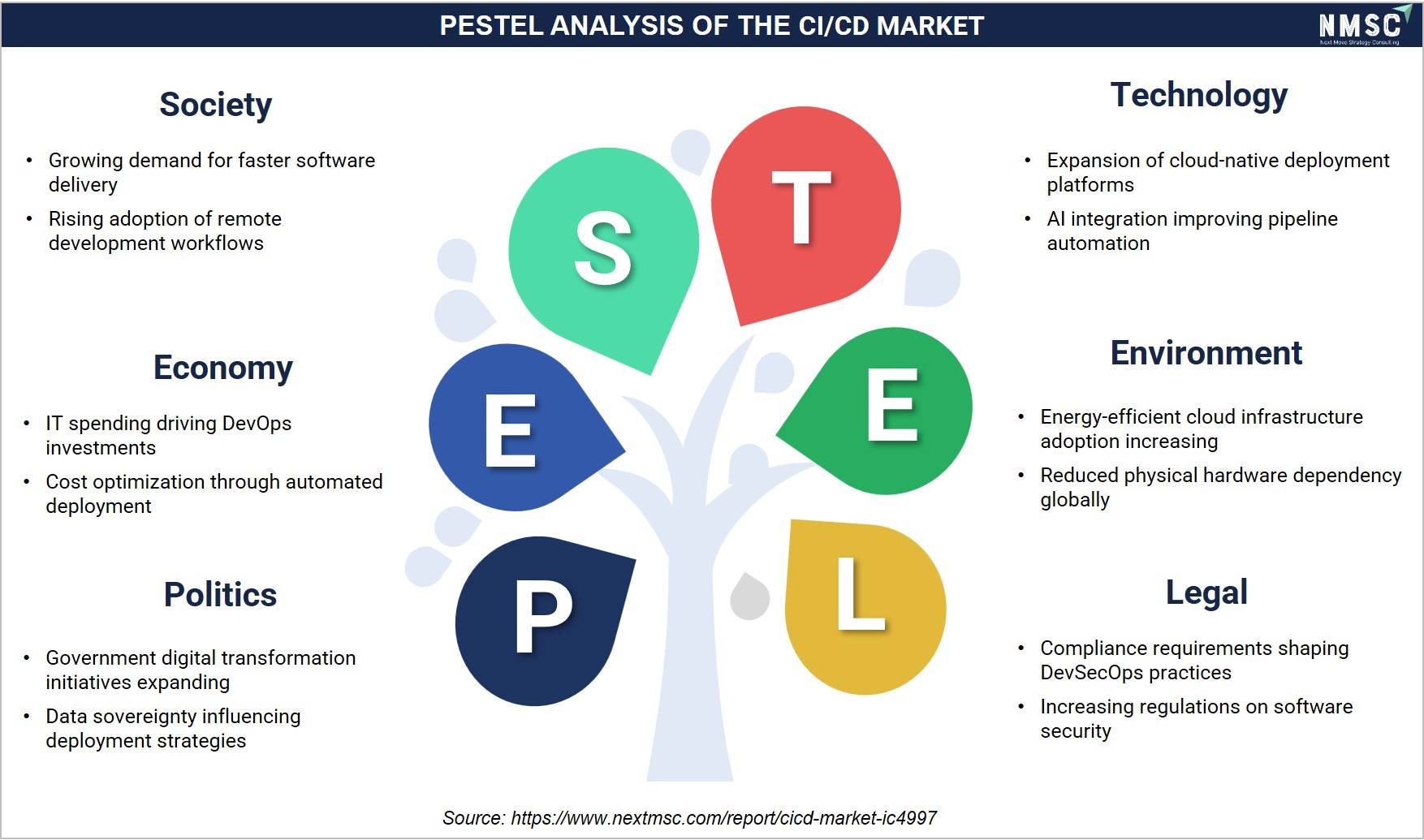
The PESTEL analysis outlines the external factors influencing the CI/CD Market. We identified that supportive digital transformation policies, growing enterprise IT investments, increasing adoption of cloud technologies, and rapid software innovation are driving market expansion. Moreover, cybersecurity regulations, environmental sustainability initiatives, evolving workforce requirements, and changing compliance standards continue to shape product development, adoption, and competitive dynamics across industries.
Competitive Landscape
Competitive Dynamics and M&A Landscape
|
Key Takeaways |
Details |
|
Market Structure |
The CI/CD Market features multi-tiered competition among hyperscaler-integrated platforms (Microsoft GitHub Actions, AWS CodePipeline, Google Cloud Build), independent platform vendors (GitLab, Harness, JFrog, CloudBees), and developer-community SaaS tools (CircleCI, Bitrise, Buildkite), each competing on distinct pipeline scope, integration breadth, and deployment model flexibility. |
|
Innovation Focus |
Innovation in the CI/CD Market is concentrated in AI-assisted pipeline generation, GitOps and progressive delivery, software supply chain security and SBOM management, mobile CI/CD native tooling, and developer experience enhancements including self-service portal integration through internal developer platform frameworks such as CNCF Backstage. |
|
M&A Activity |
Broadcom’s acquisition of VMware consolidated Tanzu application platform assets with enterprise deployment capabilities. HashiCorp’s acquisition by IBM in 2024 brought Terraform infrastructure-as-code capabilities into IBM’s DevOps portfolio, expanding the adjacent market boundary for CI/CD vendors. Continued consolidation is expected among GitOps, artifact management, and security scanning vendors throughout the 2025–2028 period. |
How Do Companies Compete in the CI/CD Market?
The CI/CD Market is characterized by multi-tiered competition across hyperscaler-integrated platforms, independent enterprise vendors, and community-focused SaaS tools. Hyperscalers including Microsoft (GitHub Actions, Azure DevOps), Amazon Web Services (CodePipeline, CodeBuild), and Google Cloud (Cloud Build) compete on native integration with cloud infrastructure services, bundled pricing within cloud spend commitments, and ecosystem breadth. Independent platforms such as GitLab, Harness, and JFrog differentiate on multi-cloud neutrality, end-to-end software supply chain coverage, and enterprise compliance capabilities. Community platforms including CircleCI, Buildkite, and Bitrise compete on developer experience, configuration simplicity, and ecosystem plugin breadth for specialized use cases.
Which Kind of Companies Dominate the CI/CD Market?
Three distinct categories of companies dominate the CI/CD Market. First, hyperscaler-integrated platform providers including Microsoft Corporation, Amazon Web Services, and Google LLC leverage cloud infrastructure ownership to deliver tightly integrated CI/CD services with bundled pricing advantages within existing enterprise cloud agreements. Second, independent enterprise CI/CD platform vendors including GitLab, Harness, JFrog, CloudBees, Broadcom, Oracle, and Red Hat provide full software delivery lifecycle capabilities with multi-cloud portability and enterprise governance depth. Third, developer-community SaaS platforms including CircleCI, Bitrise, Buildkite, JetBrains, Semaphore CI, and AppVeyor serve software-centric buyers with lightweight, developer-first pipeline tooling optimized for rapid onboarding and flexible open-source ecosystem integration across diverse technology stacks.
AI-Native Differentiation and Open Standards Drive Market Success in the CI/CD Market
Innovation across the CI/CD Market is concentrating around AI-native pipeline authoring capabilities, GitOps-driven infrastructure reconciliation, software supply chain security and SBOM management tooling, and developer experience platforms integrating internal developer portals with CI/CD pipeline governance. Vendors embedding AI within pipeline configuration assistance, intelligent test prioritization, and automated rollback detection are capturing premium enterprise pricing and accelerating land-and-expand commercial motions within large software engineering organizations. Adoption of open standards including OpenTelemetry pipeline observability, OpenSSF Supply Chain Levels for Software Artifacts (SLSA), and CNCF Argo ecosystem components is differentiating platforms that minimize vendor lock-in for enterprise multi-cloud deployments.
Market Players to Opt for Merger and Acquisition Strategies to Expand Their Presence in the CI/CD Market
Mergers and acquisitions are reshaping the competitive map of the CI/CD Market. IBM’s USD 6.4 billion acquisition of HashiCorp in 2024 extended IBM’s DevOps portfolio with Terraform and Vault capabilities, creating a more complete software delivery and infrastructure automation stack. Broadcom’s integration of VMware Tanzu assets is consolidating enterprise Kubernetes deployment capabilities with CI/CD tooling. Private equity investors including Vista Equity Partners and Thoma Bravo remain actively positioned in enterprise developer tooling, with expected consolidation among GitOps platform vendors, artifact management providers, and software supply chain security tooling companies throughout the 2025–2028 market consolidation window in the CI/CD Market landscape.
Who Are the Key Market Players in the CI/CD Market?
-
Microsoft Corporation
-
Amazon Web Services, Inc.
-
GitLab Inc.
-
Atlassian Corporation Plc
-
CloudBees, Inc.
-
Harness, Inc.
-
JFrog Ltd.
-
Broadcom Inc.
-
Red Hat, Inc.
-
Circle Internet Group, Inc. (developer of CircleCI)
-
JetBrains s.r.o.
-
Octopus Deploy Pty Ltd
-
Perforce Software, Inc.
-
Buildkite Pty Ltd
-
Bitrise Ltd.
-
Semaphore CI, Inc.
-
AppVeyor Systems Inc.
-
Idera, Inc.
What Are the Latest Developments in the CI/CD Market?
|
Date |
Event |
|
June 2026 |
GitLab introduced new AI-powered capabilities, including GitLab Orbit and AI Governance, to enhance agentic software development. The updates improve context-aware orchestration, governance, and traceability across the software development lifecycle, supporting secure and scalable CI/CD workflows. |
|
April 2026 |
CloudBees introduced Smart Tests, an AI-powered capability that identifies and executes only the tests affected by code changes, reducing unnecessary test execution, accelerating CI/CD pipelines, and lowering compute costs associated with AI-generated code. |
|
March 2026 |
JFrog unveiled the Universal Model Context Protocol (MCP) Registry along with the JFrog Skills Registry to securely manage AI models, tools, and agent capabilities. The platform strengthens governance, security, and interoperability for AI-powered software supply chains and CI/CD environments. |
Expert Insights

"As the software industry continues to adapt to new tools, processes, and market forces, the best organizations are rethinking not just how they deliver software but also how they define and measure success. When efficiency is paramount, CI/CD allows teams to deliver more value in less time, setting the foundation for stable, sustainable growth in an era of rapid change.”
— Jim Rose, CEO, CircleCI
Statement made during the release of CircleCI’s 2024 State of Software Delivery Report, highlighting the growing importance of continuous integration and continuous delivery (CI/CD) in enabling organizations to improve software delivery efficiency, accelerate development cycles, and adapt to evolving technologies and market demands.
Market Interpretation
The statement highlights the increasing strategic importance of the CI/CD Market as organizations modernize software development processes to improve delivery speed, operational efficiency, and software quality. Enterprises are increasingly adopting CI/CD platforms to automate code integration, testing, and deployment while supporting faster release cycles and greater development agility. As cloud-native development, DevSecOps, and AI-assisted software engineering continue to evolve, demand for advanced CI/CD solutions that enable continuous automation, workflow optimization, and resilient software delivery pipelines is expected to strengthen across industries.
What Are the Investment Opportunities in the CI/CD Market?
Capital Inflows and Venture Activity in the CI/CD Market
The CI/CD Market continues to attract significant venture capital and private equity investment, reflecting strong recurring revenue characteristics, high enterprise switching costs, and secular tailwinds from software delivery modernization. Through our market assessment, we observed that Harness has raised over USD 425 million from investors including Tiger Global, Alkeon Capital, and IVP, reflecting institutional conviction in the independent enterprise CI/CD platform category. JFrog’s NASDAQ listing and sustained revenue growth validate the public market appetite for software supply chain and artifact management platforms. The NIST National Cybersecurity Center of Excellence (NCCoE) reports on software supply chain security are elevating CI/CD security tooling to a mandatory enterprise investment category, creating durable demand signals for investors.
Infrastructure Investment and Cloud Marketplace Expansion
Cloud marketplace expansion represents a structurally important investment opportunity within the CI/CD Market distribution landscape. AWS Marketplace, Azure Marketplace, and Google Cloud Marketplace have collectively created a USD 45 billion enterprise software procurement channel as of 2024, per public hyperscaler financial disclosures. Our findings suggest that CI/CD vendors achieving marketplace transactability unlock access to enterprise cloud committed-use budgets, significantly shortening procurement cycles and reducing customer acquisition costs. The U.S. General Services Administration’s FedRAMP program extends marketplace-based procurement to federal agencies, creating dual commercial and government demand access for CI/CD vendors achieving FedRAMP authorization within marketplace distribution environments.
ESG Considerations and Sustainable Software Delivery
Environmental, social, and governance (ESG) considerations are emerging as a differentiation vector within the CI/CD Market as enterprises focus on optimizing build infrastructure energy consumption. Cloud-native CI/CD platforms that enable dynamic compute scaling and ephemeral runner architecture eliminate the idle compute energy waste associated with permanently provisioned on-premises build servers. Our analysis shows that GitHub has published annual Scope 1, 2, and 3 emissions data per its parent company Microsoft’s sustainability reporting framework, reflecting growing vendor accountability for CI/CD infrastructure environmental impact. Organizations adopting SaaS-based CI/CD with serverless runner models are documenting measurable reductions in software delivery infrastructure carbon footprints aligned with corporate sustainability commitments.
Digital Transformation and PE/VC Activity
Private equity investors including Vista Equity Partners, Thoma Bravo, and Francisco Partners have established active CI/CD and developer tooling investment portfolios, recognizing the high switching cost, recurring revenue, and enterprise-critical nature of software delivery platform infrastructure. Our assessment indicates that consolidation opportunities exist in artifact management, GitOps platform, mobile CI/CD, and software supply chain security segments where fragmented vendor landscapes create platform aggregation potential. The U.S. Small Business Administration (SBA) innovation research programs have funded early-stage CI/CD security tooling development, reflecting government recognition of automated software delivery infrastructure as critical national technology capability with direct commercial investment implications across the enterprise DevOps ecosystem.
Key Benefits for Stakeholders
This CI/CD Market research report provides actionable intelligence for enterprise technology leaders, CI/CD platform vendors, investors, platform engineering teams, regulatory authorities, and technology analysts involved in software delivery modernization across deployment models, organization sizes, enterprise functions, and regional markets.
For Enterprise Technology Leaders
Enterprise technology leaders gain comprehensive, vendor-neutral insights into the CI/CD Market, including quantitative sizing across deployment models, organization sizes, enterprise functions, and industry verticals. This intelligence supports DevOps strategy planning, CI/CD platform evaluation, and multi-year technology investment roadmaps. Our competitive landscape analysis enables organizations to benchmark vendor capabilities, deployment approaches, and automation maturity with confidence and analytical rigor.
For CI/CD Platform Vendors
CI/CD platform vendors gain actionable intelligence on white-space opportunities, competitive positioning, and the fastest-growing deployment models and customer segments within the CI/CD Market. Deployment analysis identifies underserved enterprise requirements across cloud-native, hybrid, and on-premises environments. Our regional outlook and buyer analysis enable vendors to refine product roadmaps, strengthen go-to-market strategies, expand partner ecosystems, and optimize channel approaches across direct sales, cloud marketplaces, and system integrators.
For Investors and Financial Analysts
Investors and financial analysts access a structured, data-rich assessment of the CI/CD Market’s growth trajectory, competitive dynamics, investment activity, and segment-level revenue forecasts through 2035. The CAGR analysis by deployment model, organization size, region, and industry vertical supports portfolio construction and valuation modeling. Detailed company profiles and strategic development tracking provide an early-signal framework for identifying acquisition opportunities, emerging innovators, and competitive shifts across the DevOps software ecosystem.
For Platform Engineering Teams
Platform engineering teams receive detailed insights into CI/CD adoption patterns, pipeline automation trends, platform engineering practices, and emerging technologies including AI-assisted development and GitOps architectures. The report supports technology benchmarking, internal modernization initiatives, toolchain optimization, and business case development by providing evidence-based analysis of evolving enterprise software delivery practices.
For Government and Regulatory Bodies
Government agencies and regulatory authorities gain a structured assessment of how software supply chain security requirements, DevSecOps frameworks, cybersecurity regulations, and software compliance standards are shaping the CI/CD Market. Regional insights provide policymakers with evidence-based perspectives on how regulatory frameworks influence enterprise software modernization, digital resilience, cloud adoption, and secure software development across public and private sectors.
For Technology Analysts and Researchers
Technology analysts and researchers gain access to a structured market assessment covering deployment models, buyer segments, regional dynamics, competitive benchmarking, technology innovation, and investment trends across the CI/CD Market. The report serves as a comprehensive reference for independent industry research, advisory engagements, strategic benchmarking, and long-term assessment of the evolving software development and DevOps ecosystem.
Key Market Segments
By Offering
-
Core Software
-
CI Platform
-
Source Code Integration
-
Build Automation
-
Test Automation
-
-
CD Platform
-
Release Orchestration
-
Deployment Automation
-
Rollback and Approval Management
-
-
Unified CI/CD Platform
-
Pipeline Authoring
-
Pipeline Execution
-
Pipeline Governance
-
-
Build and Runner Platform
-
Hosted Runners
-
Self-Hosted Runners
-
Build Consumption
-
-
GitOps Platform
-
Desired State Management
-
Continuous Reconciliation
-
Progressive Delivery
-
-
Mobile CI/CD Platform
-
iOS Delivery
-
Android Delivery
-
Cross-Platform Delivery
-
-
Release Management Platform
-
Release Planning
-
Environment Promotion
-
Release Governance
-
-
-
Services
-
Professional Services
-
Managed Services
-
Technical Support
-
By Deployment Model
-
SaaS
-
Self-Managed
-
Hybrid
By Organization Size
-
SMB
-
Mid-Market
-
Enterprise
By Buyer Type
-
Developers
-
Platform Engineering
-
DevOps and SRE
-
Security and Compliance
-
IT Operations
By Industry
-
Software and Internet
-
BFSI
-
Telecom and Media
-
Retail and E-Commerce
-
Healthcare and Life Sciences
-
Manufacturing and Industrial
-
Public Sector
-
Other Industries
By Sales Channel
-
Direct
-
Cloud Marketplace
-
Partner and Reseller
-
Community and Open Source
By Region
-
North America: U.S., Canada, and Mexico.
-
Europe: UK, Germany, France, Italy, Spain, Sweden, Denmark, Finland, the Netherlands, and the Rest of Europe.
-
Asia-Pacific: China, India, Japan, South Korea, Taiwan, Indonesia, Vietnam, Australia, Philippines, Malaysia, and the Rest of APAC.
-
Middle East & Africa (MEA): Saudi Arabia, UAE, Egypt, Israel, Turkey, Nigeria, South Africa, and the Rest of MEA.
-
Latin America: Brazil, Argentina, Chile, Colombia, and the Rest of LATAM.
Conclusion and Recommendations
Long-Term Outlook
The CI/CD Market is positioned for sustained high-growth through 2035, driven by the universal enterprise imperative to accelerate software delivery, improve deployment reliability, and meet increasingly stringent software supply chain security regulatory requirements. The market is forecast to grow from USD 6.8 billion in 2026 to USD 28.6 billion by 2035, at a CAGR of 17.3%. From our research, we found that this growth reflects both the continued expansion of software engineering workforce investment globally and the broadening of CI/CD platform scope from build-and-test automation into full software supply chain governance, AI-assisted pipeline intelligence, and internal developer experience platforms. Every enterprise software organization, regardless of size or geography, is now a potential CI/CD platform buyer.
Strategic Positioning Recommendations
Platform vendors in the CI/CD Market should prioritize AI-native pipeline capabilities through integrated test generation, anomaly-based rollback, and natural language pipeline authoring features that deliver measurable developer productivity improvements beyond traditional automation. Software supply chain security integration, including SBOM generation, SLSA attestation, and policy-as-code enforcement within pipeline workflows, is becoming a table-stakes enterprise procurement requirement rather than a premium feature. Vendors without native cloud marketplace transactability on AWS, Azure, and Google Cloud Marketplace face structural distribution disadvantage in enterprise procurement as organizations centralize technology purchasing through existing cloud spend commitment programs.
Investment Attractiveness
The CI/CD Market represents an attractive investment environment characterized by high recurring revenue predictability, strong enterprise switching costs, and durable secular demand from universal software delivery modernization. Our assessment indicates that the highest-conviction investment themes include AI-assisted pipeline platforms (fastest CAGR trajectory), Cloud Marketplace distribution models (18.9% channel CAGR), Security and Compliance buyer segment expansion (18.1% CAGR), and Mobile CI/CD Platform growth (18.6% CAGR). Investors should monitor platform engineering organizational adoption rates as a leading indicator of enterprise CI/CD platform deal size expansion, and consolidation activity in GitOps, artifact management, and DevSecOps tooling sub-segments as M&A-driven growth vectors within the broader market.
Market Shifts and Key Risks
The most significant market shift underway is the migration from point-solution CI/CD toolchain combinations toward consolidated platform engineering platforms that integrate CI/CD pipeline orchestration, internal developer portals, GitOps deployment management, and software supply chain security into unified vendor platforms. This consolidation benefits full-stack platforms including GitHub Enterprise, GitLab, and Harness at the expense of standalone niche tools. Key risks for the CI/CD Market include open-source competition from Jenkins, Tekton, and Argo continuing to pressure commercial licensing margins in cost-sensitive segments, macroeconomic pressures constraining enterprise technology spending growth in 2025–2026, and hyperscaler bundling strategies reducing independent platform commercial opportunities within cloud-committed enterprise accounts.
Growth Pathways
Organizations seeking to maximize value from the CI/CD Market should pursue a three-horizon strategy. In the near term (2025–2027), prioritize cloud-native CI/CD platform consolidation, elimination of legacy Jenkins technical debt, and integration of software supply chain security tooling to establish the governed pipeline foundation required by regulatory compliance frameworks. In the mid-term (2027–2031), invest in AI-assisted pipeline intelligence capabilities, GitOps-driven infrastructure delivery, and internal developer platform integration to capture productivity multiplier benefits from intelligent automation within software engineering organizations. In the long term (2031–2035), position for AI-native autonomous pipeline orchestration and continuous intelligent deployment optimization as the primary software delivery model within high-performing enterprise technology organizations.
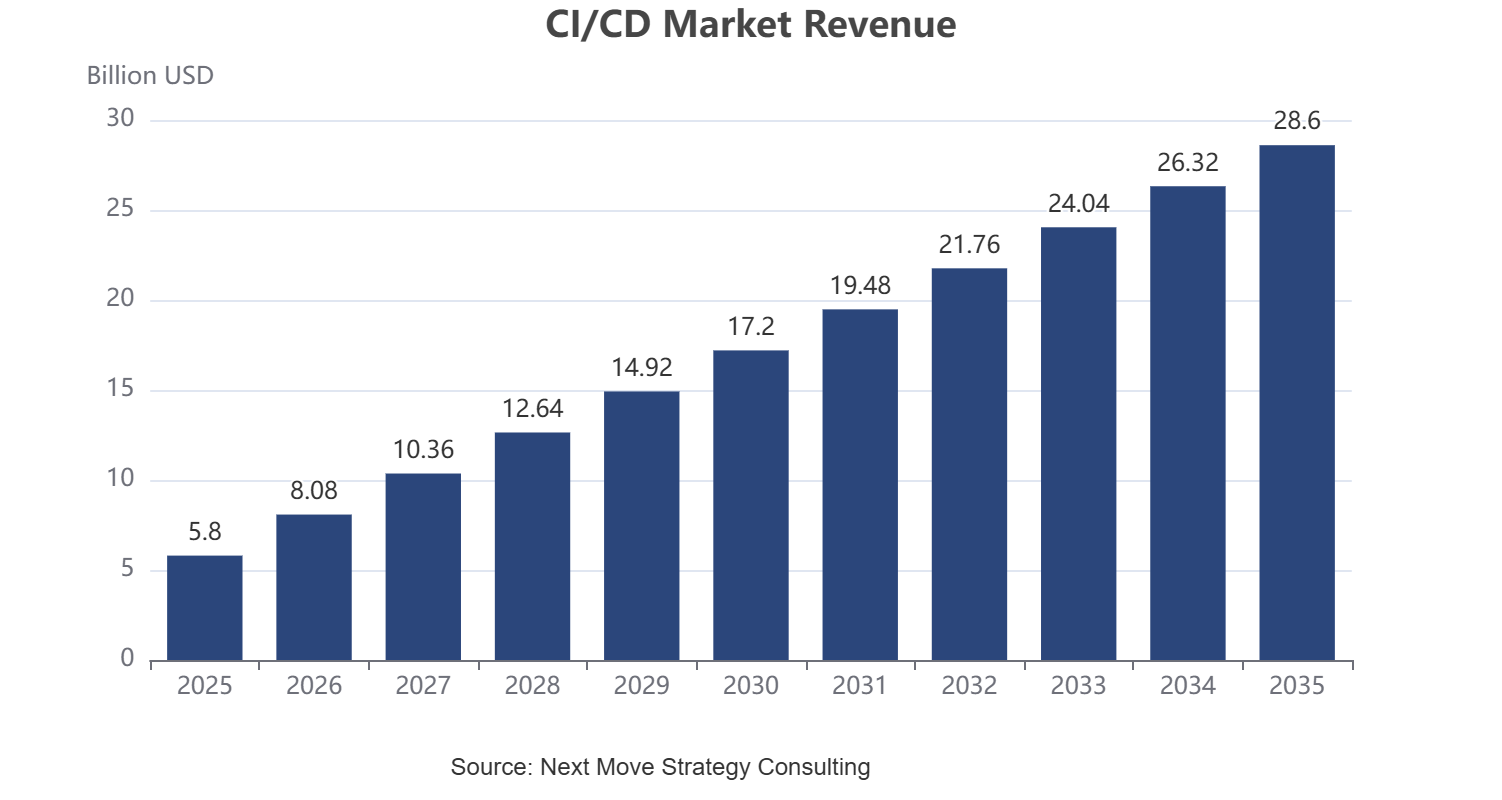
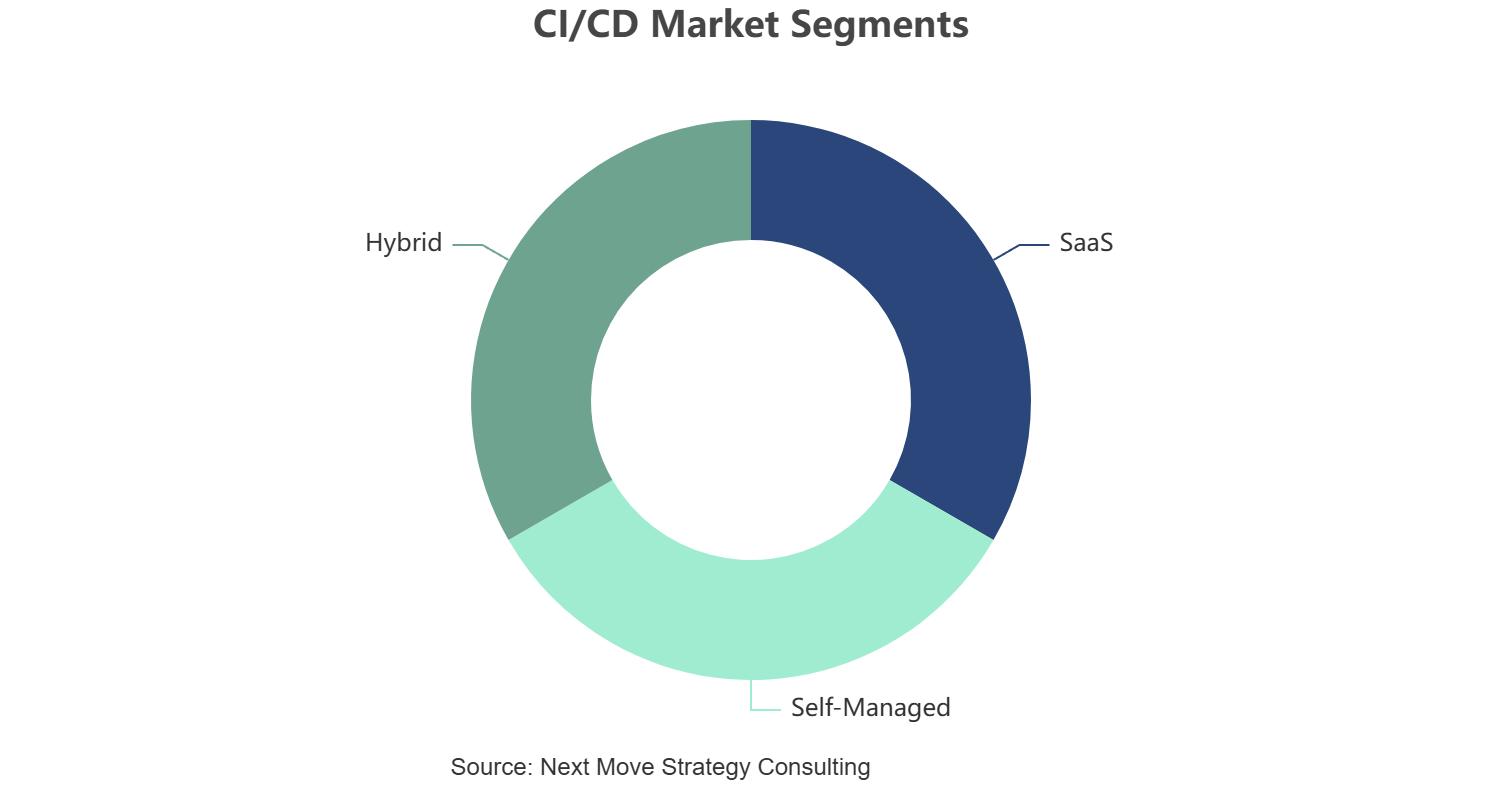
About the Author
 Saista Faiyaz
— Saista Faiyaz is Research Associate at Next Move Strategy Consulting, where she has covered consumer markets and healthcare technologies for 3 years. Her work includes primary interview review, secondary-source validation, market sizing, and structured analysis of company and industry data. She supports research by comparing evidence across sources, organizing findings into market narratives, and documenting assumptions used in analysis. Her scope includes cross-market benchmarking, and reports.
Saista Faiyaz
— Saista Faiyaz is Research Associate at Next Move Strategy Consulting, where she has covered consumer markets and healthcare technologies for 3 years. Her work includes primary interview review, secondary-source validation, market sizing, and structured analysis of company and industry data. She supports research by comparing evidence across sources, organizing findings into market narratives, and documenting assumptions used in analysis. Her scope includes cross-market benchmarking, and reports.
About the Reviewer
 Supradip Baul
— Supradip Baul is an accomplished business consultant and strategist with over a decade of rich experience in market intelligence, strategy, technology, and business transformation. His work has included rigorous qualitative and quantitative analysis across multiple industries, helping clients shape investment decisions and long-term roadmaps. Earlier in his career, he was associated with Gartner, where he contributed to industry-leading reports and market share analyses. He has worked with leading global companies and holds an MBA with a dual specialization in Marketing and Finance.
Supradip Baul
— Supradip Baul is an accomplished business consultant and strategist with over a decade of rich experience in market intelligence, strategy, technology, and business transformation. His work has included rigorous qualitative and quantitative analysis across multiple industries, helping clients shape investment decisions and long-term roadmaps. Earlier in his career, he was associated with Gartner, where he contributed to industry-leading reports and market share analyses. He has worked with leading global companies and holds an MBA with a dual specialization in Marketing and Finance.
At Next Move Strategy Consulting, we understand that insightful market research is the cornerstone of successful business decisions. That's why we employ a robust and multifaceted approach, combining various methodologies to deliver the most accurate and actionable data for our clients.

Research Landscape
We navigate the world of research with two primary approaches:
Qualitative Approach
Our qualitative research methodologies involve immersive techniques such as in-depth interviews, focus groups, and observational studies. By engaging directly with individuals and stakeholders, we uncover valuable insights that quantitative data alone may overlook.

Quantitative Research
In tandem with qualitative methodologies, NMSC leverages the power of Quantitative Research to provide a robust foundation of numerical insights. Through systematic data collection and analysis, we quantify patterns, preferences, and market trends, offering a comprehensive view of the business landscape.
Our quantitative research approach employs diverse tools, including surveys, experiments, and statistical modelling. These methodologies enable us to gather data from a large and representative sample, ensuring the statistical significance of our findings. By employing structured questionnaires and standardized data collection methods, we guarantee the reliability and validity of the information we present to our clients.
Quantitative research is particularly effective in measuring the prevalence of trends, assessing market size, and gauging the impact of various factors on consumer behavior. The numerical precision attained through this approach equips our clients with actionable insights, facilitating data-driven decision-making and strategy formulation.


Our Specialized Toolbox for Industry-Specific Market Research
We deploy a specialized arsenal of techniques tailored to meet your unique requirements. Here's a glimpse into our comprehensive toolbox:

Information Procurement
The stage entails acquiring market data or relevant information through various sources and methodologies.


Market Research Approach
We utilize both top-down and bottom-up approaches in market research analysis to achieve a comprehensive understanding of the market dynamics, leveraging the broad perspective of industry trends and macroeconomic factors alongside detailed insights from specific segments and individual companies.

Porters Five Forces Analysis
We conduct Porter's Five Forces analysis to evaluate the competitive landscape of an industry, providing us with insights into factors that affect profitability and strategic positioning.

SWOT Analysis

Forecasting
We utilize a forecasting model to predict future consumption by considering parameters like population, economics, regulations, market competition, drivers, constraints, technology, and pricing. We also employ statistical techniques such as multilinear regression, exponential smoothing, moving average, ARIMA, and Monte Carlo simulations for accurate predictions. In econometric forecasting, we analyzed short-term and long-term event impacts, attributing values based on regulatory frameworks, economic factors, and market events.





 Speak to Our Analyst