Electrolyte Analyzer Market by Product Type (Benchtop, Portable, and Handheld and Bedside Devices), by Operational Type (Fully Automatic, Semi-Automatic, and Others), by Technology (Direct Ion Selective Electrode, Indirect Ion Selective Electrode, and Others), by Throughput tier (Single Test Rapid Devices, Low Throughput up to 60 Tests per Hour, and Others), by End-User (Hospitals, Diagnostic Laboratories, Home and Remote Monitoring, and Others) – Global Analysis & Forecast, 2025–2030
Industry: Healthcare | Publishing Date: November 18, 2025 | Last Updated: September 30, 2026 | No of Pages: N/A | No. of Tables: N/A | No. of Figures: N/A | Format: PDF | Report Code: HC3693
Industry Outlook
The global Electrolyte Analyzer Market size was valued at USD 1.05 billion in 2024 and is expected to reach USD 1.11 billion by 2025. Looking ahead, the industry is projected to expand significantly, reaching USD 1.47 billion by 2030, registering a CAGR of 5.8% from 2025 to 2030.
The industry today sits at the intersection of centralized laboratory testing and rapidly growing point-of-care diagnostics. Hospitals, emergency departments, intensive care units and dialysis centers continue to rely on benchtop and automated analyzers for routine and high-throughput electrolyte panels, while portable and bedside devices are increasingly used where turnaround time is critical.
Clinicians use these instruments to guide acute management, resuscitation, acid–base correction, renal and electrolyte replacement therapy, and to monitor chronic conditions that require frequent ionic surveillance. The sector’s current landscape is therefore defined by complementary workflows, such as central labs for volume and traceability, and POCT for speed and immediate clinical decisions.
Looking ahead, the electrolyte analyzer market trajectory is shaped by technological miniaturization, improved sensor chemistries and tighter integration with electronic health records and clinical decision support. Advances such as refined ion-selective electrodes, microfluidic sampling, and smarter calibration/QA systems are enabling smaller, faster, and more reliable devices suitable for ambulatory care, remote monitoring, and field use.
Regulatory focus, user ergonomics, and interoperability drive product differentiation, while growth in decentralised care models and emerging-market adoption expand use cases beyond hospitals into outpatient clinics, home therapies and speciality practices. The future, therefore, favours hybrid solutions that blend laboratory accuracy with point-of-care convenience.
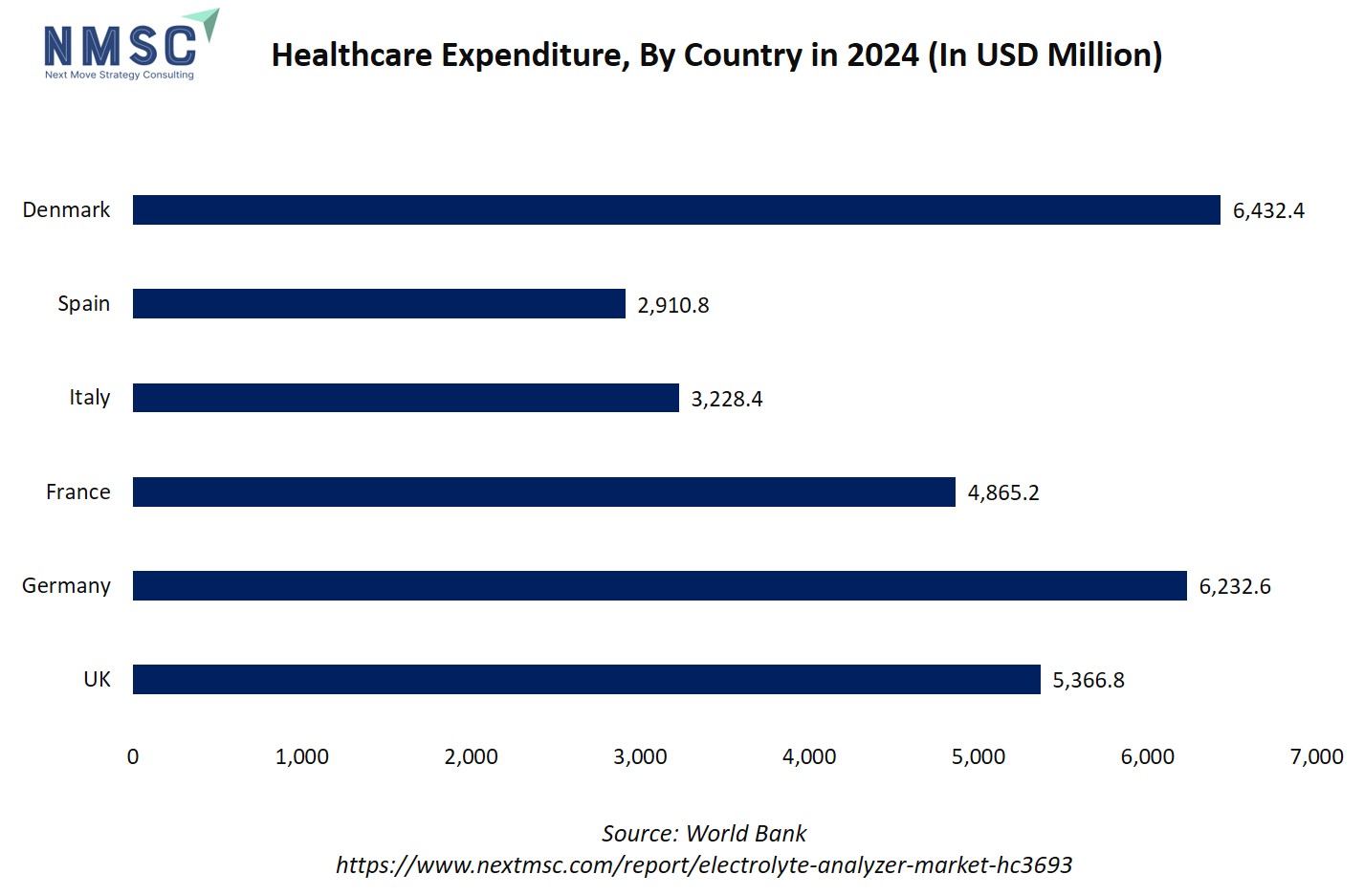
The rising healthcare expenditure directly fuels the electrolyte analyzer market growth by enabling hospitals and clinics to invest in advanced diagnostic equipment, expand their infrastructure, and adopt new technologies such as fully automated and point-of-care analyzers.
Regions with higher spending see increased access to these tools, improved patient monitoring for chronic diseases, and greater integration of analyzers into clinical workflows, while lower expenditure or stretched budgets slow adoption, especially in smaller facilities or low-income countries, making healthcare investment a fundamental driver for both the scale and sophistication of electrolyte analyzer deployment globally.
What are the Key Trends in the Electrolyte Analyzer Industry?
How are microfluidic and sensor advances reshaping the electrolyte analyzer market?
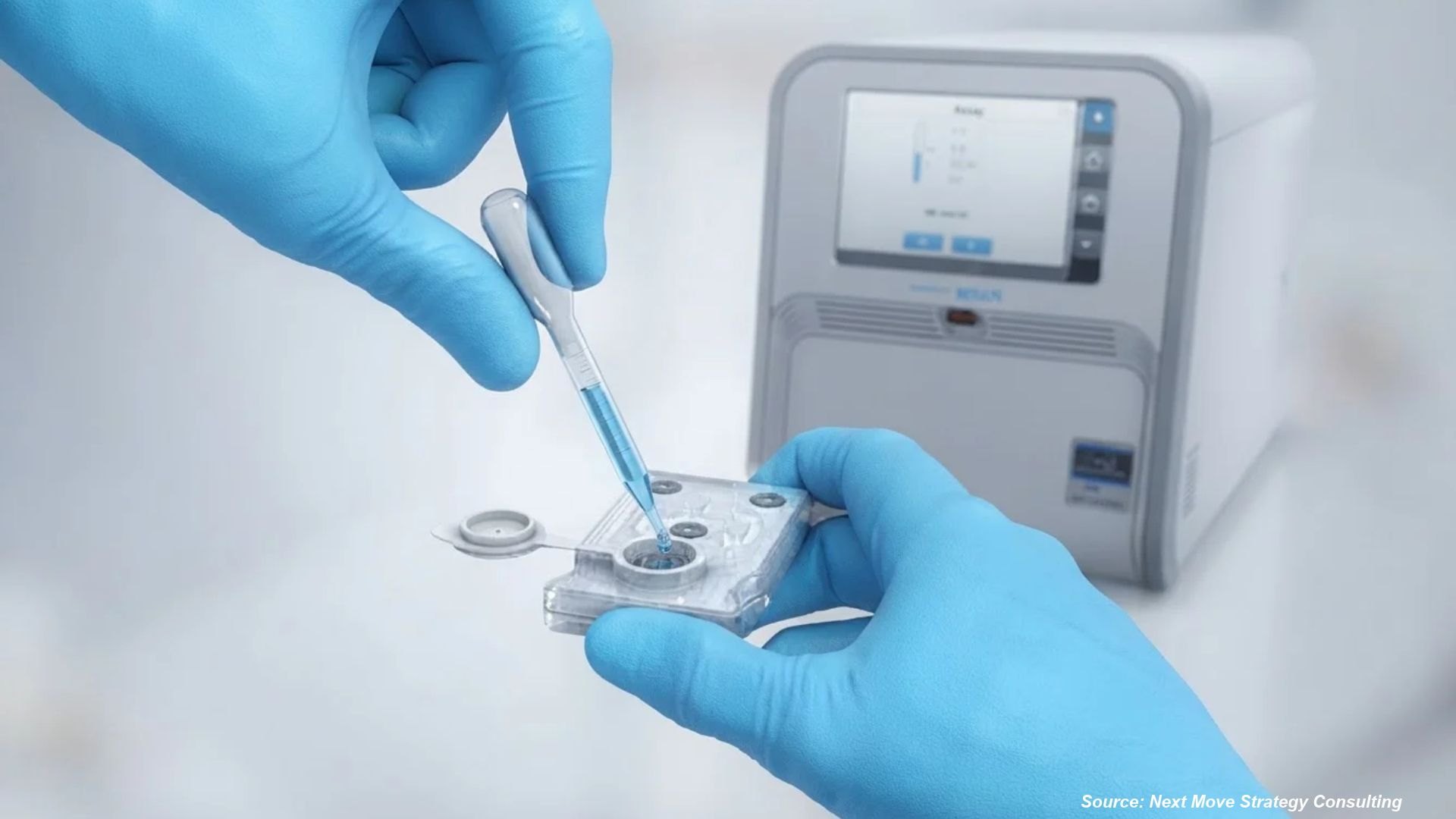
Microfluidics and next-generation ion-selective sensors are moving electrolyte testing from benches to tiny, cartridge-based devices that still deliver lab-level performance. Recent reviews show rapid progress in μPADs and microfluidic biosensors, including manufacturable paper-based arrays and improved electrode chemistries that cut sample volume, speed response, and lower per-test costs. This matters because smaller, cheaper analyzers reduce barriers for ambulatory clinics and mobile care units to adopt on-site electrolyte checks; in practice, that converts one-off capital buys into recurring consumable demand.
For companies, they pair robust microfluidic cartridges with simple instrument platforms and invest early in scalable manufacturing and contamination-resistant designs so clinical labs see equivalent accuracy with lower operator training. That strategy shortens sales cycles and creates stickiness through consumables while addressing a clear clinical need for fast, minimally invasive electrolyte data.
How is connectivity and EHR integration changing adoption dynamics in the electrolyte analyzer market?
Interoperability is no longer optional in the electrolyte analyzer market dynamics as regulatory updates and payer programs increasingly favor devices that feed results into certified EHR workflows and quality programs. ONC/CMS changes and practical guidance for EHR integration through FHIR/APIs make it easier and sometimes required to demonstrate how point-of-care results are captured for clinical decisions and reporting.
When an electrolyte analyzer automatically populates an EHR, clinicians get faster decision support and hospitals meet documentation and billing rules more easily; conversely, devices that lack secure, standards-based connectivity face lengthy IT onboarding and lower procurement priority.
The actionable insight is that companies build validated FHIR endpoints, offer middleware partnerships, and publish case studies showing time-to-action and compliance value; that evidence both speeds IT approvals and improves conversation with procurement committees, turning technical integration into a competitive differentiator.
How will home dialysis and remote monitoring expand demand for decentralized electrolyte testing?
Home-based dialysis and remote patient monitoring (RPM) are gaining momentum as studies and programs published highlight both clinical and logistic benefits of decentralized renal care. Frequent electrolyte shifts are a core safety concern for hemodialysis and peritoneal dialysis patients, so having validated, easy-to-use electrolyte checks at home or in clinic reduces emergency visits and supports personalised dialysate prescriptions.
This trend creates a new addressable market beyond hospitals, device makers focuses on rugged, low-maintenance analyzers with seamless telehealth reporting and caregiver-friendly UX. Clinically validated pilot programs that show reduced complications or hospital readmissions unlock payer conversations and help providers adopt home testing. In short, companies that couple reliable home analyzers with secure RPM workflows and outcome data are best positioned for near-term growth.
How are platform economics and QA automation creating an investment moat in the electrolyte analyzer market?
Beyond hardware, the economics of single-use cartridges, QC consumables, and cloud analytics are where predictable revenue and defensibility arise. Clinical POCT literature emphasizes the need for automated QA and operator-independent workflows to maintain accuracy; combining that with cloud-based QA dashboards helps health systems reduce manual oversight and liability. Investors and product teams prioritize solutions that bundle instrument, validated consumables, and a subscription analytics/QA service, this aligns incentives across supply, quality, and outcomes and raises switching costs.
Practically, running pilot studies that quantify reductions in QC labour and error rates, then translating those savings into a clear ROI model for customers turns a device sale into a recurring, high-margin revenue stream and a defensible competitive position.
What are the Key Market Drivers, Breakthroughs, and Investment Opportunities that will Shape the Electrolyte Analyzer Industry in the Next Decade?
The electrolyte analyzer market bridges hospital central labs and point-of-care (POC) diagnostics, serving acute care, dialysis units, emergency rooms and outpatient settings. Central laboratory analyzers handle high throughput and quality controls, while portable/handheld devices deliver rapid ion results at the bedside to speed decisions in resuscitation, renal replacement therapy and metabolic management. Clinical workflows increasingly combine both models to balance traceability and turnaround time.
Manufacturers are improving sensor chemistry and miniaturization to meet the needs for faster, more reliable electrolyte measures in diverse settings. Industry incumbents offer integrated POC platforms and cartridge-based tests that simplify sampling and data transfer to electronic health records, a capability emphasized by regulators and hospitals. Continued investment in interoperability and decentralized-care use cases shapes near-term product differentiation.
Growth Drivers:
How is increasing demand for rapid, decentralized care driving electrolyte analyzer adoption?
Rapid, decentralized care models like emergency departments, ambulances, field hospitals, dialysis clinics and outpatient infusion centers place a premium on near-instant electrolyte information to guide immediate therapy. Faster turnaround reduces time-to-treatment for hyperkalemia, hyponatremia, acid-base disorders and sepsis management; that clinical value underpins hospital procurement and point-of-care budgets.
Technological advances such as ion-selective electrodes, microfluidics, and cartridge systems let vendors deliver reliable readings from small whole-blood samples with minimal operator steps, enabling non-laboratory staff to perform tests safely. Manufacturers like Abbott and Roche have commercial POC platforms with cartridge-based electrolyte panels and documented regulatory clearances that reassure hospital labs and clinicians about analytic performance and workflow integration.
Regulatory support for validated POC systems and rising prevalence of acute/chronic conditions that require frequent monitoring further stimulate uptake. Taken together, clinical urgency, workflow efficiency and validated POC technology form a strong multi-factor growth engine for electrolyte measurement systems.
How are technology innovations unlocking new use cases and commercial growth?
Technology innovation is expanding both where and how electrolyte testing is used. Improvements in ion-selective electrodes, microfluidic cartridges, and on-board calibration/QA permit smaller analyzers that sustain lab-grade accuracy outside the central lab. These innovations enable ambulatory clinics, home-care programs, and mobile units to monitor electrolytes for chronic kidney disease, heart failure and chemotherapy patients without sending samples to distant labs.
Connectivity advances secure wireless transfer and EHR integration let results feed decision support and billing systems, lowering administrative friction for adoption. Vendors’ product launches and regulatory filings document these capabilities and help purchasing committees justify investment. As devices get smaller, cheaper per test, and simpler to operate, the market opens to nontraditional buyers, increasing addressable volume and recurring consumables revenue from cartridges and controls.
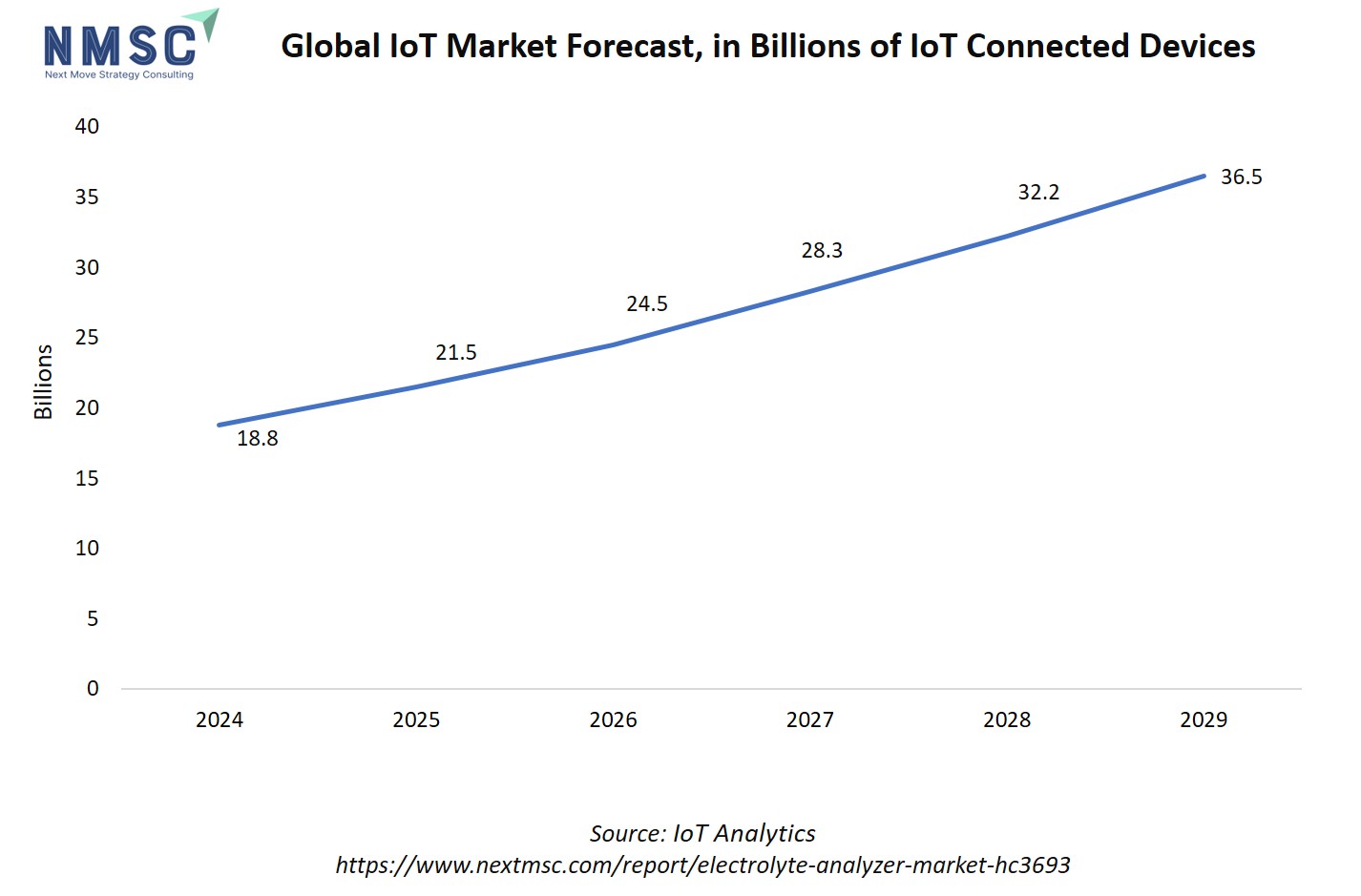
The global IoT connected devices, relates to the industry through the increasing integration of IoT technologies in medical diagnostics. As healthcare organizations adopt more IoT-enabled devices, including advanced electrolyte analyzers, this trend enables real-time data sharing, remote monitoring, and improved patient outcomes, thereby driving demand for modern, connected analyzers and supporting overall market growth by facilitating decentralized care, enhancing diagnostic speed and accuracy.
Growth Inhibitors:
What regulatory, accuracy and workflow challenges could slow the market growth?
Regulators require clear evidence that POC electrolyte results match laboratory standards across sample types and use environments; meeting those evidentiary bars be costly and time-consuming. False or inconsistent readings risk clinical harm and liability, prompting hospitals to be cautious about replacing lab testing fully. Integration burdens such as IT validation, middleware, clinician training, and quality control programs add upfront implementation costs and operational complexity.
Reimbursement frameworks in some markets do not sufficiently reward rapid POC testing, which dampens ROI for buyers. Finally, competing procurement priorities delay purchases. Successful vendors therefore invest in robust validation, training, QA support and clear health-economic evidence to overcome these inhibitors.
Where is the most promising near-term investment opportunity within the electrolyte analyzer ecosystem?
One attractive opportunity is vertically integrated POC ecosystems, such as compact analyzers plus proprietary consumable cartridges and cloud connectivity that tie into hospital EHRs and quality programs. Recurring revenue from single-use cartridges and controls, combined with service and connectivity subscriptions, creates a predictable cash flow.
Investments in integrated solutions that address dialysis clinics, ambulatory infusion centers, and home-therapy monitoring stand out because these sites are underserved yet require frequent electrolyte checks. Strategic partnerships with EHR/middleware vendors and clear regulatory dossiers expedite procurement.
Evidence generation, published studies showing improved outcomes or cost reductions from faster results, further accelerates adoption and reimbursement conversations. Backing companies that demonstrate clinical validation, supply-chain readiness for consumables, and scalable connectivity represents a defensible and high-leverage investment play in the near term.
How is the Electrolyte Analyzer Market Report Segmented, and What are the Key Insights from the Segmentation Analysis?
By Product Type Insights
Are Benchtop Analyzers Still Dominant in 2025?
Based on product type, the market is segmented into benchtop analyzers, portable analyzers, and handheld and bedside devices.
Benchtop analyzers dominate market revenue because they command higher capital prices and supply the largest installed base in hospital central laboratories that process the majority of routine and comprehensive electrolyte tests. Portable analyzers and handheld devices are growing faster in unit shipments driven by point of care adoption and WHO CDC emphasis on decentralised testing, but their lower price per unit means their revenue share currently trails benchtop systems. For robust sizing separate unit volumes and revenue per unit and model recurring consumable and service revenue streams explicitly.
Portable analyzers target near patient testing in smaller hospitals clinics and emergency settings. They have lower unit price than benchtop systems but higher unit volumes in decentralized settings. Throughput typically sits between single rapid tests and low throughput bench units while supporting most routine electrolyte panels. Handheld devices serve immediate single sample decisions in critical care ambulances and remote sites. They are small ticket items sold in higher unit numbers and rely heavily on disposable strips or cartridges for recurring revenue. Performance and regulatory placement limit their panel depth compared with benchtop systems.
By Operational Type Insights
Is Full Automation Defining the Future of Electrolyte Analyzers in 2025?
On the basis of operational type, the market is segmented into fully automatic, semi-automatic, and manual and instrument-free.
Fully automatic analyzers dominate the market in 2025, driven by laboratory automation trends, demand for faster turnaround, and global standardization of diagnostic workflows. Semi-automatic analyzers maintain relevance in mid-resource settings as cost-effective alternatives, while manual and instrument-free testing solutions fulfil essential roles in point-of-care and remote environments. For market sizing, full automation capture the largest revenue pool, with semi-automatic systems forming a stable mid-range, and manual solutions driving unit volume growth in emerging regions.
By Technology Insights
Is Direct Ion Selective Electrode Technology Leading the Electrolyte Analyzer Market Trends in 2025?
On the basis of technology, the market is segmented into direct ion selective electrode, indirect ion selective electrode, dry electrode electrochemical sensor, others.
Direct ISE technology dominates the electrolyte analyzer market in 2025, accounting for the majority of installations in clinical and hospital laboratories due to its unmatched accuracy and clinical standardization. Indirect ISE maintains a strong foothold in high-throughput chemistry systems, while dry electrode sensors are emerging rapidly in portable and bedside testing. The Others category remains experimental but reflects the direction of future innovation toward miniaturization and non-invasive diagnostics. It is widely used in hospital laboratories and integrated systems for high-volume testing. Indirect ISE, on the other hand, employs diluted samples, making it suitable for large-volume analyzers where reagent efficiency and automation matter more than sample precision. It is common in centralized hospital labs where integration with multi-parameter systems is prioritized.
By Throughput tier Insights
Is High Throughput Testing Driving the Electrolyte Analyzer Market Demand in 2025?
On the basis of throughput tier, the market is segmented into single test rapid devices, low throughput up to 60 tests per hour, medium throughput 60 to 200 tests per hour, and high throughput above 200 tests per hour.
In 2025, high throughput analyzers hold the largest revenue share in the global electrolyte analyzer market due to extensive adoption in centralized laboratories and healthcare networks that demand speed, reliability, and automation. Medium throughput systems follow closely, serving hospitals with growing test volumes, while low throughput analyzers and single test rapid devices ensure essential electrolyte testing access in decentralized and resource-limited facilities. Together, the throughput tiers reflect a balance between high-efficiency automation and broad accessibility across healthcare levels.
By End-User Insights
Is Hospital still the Largest End User of Electrolyte Analyzers in 2025?
On the basis of end-user, the market is segmented into hospitals, diagnostic laboratories, point of care clinics and ambulatory care, home and remote monitoring, others.
In 2025, hospitals remain the leading end-user segment of the electrolyte analyzer market, generating the highest revenue due to their dependence on high-throughput, automated analyzers for inpatient diagnostics. Diagnostic laboratories follow closely, sustaining demand through outsourced and preventive testing services. Point of care clinics and ambulatory care centers are witnessing rapid unit growth driven by decentralized healthcare initiatives, while home and remote monitoring represents an emerging frontier enabled by portable, patient-friendly technology. The others segment provides consistent niche demand from research and veterinary fields.
Regional Outlook
The electrolyte analyzer market share is geographically studied across North America, Europe, Asia Pacific, Middle East & Africa, and Latin America and each region is further studied across countries.
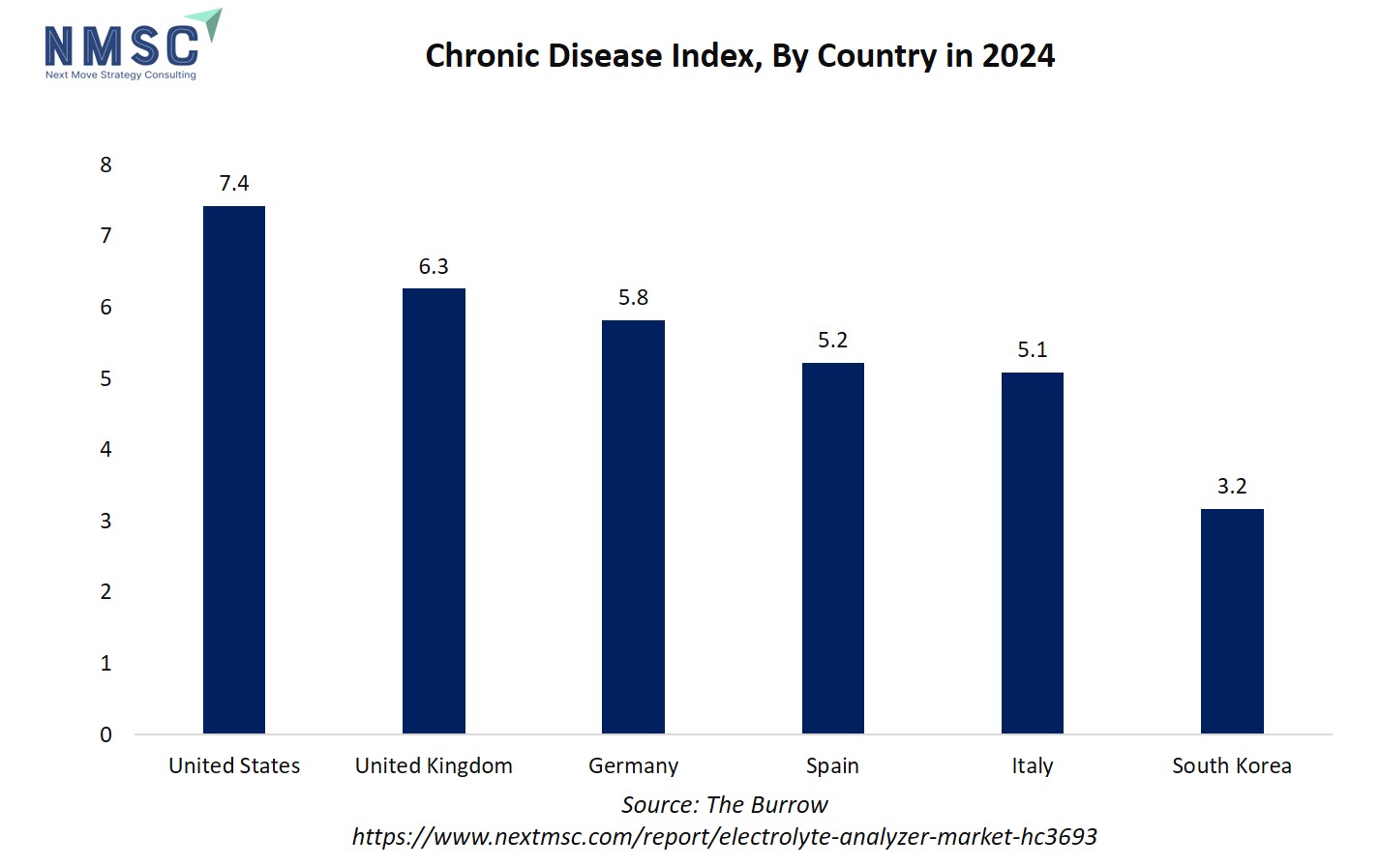
Additionally, chronic diseases such as diabetes, cardiovascular, and renal conditions drive the need for frequent electrolyte monitoring, which significantly impacts the regional outlook of the electrolyte analyzer market by creating higher demand in regions with elevated chronic disease prevalence.
For example, North America and Europe, where chronic disease indices are high already dominate the market due to established healthcare infrastructure and high rates of diagnosis, while Asia-Pacific, experiencing both a rising burden of chronic diseases and expanding healthcare investment, is forecasted to be the fastest-growing market as these trends accelerate demand for advanced, efficient diagnostic tools, thus making chronic disease prevalence a critical factor shaping regional market growth and opportunities.
Electrolyte Analyzer Market in North America
The North American market is driven by advanced hospital infrastructure high chronic disease burden and fast adoption of point of care testing which together boost demand for benchtop and portable electrolyte analyzers. Large installed bases of automated central laboratory instruments create steady recurring revenue from reagents and service contracts while emergency care and ambulatory services expand portable and single test device volumes. Payer reimbursement frameworks and regulatory emphasis on laboratory quality encourage hospitals to adopt automated ISE technology. Market reports estimate North America as the largest regional revenue contributor for blood gas and electrolyte instruments.
Electrolyte Analyzer Market in the United States
In the U.S., the electrolyte analyzer market is underpinned by high per capita use of diagnostics, widespread hospital lab automation and regulatory frameworks such as CLIA that mandate quality and reporting standards. The Centers for Disease Control and Prevention and CMS programs that support laboratory data exchange and accreditation raise the bar for instrument performance and connectivity, encouraging purchases of fully automated and integrated analyzers.
Emergency department volumes and chronic disease prevalence, such as kidney and cardiac conditions, sustain recurring reagent use. The market structure favours premium benchtop and high-throughput units in large hospital systems, while POC adoption grows in ambulatory and urgent care settings.
Electrolyte Analyzer Market in Canada
Canada’s market is shaped by universal health coverage provincial procurement policies and concentration of testing in hospital and commercial labs. Rising test volumes per population and investments to modernise laboratory networks are increasing demand for mid and high throughput analyzers and connected data management tools.
Reports show strong growth in clinical laboratory testing revenue in Canada, reflecting expansion of preventive screening and chronic disease monitoring which boosts electrolyte test volumes. Provincial tendering and centralized purchasing favor proven vendors with service networks which benefits established manufacturers and generates steady consumable sales.
Electrolyte Analyzer Market in Europe
Europe shows a mixed but consistent pattern where advanced healthcare systems in Western Europe drive demand for high-throughput automated systems, while Eastern Europe and smaller markets expand lower throughput and portable device adoption. Ageing populations and strong public health funding in key markets increase hospital lab workloads and push integration of analyzers with LIS and QA systems.
Regional regulatory harmonization and reimbursement pressures encourage efficient centralization in reference labs, but the UK and some Nordic countries are accelerating point of care initiatives to improve access. Market projections highlight steady growth in European blood gas and electrolyte analyzers as hospitals upgrade automation.
Electrolyte Analyzer Market in the United Kingdom
The NHS modernization push and expansion of community diagnostic centres are increasing decentralised testing, which supports portable and low-throughput analyzer demand alongside central lab upgrades. NHS guidance on integrating point of care testing into urgent community response encourages pathology led PoC implementation, nudging trusts to buy validated POC analyzers and related quality management tools.
At the same time, capital investment in hospital labs and expanded out of hours diagnostics drives demand for benchtop high-throughput systems. The combined effect is a balanced growth of both centralized and point-of-care instrument segments.
Electrolyte Analyzer Market in Germany
Germany holds the largest market share in Europe with a strong hospital and diagnostics industry ecosystem and high adoption of automated lab equipment. Structured hospital procurement and substantial private and public diagnostic lab networks create demand for medium to high-throughput electrolyte analyzers and integrated modules.
The medical technology sector’s strength supports local distribution and servicing networks, which favors comprehensive capital equipment sales plus long-term service agreements. Trade and industry analyses show Germany as a growth hub for IVD instruments, driven by replacement cycles and steady chronic disease diagnostics.
Electrolyte Analyzer Market in France
France’s sizable diagnostic testing sector and national health insurance system sustain regular investments in laboratory facility upgrades and expanded preventive testing which drives electrolyte analyzer demand especially for benchtop and medium throughput units.
Public and private lab networks and large diagnostic chains create robust recurring consumable revenue and service needs. Market trackers note accelerating clinical laboratory test revenue in France which aligns with greater outpatient testing volumes and diagnostic centralization initiatives that favor automated analyzers integrated into lab workflows.
Electrolyte Analyzer Market in Italy
Italy’s market growth is supported by public health funding and an emphasis on preventive care programs which increase routine testing volumes. Regional procurement patterns and a mix of public hospital and private diagnostic providers drive demand for both benchtop and mid-throughput analyzers.
Government efforts to modernize lab networks and expand diagnostic capacity tend to favour vendors that provide installation and maintenance services at scale. Reports show steady demand for diagnostic instruments as Italy upgrades networks and increases testing access.
Electrolyte Analyzer Market in Spain
Spain’s laboratory landscape reflects mixed regional investment levels but an overall push to improve diagnostic accessibility and decentralise certain services. This dynamic supports portable analyzers for community settings and low throughput hospital units while tertiary centres continue to invest in medium to high throughput systems.
Public procurement and regional health authority budgets shape buying cycles and favor devices with strong local service capabilities. Spain’s demographic trends and chronic disease prevalence sustain baseline electrolyte testing demand across public and private labs.
Electrolyte Analyzer Market in the Nordics
Nordic countries combine high healthcare spending per capita with strong digital health and laboratory quality frameworks which favor connected, automated electrolyte analyzers and point of care integration. National procurement and centralized health registries make interoperability and vendor support key buying criteria.
Because of smaller populations but high per capita testing, mid and high throughput instruments coexist with advanced PoC programs for remote and community care. The Nordic market is attractive to vendors offering high quality systems and robust data integration solutions.
Electrolyte Analyzer Market in the Asia-Pacific
Asia Pacific is the fastest growing region driven by rising healthcare spending, expanding hospital networks and growing private diagnostic chains in countries such as China, India and Southeast Asia. Demand is heterogeneous, where China and Japan favour high throughput and integrated analyzers while India, Southeast Asia and Indonesia show strong growth for portable and low-cost units because of decentralisation and affordability needs.
Investments in primary care screening programs and government initiatives boost unit volumes and recurring consumable sales. Regional market reports show the Asia Pacific as a high-growth market with diverse adoption patterns across countries.
Electrolyte Analyzer Market in China
China’s hospital expansion and rapid modernization of laboratory services fuel demand for both high-throughput analyzers in tertiary hospitals and portable devices for county and township healthcare centres. Domestic manufacturing of analyzers and consumables reduces costs and accelerates penetration, while strong government health initiatives support screening and chronic disease monitoring programs. Market analyses highlight China as a major growth market for IVD including blood gas and electrolyte analyzers, with strong local competition and increasing adoption of direct ISE and dry sensor technologies.
Electrolyte Analyzer Market in Japan
Japan’s aging population and well-resourced healthcare system sustain steady demand for diagnostic instruments including electrolyte analyzers. Hospitals and diagnostic facilities favour quality regulated instruments and integration with hospital IT systems which supports sales of mid and high throughput benchtop analyzers. Government emphasis on elder care and preventive diagnostics increases routine test volumes and supports growth in point of care adoption for community and home health services.
Electrolyte Analyzer Market in India
India shows rapid unit growth driven by expanding private diagnostic chains rising health awareness and government screening programs that increase routine testing volume. Large diagnostic players and a growing network of smaller labs create demand for low and medium throughput analyzers plus portable devices for decentralized settings.
National programs and incentives expand screening coverage which raises consumable consumption and service markets. Local manufacturing and competitive pricing help accelerate adoption, while leading Indian diagnostics firms report rising sample volumes and revenue growth, indicating expanding market opportunity for electrolyte analyzers.
Electrolyte Analyzer Market in South Korea
South Korea’s advanced IVD industry and high healthcare technology adoption rate support steady demand for automated electrolyte analyzers and integration of PoC in emergency and ambulatory care. High per capita testing volumes and strong domestic manufacturers make the market competitive, and regulatory clarity accelerates market entry for validated technologies. Market analysis suggests the South Korean IVD sector growing at healthy CAGR with opportunities for both benchtop and portable analyzers as hospitals and clinics modernize.
Electrolyte Analyzer Market in Taiwan
Taiwan’s well-developed health system and increasing investments in laboratory automation boost demand for mid-throughput and benchtop electrolyte analyzers, while local market growth supports consumable sales. Reports on Taiwan IVD forecasts show robust growth and a favourable environment for vendors that provide data integration and regulatory support. Because of its export orientation, Taiwan is also a manufacturing and testing hub that influences regional supply chains for analyzers.
Electrolyte Analyzer Market in Indonesia
Indonesia’s rapidly expanding primary care programs and recent national screening initiatives increase demand for both portable analyzers and low-throughput benchtop units across thousands of health centres. Government screening drives and public health investment expand testing access, which creates large volume opportunities for consumables and low-cost instruments adapted for decentralised use. Infrastructure constraints mean many regions prefer portable and robust analyzers requiring minimal maintenance, creating a strong market for economical POC devices.
Electrolyte Analyzer Market in Australia
Australia’s diagnostic industry shows rising pathology test volumes per capita and steady investments in lab infrastructure which favor mid and high throughput analyzers and strong data integration. National health spending and an aging population push routine testing volumes while rural outreach and telehealth initiatives drive selected adoption of portable point of care devices. Recent national statistics show increasing pathology test frequency and sustained investment, which supports both capital equipment and recurring consumable markets.
Electrolyte Analyzer Market in Latin America
Latin America presents mixed growth, where Brazil and Mexico dominate regional demand; constrained public budgets and import dependence create wide adoption gaps but growing private diagnostics networks and urban hospitals push demand for benchtop and medium throughput analyzers. Consumables are a key revenue driver in the region while market growth remains moderate. Reports highlight that Latin America revenue and forecasts, with Brazil singled out for the highest growth potential, given its market size.
Electrolyte Analyzer Market in the Middle East & Africa
The Middle East shows strong hospital investment in GCC states with demand for high-end automated analyzers in tertiary centres, while Africa is more heterogeneous, with priority on low-cost portable analyzers and manual tests in many regions. International aid programs and WHO guidance on essential diagnostics influence procurement in low-resource settings, driving demand for robust POC and dry electrode devices. Growth is uneven but significant in urbanized Gulf health systems, which import premium instruments, while many African countries focus on affordability and basic laboratory expansion.
Competitive Landscape
Which Companies Dominate the Electrolyte Analyzer Industry and How do they Compete?
Top companies in the electrolyte analyzer industry include global diagnostics leaders and focused specialists from your list such as F Hoffmann La Roche, Siemens Healthineers, HORIBA, Nova Biomedical, Werfen, Erba Mannheim, IDEXX, and a set of niche manufacturers like Medica, Diamond Diagnostics, Sensa Core, Microlab, Labotronics, OPTI Medical Systems, Biobase and Seamaty.
Competition is largely on three fronts, that is, product performance, especially analytical accuracy and repeatability consumable economics and service networks. Giants leverage scale and integrated lab automation to win large hospital and reference lab tenders while specialists compete on lower cost of ownership, rapid point of care solutions and local service responsiveness in regional markets.
Market Dominated by Electrolyte Analyzer Giants and Specialists
Market structure is shaped by both giants and specialists working different niches. Large firms such as Roche Siemens and HORIBA dominate high value hospital and central lab segments by offering fully automated systems and broad consumable portfolios that lock in recurring revenue.
Mid-tier and specialist vendors focus on portable, low cost or veterinary niches and on emerging markets where price and serviceability matter most. This dual landscape means revenue concentration sits with a few incumbents while unit volumes are dispersed across many smaller vendors meeting regional needs and point of care demand.
Innovation and Adaptability Drive Market Success
Innovation and adaptability are central to competitive advantage. Leading players invest in sensor improvements such as direct ISE and dry electrode technologies connectivity for LIS and cloud reporting and cartridge-based consumables for faster turnaround and easier maintenance.
Companies also optimize total cost of ownership through service bundles remote diagnostics and predictive maintenance. Geographic adaptability shows up as local manufacturing or distribution partnerships to lower price points and shorten delivery cycles, while specialty players push miniaturization and veterinary or field ready variants to capture underserved segments.
Market Players to Opt for Merger & Acquisition Strategies to Expand Their Presence
Recent merger and acquisition activity in 2024 and 2025 highlights how leading players are strengthening their diagnostics and electrolyte analyzer portfolios through strategic consolidation. In March 2025, Advanced Instruments, a subsidiary of Patricia Industries, announced the acquisition of Nova Biomedical for about USD 2.2 billion, aiming to build a stronger life-science tools platform and expand its point-of-care and clinical diagnostics reach.
Similarly, Siemens Healthineers deepened its diagnostics presence in August 2024 by acquiring Novartis’ Advanced Accelerator Applications diagnostics division for over USD 220 million, enhancing its imaging and laboratory testing ecosystem. These deals reflect growing industry focus on integrated diagnostics and technology-driven expansion.
Key Players
-
F. Hoffmann-La Roche Ltd
-
Biobase Biodusty(Shandong), Co., Ltd.
-
Werfen
-
Nova Biomedical
-
Sensa Core
-
Micro Lab Instruments
-
HORIBA Group
-
Medica Corporation
-
Diamond Diagnostics
-
Labotronics Scientific
-
OPTI Medical Systems
-
Erba Mannheim
-
Seamaty
What are the Latest Key Industry Developments?
Global manufacturers such as Roche, Siemens Healthineers, HORIBA Group, Nova Biomedical, and Werfen are accelerating the growth of the electrolyte analyzer market by advancing precision diagnostics and optimizing workflow efficiency in laboratories. Their efforts to develop next-generation analyzers with improved automation, compact footprints, and digital connectivity have made electrolyte testing faster and more accessible across clinical settings.
Meanwhile, emerging firms like Seamaty, Sensa Core, and Labotronics are expanding the market’s reach in developing regions through cost-effective, user-friendly models tailored to mid-sized labs and point-of-care applications. Together, these innovation-led and affordability-driven strategies are reshaping diagnostic practices, improving patient outcomes, and sustaining long-term growth for the electrolyte analyzer industry.
What are the Key Factors Influencing Investment Analysis & Opportunities in the Electrolyte Analyzer Market?
Investment interest in the critical care diagnostics equipment space centers on recurring revenue and scalability. Investors favour businesses with predictable consumable streams such as reagents cartridges and service contracts because these drive high lifetime value and margin stability.
Startups that pair hardware with software or connectivity features command higher valuations by demonstrating stickiness through data services and remote monitoring revenue. Funding trends show a preference for companies that evidence clear clinical validation pathways and regulatory readiness, which de-risk commercialization and shorten time to market.
Geographic hotspots for investment are regions with large decentralized care markets and rapid lab modernization, where unit adoption scale quickly. Strategic investors also target vertical integration opportunities, such as domestic manufacturing of consumables or partnerships with diagnostic chains to accelerate distribution and margin capture.
Key Benefits for Stakeholders:
Next Move Strategy Consulting (NMSC) presents a comprehensive analysis of the Electrolyte Analyzer Market, covering historical trends from 2020 through 2024 and offering detailed forecasts through 2030. Our study examines the market at regional and country levels, providing quantitative projections and insights into key growth drivers, challenges, and investment opportunities across all major sector segments.
The industry further offers distinct benefits to both investors and customers through its combination of steady demand and technological advancement. Investors gain from predictable recurring revenues driven by consumable sales, maintenance contracts, and consistent test volumes in hospitals and diagnostic labs.
The market’s resilience, supported by essential clinical testing needs, makes it attractive for long-term returns and portfolio stability. Customers, such as hospitals, laboratories, and point-of-care providers, benefit from improved diagnostic accuracy, faster turnaround times, and greater operational efficiency through automation and connectivity. As healthcare systems expand and decentralize, stakeholders across the value chain, from manufacturers to end users, enjoy enhanced cost-effectiveness, reliability, and accessibility of critical diagnostic testing.
Report Scope:
|
Parameters |
Details |
|
Market Size in 2025 |
USD 1.11 Billion |
|
Revenue Forecast in 2030 |
USD 1.47 Billion |
|
Growth Rate |
CAGR of 5.8% from 2025 to 2030 |
|
Analysis Period |
2024–2030 |
|
Base Year Considered |
2024 |
|
Forecast Period |
2025–2030 |
|
Market Size Estimation |
Billion (USD) |
|
Growth Factors |
|
|
Companies Profiled |
15 |
|
Countries Covered |
33 |
|
Market Share |
Available for 10 companies |
|
Customization Scope |
Free customization (equivalent to up to 80 analyst-working hours) after purchase. Addition or alteration to country, regional & segment scope. |
|
Pricing and Purchase Options |
Avail customized purchase options to meet your exact research needs. |
|
Approach |
In-depth primary and secondary research; proprietary databases; rigorous quality control and validation measures. |
|
Analytical Tools |
Porter's Five Forces, SWOT, value chain, and Harvey ball analysis to assess competitive intensity, stakeholder roles, and relative impact of key factors. |
Electrolyte Analyzer Market Key Segments
By Product Type
-
Benchtop Analyzers
-
Portable Analyzers
-
Handheld and Bedside Devices
By Operational Type
-
Fully Automatic
-
Semi-Automatic
-
Manual and Instrument-Free
By Technology
-
Direct Ion Selective Electrode
-
Indirect Ion Selective Electrode
-
Dry Electrode Electrochemical Sensor
-
Others
By Throughput Tier
-
Single Test Rapid Devices
-
Low throughput up to 60 tests per hour
-
Medium throughput 60 to 200 tests per hour
-
High throughput above 200 tests per hour
By End-User
-
Hospitals
-
Diagnostic Laboratories
-
Point of Care Clinics and Ambulatory Care
-
Home and Remote Monitoring
-
Others
Geographical Breakdown
-
North America: U.S., Canada, and Mexico.
-
Europe: U.K., Germany, France, Italy, Spain, Sweden, Denmark, Finland, Netherlands, and rest of Europe.
-
Asia Pacific: China, India, Japan, South Korea, Taiwan, Indonesia, Vietnam, Australia, Philippines, Malaysia and rest of APAC.
-
Middle East & Africa (MEA): Saudi Arabia, UAE, Egypt, Israel, Turkey, Nigeria, South Africa, and rest of MEA.
-
Latin America: Brazil, Argentina, Chile, Colombia, and rest of LATAM.
Conclusion & Recommendations
Our report equips stakeholders, industry participants, investors, and consultants with actionable intelligence to capitalize on the transformative electrolyte analyzer market potential. By combining robust data-driven analysis with strategic frameworks, NMSC’s Electrolyte Analyzer Market Report serves as an indispensable resource for navigating the evolving landscape.
The market is positioned for steady, technology-driven expansion as healthcare systems worldwide prioritize diagnostic efficiency, automation, and decentralized testing. Growing emphasis on rapid, accurate electrolyte analysis across hospitals, diagnostic laboratories, and point-of-care settings underscores the sector’s long-term resilience.
Continued innovation in sensor technology, integration with digital health platforms, and affordability improvements in emerging markets shape the next growth phase. Companies that strengthen service networks and consumable supply chains maintain competitive advantages as global demand diversifies across throughput tiers and automation levels.
Executives and investors view these findings as a call to align capital and strategy toward scalable, high-margin segments such as consumables, digital connectivity, and regional expansion into fast-growing healthcare markets. By prioritizing partnerships with diagnostic networks, investing in R&D for portable solutions, and supporting regulatory readiness, stakeholders secure sustainable value and early-mover benefits in the evolving electrolyte analyzer landscape.


About the Author
 Mayurima Roy
— Mayurima Roy is Research Analyst at Next Move Strategy Consulting, where she has spent 4 years working across the firm's full industry coverage rather than a single fixed vertical. Her work centers on structured research, ongoing trend tracking, competitive assessment, and insight-led content development, translating complex market data into clear, decision-ready narratives that support informed client decision-making across diverse global industries, market sectors, and world regions every day.
Mayurima Roy
— Mayurima Roy is Research Analyst at Next Move Strategy Consulting, where she has spent 4 years working across the firm's full industry coverage rather than a single fixed vertical. Her work centers on structured research, ongoing trend tracking, competitive assessment, and insight-led content development, translating complex market data into clear, decision-ready narratives that support informed client decision-making across diverse global industries, market sectors, and world regions every day.
About the Reviewer
 Supradip Baul
— Supradip Baul is an accomplished business consultant and strategist with over a decade of rich experience in market intelligence, strategy, technology, and business transformation. His work has included rigorous qualitative and quantitative analysis across multiple industries, helping clients shape investment decisions and long-term roadmaps. Earlier in his career, he was associated with Gartner, where he contributed to industry-leading reports and market share analyses. He has worked with leading global companies and holds an MBA with a dual specialization in Marketing and Finance.
Supradip Baul
— Supradip Baul is an accomplished business consultant and strategist with over a decade of rich experience in market intelligence, strategy, technology, and business transformation. His work has included rigorous qualitative and quantitative analysis across multiple industries, helping clients shape investment decisions and long-term roadmaps. Earlier in his career, he was associated with Gartner, where he contributed to industry-leading reports and market share analyses. He has worked with leading global companies and holds an MBA with a dual specialization in Marketing and Finance.
At Next Move Strategy Consulting, we understand that insightful market research is the cornerstone of successful business decisions. That's why we employ a robust and multifaceted approach, combining various methodologies to deliver the most accurate and actionable data for our clients.

Research Landscape
We navigate the world of research with two primary approaches:
Qualitative Approach
Our qualitative research methodologies involve immersive techniques such as in-depth interviews, focus groups, and observational studies. By engaging directly with individuals and stakeholders, we uncover valuable insights that quantitative data alone may overlook.

Quantitative Research
In tandem with qualitative methodologies, NMSC leverages the power of Quantitative Research to provide a robust foundation of numerical insights. Through systematic data collection and analysis, we quantify patterns, preferences, and market trends, offering a comprehensive view of the business landscape.
Our quantitative research approach employs diverse tools, including surveys, experiments, and statistical modelling. These methodologies enable us to gather data from a large and representative sample, ensuring the statistical significance of our findings. By employing structured questionnaires and standardized data collection methods, we guarantee the reliability and validity of the information we present to our clients.
Quantitative research is particularly effective in measuring the prevalence of trends, assessing market size, and gauging the impact of various factors on consumer behavior. The numerical precision attained through this approach equips our clients with actionable insights, facilitating data-driven decision-making and strategy formulation.


Our Specialized Toolbox for Industry-Specific Market Research
We deploy a specialized arsenal of techniques tailored to meet your unique requirements. Here's a glimpse into our comprehensive toolbox:

Information Procurement
The stage entails acquiring market data or relevant information through various sources and methodologies.


Market Research Approach
We utilize both top-down and bottom-up approaches in market research analysis to achieve a comprehensive understanding of the market dynamics, leveraging the broad perspective of industry trends and macroeconomic factors alongside detailed insights from specific segments and individual companies.

Porters Five Forces Analysis
We conduct Porter's Five Forces analysis to evaluate the competitive landscape of an industry, providing us with insights into factors that affect profitability and strategic positioning.

SWOT Analysis

Forecasting
We utilize a forecasting model to predict future consumption by considering parameters like population, economics, regulations, market competition, drivers, constraints, technology, and pricing. We also employ statistical techniques such as multilinear regression, exponential smoothing, moving average, ARIMA, and Monte Carlo simulations for accurate predictions. In econometric forecasting, we analyzed short-term and long-term event impacts, attributing values based on regulatory frameworks, economic factors, and market events.





 Speak to Our Analyst