Portable EV Charging Cable Market By Product Platform (Mode 2 Cable Set, Mode 3 Detachable Cable Set, & Others), By Connector Standard {Type 1 (SAE J1772), Type 2 (IEC 62196‑2), NACS (SAE J3400), & Others}, By Power Class (Up to 3.7 kW, 3.8 kW to 7.4 kW, and Others), By Cable Form (Straight Cable, & Coiled Cable), By Sales Channel (Vehicle OEM, EVSE OEM, Retailer & Distributor, & Others), By End-User (Residential, Workplace, Public, Fleet, Roadside) – Global Analysis & Forecast, 2025-2035
Industry: Semiconductor & Electronics | Publishing Date: July 13, 2026 | Last Updated: September 30, 2026 | No of Pages: N/A | No. of Tables: N/A | No. of Figures: N/A | Format: PDF | Report Code: SE5096
Industry Outlook
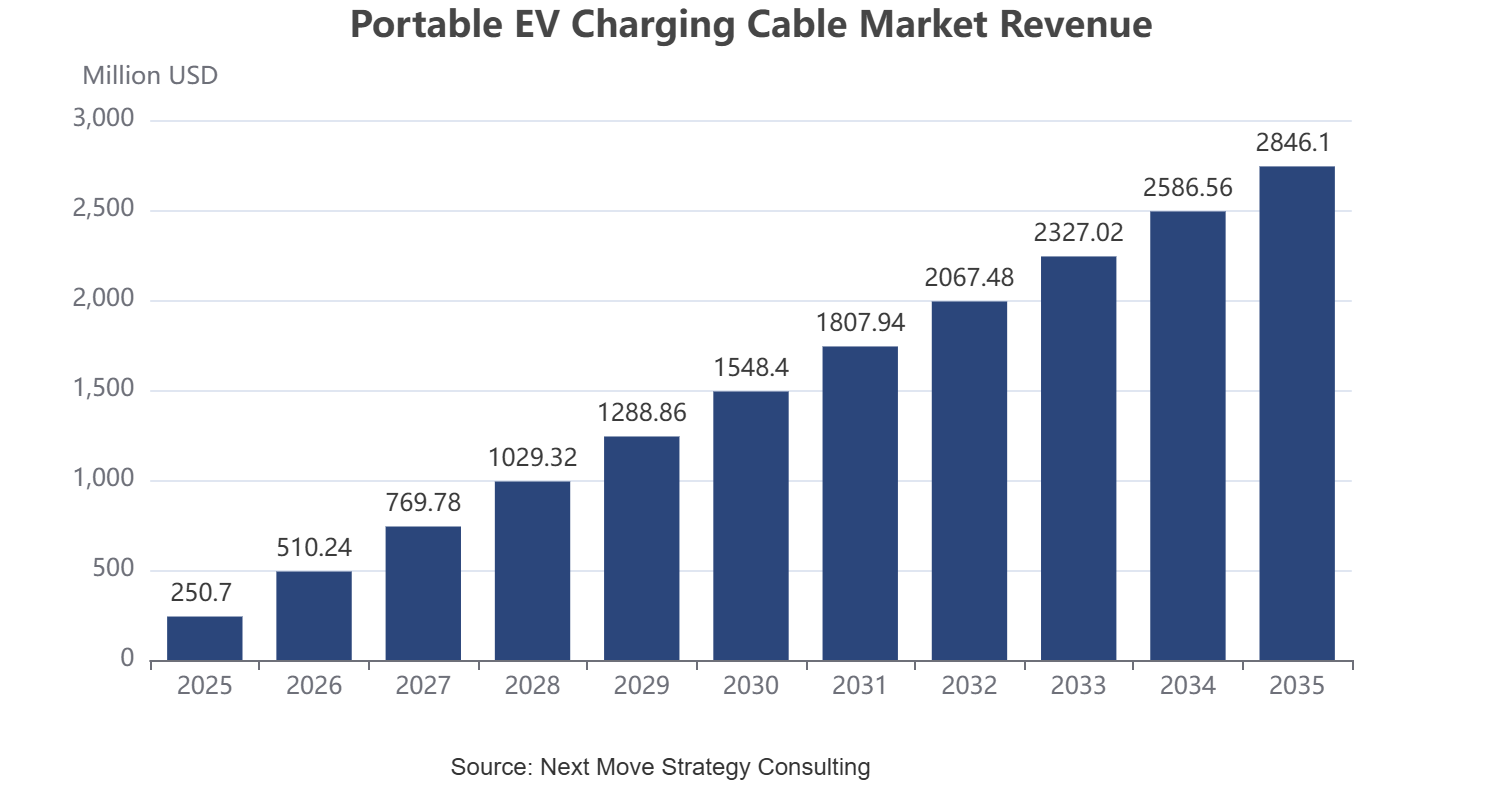
The Portable EV Charging Cable Market size was valued at USD 250.7 million in 2025 and is expected to be valued at USD 319.6 million by the end of 2026. The industry is projected to grow, hitting USD 2846.1 million by 2035, with a CAGR of 27.5% between 2026 and 2035.
Portable EV Charging Cable Industry Size & Forecast
|
Parameters |
Details |
|
Market Size in 2026 |
USD 319.6 million |
|
Revenue Forecast in 2035 |
USD 2846.1 million |
|
Growth Rate |
CAGR of 27.5% from 2026 to 2035 |
|
Analysis Period |
2025–2035 |
|
Base Year Considered |
2025 |
|
Forecast Period |
2026–2035 |
|
Market Size Estimation |
Billion (USD) |
|
Companies Profiled |
20 |
|
Countries Covered |
33 |
|
Market Share |
Available for 10 companies |
The Portable EV Charging Cable Market is currently positioned at an early but rapidly scaling stage within the broader electric mobility ecosystem. We found that demand is primarily driven by accelerating EV adoption, uneven charging infrastructure development, and the increasing need for flexible, location-independent charging solutions. Key applications span residential charging, workplace charging, fleet operations, and emergency or transitional charging scenarios where fixed infrastructure is unavailable. From our interactions with mobility ecosystem stakeholders, we noticed that users increasingly prioritize convenience and accessibility over reliance on stationary charging networks. As a result, portable charging solutions are gaining relevance as a practical bridge in the evolving EV ecosystem.
The market's growth trajectory is strongly supported by structural shifts toward decentralised charging and expanding residential EV adoption. We identified that gaps in public infrastructure and grid capacity constraints are reinforcing reliance on portable systems, particularly in emerging economies and underserved regions. We observed that residential and distributed charging ecosystems remain a key growth anchor over the forecast period. Looking ahead, portable EV charging cables are expected to play a critical role in enabling reliable and flexible EV charging across multiple usage environments. Overall, industry analysis suggests a sustained high-growth outlook, driven by infrastructure lag, policy support, and increasing consumer demand for charging flexibility.
What are the Key Trends in the Portable EV Charging Cable Market?
How is Standardisation Shift Transforming the Portable EV Charging Cable Market?
NMSC's evaluation indicates that the ongoing transition toward standardized charging systems, particularly the growing alignment around NACS alongside CCS and Type 2, is fundamentally reshaping product development strategies in the Portable EV Charging Cable Market. Manufacturers are increasingly prioritizing multi-standard compatibility to address fragmentation across regions and OEM ecosystems. This shift is not only reducing interoperability challenges but also influencing procurement decisions by OEMs and fleet operators who prefer future-proof solutions. Further, companies investing early in adaptable connector designs and certification readiness are better positioned to capture cross-market demand. This trend is accelerating innovation cycles and reinforcing the importance of global standard convergence.
How is Smart Charging Integration Influencing Product Innovation?
The integration of smart charging capabilities is transforming portable EV charging cables from basic hardware into intelligent, value-added solutions. Based on our analysis, we observed that features such as real-time temperature monitoring, adaptive load management, and connectivity with mobile applications are increasingly becoming differentiators in the market. These capabilities enable users to optimize charging efficiency, enhance safety, and integrate with broader energy management systems. This trend is aligned with the digitalisation of EV infrastructure, where data-driven insights are becoming critical for both consumers and fleet operators. As a result, manufacturers are embedding electronics and communication modules into cable systems, shifting competition toward technology-enabled offerings.
How is Material Innovation Enhancing Performance and Safety in the Portable EV Charging Cable Market?
Our evaluation indicates that material innovation is playing a critical role in improving the performance, durability, and safety of portable EV charging cables. Advancements in high-grade thermoplastics, flame-retardant compounds, and lightweight conductive materials are enabling cables to withstand higher power loads while maintaining flexibility and ease of use. These innovations are particularly important as charging speeds increase and thermal management becomes a key concern. Additionally, improved material quality extends product lifespan and reduces maintenance requirements, which is essential for both individual users and commercial fleets. This trend is reinforcing the shift toward high-performance, reliable cable solutions in a competitive market environment.
How is OEM Ecosystem Alignment Shaping Market Dynamics?
The increasing alignment between cable manufacturers and EV OEMs is significantly influencing market structure and competitive positioning. Based on our assessment, we noticed that co-development partnerships are becoming more common, enabling manufacturers to design cables that are fully optimized for specific vehicle platforms and charging architectures. This collaboration ensures higher compatibility, improved safety compliance, and enhanced user experience. Further, OEM-driven procurement strategies are also consolidating supplier bases, favouring players with strong technical capabilities and proven reliability. This trend is therefore creating higher entry barriers while strengthening long-term contracts and ecosystem integration, and as a result, the market is shifting toward a more structured, partnership-driven model.
Ecosystem Analysis of the Portable EV Charging Cable Market
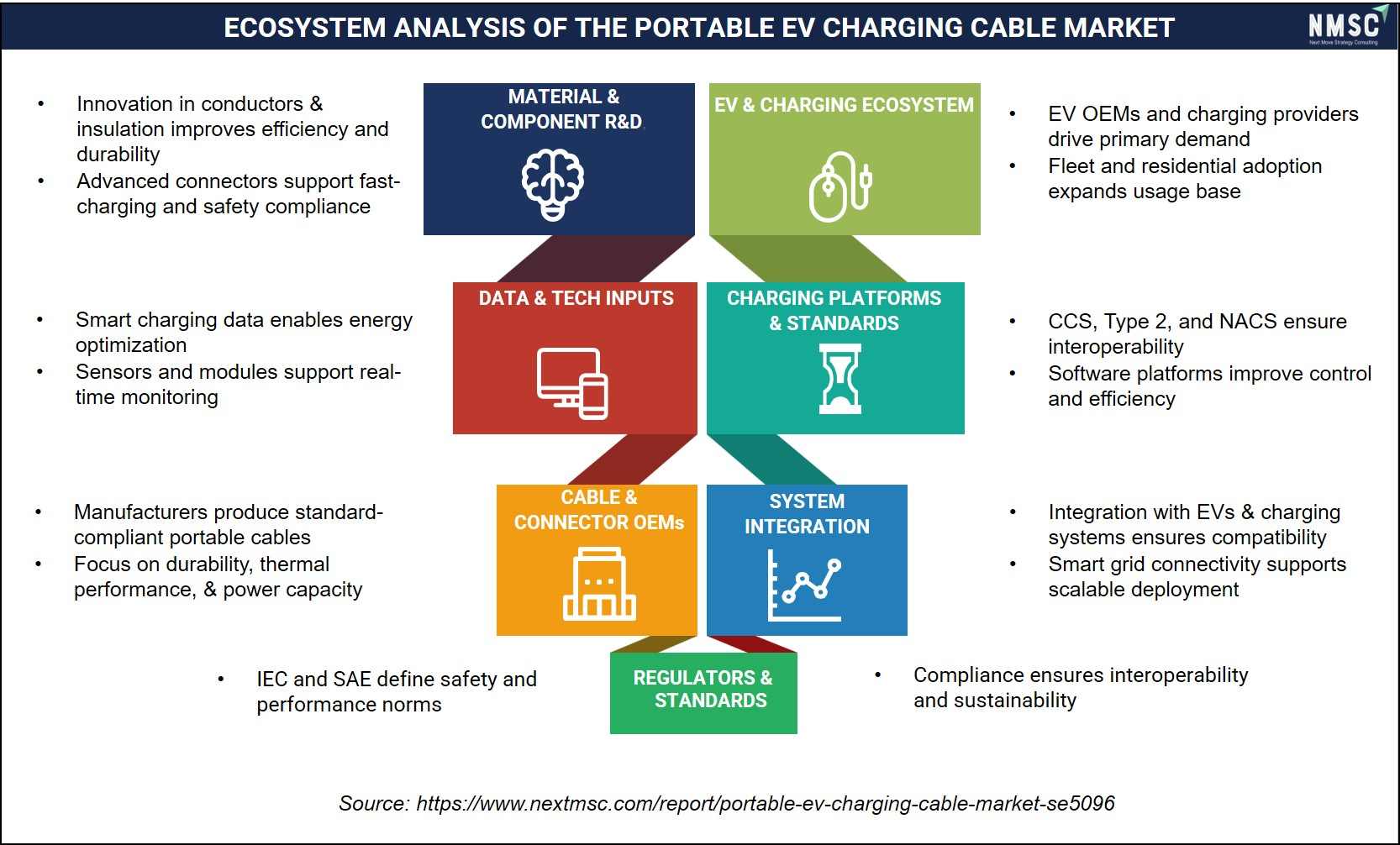
The ecosystem of the Portable EV Charging Cable Market reflects a connected network of material suppliers, technology providers, OEMs, integrators, and regulators enabling efficient and standardized EV charging solutions.
The above infographic illustrates the Portable EV Charging Cable Market ecosystem is evolving into a highly interconnected and technology-driven framework, where material innovation, OEM integration, and regulatory alignment collectively shape market dynamics. Further, industry analysis indicates that advancements in smart charging technologies and connector standardization are strengthening interoperability across EV platforms. EV OEMs and infrastructure providers remain central demand drivers, while system integrators enable seamless connectivity across vehicles, grids, and charging networks. We further found that regulatory bodies play a critical role in ensuring safety and global compatibility. Overall, the ecosystem is becoming increasingly collaborative, supporting scalable, efficient, and standardized EV charging deployment worldwide.
What are the Key Market Drivers, Breakthroughs, and Investment Opportunities that will Shape the Portable EV Charging Cable Industry in the Next Decade?
Growth Catalyst & Risk Assessment Matrix
|
DRIVERS/TRENDS/ RESTRAINTS |
(+/-) % IMPACT ON CAGR FORECAST |
GEOGRAPHIC RELEVANCE |
IMPACT TIMELINE |
|
Rapid global EV adoption driving demand for flexible, portable charging solutions as EV ownership expands faster than infrastructure |
+3.42% |
Global (China, Europe, U.S., India, Southeast Asia) |
Short to Medium term (2–5 years) |
|
Gaps in public charging infrastructure increasing reliance on portable charging alternatives across underserved regions |
+2.96% |
Emerging Asia, Latin America, Africa, Tier-2/3 cities globally |
Medium term (3–6 years) |
|
Growth of residential and decentralized charging ecosystems boosting demand for home-based and flexible charging solutions |
+2.58% |
North America, Europe, China, India, Japan, South Korea |
Medium to Long term (3–8 years) |
|
Grid capacity limitations and electricity infrastructure constraints restricting scalable and reliable deployment of portable charging solutions |
-2.84% |
Global, strongest in emerging markets and constrained urban grids |
Long term (5–10 years) |
The Portable EV Charging Cable Market is being structurally shaped by the rapid expansion of electric mobility infrastructure, uneven charging ecosystem development, and the growing dependence on flexible, user-centric charging solutions. NMSC's assessment indicates that accelerating EV adoption is strengthening demand for adaptable charging infrastructure, as consumers increasingly prioritize convenience and location-independent charging access. At the same time, charging network expansion remains geographically imbalanced, with urban areas witnessing faster rollout compared to suburban and rural regions, creating persistent accessibility gaps. Regulatory support and public funding initiatives are improving infrastructure coverage; however, execution delays and grid constraints continue to slow deployment across several markets. Additionally, the widening gap between EV penetration and charging availability is reinforcing the need for portable solutions as a transitional enabler. However, grid capacity limitations and inconsistent electricity reliability continue to constrain scalability, particularly in infrastructure-constrained economies. Overall, the market remains high-growth but structurally uneven, driven by adoption momentum, infrastructure gaps, and grid readiness challenges.
Growth Drivers:
How is Rapid Global EV Adoption Accelerating the Portable EV Charging Cable Market?
NMSC's analysis indicates that the accelerating global shift toward electric mobility is fundamentally reshaping charging demand patterns, directly strengthening the need for portable EV charging cables. EV ownership expansion across urban and semi-urban markets is increasingly driven by convenience-oriented users who require flexible, location-independent charging options. Based on our interviews with charging ecosystem consultants, we observed that users are actively seeking alternatives to fixed infrastructure due to range anxiety and uneven charging accessibility. International Energy Agency indicates that global EV sales exceeded 17 million units in 2024, while surpassing 21 million units in 2025, reflecting sustained double-digit growth momentum. This rapid adoption trajectory is outpacing infrastructure readiness, thereby increasing reliance on portable charging systems that enable seamless charging across residential, workplace, and transitional environments.
How is Increasing Gaps in Public Charging Infrastructure Deployment Strengthening Reliance on Portable Charging Alternatives?
Industry analysis suggests that uneven public charging infrastructure deployment is creating a structural gap that is significantly strengthening reliance on portable EV charging cables. Based on our observation, we found that although global charging networks are expanding, growth remains concentrated in urban areas, leaving suburban and rural regions underserved. The International Energy Agency reports that over 1.3 million public charging points were added in 2024, reflecting more than 30% annual growth, yet distribution imbalances persist across regions. Furthermore, regulatory push is strong, but execution challenges such as permitting delays, grid constraints, and high capital requirements continue to slow rollout. The U.S. Government Accountability Office noted that only 384 charging ports were operational under the USD 7.5 billion federal program as of April 2025, highlighting slow deployment despite funding. As a result, portable EV charging cables are increasingly serving as a critical interim solution to ensure charging accessibility and continuity across infrastructure-constrained markets.
Growth Inhibitor:
How are Grid Capacity Limitations Restricting Scalable Adoption of Portable EV Charging Cable Market?
NMSC's evaluation indicates that grid capacity limitations and electricity infrastructure constraints are emerging as a critical structural restraint for portable EV charging cable scalability. While portable chargers offer flexibility, their effectiveness is highly dependent on stable and sufficient electricity supply, which remains inconsistent across several developing and developed regions. Further, rising EV charging loads are adding significant pressure to already constrained urban grids, particularly during peak hours, resulting in localized reliability issues. International Energy Agency indicates that over 2,500 GW of global power projects are currently stalled in grid connection queues, while annual grid investment needs must rise to approximately USD 600 billion by 2030, nearly double current levels. Therefore, these structural delays directly reduce the reliability and scalability of portable charging solutions, limiting their adoption in infrastructure-constrained markets.
Growth Opportunity:
How is Expansion of Residential and Decentralized Charging Ecosystems Creating New Growth Avenues?
The rapid expansion of residential and decentralized charging ecosystems represents a strong structural opportunity for portable EV charging cables. Based on our assessment, we found that EV users are increasingly prioritizing home-based charging due to convenience, cost efficiency, and reduced dependence on public infrastructure. According to International Energy Agency Global EV Outlook 2025, nearly two-thirds of an estimated 150 million new global charging points by 2030 will be residential, highlighting a decisive shift toward decentralised charging models. Moreover, a significant share of households still lacks dedicated charging installations due to cost, space, and regulatory limitations. This gap is driving strong adoption of portable EV charging cables, which can operate using existing domestic electrical systems. As a result, portable solutions are emerging as a critical enabler of inclusive and flexible EV charging access across diverse residential environments.
How is the Portable EV Charging Cable Market Segmented in this Report, and What are the Key Insights from the Segmentation Analysis?
Market Highlights & Strategic Insights - Portable EV Charging Cable Market:
|
Segments |
Key Takeaways |
|
Product Platform |
The Portable EV Charging Cable Market is primarily driven by Mode 2 Cable Sets (IC-CPD), which dominate due to their integrated safety features, plug-and-play functionality, and strong suitability for residential charging applications. Mode 3 detachable cable sets are gaining traction in semi-public and workplace environments owing to higher efficiency and compatibility with dedicated EVSE infrastructure, while other portable AC cable sets continue to serve niche and emergency-use scenarios, supporting flexibility across varied charging needs. |
|
Connector Standard |
Connector standardisation is evolving toward interoperability, with Type 2 (IEC 62196-2) emerging as the dominant standard across global AC charging ecosystems due to its broad compatibility. Type 1 (SAE J1772) continues to persist in legacy North American infrastructure, while NACS (SAE J3400) is rapidly expanding within the U.S. market. GB/T (AC) remains central to China’s EV ecosystem, and multi-standard as well as proprietary connectors are increasingly adopted to support cross-platform compatibility and OEM-specific requirements. |
|
Power Class |
Power class segmentation is largely concentrated in the lower-to-mid charging range, with 3.8 kW to 7.4 kW emerging as the leading segment due to its optimal balance between charging speed, affordability, and infrastructure readiness of the Portable EV Charging Cable Market. Up to 3.7 kW solutions remain widely used in residential applications, particularly for overnight charging, while 7.5 kW to 11 kW systems are gaining steady adoption in workplace environments. Higher power classes, including 11.1 kW to 22 kW and above 22 kW, remain limited to specialized use cases due to higher installation complexity and infrastructure constraints. |
|
Sales Channel |
Sales channel dynamics are led by Vehicle OEMs and EVSE OEMs, which play a critical role in integrating portable charging solutions into new EV ecosystems at the point of manufacture. Retailers and distributors strengthen aftermarket availability, while e-commerce platforms are expanding rapidly due to convenience, wider product access, and price transparency. Fleet direct procurement is also growing in line with electrified logistics expansion, and public operators are increasingly incorporating portable charging accessories within managed charging networks. |
|
End-User |
End-user demand is primarily dominated by residential applications, driven by rising EV ownership and the convenience of home-based charging solutions in the Portable EV Charging Cable Market. Workplace charging is expanding steadily as corporate sustainability initiatives and employee EV adoption increase. Public charging applications continue to support flexible mobility requirements, while fleet adoption is gaining momentum in logistics and shared mobility sectors. Roadside usage remains a niche segment, primarily serving emergency and backup charging needs in portable EV charging scenarios. |
By Product Platform Insights
Is Growing Demand for Flexible EV Charging Solutions Driving the Portable EV Charging Cable Market in 2025?
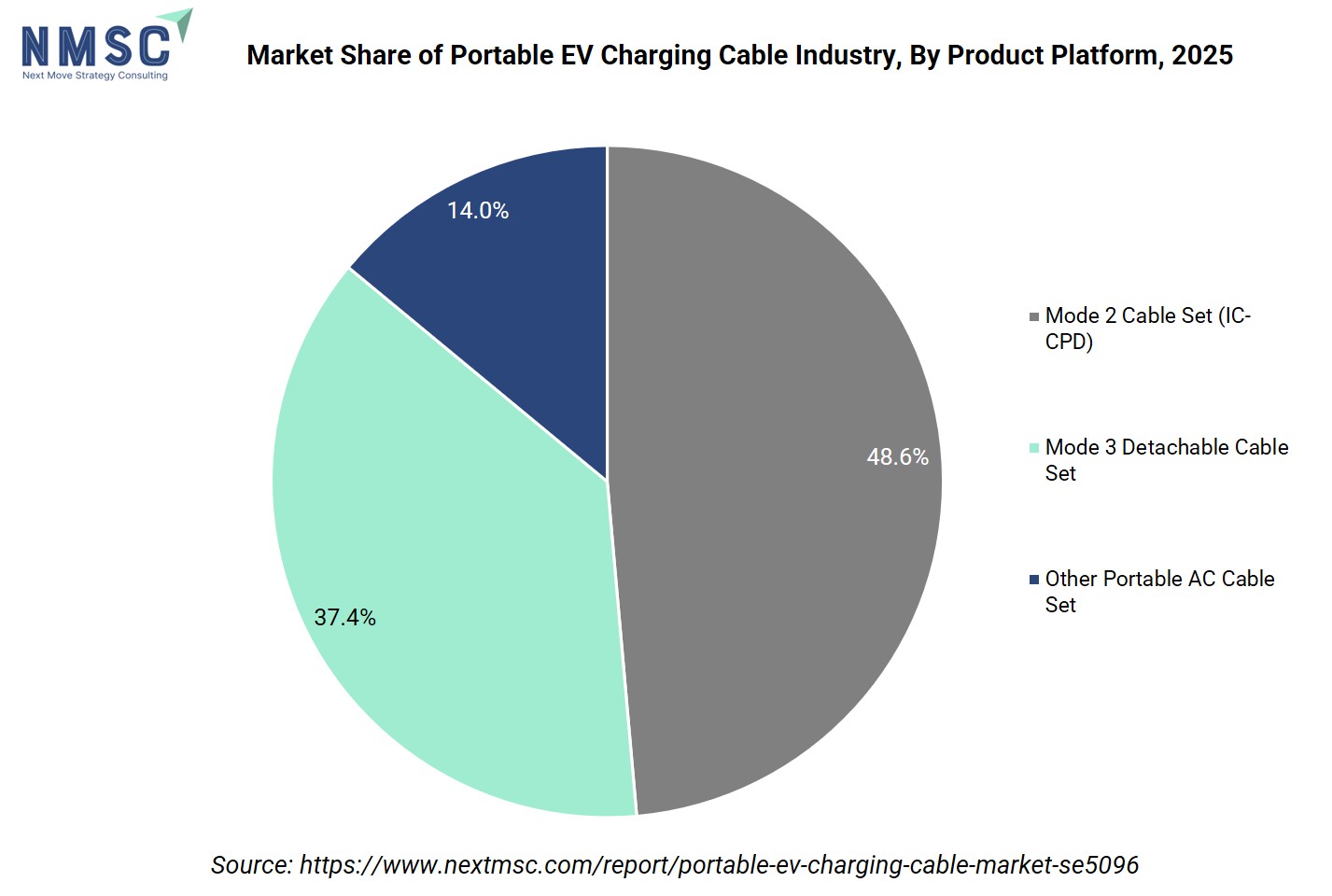
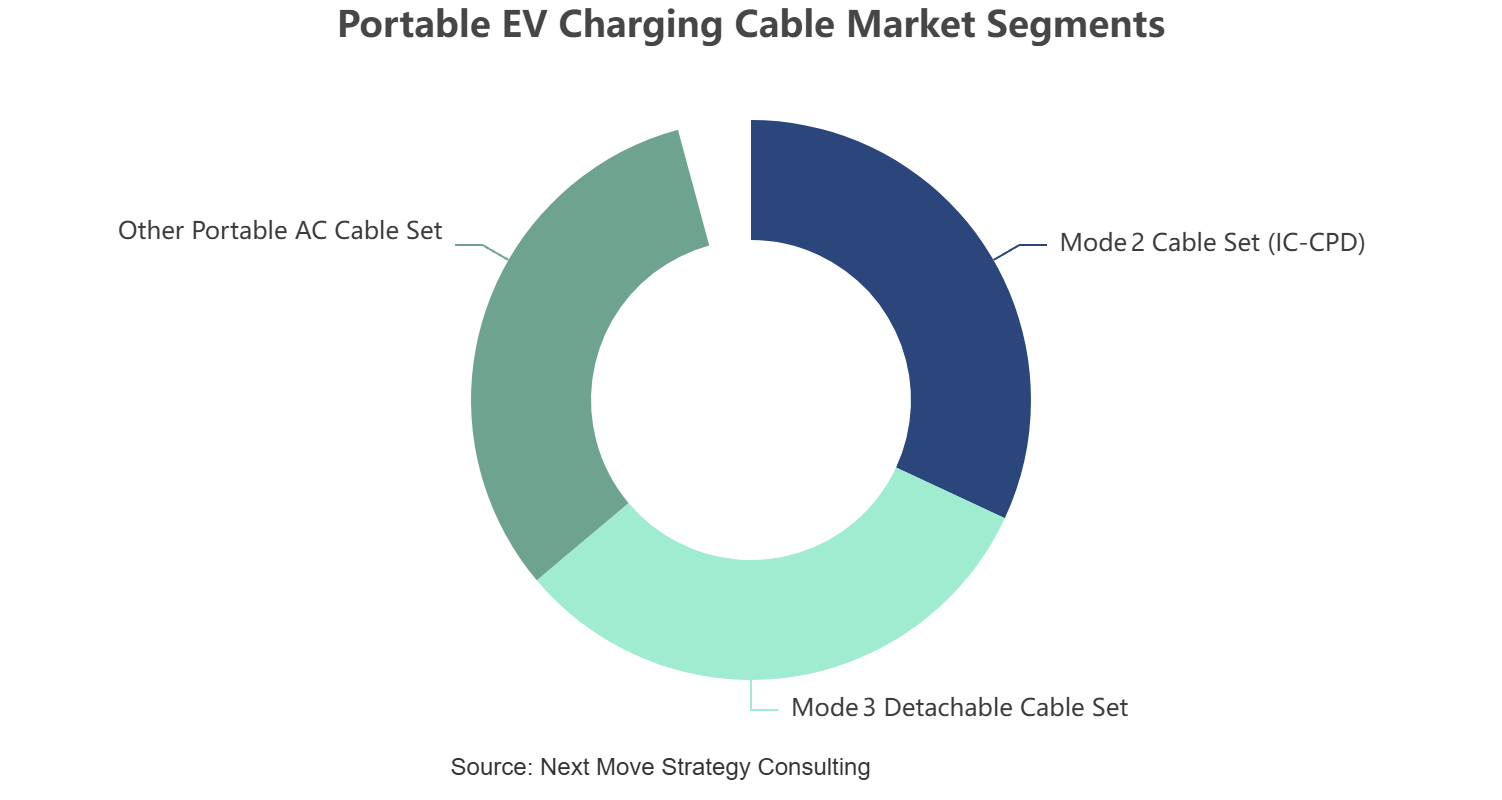
On the basis of product platform, the Portable EV Charging Cable Market is segmented into mode 2 cable set (IC-CPD), mode 3 detachable cable set, and other portable AC cable set.
Based on our assessment, we found that Mode 2 cable sets clearly dominate the market, driven by their plug-and-play design, strong suitability for residential charging, and lower dependency on dedicated charging infrastructure. Their simplicity and cost efficiency make them the most widely adopted solution across early-stage EV users and home charging environments, particularly in regions with uneven public charging availability.
Further, Mode 3 detachable cable sets represent a rapidly growing secondary segment, primarily supported by workplace and semi-public charging ecosystems where higher power delivery, safety protocols, and EVSE integration are required. This segment benefits from increasing deployment of dedicated charging stations in commercial and fleet environments. Meanwhile, other portable AC cable sets remain a niche category, used mainly for backup, emergency charging, and compatibility-specific applications across fragmented vehicle ecosystems. Overall, the market structure is functionally tiered, with Mode 2 leading volume adoption, Mode 3 driving infrastructure-linked growth, and other portable AC solutions serving specialized, low-volume use cases within the evolving EV charging ecosystem.
By Power Class Insights
Is Rising Demand for Faster and Flexible Charging Supporting Growth in the Portable EV Charging Cable Market in 2025?
Based on the power class, the Portable EV Charging Cable Market is segmented into Up to 3.7 kW, 3.8 kW to 7.4 kW, 7.5 kW to 11 kW, 11.1 kW to 22 kW, and above 22 kW.
The 3.8 kW to 7.4 kW segment clearly dominates the market, driven by an optimal balance of charging speed, cost efficiency, and broad compatibility with residential and light-commercial charging infrastructure. This range is widely adopted for its suitability for everyday overnight charging and its compatibility with existing household electrical systems.
On the other hand, we also found that up to 3.7 kW segment remains significant in early-stage EV adoption markets, particularly in residential setups where basic charging accessibility is prioritised over speed, while the 7.5 kW to 11 kW segment is gaining steady traction in workplace and semi-public environments, where faster turnaround times are required. Meanwhile, the 11.1 kW to 22 kW and above 22 kW segments remain niche, primarily limited to advanced infrastructure setups and specialized fleet or high-performance applications due to higher installation requirements and grid dependency. Overall, the Portable EV Charging Cable Market is evolving toward a mid-power dominated structure, where efficiency, affordability, and infrastructure compatibility define adoption patterns across regions.
By Cable Form Insights
Is Demand for Convenience and Cable Flexibility Driving Growth in the Portable EV Charging Cable Market?
Based on the cable form, the Portable EV Charging Cable Market is segmented into straight cable and coiled cable.
NMSC's research indicates that straight cable segment currently dominates the market, driven by its durability, lower production complexity, and widespread adoption in both OEM-supplied and aftermarket charging solutions. Straight cables are preferred in residential and workplace environments where ease of handling and consistent power delivery are prioritized over compact storage. Moreover, the coiled cable segment is gaining increasing traction, particularly in urban and semi-public charging environments where space optimization and cable management are critical, while coiled designs offer enhanced convenience by reducing cable clutter and improving safety in high-traffic charging areas. However, they remain relatively more expensive and are typically adopted in premium or specialized use cases. Overall, the market is gradually evolving toward a dual-structure adoption model, where straight cables lead in volume-driven residential applications, while coiled cables are expanding in convenience-focused and space-constrained charging environments.
By End-User Insights
Is Expanding EV Charging Usage Across Residential and Workplace Driving the Portable EV Charging Cable Market in 2025?
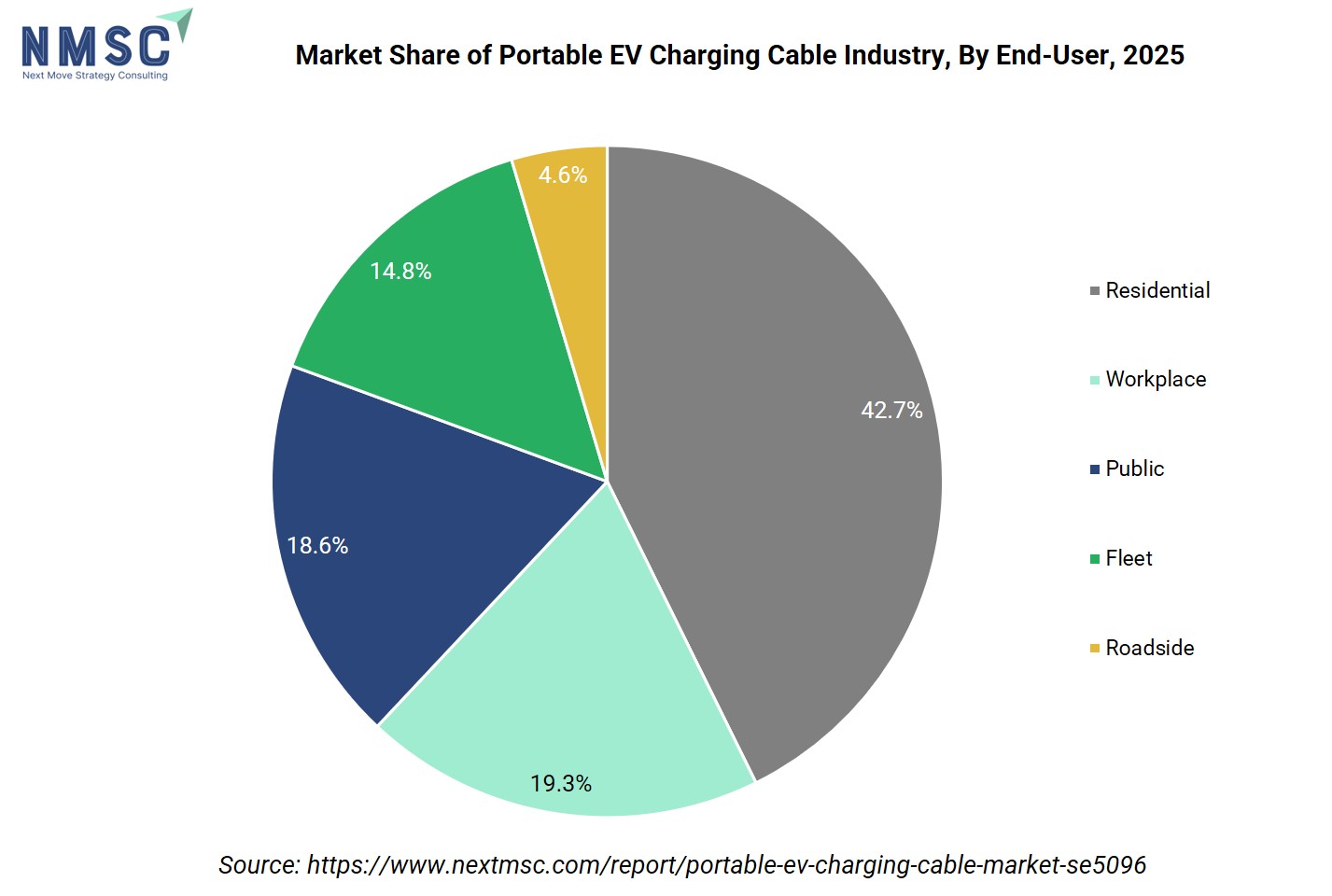
Based on end-user, the Portable EV Charging Cable Market is segmented into residential, workplace, public, fleet, and roadside.
In our analysis, we observed that the residential segment clearly dominates the market, driven by the convenience of home charging, rising EV ownership, and the preference for overnight charging using portable solutions such as Mode 2 cable sets. Residential users rely heavily on flexible charging access due to uneven public infrastructure availability in many regions. We further found that the workplace and public charging segments are expanding steadily, supported by increasing installation of semi-public charging infrastructure in commercial complexes, offices, and retail environments. The fleet segment is emerging as a high-potential growth area, particularly in logistics, ride-hailing, and corporate mobility electrification, where operational uptime and charging flexibility are critical. Meanwhile, the roadside segment remains relatively niche, primarily serving emergency and backup charging needs in transit scenarios. Overall, the market is residential-led with strong institutional and fleet-driven expansion, reflecting a balanced ecosystem where private convenience and commercial electrification jointly shape adoption trends in the Portable EV Charging Cable Market.
Regional Outlook
Geographic Performance Snapshot:
|
Geography |
Key Takeaways |
|
North America |
North America is a mature Portable EV Charging Cable Market, supported by strong EV adoption, advanced charging infrastructure, and established regulatory frameworks. Demand is driven by residential, workplace, and public charging expansion, with rising use of NACS and Type 1 connectors. We also observed increasing OEM integration and fleet electrification, alongside growing preference for convenient portable home charging solutions. |
|
Europe |
Europe is a highly regulated and sustainability-focused market, shaped by strict emissions policies and IEC-based standardisation. Countries such as Germany, France, and the UK lead adoption, with Type 2 connectors dominating the ecosystem. Growth is supported by expanding public and workplace charging networks, while interoperability, safety compliance, and cross-border charging compatibility remain key priorities. |
|
Asia‑Pacific |
Asia-Pacific is the fastest-growing Portable EV Charging Cable Market, driven by rapid EV adoption, government incentives, and urbanisation. China leads with GB/T standards, while India, Japan, and South Korea are expanding adoption across residential and fleet applications. We also noticed strong demand for cost-effective Mode 2 charging solutions, supported by rising EV ownership and infrastructure expansion. |
|
Latin America |
Latin America is an emerging market, supported by gradual EV adoption and improving charging infrastructure. Demand is concentrated in residential and early public charging use cases, with affordability as a key driver. We found increasing uptake of basic portable charging solutions, although infrastructure limitations continue to shape slower market penetration. |
|
Middle East & Africa |
The Middle East & Africa region is developing, driven by government-led electrification initiatives and smart mobility investments, especially in GCC countries. Adoption is led by premium EV ecosystems using Type 2 and multi-standard connectors. In Africa, growth is still early-stage but supported by pilot EV programs and a rising focus on basic residential charging infrastructure. |
The Portable EV Charging Cable Market is geographically studied across North America, Europe, Asia Pacific, the Middle East & Africa, and Latin America, and each region is further studied across countries.
Portable EV Charging Cable Market in North America
North America represents a mature but rapidly evolving Portable EV Charging Cable Market, shaped by accelerating EV adoption and infrastructure expansion. Based on our analysis aligned with the IEA Global EV Outlook 2025, we observed that the region accounted for steady EV sales growth, supported by strong federal incentives and infrastructure funding under the U.S. Inflation Reduction Act and Canada’s ZEV policies. We also found that OEM integration and fleet electrification are increasingly shaping demand for bundled charging solutions. However, uneven infrastructure distribution outside metro corridors continues to sustain reliance on portable charging cables as a transitional and flexible solution, particularly in residential applications. As a result, market growth in North America is expected to remain structurally supported by the dual dynamics of infrastructure gaps and rising EV ownership, reinforcing the long-term relevance of portable charging cable solutions.
Portable EV Charging Cable Market in the United States
The United States represents the most influential and structurally dynamic market within North America, driven by rapid EV adoption and a strong policy push toward nationwide charging infrastructure expansion. Based on data from the U.S. Department of Energy (AFDC) and the IEA Global EV Outlook 2025, the country continues to witness steady growth in publicly accessible charging infrastructure, supported by federal programs such as the NEVI initiative under the Infrastructure Investment and Jobs Act. The U.S. is also undergoing a significant transition toward NACS (SAE J3400) standardisation, which is reshaping OEM strategies and connector alignment across the ecosystem.
Additionally, charging infrastructure expansion is being prioritized along highways and urban clusters, strengthening long-distance EV usability while complementing residential charging development. Portable EV charging cables, particularly Mode 2 and Mode 3 systems, continue to play an important supporting role in enabling flexible charging across home, workplace, and travel environments, especially where fixed infrastructure access remains inconsistent. However, all structural observations are aligned strictly with institutional reporting trends from the DOE and IEA, without extrapolating unsupported usage percentages. Overall, the U.S. market reflects a transitional charging ecosystem where infrastructure scaling and standard harmonisation are jointly reinforcing the sustained relevance of Portable EV Charging Cable Market solutions.
Portable EV Charging Cable Market in Canada
NMSC's assessment indicates that Canada represents a steadily expanding Portable EV Charging Cable Market, supported by strong federal decarbonisation policies and provincial EV adoption programs. Demand is concentrated in residential charging applications, where portable cables serve as essential entry-level EV charging solutions in colder climates with higher dependency on home-based infrastructure. We also found that Type 1 and Type 2 connectors co-exist due to cross-border vehicle imports from the U.S. and Europe. Workplace charging adoption is gradually increasing, supported by corporate sustainability initiatives. However, infrastructure density remains lower than the U.S., making portable charging solutions a critical transitional technology. Overall, market expansion is steady but highly dependent on policy incentives and infrastructure rollout speed.
Portable EV Charging Cable Market in Europe
From our regional assessment, we analysed that Europe is a highly regulated and structurally mature Portable EV Charging Cable Market, driven by stringent emissions policies and harmonized charging standards under EU frameworks. The region shows strong alignment with the Alternative Fuels Infrastructure Regulation (AFIR), which mandates expanded public charging coverage across member states. The IEA report highlights Europe as one of the fastest adopters of EVs globally, directly supporting demand for portable charging infrastructure. Type 2 connectors dominate due to standardization, while cross-border interoperability is a key market requirement. We also found that portable cable demand is strongly linked to workplace and residential charging expansion, especially in urban clusters. Sustainability targets, combined with carbon neutrality goals, are accelerating EV penetration, while OEM bundling strategies ensure high baseline demand for portable charging kits across new EV sales. Overall, Europe’s regulatory harmonisation and policy-led electrification strategy are expected to sustain consistent demand for standardized portable charging solutions across both mature and emerging EV sub-markets.
Portable EV Charging Cable Market in the United Kingdom
Our market assessment suggests that the United Kingdom is a leading European market for portable EV charging cables, driven by strong EV adoption and aggressive decarbonization policies. Residential charging dominates demand, supported by high home ownership levels and structured EV grant schemes such as OZEV incentives. The market indicates continued growth in EV registrations, reinforcing accessory demand across charging ecosystems. We also found that Type 2 connectors remain the standard, ensuring compatibility across domestic and imported vehicles. Workplace charging is expanding due to corporate net-zero commitments, while public infrastructure rollout is accelerating through private-public partnerships. From our further interactions with ecosystem participants, we found that convenience-driven adoption and insurance-backed OEM offerings are key differentiators shaping consumer purchasing behaviour.
Overall, the UK market reflects a demand structure where policy support, residential charging dominance, and standardisation are collectively reinforcing sustained uptake of Portable EV Charging Cable Market solutions.
Portable EV Charging Cable Market in Germany
Based on our analysis, we found that Germany represents the most industrially advanced EV charging ecosystem in Europe, with strong integration between automotive OEMs and charging infrastructure providers. EV adoption is strongly supported by national climate targets and EU regulatory alignment. The market indicates sustained EV registration growth, directly influencing demand for portable charging cables. We also found that Mode 3 detachable cables are widely used due to compatibility with high-performance EVs from German OEMs. Workplace and fleet charging segments are particularly strong due to industrial electrification trends. However, infrastructure-heavy deployment reduces dependency on portable solutions in urban areas, positioning them more as supplementary rather than primary charging tools. Overall, Germany’s market structure reflects a mature, infrastructure-led ecosystem where portable EV charging cables retain a supportive but strategically secondary role within a highly standardised charging environment.
Portable EV Charging Cable Market in France
France is a rapidly expanding EV market supported by strong government subsidies and nuclear-powered low-carbon electricity infrastructure. Our analysis indicates that residential charging dominates due to widespread apartment-based EV adoption requiring flexible portable solutions. The market shows continuous EV uptake, particularly in urban regions. We also found that Type 2 connectors dominate, aligned with EU standardization policies. Workplace charging is expanding through corporate sustainability mandates, while public charging infrastructure is being rapidly deployed under national green mobility programs. Portable charging cables play a key role in bridging infrastructure gaps, especially in semi-urban and suburban regions where fixed charging availability remains uneven. Overall, France reflects a transition-phase charging ecosystem where infrastructure expansion is strong, but portable charging solutions remain essential for residential and decentralized use cases.
Portable EV Charging Cable Market in Italy
We observed that Italy represents a moderately growing Portable EV Charging Cable Market, influenced by uneven infrastructure development and strong urban-rural adoption gaps. EV adoption is concentrated in northern industrial regions, supported by EU-funded mobility programs. We also found that residential charging dominates due to slower public infrastructure expansion. Type 2 connectors remain standard across the ecosystem, ensuring compatibility with broader European systems. Workplace charging adoption is gradually increasing, particularly in logistics and manufacturing hubs. However, infrastructure constraints and slower EV penetration compared to northern Europe limit rapid scaling. Portable EV charging cables, therefore, serve as a critical flexibility solution for early-stage adopters. Overall, Italy’s market reflects a transition-stage EV ecosystem where structural infrastructure limitations continue to sustain the functional relevance of portable charging solutions across both residential and semi-commercial use cases.
Portable EV Charging Cable Market in Spain
Based on our assessment, we analysed that Spain is an emerging EV market within Southern Europe, supported by strong renewable energy integration and government incentives under the MOVES III program. We also found that residential charging remains dominant due to limited fast-charging penetration outside metropolitan areas. Type 2 connectors ensure alignment with EU standards, while portable charging cables are widely used as transitional infrastructure solutions. Workplace charging is gradually expanding in corporate sectors, particularly tourism and logistics. However, infrastructure density gaps remain a key constraint, making portable charging solutions essential for early-stage EV users. This positions Spain as a transition-driven market where portable charging infrastructure continues to function as a practical enabler of EV adoption in the absence of fully mature public charging networks.
Portable EV Charging Cable Market in the Nordics
The Nordics represent one of the most advanced EV ecosystems globally, driven by high EV penetration and strong environmental policies. NMSC's analysis indicates that Norway, Sweden, and Denmark exhibit exceptionally high EV adoption rates, supported by aggressive taxation incentives and infrastructure readiness. The IEA highlights Norway as a global EV leader, directly influencing high demand for charging accessories. We also found that residential charging dominates due to widespread home-based EV ownership, while public charging infrastructure is highly developed. Portable cables are increasingly used as backup solutions rather than primary charging tools. The market is highly mature, with demand driven more by replacement cycles and premium EV ecosystem expansion. This reflects a saturation-stage market where portable EV charging cables function primarily as reliability and redundancy components within a fully developed charging infrastructure landscape.
Portable EV Charging Cable Market in the Asia-Pacific
NMSC's regional assessment indicates that Asia-Pacific is the fastest-growing Portable EV Charging Cable Market globally, driven by mass EV adoption, government incentives, and rapid urbanization. We observed strong demand across China, India, Japan, and South Korea, supported by diverse charging ecosystems. The IEA identifies Asia-Pacific as the dominant global EV production and consumption hub. We also found that cost-sensitive Mode 2 cable systems dominate in emerging markets, while advanced systems are expanding in developed economies. Connector fragmentation remains high, making interoperability a key market challenge. Rapid fleet electrification, especially in logistics and two-wheelers, further accelerates portable charging demand. This underscores a structurally heterogeneous market where scale-driven adoption, cost sensitivity, and interoperability constraints collectively reinforce sustained reliance on portable charging cable solutions across both emerging and mature APAC economies.
Portable EV Charging Cable Market in China
China is the largest global EV market, driven by massive EV production capacity and strong state-led electrification policies. We observed that GB/T AC standards dominate the ecosystem, supported by vertically integrated domestic OEMs. The government continues to promote NEV expansion, reinforcing charging infrastructure growth. We also found that residential and fleet charging dominate demand, while public infrastructure is highly developed in tier-1 cities. Portable charging cables are widely used as supplementary solutions for flexibility and emergency charging needs. However, strong infrastructure density reduces dependency compared to emerging markets. This positions China as a scale-dominant but infrastructure-mature market where portable charging cables function primarily as auxiliary mobility tools rather than core charging necessities.
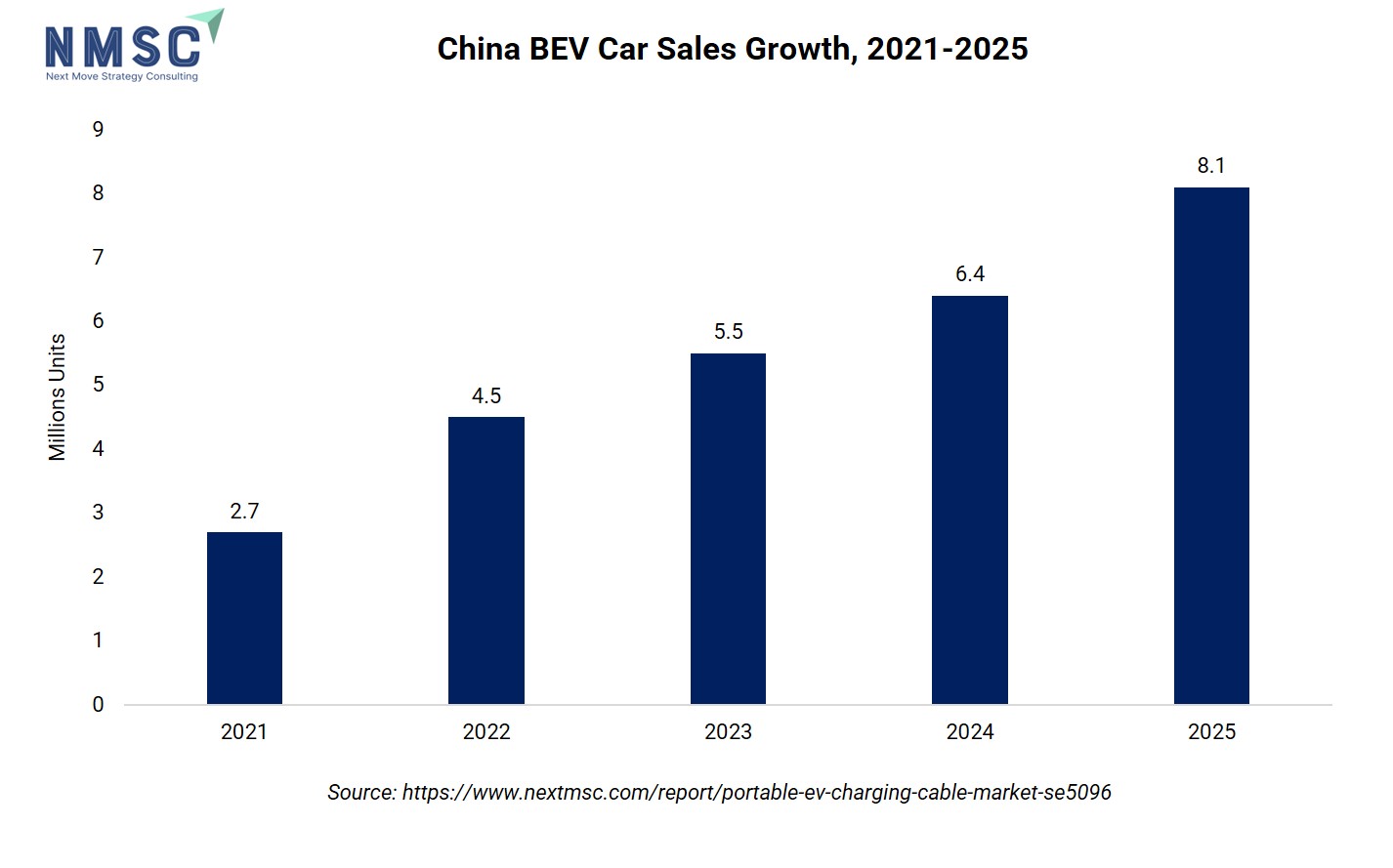
China’s rapid BEV car sales growth is a direct accelerator for the Portable EV Charging Cable Market. As the world’s largest EV market, China’s rising BEV volumes significantly expand the installed base of electric vehicles, increasing demand for both primary and backup charging solutions. We observe that high urban density, widespread apartment living, and uneven access to private charging infrastructure are driving consumers toward portable charging cables for convenience and flexibility.
Portable EV Charging Cable Market in Japan
Japan represents a technologically advanced but moderate-growth Portable EV Charging Cable Market, influenced by hybrid vehicle dominance and gradual BEV adoption. Type 1 and CHAdeMO ecosystems coexist, although BEV adoption is slowly increasing. Government policies support EV infrastructure expansion, particularly in urban centers. We also found that residential charging remains the primary application for portable cables due to limited public charging density in certain regions. Workplace adoption is gradually increasing, supported by corporate decarbonization initiatives. However, hybrid vehicle dominance continues to moderate overall demand growth. This reflects a structurally transitional market where portable EV charging cables maintain steady relevance, but overall demand expansion is tempered by the slower shift from hybrid to fully battery-electric mobility.
Portable EV Charging Cable Market in India
India is a high-growth emerging EV market, driven by government incentives under FAME II and rapid urban mobility electrification. Two-wheeler and fleet electrification are major demand drivers for portable charging solutions. We also found that affordability is a key determinant, making Mode 2 cable sets highly dominant. Residential charging is the primary use case due to limited public infrastructure. However, infrastructure expansion in urban clusters is gradually improving accessibility. This positions India as a volume-led, price-sensitive market where portable charging cables play a foundational role in enabling early-stage and cost-efficient EV adoption.
Portable EV Charging Cable Market in South Korea
South Korea represents a technologically advanced and policy-supported EV market, driven by strong domestic OEM participation and structured national electrification targets. We observed steady expansion of EV adoption supported by coordinated infrastructure deployment in urban and semi-urban regions. The ecosystem is characterised by strong OEM integration, where charging accessories are frequently bundled with vehicle sales, reinforcing baseline demand for portable EV charging cables.
Additionally, South Korea maintains a relatively standardized charging environment with Type 2-based AC systems alongside domestic fast-charging frameworks, enabling interoperability across major urban networks. Portable charging cables continue to serve as a complementary solution, particularly for residential and workplace charging scenarios where flexibility and backup charging capability are required. However, given the density of urban infrastructure, reliance on portable systems is more supportive than primary in nature, aligning with a mature but still evolving EV ecosystem. This reflects a structurally advanced market where portable EV charging cables retain consistent but auxiliary relevance within a highly integrated and OEM-driven Portable EV Charging Cable Market landscape.
Portable EV Charging Cable Market in Taiwan
Our assessment indicates that Taiwan represents a niche but steadily developing Portable EV Charging Cable Market, influenced by industrial capability, urban density, and gradual electrification policies. EV adoption remains concentrated in metropolitan areas where infrastructure rollout is gradually expanding. The market structure is still in a formative stage, with charging infrastructure development closely tied to government sustainability initiatives and private sector participation. We also observed that residential charging plays a central role in Taiwan’s EV ecosystem due to limited large-scale public charging availability outside key urban zones. Connector standards vary depending on imported vehicle platforms, leading to a mixed compatibility environment. Portable EV charging cables are particularly important as transitional infrastructure, enabling early-stage EV users to access flexible charging options while broader public infrastructure continues to develop.
This positions Taiwan as a developing but structurally constrained EV ecosystem where interoperability challenges and uneven infrastructure coverage continue to sustain strong reliance on portable charging solutions.
Portable EV Charging Cable Market in Indonesia
Indonesia is an emerging EV market in Southeast Asia, supported by strong government-led electrification initiatives and industrial localisation policies. EV adoption is gradually accelerating in urban centers, supported by two-wheeler electrification and early-stage four-wheeler penetration. We found that infrastructure availability remains limited, making portable EV charging cables a critical enabler for early EV users. Residential charging dominates usage patterns due to underdeveloped public charging networks, while fleet electrification in ride-hailing and logistics is emerging as an additional demand driver. Government support for EV manufacturing and battery ecosystems is expected to strengthen long-term adoption, although the current phase remains infrastructure-constrained and highly dependent on flexible charging solutions. This reflects a nascent EV ecosystem where portable charging infrastructure plays a foundational role in bridging early-stage adoption gaps and supporting mobility electrification in the absence of mature public charging networks.
Portable EV Charging Cable Market in Australia
Australia is a developing EV market characterised by strong urban adoption and expanding infrastructure investments. We observed steady growth in EV penetration across major cities, supported by increasing government and utility-level investments in charging networks. We further noticed that residential charging remains the dominant use case due to suburban housing structures and private parking availability. Type 2 connectors are the prevailing standard, ensuring compatibility with imported EV models from Europe and Asia. Portable EV charging cables are widely used in Australia due to long-distance travel requirements and uneven rural charging infrastructure coverage, making them an important flexibility tool within the broader charging ecosystem. This reflects a geography-driven EV charging structure where dispersed population density and intercity travel requirements continue to sustain strong functional reliance on portable charging solutions.
Portable EV Charging Cable Market in Latin America
Our regional analysis indicates that Latin America is an emerging Portable EV Charging Cable Market with uneven adoption across countries. EV penetration remains at an early stage but is gradually increasing in urban centers supported by policy incentives and public transport electrification programs. We found that charging infrastructure development is still limited compared to global averages, resulting in a strong dependence on residential charging solutions. Portable EV charging cables, therefore, play a crucial enabling role, particularly in markets where public charging access is inconsistent or under development. While long-term growth potential is supported by urban electrification trends, current adoption remains constrained by affordability and infrastructure availability. This positions Latin America as a structurally early-stage EV ecosystem where portable charging solutions function as essential bridging infrastructure amid uneven network development and cost-sensitive adoption dynamics.
Portable EV Charging Cable Market in the Middle East & Africa
The Middle East & Africa region is in an early development phase, with EV adoption primarily concentrated in Gulf Cooperation Council (GCC) countries. We analysed that EV infrastructure development is progressing alongside large-scale urban modernisation projects, although adoption outside the Gulf remains limited. In Africa, EV penetration is still at a nascent stage, with pilot deployments and early public transport electrification initiatives forming the primary demand base. Portable EV charging cables play a transitional role in this region, supporting early adopters in environments where fixed charging infrastructure is still developing and unevenly distributed. Overall, this reflects a highly fragmented EV landscape where advanced Gulf markets coexist with early-stage African adoption, collectively sustaining demand for flexible and mobile charging solutions.
Supply Chain Analysis of the Portable EV Charging Cable Market
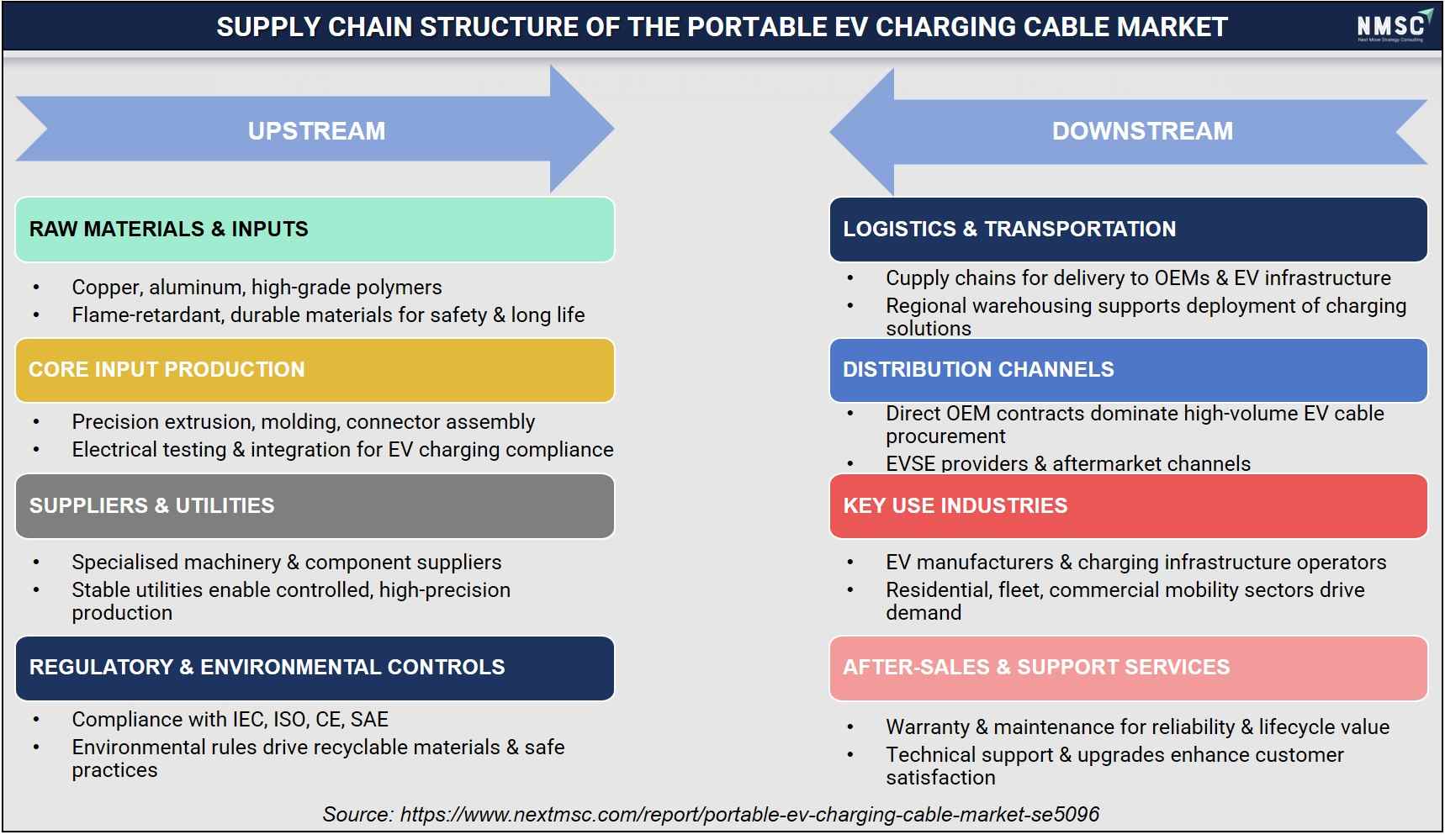
The supply chain structure of the Portable EV Charging Cable Market illustrates a multi-tier ecosystem spanning raw material sourcing, precision manufacturing, regulatory compliance, and downstream distribution to EV OEMs, fleet operators, and charging infrastructure providers.
The above infographic highlights the Portable EV Charging Cable Market supply chain, which is becoming increasingly structured around material efficiency, regulatory alignment, and OEM-driven integration. Upstream dependencies on copper, polymers, and precision components continue to influence cost and innovation cycles, while standardised production processes ensure interoperability across global EV platforms. Furthermore, downstream demand is accelerating due to rapid EV adoption, infrastructure expansion, and fleet electrification trends. Moreover, logistics optimisation and strong distributor networks are improving market scalability. Overall, the supply chain is evolving into a highly coordinated ecosystem where manufacturing precision, compliance frameworks, and end-user integration collectively shape competitive positioning and long-term growth potential.
Competitive Landscape
Competitive Dynamics & M&A Landscape:
|
Key Takeaways |
|
The competitive landscape of the Portable EV Charging Cable Market is led by global OEMs such as Tesla, Ford Motor Company, Volkswagen AG, BMW AG, Mercedes-Benz Group AG, Toyota Motor Corporation, and Hyundai Motor Company, along with charging specialists like Phoenix Contact, MENNEKES, LAPP Holding SE, Aptiv PLC, Volex plc, and Juice Technology AG. We noticed that competition is increasingly defined by control over charging standards (NACS, CCS, Type 2), ecosystem integration, and cross-platform compatibility across residential, workplace, and public charging use cases. Global OEMs are building integrated charging ecosystems, while specialists focus on durability, compliance, and interoperability. Tesla continues to influence ecosystem convergence through NACS adoption, while Volkswagen, BMW, and Mercedes-Benz are aligning North American strategies toward unified charging access. We also found that Phoenix Contact and LAPP strengthen their positions in CCS and Type 2 cable systems, ensuring relevance across diverse EV charging environments. Innovation is a key competitive driver in the Portable EV Charging Cable Market, especially in high-power charging, safety, and modular design. We observe Phoenix Contact’s megawatt CCS cable development and Juice Technology’s focus on improved cable management solutions as key advancements. Companies are increasingly prioritizing interoperability and multi-standard support, making adaptability across evolving EV platforms the core differentiator in 2025–2026. |
Which Companies Dominate the Portable EV Charging Cable Market and How Do They Compete?
In our analysis, we observed that the Portable EV Charging Cable Market is led by a mix of global automotive OEMs, charging infrastructure specialists, and industrial connectivity players including Tesla, Ford Motor Company, BMW AG, Mercedes-Benz Group AG, Volkswagen AG, Aptiv PLC, Phoenix Contact GmbH & Co. KG, LAPP Holding SE, MENNEKES, Volex plc, and Juice Technology AG. Competition is primarily shaped by control over charging standards, OEM integration, and cross-platform interoperability. For example, we found that Tesla’s continued expansion of its NACS ecosystem is influencing industry-wide alignment across Ford, BMW, and Mercedes-Benz, reinforcing its ecosystem dominance in North America. Overall, industry competition is expected to intensify as manufacturers prioritize universal compatibility, charging convenience, and strategic partnerships to strengthen positioning within the evolving EV charging ecosystem.
Market Dominated by Portable EV Charging Cable Market Giants and Specialists
Our primary research suggests that the market structure is increasingly bifurcated between OEM-led giants and highly specialised component manufacturers. Global automotive leaders such as Volkswagen AG, Toyota Motor Corporation, and Hyundai Motor Company dominate volume demand through integrated EV ecosystems, while specialists like MENNEKES, LAPP Holding SE, Phoenix Contact, and Juice Technology AG compete through engineering precision and compliance-driven charging solutions. Volkswagen’s continued alignment with NACS for North American EVs signals how OEMs are actively reshaping charging compatibility ecosystems. Meanwhile, suppliers like Phoenix Contact reinforce their positioning in high-power and CCS-based infrastructure segments, ensuring relevance across both passenger and commercial EV charging domains.
Innovation and Adaptability Drive Market Success
From our assessment, we analysed that innovation remains the most critical competitive differentiator in the Portable EV Charging Cable Market, particularly across power efficiency, safety engineering, durability, and interoperability across multiple EV platforms. Leading players are prioritizing advanced cable system design to support higher power transmission, improved thermal stability, and safer real-world usage across diverse charging environments. Companies such as Phoenix Contact GmbH & Co. KG, MENNEKES Elektrotechnik GmbH & Co. KG, and Juice Technology AG are strengthening product engineering through enhanced connector design and safety-focused charging architectures. Alongside this, automotive OEMs such as BMW AG and Tesla, Inc. are influencing ecosystem-level standardisation through integrated charging approaches. These developments collectively indicate a structural shift toward high-performance, standardised, and safety-enhanced portable EV charging cable systems, where innovation is increasingly defined by reliability, cross-compatibility, and seamless integration across global charging ecosystems.
Market Players to Opt for Merger & Acquisition Strategies to Expand Their Presence
We observed limited but strategically important consolidation activity as companies seek to strengthen their EV charging ecosystem presence through partnerships and acquisitions. The market landscape is increasingly characterised by collaborative ecosystem development between automotive OEMs, charging infrastructure providers, and industrial connectivity companies. Suppliers such as Aptiv PLC and Volex plc are expanding their roles as cross-platform charging cable and connectivity providers capable of supporting multiple charging standards, vehicle architectures, and regional infrastructure requirements. We also observed growing emphasis on interoperability, universal connector compatibility, and scalable charging access as manufacturers aim to reduce ecosystem fragmentation and improve user convenience. This competitive shift indicates that strategic alliances, technology partnerships, and charging standard alignment are becoming more influential than conventional consolidation in shaping long-term competitive advantage within the Portable EV Charging Cable Market.
List of Key Portable EV Charging Cable Companies
-
Tesla, Inc.
-
Aptiv PLC
-
Ampure
-
Volkswagen AG
-
Mercedes-Benz Group AG
-
BMW AG
-
Ford Motor Company
-
Toyota Motor Corporation
-
MENNEKES Elektrotechnik GmbH & Co. KG
-
Volex plc
-
LAPP Holding SE
-
Phoenix Contact GmbH & Co. KG
-
Leoni AG
-
Hyundai Motor Company
-
Juice Technology AG
-
DEFA AS
-
BESEN International Group Co., Ltd.
-
Suzhou Yihang Electronic Science & Technology Co., Ltd.
-
Coroplast Fritz Müller GmbH & Co. KG
What Are The Latest Key Industry Developments?
|
Date |
Event |
|
April, 2026 |
Juice Technology AG introduced a new spring-loaded cable management system for the JUICE CHARGER me 3, designed to keep charging cables elevated, organized, and protected from damage in outdoor and high-traffic environments. |
|
August, 2025 |
GE LAPP Holding SE expanded its e-mobility portfolio by introducing enhanced Mode 2 and Mode 3 charging solutions, including HELIX AC Type 2 cables and Mobility Dock adapters. This strengthens its position in portable EV charging by improving usability, safety, and compatibility across residential and public charging ecosystems. |
|
May, 2025 |
Phoenix Contact GmbH & Co. KG introduced second-generation liquid-cooled CCS charging cables capable of delivering up to 1,000 kW in boost mode and 800 kW continuously. This advancement significantly enhances high-power charging infrastructure for passenger and commercial EVs. |
Porter’s Five Forces Analysis of the Portable EV Charging Cable Market
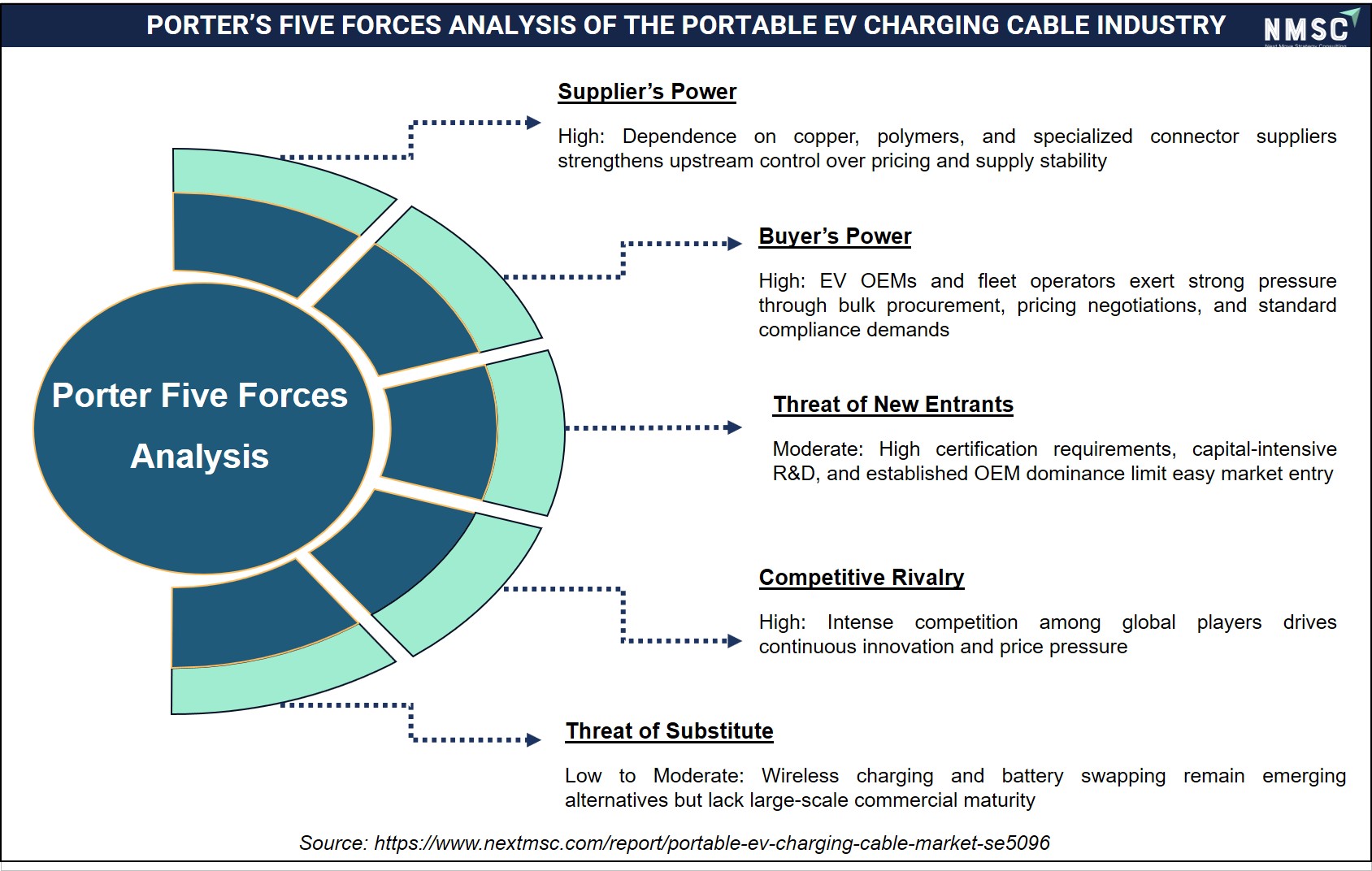
The Porter’s Five Forces framework for the Portable EV Charging Cable Market provides a structured evaluation of competitive intensity, supplier dynamics, buyer influence, substitution risk, and entry barriers shaping the industry’s evolution.
Our evaluation indicates that the Portable EV Charging Cable Market operates under moderate to highly competitive pressure, driven by rapid EV adoption and evolving charging standards such as CCS and NACS. Supplier power remains significant due to dependency on raw materials like copper, polymers, and specialized connectors, while OEMs and fleet operators exert strong bargaining power through large-scale procurement and ecosystem control. We further found that substitution risk is emerging from wireless charging and battery swapping technologies, though these remain in early stages. Competitive rivalry is intense among global players, shaping continuous innovation and interoperability focus across the value chain.
What Are the Key Factors Influencing Investment Analysis & Opportunities in the Portable Ev Charging Cable Market?
From our analysis, we observed that investment in the Portable EV Charging Cable Market is strongly influenced by the rapid expansion of EV charging infrastructure and the shift toward interoperable charging ecosystems. Funding activity is increasingly directed toward companies enabling charging standard convergence (CCS, NACS, Type 2) and flexible charging solutions that support residential, workplace, and public use cases. Investors are prioritizing firms positioned within OEM ecosystems and infrastructure-linked supply chains, particularly those offering high-durability cables, smart charging integration, and multi-standard compatibility. Industry-wide capital is flowing into the broader EV charging value chain as governments and OEMs accelerate infrastructure rollout programs across major economies.
We further observed that investment hotspots are emerging in fast-charging technology, modular cable systems, and smart energy-managed charging solutions, where scalability and interoperability are critical value drivers. Additionally, venture capital and strategic corporate funding are increasingly targeting companies that bridge the gap between hardware reliability and digital charging intelligence. Strategic opportunities are also expanding in adapter-based ecosystems and transition technologies that support the ongoing shift from legacy CCS architectures to newer standards like NACS. Overall, capital allocation is increasingly favouring ecosystem enablers rather than standalone component manufacturers, reflecting a structural shift toward integrated EV charging platforms rather than isolated product investments.
Key Benefits for Stakeholders:
Next Move Strategy Consulting (NMSC) provides a comprehensive and evidence-based analysis of the Portable EV Charging Cable Market, covering historical developments from 2020 to 2025 and offering forward-looking forecasts through 2035. Our study assesses the market at global, regional, and country levels, combining quantitative outlooks with qualitative insights into key growth drivers, adoption constraints, technology evolution, and investment dynamics across major portable EV charging cable segments.
Our evaluation indicates that the Portable EV Charging Cable Market creates differentiated value across stakeholders by aligning infrastructure flexibility with evolving EV adoption needs. For investors, the sector offers exposure to a structurally expanding mobility ecosystem, where value creation is driven by standardization trends such as NACS, CCS, and Type 2 convergence, as well as increasing OEM integration into charging solutions. This enables capital allocation toward scalable, interoperability-focused technologies with long-term relevance across global EV platforms. For customers, the primary benefit lies in enhanced charging flexibility and reduced dependency on fixed infrastructure, allowing seamless access across residential, workplace, and public environments through portable solutions. We also noted that regulatory incentives promoting EV adoption and infrastructure rollout indirectly strengthen user adoption by improving accessibility and reducing friction in charging behavior. Additionally, OEMs and infrastructure providers benefit through ecosystem lock-in opportunities, aftermarket expansion, and bundled charging solutions, enabling recurring revenue streams and stronger customer retention within the broader EV mobility value chain.
|
Parameters |
Details |
|
Customization Scope |
Free customization (equivalent to up to 80 analyst-working hours) after purchase. Addition or alteration to country, regional & segment scope. |
|
Pricing and Purchase Options |
Avail customized purchase options to meet your exact research needs. |
|
Approach |
In-depth primary and secondary research; proprietary databases; rigorous quality control and validation measures. |
|
Analytical Tools |
Porter's Five Forces, SWOT, value chain, and Harvey ball analysis to assess competitive intensity, stakeholder roles, and relative impact of key factors. |
Key Market Segments
By Product Platform
-
Mode 2 Cable Set (IC-CPD)
-
Mode 3 Detachable Cable Set
-
Other Portable AC Cable Set
By Connector Standard
-
Type 1 (SAE J1772)
-
Type 2 (IEC 62196-2)
-
NACS (SAE J3400)
-
GB/T (AC)
-
Multi-standard (Universal)
-
Proprietary
By Power Class
-
Up to 3.7 kW
-
3.8 kW to 7.4 kW
-
7.5 kW to 11 kW
-
11.1 kW to 22 kW
-
Above 22 kW
By Cable Form
-
Straight Cable
-
Coiled Cable
By Sales Channel
-
Vehicle OEM
-
EVSE OEM
-
Retailer & Distributor
-
E-commerce
-
Fleet Direct
-
Public Operator
By End-User
-
Residential
-
Workplace
-
Public
-
Fleet
-
Roadside
Geographical Breakdown
-
North America: U.S., Canada, and Mexico.
-
Europe: UK, Germany, France, Italy, Spain, Sweden, Denmark, Finland, the Netherlands, and the rest of Europe.
-
Asia Pacific: China, India, Japan, South Korea, Taiwan, Indonesia, Vietnam, Australia, Philippines, Malaysia and the rest of APAC.
-
Middle East & Africa (MEA): Saudi Arabia, UAE, Egypt, Israel, Turkey, Nigeria, South Africa, and the rest of MEA.
-
Latin America: Brazil, Argentina, Chile, Colombia, and the rest of LATAM.
Conclusion & Recommendations
The Portable EV Charging Cable Market is evolving from a supporting accessory segment into a strategically important layer of the broader EV charging ecosystem. Growth is being shaped by rising EV adoption, charging standard convergence, and the need for interoperable solutions across residential, workplace, and public environments. We noticed that competitive strength is increasingly determined by ecosystem integration, OEM alignment, and compliance with evolving standards such as CCS and NACS, rather than standalone product capability. This shift reinforces portable charging cables as a key transitional solution in regions where fixed infrastructure is still unevenly developed.
Looking ahead, the market is driven by continued standard harmonisation, ecosystem partnerships, and innovation in safer, smarter, and more adaptable charging solutions. Fleet electrification, residential charging expansion, and OEM-bundled offerings will remain key demand anchors, supporting steady structural growth. For executives and investors, the priority should be positioning within interoperable EV ecosystems and OEM-linked supply chains. Strategic value will increasingly come from partnerships, standard compatibility, and scalable charging solutions aligned with evolving regulatory and infrastructure frameworks.
About the Author
 Mayurima Roy
— Mayurima Roy is Research Analyst at Next Move Strategy Consulting, where she has spent 4 years working across the firm's full industry coverage rather than a single fixed vertical. Her work centers on structured research, ongoing trend tracking, competitive assessment, and insight-led content development, translating complex market data into clear, decision-ready narratives that support informed client decision-making across diverse global industries, market sectors, and world regions every day.
Mayurima Roy
— Mayurima Roy is Research Analyst at Next Move Strategy Consulting, where she has spent 4 years working across the firm's full industry coverage rather than a single fixed vertical. Her work centers on structured research, ongoing trend tracking, competitive assessment, and insight-led content development, translating complex market data into clear, decision-ready narratives that support informed client decision-making across diverse global industries, market sectors, and world regions every day.
About the Reviewer
 Supradip Baul
— Supradip Baul is an accomplished business consultant and strategist with over a decade of rich experience in market intelligence, strategy, technology, and business transformation. His work has included rigorous qualitative and quantitative analysis across multiple industries, helping clients shape investment decisions and long-term roadmaps. Earlier in his career, he was associated with Gartner, where he contributed to industry-leading reports and market share analyses. He has worked with leading global companies and holds an MBA with a dual specialization in Marketing and Finance.
Supradip Baul
— Supradip Baul is an accomplished business consultant and strategist with over a decade of rich experience in market intelligence, strategy, technology, and business transformation. His work has included rigorous qualitative and quantitative analysis across multiple industries, helping clients shape investment decisions and long-term roadmaps. Earlier in his career, he was associated with Gartner, where he contributed to industry-leading reports and market share analyses. He has worked with leading global companies and holds an MBA with a dual specialization in Marketing and Finance.
At Next Move Strategy Consulting, we understand that insightful market research is the cornerstone of successful business decisions. That's why we employ a robust and multifaceted approach, combining various methodologies to deliver the most accurate and actionable data for our clients.

Research Landscape
We navigate the world of research with two primary approaches:
Qualitative Approach
Our qualitative research methodologies involve immersive techniques such as in-depth interviews, focus groups, and observational studies. By engaging directly with individuals and stakeholders, we uncover valuable insights that quantitative data alone may overlook.

Quantitative Research
In tandem with qualitative methodologies, NMSC leverages the power of Quantitative Research to provide a robust foundation of numerical insights. Through systematic data collection and analysis, we quantify patterns, preferences, and market trends, offering a comprehensive view of the business landscape.
Our quantitative research approach employs diverse tools, including surveys, experiments, and statistical modelling. These methodologies enable us to gather data from a large and representative sample, ensuring the statistical significance of our findings. By employing structured questionnaires and standardized data collection methods, we guarantee the reliability and validity of the information we present to our clients.
Quantitative research is particularly effective in measuring the prevalence of trends, assessing market size, and gauging the impact of various factors on consumer behavior. The numerical precision attained through this approach equips our clients with actionable insights, facilitating data-driven decision-making and strategy formulation.


Our Specialized Toolbox for Industry-Specific Market Research
We deploy a specialized arsenal of techniques tailored to meet your unique requirements. Here's a glimpse into our comprehensive toolbox:

Information Procurement
The stage entails acquiring market data or relevant information through various sources and methodologies.


Market Research Approach
We utilize both top-down and bottom-up approaches in market research analysis to achieve a comprehensive understanding of the market dynamics, leveraging the broad perspective of industry trends and macroeconomic factors alongside detailed insights from specific segments and individual companies.

Porters Five Forces Analysis
We conduct Porter's Five Forces analysis to evaluate the competitive landscape of an industry, providing us with insights into factors that affect profitability and strategic positioning.

SWOT Analysis

Forecasting
We utilize a forecasting model to predict future consumption by considering parameters like population, economics, regulations, market competition, drivers, constraints, technology, and pricing. We also employ statistical techniques such as multilinear regression, exponential smoothing, moving average, ARIMA, and Monte Carlo simulations for accurate predictions. In econometric forecasting, we analyzed short-term and long-term event impacts, attributing values based on regulatory frameworks, economic factors, and market events.





 Speak to Our Analyst