Argentina Propylene Market By Grade (Polymer, Chemical, Refinery, and Other Grades), By Production Route (Steam Cracking, FCC, PDH, Metathesis, MTO, CTO, and Others), By Derivative (Polypropylene, Propylene Oxide, Cumene, Acrylonitrile, Oxo Alcohols, Isopropanol, Acrylic Acid & Acrylates, and Others), By Sales Model (Merchant, Captive, and Tolling), and By Application (Packaging, Automotive, Construction, Textiles) – Opportunity Analysis and Industry Forecast, 2025–2035.
Industry: Materials and Chemical | Latest Edition: September 30, 2026 | No of Pages: 296 | No. of Tables: 172 | No. of Figures: 162 | Format: PDF | Report Code: MC4919
Argentina Propylene Market Size & Forecast 2025–2035
|
Parameters |
Details |
|
Market Size in 2025 |
USD 485.58 Million |
|
Market Size in 2026 |
USD 504.50 Million |
|
Revenue Forecast in 2035 |
USD 649.82 Million |
|
Growth Rate |
CAGR of 2.85% from 2026 to 2035 |
|
Market Volume in 2025 |
425 Kilotons |
|
Market Volume in 2026 |
451 Kilotons |
|
Volume Forecast in 2035 |
647 Kilotons |
|
Growth Rate |
CAGR of 4.09% from 2026 to 2035 |
|
Analysis Period |
2025–2035 |
|
Base Year Considered |
2025 |
|
Forecast Period |
2026–2035 |
|
Market Size Estimation |
Million (USD) |
|
Companies Profiled |
10 |
|
Market Share |
Available for Key Companies |
Industry Outlook
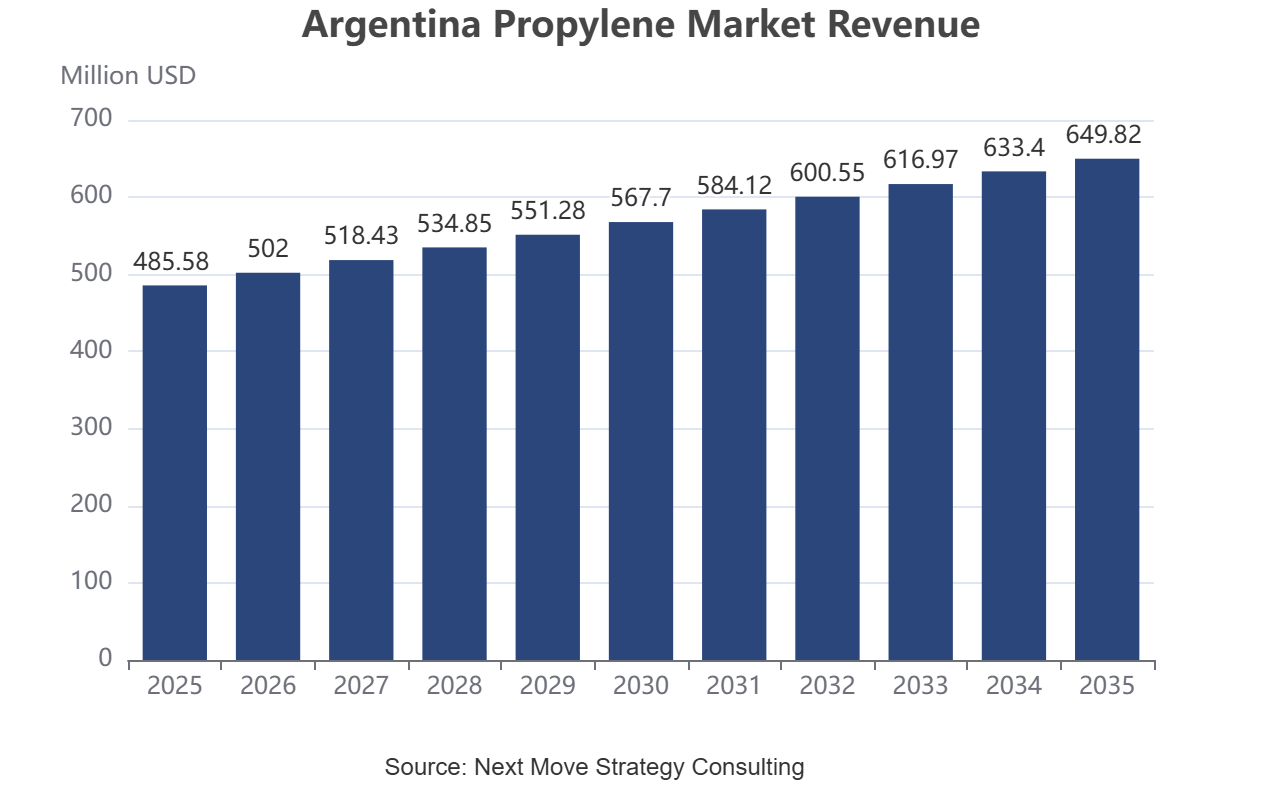
The Argentina Propylene Market size was valued at USD 485.58 million in 2025 and reached USD 504.50 million by 2026. Looking ahead, the industry is projected to grow steadily, reaching USD 649.82 million by 2035, registering a CAGR of 2.85% from 2026 to 2035. In terms of volume, the market recorded 425 kilotons in 2025, with forecasts indicating expansion to 647 kilotons by 2035, reflecting a CAGR of 4.09% over the same period. The analysis covers the period from 2025 to 2035, with 2025 as the base year and 2026 to 2035 as the forecast period.
What Are the Key Market Drivers, Restraints, and Opportunities Shaping the Argentina Propylene Market Through 2035?
Growth Catalyst & Risk Assessment Matrix
|
Drivers / Trends / Restraints |
(+/–) % Impact on CAGR Forecast |
Geographic Relevance |
Impact Timeline |
|
Rising packaging and agricultural plastics demand across grain, fruit, and horticultural export industries is increasing polypropylene consumption and strengthening propylene requirements across Argentina's converting sector |
+1.0% |
National, particularly Pampas agricultural belt and Buenos Aires packaging hubs |
Short to medium term (1–5 years) |
|
Expanding industrial and consumer goods manufacturing activity is supporting downstream petrochemical demand and reinforcing propylene consumption across automotive and durable goods production |
+0.9% |
National, particularly Córdoba and Buenos Aires industrial corridors |
Medium term (2–6 years) |
|
Growing access to Vaca Muerta natural gas liquids and new investment incentive frameworks are supporting feedstock availability for expanded domestic propylene production capacity |
+1.0% |
National, concentrated in the Neuquén Basin and Bahía Blanca petrochemical hub |
Medium to long term (3–8 years) |
|
Currency volatility and persistent inflationary pressures continue to increase financing uncertainty, limiting industrial investment confidence among domestic propylene producers |
–1.3% |
National |
Short to medium term (1–5 years) |
|
Development of domestic petrochemical infrastructure, supported by investment incentive regimes and new pipeline capacity, is creating opportunities to expand propylene production and reduce import reliance |
+0.8% |
National, supported by Vaca Muerta-linked infrastructure projects |
Long term (4–10 years) |
Through our market assessment, we observed that the Argentina Propylene Market is being shaped by rising packaging and agricultural plastics demand, expanding industrial and consumer goods manufacturing, and growing access to Vaca Muerta natural gas liquids supporting new feedstock investment. Meanwhile, currency instability and inflationary pressures continue to weigh on industrial investment confidence across the value chain. Additionally, development of domestic petrochemical infrastructure, supported by investment incentive frameworks and expanding pipeline capacity, is creating long-term opportunities for producers to reduce import reliance and strengthen competitiveness throughout the forecast period.
Growth Driver :
How Is Rising Packaging and Agricultural Plastics Demand Driving the Argentina Propylene Market Growth?
Through our market assessment, we observed that rising packaging and agricultural plastics demand is a notable factor supporting propylene consumption in Argentina. As one of the world's largest exporters of grain, fruit, and horticultural products, the country relies heavily on polypropylene woven sacks, flexible bulk containers, and protective films across its agribusiness value chain. Growing demand for durable, cost-effective packaging solutions across food and agricultural export industries is encouraging polypropylene compounding activity, thereby supporting propylene requirements. Furthermore, continued growth in consumer packaging applications reinforces overall market demand across the country.
How Is Expanding Industrial and Consumer Goods Manufacturing Supporting the Argentina Propylene Market?
Based on our market evaluation, expanding industrial and consumer goods manufacturing activity is substantially supporting growth across the Argentina Propylene Market. Automotive assembly operations concentrated in Córdoba and Buenos Aires provinces, together with growing production of household appliances and durable consumer goods, are increasing demand for polypropylene components used in interior parts, housings, and packaging. Rising domestic manufacturing output is encouraging downstream petrochemical producers to expand derivative capacity to meet sustained demand. This trend is expected to reinforce long-term market expansion opportunities throughout the forecast period across multiple downstream applications.
How Is Vaca Muerta Feedstock Development Strengthening the Argentina Propylene Market?
Through NMSC's assessment, we found that growing access to natural gas liquids from the Vaca Muerta shale formation is increasingly contributing to growth across the Argentina Propylene Market. New pipeline infrastructure connecting Neuquén Basin production to the Bahía Blanca petrochemical hub is improving feedstock availability for derivative producers, while investment incentive frameworks are encouraging companies to evaluate new propylene and polypropylene capacity. Industry executives have described the current cycle as offering a substantially larger resource base than in previous decades. These developments are gradually reshaping investment strategies across the domestic propylene industry.
Growth Inhibitor:
How Are Currency Instability and Inflationary Pressures Restraining the Argentina Propylene Market?
Currency instability and inflationary pressures continue acting as a significant constraint for the Argentina Propylene Market by creating uncertainty in production economics and limiting industrial investment confidence. Through our market analysis, we observed that historical peso volatility and capital control measures have made long-cycle, capital-intensive petrochemical investment decisions more difficult to finance and plan. Although recent macroeconomic stabilization efforts have reduced inflation from previously elevated levels, continued currency uncertainty and financing costs may delay capacity expansion and reduce competitiveness for domestic propylene producers relative to regional peers.
Growth Opportunity:
How Is Domestic Petrochemical Infrastructure Development Creating Opportunities for the Argentina Propylene Market?
Through NMSC's assessment, we found that development of domestic petrochemical infrastructure is unlocking significant growth opportunities for the Argentina Propylene Market. Investment incentive regimes offering fiscal and legal benefits for large-scale projects are encouraging petrochemical producers to commit capital toward expanded propylene and derivative capacity. New pipeline infrastructure linking Vaca Muerta feedstock to coastal industrial hubs is further supporting this development. These investments are expected to gradually reduce Argentina's historical reliance on imported petrochemical products while strengthening long-term domestic production competitiveness across the value chain.
Consumer Behavior Analysis Of The Argentina Propylene Market
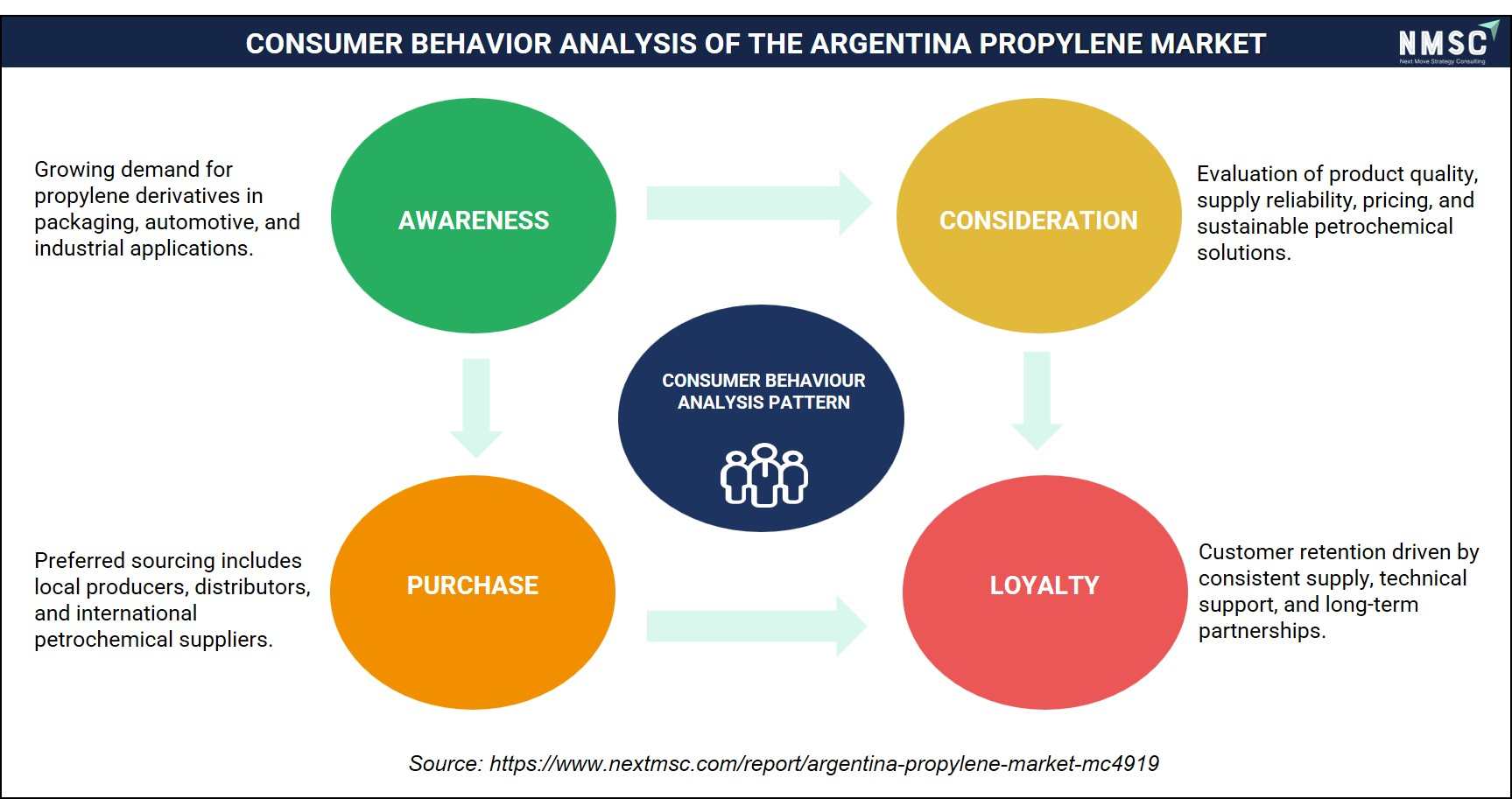
The consumer behavior analysis of the Argentina Propylene Market highlights a structured purchasing journey driven by industrial demand. Awareness is fueled by the growing use of propylene derivatives in packaging, automotive, and industrial applications. During the consideration stage, buyers assess product quality, supply reliability, pricing, and sustainability factors. Purchase decisions are often made through local producers, distributors, and petrochemical suppliers. Customer loyalty is strengthened by consistent product availability, technical support, and long-term supplier partnerships, ensuring stable procurement and operational efficiency.
How Is the Argentina Propylene Market Segmented in This Report, and What Are the Key Insights from the Segmentation Analysis?
By Sales Model Insights
Is Sales Model Segmentation Influencing Market Distribution Across the Argentina Propylene Market?
Based on sales model, the market is segmented into merchant, captive, and tolling.
Based on our analysis, we observed that captive sales remain the predominant model across the Argentina Propylene Market, supported by integrated refining and petrochemical companies that utilize propylene internally for downstream polypropylene and chemical production. Merchant sales contribute significantly to market liquidity by supplying independent processors and manufacturers that lack dedicated production facilities. Meanwhile, tolling arrangements are gradually gaining attention among producers seeking operational flexibility, enabling third-party processing and optimization of existing production assets while supporting efficient utilization across the domestic petrochemical value chain.
By Application Insights
Is Application Segmentation Driving Demand Patterns Across the Argentina Propylene Market?
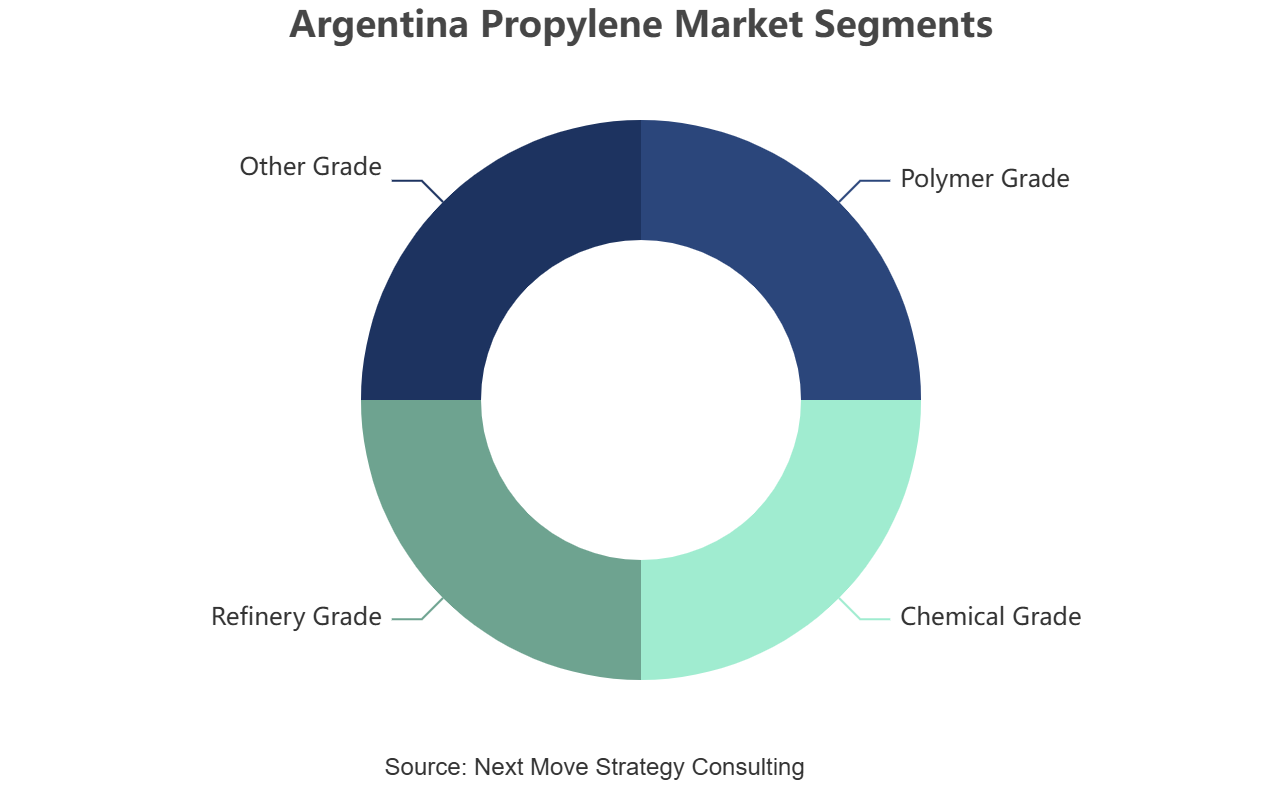
Based on application, the market is segmented into packaging, automotive, building & construction, textiles and fibers, consumer products, healthcare, electronics, industrial applications, and other applications.
Based on our evaluation, we identified that packaging remains the largest application segment in the Argentina Propylene Market, driven by strong demand for polypropylene-based rigid and flexible packaging solutions across food, beverage, and agricultural sectors. Automotive applications continue to support consumption through lightweight interior, exterior, and under-the-hood components that improve vehicle efficiency. Building and construction activities sustain demand for insulation materials, pipes, fittings, and coatings, while textiles and fibers contribute through apparel and industrial fiber production. Consumer products, healthcare, and electronics sectors further strengthen market utilization through household goods, medical plastics, electronic components, and equipment housings. Additionally, industrial applications, including solvents, lubricants, coatings, and adhesives, maintain a stable demand base, supporting the diversified consumption profile of propylene across Argentina.
Key Segments
By Grade
-
Polymer Grade
-
Chemical Grade
-
Refinery Grade
-
Other Grade
By Production Route
-
Steam Cracking
-
Fluid Catalytic Cracking (FCC)
-
Propane Dehydrogenation (PDH)
-
Metathesis
-
Methanol to Olefins (MTO)
-
Coal to Olefins (CTO)
-
Other Routes
By Derivative
-
Polypropylene
-
Homo PP
-
Copolymer PP
-
Random
-
Block
-
-
-
Propylene Oxide
-
Polyether Polyols
-
Propylene Glycol
-
Glycol Ethers
-
-
Cumene
-
Phenol
-
Acetone
-
-
Acrylonitrile
-
Acrylic Fibers
-
ABS
-
Nitrile Rubber
-
-
Oxo Alcohols
-
n-Butanol
-
Isobutanol
-
2-Ethylhexanol
-
-
Isopropanol
-
Solvents
-
Pharma
-
Sanitizers
-
-
Acrylic Acid and Acrylates
-
SAP
-
Coatings
-
Adhesives
-
-
Other Derivatives
By Sales Model
-
Merchant
-
Captive
-
Tolling
By Application
-
Packaging
-
Rigid Packaging
-
Flexible Packaging
-
-
Automotive
-
Interior Components
-
Exterior Components
-
Under-the-hood Parts
-
-
Building & Construction
-
Insulation
-
Pipes & Fittings
-
Architectural Coatings
-
-
Textiles and Fibers
-
Apparel Fibers
-
Industrial Fibers
-
-
Consumer Products
-
Appliances
-
Household Goods
-
Personal Care
-
-
Healthcare
-
Medical Plastics
-
Disinfectants
-
Pharma Solvents
-
-
Electronics
-
Electronic Components
-
Equipment Housings
-
-
Industrial Applications
-
Industrial Solvents
-
Lubricants
-
Industrial Coatings and Adhesives
-
Other Industrial End-Uses
-
-
Other Applications
Swot Analysis Of The Argentina Propylene Market
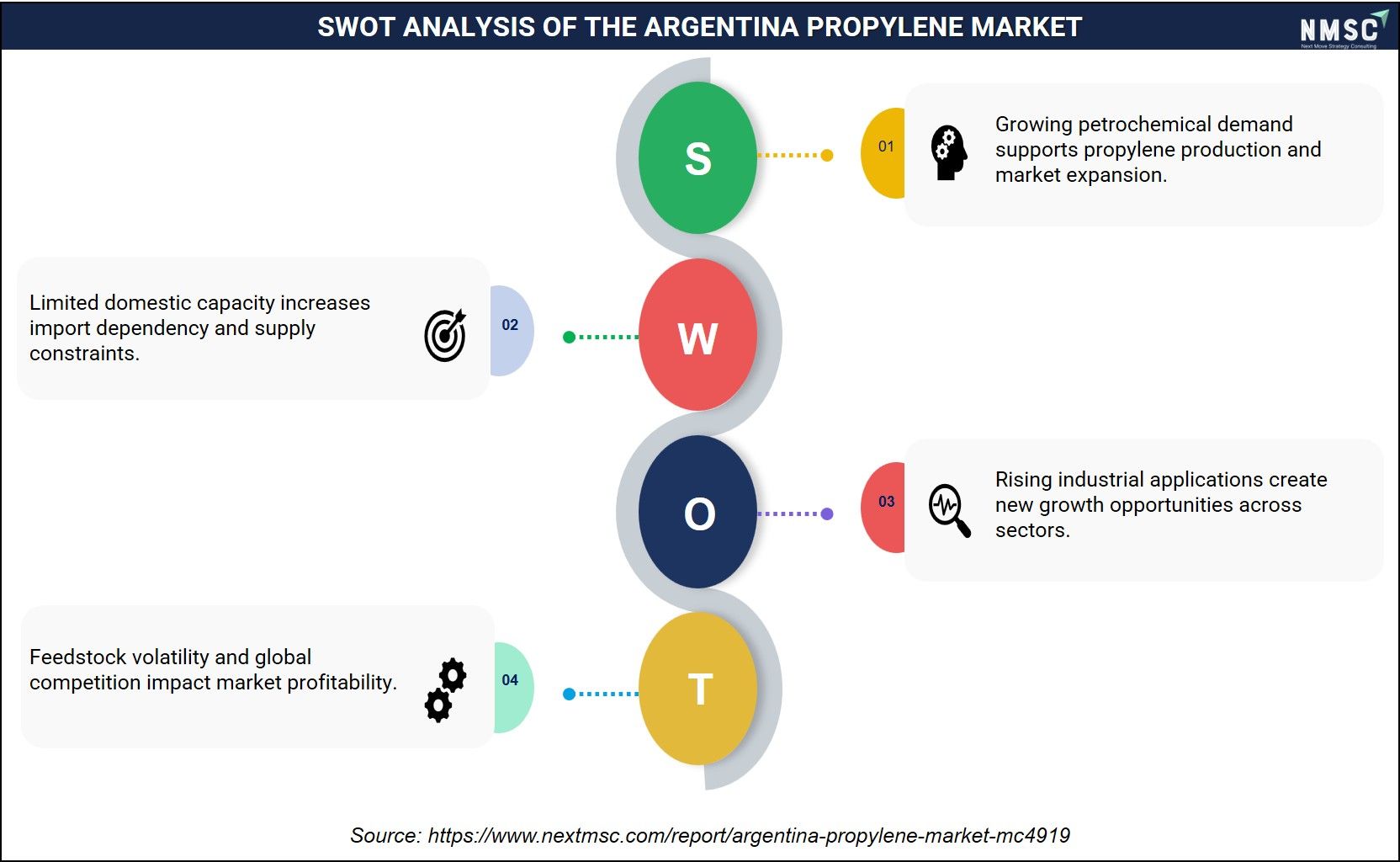
The SWOT analysis of the Argentina Propylene Market highlights strong growth potential driven by increasing demand from the petrochemical, packaging, automotive, and industrial sectors. Rising industrial applications create opportunities for market expansion and investment. However, limited domestic production capacity leads to reliance on imports, creating supply-related challenges. Additionally, fluctuations in feedstock prices and intense global competition may affect profitability and market stability. Overall, demand growth and expanding end-use industries are expected to support the market's long-term development.
Competitive Landscape
The Argentina Propylene Market is characterized by a moderately consolidated structure, supported by the presence of major integrated oil and gas companies, refinery operators, and specialty petrochemical manufacturers operating across the country's industrial hubs. Market growth is being shaped by rising packaging and agricultural plastics demand, expanding industrial and consumer goods manufacturing, and growing feedstock investment linked to Vaca Muerta shale gas development. However, currency instability and inflationary pressures continue to weigh on the investment confidence of domestic producers, encouraging strategic partnerships and infrastructure-focused capital planning.
Key Players of the Argentina Propylene Market
-
ExxonMobil Exploration Argentina S.R.L.
-
SABIC Argentina S.A.
-
Dow Argentina S.A.
-
Braskem America Trading and Logistics Argentina S.R.L.
-
Shell Argentina S.A.
-
Total Austral S.A. (Argentina)
-
Chevron Argentina S.R.L.
-
YPF S.A.
-
Petroquímica Cuyo S.A.I.C.
-
Sinopec Argentina Exploration and Production Inc. Sucursal Argentina
NMSC's analysis indicates that competitive dynamics in the Argentina Propylene Market are increasingly shaped by feedstock access, refining integration, and infrastructure-focused investment strategies. Key companies such as ExxonMobil Exploration Argentina S.R.L., SABIC Argentina S.A., Dow Argentina S.A., Braskem America Trading and Logistics Argentina S.R.L., Shell Argentina S.A., Total Austral S.A., Chevron Argentina S.R.L., YPF S.A., Petroquímica Cuyo S.A.I.C., and Sinopec Argentina Exploration and Production Inc. Sucursal Argentina are strengthening their market positions through capacity planning, derivative diversification, and supply chain integration linked to expanding domestic feedstock availability.
Key Benefits for Stakeholders
Next Move Strategy Consulting (NMSC) presents a comprehensive analysis of the Argentina Propylene Market, covering historical developments through 2025 and providing forecasts through 2035. Our study evaluates the market at national and regional levels, delivering quantitative outlooks alongside qualitative insights into propylene production trends, feedstock dynamics, refining capacity utilization, derivative demand growth, and investment conditions shaping the domestic petrochemical industry. The analysis further examines the competitive landscape, regulatory developments, and emerging feedstock infrastructure influencing long-term market trajectories across Argentina's petrochemical value chain and downstream derivative industries.
Investors benefit from emerging opportunities in domestic propylene and polypropylene capacity expansion, while propylene producers, refinery operators, petrochemical manufacturers, derivative producers, distributors, technology providers, and end-use industries benefit from sustained demand across packaging, agriculture, automotive, construction, and consumer goods applications throughout Argentina. Policymakers and industry associations also gain actionable insights into investment incentive effectiveness, currency-related risks, and feedstock infrastructure progress, supporting informed decision-making across the value chain and reinforcing strategic planning throughout the forecast period.
|
Parameters |
Details |
|
Customization Scope |
Free customization (equivalent to up to 80 analyst-working hours) after purchase. |
|
Pricing and Purchase Options |
Avail customized purchase options to meet your exact research needs. |
|
Approach |
In-depth primary and secondary research; proprietary databases; rigorous quality control and validation measures. |
|
Analytical Tools |
Porter's Five Forces, SWOT, value chain, and Harvey ball analysis to assess competitive intensity, stakeholder roles, and relative impact of key factors. |
Conclusion
The Argentina Propylene Market is poised for steady growth through 2035, supported by rising packaging and agricultural plastics demand, expanding industrial and consumer goods manufacturing, and growing feedstock investment linked to Vaca Muerta shale gas development. While currency instability and inflationary pressures continue to challenge domestic investment confidence, development of petrochemical infrastructure and supportive investment incentive frameworks are creating meaningful long-term opportunities. The competitive landscape remains shaped by integrated oil and gas companies and refinery operators pursuing capacity planning and feedstock-focused strategies, positioning the market for resilient expansion across the forecast period despite macroeconomic headwinds.
About the Author
 Liza Phukan
— Liza Phukan is Research Associate at Next Move Strategy Consulting, where she has covered emerging industries and market research across sectors for 3.5 years. Her work includes analyzing industry developments, validating market data, and developing structured business content from research findings. She uses secondary research and data-validation practices to turn complex market information into clear decision-useful market analysis for business audiences and support report development and B2B.
Liza Phukan
— Liza Phukan is Research Associate at Next Move Strategy Consulting, where she has covered emerging industries and market research across sectors for 3.5 years. Her work includes analyzing industry developments, validating market data, and developing structured business content from research findings. She uses secondary research and data-validation practices to turn complex market information into clear decision-useful market analysis for business audiences and support report development and B2B.
About the Reviewer
 Supradip Baul
— Supradip Baul is an accomplished business consultant and strategist with over a decade of rich experience in market intelligence, strategy, technology, and business transformation. His work has included rigorous qualitative and quantitative analysis across multiple industries, helping clients shape investment decisions and long-term roadmaps. Earlier in his career, he was associated with Gartner, where he contributed to industry-leading reports and market share analyses. He has worked with leading global companies and holds an MBA with a dual specialization in Marketing and Finance.
Supradip Baul
— Supradip Baul is an accomplished business consultant and strategist with over a decade of rich experience in market intelligence, strategy, technology, and business transformation. His work has included rigorous qualitative and quantitative analysis across multiple industries, helping clients shape investment decisions and long-term roadmaps. Earlier in his career, he was associated with Gartner, where he contributed to industry-leading reports and market share analyses. He has worked with leading global companies and holds an MBA with a dual specialization in Marketing and Finance.
At Next Move Strategy Consulting, we understand that insightful market research is the cornerstone of successful business decisions. That's why we employ a robust and multifaceted approach, combining various methodologies to deliver the most accurate and actionable data for our clients.

Research Landscape
We navigate the world of research with two primary approaches:
Qualitative Approach
Our qualitative research methodologies involve immersive techniques such as in-depth interviews, focus groups, and observational studies. By engaging directly with individuals and stakeholders, we uncover valuable insights that quantitative data alone may overlook.

Quantitative Research
In tandem with qualitative methodologies, NMSC leverages the power of Quantitative Research to provide a robust foundation of numerical insights. Through systematic data collection and analysis, we quantify patterns, preferences, and market trends, offering a comprehensive view of the business landscape.
Our quantitative research approach employs diverse tools, including surveys, experiments, and statistical modelling. These methodologies enable us to gather data from a large and representative sample, ensuring the statistical significance of our findings. By employing structured questionnaires and standardized data collection methods, we guarantee the reliability and validity of the information we present to our clients.
Quantitative research is particularly effective in measuring the prevalence of trends, assessing market size, and gauging the impact of various factors on consumer behavior. The numerical precision attained through this approach equips our clients with actionable insights, facilitating data-driven decision-making and strategy formulation.


Our Specialized Toolbox for Industry-Specific Market Research
We deploy a specialized arsenal of techniques tailored to meet your unique requirements. Here's a glimpse into our comprehensive toolbox:

Information Procurement
The stage entails acquiring market data or relevant information through various sources and methodologies.


Market Research Approach
We utilize both top-down and bottom-up approaches in market research analysis to achieve a comprehensive understanding of the market dynamics, leveraging the broad perspective of industry trends and macroeconomic factors alongside detailed insights from specific segments and individual companies.

Porters Five Forces Analysis
We conduct Porter's Five Forces analysis to evaluate the competitive landscape of an industry, providing us with insights into factors that affect profitability and strategic positioning.

SWOT Analysis

Forecasting
We utilize a forecasting model to predict future consumption by considering parameters like population, economics, regulations, market competition, drivers, constraints, technology, and pricing. We also employ statistical techniques such as multilinear regression, exponential smoothing, moving average, ARIMA, and Monte Carlo simulations for accurate predictions. In econometric forecasting, we analyzed short-term and long-term event impacts, attributing values based on regulatory frameworks, economic factors, and market events.





 Speak to Our Analyst